
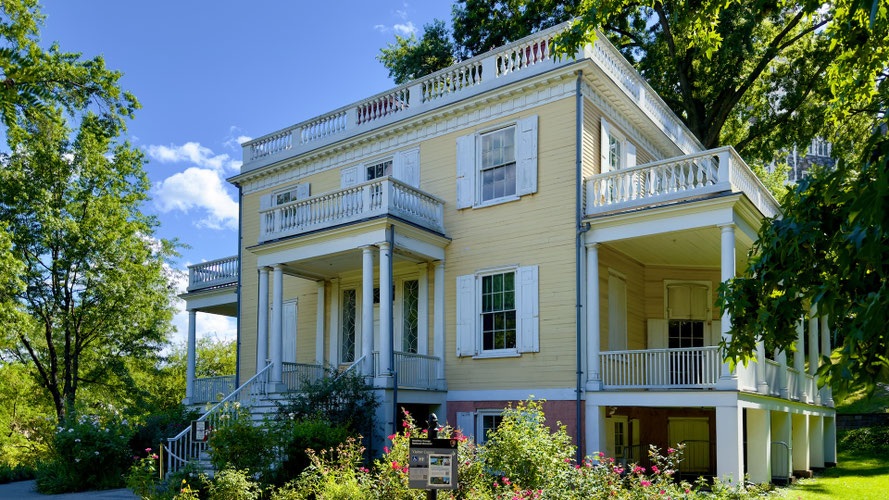
I walked to Hamilton Grange from the Morris-Jumel Mansion, which is roughly 25 minutes on a straight shot down St. Nicholas Avenue if you don’t stop every thirty seconds to photograph another cool building. The proximity of the two—Aaron Burr looming large at the Jumel Mansion, and Alexander Hamilton at the Grange—reminds you that Upper Manhattan in the early 1800s was essentially a small town populated entirely by people who would end up in history books.
Morris-Jumel is packed with drama. Washington slept there. Burr married the widow there. There were political feuds, social climbing, scandals, ambition, and enough historical baggage to require an oversize charge. Walking from that house and toward Hamilton’s, I expected more of the same. I mean, I’ve seen the musical.
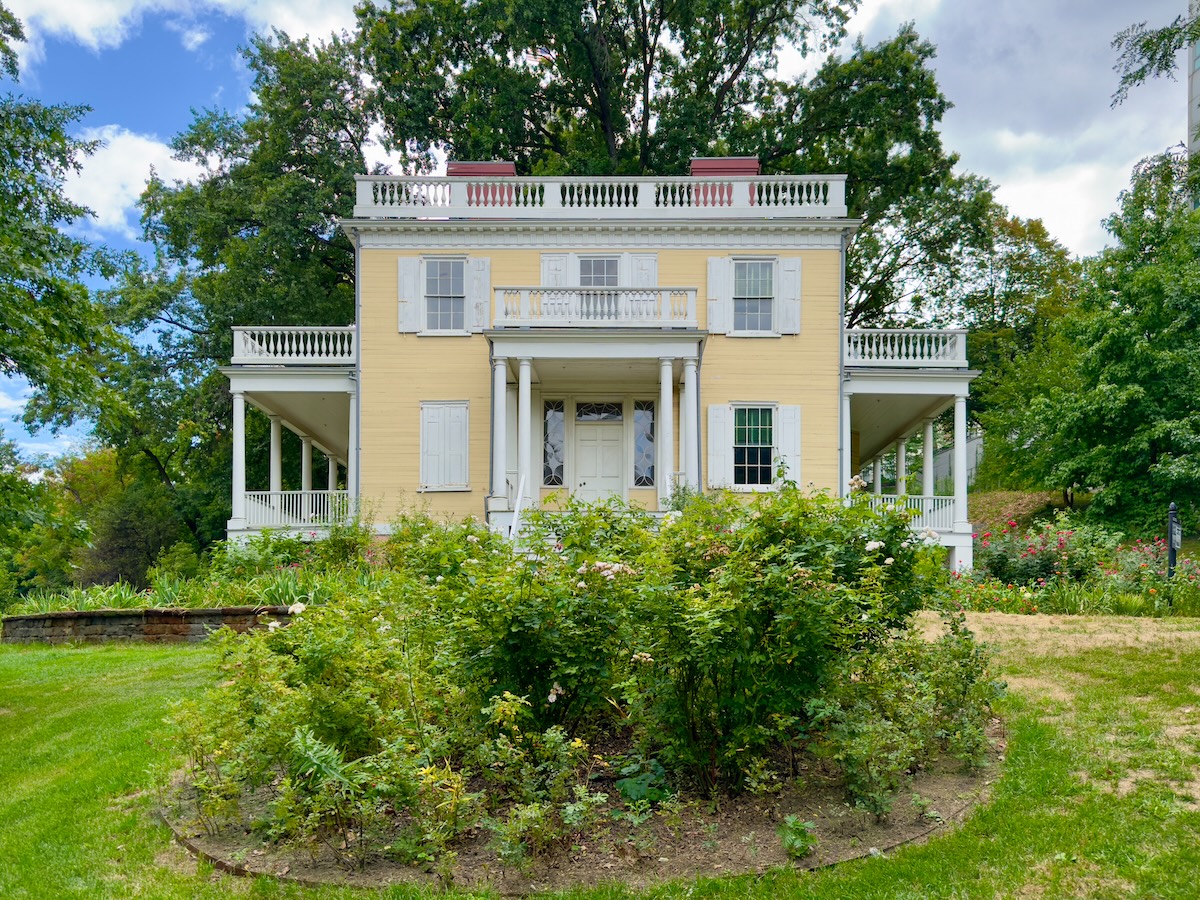
But the Grange sits quietly on a rise at the north end of St. Nicholas Park. Apartment buildings crowd in on all sides, traffic rolls past below, and City College sprawls across the hill behind the house. Nothing suggests that Hamilton built this place as a country retreat for his family because, through the magic of New York, the countryside has long since been paved over.
Standing outside, my first impression wasn’t “Founding Father”—it was “nice house.”
Hamilton Grange is certainly handsome, but it doesn't project the sort of self-important grandeur you might expect from a man whose face graces our $10 bill. The wide verandas wrap around three sides of the house, and gardens spill across the lawn. Mature trees tower overhead. If somebody told me it was the summer home of a prosperous Hudson Valley merchant, I wouldn't have been surprised.
When he finished the house in 1802, the Grange sat on a 32-acre estate overlooking the Hudson and Harlem Rivers. Fields, farms, and country houses were about all there was. Hamilton had moved his family roughly nine miles north of the city to escape the noise, congestion, disease, and general aggravation of urban life. Nine miles north today barely gets you through morning traffic.
Standing on the grounds now, it’s difficult to imagine the isolation Hamilton was seeking. Apartment buildings press in from every direction. City College occupies much of the hill behind the house. The streets below carry a steady stream of traffic. New York eventually expanded around the Grange the same way it expanded around everything else in its path.
Inside is similarly…pleasant. Historic house museums often work hard to convince visitors that Important Things Happened Here. Somebody signed something or declared something or changed the course of civilization while standing beside that chair behind the velvet rope right there.
Hamilton Grange has surprisingly little of that energy. The rooms are relatively spare. The furnishings feel carefully selected rather than densely packed—a desk, some bookshelves, a silver set in the dining room. The overall effect isn’t Founder of the American Financial System so much as successful attorney who finally bought enough land to get some peace and quiet.
The ranger's tour only confirmed my impressions. Instead of a steady parade of treasury reports, constitutional debates, and political rivalries, much of the tour focused on Hamilton's family life. We heard about his wife, Eliza, their children, the garden, and the household they built here after years spent bouncing between politics, law, and public service.
It took me a minute to realize that the house was telling a different story than I expected. Yes, the man attached to the Treasury and the Federalist Papers is present, but mostly in the background. The house is far more about the husband, the father, and the homeowner who finally had enough money to build the place he’d been imagining for years.
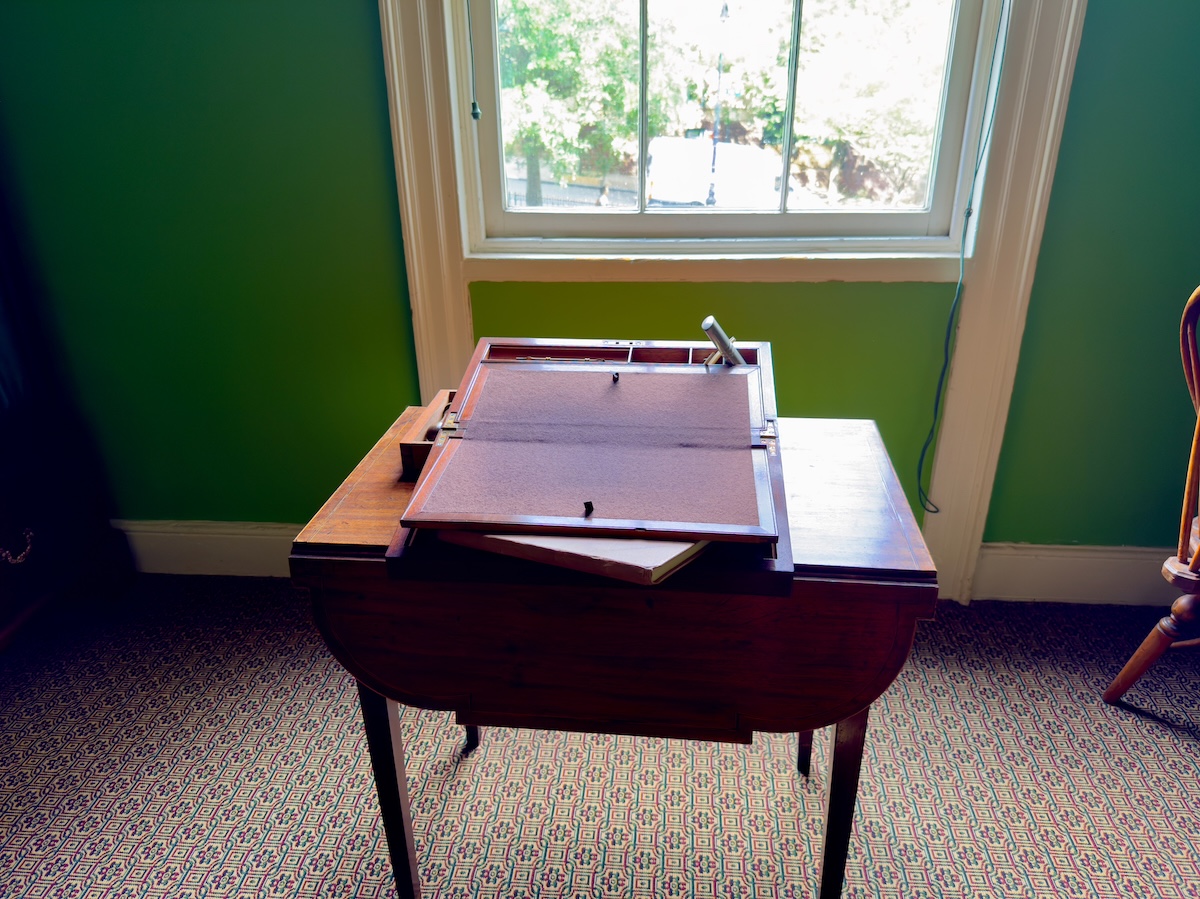
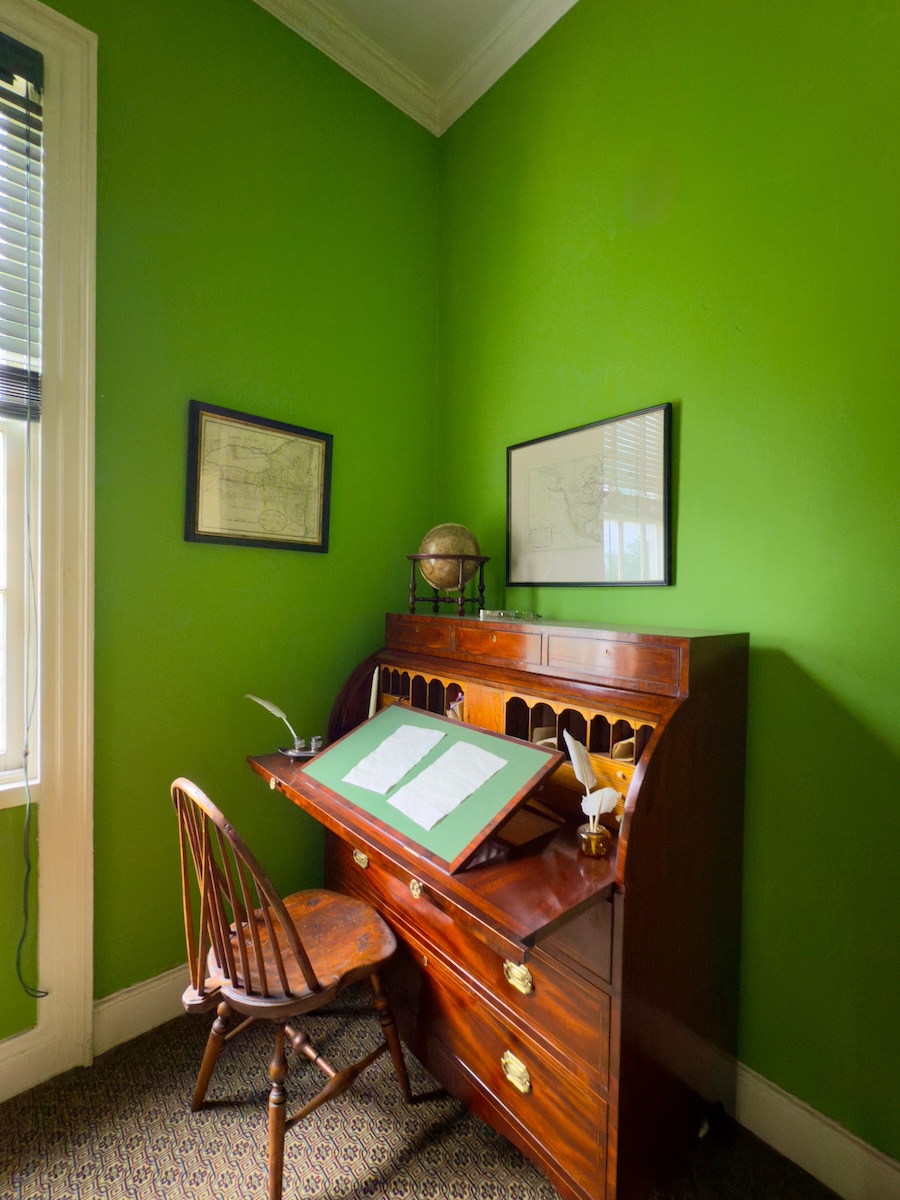
Everything in the house felt personal. Hamilton’s desk was in his office, which sits just off the entry hall and overlooks the front yard. It’s not especially ornate or imposing. It was clearly where somebody sat and worked. Nearby were bookshelves filled with books. He’d inherited a small library from his mother, Rachel—maybe some of these books came from when he was just a bright kid on St. Croix reading whatever he could get his hands on. Those shelves connected him to the ambitious young immigrant who arrived in New York with little more than a love of learning and an alarming amount of confidence.
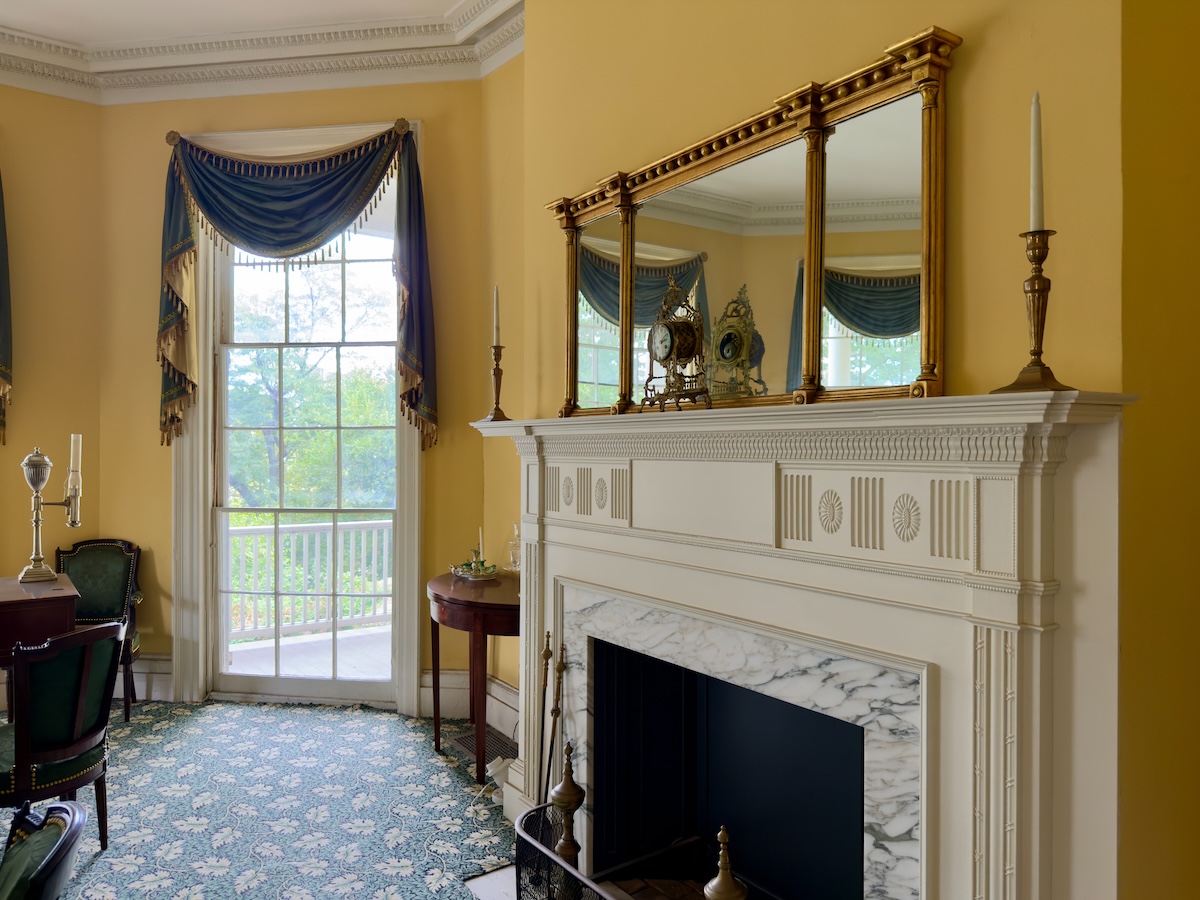
The living room was the heart of the Hamiltons' family life. According to the ranger, the whole family would gather here, playing cards, reading books, or just talking. A pianoforte sat in the middle of the room, facing out over the verandah. This is where one of the Hamilton daughters, Angelica, liked to play. She was devastated when her brother Philip died and never fully recovered. But she could lose herself at the keyboard, and Hamilton would sit down and play with her. In those moments, he was just a dad trying to help his daughter through something impossible.
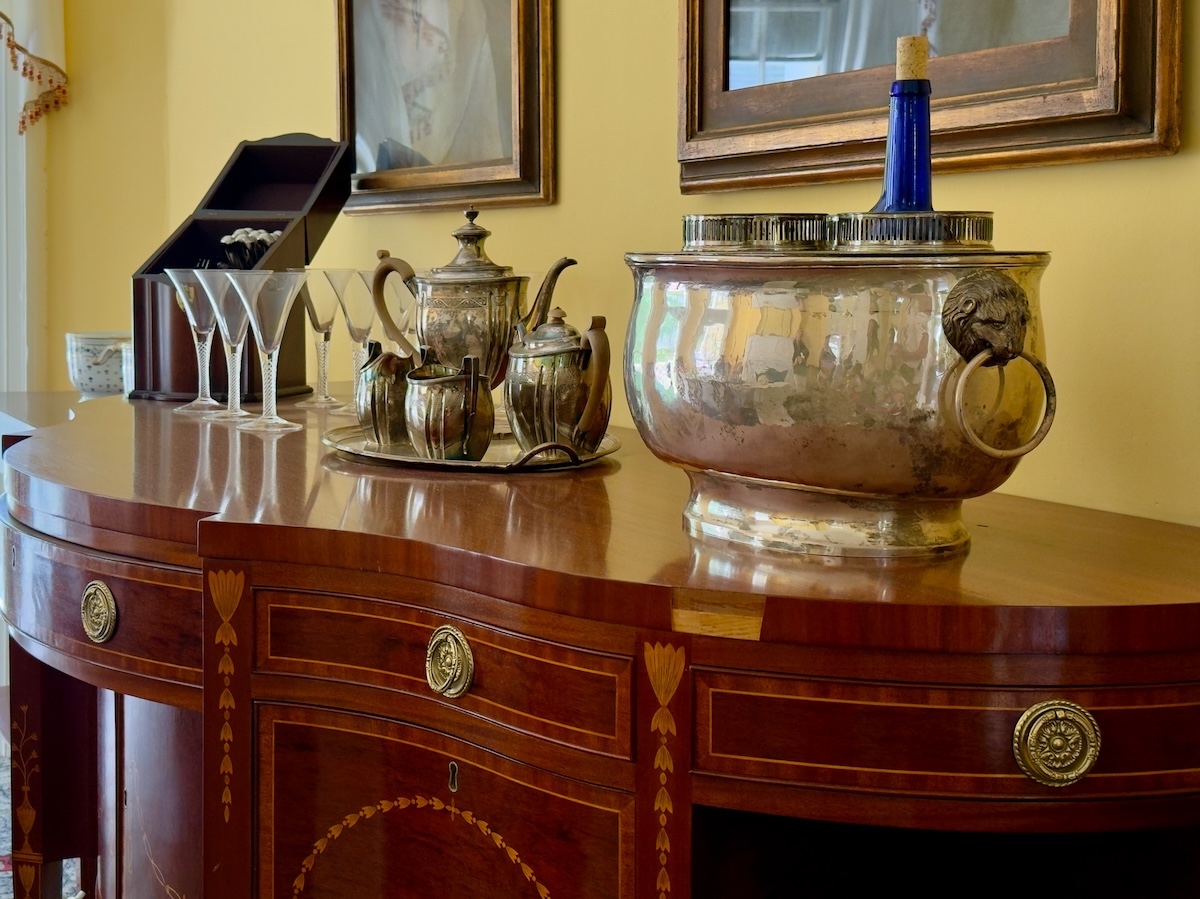
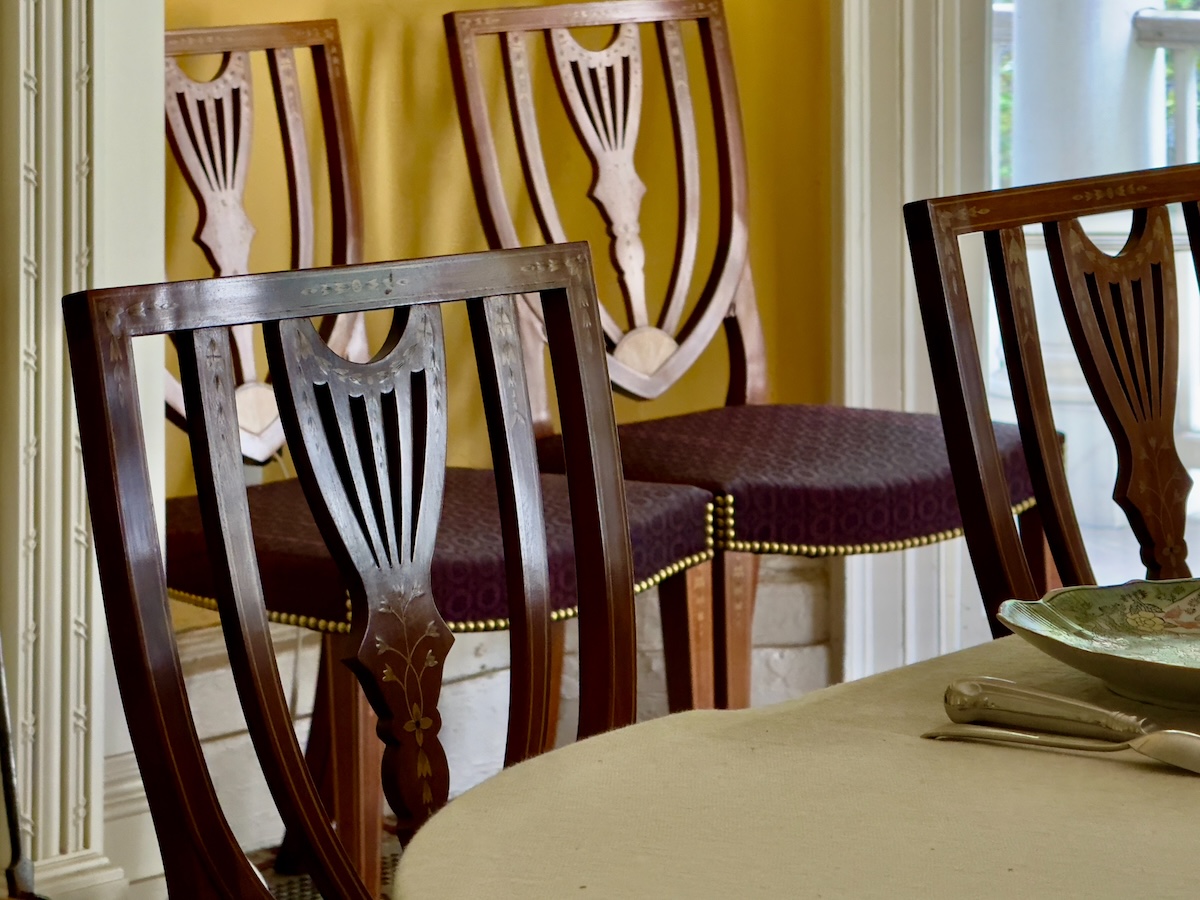
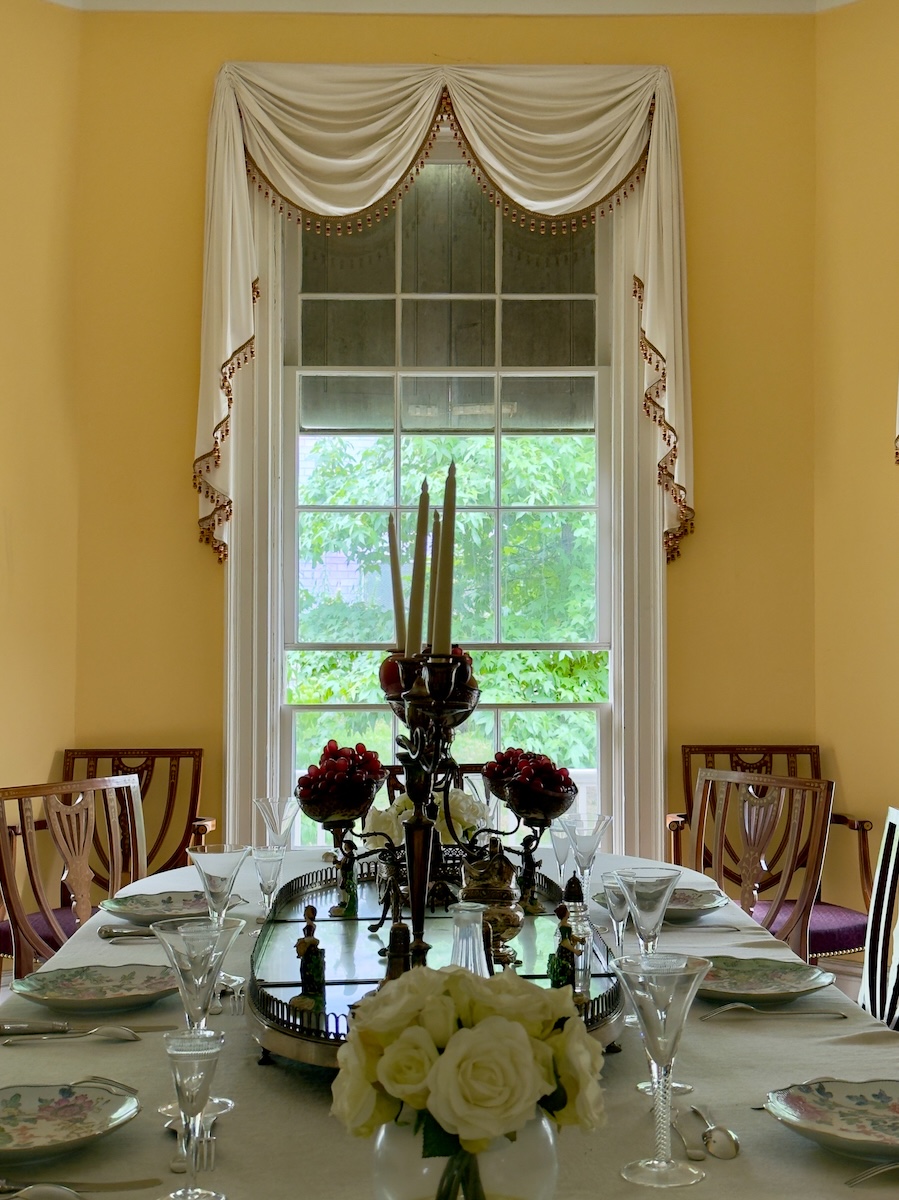
The dining room held several pieces that belonged to Hamilton’s wife, Eliza, including a silver service arranged on a sideboard alongside an enormous wine cooler with lion-head handles. It was the sort of thing that immediately made me think about guests and dinners and laughing instead of history. Somebody filled it with ice. Somebody carried bottles to the table. Somebody worried about whether there was enough wine. The wine cooler survives because it was expensive—but the more interesting detail was that it had once been useful.
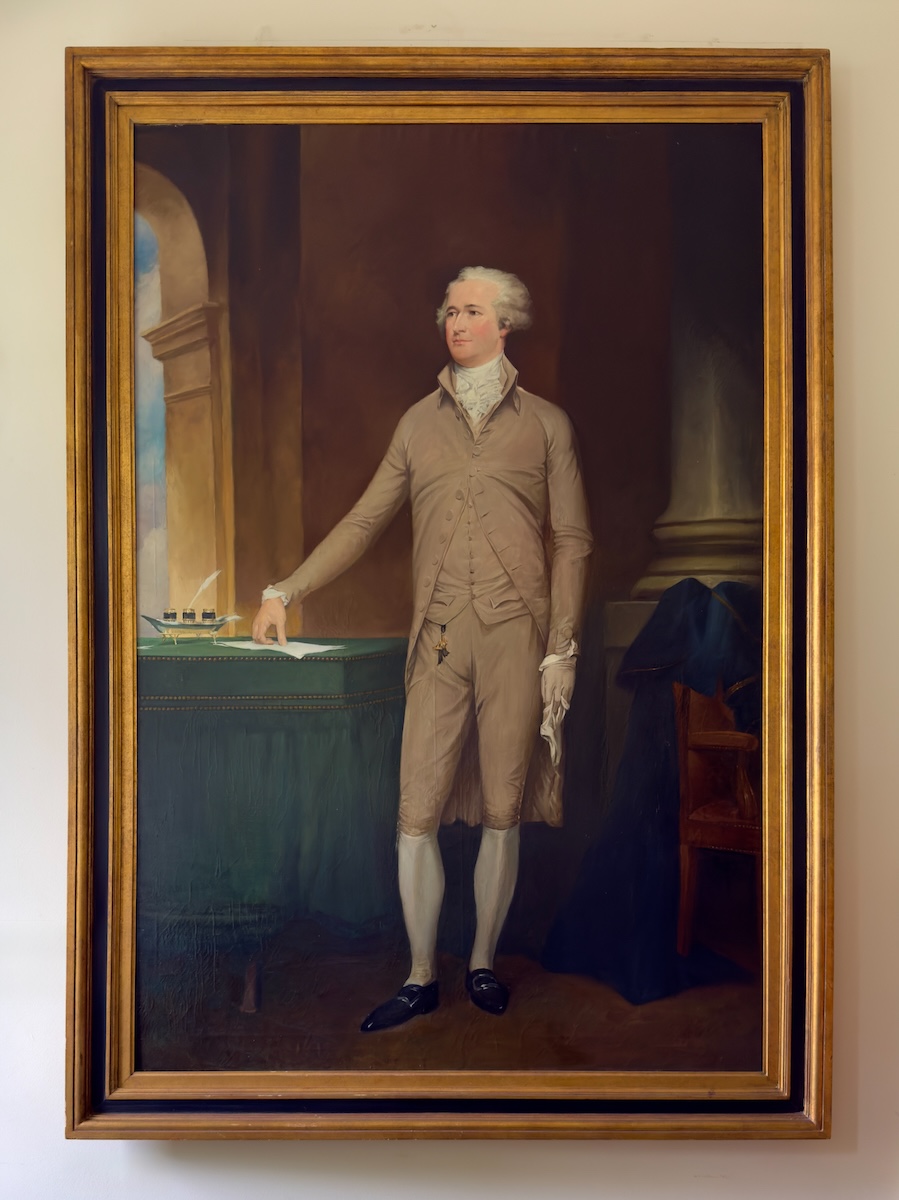
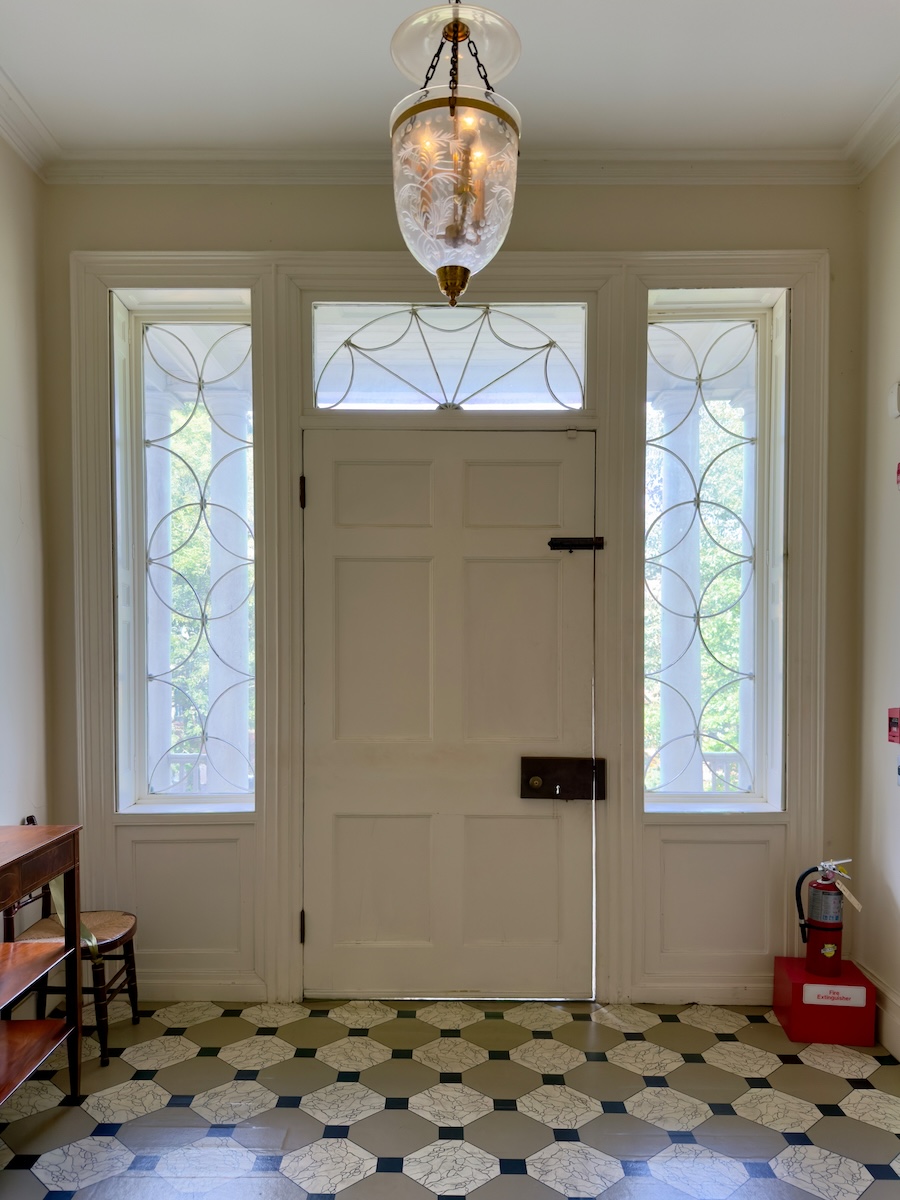
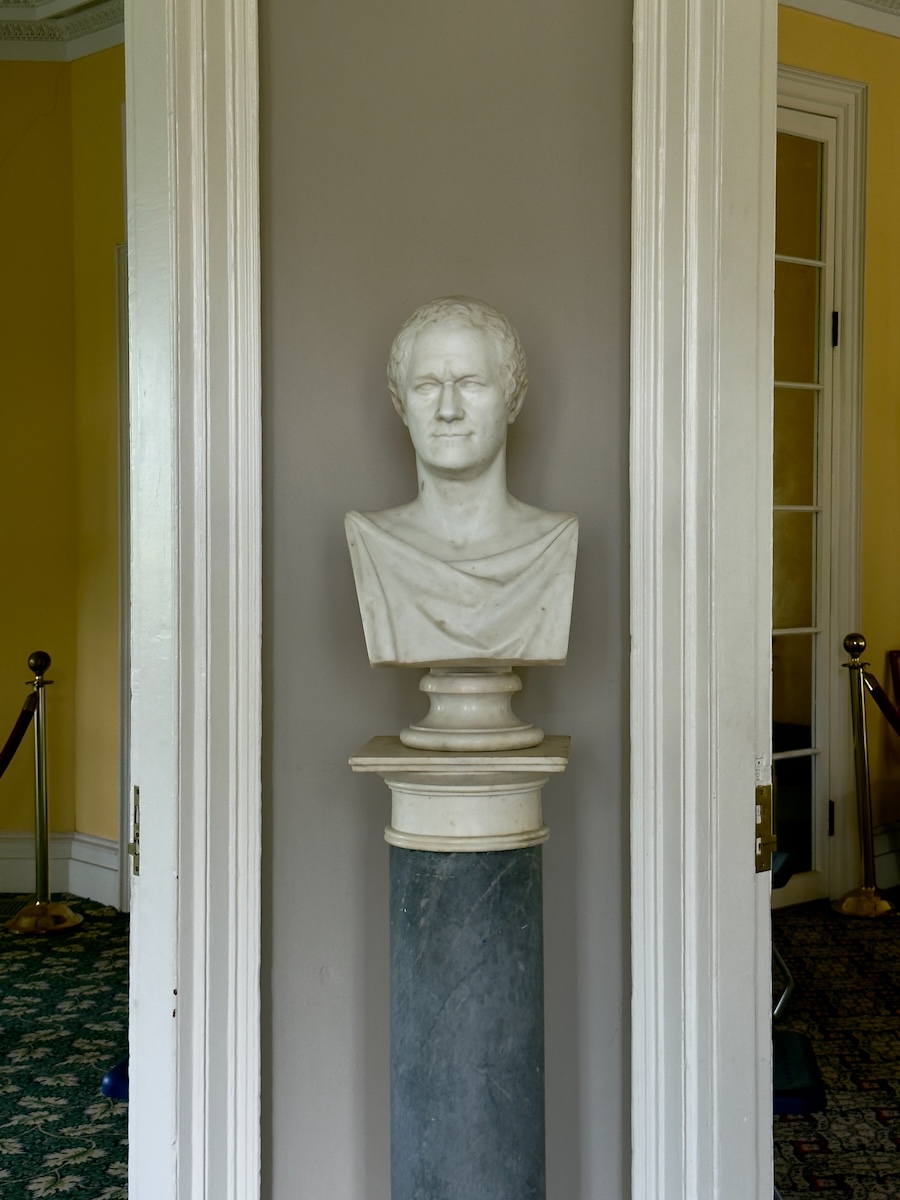
One thing did stand out because it felt exactly like the Hamilton I’d expected. A marble bust sat in the entry hall looking every bit the ambitious founder, statesman, and professional overachiever. It seemed too grand and faintly ridiculous among the desks, shelves, dining furniture, and family stories. The house kept talking about Hamilton, the husband and father, but the bust stood there silently insisting, “Right, but let’s not forget...”
Hamilton finished the house in 1802 and then died in 1804. The house represented everything he’d worked toward—professional success, financial stability, a growing family, and enough land to escape Manhattan when politics became exhausting. But he only lived in it for two years. Eliza spent the next 29 there.
Eliza Schuyler Hamilton was a formidable woman, and the house makes even more sense when you stop seeing her as Hamilton’s loyal widow and start seeing her as a lead character.
The Schuylers were one of the wealthiest and most politically connected families in New York. Her father, Philip, was a Revolutionary War general and U.S. senator, and her mother, Catherine Van Rensselaer, came from another powerful old Dutch family. Eliza grew up in the kind of world Hamilton had spent his childhood staring at from the outside.
They met in Morristown, New Jersey, in 1780, while Hamilton was serving as George Washington’s aide-de-camp and Eliza was visiting an aunt nearby. He was brilliant, ambitious, illegitimate, Caribbean-born, and socially hungry. She was wealthy, well-connected, and devout. And maybe had a thing for bad boys, because she was willing to marry a man who came with no fortune, no chill, and all the emotional regulation of a musket spark.
They married later that same year and promptly started their family, ultimately raising eight children. Eight—which feels like a detail that should come with a chair and a cold compress. Their eldest son, Philip, was killed in a duel in Weehawken in 1801, defending his father’s honor. Three years later, Hamilton was himself killed in a duel in Weehawken. History has treated that duel as tragic and iconic. From the living room in the Grange, it also looks breathtakingly stupid.
Eliza was 47 when Hamilton died. She remained devoted to him for the rest of her life. She raised the seven surviving children, worked to clear Hamilton's debts, and worked hard to preserve his legacy. The Hamilton everyone studies now exists partly because Eliza refused to let him dissolve into rumor, politics, and a historical fog.
Probably feeling like she wasn’t busy enough, she also helped establish the Orphan Asylum Society, New York’s first private orphanage, and stayed involved for more than 40 years. Given what she had lived through—she lost her mother and father, eldest son, and husband within three brutal years—it is not hard to understand why orphaned and abandoned children mattered to her. She helped raise money, oversaw operations, and built an institution that cared for hundreds of children when society’s general approach to orphans was to see them out the door with a wave and a hearty, “Good luck out there!”
By the time she died at 97, Eliza had outlived nearly everyone from the Revolutionary generation. Washington, Adams, Jefferson, Madison, Monroe, Burr, and even Betsy Ross were all gone. She’d watched the country move from revolution to railroads, from powdered wigs to the brink of Civil War. She’d lived long enough to become history herself.
So yes, Hamilton built the Grange, and it's his name on the sign. But he’s not the whole story.
He’s not even the end of the story. The house proved nearly as stubborn as its owners. When Hamilton built the Grange, it sat in the middle of wide-open farmland. By the late 1800s, Manhattan had grown to engulf it. Streets were cut through the old estate, and buildings crowded in. The city that Hamilton had fled eventually caught up with him.
In 1889, St. Luke’s Episcopal Church acquired the Grange estate property and wanted to preserve the house. So they moved the house about 250 feet and built their expanded campus around it. The Grange ended up squeezed between church buildings, but it was preserved.
But they apparently didn’t move it far enough. By the early 2000s, the Grange, already shoe-horned between buildings, was endangered by continued neighborhood expansion. So the National Park Service decided to move it again in 2008. This time, though, the move was less straightforward. The house needed to be lifted from its foundations, rolled through the Harlem streets, and replanted inside St. Nicholas Park.
This required lifting the entire house above the church, swinging it out over Convent Avenue on a massive temporary steel framework that essentially functioned as the world's largest forklift, and carefully lowering it onto a new foundation at the edge of the park. Which means that early this century, one of our Founding Fathers’ homes was literally hanging in midair above a church while an engineer steered it with a joystick. I assume he unlocked an achievement when he finally felt it bump down into its new foundation.
It’s mind-bending to imagine the logistical insanity required to get it where it stands today, comfortable among the trees at the edge of the park. But it looks for all the world like it has always been there.
It's also hard to imagine that this quiet yellow house belonged to a man who arrived in New York as a teenage immigrant, helped architect the new republic, co-authored the Federalist Papers, founded the American financial system, and generally packed three lifetimes' worth of ambition into 49 years.
Maybe that’s what I liked most about the place. For all its history, it feels like a home.




Write a comment