

The Solomon R. Guggenheim Museum is one of those museums where the building itself behaves like the main exhibit. Frank Lloyd Wright's spiraling rotunda is so famous, so photographed, and so aggressively unlike any other gallery on earth that half the visitors spend their time staring up at it instead of at the art on the walls. Admittedly, the art’s hard to look at anyway because the gallery walls curve, tilt, break into alcoves, and generally resist the simple act of hanging paintings.
It’s an extraordinary piece of architecture. It’s also a slightly annoying place to display art.
During our visit, the museum’s soaring High Gallery had been completely overtaken by Rashid Johnson’s massive retrospective, A Poem for Deep Thinkers. We nearly always begin museum visits at the top, and this time was no exception. We instinctively rode the elevator to the top and spiraled downward from there, which felt natural inside a building shaped like a giant white nautilus shell.
Only later did we realize the exhibition had been arranged chronologically in the opposite direction, beginning with Johnson's earlier work at ground level and building toward Sanguine, an enormous installation that consumed the fifth floor. While the Johnson retrospective dominated the spiraling High Gallery, pieces from the museum’s permanent collection appeared in smaller adjoining rooms tucked beneath and around the rotunda.
Highlights
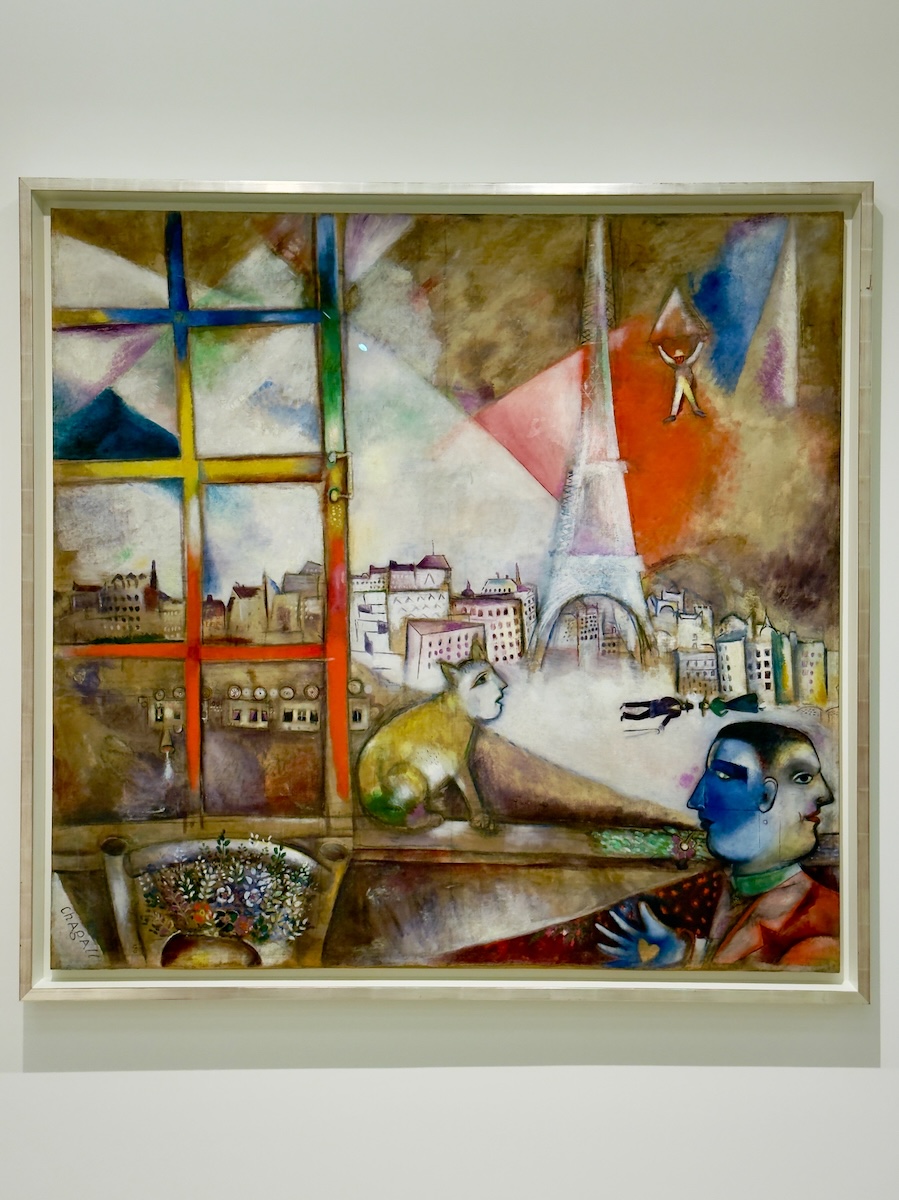
Paris Through the Window (Paris par la fenêtre), 1913 – Marc Chagall
Chagall painted this shortly after arriving in Paris, which may explain why the whole thing feels simultaneously enchanted and disorienting. There’s the Eiffel Tower, a train, upside-down buildings, and—most importantly—a cat with a human face staring directly into your soul. Modernism was apparently having a moment.
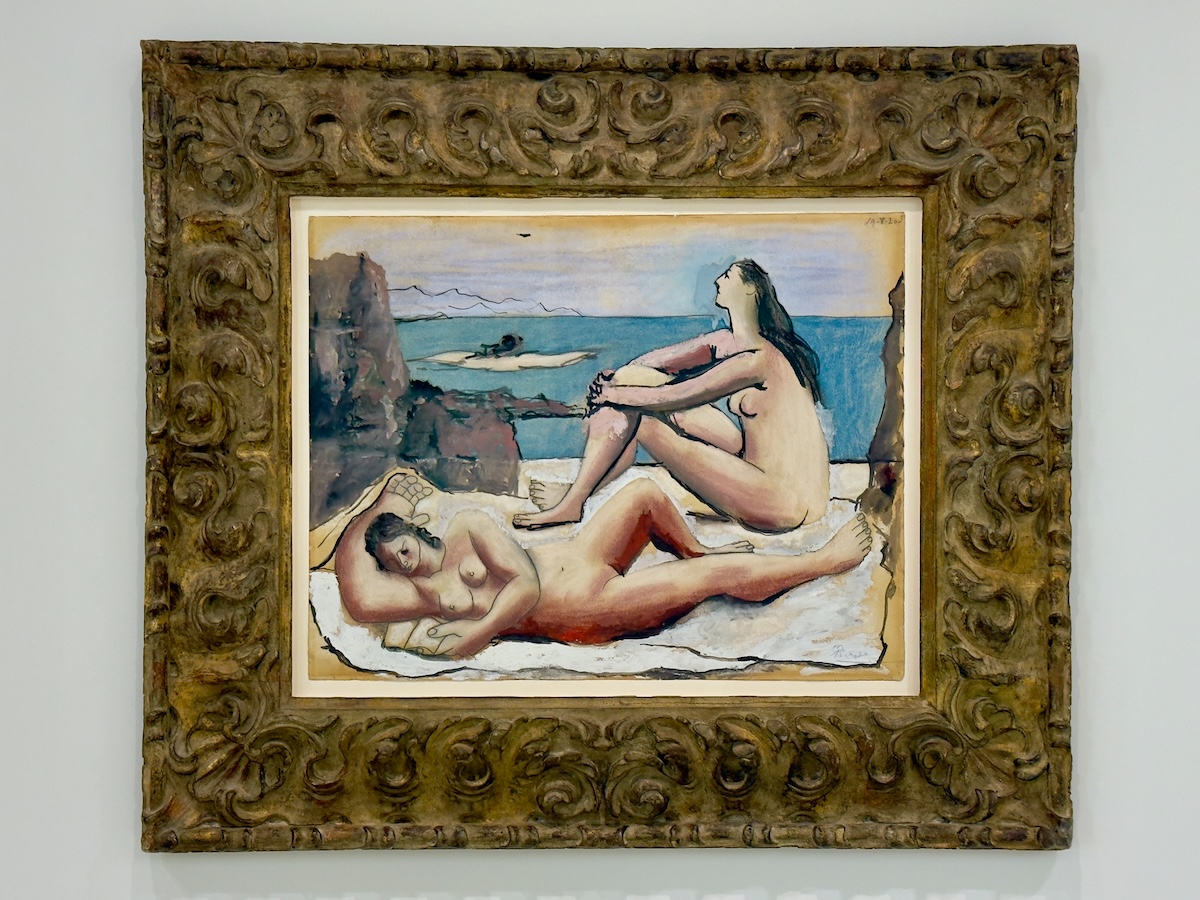
Three Bathers, 1920 – Pablo Picasso
The title insists there are three bathers here, though Rick and I couldn’t find a third one anywhere. I suppose technically Picasso outranks me in this argument, and maybe the third is somewhere out there in the water. Or maybe Picasso considered counting beneath him by this point.
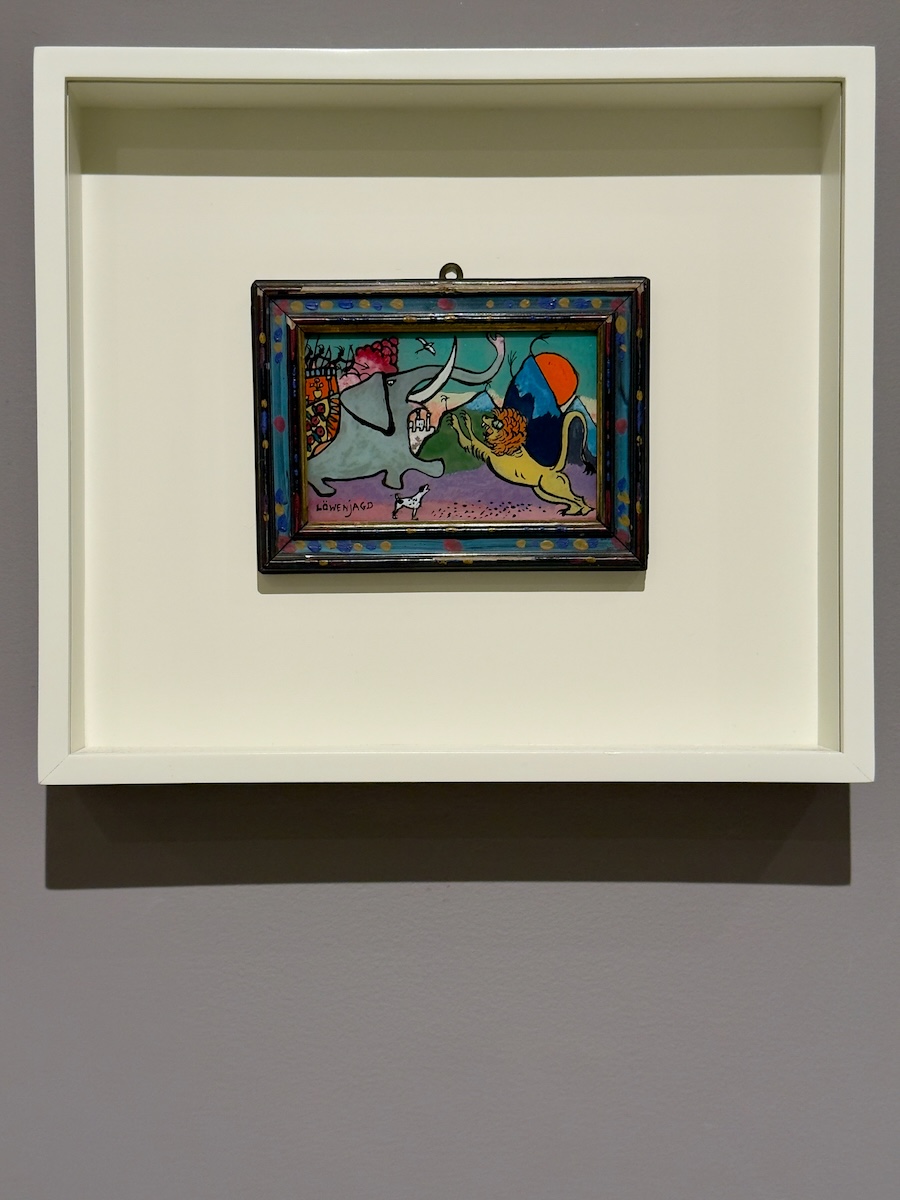
Lion Hunt, 1911 – Vasily Kandinsky
People often talk about Kandinsky as if he emerged fully formed, painting pure abstraction. Then you run into something like this, which looks halfway between a children's book illustration and a world dissolving into geometry. The horses, riders, and lions are still recognizable—but only barely. Everything already feels in motion.
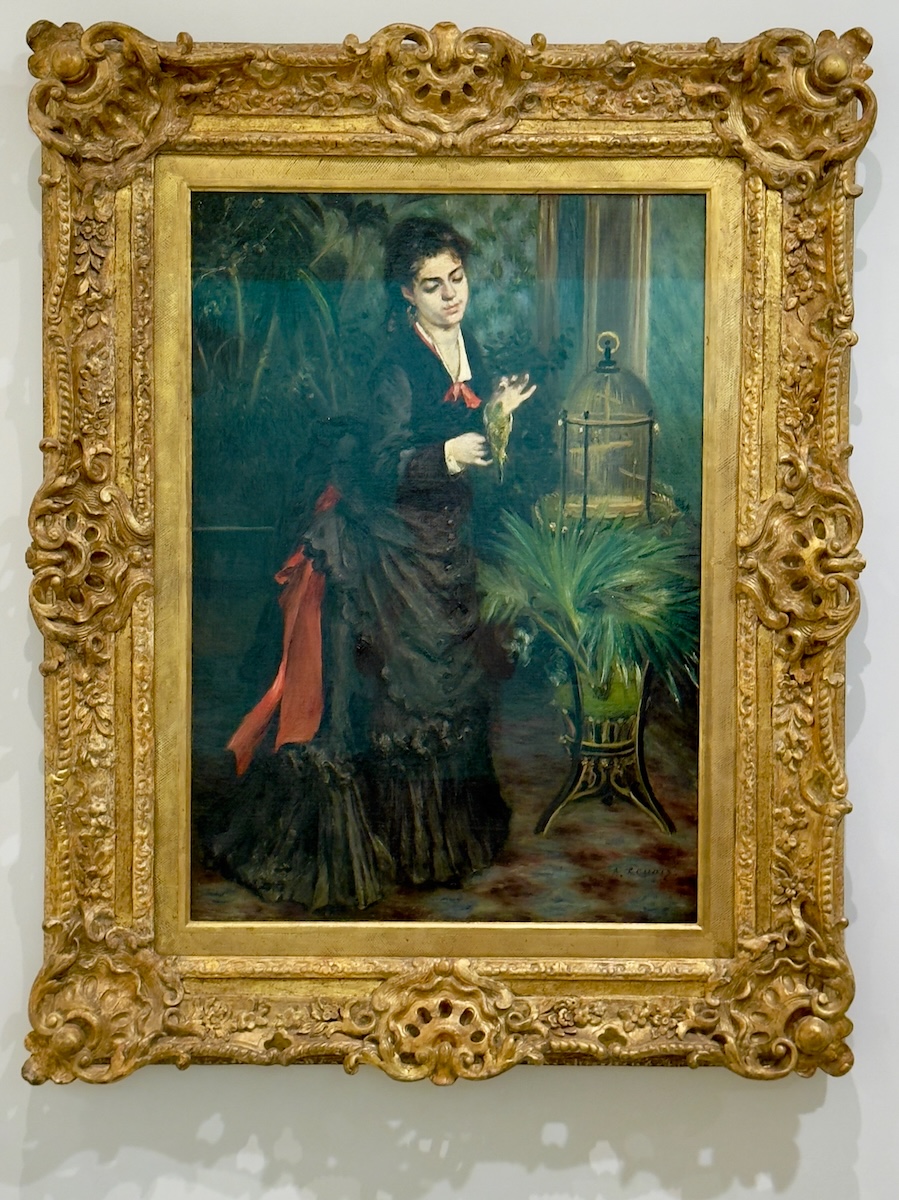
Woman with Parakeet (La femme à la perruche), 1871 – Pierre-Auguste Renoir
The Guggenheim’s collection can get very loud very quickly, which makes this quiet Renoir portrait feel suspiciously calm. The black dress, the soft light, the tiny bird perched delicately on her hand—it all feels intimate and faintly melancholy. Even the enormous, gilded frame seems to know it should keep its voice down.
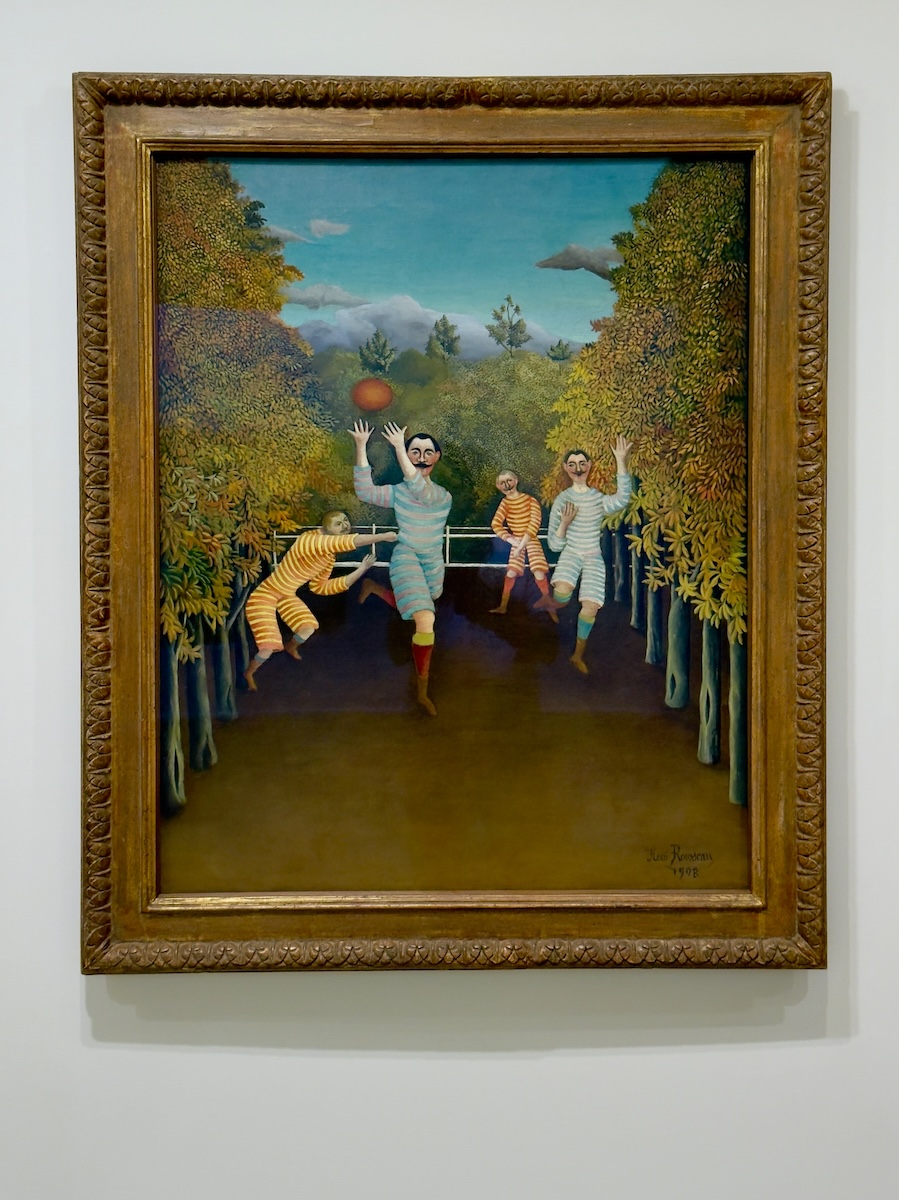
The Football Players (Les joueurs de football), 1908 – Henri Rousseau
Rousseau’s subjects always feel like they operate under slightly different physical laws than the rest of the world. The striped uniforms, rigid poses, tiny mustaches, and floating orange football make the whole match look less like organized sport and more like an elaborate dream someone had after eating a whole pizza right before bed.
Bird on a Tree (L’oiseau), 1928 – Pablo Picasso
This painting somehow looks exactly like something a child would make and exactly like something only Picasso could make. The enormous black bird balancing on those impossibly thin legs has the chaotic confidence of a doodle that accidentally achieved greatness.

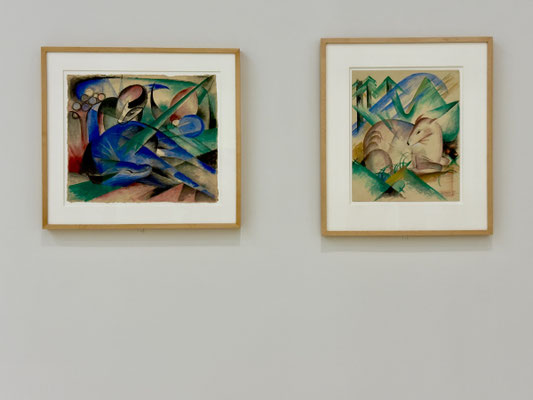
Dreaming Horse (Träumendes Pferd), 1913 and Red Deer (Rotes Reh), 1913 – Franz Marc
Marc believed animals possessed a spiritual purity humans had mostly lost, which explains why his paintings often feel oddly emotional despite being filled with impossible colors and simplified forms. These aren’t so much wildlife paintings as moods disguised as animals.
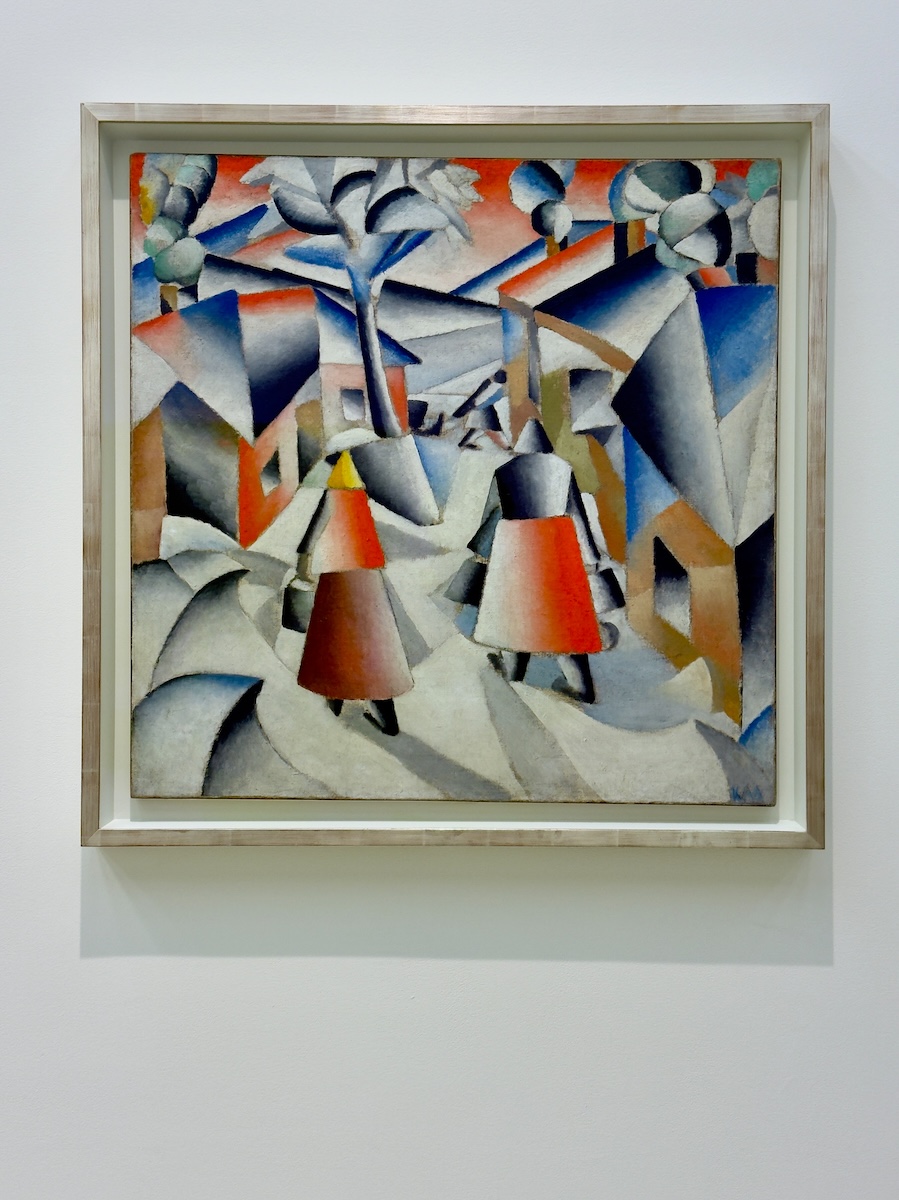
Morning in the Village after Snowstorm (Utro posle viugi v derevne), 1912 – Kazimir Malevich
Before Malevich became famous for radically abstract works like Black Square, he painted scenes like this, where the recognizable world was starting to fracture. Houses, figures, sleds, and snowdrifts still exist—but geometry is clearly preparing a hostile takeover.

Yellow Cow (Gelbe Kuh), 1911 – Franz Marc
I loved this painting immediately. The yellow cow appears to be launching itself joyfully across the landscape like it has just received spectacular personal news. Marc used color emotionally rather than realistically, and everything here feels ecstatic—bright yellows, violent reds, deep blues, and absolutely zero concern for whether cows normally behave this way.
Special Exhibition – Rashid Johnson: A Poem for Deep Thinkers
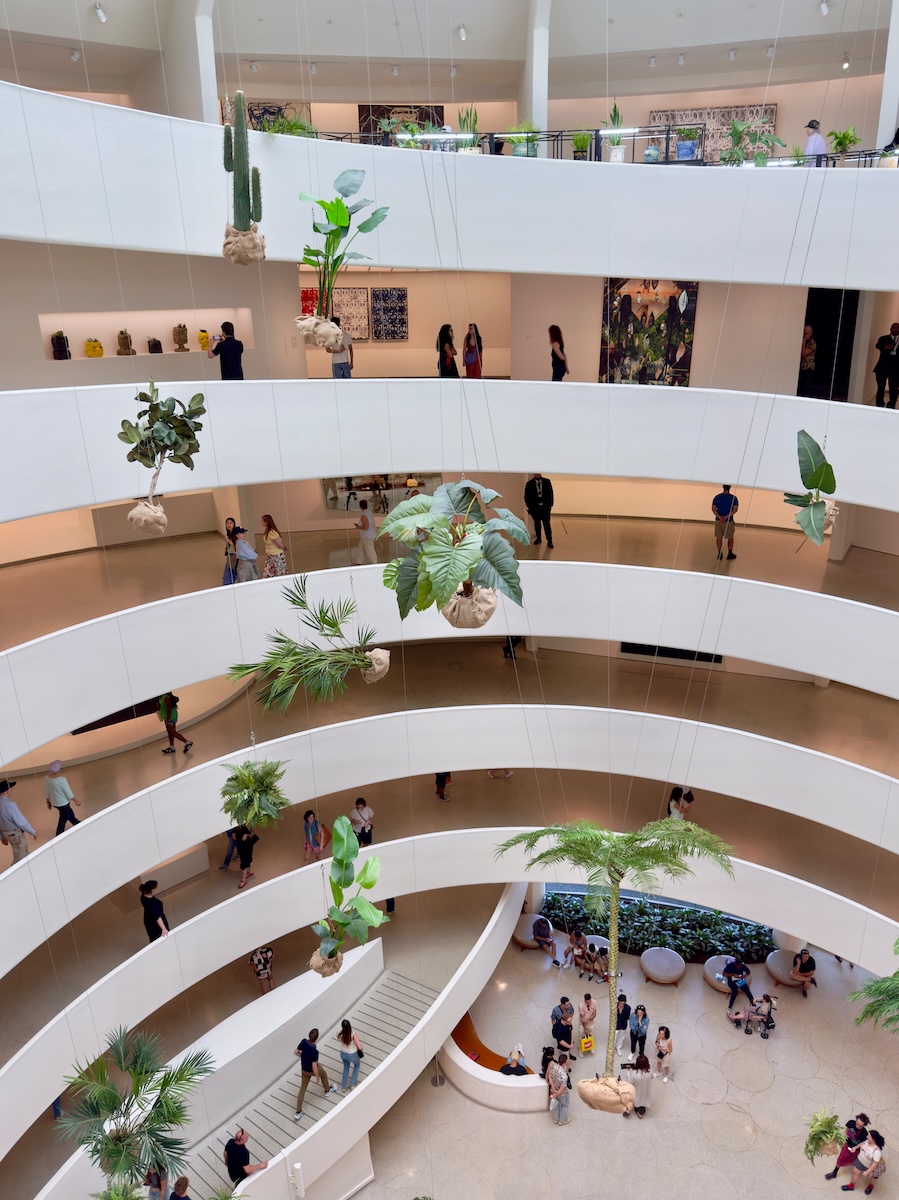
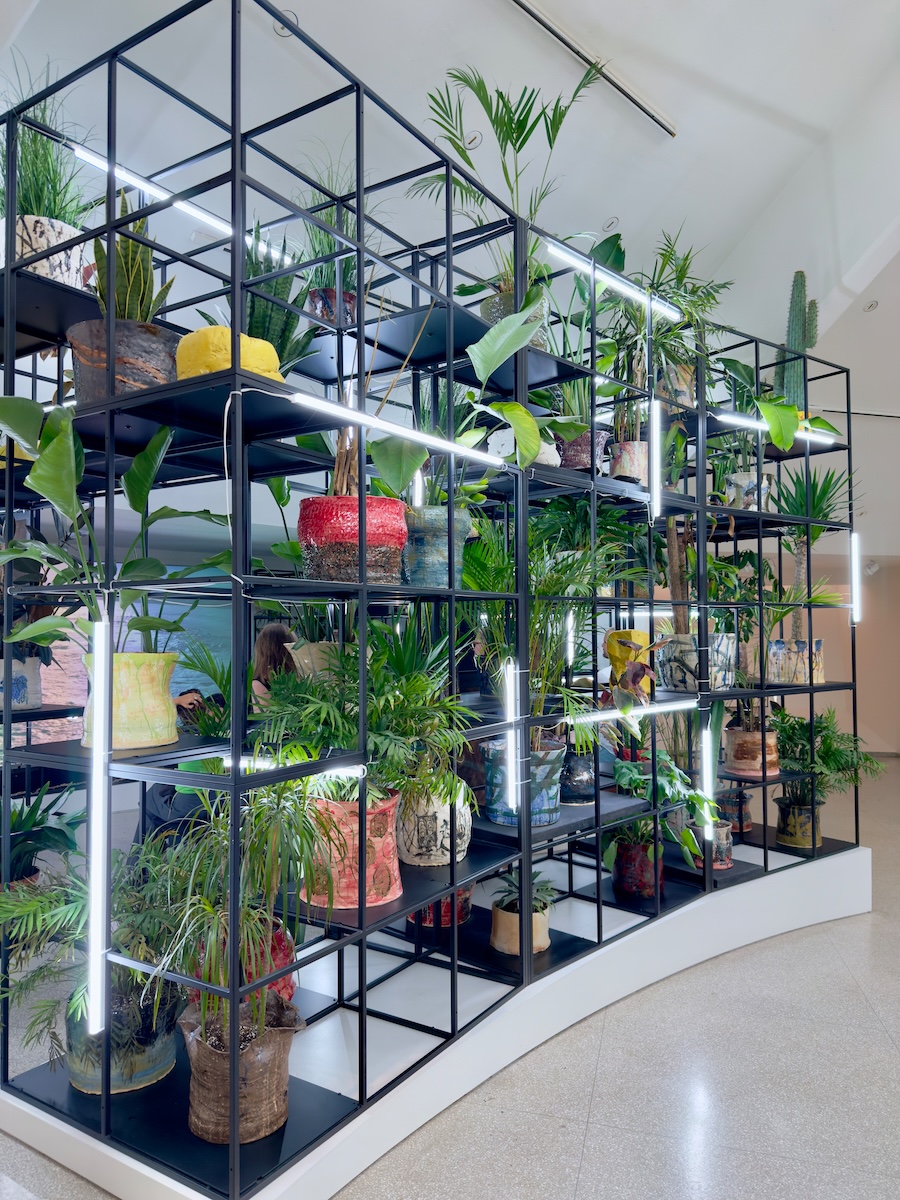
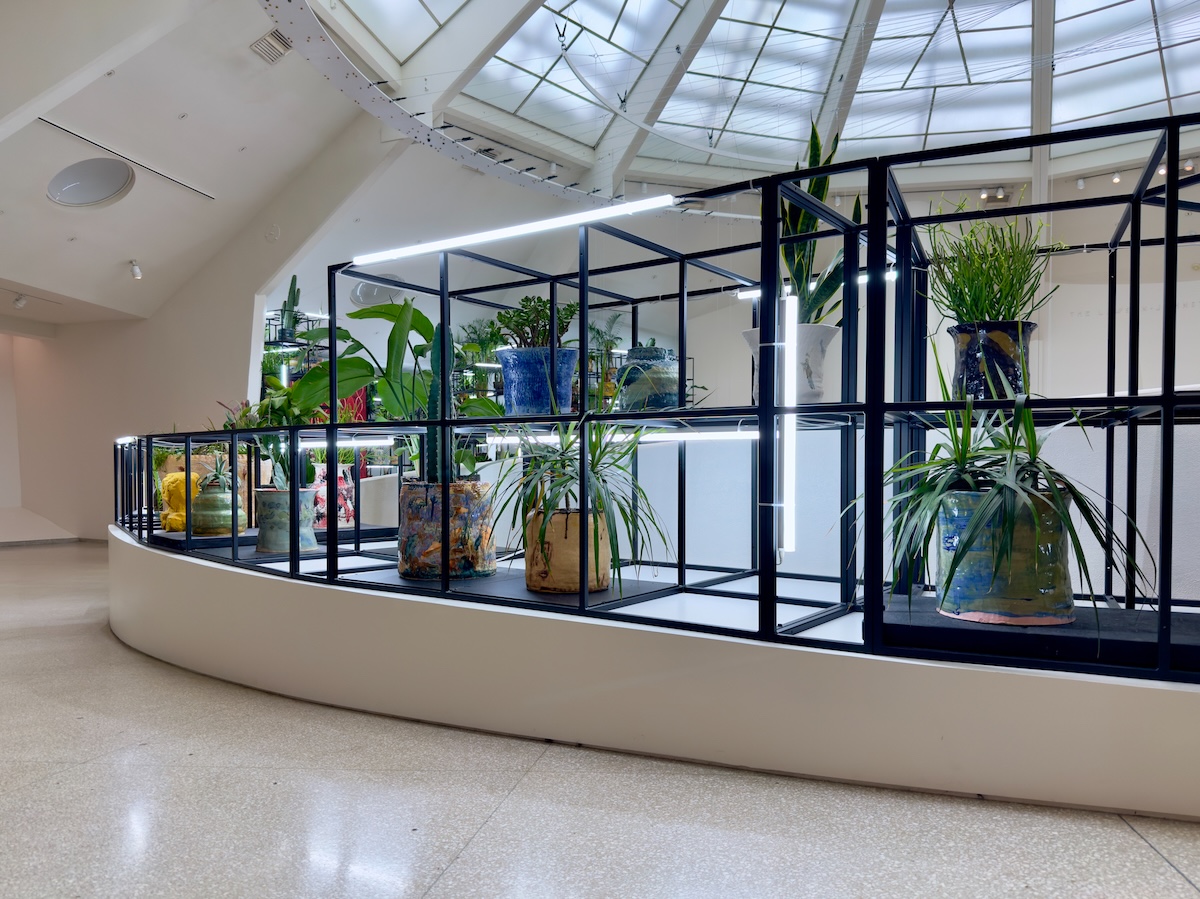
Rashid Johnson’s A Poem for Deep Thinkers didn’t just occupy the Guggenheim’s High Gallery—it seemed to absorb the entire building into itself. The exhibition stretched upward through the five-story rotunda in a loose chronology of Johnson’s career, moving from photography and text works into increasingly large installations filled with black soap, wax, mirrors, plants, books, ceramics, video, and steel structures that occasionally resembled libraries, greenhouses, or emotionally unstable living rooms.
More than anything, the exhibition felt physical. The Guggenheim can sometimes overwhelm the art inside it, but Johnson’s work met the architecture head-on with plants floating under the skylight and massive steel frameworks overtaking entire ramps. It all made the museum feel like part of the artwork itself.
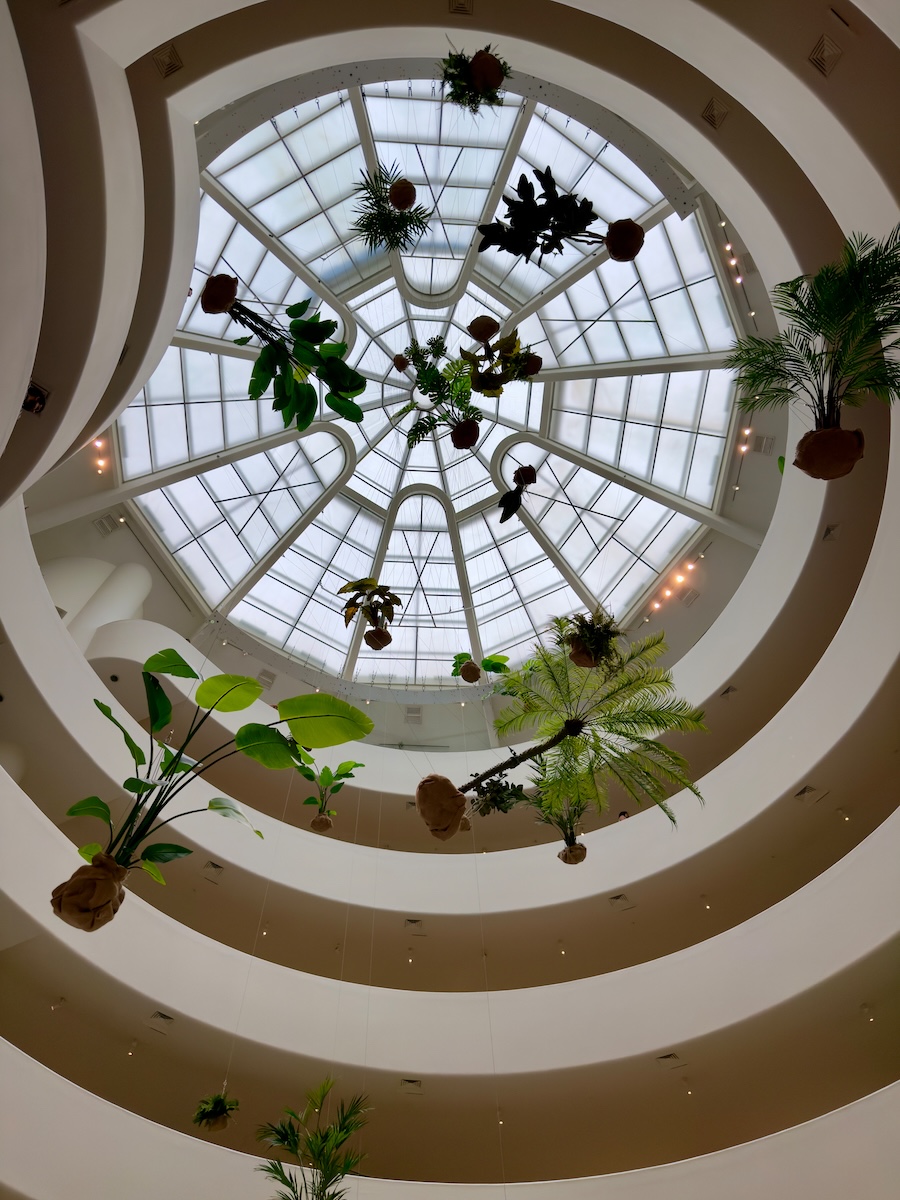
Sanguine, 2025
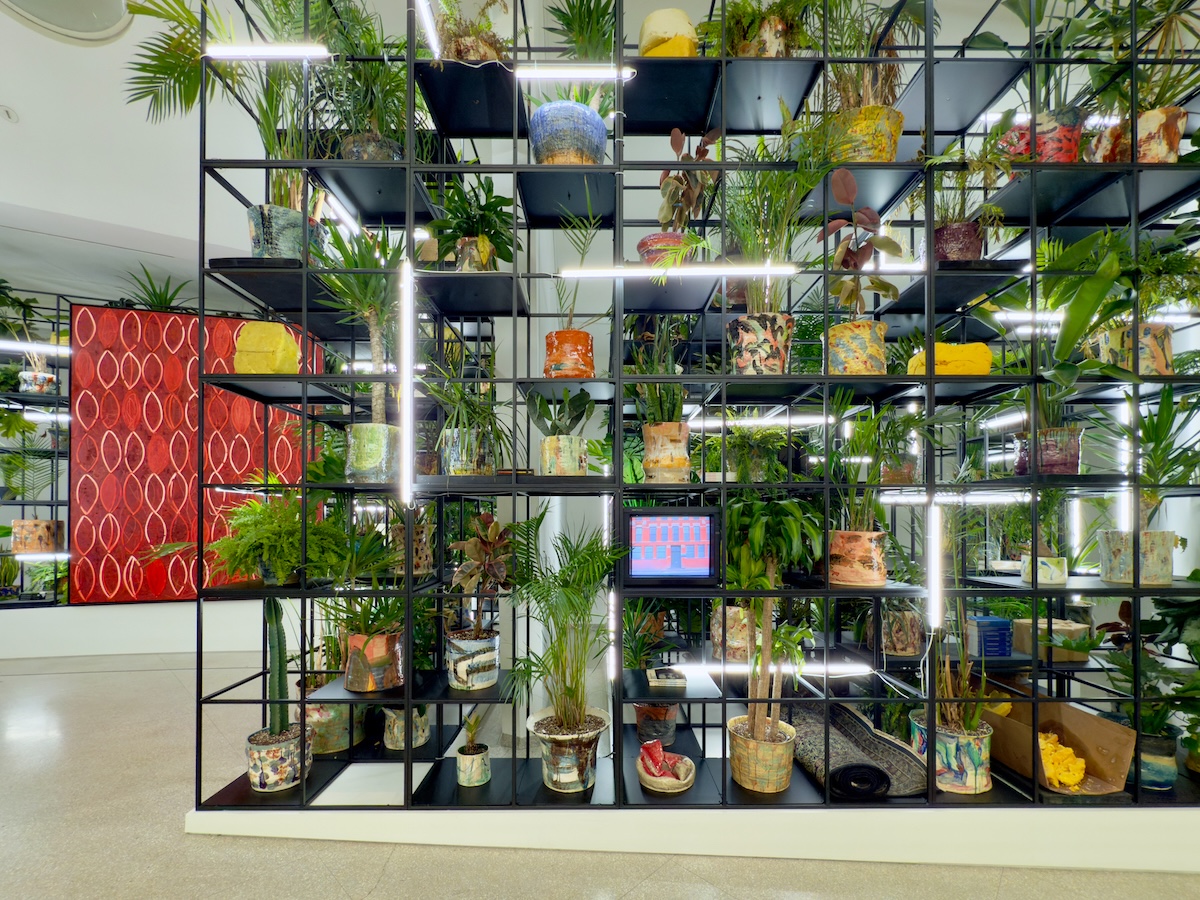
Because we started at the top of the museum, this massive installation became our default introduction to Johnson. It felt a little like being dropped directly into somebody else’s subconscious. Steel frameworks filled the entire fifth floor with plants, ceramics, books, video screens, and grow lights—and a suspended hanging garden drifting dramatically above. Some shelves held philosophy and Black history texts, which gave the whole installation the feeling of a world I could wander through without ever pretending I fully understood every reference or lived experience feeding into it. For me, that uncertainty became part of the piece's power.
Three Broken Souls, 2025
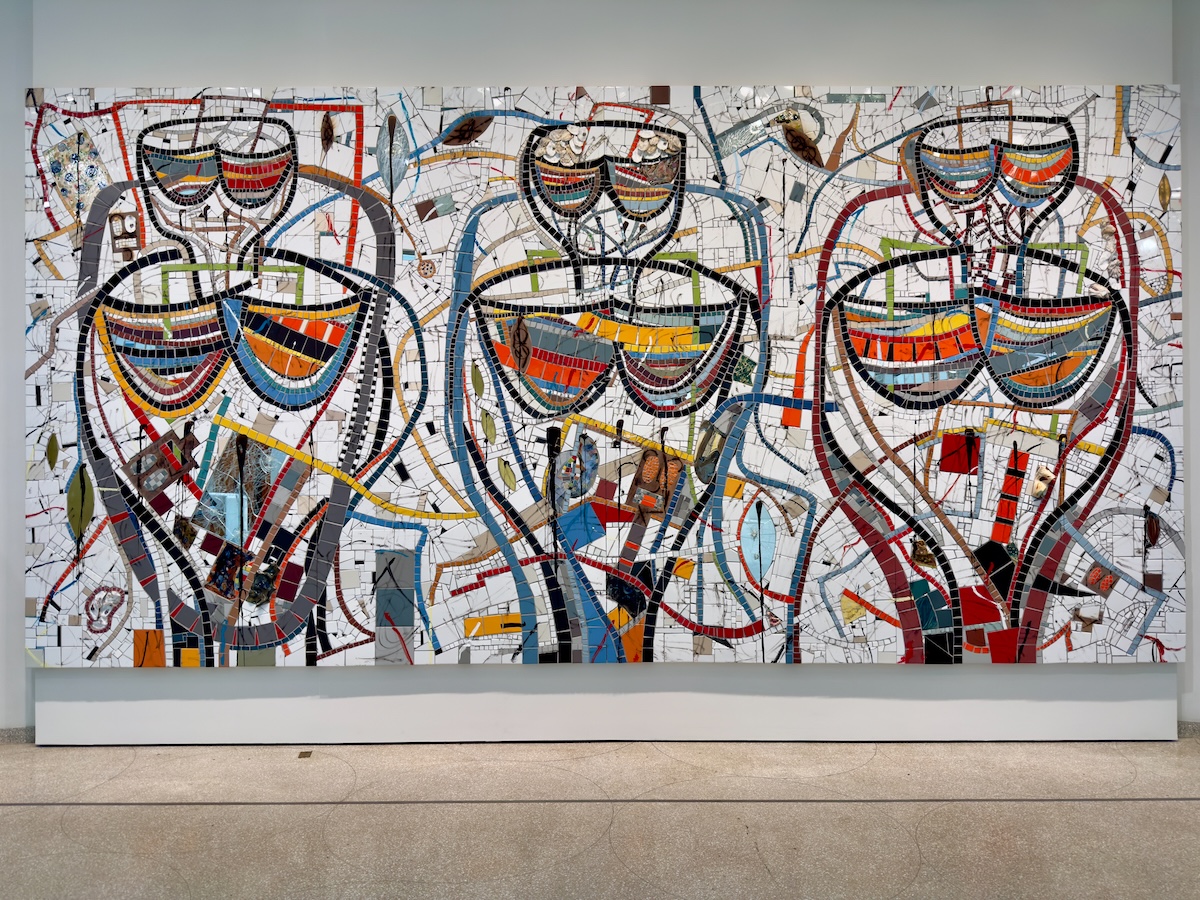
This enormous mosaic-like work uses the Catalonian trencadís technique of broken ceramic tiles, which suits a work built from shattered pieces that never quite settle into a stable whole. The three towering figures resemble both masks and spirits. Standing in front of it was a little like looking at raw emotion.

The Broken Five, 2019
Johnson's faces began appearing everywhere as we moved downward through the exhibition. Sometimes they looked anxious. Sometimes spiritual. Sometimes like graffiti scratched into a wall during a very bad week. One of the figures has a heart-shaped hole cut into his chest, which makes the work feel less like a portrait and more like psychological damage made visible.
God Painting (“The Spirit”), 2023
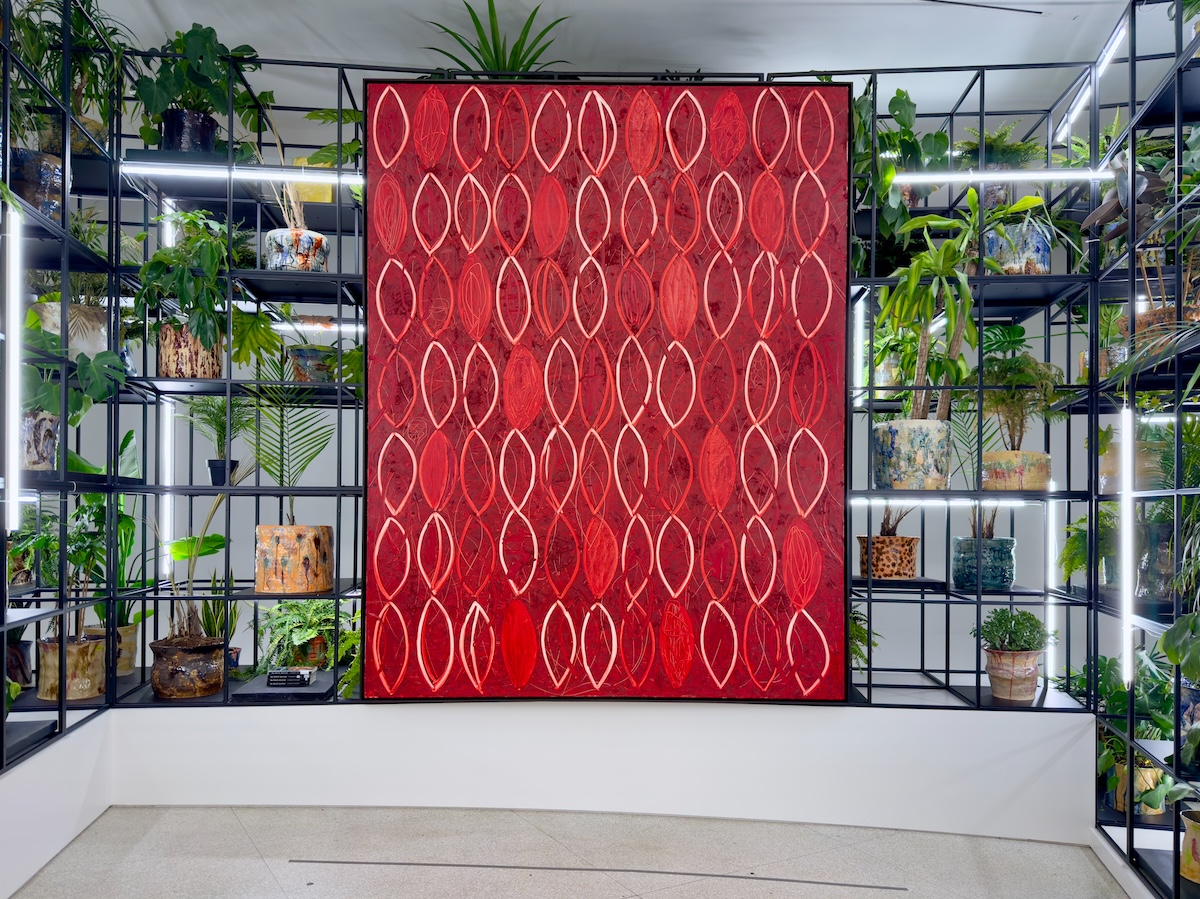
Placed within the sprawling environment of Sanguine, this glowing red panel looked somehow living and symbolic at the same time. The repeated oval forms suggest seeds, eyes, leaves, wounds, cells, or maybe all of them at once. It’s hard to get a good read on Johnson's work, which is probably why it stays with you.

Fly Away, 2010
There’s something wonderfully vague about this piece. Depending on your mood, “FLY AWAY” can read like encouragement, escape, liberation, panic, dissociation—or a threat. The glowing text reflected back at viewers in the mirror made it feel less like graffiti on a wall and more like instructions you’re being asked to consider personally.
Untitled Busts, 2019
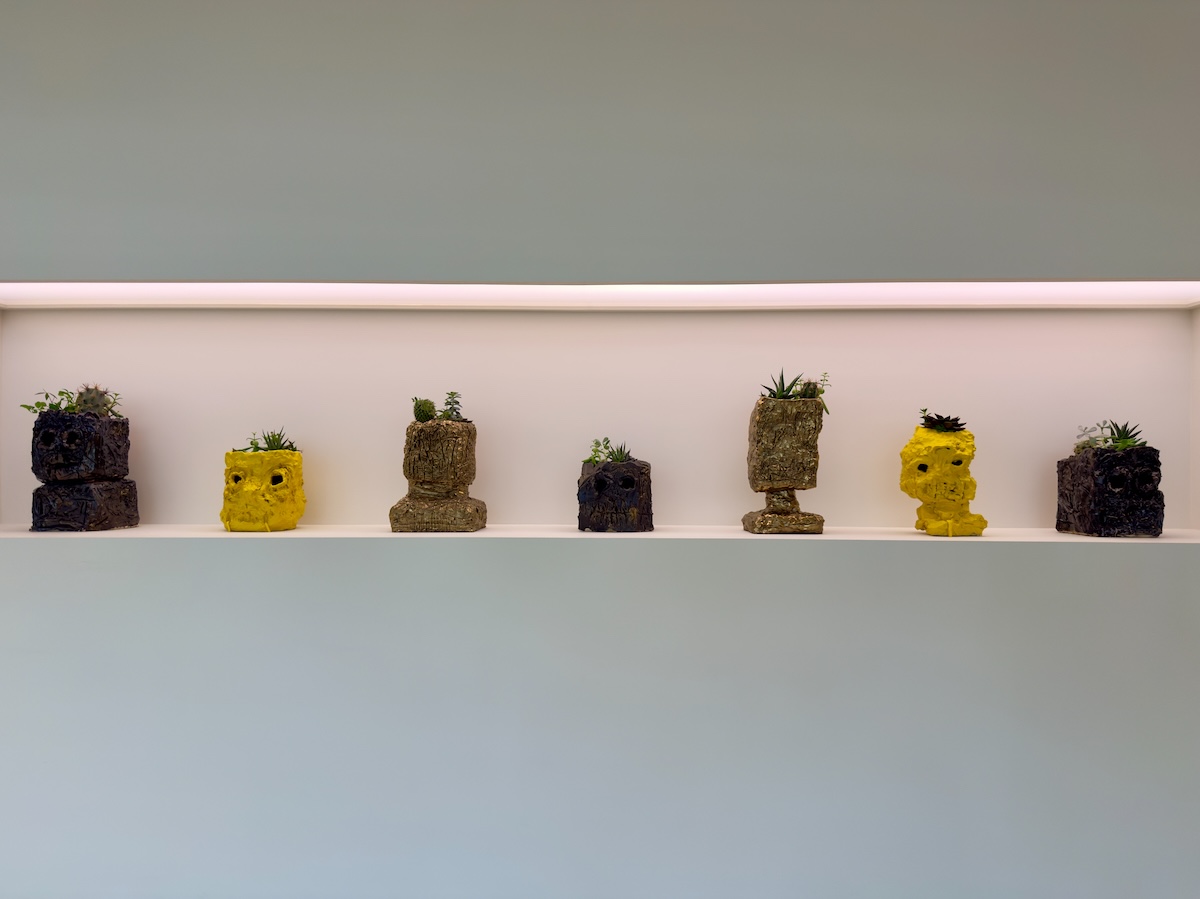
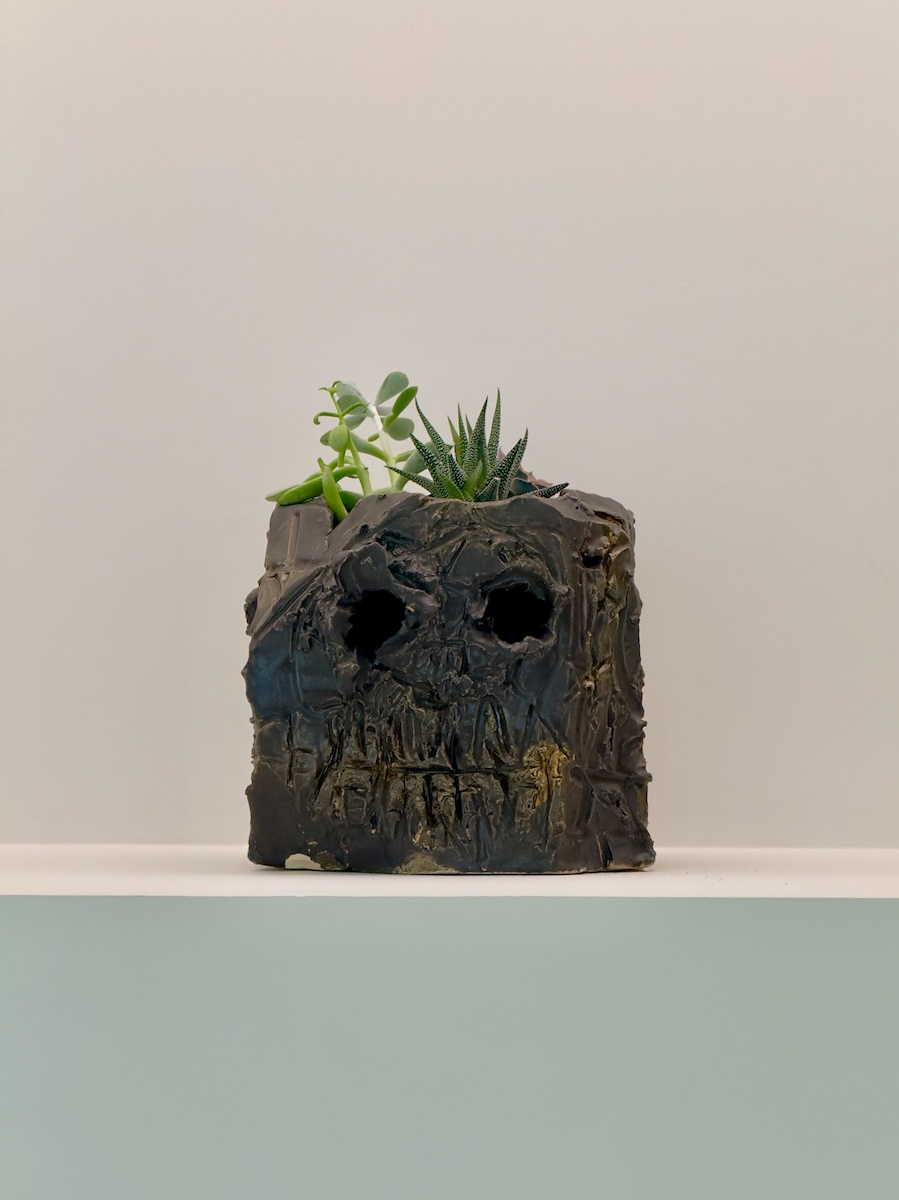
These strange little head-like vessels quickly became some of my favorites in the exhibition. Johnson draws on the tradition of 19th-century face jugs made by Black potters in the American South, but these felt weirdly hard to categorize. Some looked ancient, others looked playful, and some looked like they’d survived a fire. The plants growing from many of them somehow made the whole thing even stranger—somebody literally had to keep them alive during the exhibition.
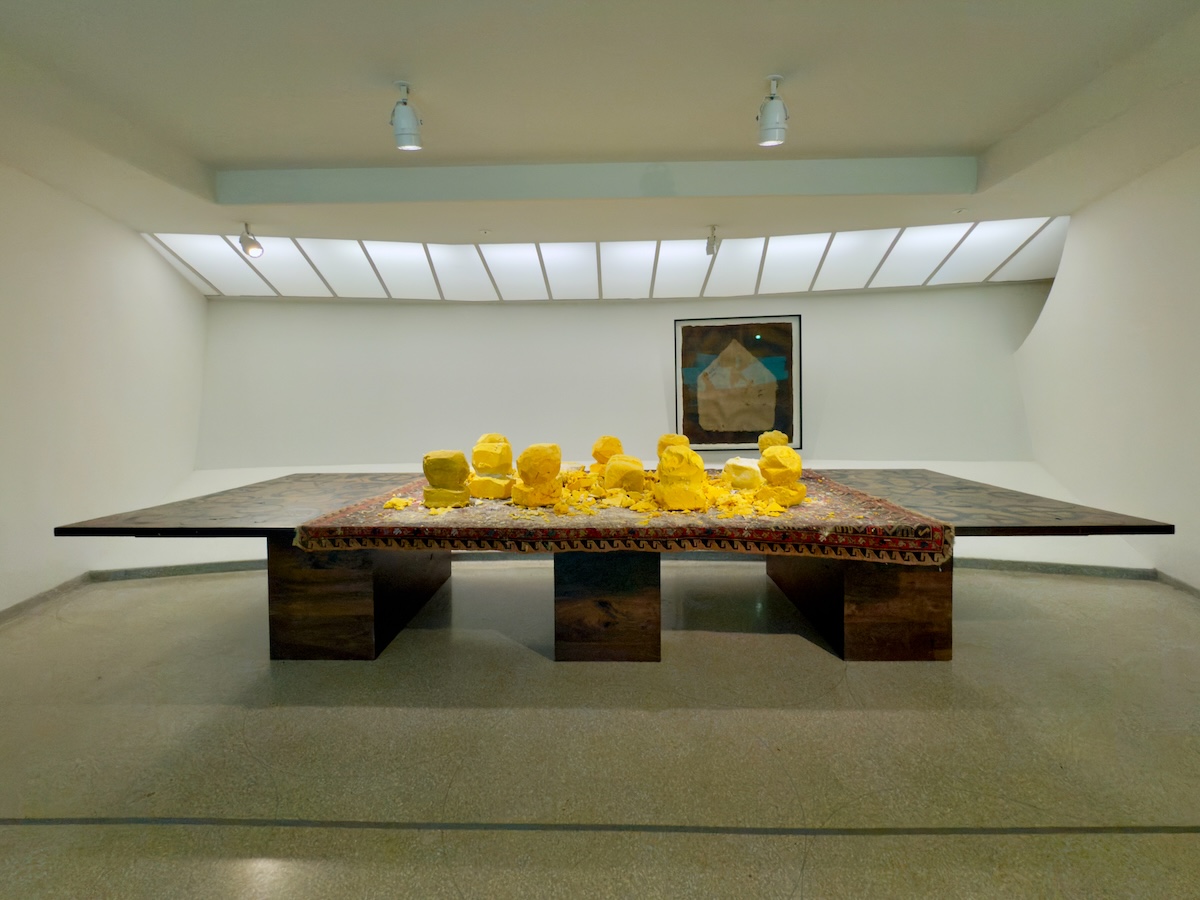
Our House, 2001, and Untitled (Shea Butter Table), 2016
Johnson repeatedly uses domestic materials and spaces throughout the exhibition—plants, shelving, books, mirrors, ceramics, shea butter—so encountering this table installation felt weirdly intimate despite its scale. The crumbling yellow shea butter heads scattered across the surface looked like they could be ritual objects, archaeological fragments, or the leftovers from a very intellectual dinner party.
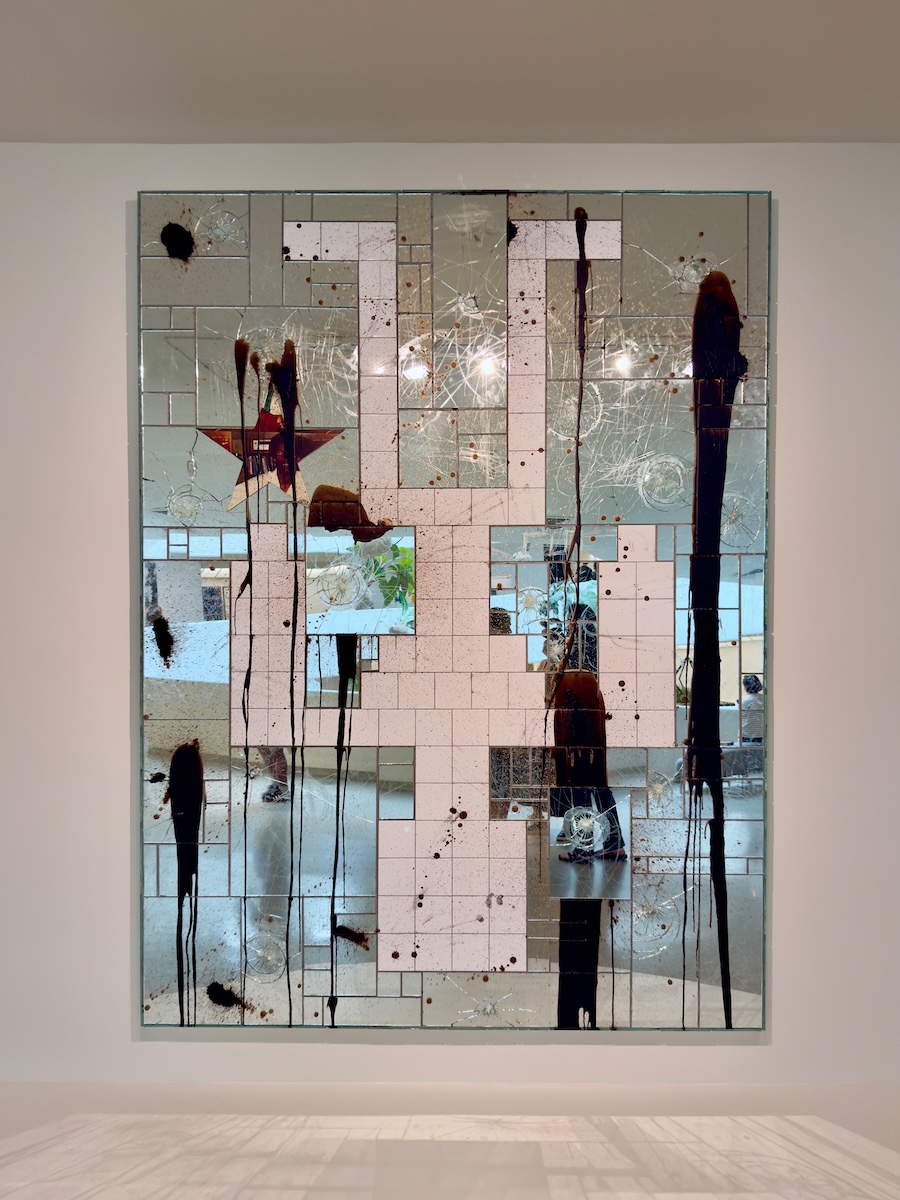
Falling Man, 2015
The mirrors in Johnson’s work were almost never clean. They were scratched, smeared, cracked, splattered, and partially covered over, so you always saw yourself reflected back in fragments. The black streaks running down this piece made it feel damaged in a way I couldn’t entirely explain.
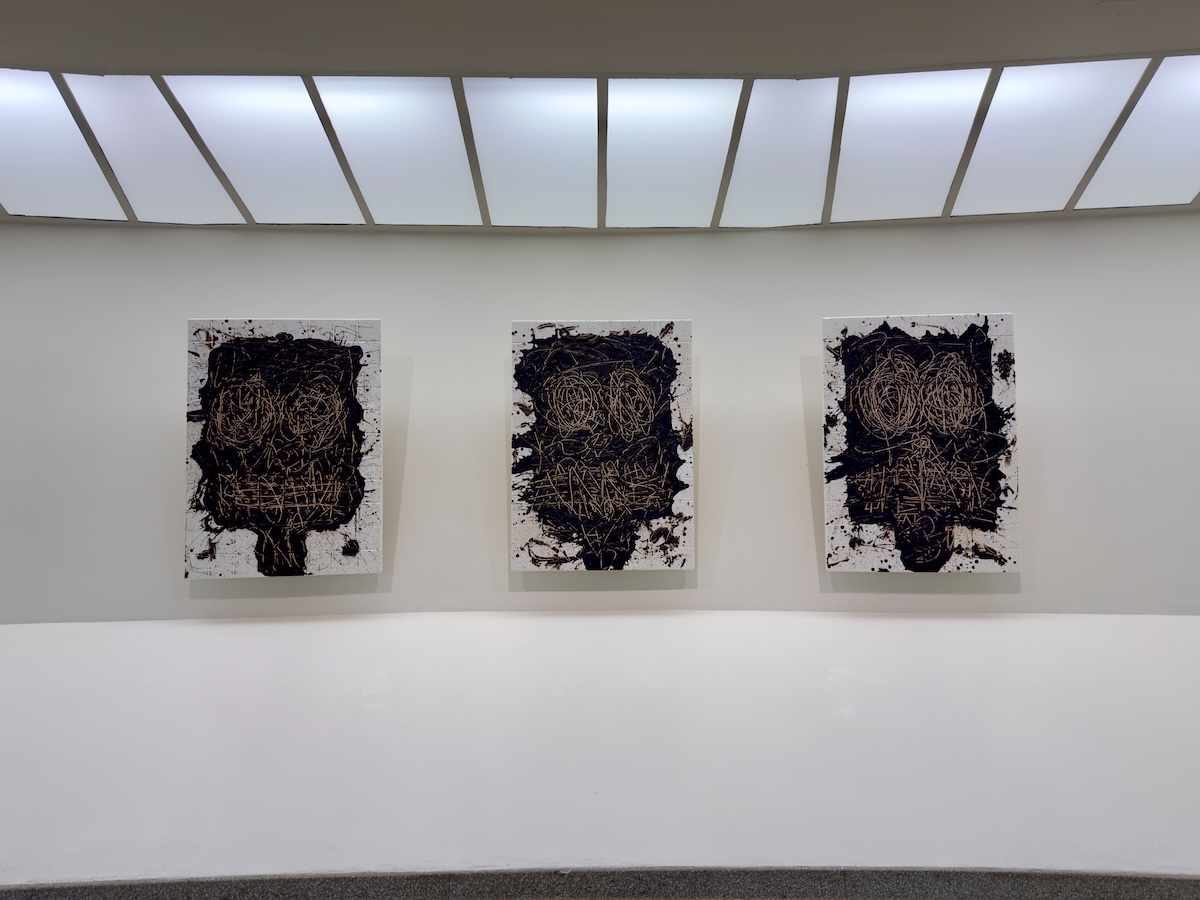
Untitled Anxious Men, 2015
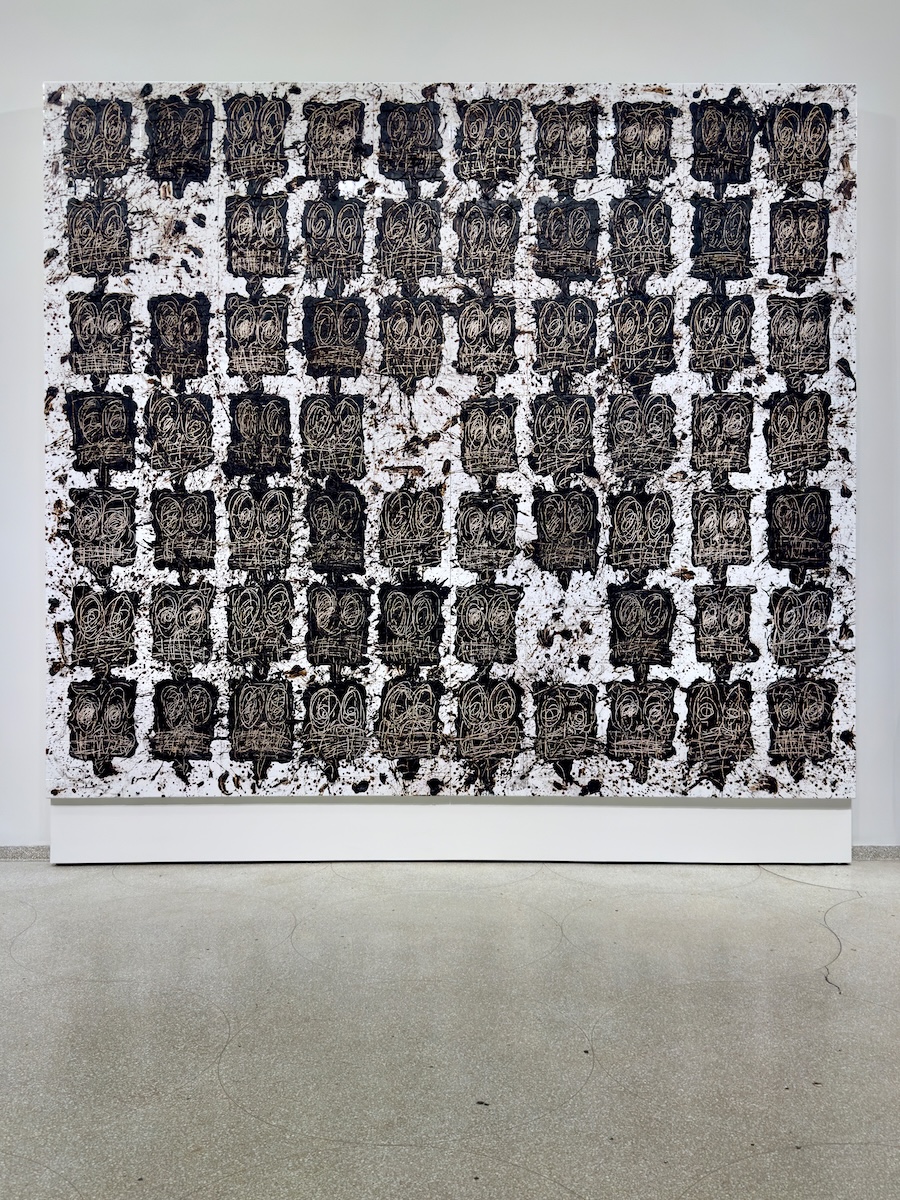
Johnson created these works by covering white bathroom tiles with black soap and wax, then scratching anxious-looking faces directly into the surface. Individually, the faces can seem almost cartoonish. But after seeing them repeated over and over throughout the exhibition, they began to feel genuinely unsettling. One anxious face can feel expressive. Fifty anxious faces start feeling societal.
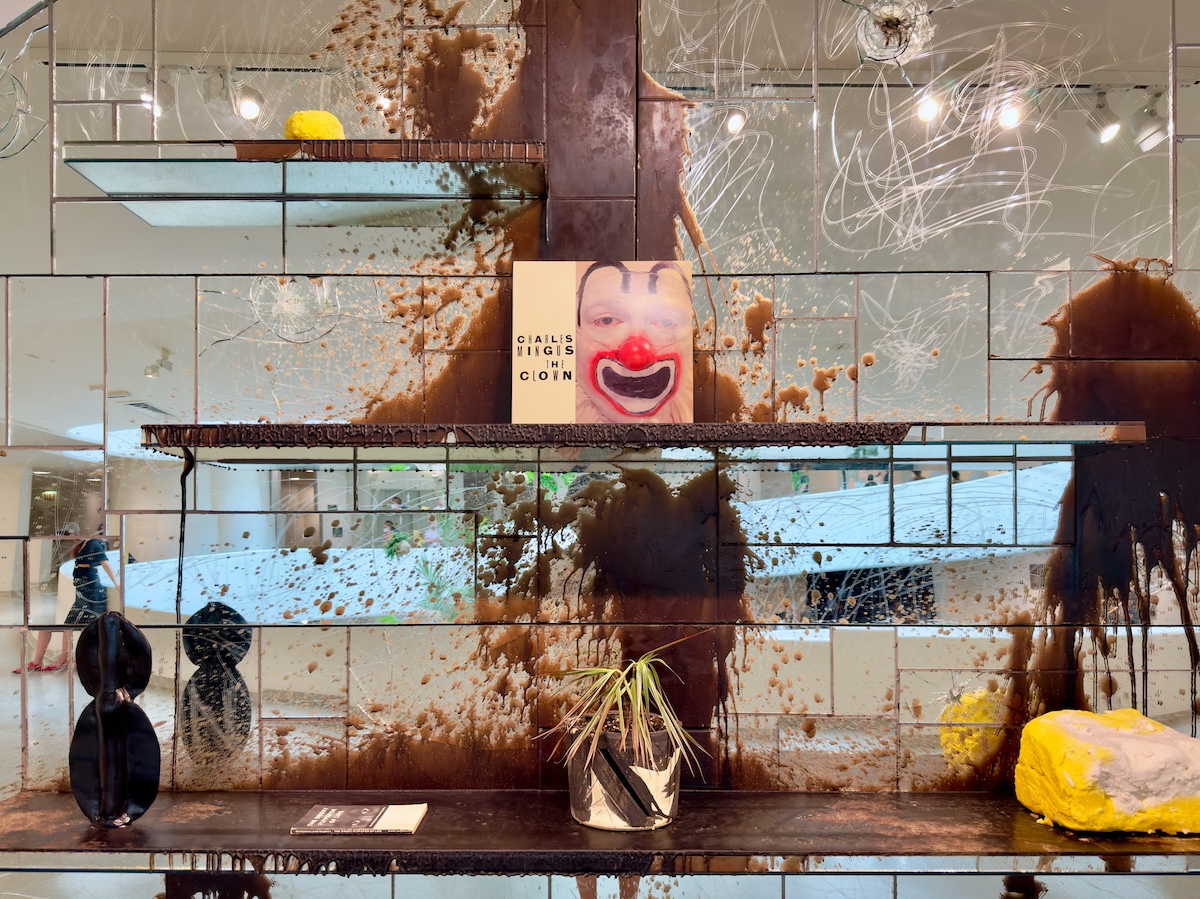
The Sweet Fly Paper, 2012
This piece combined many of the materials and ideas that kept appearing throughout the exhibition—books, mirrors, plants, shea butter, music, and Black cultural references layered together into something that felt part library and part living room. The mirrored tiles reflected viewers back in broken fragments, making it impossible to look at the piece without accidentally becoming part of it yourself.

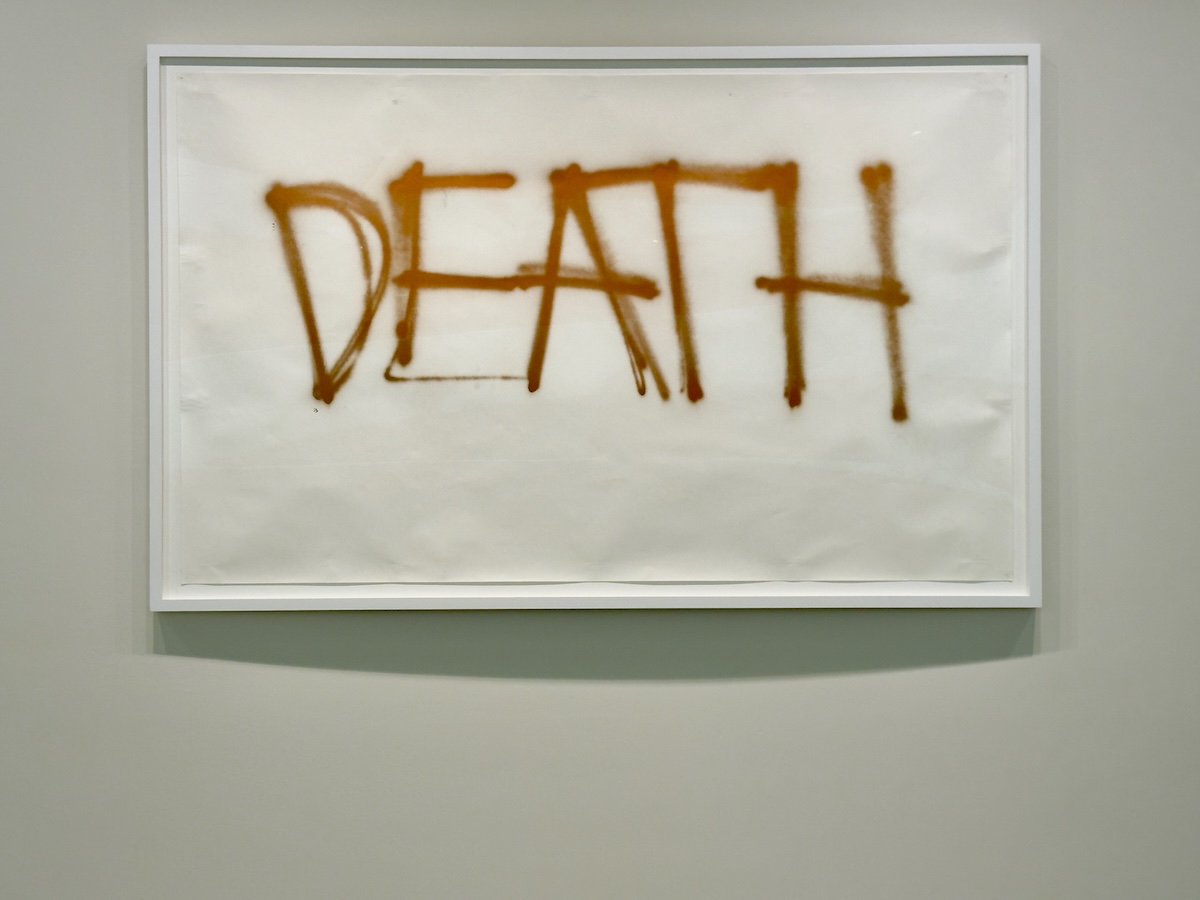
Death is Golden, 2004
The bluntness of this piece is what makes it stick in your head. There’s no elaborate symbolism, no visual cushioning. Just the word DEATH sprayed across a white surface with enough emptiness around it to make the silence feel intentional.
Untitled Anxious Audience, 2019
By this point in the exhibition, Johnson’s anxious faces had started to feel almost environmental, like weather or static. The faces look like they were scratched frantically into the layers of black soap and wax, giving them the uneasy feeling of something carved out under pressure rather than carefully painted. Seeing them multiplied across a massive canvas transformed the anxiety from an individual emotion into something collective and shared.

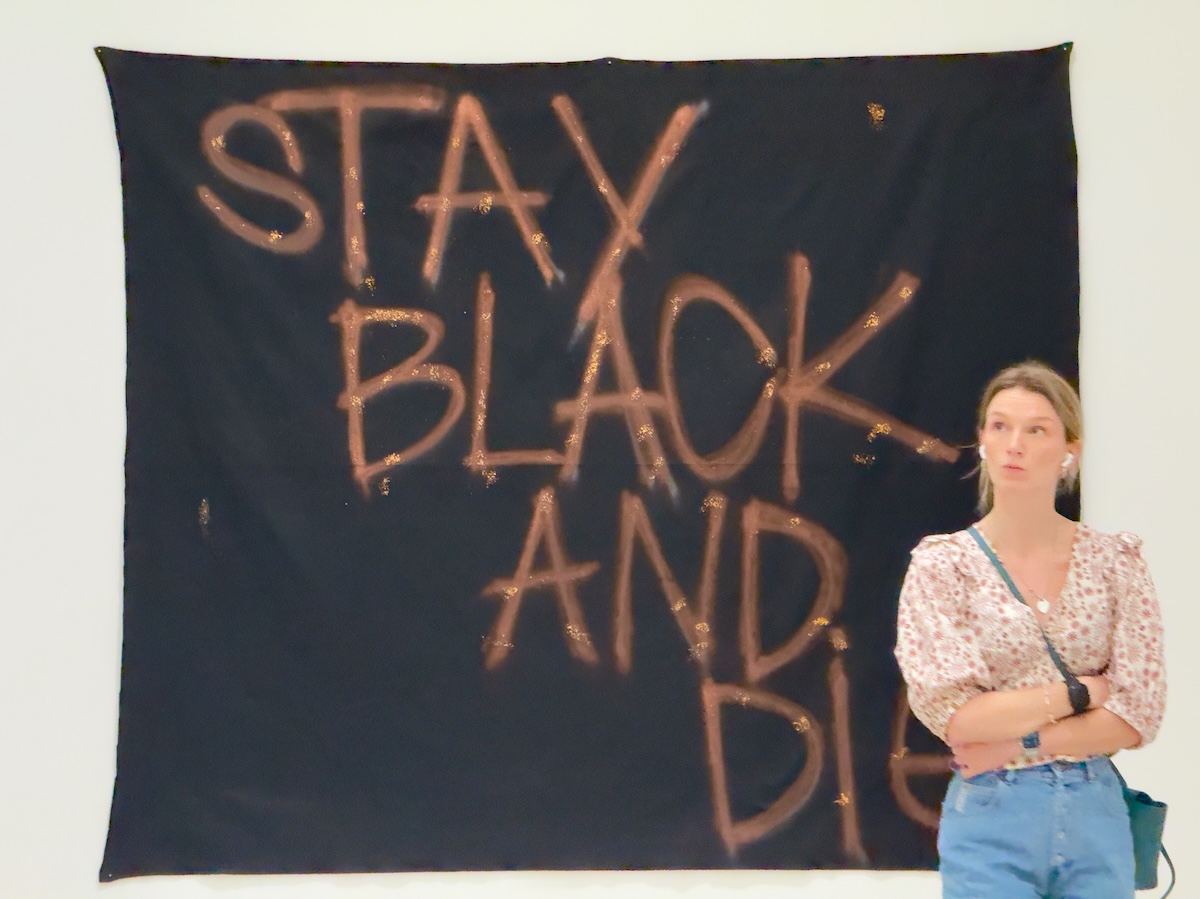

Stay Black and Die (from the series “Things I Need To Do”), 2005
This was probably the piece that made me stop longest, simply because of how direct it was. The phrase lands somewhere between command, warning, survival strategy, social critique, and exhausted dark humor. Johnson never resolves the tension for you, so you’re left standing there trying to decide whether the piece is fatalistic, angry, or resigned—or all three at once.
By the time we hit the ground again, the Guggenheim felt less like a series of individual galleries and more like a long, continuous spiral of floating cities, happy cows, fractured faces, hanging gardens, anxious spirits, and scratched mirrors drifting downward through Frank Lloyd Wright’s magnificent rotunda.
The museum can occasionally make it difficult to look at art in the straightforward way most galleries encourage. But that might be the point. The Guggenheim has always been more interested in movement, atmosphere, and visual collision than in behaving like a normal museum. You don’t simply walk through it. You disappear into it for a while.
Write a comment