

MoMA is hard to write about because it’s already been explained, ranked, toured, footnoted, and gift-shopped into cultural wallpaper. You don’t really discover it so much as walk into a place where half the paintings seem to have their own publicists.
And yet we keep going back. Every time we’re in New York, we end up there again. Which is either a sign of deep cultural commitment or a profound failure of imagination. Or maybe both. But MoMA keeps working on us.
So this is not a guide to MoMA, a theory of modern art, or an argument for why anyone should stand reverently in front of anything. We saw the famous things, because we are not monsters. But here are some of the pieces that caught our attention this time—the ones that made us stop, mutter something likely useless to each other, and take a photo.
Highlights
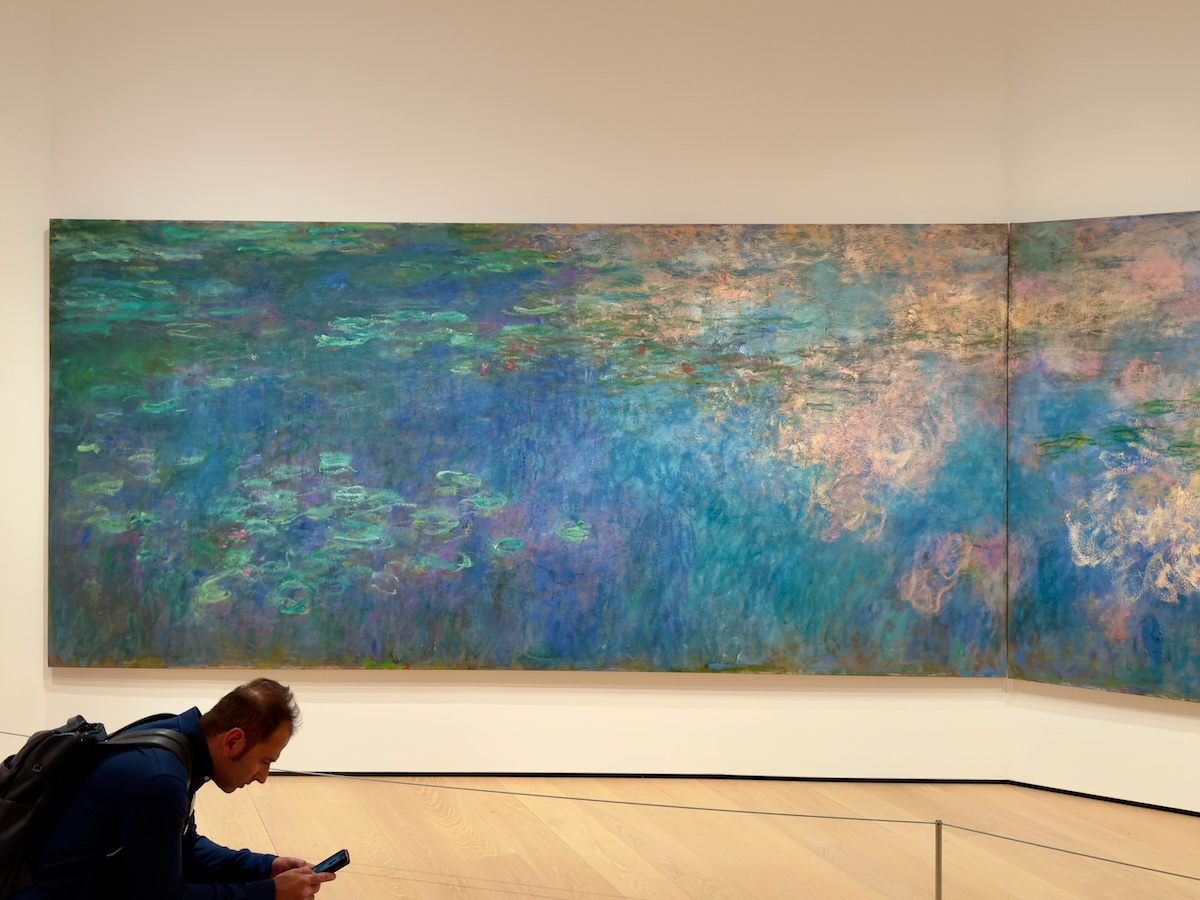
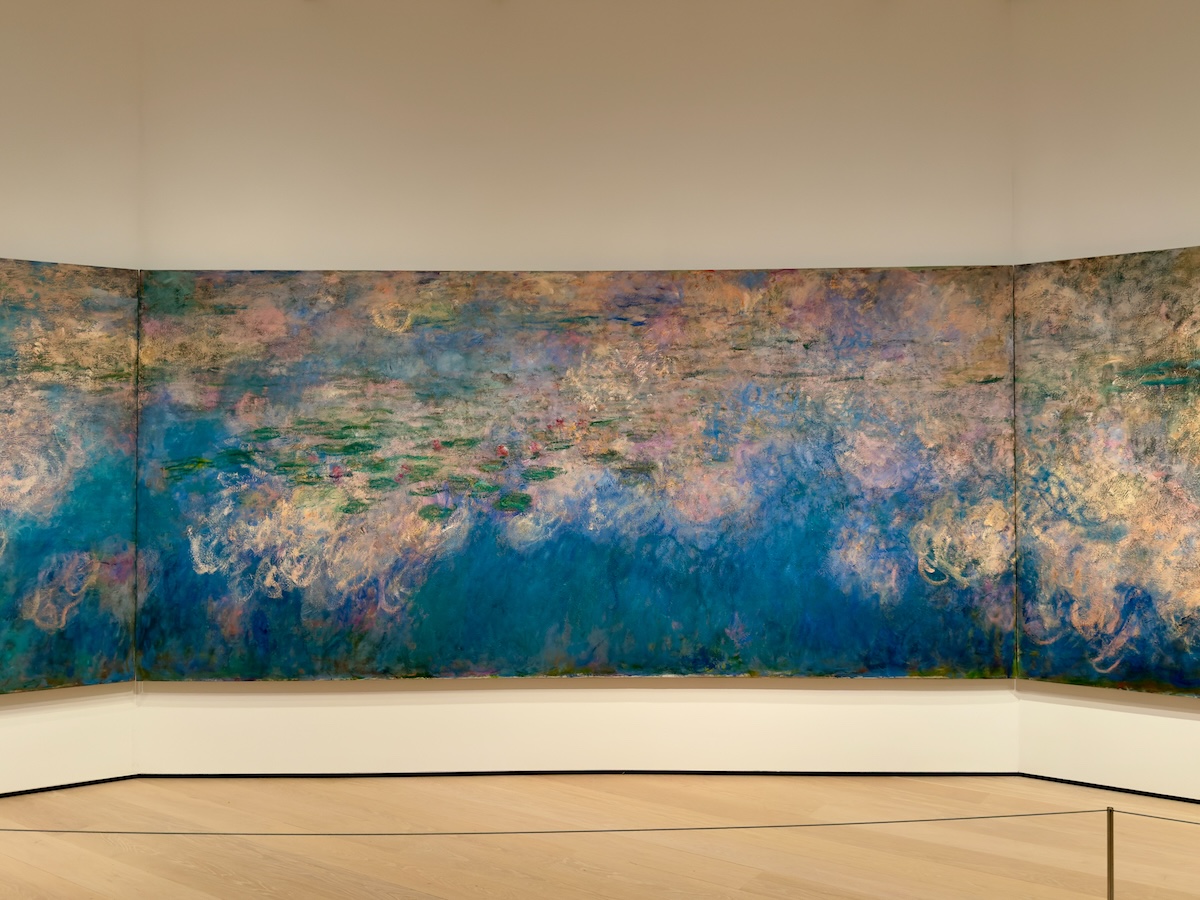
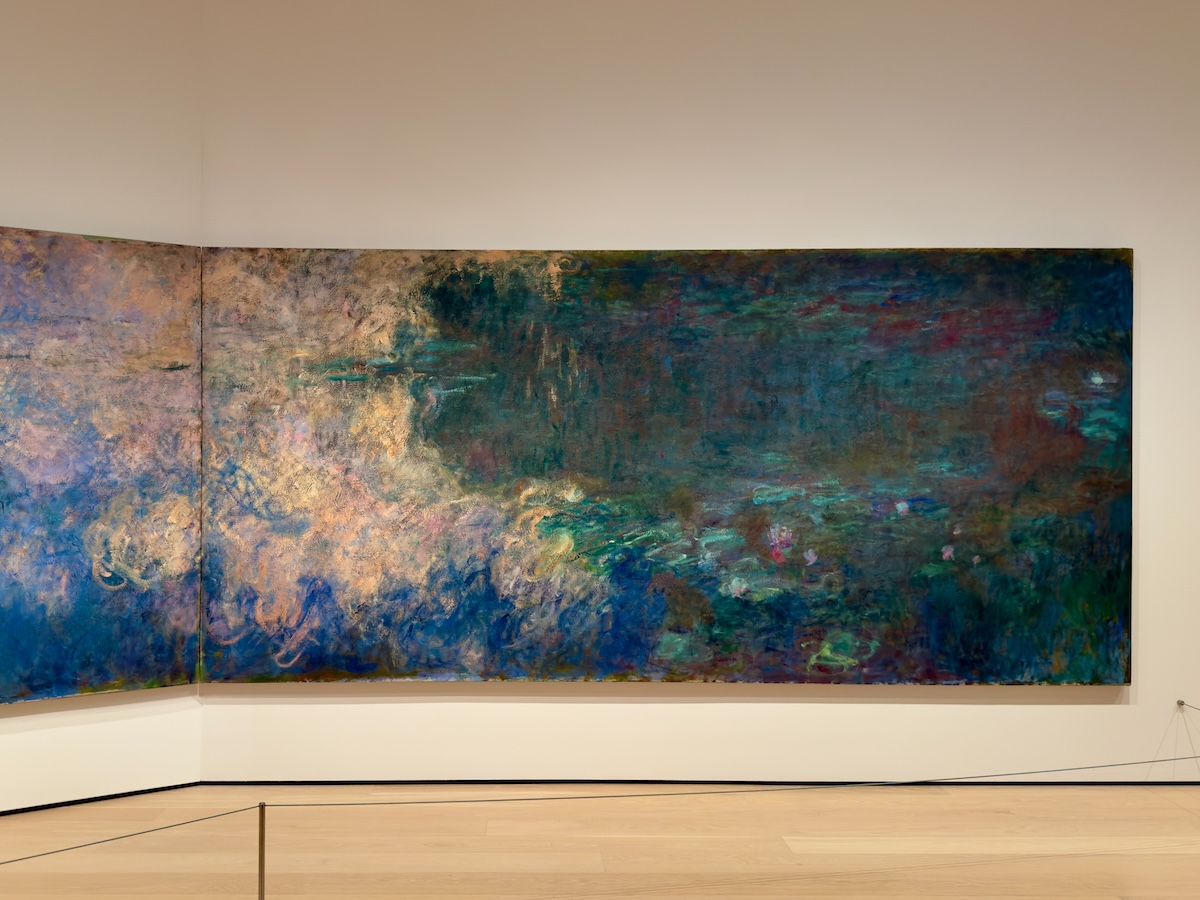
Water Lilies, 1914–26 – Claude Monet
Somehow, I never fully understood that MoMA’s Water Lilies is not just “a Monet”—it’s a room-sized situation. The paintings stretch across the walls like an expensive weather map, all color, water, reflection, and scale. You don’t look at them so much as get absorbed by them.
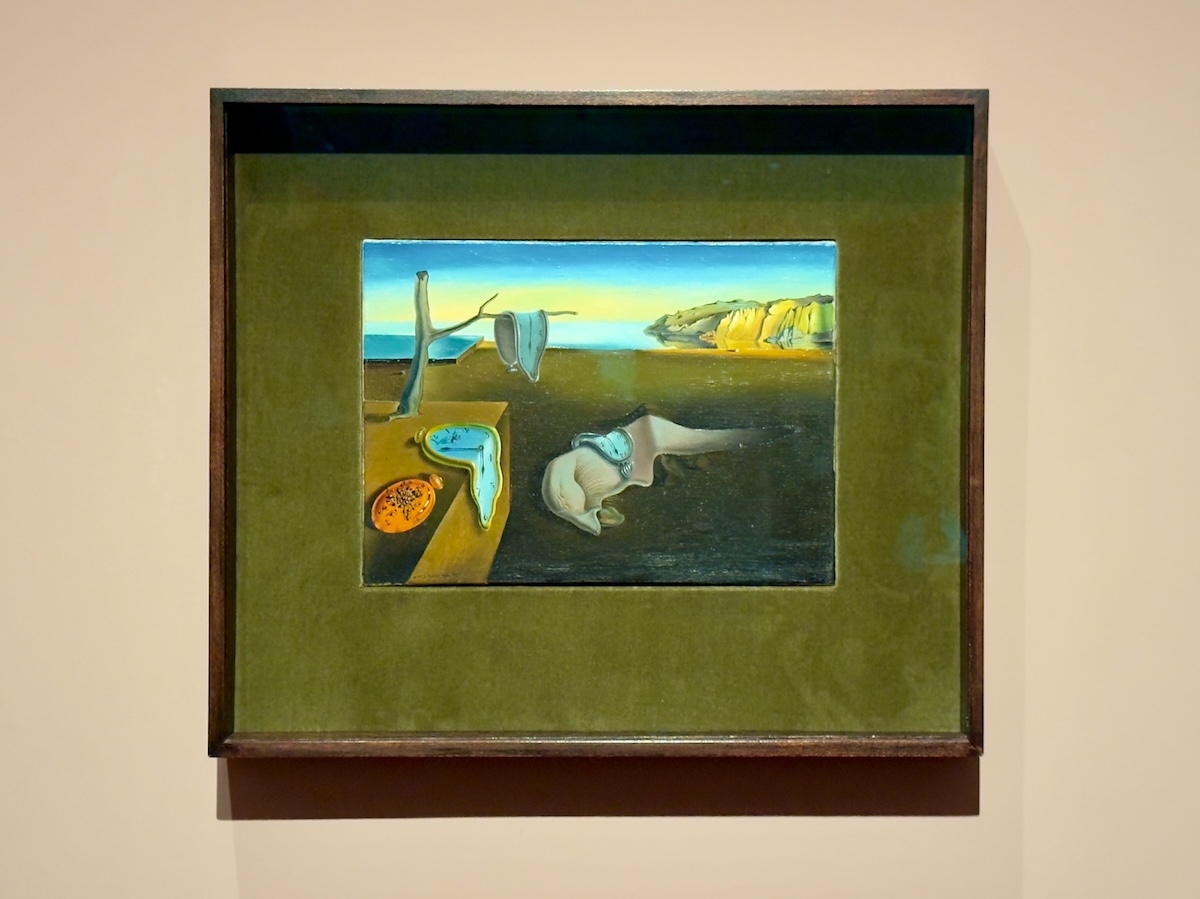
The Persistence of Memory, 1931 – Salvador Dalí
After Water Lilies, the big surprise is how small this one is. After seeing Persistence on dorm-room posters, mousepads, and mugs for half a lifetime, it turns out to be barely bigger than a placemat. But the tiny scale makes it stronger, not weaker. The clocks still sag. The ants still gather. Reality still appears to have left early.
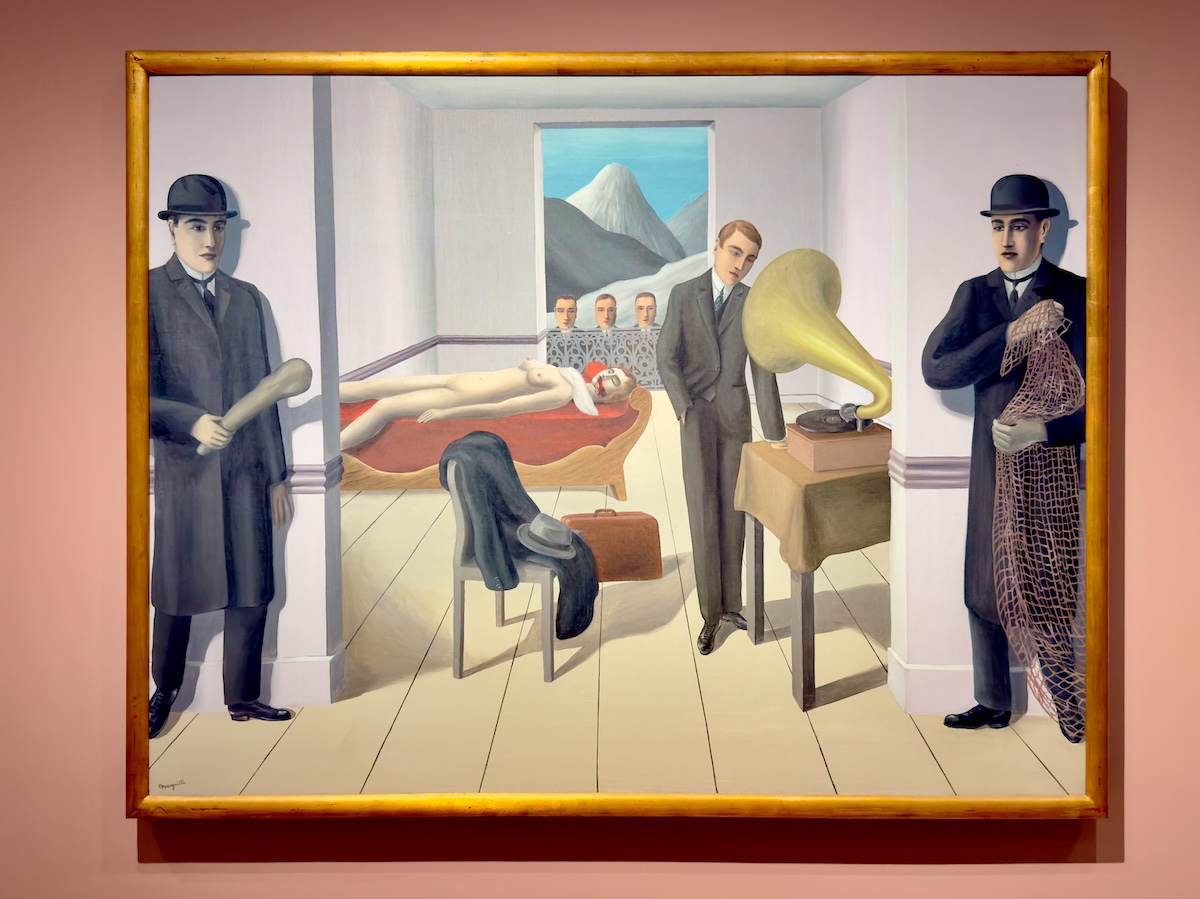

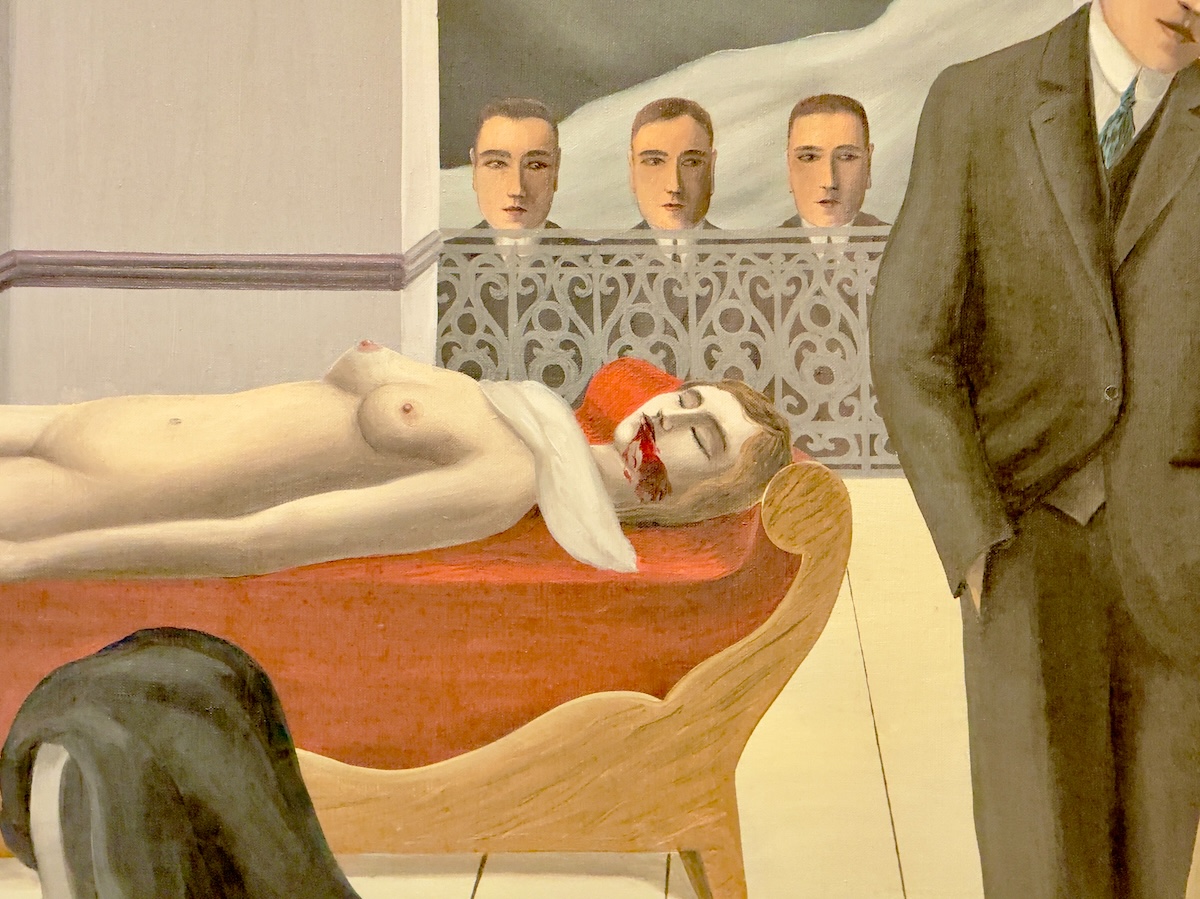
The Menaced Assassin, 1927 – René Magritte
This looks like it should come with a police report, stage directions, and maybe a trigger warning from management. Magritte gives us a body, a gramophone, detectives, weapons, witnesses—and no explanation. Everyone seems to know something, but no one seems inclined to share it.
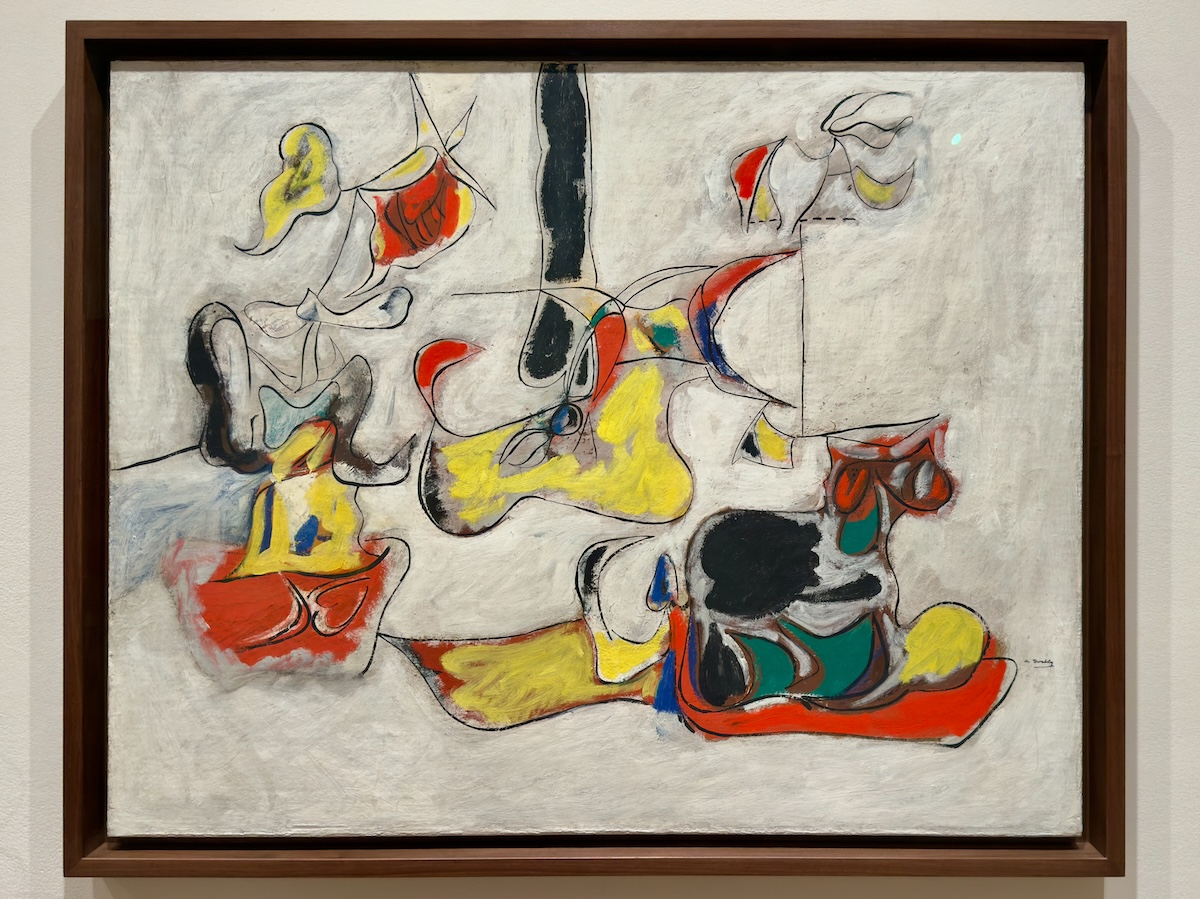
Garden in Sochi, c. 1943 – Arshile Gorky
Gorky’s Garden in Sochi looks abstract until you learn it was tied to childhood memories of Armenia—apple trees, shade, wild carrots, even porcupines. That backstory doesn’t make the painting suddenly legible, which is probably for the best. But it does give the floating shapes a private logic.
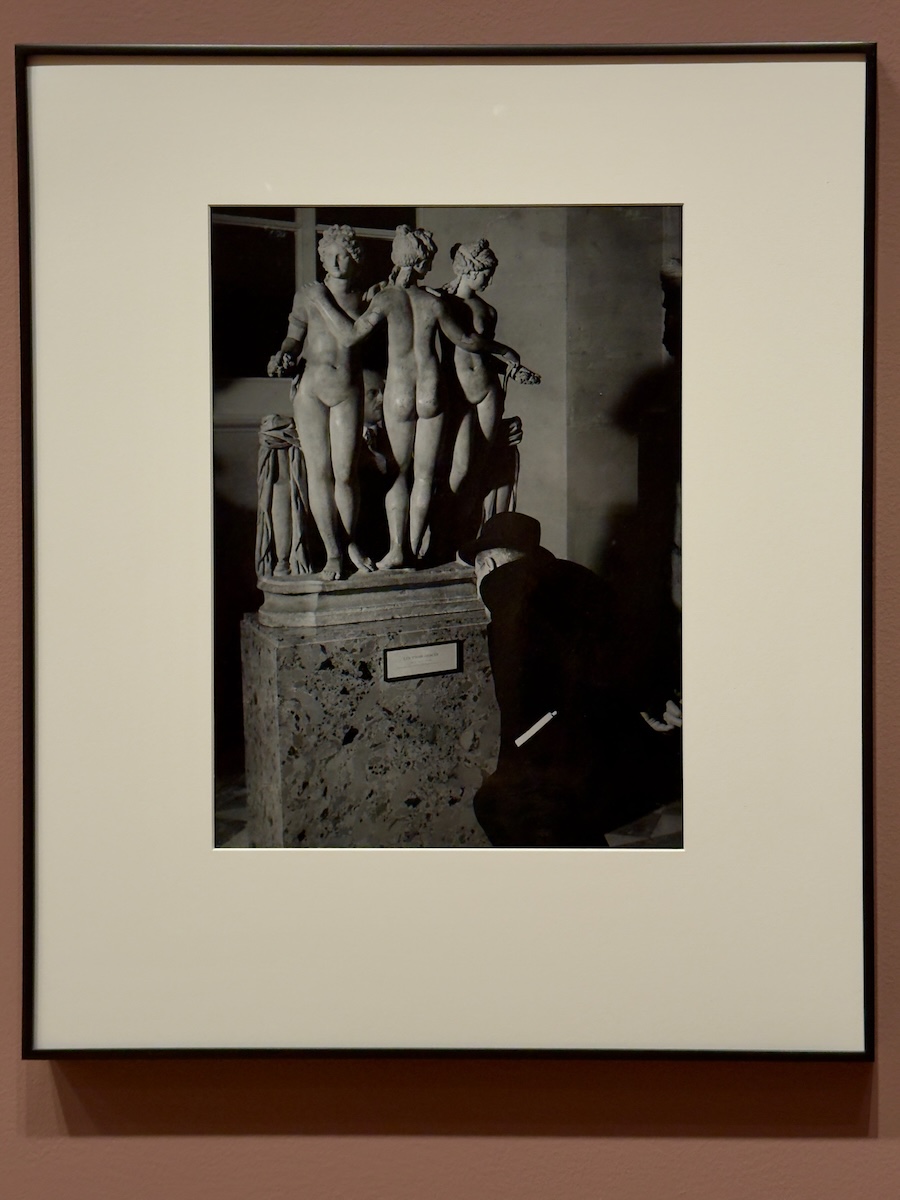
Les Trois Grâces, Musée de Louvre, c. 1936 – Brassaï
Brassaï, born Halász Gyula, gives us the Three Graces inside the Louvre, but the photograph is less about classical beauty than the act of looking at it. The statue glows. The viewer nearly disappears into shadow. As Hungarians in the wild go, this is a pretty good one to find at MoMA.
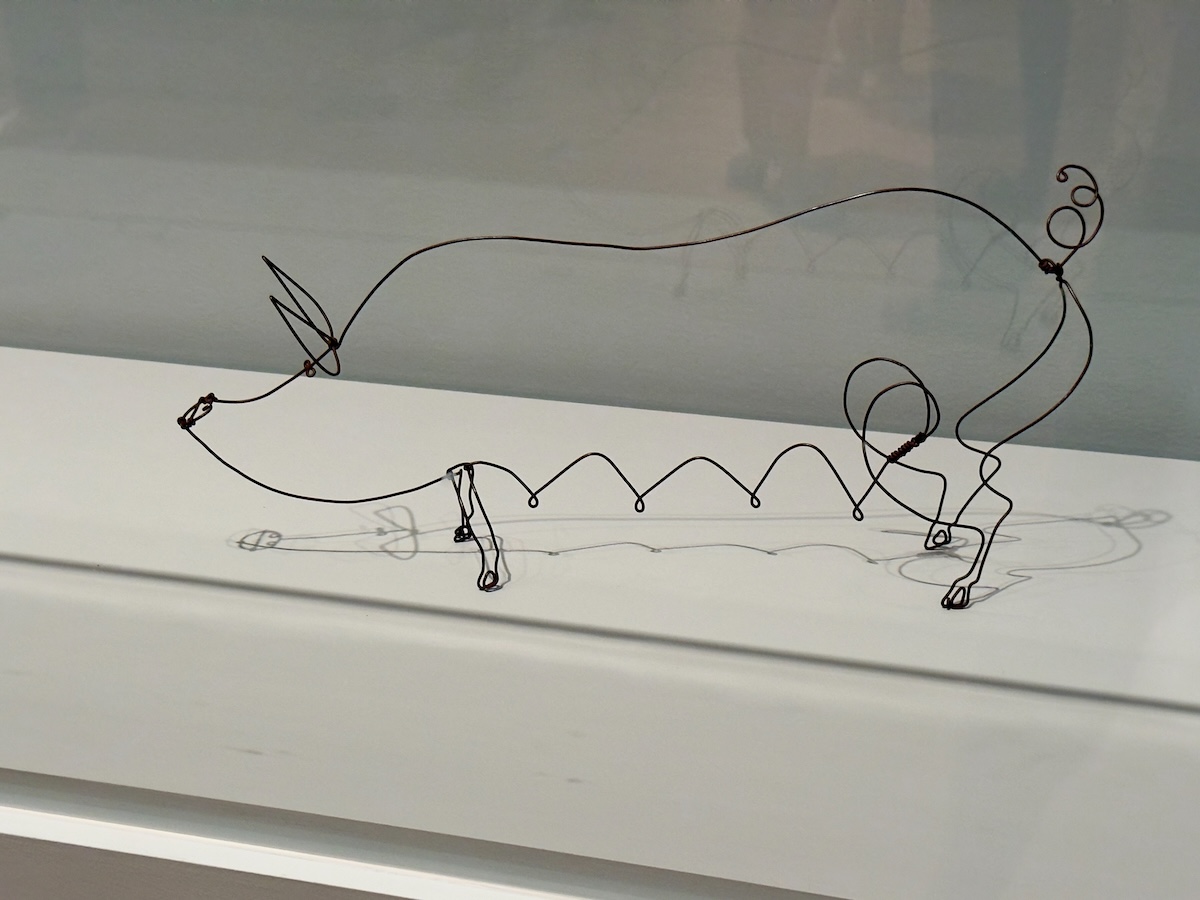
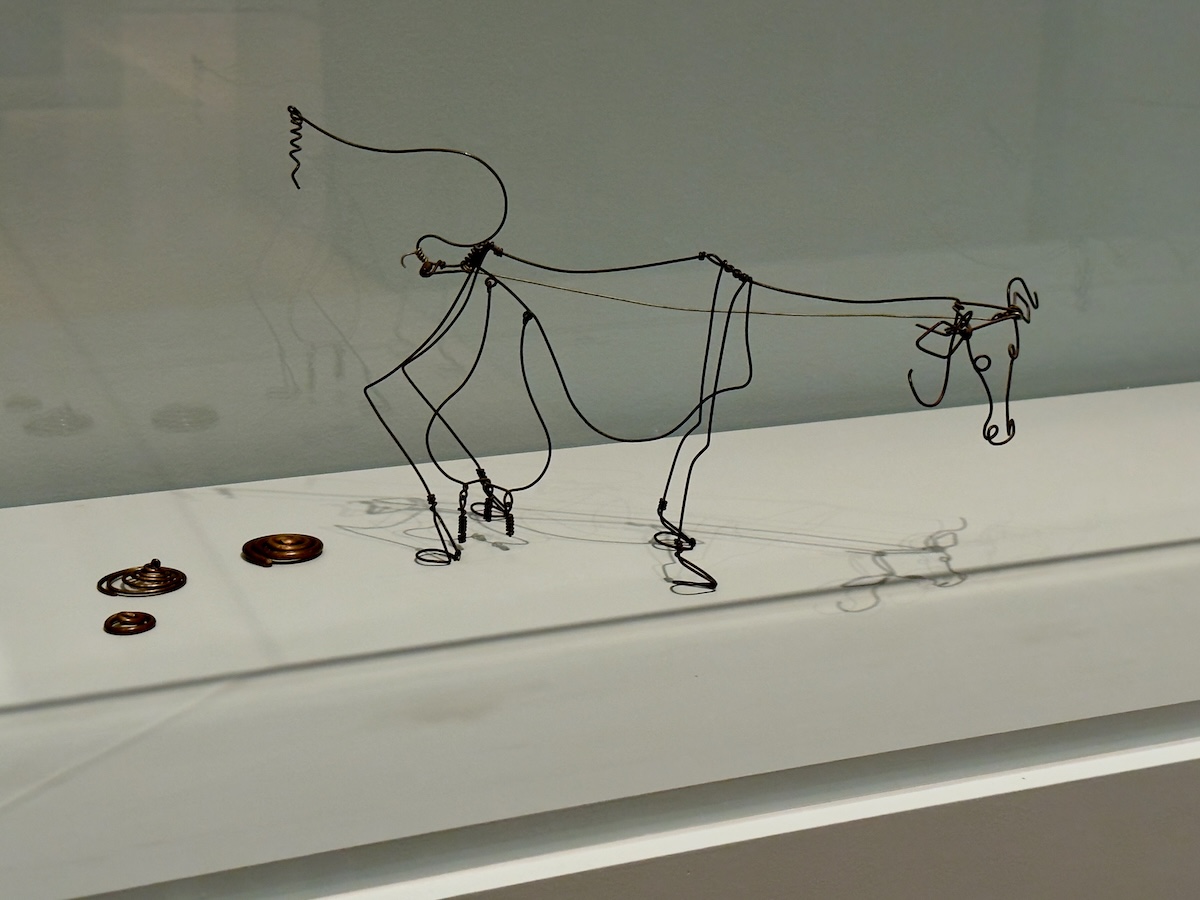
Sow, 1928, and Cow, 1928 – Alexander Calder
Before the famous mobiles, Calder was apparently making tiny wire livestock with more personality than some actual museum visitors. Sow and Cow are basically drawings that escaped the page and started standing around in three dimensions. They are delicate, funny, and completely unserious in the best possible way. A useful reminder that modern art can have a sense of humor.
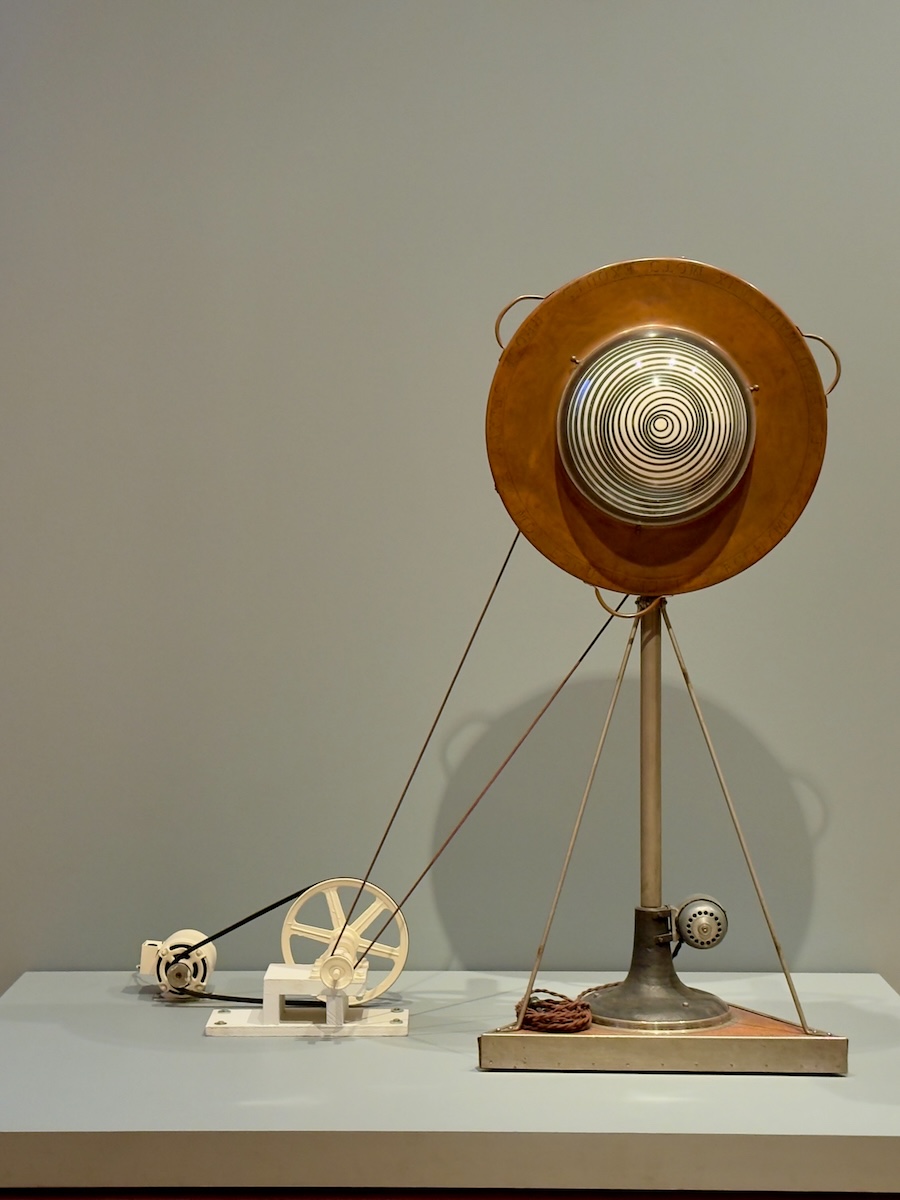
Rotary Demisphere (Precision Optics), 1925 – Marcel Duchamp
Duchamp built Rotary Demisphere to spin, which is inconvenient in a museum, where most things are specifically prevented from doing anything. When it moves, the circles seem to pulse. At rest, it looks like a science-fair project that wandered into art history and refused to leave.
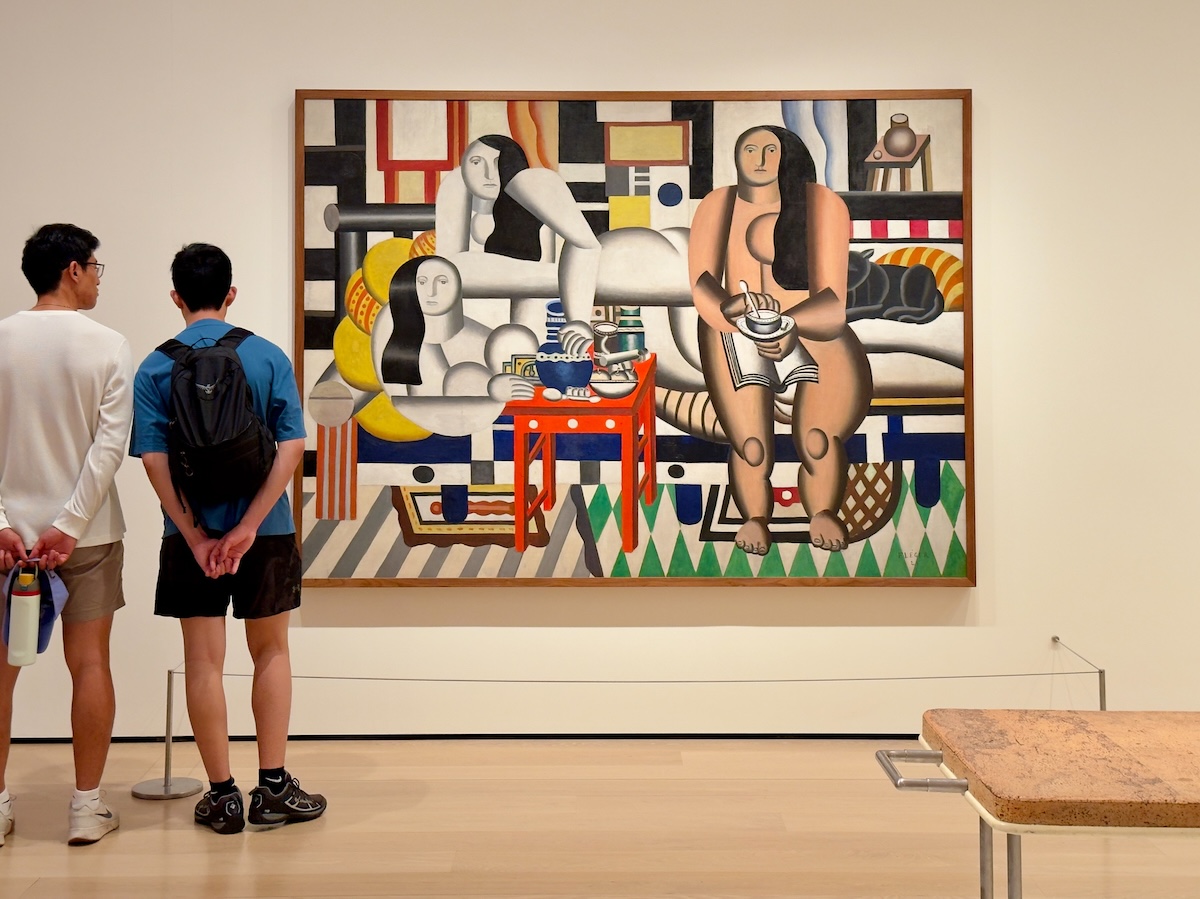
Three Women, 1921–22 – Fernand Léger
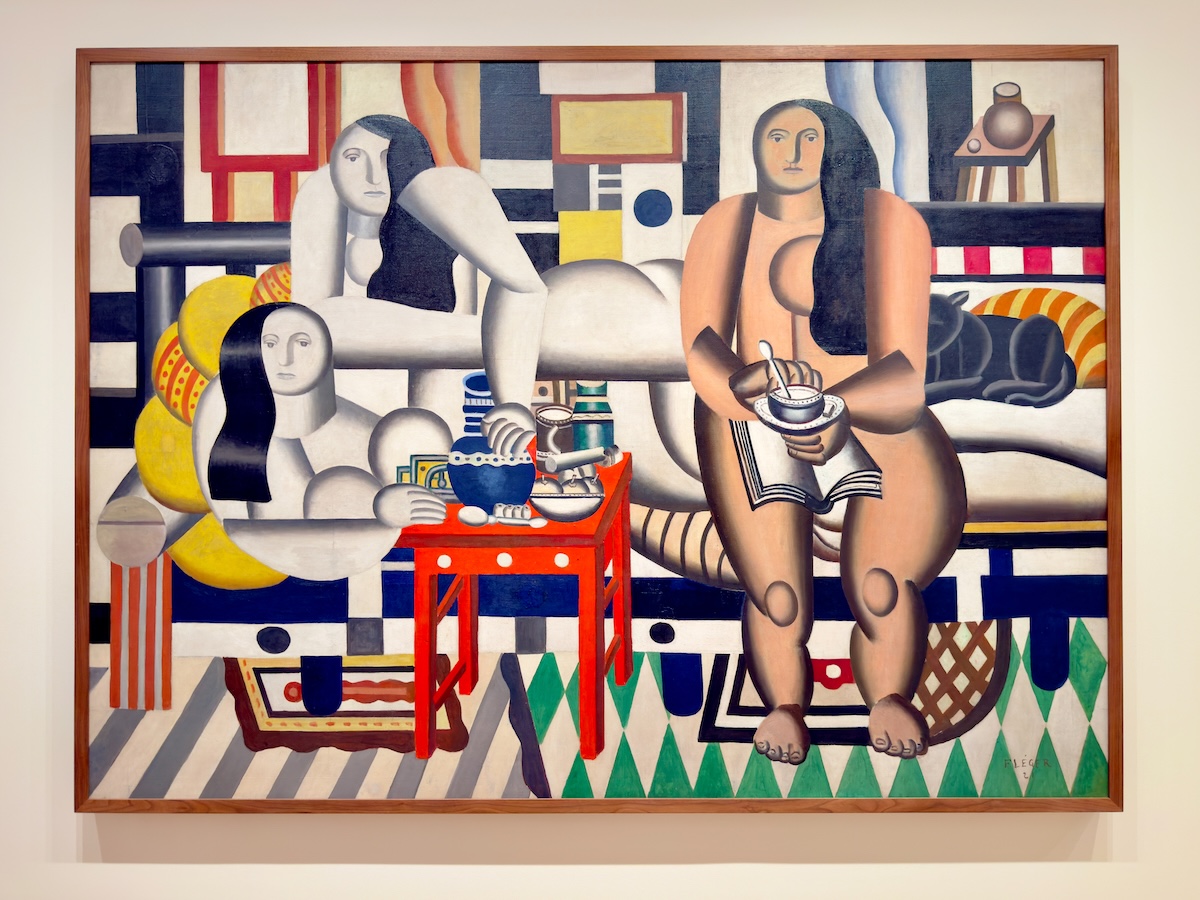
Léger’s three women are lounging, technically, but nothing feels especially soft. The bodies, furniture, dishes, cat, and background all seem assembled from a machine-age parts bin. It’s domestic life reimagined as industrial design, which makes even the tea service look like it might require an operator’s manual.
American Landscape, 1930 – Charles Sheeler
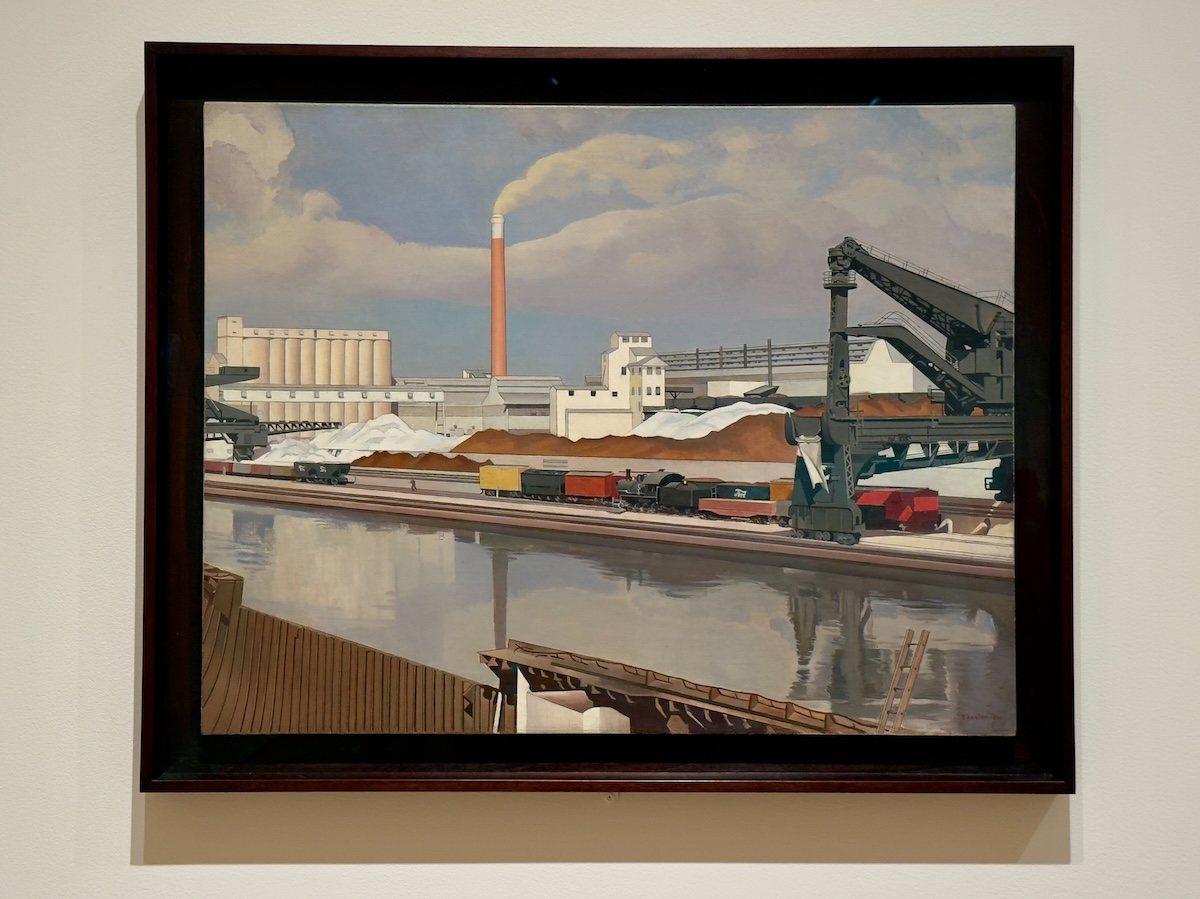
The title promises landscape, and Sheeler delivers one—just not the trees-and-hills version. This is the Ford plant at River Rouge, flattened into clean planes, smokestacks, railcars, cranes, and water. It’s beautiful in a cold, efficient way, though the people who made the place run are nowhere to be seen. Very American, unfortunately.
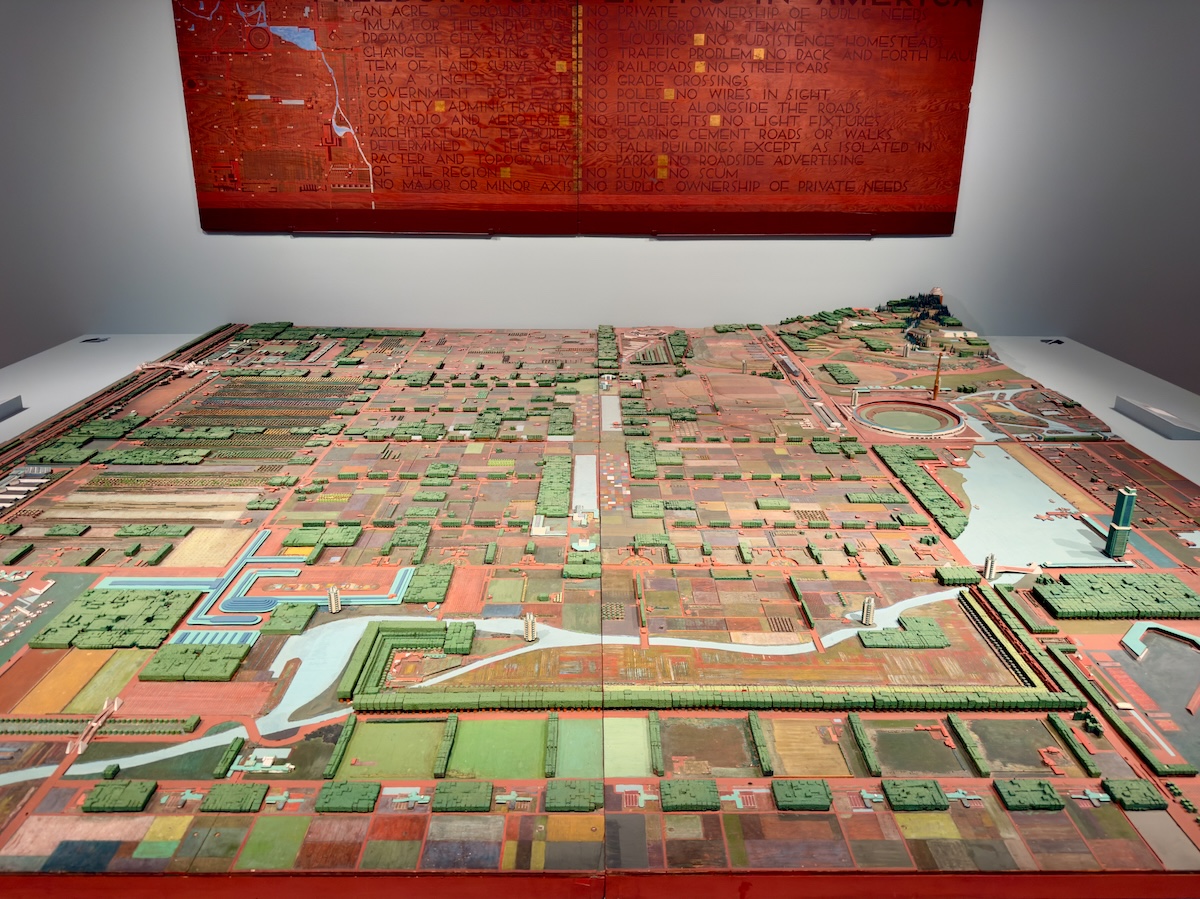
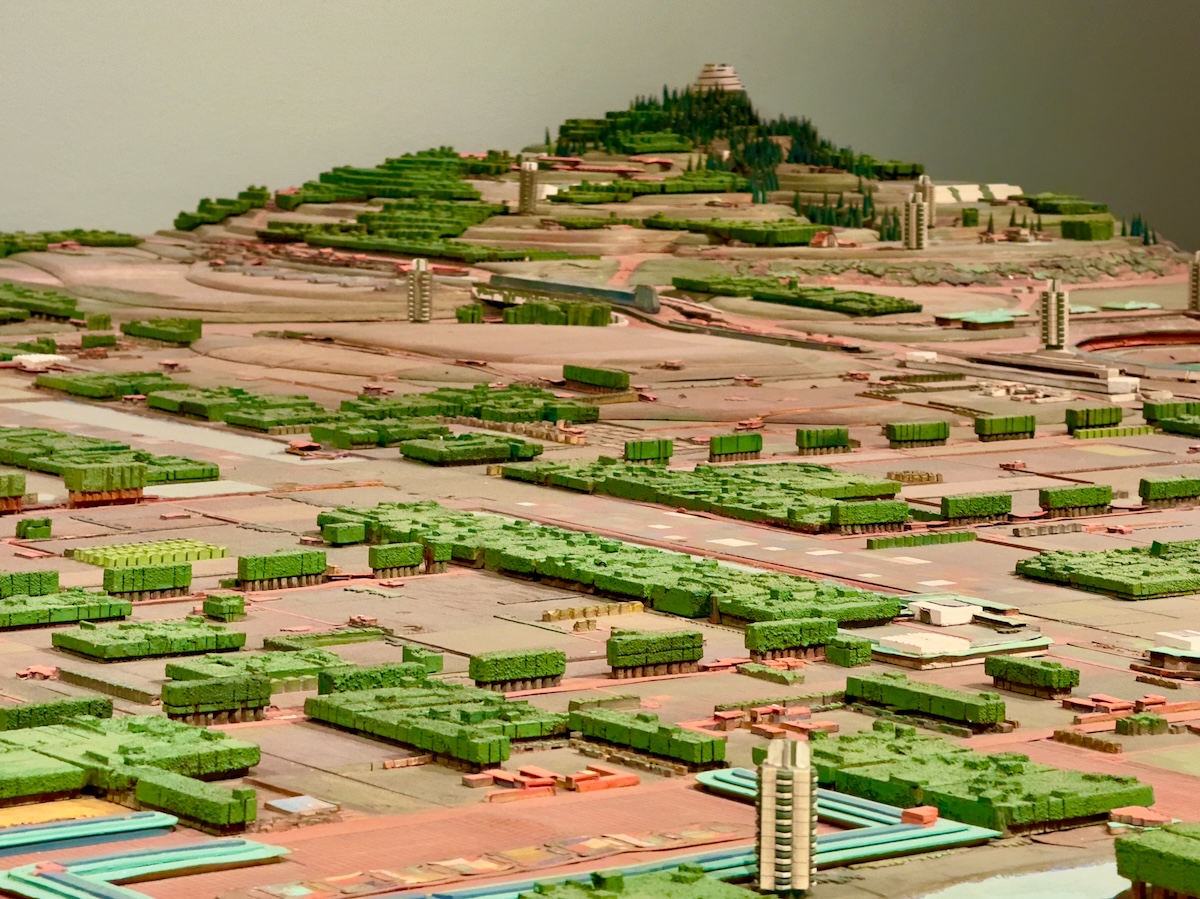
Broadacre City Project, 1934–35 – Frank Lloyd Wright
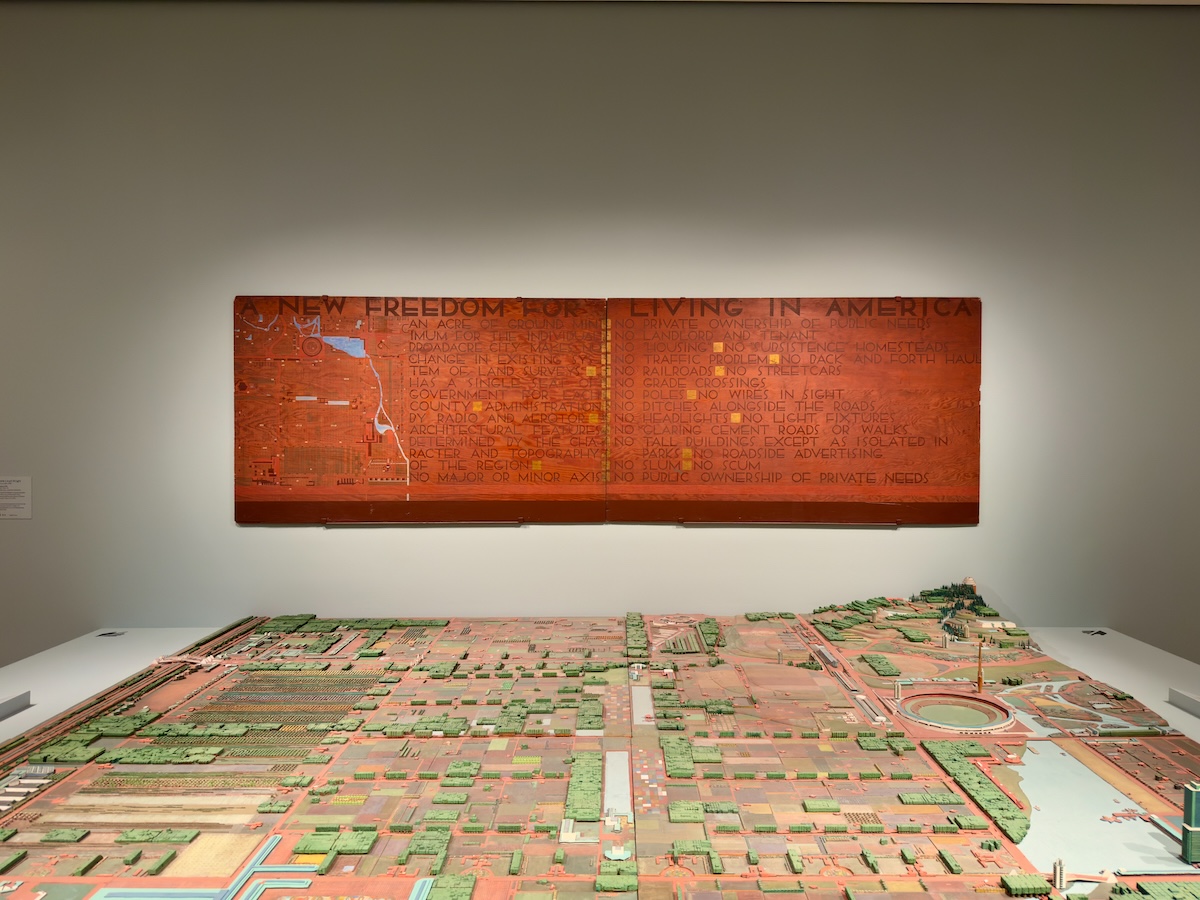
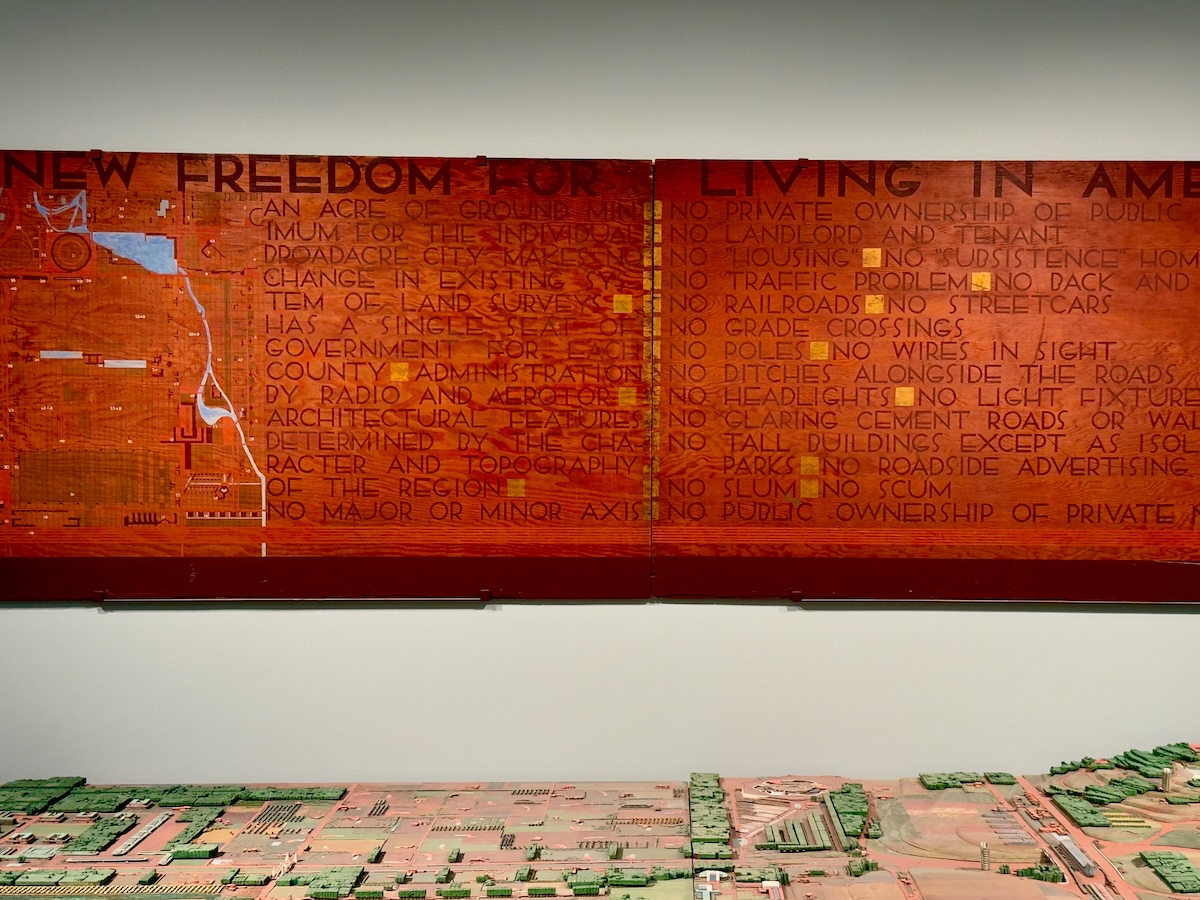
Frank Lloyd Wright’s dream city came with farms, markets, roads, efficiency—and one very large model. Modesty wasn’t really in his wheelhouse. Broadacre City imagined a decentralized America organized around land, cars, and family-run production. It is fascinating, ambitious, and faintly alarming—the kind of utopia that makes you wonder if you’d even be invited.
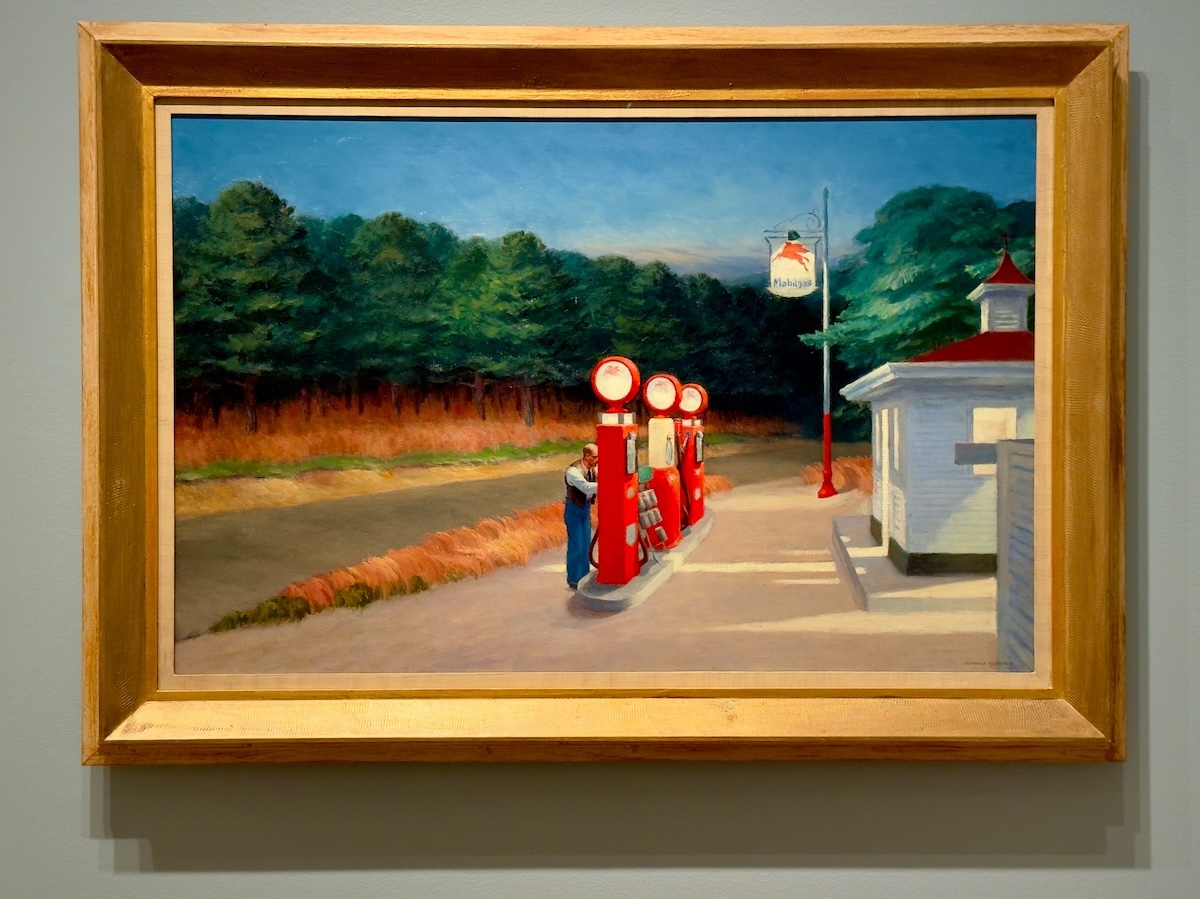
Gas, 1940 – Edward Hopper
Hopper's gas station sits at the edge of daylight, civilization, and, probably, a couple of poor decisions. The lone attendant, red pumps, dark trees, and empty road make the whole place feel like the last open business before something gets weird. Hopper doesn’t force the loneliness. He just lights the scene carefully and lets you feel it.
Coffee and Tea Box for the Dutch company Van Nelle, 1928–1930 – Jacob Jongert
And then there is the coffee tin, because MoMA will absolutely make you stop and admire packaging. To be fair, it earns the attention. The red, yellow, and black lettering turns a household container into a tiny modernist billboard. Somewhere, a Dutch pantry briefly became more stylish than most of the places I’ve lived.

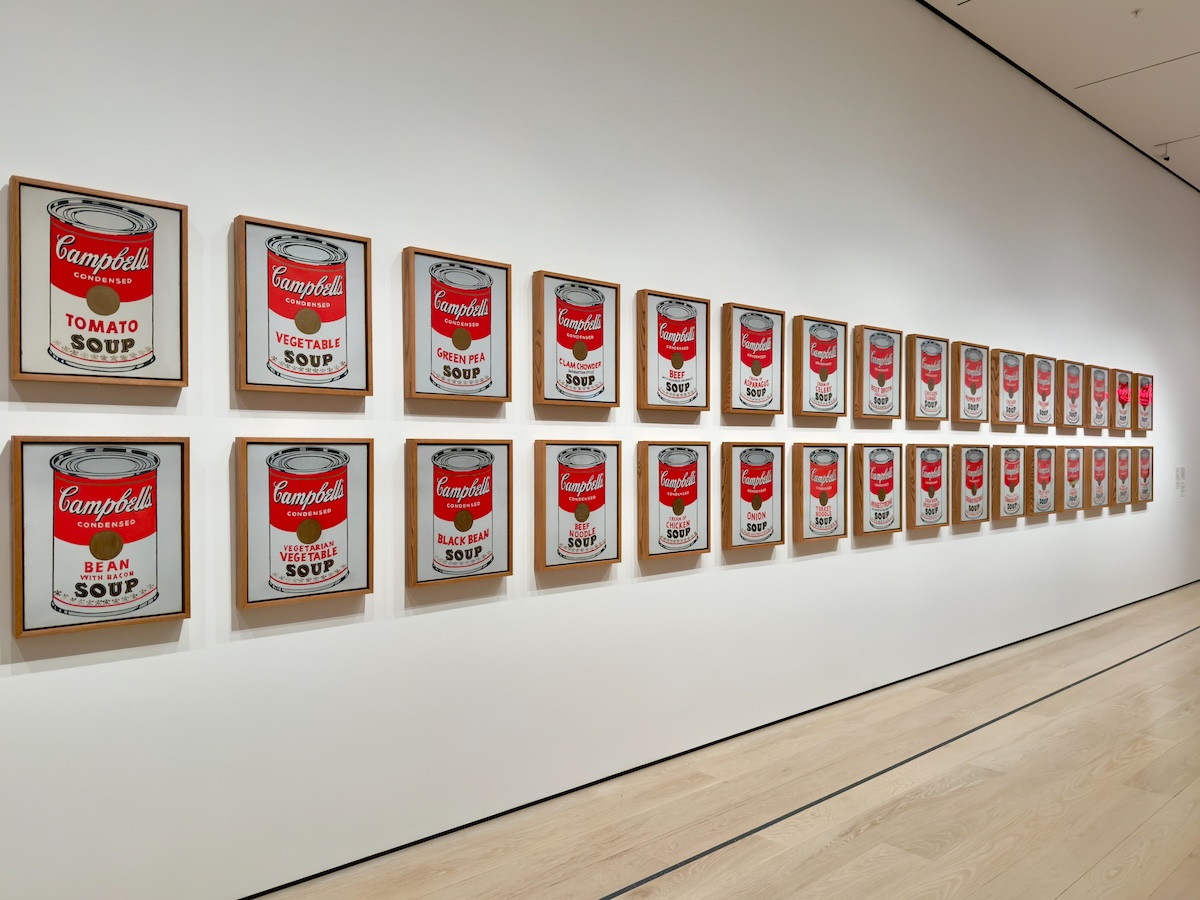


Campbell’s Soup Cans, 1962 – Andy Warhol
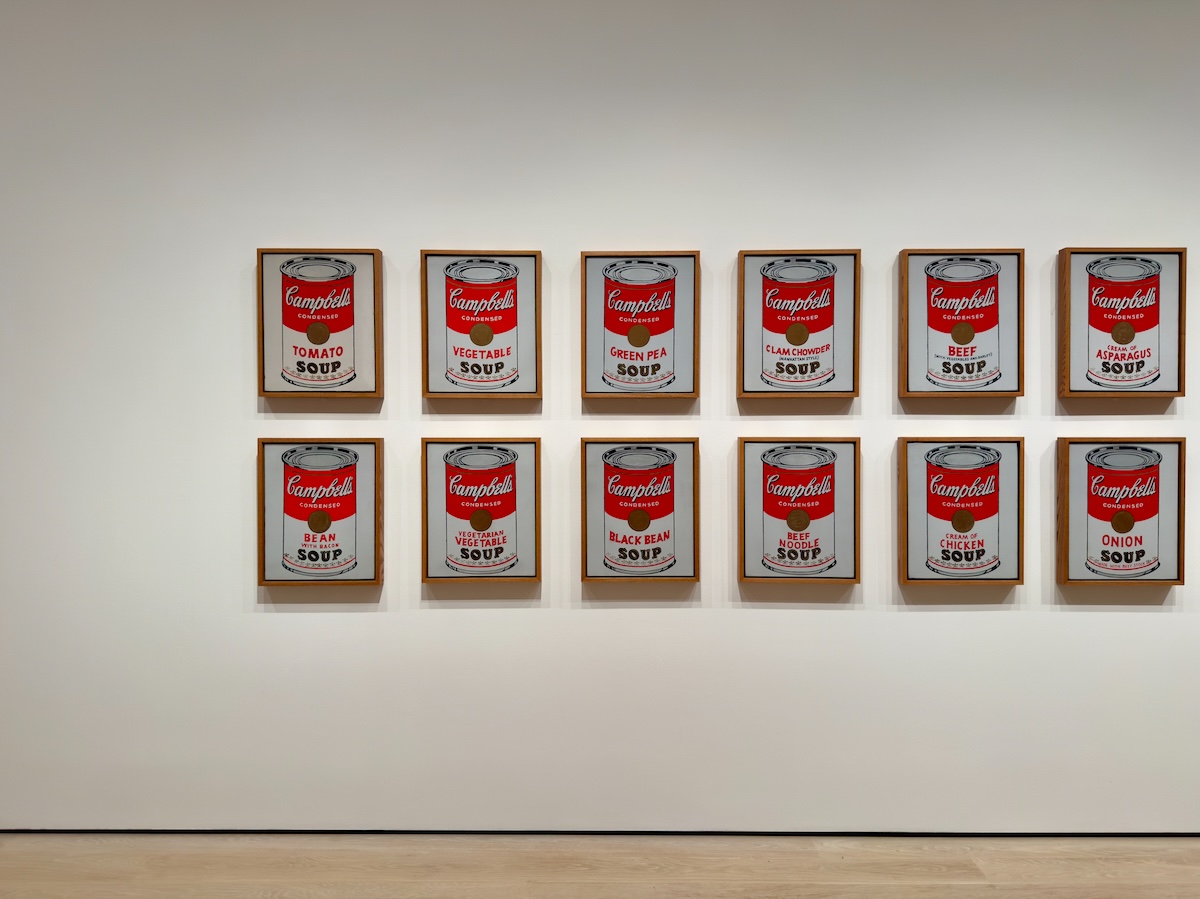
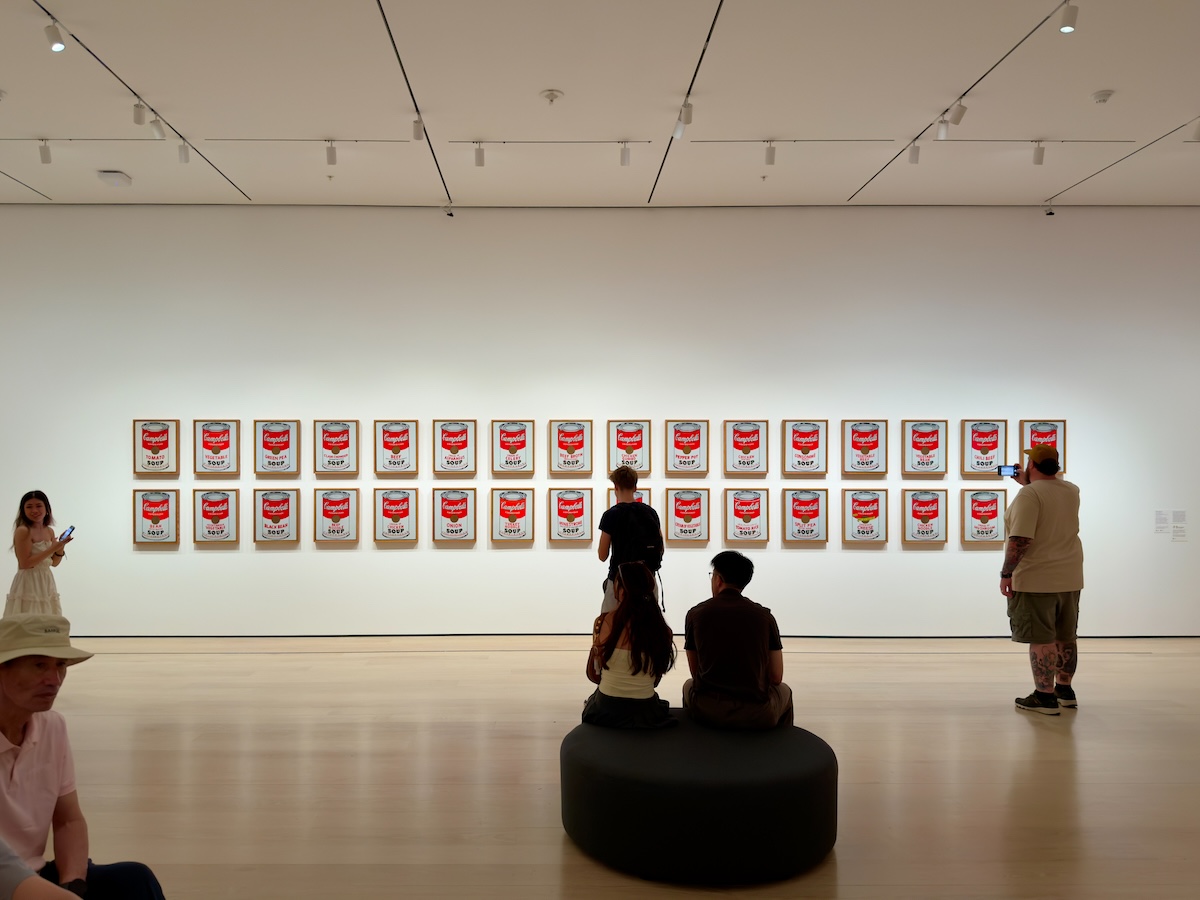
Soup Cans is so familiar now that it takes a second to remember how odd the premise was in 1962. Warhol painted all 32 varieties, one canvas per flavor, after years of eating the same soup lunch over and over—which is either artistic discipline or a cry for help. The repetition feels both commercial and weirdly personal. A pantry staple becomes a self-portrait with sodium.
One Year, 1973–74 – George Maciunas
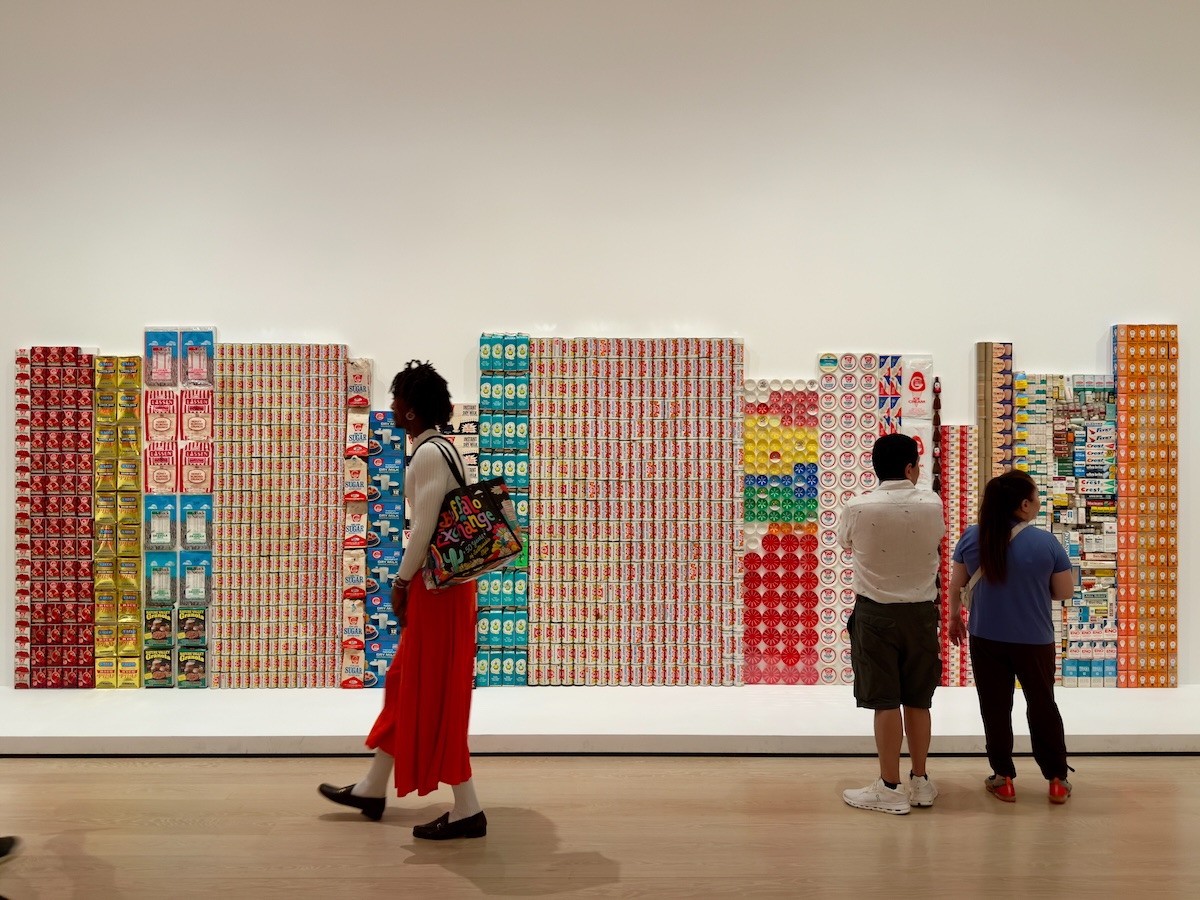
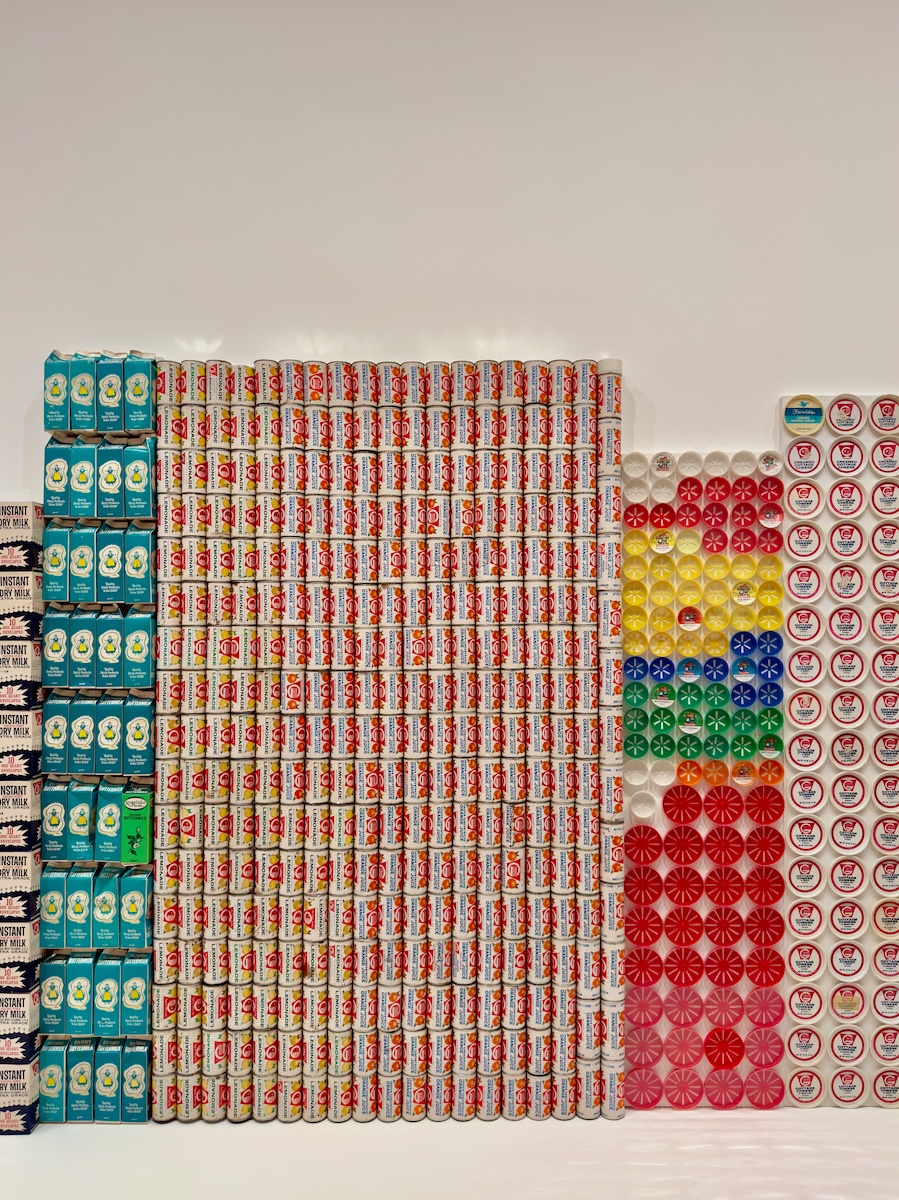
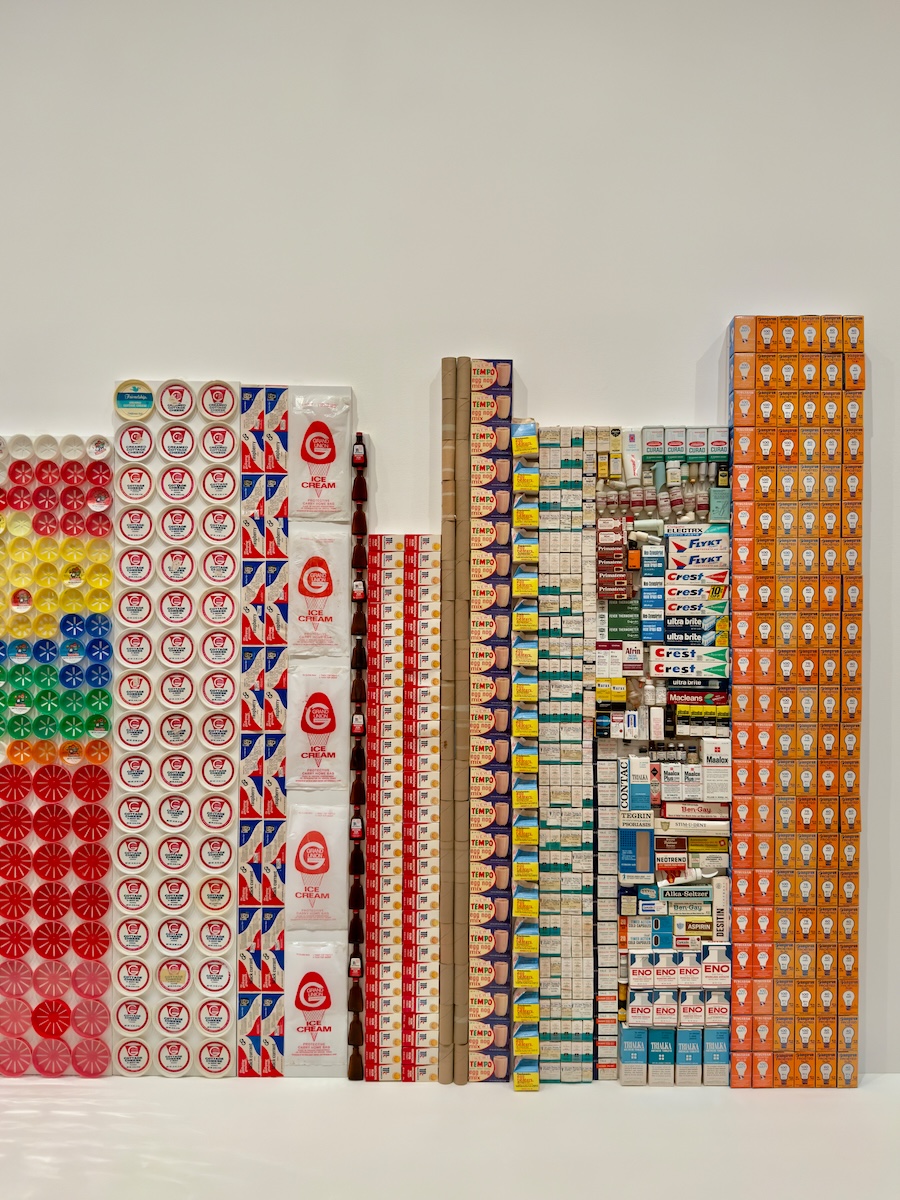
Maciunas saved the packaging from nearly everything he consumed for about a year, then arranged it like a supermarket display in existential crisis. The result is colorful, excessive, and a little grim. Instant milk, egg substitute, imitation rum, antacids, asthma medication—it’s consumption as autobiography, with the body quietly filing complaints in the margins.


Sun Mad, 1982 – Ester Hernández
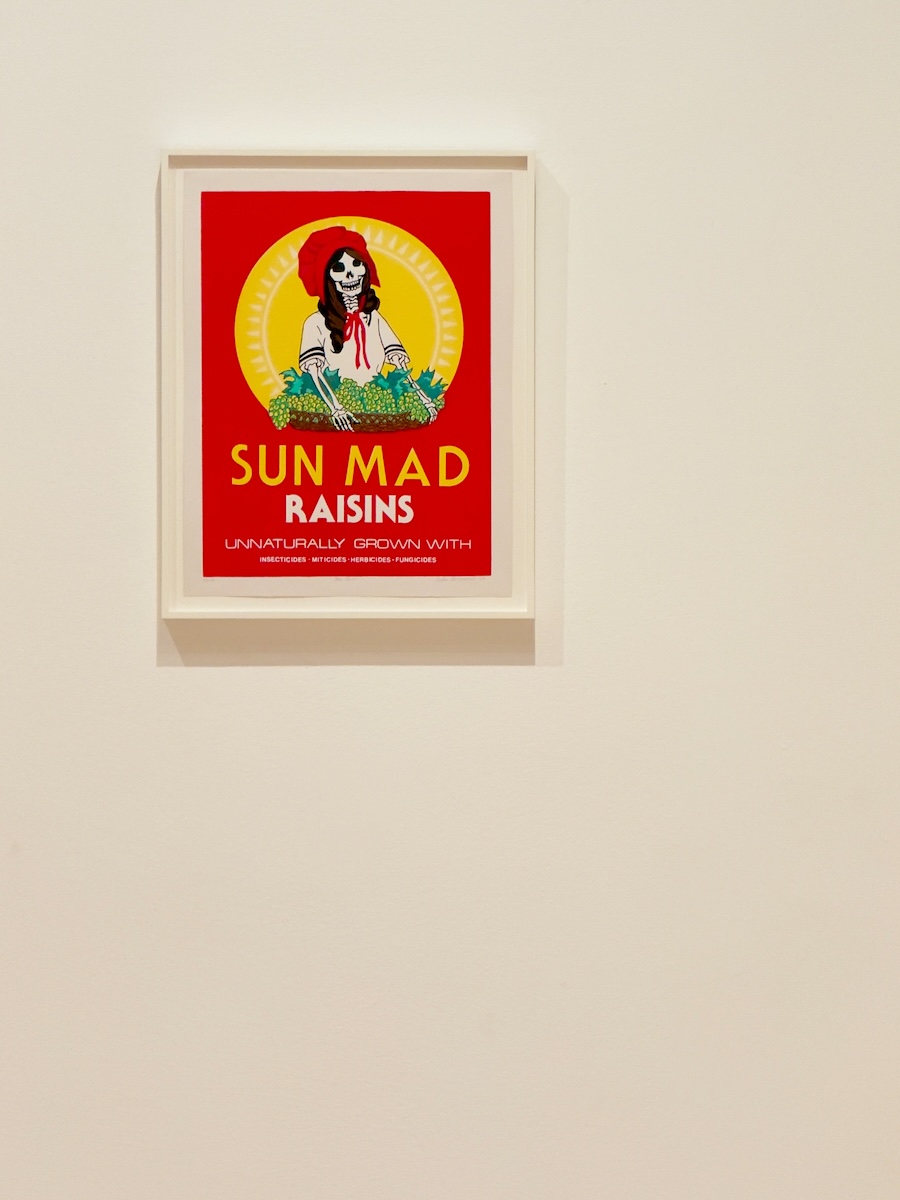
Hernández takes the sunny raisin-girl fantasy and replaces it with a smiling skeleton, which is hard to misunderstand. The joke lands first, then you’re hit with the accusation. Behind all that wholesome packaging are farmworkers, pesticides, and bodies absorbing the cost. It is bright, blunt, and absolutely not here to reassure you.
Gay Semiotics, 1977 – Hal Fischer
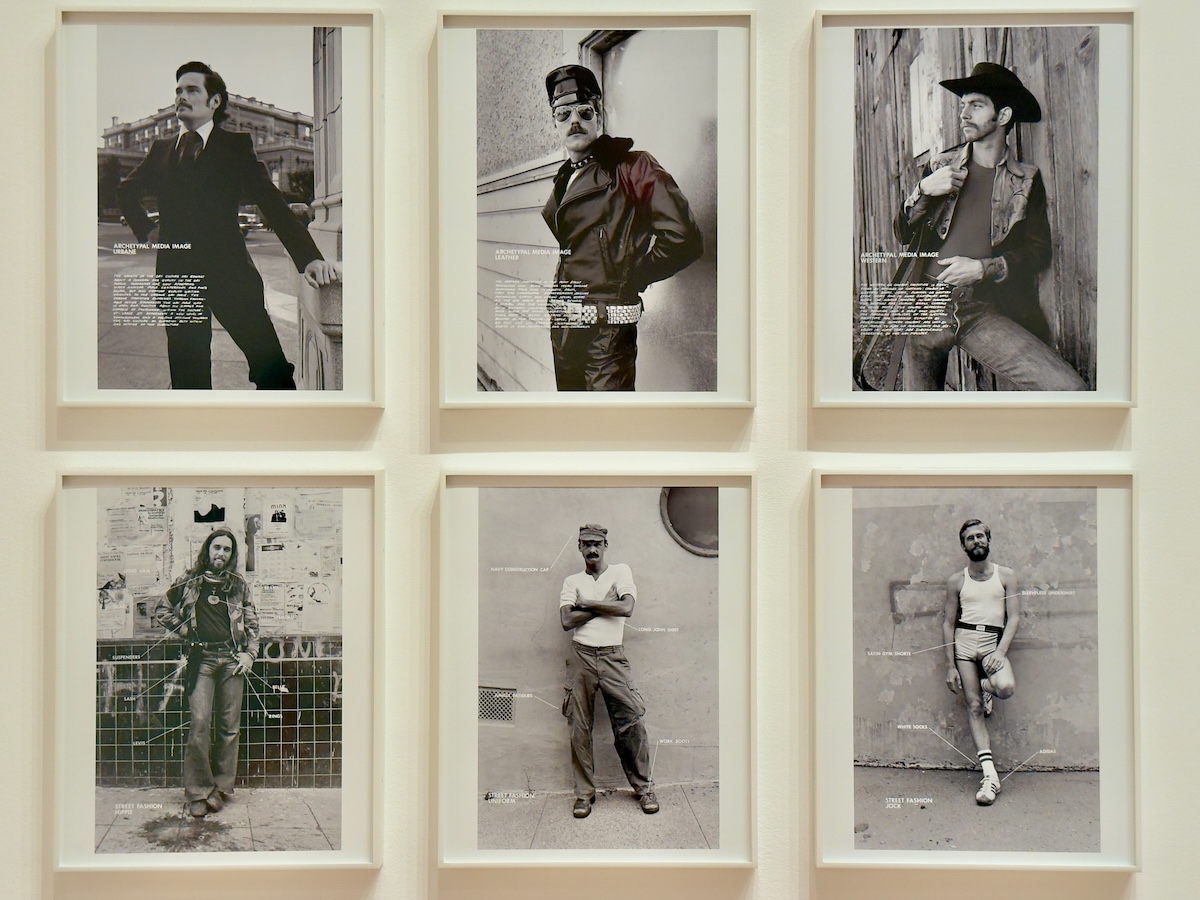
Fischer’s Gay Semiotics turns 1970s San Francisco gay style into a codebook, breaking down leather, western wear, jock looks, uniforms, and other signals. The format is deadpan, almost bureaucratic, which makes it more intriguing than funny. Clothing as language. Everyone was reading everyone, but some had better footnotes.
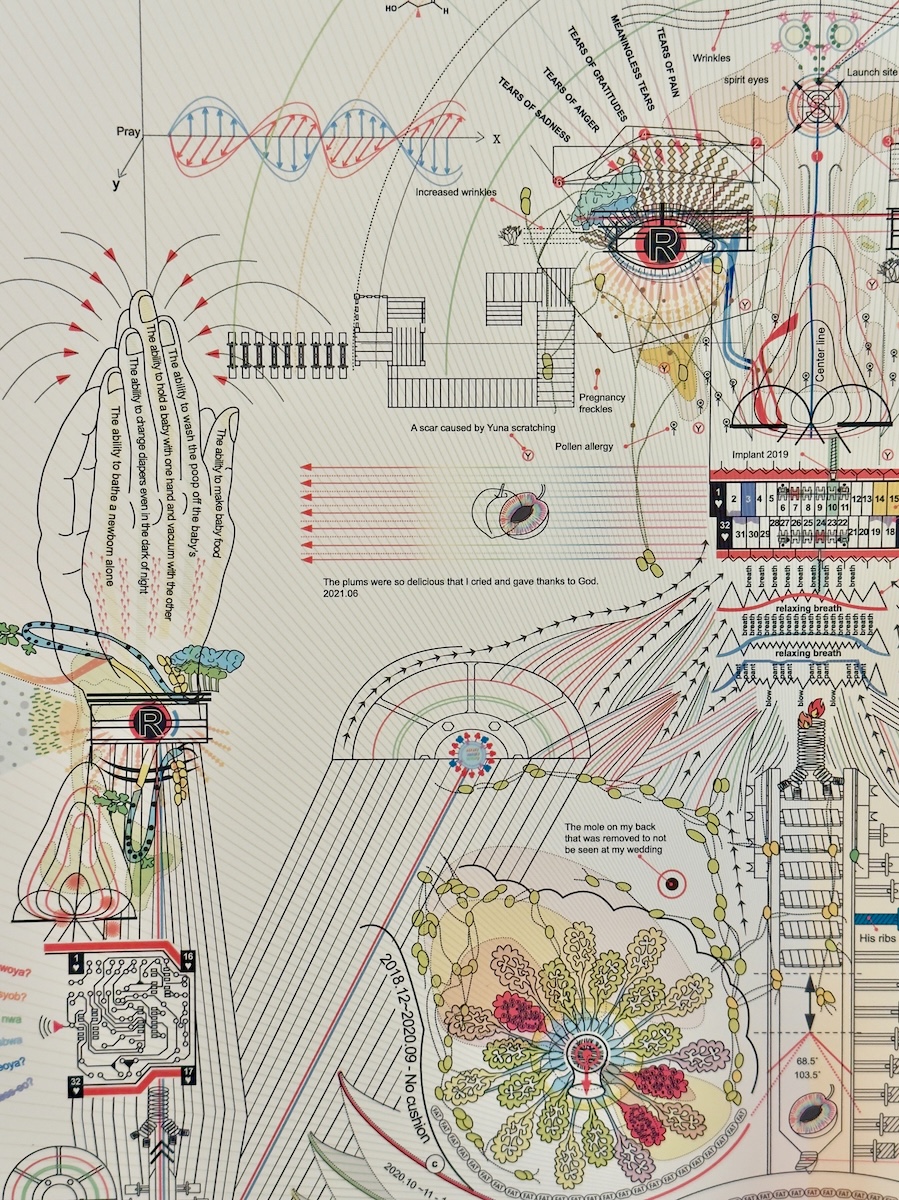

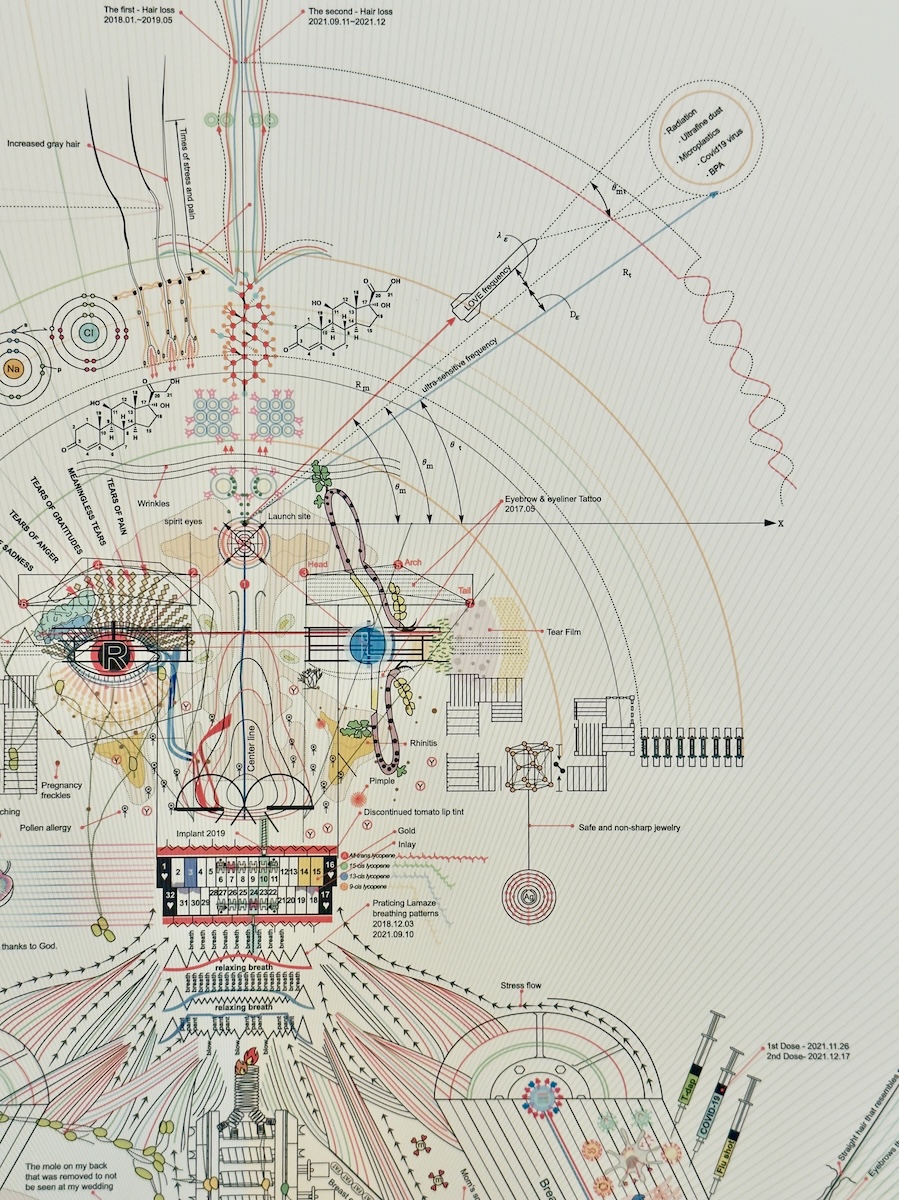
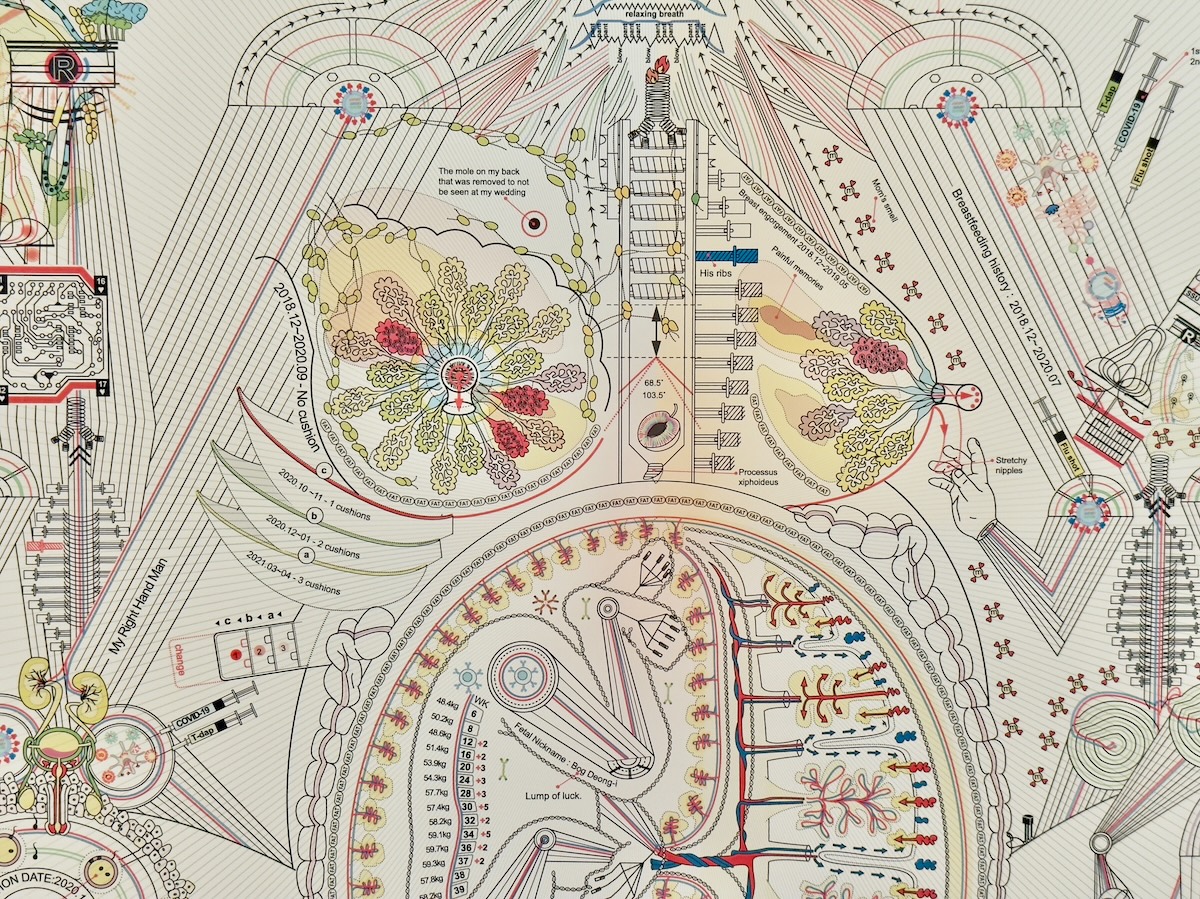
Self-Portrait_Rachaph, 2024 – Minjeong An
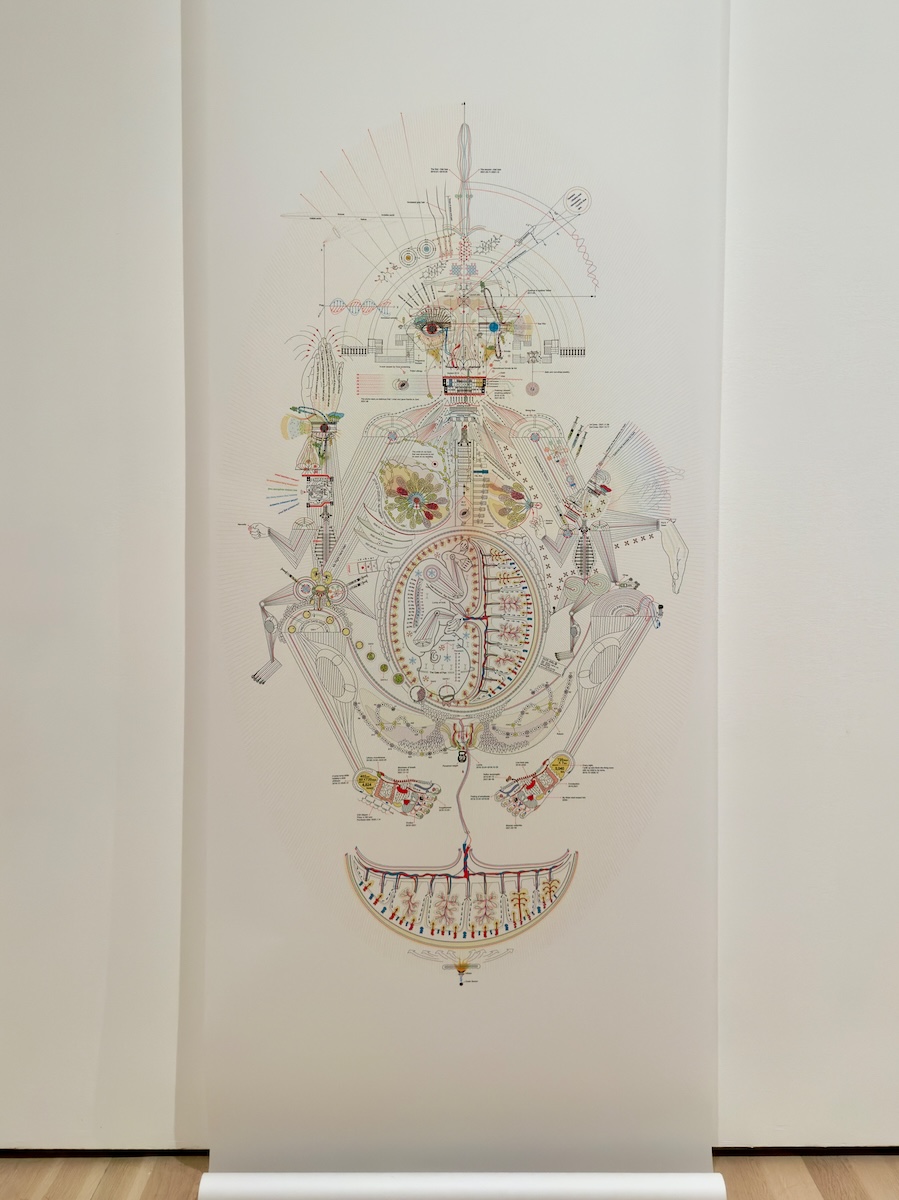
An’s self-portrait doesn't bother with the usual face-in-a-mirror routine. Instead, she maps scars, dental work, lipstick colors, vaccinations, pregnancy, childbirth, and other evidence left on her body and inside it. It looks clinical at first, then deeply personal. A life rendered as a technical diagram.
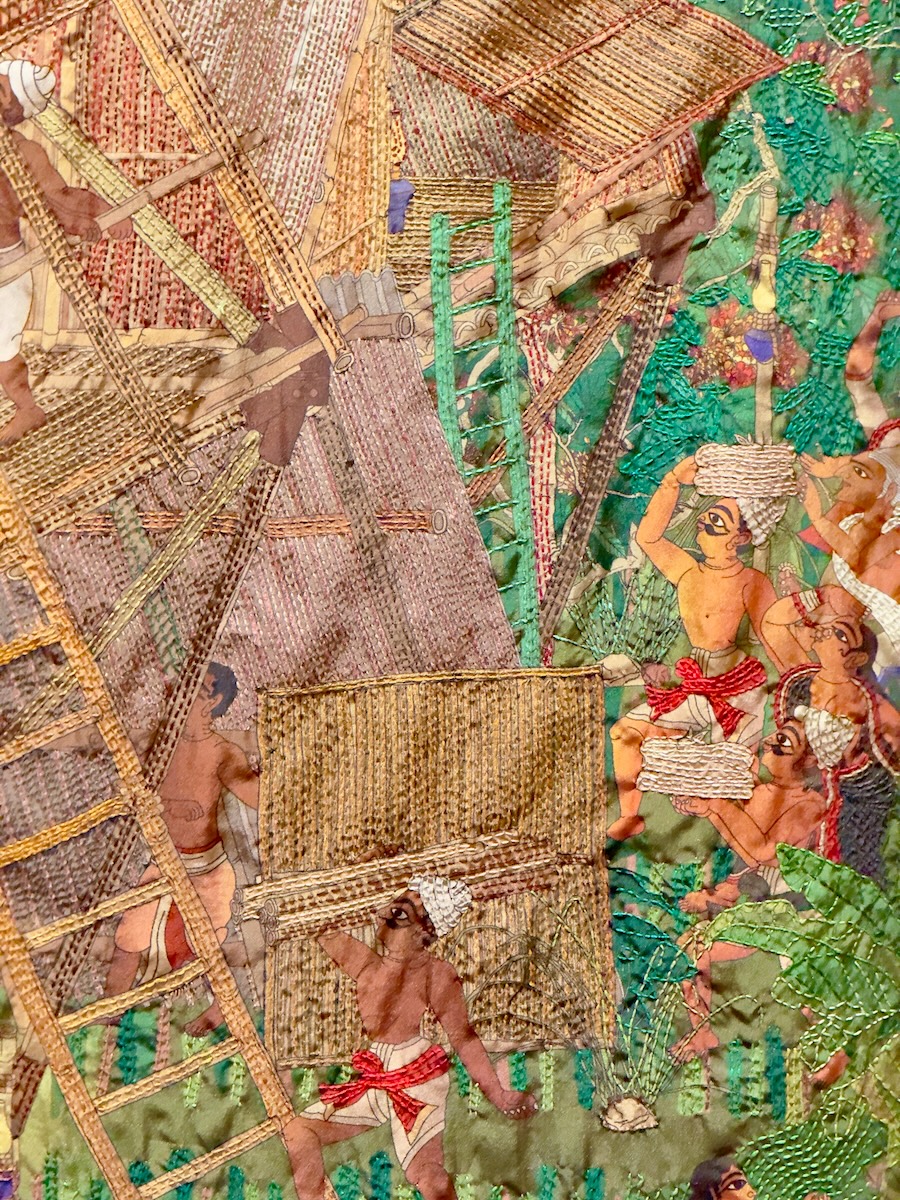
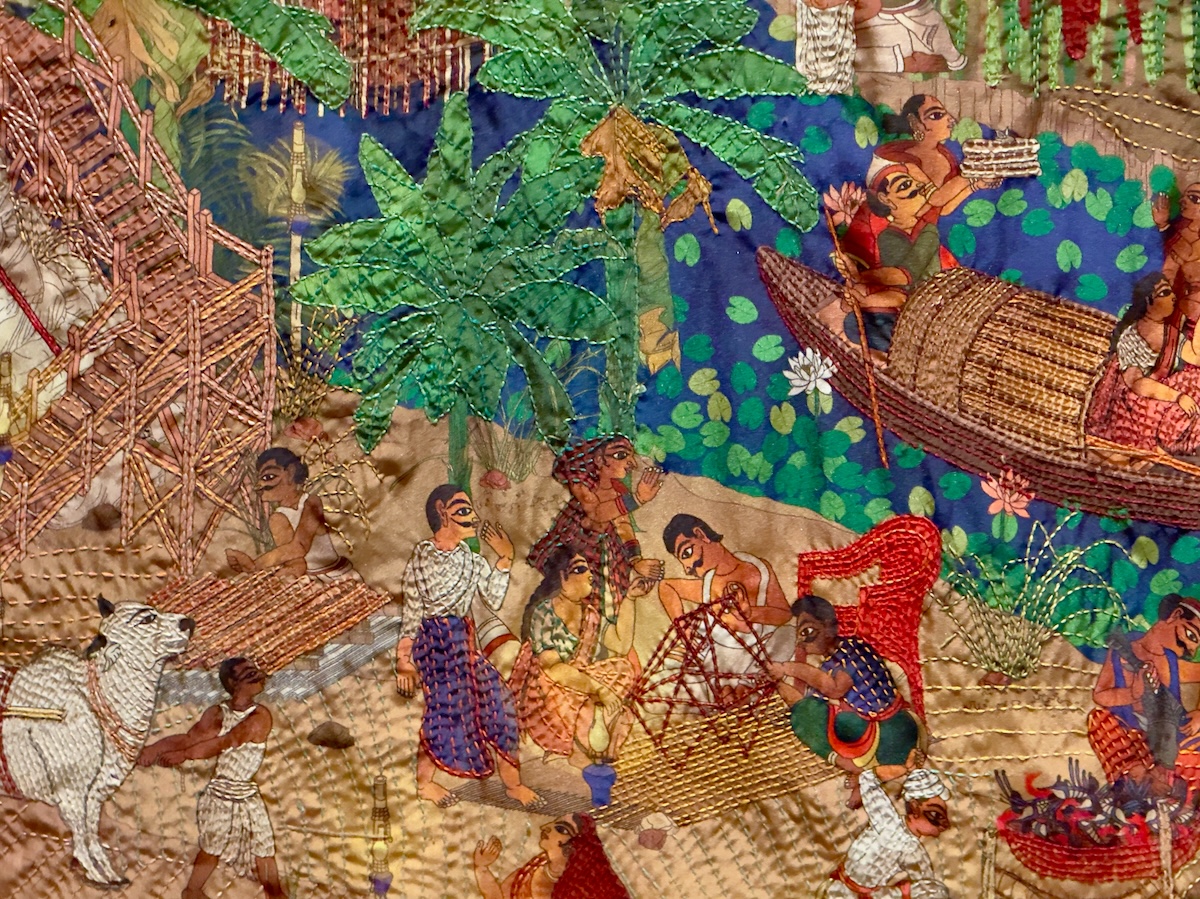
Bengali Song, 2023 – Arinjoy Sen and SHE Kantha
After all the cans, codes, diagrams, and skeleton mascots, Bengali Song feels almost generous. The tapestry shows people building, working, and living near Bangladesh’s Meghna River, surrounded by water, plants, animals, and patterned borders. It’s busy in the best way. A whole community stitched into motion, with nature not as scenery but as part of the family.


Here’s the thing about MoMA—even when you know the museum is overexplained, overvisited, and fully capable of selling you a tote bag before you’ve emotionally processed anything, it still gets you. Not always with the obvious works, either. Sometimes it’s the painting with the crowd in front of it. Sometimes it’s that strange little piece you nearly walked right by. And sometimes it’s the thing you don’t completely understand, but that keeps demanding your attention later, which is rude of it.
We’ll probably go again the next time we’re in New York. Cultural commitment, failure of imagination—at this point, the distinction is academic.

Write a comment