
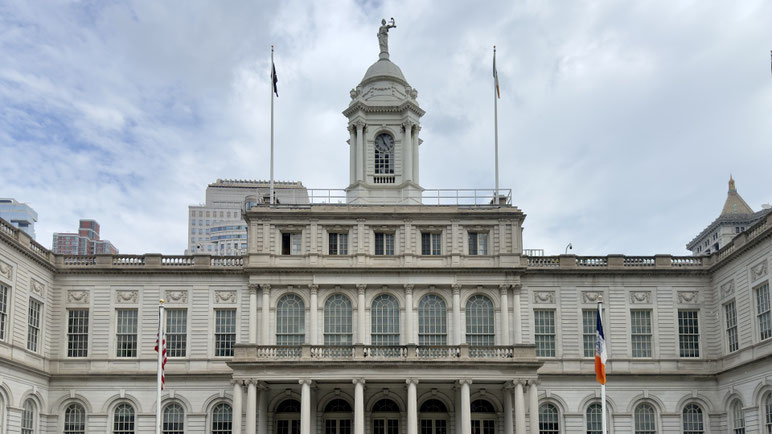
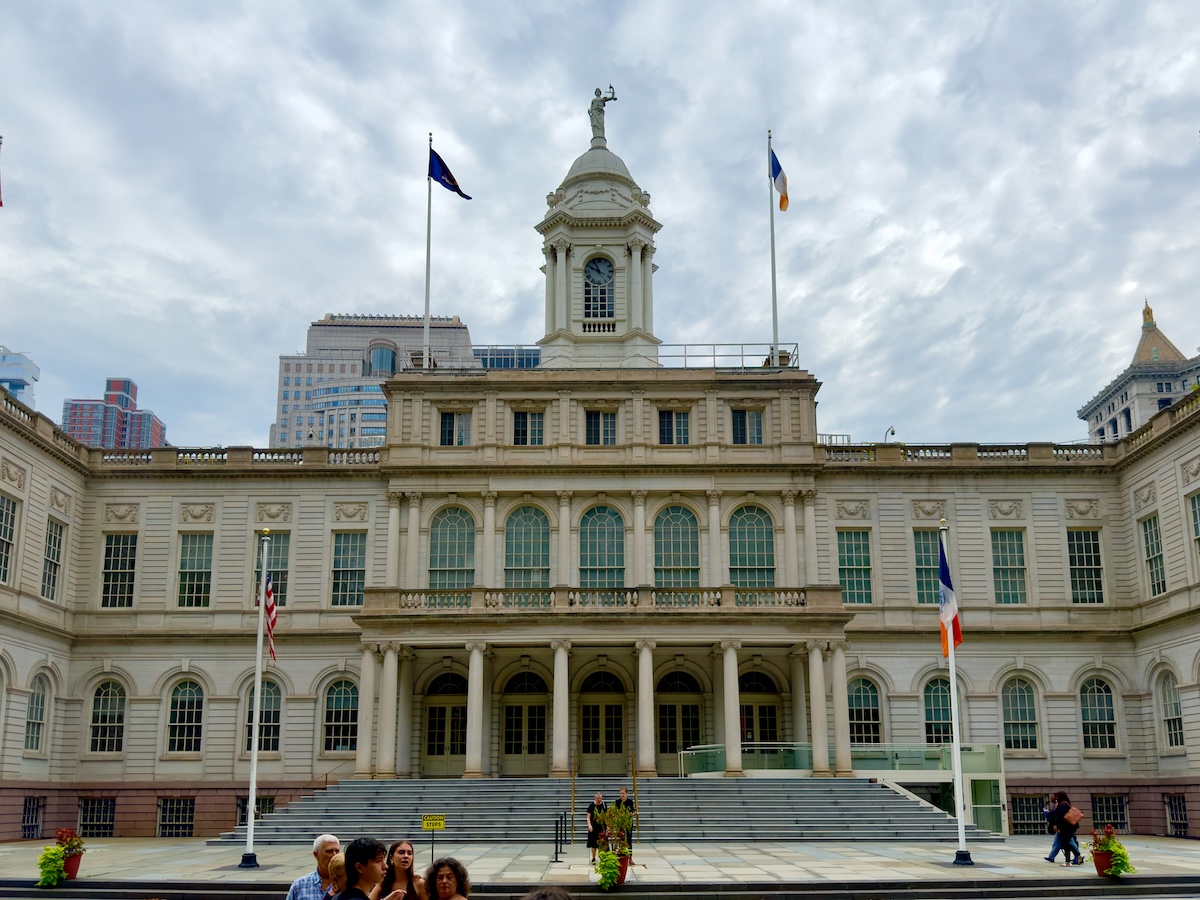
New York City Hall sits at the lower end of Manhattan, where the streets still refuse to behave. The neat grid hasn't made it this far south, and the blocks bend and collide in ways that feel older than the country itself. The building opened in 1812, well after the brief Dutch period and a few decades into American independence.
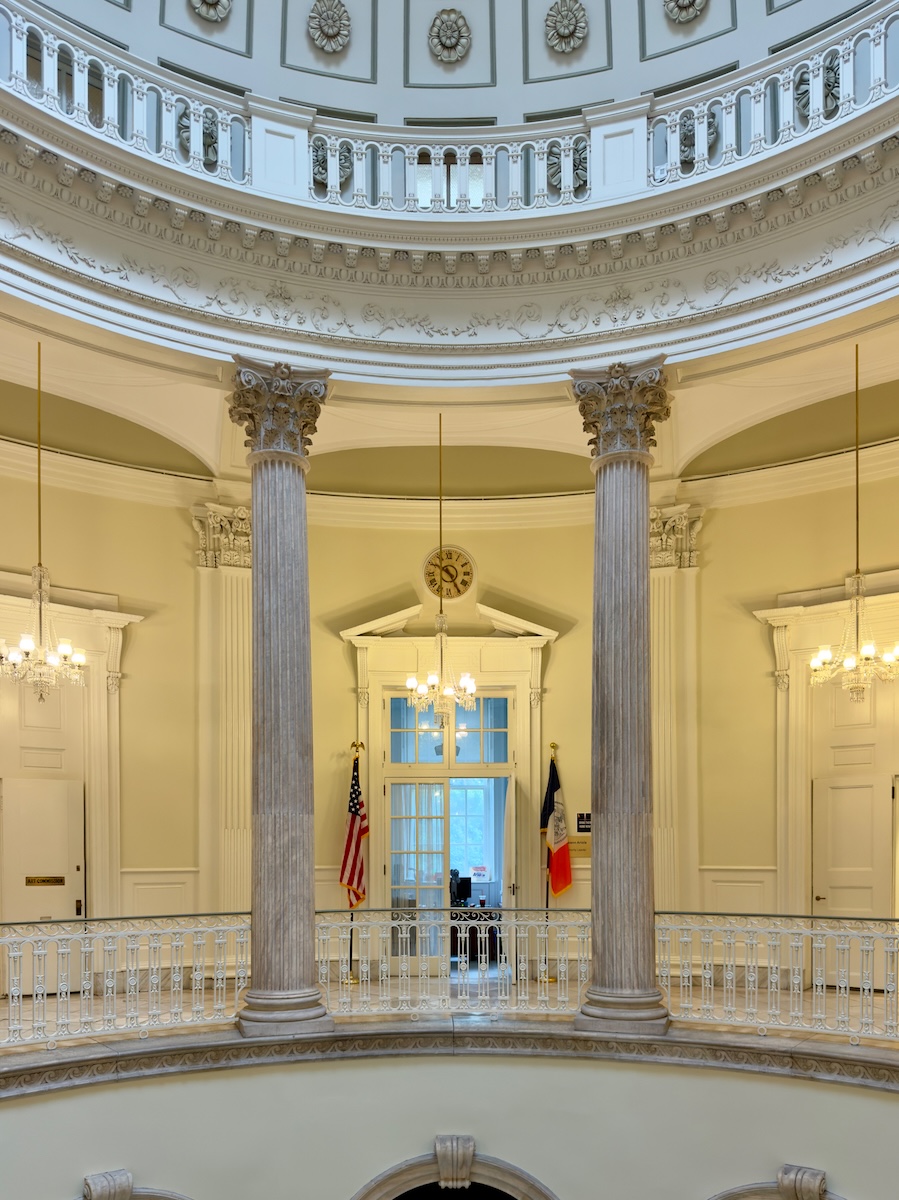
It was built for a city that, at the time, fit entirely on Manhattan Island. The exterior was meant to impress—white marble facing the park, brownstone at the back where fewer people would notice—while the interior drew heavily on European influence, with a domed rotunda that nods to Rome.
It’s the oldest city hall in the United States still in continuous use, which carries a certain cachet—until you realize it hasn’t really been a full-on City Hall for quite a while now. New York didn’t grow around this building so much as past it, getting larger faster than anyone seemed prepared for. The building still does its job, of course, just not all of it. The mayor works here, ceremonial rooms welcome events and dignitaries, and the city council still meets here. But the rest of the city’s business has long since moved into larger, less photogenic buildings.
There are tours, and they're easy enough to book if you think to look. They don't show up on many Top Ten lists, which makes sense in a city with a Cheesecake Factory menu’s worth of distractions. Compared to mile-high observation decks, world-class art museums, and a nearly infinite number of rooftop bars, an early 19th-century government building doesn’t command much attention.
Which is exactly why we booked it.
We arrived a few minutes early on a cloudy Thursday morning and stood outside with a handful of other people. It wasn’t a large group, and no one seemed particularly energized to be there. In fact, three of them worked for the city council as interns or new hires, and this felt like something they had been told to do. Security was thorough enough to remind us all that this is still a working building, not one preserved in amber.
From the outside, City Hall doesn’t seem like much. It’s set at the north end of a small park that feels slightly cornered by the surrounding skyscrapers. The Brooklyn Bridge empties traffic on the east side of the park, while Federal Hall, Wall Street, and the whole early-American greatest-hits package are all just a short walk away. City Hall just doesn’t compete with any of these for attention. It just waits.
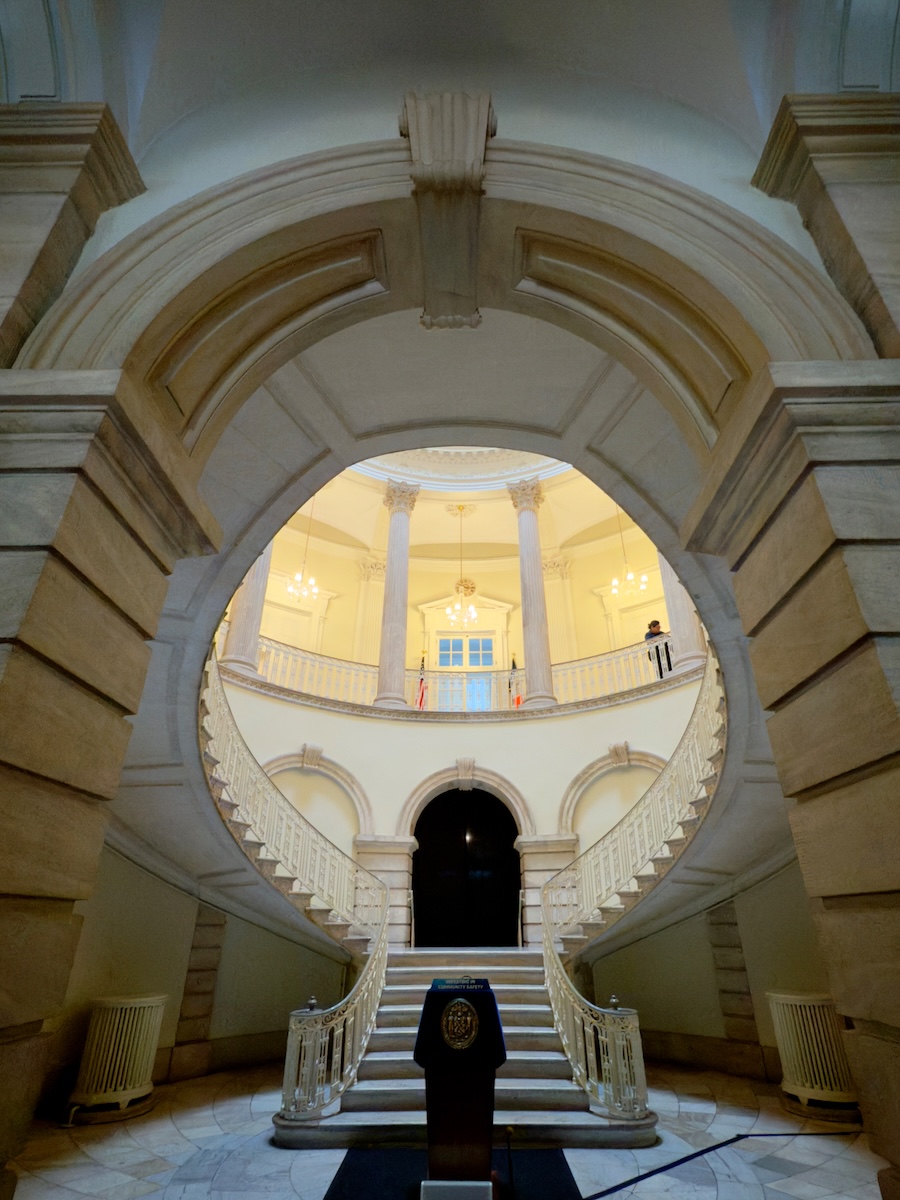
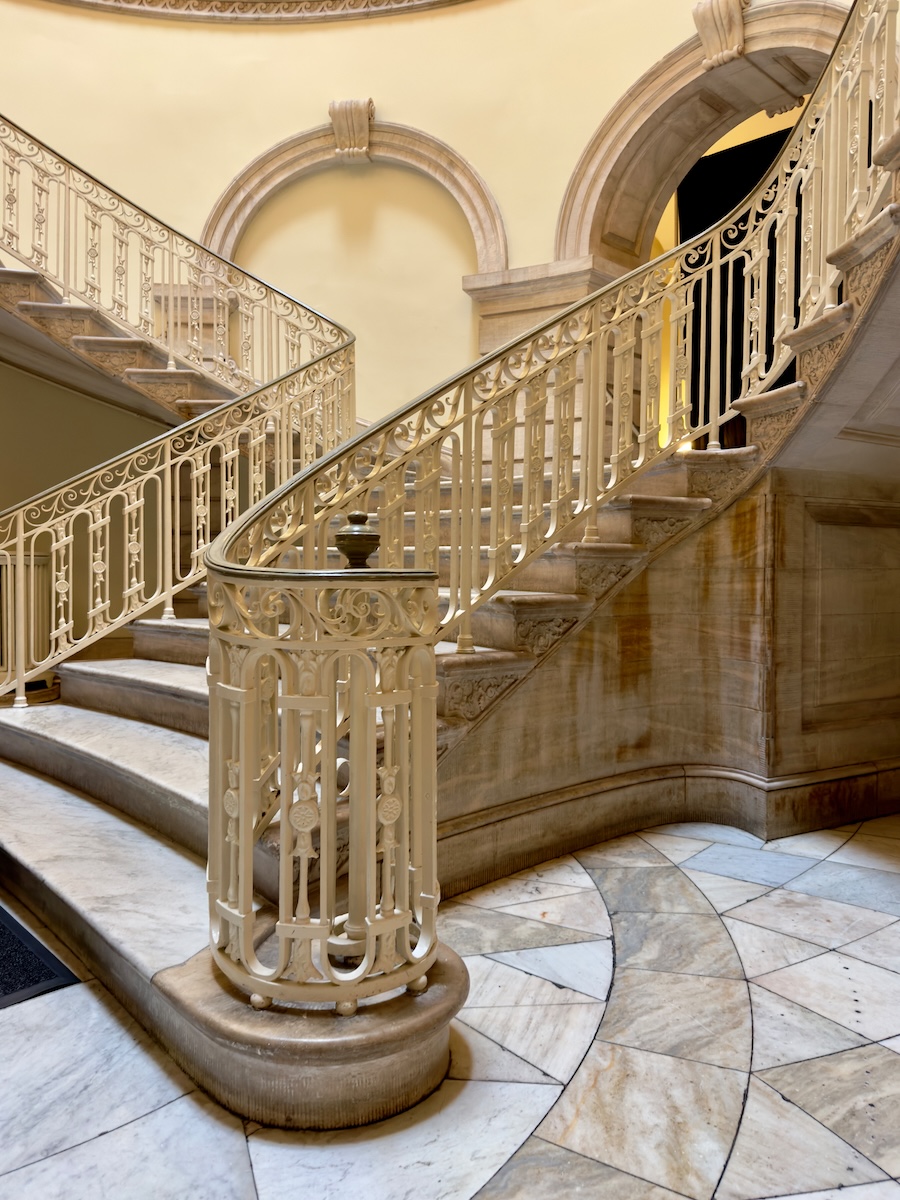
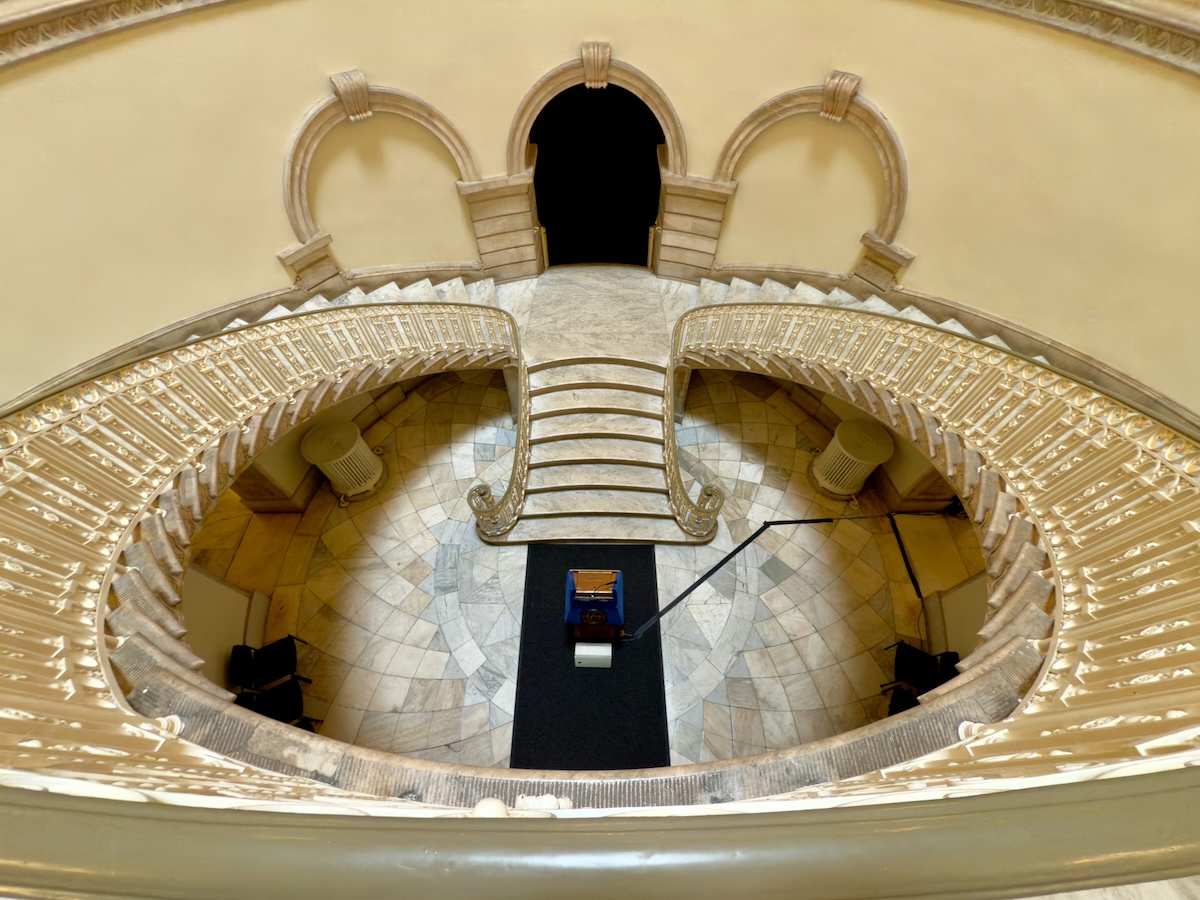
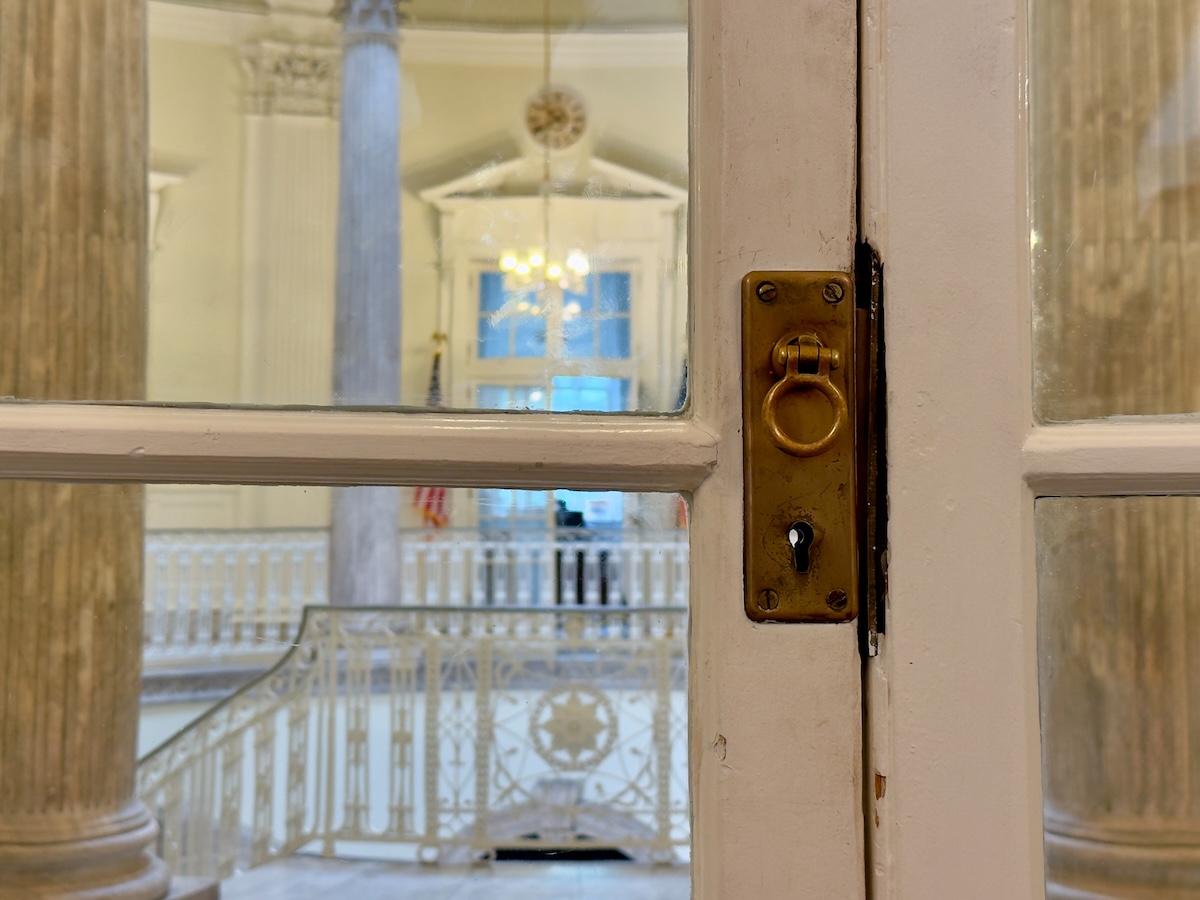
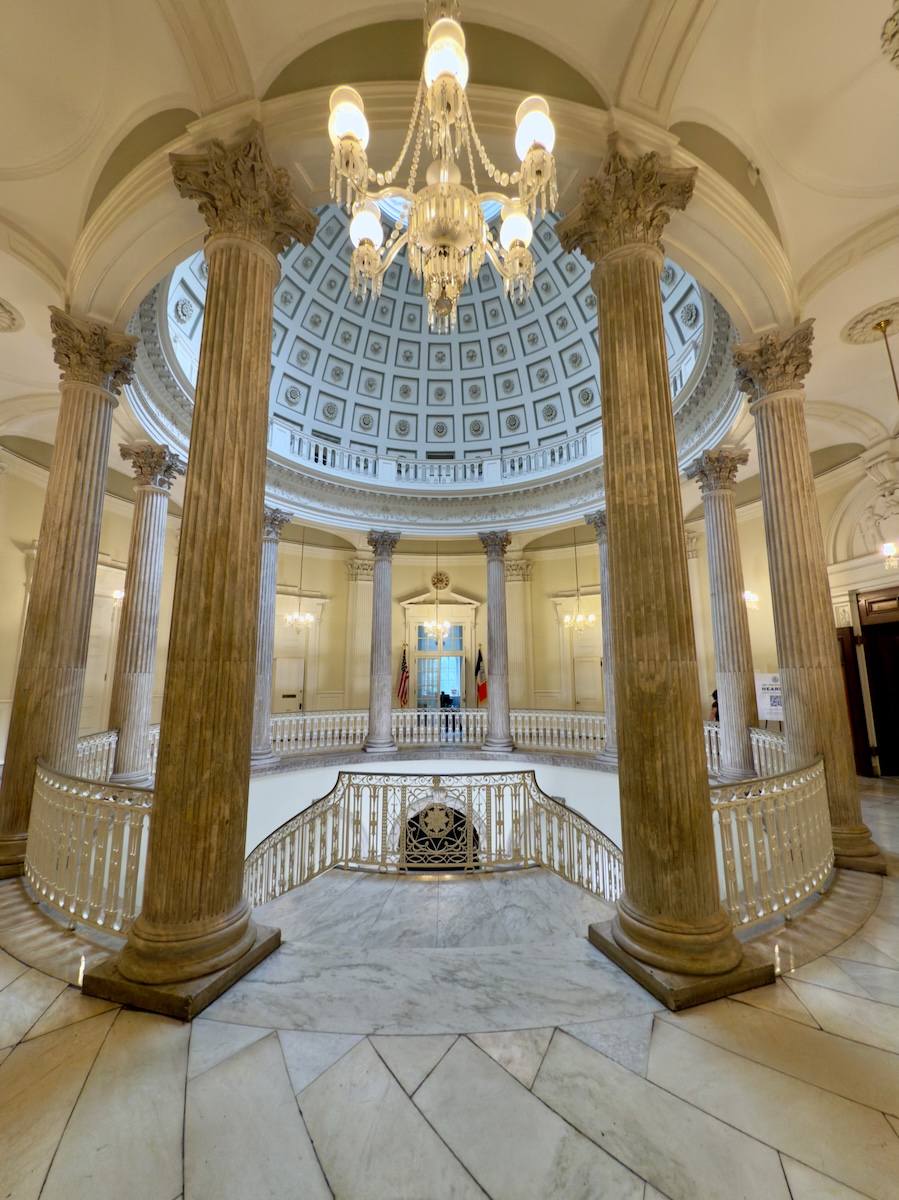
Then the guide ushers you through the front doors into the rotunda, and the tone shifts without warning. The double staircase takes over, curving upward in a tight, continuous sweep, marble against marble, with just enough ornament to keep it from feeling severe. The engineering of the rotunda mattered a great deal when it was built—this kind of open rotunda with a sweeping staircase and minimal structural interruption was still relatively new in the U.S.—and it still conveys that sense of precision. There’s nothing extra about it. The space is doing a job, and it does it well.
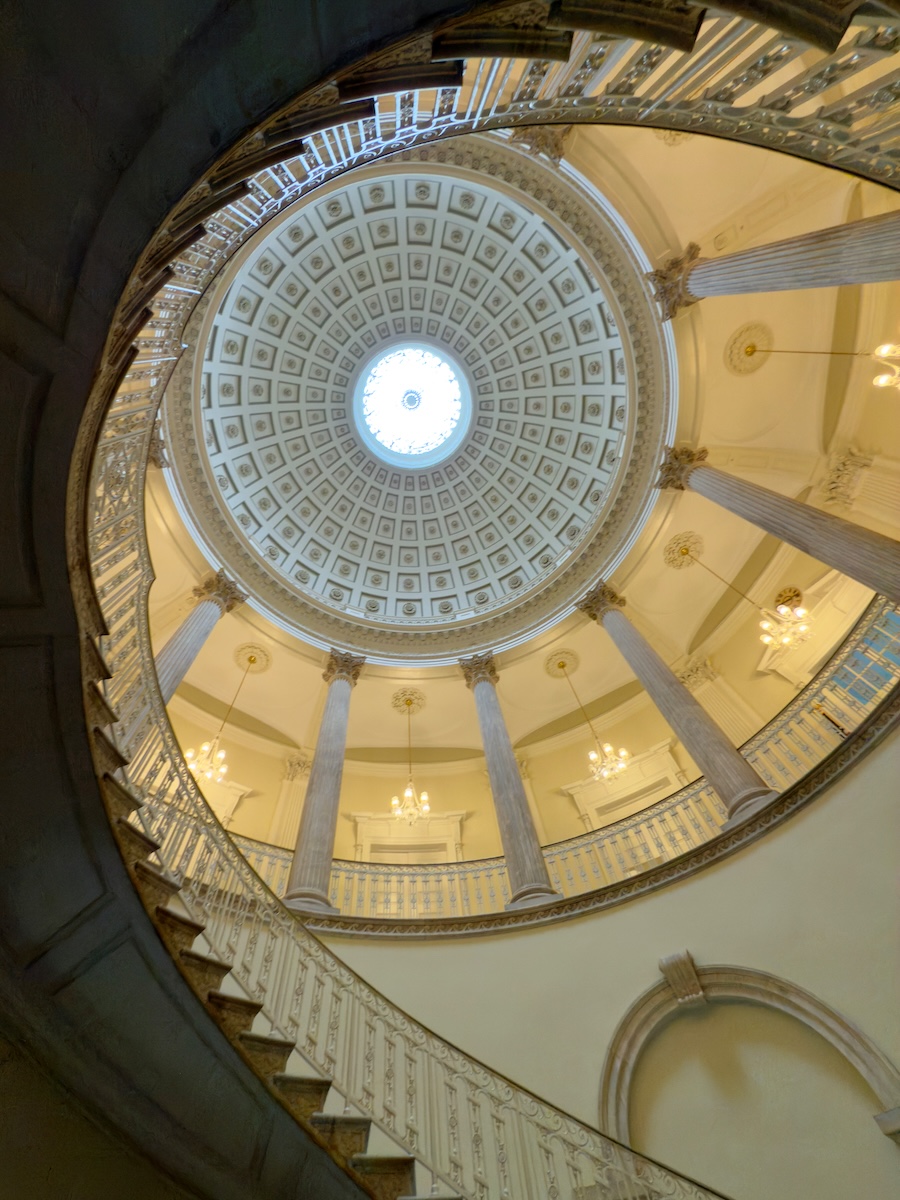
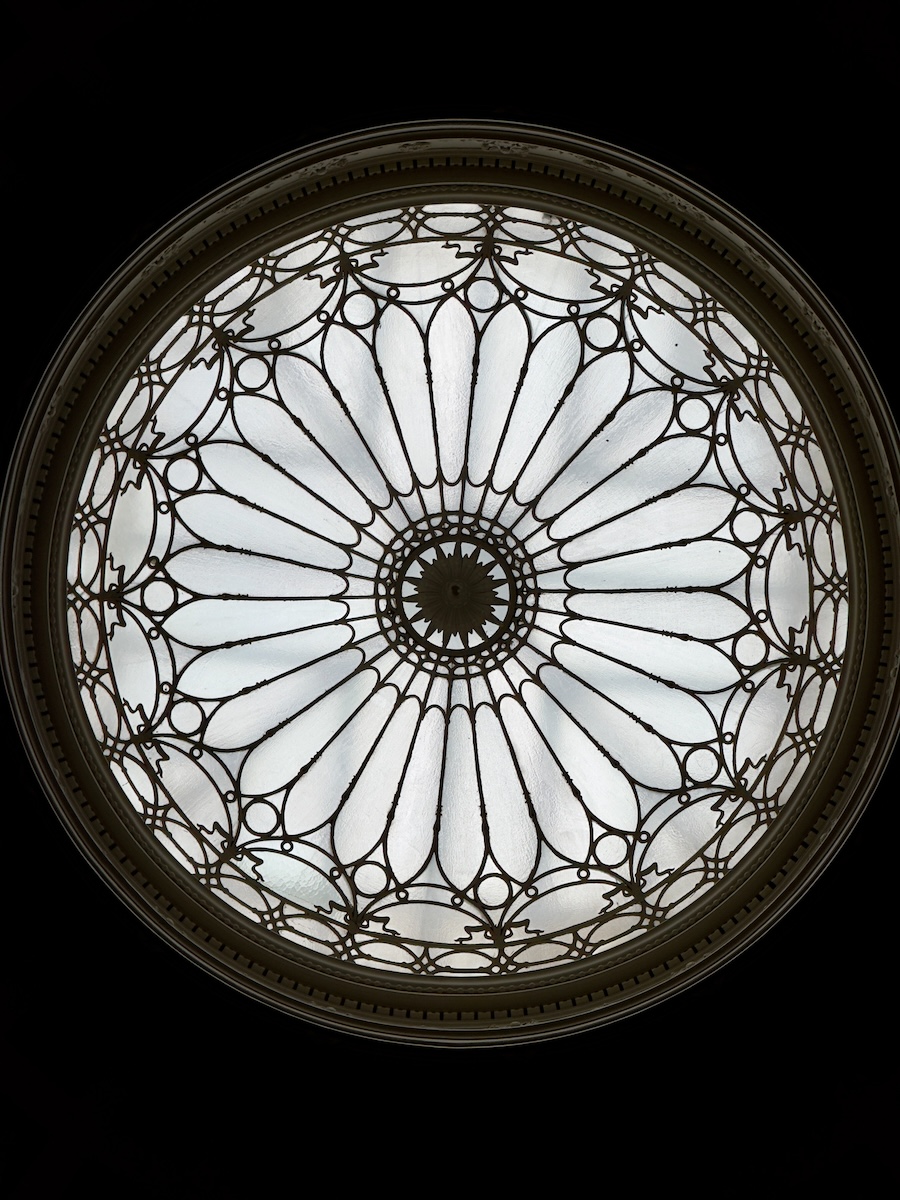
It doesn’t take long for your attention to drift upward. The dome is simpler than you expect, which makes you look at it a little longer. It sits lower than it once did, though that’s something you wouldn’t know unless your tour guide mentioned it, which ours did. It caught fire during a fireworks show celebrating the completion of the first transatlantic telegraph cable in the 1850s—when that meant lighting things on fire and shooting them into the air right next to a wooden government building, like that had never gone south before.
The dome was rebuilt after the fire, and for a while, that was enough. But it wasn't long before people in charge decided that the building wasn't holding up all that well. So as part of an early 20th-century restoration of the entire building, architect Grosvenor Atterbury was called on to "adjust" it—lowering and reshaping the dome and widening the opening—to bring it closer to what the original designers had hoped for.
It’s easy to picture the room filled even when it isn’t. The staircase carried a line of thousands of people past Lincoln when he visited in 1861 before his inauguration. Just four years later, it did the same thing when he lay in state, carrying people past his coffin. The room didn’t need to change for either. It was quiet enough to hear your own footsteps when we visited, which makes those earlier moments harder to picture and easier to believe.
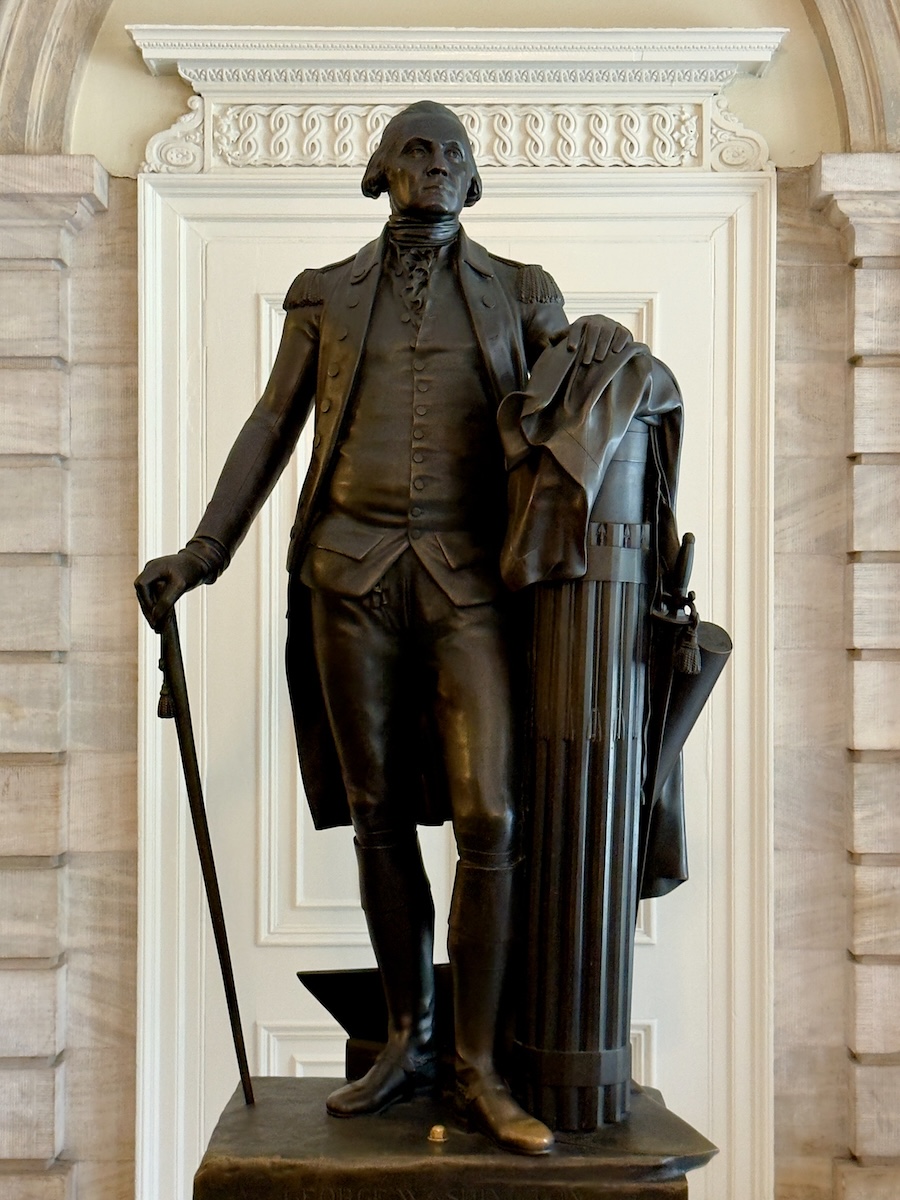
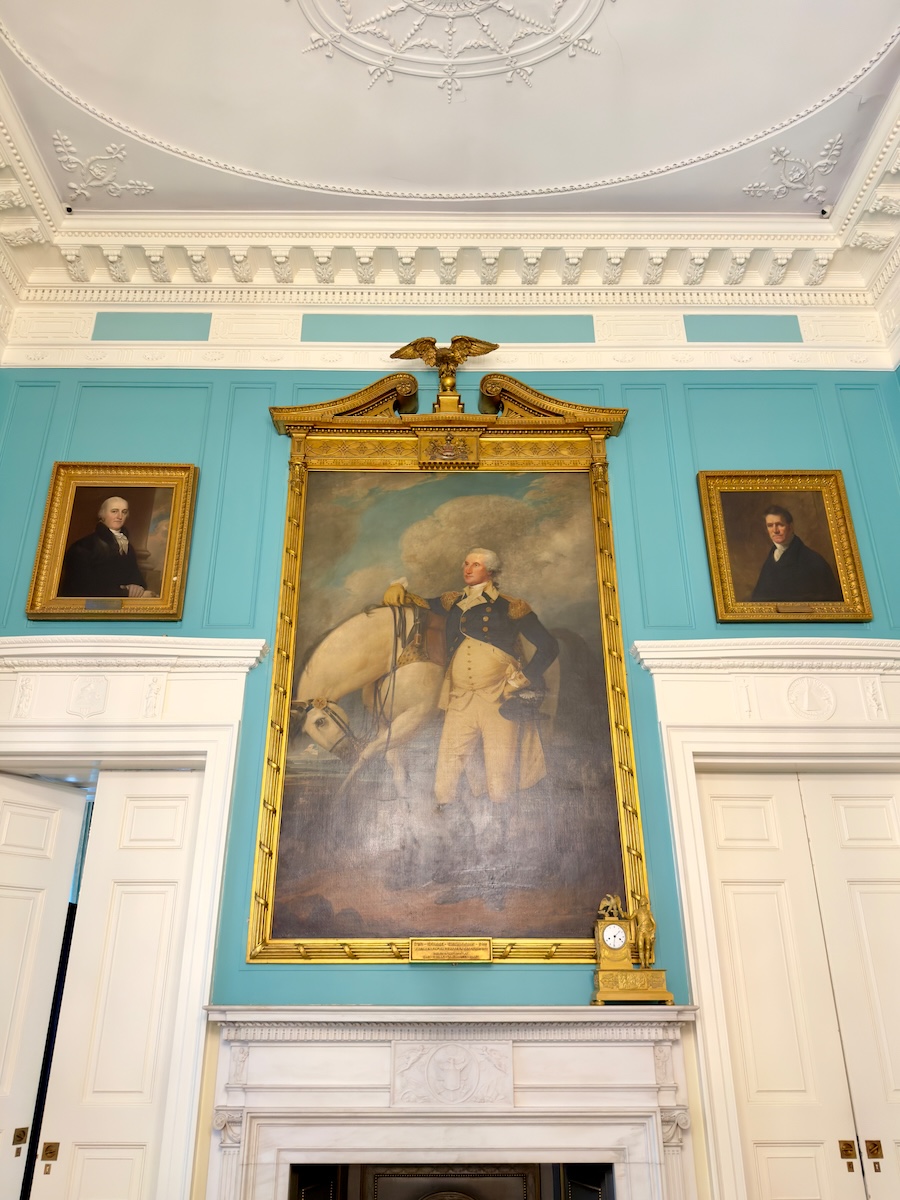
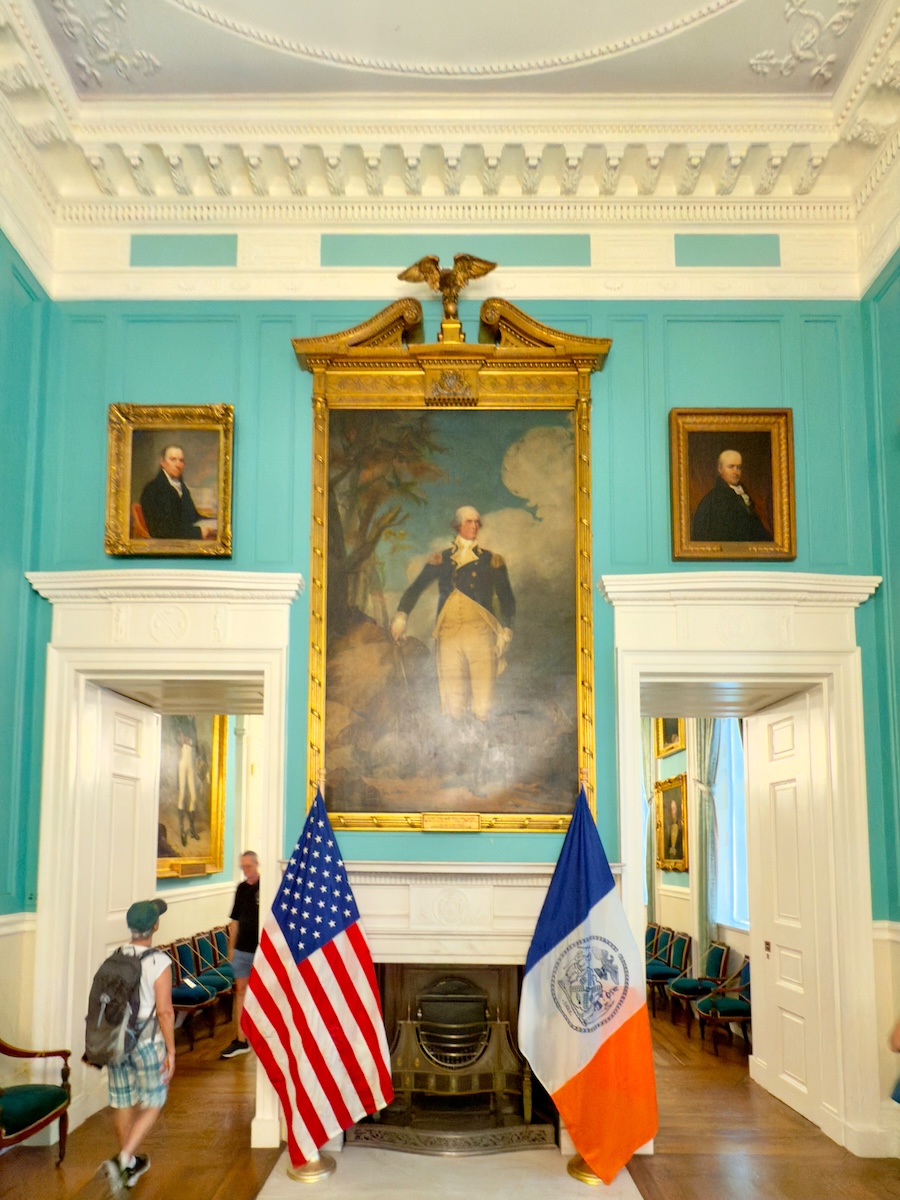
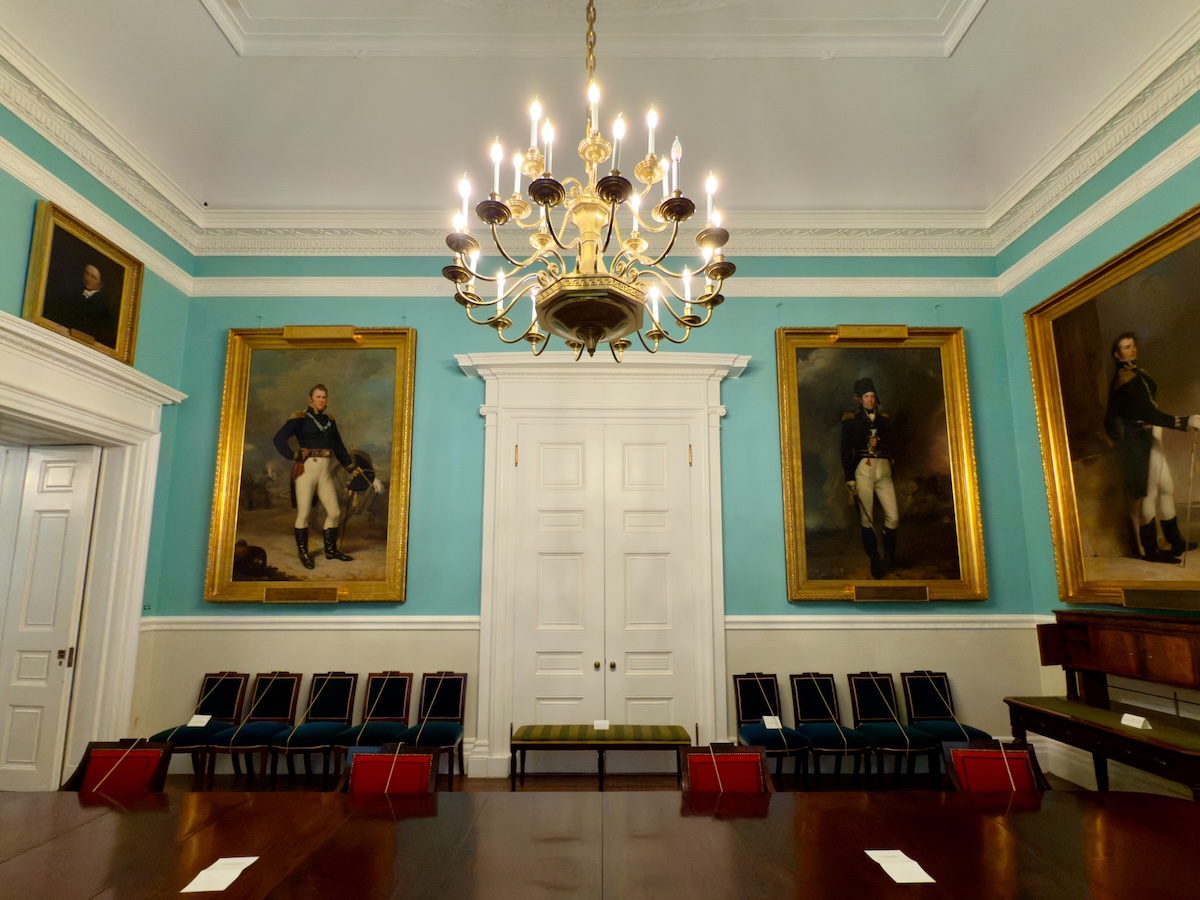
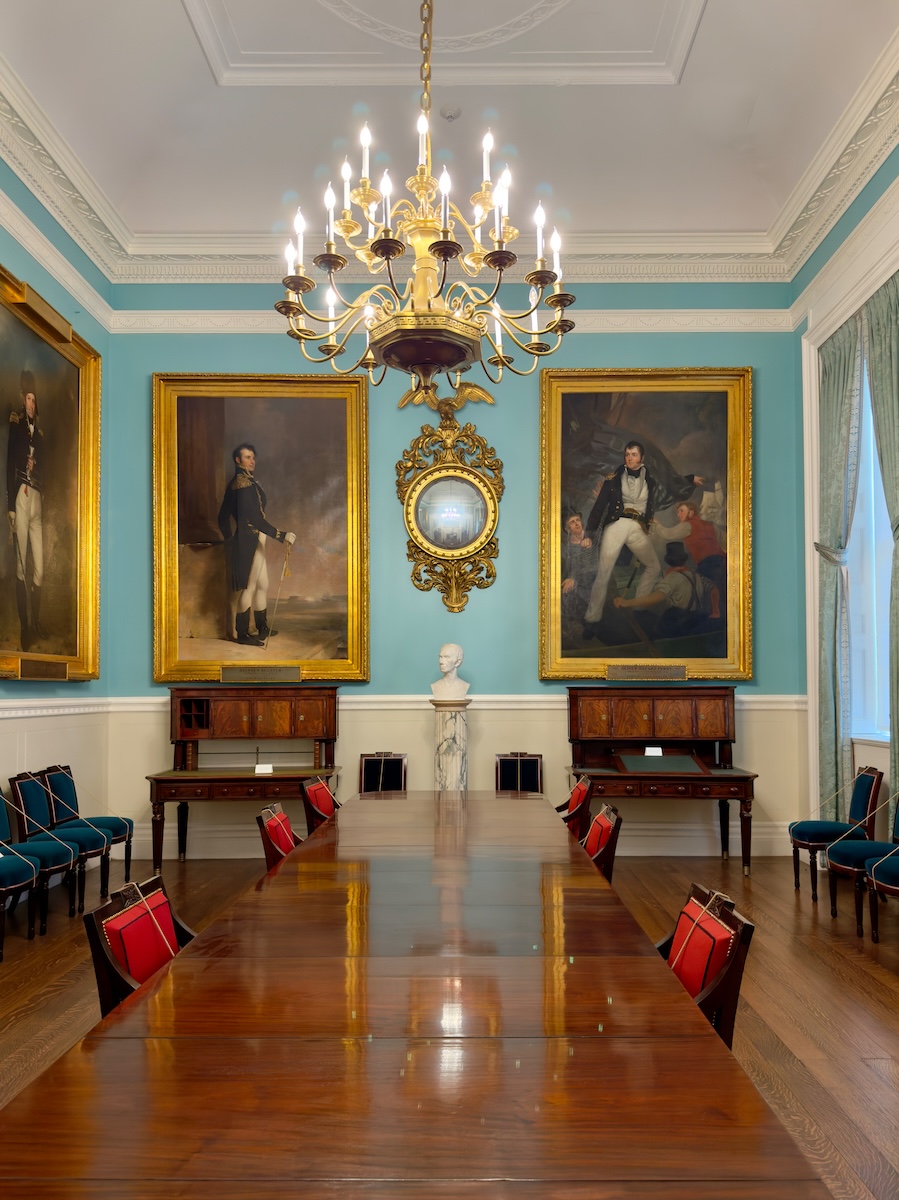
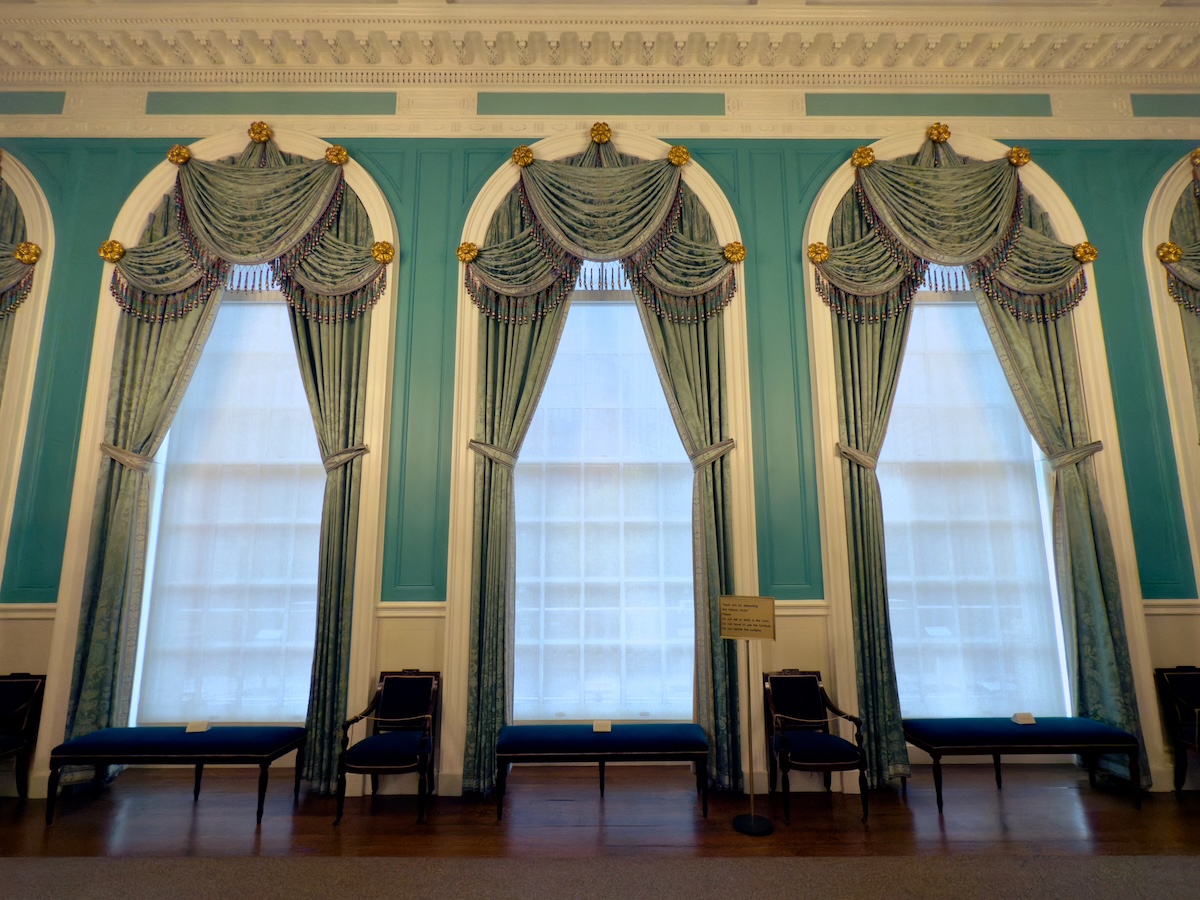
Upstairs, the Governor’s Room is even more controlled. Nothing in here is accidental, and none of it is subtle. The walls are a saturated blue that’s almost too confident for a room this size, lined edge to edge with gold-framed portraits of names you’re expected to recognize. The chandelier hangs low enough to make itself part of every photo. A portrait of George Washington dominates the far wall, large enough that the rest of the room has been organized around him. With one hand on his hip and the other resting on the saddle, he’s looking slightly off to the side like something more important just caught his attention.
It, too, had been redone more than once.
At some point in the early 1900s, someone decided to “improve” the room. It didn’t take. City officials backed it all out and started over using original drawings and research, which is usually what happens when enthusiasm outruns accuracy. What’s left now feels settled in a different way than the rotunda—less structural, more negotiated.
Washington’s desk sits in the room—or at least a desk that was described as being “associated” with him—which feels right, if a bit convenient. It wasn't used here, and the explanation of where it actually comes from starts to drift as you ask more questions. At some point, you realize it doesn't really matter. It looks like Washington’s desk, it’s marked as Washington’s desk, and nobody seems all that interested in following up too closely.
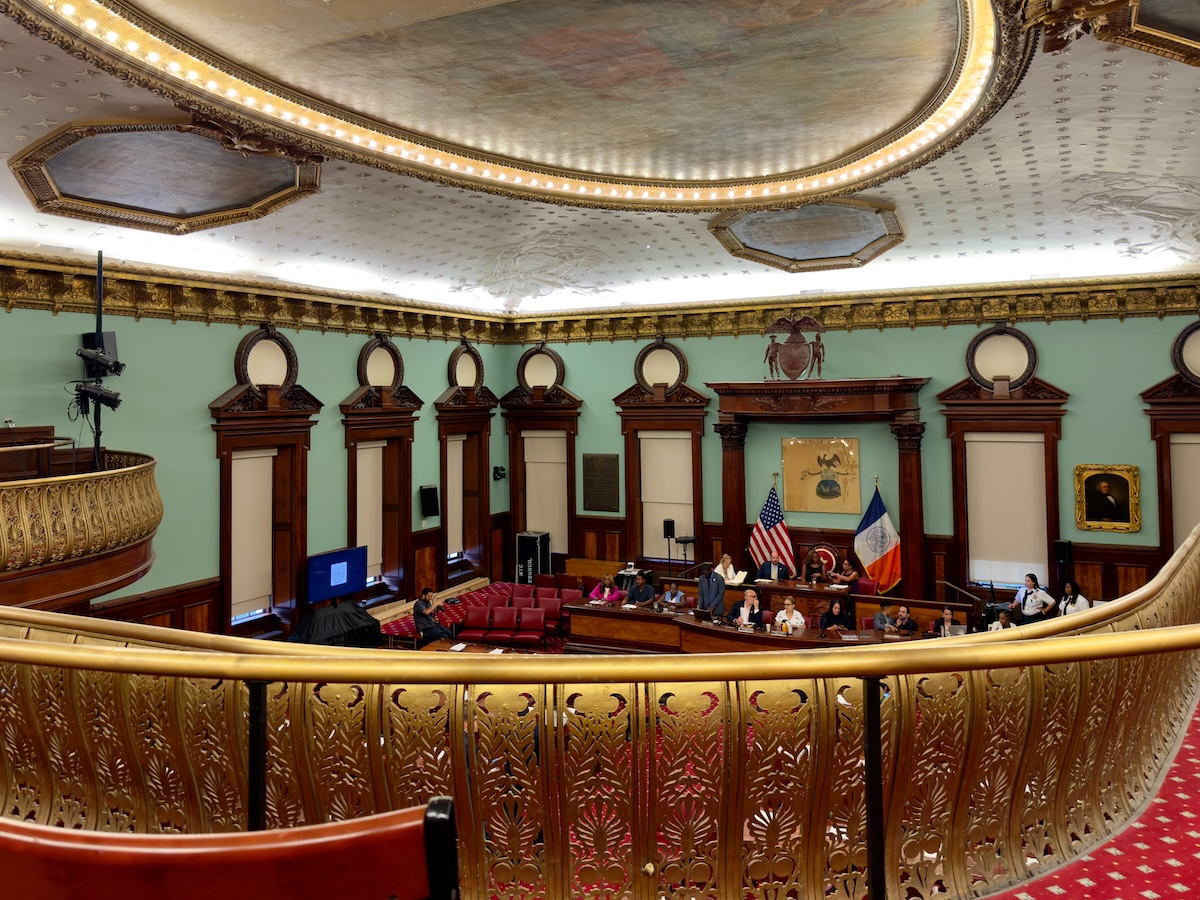
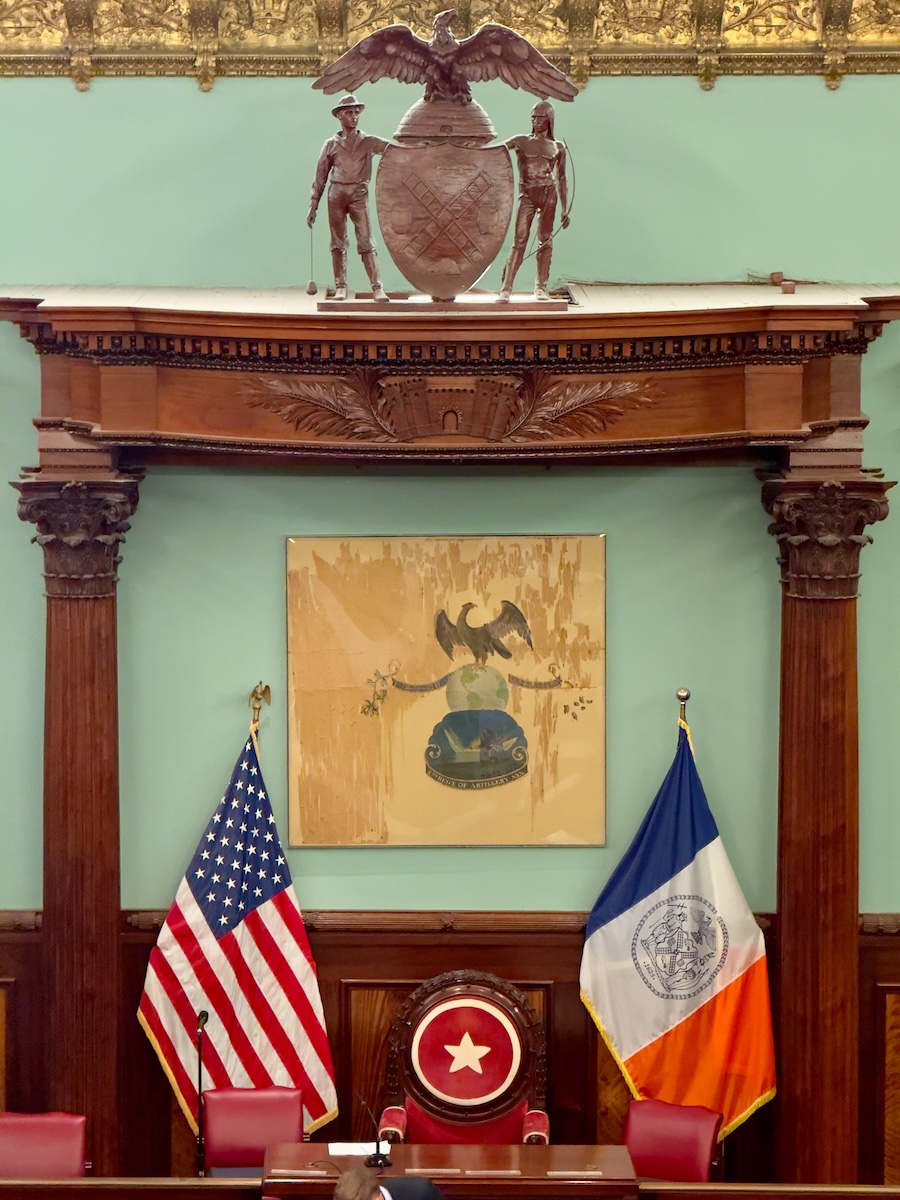
The council chamber takes a more direct approach, leaving ambiguity behind. The room curves inward, the railing pulls your eye along the edge, and the whole thing funnels toward the center, like they expect something important to happen, whether it does or not. The details stack quickly—carved wood, ironwork, and more going on than one room really needs. Even the seating feels arranged for an audience, not just a meeting.
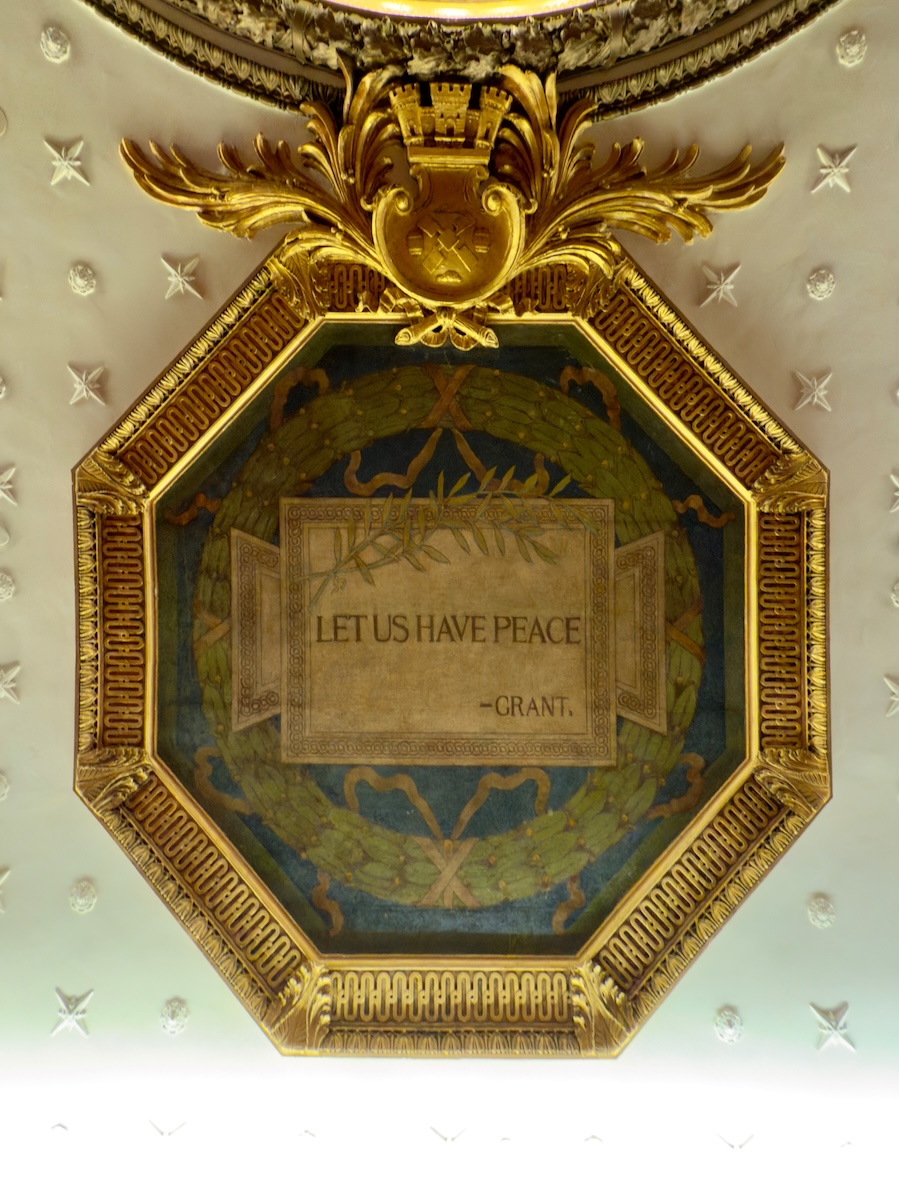
And the ceiling. An allegory of New York herself sits right in the middle, receiving the world. Not interacting with it. Not sharing space with it. Commerce, navigation, agriculture—everyone shows up and seems to understand the arrangement immediately. Or at least no one in the painting seems inclined to argue with it. Neptune is there, because of course he is. The Brooklyn Bridge even makes an appearance, already part of the story by the time the ceiling was painted.
There isn’t much to interpret here—the message is clear. You can either go along with it or not. New York and the council chamber don’t really care.
And that’s the version you’re meant to see. The fact that City Hall sits on an African Burial Ground isn't really highlighted during the tour. The Burial Ground is a colonial-era cemetery where thousands of free and enslaved Black New Yorkers were buried in the 17th and 18th centuries, back when this part of Manhattan was outside the city’s edge. At the time, Black residents were largely barred from burial in churchyards used by white colonists, so this became one of the few places available to them.
Over time, as the city expanded northward, the burial ground was built over, and the memory of it faded enough that buildings like this one could go up without much fuss about what had been there before. It wasn’t until construction work in the 1990s uncovered human remains that the site was fully recognized and studied again, eventually becoming the African Burial Ground National Monument just a few blocks away.
None of that is visible when you’re inside City Hall. There’s no marker in the rotunda, nothing in the council chamber, no quiet aside in the Governor’s Room. It exists just outside what’s presented inside the building. But once you know it’s there, it stays with you as you move through the rooms.
By the time the tour starts to wind down, the building doesn't feel any larger. It feels more layered. Things have been added, adjusted, corrected, and left over the years. Some of it lines up neatly, and some of it doesn’t. You move through rooms that have been carefully arranged to tell a version of the city’s myth about itself. And for the most part, it works.
It’s only when you start thinking about everything that didn’t quite fit—what was moved, what was revised, what never made it onto the walls—that the building gets more interesting.






Write a comment