
The Merchant’s House Museum was covered in scaffolding when we visited last July, the front façade wrapped in the temporary aluminum skeleton that tells you a building is either being saved or slowly surrendering to decay. In this case, it was the former. I hope. It’s hard to tell in New York.
The renovation had been underway for quite a while—as in years—and like many preservation projects in the city, it was moving forward in careful increments, one donation, one repair, one legal fight at a time. The grand marble stoop that once received well-dressed callers was inaccessible, so we were directed through the rear garden and into the house from the servants’ side. Probably not the entrance Seabury Tredwell had in mind for his guests.
This house has spent most of its long life quietly defying the normal rhythms of Manhattan real estate. Built in 1832, the narrow brick townhouse at 29 East Fourth Street has now stood for nearly two centuries, which in New York qualifies as borderline miraculous. Buildings here rarely survive long enough to develop personality, much less a full century of family life.
Yet this one managed exactly that, and the result today is one of the strangest and most compelling historic interiors in the city. The Merchant’s House isn’t a reconstruction or a curated “period room” museum assembled from auction catalogs and decorative guesses. It’s the real deal, a mid-19th-century merchant’s home that still contains the furniture, belongings, and architectural details from the century the Tredwell family lived there.
It’s New York’s most authentic time capsule.
Tredwell, a prosperous hardware merchant whose business imported metal goods through the bustling seaport at the southern tip of Manhattan, moved his family into the house in 1835. He’d come to the city from a Long Island farm as an 18-year-old looking for opportunity, which in early-19th-century New York was about as sensible a plan as a young person could have.
The Erie Canal had recently opened, shipping was booming, and Manhattan was rapidly transforming from a coastal trading town into the commercial engine of the young United States. By the time Tredwell bought the house, he was wealthy enough to support his growing family in what was then a fashionable residential neighborhood north of the city’s mercantile chaos. While most wealthy New Yorkers eventually followed the city north as Manhattan expanded, the Tredwells never did. Even as the neighborhood grew busier and less fashionable, they stayed put, redecorating the house instead of moving.
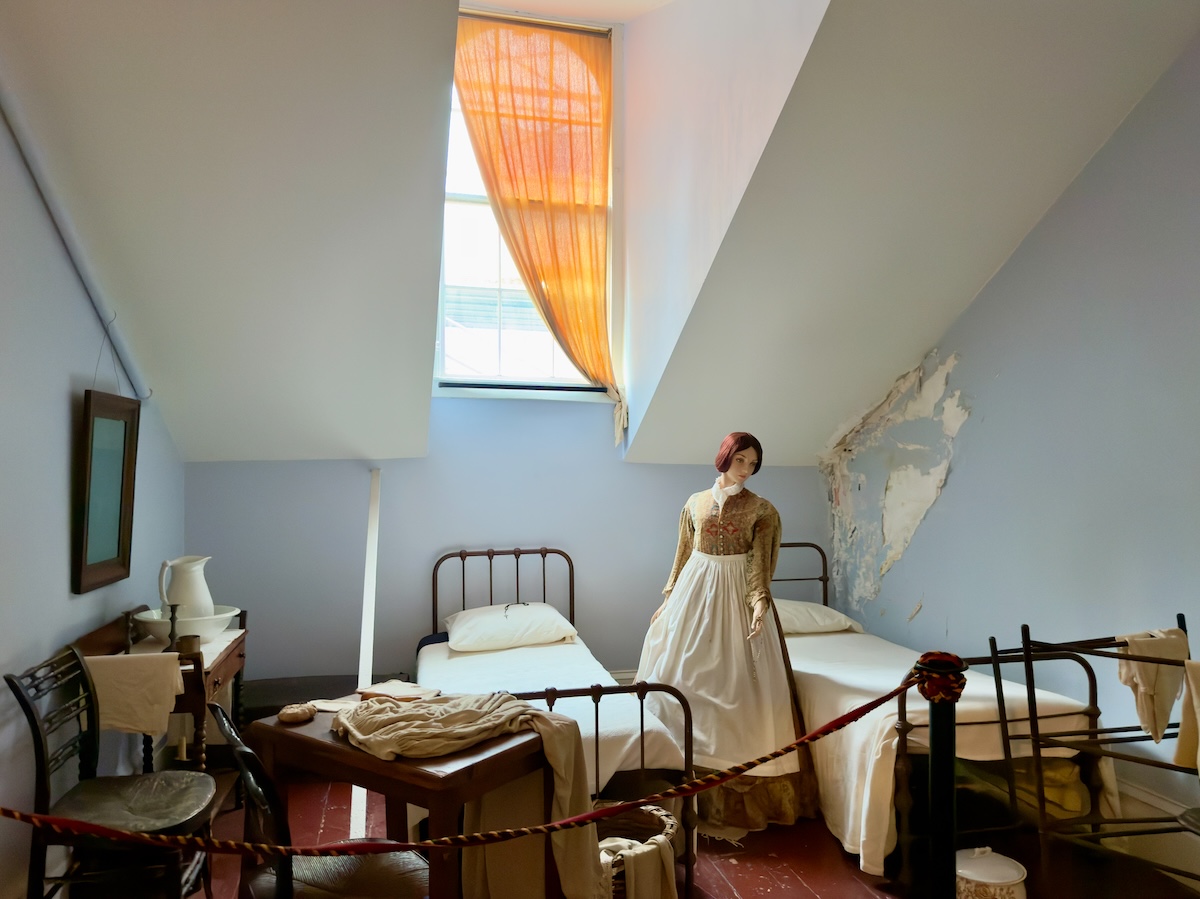
The house quickly filled with the machinery of respectable mid-century domestic life—children, servants, visiting relatives, and an ever-changing rotation of Victorian social obligations. At one point, as many as 18 people lived under the roof—Seabury and his wife, Eliza, their eight (!) children, sons-in-law and grandchildren, one unmarried aunt, and four Irish servants who kept the whole enterprise functioning.
The house itself was arranged in the familiar vertical hierarchy of the time. Formal parlors occupied the main floor, bedrooms filled the upper levels, servants’ quarters were tucked out of sight on the top floor, and the kitchen sat in the basement.
Which is exactly where we began our visit, thanks to the renovation.
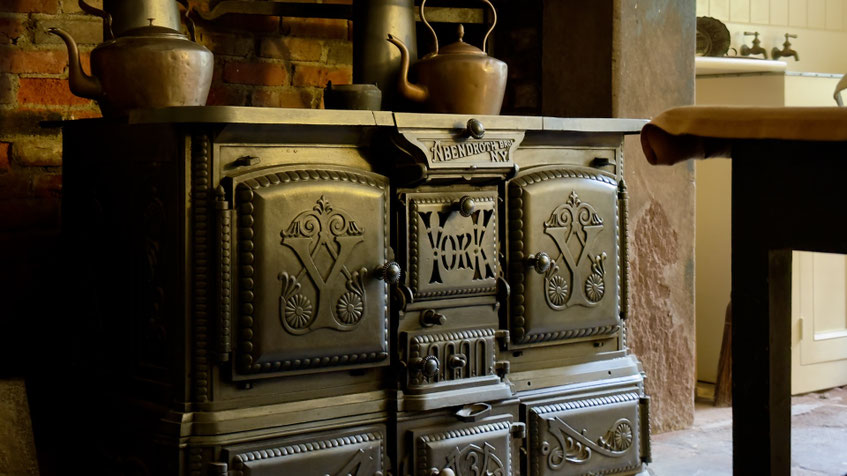
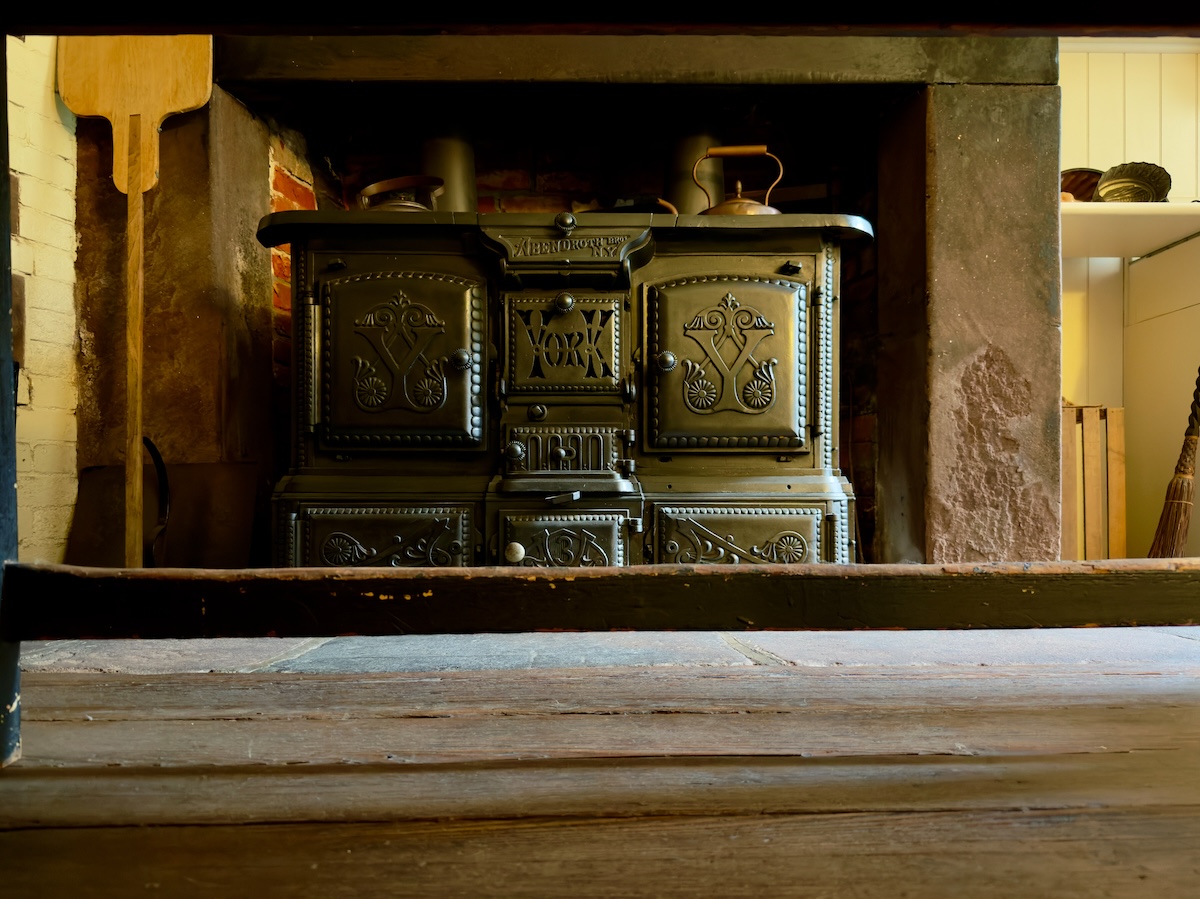
The kitchen, half a story below street level, was the house's operations hub. It belonged to the cook and her assistants, who rose before dawn each day to begin the work of feeding the household. The room is anchored by an elaborate cast-iron coal stove, a hulking Victorian appliance whose decorative panels and intricate castings make it look less like a cooking device and more like the iron engine that powered the household.
Remarkably, the thing still looks almost new. The ornate doors and patterned plates gleam as if a scullery maid just polished them yesterday rather than a century ago, which makes it easier to imagine the room in full motion—servants hauling coal, water sloshing in buckets, bread rising somewhere near the steady heat of the stove.
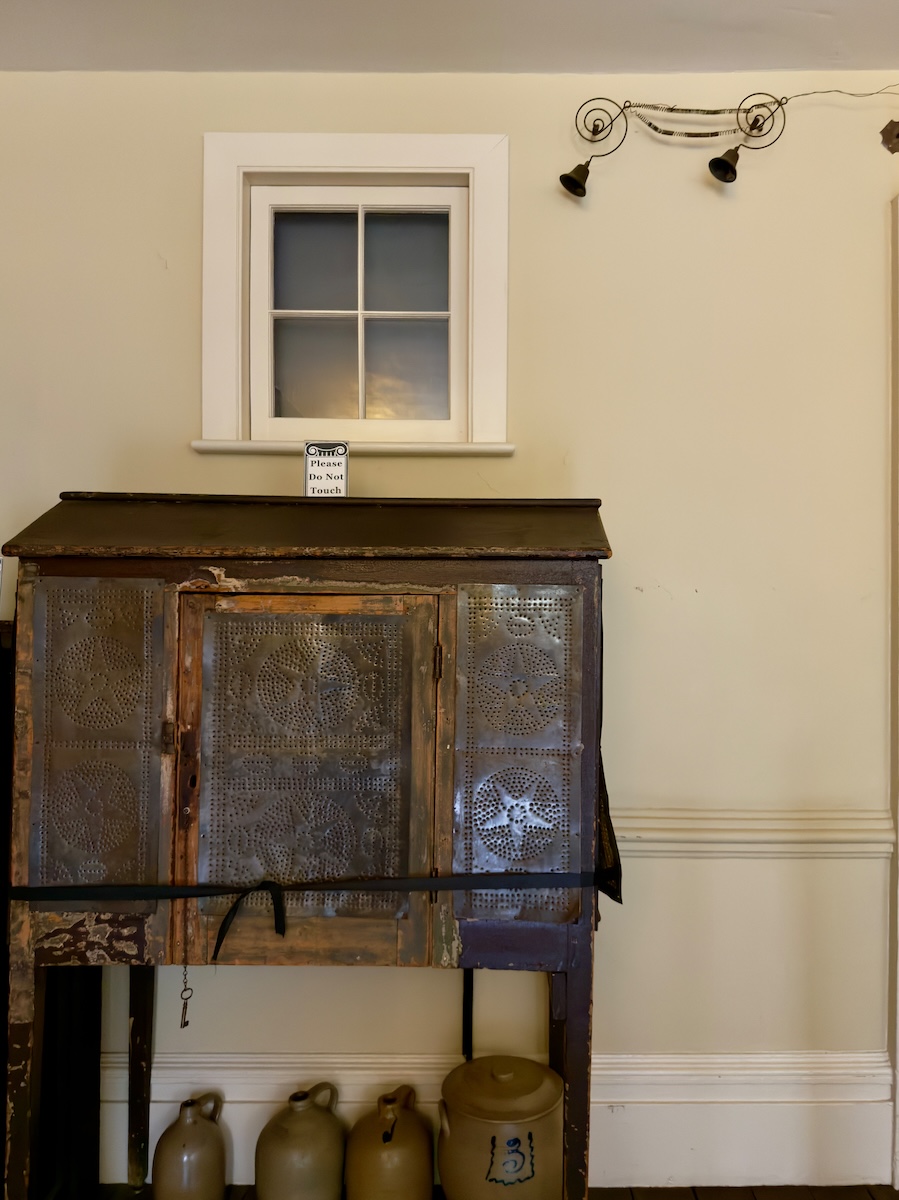
Along one wall runs a thin wire strung with small brass bells, each one connected to a room upstairs—a Victorian paging system. Pull a cord upstairs in the parlor or bedroom, and a corresponding bell rang in the basement, summoning a servant like a politely worded alarm. Against another wall sits a pierced-tin food safe, its patterned metal panels letting air in and keeping flies out. Refrigeration was still decades away, so food storage relied on airflow, shade, and a not-inconsequential amount of optimism.
Victorian households of this scale were essentially small logistical systems, and the kitchen was where the engine of domestic life ran continuously. Multi-course dinners upstairs didn’t just appear magically on the dining table upstairs. They were assembled here through a choreography of heat, timing, and relentless physical work.
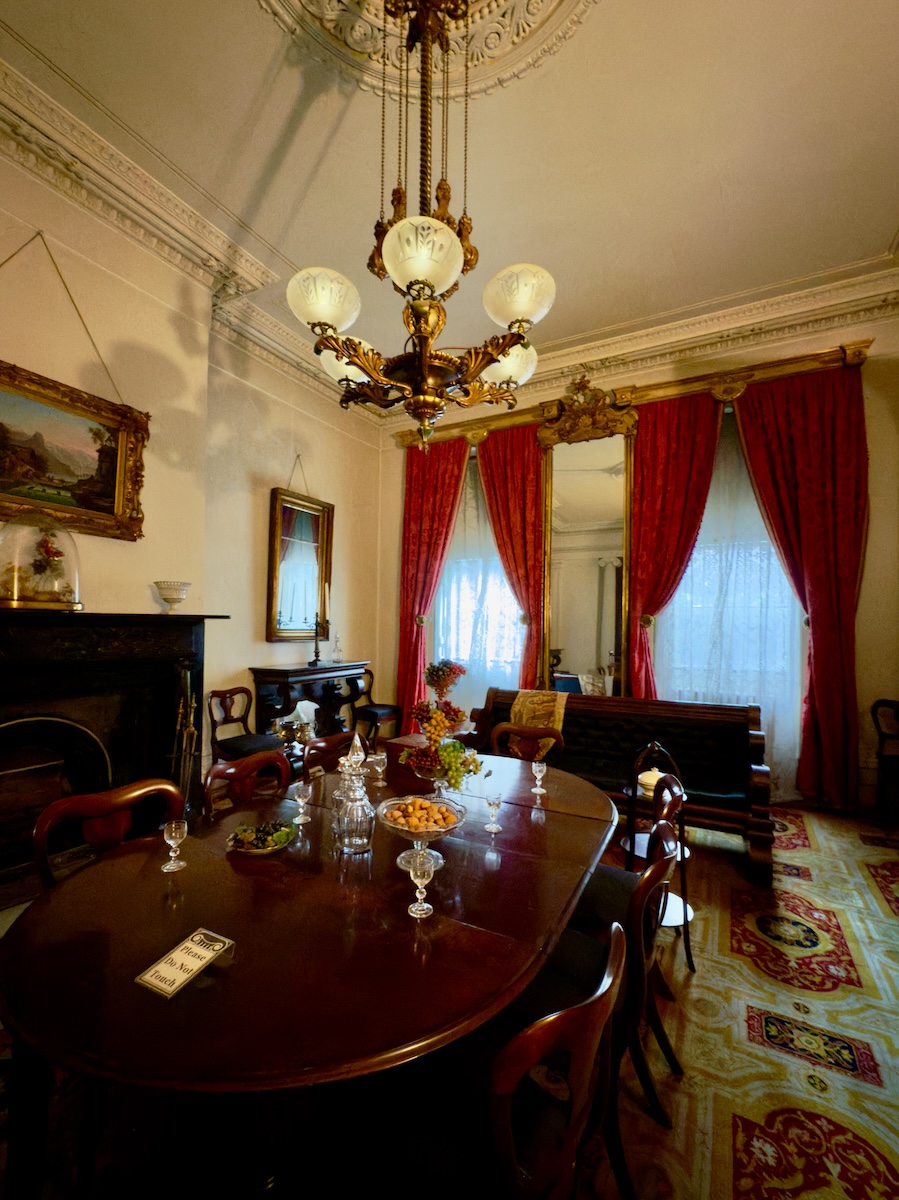
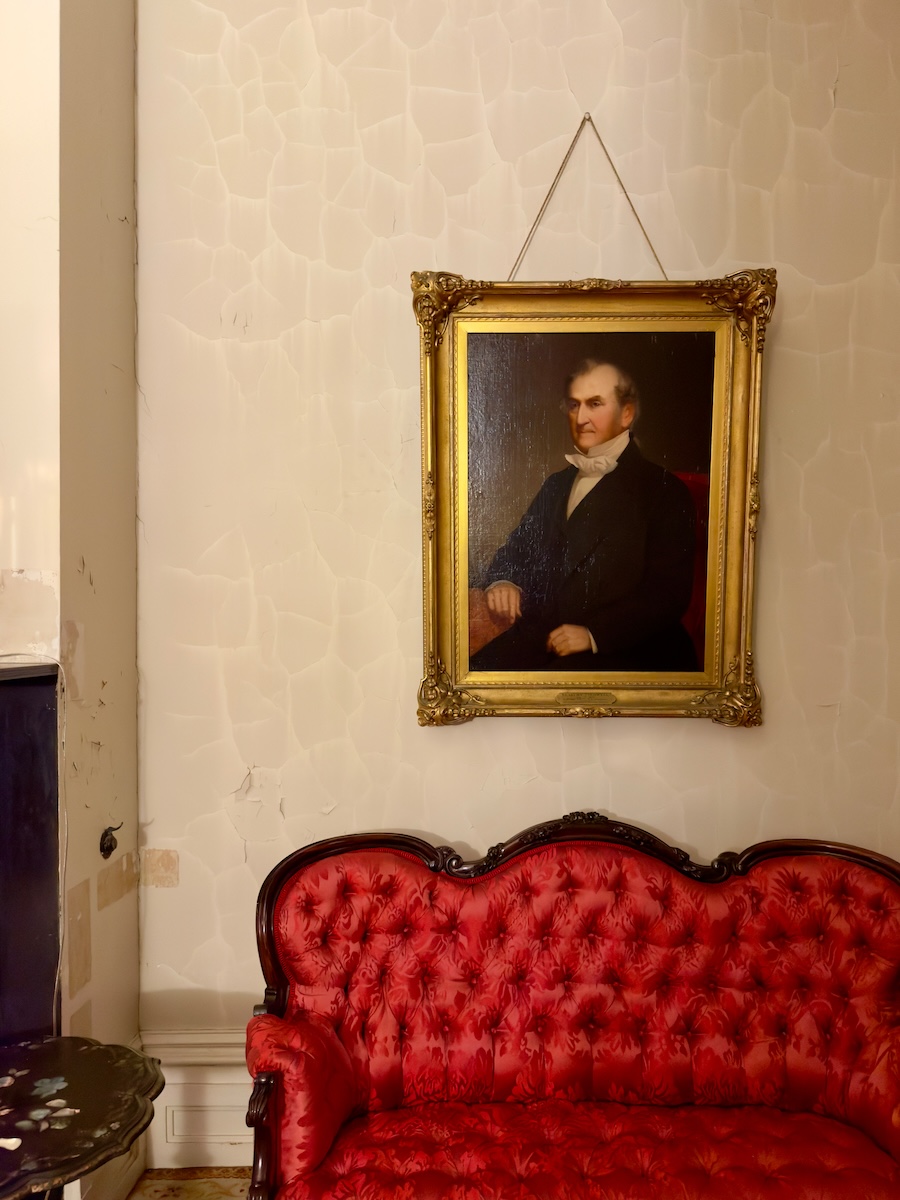
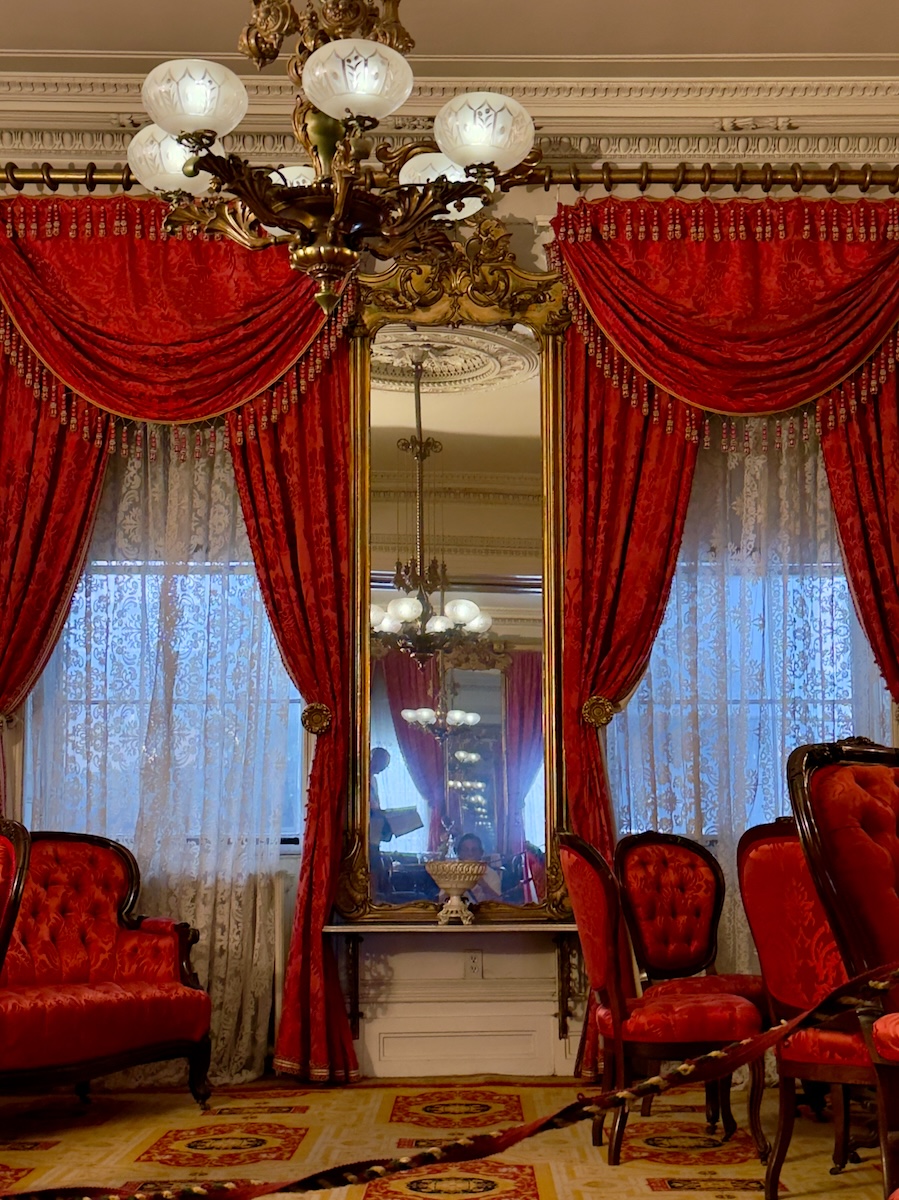
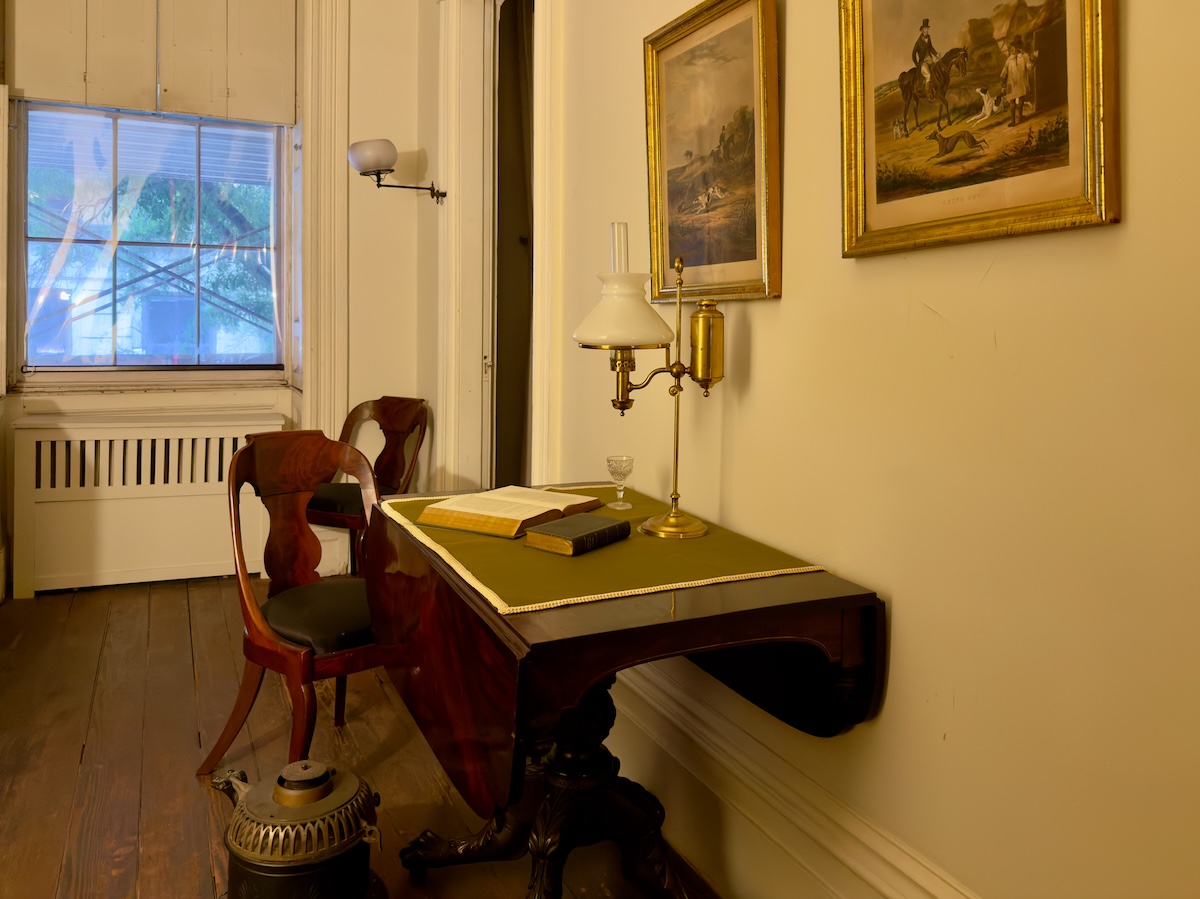
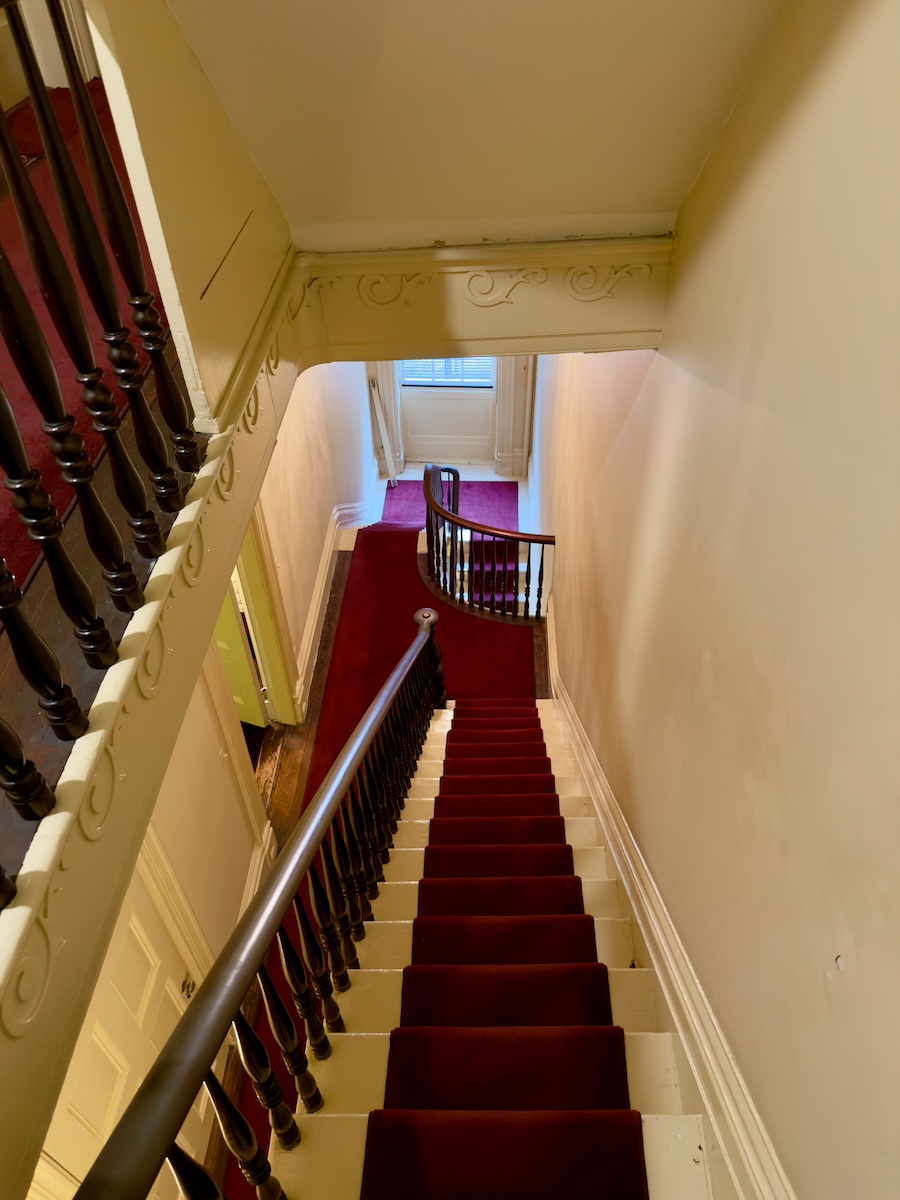
When I was finally able to tear myself away from that beautiful stove, we climbed the steep, narrow stairs to the more polished spaces of the house, where the family received visitors and conducted the social business of the household. The Tredwell house was fancy enough to have dual parlors on the main floor. The front parlor, in particular, is a kind of theatrical stage set for mid-19th-century hospitality—high ceilings, heavy furniture, ornate mirrors, and a piano that would have been the centerpiece of evening entertainment. Behind it sat the slightly more relaxed rear parlor, separated by sliding doors that could be opened when the guest list grew ambitious. In houses like this, the rear parlor often doubled as the dining room.
These rooms were not simply decorative. They were necessary tools for maintaining one’s position within a carefully managed network of acquaintances, relatives, and business associates. Victorian social life involved a custom known as “ceremonial calling,” which was essentially a form of formalized visiting that sounds exhausting by modern standards. A woman would arrive at a friend’s house, be shown into the parlor, exchange polite conversation for about 10 minutes, and then leave. The visit then had to be returned later, and so on, essentially forever.
Men participated in the same ritual, but apparently only on New Year’s Day, when respectable gentlemen would spend the afternoon making rounds from house to house. One New Yorker recorded making 40 visits in a single day, which raises the obvious question of how anyone got any actual work done. Then again, most of the city wasn’t doing this at all. The elaborate choreography of ceremonial calling belonged mostly to the merchant class and the social climbers orbiting them, who spent an impressive amount of time circulating between drawing rooms like gussied-up worker bees.
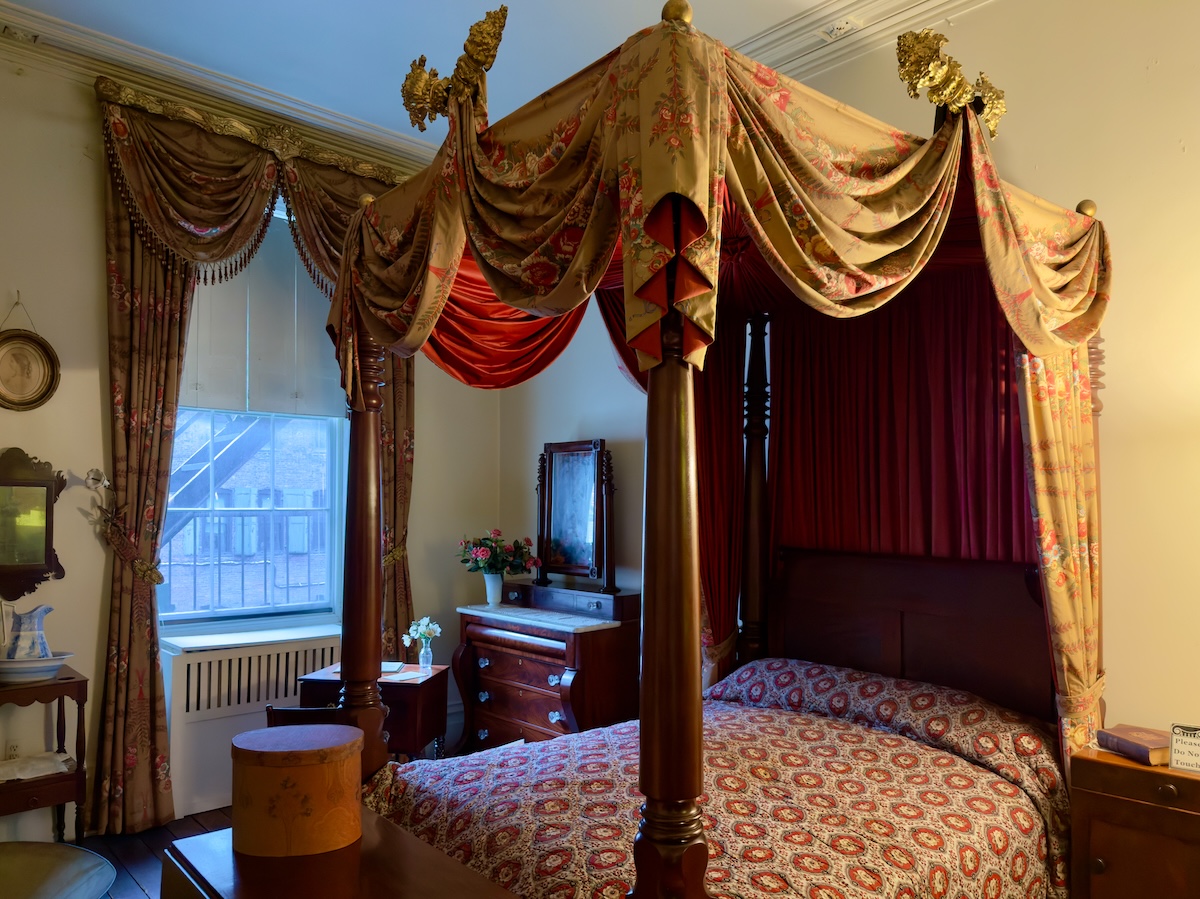
The bedrooms upstairs reveal a much quieter, more private side of the household. Bedrooms in houses like this were used for far more than sleeping. They were places where people dressed for the day, wrote letters by lamplight, or read the newspaper. The rhythms of daily life played out here in small, ordinary ways that rarely leave much in the historical record.
But these rooms also saw bigger life events. Illnesses were nearly always treated at home, sometimes for weeks at a time, with family members and servants taking turns at the bedside. Children were born here, too; the arrival of a new member of the family was announced not in a hospital ward but in the same rooms where the household woke up each morning.
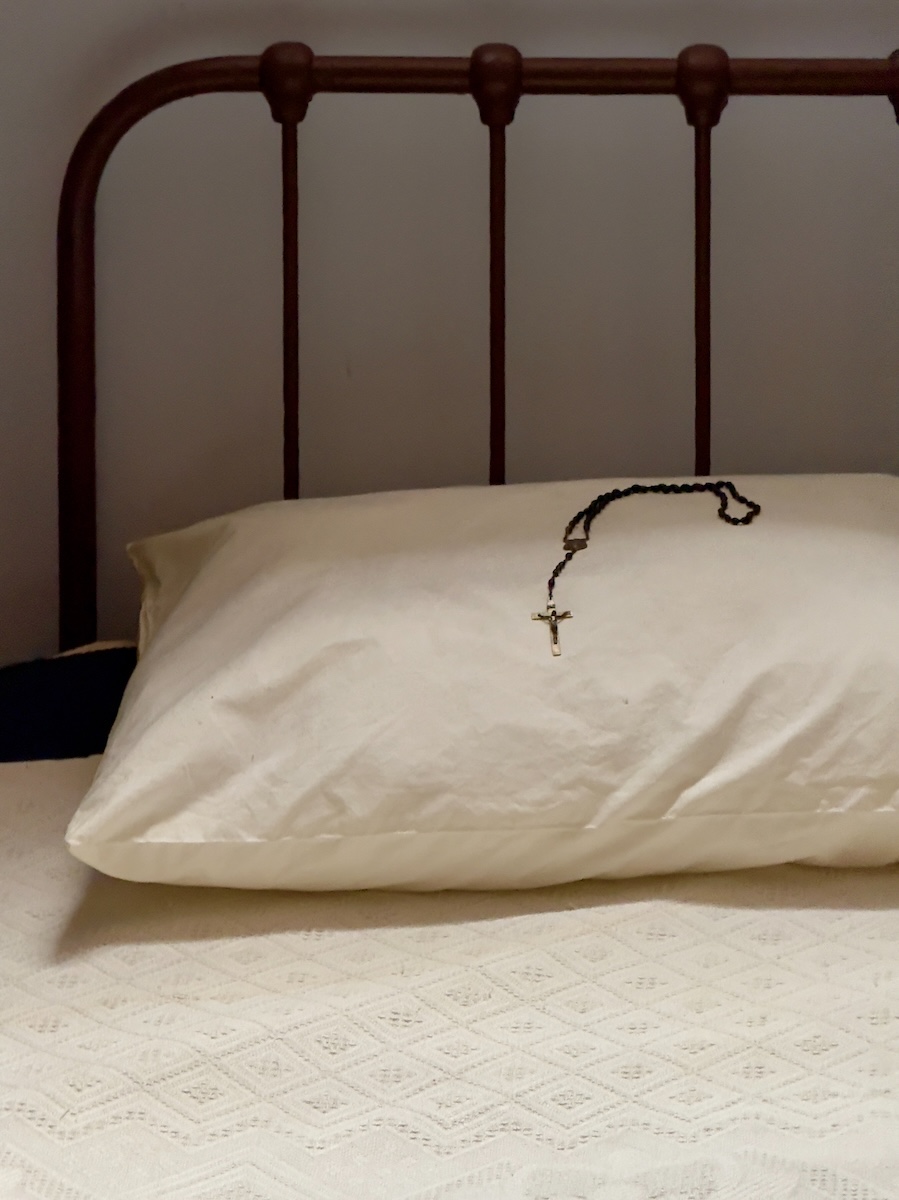
And eventually, death came here as well. In the 19th century, the end of life wasn't outsourced to hospitals or funeral homes. It unfolded within the home itself, with relatives gathering quietly around the bed as a loved one's final hours passed. The body would be washed and dressed by relatives or servants, then laid out in the parlor downstairs, where friends and neighbors came to pay their final respects.
With such a large family, the Tredwells experienced that reality repeatedly. Over the decades, eight Tredwells died in the house, their funerals held in the parlor downstairs before burial. The rituals surrounding death were solemn but deeply domestic—mirrors draped in black cloth, curtains drawn, friends and neighbors arriving quietly through the same doorway that had once welcomed wedding guests and dinner parties.
The person who ultimately ensured the house's survival, though, was the youngest Tredwell daughter, Gertrude. Born in the house in 1840, she lived her entire life there before dying in 1933 at the age of 93. During her lifetime, Manhattan had changed beyond recognition. She’d witnessed the Civil War, the First World War, and the Great Depression. The world outside her windows now contained electric lights, automobiles, subways, and skyscrapers.
But the Victorian interior of the house remained largely untouched. Gertrude and her siblings had gradually aged in place without substantially modernizing the home. When she died, a distant relative charged with settling the estate recognized the extraordinary historical value of what remained. Instead of emptying the house and selling the furnishings, he preserved it almost exactly as it was and opened it as a museum in 1936. That decision is the reason visitors today can walk through rooms that feel less like museum exhibits and more like a home whose owners just stepped out for a quick social call and never came back.
By the time we reached the topmost floor, the renovation underway was more visible. Some rooms were being used for temporary storage, and furnishings awaiting refurbishment were stacked against one wall. None of that detracted from the experience. If anything, it reinforced the fragile improbability of the place. Historic preservation in Manhattan can be a long, stubborn argument with time and economics—and the Merchant’s House is still very much in the middle of that conversation.
Outside, the scaffolding waited patiently for the next phase of work. Inside, the house continued doing what it has done for nearly two centuries—holding its ground while the rest of the city rushes past.




Write a comment