

My brother Mike wanted to visit the World Trade Center Memorial and Museum when we were all in New York last July. That alone made the adventure feel unusual. We’ve lived on opposite coasts forever, so we rarely overlapped geographically—and these days we don’t even live in the country at all. There was something quietly nice about the three of us standing together in Manhattan on a foggy summer morning, trying to find the entrance to one of the most visited and emotionally freighted sites in the city.
Lower Manhattan doesn’t feel like the Ground Zero people remember from television anymore. The neighborhood has been rebuilt with a startling thoroughness. Glass towers climb skyward again. Parks and plazas have been landscaped and stitched back into the street grid. Subway lines and the PATH train funnel commuters through the district as if nothing had ever interrupted the flow of the city. It is unmistakably a fully functioning part of New York again—offices, tourists, food trucks, construction cranes, the whole urban ecosystem.
Just ahead of the site, a glass pavilion serves as the museum's entrance. From the street, it looks modest enough—a low modern structure surrounded by trees and a steady flow of visitors passing through security lines and ticket scanners. Inside, though, the space unfolds quickly into something larger and stranger.
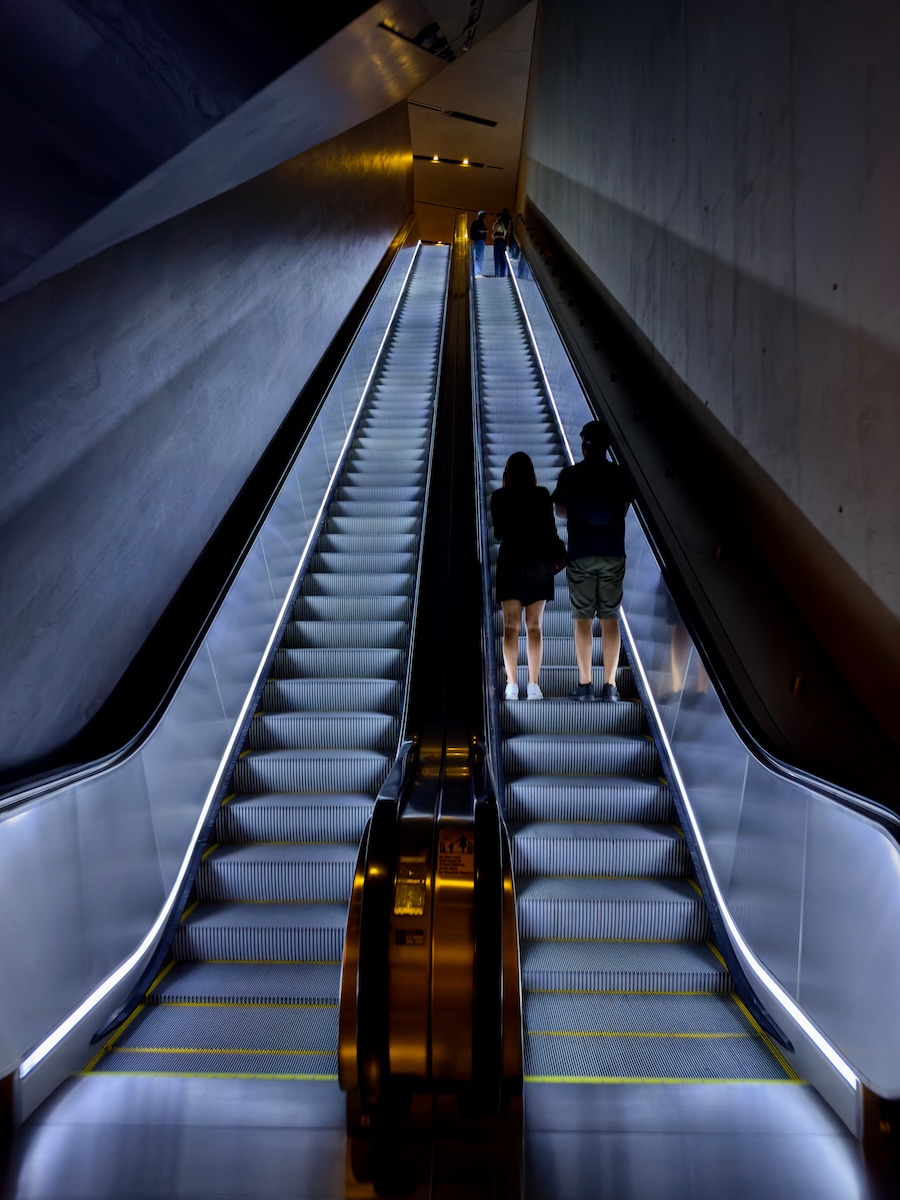
A bank of escalators carries visitors downward—slowly, but deeper and deeper beneath the plaza. The ride takes longer than you expect, long enough for conversation to still and for the realization to settle in that you are descending into the original basements of the World Trade Center. Somewhere above your head are the memorial pools and the oak grove. Somewhere around you are the foundations of ghosts—the tallest towers New York had ever built.
By the time the escalator reaches the bottom, you are roughly 70 feet underground.
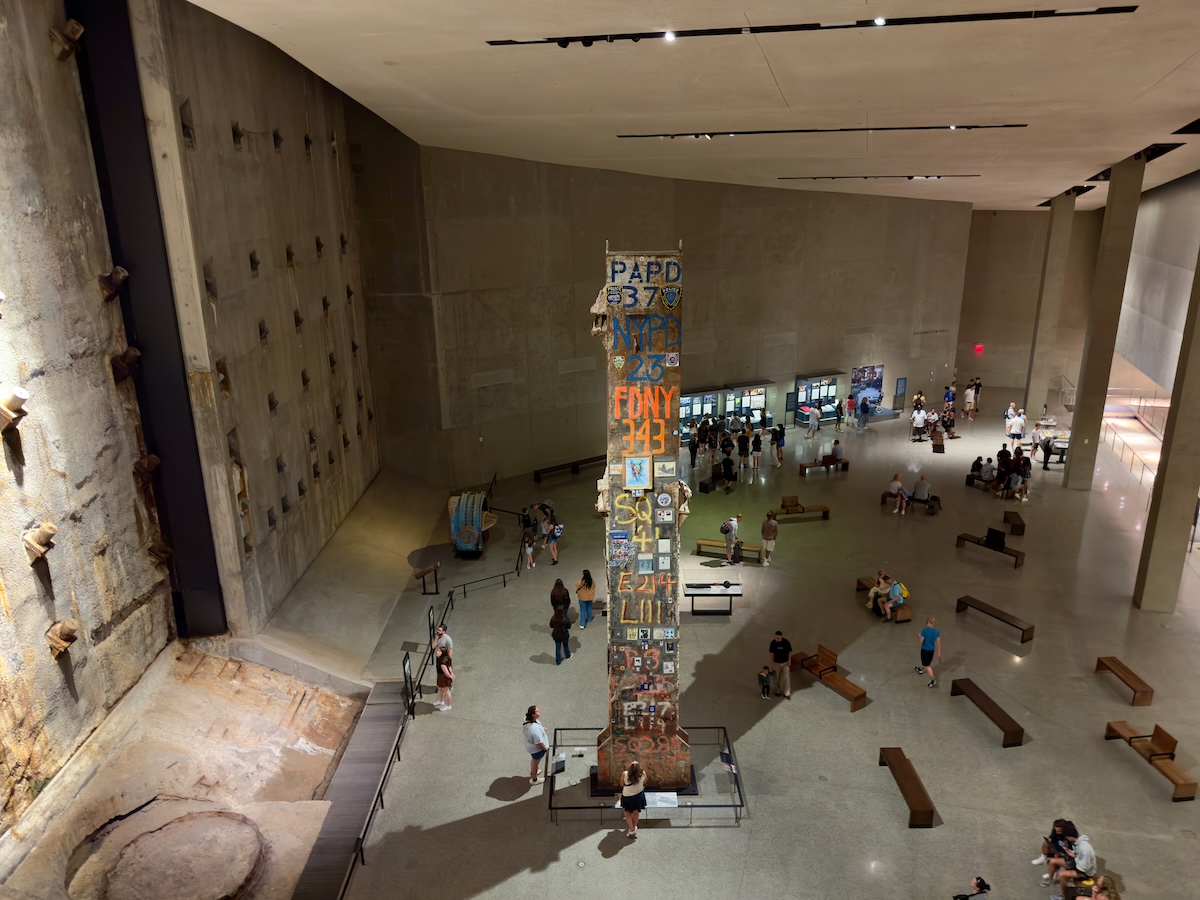
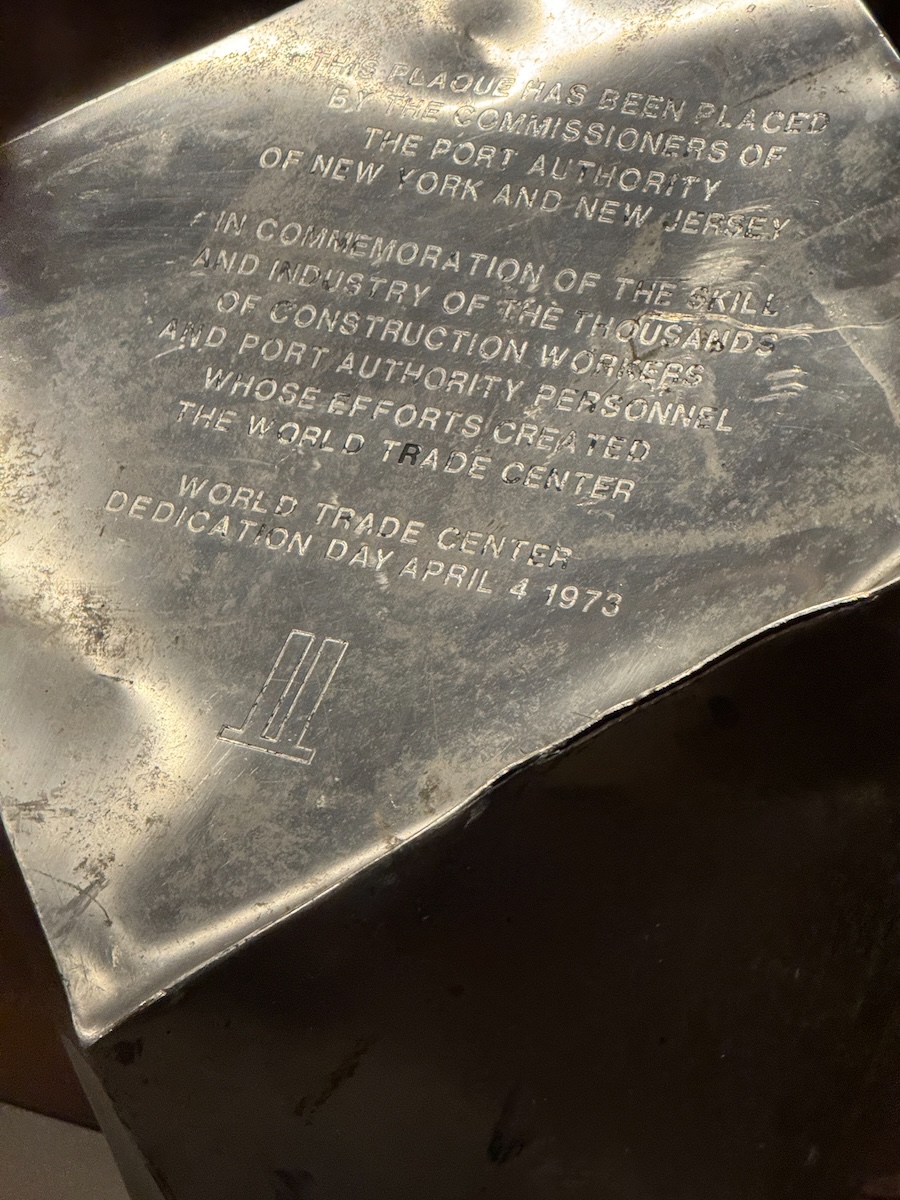
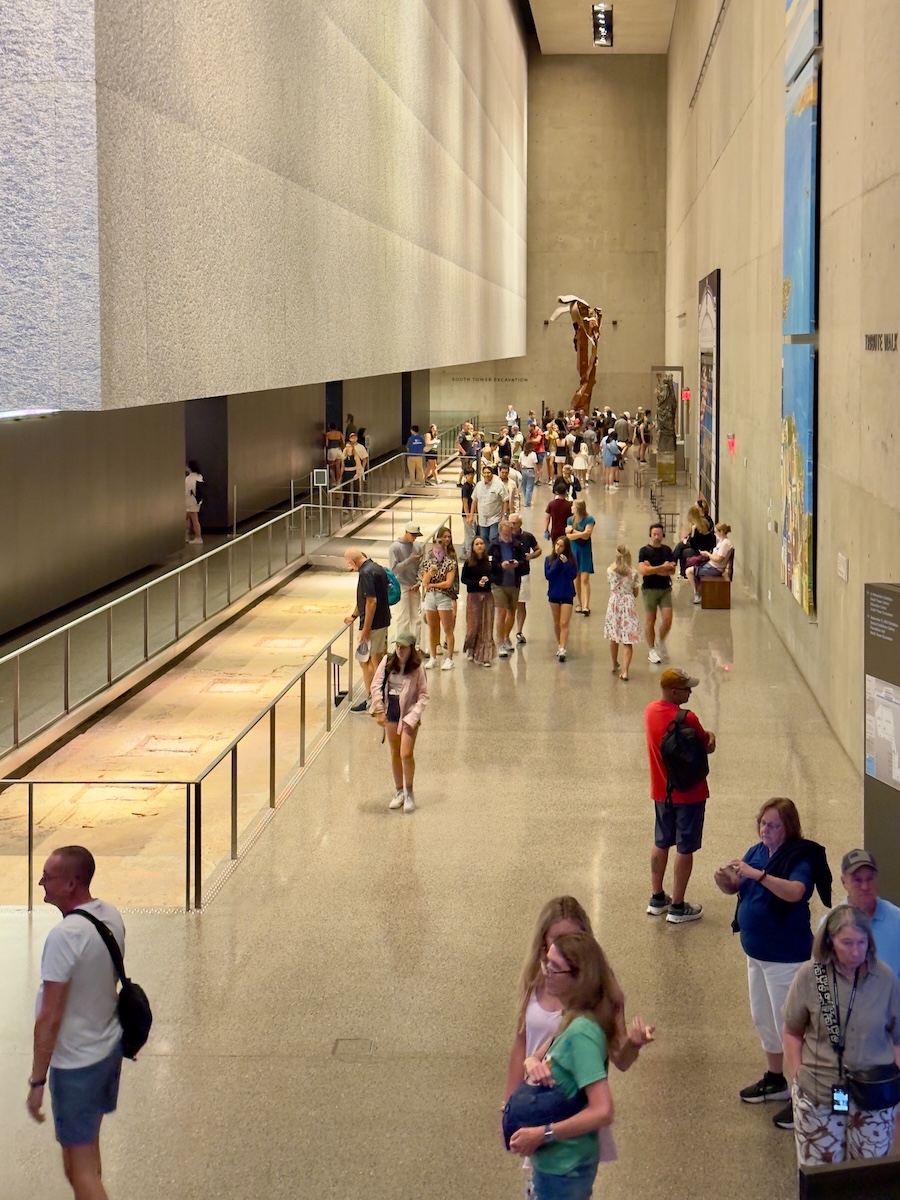
The museum spreads outward from there in a series of vast galleries built directly inside the surviving structure of the original complex. Steel columns the size of small buildings rise from the concrete floor. Some stand straight and intact, while others are twisted and bent in ways that seem physically impossible, the result of forces that turned office towers into debris fields in a matter of seconds.
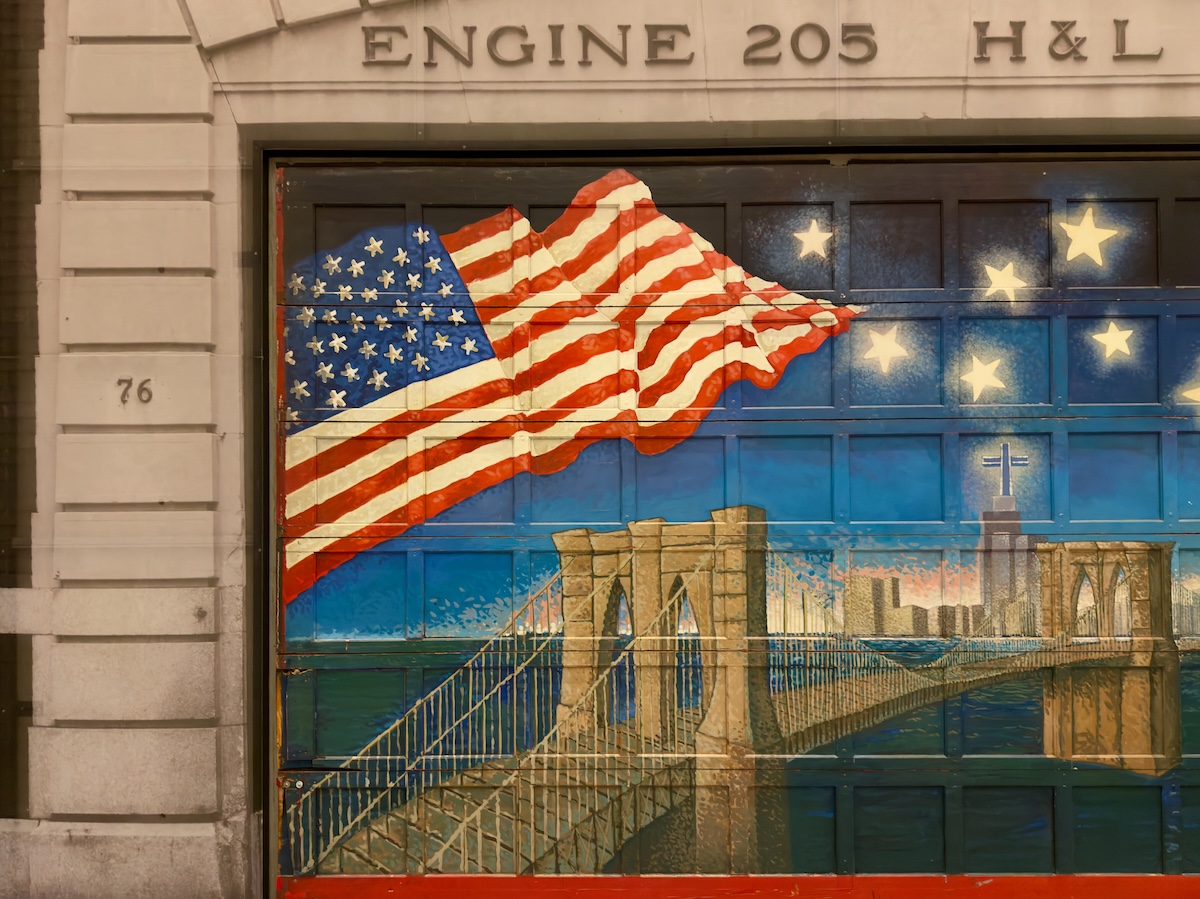
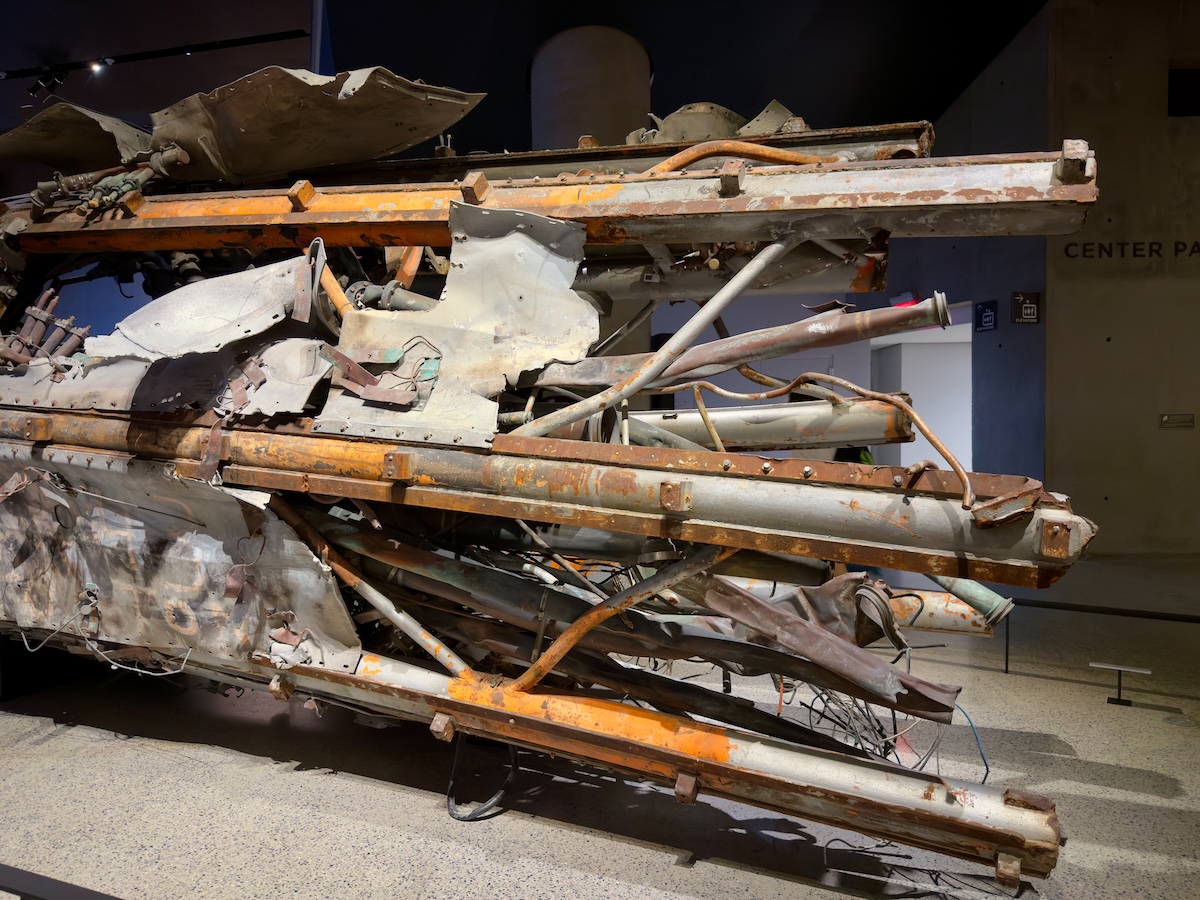
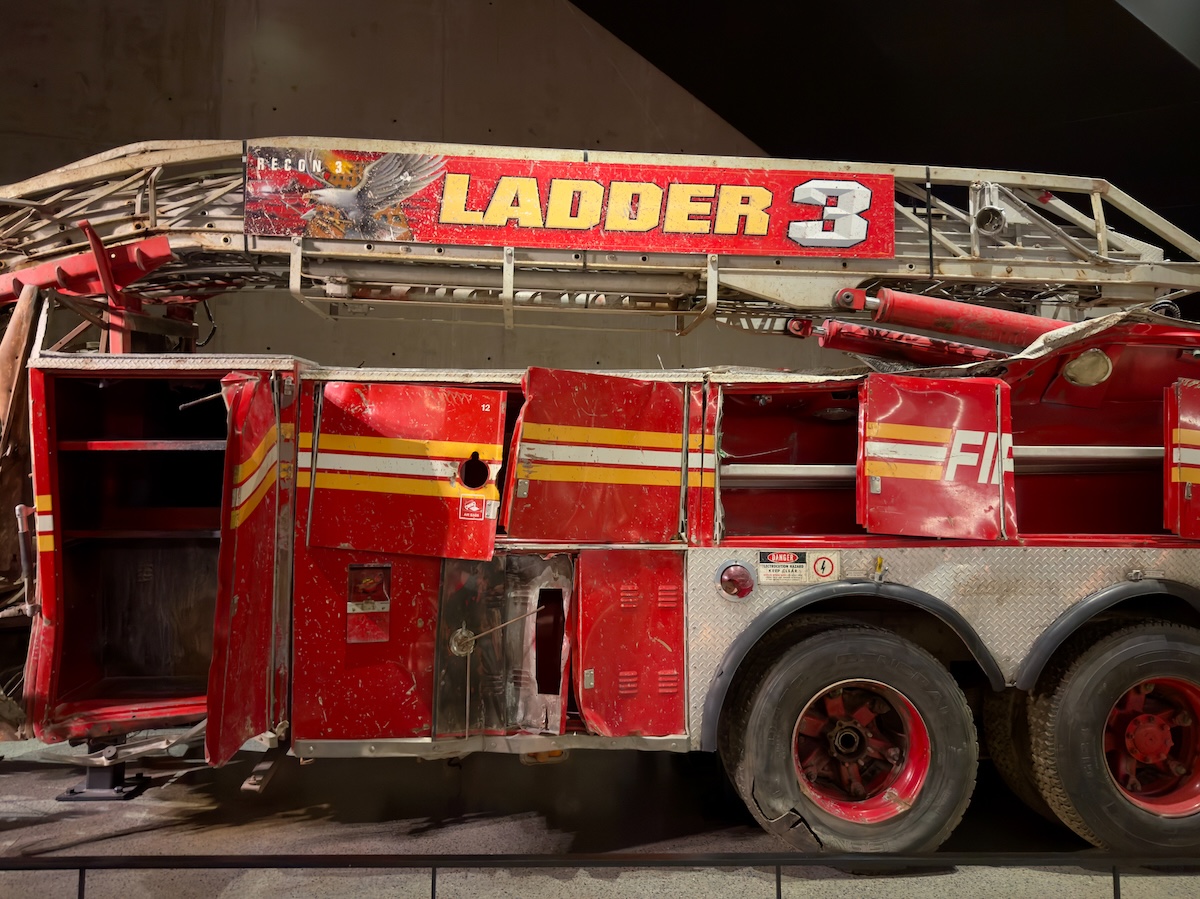
Other artifacts appear along the route through the galleries—emergency vehicles crushed under falling steel, elevator motors the size of small cars, fragments of antennae and façade panels that once sat hundreds of feet above Manhattan. One entire fire truck from Ladder Company 3 sits twisted and partially collapsed, its red body peeled open like a crushed soda can.
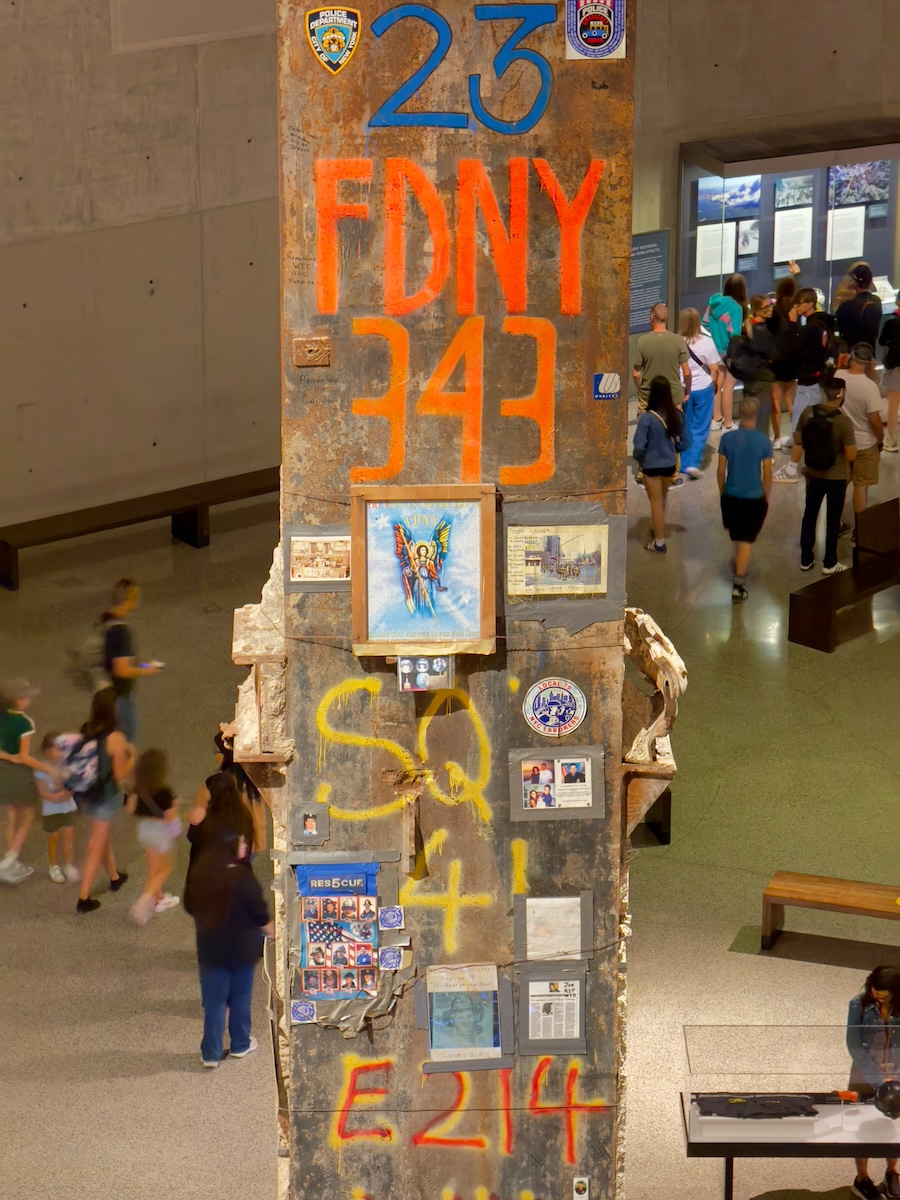
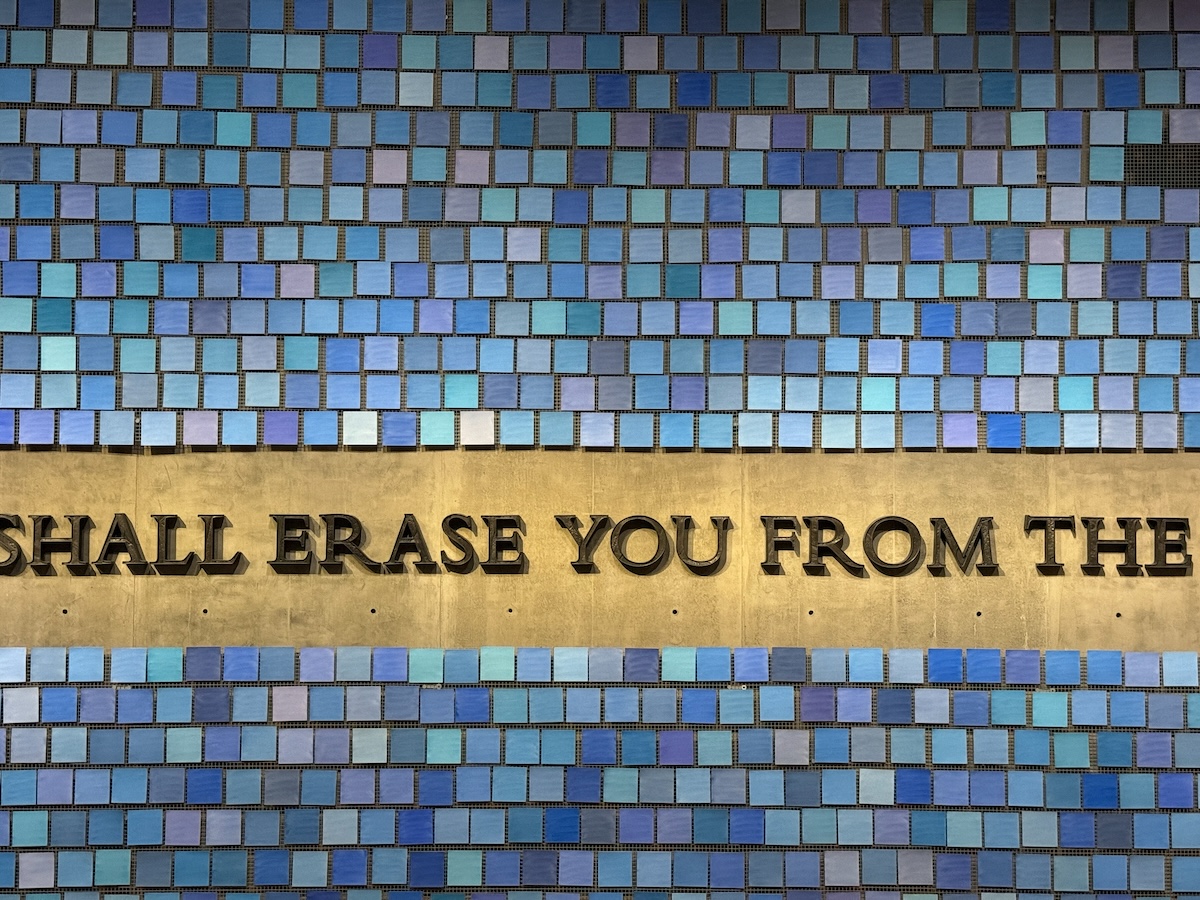
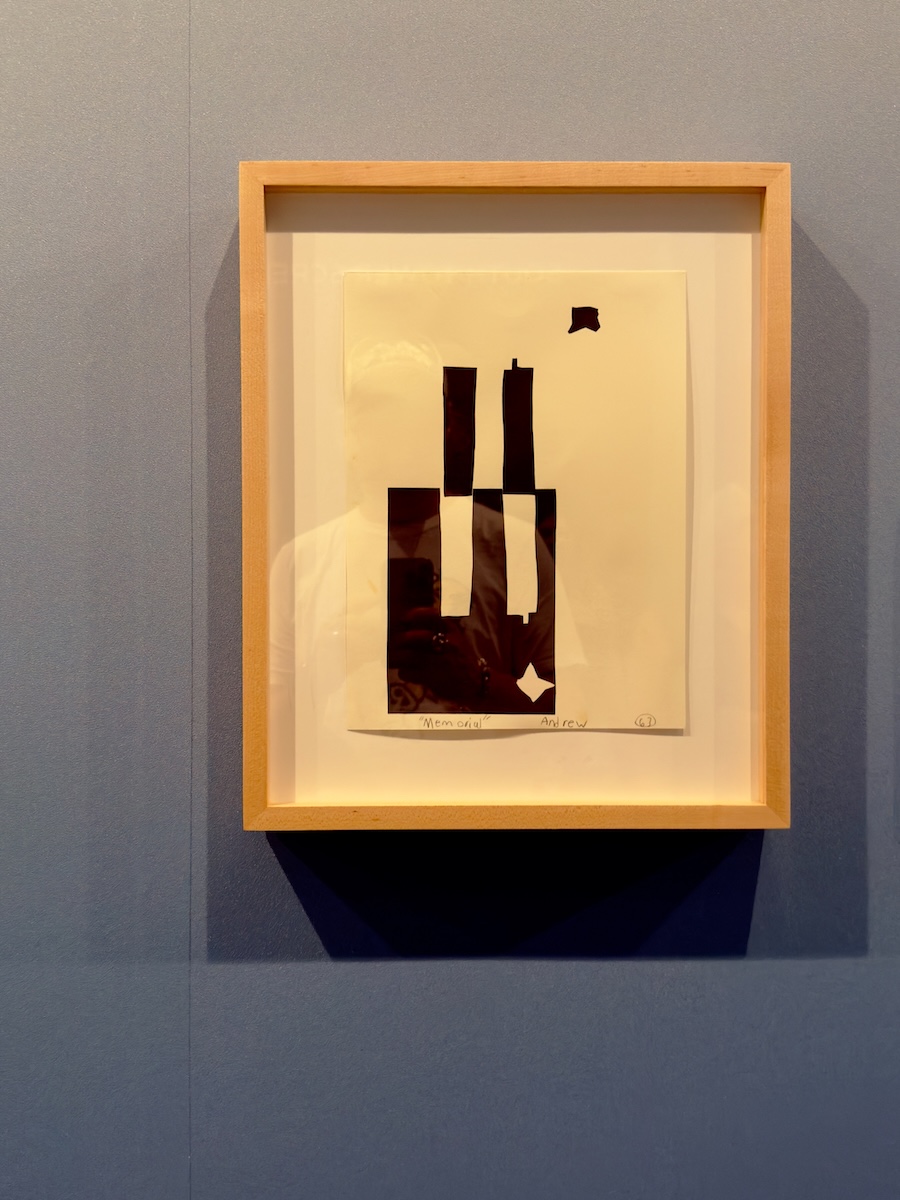
One steel column is still covered with spray-painted rescue markings from the weeks after the collapse—FDNY 343, the number of firefighters who died that day. Elsewhere, the tone shifts unexpectedly—walls filled with children's drawings sent from schools around the world in the weeks after the attacks, simple shapes and bright colors trying to make sense of something adults were struggling to explain.
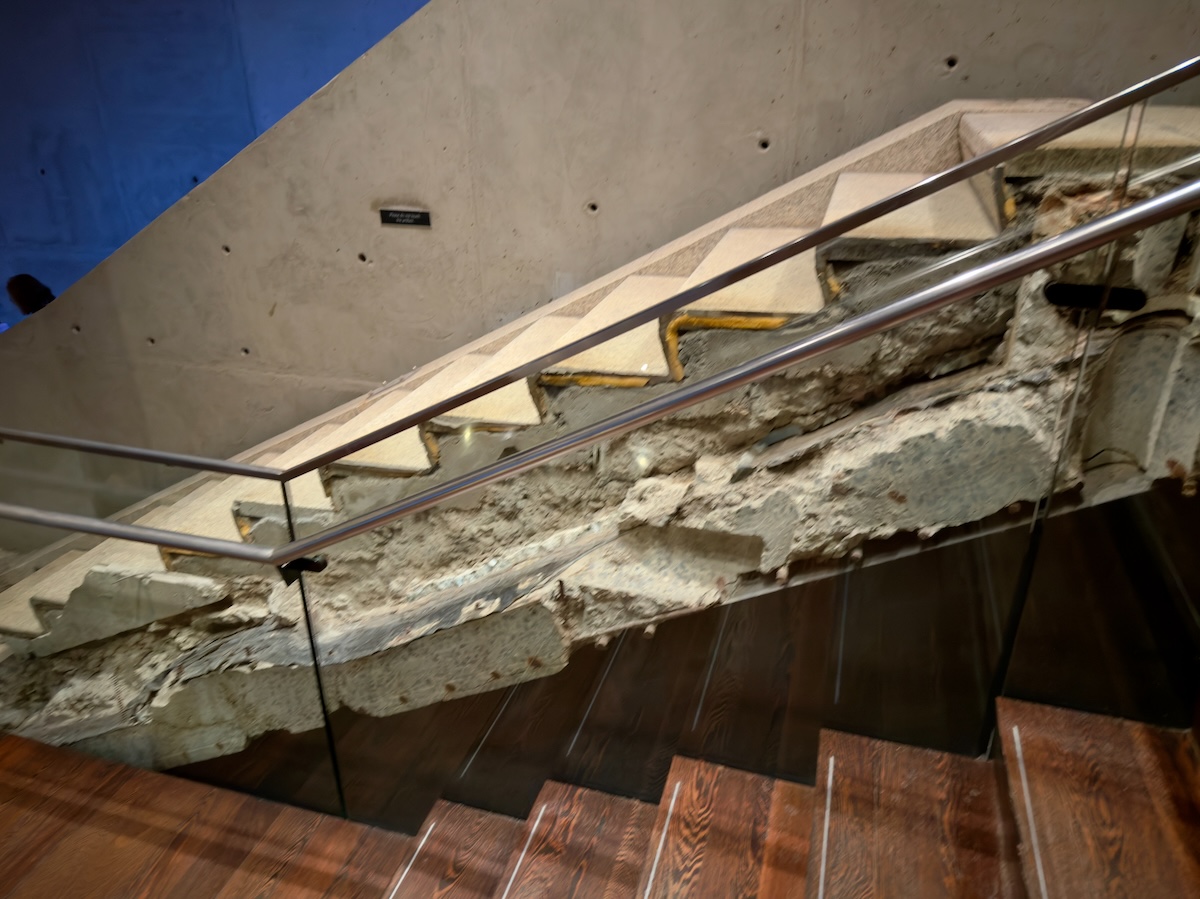
In another gallery, a battered section of stairway hangs suspended in the air, its concrete steps cracked and jagged where they once connected dozens of floors above. The scale of everything is hard to process at first. Even the smallest pieces seem oversized, reminders of how colossal the towers must have been.
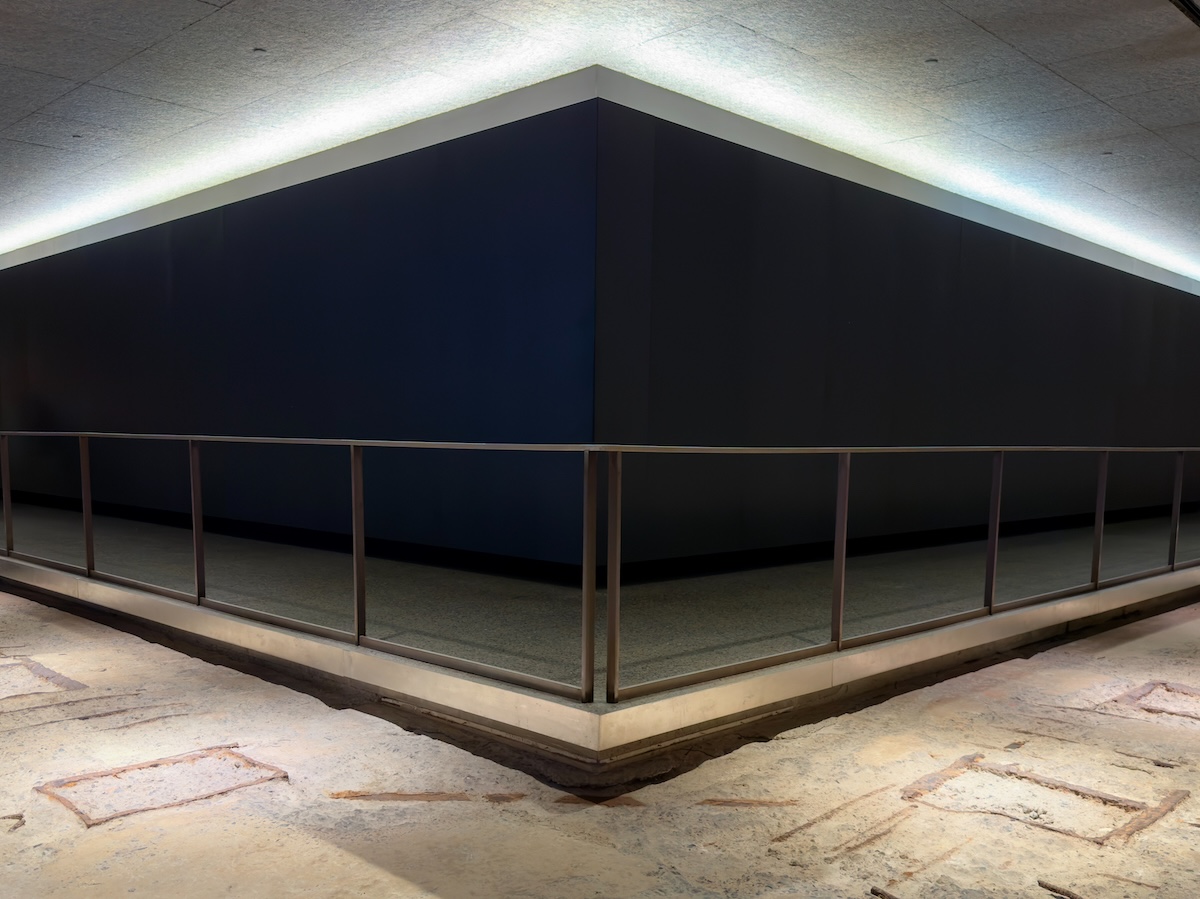
Deep inside the foundations stands a section of the original slurry wall, the reinforced concrete barrier that kept the Hudson River from flooding the World Trade Center site. Engineers built it in the late 1960s when the towers were first constructed, creating what they called “the bathtub,” a watertight box carved into the bedrock of Lower Manhattan.
When the towers collapsed in 2001, much of the surrounding structure was destroyed, but the slurry wall somehow held. Had it failed, the Hudson River could have poured into the site, flooding much of Lower Manhattan. Standing in front of it now, the wall feels less like a museum display than a survivor—an enormous slab of concrete that quietly did its job and kept doing it even after almost everything around it disappeared.
Eventually, the galleries begin leading visitors upwards again.
After being underground among the foundations of the towers, stepping back into daylight is almost disorienting. The memorial plaza is planted as a wide grove of trees where sunlight filters through hundreds of branches. The first thing you notice is the sound of water falling somewhere nearby.
And then the pools come into view.
The memorial design, Reflecting Absence, came out of one of the largest architecture competitions ever held. More than 5,000 proposals were submitted from around the world, and the winning entry came from an architect few people had heard of—Michael Arad, who at the time was working for the New York City Housing Authority.
When he first visited the empty site after the attacks, what struck Arad most wasn’t what remained—but what didn’t. It was as if the towers had just vanished, leaving behind a void in the skyline and in the city itself. His idea for commemorating that absence was deceptively simple—to preserve the footprints of the towers as enormous voids and let water fall endlessly into them.
His original concept—the one that won the competition—was even starker than what we see today. He envisioned two vast empty pools with nothing else around them. Landscape architect Peter Walker was later brought in to soften the design with the grove of oak trees that now surrounds the plaza, balancing the absence with life. The trees are swamp white oaks—hardy urban survivors that can live for centuries and dramatically change character with the seasons, their leaves turning a soft gold each fall.
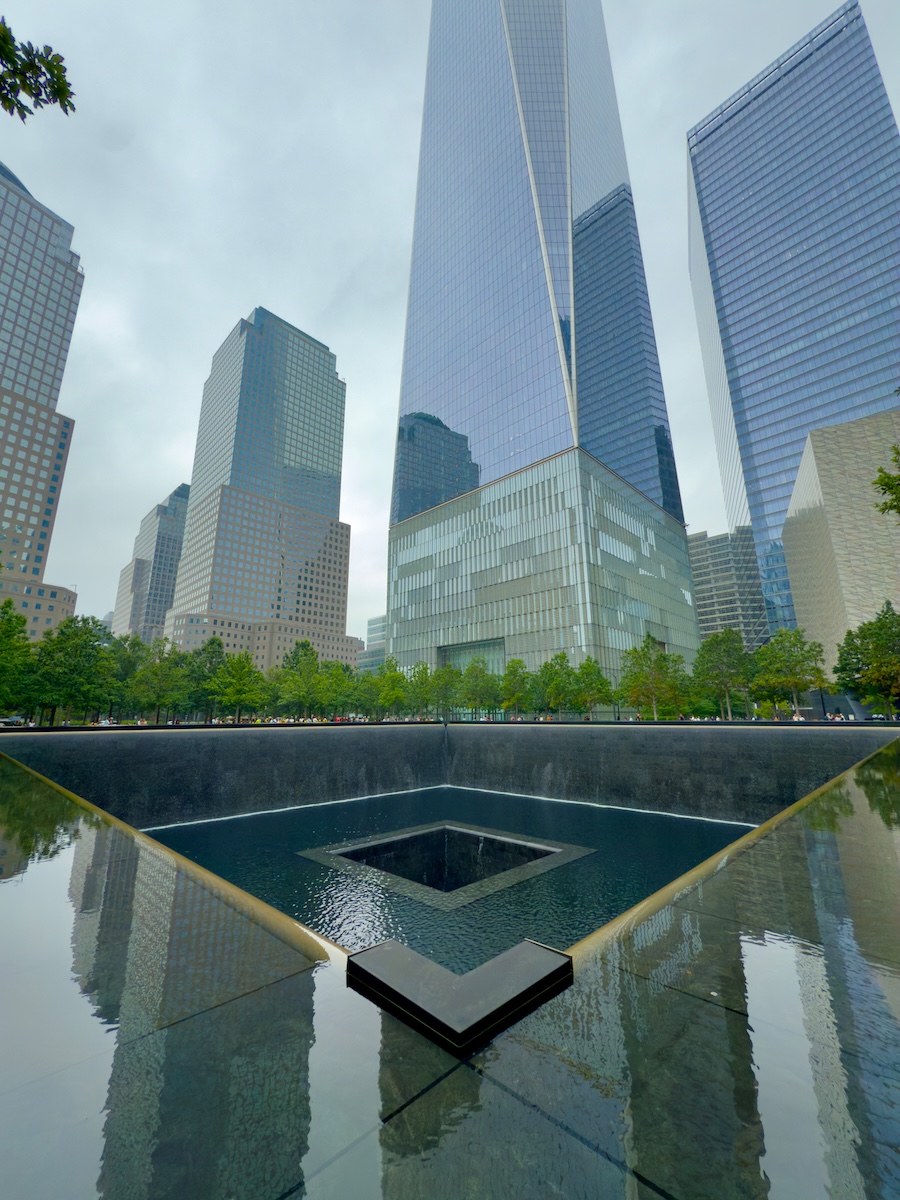
Each pool sits exactly where one of the Twin Towers stood. They are enormous—nearly an acre each—and water pours continuously down their walls in massive sheets before disappearing into a second square opening at the center. That inner void is the key to understanding the memorial. The water never fills the central square—it simply falls and disappears into darkness. Forever.
The waterfalls are the largest man-made waterfalls in North America, circulating tens of thousands of gallons of water every minute. The sound they produce is more than simple aesthetics. It was designed specifically to mask the noise of the city, muting the traffic and sirens of Lower Manhattan and creating a surprising pocket of quiet in the middle of the financial district.
Bronze panels around the edges of the pools carry the names of the 2,983 people who died in the bombing of 1993 and the attacks of September 11, 2001. Visitors frequently assume the names are alphabetical, but they’re not. Instead, they are arranged by what the designers called “meaningful adjacency,” an algorithmic system that groups people who worked together, served together, or died together. Firefighters from the same companies appear side by side. Coworkers from the same offices are clustered in small constellations of names. Even passengers from the same flights remain together.
People move quietly along the bronze panels around the pools, tracing letters with their fingertips or leaving small tokens beside particular names—flowers, folded notes, a small American flag tucked into the carved space between two letters. None of it feels staged or performative.
One small survivor from the original disaster stands in the oak grove—a Callery pear tree discovered in the rubble weeks after the attacks. Badly damaged and reduced to little more than a charred stump, it was taken to a nursery in the Bronx and slowly brought back to health before being replanted at the site years later. Today it stands among the younger trees of the plaza, its branches spreading outward as if it had never left.
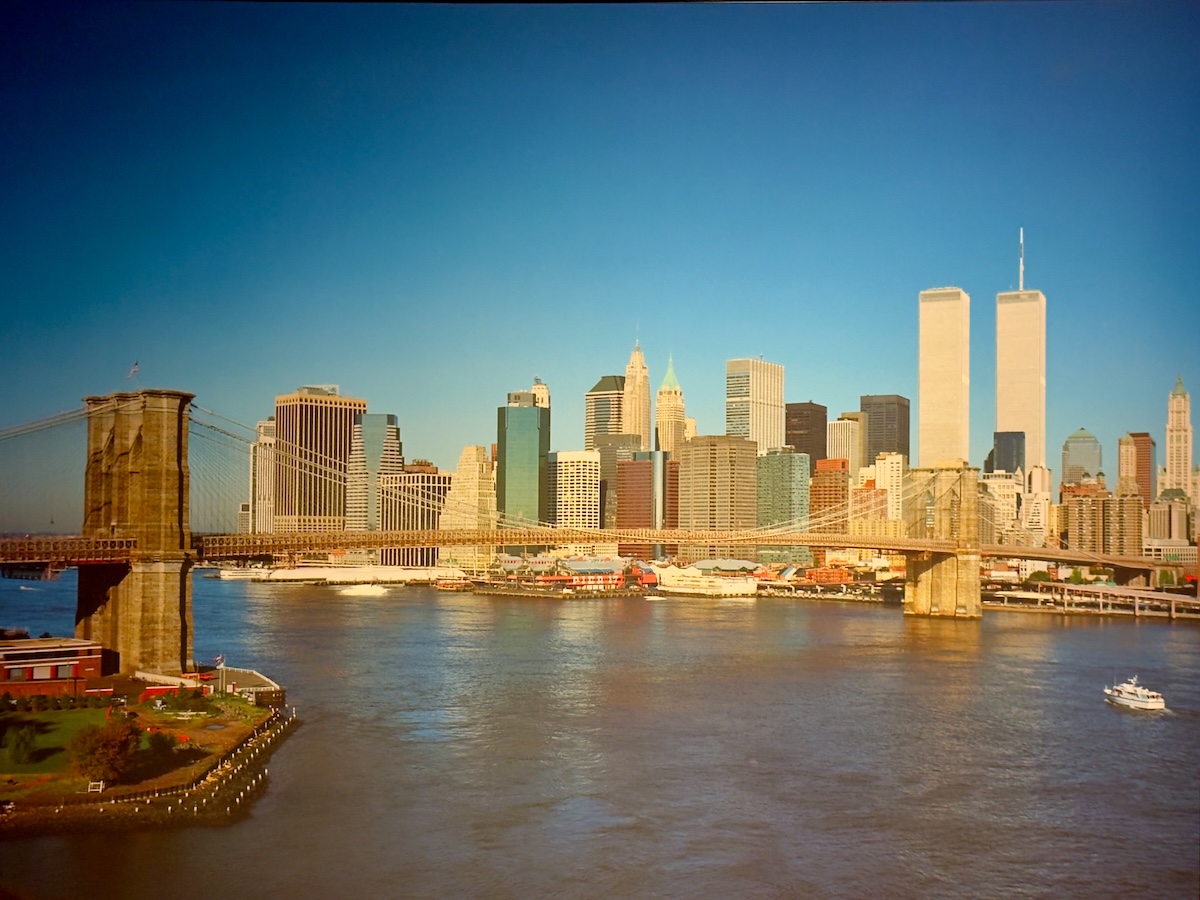
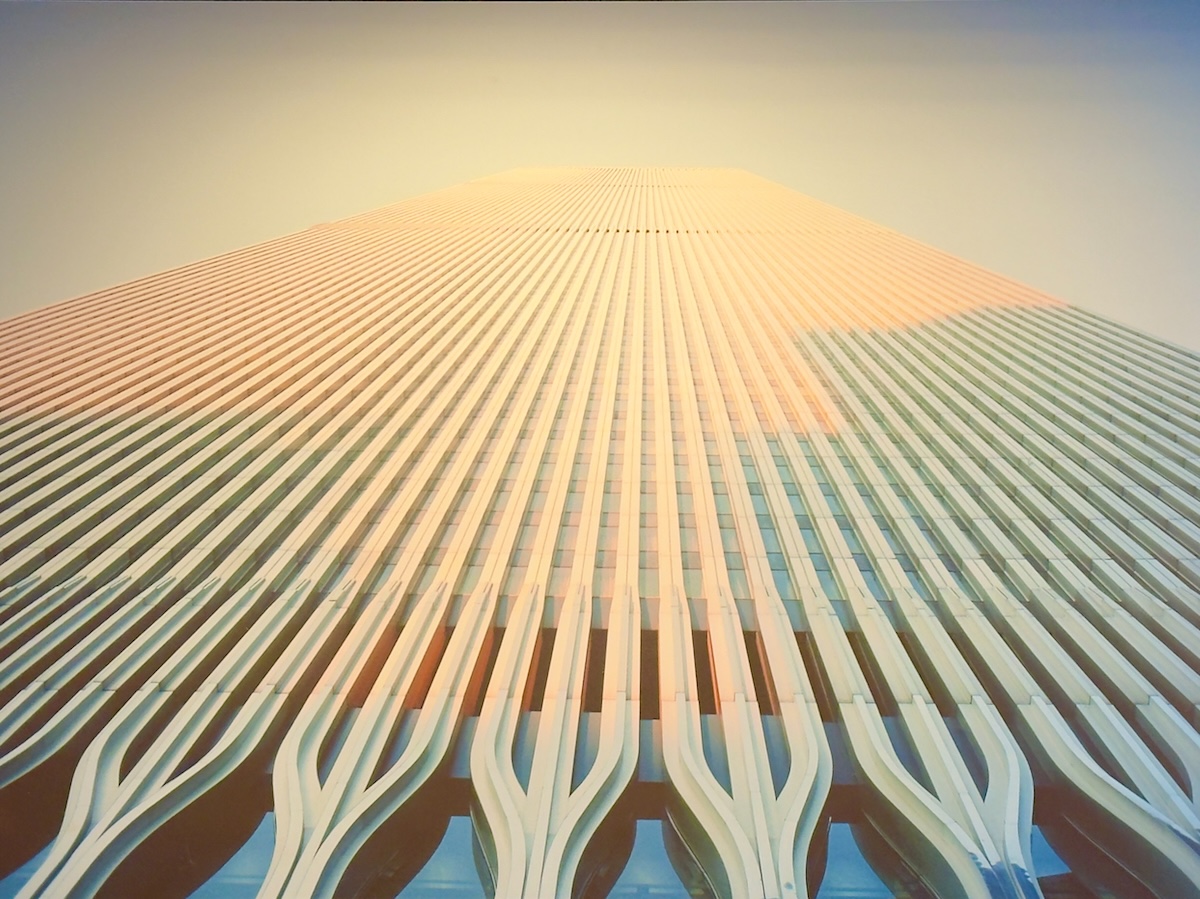
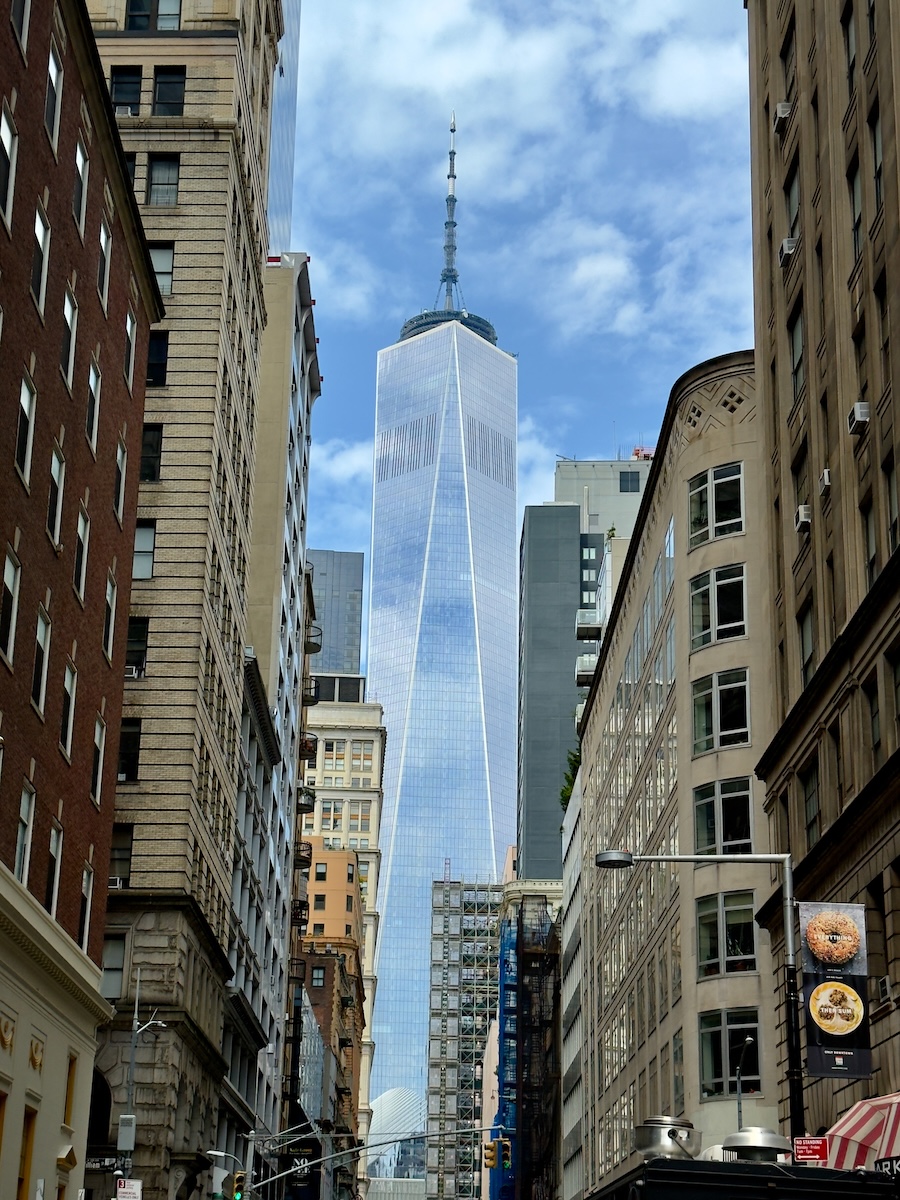
Walk a few blocks from the plaza and the scale of Lower Manhattan’s rebuilding becomes clear. The memorial sits within one of the largest and most expensive urban redevelopment projects in modern American history. One World Trade Center rises nearby to a symbolic height of 1,776 feet, its glass sides catching the light above the plaza. Office towers and transit lines have returned, along with tens of thousands of residents who now live in what was once primarily a business neighborhood.
Just beyond the trees stands the Oculus, Spanish architect Santiago Calatrava’s soaring white transit hub. Its ribbed wings stretch skyward like the skeleton of an enormous mechanical bird, housing a train station and shopping concourse beneath the plaza. The building cost nearly $4 billion and sparked endless debates during construction about cost, symbolism, and the proper way to rebuild such an emotionally complicated part of the city. Walking through it now, you can see both sides of the argument.
But the heart of the site remains those two vast pools.
New York rebuilt the skyline around them, as New York always does. Towers rose again, trains returned, and the financial district resumed its daily rhythms. Yet at the center of all that activity, the memorial does something surprisingly simple—it holds open the space where the towers once stood.
For a place so bound up in history, the design is strikingly restrained. It doesn’t try to explain the tragedy or dramatize it. It just marks where something enormous once stood—and where it doesn’t anymore.







Write a comment
Laura Wilson (Thursday, 02 April 2026 18:03)
Beautiful description. This memorial brings me to tears every time.
Geoff Kann (Thursday, 02 April 2026 18:20)
Thank you. It was so much more than just grand, it was heartfelt. I loved it.
Mark Fei (Saturday, 04 April 2026 07:56)
Hey guys, I happen to be in NYC right now, so it was especially fitting that I read your account, and viewed your photos, today. This was beautifully written and captured in images. Thank you.
Geoff Kann (Saturday, 04 April 2026 11:01)
I'm glad you liked it, Mark! And I hope you have a great stay in NYC!