
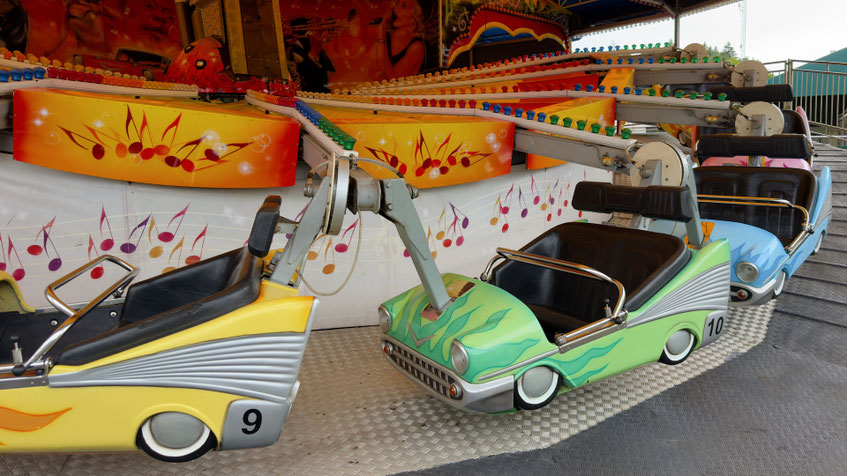
Most people love amusement parks because they’re full of rides and thrills and crowds. Me? I like them better empty. Quiet, even. There’s something eerily satisfying about wandering tranquil midways where the rides have stopped, the game booths are shuttered, and the loudest sound is your feet crunching the leaves on the ground. It’s something of a recurring theme for me, honestly. Give me an empty museum, a quiet cemetery, or an amusement park between seasons, and I’m a happy man. Friends tease me that all my photos look like they were taken immediately after the Rapture.
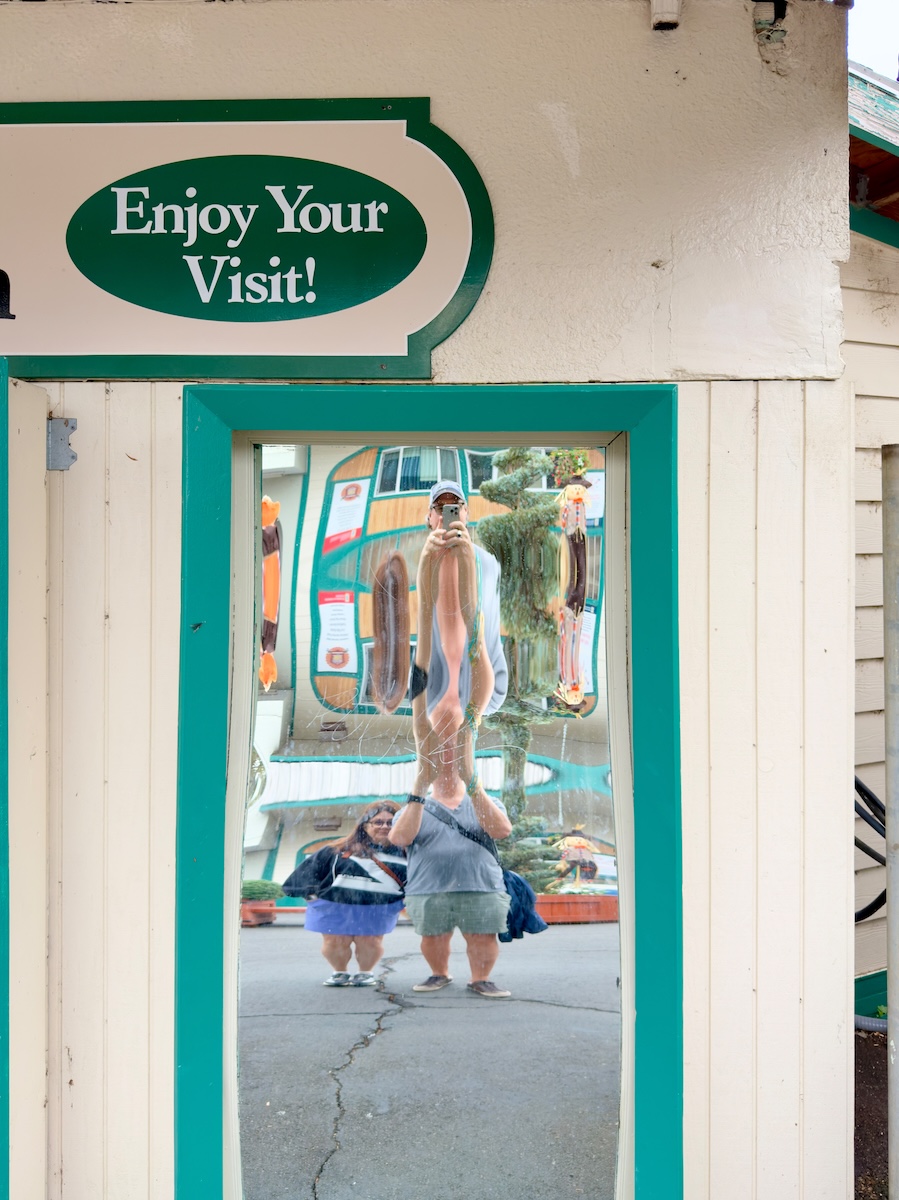
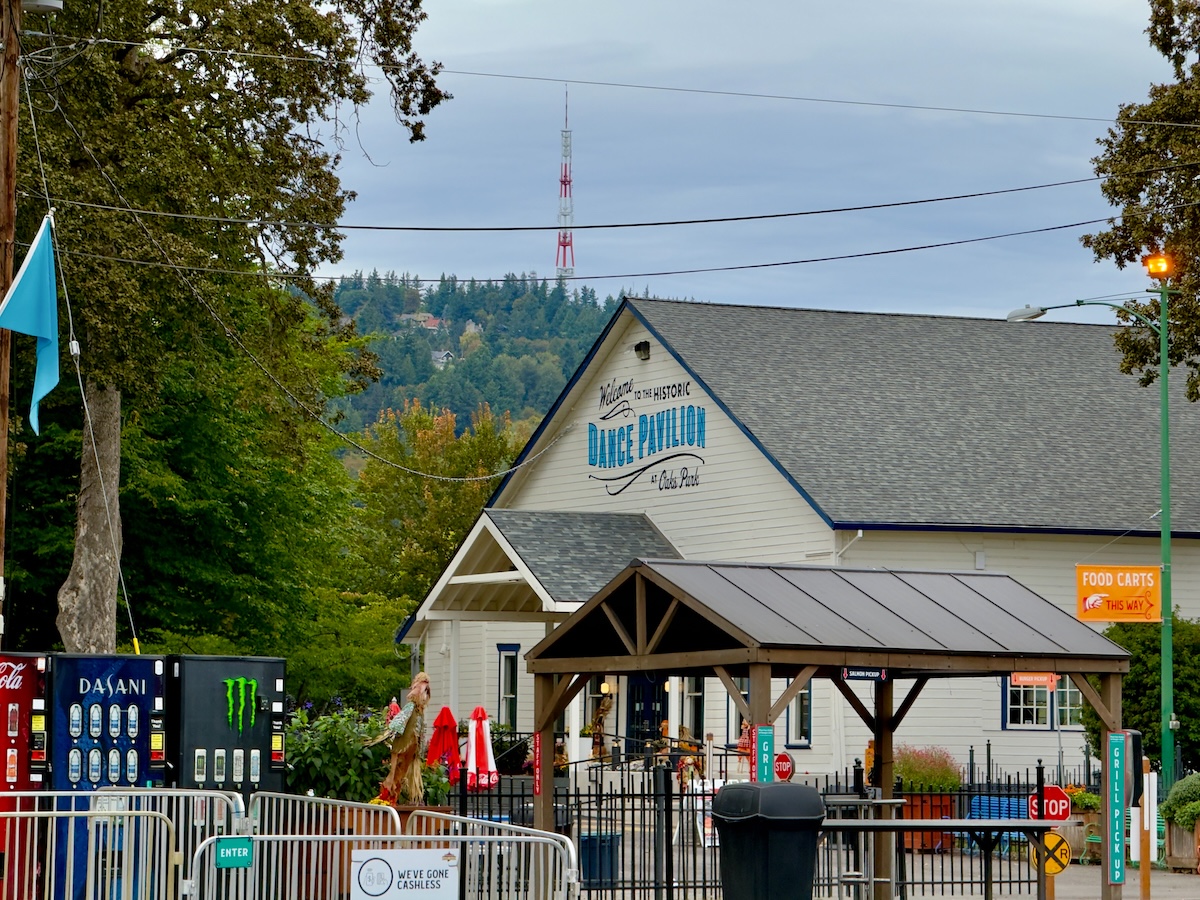
That’s why I was at Oaks Amusement Park in Southeast Portland with my friend Terri one gray weekday after the end of the season. Terri hardly needed an excuse—she’s been coming here for years and loves the place. I’d been wanting to see what a 120-year-old amusement park looked like when it wasn’t busy amusing anyone.
The parking lot was empty except for a lone pickup truck. Terri parked a respectful distance away, the correct amount of social distancing for automobiles. Heading toward the front gate, we half-heartedly looked around for any sign suggesting visitors should stay out. Finding none, we went inside without overthinking it.
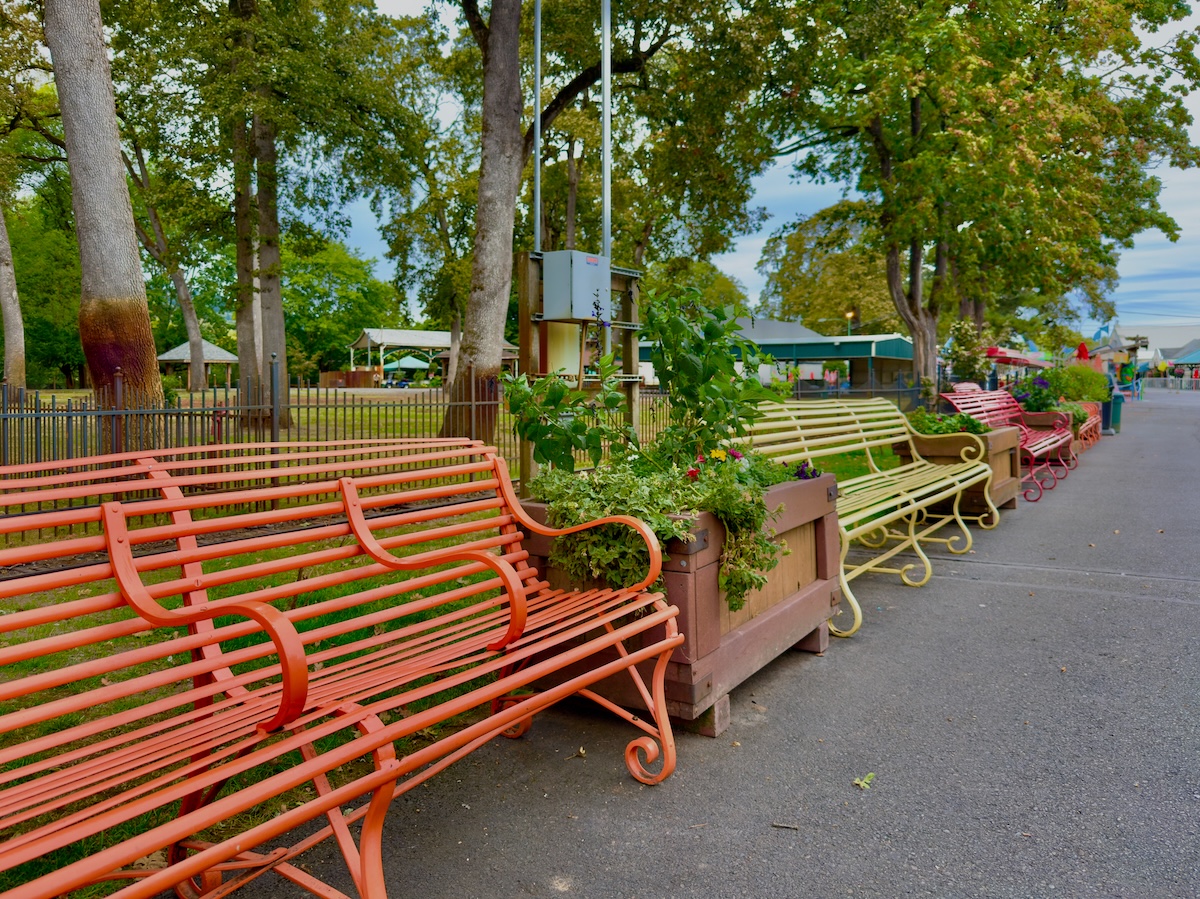
Even though the ticket booths were locked up tight, the midway was wide open, stretching along the river beneath enormous oak trees. We didn't see the driver of that pickup truck. In fact, we didn't see anyone at all. That was encouraging.
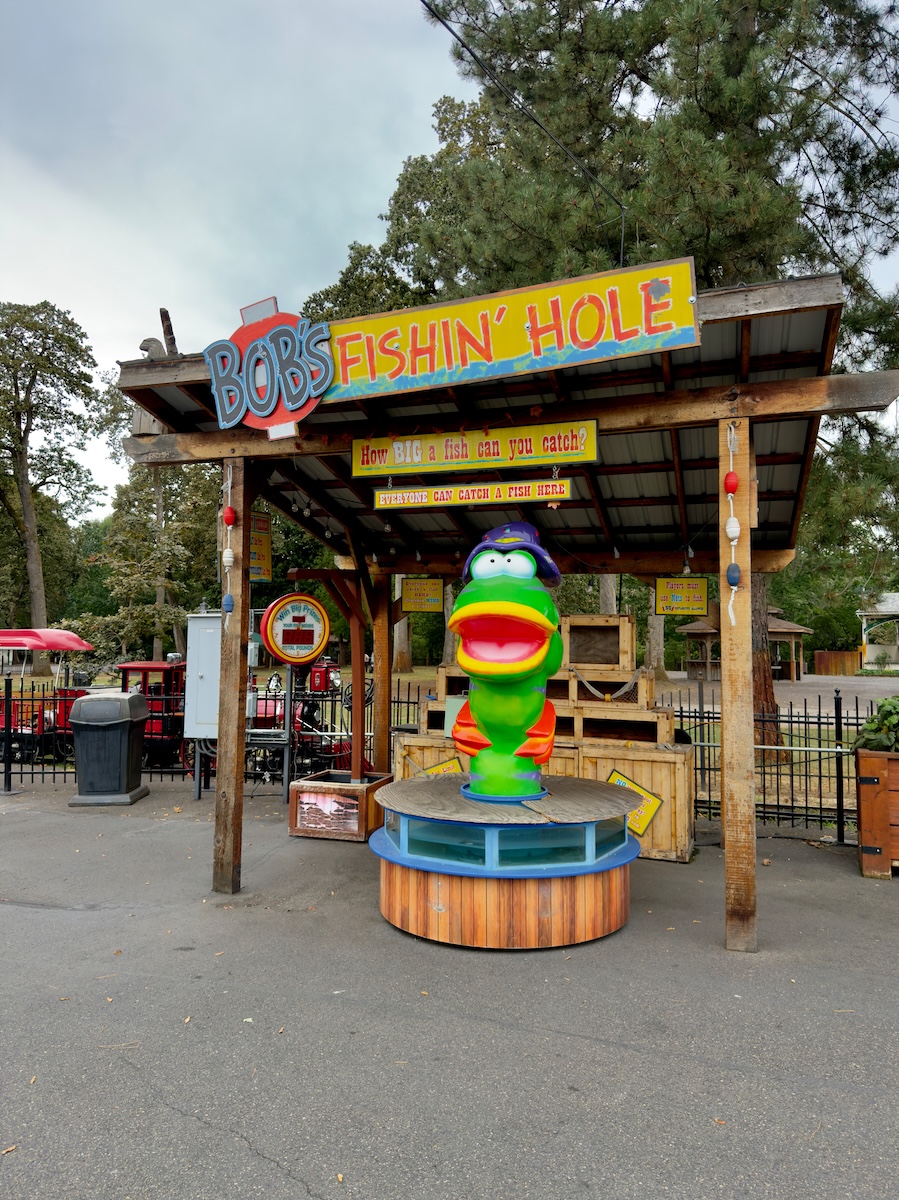
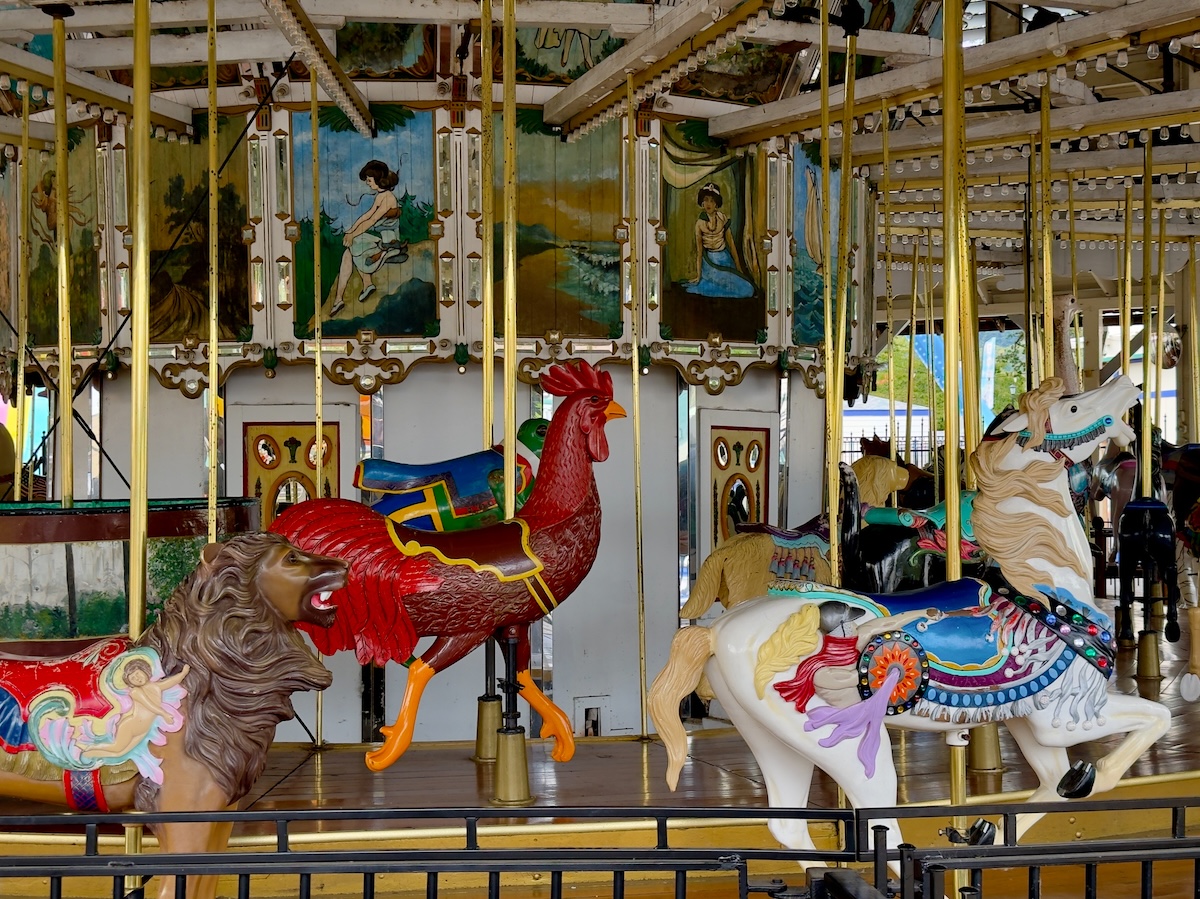
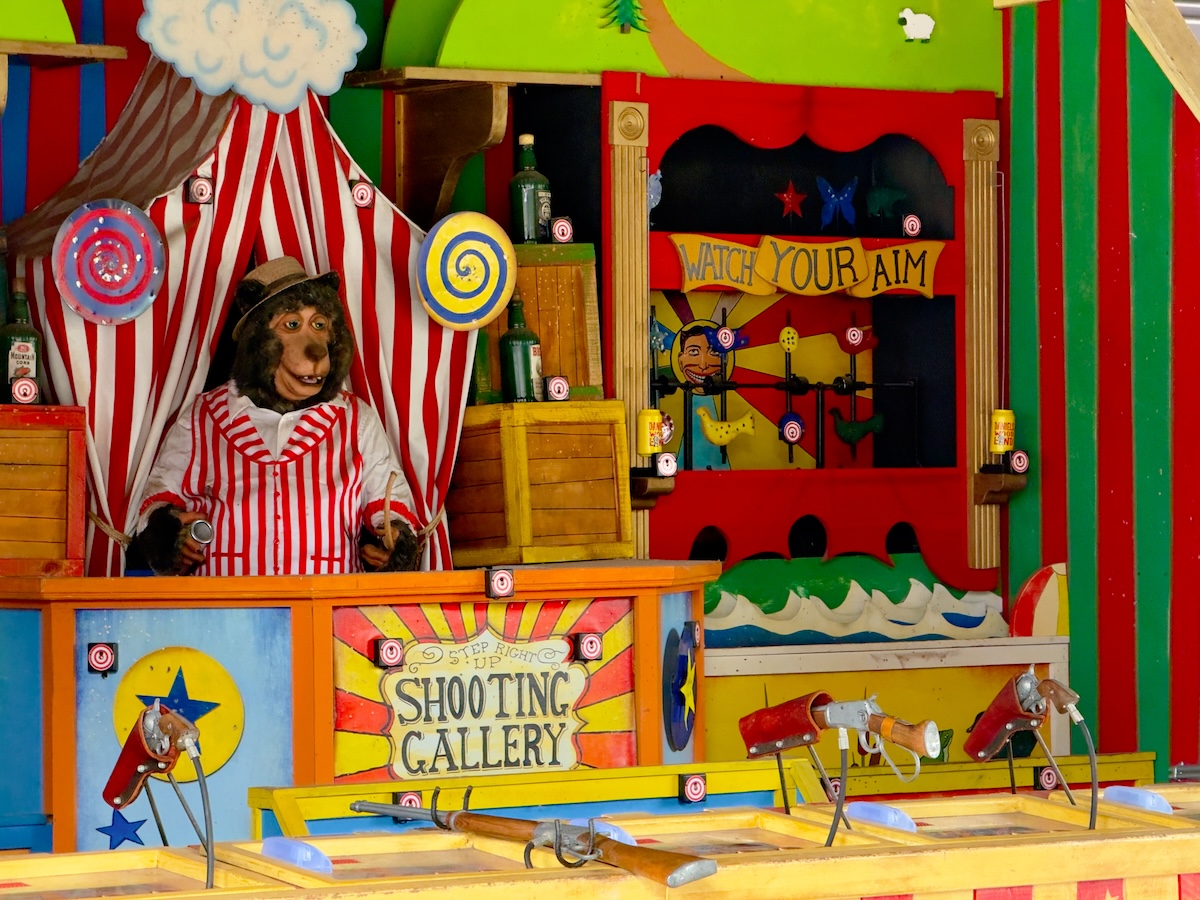
Wandering around without being steamrolled by excited children or detouring around a long line at Adrenaline Peak was exactly what I’d come looking for. It was almost like peeking into a playroom when the children had run out for a snack. The giant fish kept that goofy grin pasted on its face. The shooting gallery bear slouched behind his counter with those droopy eyes and dopey smile. The carousel rooster was caught mid-stride. Whatever had interrupted things, everything seemed determined not to be the first one to move.
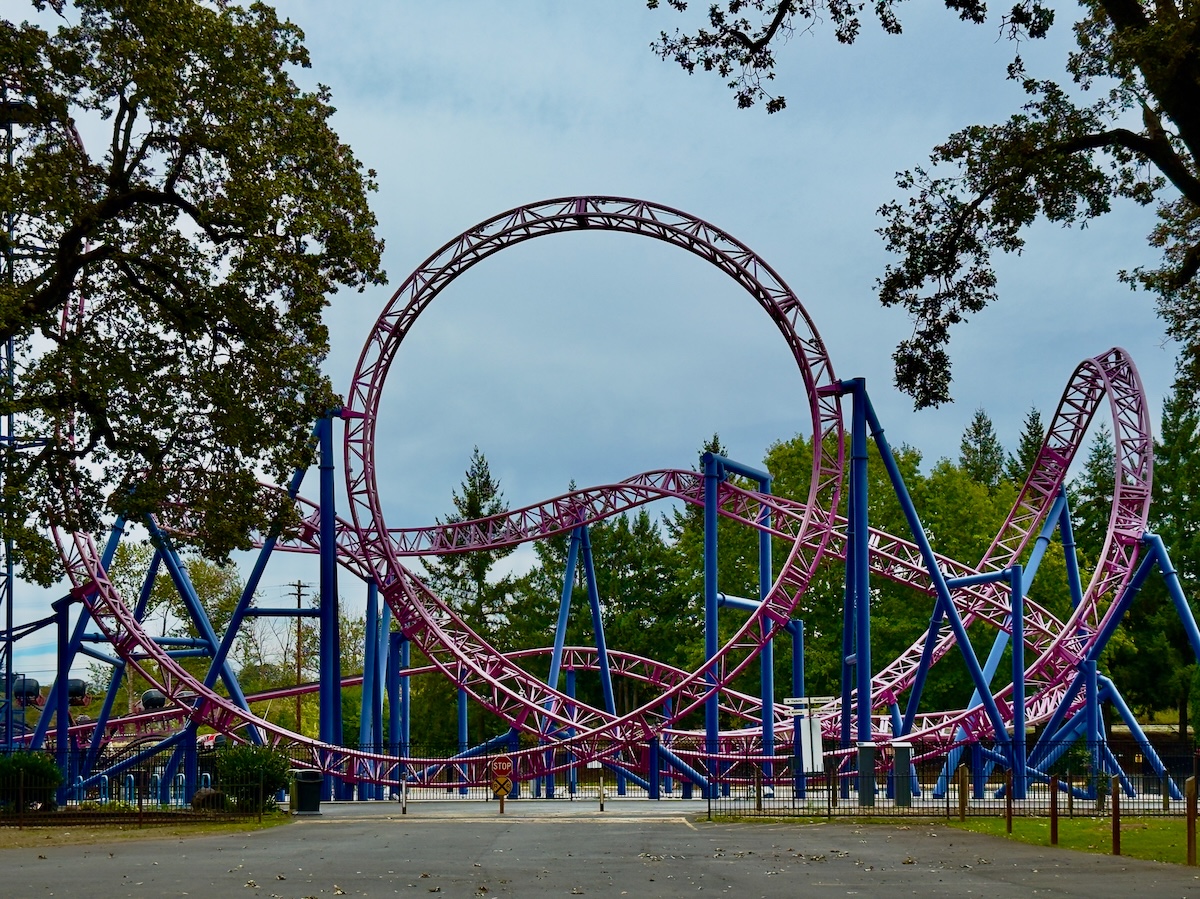
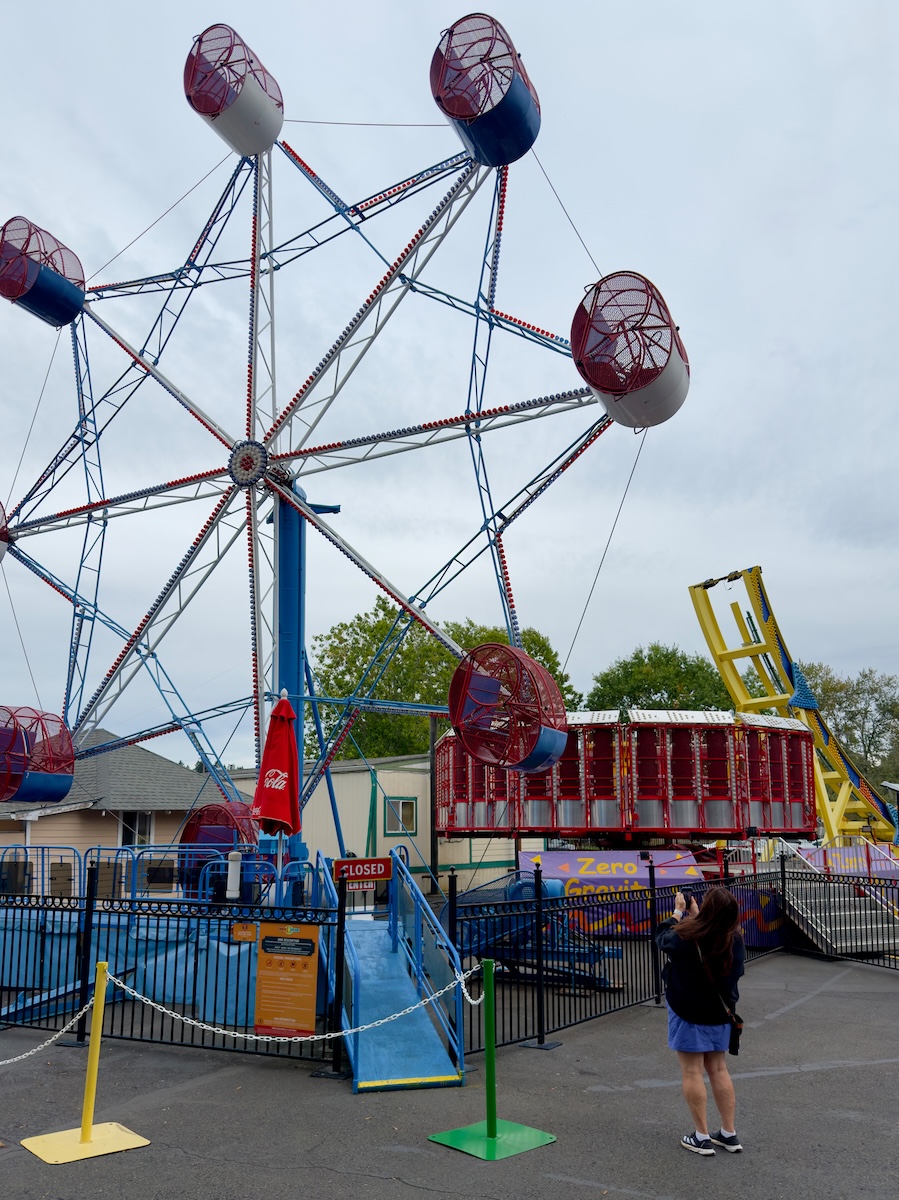
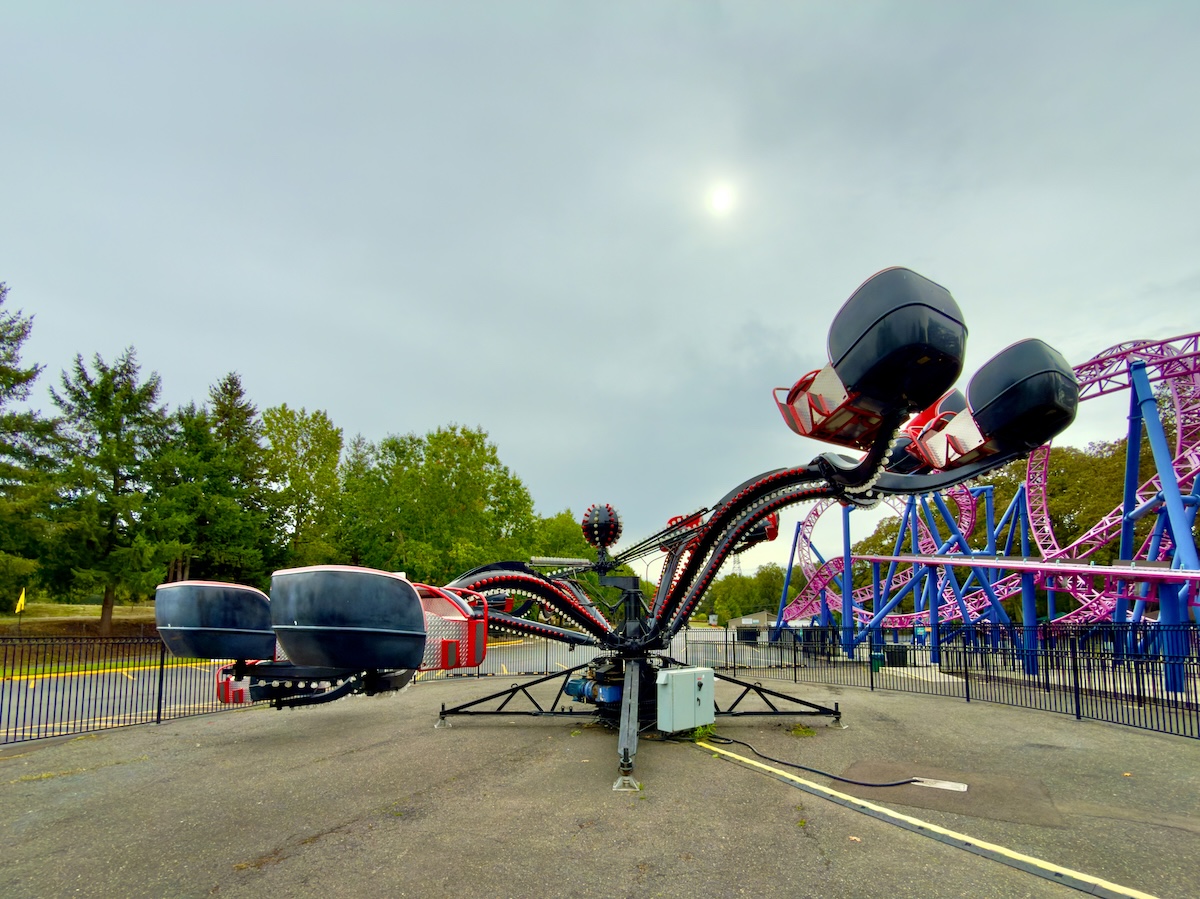
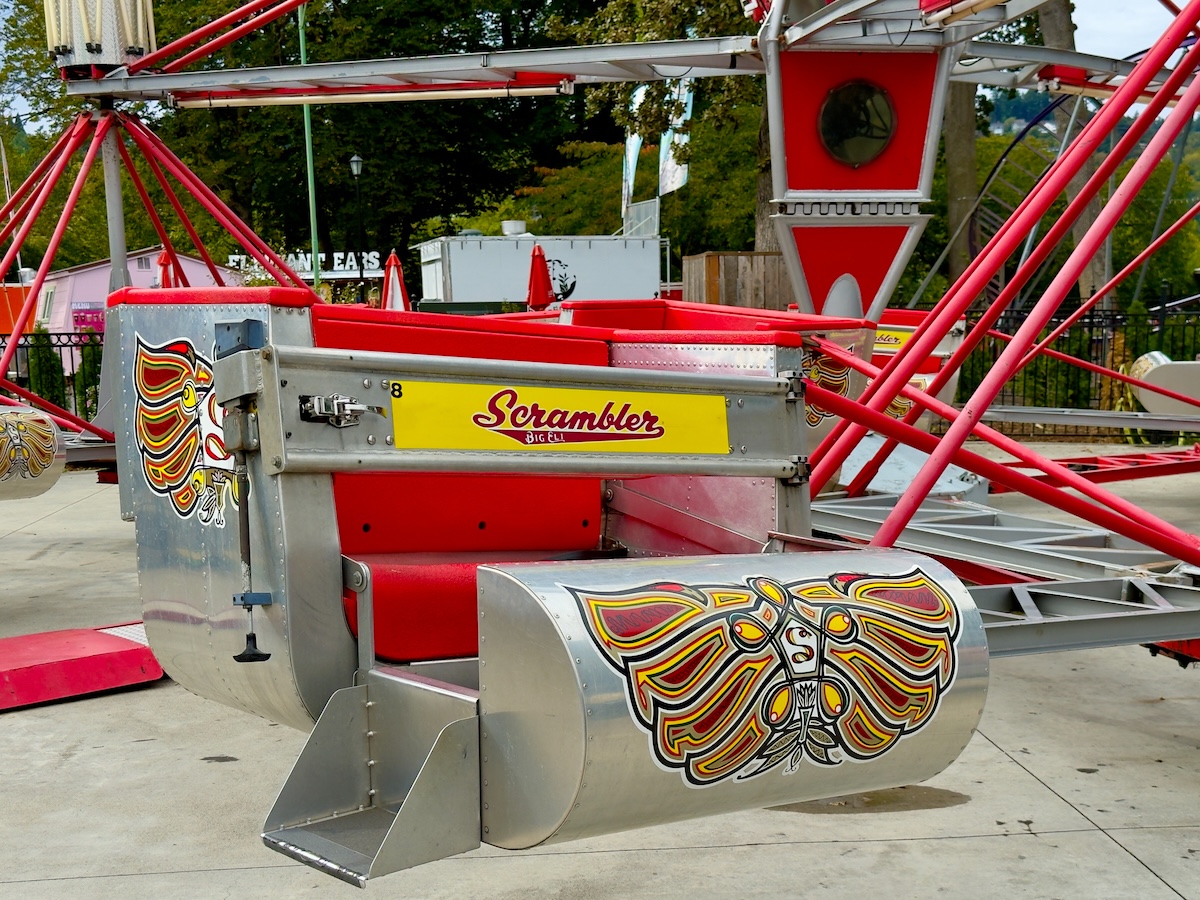
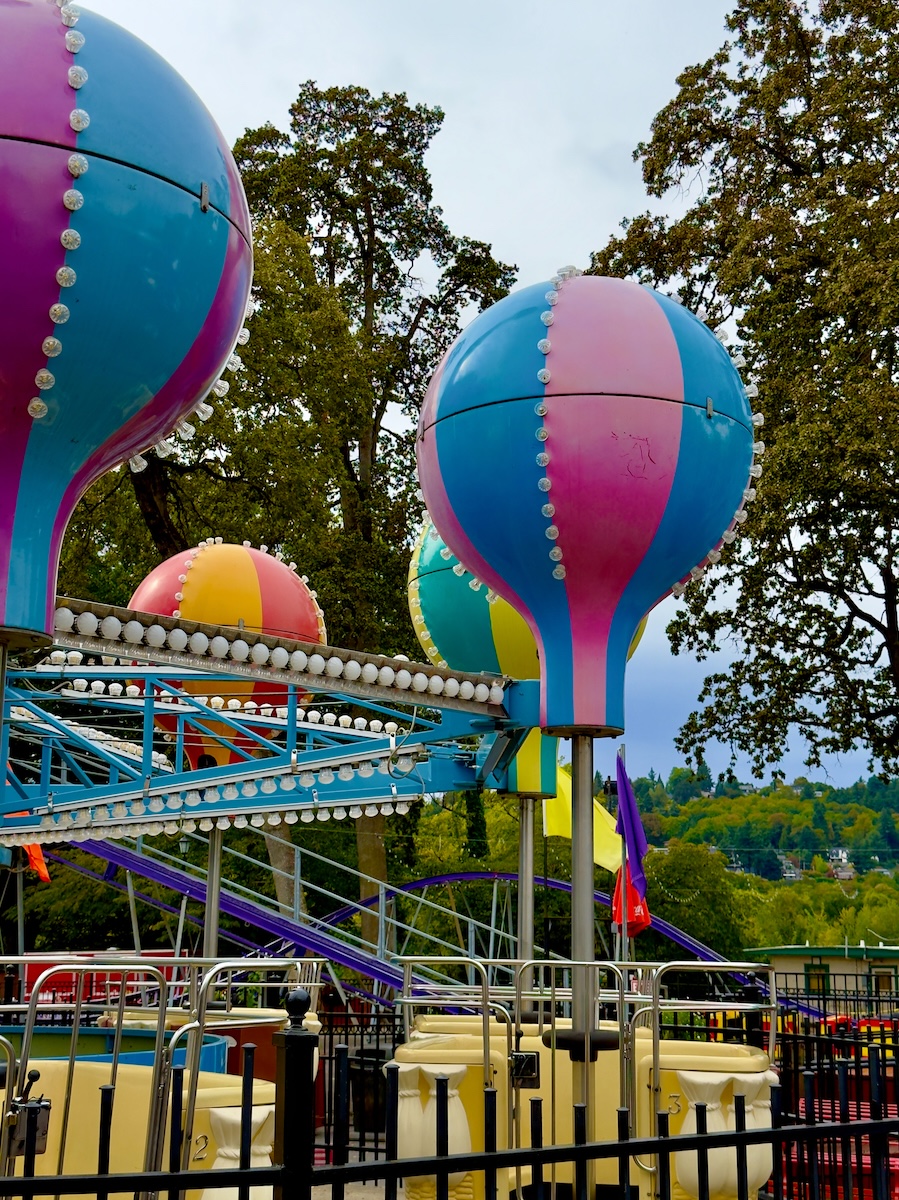
The Ferris wheel stood motionless overhead. The roller coaster traced impossible pink loops against the gray September sky without a single scream. The Scrambler didn’t scramble, the Rockin’ Tug didn’t rock, and the carousel animals were frozen in place.
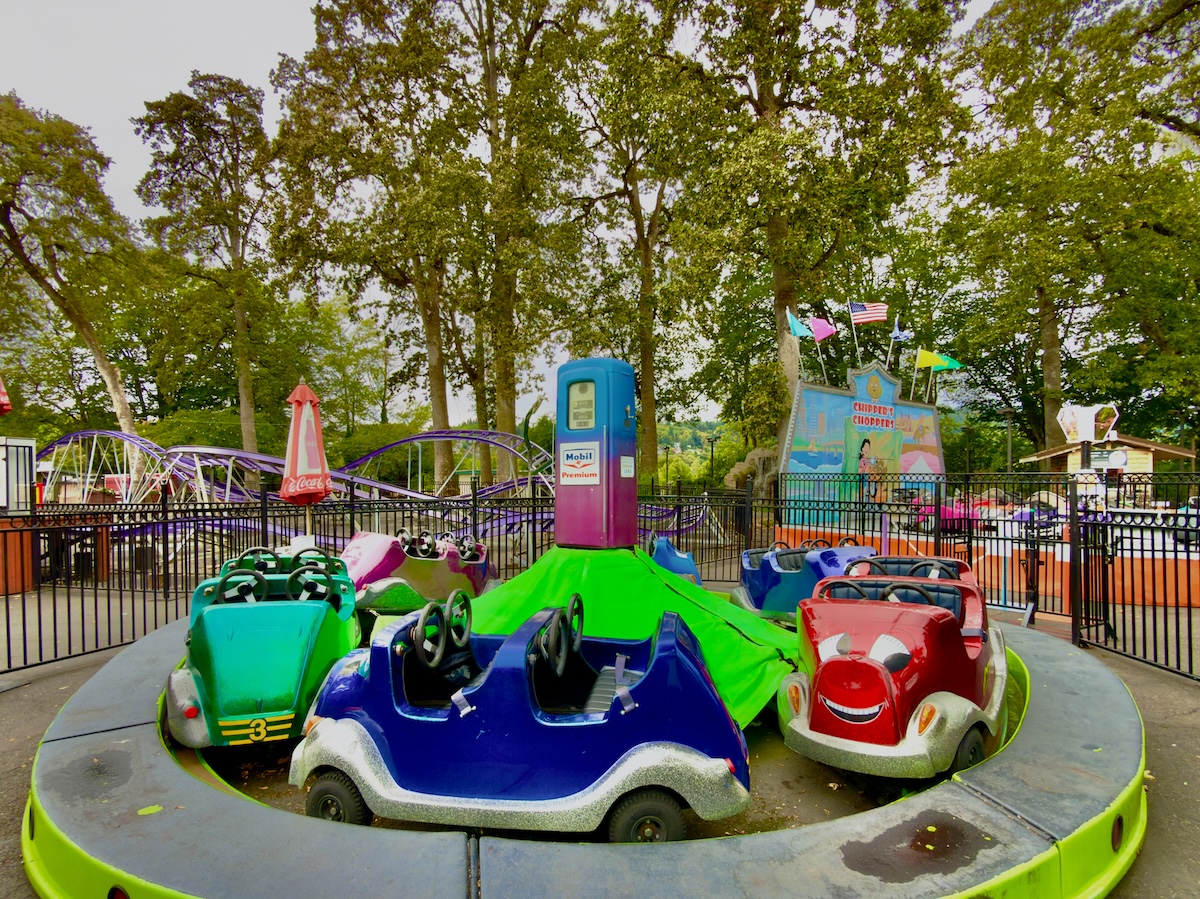
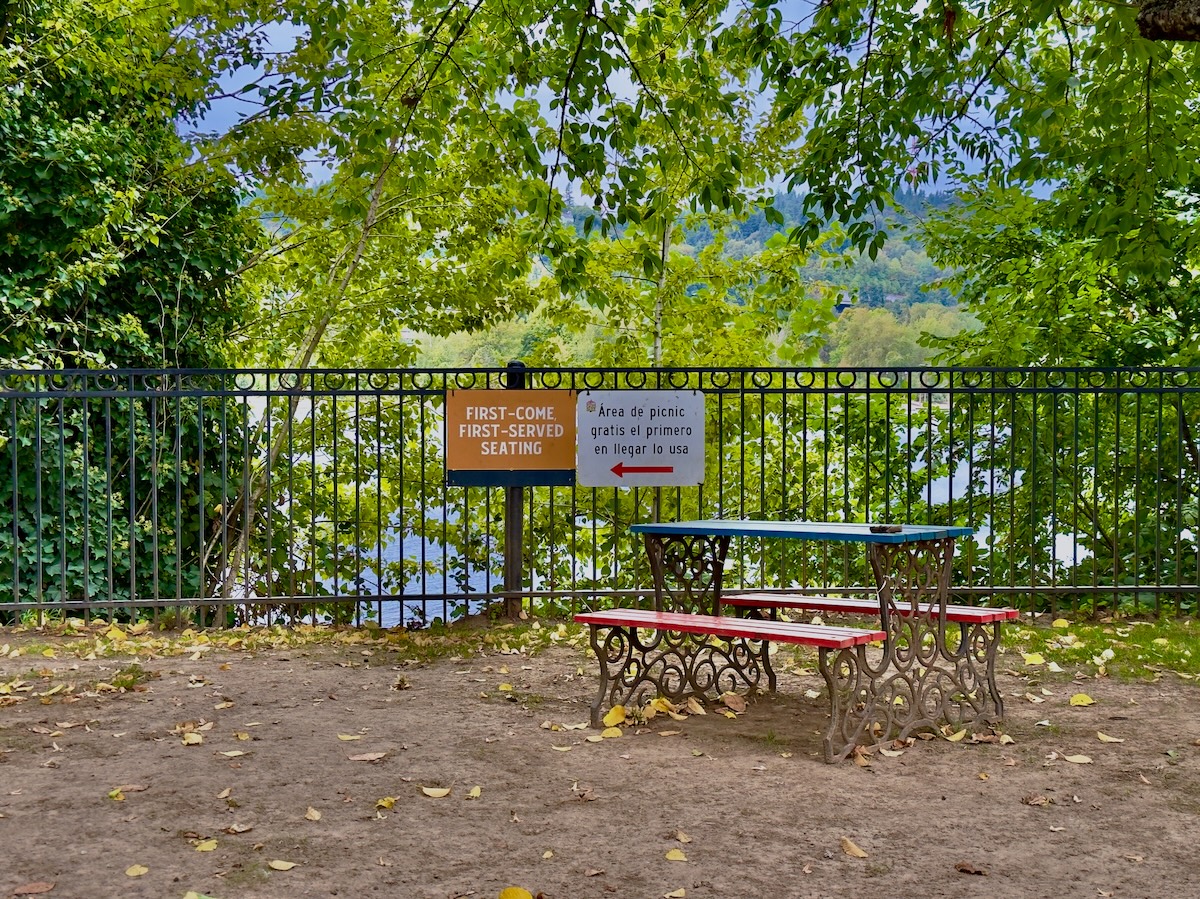
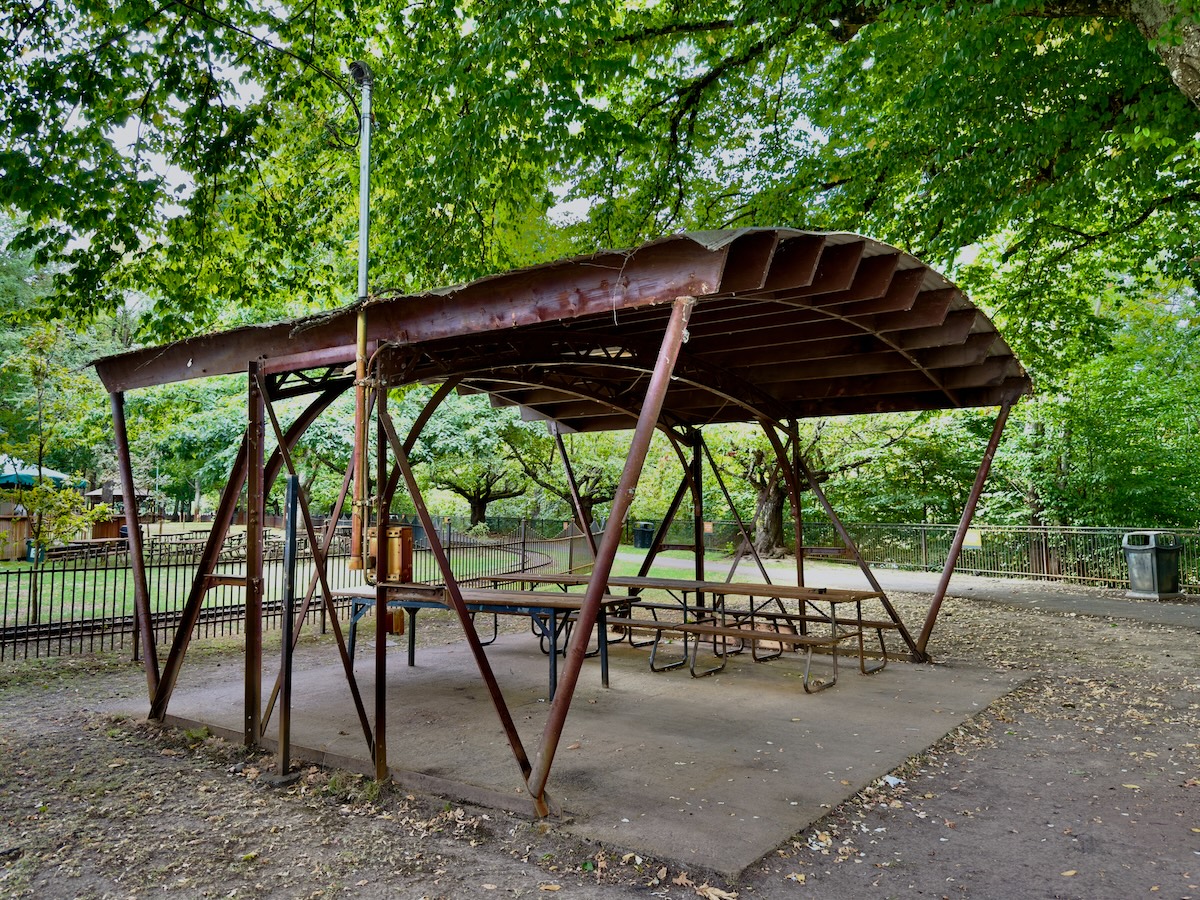
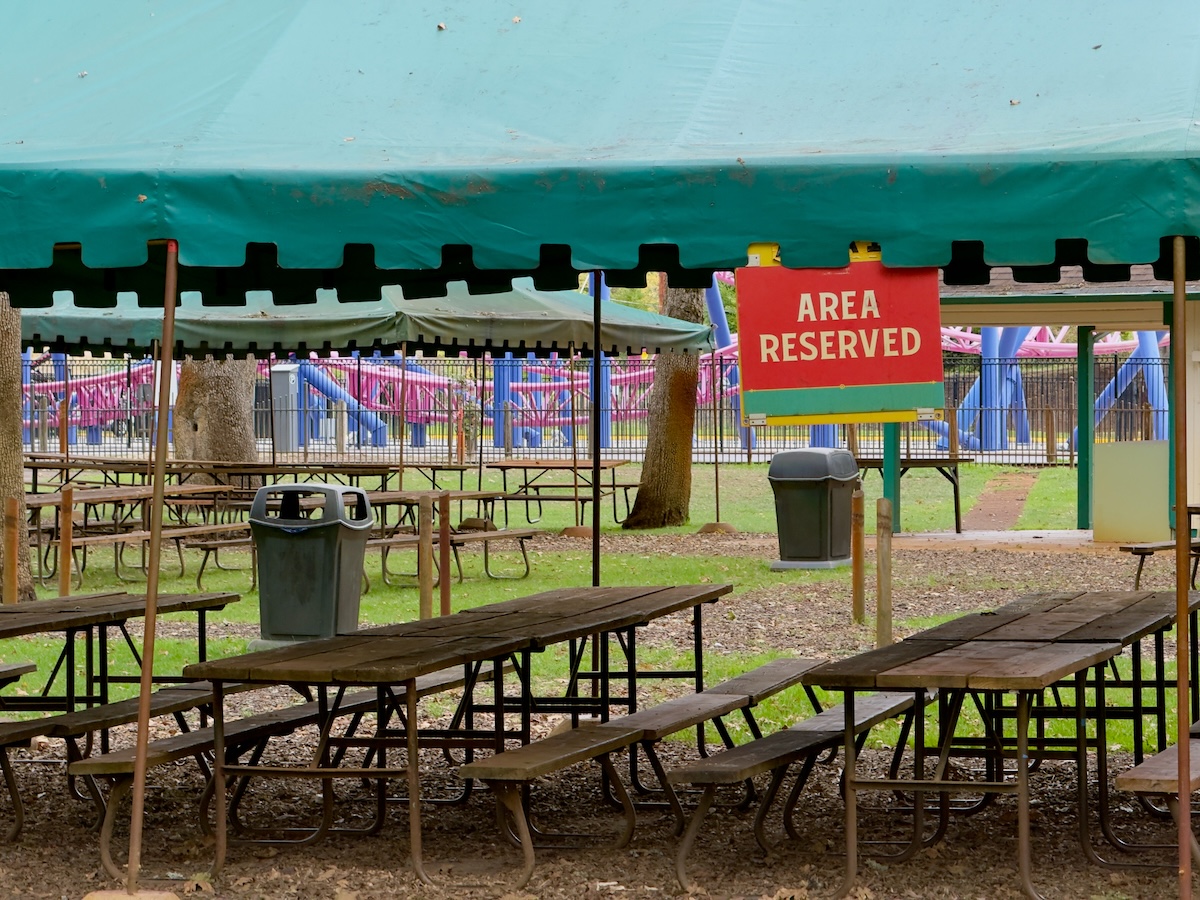
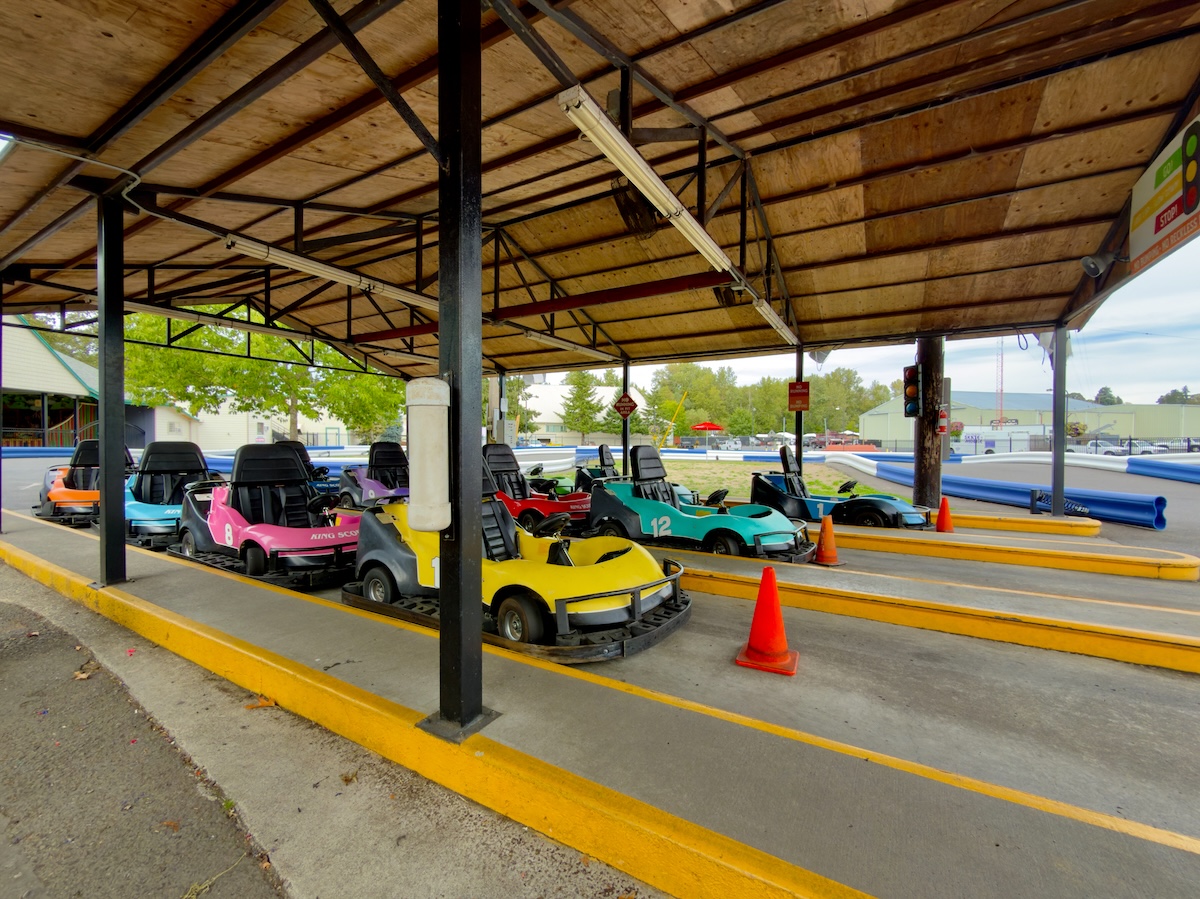
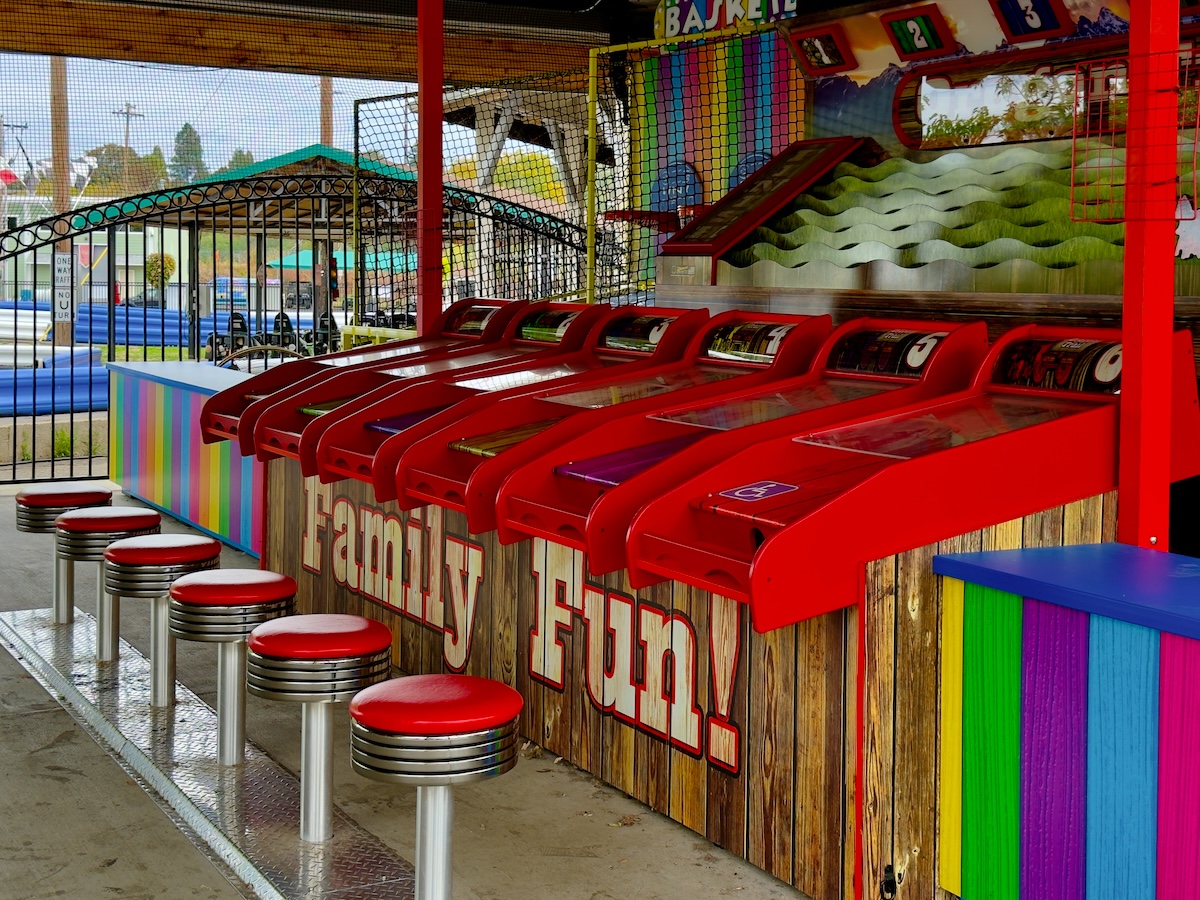
In the middle of what was clearly the world’s largest game of Freeze Tag, Oaks Park offered up little details that would otherwise disappear into the whirlwind of a normal summer afternoon. There was a vintage Mobil gas pump standing beside the kiddie cars, like children might need to gas up their tiny convertibles before heading back out into traffic. Empty picnic shelters waited beneath sprawling oak trees with “Area Reserved” signs denying access to rows of vacant tables. Midway games sat stocked, spotless, and surprisingly optimistic despite being so alone.
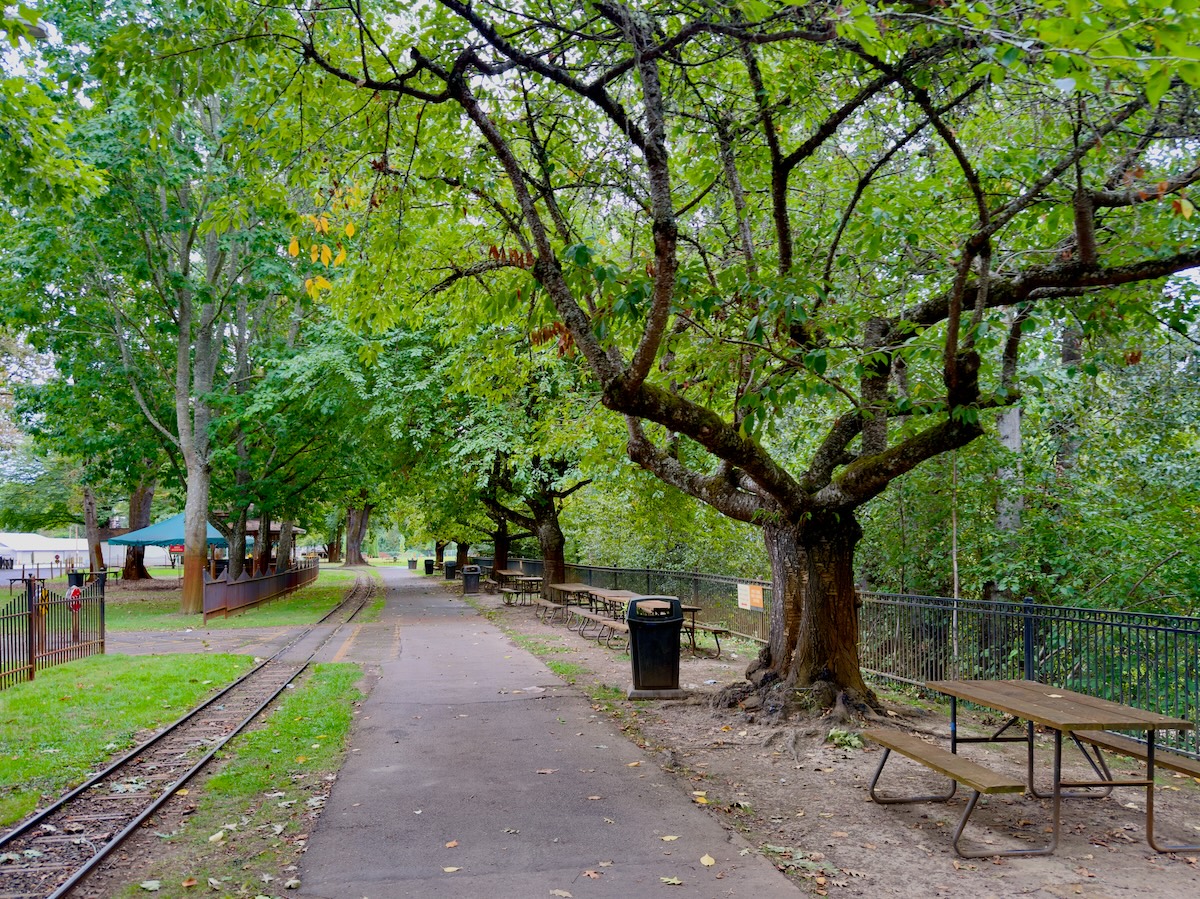
Having never been to Oaks Park myself (I know—don’t tell anyone or they’ll revoke my residence card), I’d expected an amusement park with a few old trees scattered around the edges. I should have known better, this being Oregon and all. Instead, it felt like a grove of magnificent oaks that had reluctantly agreed to host an amusement park. Some of them almost certainly remember the park’s earliest days, standing watch as generations of Portlanders came back again and again—for a first date, for a family barbecue, for grandpa's birthday.
The rides were threaded between massive trunks and broad canopies that cast shade over winding paths, picnic grounds, and quiet corners overlooking the Willamette River. Just beyond them lay Oaks Bottom Wildlife Refuge, where wetlands, herons, beavers, and migrating birds somehow coexist with roller coasters and carnival games. It felt like one of those combinations that could exist only in Portland.
Which is ironic because its origin story is purely commercial. Oaks Park wasn’t built because Portland was clamoring for an amusement park. It was built because the Oregon Water Power & Railway Company wanted more people riding its trolleys.
Portland hosted the Lewis and Clark Centennial Exposition in 1905, a world’s fair and one of the largest events in Oregon history, expected to draw hundreds of thousands of visitors. The Oregon Water Power & Railway Company, which operated an interurban trolley line connecting Portland with Oregon City, looked at all those prospective passengers and saw dollar signs.
The solution was remarkably simple. The company’s trolley line already passed a magnificent oak grove in Oaks Bottom. Why not give people a reason to buy a trolley ticket? So they built what was known as a trolley park—an amusement park built specifically to sell trolley rides. Visitors could spend the morning marveling at the exposition, then hop the trolley to Oaks Park for an afternoon of fireworks, exotic animals, and roller coasters. Everybody won. But mostly the Oregon Water Power & Railway Company.
More than 120 years later, the trolley tracks that brought those first visitors are gone, replaced by parking lots full of cars and bicycles chained to nearby racks. The destination outlived the journey. Notably, Oaks Park is now one of only a handful of trolley parks still operating in the United States.
That’s largely because Portlanders refuse to let it go. Whenever financial troubles, floods, changing tastes, or redevelopment threatened the park, Portlanders rallied to keep it alive. By the time Terri and I wandered its empty midway, Oaks Park had survived not just because it was old, but because generation after generation had decided there was no way they were giving it up.
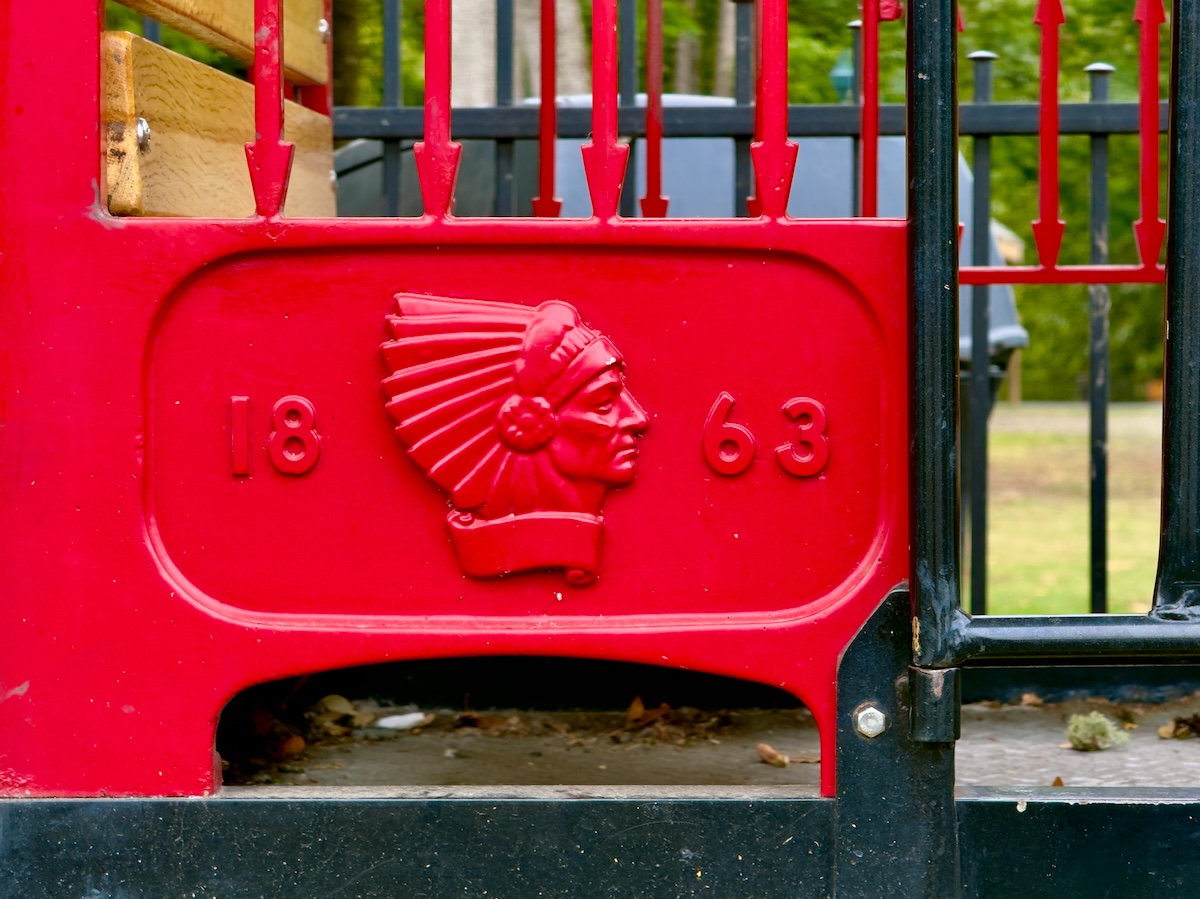
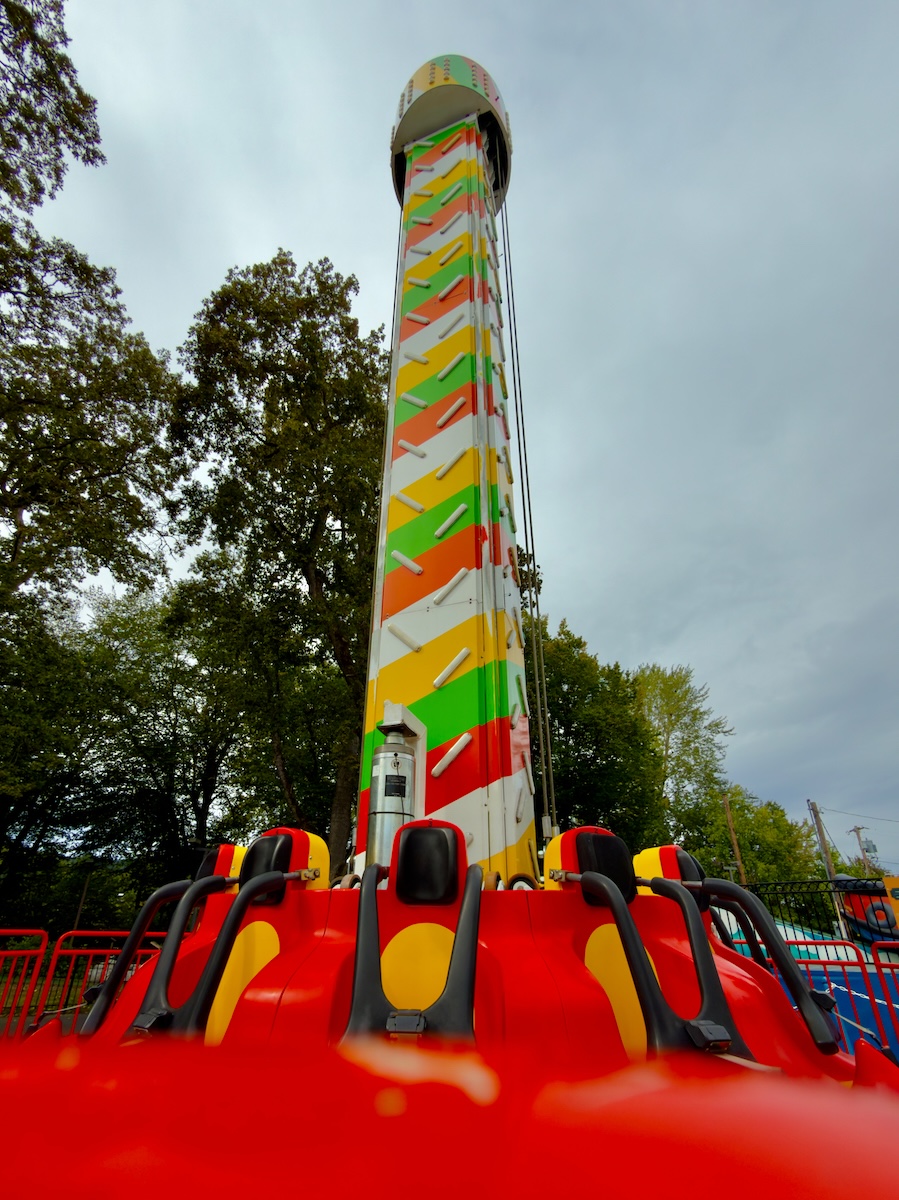
One of the strangest and best things about the place is how comfortably 1905, the 1970s, and the 2000s coexist. The park’s 1912 carousel still spins beneath its ornate canopy, while the little train with the no-longer-PC Indian head medallions carries little passengers around the grounds just as it has for generations. Nearby Adrenaline Peak looms, a thoroughly modern steel coaster that was merely science fiction when the park opened.
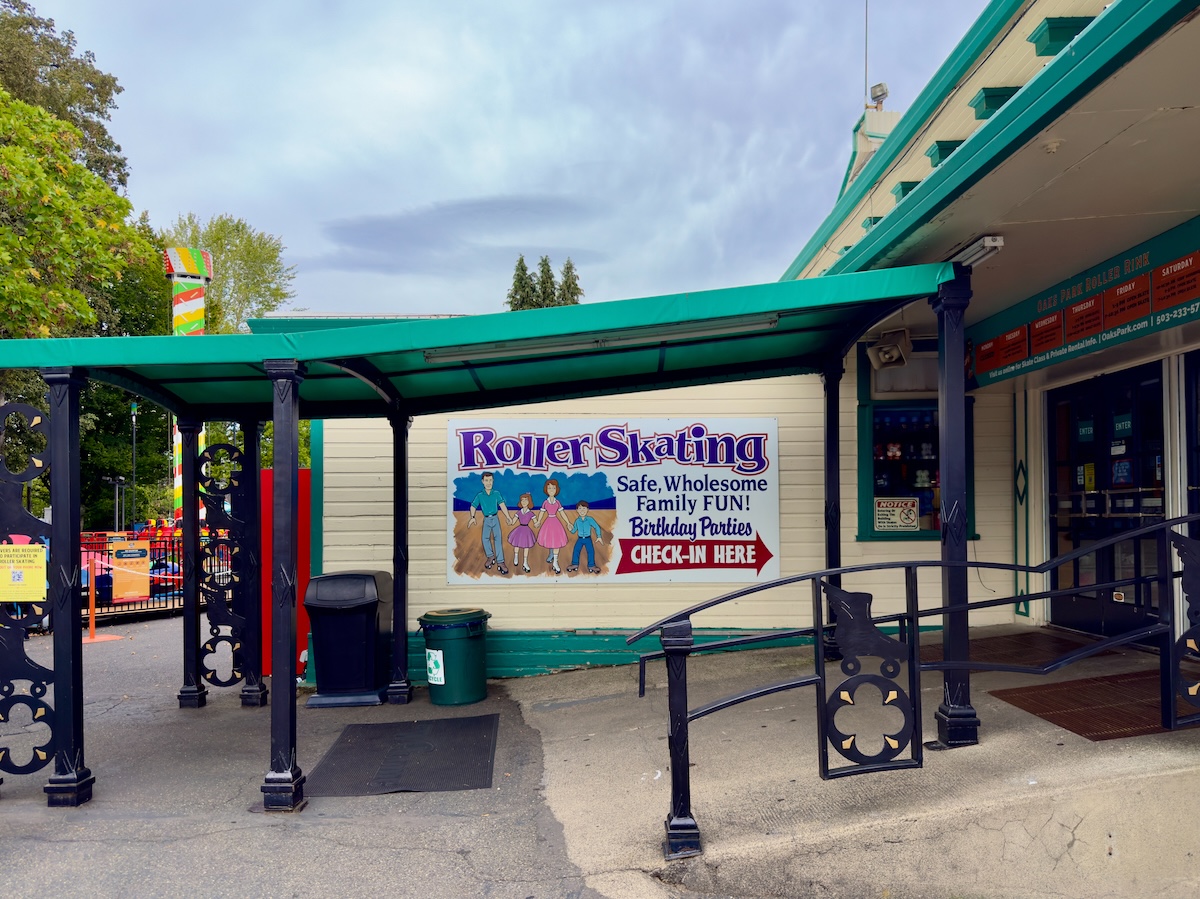
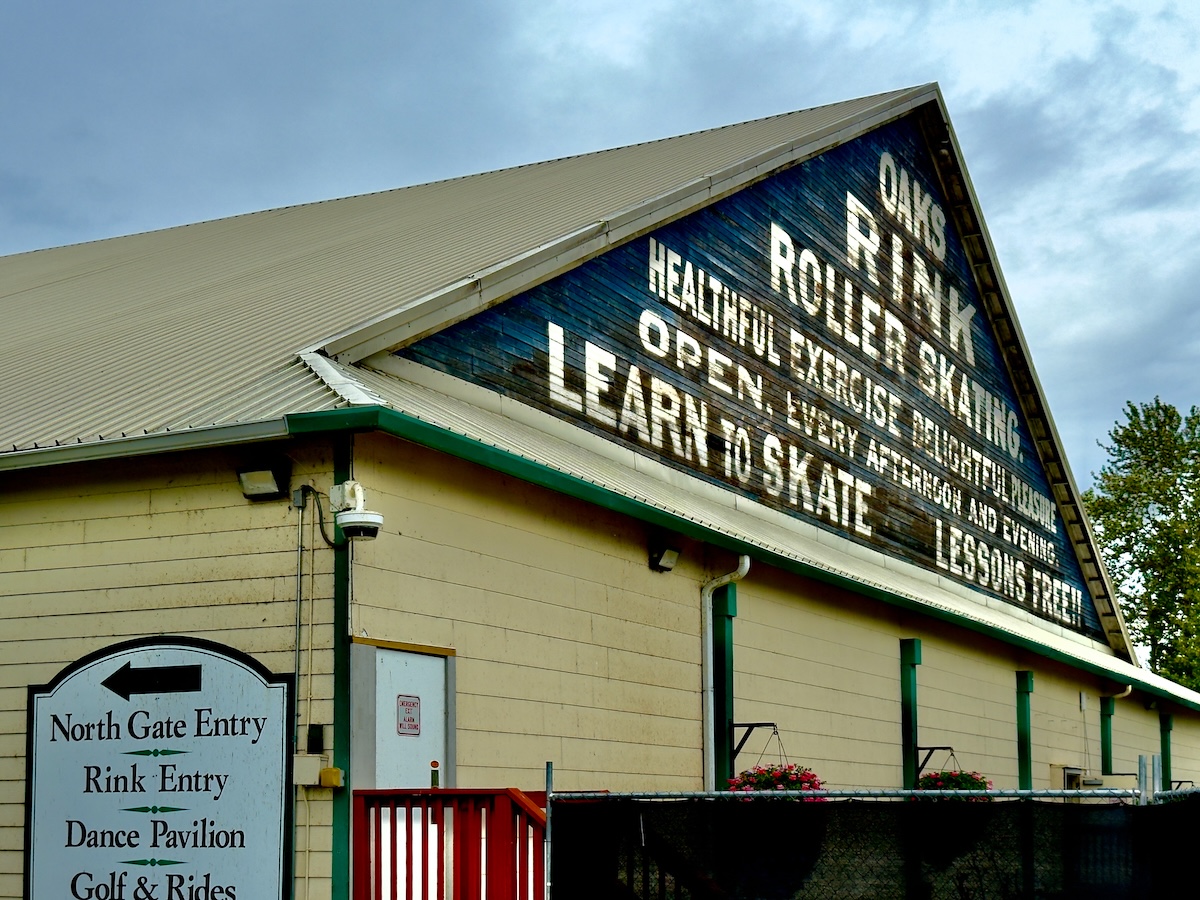
Even the roller rink has been here since 1906, making it just about the oldest thing in the park aside from the trees. The catastrophic Vanport Flood of 1948 came dangerously close to destroying it. Concerned the Willamette might one day flood the park again, engineers hid airtight barrels under the floorboards so the entire building could float. Which it did. More than once. Each time bobbing safely in place before settling back onto its foundation when the river receded.
Today, people still skate across that same floor. Roller Derby teams (go Rose City Rollers!) thunder around it. During special events, they’ll even fire up the century-old Wurlitzer pipe organ to provide the soundtrack. Nothing’s obsolete at Oaks Park. If it’s still standing, chances are somebody’s still using it.
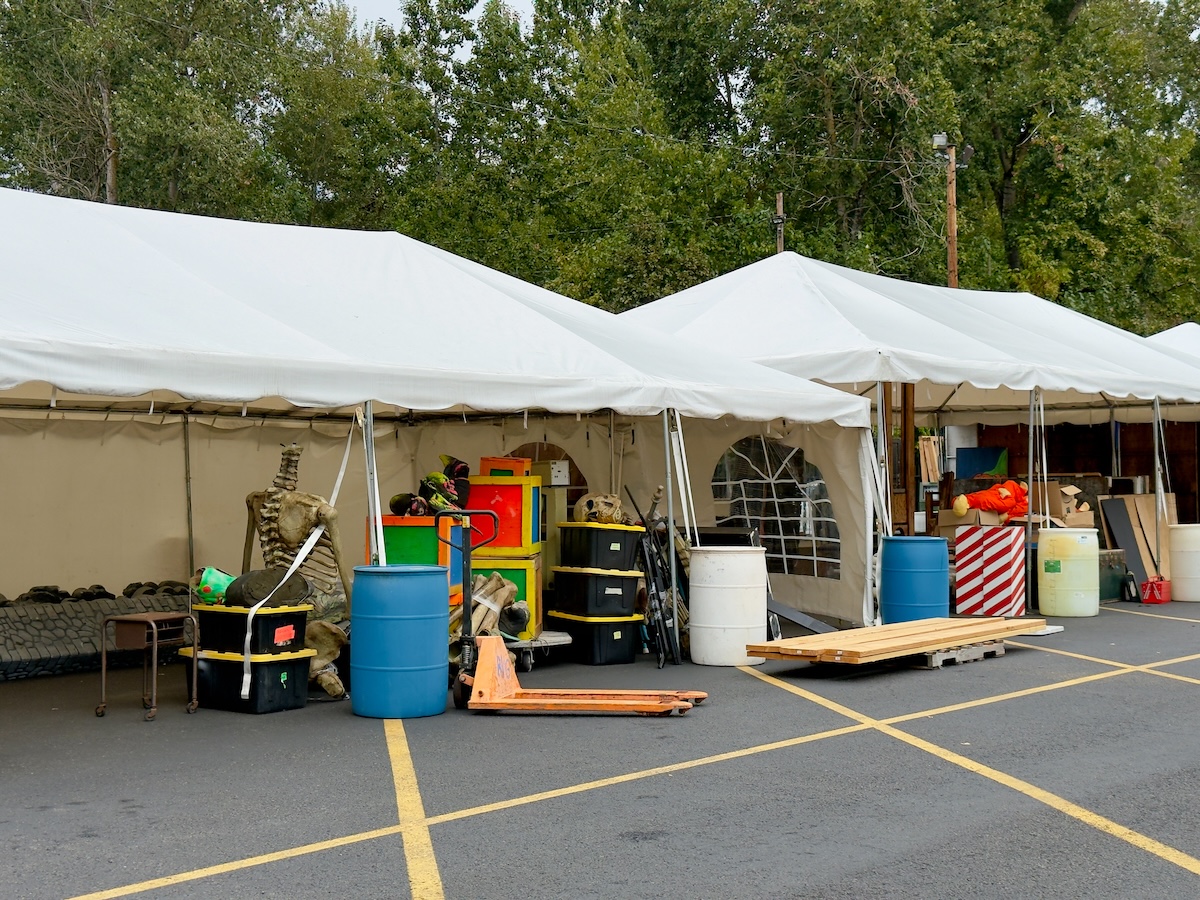
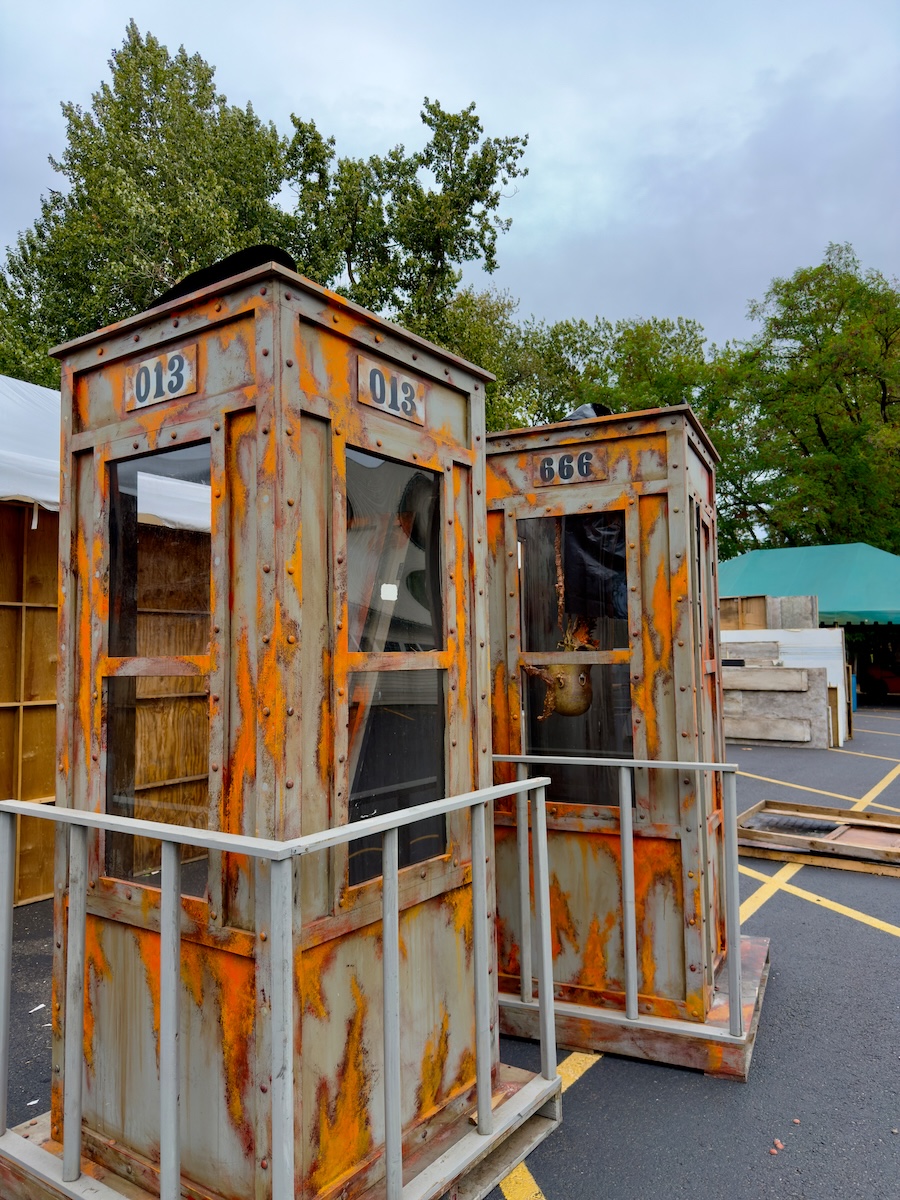
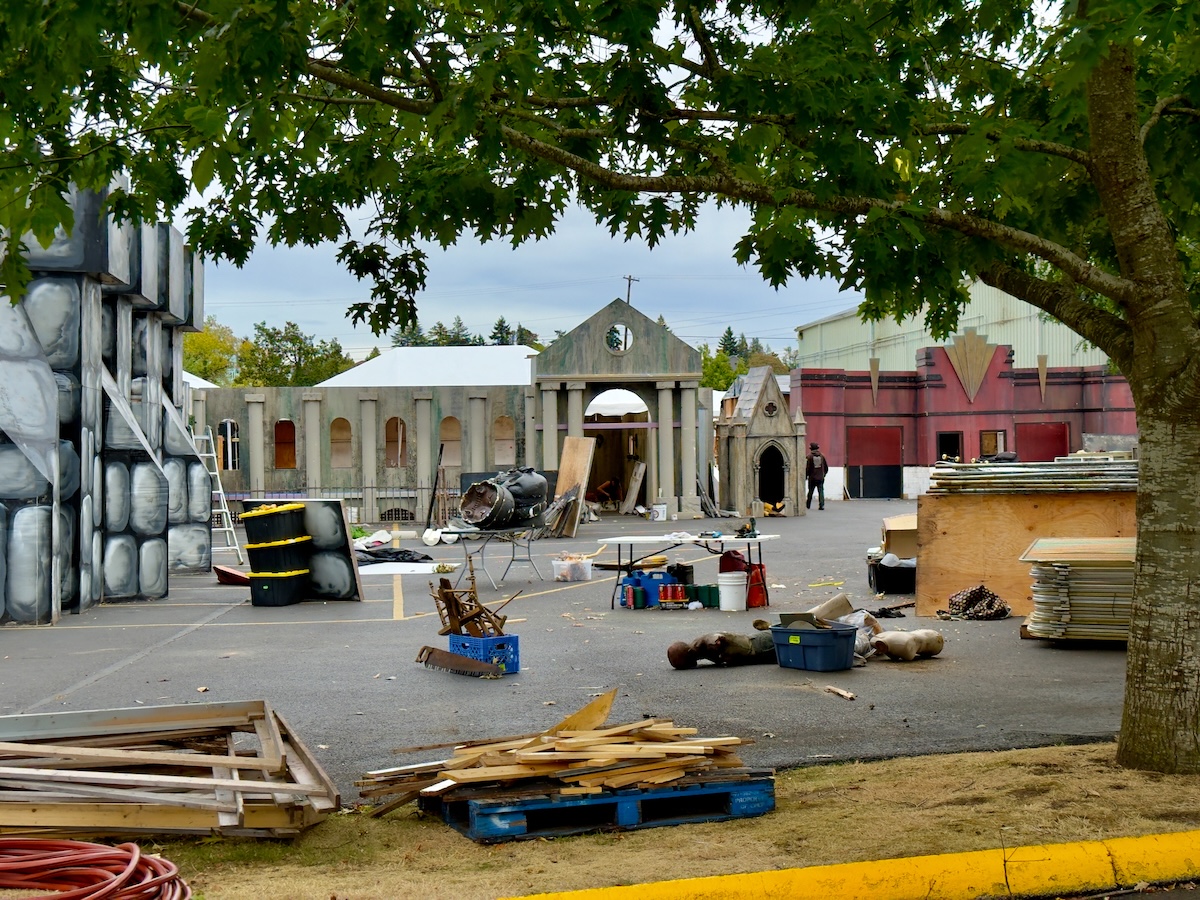
At the far end of the park, the sounds of hammers, saws, and nail guns drifted through the trees. Scaregrounds was days away, and crews were busily transforming one corner of Oaks Park into Portland’s annual celebration of chainsaws, things with entirely too many teeth, and walking upstairs into attics shouting, “Is anyone up there?”
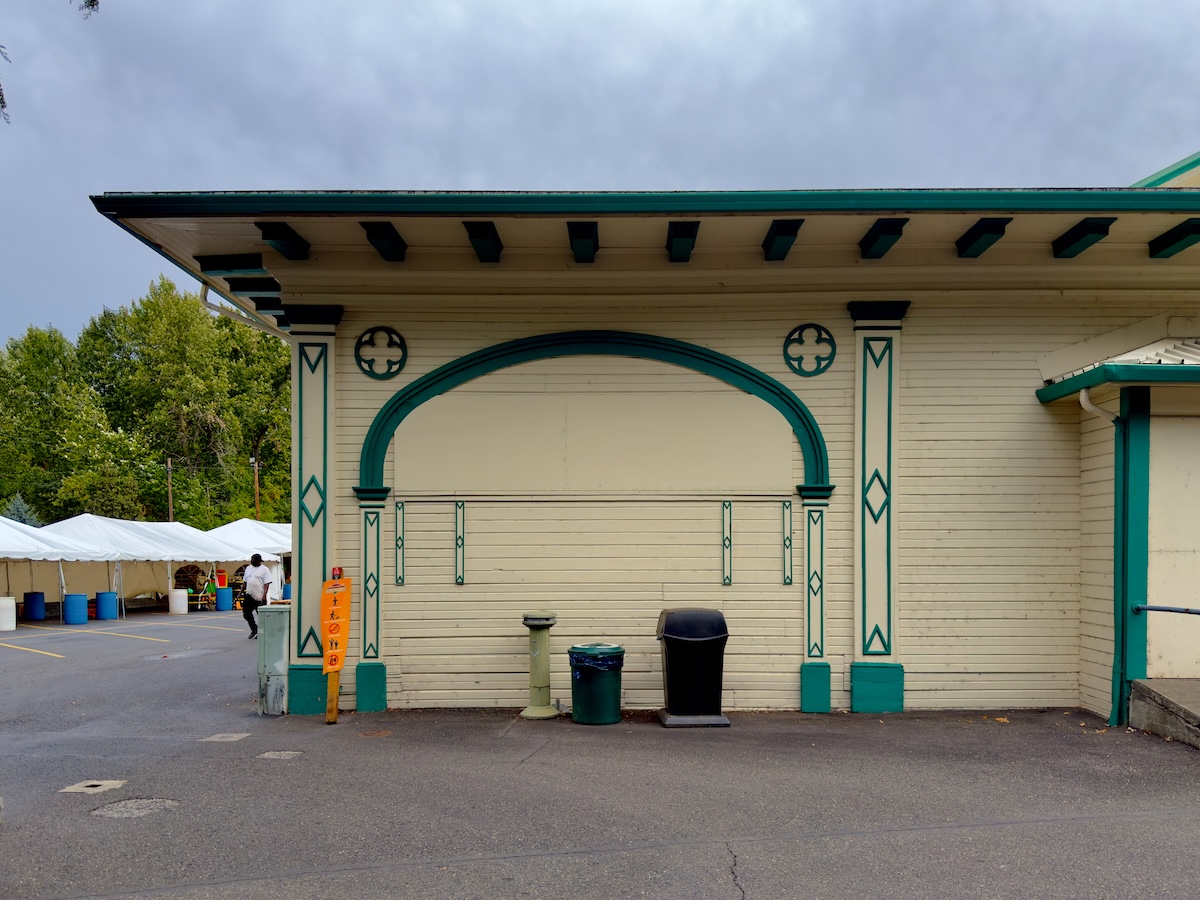
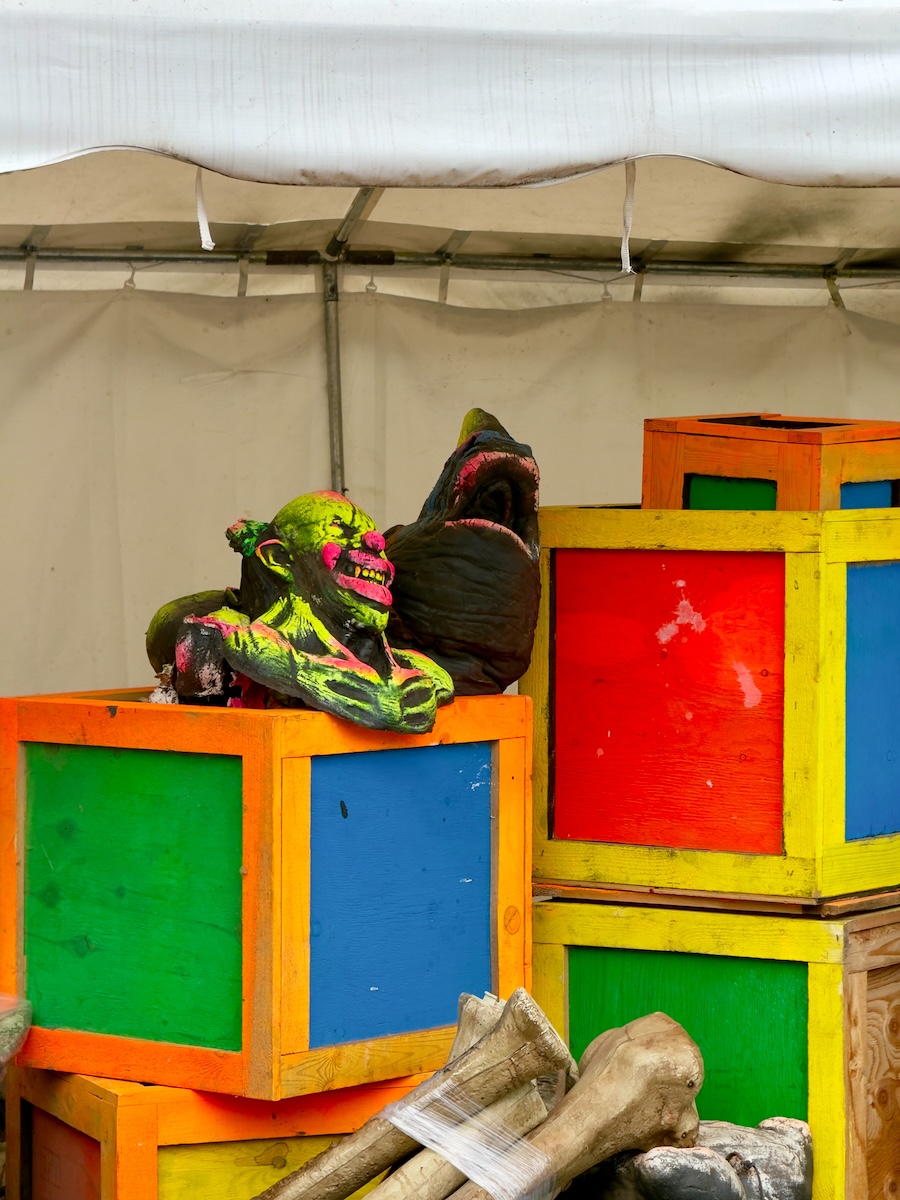
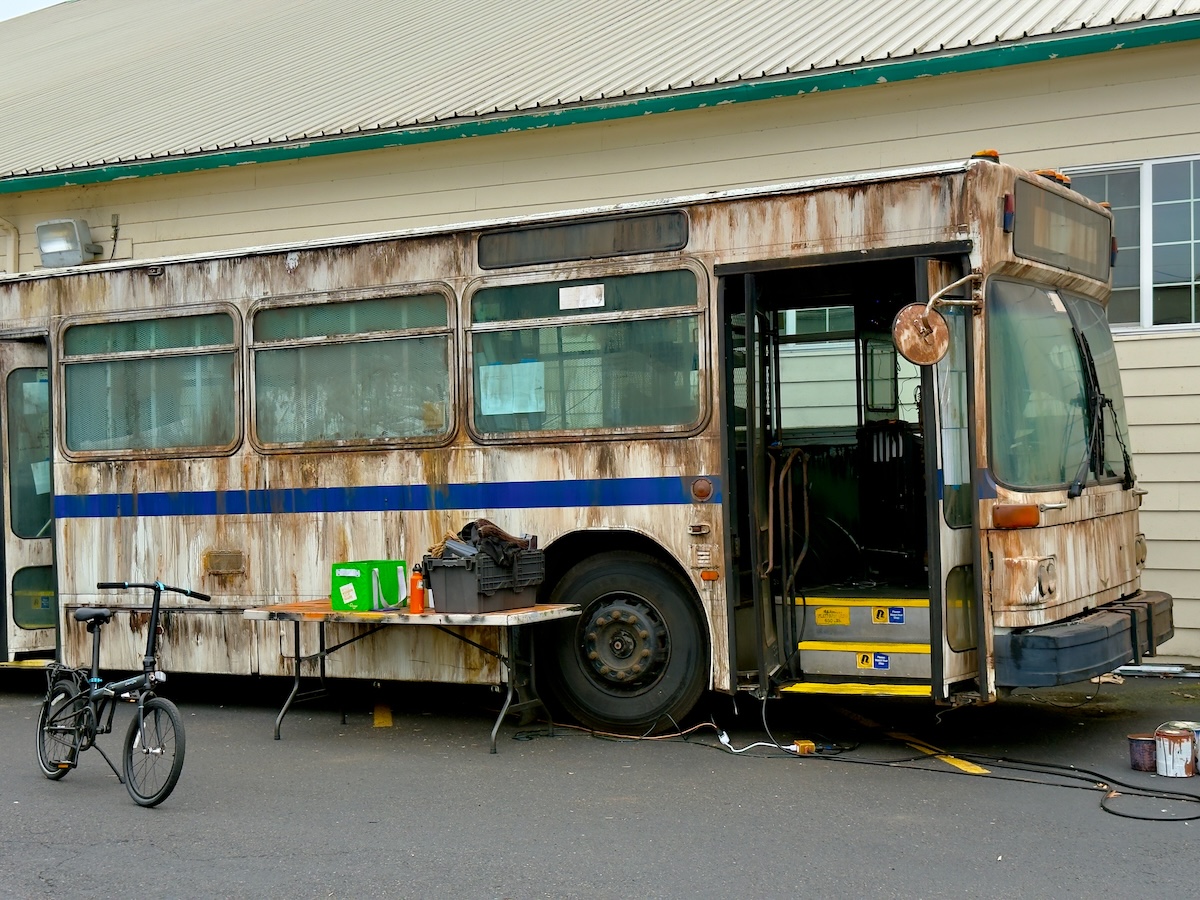
I mean, it was pretty clear we were wandering through a construction site. It was slightly less clear whether we were supposed to be there. Half-built haunted houses stood like movie sets before filming. Rusted prison doors leaned against plywood walls. A weathered city bus waited to become someone’s very bad day. Fake corpses lounged on folding tables beside severed limbs, oversized bones, and monsters that hadn’t yet been assigned permanent homes.
Nobody said anything as Terri and I wandered deeper into the work site, stopping to admire props, peek around unfinished corners, and read signs reminding future visitors not to panic and, more importantly, not to die. We asked one another out loud whether we should turn around. But by then we were practically back at the parking lot, so we kept walking.
Which is when a woman glanced up at us and abruptly stopped her hammering.
“You two helping with the setup?”
“Um…no.”
She looked genuinely puzzled for a second, looking from us to the half-built haunted houses and back again, apparently trying to work out how two civilians had wandered into an active construction zone protected by exactly zero safety barrier and no warning signs.
“Then you gotta go.”
Fair enough. We retreated with as much dignity as possible while she stood, waving and shouting to someone nearby, “These two gotta go. They’re not supposed to be here.”
So we’d managed to spend an afternoon exploring an amusement park that wasn’t open, only to get thrown out of one that wasn’t finished.
Write a comment