
Alice and I met for breakfast at Russ & Daughters, which immediately locked the day into the Good Decisions Made by Adults category. There are many places in New York where people stand in line because social media told them to. Russ & Daughters has lasted long enough that nobody even pretends it's a discovery anymore. You get your smoked fish, your bagel, and your coffee knowing full well that somewhere nearby, a therapist is making six figures explaining anxiety to someone who just moved to Manhattan from rural Vermont.
After breakfast, we headed deeper into the Lower East Side with no agenda beyond walking around together and catching up after years of not seeing each other in person. We took a half-hearted stab at getting into a Tenement Museum tour, but they were full. Appropriate. The Lower East Side has spent a couple hundred years being overcrowded.
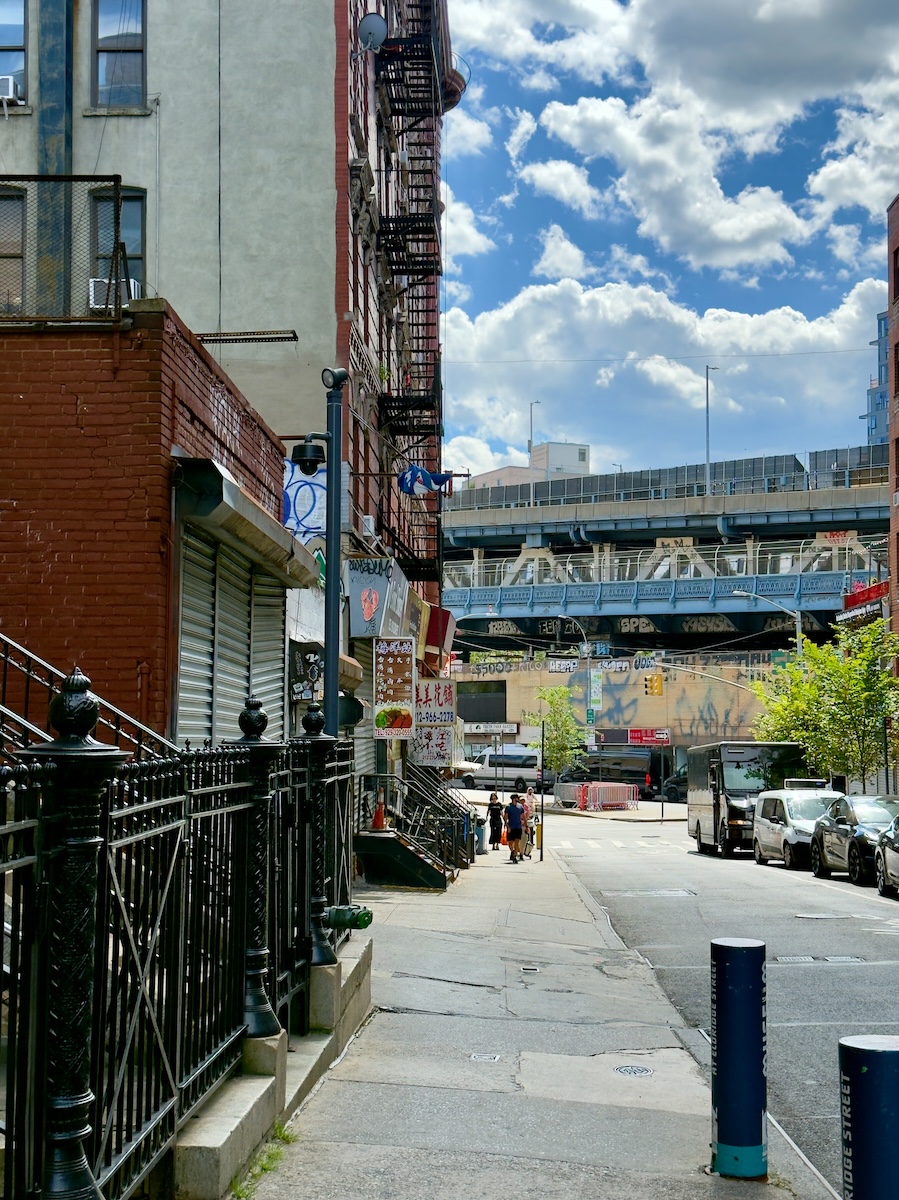
So we kept wandering and nattering at each other. At some point, the neighborhood quietly shifted around us—Chinese storefronts, old brick tenements with blackened fire escapes, graffiti, and delivery bikes everywhere. An elevated roadway overhead that made the entire block feel slightly post-apocalyptic.
Being from the West Coast, it never even occurred to me that the neighborhood had once been anything other than Chinatown, because that's what it looked like. West Coast cities like L.A., Seattle, or even Portland train you to think in clearer timelines. A district starts as a thing and generally stays that thing, if in name only, even as it gentrifies and morphs into a cleaner version of itself before inevitably somebody opens a brewery inside a former machine shop and starts charging $19 for IPAs served by a guy named Cody who somehow needs three denim aprons.
New York doesn’t operate that way. Older layers remain under newer ones, even after the newer ones settle over them. New York seems less interested in replacing itself than in burying itself alive, layer by layer.
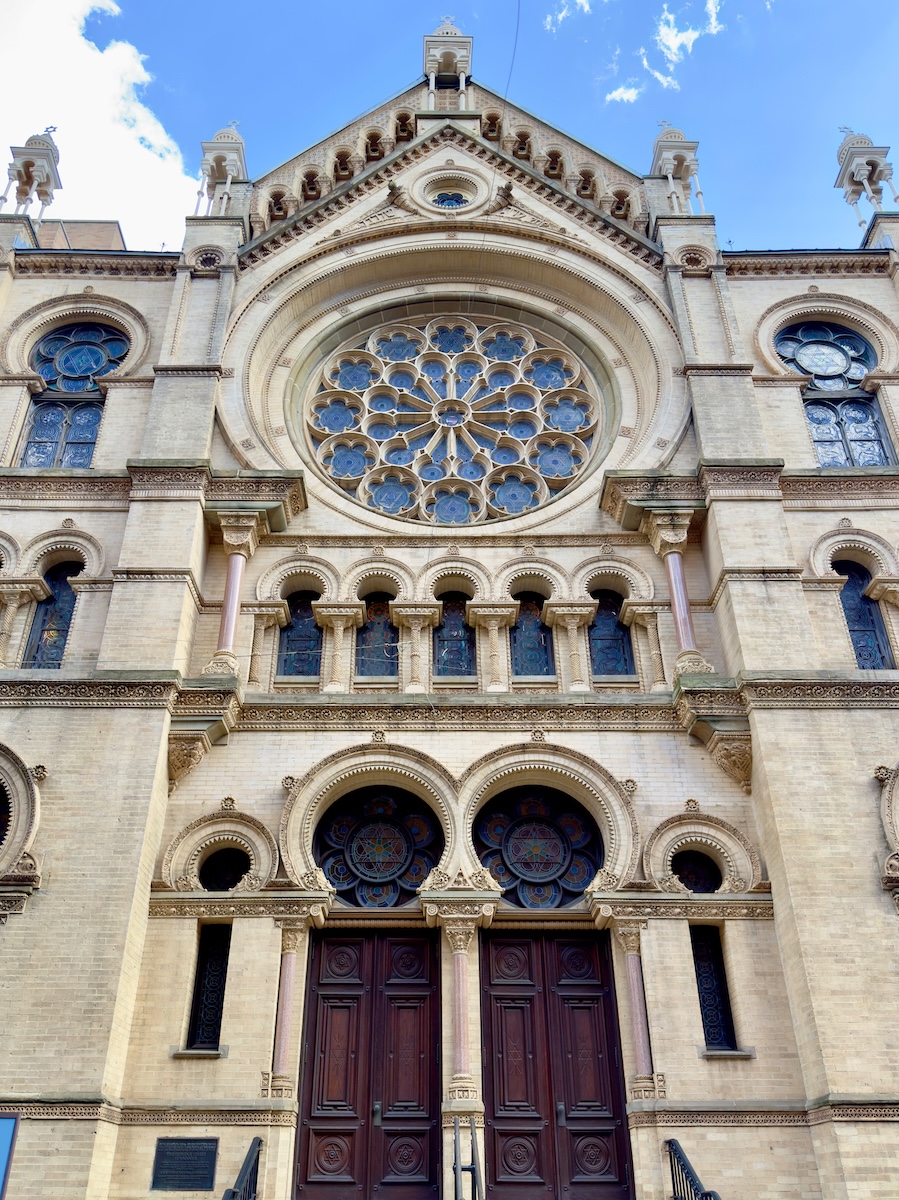
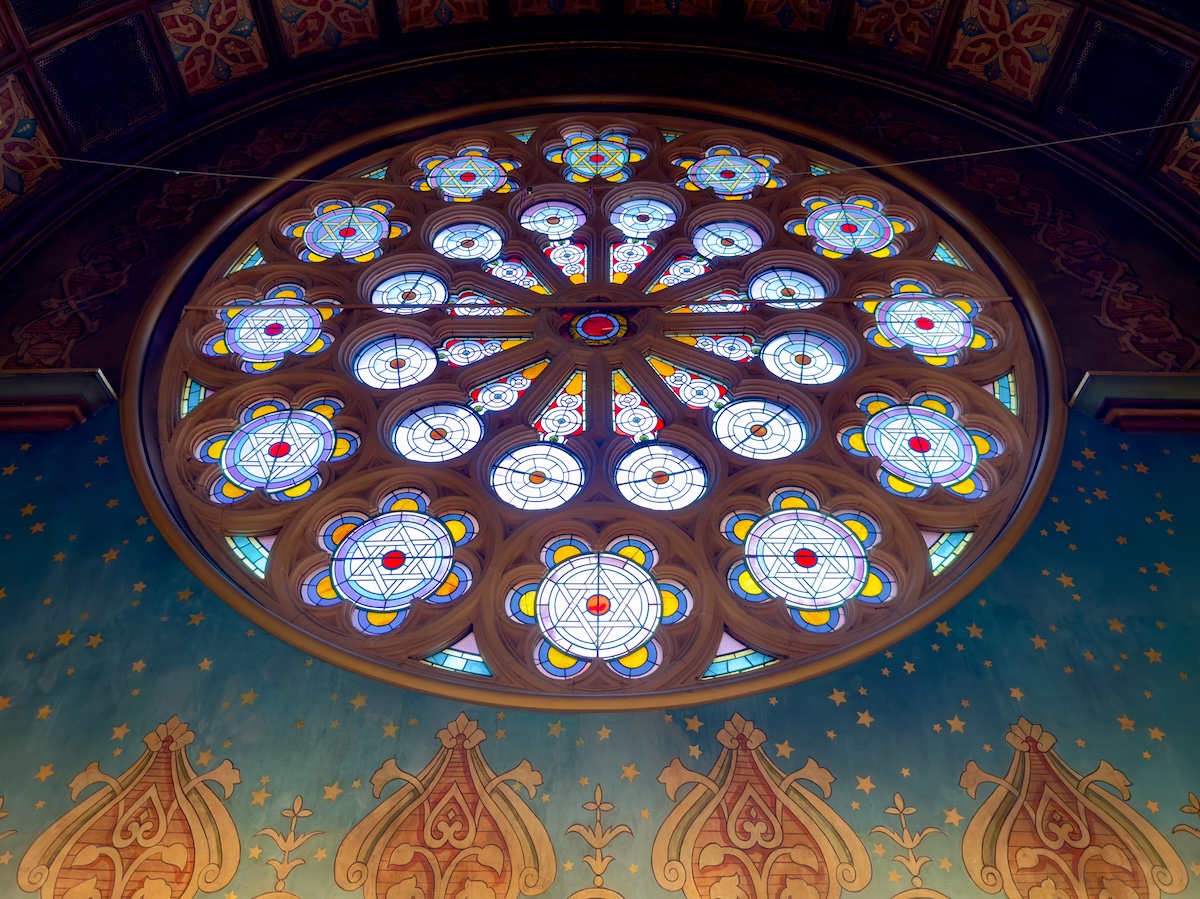
I realized this while stopping to photograph what I assumed was simply another beautiful old New York building. The façade was enormous—arched windows, carved stonework, a gigantic rose window, the sort of architecture that usually signals either immense wealth or very committed Catholics.
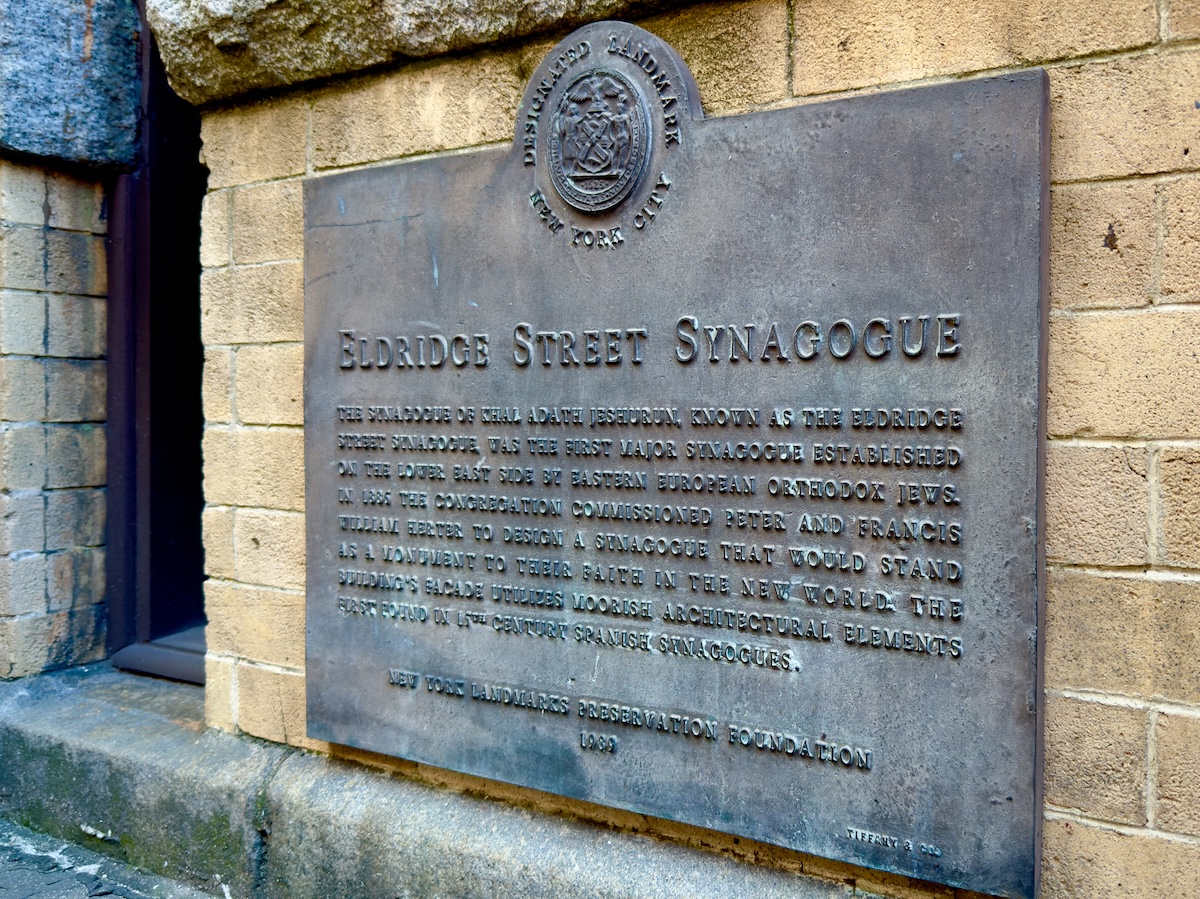
Then I noticed the plaque. The Museum at Eldridge Street. Which was literally on my List of Things to See and Do.
I suddenly felt a little guilty, because Alice and I had fully intended to happily wander and talk about nothing for hours, and now my brain had shifted into full “OH MY GOD WAIT HOLD ON” tourist mode. I asked if she wanted to go inside in a tone I hoped sounded casual enough that she could say no without feeling bad about it.
Fortunately, she was completely game. Or at least nice enough to pretend she was.
The synagogue sat there wedged into the block so naturally that I’d initially processed it the same way I’d processed half the neighborhood that morning—another beautiful old New York building somebody had somehow forgotten to demolish yet.
But the longer I stood there, the stranger the scale of it became. The rose window alone looked ambitious enough to belong to a cathedral. Arched windows climbed upward above neighboring tenements while kitchen exhaust drifted through streets crowded with traffic and stacked produce boxes as deliveries rattled past on old metal dollies. Chinatown continued operating around the synagogue with utter indifference to the fact that one of the great immigrant religious buildings in America was sitting directly in the middle of the block.
The Eldridge Street Synagogue opened in 1887 as the first great synagogue in America built by Eastern European Jewish immigrants. Which means this wasn’t some modest neighborhood prayer space assembled above a storefront while people hoped for stability later. Stability was the project. The building itself was the announcement.
And weirdly, that ambition may have survived because decline arrived soon afterward. Immigration patterns shifted, families moved elsewhere, and the surrounding neighborhood changed. By the 1970s, the synagogue had deteriorated so badly that preservationists were leading hard-hatted tours of visitors through a fading building most New Yorkers had no idea still existed.
The building endured partly because the dwindling congregation became too poor to modernize it. Which might be one of the most New York historical accidents imaginable.
Inside, the synagogue became much smaller. Not spiritually smaller. Physically smaller. Our tour began downstairs in a compact basement shul, where our guide enthusiastically explained elements of Jewish worship and Lower East Side immigrant history while I tried very hard to look like somebody absorbing profound cultural insight rather than a tourist whose brain was still mostly occupied by the giant rose window outside.
Alice, meanwhile, listened politely beside me despite already being Jewish. She dropped increasingly specific hints about her family history that even I assumed would end the Intro to Judaism portion of the tour. At one point, she mentioned her grandmother had been born in a mikveh. “Only Jewish people can use a mikveh,” our docent declared before confidently continuing her canned spiel for several more minutes. The situation resolved itself when Alice finally blurted, “I’m Jewish!” “Oh, why didn’t you say anything?” asked our docent.
The downstairs exhibits focused heavily on immigration and the vanished Jewish Lower East Side that once surrounded the synagogue. Millions of Eastern European Jews arrived in New York in the late 19th and early 20th centuries, many fleeing restrictions and persecution in the Pale of Settlement and other parts of the Russian Empire. The neighborhood became one of the most densely populated places on earth for a while, crowded with synagogues, Yiddish theaters, kosher shops, labor organizers, pushcarts, and tenement apartments packed tightly enough that privacy was probably only theoretical.
What I liked most, though, were the photographs.
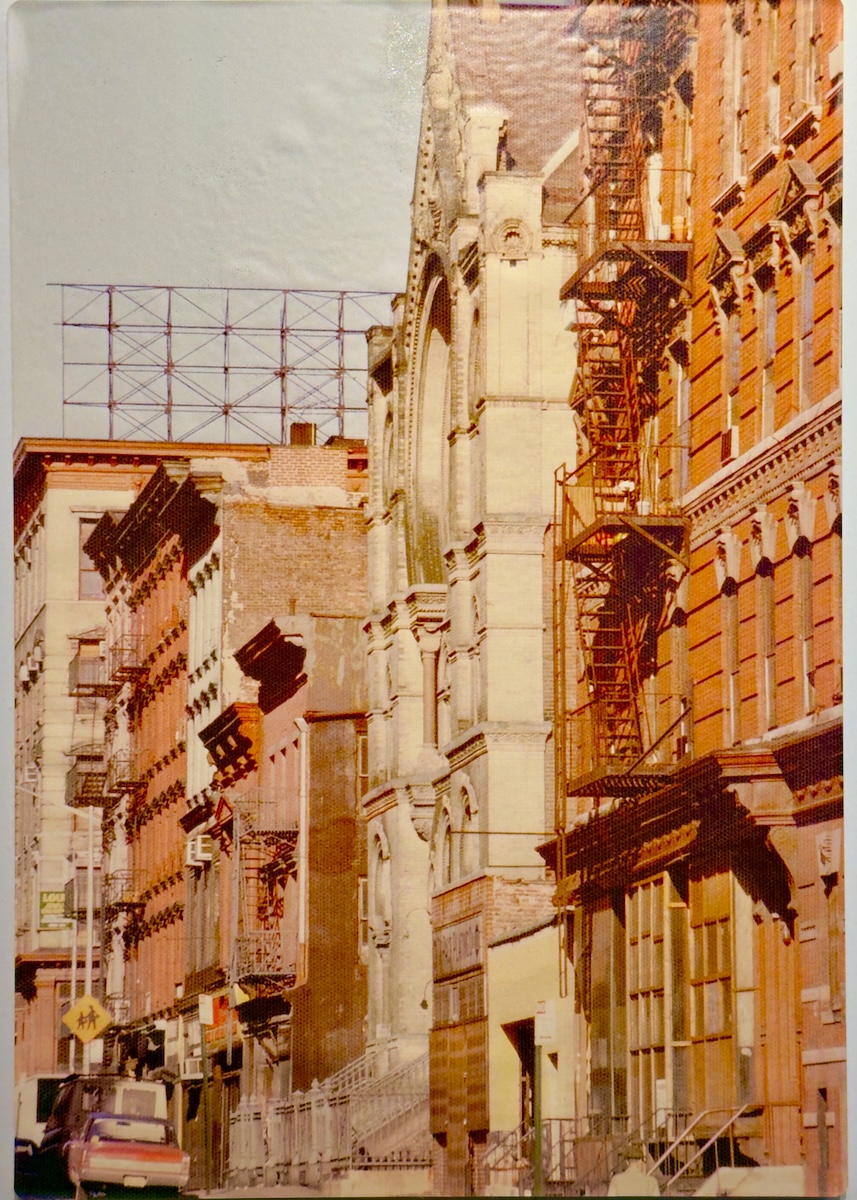
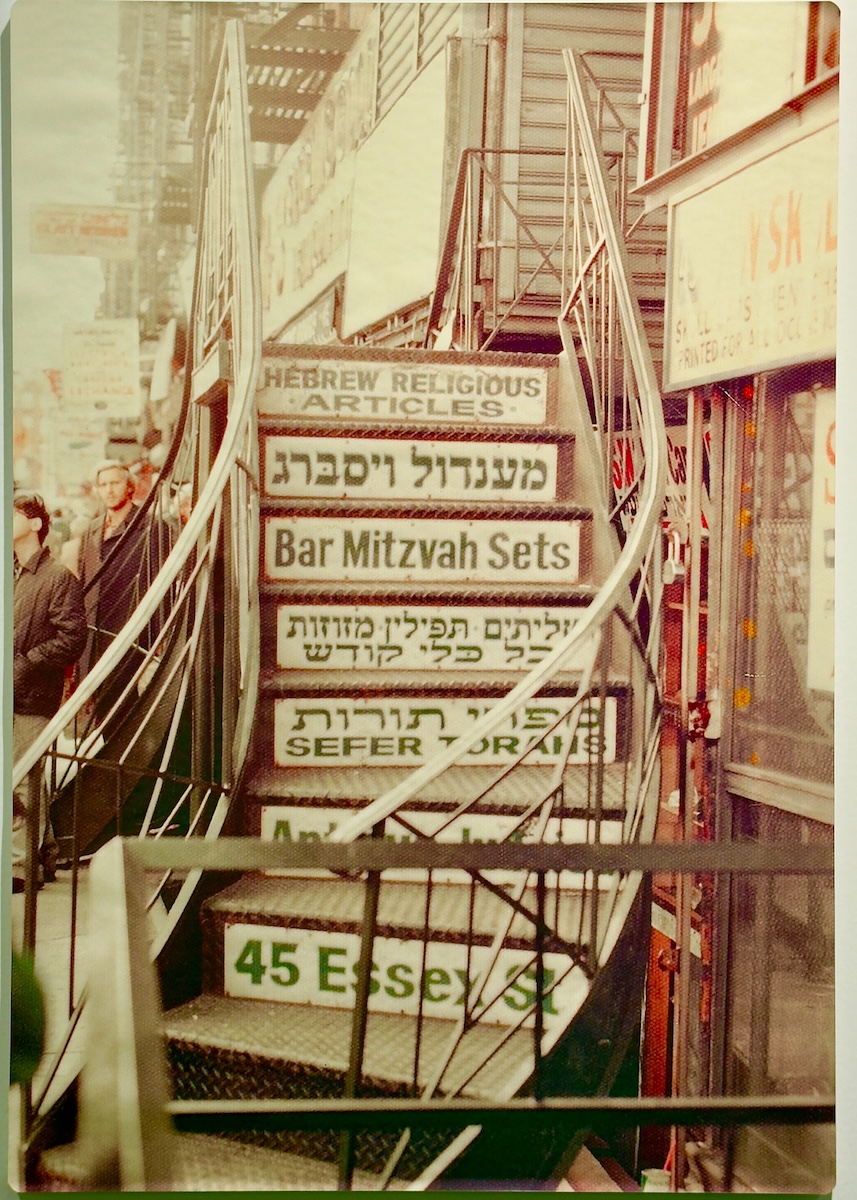
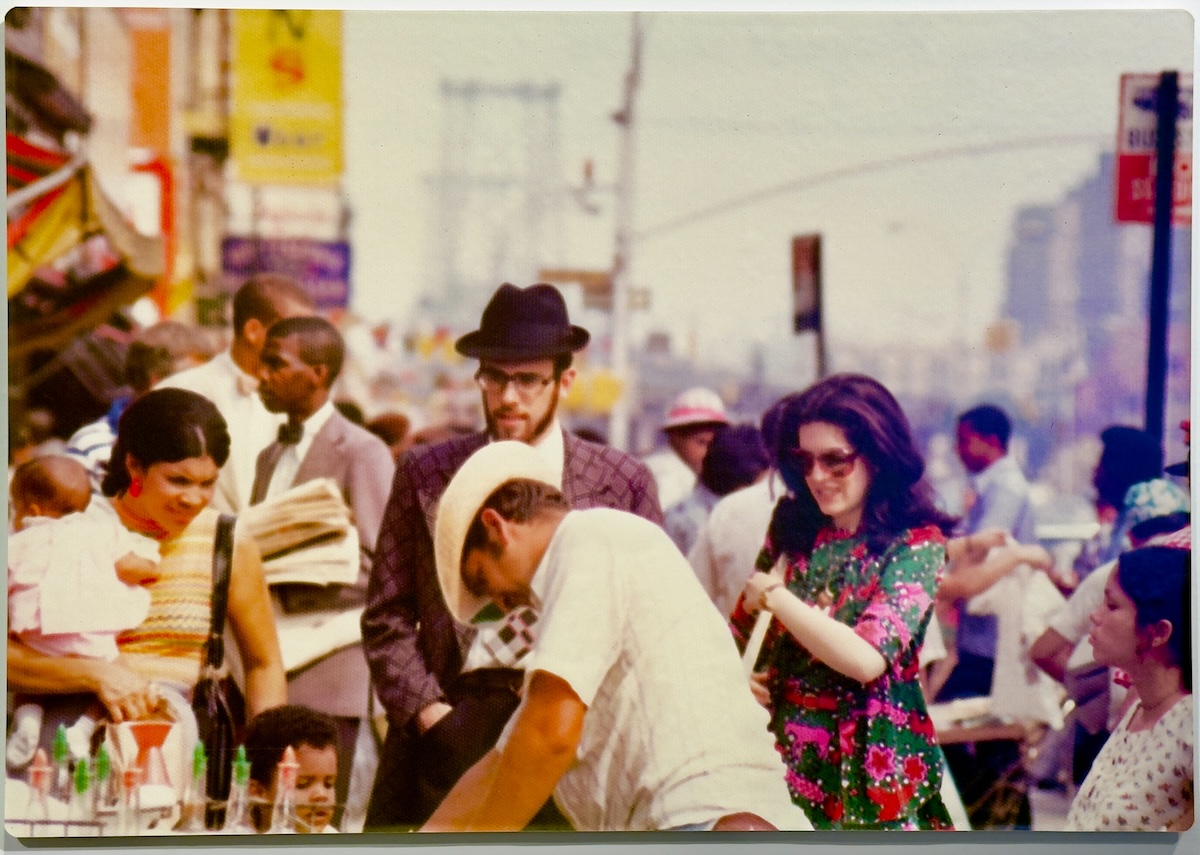
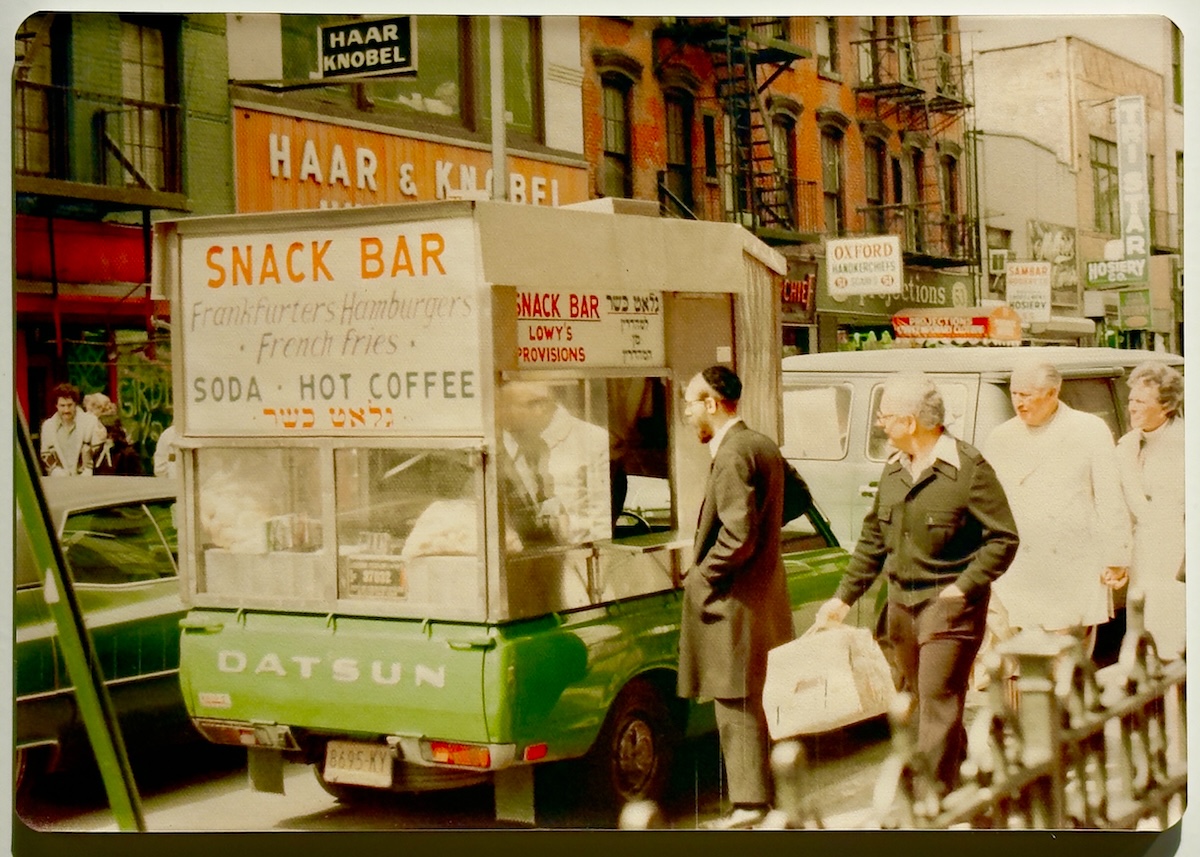
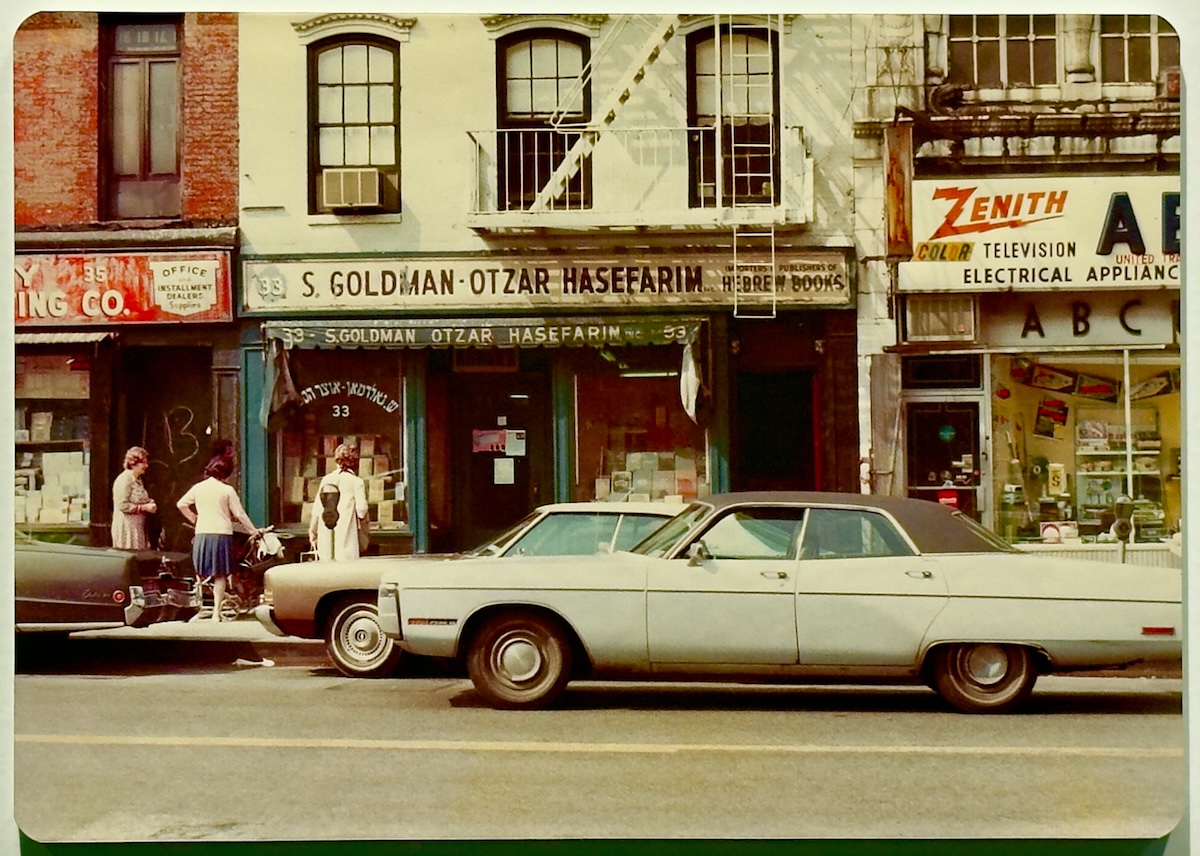
A temporary exhibit displayed images Richard Marc Sakols had taken around the Lower East Side in 1975 while documenting old synagogues, storefronts, and neighborhood street life. The pictures didn’t feel nostalgic in the heavily curated “lost New York” way the city sometimes markets itself now. They felt transitional. Half-erased Jewish businesses still operating beneath fading Yiddish signs while newer Chinese and Latino communities gradually filled the surrounding streets. In one photograph, the Eldridge Street Synagogue itself looked almost hidden among ordinary storefronts and aging commercial buildings.
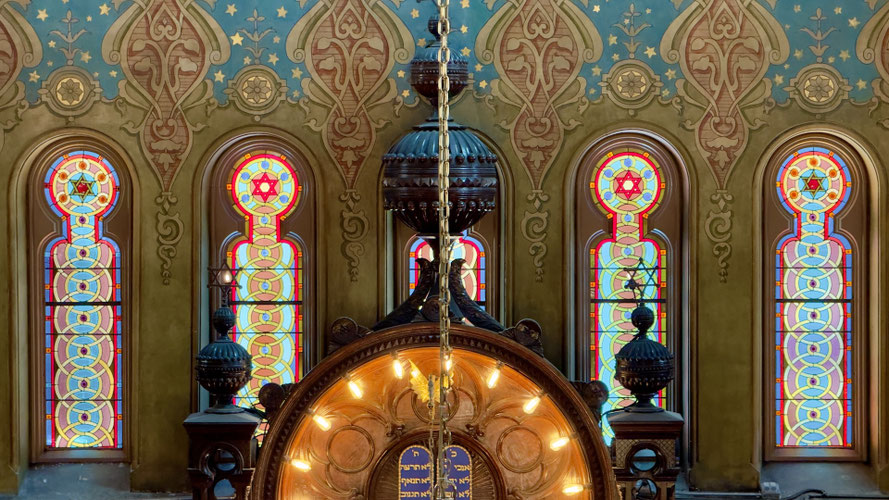
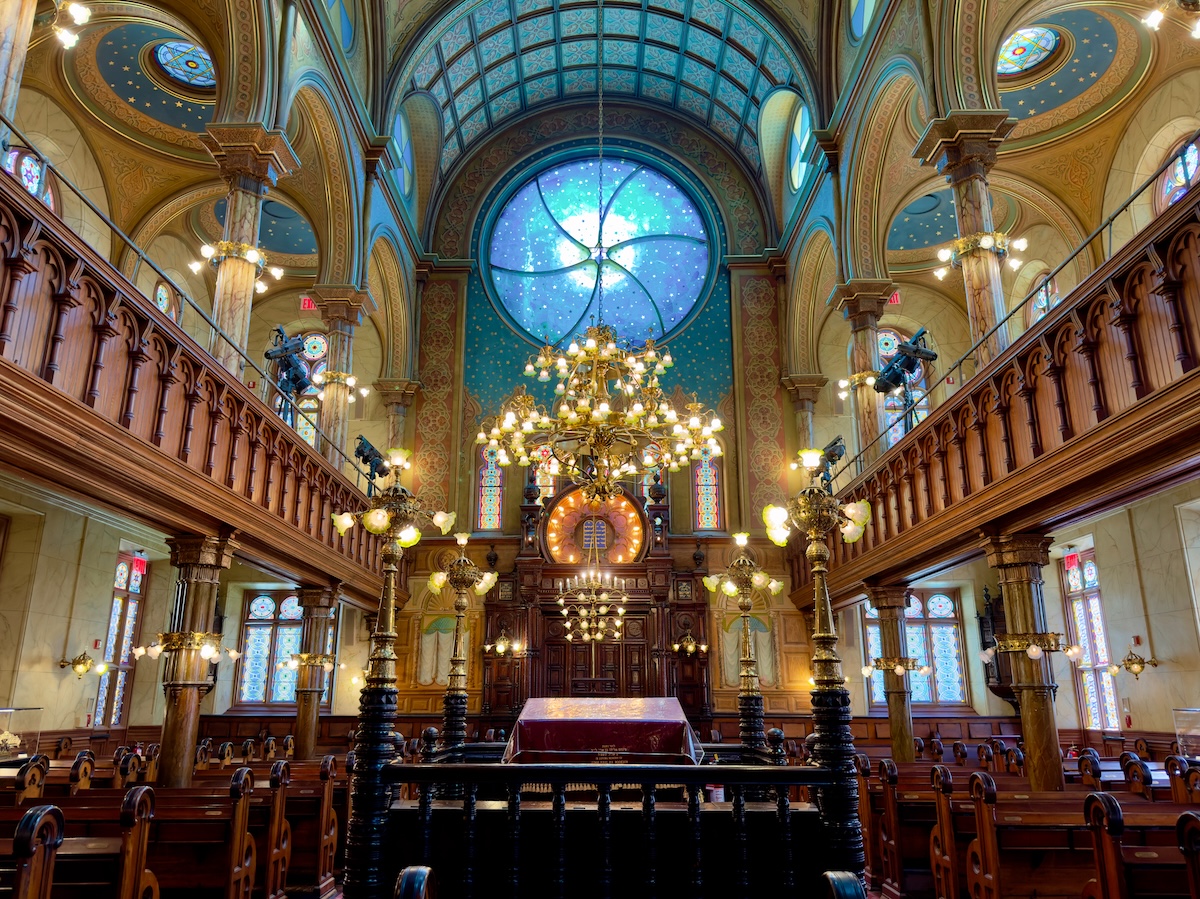
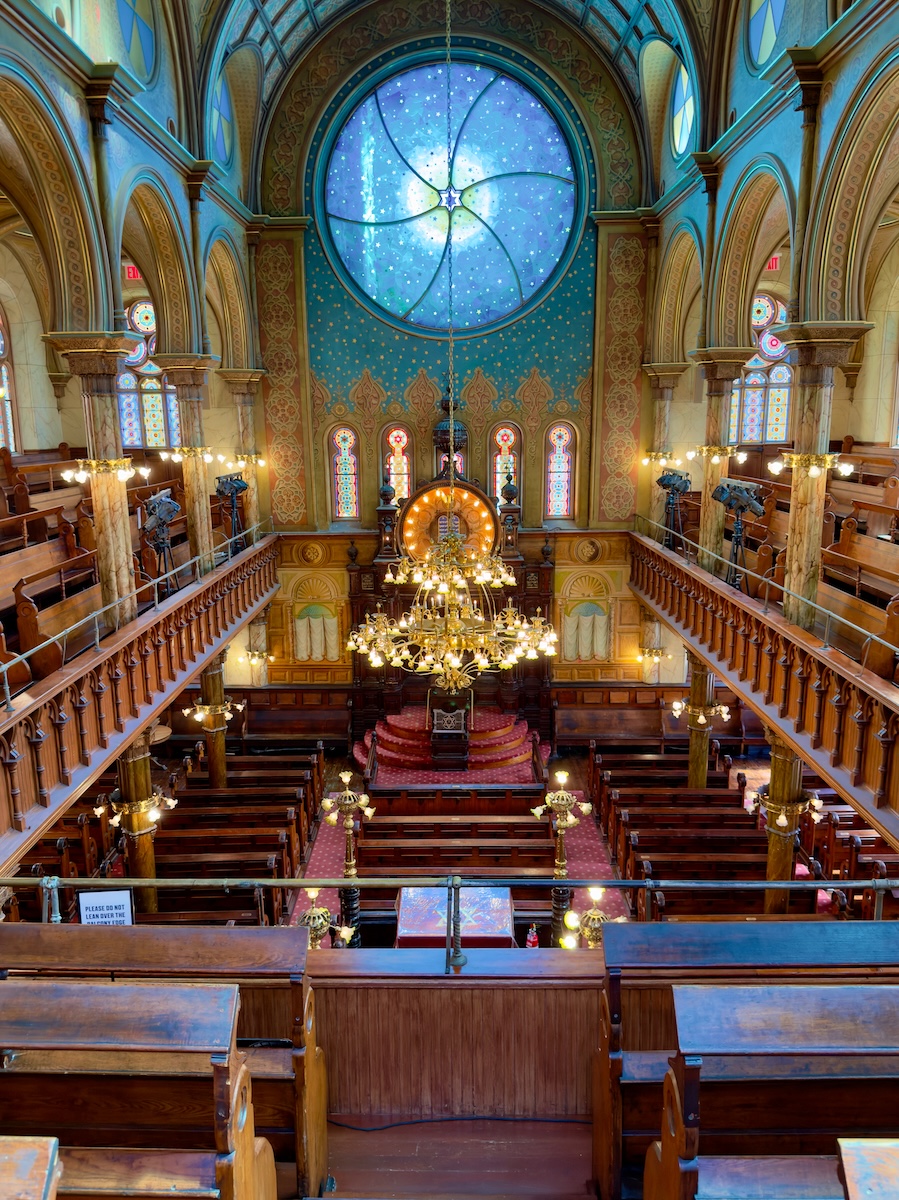
After the basement exhibits and our increasingly complicated conversation about mikvehs, we followed the docent upstairs into the main sanctuary. And the synagogue suddenly revealed what all that immigrant ambition had actually built.
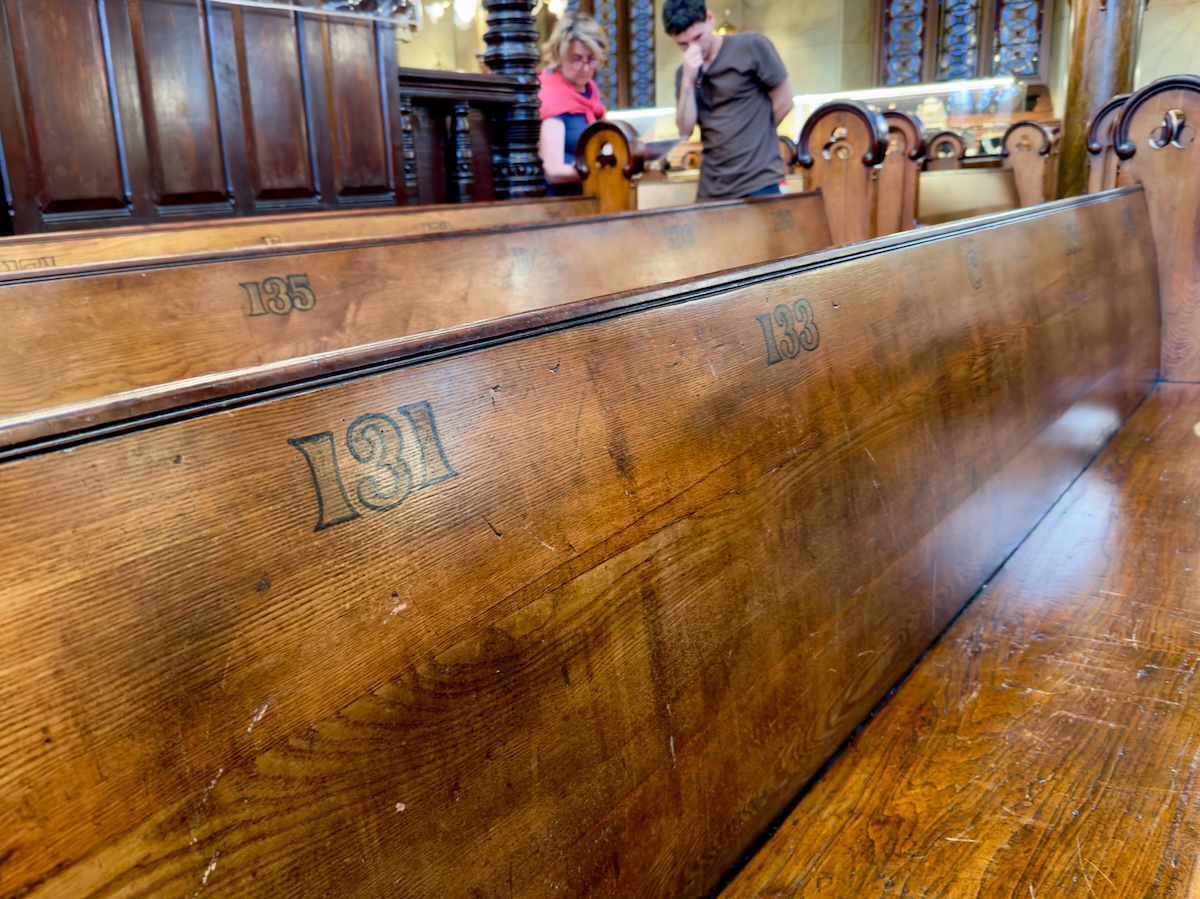
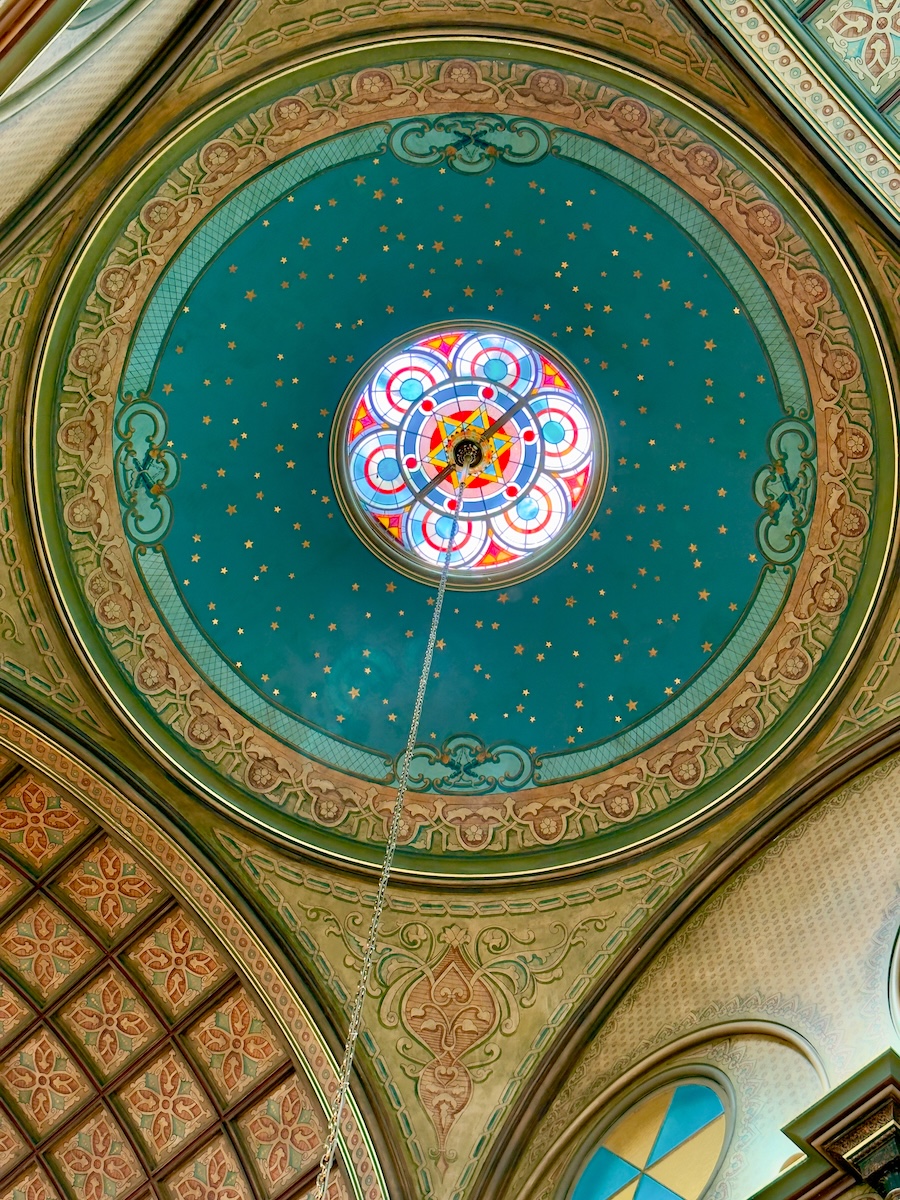
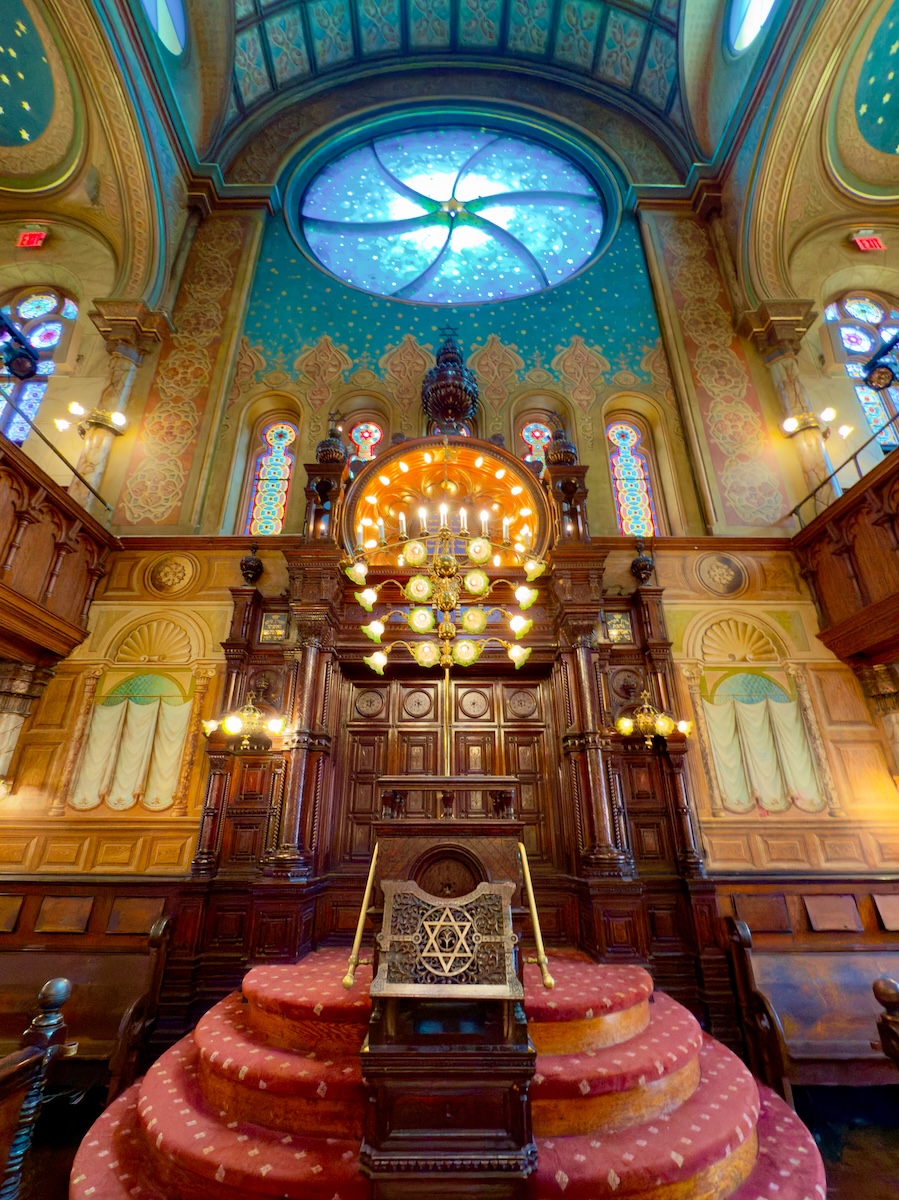
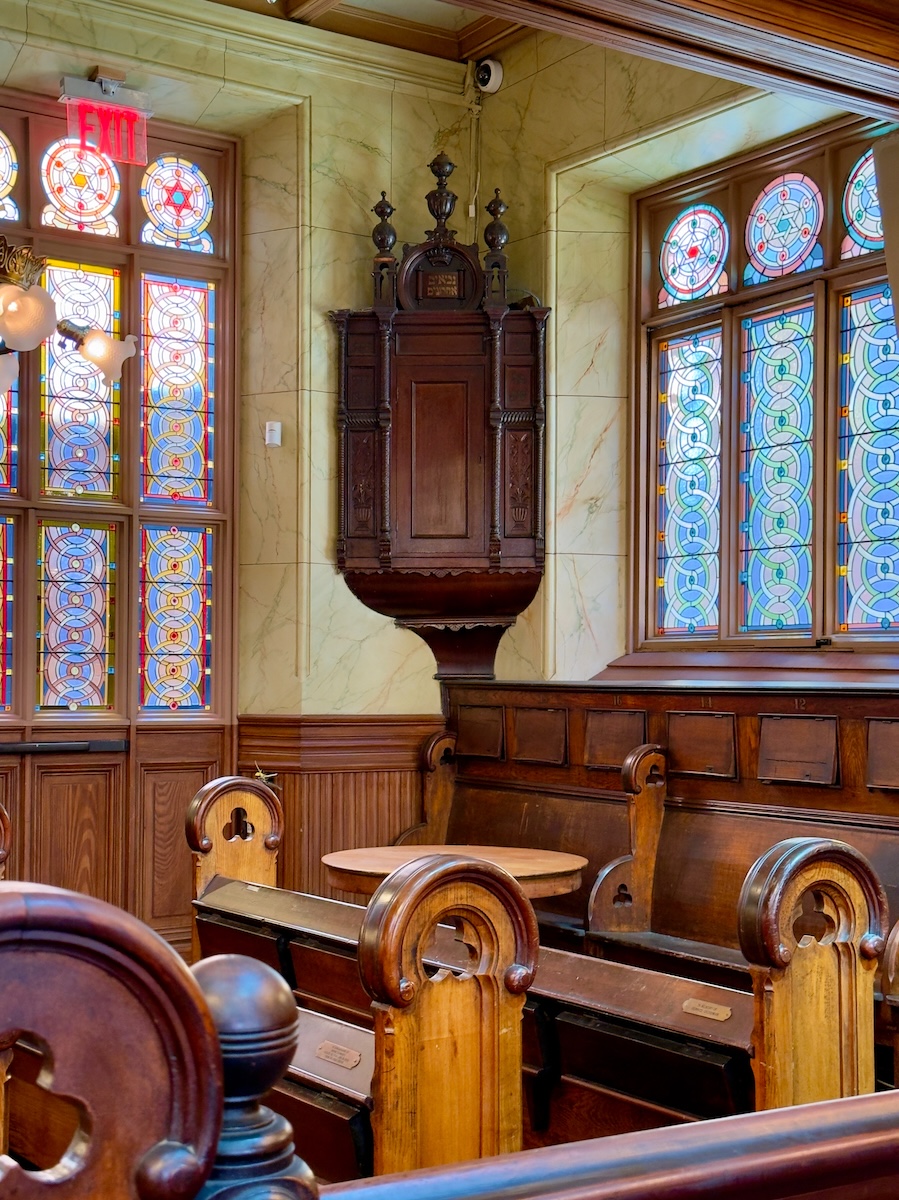
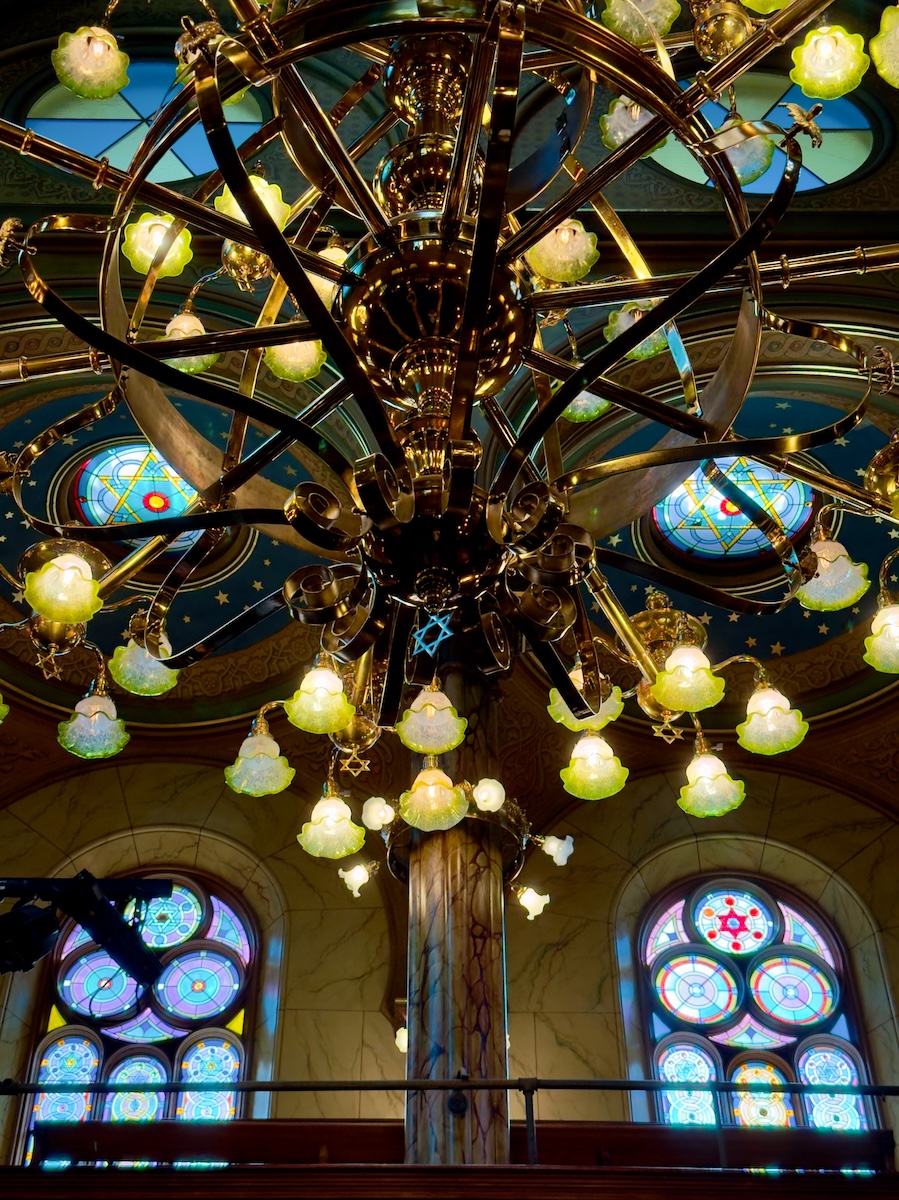
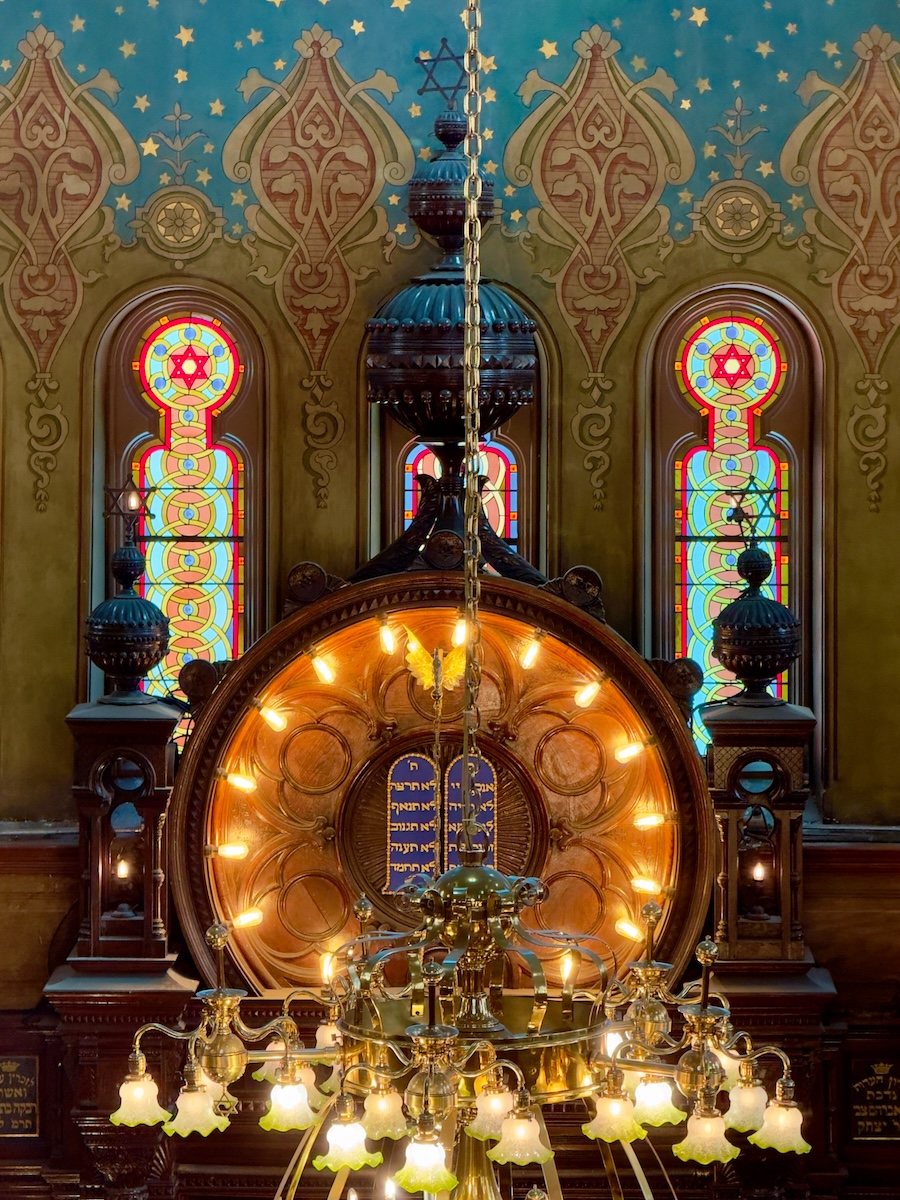
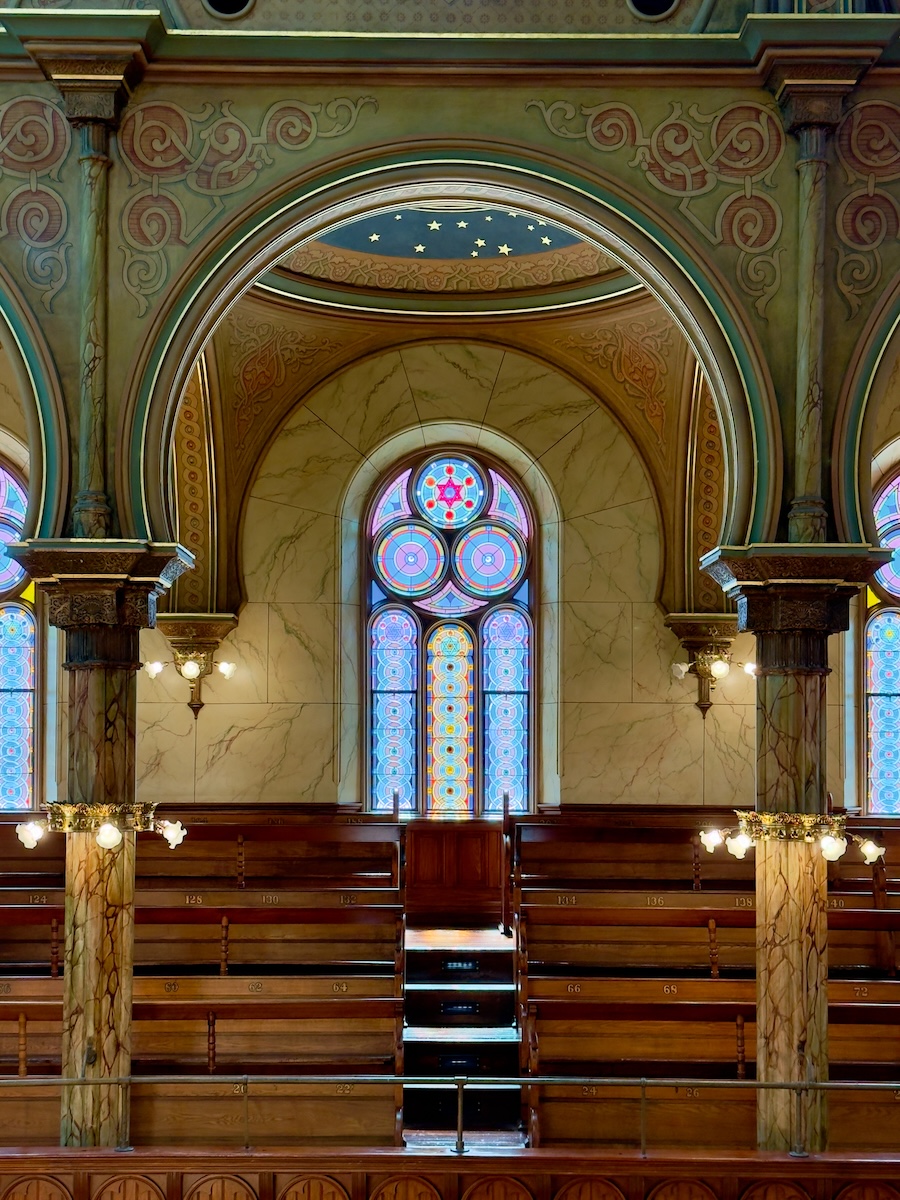
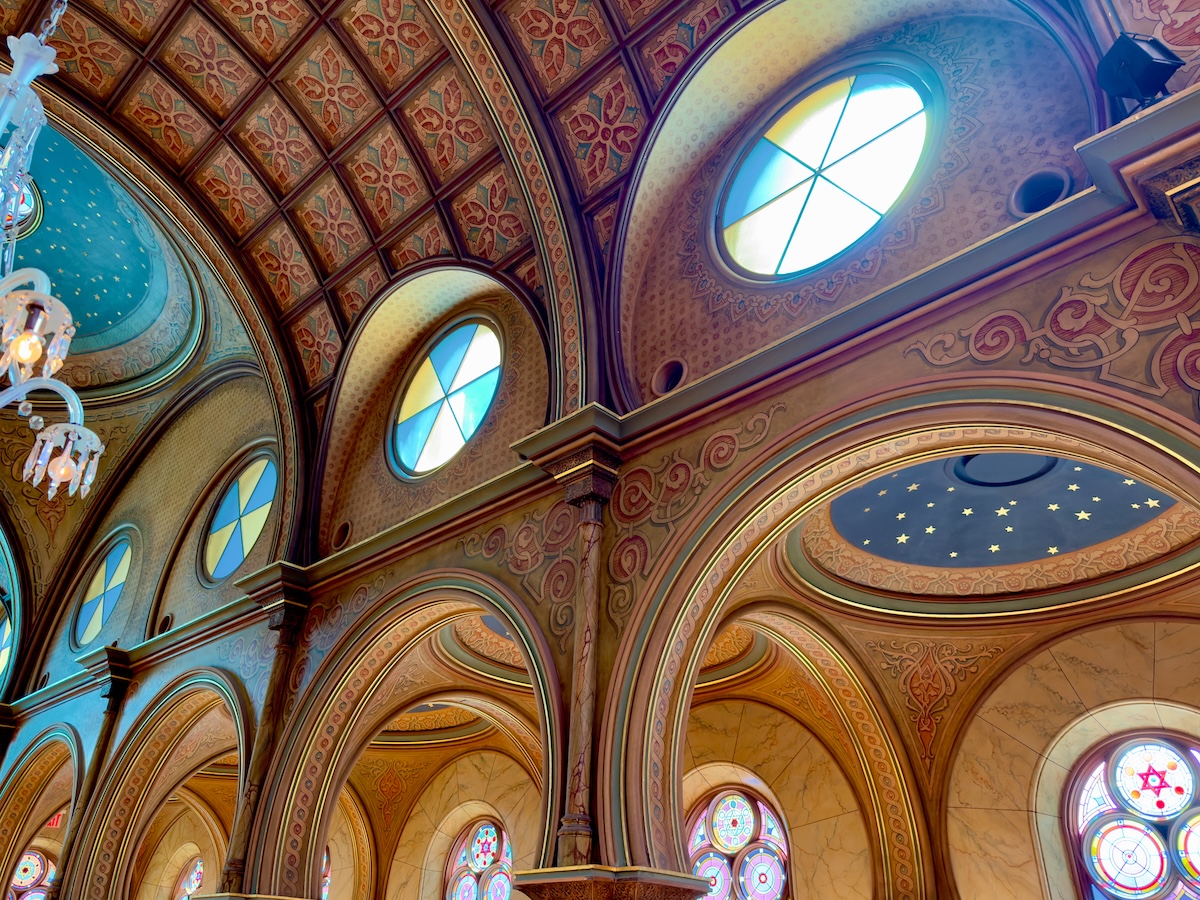
The sanctuary opened upward in stages. First, the pews with their worn wood and seat numbers. Then chandeliers. Then stained glass. Then painted walls and decorative carvings and balconies wrapping around the room. Finally, the ceiling itself—a deep celestial blue scattered with gold stars high above us like somebody had attempted to merge a synagogue with a planetarium.
The scale of the room felt even stranger because of what I knew was outside. Just beyond those walls sat Chinatown, for heaven’s sake. But inside the sanctuary, everything stretched vertically with light, color, height, and space. And calm.
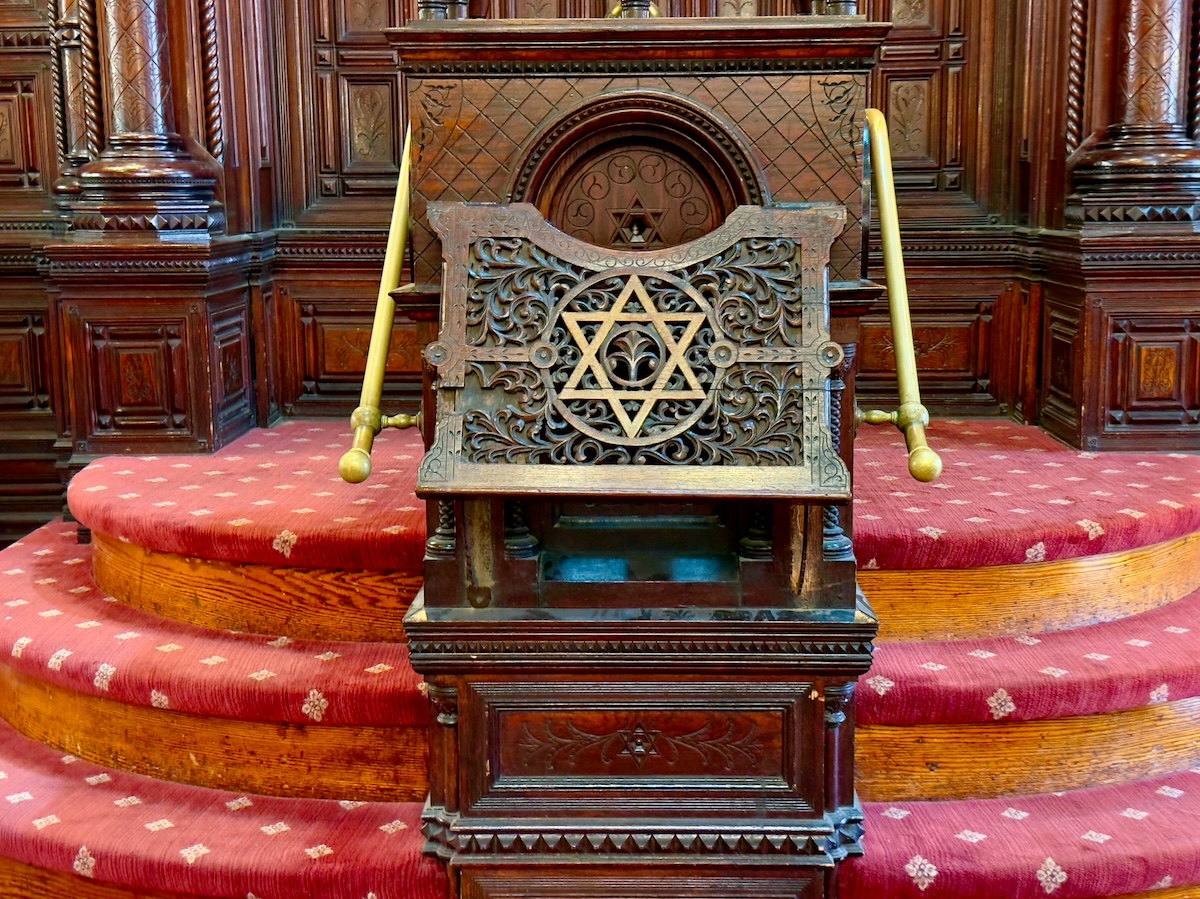
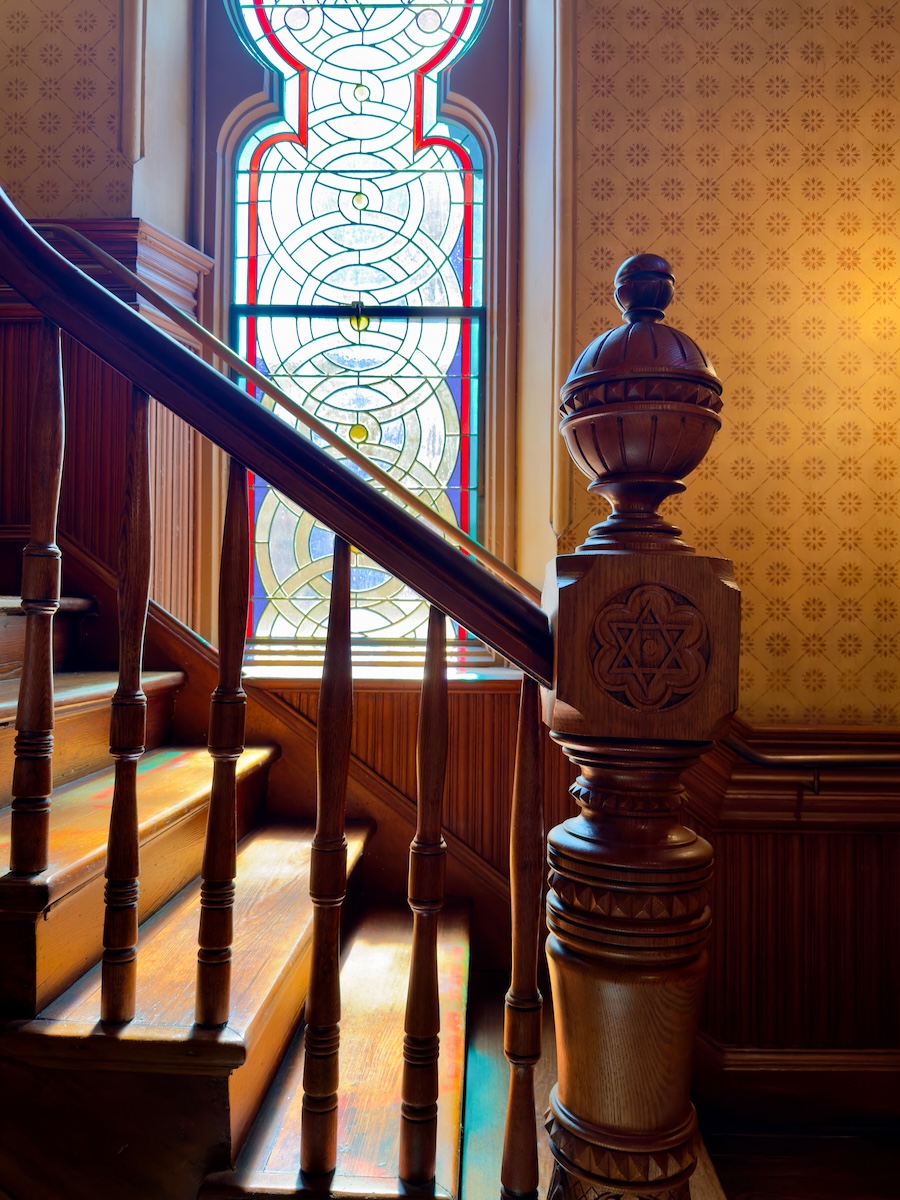
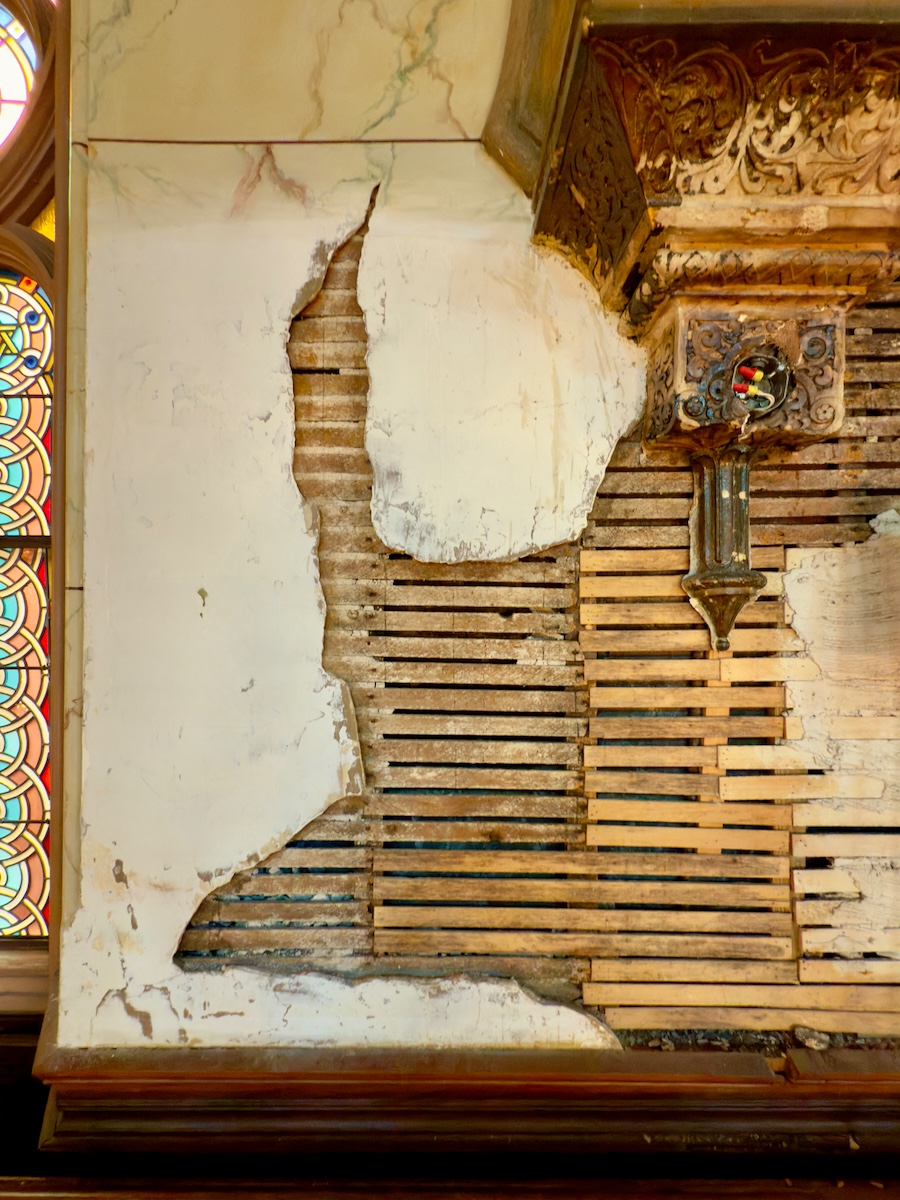
And the details kept accumulating the longer we stood there. The woodwork still showed signs of age, despite restoration. Some walls carried visible traces of repair where deterioration had once crept through the building before preservationists stepped in. The pews were polished by generations of people sitting in them. Nothing about the room felt sterile or over-restored or artificial. It all still carried the physical memory of surviving.
We climbed higher into the balconies, where the sanctuary became even more impressive from above. Looking down from the upper level, the room stopped feeling ornate and began to feel improbable. The people who built this space weren’t wealthy Manhattan industrialists building themselves a monument on Fifth Avenue.
The congregants who funded this synagogue came from crowded immigrant neighborhoods and difficult conditions in Eastern Europe—only to find crowded immigrant neighborhoods and difficult conditions here. But together they built vaulted ceilings, stained glass, chandeliers, elaborate mosaics, symbolic carvings, and one of the most extraordinary sacred spaces in New York.
Immigrant New York often gets remembered through hardship because hardship leaves behind powerful stories. But standing up there in the balcony, staring across all that color and craftsmanship, another realization pushed its way in alongside it.
People came here planning to stay.
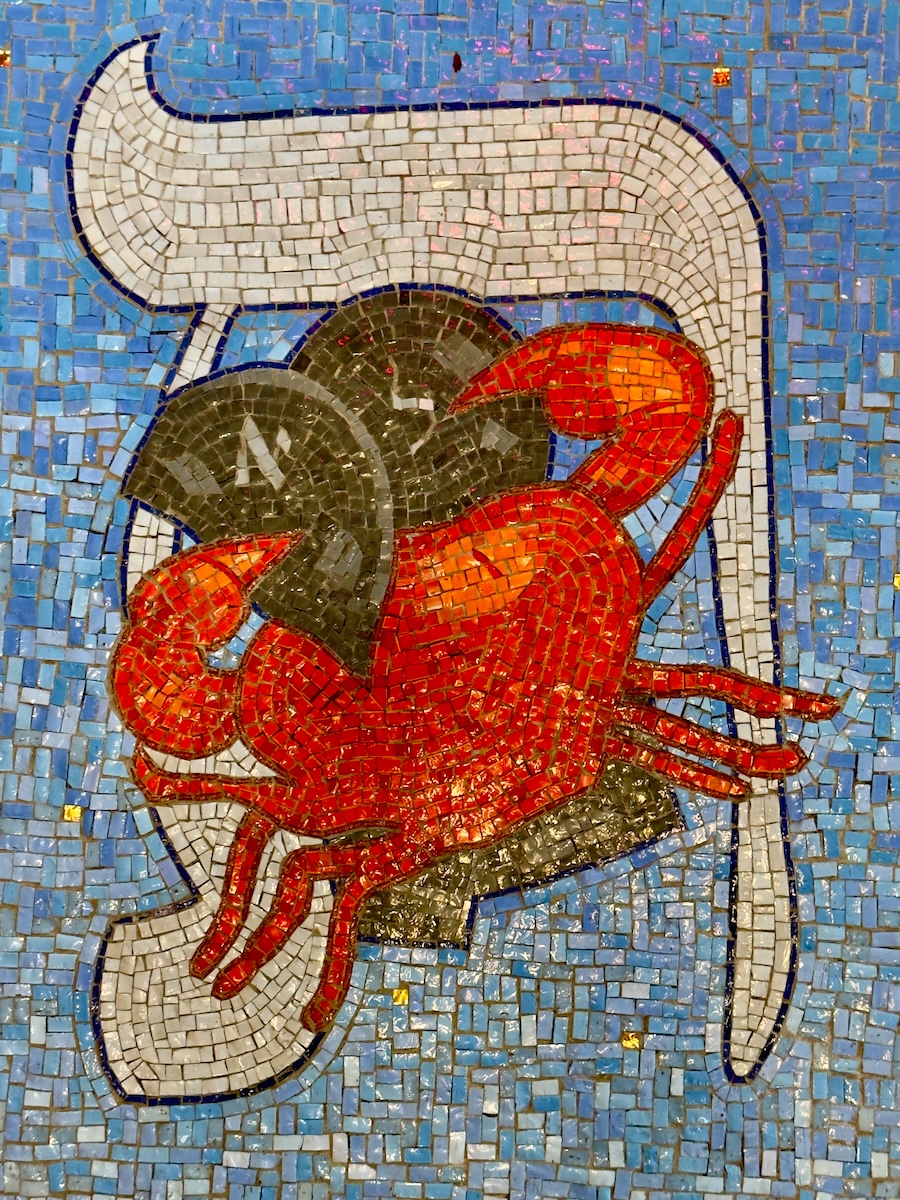
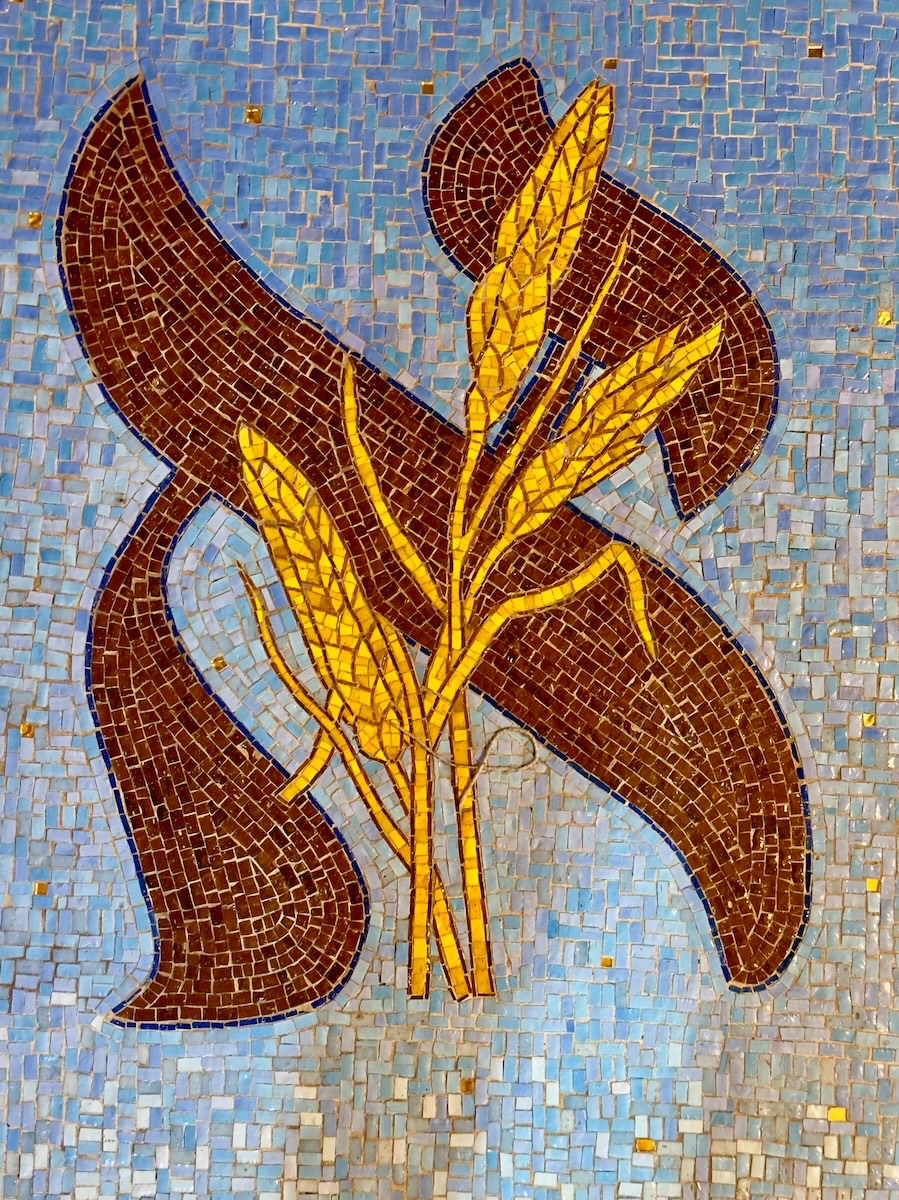
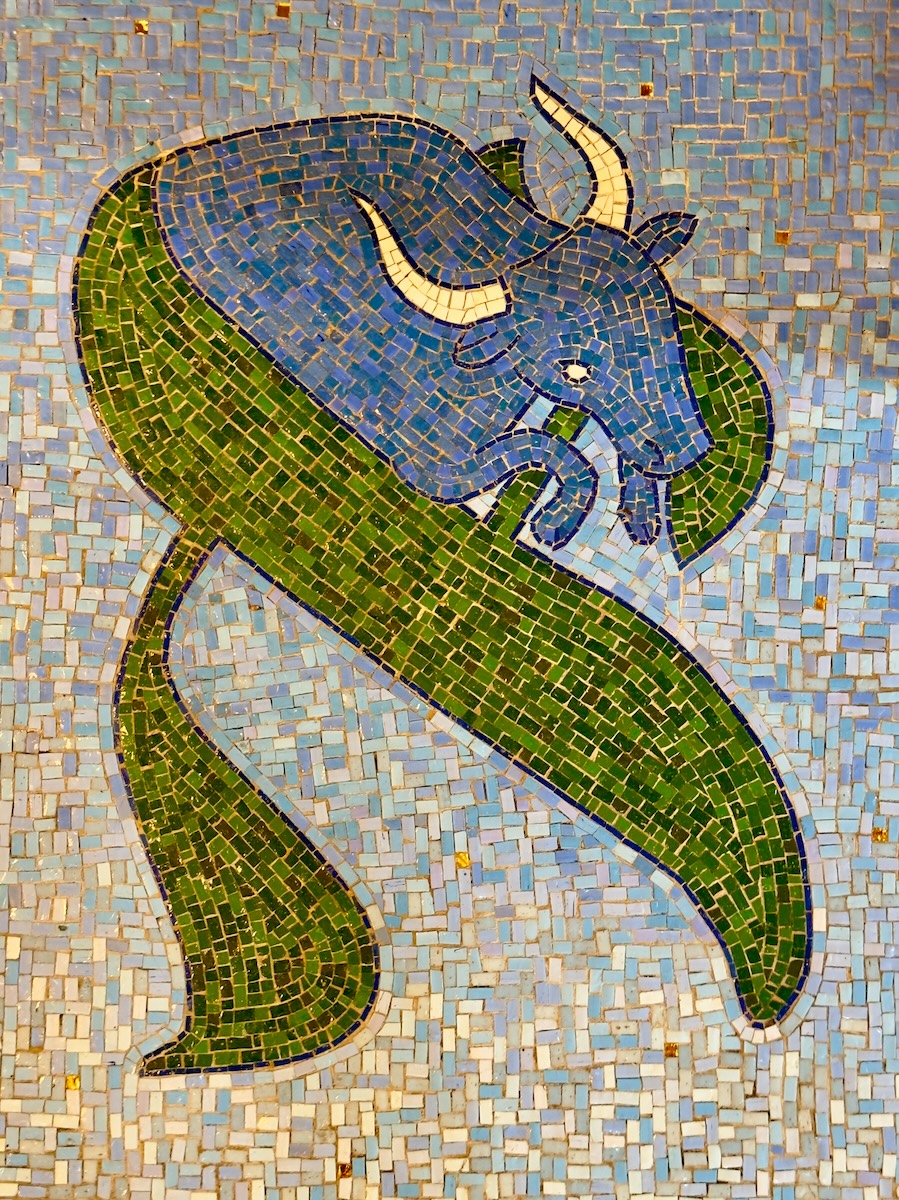
Heading out near the entrance, the floor itself quietly reinforced the idea that the synagogue had never simply frozen into a preserved 19th-century artifact. Embedded in the tiles were modern mosaic panels with Hebrew letters, zodiac imagery, and bursts of color that all looked both ancient and strangely contemporary. Our guide explained the meanings faster than my brain could realistically retain them, though I remember enough to know the designs connected Judaism to the natural world in ways that felt cosmic and deeply old.
What struck me more was the simple fact that the mosaics existed at all.
They were added during the synagogue's 2024 restoration by artist Mark Podwal, another reminder that the building is still adding layers rather than sealing itself off as a historical object. The Lower East Side outside has changed a million times since 1887. The synagogue changed, too. New populations moved into the neighborhood. Chinese storefronts replaced old Jewish businesses. Yiddish signs faded while newer languages appeared over them. Elevated highways arrived overhead. Graffiti crept across walls. Delivery carts rattled through streets that once held pushcarts.
But none of the newer layers erased the older ones. It’s not about disappearance in New York. It’s about accumulation.
We soon found ourselves back outside under that elevated roadway, and Chinatown swallowed us again. From the street, the synagogue immediately receded into the block instead of towering above it. Alice and I wandered off looking for coffee or pastries or another building I’d suddenly insist we needed to go into. I knew she’d say yes.





Write a comment