

We booked a tour of the United Nations mostly because it’s one of those New York things you have to do, right? At least once, anyway. Also, even though everyone on Planet Earth seems to have strong opinions about the UN, I realized that I could not confidently explain what actually happens inside the building on an average Tuesday afternoon. Committees, sure. Translation headsets, check. Some extremely tense meetings, maybe? Beyond that, things get real hazy real fast.
Getting into the UN begins long before you’re standing in front of the UN building. First, there's the online registration process, which felt like a virtual cavity search. Personal information, confirmations, identification requirements, warnings, and disclaimers. By the end of it, I half expected someone in dark glasses and a suit to walk through my front door to ask whether I’d ever attempted to destabilize a Latin American government.
Then, on the day of the tour, we discovered our online approval to visit meant pretty much squat. Instead, visitors are processed in a building at a safe remove from the UN by an efficient team of (very) young interns wearing expressions suggesting they’d already explained this 400 times just that morning.
Bags through scanners. Jackets off. IDs checked again. More lines. More badges. Humanity’s great experiment in international cooperation apparently still runs partly (mostly?) on laminated credentials and politely enforced queue management.
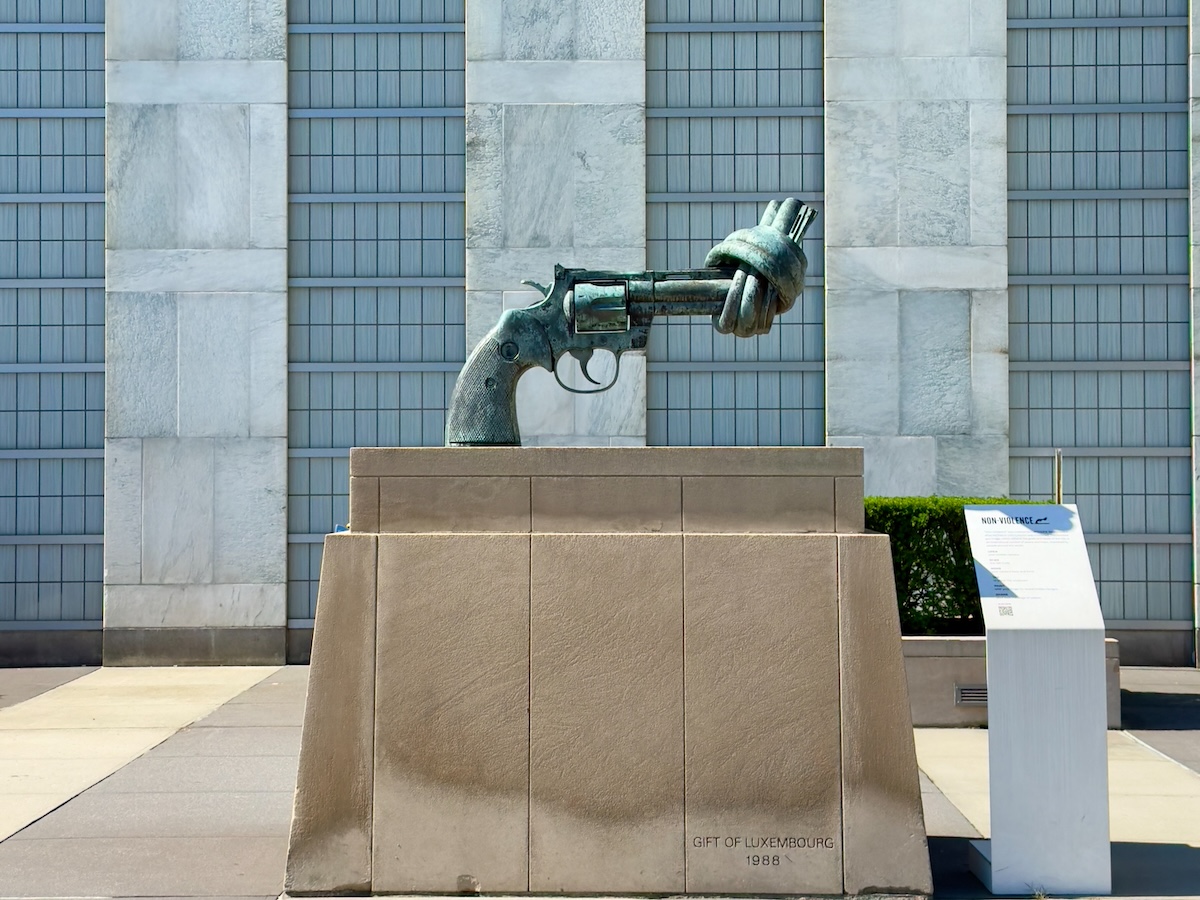
Once we finally received our lanyards and quasi-official ID badges, we were allowed to cross the street to the actual complex, where the UN immediately started presenting itself through sculpture. There was Non-Violence, the famous revolver sculpture with the barrel tied into a knot, standing out front, right where you expect it to be. Nearby sat the cracked bronze sphere sculpture that looks vaguely like a planet, vaguely like machinery, and vaguely like civilization having a difficult week. Around us rose all the clean glass and pale stone optimism of postwar modernism—all of it built during the early years of the atomic age on the assumption that enough international meetings might somehow prevent humanity from vaporizing itself.
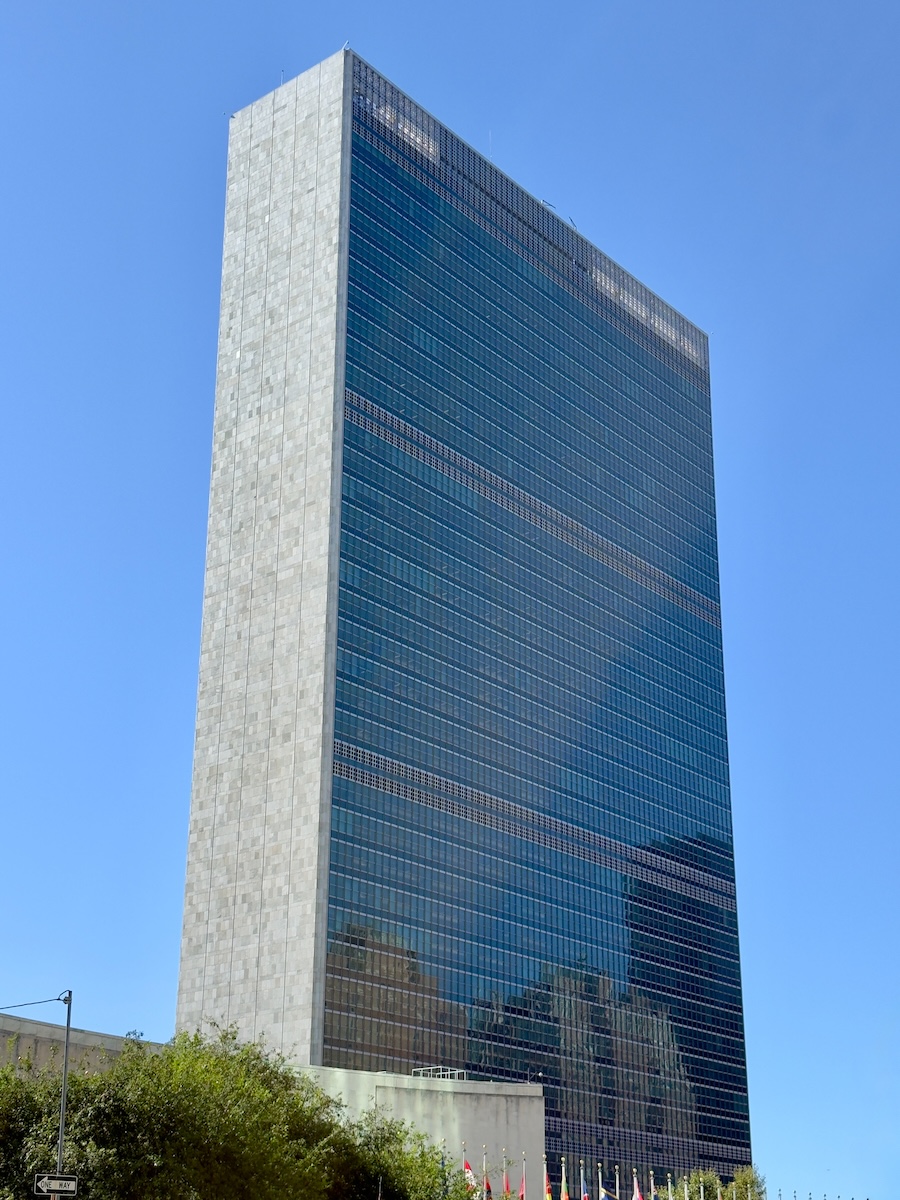
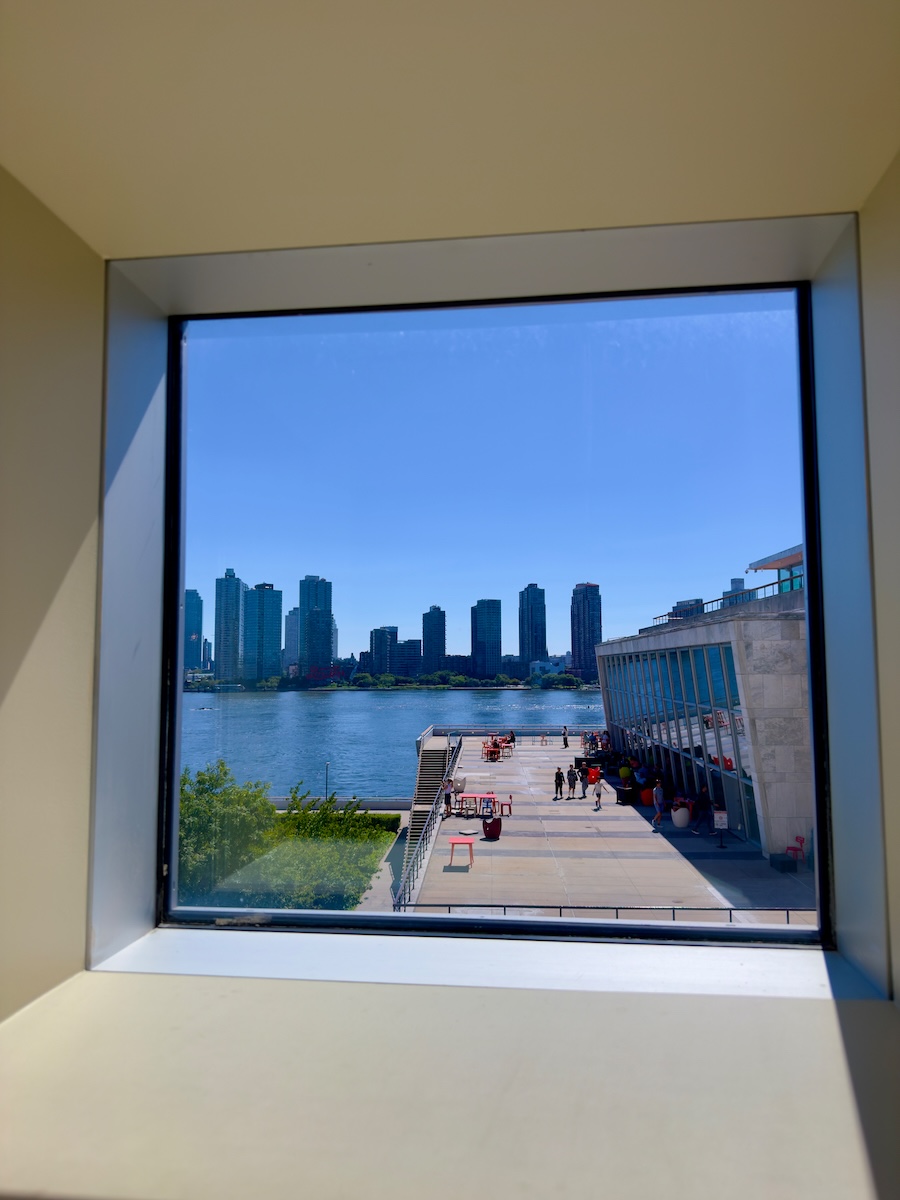
The headquarters complex has a strange physical presence in person. The Secretariat tower—that massive slab of glass perched at the edge of the East River—doesn't really feel American, despite sitting in the most American of cities. Neither do the rows of national flags rippling outside. The whole place feels slightly detached from the city around it, like a self-contained diplomatic habitat operating under its own rules and rhythms. Which, I guess, it is.
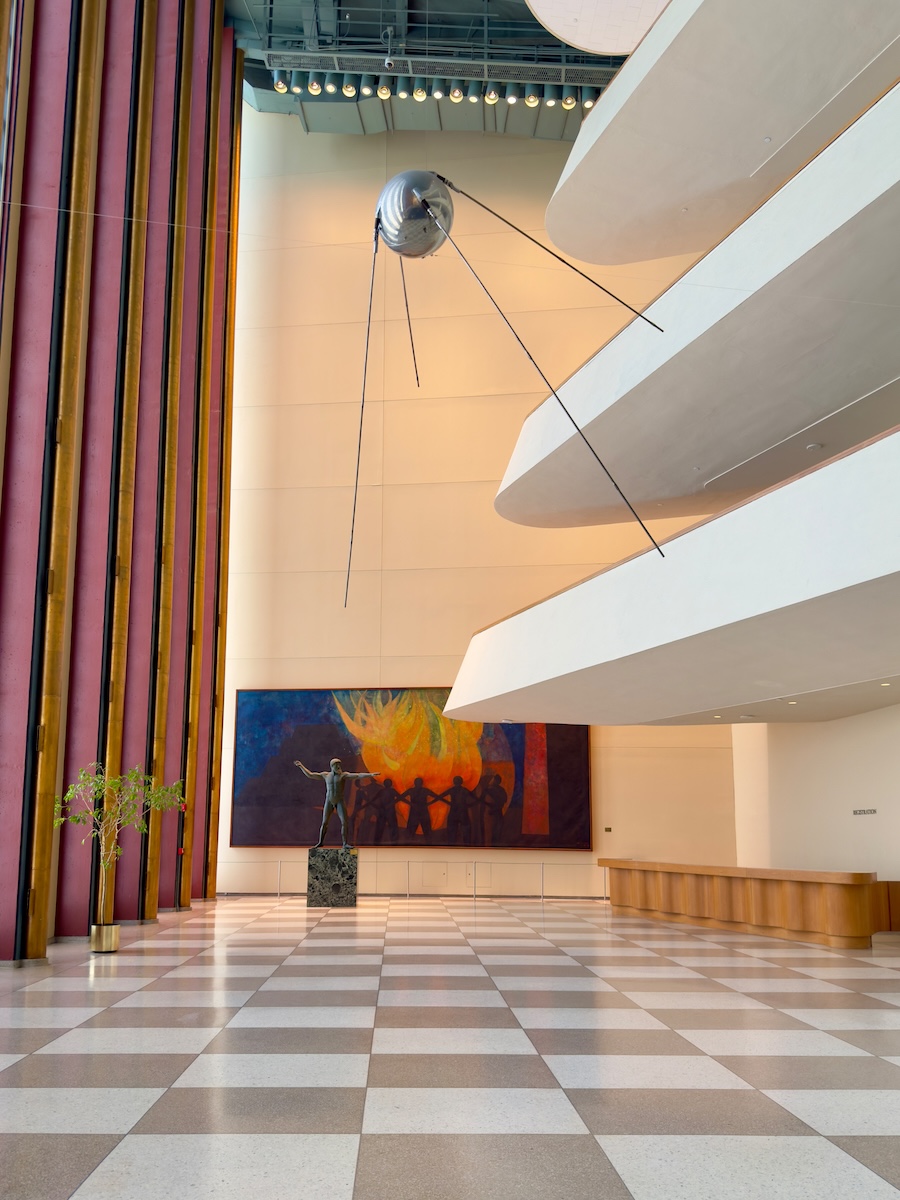
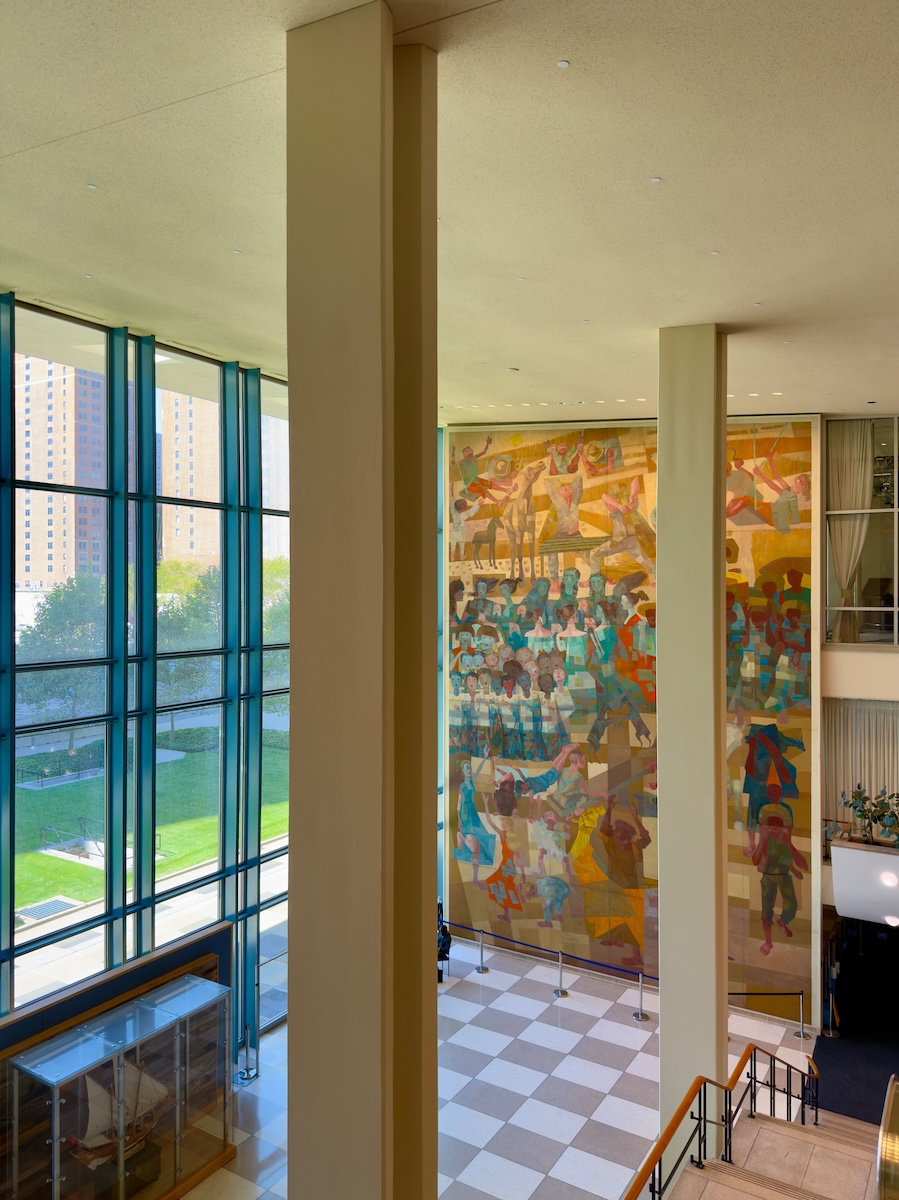
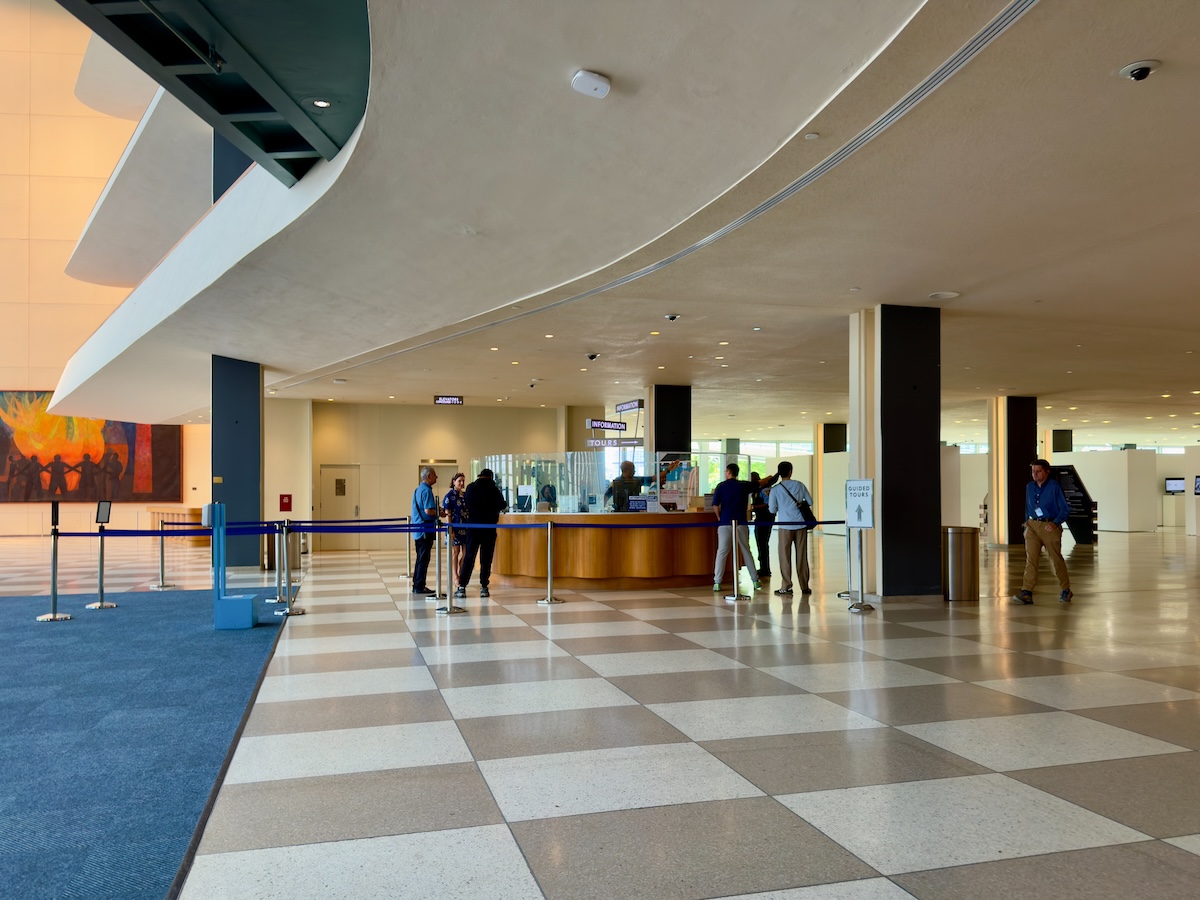
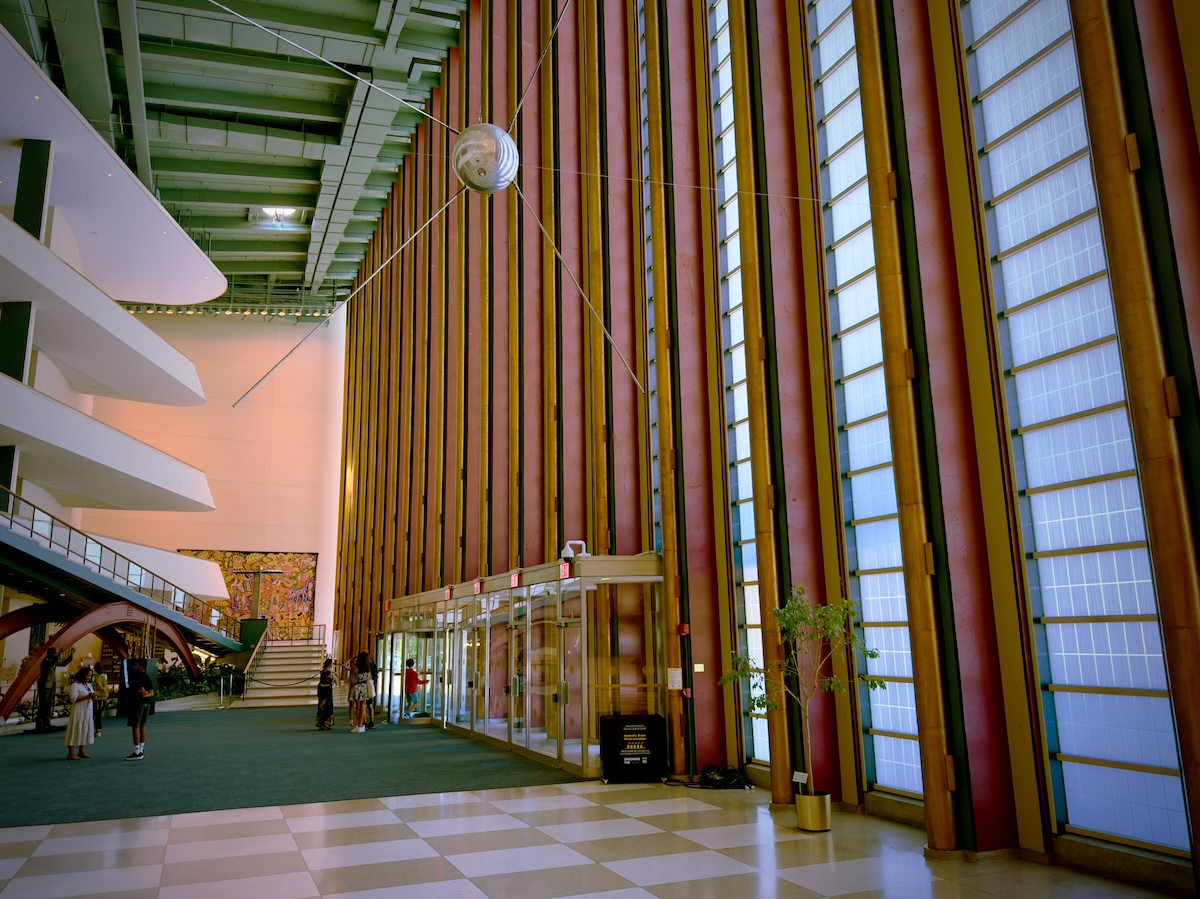
The lobby looked like someone had built a Platonic ideal of the 1960s—soaring ceilings, polished stone, enormous walls filled with murals, tapestries, and symbolic art steering humanity toward peace, dignity, and cooperation. Or at a minimum, a slightly calmer century. Sunlight poured through huge windows onto clusters of tourists standing around with the exact same expression we apparently had—what do we do now?
There were signs. Technically. There are always signs in places like this. But they appeared to have been designed by someone committed to internationally indecipherable pictographs and the idea that people only build character through independent discovery. Small groups drifted tentatively across the lobby, checking their tickets and looking around for clues. One couple asked us if we knew where the English-language tour assembled. We did not. A few minutes later, we found ourselves moving together as a slightly larger unit of confused international tourists roaming through one of the world's most important diplomatic institutions, trying to figure out where to go next.
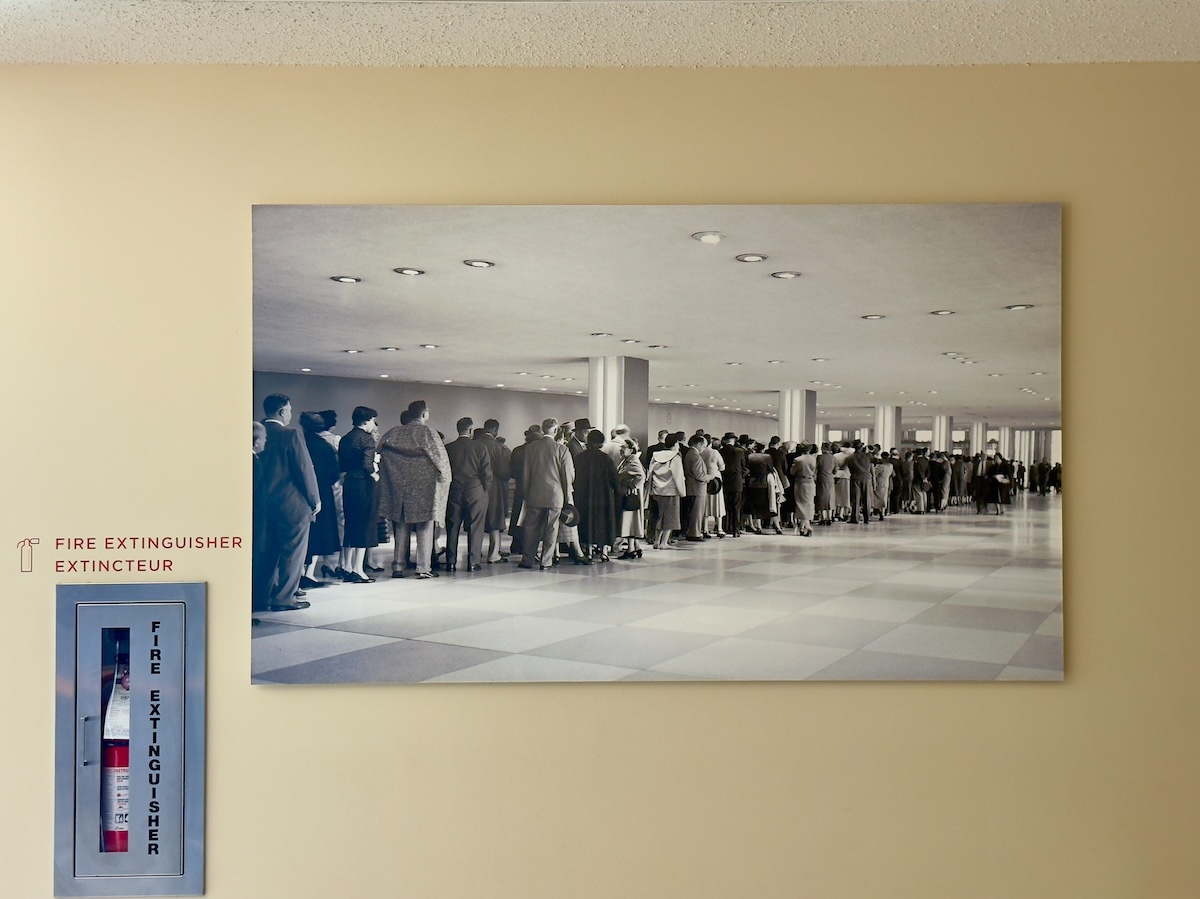
At one point, we passed a large black-and-white photograph hanging on the wall showing crowds of people standing in an impossibly long line somewhere inside the UN decades earlier. Men in hats, women in coats and sensible shoes, everybody waiting patiently beneath fluorescent lighting for reasons that were no doubt extremely important at the time. The scene looked identical to the one we found ourselves in at that moment, just with fewer snappy fedoras and less urgency.
Eventually, a staff member on her way somewhere more important took pity on our wandering amoeba of uncertainty and pointed us toward the correct seating area. A few minutes later, our guide arrived, introduced himself, and led our group toward the escalators along with visitors from at least a dozen different countries. He was Ukrainian, though he mentioned it in passing and never once turned the tour into a commentary on the war back home. The fact that he was showing us through the day-to-day workings of international diplomacy without once making himself the story said a lot about who still believes these institutions matter.
The escalators carried us up into the working spaces of the UN, where every wall, chamber, and gift from a member nation seemed loaded with symbolic intent. Nothing was left to chance up there—not the murals, not the wood paneling, not the placement of art, not even the shape of the rooms themselves. The whole place is a physical argument for international cooperation, presented through mid-century architecture and symbolic imagery.
The meeting chambers are intensely quiet in person. Not silent—there were tour groups shuffling through, guides talking, and equipment humming softly—but quiet in temperament. These are the rooms where countries argue about sanctions, development, refugees, borders—the things that can occasionally determine whether parts of the planet remain stable or spiral out of control. Yet nothing about the chambers themselves feels combative.
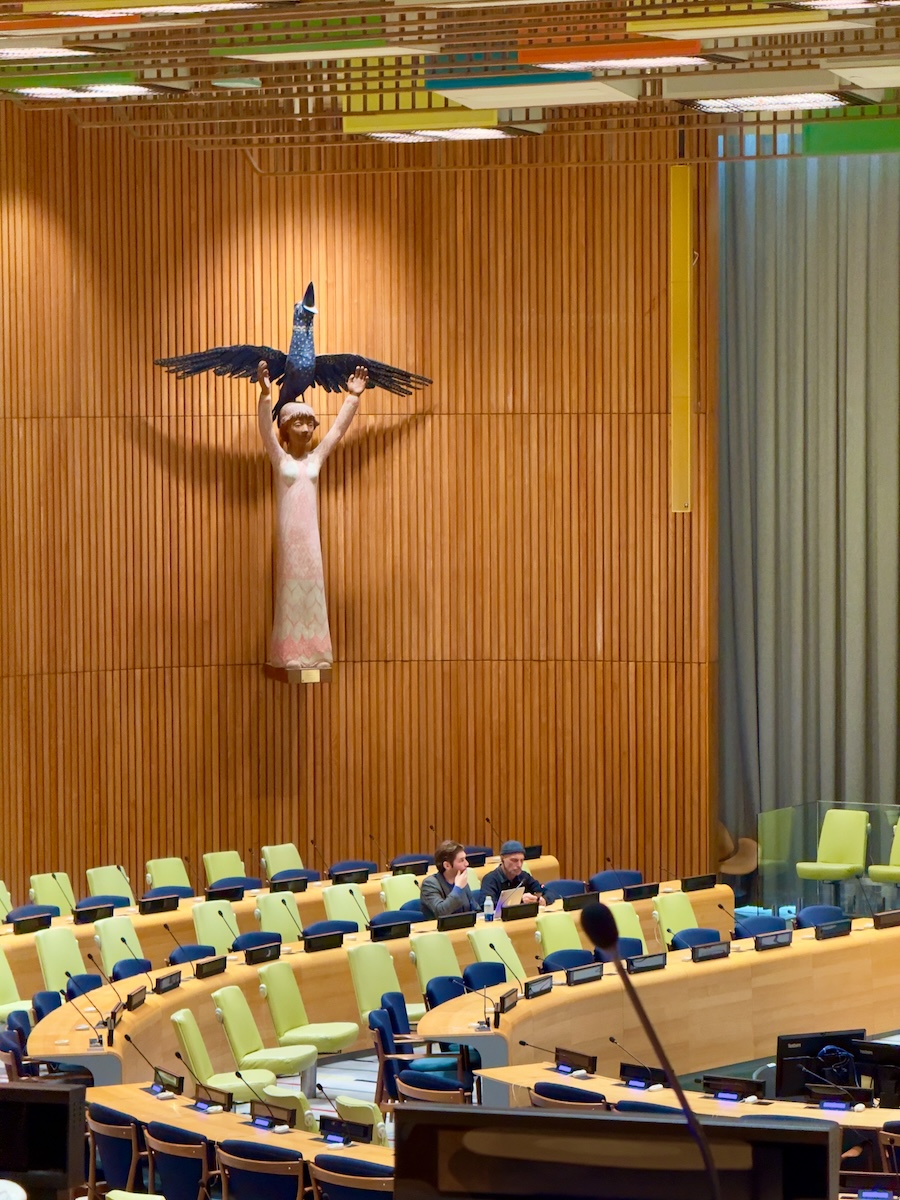
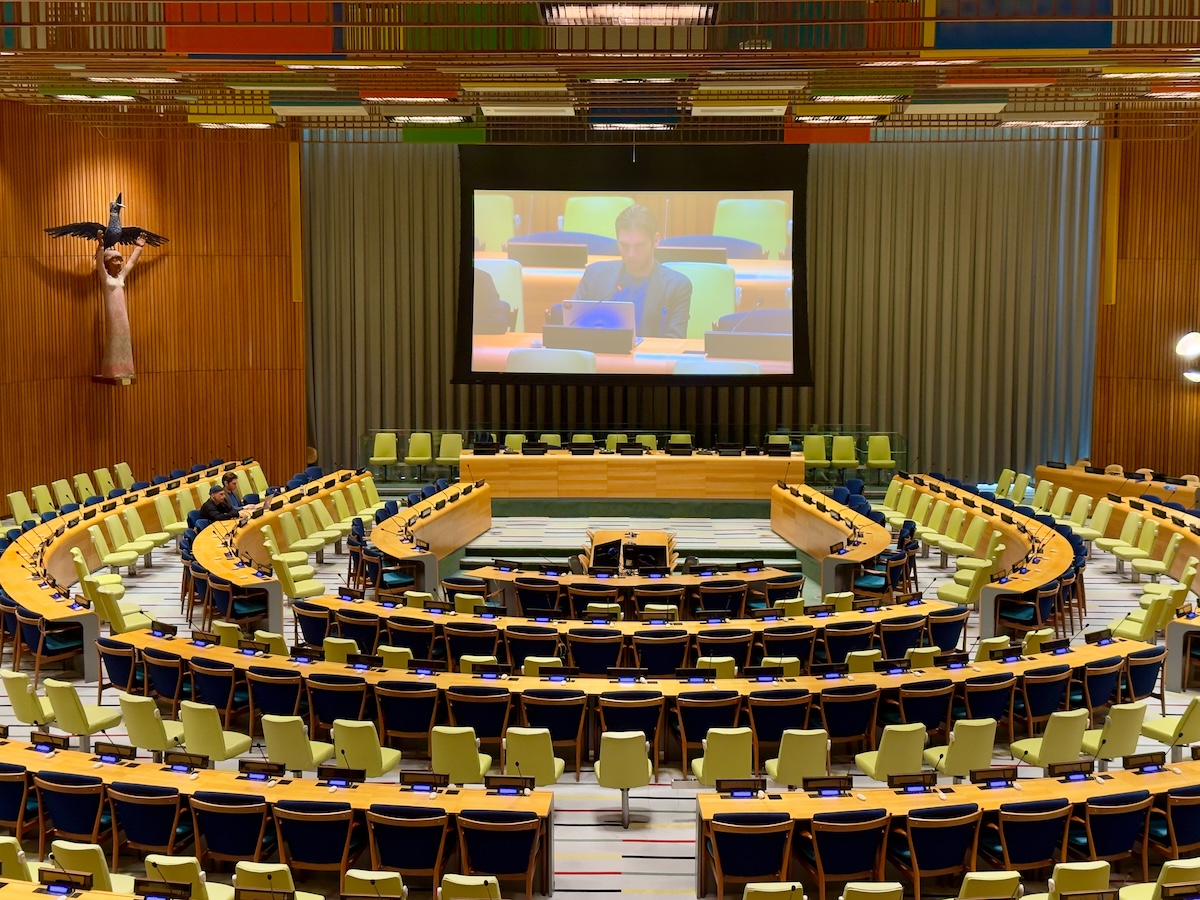
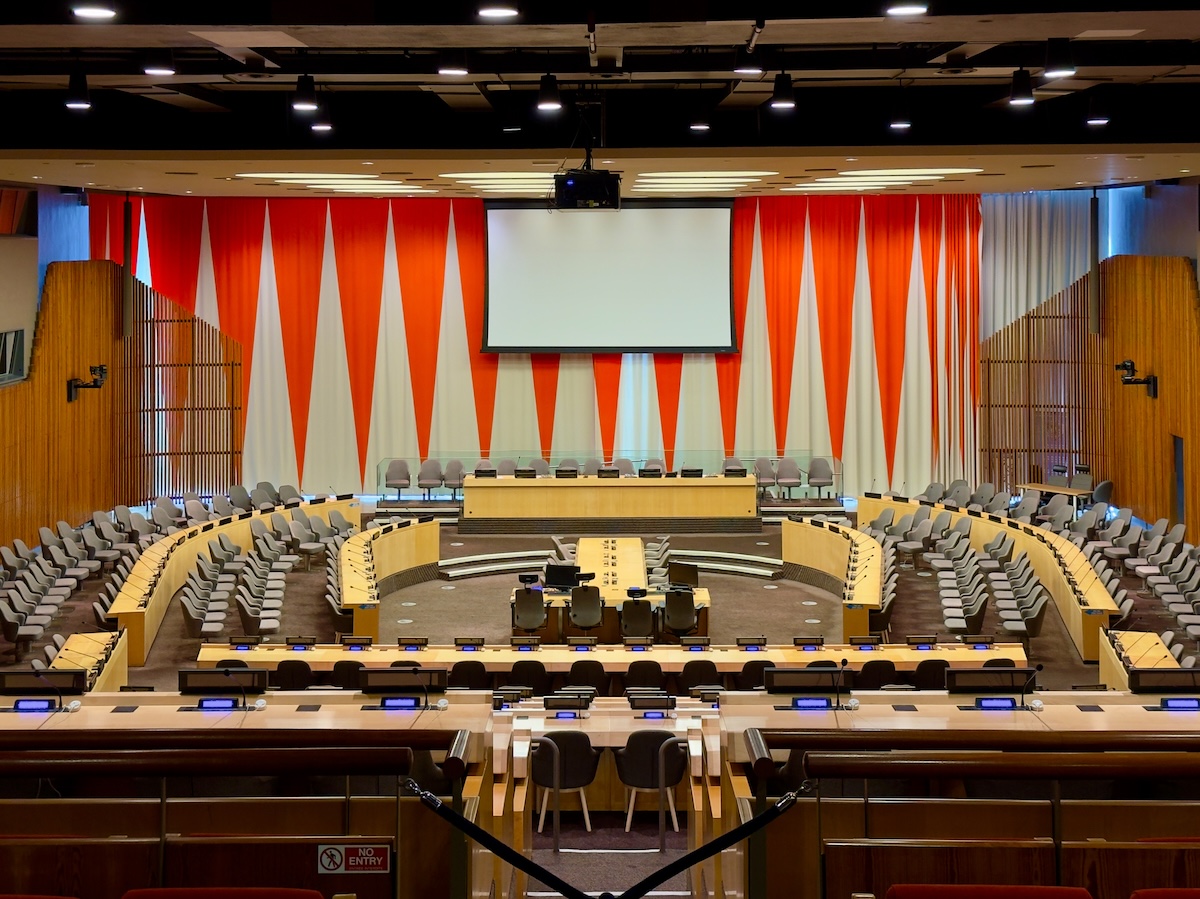
We never actually got to see the Security Council chamber because diplomats were using it that day. It was a disappointment, sure, but also somehow reassuring that the place still functions as more than a sightseeing attraction. Instead, we toured the Trusteeship Council Chamber and the Economic and Social Council Chamber. Interesting story—the Trusteeship Council was originally created in the UN’s original Charter to oversee the transition of colonial territories toward self-government and independence after World War II. According to the UN, that mission is now officially complete with the independence of Palau in 1994. So the chamber technically no longer has a formal purpose and mostly hosts other meetings these days, meaning we were effectively standing in a room built for a world-historical assignment that’s been achieved.
The chambers looked less like global power command centers than unusually elegant conference rooms designed by countries with strong opinions about Scandinavian design and the emotional benefits of curved wood paneling. In fact, everything in the rooms seems engineered to take the edge off debate, with semicircular seating and soft lighting. Translation booths perch overhead where interpreters quietly convert speeches into six official UN languages in real time. There are microphones and nameplates for every delegate. Even the architecture seems organized around the assumption that people will keep talking no matter how badly they disagree.
I expected the UN to feel more imperial somehow. More severe and ceremonial. Instead, most of the working spaces felt procedural. You could imagine rumpled diplomats drinking bad coffee at 11:30 p.m. while arguing over whether a resolution should “condemn,” “oppose,” or merely “express concern.”
Many of the chambers were furnished by member nations during the UN's construction, but the Nordic countries ultimately shaped the lion’s share of the building’s visual identity. Scandinavian modernism—with its light wood, restrained lines, careful acoustics, and almost therapeutic commitment to calm—fit perfectly with the UN’s postwar faith in rationalism and international cooperation.
Of course, the institution itself is a lot messier than the optimistic architecture and design suggest. The deeper we moved into the tour, the more it became clear that the UN was built around a compromise that still defines it nearly 80 years later.
Officially, nations gather here as equals. In practice, some countries get considerably more equality than others, nowhere more obviously than in the Security Council and its five permanent members and One Veto to Kill Them All system. The logic behind that is understandable even if the results are often maddening. After World War II, the major powers were never going to join an international organization capable of overruling them outright, so the institution was built around a very human negotiation. “We should create a system to get countries to cooperate and prevent global catastrophe,” “Agreed. But we’ll still be in charge, right?”
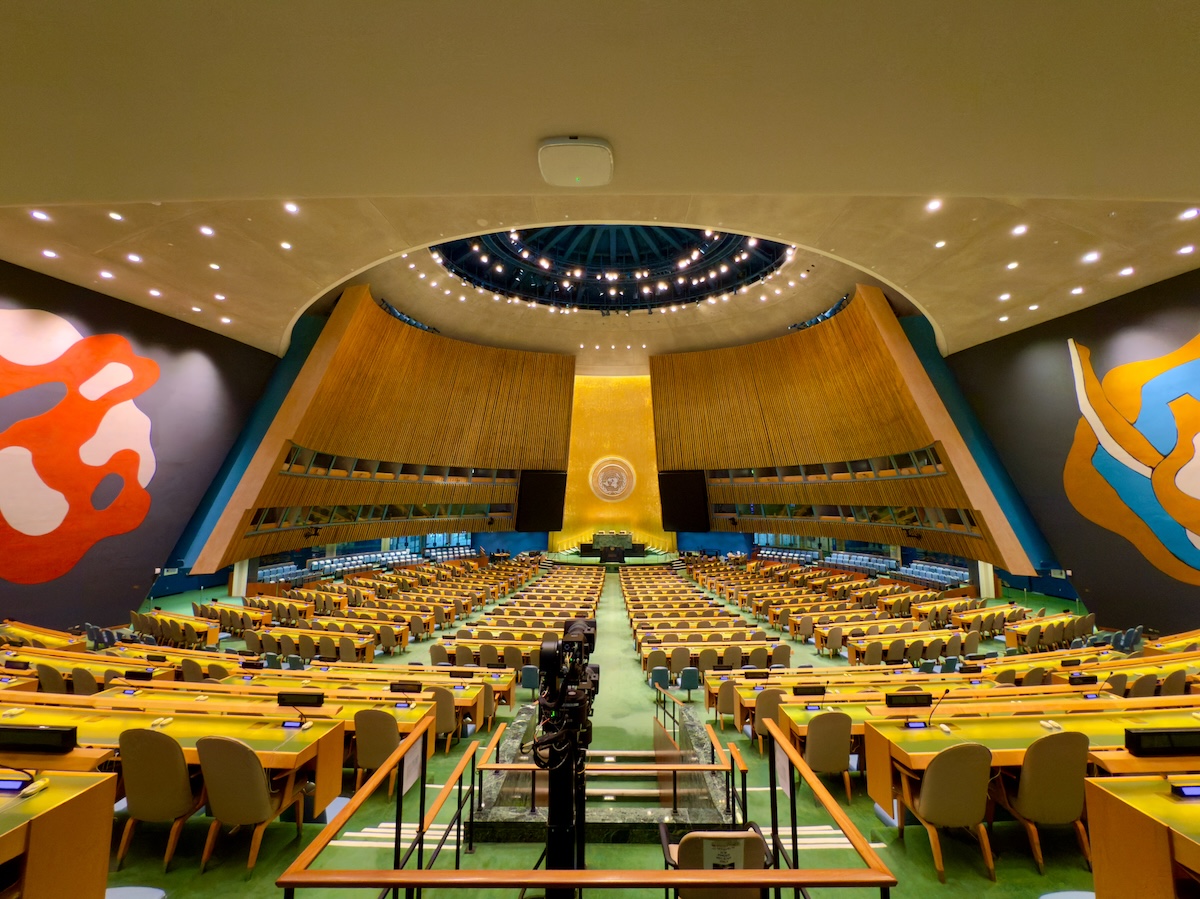
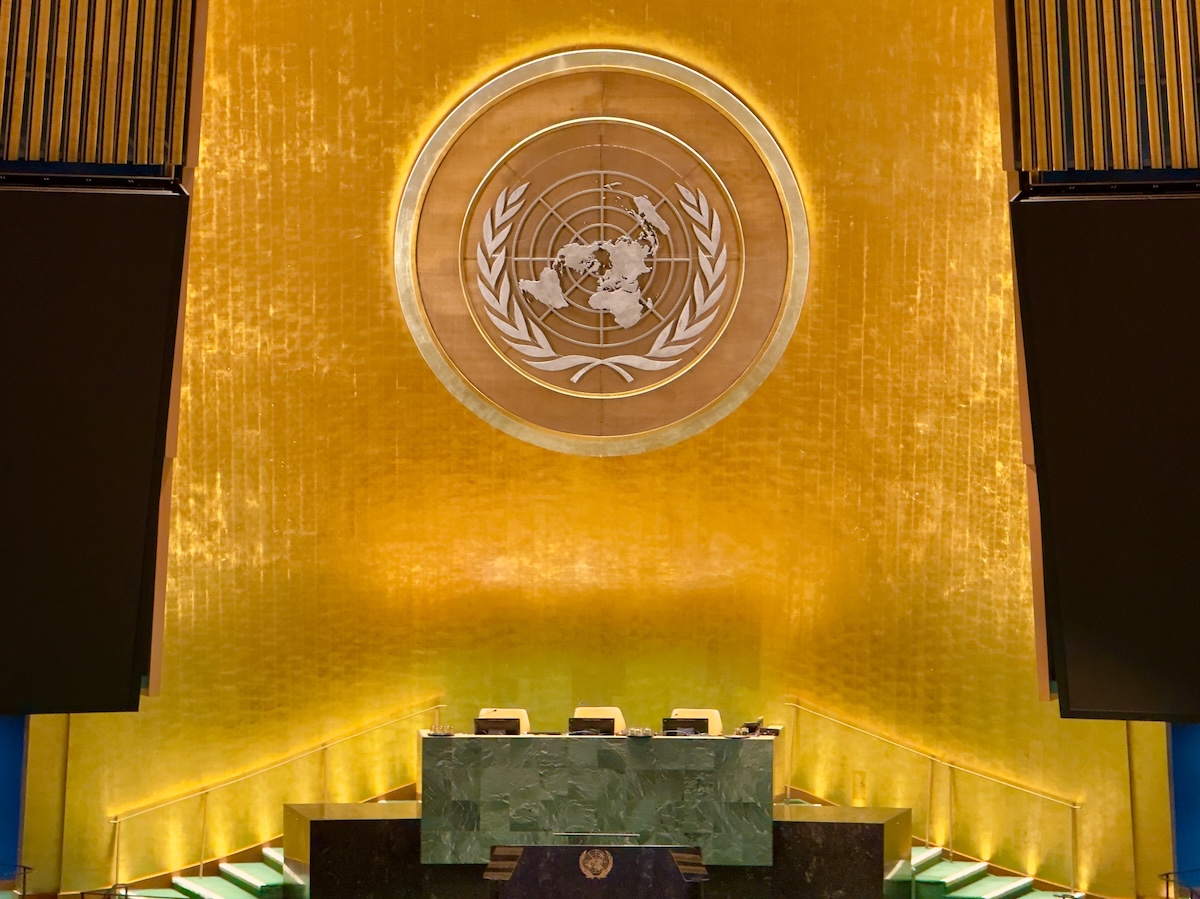
The General Assembly Hall sits at the center of the UN, like the organization's main stage set. The gold wall, the gigantic UN emblem, the curved ceiling, the rows and rows of desks cascading outward under soft lighting and giant abstract murals—it’s one of those spaces nearly everyone recognizes immediately despite never having actually been there.
Despite its size and fame, it still felt strangely intimate in person—less cinematic and more immediate. Even when it was completely empty. Without an assembly in session, the chamber seemed strangely haunted by its own history. You start imagining the seats filled and the speeches, walkouts, applause, and grandstanding. World leaders trying to sound historic, and smaller countries trying to be heard at all.
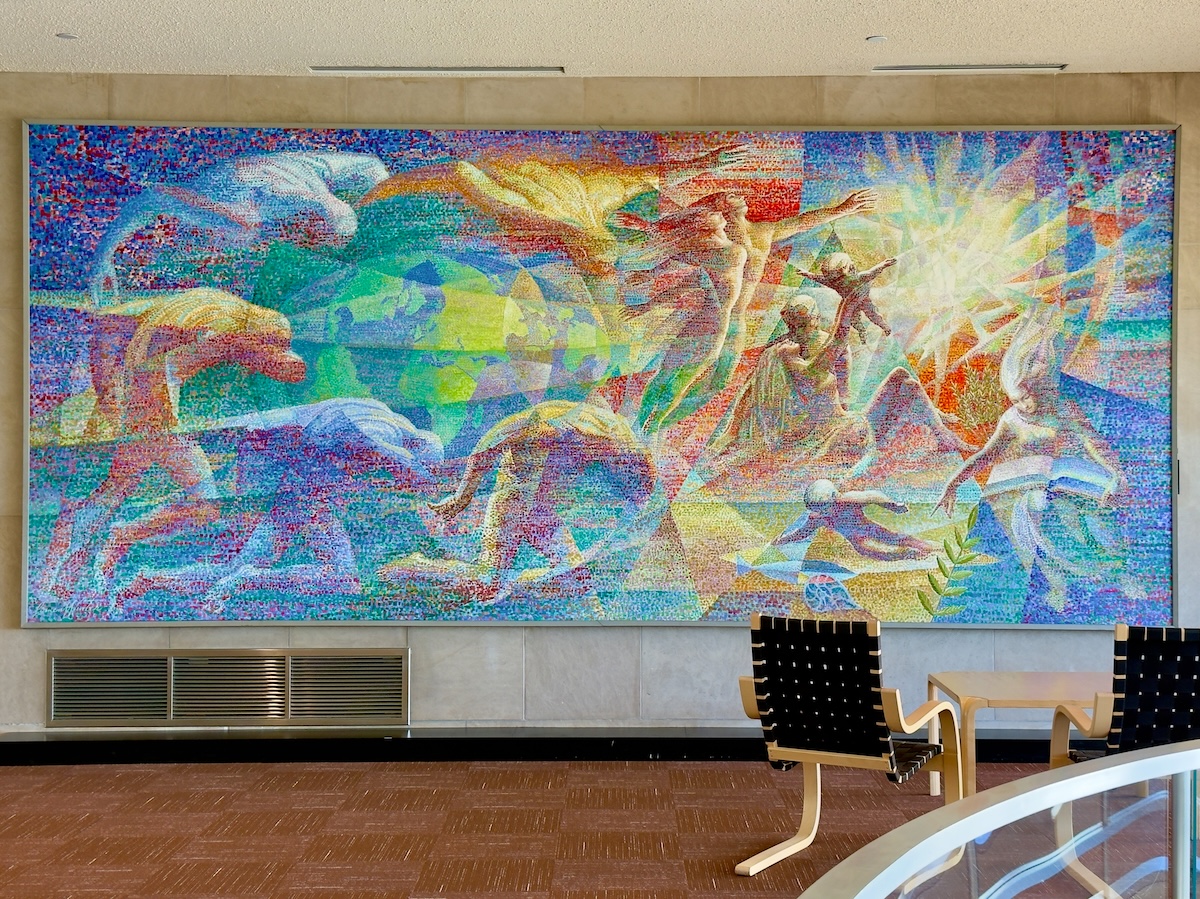
Mostly, though, what stays with you is the sheer stubbornness of the whole enterprise. Nearly every country on Earth gathered into one room under an enormous gold emblem and two deeply confusing murals trying, however imperfectly, to coexist through procedure instead of force. Those murals, which flank the speaker’s podium, are an abstract attempt to convey that message.
They’re meant to symbolize humanity moving from war toward peace and collective progress, which is probably the most UN sentence imaginable. They also serve a practical purpose in softening the scale of the enormous Hall. Without them, it could easily become cold or authoritarian. The abstract forms break up the space and keep the room feeling more human and less like a planetary courtroom.
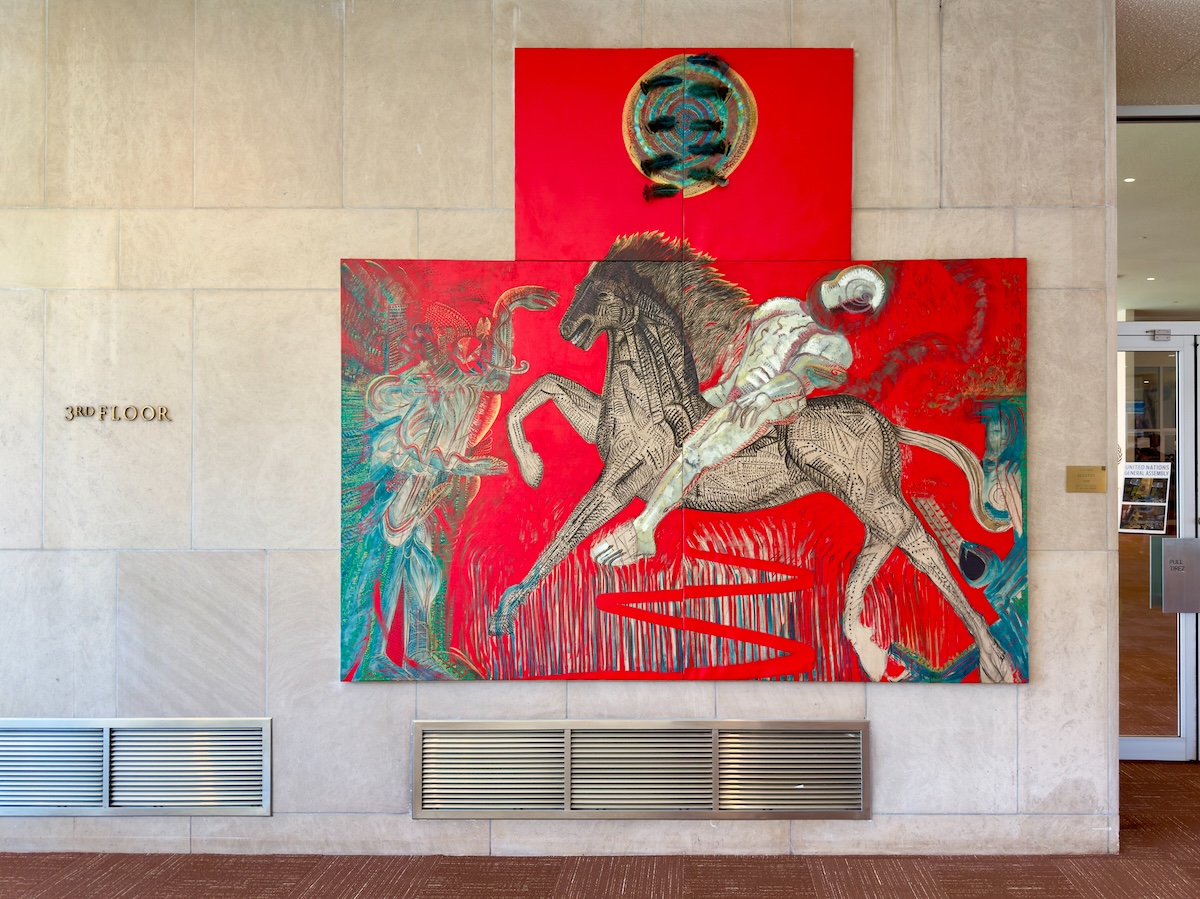
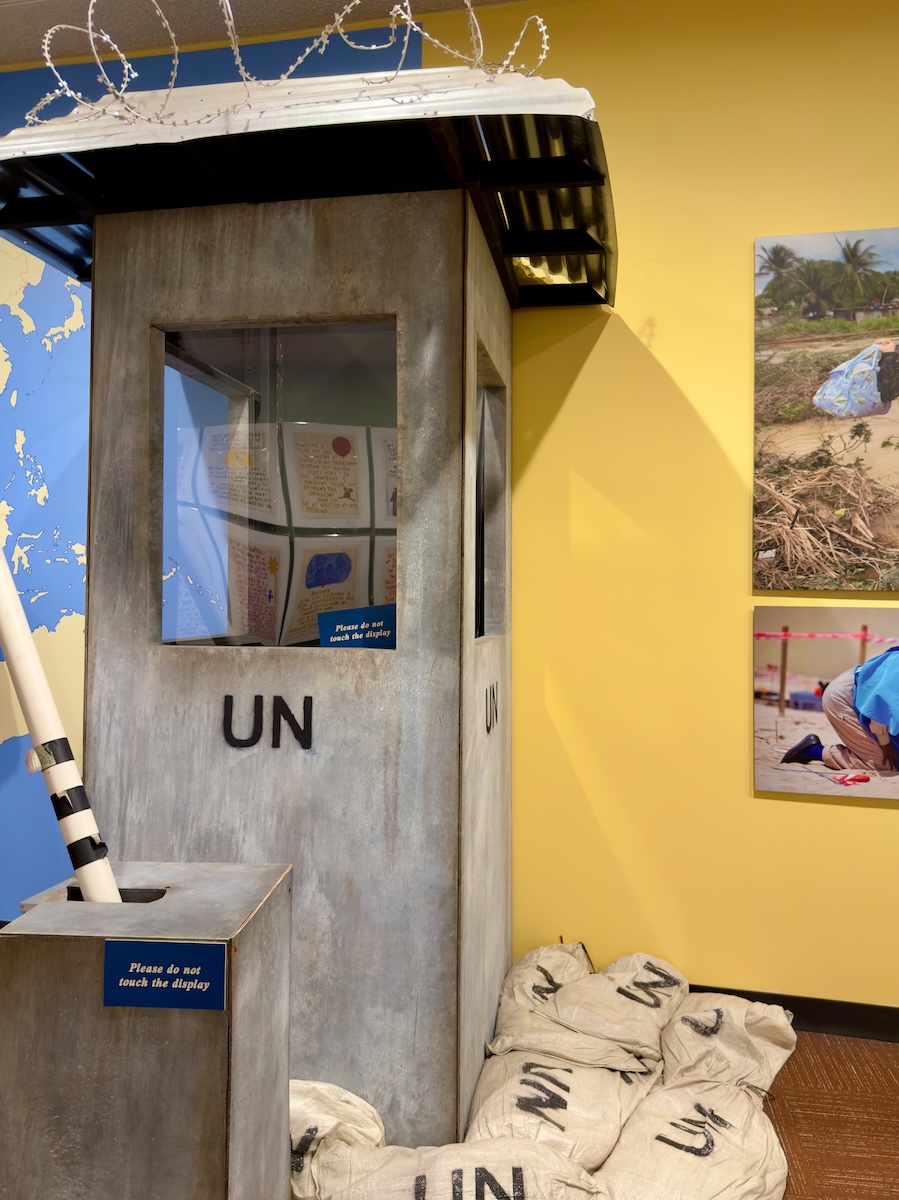
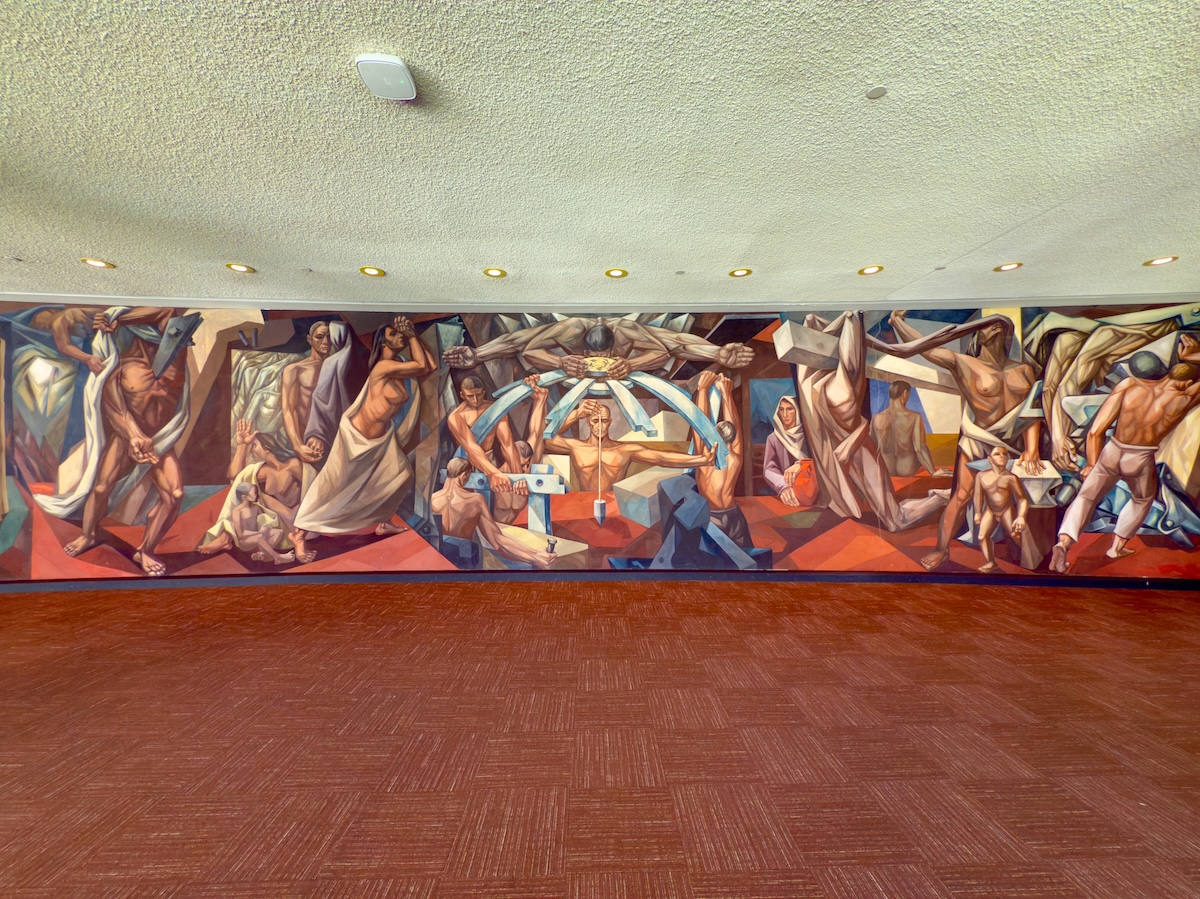
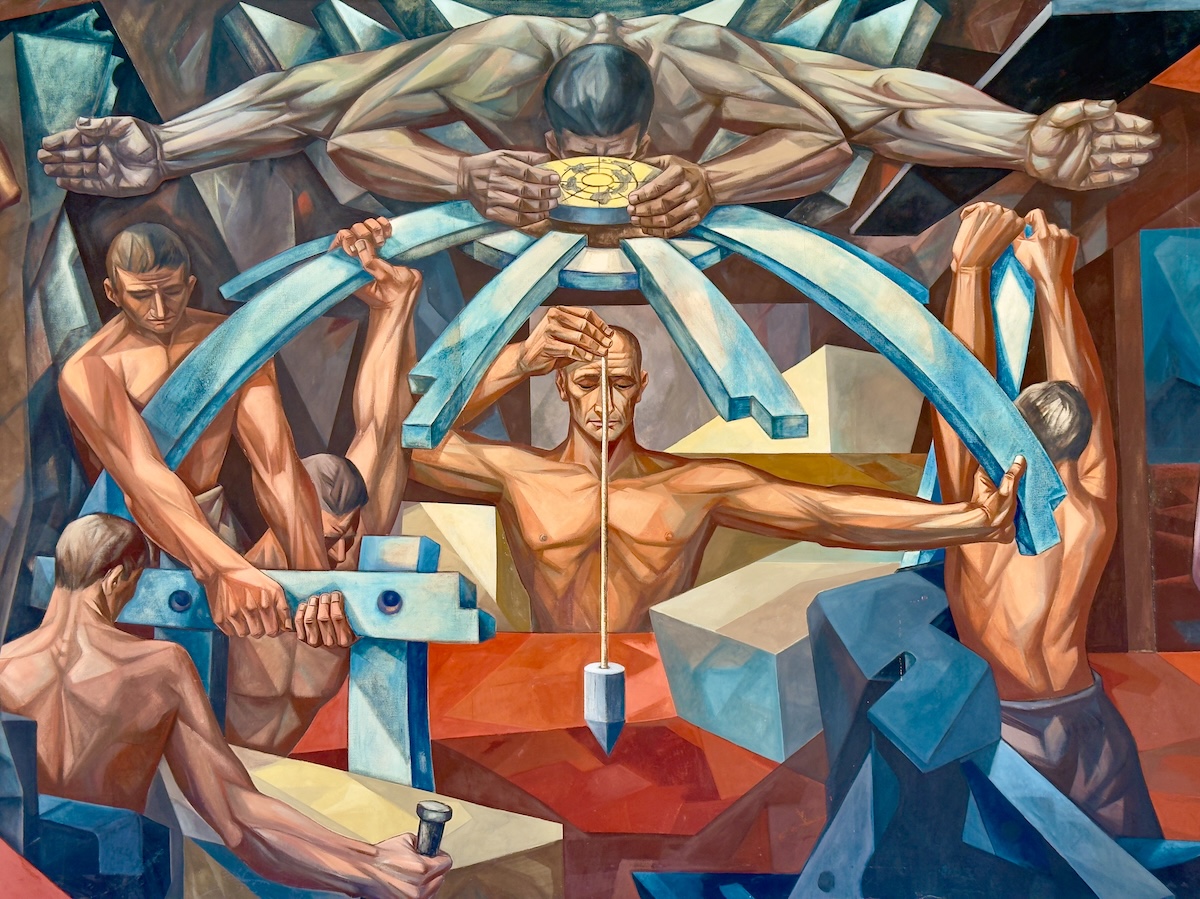
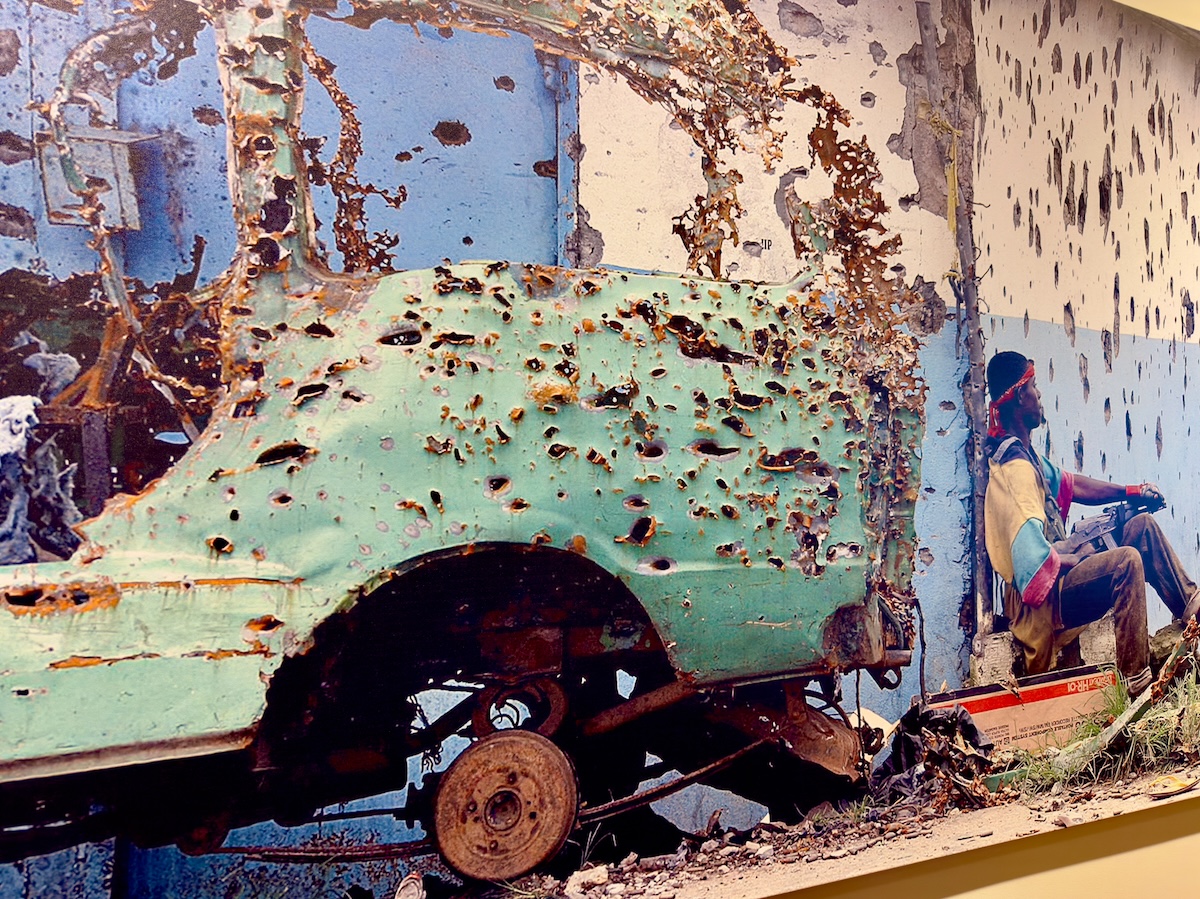
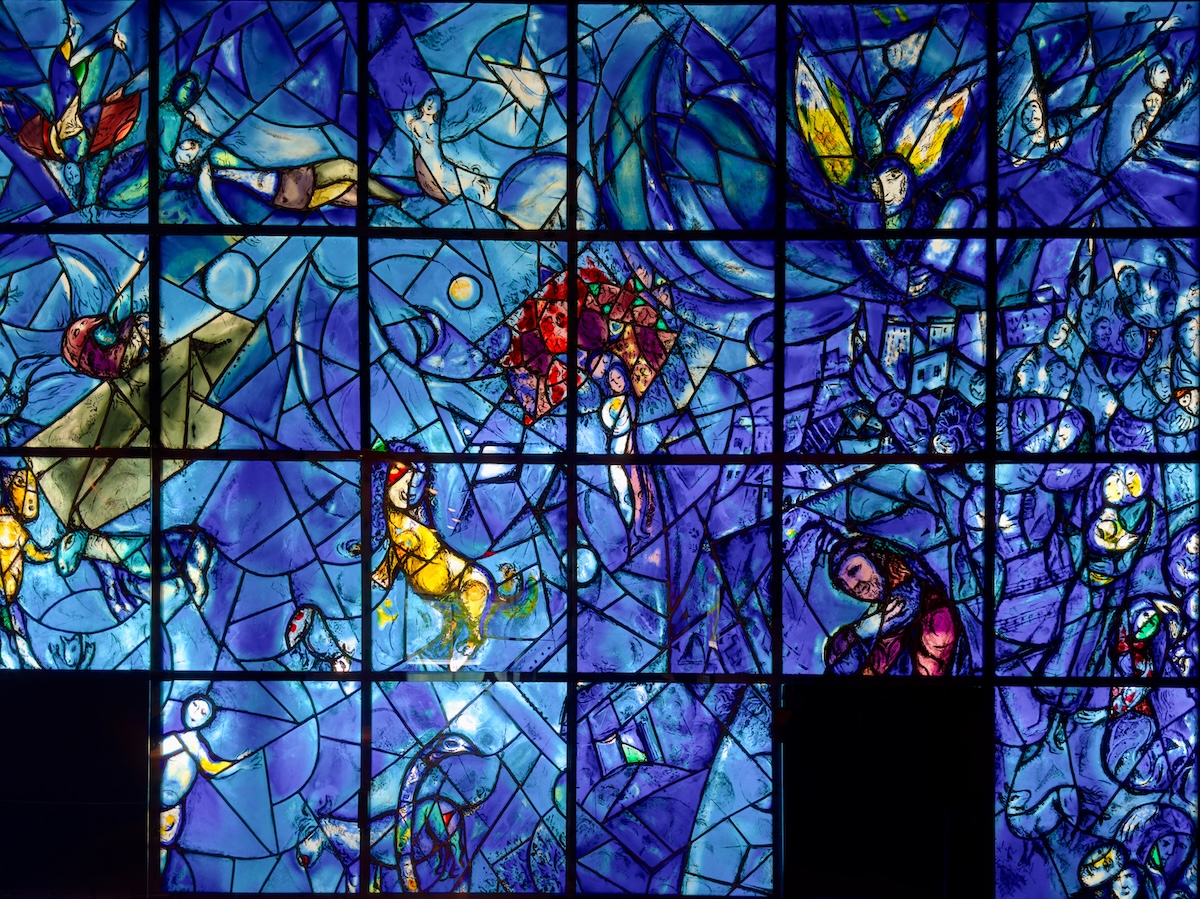
The entire complex is engaged in the same project. The building is absolutely saturated with symbolic art trying to explain humanity back to itself through mosaics, tapestries, sculptures, stained glass, and overwhelming visual metaphors for peace, suffering, cooperation, science, labor, war, survival, and hope. Sometimes the effect is moving, other times it feels like you’ve wandered into the world’s most ambitious humanities symposium.
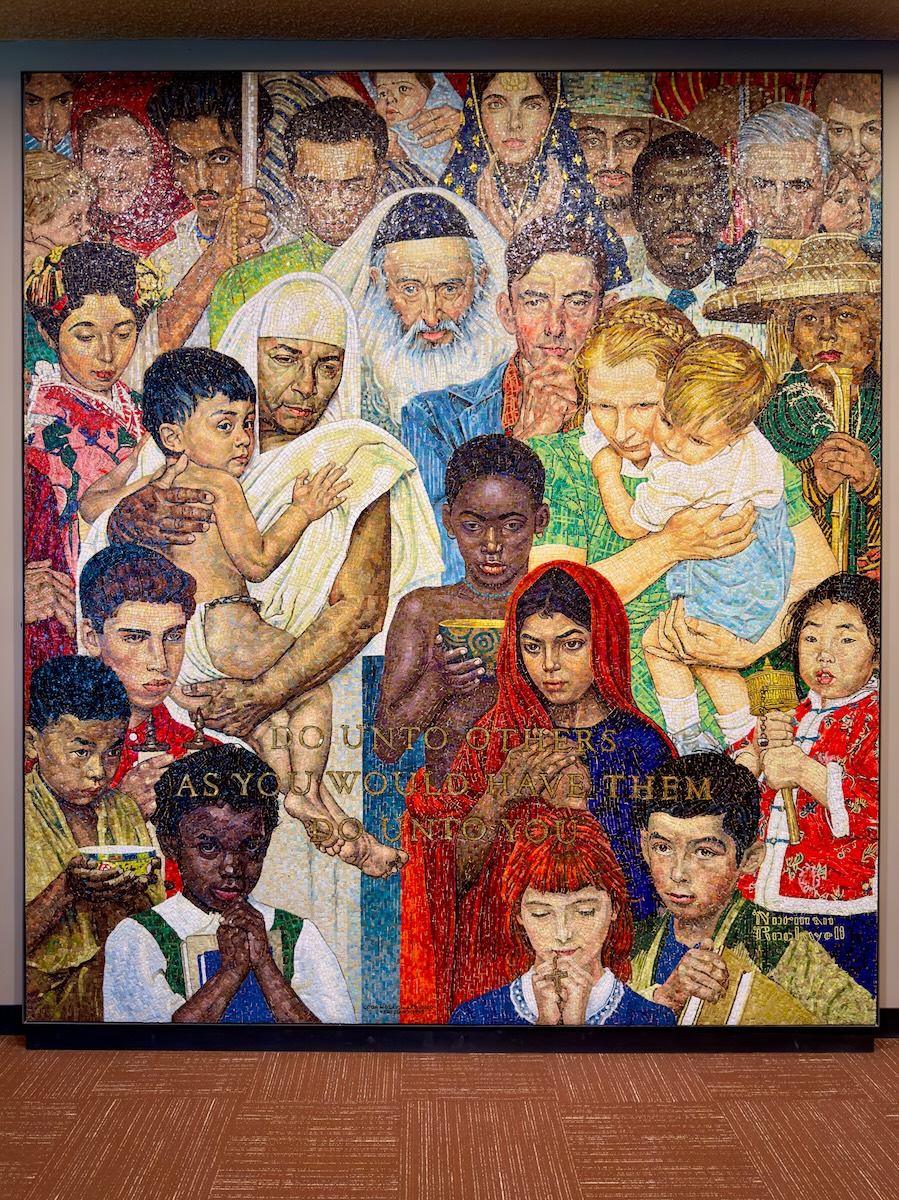
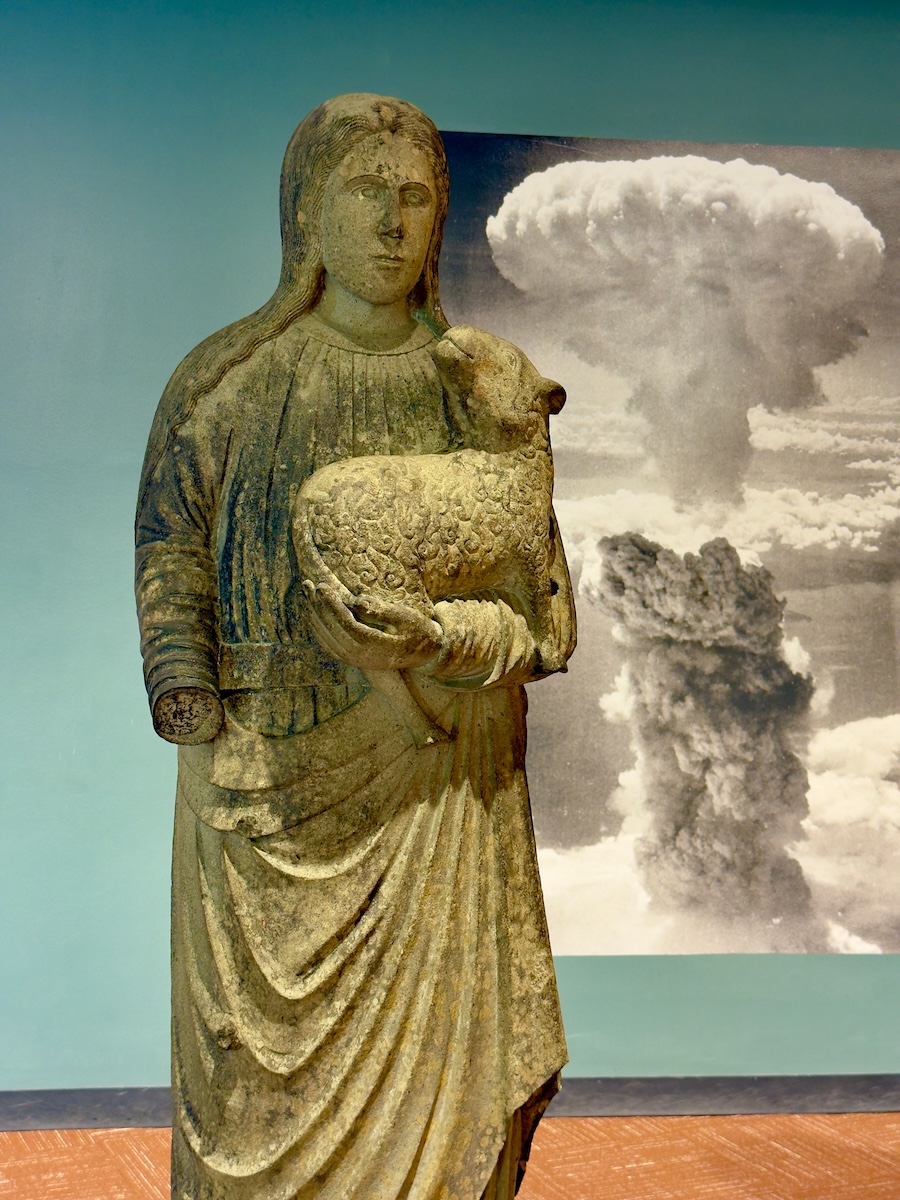
There’s very little subtlety in any of it, though some of the ‘60s abstractions can make it harder to find the symbolism. There are mushroom clouds, antiwar sculptures, conceptual peace imagery, and enormous murals gifted by countries eager to project idealized versions of themselves onto the international stage—less “This is who we are,” more “This is who we’d like you to think we are.” An oversized Norman Rockwell mosaic of the Golden Rule donated by the U.S. is mercifully literal. Even the famous knotted revolver sculpture outside eventually stops feeling like tourist-photo bait and starts looking like part of a much larger institutional obsession with trying to convince humanity not to kill itself.
For all the giant symbolism, soaring rhetoric, and choreographed diplomacy, the UN runs on process. You see it in the security checkpoints, seating charts, and endless meetings—humanity trying to organize itself peacefully through systems, paperwork, and conversation instead of force.
And yes, sometimes the whole thing borders on absurd, with the lines, the bureaucracy, and the almost aggressive optimism. But walking through the building made it all harder to dismiss than I expected. The institution is obviously flawed. Power is uneven, and politics infect everything. But there’s something moving about seeing nearly every country on Earth gathered into one building, built entirely around the assumption that people should keep talking to one another, no matter how badly they disagree.








Write a comment