

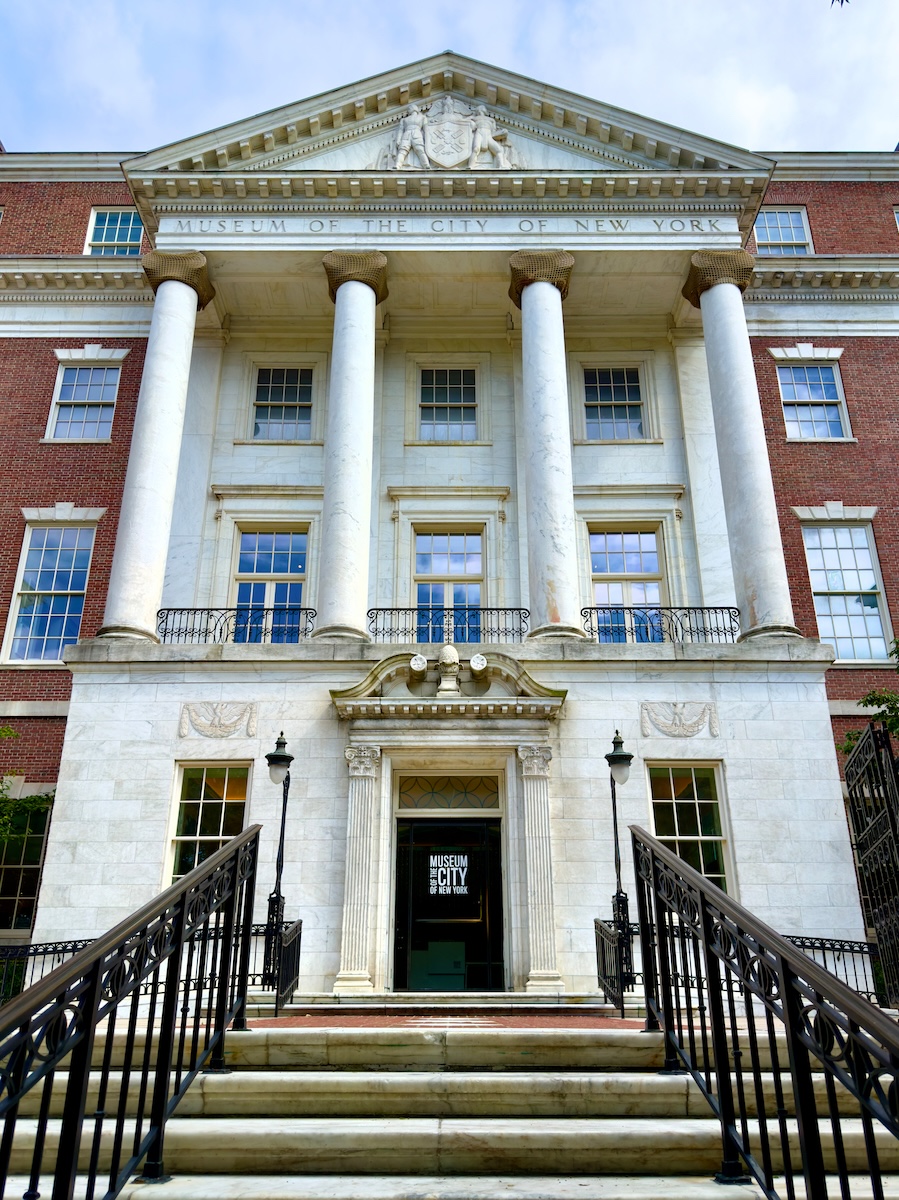
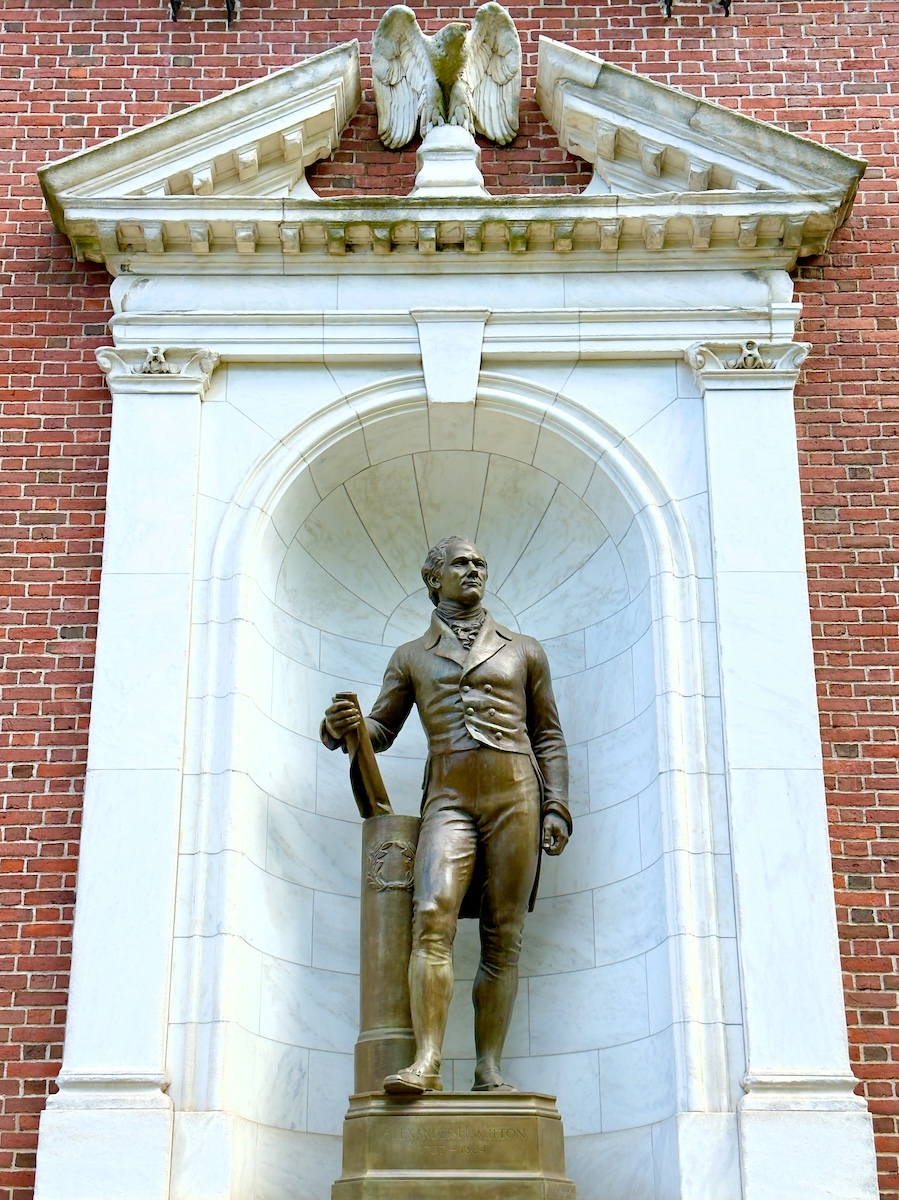
The Museum of the City of New York sits confidently on Fifth Avenue with Georgian columns, broad steps, and its name carved in stone above the door. The façade even comes complete with a bronze statue of Alexander Hamilton by Adolph Alexander Weinman. The whole thing projects the general air of a place that believes order is possible, with enough effort and care.
That may be true of other museums. Museums that maybe didn’t agree to such a broad brief. But this one has taken on the job of representing New York City. All of it, apparently. The Dutch colony, the harbor, immigration, money, housing, parks, protests, skyscrapers, subways, nightlife, public health, crime, reform, fashion, music, movies, and the civic miracle by which 8 million people manage to live on top of one another while dodging delivery bikes, dog leashes, and people stopping dead in the middle of the sidewalk to check a text. That is a lot to ask from one museum, even before you add school groups, rotating exhibitions, and the eternal problem of how to make municipal history look, well, interesting.
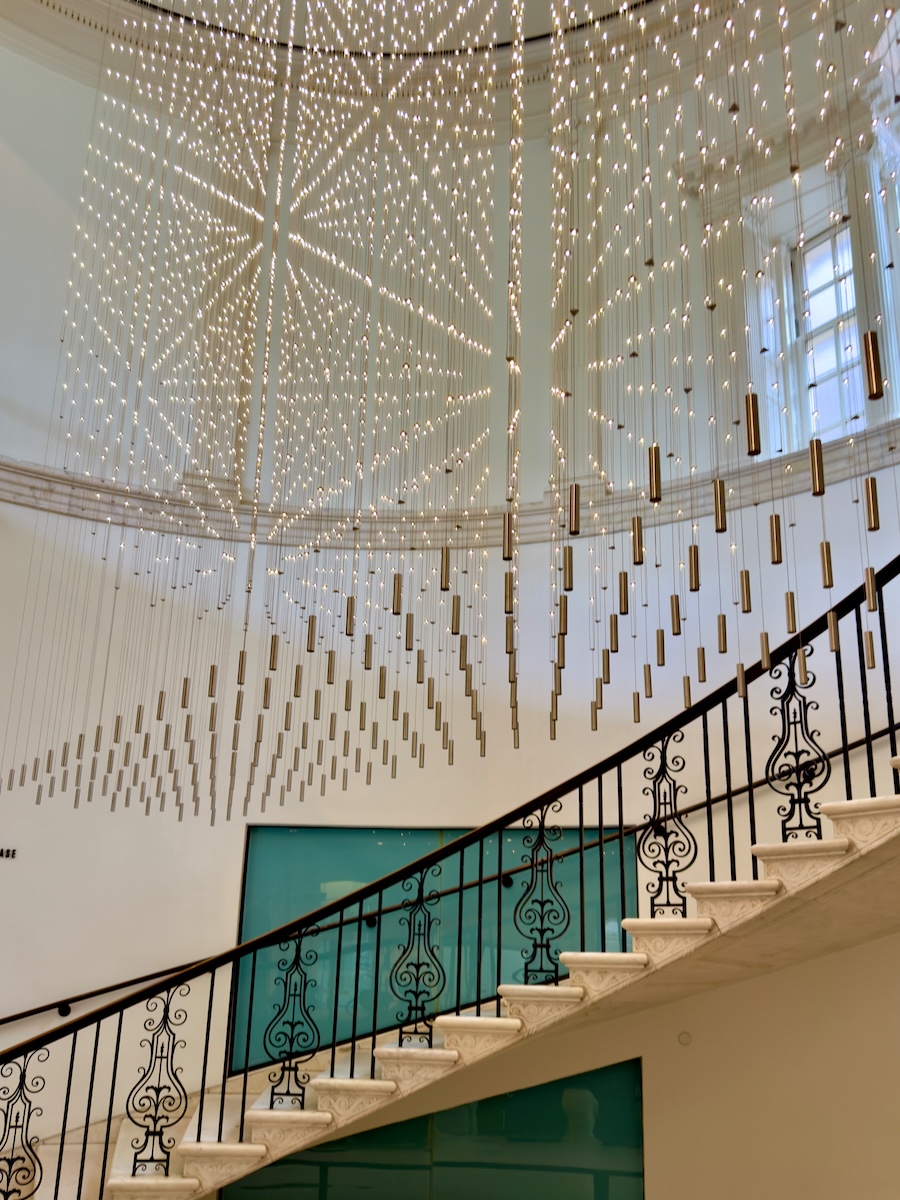
The first big “oooh” is earned by the staircase. The building has the bones of an old formal museum, but the stairwell was filled with a hanging light installation that dropped through the space in hundreds of tiny points. It gave the entrance a little glamour before the museum got down to zoning, public works, and civic identity. I appreciated the effort. If you are going to spend the afternoon asking visitors to care about urban history, a little sparkle at the beginning seems only fair.
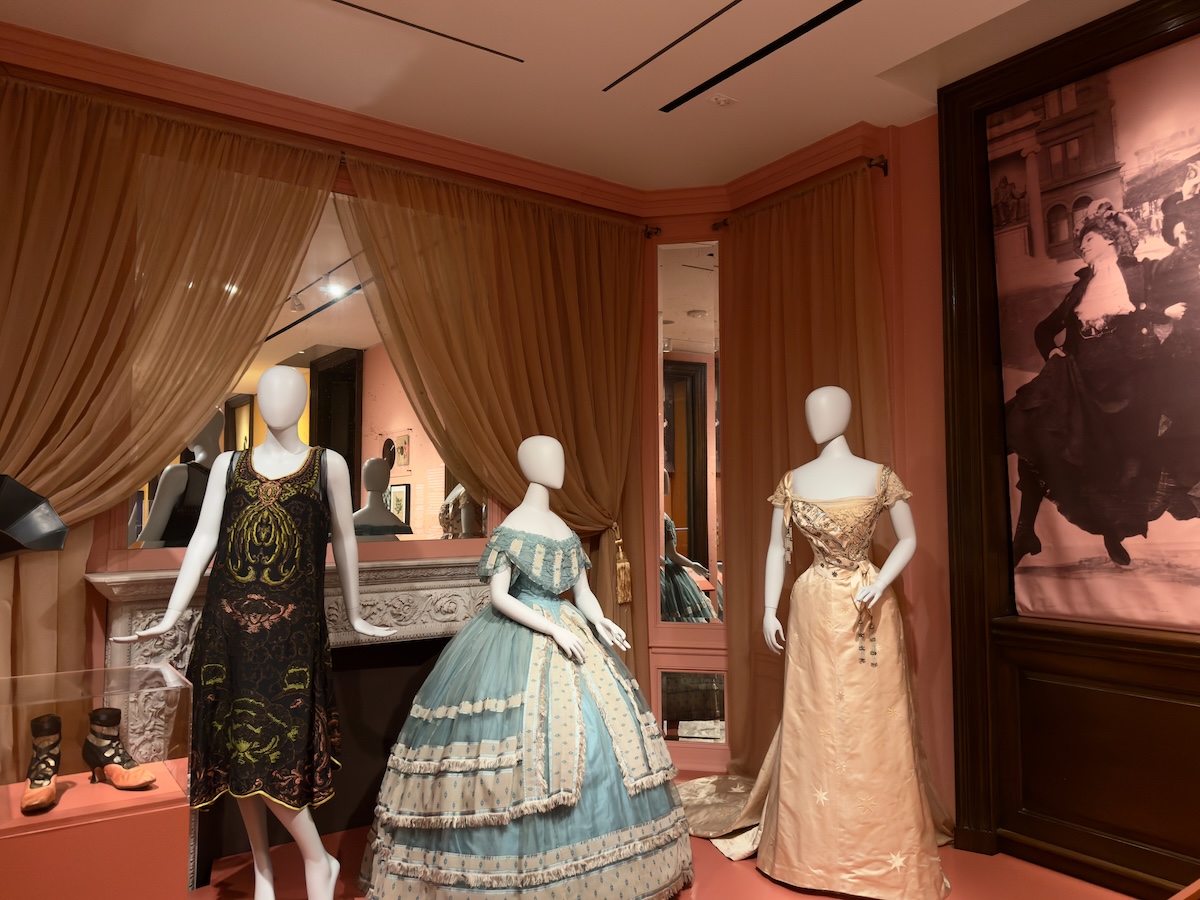
After that, the museum starts gathering evidence. Maps, models, posters, costumes, machines, campaign materials, civic relics—things that all look like someone found them in a storage room and said, “Don’t throw that away. We might need it for context.” The method is accumulative, bordering on hoarding, which may be the only honest way to approach New York. The city has always explained itself through piles of objects someone eventually decided were too meaningful to toss.
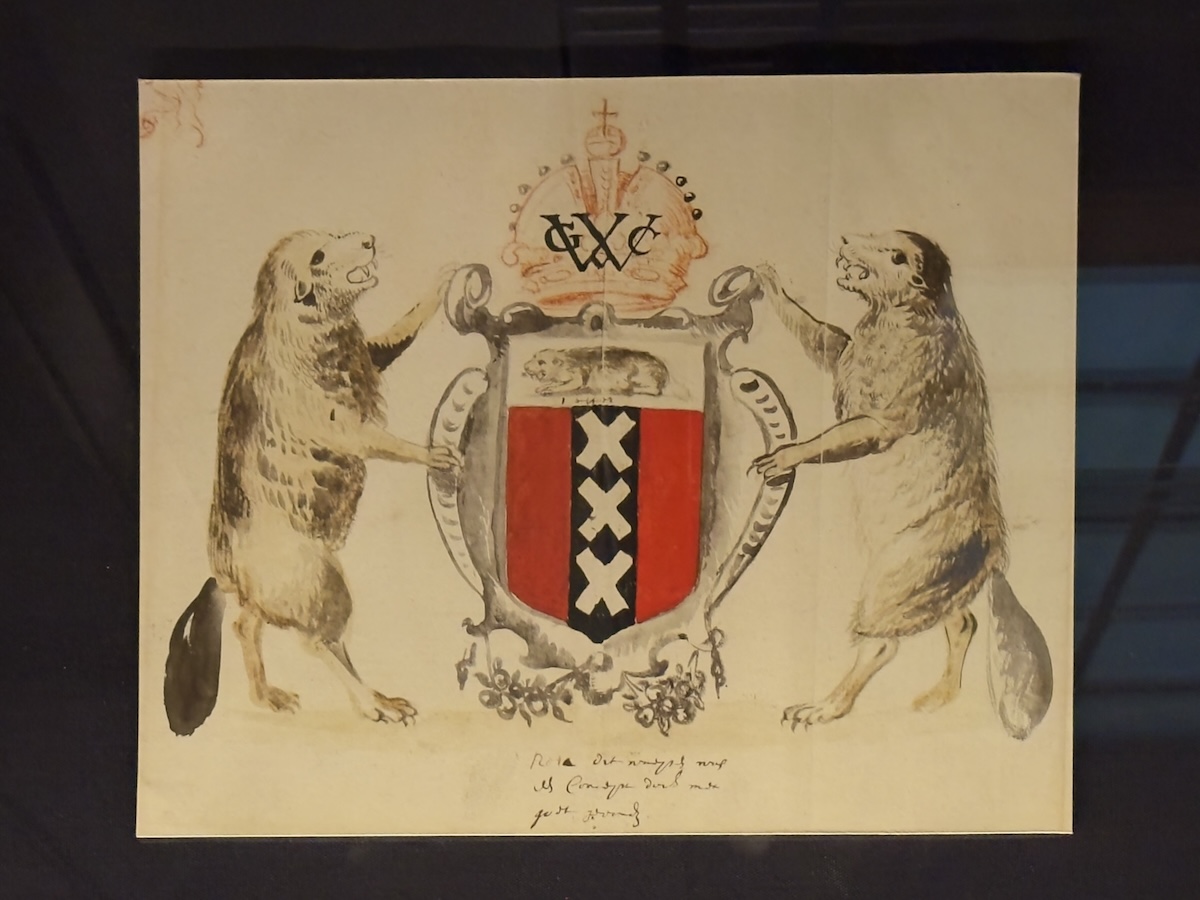
The early New York section begins where it has to—with New Amsterdam and the Dutch. That means trade, settlement, colonial ambition, and beavers. So many beavers. The proposed coat of arms for New Amsterdam features two beavers, in fact, holding up a shield, which is both historically defensible and visually unfortunate. They look like they have been summoned to the photo shoot and told to represent commerce, ambition, and civic destiny before they’d even had their coffee. They did their best.
The beavers make sense, of course. The fur trade—and commerce in general—mattered greatly to early New Amsterdammers. The city’s earliest identity was already tangled up with money, shipping, extraction, and the practical business of turning a harbor into an opportunity. Still, there is something deeply funny about a city that would eventually produce Wall Street, Studio 54, Robert Moses, the Yankees, the Met Gala, and $19 cocktails starting out with two damp rodents trying to hold up a shield with dignity.
From beavers, the museum moves into the city as a machine for movement and construction. Ships, subway diagrams, and public campaigns start crowding the cases. There was a model ship sitting in a case with the solemnity of a relic. There were subway materials, including ads and diagrams from an age when mass transit still carried the whiff of public optimism instead of just someone eating a hot lamb gyro in a crowded car on the A line.
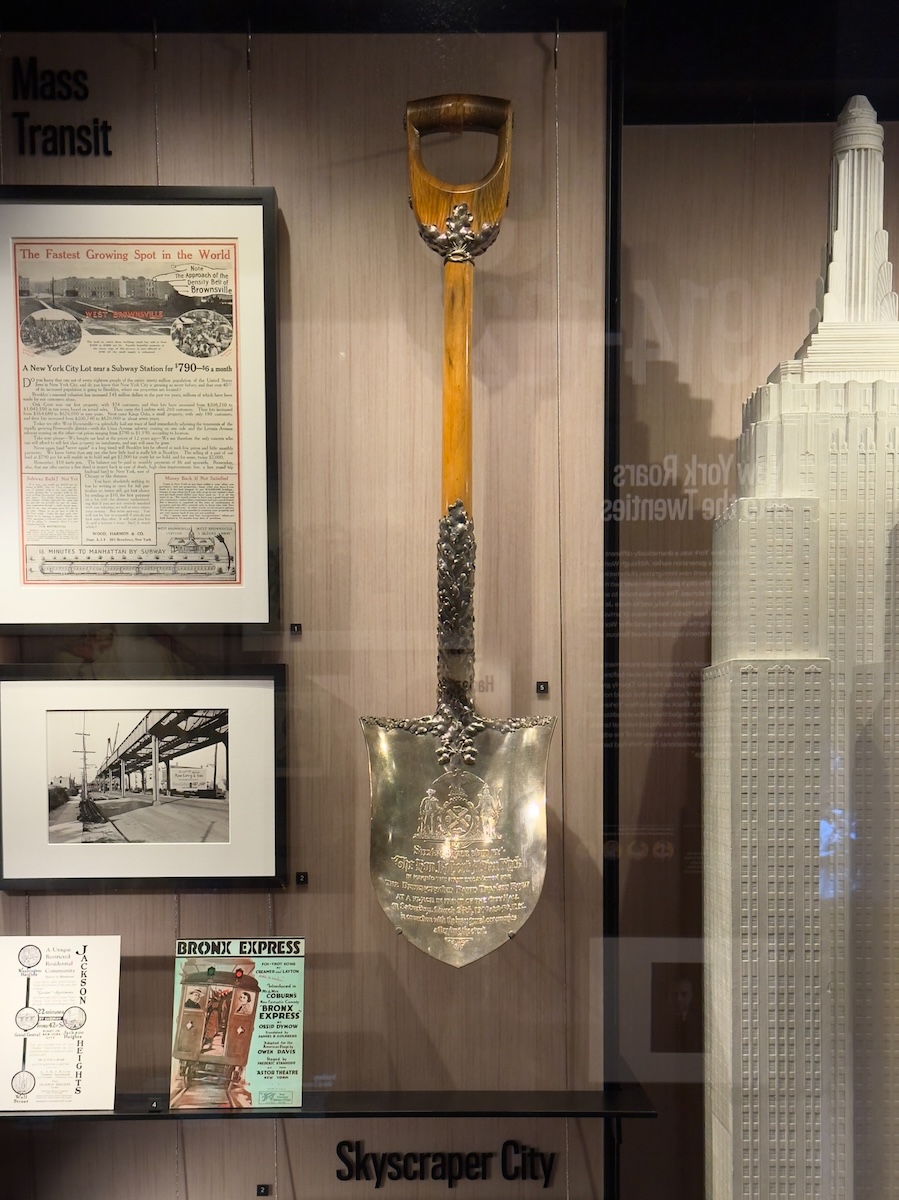
There was also a ceremonial shovel, because in New York construction is both a practical act and a performance requiring props and photo ops. Ceremonial shovels are among the most ridiculous civic objects humans have invented, right up there with oversized scissors and novelty checks. Nobody is moving earth with that thing. The whole point is to stand there, gleaming, while important people pretend the hard part of building something has begun with a polite scoop and a photographer nearby. In New York, every public project seems to involve money, delay, argument, and at least one person screaming into a phone. The ceremonial shovel is more of a shiny metal prayer than a tool.
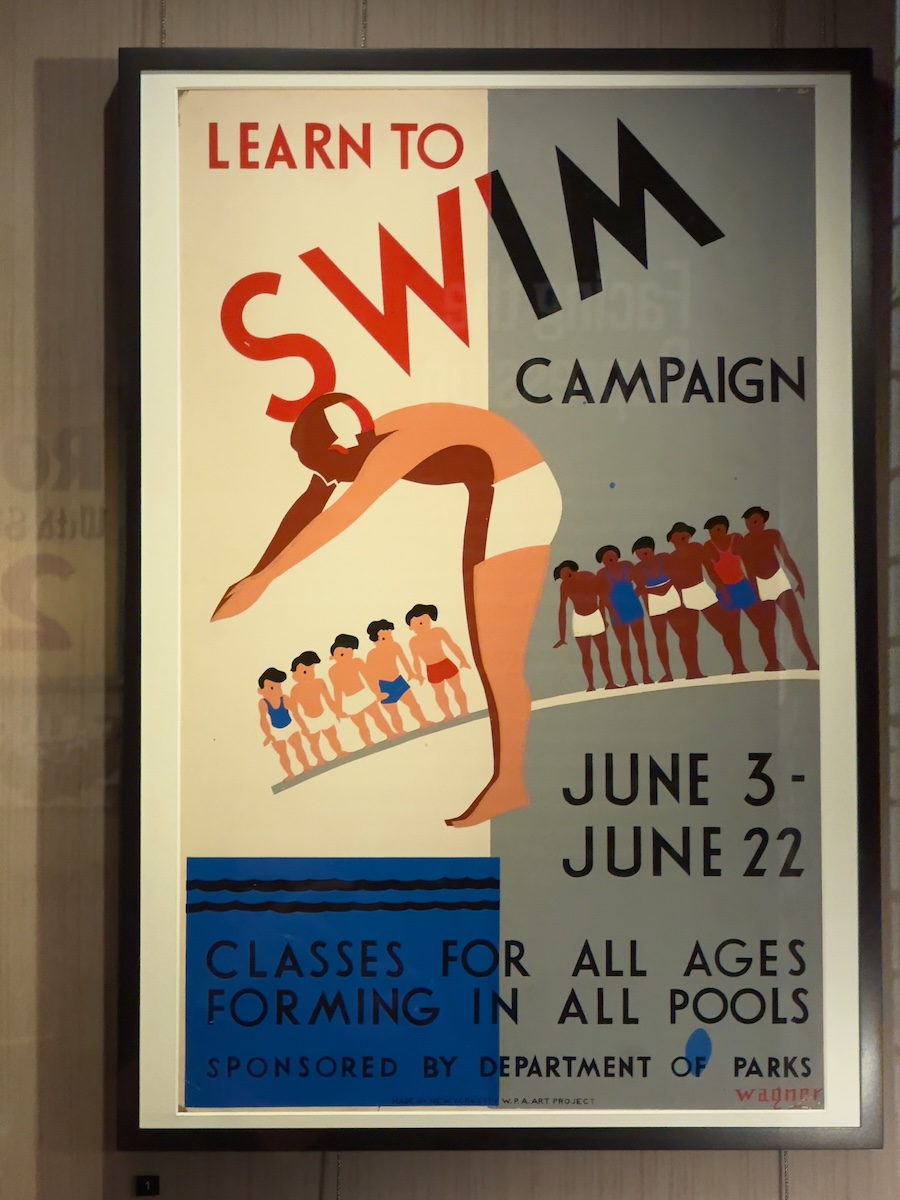
Then the city got bossy in poster form. A “Learn to Swim” poster from the Department of Parks was bright, graphic, and cheerful in the way public-service design was before we all became embarrassed by looking sincere. A diver arced cleanly across the poster with streamlined confidence while small swimmers waited below, all presumably ready to be improved by municipal instruction. It was a reminder that New York’s history is not only towers, transit, and construction. It is also public pools, summer heat, and the city deciding that people should probably know how not to drown.
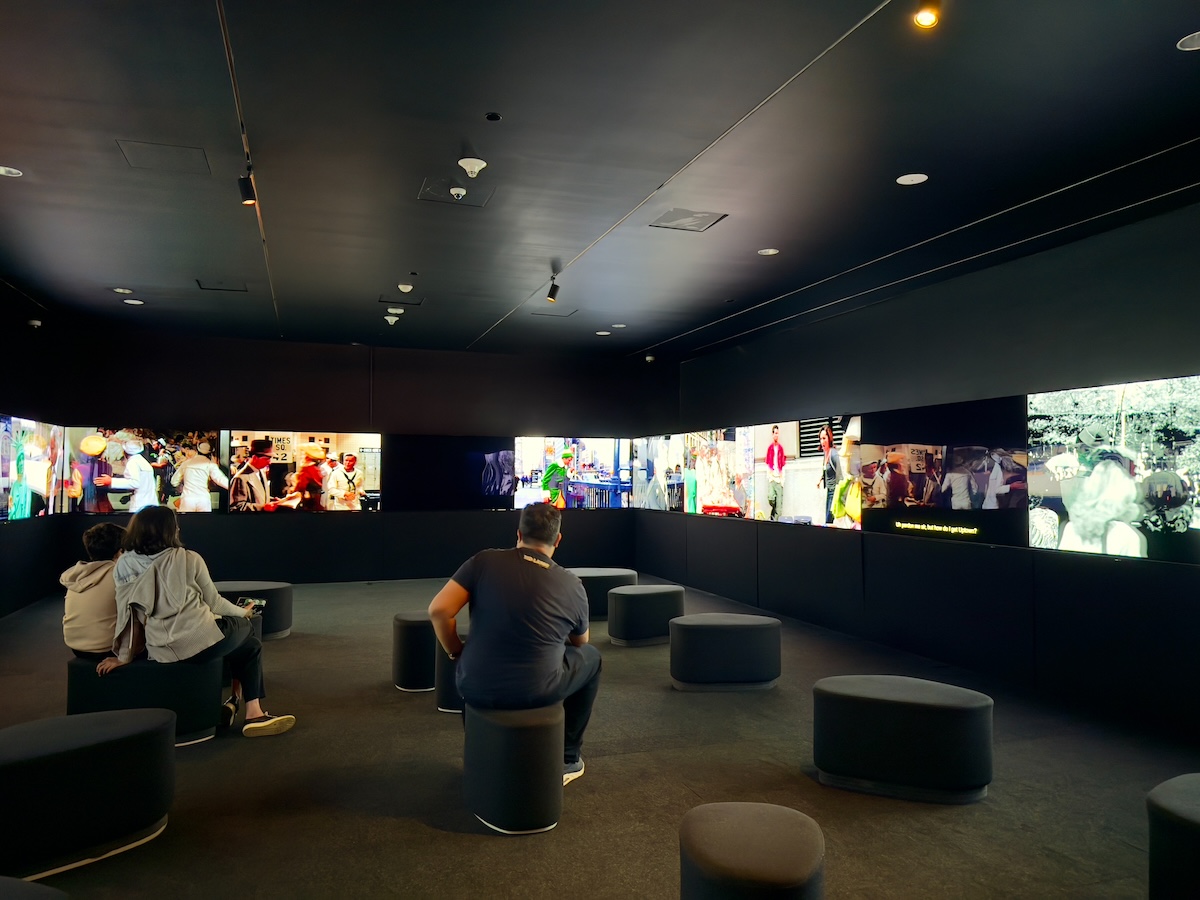
Just when the museum seemed to be settling into infrastructure, civic growth, and the kind of copy-heavy signage that makes you wish you’d brought a snack to keep your blood sugar up, it moved on to New York as image, performance, and noise. One gallery was showing clips from movies filmed in the city, a category so large it could probably run continuously until the city elects a mayor everyone can agree on and still have material left over. The room was dark, with screens wrapping the space in fragments of taxis, arguments, street corners, and people looking meaningfully out of windows.
It was a little random and completely understandable. New York is one of the most filmed places on earth, which means most of us arrive with a version of it already installed in our heads. Movie New York is moodier, better lit, and much more likely to provide a parking space exactly where the plot needs one. Real New York gives you scaffolding and a delivery bike careening through the crosswalk exactly when you step into the street. The museum did not need to explain all that. It just let the clips run and trusted the point to make itself.
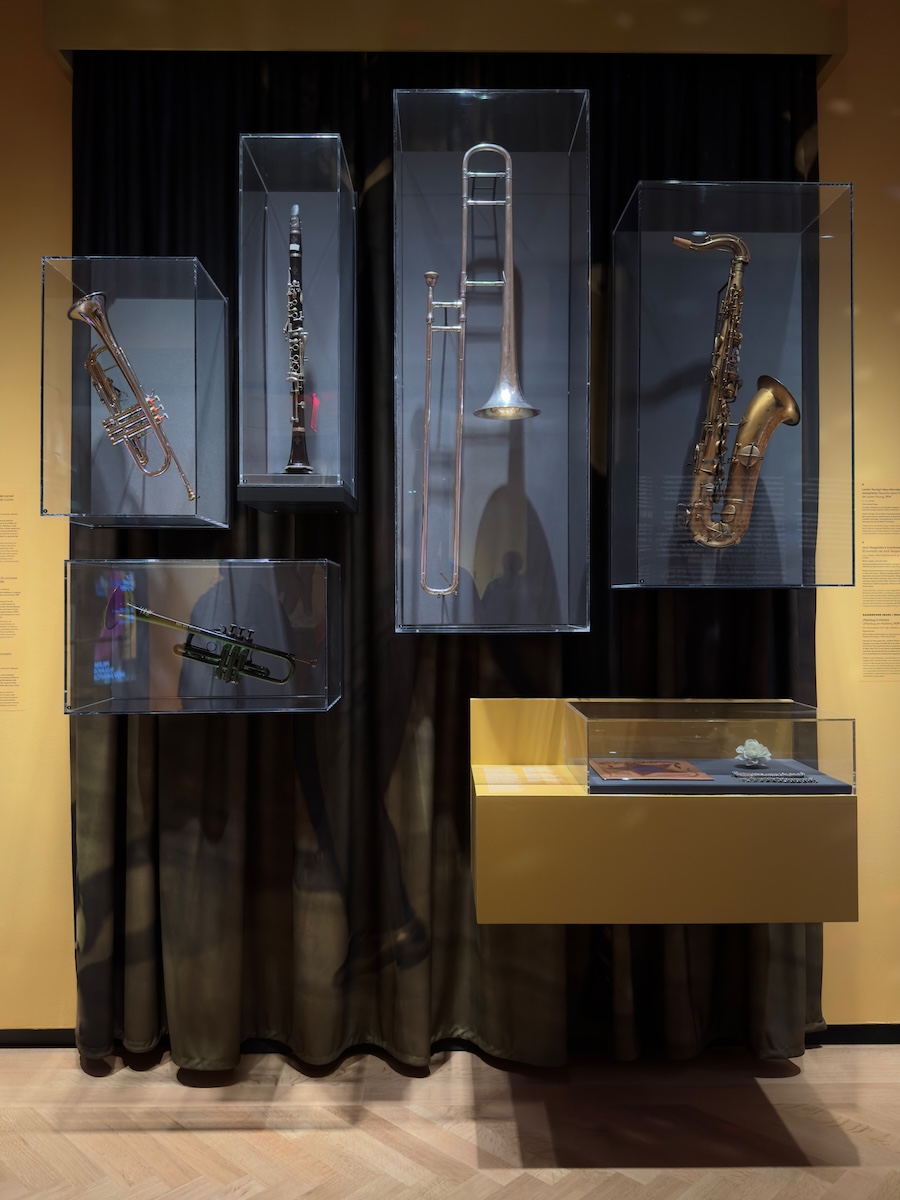
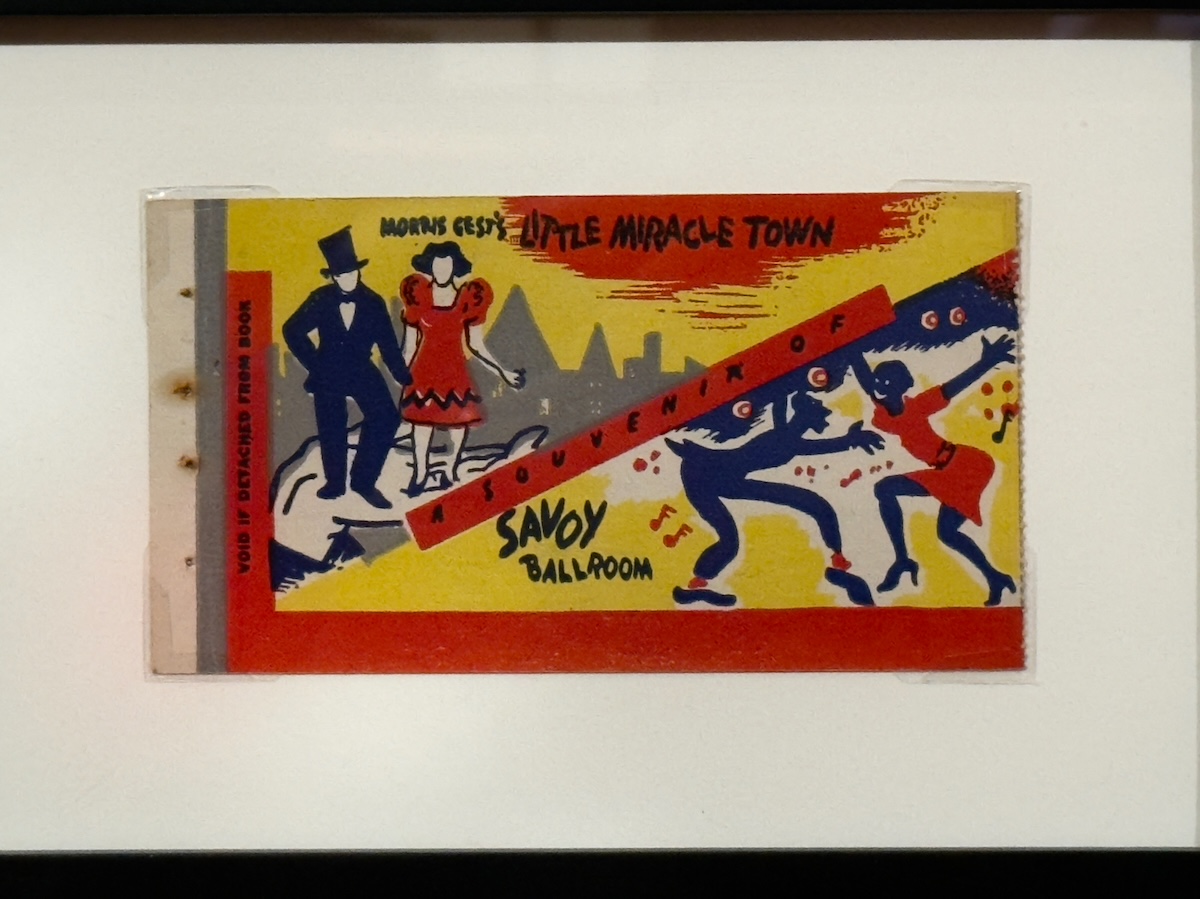
The cultural galleries were more fun because they started getting louder, visually. Louis Armstrong’s trumpet was displayed with the kind of reverence usually reserved for relics, surrounded by material connected to jazz, clubs, and performance. Museums love a good “home of” claim, and New York really worked at this one. Calling New York the home of jazz probably earned somebody a strongly worded letter from New Orleans. But the city certainly became one of the places where jazz grew, changed, and found bigger rooms, with people ready to dance, drink, and pretend they understood the more difficult solos. The Savoy Ballroom appeared in the mix, as it should. One small matchbook cover carried a whole world on it—bands, dancers, style, sweat, and unrestrained joy. That’s a lot for something small enough to lose in a coat pocket.
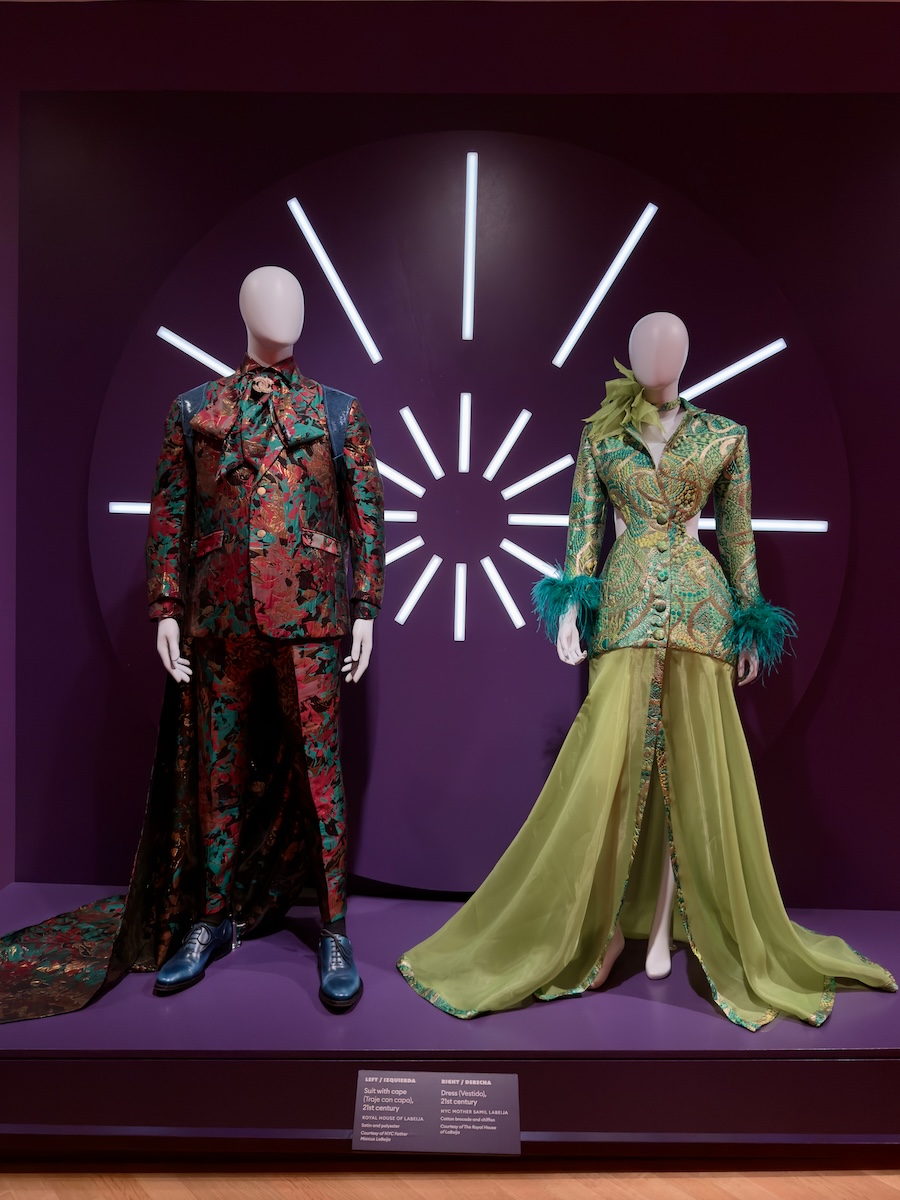
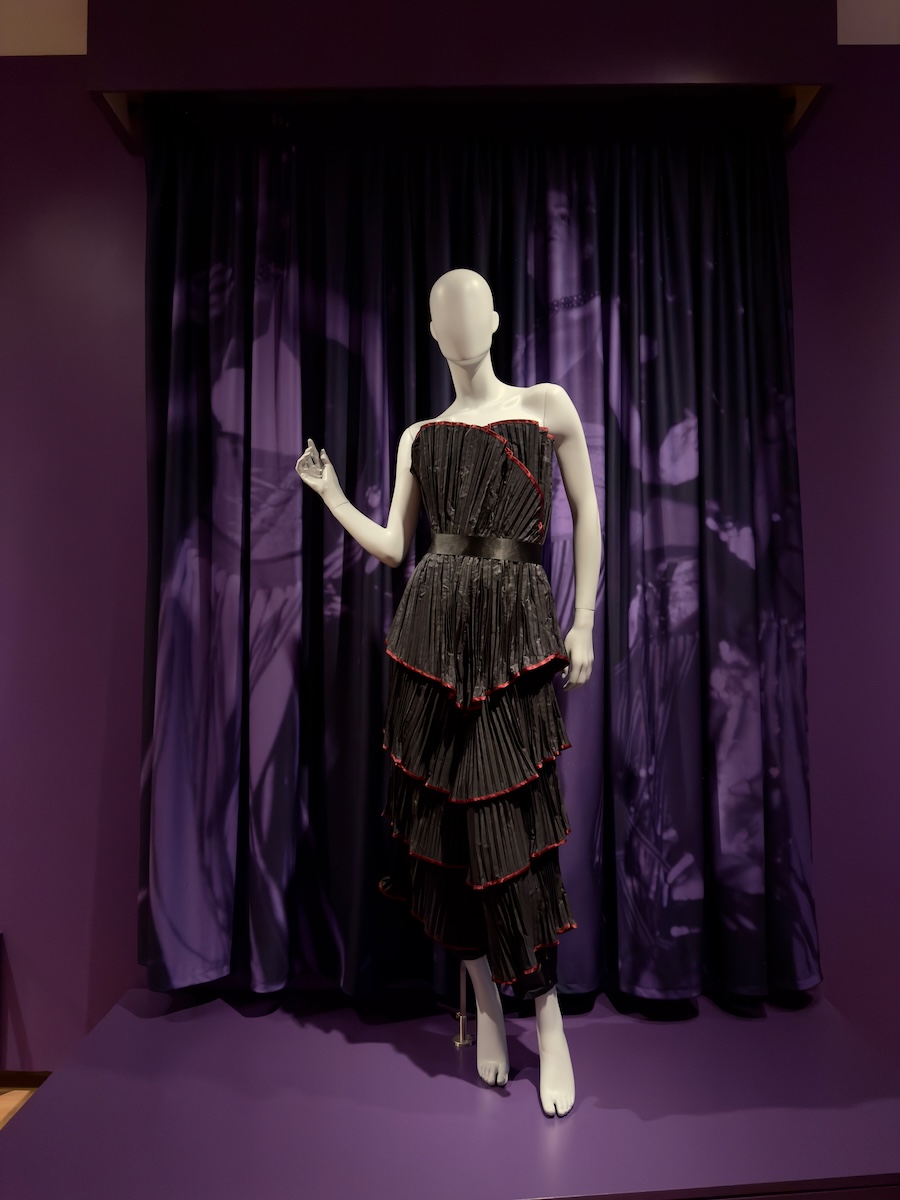
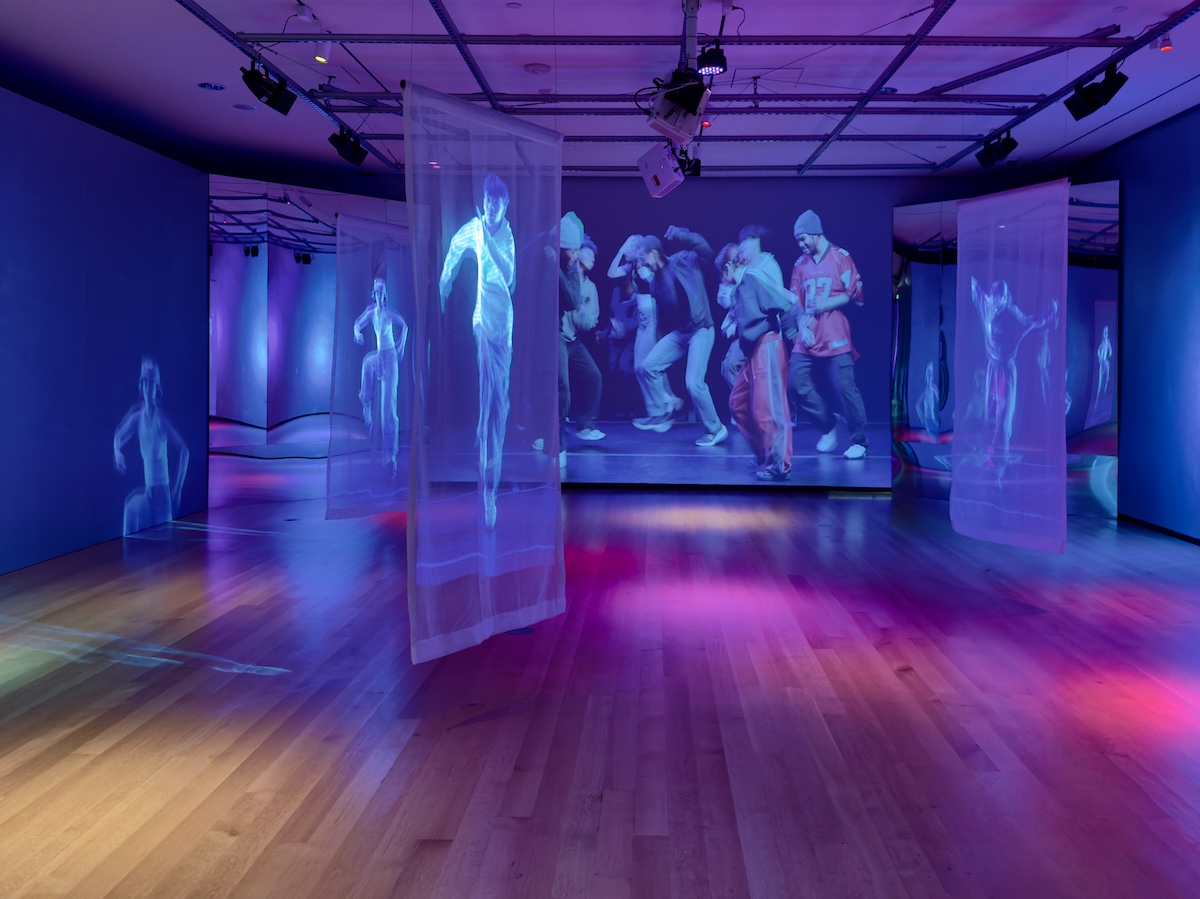
Disco got its turn too, with costumes, club material, and a gallery that understood purple lighting is the only correct choice. New York’s claim to disco is easier to defend once the clubs, DJs, dancers, queer nightlife, and Black and Latino communities get in the mix. Then came the celebrities, tabloid photographers, velvet ropes, and coke-fueled all-nighters that made the dance floor front-page material.
One of the strongest inclusions was Julian Prairie’s 2024 altar bust of Crystal LaBeija, Founding Mother of the House of LaBeija, which anchored a small section on balls. Crystal created the House of LaBeija Ball after protesting bias in a drag pageant in the late 1960s, helping launch the house system that gave ball culture its chosen-family structure and competitive force. The plaster bust is a small model for a proposed public monument honoring Crystal LaBeija’s legacy. It was a small display with a lot of history packed into it, and one of the places where the museum’s broad civic brief felt genuinely expanded rather than merely crowded.
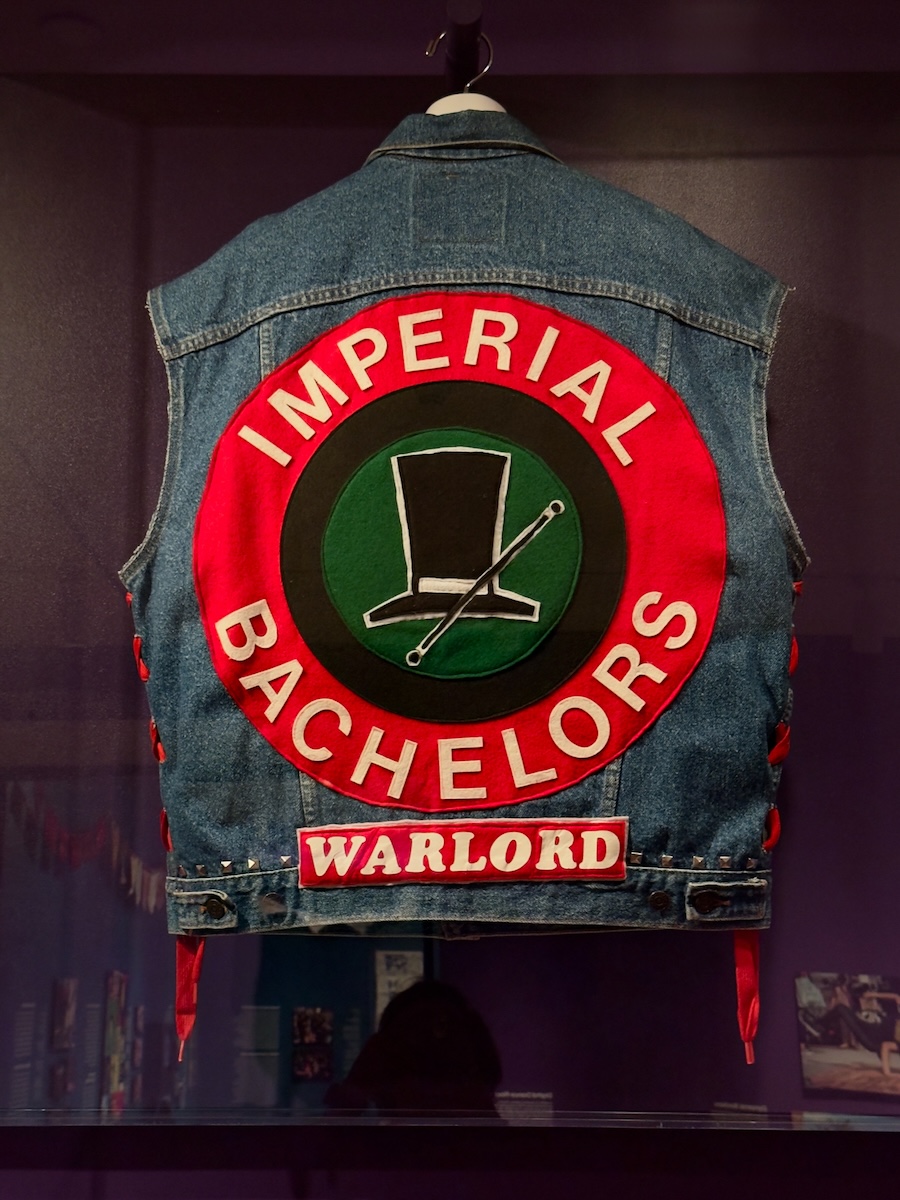
That’s where the museum worked best for me. The city became more understandable through objects that had not been polished into neutrality. A jacket suggested swagger. A matchbook suggested a night out. Even the ceremonial shovel, absurd as it was, suggested the theater of public ambition. The strongest objects carried use, ego, and context at the same time.
The weaker parts came when the museum trusted the wall labels more than the things. Sure, history museums frequently have a great deal to say—and then they choose to say it in 17 paragraphs on foamcore mounted beside a dimly lit object the size of a biscuit. I am not opposed to reading in museums. I will read a label about a doorknob if the doorknob has earned it. But New York is not short on material, and it seemed like the City Museum was fighting the scale of its own subject.
To be fair, the unevenness still felt honest. New York does not proceed smoothly from Dutch beavers to subway diagrams to disco lighting. And neither does the museum.
Which is why the City Museum makes more sense as evidence than explanation. A beaver, a shovel, a trumpet, a movie clip, and a subway poster. None of it explains New York, exactly, but it gives the mess a few handles. New York is unreasonable, and it always will be. But this museum has the receipts.





Write a comment