

We began our morning on the Roosevelt Island Tram, which is the sort of thing New York does well—take a random piece of infrastructure, fold it into the transit system, charge a fare, and somehow make everyone feel like they’ve discovered a secret. It’s also a sneaky way to find out who in your group is terrified of heights.1
Mary, Rick, and I had met up with Adam Guy, who runs I Know A Guy NYC Tours, a personalized New York tour operator with probably the best name in the business.2 Adam is exactly the kind of guide you always hope you’ve hired when you book a tour—funny, deeply knowledgeable, and savvy about the difference between “famous” and “interesting.” New York has plenty of famous. Interesting often requires someone who knows which bus to take after the aerial tram deposits you on a narrow island with great views and a complicated past.
I’d talked with Adam ahead of time about what we were hoping for, which is always dangerous because our interests tend to sound normal until listed together—architecture, urban oddities, public art, abandoned buildings, trains. Random house museums. I floated Roosevelt Island, and Adam suggested that if we really wanted to do that, we should do it properly—end to end, with enough walking to make a snack feel medically necessary. Smart man.
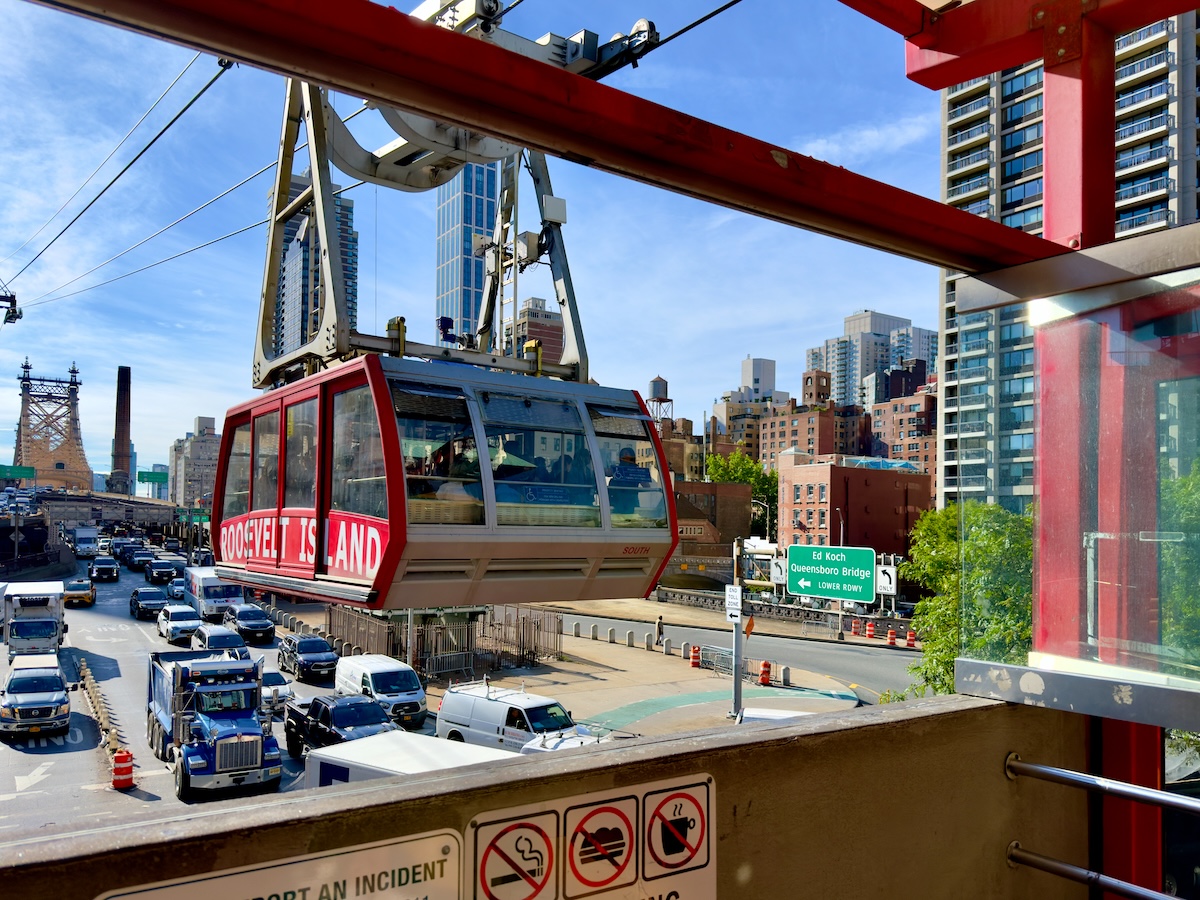
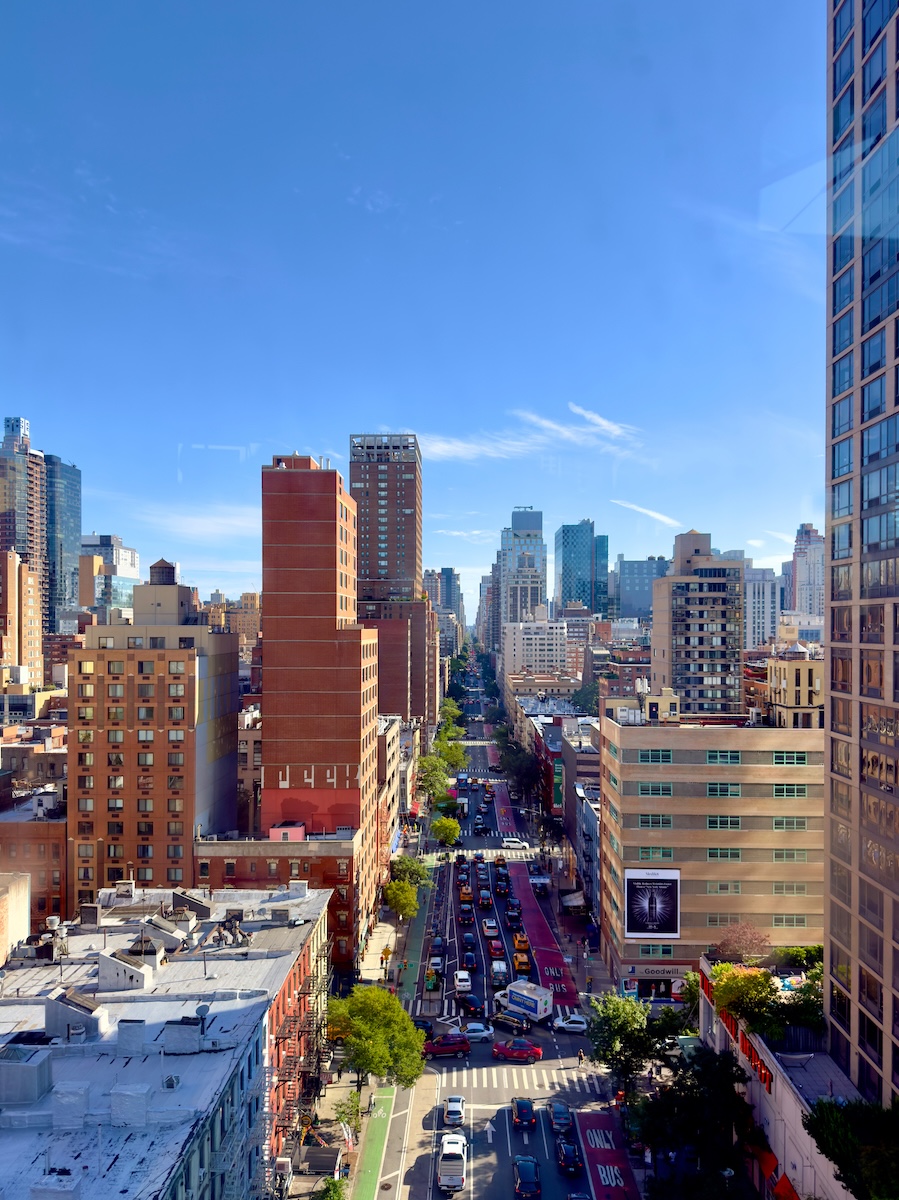
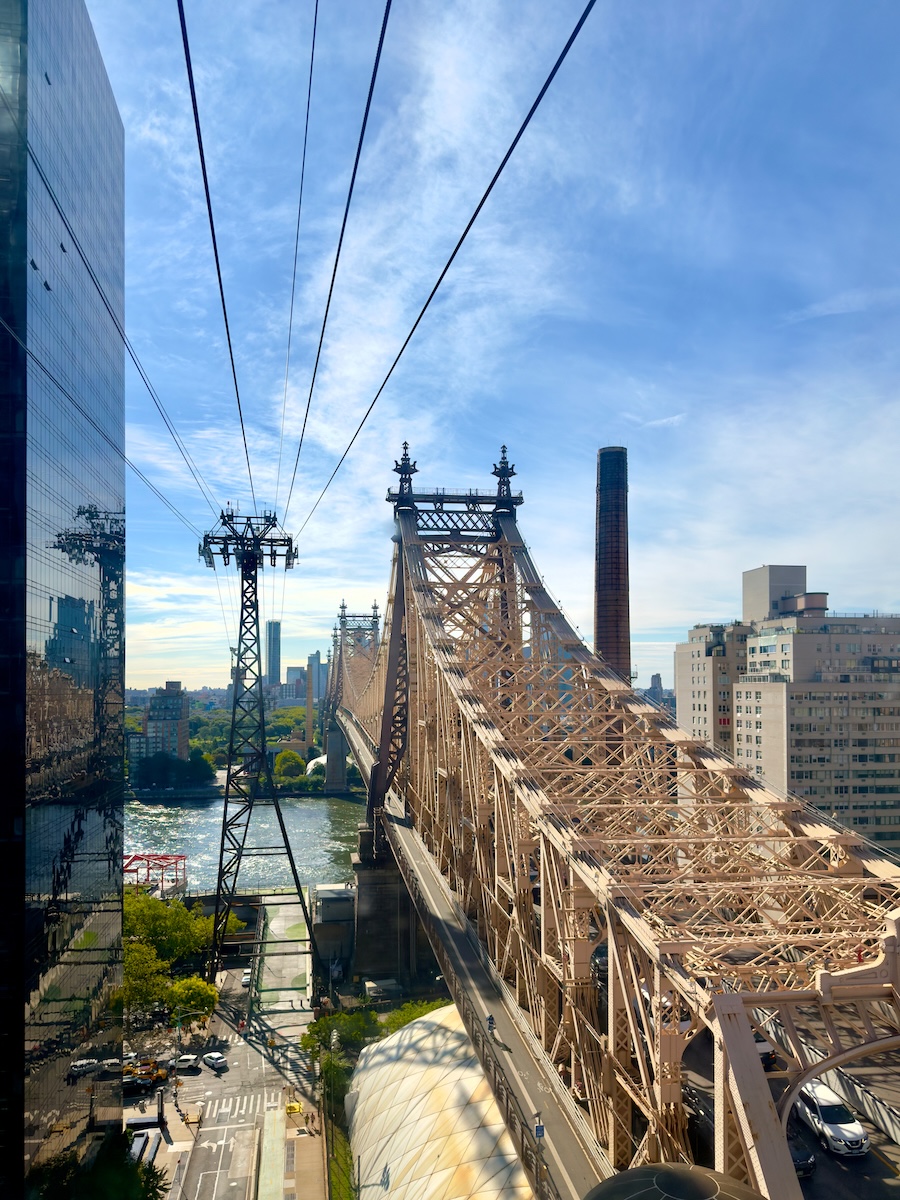
The weather was suspiciously perfect, there was no line for the tram, and the whole morning had the slightly unreal feeling of New York briefly cooperating.3 The tram lifted off and instantly Manhattan felt like a model train set. The East River slid by below us with the calm indifference of water that’s seen every human scheme and declined to comment. The Queensboro Bridge kept pace beside us with its usual steely confidence. Rick and Mary looked out appreciatively. I looked out, trying to maintain the neutral facial expression of a person not thinking about catastrophic cable failure.
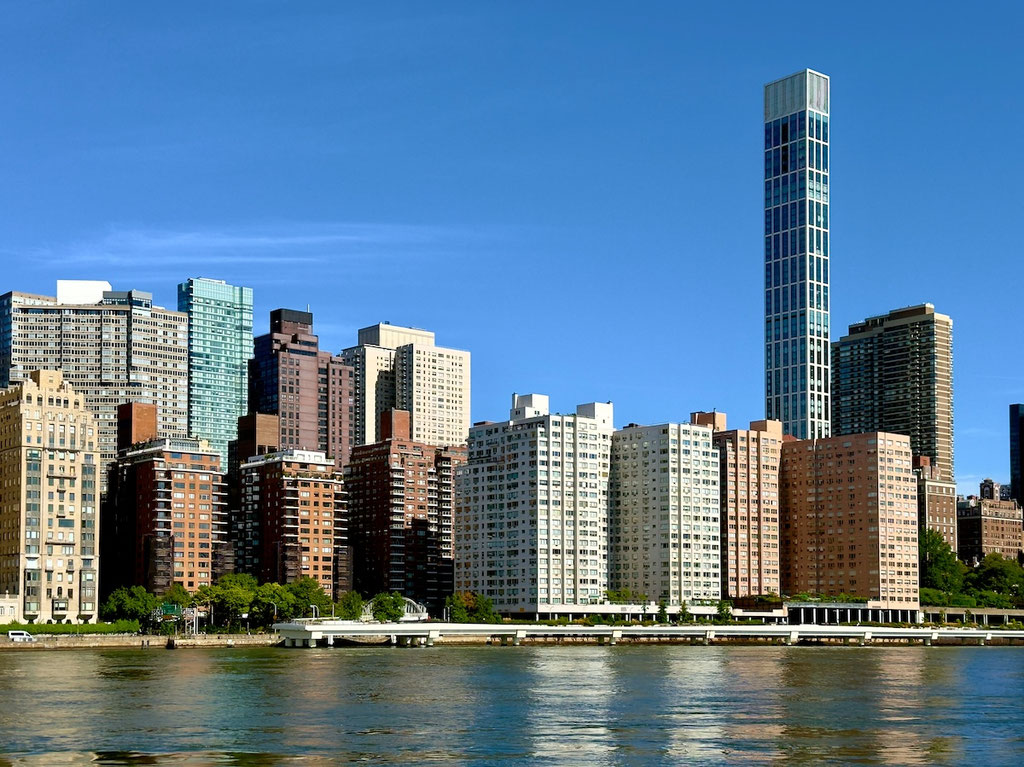
Roosevelt Island feels both central and oddly misplaced, as if someone set it down between Manhattan and Queens and then forgot it was there. A two-mile sliver of land, about 800 feet wide at its widest, it feels barely big enough to contain as much history as it does. It’s connected to the rest of New York by tram, subway, ferry, and a single bridge to Queens for cars,4 and is full of institutional ghosts—which is a better résumé than some neighborhoods with better branding.
The southern end, where we started, has plenty to occupy a person—Southpoint Park, dramatic views of the United Nations across the river, Cornell Tech, Four Freedoms Park, and the remains of the old Smallpox Hospital.5 The hospital opened in 1856, back when Roosevelt Island was still Blackwell’s Island. Designed by James Renwick Jr.—the same architect who later gave New York St. Patrick’s Cathedral—it was built to isolate smallpox patients from a crowded city that preferred to keep public health crises at a distance. Today it stands in ruins—all vines, empty windows, dramatic decay, and enough romance to make you forget the whole thing began as a public health solution with a moat.
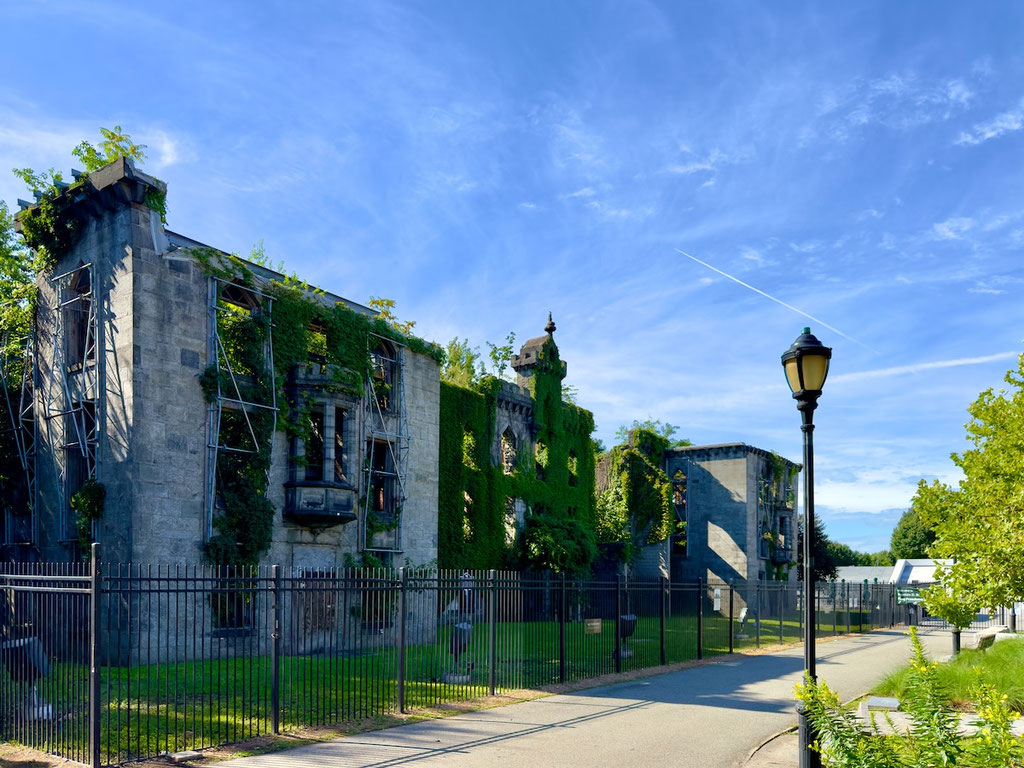
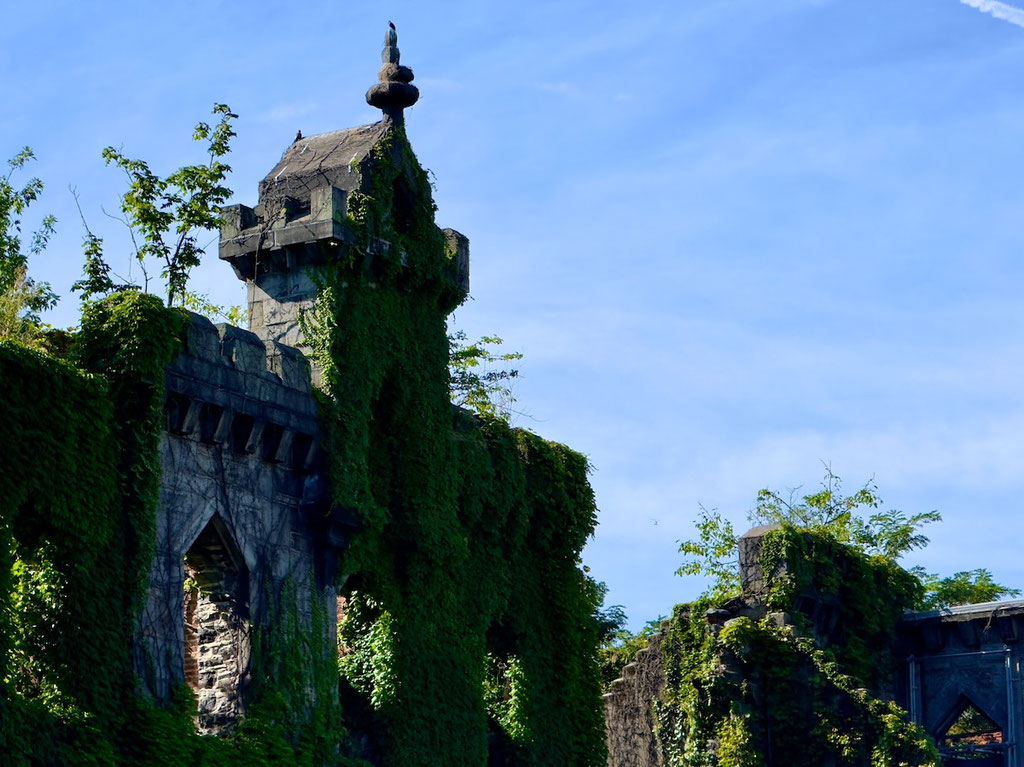
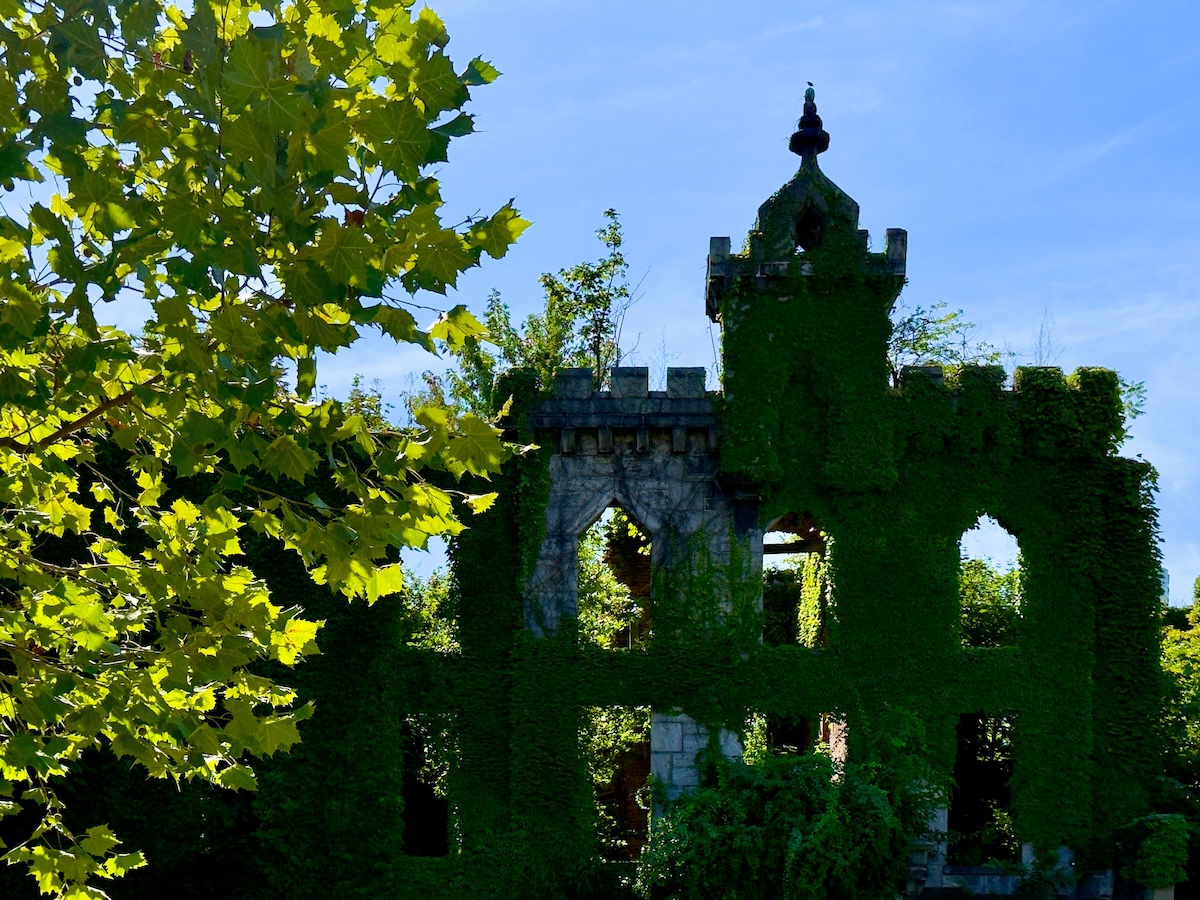
The Smallpox Hospital set the tone for the next hundred years. Blackwell’s Island Penitentiary opened here in the 1830s, after New York City bought the island and began filling it with municipal institutions for prisoners, patients, the poor, sick, and disabled—anyone the city considered inconvenient. A later chapter in the island’s history saw Goldwater Hospital, a chronic-care hospital that opened in the 1930s, after Blackwell’s Island had been renamed Welfare Island.6
Most of the southern end of the island is now Southpoint Park, which softens the whole Arkham Asylum vibe. Paths curve through barely manicured grass and plantings, creating picture-perfect vistas of the Manhattan skyline across the water. Next to the park is Cornell Tech, replacing Goldwater Hospital with gleaming glass, landscaped plazas, and the clean confidence of a place where everyone appears to own at least three laptop bags.
That shift says plenty without needing much help from me. Prison, hospital, ruins, park, tech campus—Roosevelt Island’s layers are visible if you know where to look. And Adam did. Setting a brisk pace, he got us headed toward the north end of the island—the part most visitors skip, he said. We grabbed seats on the little red bus that runs up and down the island, which dropped us right in front of the Octagon—now luxury apartments but formerly the main entrance to the New York City Lunatic Asylum.7 New York does not waste a building with river views just because its past is horrifying. That would be fiscally irresponsible.

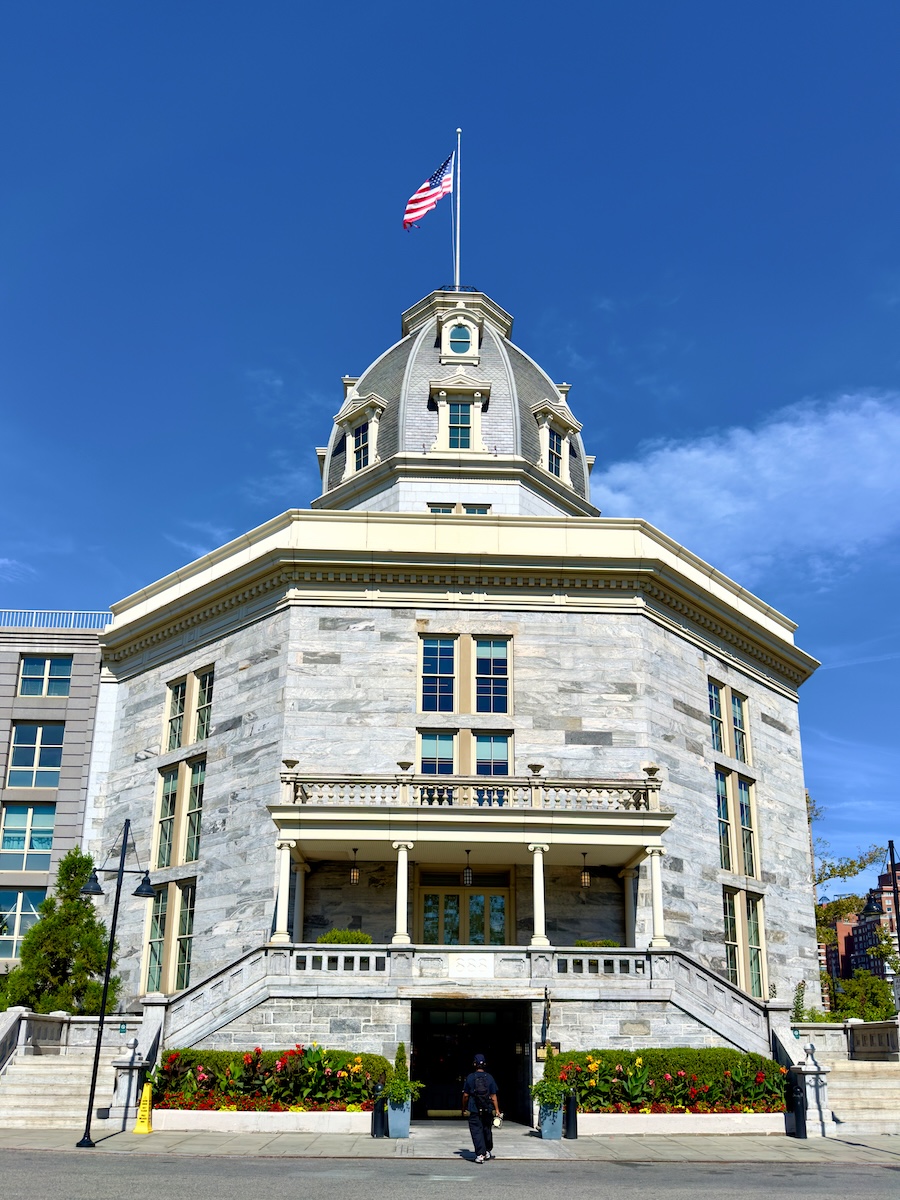
The Octagon was designed in the 1830s by Alexander Jackson Davis, who believed that if New York was going to offload people onto an island, it could at least give the entrance some architectural dignity. He wasn’t wrong. The surviving octagonal tower has been restored and is the centerpiece of the complex. Adam said the only thing crazy about the place anymore is rent, which is exactly the sort of guide commentary that lets you feel you’ve chosen wisely.
The Octagon also sits at the center of one of American journalism’s seminal undercover assignments. Nellie Bly got herself committed to this institution in 1887 to investigate and expose the treatment of the women inside.8 She was 23, an age at which I was still making regrettable choices in boyfriends, and produced stories that exposed the abuse, neglect, and casual cruelty of a system designed to disappear inconvenient people. It’s hard not to admire that. It’s also hard not to wonder what kind of editor hears the pitch, “I’ll get myself committed” and says, essentially, “Sounds great. Be sure to have it proofed before it hits my desk.”
I knew the story from my days as a journalism student but hearing it standing outside the last surviving piece of the asylum gave it teeth. Then we walked inside and were stunned. The lobby is gorgeous—not “hmm…interesting for a former asylum” gorgeous. Actually gorgeous. The staircase rises through the center of the space in a grand circular sweep with a theatrical confidence that makes you briefly forget you are standing in a building with a pretty grim backstory. The stone, the height, the symmetry, the whole preserved rotunda—it all works. Adaptive reuse is morally complicated, but sometimes a staircase just doesn’t care about you or your ethics.
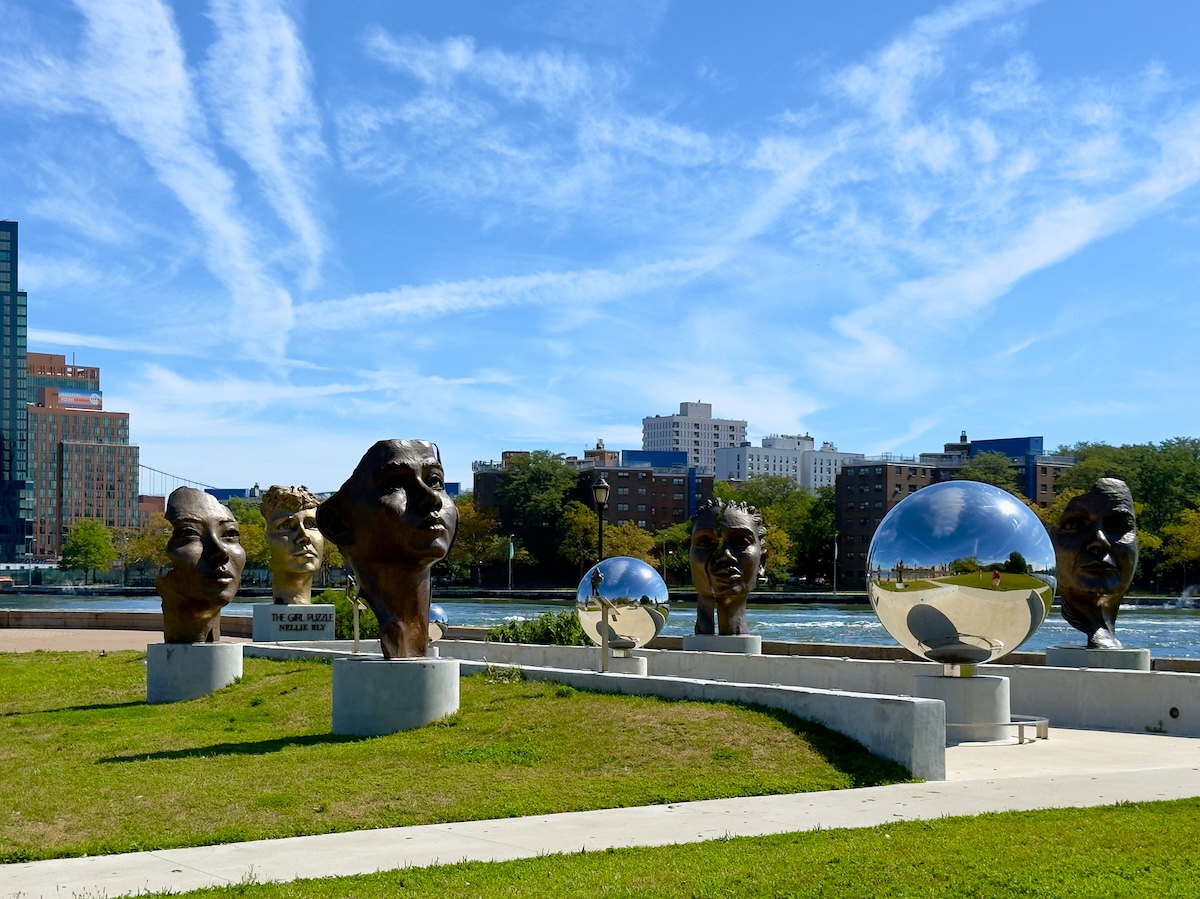
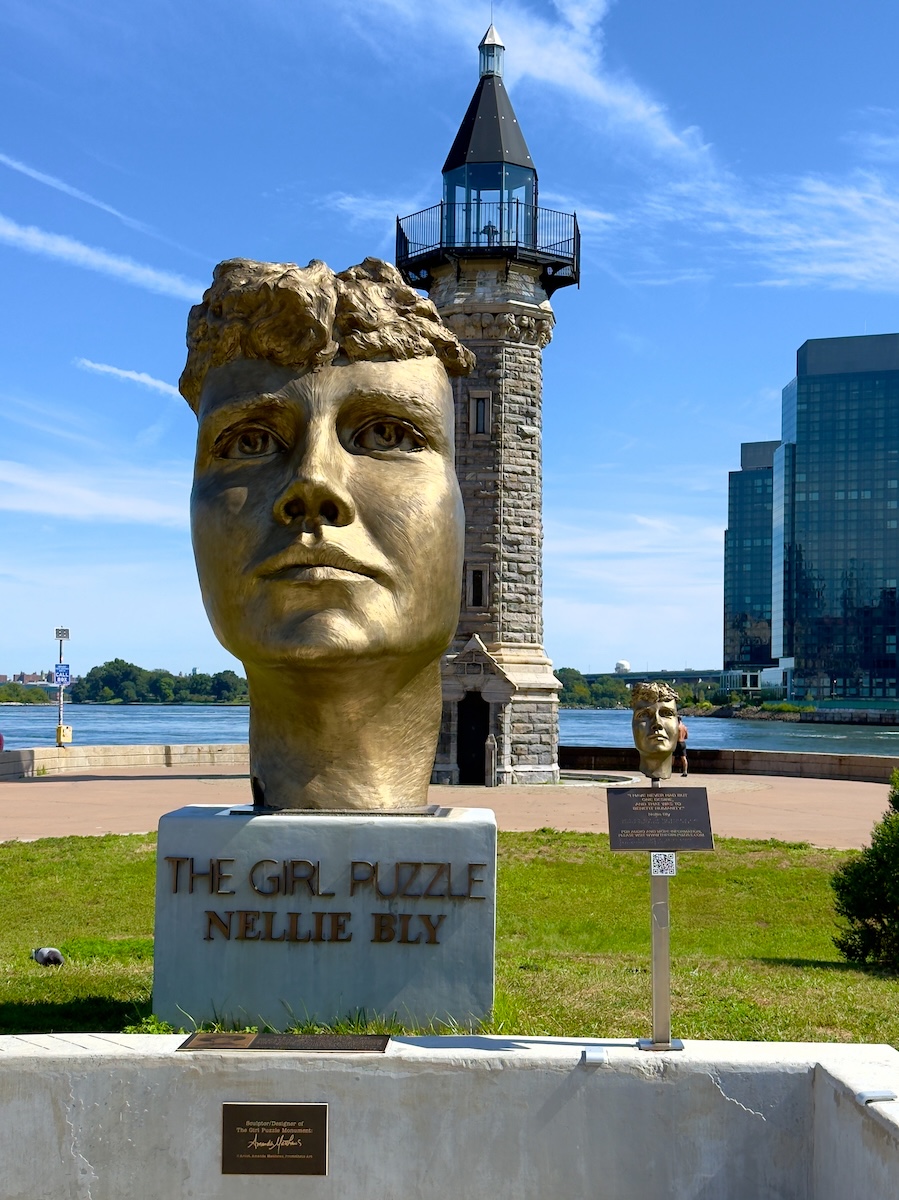
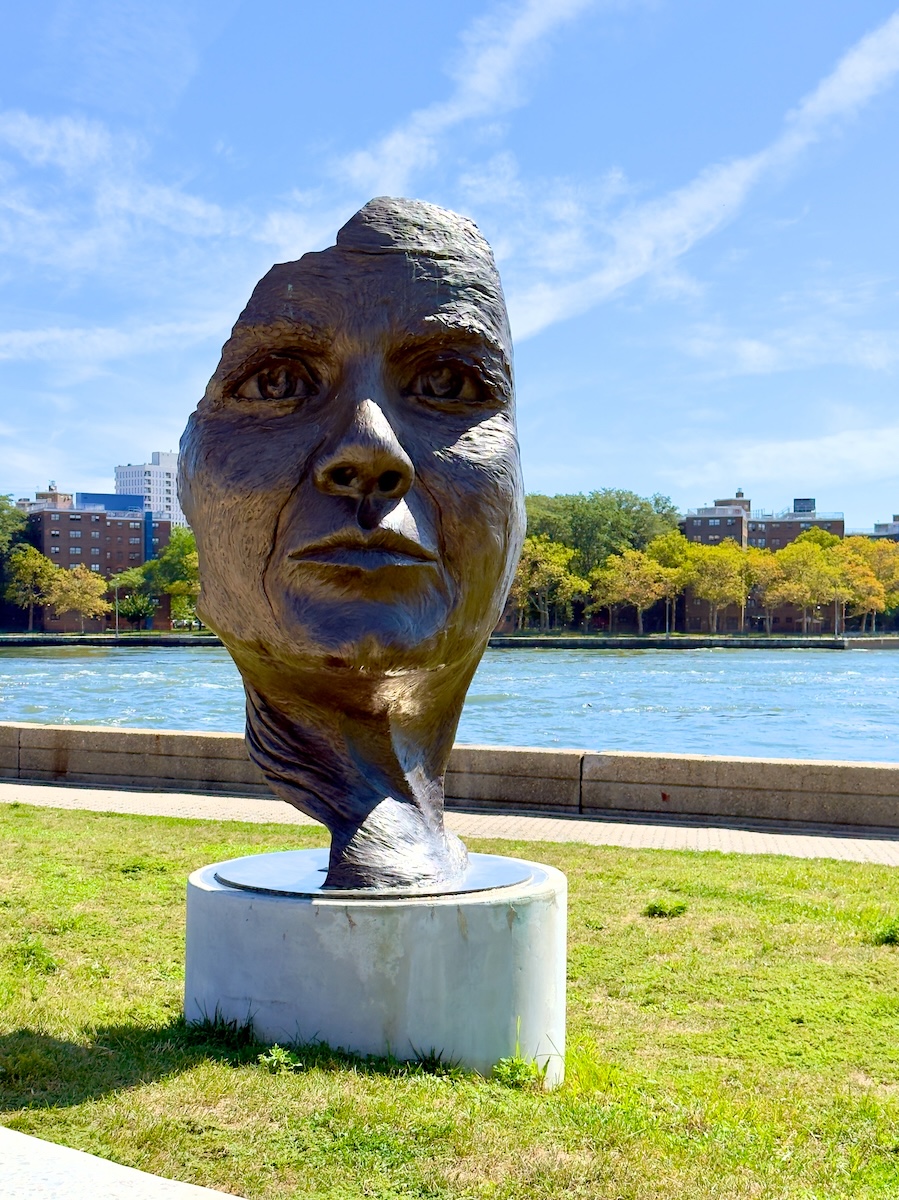
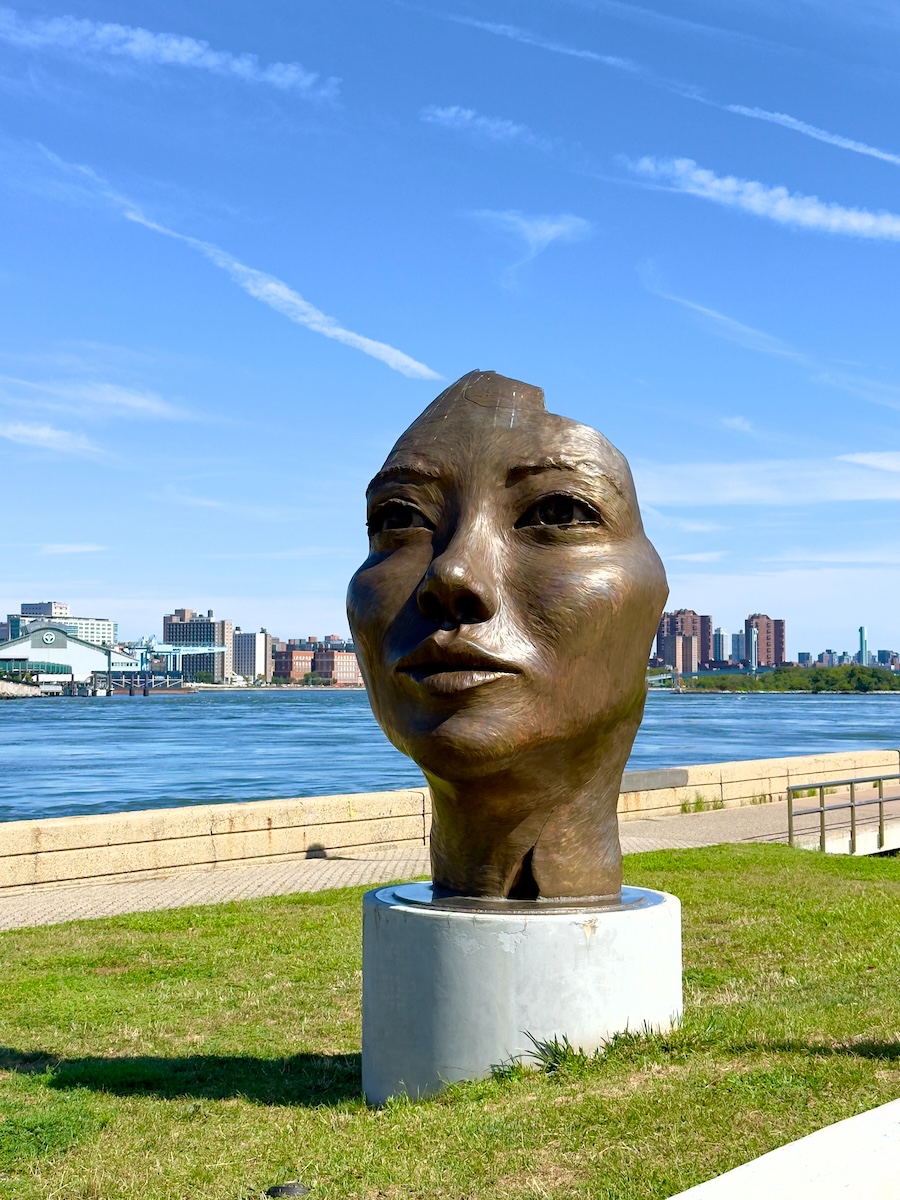
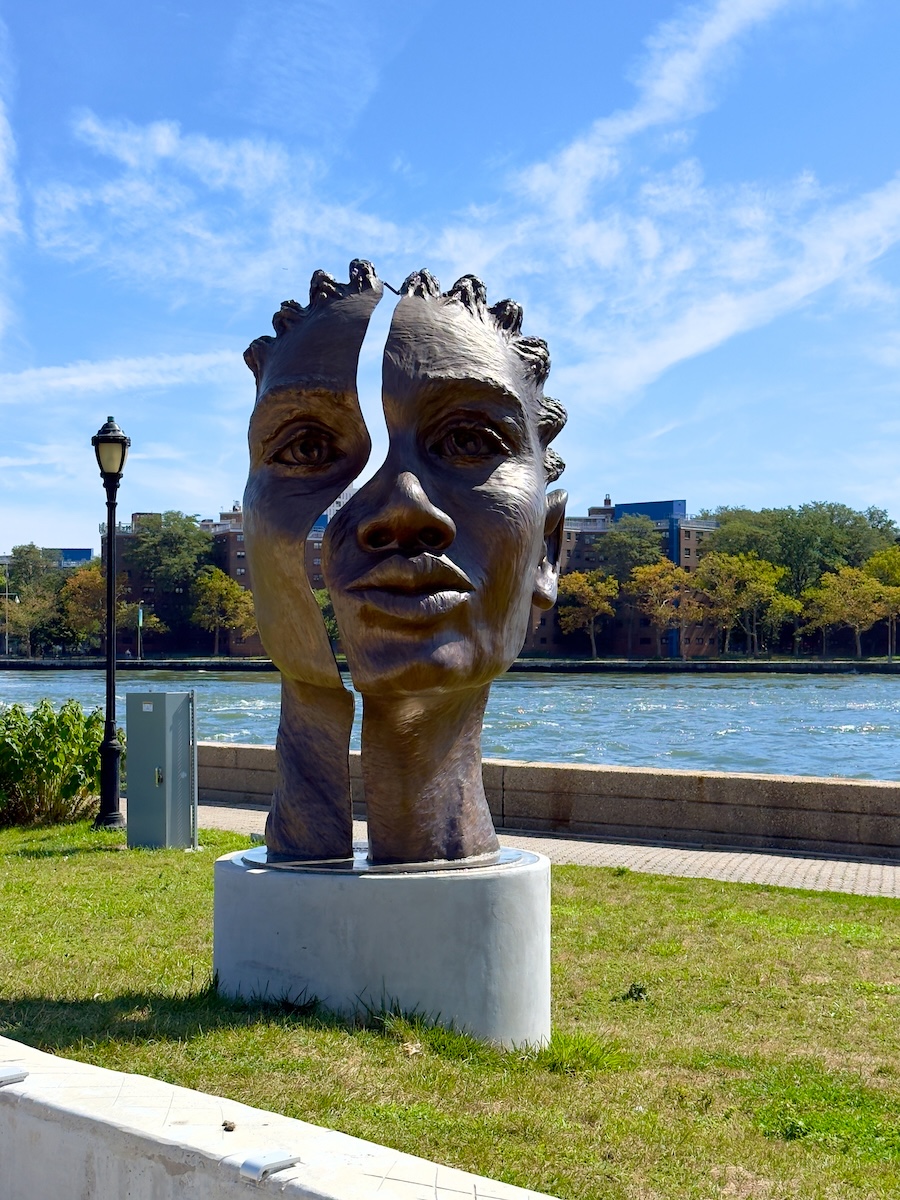
From the Octagon, we kept going north toward Lighthouse Park and Adam’s enthusiasm kicked up another notch. He’d been excited about the asylum, but The Girl Puzzle clearly mattered to him. That helped, because it would be easy to miss the monument entirely if you never made it to this end of the island. New York has no shortage of men on horses, men in coats, men pointing, and men glowering.9 For a long time, though, statues of actual women were treated like they required a zoning variance. Accordingly, a monument to one of American journalism’s most interesting figures—yep, we’re talking Nellie Bly again—sits at the far end of an island most visitors can’t name on a map.
The Girl Puzzle was created by Amanda Matthews and opened in 2021.10 The monument is five large bronze faces and three mirrored spheres arranged along the path. It sounds simple enough when described that way, which is usually how public art tricks you before making you stand there longer than expected.
The faces are enormous, fragmented, and expressive. One represents Bly, and the others represent the kind of marginalized women and girls Bly spent her career writing about. The mirrored spheres catch the faces, the sky, the river, and whoever is standing nearby, which means the monument refuses to let you stay outside the story. It also refuses to let Bly become a single brave anecdote, especially when you’ve just come from the building where that story began. Rude, but effective.
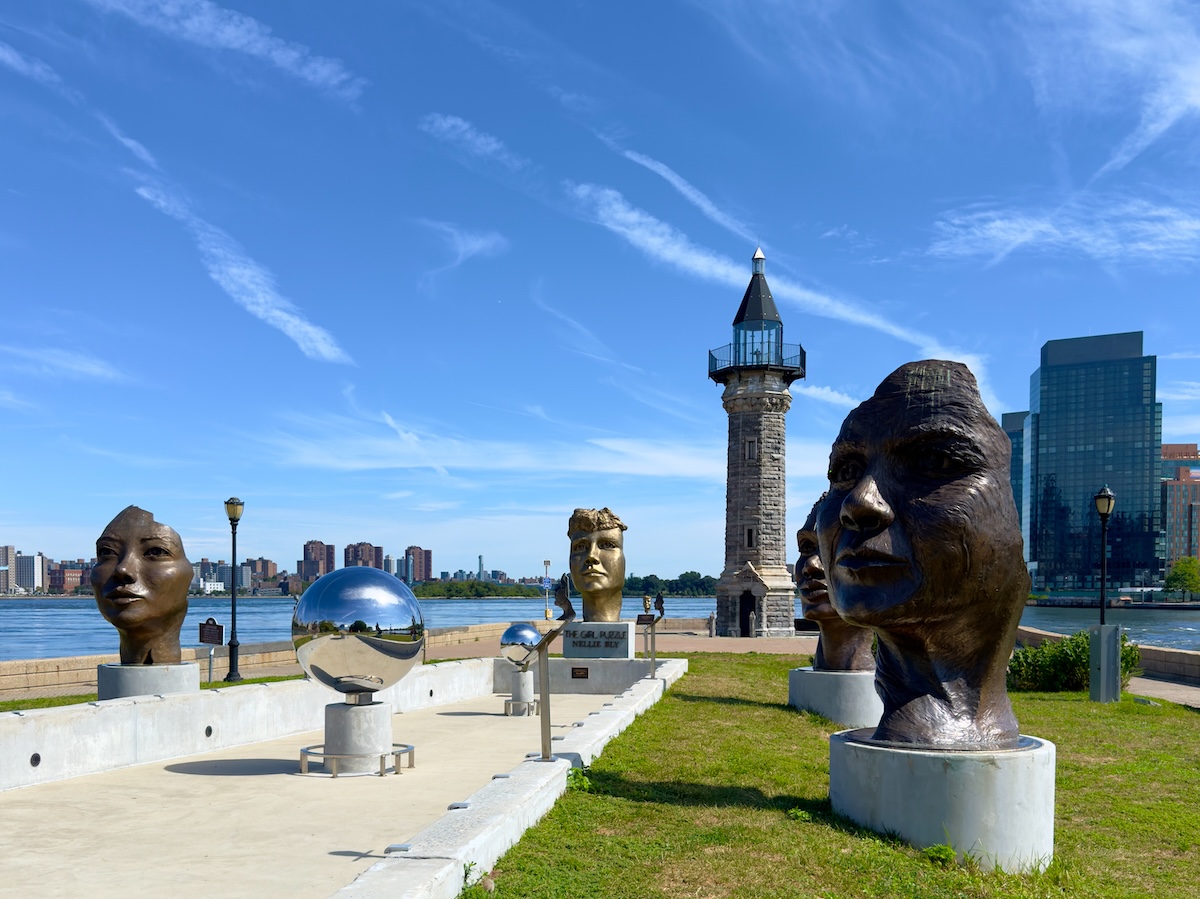
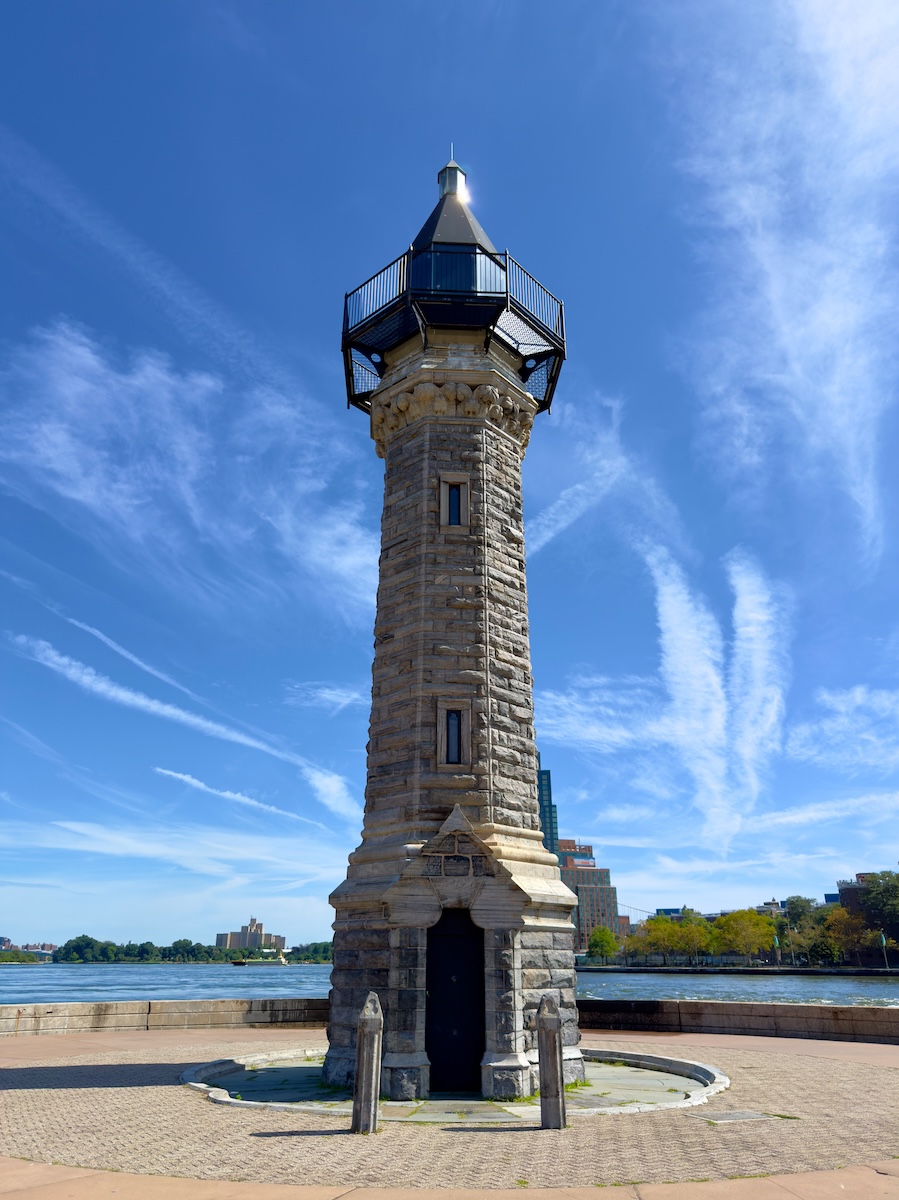

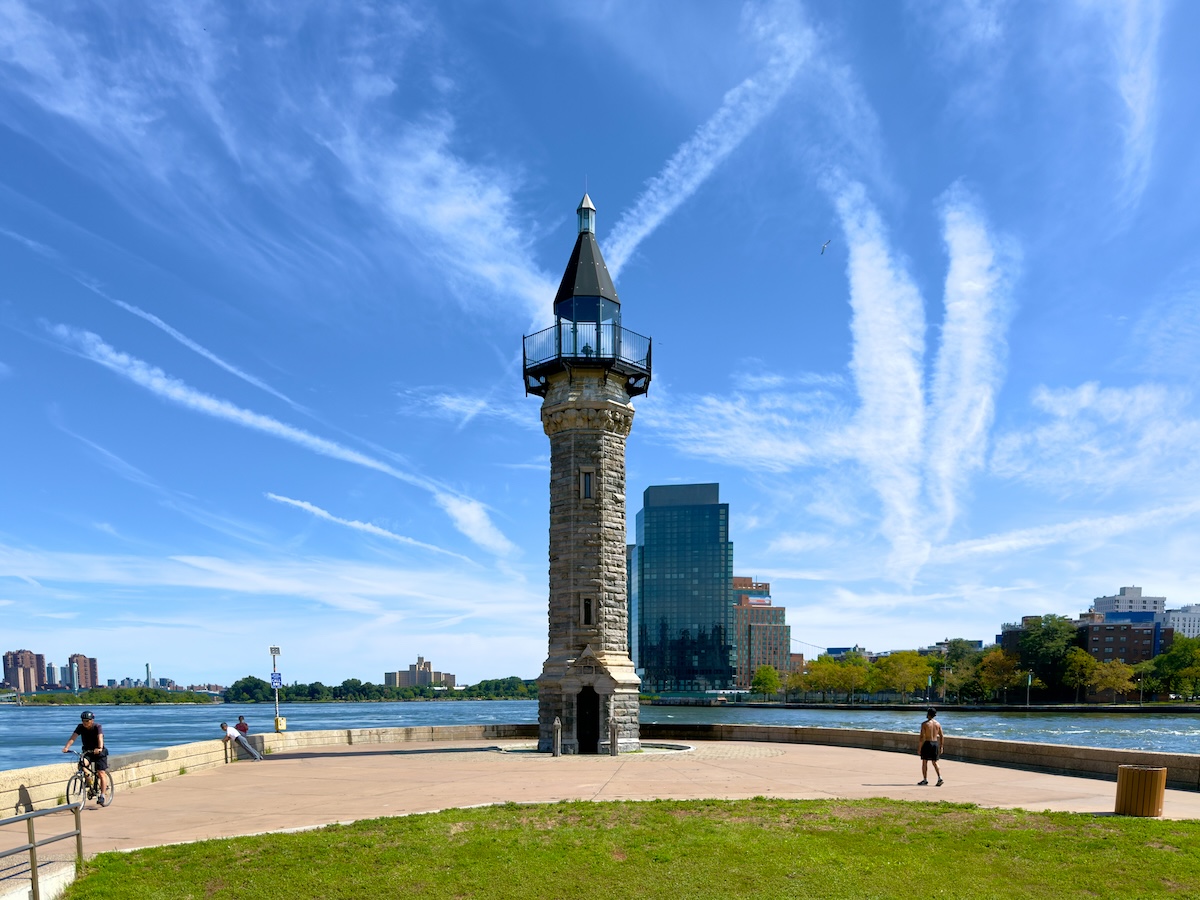
Just beyond the Bly monument stands a small stone lighthouse at the island’s northernmost tip—a hard pivot from public reckoning to “oh, that’s adorable.” But it, too, has a past. Built in 1872, the Blackwell Island Lighthouse helped guide boats through Hell Gate, the dangerous stretch of water north of the island where the East River, Harlem River, and Long Island Sound conspire to lure ships to their deaths.11 The lighthouse is modest, practical, and exactly the kind of landmark that would be postcard-famous in a smaller city. In New York, it just stands there doing its job, slightly underemployed as a celebrity.
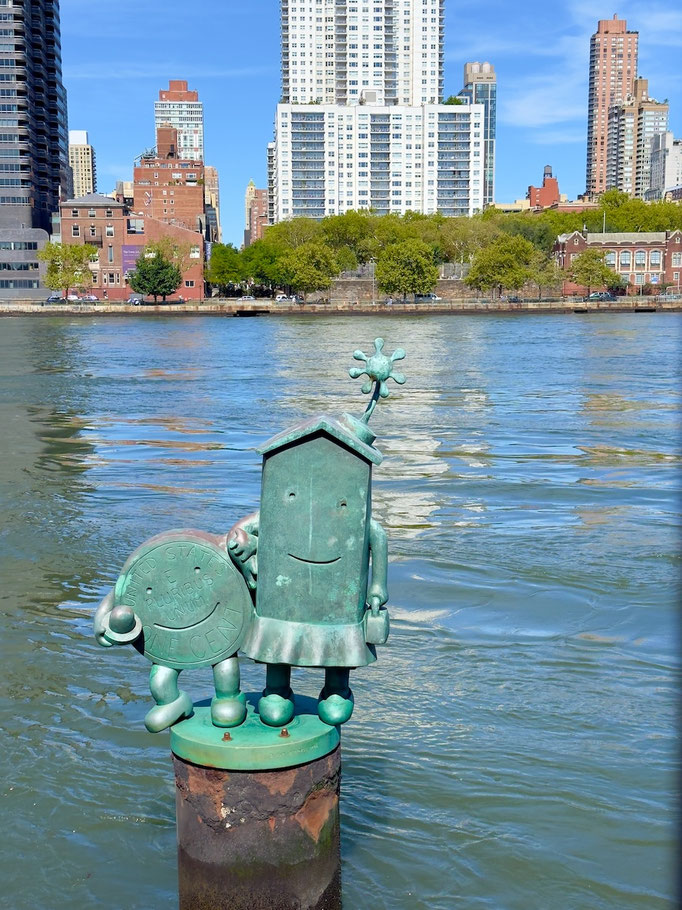
On the walk back, we passed Tom Otterness’s little sculptures in the river, part of The Marriage of Money and Real Estate.12 They are small, strange, and weirdly charming, which is not always a phrase one gets to apply to public art about real estate. One figure looked like a cheerful little house-person, another appeared to be losing a fight with a coin. Or maybe it was capitalism itself? I did not fully understand them, but I respected their commitment to being odd in public.
Adam had clearly brought us to the right place. He kept turning the island inside out for us—ruin, asylum, monument, lighthouse—as if that were a perfectly normal morning’s work. All that and we still had Central Park ahead of us, because we had not yet reached our recommended daily allowance of New York, apparently.


We took the tram back to Manhattan, which was slightly less alarming the second time, though only because fear must eventually take a back seat to the view. Landing back in the hustle and headed up toward Central Park, we did what all serious urban explorers must eventually do. We stopped in at Magnolia Bakery inside Bloomingdale’s.
We’d been walking through institutional history, public art, and waterways with murder names—and there’s only so much historical complexity a person can take before they require banana pudding. Magnolia has its own New York mythology, of course—cupcakes, lines, TV fame—but all we needed was to raise our blood sugar.
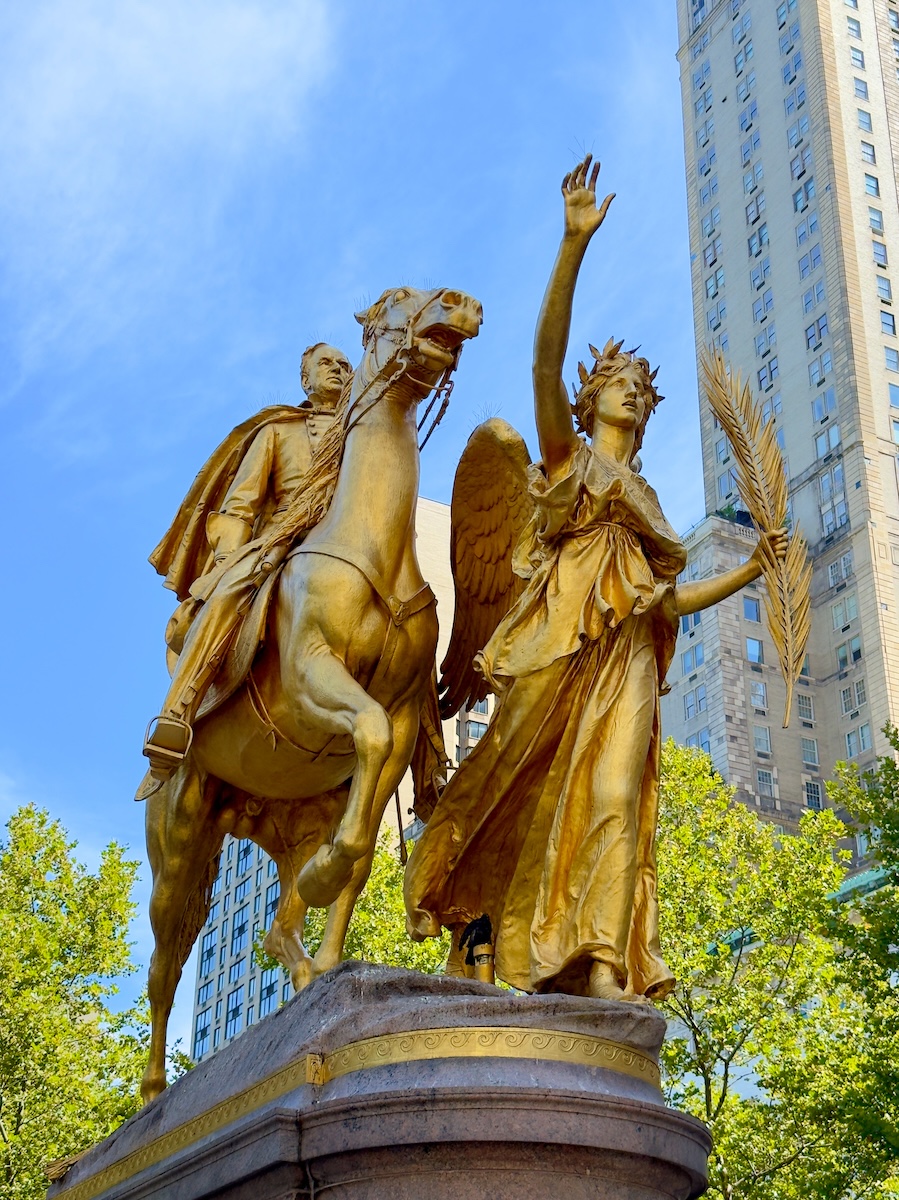
Bloomie’s frowns on people shoveling banana pudding into their faces while walking around the store,13 so we took our treats up a couple blocks and found a place to sit kitty-corner from the newly refurbished Plaza Hotel, under a giant golden statue of William Tecumseh Sherman.14 In a smaller city, this might feel like a planned outing. In New York, it’s just logistics. Buy something to nosh on, locate the nearest available ledge, and chow down. And if that ledge happens to be under a gilded Augustus Saint-Gaudens monument to the man who torched Atlanta, all the better.
The pause was just the reset we needed. Roosevelt Island had been narrow, layered, and strange. Central Park promised something else entirely—man-made nature, curated views, and enough careful engineering to make you forget, briefly, that you were standing in the middle of one of the most expensive real estate markets on Earth.
Suitably refreshed, we turned into the park. And the minute we stepped onto the path, I swear, the city did exactly what Central Park was designed to make it do—disappear. Well, not completely, of course. But the shift is immediate enough to feel suspicious.
Central Park is not wilderness. It’s wilderness with a production budget. The rocks, paths, trees, lawns, slopes, and views all seem completely natural, which is how you know someone worked very hard to make them look that way. Two someones, actually—Frederick Law Olmsted and Calvert Vaux, whose winning design turned 843 acres of Manhattan into one of the city’s most convincing acts of civic theater.
We came in near the Pond, which is one of those Central Park scenes that feels preloaded in your brain by popular culture even if you’ve never been there before. The water, the stone bridge, and even the ducks behave like they have union representation. Gapstow Bridge looks like a painting, and the whole composition has the suspicious polish of a Peter Greenaway film. The curving path, stone bridge, and tall buildings rising beyond the trees remind you that the city has not actually gone anywhere. It’s a pretty neat trick, making Manhattan visible but softened somehow.


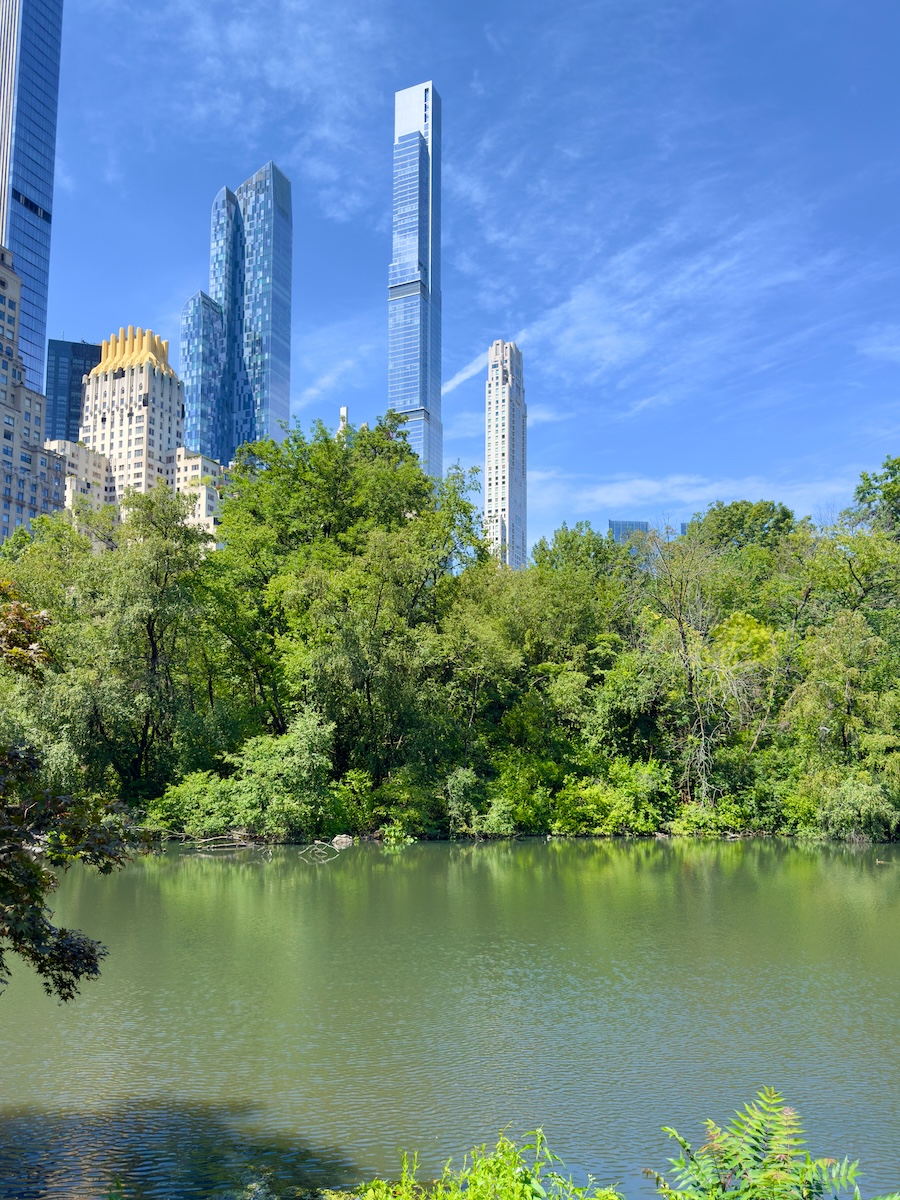
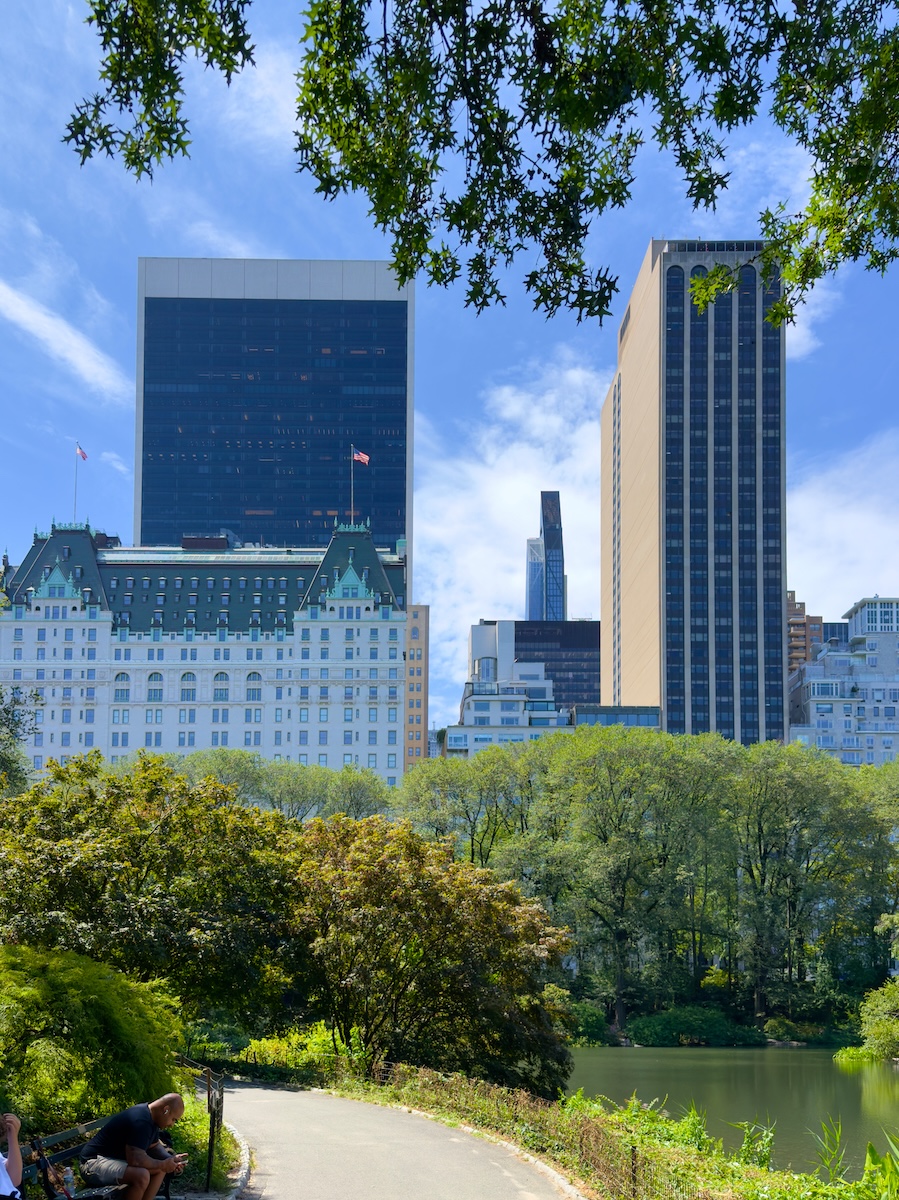
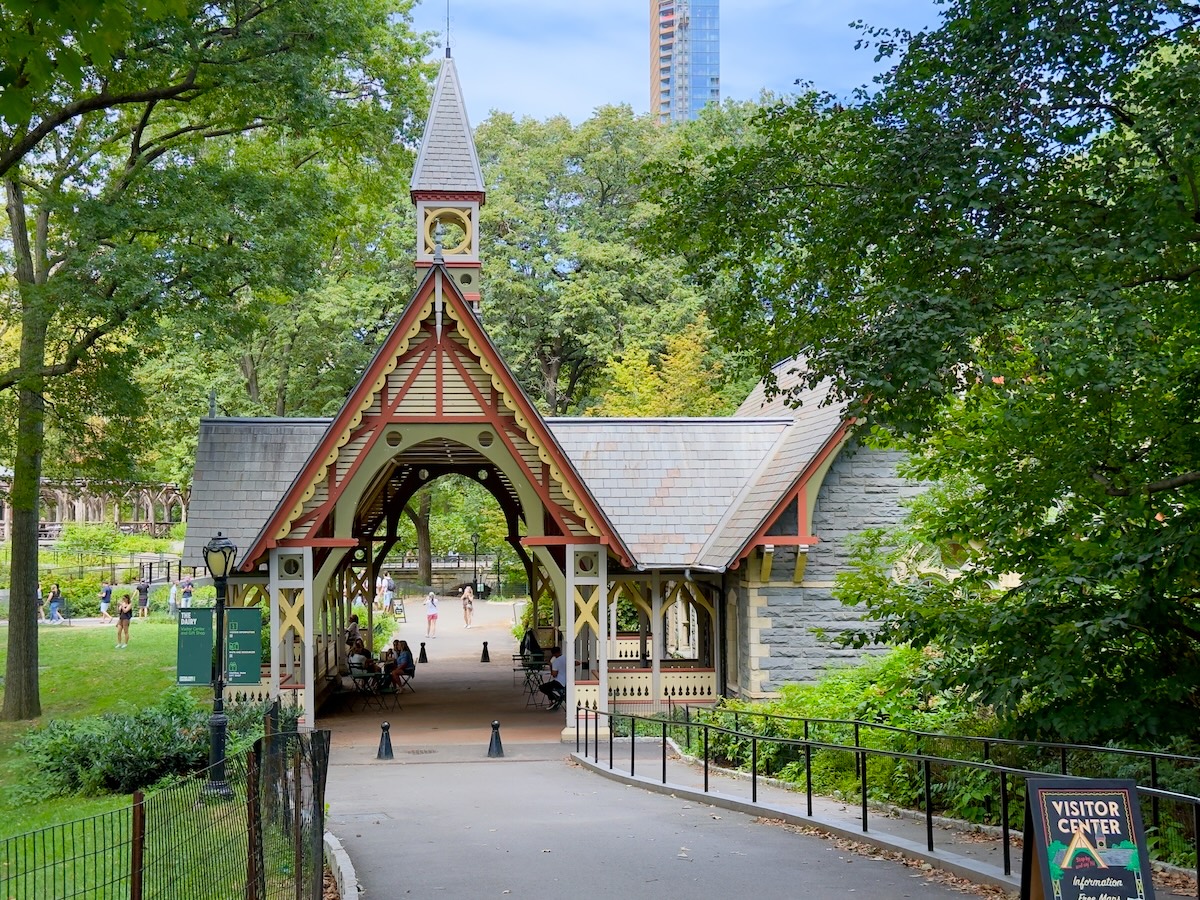
North of the Pond is the Dairy,15 a wonderfully Gothic storybook building with a name that sounds like it should involve cows, moral instruction, and children in hats. It was added in 1871 as a place where children and families could get safe, fresh milk at a time when the city’s milk supply was…lacking. “Swill milk” was a real thing, with cows kept in filthy urban stables and fed spent mash from whiskey distilleries instead of proper feed. Because the resulting milk was thin, blue, and poor quality, sellers “doctored” it with flour to thicken it and, honest to God, plaster of Paris to whiten it. Now that unadulterated milk is legally required and available at any corner bodega with a working refrigerator, the Dairy has been repurposed as a visitor center and gift shop.
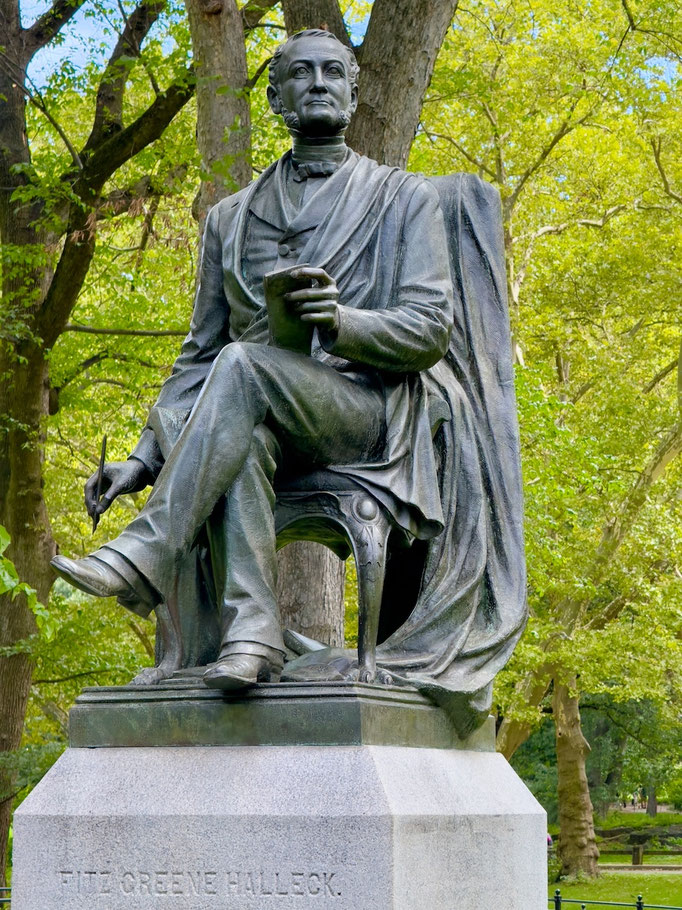
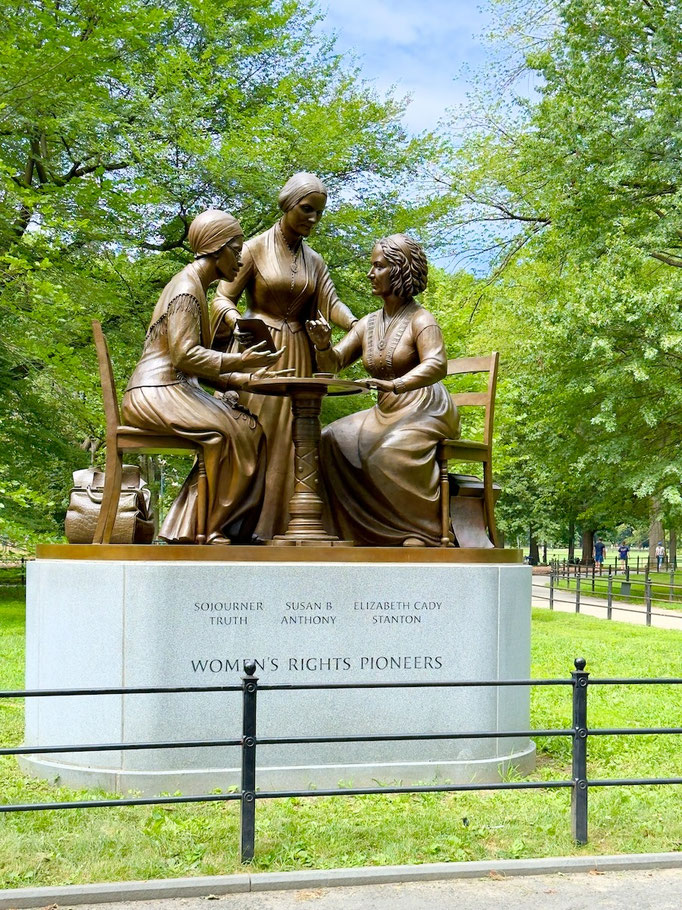
After the Pond’s composed postcard and the Dairy’s pastoral cosplay, the Mall—one of the few places in Central Park where the designers allowed a straight line to survive—is all civic promenade. Long, tree-shaded, and designed for strolling, the Mall makes you wonder why we don’t all wear top hats, carry parasols, and wander arm-in-arm down a sun-dappled path. The southern end of the Mall, Literary Walk, is lined with statues of writers, statesmen, and the usual population of men cast mid-importance. There wasn’t a single monument to any real women in the park until 2020, which feels less like a fun fact than a municipal confession.16
The Mall led us straight to Bethesda Terrace, which is where Central Park completely dispenses with false modesty. The park can do winding paths and gentle slopes all it wants, but eventually it wants you to arrive somewhere grand enough to remind you the whole illusion is publicly funded municipal pride. Bethesda Terrace is that place.


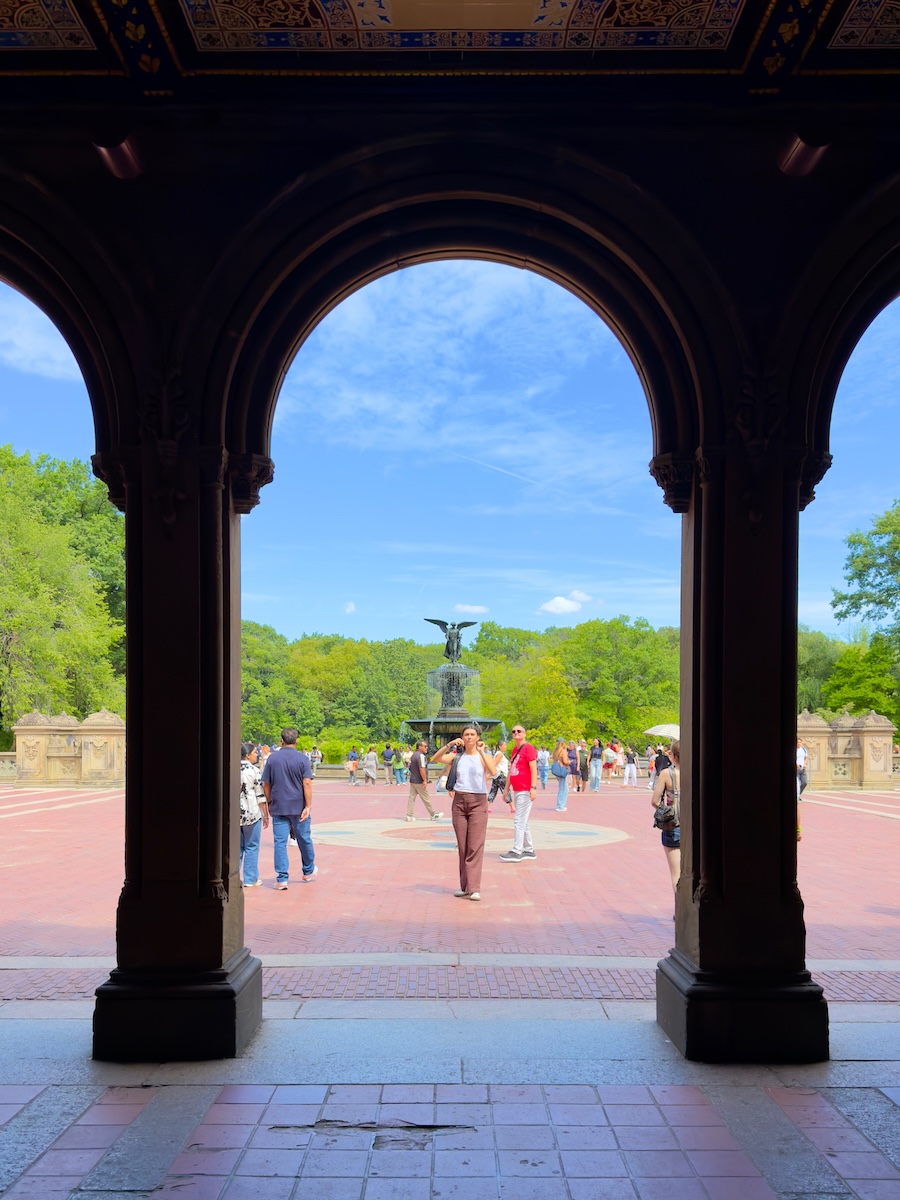
It’s also where Central Park’s stage management becomes obvious. You descend from the formal promenade into a space that feels both open and enclosed, busy and composed. People sit on the steps, take photos, listen to musicians, pose by the fountain, and generally behave as if they were characters in the exact scene the designers had in mind. The terrace carvings are wonderful in that fussy, storybook way Central Park does surprisingly well—owls, birds, plants, little figures, seasonal details, all tucked into the stonework as if the park were worried grandeur alone might not be charming enough.
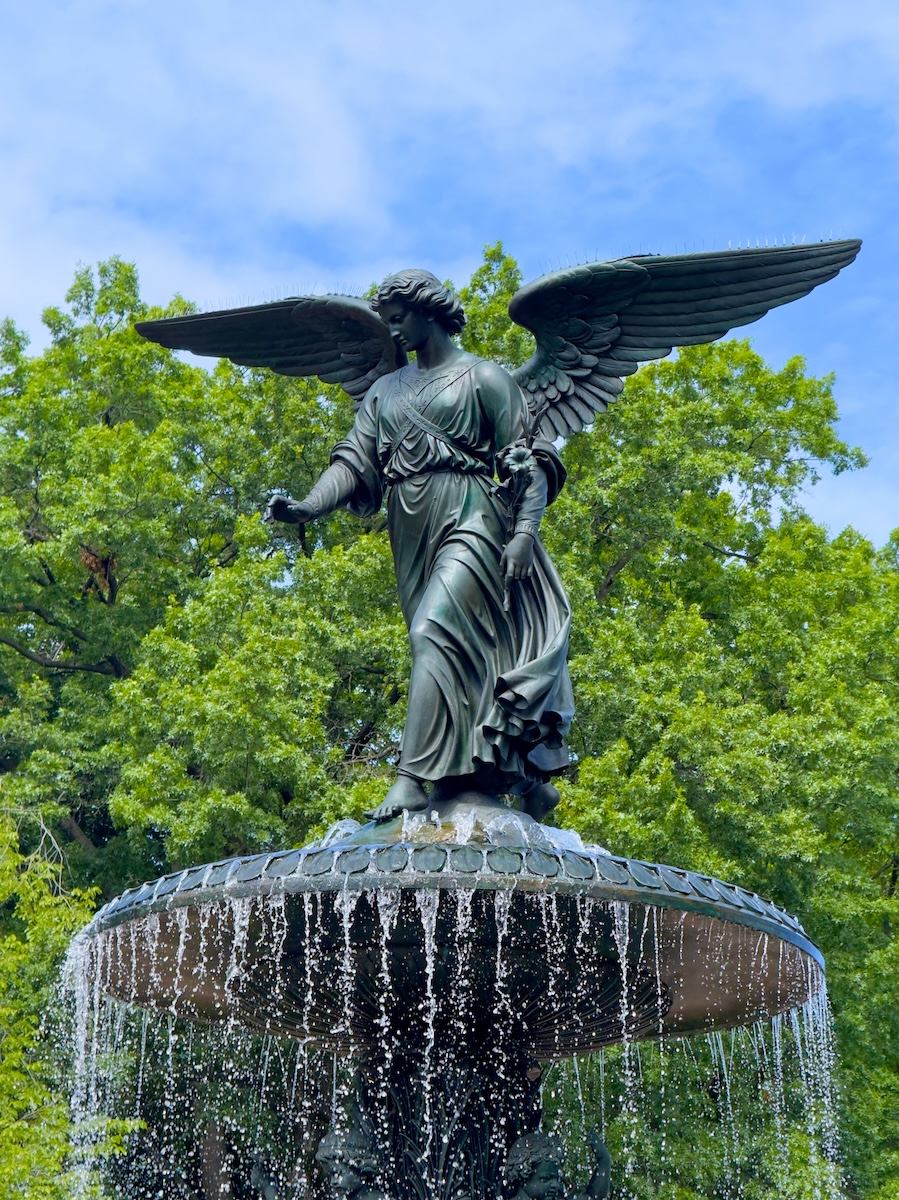
Bethesda Fountain is overseen by the Angel of the Waters, sculpted by Emma Stebbins and dedicated in 1873. Stebbins was the first woman to receive a major public art commission from New York City, which is genuinely impressive. It helped that her brother, Henry Stebbins, was president of the Central Park Board of Commissioners, though. Even when you’ve got the talent, it can’t hurt if you’ve got a close relative in the right place.17 She created the sculpture while living in Rome, where she was part of a circle of women artists and in a long, committed relationship with Charlotte Cushman, one of the most famous actresses of her day. Some accounts suggest Cushman may have inspired the angel’s face, which is either deeply sappy or exactly the sort of thing public monuments should have been doing all along. Officially, though, the angel commemorates the Croton Aqueduct bringing cleaner water to New York, because even God’s emissaries eventually have to acknowledge the plumbing.
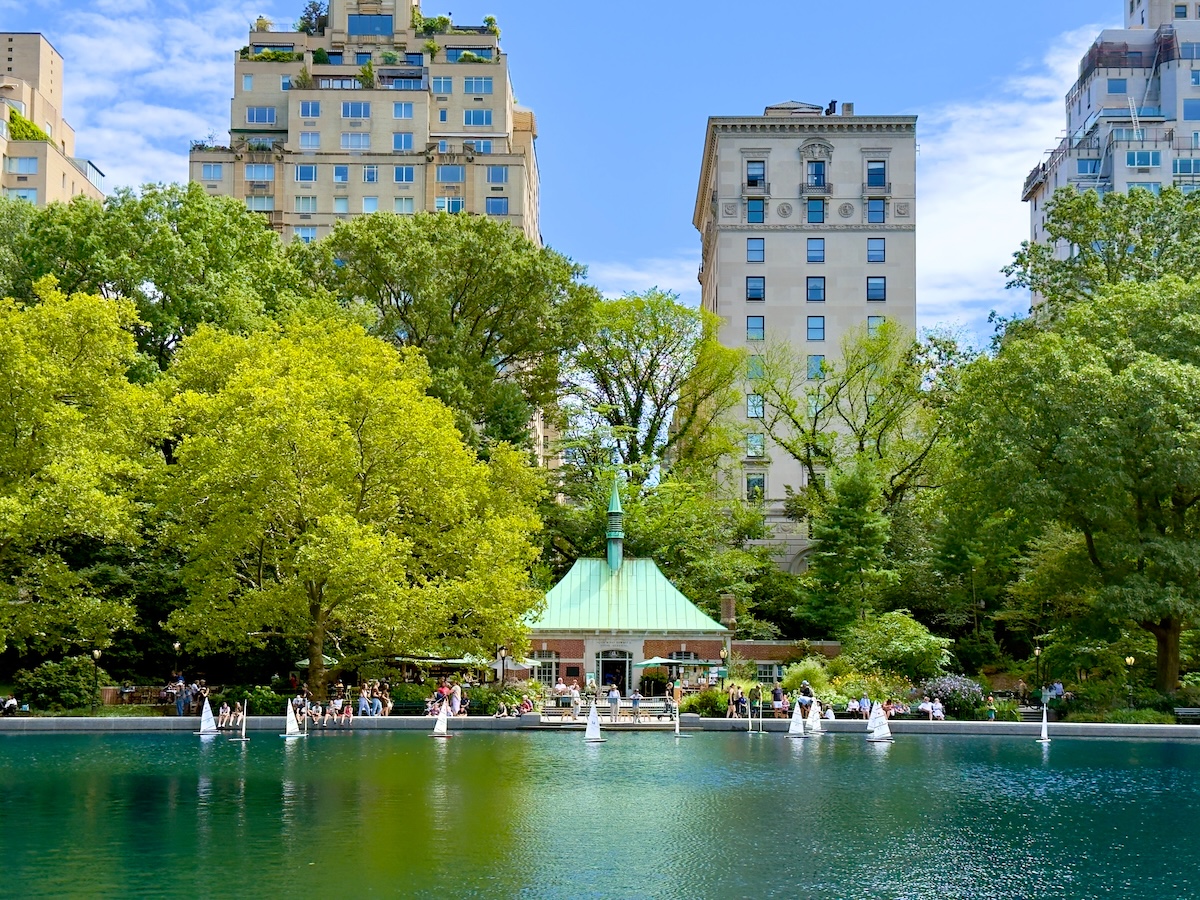
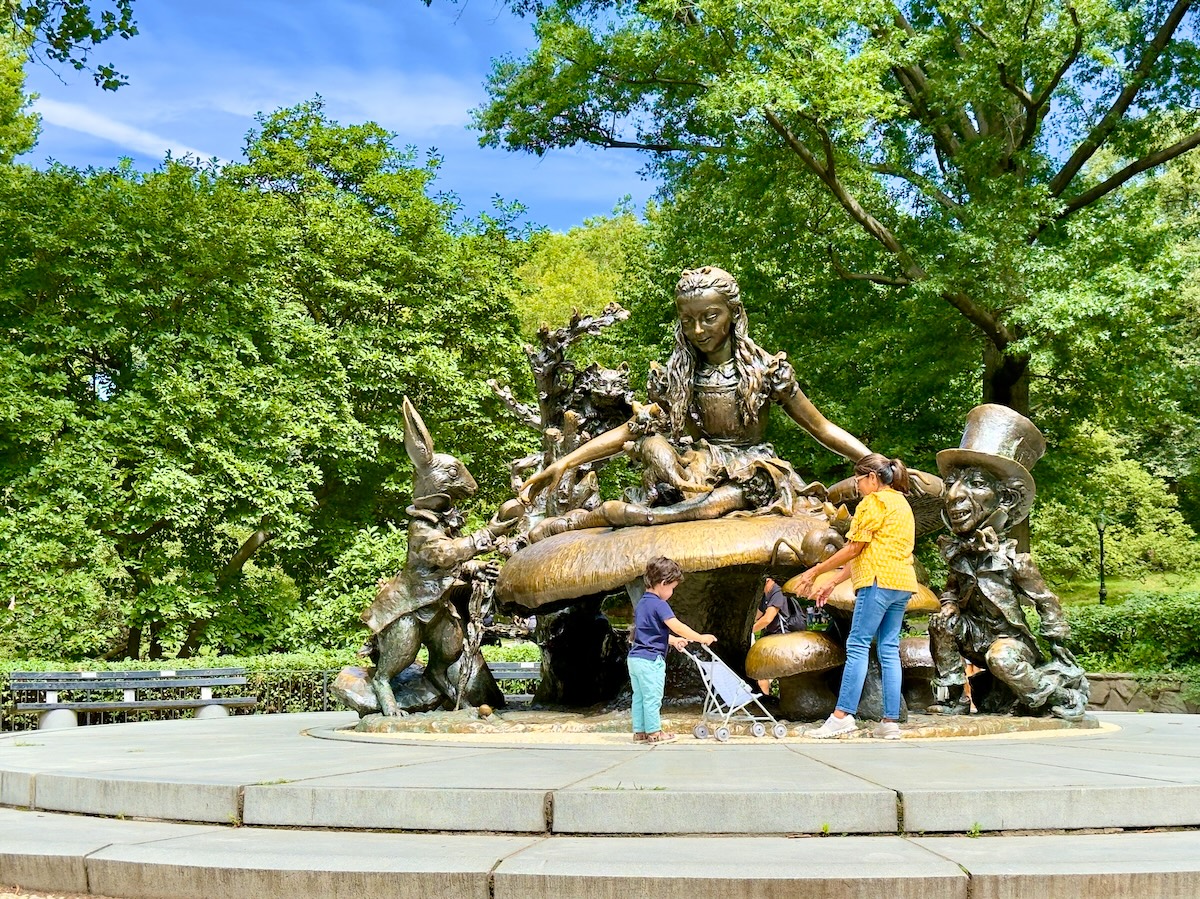
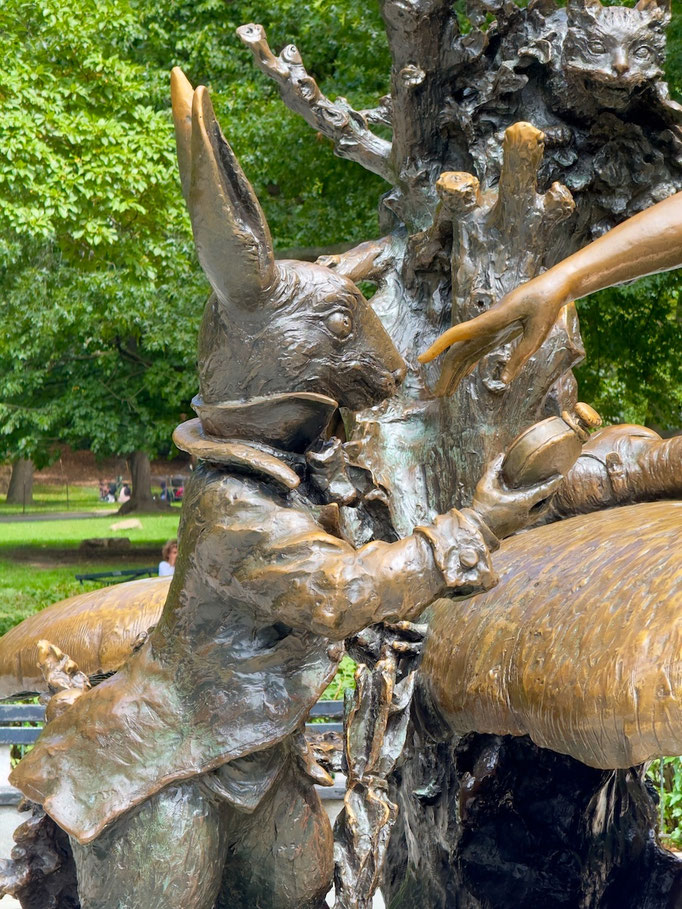
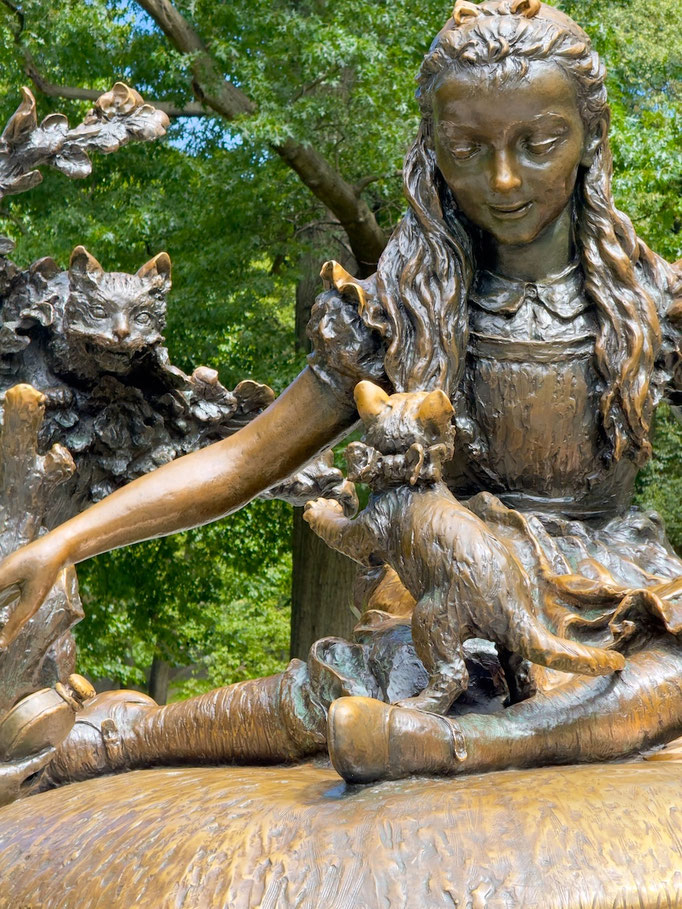
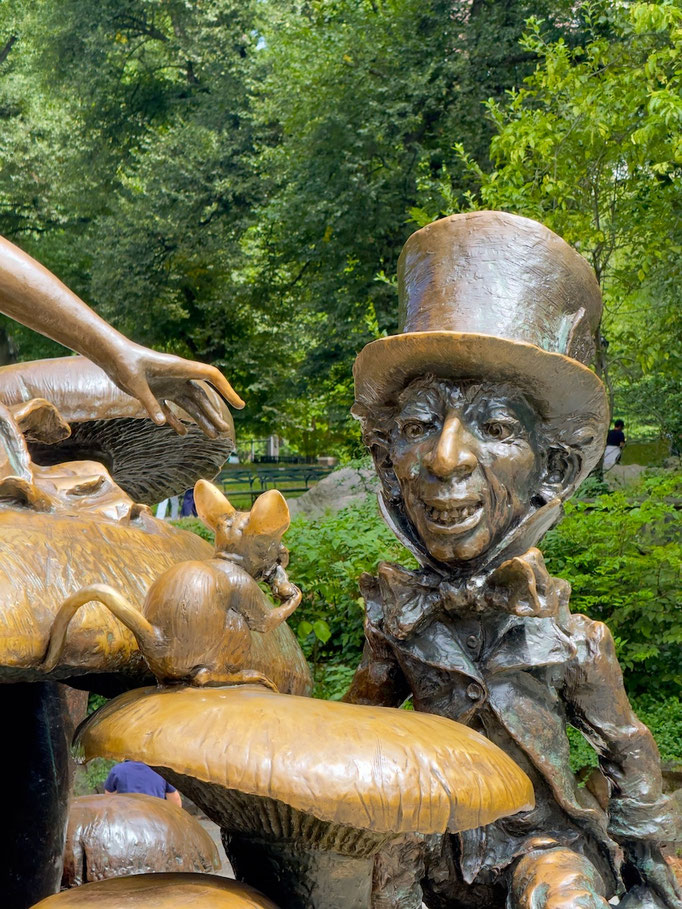
Just to the east of Bethesda Fountain is Conservatory Water, which felt like we’d walked into a children’s book. Model sailboats crossed the pond with purpose, tiny vessels engaged in important maritime affairs. Nearby, Hans Christian Andersen was reading to a duck, which was charming enough until we saw Alice sitting on a bronze mushroom visiting with the March Hare, the Mad Hatter, and what I assumed to be the Cheshire Cat reimagined as a perfectly normal house cat with a bow around its neck. Generations of children have gleefully climbed over the whole statue, polishing it almost gold in spots. It should be too much, but it is definitely just right. After the Terrace’s grandeur, this little pocket of the park felt softer and stranger, as if New York had agreed to let whimsy win, if only for a moment.

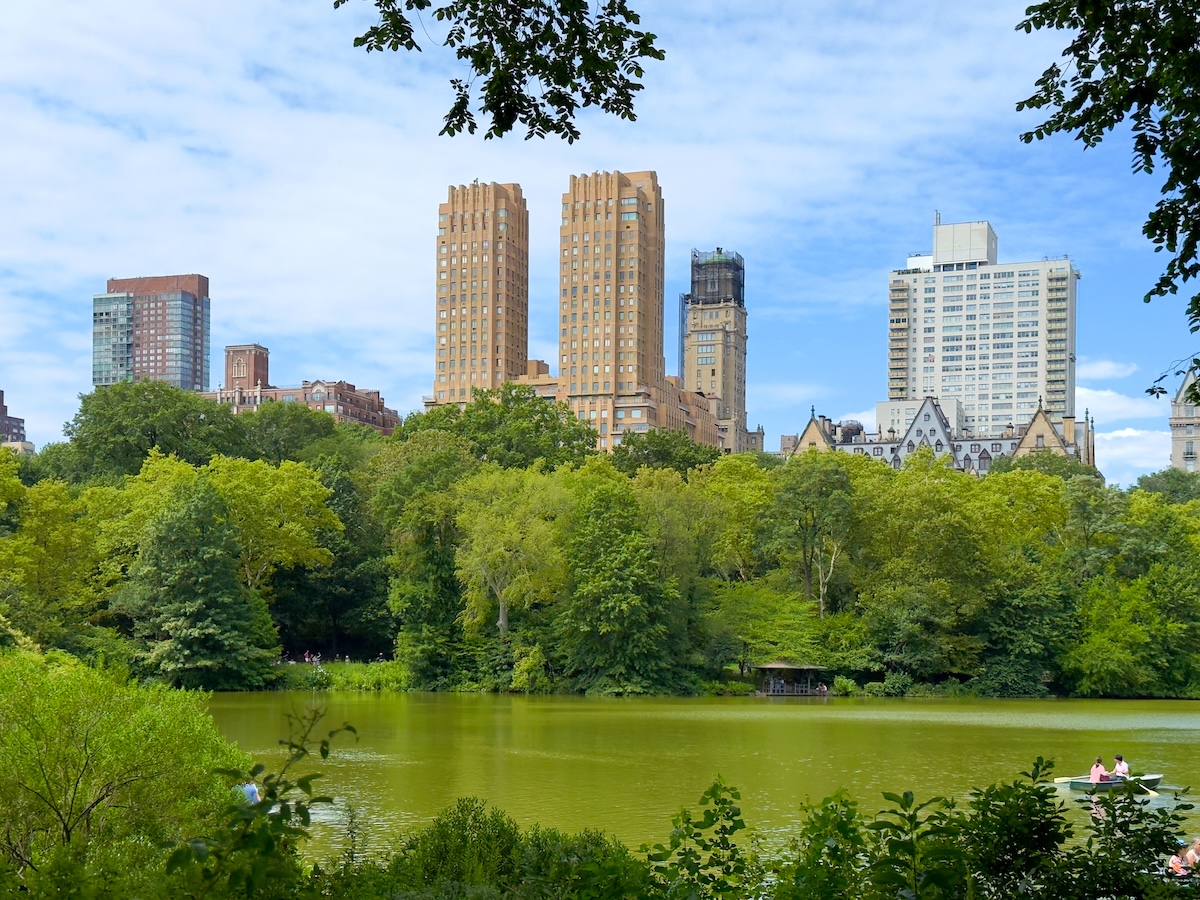
We ended our time with Adam by heading into the Ramble, Central Park’s designed woodland and one of the few places in Manhattan where “a hike through the woods” is technically accurate if you don’t inspect the phrase too closely. The Ramble was part of Olmsted and Vaux’s original plan, meant to feel irregular, shaded, and exploratory—a deliberate contrast to the Mall’s straight civic promenade and Bethesda Terrace’s formal grandeur. The paths twist, climb, split, and double back just enough to make the park feel larger than it is.
That’s the trick of it. The Ramble is not wild in any honest wilderness sense, but it is wild enough for Manhattan. You can hear the city, sort of. You can feel it around the edges. But for a few minutes, the city disappears behind leaves and branches and Central Park’s manufactured nature becomes emotionally real.18
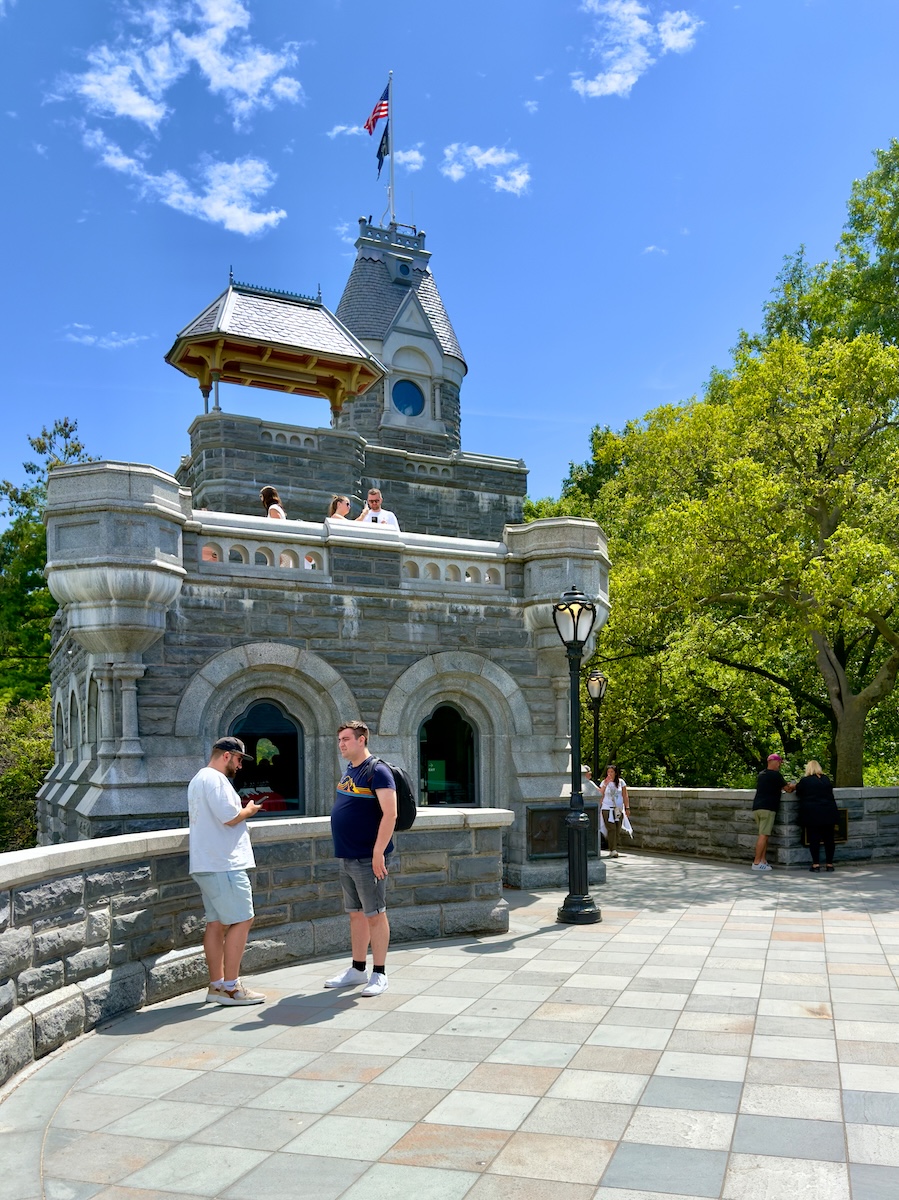
The path eventually delivered us to Belvedere Castle, because the only sensible way to end a fake hike through fake woods is in front of a fake castle. Designed by Calvert Vaux and Jacob Wrey Mould, it was built on Vista Rock, one of the park’s highest natural points, as a scenic lookout. Its name comes from the Italian bel vedere, meaning “beautiful view,” making it almost comically literal. In architectural terms, it’s a folly—a building meant mostly to complete the view, give visitors somewhere to arrive, and make the landscape feel more dramatic. It eventually became an official weather station, so it’s less folly than it used to be.

By then, at the top of the park’s second-highest hill, we were tired in that satisfied way that means you either had an excellent adventure or made some ill-considered choices in footwear. Probably both. Adam had delivered far more than my calendar appointment suggested, somehow packing a full day’s worth of New York into a not-quite-full-day tour.
We’d started the morning on public transit pretending to be an attraction and ended the day at an attraction that had somehow gotten a public job. In between, New York had given us smallpox ruins, a grand asylum staircase, Nellie Bly’s second-most-famous exploit, a tiny lighthouse, Bethesda, boats, and Belvedere. No wonder we were tired.

Write a comment