

Mary and I were looking forward to our “behind the scenes” tour of St. Patrick’s Cathedral, which felt like a reasonable thing to be excited about. Rick’s interest level for churches verges slightly into the negative, so he did not join us.
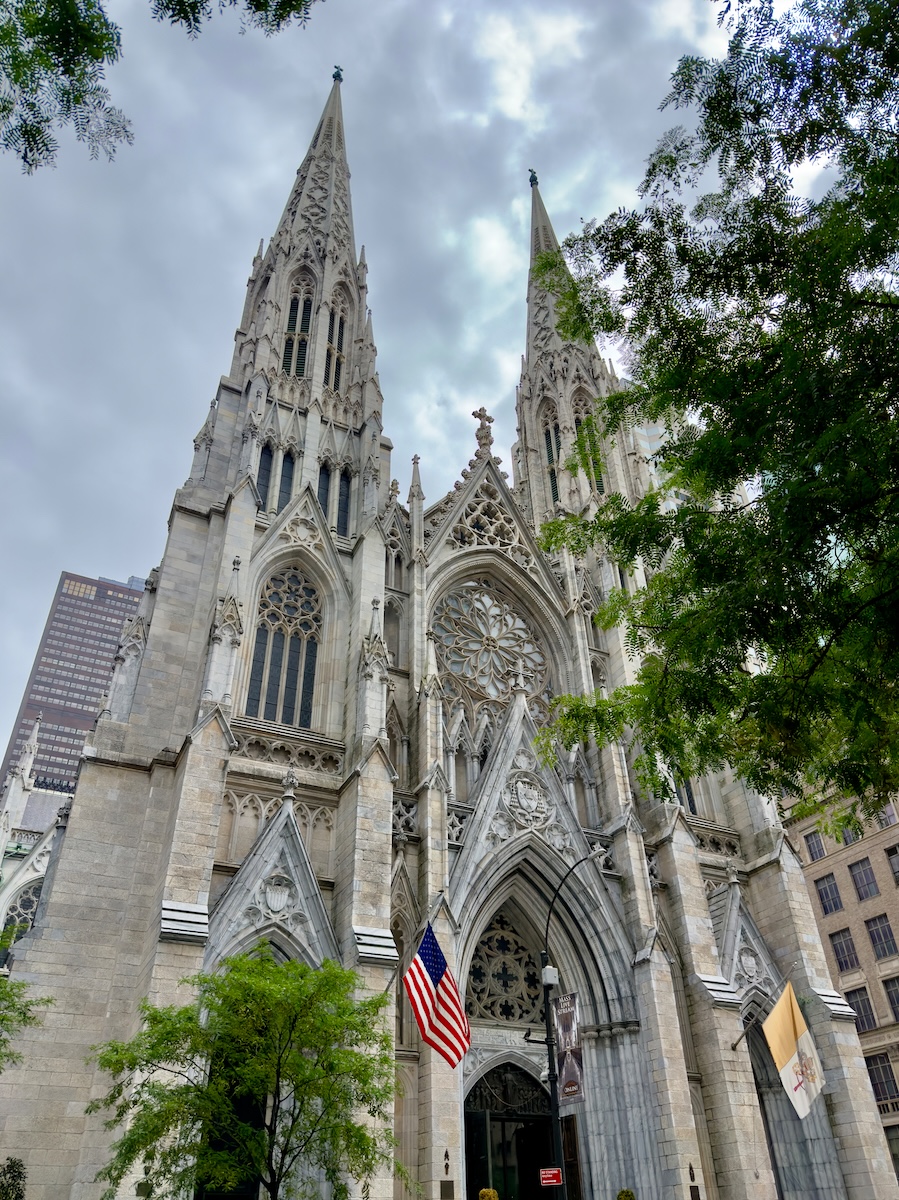
When we got there, Fifth Avenue was in full Monday morning swing—loud traffic, endless scaffolding, and New Yorkers moving with single-minded intent—and the cathedral sat right in the middle of it like it had always been there and always would be.
We didn't enter through the front, though. Instead, we were directed to use the church offices door tucked at the back of the north side, the kind of entrance you'd use if you worked there and had a keycard. It opened directly into a beige space that felt more administrative than sacred—fluorescent lighting, hallway energy, phones ringing, keyboards clacking. But quietly. Like a library. So "behind the scenes" was an utterly accurate description.
We met our guide—a seminary student who was friendly, composed, and clearly very comfortable with the material—and she kept things moving at a steady clip for the next hour. Her tone was informative without being heavy, and the pace suggested she’d done this often enough to know where people tend to linger and where they don’t. A few lines arrived with the timing of something still being field-tested.
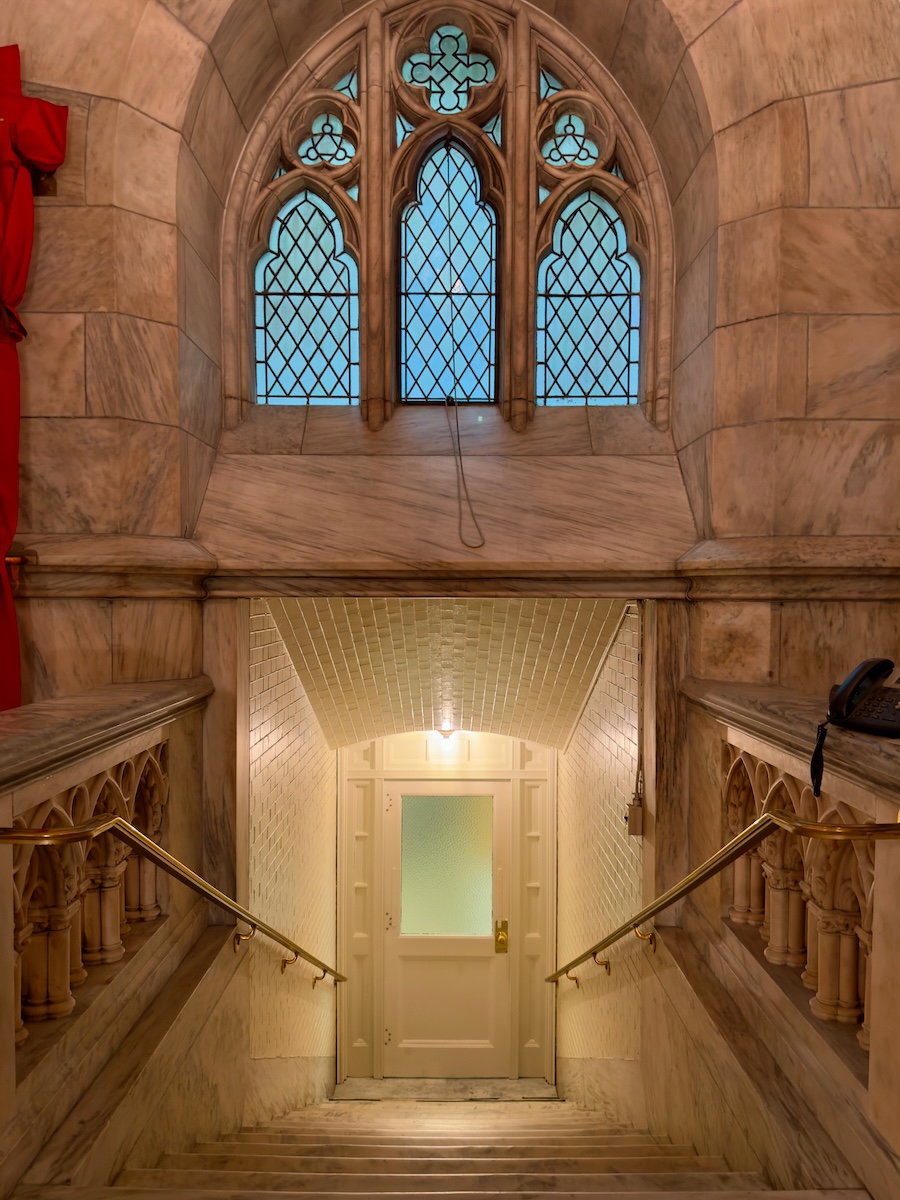
From the offices, we followed her down a hallway without much ceremony. No grand reveal of the nave, no slow approach to the main altar—just a quick pivot, a set of stairs, and we were in the basement, the official beginning of our tour.
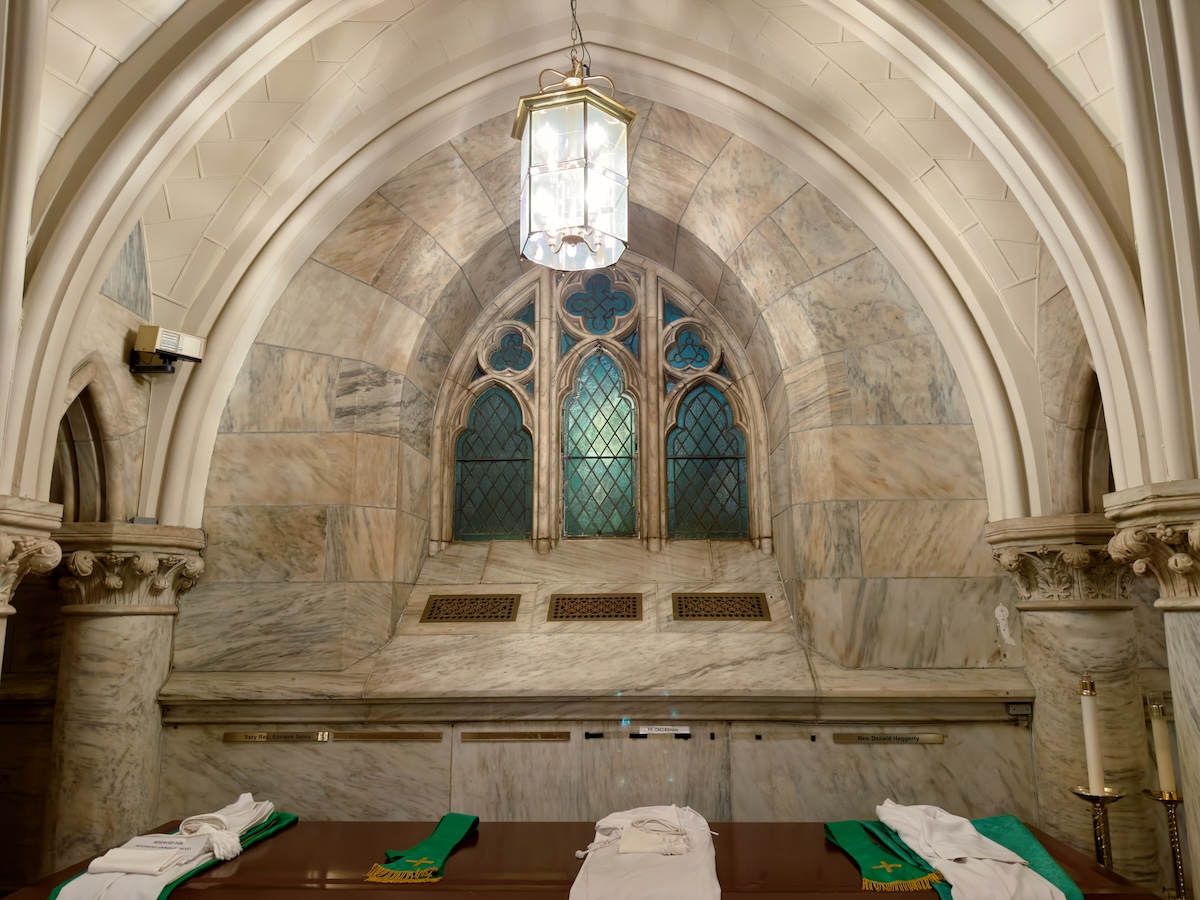
Our first stop was the vestry, which looked exactly like you might expect—a big closet where people get ready for things. Vestments hung in orderly rows, and the cabinets held chalices, folded linens, and missals, everything arranged for easy access rather than display. Adjacent to that was what she called the “Sacry Chapel,” a name that sounded close enough to something official that I didn’t think to ask.
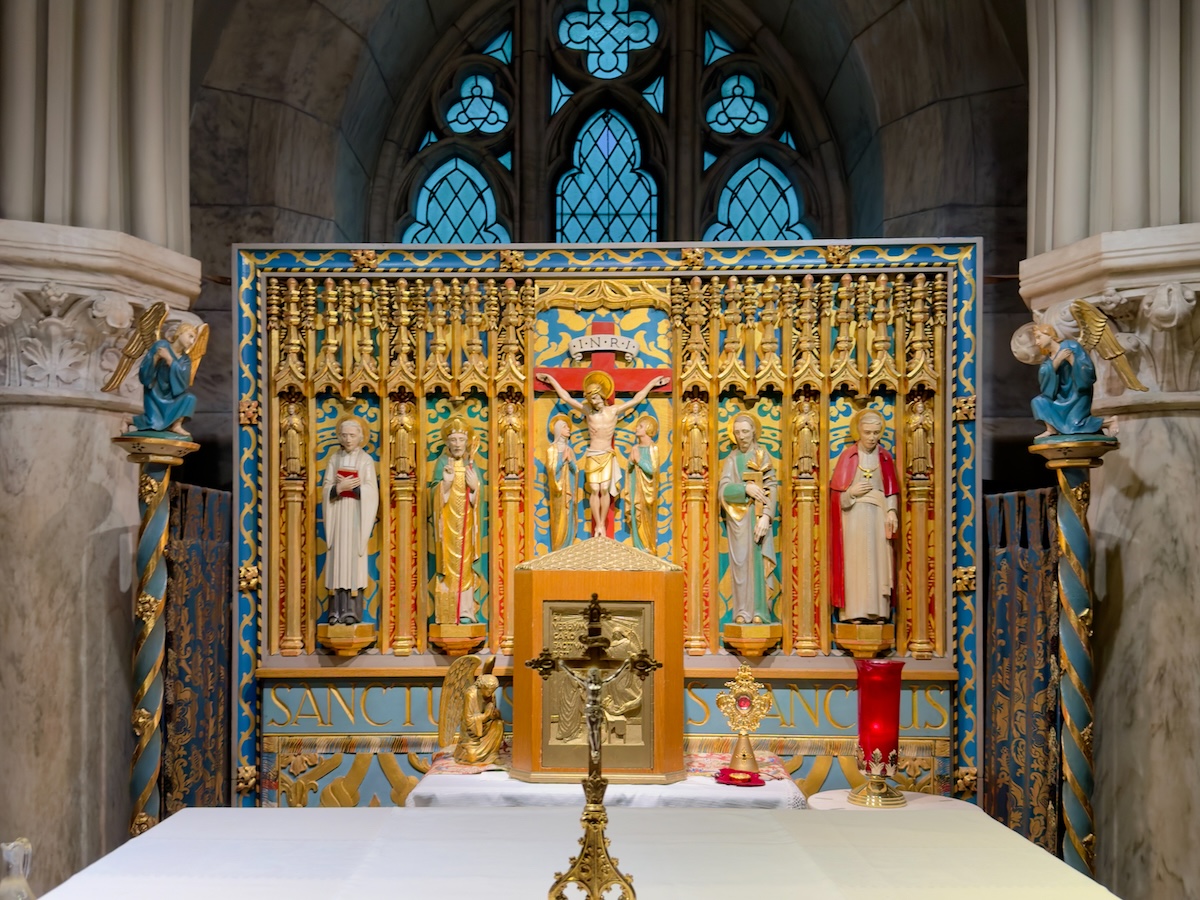
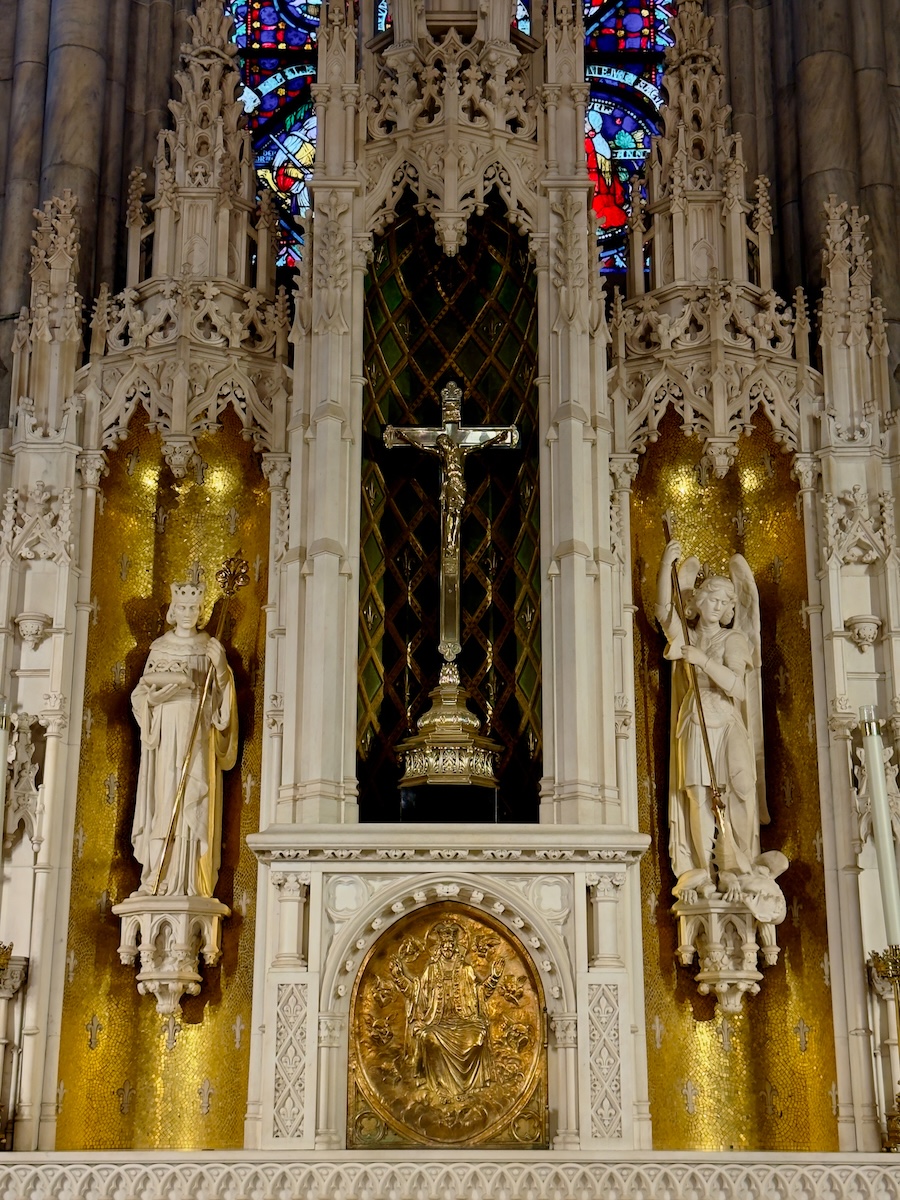
It was small, bright, and carefully made, with blue and gold panels framing a compact altarpiece. The figures were evenly spaced, the central crucifixion scene was easy to read, and the whole thing was more deliberate than grand. Its job is functional. It wasn’t built to impress, unlike its larger relatives upstairs. It looked like a place that mattered to the people who used it, though it wasn’t entirely clear how often or in what way. A chapel for clergy, maybe, or for smaller VIP services, or for rites that didn’t require the use of the full cathedral.
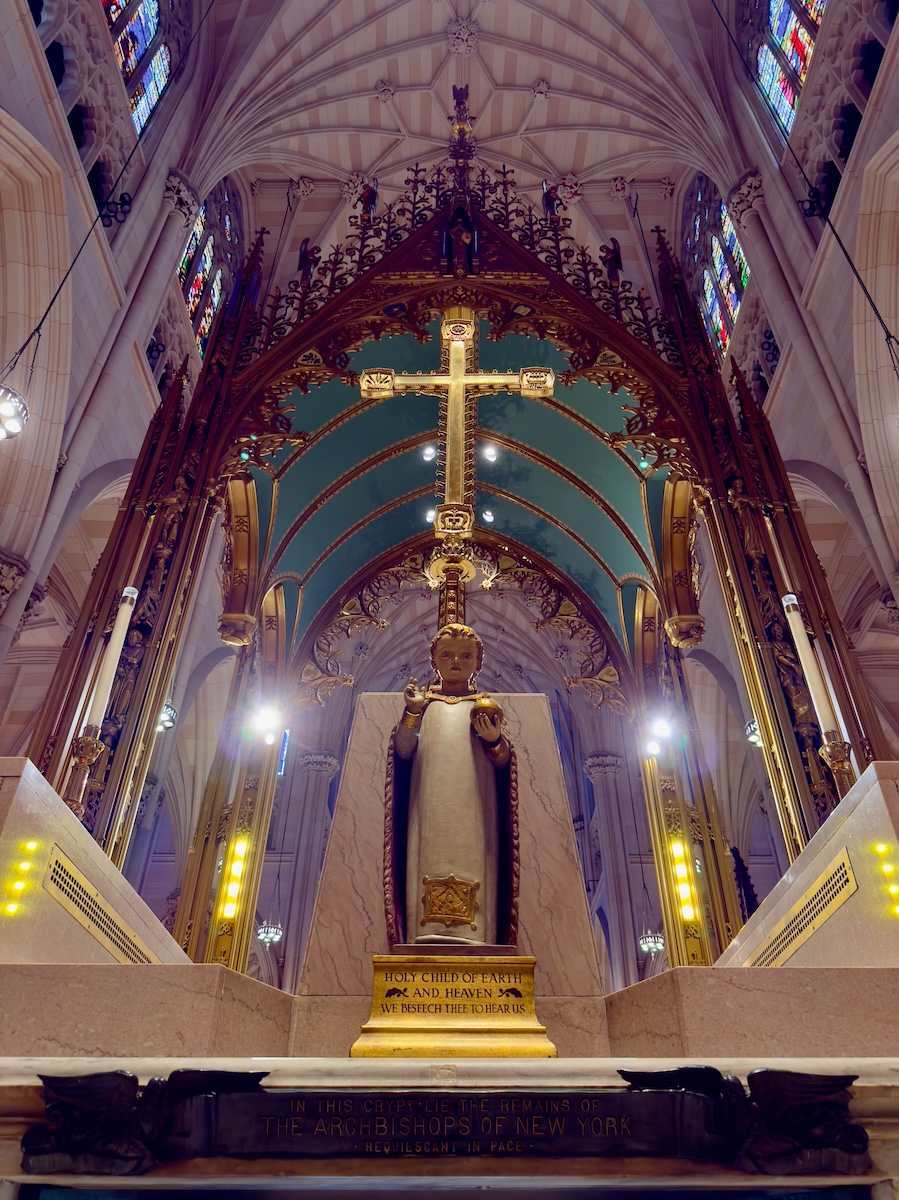
The crypt came next, and we had expectations. You just hear the word and picture something old, heavy, built up over time. This was the main reason we’d booked a “behind the scenes” tour, and we were both practically rubbing our hands together in anticipation.
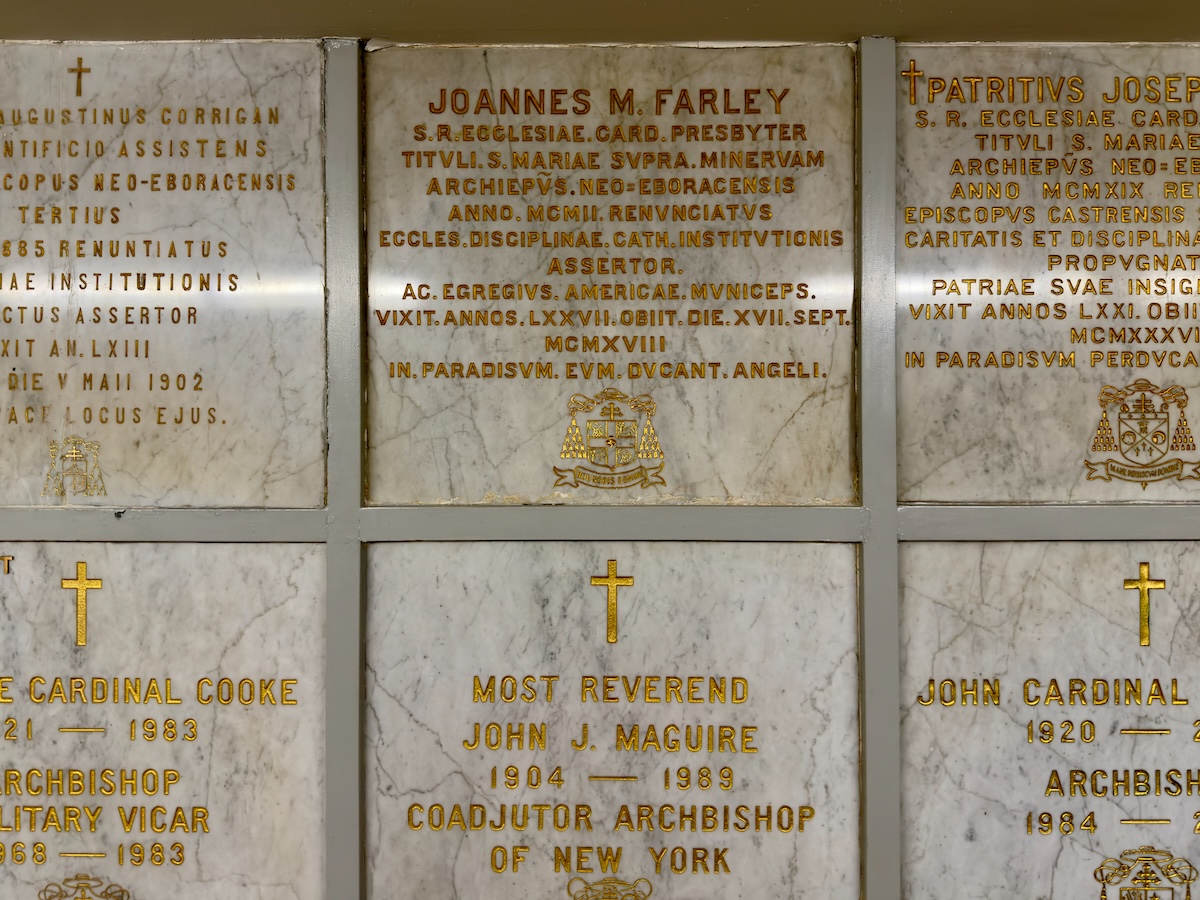
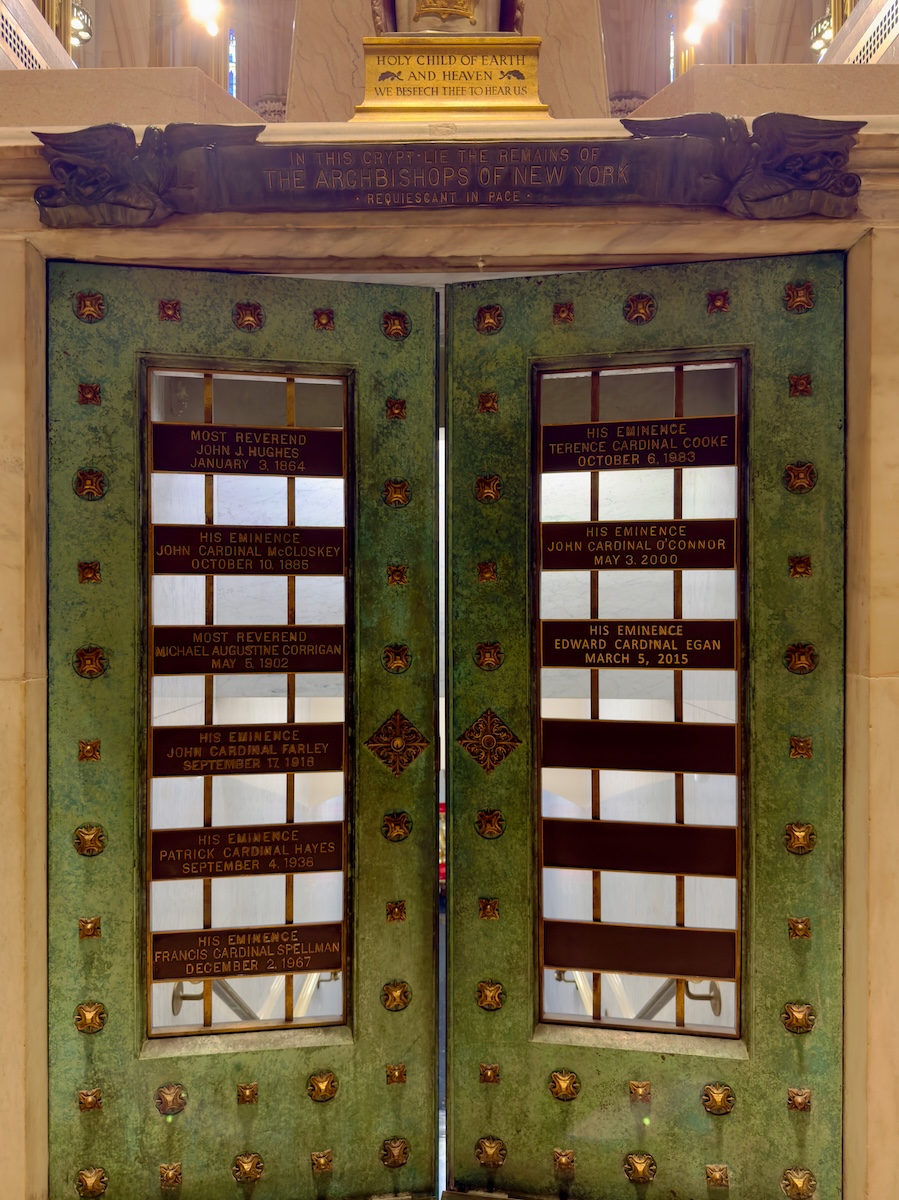
What we found instead was an extremely small, extremely tidy room, the walls covered with a grid of blond marble plaques. Each one was the same size and shape, with the same gold lettering marking the resting place of a New York archbishop. Like labels on a card catalog. The inscriptions leaned formal—names, titles, dates—more institutional than personal, with just the occasional small photo tucked into a seam to suggest there had been actual people involved.
There weren’t that many of them, which made sense once you stopped to think about it, though that realization arrived a beat after the first look around. The Archdiocese of New York dates only to the early 1800s, and this cathedral didn't open until 1879, when this part of Manhattan was still well north of where most people lived. There simply hasn’t been enough time to accumulate a long bench of dead archbishops, no matter how prominent the institution eventually became.
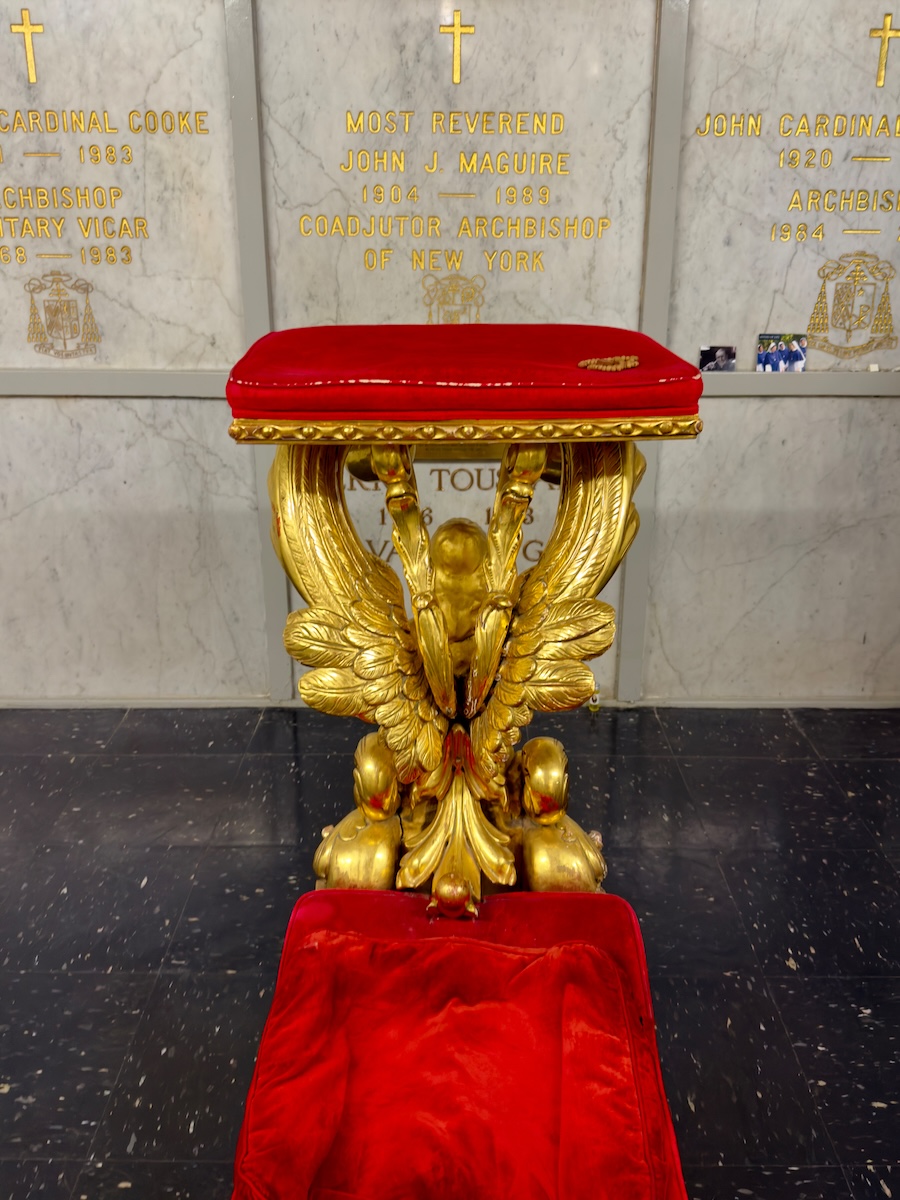
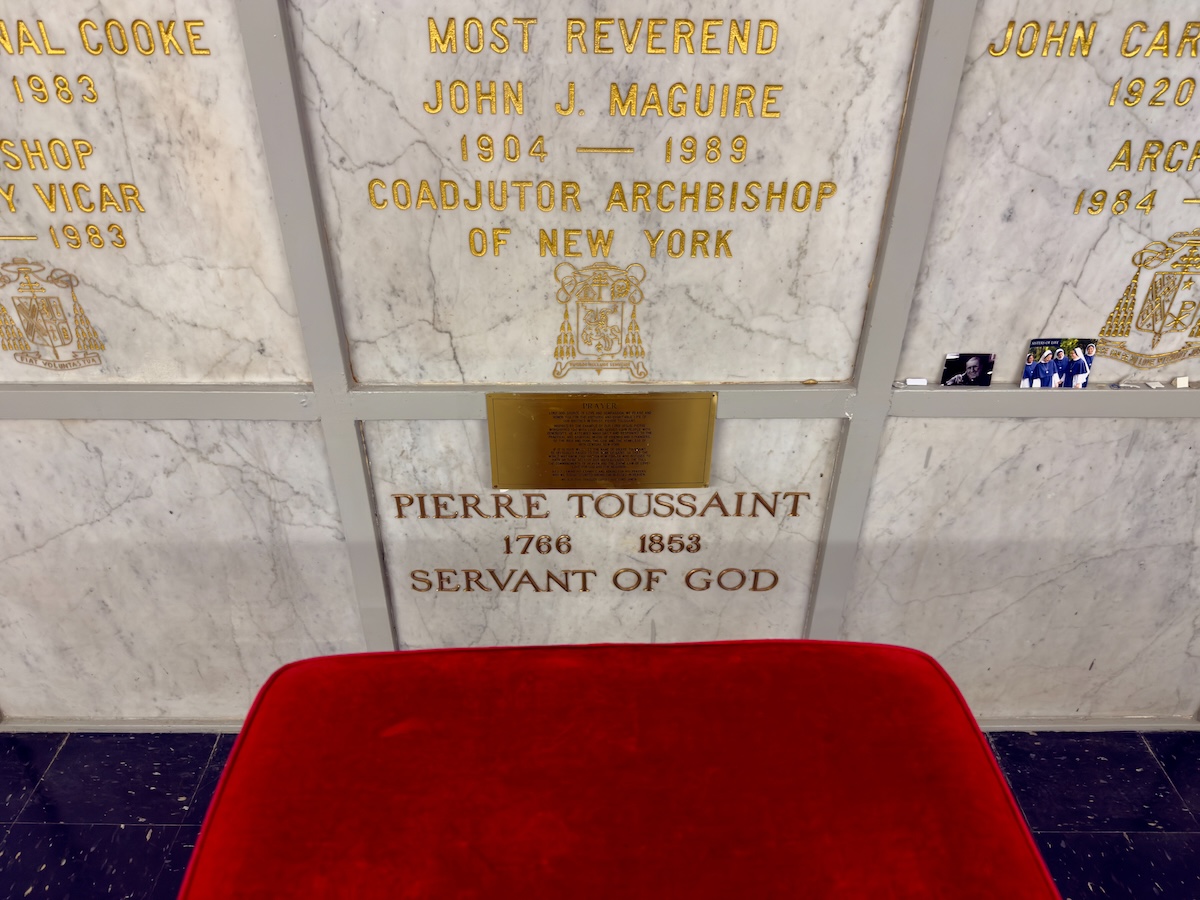
One name stood out from the others—Pierre Toussaint. Born enslaved in Saint-Domingue (now Haiti) and brought to New York, he built a successful career as a hairdresser to the city’s rich and famous. He was known for his skill and, more importantly, his discretion. He used that position to support orphaned children, fund early Catholic institutions, and personally care for the sick during outbreaks, becoming a central figure in the city’s early Catholic community. He's buried here among bishops and archbishops, which says something about how he was regarded, even if the setting doesn't go out of its way to emphasize it. It feels surprising at first, until you realize he may have been the one doing the most to earn it.
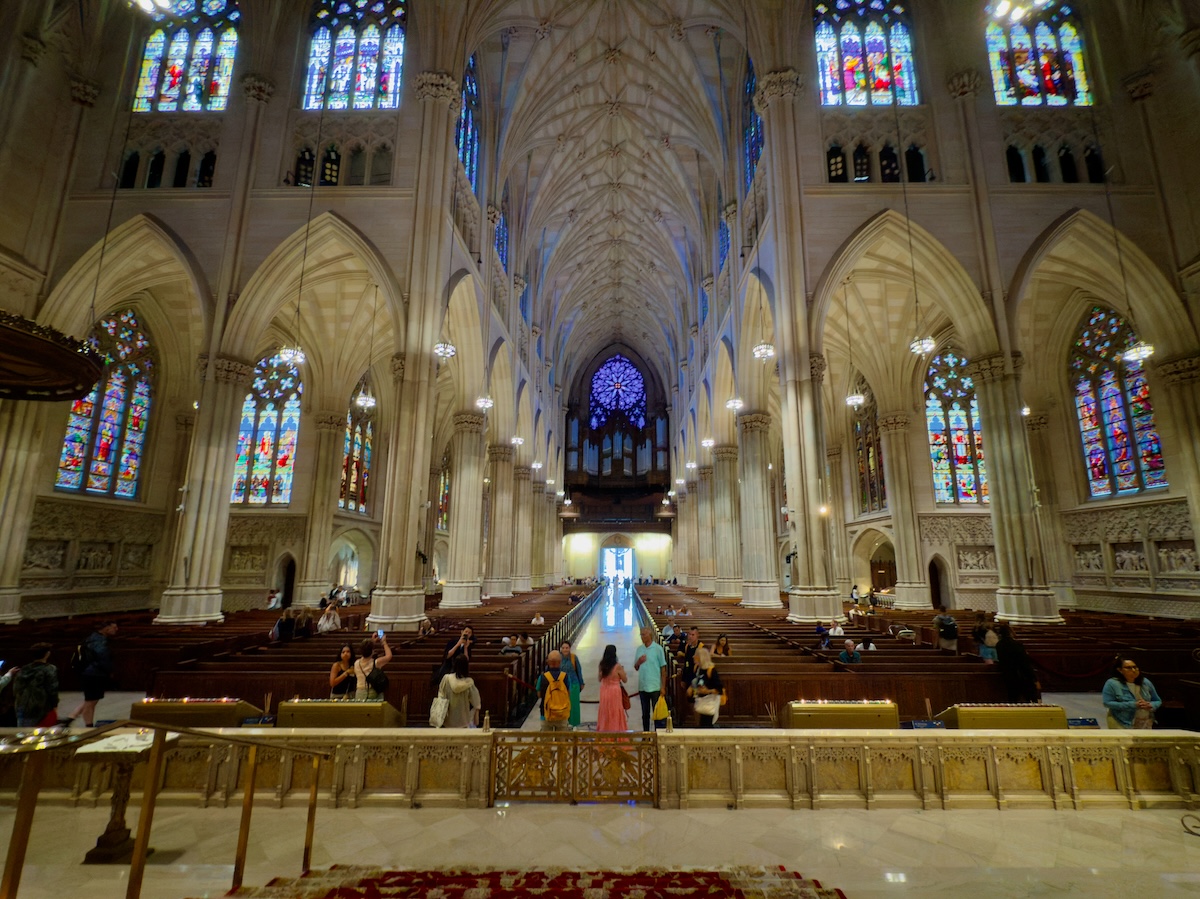
Back upstairs, the cathedral opened up into the space most people recognize. The scale, the light, and the symmetry all do their jobs. It’s undeniably beautiful, and everything lands where you expect it to.
It also feels like it belongs exactly where it is. That was not the case at the start. When construction began in 1858, this part of Fifth Avenue was far enough north that most New Yorkers had no reason to come up here. There were pockets of development, but this wasn’t the center of anything. Archbishop John Hughes picked the site anyway, at a time when New York’s Catholic population—largely Irish and still facing significant hostility—was growing quickly and lacked much public presence.
The project didn’t move in a straight line. While work began in 1858, the Civil War diverted labor and money to other priorities, and progress slowed to a crawl. Construction continued in fits and starts, ultimately taking more than 20 years to complete.
Meanwhile, the city kept growing. New York’s role as a port and commercial center only expanded, immigration continued, and the population pushed north even as the building lagged behind. By the time the cathedral opened in 1879, the city had caught up to it.
These days, Archbishop Hughes looks less like a gambler and more like he knew exactly what he was doing. The farmland is gone, replaced by glass towers, retail, and some of the most expensive real estate in the country. The cathedral sits in the middle of it, not dominating the block so much as holding on to it.
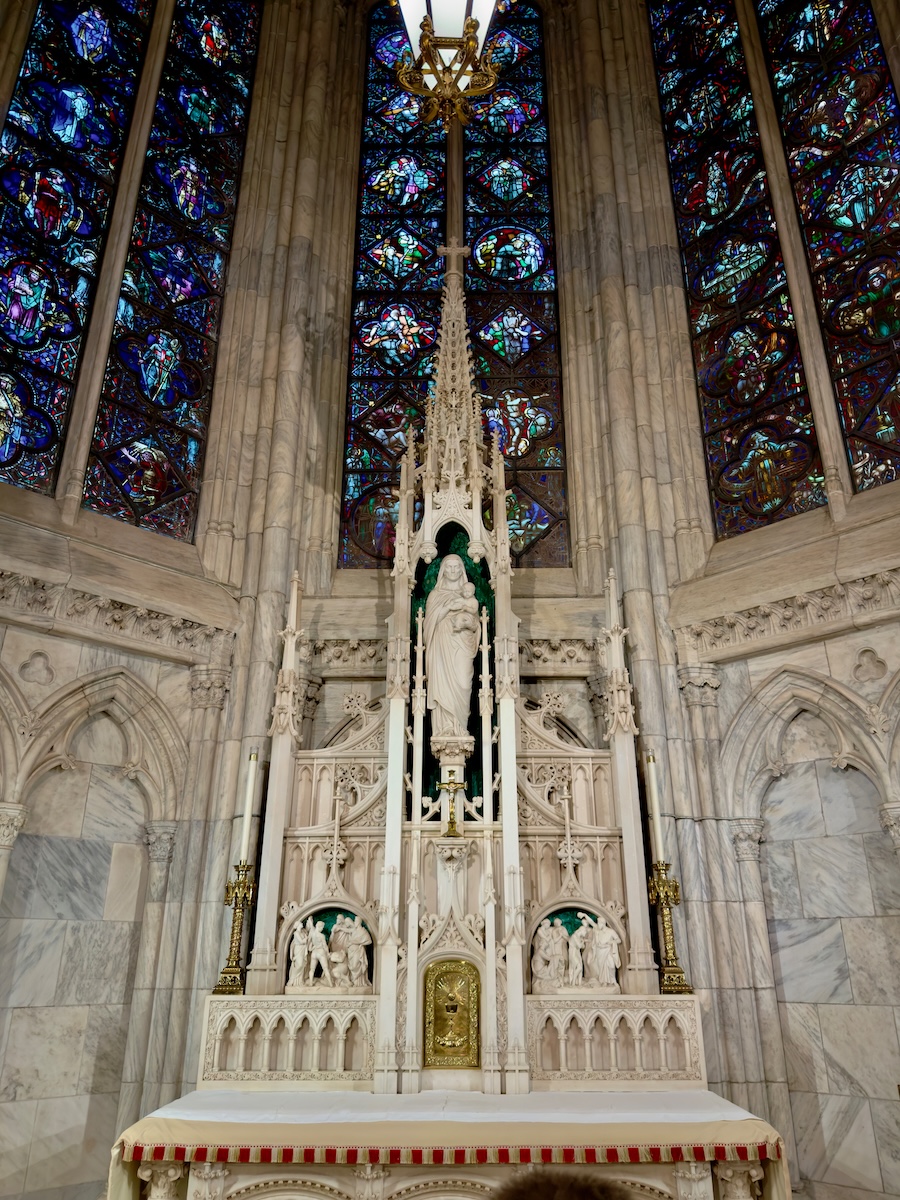
We moved through the nave for the Greatest Hits part of the tour. The Lady Chapel behind the main altar, detailed and quietly impressive, is also one of the few places where photos aren’t allowed, which felt like a small but effective reminder that this church is still a working church.
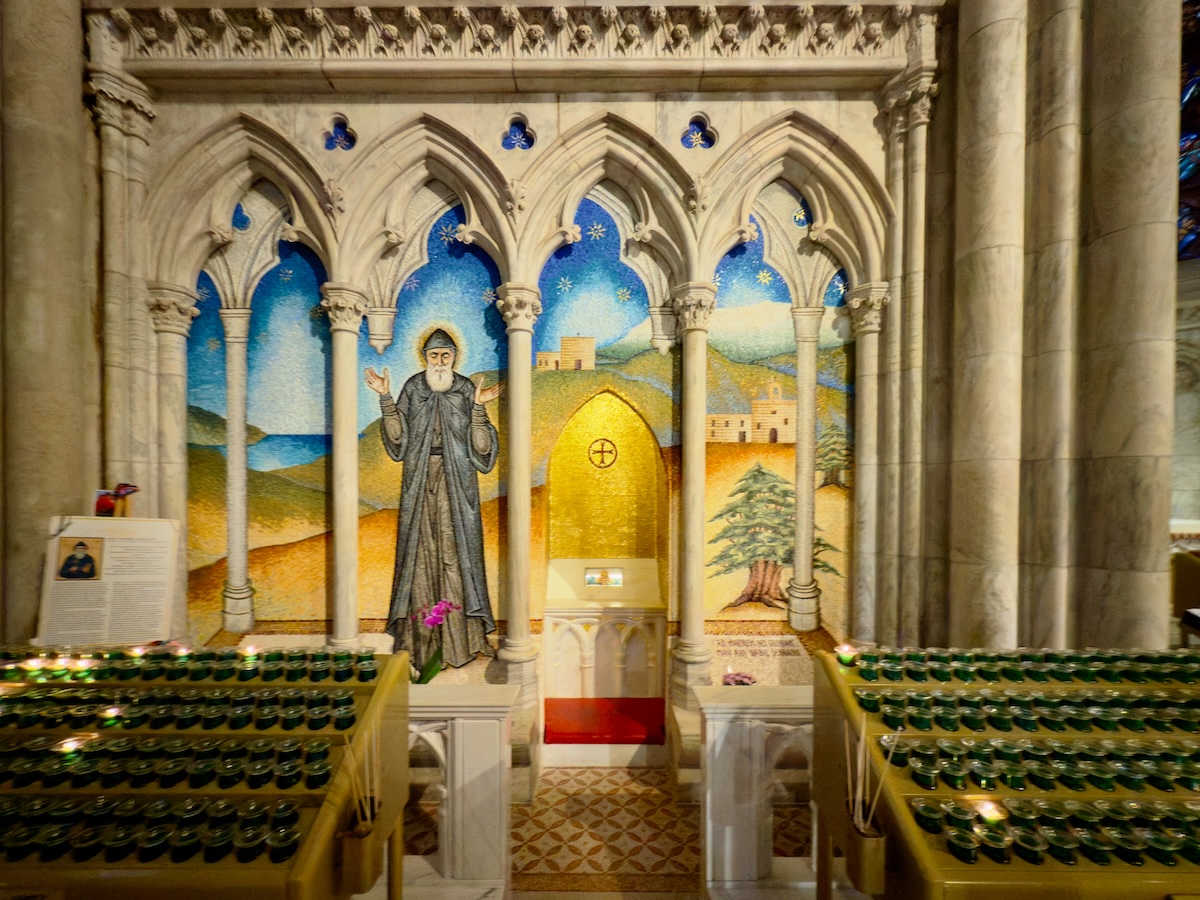
The Chapel of Saint Sharbel felt like it had been surreptitiously slipped into the building. The mosaic behind him—bright blues, golds, a landscape that looks more like a graphic novel than sculpture—stood apart from the carved stone everywhere else. Rows of green votive candles filled the space in front, many of them lit, giving it a steady, low-level activity that didn’t exist in the larger spaces. Sharbel himself, a 19th-century Lebanese monk, is a relatively recent presence here, and the chapel carries that modernity.
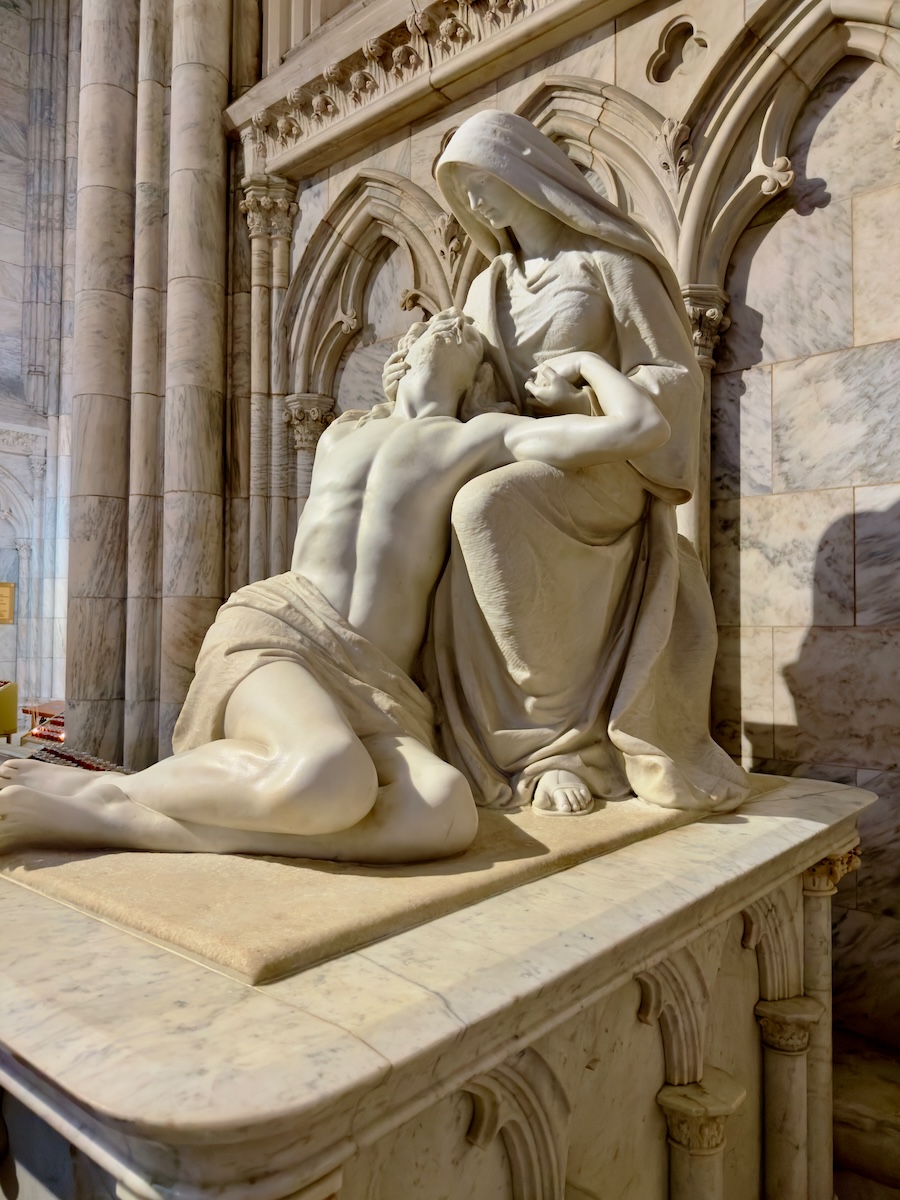
A Pietà by William Ordway Partridge from 1906 sits along the north side aisle midway down the nave, carved in pale marble that, in this light, takes on an almost matte finish. Mary holds Christ upright rather than collapsed across her lap, her posture steady, her expression controlled and composed. His body is balanced and idealized, more arranged than heavy, and the whole piece carries a quiet certainty that never tips into drama. Everything is resolved, nothing exaggerated, nothing asking you to react a certain way. It's a lovely piece that fits the room.
Our tour wrapped up as a service was about to begin, and the transition happened quickly. We were ushered out as parishioners began to fill the pews. The space shifted as the cathedral resumed its normal rhythm without ceremony.
Outside, Fifth Avenue was still moving at the same pace it had been when we arrived. The doors closed behind us, and the noise picked back up.




Write a comment