
We ended up at the Cathedral of St. John the Divine—the Episcopal cathedral for New York, up on the Upper West Side—because Mary and I wanted to see it. Rick didn’t really get a vote, given that she’d flown across the country just to see us. I’d also promised Hungarian pastries and coffee afterward, which felt like an equitable—and binding—agreement. Rick’s relationship with churches is largely transactional, and I try not to abuse that.
Mary, on the other hand, had actual interest, which is how we found ourselves heading up Amsterdam Avenue toward what’s described as one of the largest cathedrals in the world. We walked along expecting the cathedral to eventually announce itself—symmetry, presence, a bit of confidence. Something that didn’t leave you guessing.
The cathedral does finally appear—it just takes a minute to accept that you’re in the right place.
The building is enormous, but it doesn’t loom like other cathedrals. From the street, it feels slightly…underdone. The stone changes color in patches. Some sections look finished. Others look like they were on their way there and then lost interest. You expect to come together, but it never quite does.
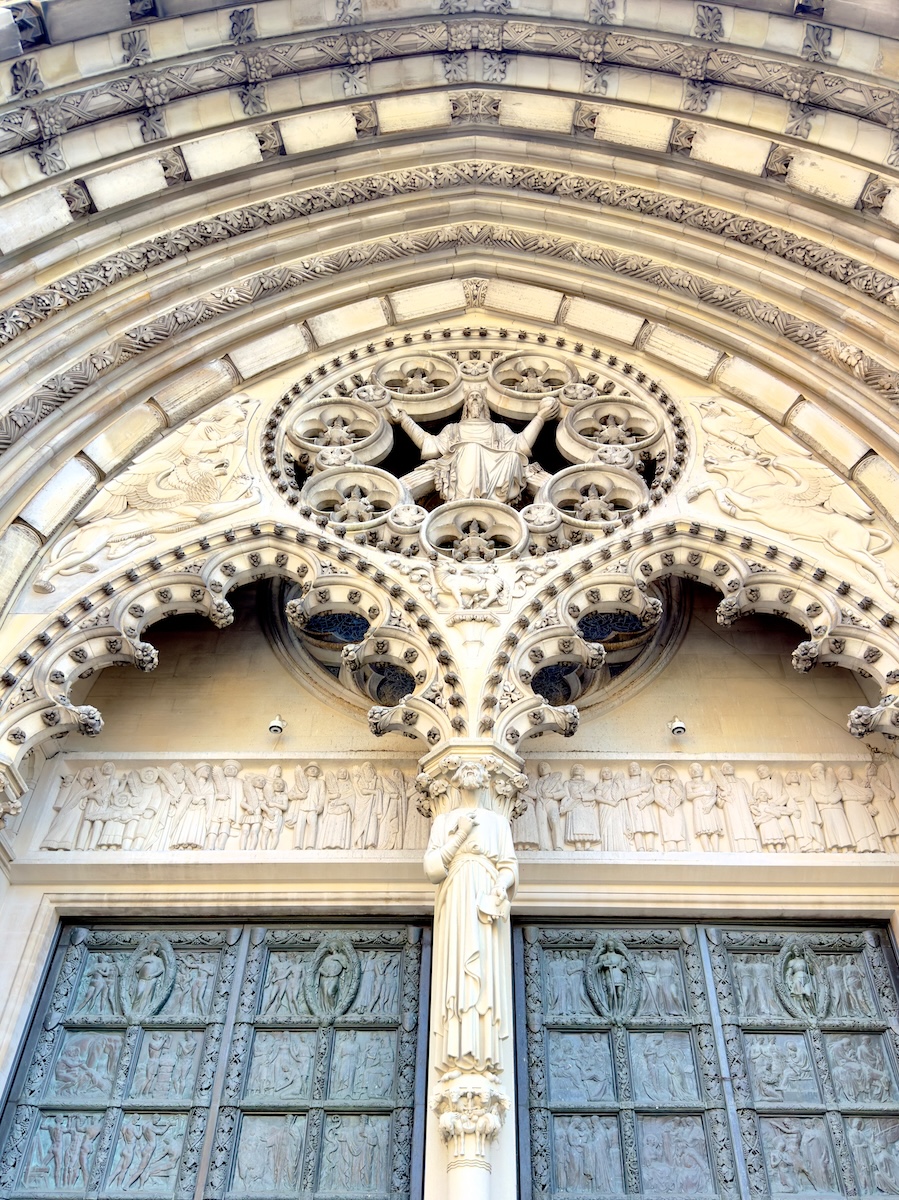
Rick gave it a quick once-over, the way you do when you’re deciding how much effort something is worth, and then looked at me like I might owe him something more than pastries. Mary was already a few steps ahead, taking in the massive carved doors. I hung back for a second, trying to square the scale of the place with the fact that parts of it looked like they were still waiting for instructions.
Construction on the cathedral started in the 1890s and, depending on how generous you’re feeling, is either ongoing or paused indefinitely. The official version is that it’s unfinished. The less official version is that they never really decided to stop. At some point, people in the neighborhood even started calling it St. John the Unfinished, which feels less like a nickname and more like a status update.
That kind of thing usually doesn’t happen here. Buildings in the U.S. usually get funded, built, and finished. That’s the deal. Even the older ones—the ones we like to treat as historical—generally arrive at their destination. But for this one, they made it most of the way there—and that’s where it stops.
You can see it if you know where to look, but you don’t have to try very hard. Lines stop where they probably shouldn’t. Plans look like they were changed midstream and then changed again. There are entire sections that look like they were built by people who assumed their successors would finish the thought. It doesn’t feel like a ruin, exactly. More like something still in progress that stayed that way long enough that people stopped expecting it to get done.
Inside, it took a few seconds for our eyes to adjust and then another second for everything else.
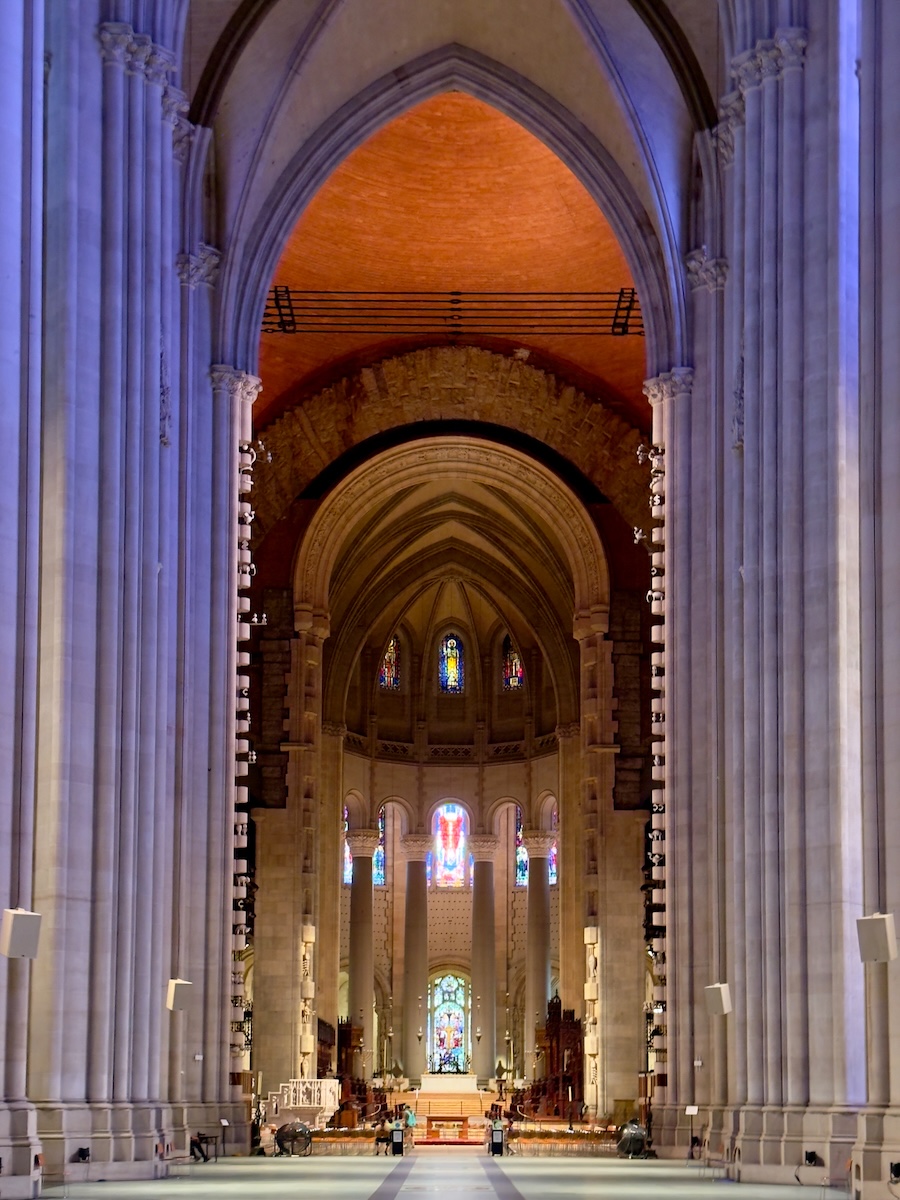
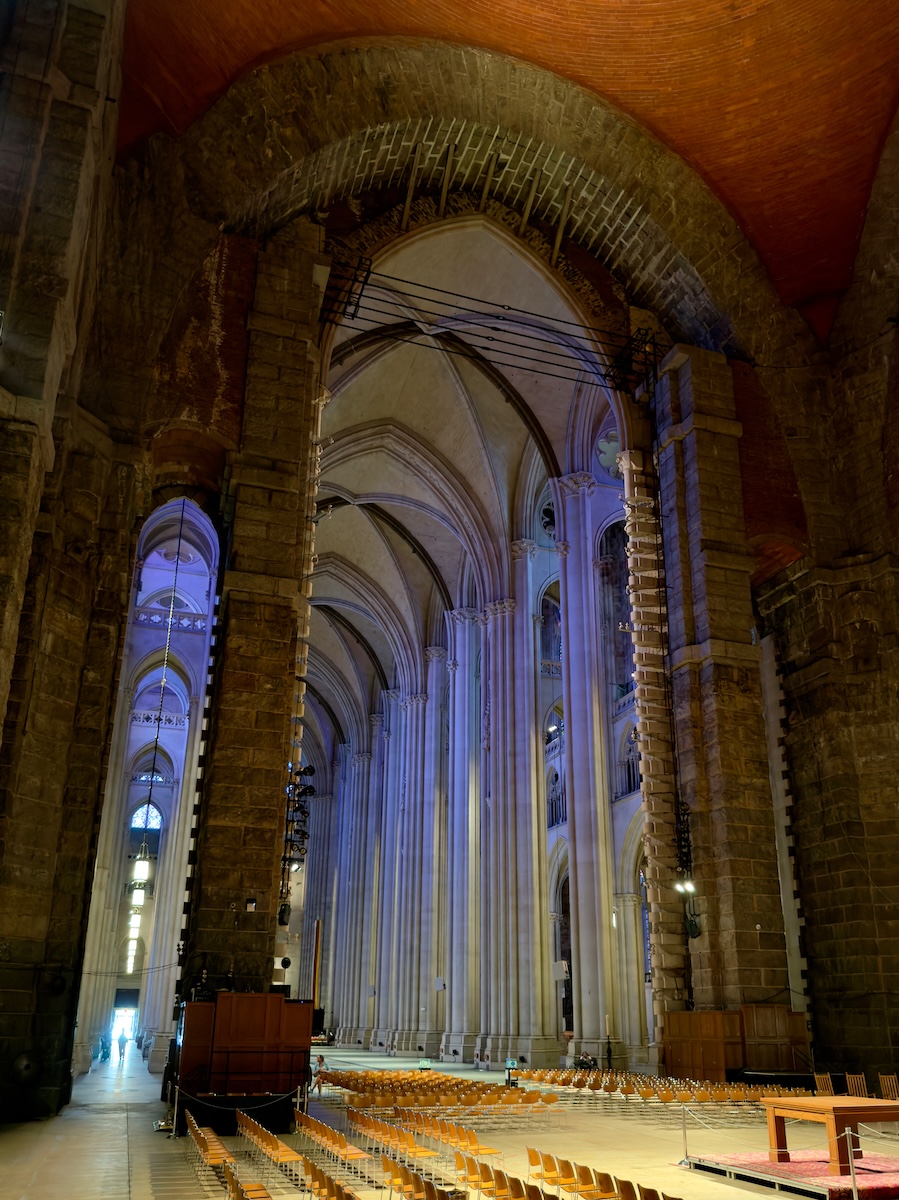
The size hits you first. It’s bigger than is strictly necessary. The nave stretches much farther than you expect, and it’s wide enough that it feels slightly excessive, with rows of columns that compel you to look up, whether you want to or not. Five aisles run the length of it, which sounds like just another technical detail until you’re standing there trying to take it all in.
Rick stopped short just inside the door and looked up, which is about as close as he gets to reverence. “That’s…a lot,” he said, and left it at that.
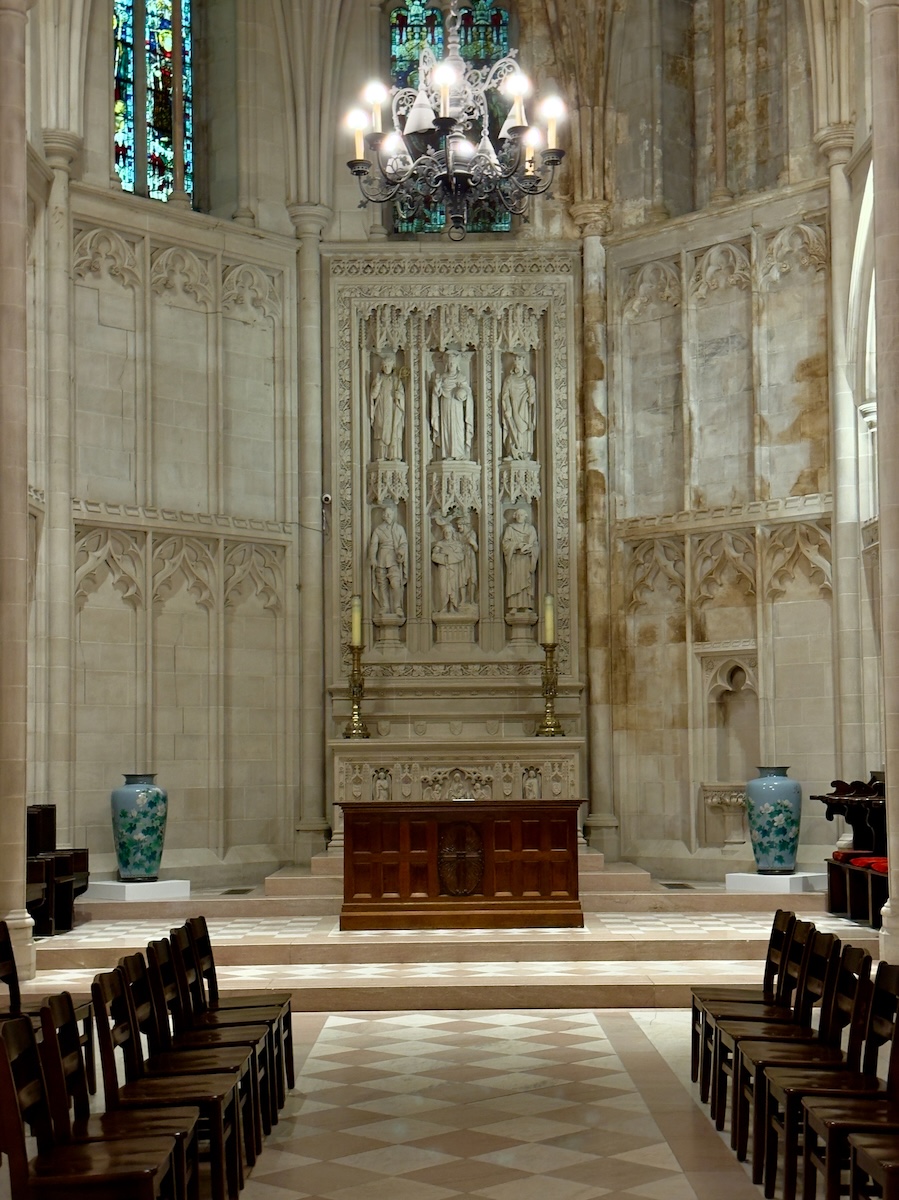
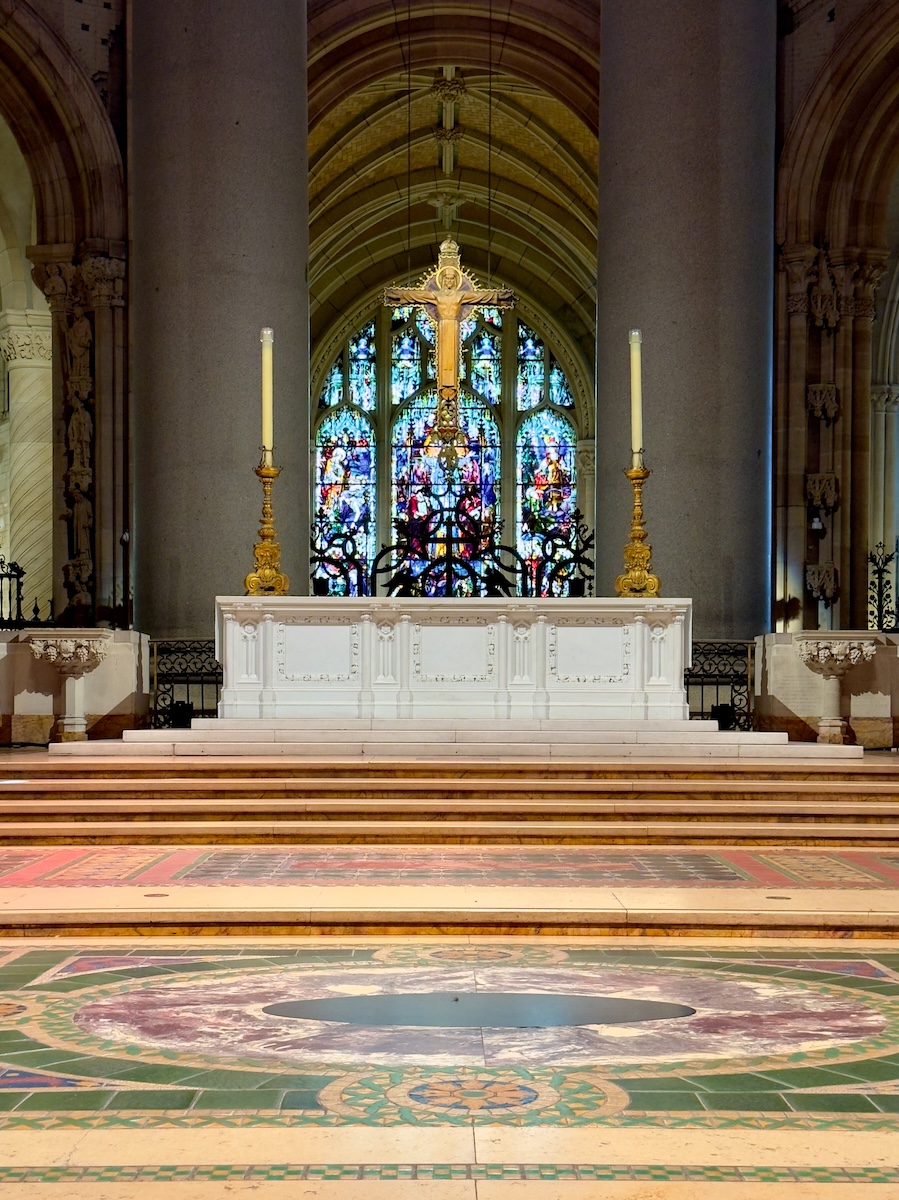
Walking further up the main aisle, you realize—it’s not especially busy. A church of this size and stature usually comes at you from every direction, with carvings, gold, statues, banners, details—all competing for your attention. Instead, there are long stretches where the stone walls are just…stone. There’s a lot of room between things—the pews, the choir stalls, the altar. Light streams through the stained-glass windows but doesn’t flood the place. Instead, it seems to sit quietly, moving across the floor and up the columns with all the urgency of spilled peanut butter.
There’s a shift as you move through the space. The sections near the main entrance are open and vertical—the arches are airy and high, the structure stretches upward, and the whole place feels light on its feet. As you near the altar, though, the space feels heavier, the columns thicker, the lines more rounded. It's not subtle, and you don't need to know the architectural terms of art to understand it. You just notice it.
And that’s when it starts to make sense. The building didn’t come together all at once. The early work leaned Romanesque—solid, grounded, built to sit heavy. Later sections move into Gothic, with the height and vertical pull you expect from a cathedral. And then there are pieces that don’t quite belong to either, added much later and left to sit alongside everything else.
This is what happens when a building outlives its original plan.
Different architects took over at different points, working in different decades, with different ideas about what the finished version should be. Instead of resetting anything, they kept building on from wherever things were at the time. From one angle, it feels like an old cathedral that never quite got finished. From another, it feels like a newer project working very hard to look old. Both impressions hold. It depends where you look.
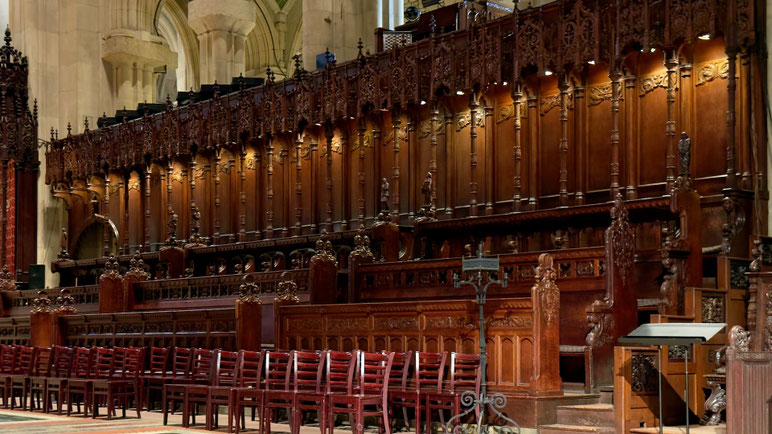
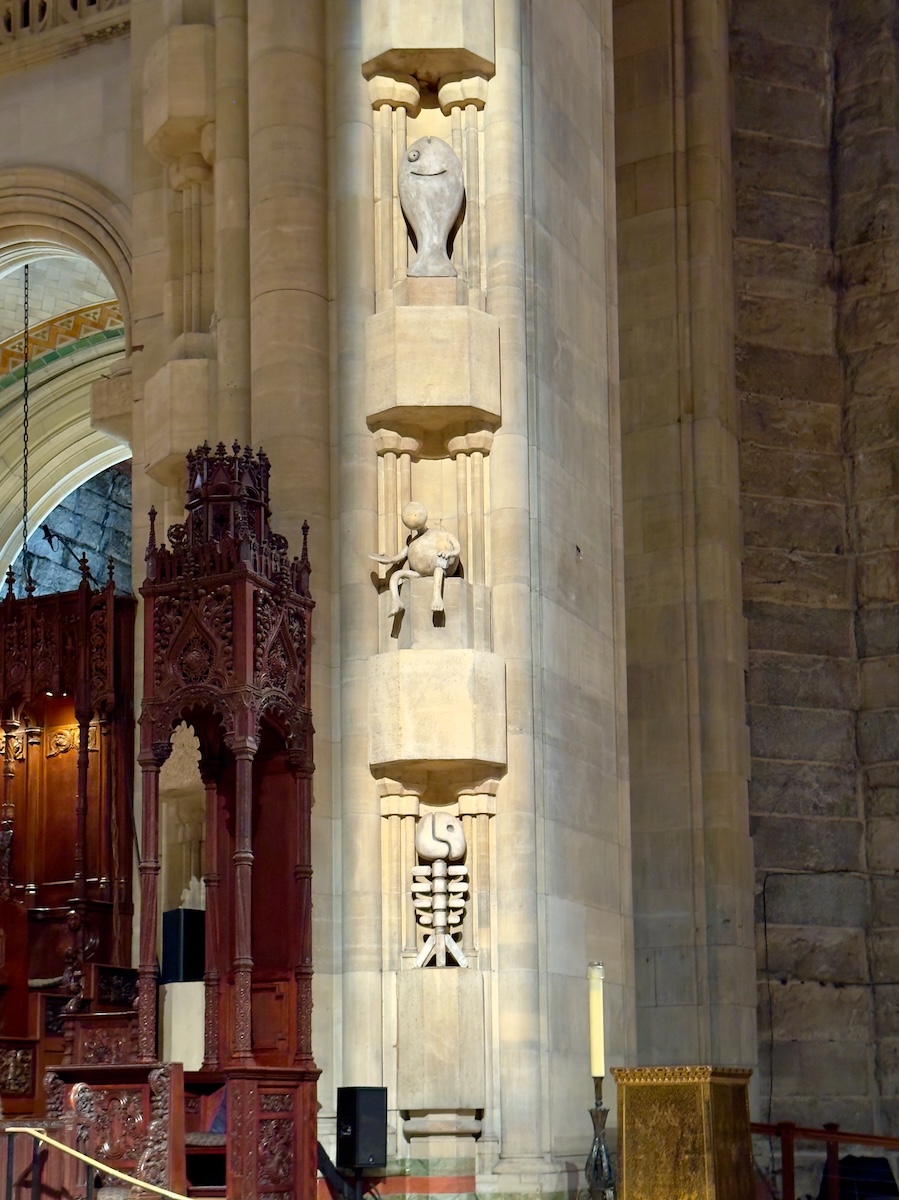
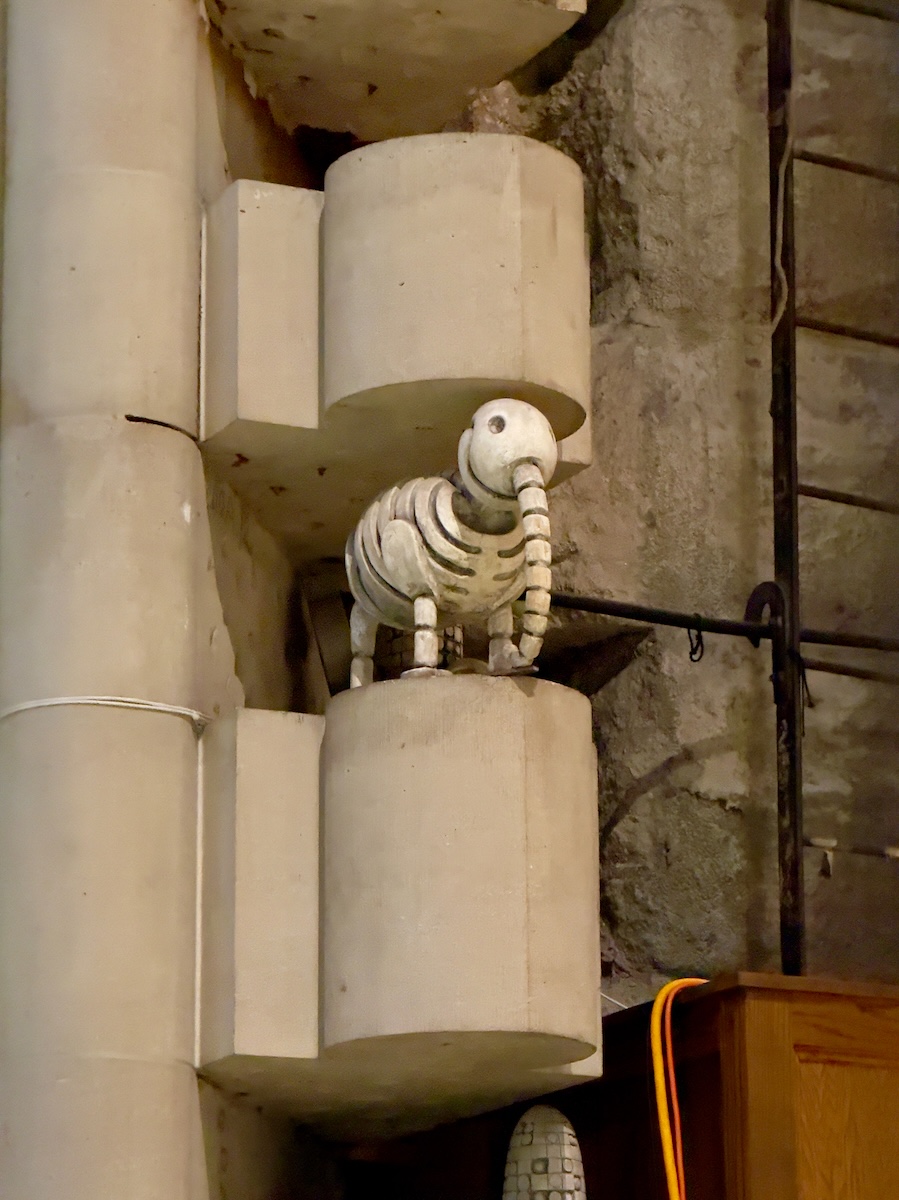
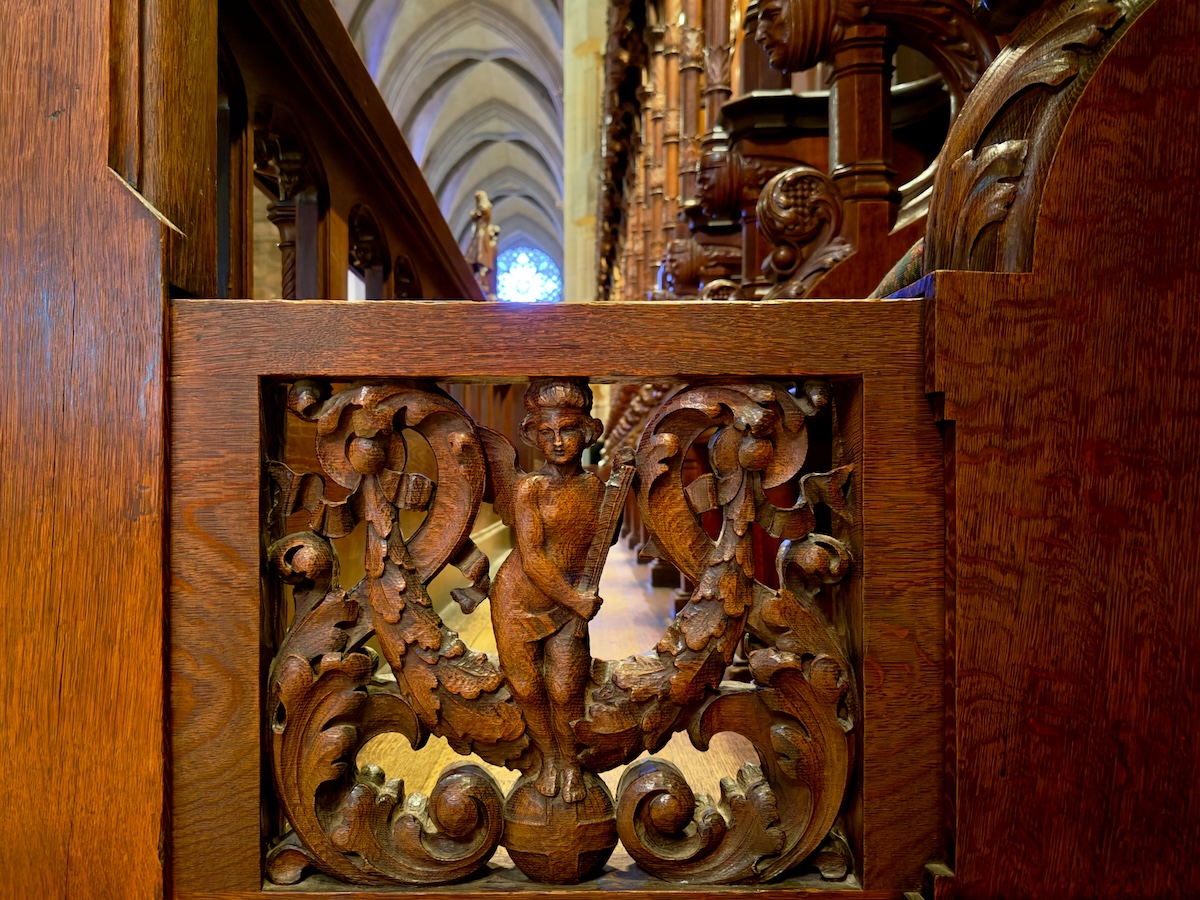
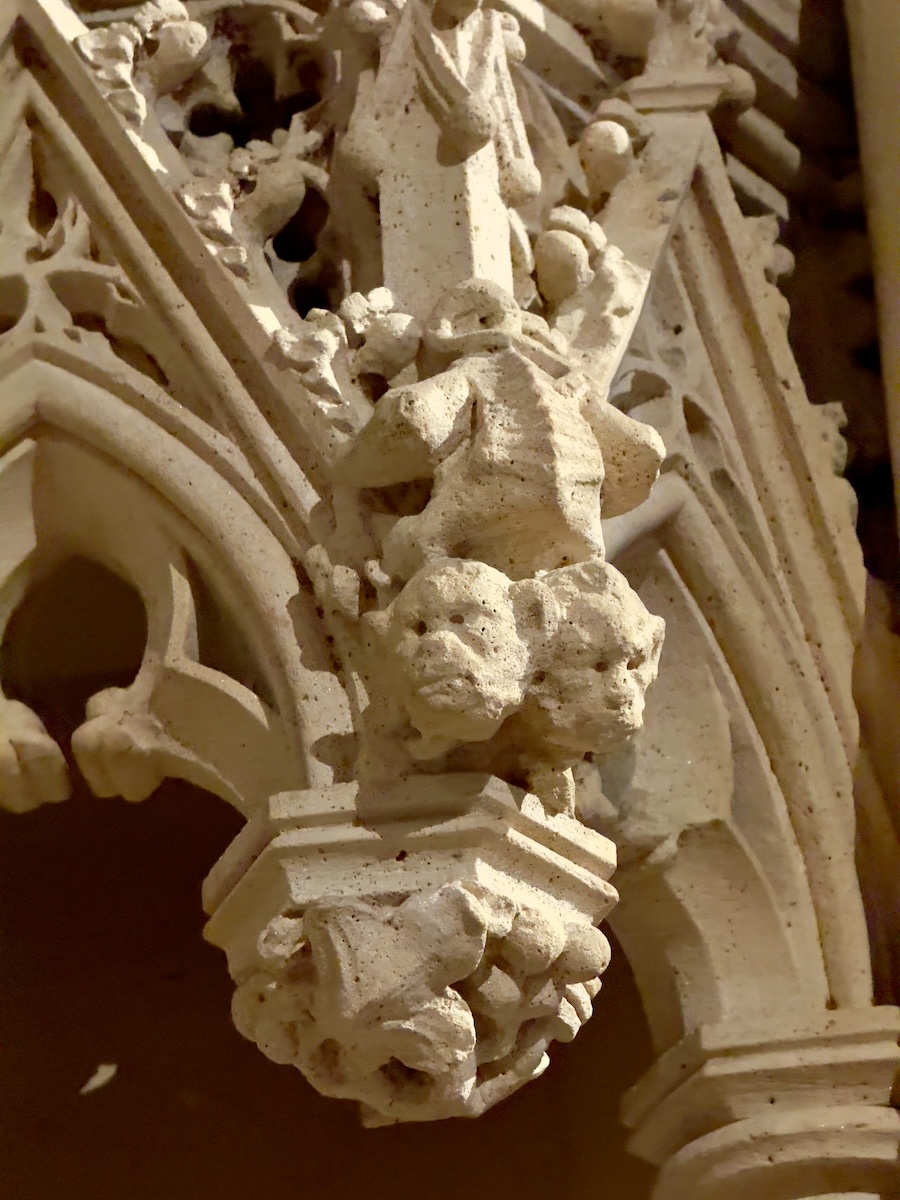
Once the overwhelm fades, you stop looking at the cathedral as a whole and start noticing smaller pieces—which is when things begin to go sideways. It starts innocently enough. You’re walking along the choir stalls, admiring the woodwork—the kind of carving that looks like it took a long time by someone who cared immensely about symmetry—and then something small interrupts it. A figure that doesn’t quite match the rest. The proportions are off. The expression isn’t frozen in that medieval way. It looks almost aware.
You lean in a little closer. And now you're no longer admiring craftsmanship. You're trying to figure out why there are what appear to be small, slightly mischievous figures tucked into a cathedral that otherwise seems very committed to tradition. Not hidden exactly. Just not highlighted or explained.
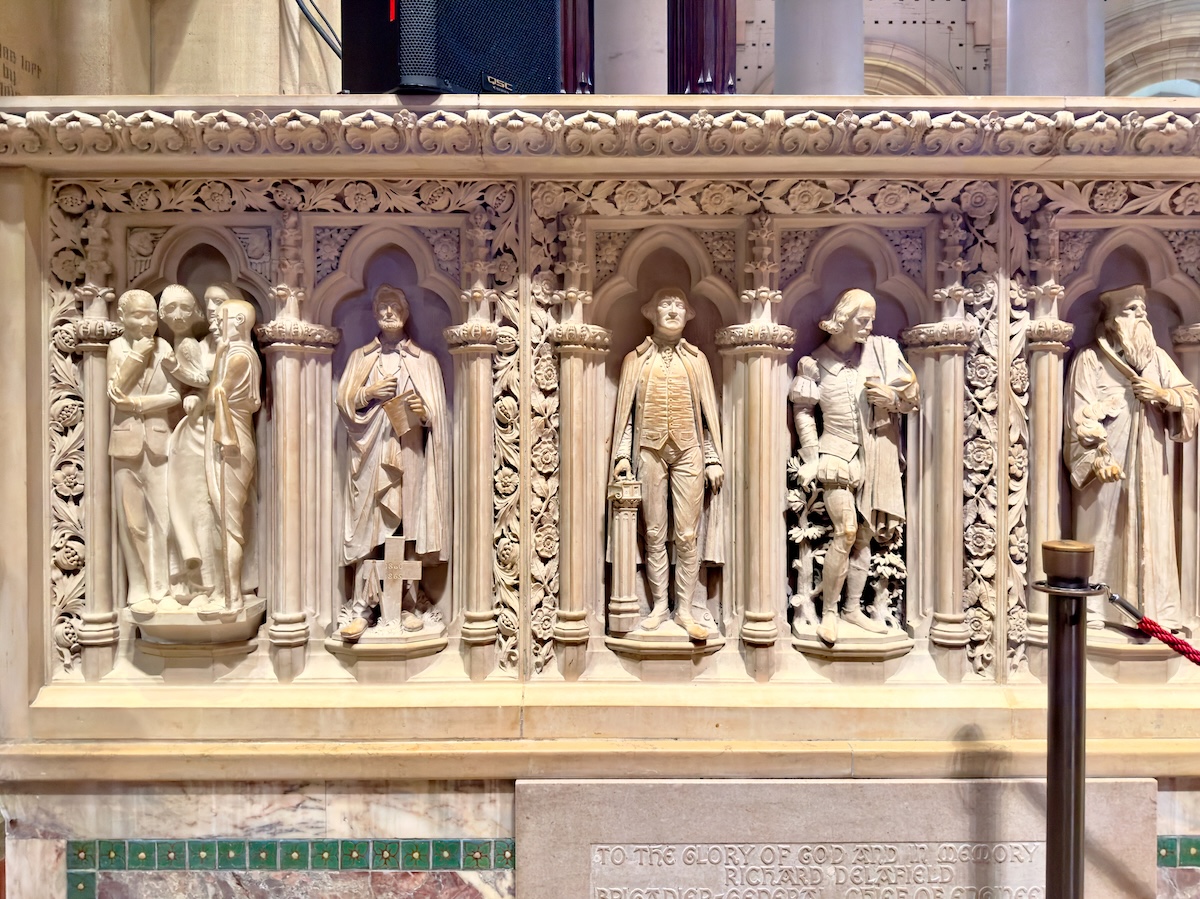
One short dividing wall showcases famous saints. Until you look again. The stone figures are not, in fact, saints. Or apostles. They’re people you recognize from history—American history. Martin Luther King, Jr., Abraham Lincoln, and George Washington. Albert Einstein and Susan B. Anthony. They've also included William Shakespeare and Mahatma Gandhi, probably because we’d like to claim them as our own. This is the kind of lineup that makes you pause to reconsider what this building thinks it is.
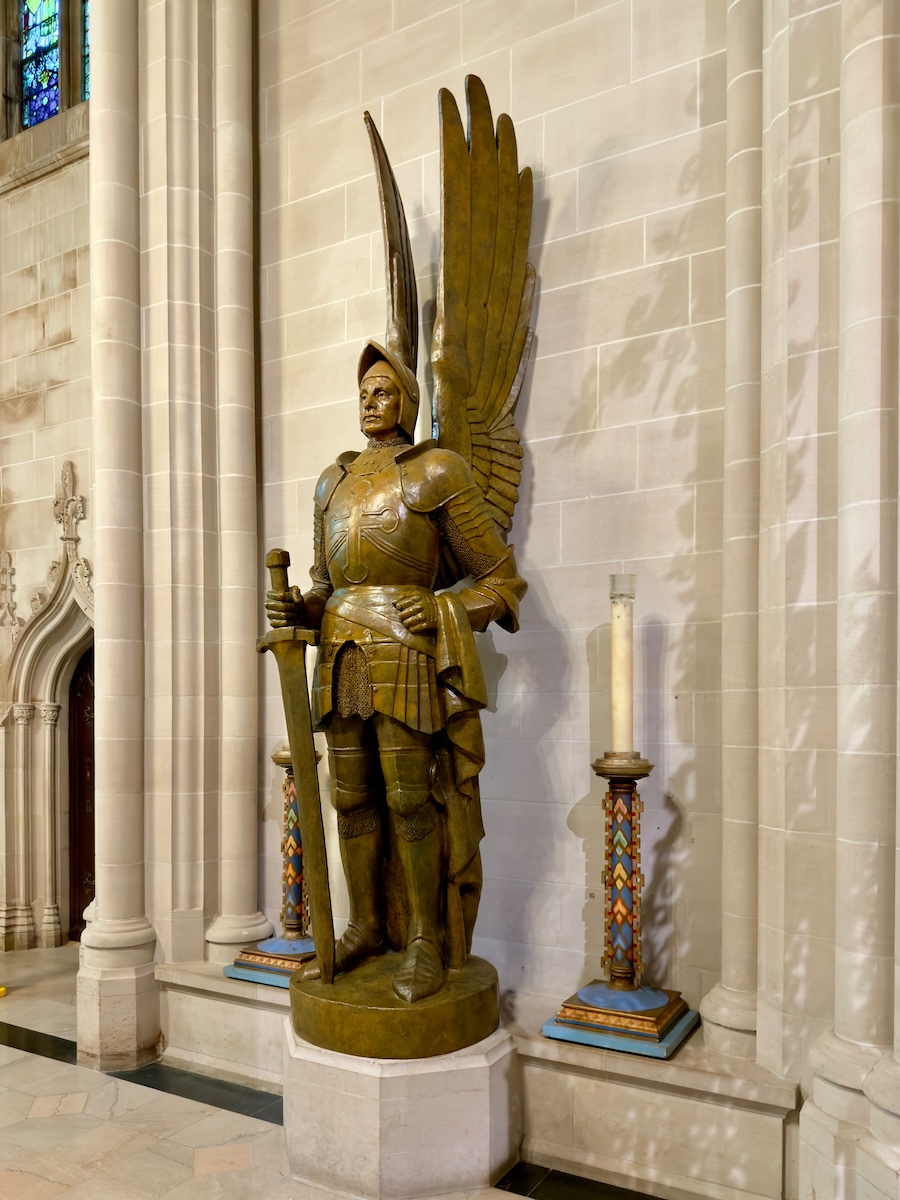
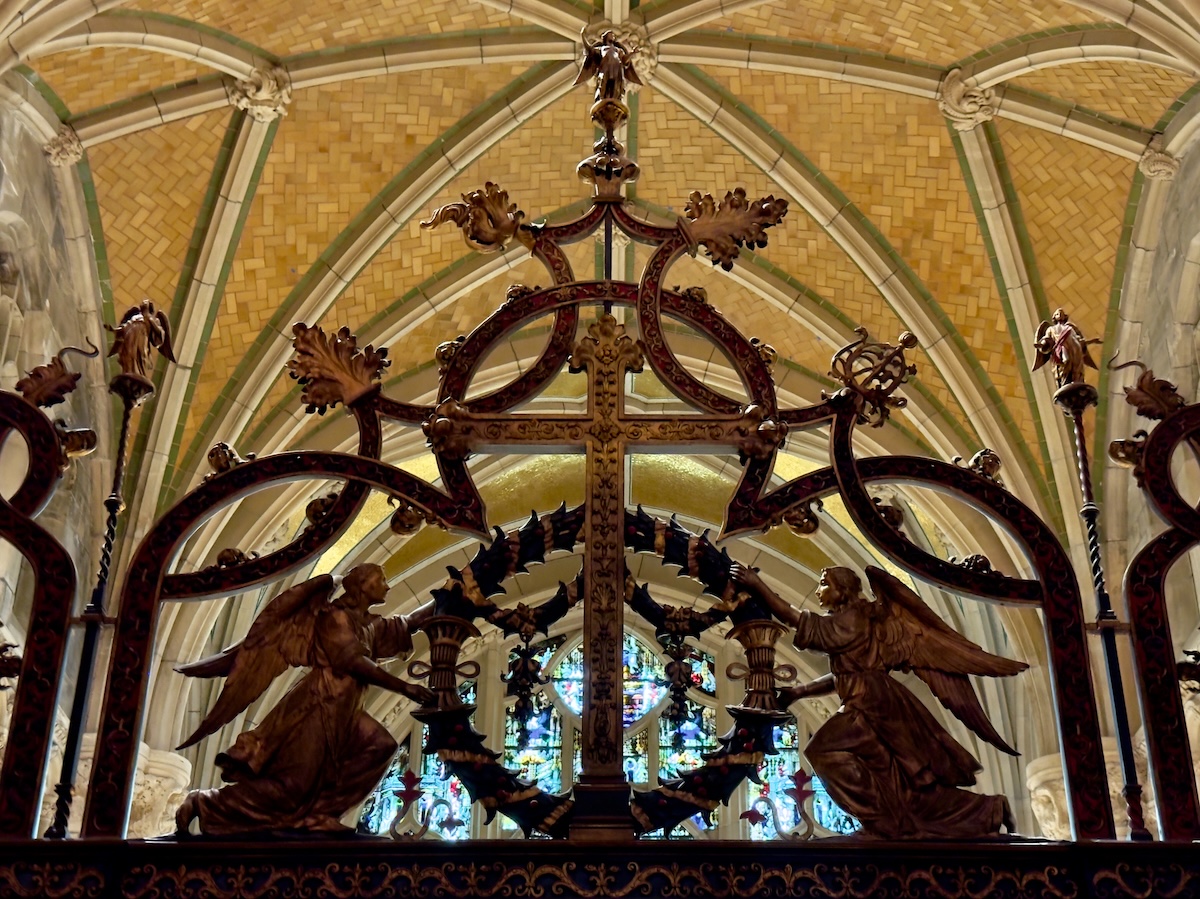
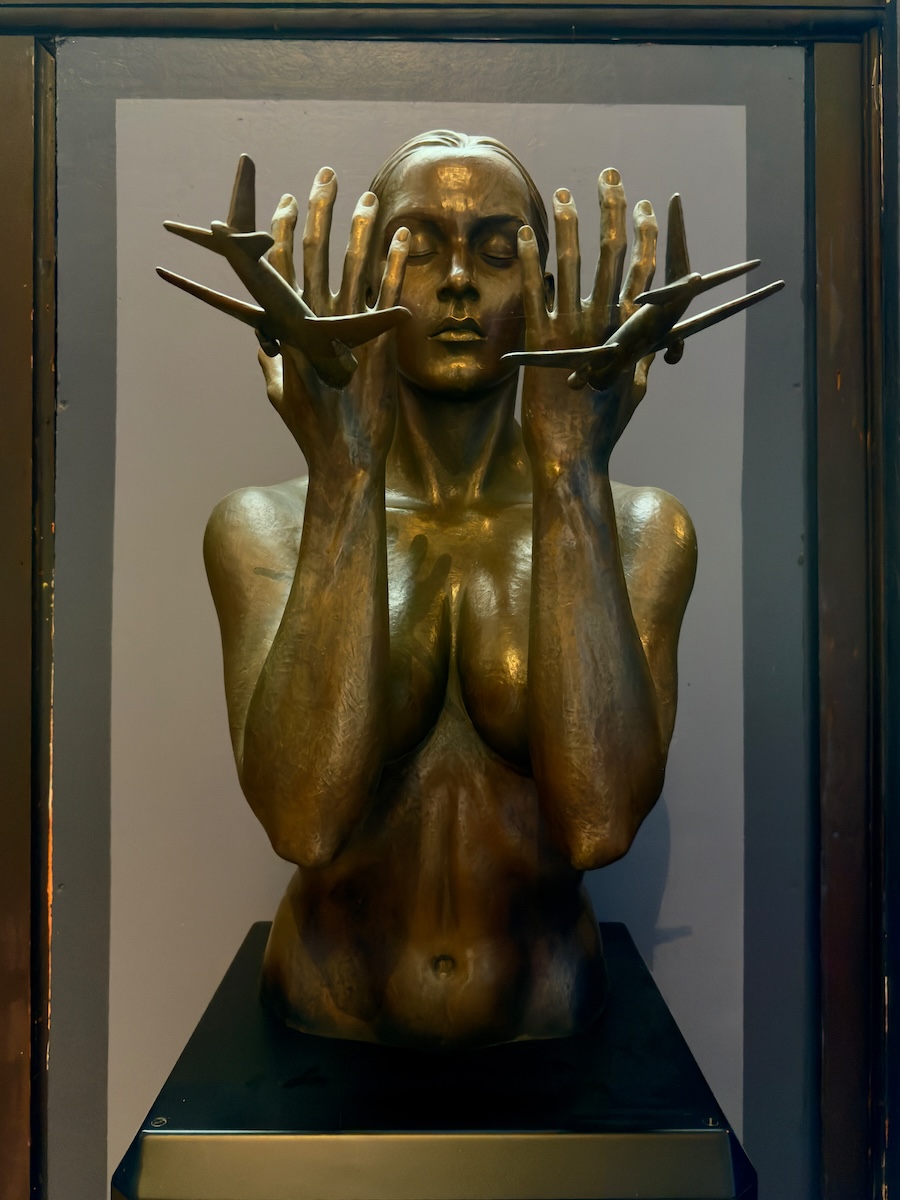
And once that door opens, it doesn’t close again. There are modern pieces that don’t even try to blend in. A bronze figure with outstretched wings that feels more like something you’d find in a civic plaza than a cathedral. A sculptural panel that looks like it wandered in from a contemporary gallery and decided to stay. A gold triptych screen by Keith Haring—which is only barely surprising at this point—sitting comfortably inside a space that predates the idea of modern art by several centuries.
And then there’s the apocalypse. Not the abstract, medieval version with beasts and symbols you have to decode. A very specific apocalypse—New York falling in on itself, with the Brooklyn Bridge breaking apart, buildings collapsing, and people running in every direction—carved directly into the stone at the entrance, as if this were the most natural version of Armageddon in the world.
Rick stopped and stared at that one for a minute. “Okay, that’s…us,” he said. Which, yes, it is.
What’s strange isn’t that any of this is here. Cathedrals have always told stories in stone. What’s strange is how little effort is made to separate the centuries. Medieval forms, modern references, personal flourishes—they’re all sitting next to each other, not blended, not reconciled, just…there.
That lack of reconciliation starts to feel deliberate. Once you’ve seen enough of it—the carvings that don’t quite belong, the modern pieces that don’t even try to belong, the fact that nobody is especially interested in drawing a line between one century and the next—you begin to realize this isn’t a building that’s trying to hold onto a fixed version of itself.
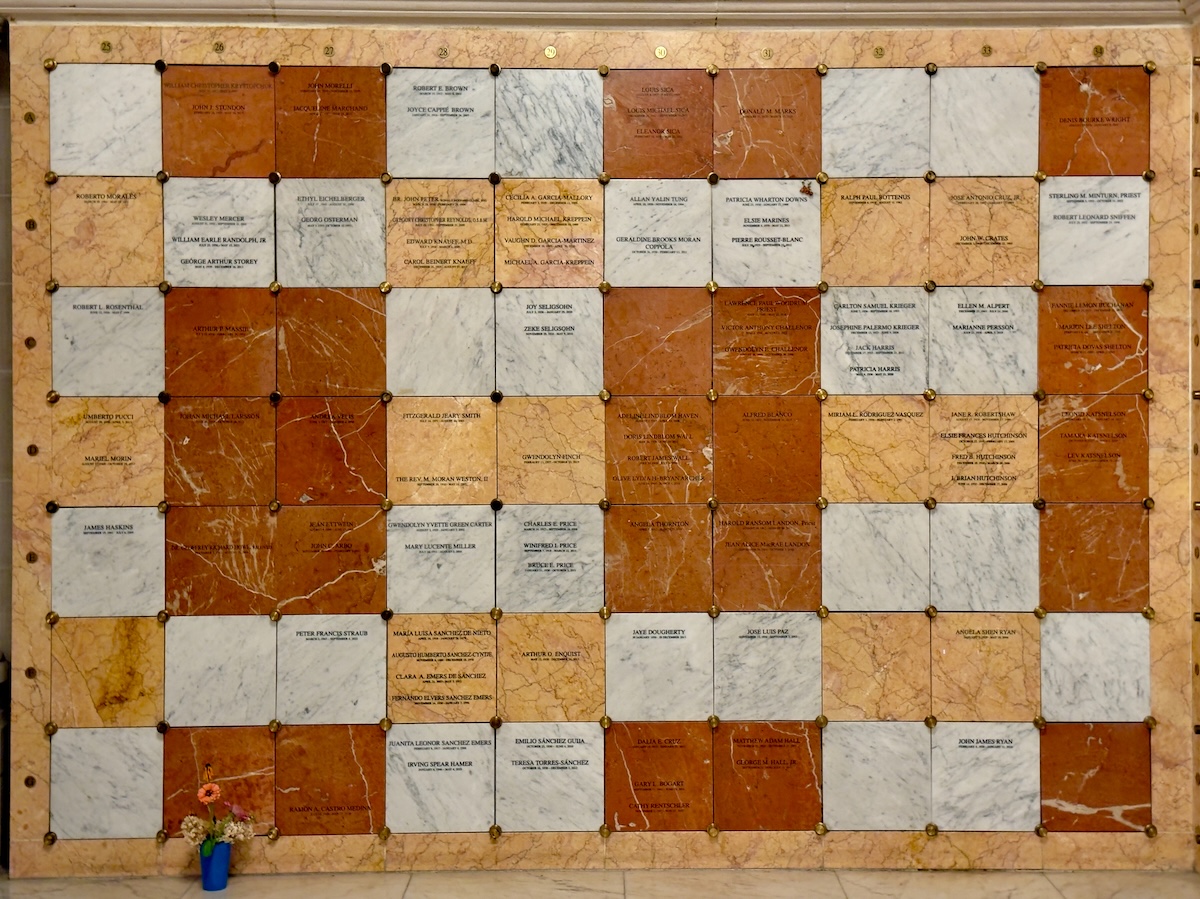
There are services, of course. And music. But also exhibitions, installations, memorials, the occasional piece of art that looks like it arrived with its own set of rules. Over the years, the cathedral has hosted everything from large-scale contemporary installations to activist protests and community programming, folding each of them into the space without batting an eye.
Most cathedrals preserve their past and keep it intact. This one keeps absorbing the present. Which explains a lot of what we saw. Why a medieval carving can sit next to something that feels like it was finished last year. Why New York looks like Babylon. Why nobody’s worried about resolving anything.
And it explains why the building still feels unfinished, even in the parts that clearly aren’t. Not because it hasn’t been completed. Because it hasn’t decided to stop.
Somewhere along the way, “we’re still building it” stops sounding like delay—and starts sounding like the whole point.
Rick thought about that for a second when I said it out loud. “Yeah, that tracks,” he said.








Write a comment