
We met Rosemary and Manny for breakfast before heading to the New York Botanical Garden in the Bronx, which—judging by the subway map—was somewhere up near the Canadian border. The ride took close to an hour, just long enough to start reconsidering if any botanical garden could justify that kind of commute. Before we’d reached any conclusions, though, we were there.
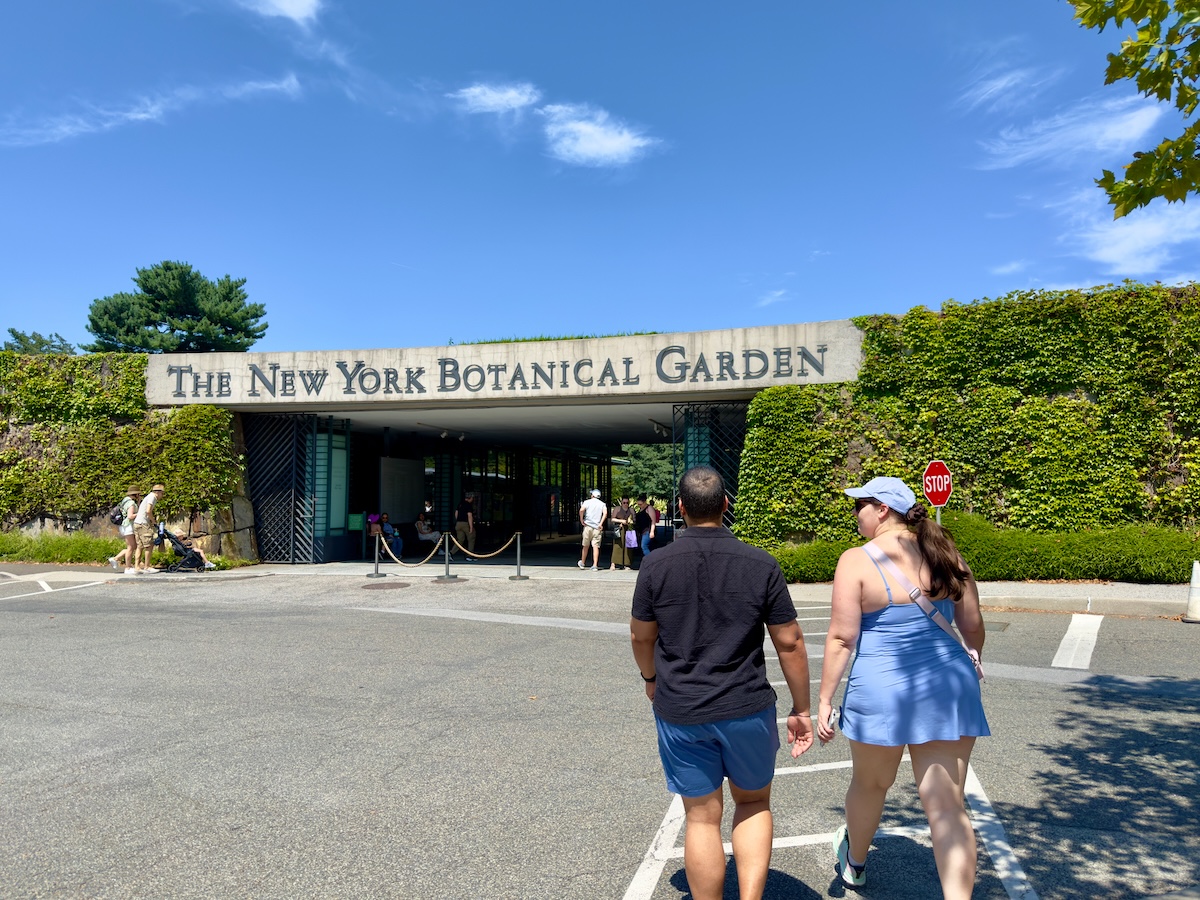
The Bronx is quieter than Manhattan, with fewer tall buildings and a lot more sky. The sun feels hotter and more direct up there, the light bouncing off pavement without the usual wall of skyscrapers to soften it. A lowrider eased past us at the corner with music thumping out the windows, and a row of storefronts sold everything from auto parts to iced coffee and lottery tickets. We walked the final stretch toward the Garden's entrance, passing families with strollers, couples out for a romantic afternoon, and remarkably few camera-toting tourists.
Just inside the gate, the Garden wastes no time reminding you what it’s all about. The gift shop includes a working plant nursery where visitors inspect trays of herbs and flowers the way museumgoers normally study postcards and refrigerator magnets. People were loading plant starts and small trees into carts, trying to decide whether they had room in their Manhattan apartment for a hydrangea. It’s probably the only museum gift shop in New York where the souvenirs are still alive.
We stood there for a minute, stuck in the ritual “Where would you like to start” loop. After several rounds of “No, where do you want to start?” Rosemary half-explained the system she and Manny use to break the usual stalemate—one person silently assigns numbers to the options, and the other simply calls one out. Whatever number gets chosen becomes the plan. The Garden covers 250 acres, after all, and you could wander all day without seeing everything.
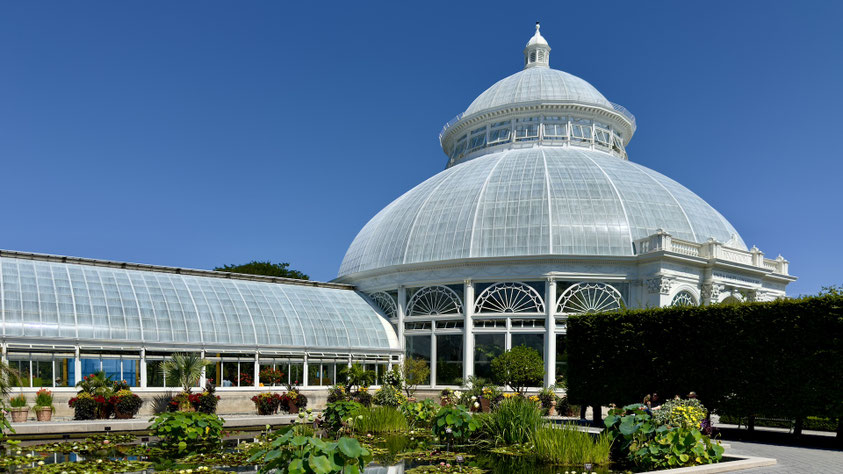
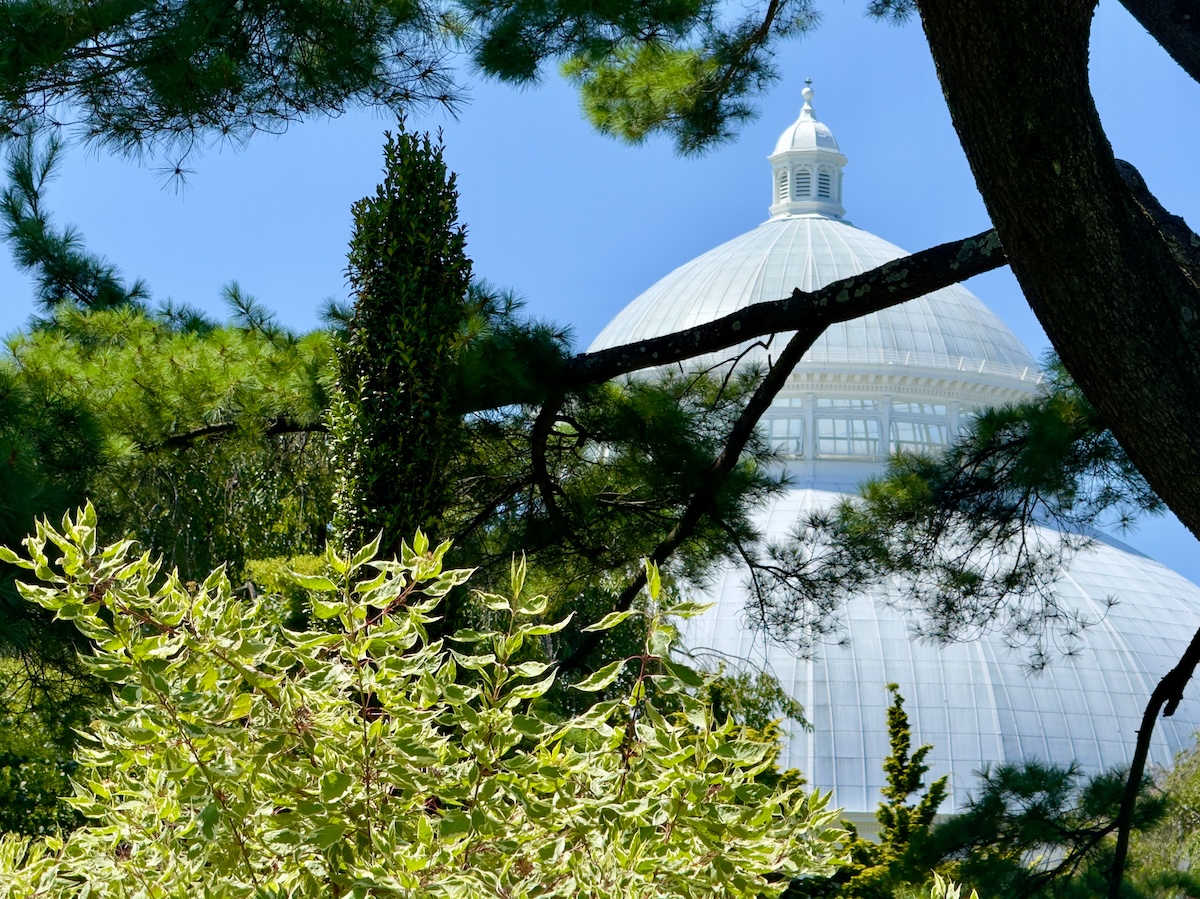
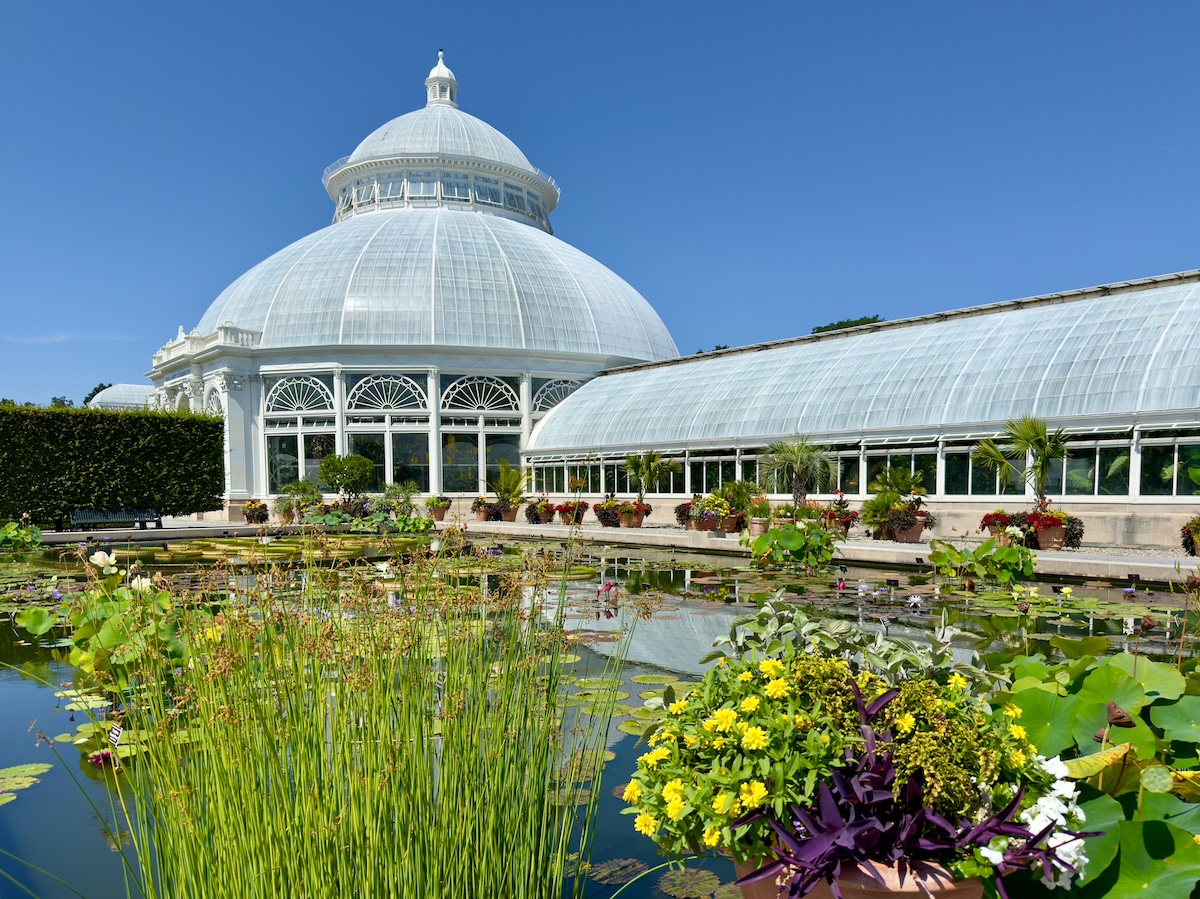
Manny chose a number that happened to correspond with the Conservatory, which suited me because I’m a total sucker for a good glasshouse. And it was close, looming above the trees like a Victorian cathedral for exotic plants.
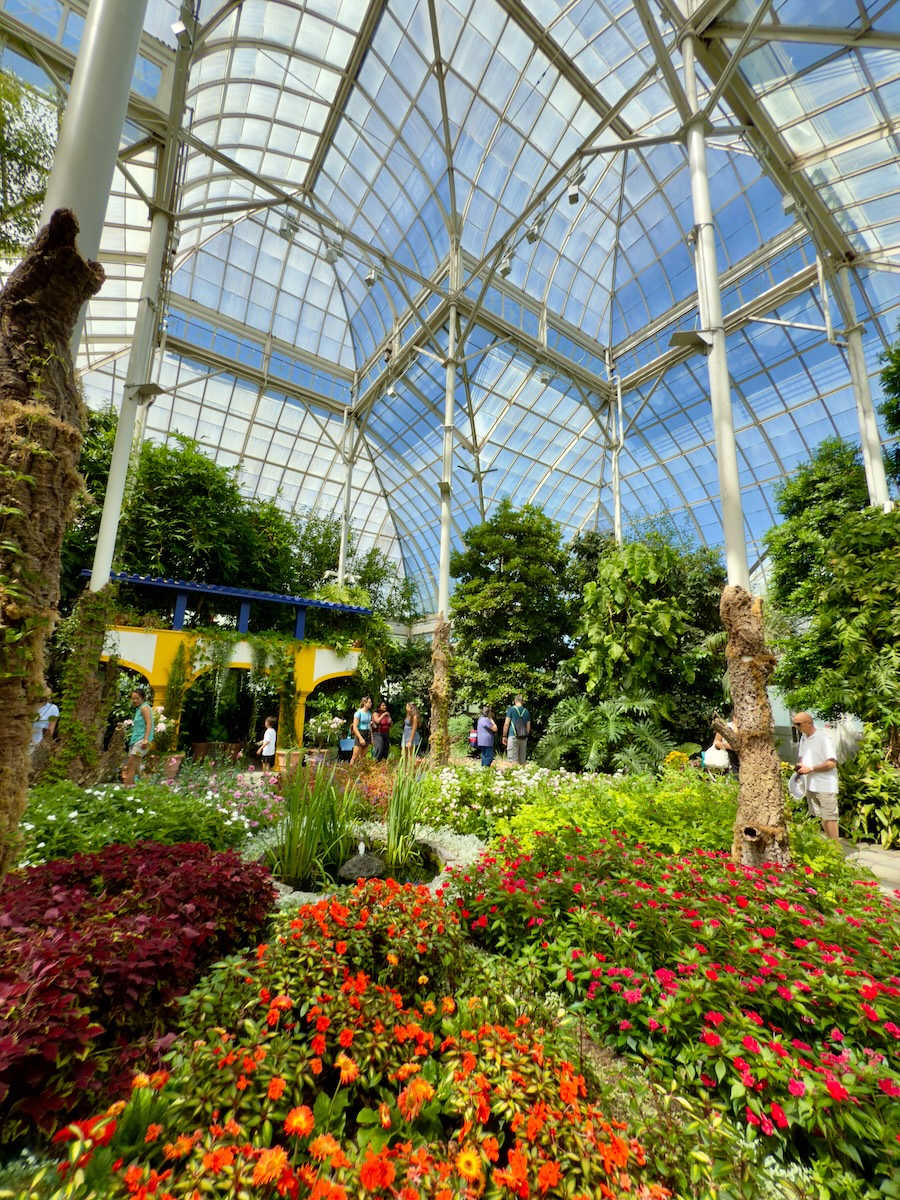
Once inside, the Enid A. Haupt Conservatory’s iron framework arches overhead in sweeping ribs of metal and glass, holding in a wall of warm, humid air that fogs your glasses. Victorian conservatories were essentially monuments to the moment Europeans realized the rest of the world had plants they’d never seen before and decided the only reasonable response was to build enormous glass buildings to display them.
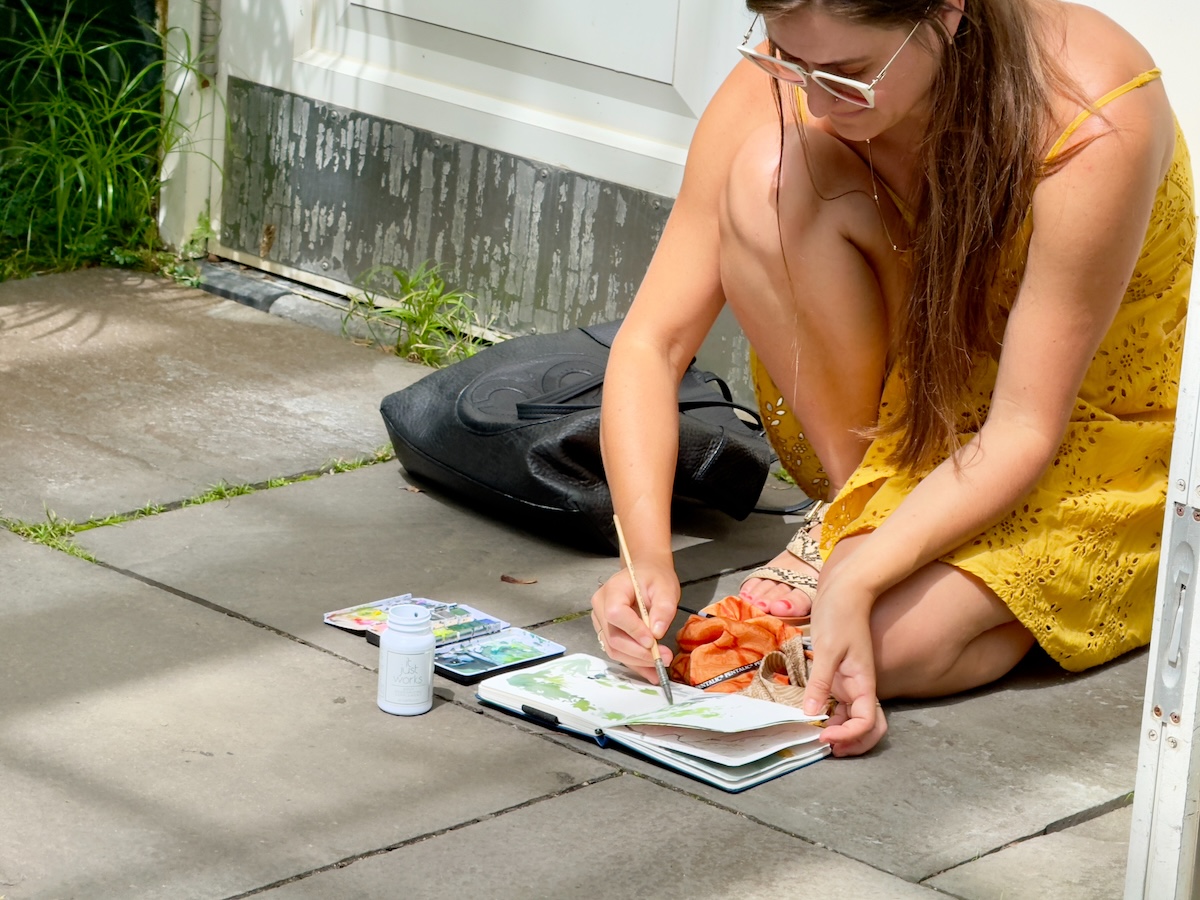
The Conservatory alone would have been worth the visit. Water dripped quietly from a dark cast-iron fountain surrounded by lily pads. Ferns hung in long green curtains from overhead beams. People moved slowly through the rooms, pausing at benches and windows the way visitors do in cathedrals. One woman had settled on the floor near a doorway with a watercolor set spread beside her, painting the plants directly into a sketchbook.
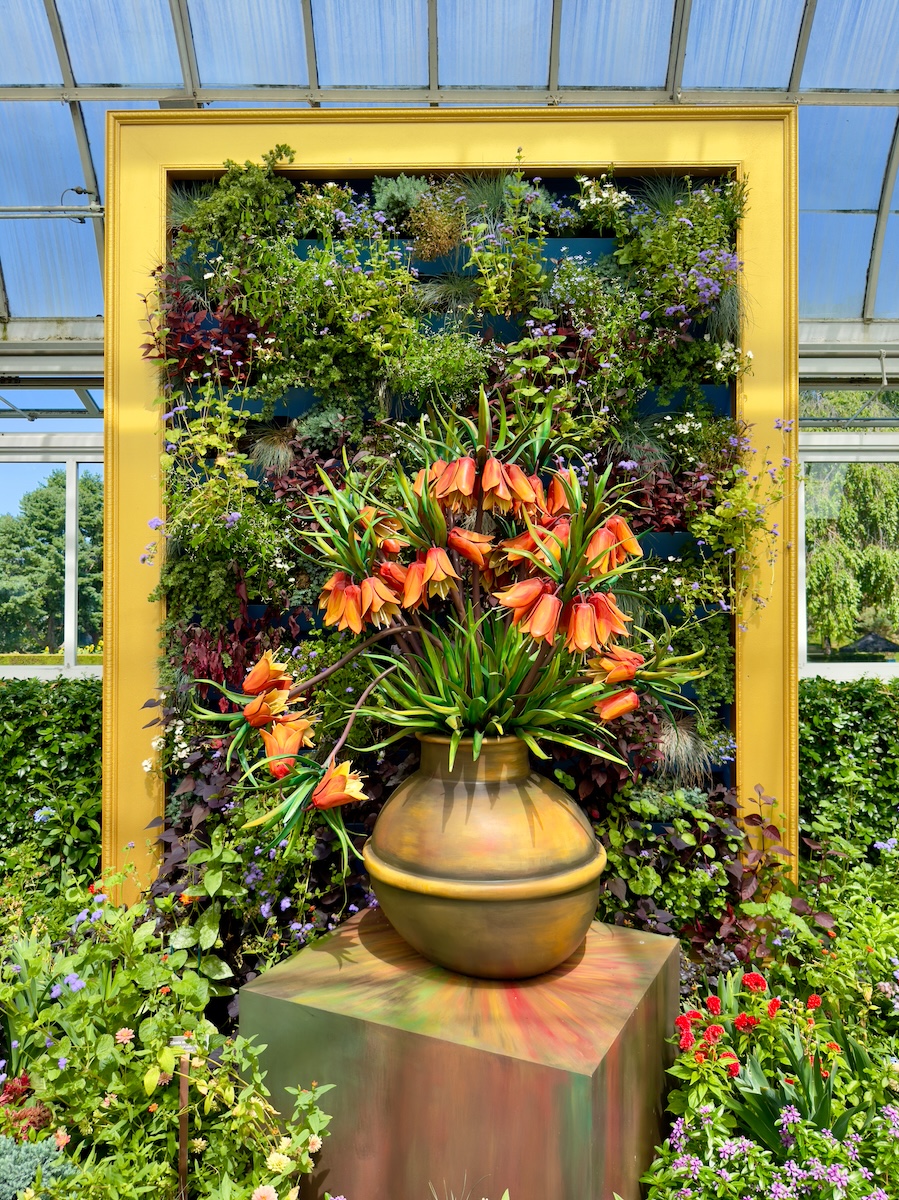
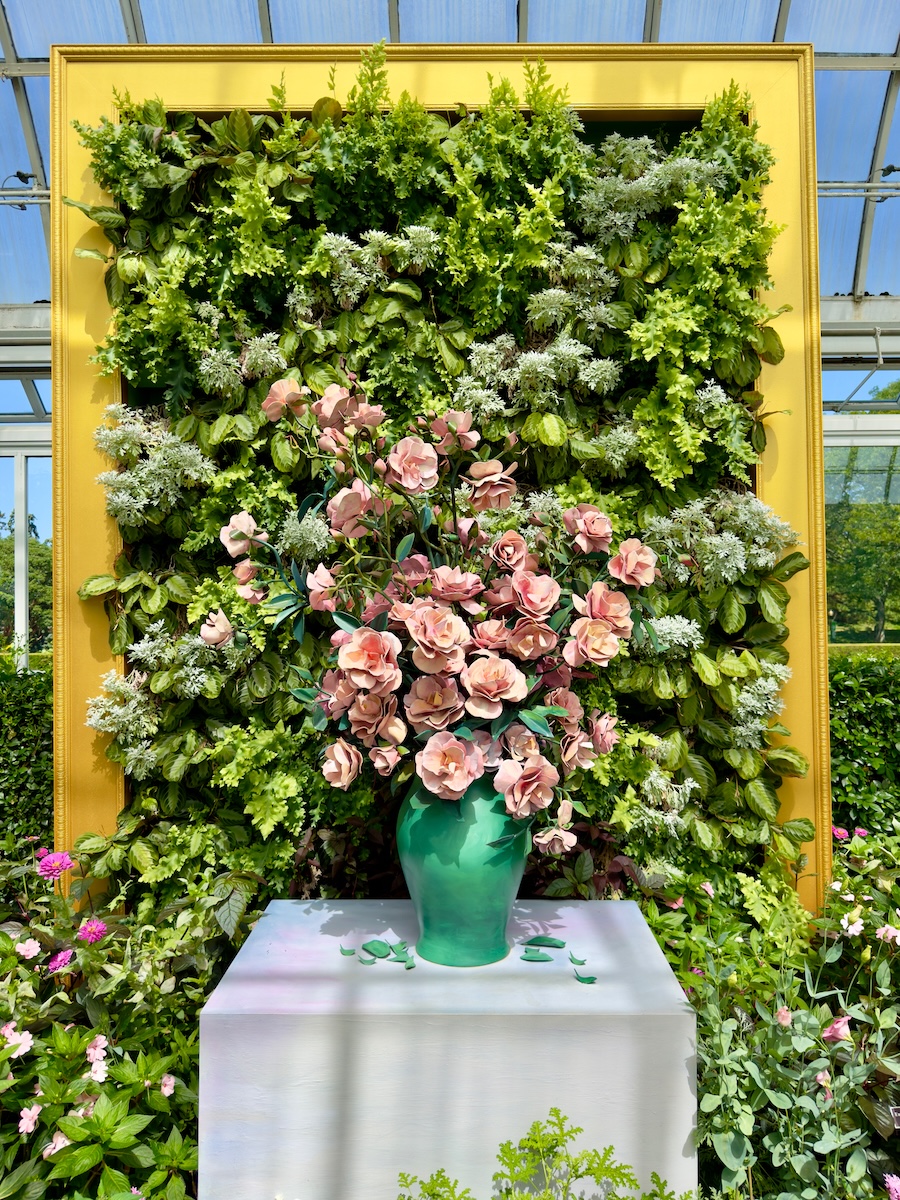
Part of the Garden’s special exhibition devoted to Vincent van Gogh was installed inside the Conservatory, which I expected to be a little strange. Botanical gardens do not normally double as art installations, and the idea of recreating a painter’s world with living plants sounded suspiciously like something that might collapse into gimmickry. Instead, it worked better than I’d thought.
Several rooms featured displays planted and staged to echo the landscapes Van Gogh painted in southern France—roses and irises, Mediterranean-style plantings, bursts of color arranged to mirror the palettes that appear again and again in his paintings. The displays included reproductions of the paintings, making it surprisingly easy to see how carefully he had studied them.
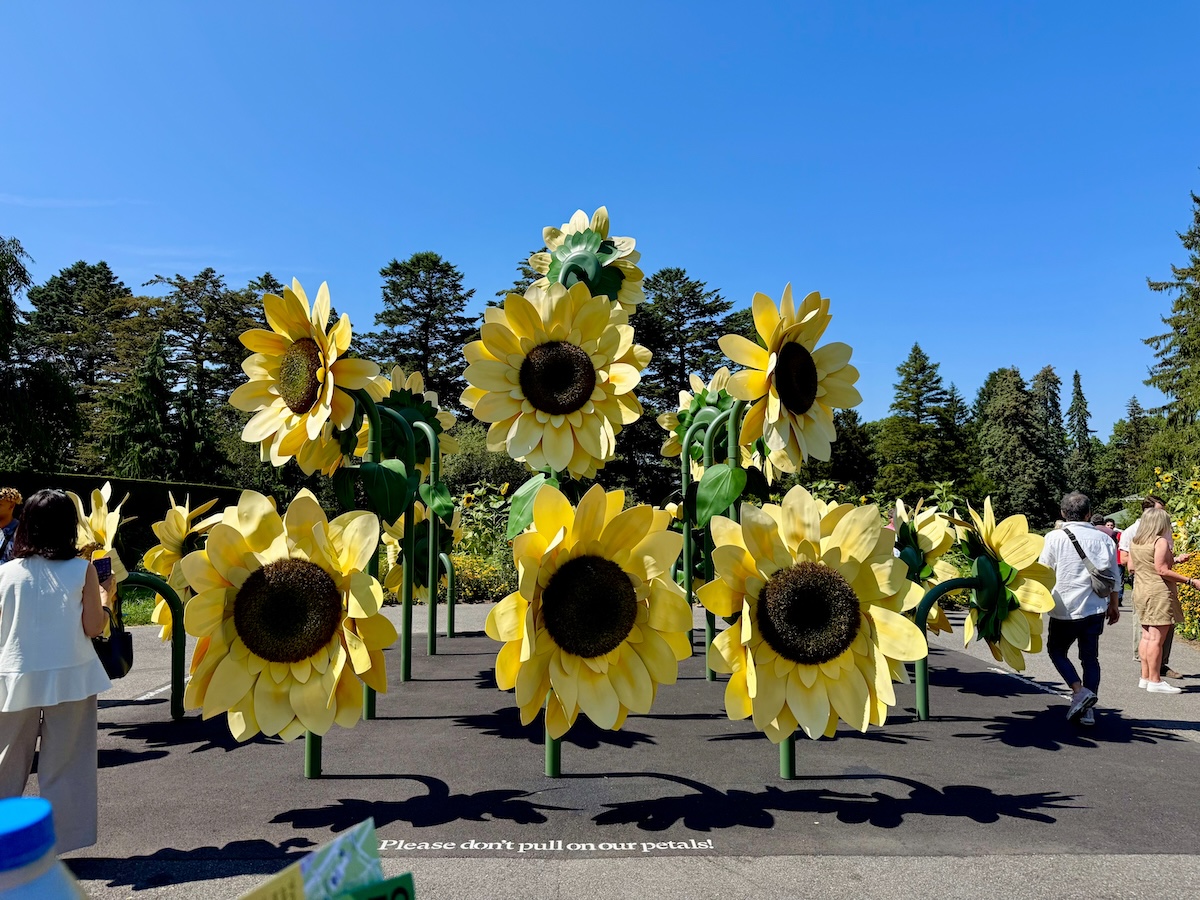
Back outside, the exhibition continued through the surrounding gardens. Enormous sculptural sunflowers towered above the paths like cheerful yellow satellites. They looked slightly absurd at first glance but were also undeniably fun, the kind of installation that makes everyone stop, laugh, and immediately start taking photos.
From there, we meandered along the Garden's paths and found some benches in the shade near the LuEsther T. Mertz Library, home to one of the largest botanical research collections in the world. The building itself is a stately classical structure that would look perfectly at home on a university campus, though here it sits surrounded by lawns and trees instead of lecture halls.
A broad lawn rises toward the entrance beneath a long allée of tulip trees, giving the place a slightly ceremonial feel, like an academic temple devoted entirely to plants. Most of the Garden's scientific work happens quietly behind those walls and in the adjoining herbarium, where millions of preserved specimens are cataloged and studied by botanists from around the world.
The afternoon heat was honestly starting to get to all of us, so we snagged seats on the Garden’s tram, which trundled slowly along paved paths and eventually deposited us on the eastern side of the property near the edge of the Thain Family Forest. This part of the Garden feels completely different from the curated flower beds and glasshouses.
The forest is one of the last remaining patches of old-growth woodland in New York City, a stretch of oak, tulip, and hickory trees that somehow escaped the centuries of development that transformed the rest of the city. Walking through it feels like stepping into a 17th-century landscape painting.
The Bronx River runs quietly along the edge of the forest, the only freshwater river in the city. It had been badly polluted for generations, but restoration in the late 20th century brought wildlife back to the woods. Birds dart among the branches again, and paths wind through deep shade that keeps the forest at least 10 degrees cooler than the open lawns of the rest of the Garden.
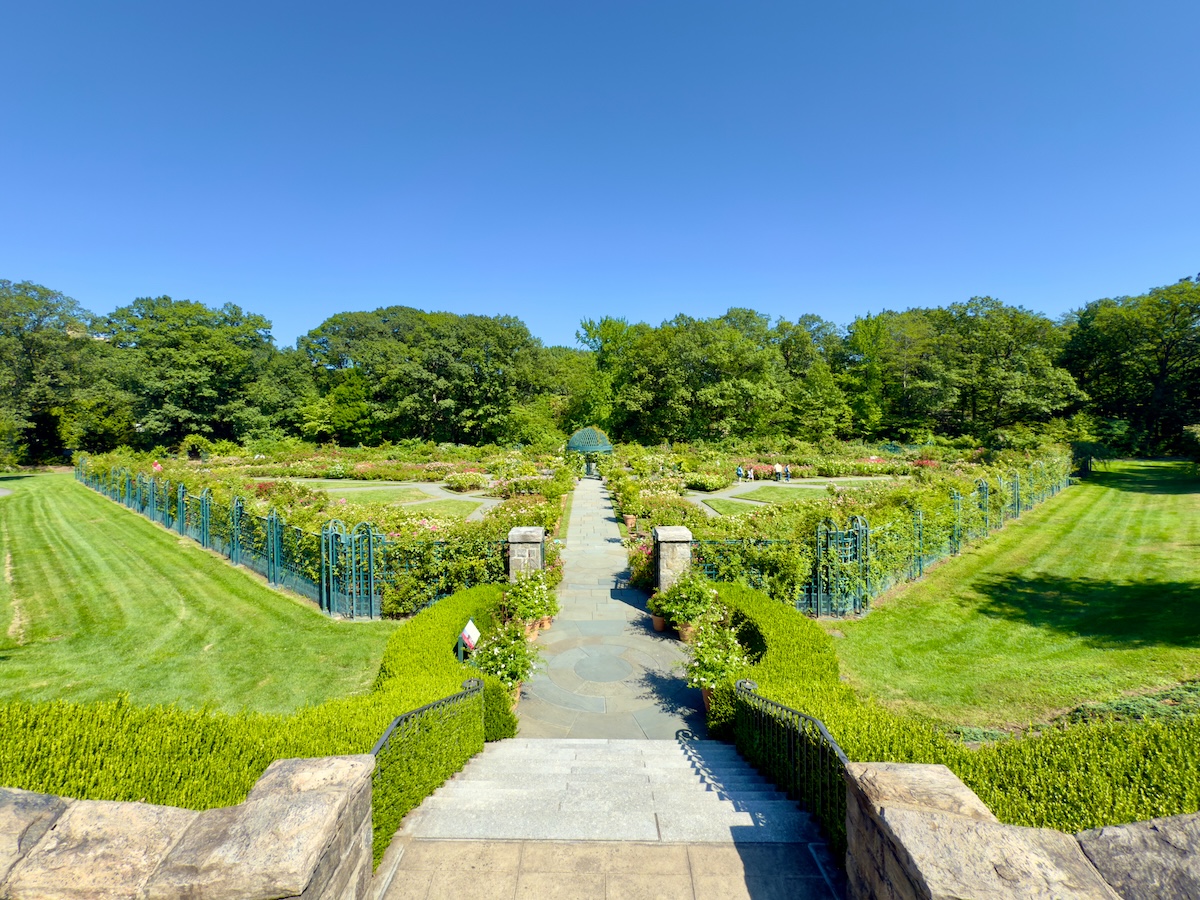
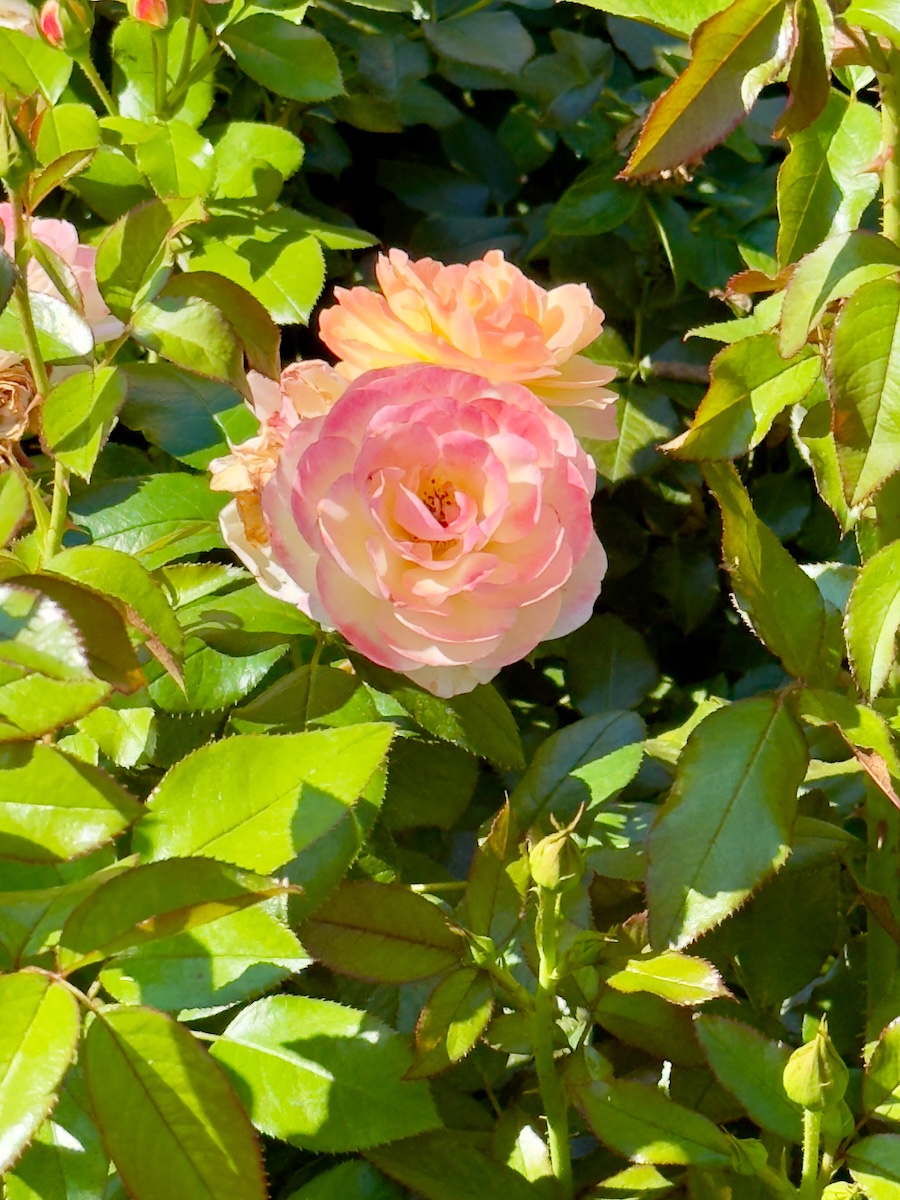
We hopped off our tram at the Peggy Rockefeller Rose Garden, which was in full bloom.
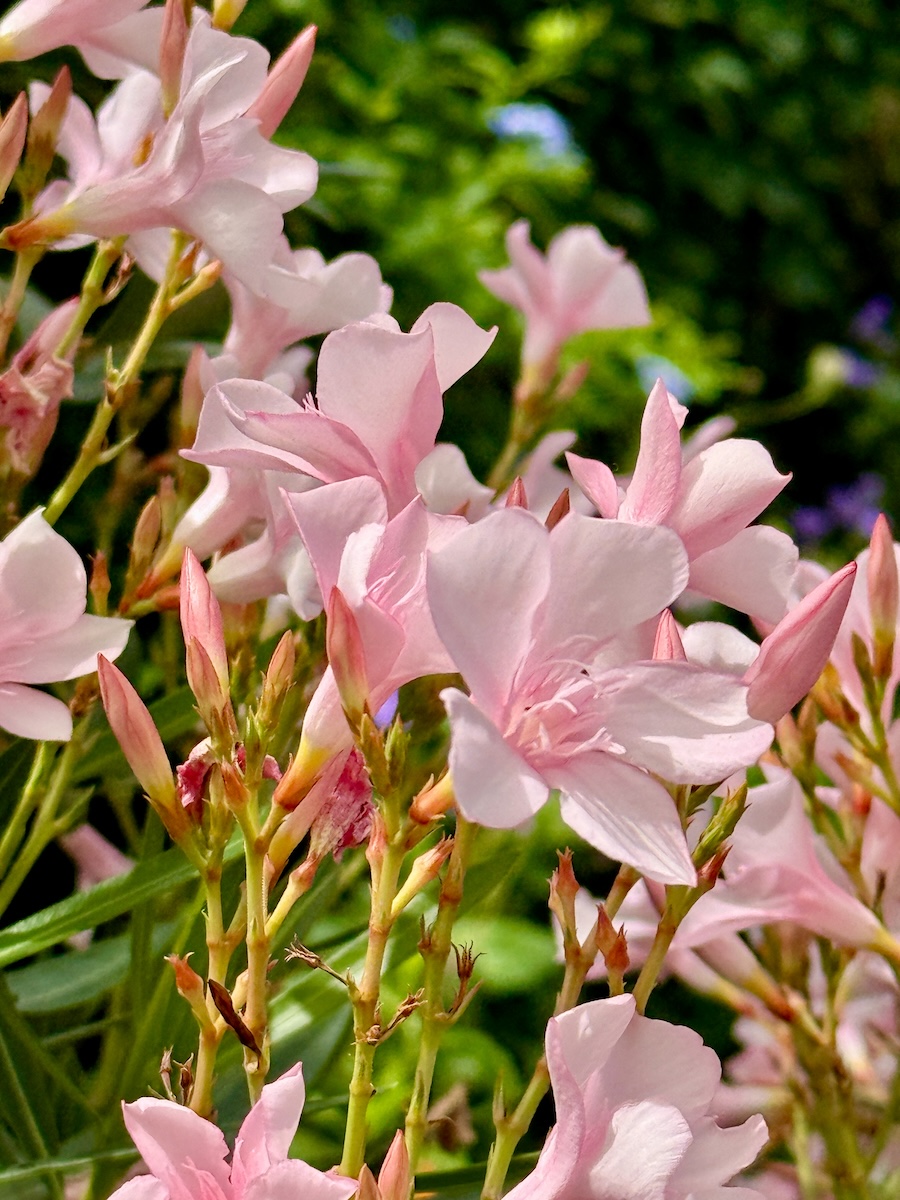
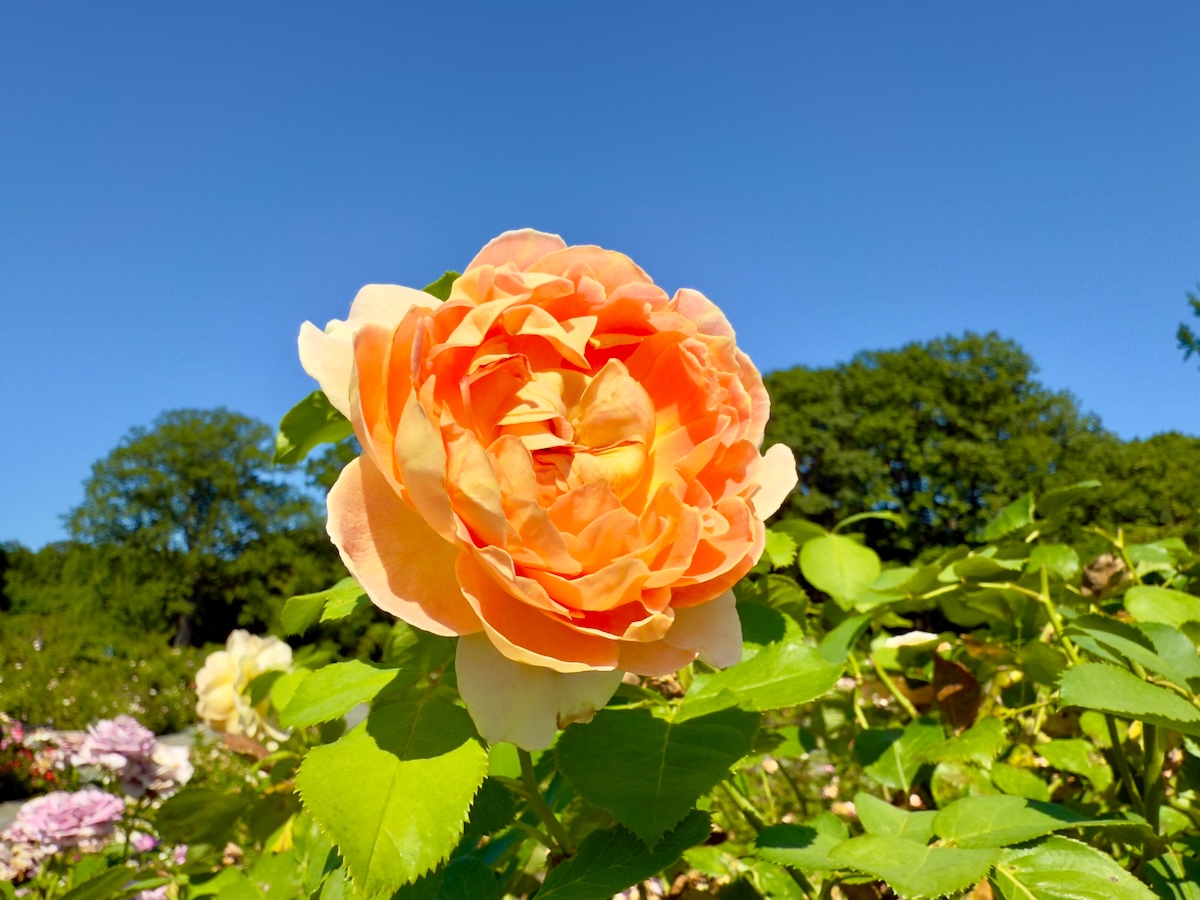
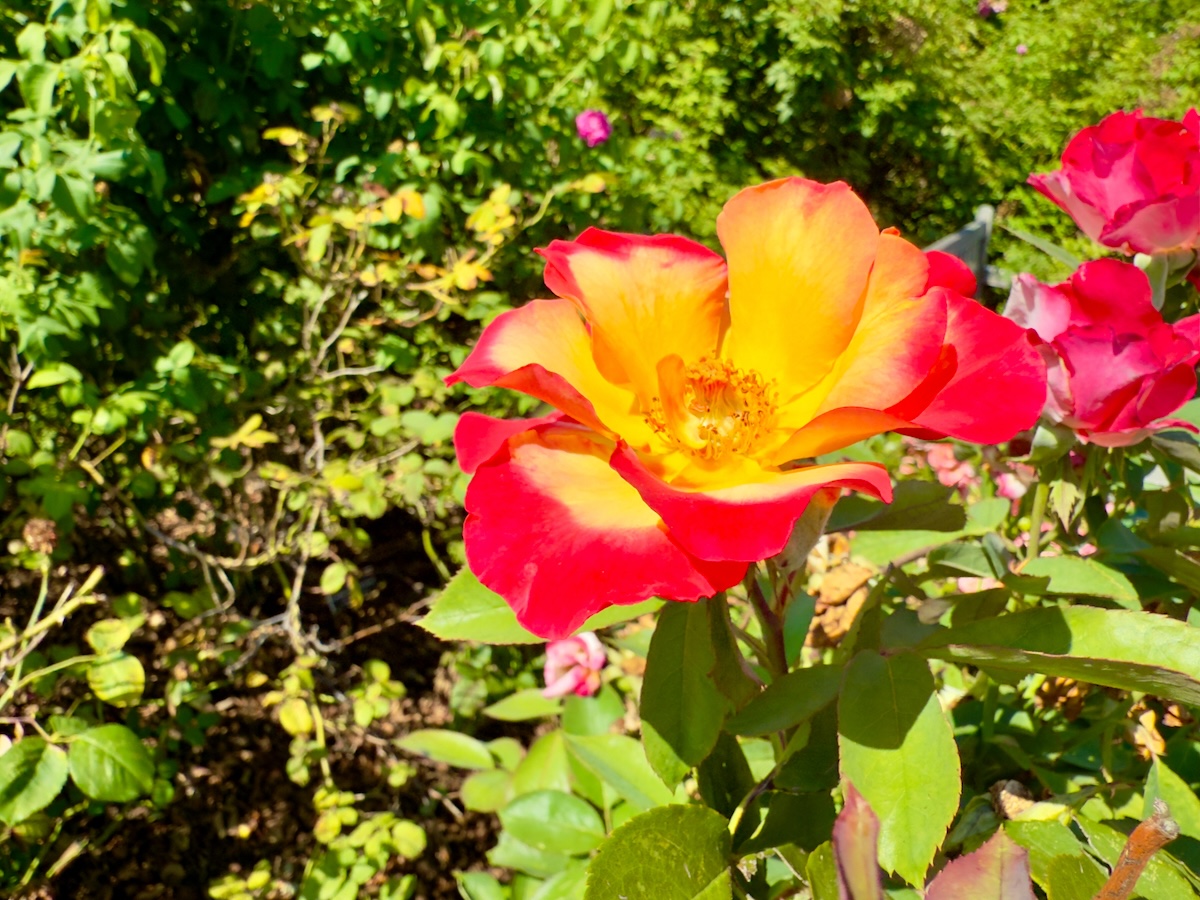
If you’ve never seen thousands of roses flowering at once, it’s a slightly overwhelming sight. The beds stretched out in tidy geometric rows, each one overflowing with blossoms in shades of yellow, coral, red, and pale pink. The scent hung in the warm air like grandma’s perfume, strong enough that even people who claim they don’t care about flowers tended to slow down and wander the paths a little longer.
The Peggy Rockefeller Rose Garden holds more than 4,000 rose plants representing hundreds of varieties planted so waves of color move through the beds as the season unfolds. When everything is in bloom, it's one of the most photographed spots anywhere in the Garden. The current garden dates to 1988, when it was rebuilt after decades of neglect had nearly erased the original 1916 rose Garden from the landscape. Rockefeller—an avid gardener herself—helped fund the restoration and gave the space its current name.
The story of the rose garden is a reminder that the New York Botanical Garden was never intended to be just a decorative park. It was founded in 1891 by botanists Nathaniel Lord Britton and Elizabeth Gertrude Britton after Nathaniel visited the Royal Botanic Gardens at Kew in London and returned convinced that the United States needed something comparable. Britton was a botany professor at Columbia University, and at the time, most botanical research here still happened in classrooms, small gardens, and private plant collections. The idea of building a massive public garden devoted to plant science, research, and education was radical for the time.
The Brittons rallied wealthy New Yorkers and secured land in the Bronx, where the Garden opened on a scale that few American cities had attempted. The landscape plan came from Calvert Vaux, the same landscape architect who co-designed Central Park with Frederick Law Olmsted. The philosophy behind the Garden, however, was very different. Central Park was designed as picturesque scenery. The Botanical Garden was designed as a scientific collection spread across a landscape.
In other words, the Garden functions partly as a public park and partly as a museum of plants. Different areas represent plant families, ecological environments, and species from around the world, turning a walk through the grounds into a living botanical atlas rather than a traditional park.
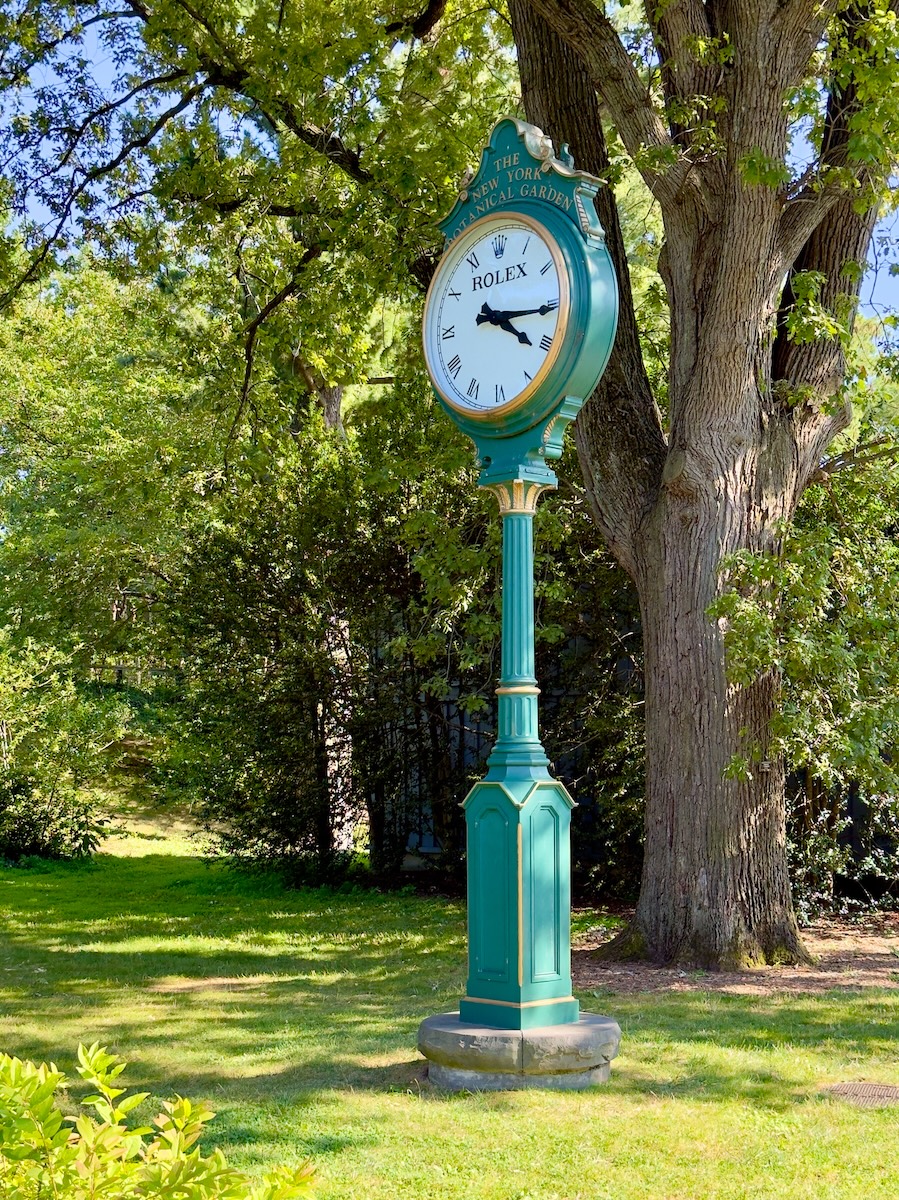
By mid-afternoon, we had wandered across more of the Garden than we'd planned, but less than we probably should. The place is enormous. Eventually, we made our way back toward the entrance where we'd started, marked by a street clock that made the entire setting feel faintly Narnia-like. I half expected Tumnus the faun to wander out from behind a hedge and ask if we'd care for tea.
In a city famous for density and skyscrapers, it’s still possible to spend an afternoon wandering through forests, rose gardens, and Victorian glasshouses. You just have to ride the subway for nearly an hour to get there.




Write a comment