
We went to Paris specifically for David Hockney. Not for the Louvre, or Mariage Frères, or even Ladurée. We didn’t even go in an effort to pretend that we are the kind of people who casually “pop into” major European capitals.
We went because Rick has a long-standing art crush on Hockney. Not in a vague, academic, art-appreciation way. In a “he’s on my freebie list” show-up-for-every-retrospective way. If Hockney announces a major show within reach of an international airport, Rick checks airfare before he checks the calendar.
So yes. This was a pilgrimage.
We’ve now attended more Hockney “final” exhibitions than feels statistically reasonable. Which suggests either the art world is trapped in a tasteful loop, or David Hockney simply refuses to exit, stage left. Using Cher Farewell Tour math, we’re on pace for at least seven more. The man was born in 1937 and still creates like someone who just discovered paint.
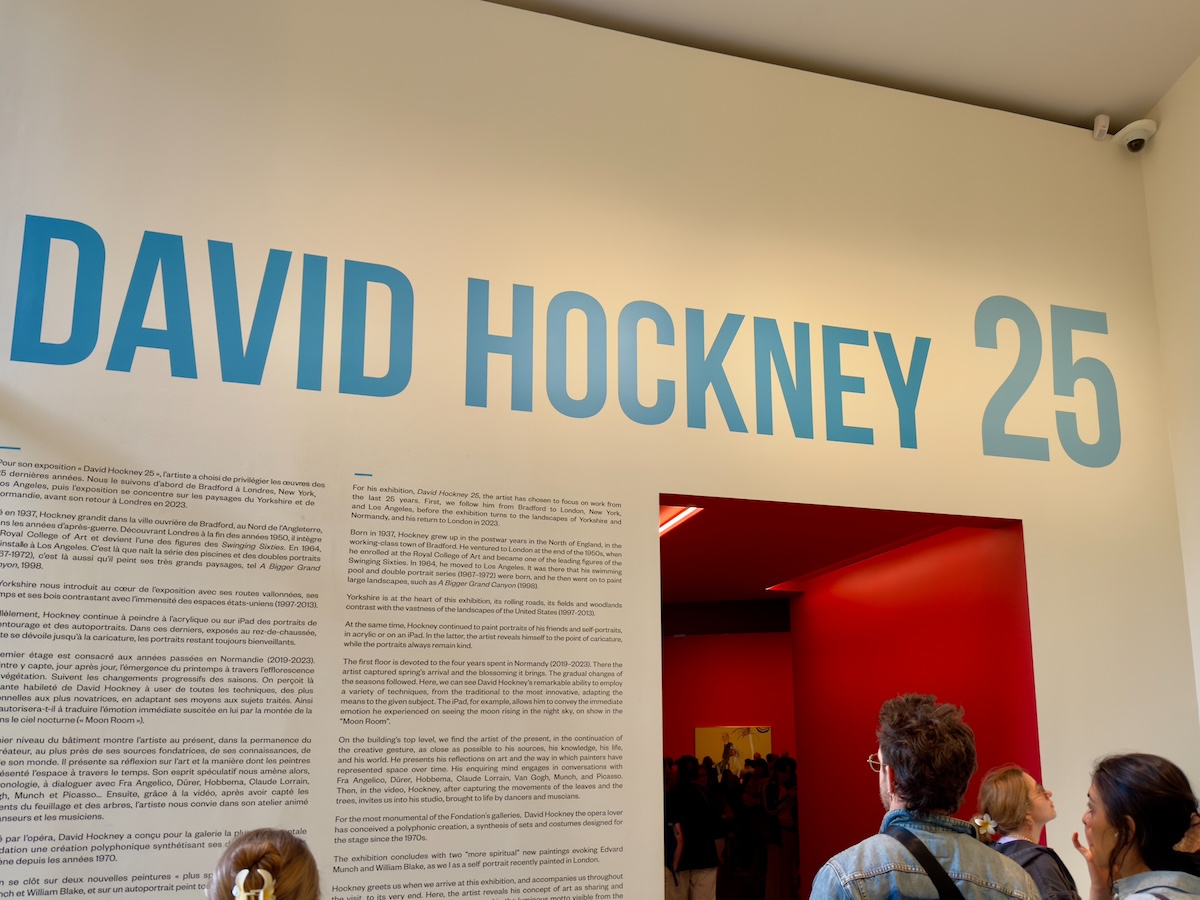
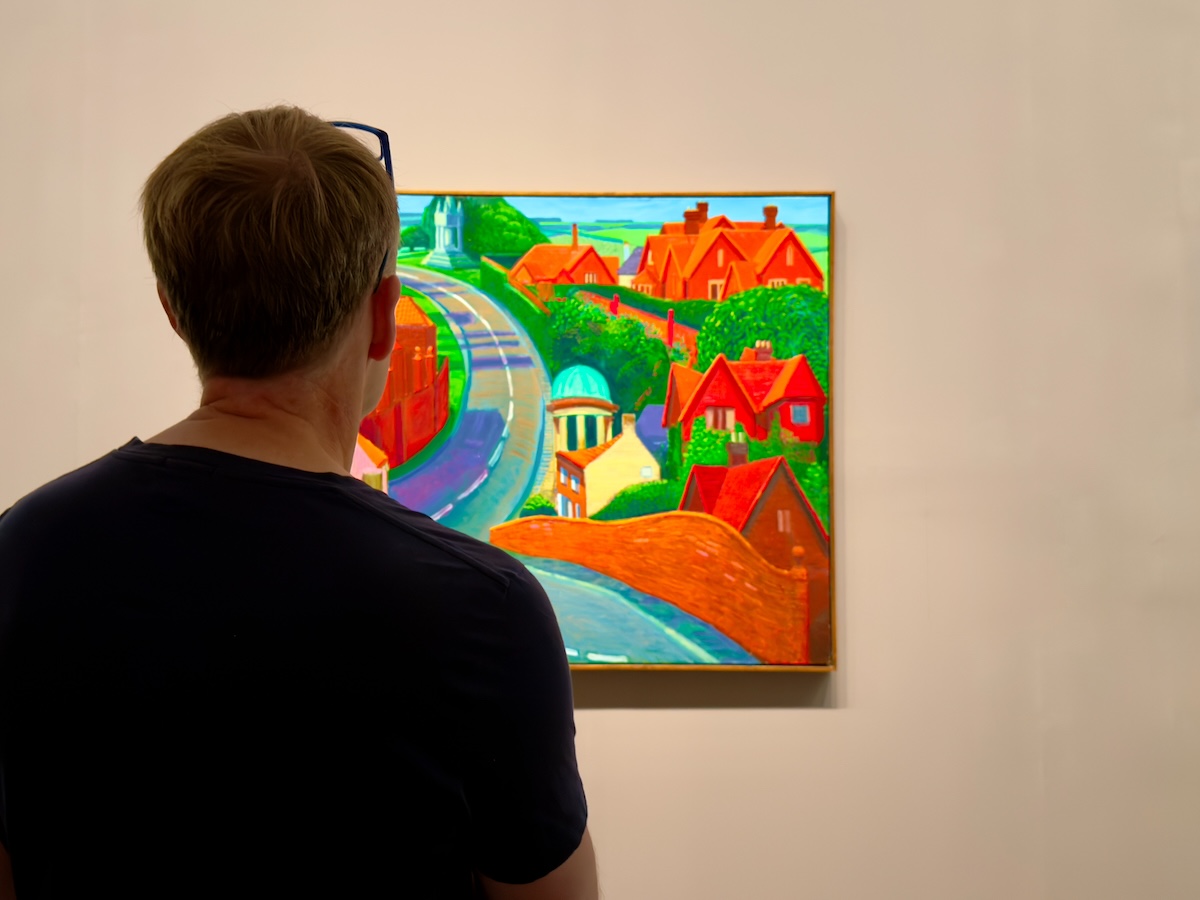
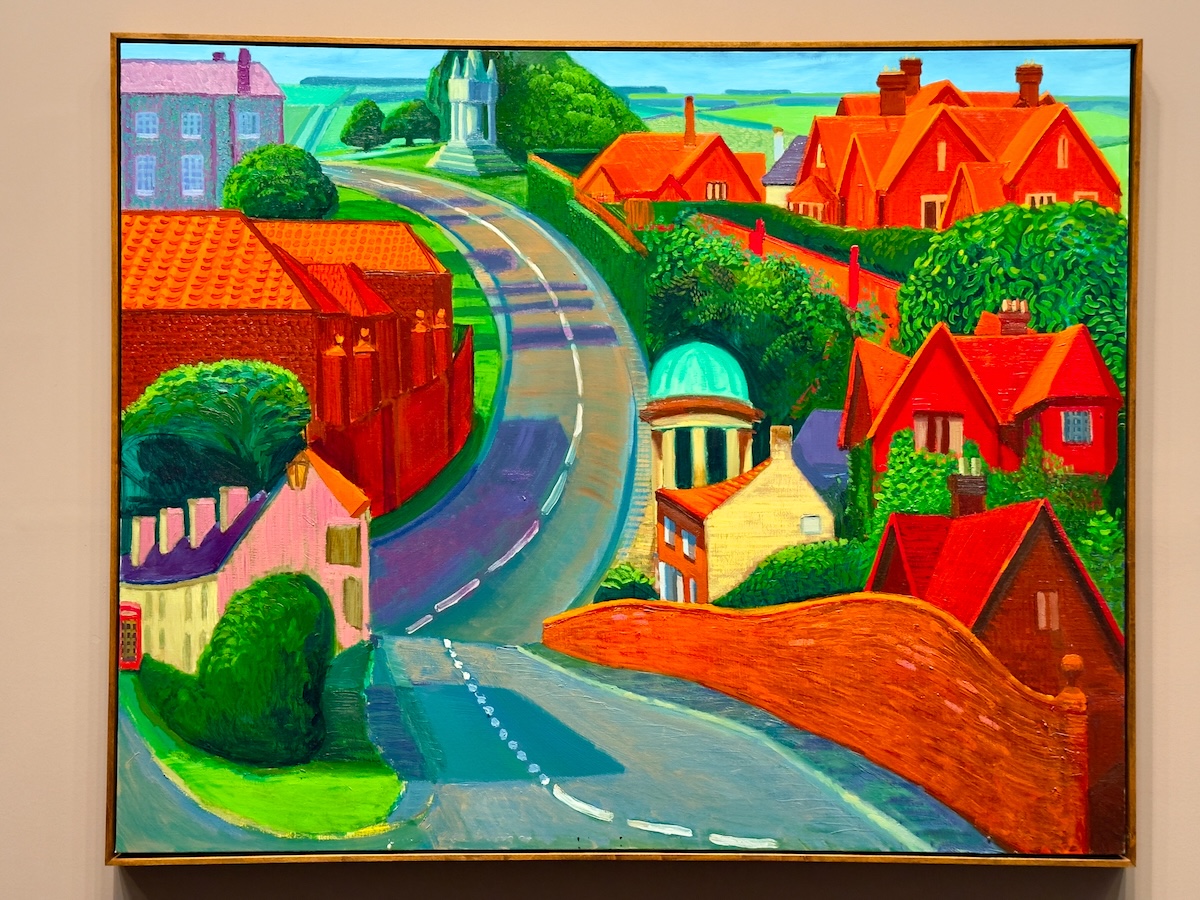
The exhibition at Fondation Louis Vuitton leaned heavily on the last 25 years of his work, a quietly radical choice. Not a greatest-hits parade or nostalgic victory lap—just room after room of the most recent output of a man in his 70s and 80s who decided he wasn’t even close to done.
The exhibition filled nearly the entire building—11 galleries stretching from his working-class beginnings in Bradford, northern England, to California, Yorkshire, and eventually Normandy, France. It wasn’t chronological so much as cumulative. You could feel the decades stacking. Think momentum instead of a tidy career arc.
That it was hosted at Fondation Louis Vuitton felt deliberate. The Frank Gehry-designed building delivers on ambition. Glass planes arc overhead, light shifts constantly, and the galleries are both generous and, crucially, usable. It functions far better as an art venue than either the Guggenheim in New York or the one in Bilbao. The scale suits artists who think big.
The Fondation is still young—it opened in 2014—so it can’t trade on centuries of inherited gravitas like the Louvre or the Musée d’Orsay. What it does have, though, is a reputation for big swings. Basquiat, Warhol, Rothko. Canonical artists with both history and heat.
Hockney fits that bill—but his inclusion wasn't entirely predictable. He is, yes, undeniably popular, but he is also very much alive and still expanding his canon in real time. Entire-building surveys are usually reserved for artists whose stories are, well, already complete.
The partnership was unusually symbiotic, too. Hockney brought decades of institutional credibility. The Fondation brought scale, light, and room to stretch. Handing nearly the entire building to a living artist at 87 reinforced both reputations at once.
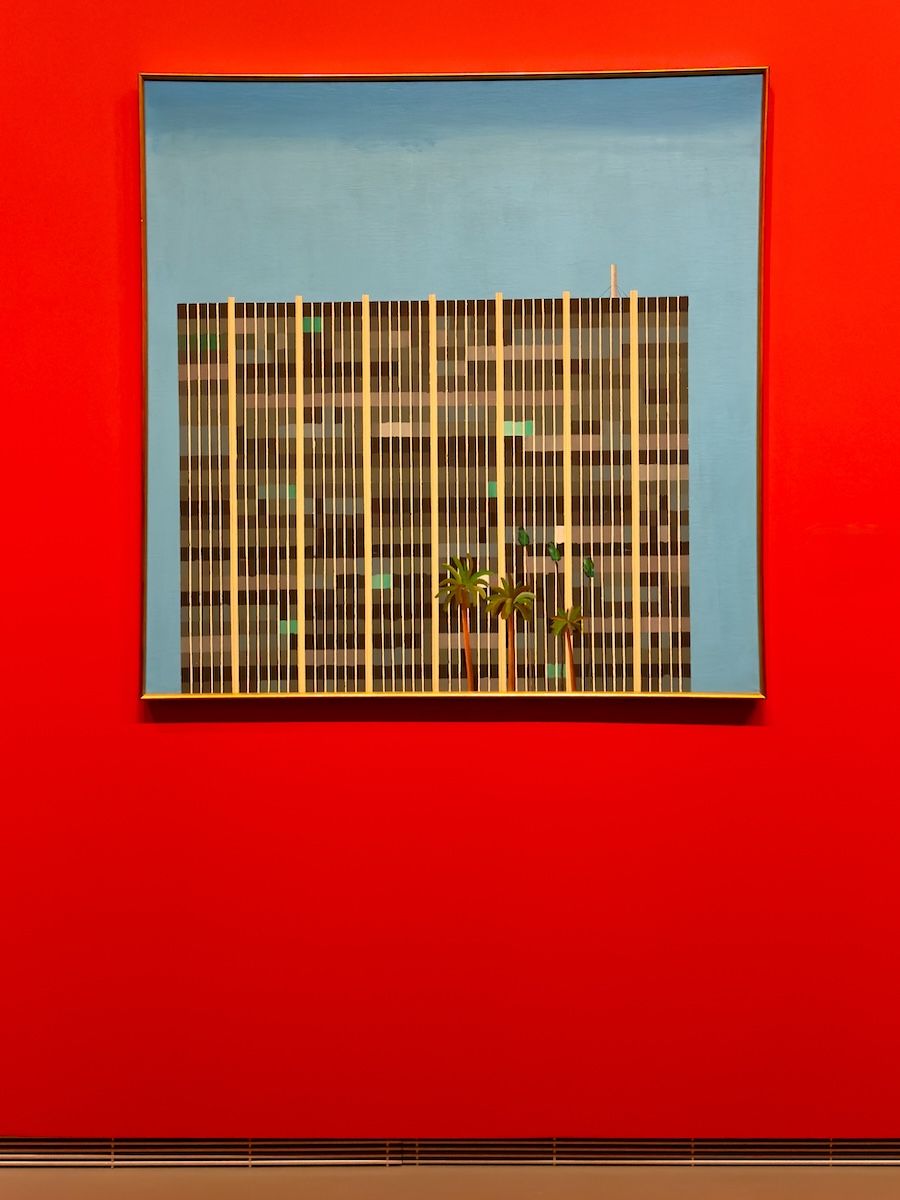
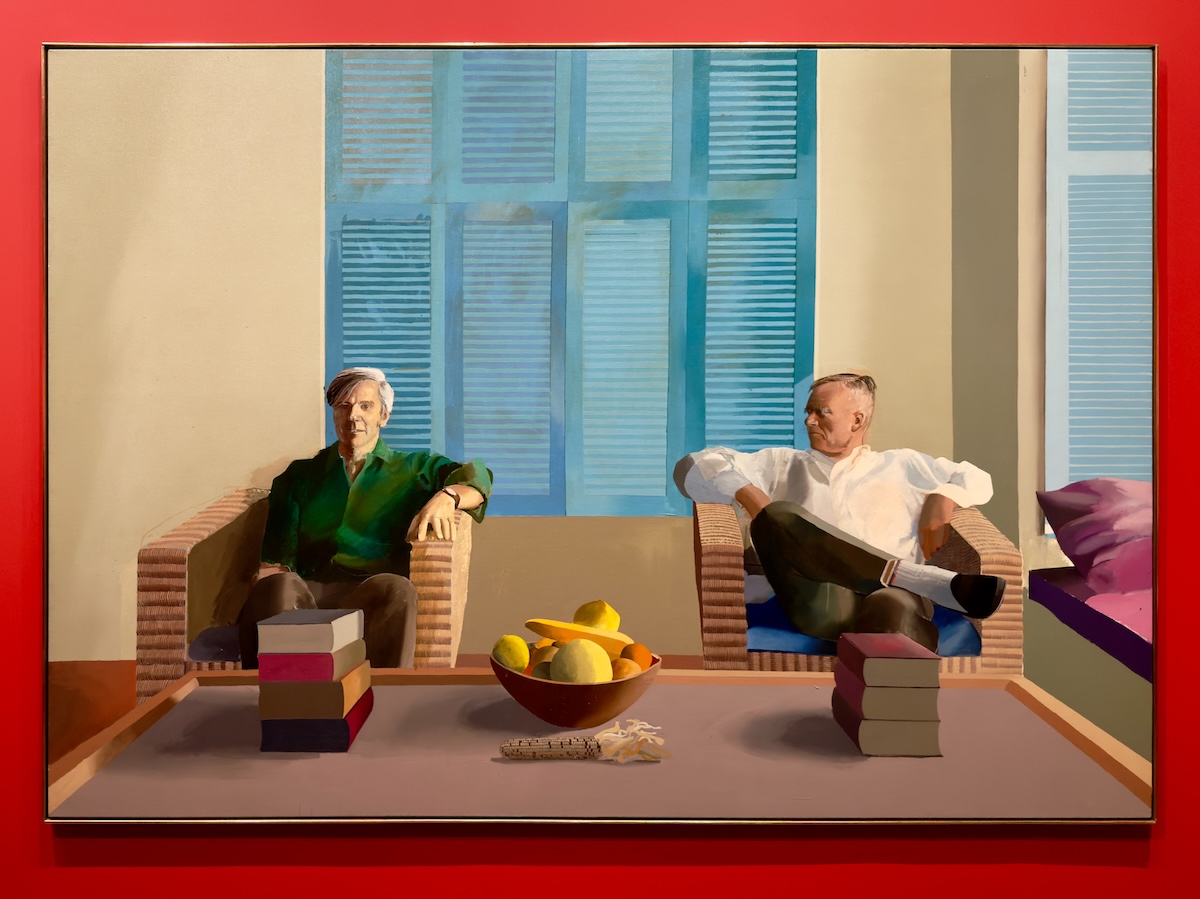
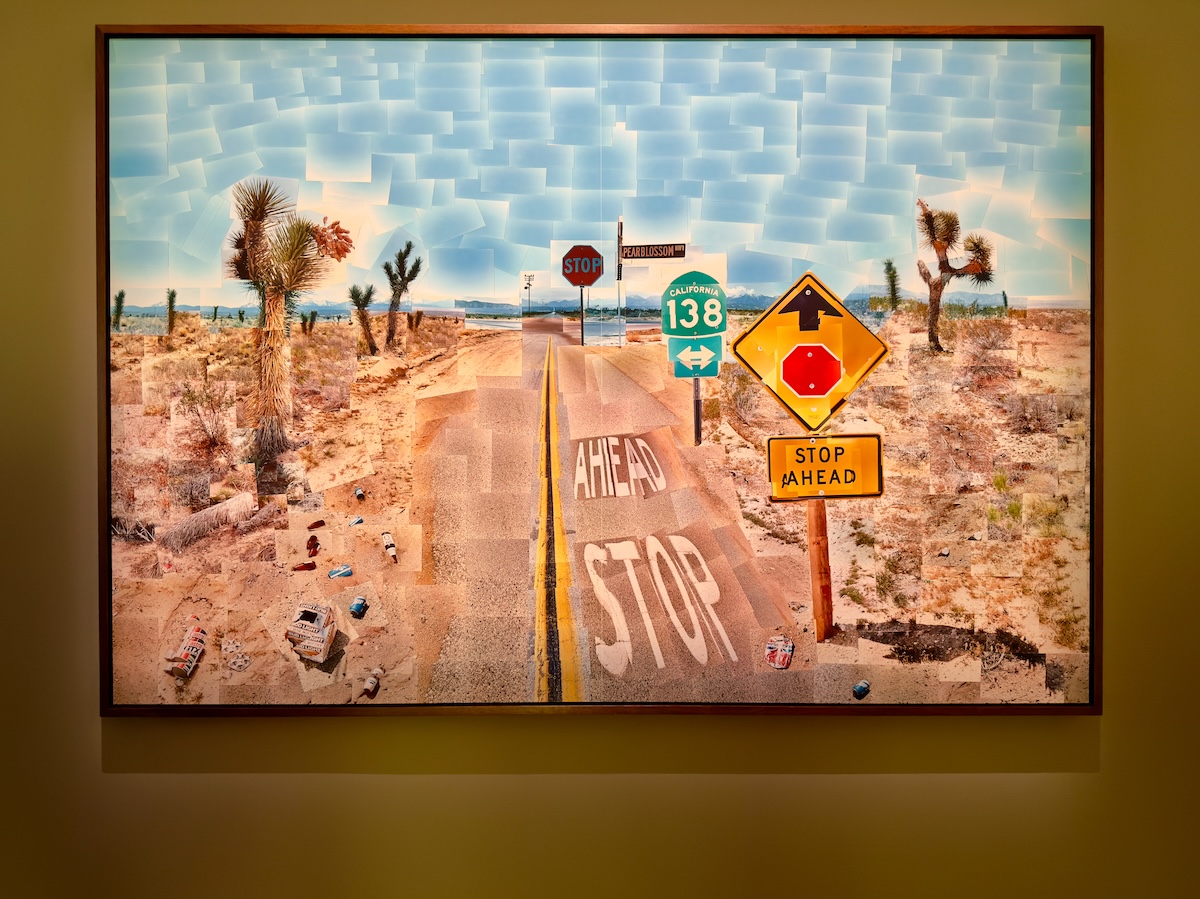
More remarkably, the exhibition wasn’t just about him—he helped build it. He determined what hung where. This wasn’t a museum embalming a legacy or polishing a greatest-hits reel—it was an artist directing his latest edit, deciding what mattered, choosing how he wanted to be seen right now. Yes, the expected icons were there—the pools, the double portraits, the California light—but they didn’t dominate. They felt like prologue. The real weight of the exhibition leaned forward.
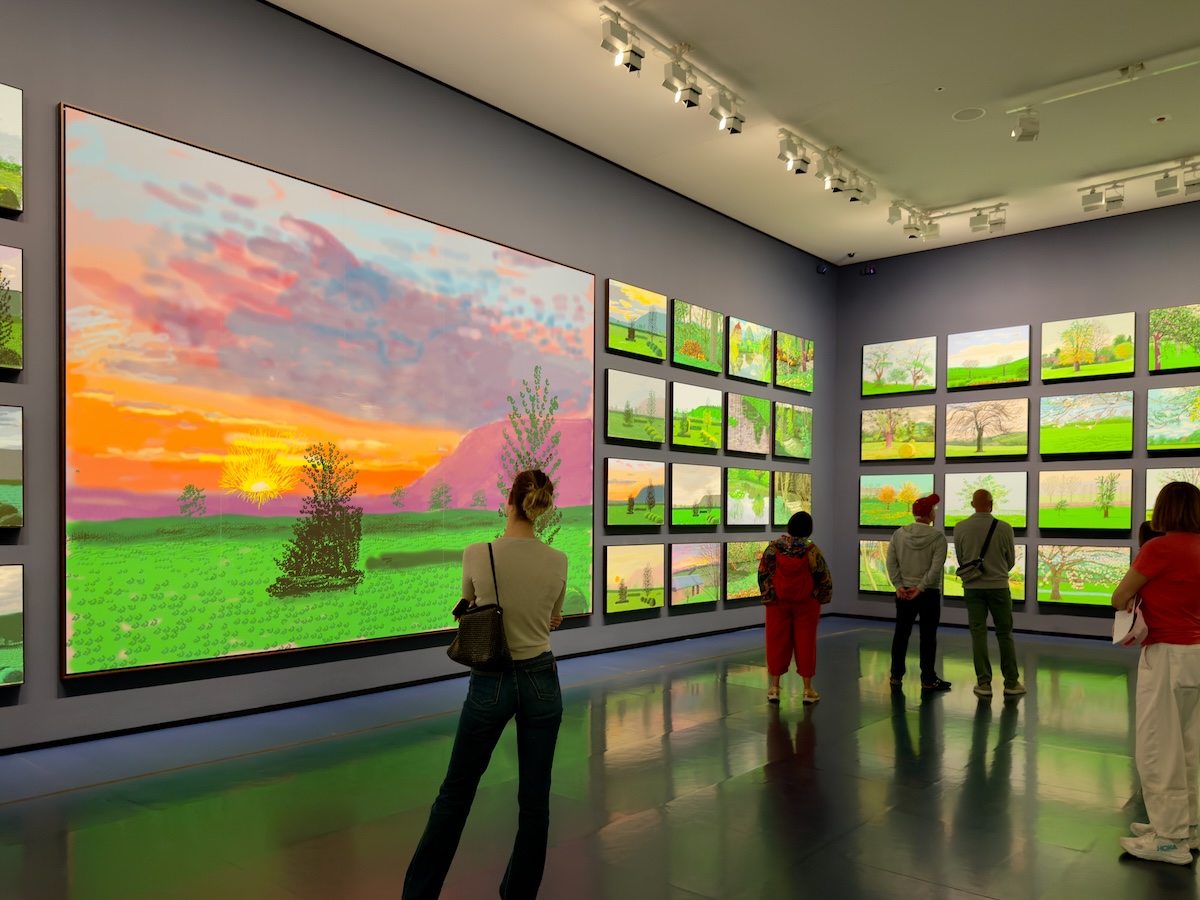
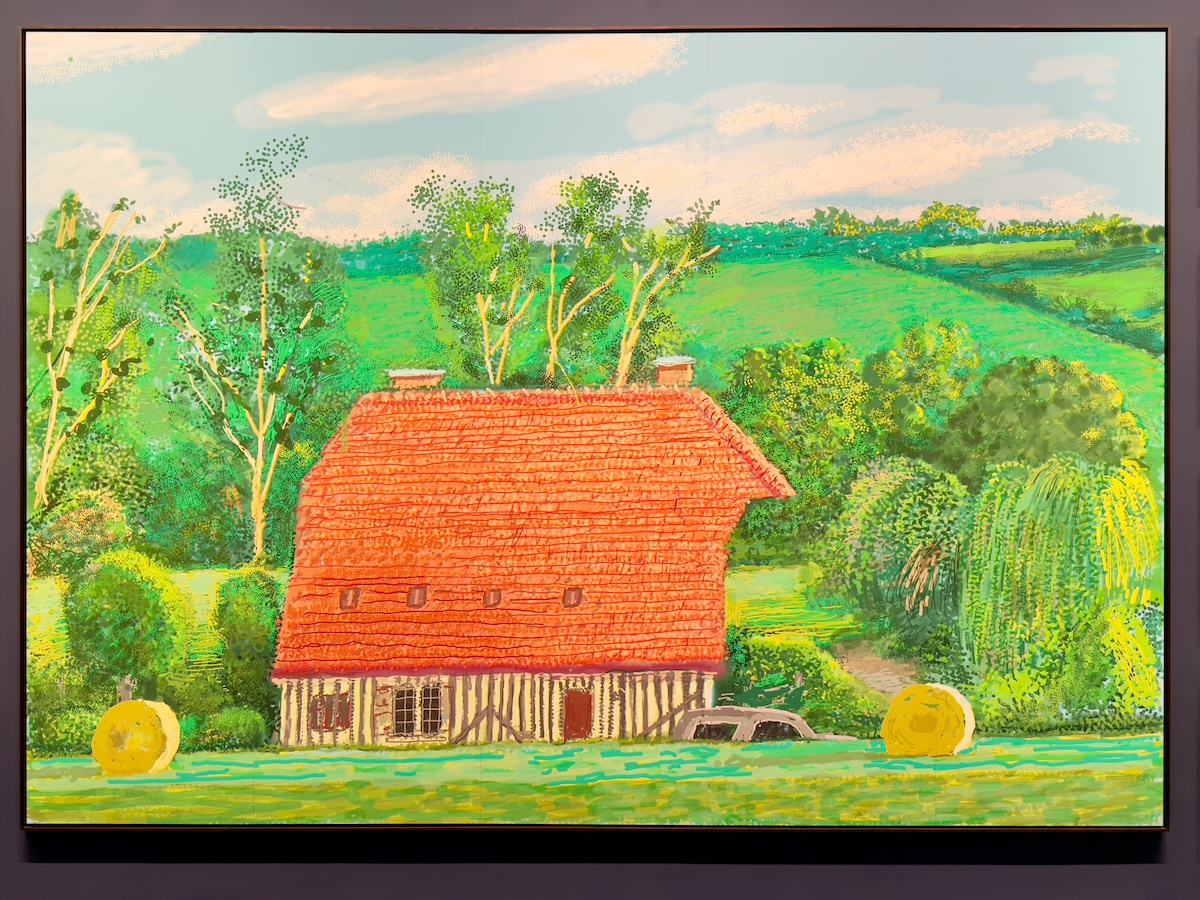
For all that scale, background, and reputational choreography, it was still all about the art. And certain rooms began to assert themselves. The Normandy galleries were the first to pull me in.
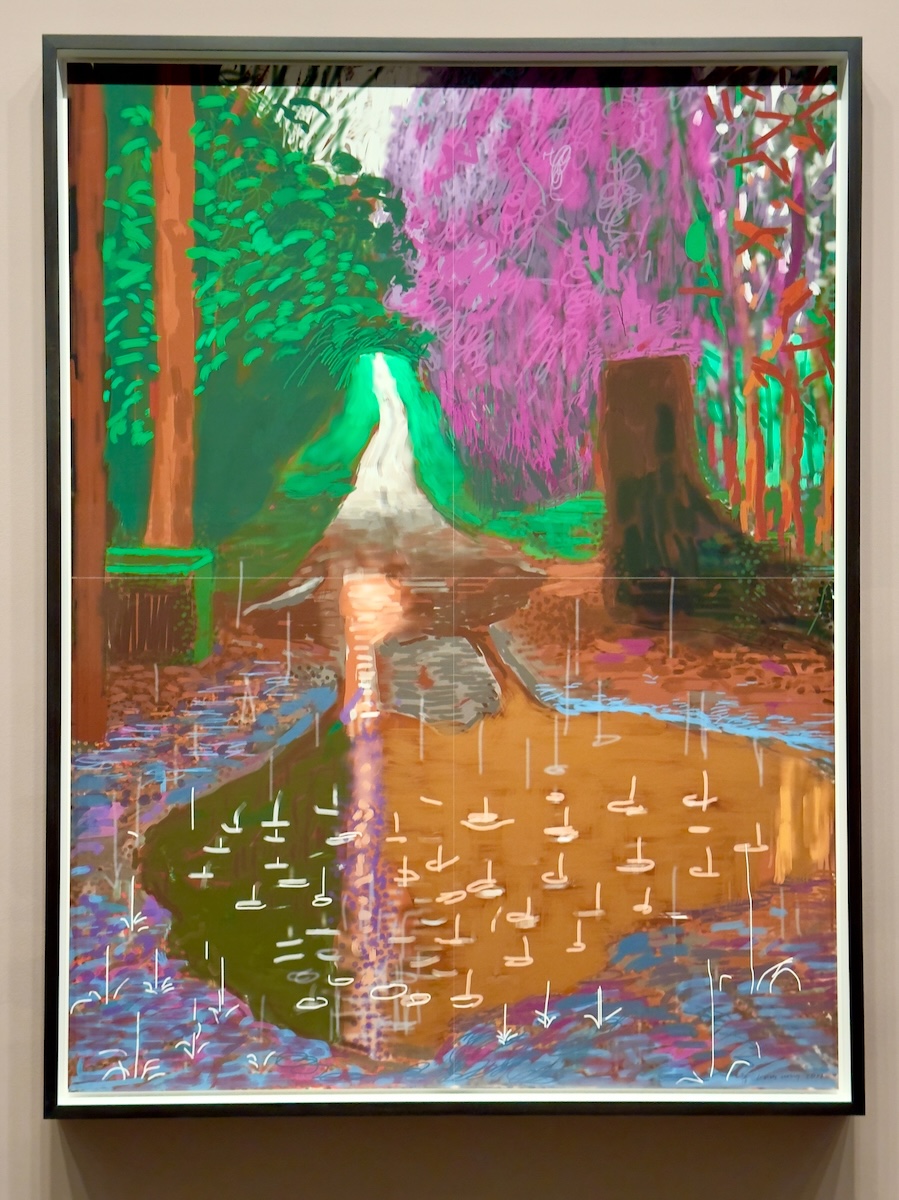
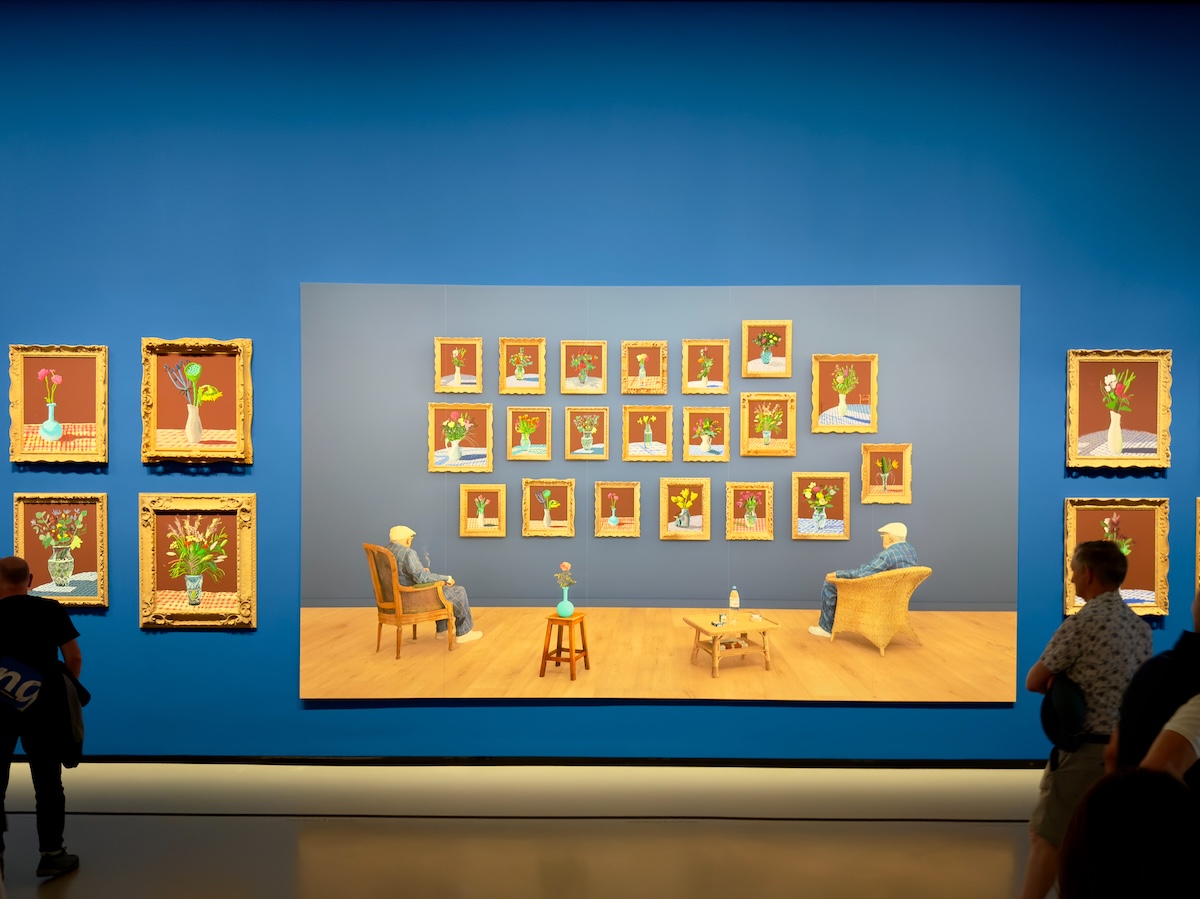
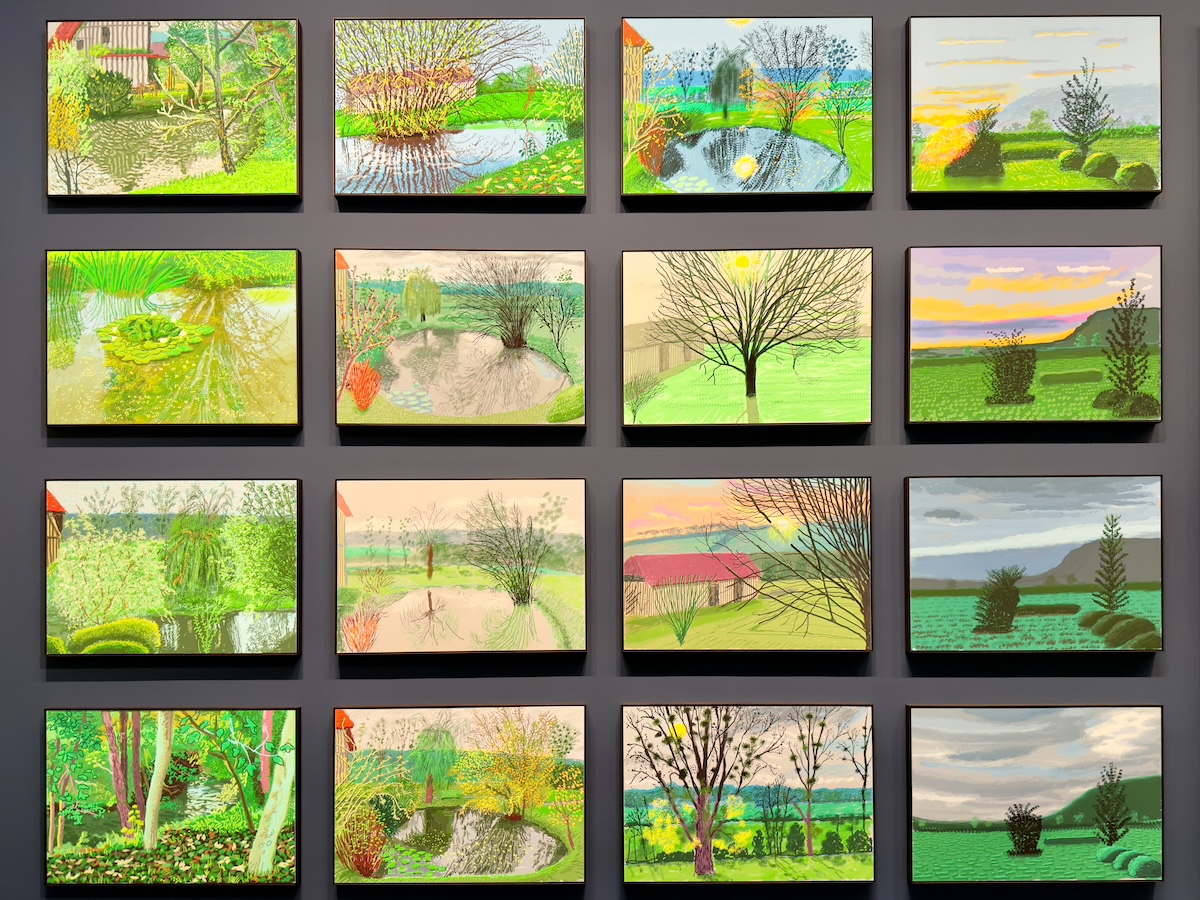
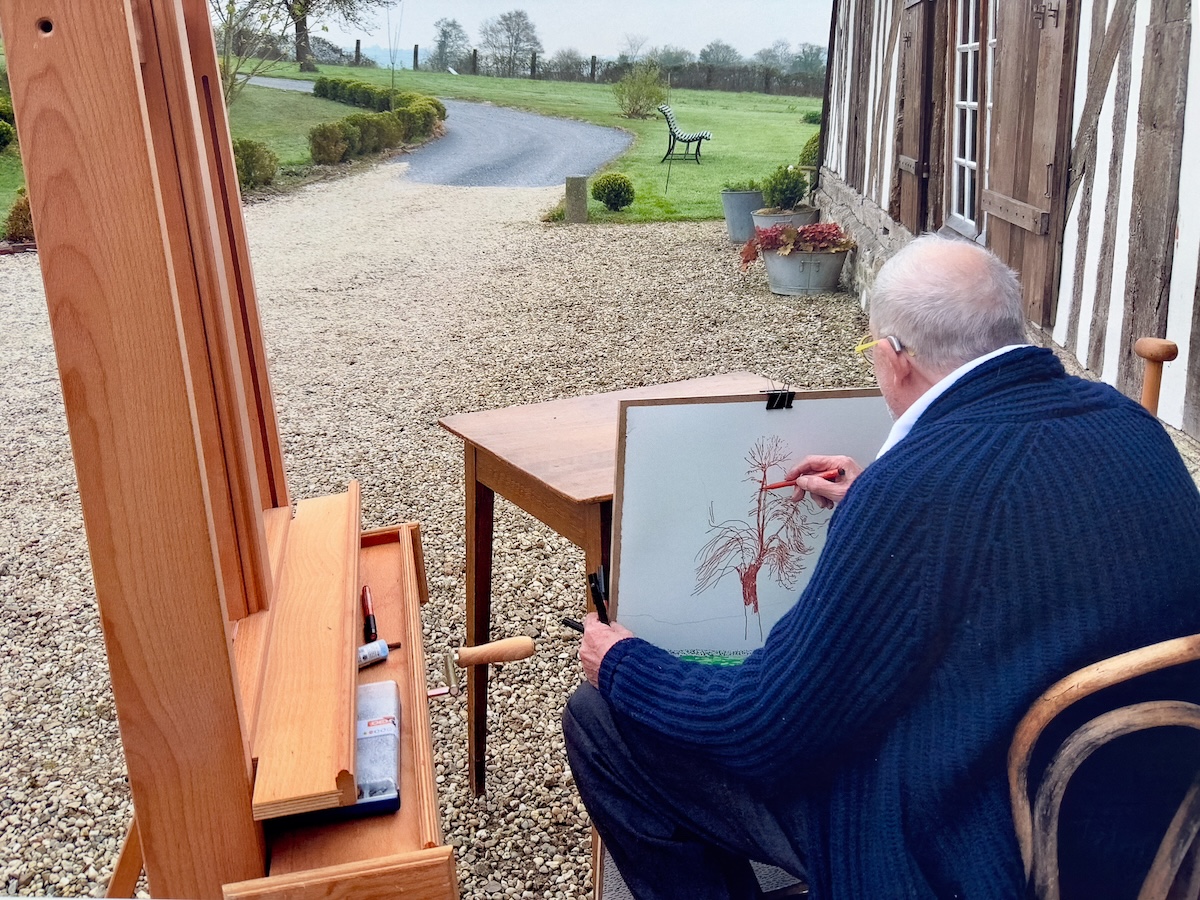
During the pandemic, while the rest of us were reorganizing our spice cabinets or doom-scrolling and working through family-size bags of Cheetos in elastic-waisted denial, Hockney relocated to rural Normandy, France, and made art every single day. His 220 for 2020 series, drawn entirely on an iPad, tracks the passage of an entire year—buds opening, leaves thickening, branches laid bare. The moon rises over the landscape. Again. And again. The air feels thick with wet leaves and freshly turned earth.
Room after room of sustained attention. Dramatic in its discipline. There’s something almost confrontational about it. The world shut down, plans were abandoned, and people froze in place. Meanwhile, one 80-something painter quietly built a record of time passing—not once in a burst of inspiration, but day after day after day.
Wandering through the Normandy galleries, I didn’t think about the technology or digital bravado of using an iPad—an iPad!—to work at that scale. Instead, I thought about the audacity of continuity. Uninterrupted work. Daily practice. Watching a landscape and responding without distraction.
It would be easy to romanticize that idea—exiled to the French countryside during a global crisis and responding by committing fully to your craft. But in those rooms, it didn’t feel romantic. It felt purposefully stubborn. A refusal to let circumstances dictate output.
It’s hard not to think about the discipline of showing up for your own work, even when no one is watching.
If Normandy is about watching a landscape age through a year, the self-portraits are about a person aging in public.
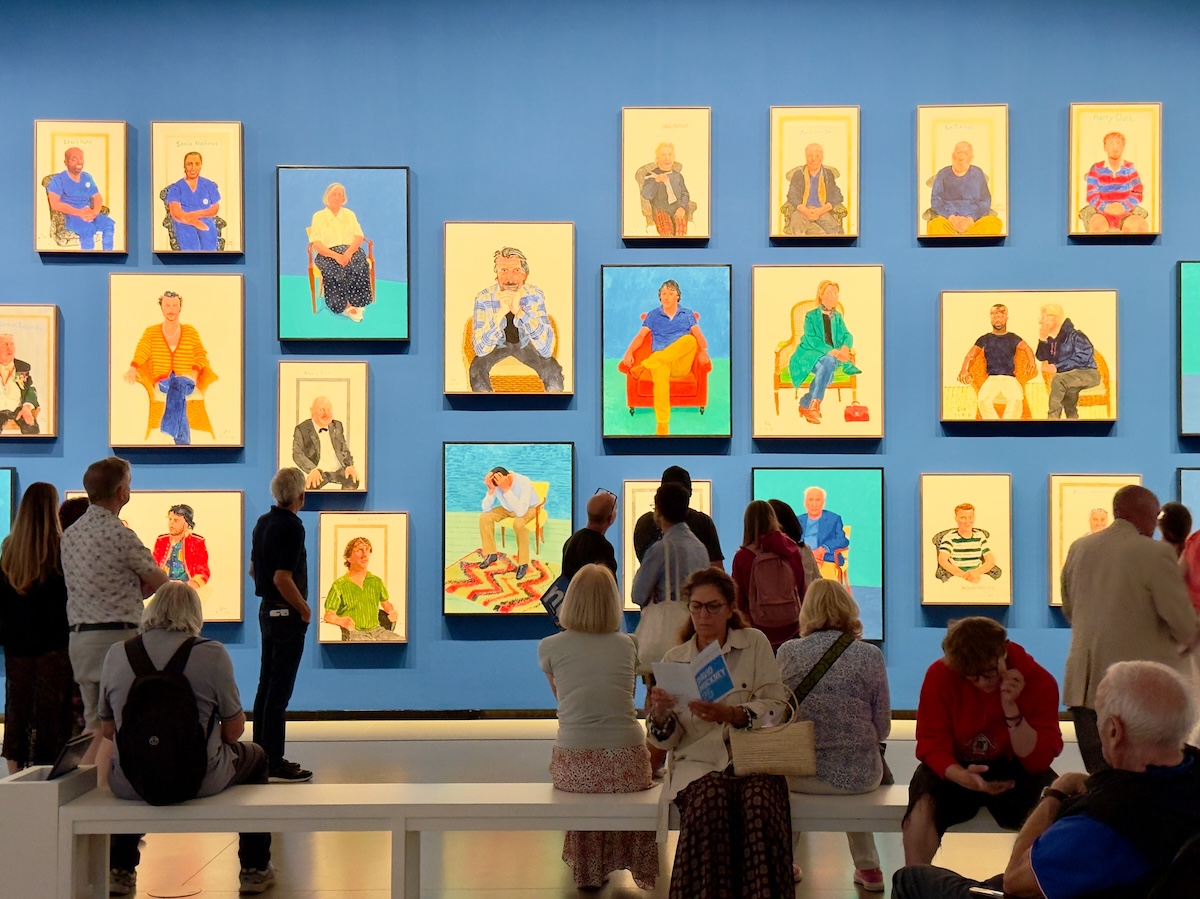
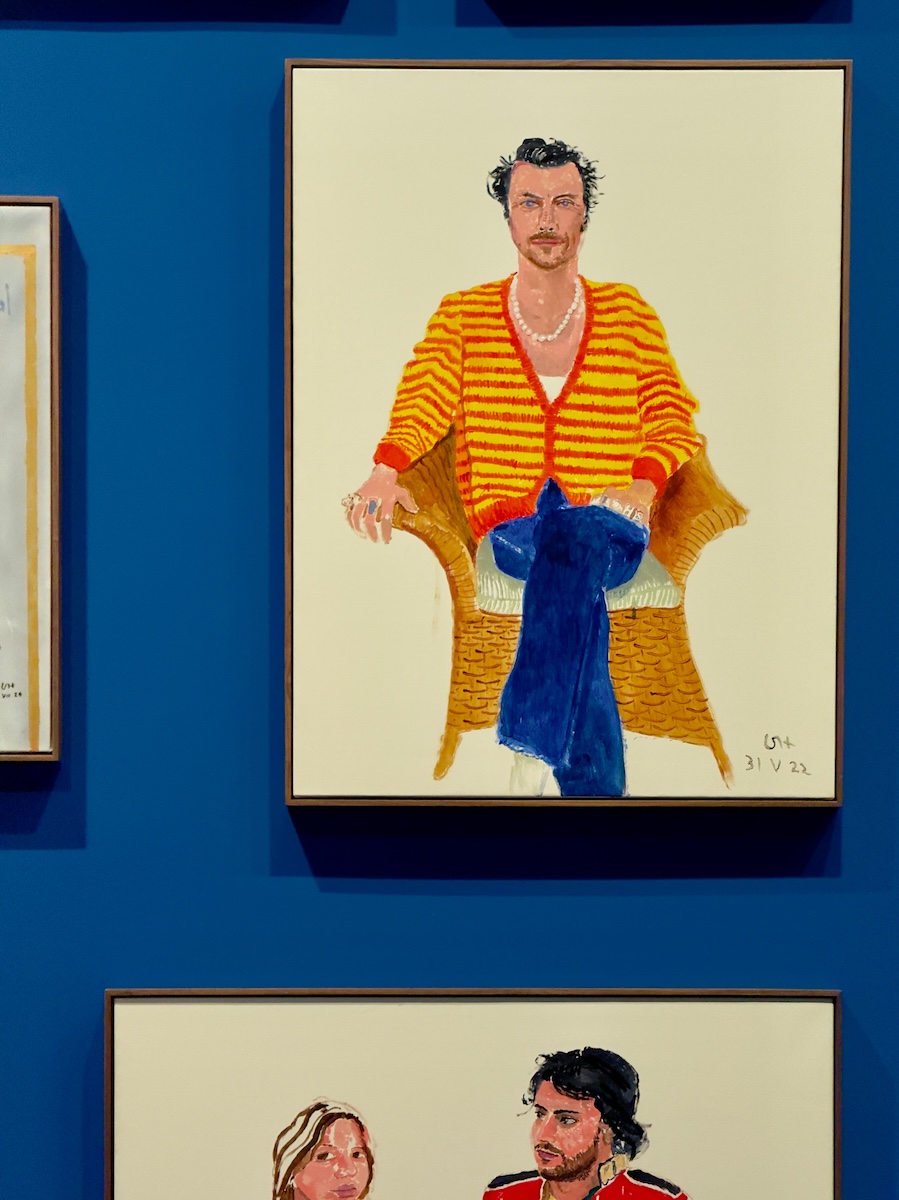
Hockney has spent decades painting the people around him—friends, collaborators, cultural figures—and, increasingly, himself. The subjects sit plainly, looking straight ahead. There’s no theatrical staging, just presence. There’s a sense of time spent together.
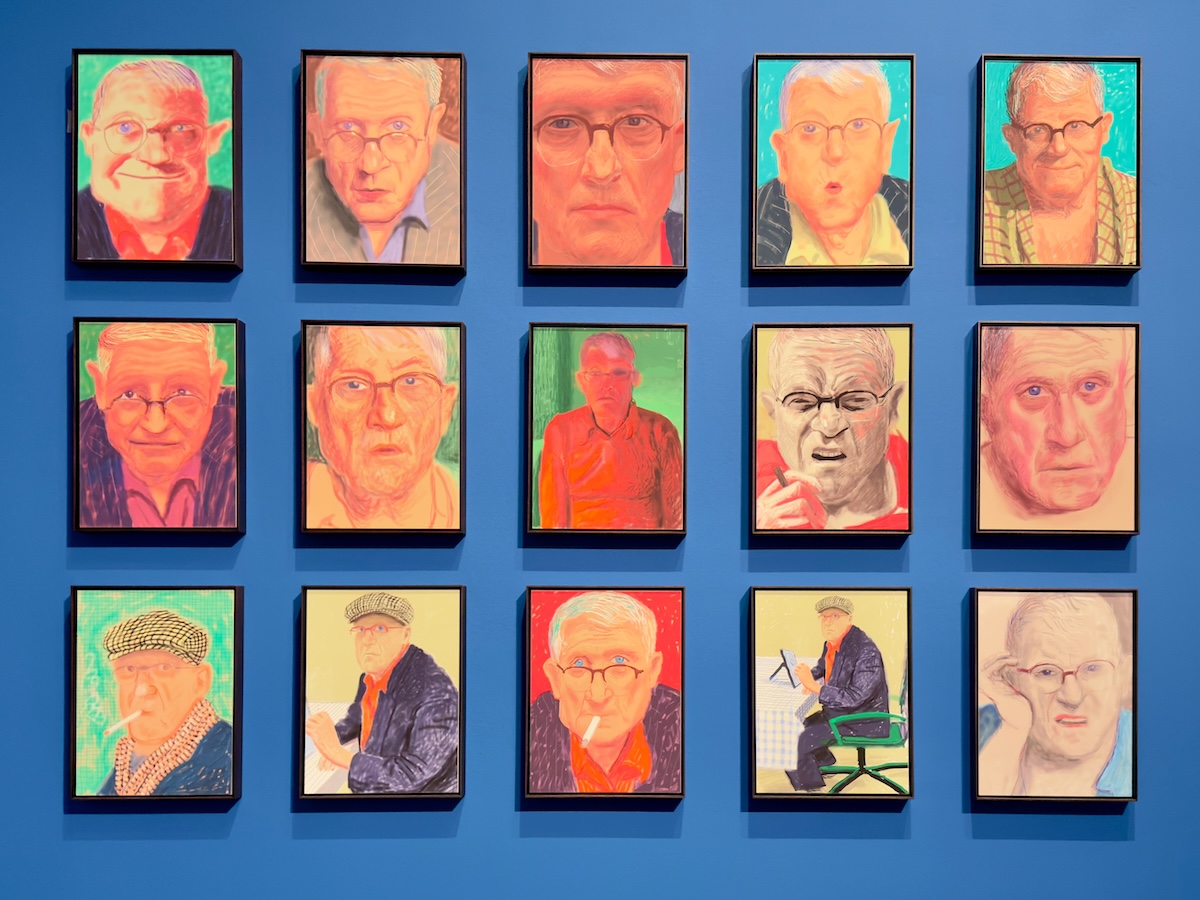
But it’s his recent self-portraits that are especially arresting. They are unsparing but not bitter. He exaggerates his features just enough to acknowledge time—the thinning hair, the lines, the tilt of the glasses—but not enough to surrender to it. There’s no attempt to soften the evidence. He treats his own face the way he treats a tree in winter—specific, exposed, worthy of attention.
There’s something quietly radical about that. To keep painting yourself as you age. To record the years as they accumulate instead of disguising them. To treat your own face as part of the landscape.
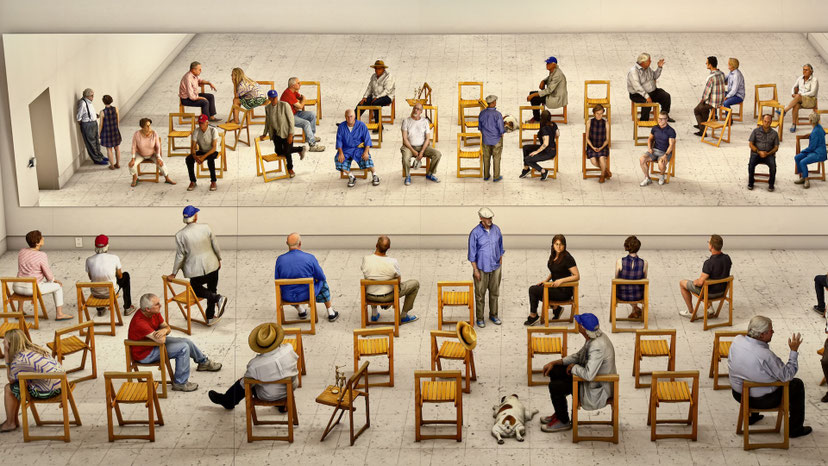
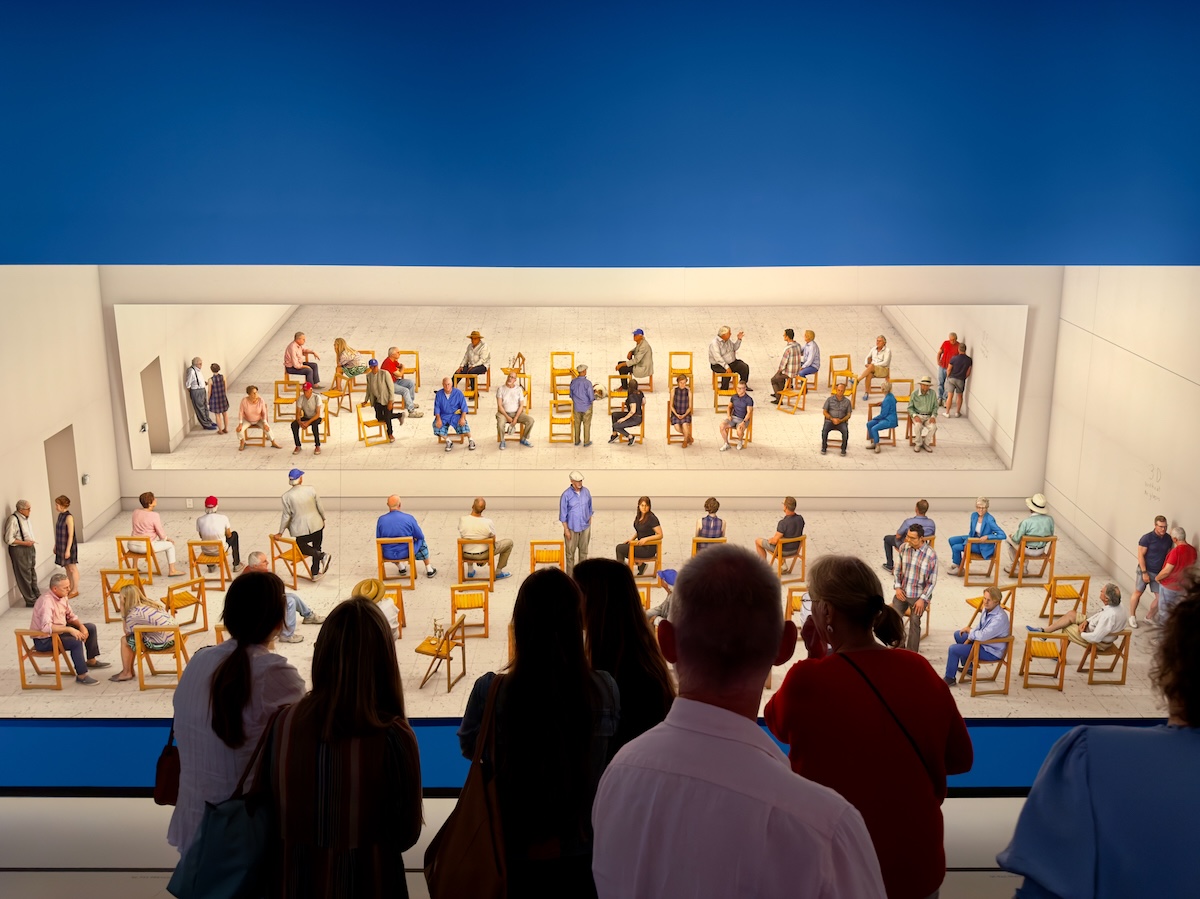
Elsewhere in the exhibition, he’s still experimenting. Pictures at an Exhibition fractures space and multiplies viewpoints. Pictured Gathering with Mirror bends perspective back on itself. His reimaginings of the old Masters—nods to Munch and Blake—along with opera set designs and immersive installations leaned more toward performance rather than contemplation. But it was the quieter galleries that lingered.
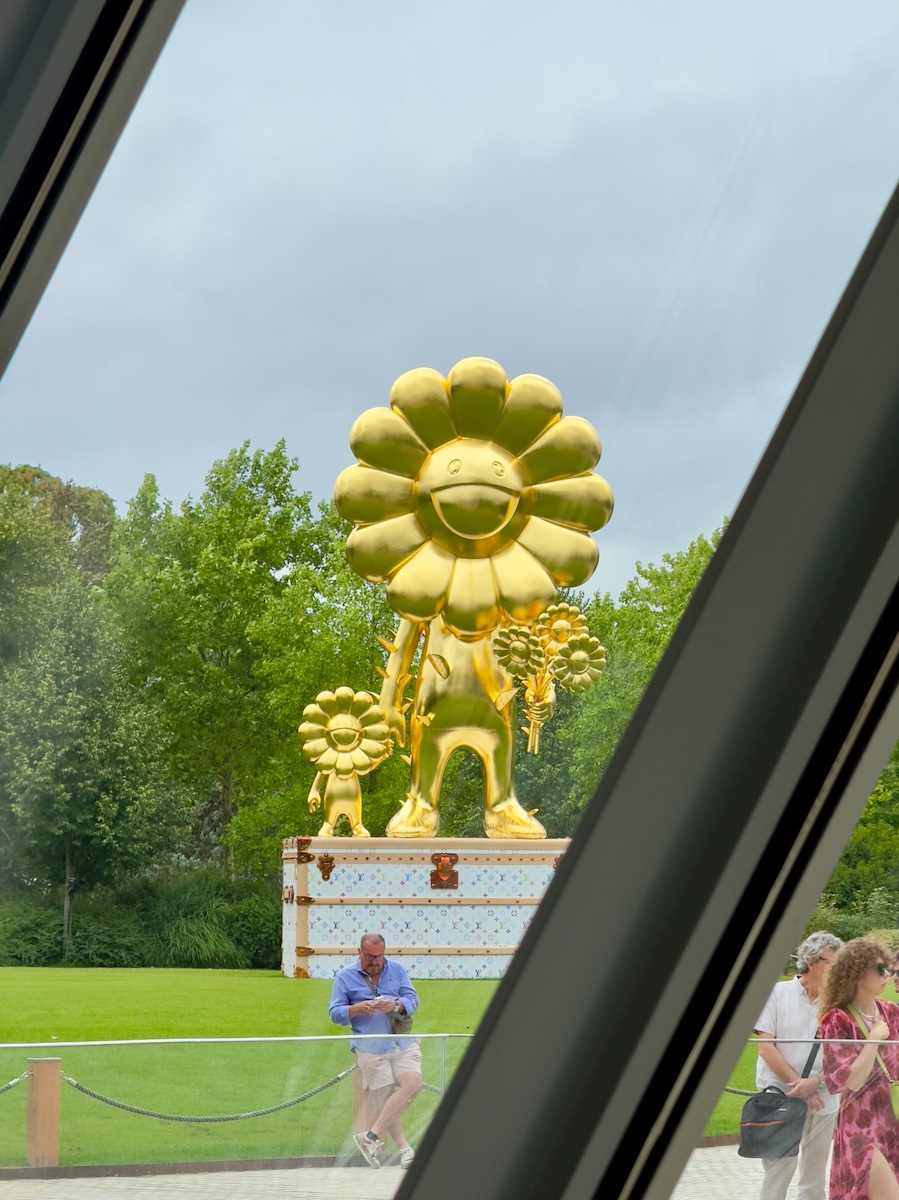
We had lunch in the Fondation’s café and sat a while, looking across at Takashi Murakami’s Flower Parent and Child—bright, cheerful, and unbothered by arty seriousness. Back outside in the Bois de Boulogne, where the building’s glass sails scattered the afternoon light, I felt more steady than dazzled.
It felt like a complete afternoon—an aging artist expanding his vision and a young museum expanding its reach.
Rick wasn’t quite ready to leave. I think he was on his phone checking flights again. Hey—if Hockney keeps showing up, we probably will too.







Write a comment