
We arrived in Paris a day earlier than we needed to. Not because of anything dramatic—no missed trains, no heroic rerouting. We just got there a day ahead of the thing we’d built the whole Paris stop around—David Hockney 25 at the Fondation Louis Vuitton.
We were on our way home to the States after three months in Spain. Paris was icing on the cake—a layover with ambition.
But the Fondation isn’t open on Tuesdays (really? Tuesdays? Tuesdays are the day of the week you’re not open? Who thinks like that?). So what to do in Paris when you have an extra day and a functioning pair of legs? You go to the Musée d’Orsay. Obvs. It felt like the responsible thing to do. Like eating kale.
Had we heard good things about it? Probably. Had we researched it? Not at all. We’d just spent three months wandering through Roman theaters and Baroque chapels in Spain. We were fully conditioned, seasoned, and museum-fit. I’d already “heard good things.” I knew it was “important.” I did not know it covered a specific slice of art history. I did not know it used to be a train station. I did not know we were about to walk into the 19th century at full industrial volume.
Turns out I didn’t know much at all. Or really anything.
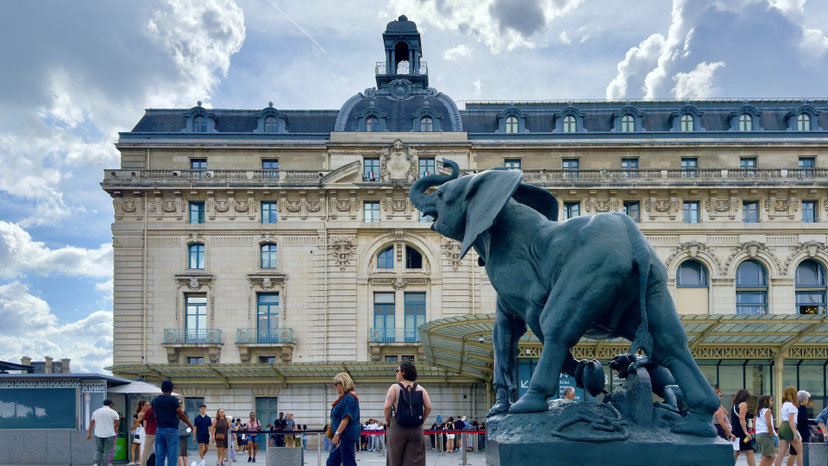
Our Uber took us directly to the museum's front entrance on the Rue de la Légion d’Honneur, so we didn't approach it from the side along the Seine, like most people do. From the front, the Orsay looks composed and dignified. A classical façade with symmetrical windows projecting civic restraint and confidence. Nothing to suggest the scale hiding behind it.
Then we walked through the doors. And the floor dropped out from under us.
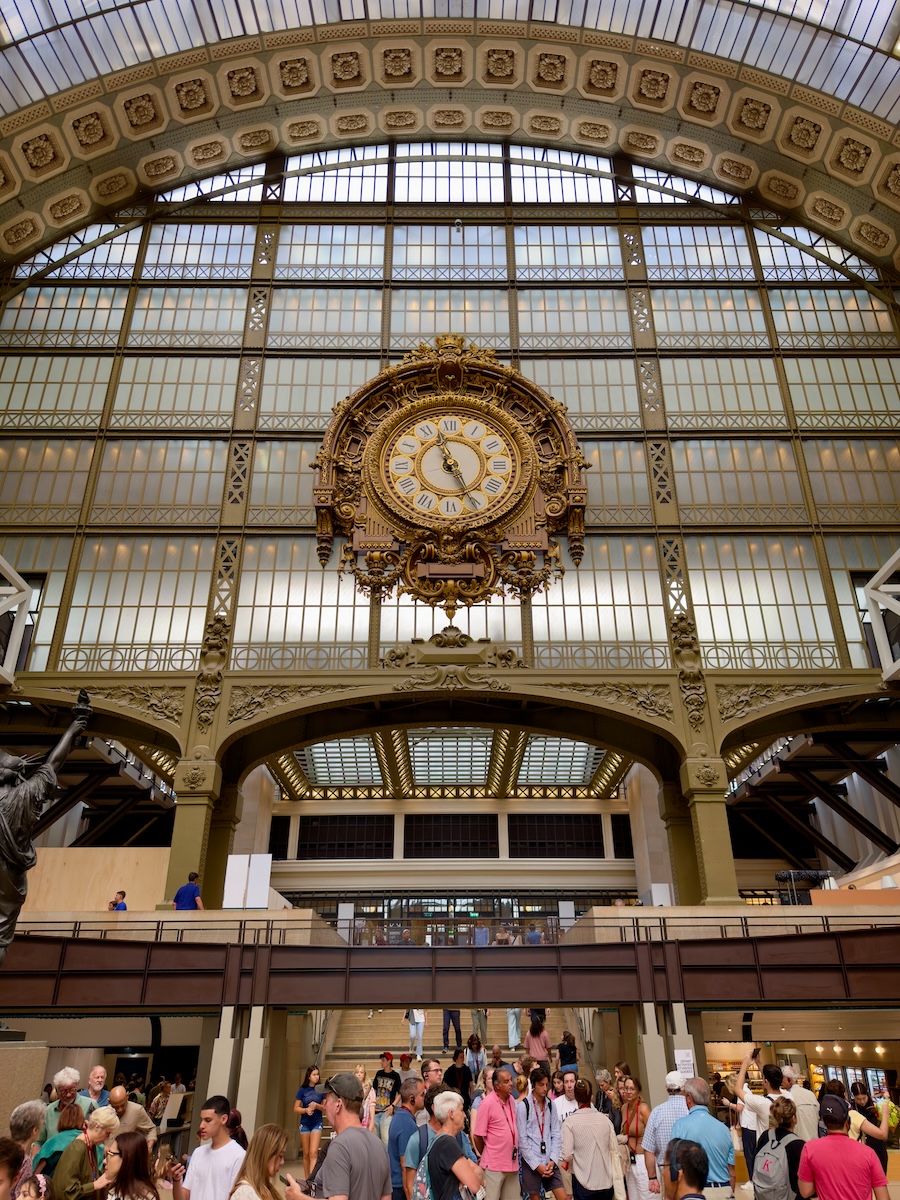
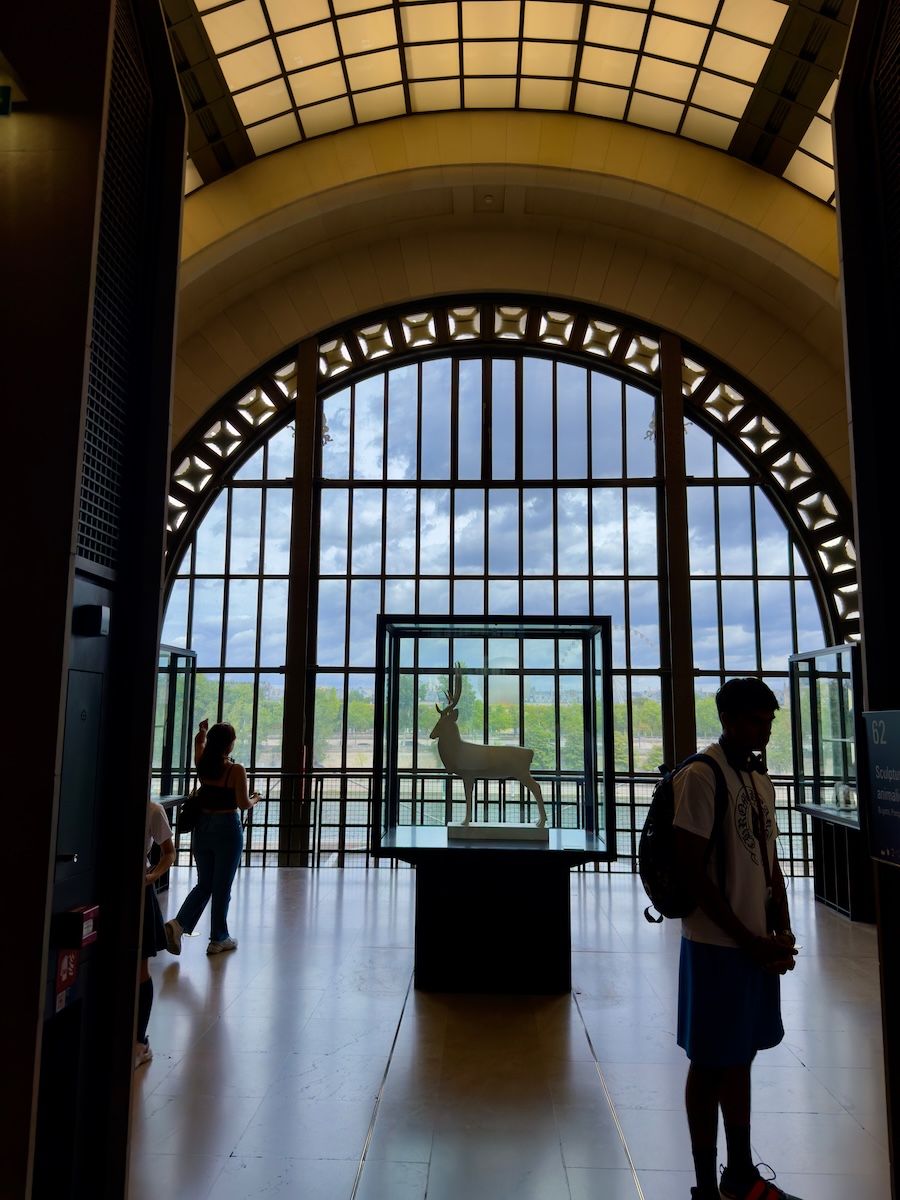
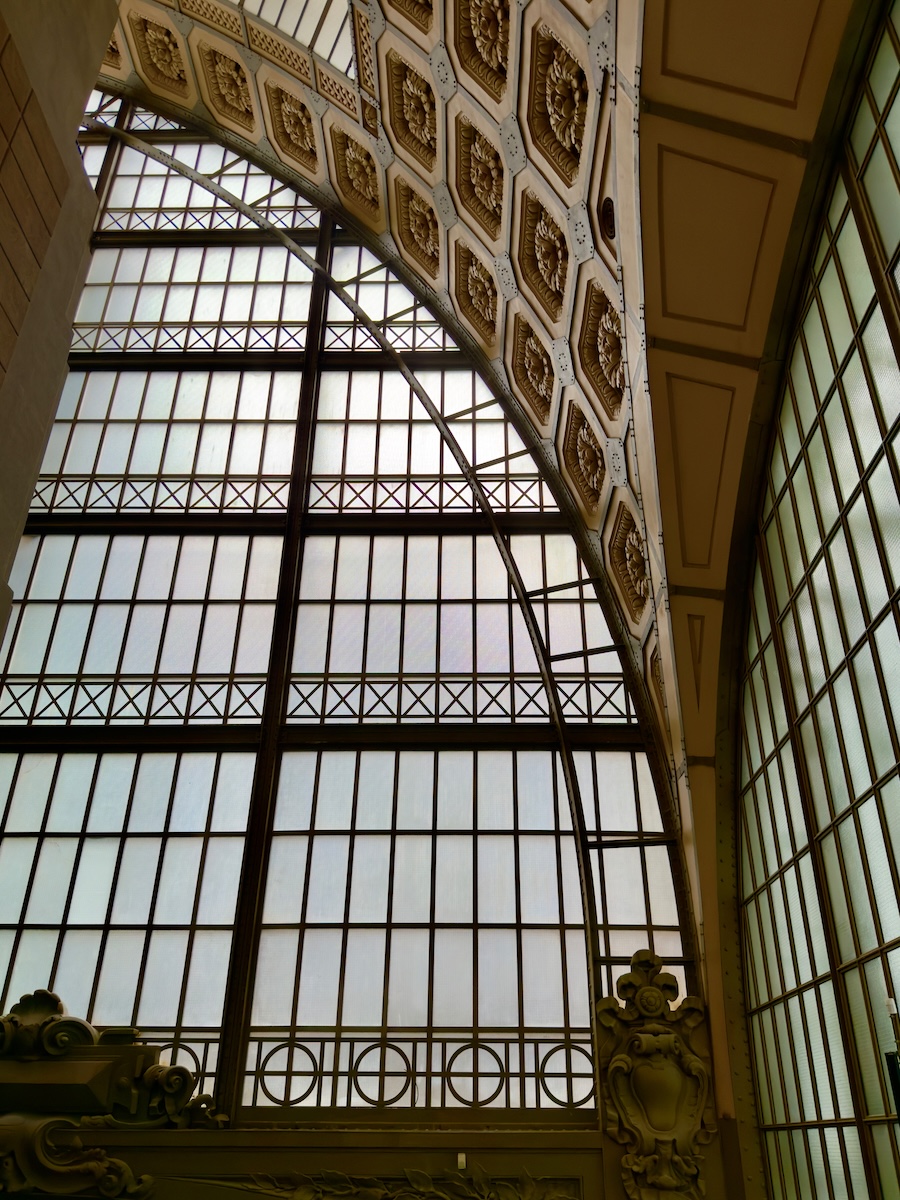
The central hall appears all at once, and the reaction is almost visceral—iron ribs arch overhead, daylight falls from the glass roof, and sculptures line the old track bed in an uninterrupted run. Still unmistakably a train shed, it’s long and high and unapologetically infrastructural, a corridor built for locomotives now holding marble and bronze instead of steam. The ceiling sits far above eye level, and the scale becomes clear only after a few slow steps forward.
There’s no easing into it. The full volume registers almost immediately. You could almost hear our internal gears shift.
Spain had trained us for smaller rooms, for museums that are layered rather than monumental. The Orsay is different. It is a single era, concentrated and confident. And that era runs from 1848 to 1914—the years between revolution and world war, between Haussmann’s remaking of Paris and the collapse of the old European order.
The building’s past, of course, doesn’t fit neatly inside those dates. It opened in 1900 as the Gare d’Orsay, built for the Exposition Universelle, a showcase of industrial confidence at the height of the Belle Époque. From the outside, architect Victor Laloux gave it a stone Beaux-Arts façade so it wouldn’t offend Parisians’ sensibilities. Beneath that skin, though, was something startlingly modern— an iron and glass train hall built to accommodate electric locomotives from the start, so steam engines wouldn’t choke central Paris with coal smoke.
It was obsolete within a few decades.
By 1939, the platforms were too short for modern trains, and service shifted elsewhere. Gare d’Orsay slipped into secondary uses—at times as a mail depot, wartime processing center, or theater space. By the 1970s, Paris was ready to tear it all down. The façade survived only after it was declared a historic monument in 1973, and the museum opened in 1986.
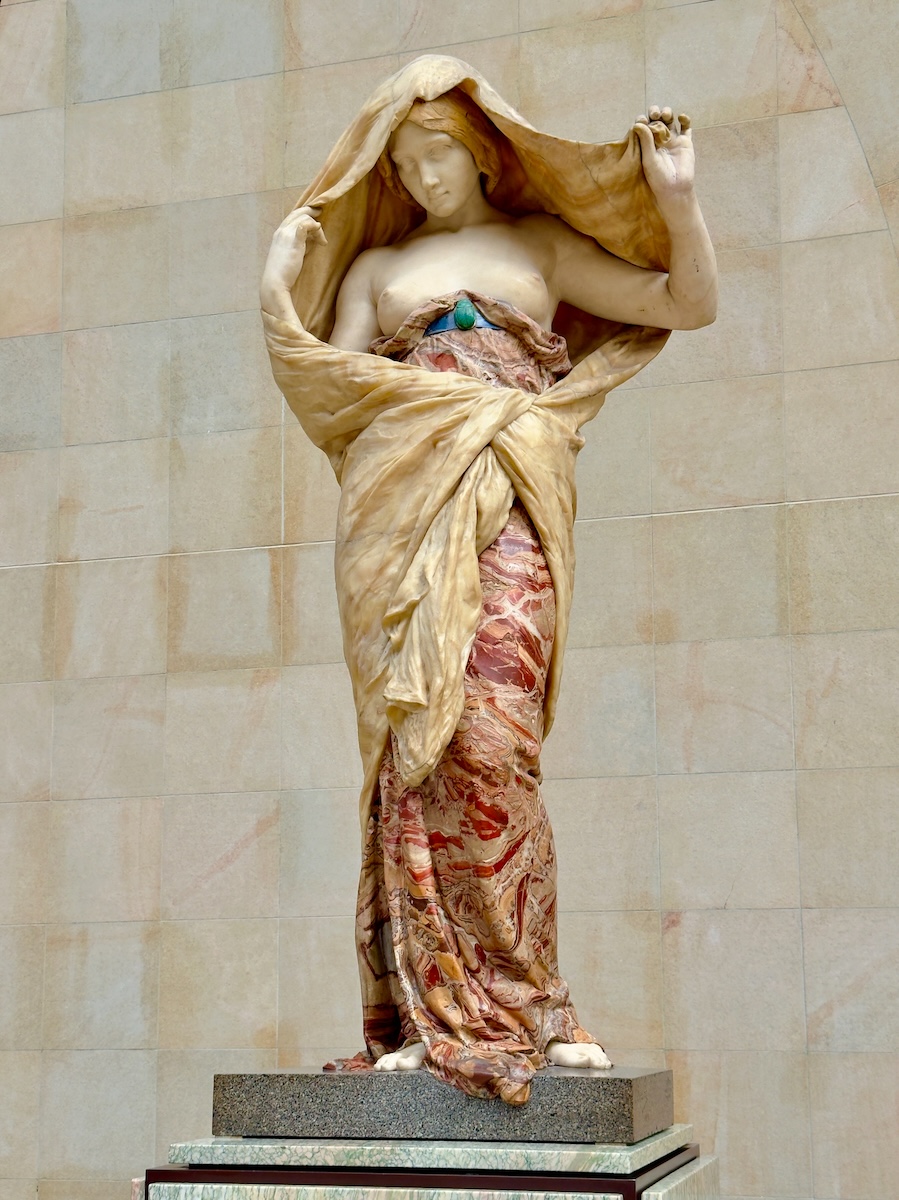
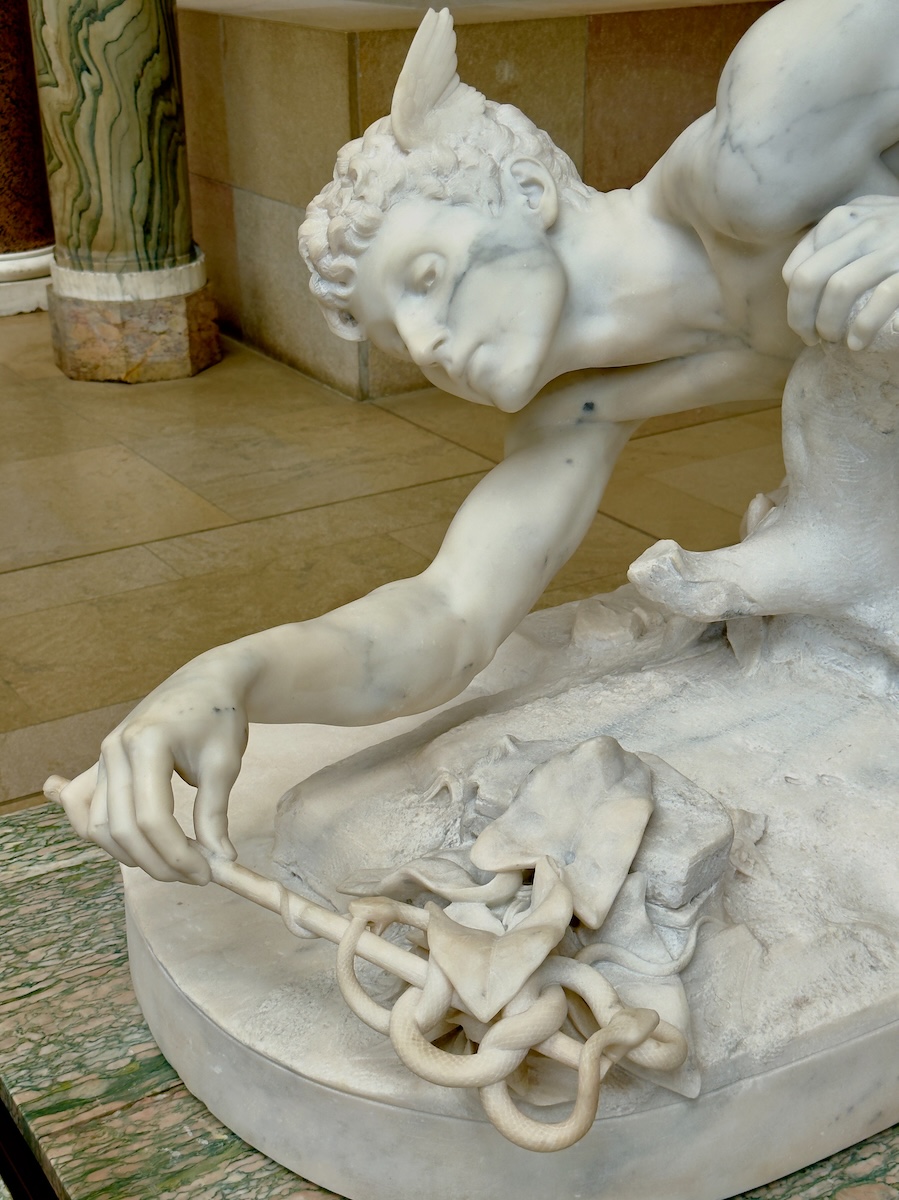
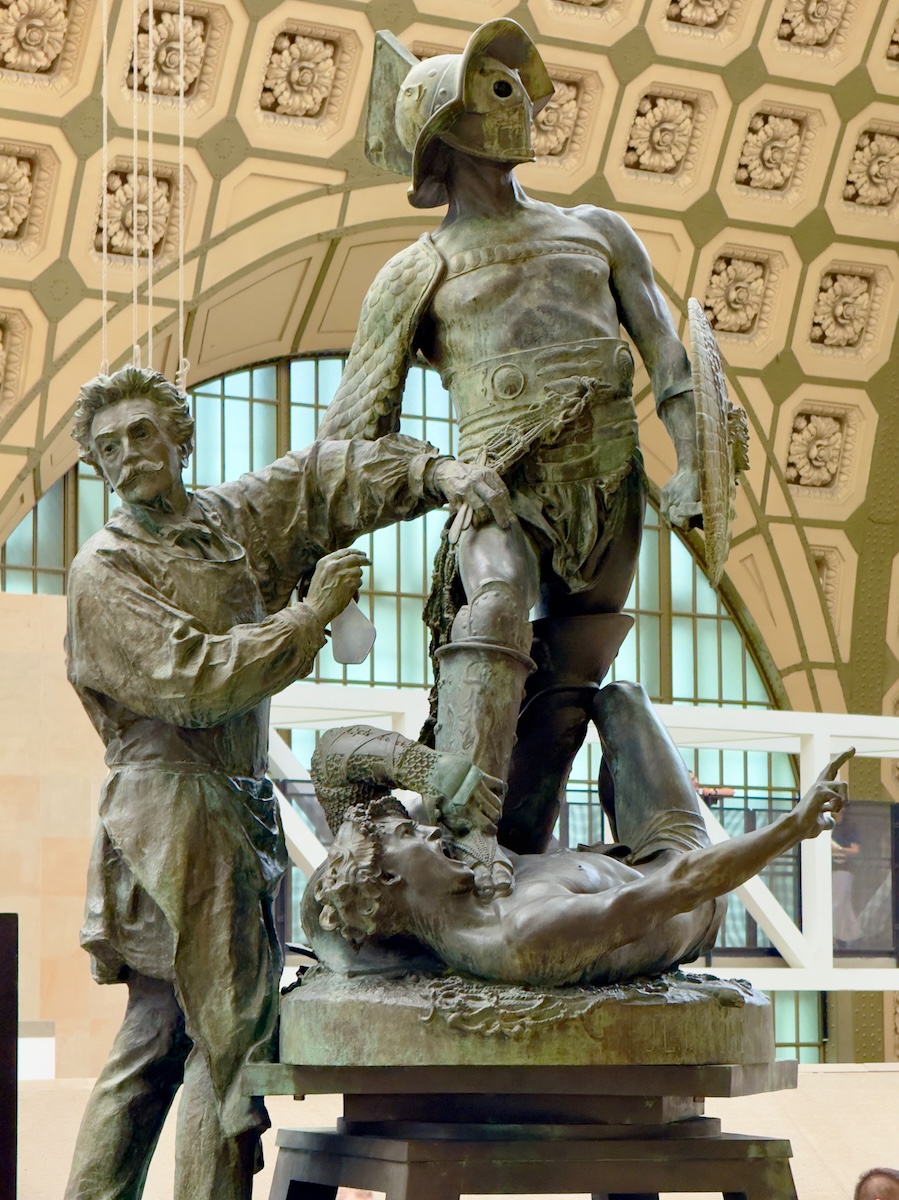
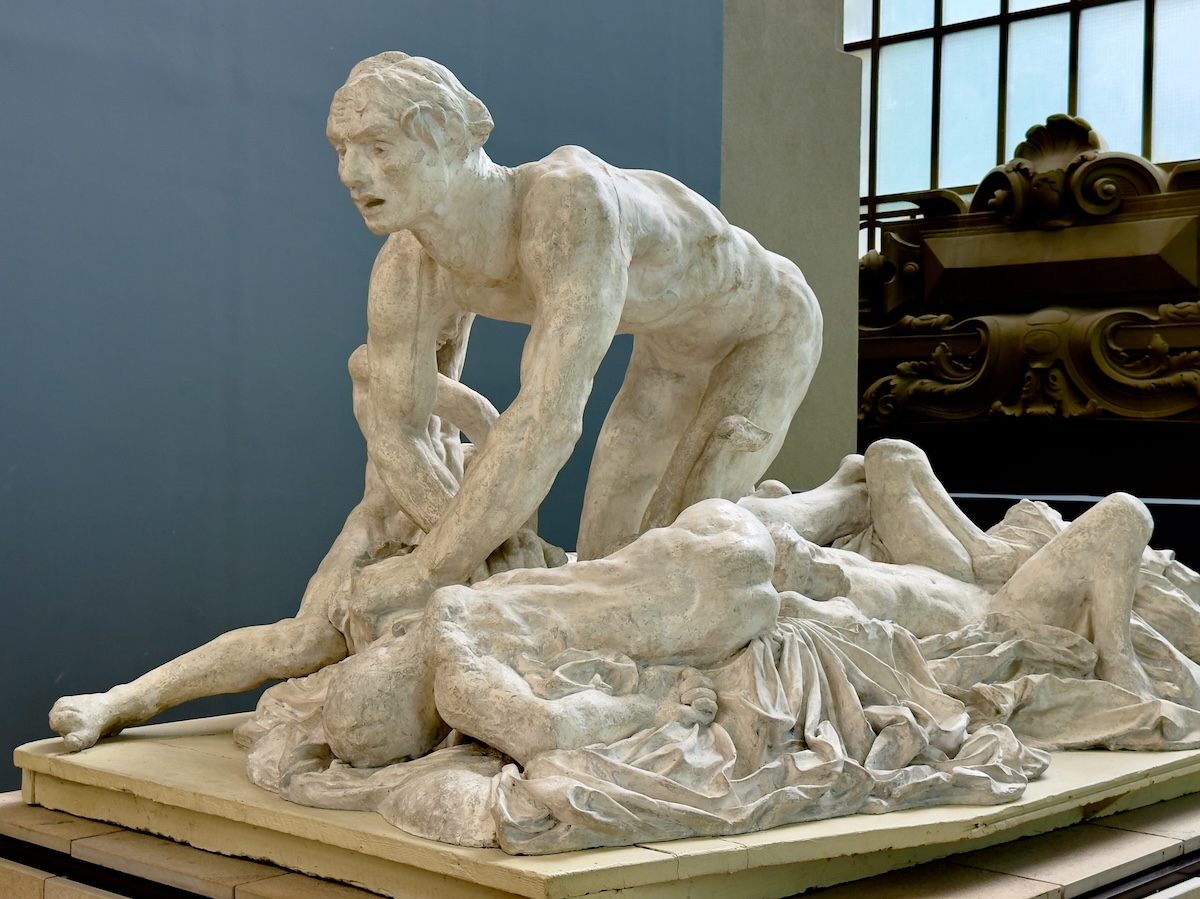
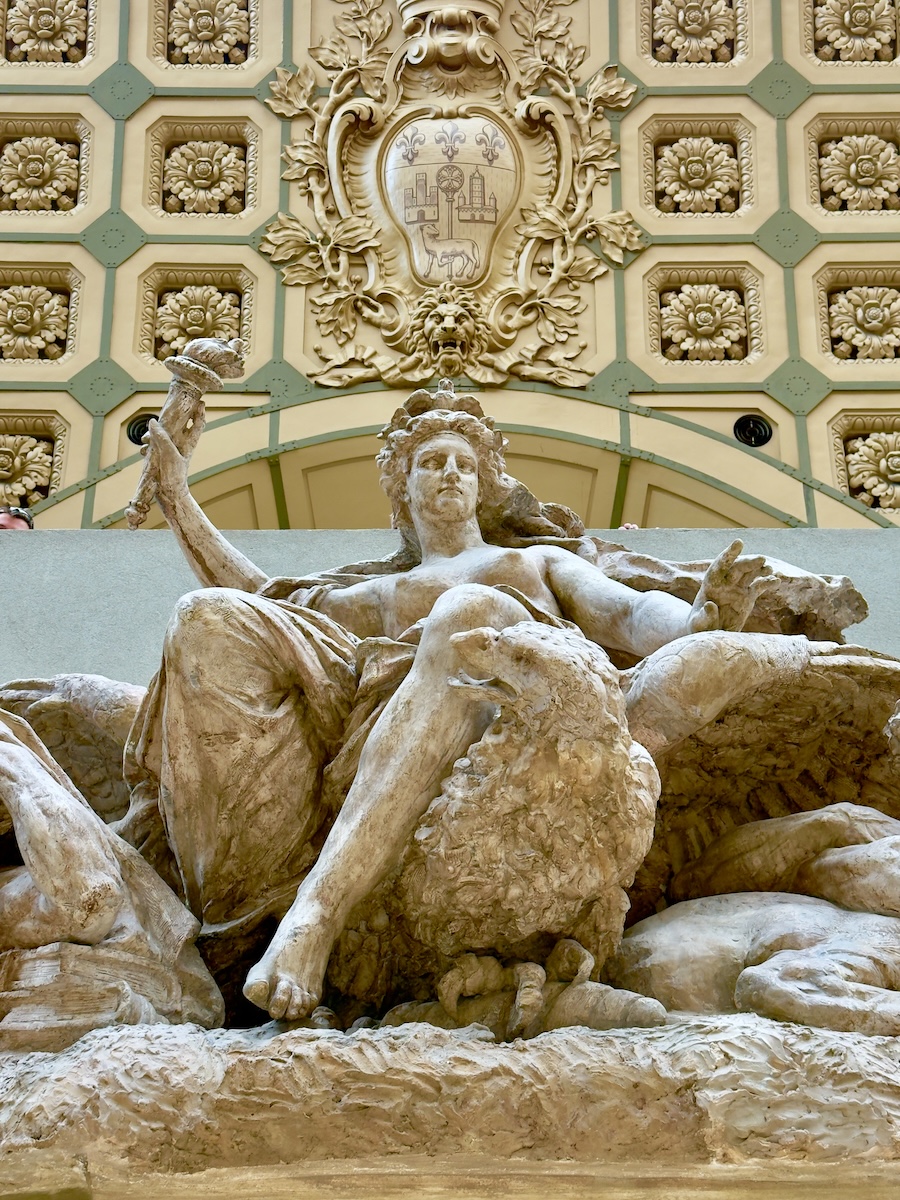
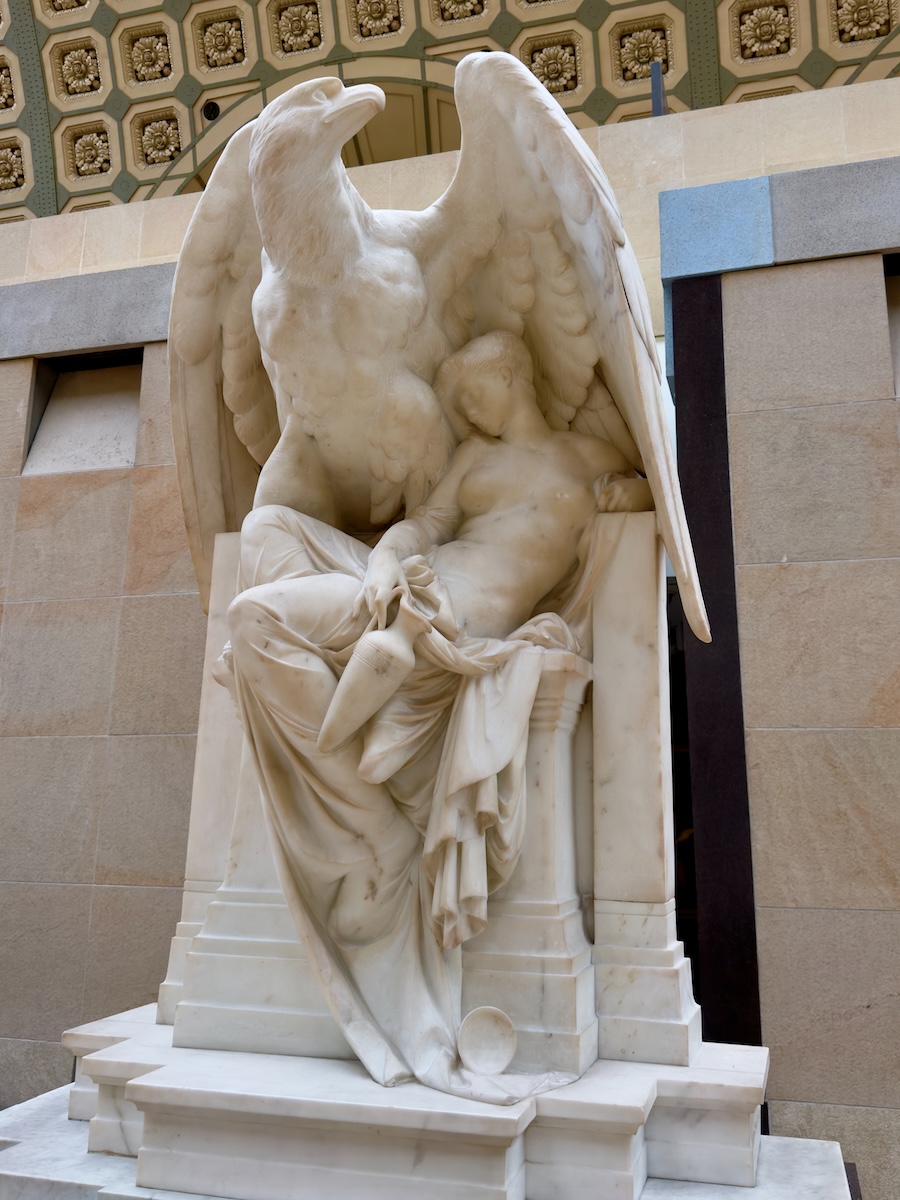
All of that came later. In the moment, we just kept walking forward, pulled down the length of the former tracks by a procession of marble, alabaster, and bronze. The lines of sculpture are monumental without being chaotic, arranged with a kind of institutional confidence that suits a building originally designed for schedules and timetables. Figures rise from pedestals under a ceiling built for locomotives. Classical torsos stand where engines once idled. It’s theatrical without tipping into sentimentality.
The century announces itself in shifts of tone. Academic revivals of Rome and Florence give way to allegories of empire and exploration—Liberty with her torch, colonial portrait busts attempting to render distant lands in marble and onyx. A few steps later, the mood softens: a child bends over a bear cub in white stone, intimate and tender.
Heroism, conquest, sentiment. All in the same line.
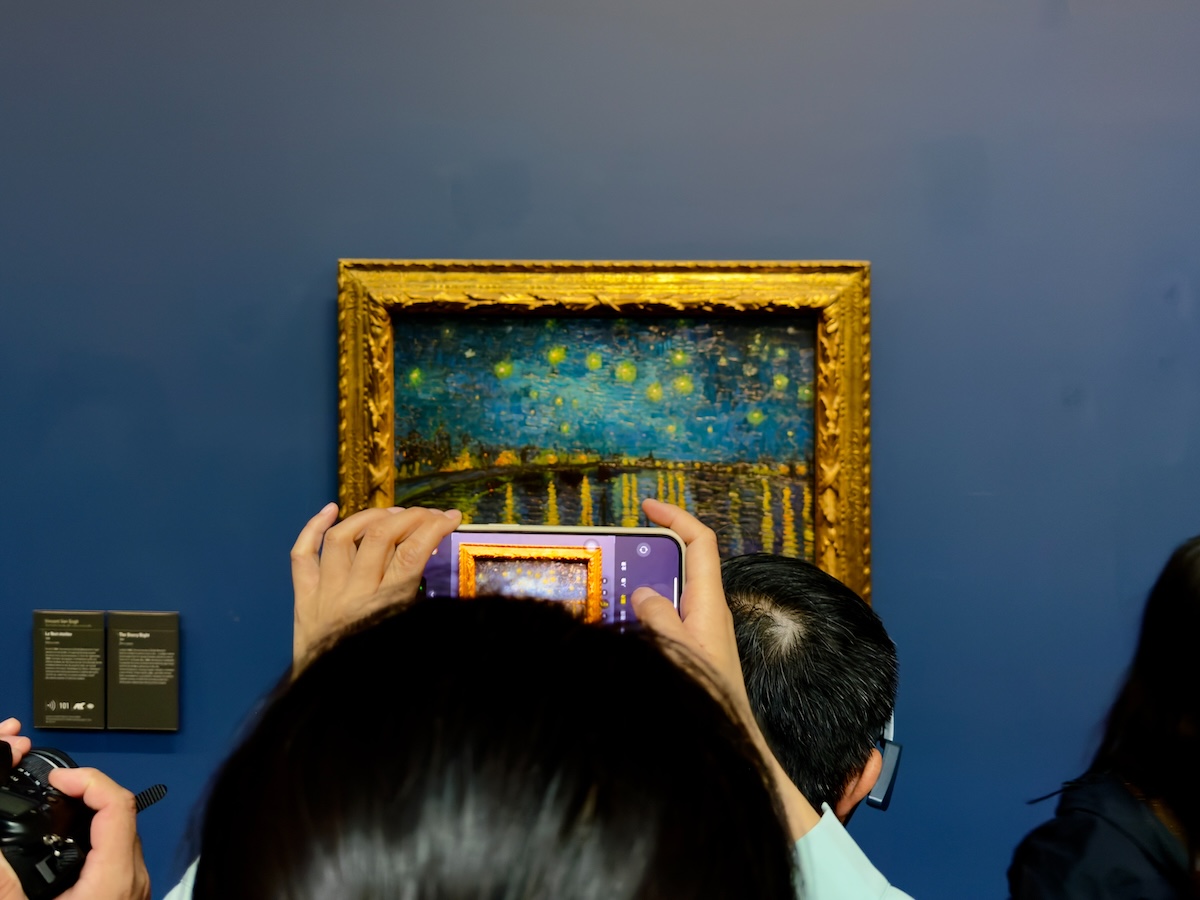
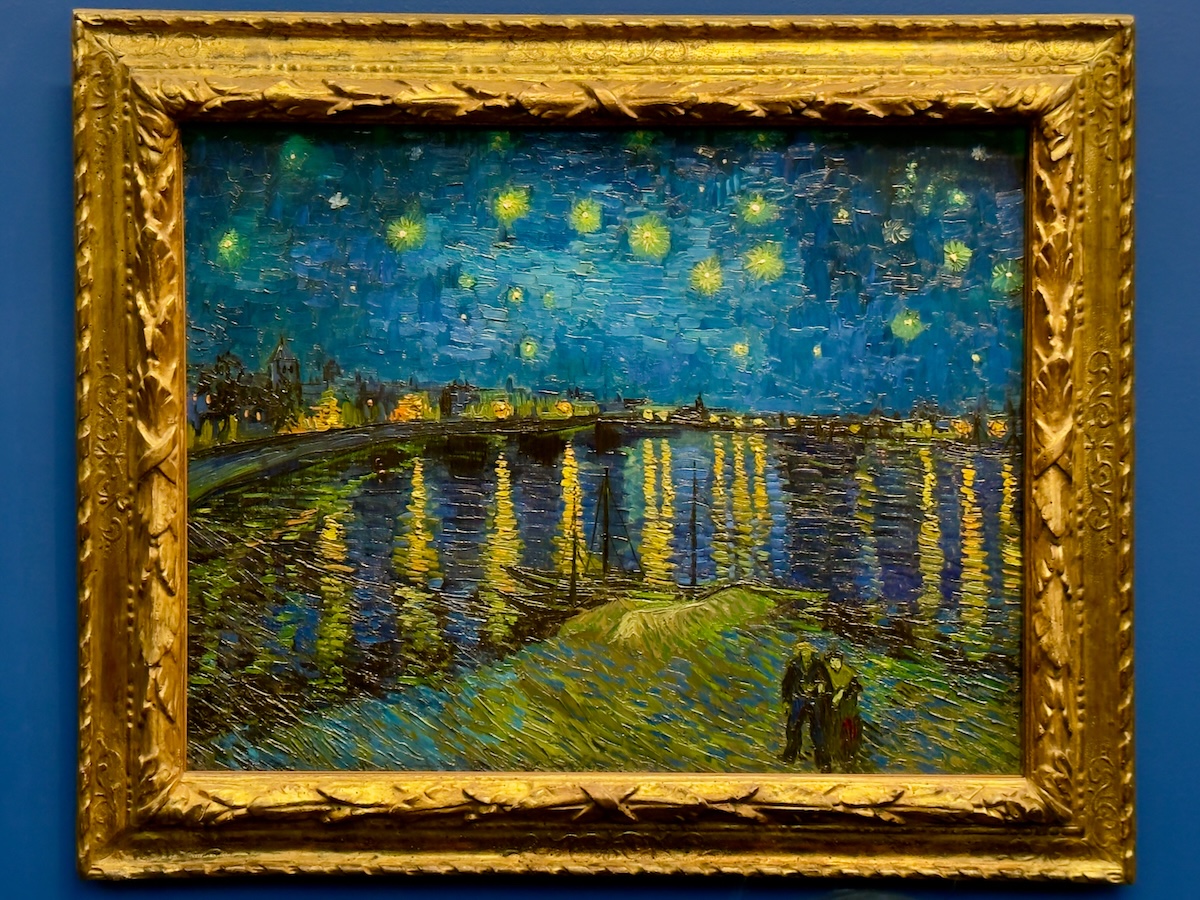
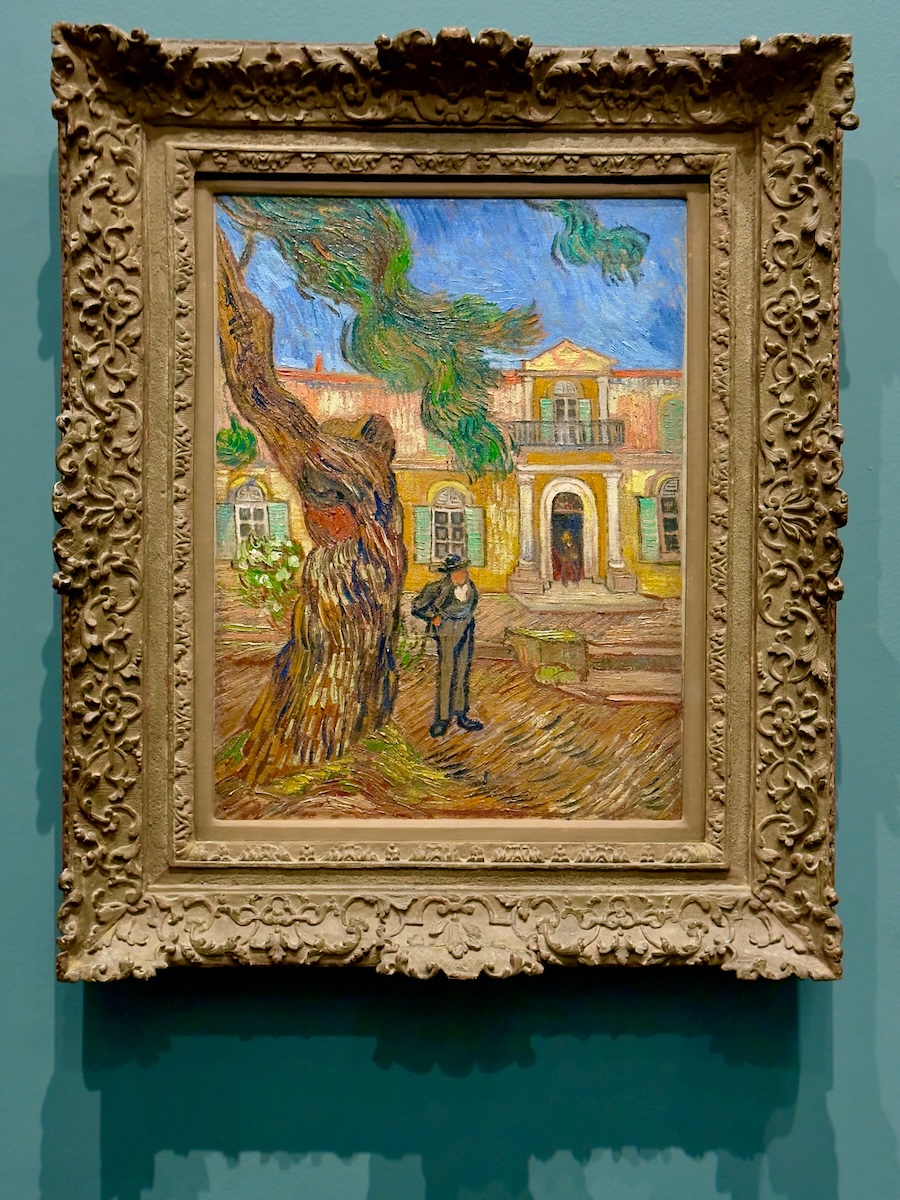
At the far end of the hall, we climbed the stairs. The ceilings lowered, and the galleries shrank. The light shifted from vaulted daylight to something more controlled and intimate. That’s where The Names began to appear. Not gradually and not as isolated examples. But in clusters, room after room, wall after wall—Manet, Monet, Degas, Renoir, Cézanne, Pissarro. Van Gogh. Names that don’t need introduction because we’ve seen them all on calendars, in textbooks, and on PBS tote bags offered during pledge drives.
It wasn’t discovery. It was recognition. And the shock wasn’t that they were beautiful—because they are. The shock was that they were all here in one place.
What took a little longer to register was something simpler. They’re not all the same size.
In books and on merchandise, every painting quietly conforms to the dimensions of the page. A Monet fits neatly beside a Degas. A Van Gogh occupies the same rectangular real estate as a Cézanne. Reproduction smooths out difference. The art is standardized.
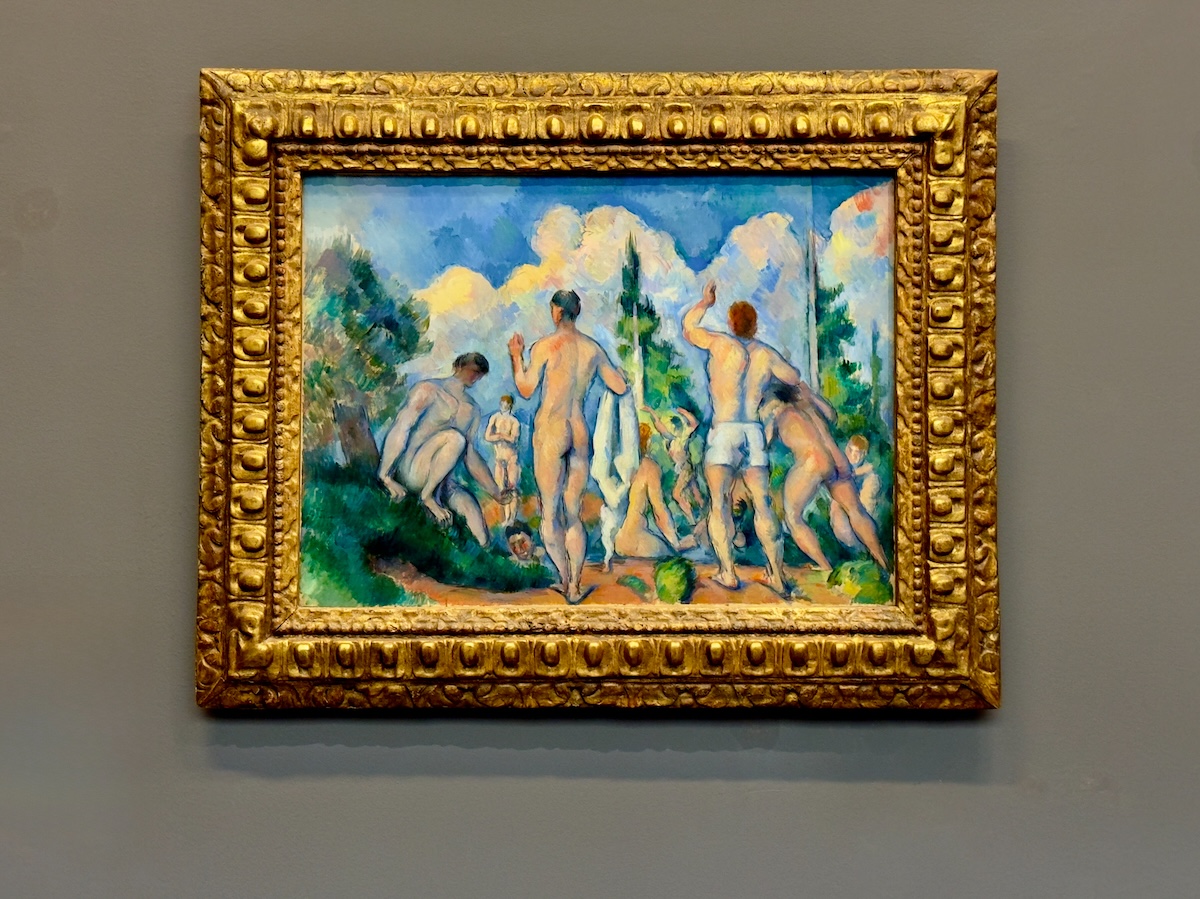
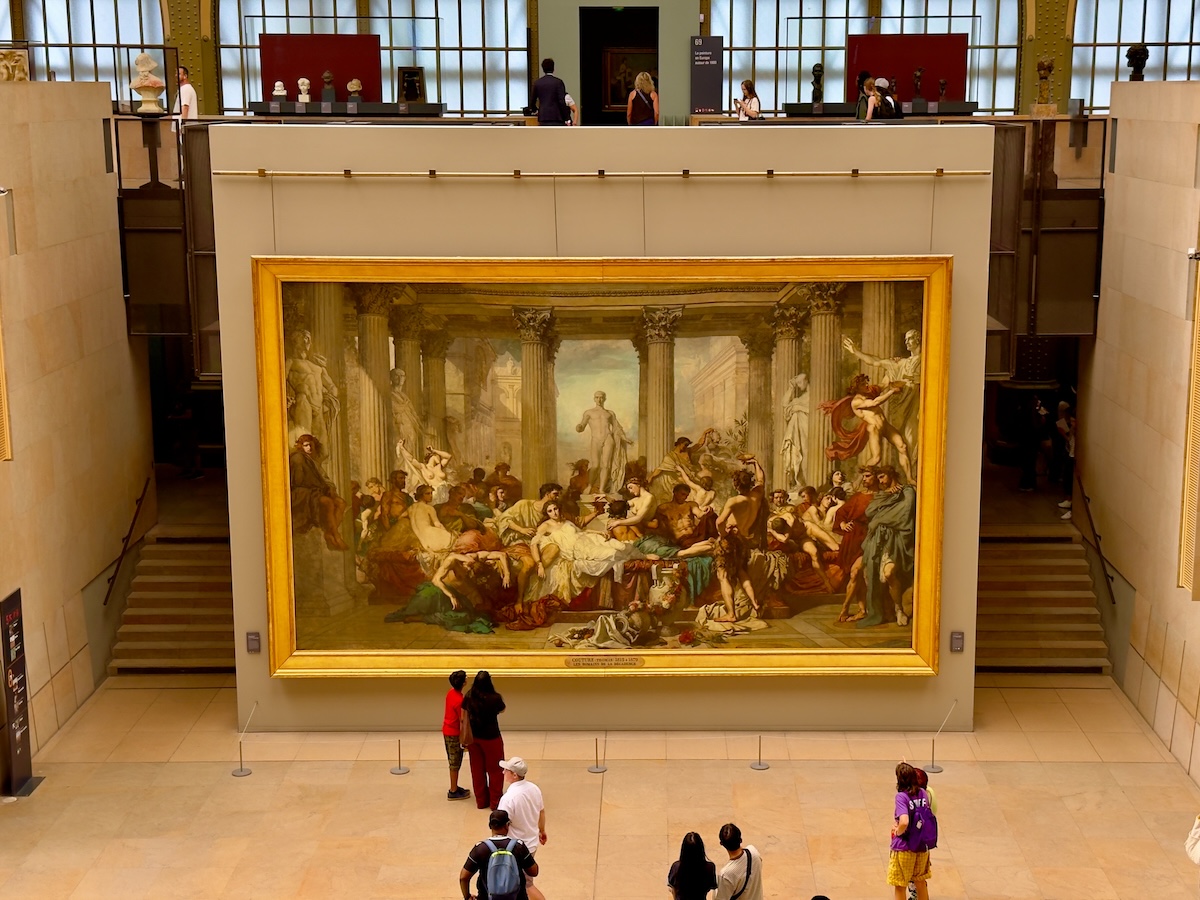
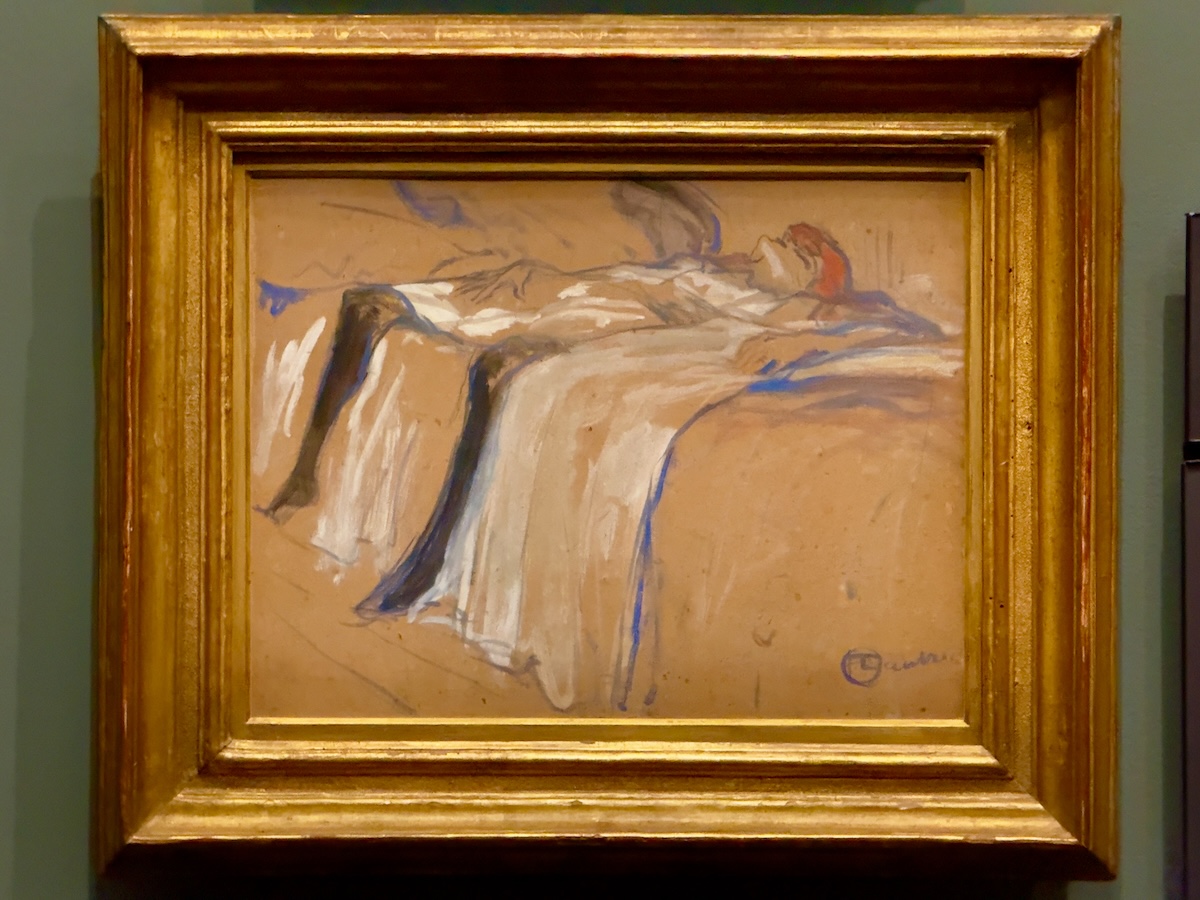
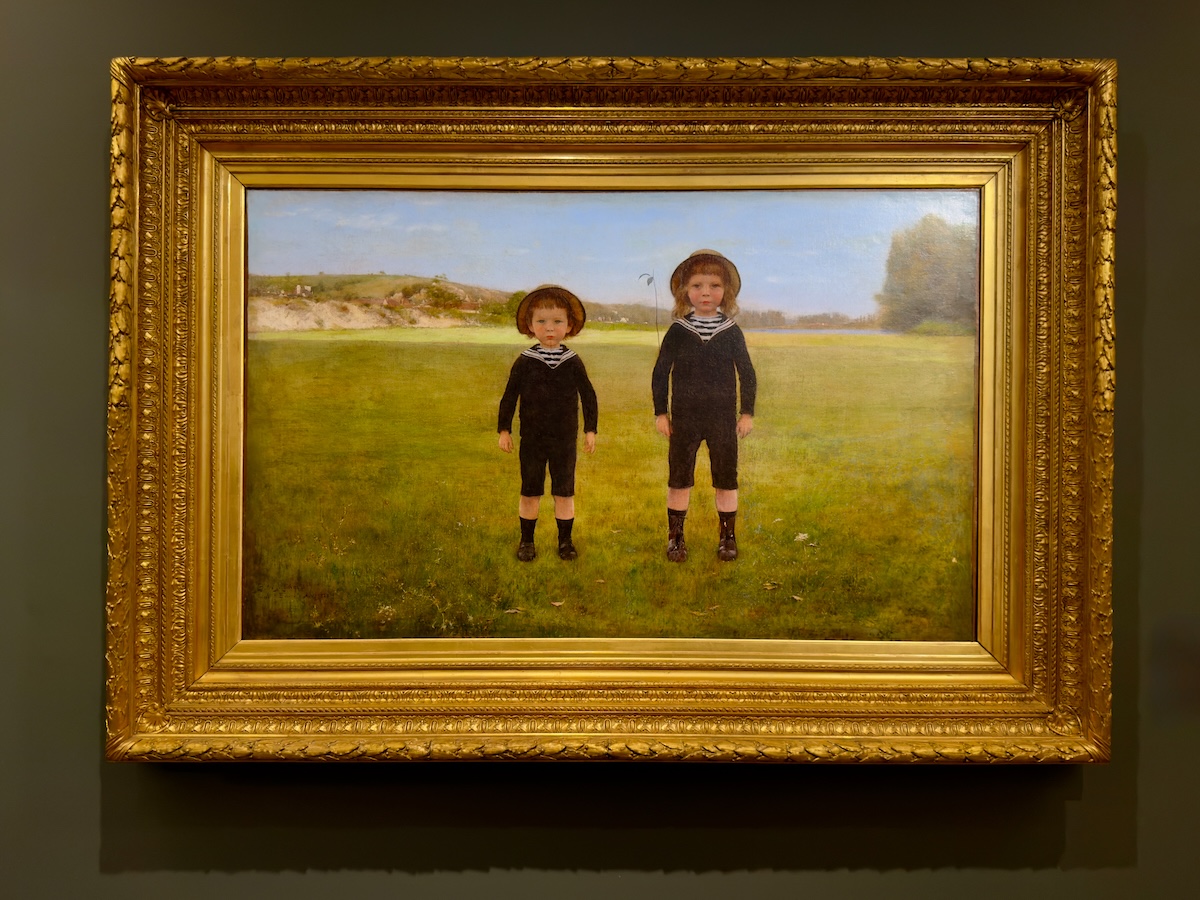
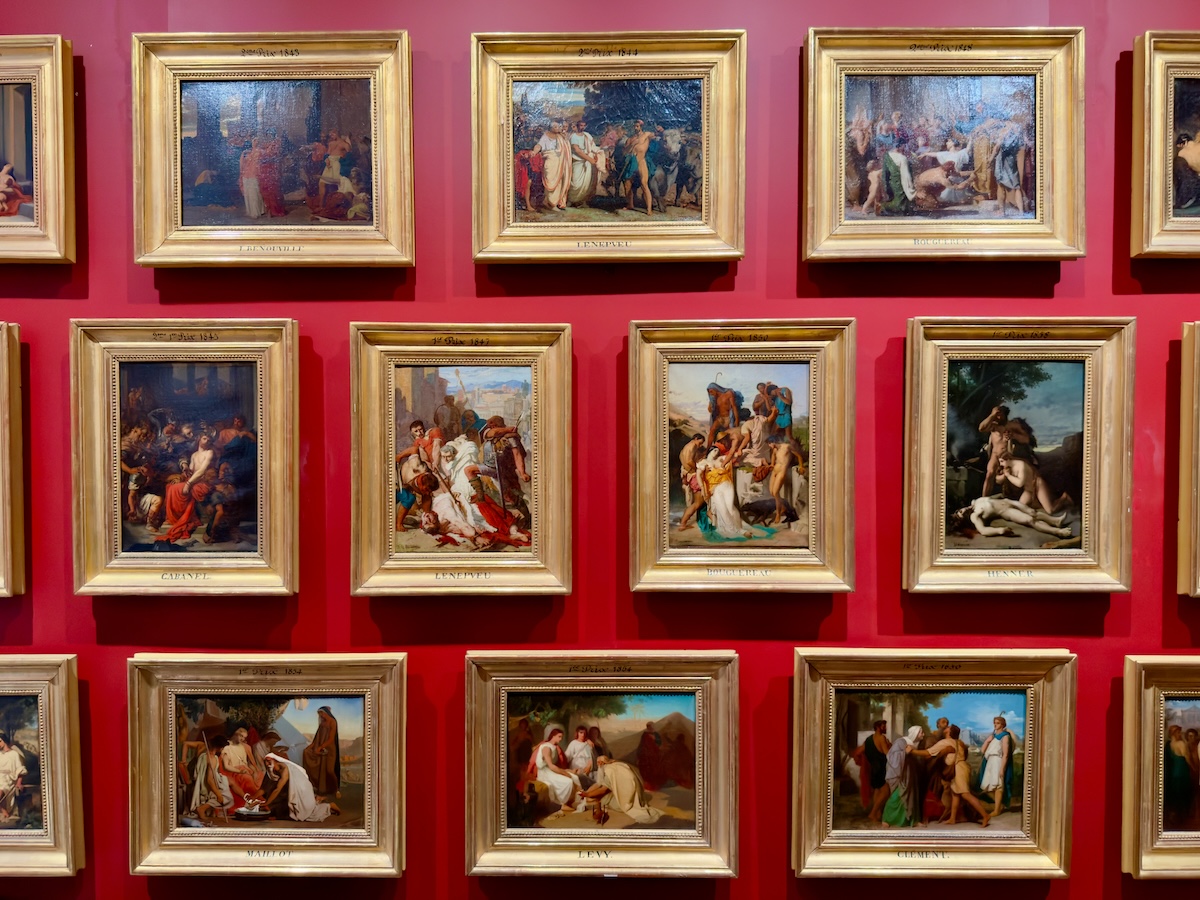
Upstairs at the Orsay, that illusion collapses. Some canvases stretch wide across the wall, demanding distance. Others are surprisingly compact, almost private, no larger than a modest tabletop—or a placemat. You adjust constantly, stepping back, leaning in, resetting your sense of proportion.
The images we’ve carried for years are tidy. The paintings are not.
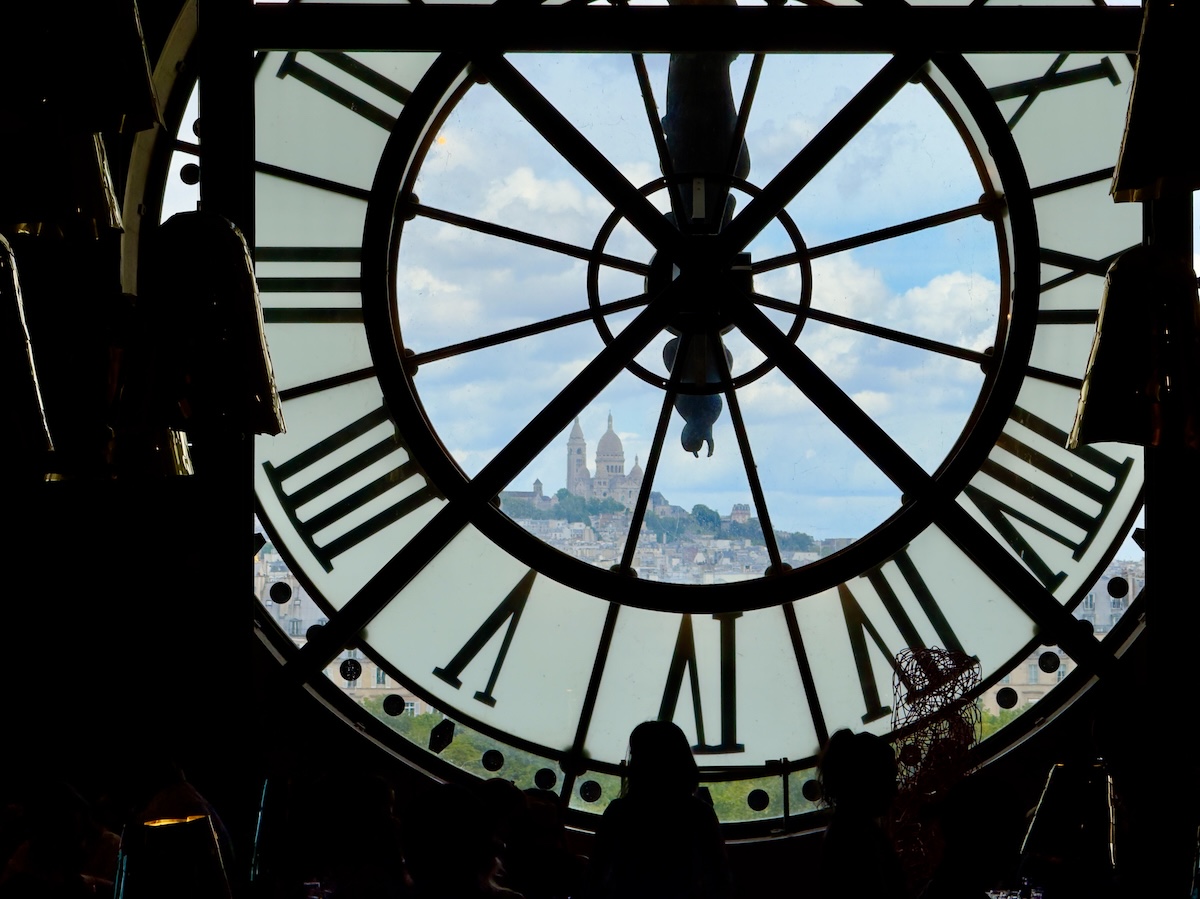
At the far end of the upper galleries, the great clock dominates. We climbed up to it not out of reverence, but because everyone else was doing it. Phones were lifted. Selfies were taken. It seemed like the thing to do.
But then it landed. You’re standing inside the face of industrial time, looking out over Haussmann’s Paris. The boulevards run straight, and the Seine curves around the Louvre. Behind you hang the paintings that once scandalized audiences for being too unfinished, too modern, too loose. Too seductive. Ahead of you is order. Alignment. Engineered certainty.
The station that once moved modernity forward now houses the art that tried to make sense of it. You’re inside the mechanism.
We lingered a while, then stepped away from the clock and eventually toward lunch, taking a table with a view over the city. It felt appropriately Parisian to pause—bread, wine, a small reset before diving back in.
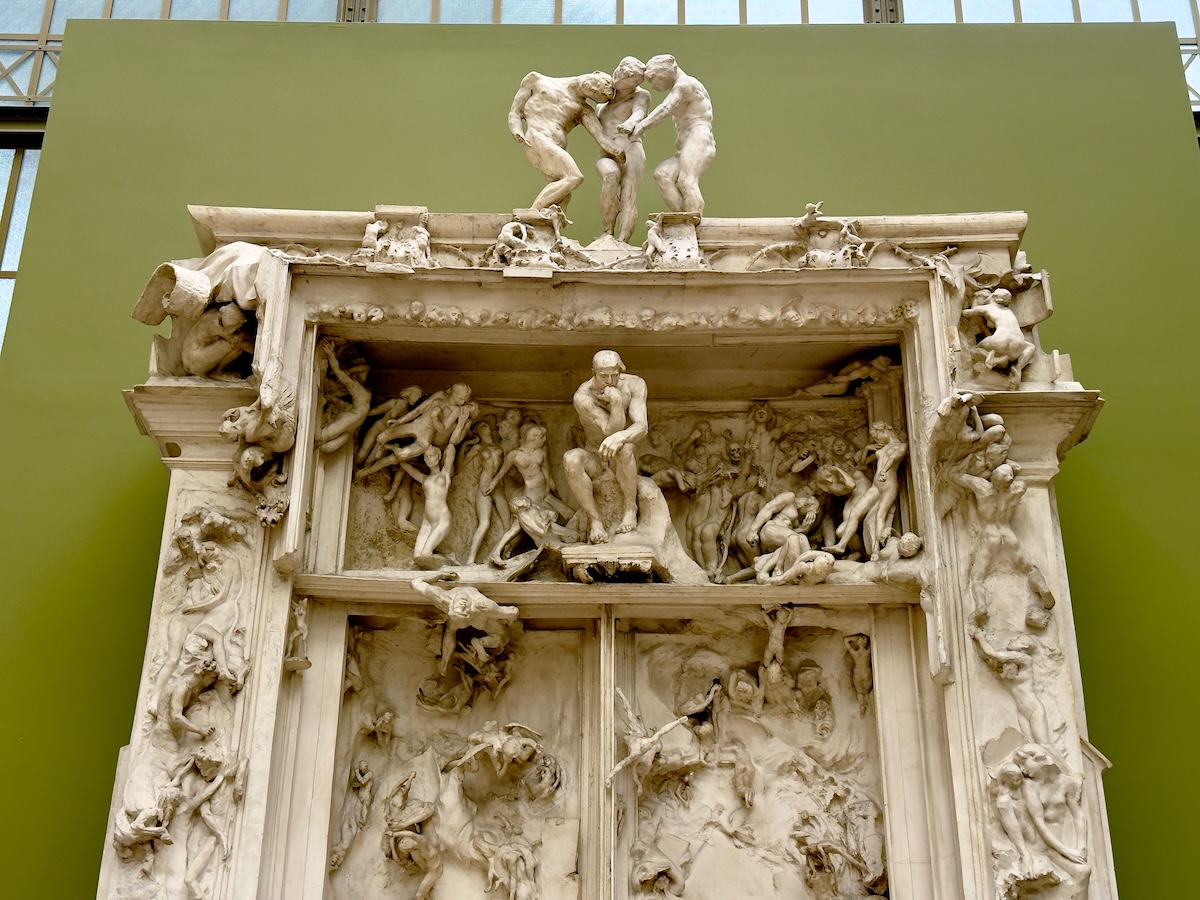
After lunch, we walked the length of the hall deliberately. At the eastern end, where the tracks once terminated, stands Rodin’s The Gates of Hell. Rodin has long been one of my favorite sculptors, and the Gates one of my favorite Rodins. I’ve seen fragments, bronzes, and casts elsewhere, but this is the source.
The version here is plaster—pale, matte, unfinished in places, figures pressing out of the surface as if still deciding whether to fully emerge. From a distance, it reads as a single monumental form. Up close, it fractures into bodies—twisting, collapsing, climbing over one another in shallow relief. After the engineered certainty of the clock upstairs, the lack of alignment and symmetry felt like a counterpoint.
In coffee table books, the Gates are an image. In person, they are depth and shadow. You move left and right, and the figures shift. The surface refuses to settle.
Many of Rodin’s later masterpieces began here. The Thinker first perched above this portal. Ugolino emerged from its crowded relief. Dozens of figures would later be cast, enlarged, isolated, and treated as independent works. The sculpture is less a single piece than a generative one—a quarry of ideas Rodin returned to again and again.
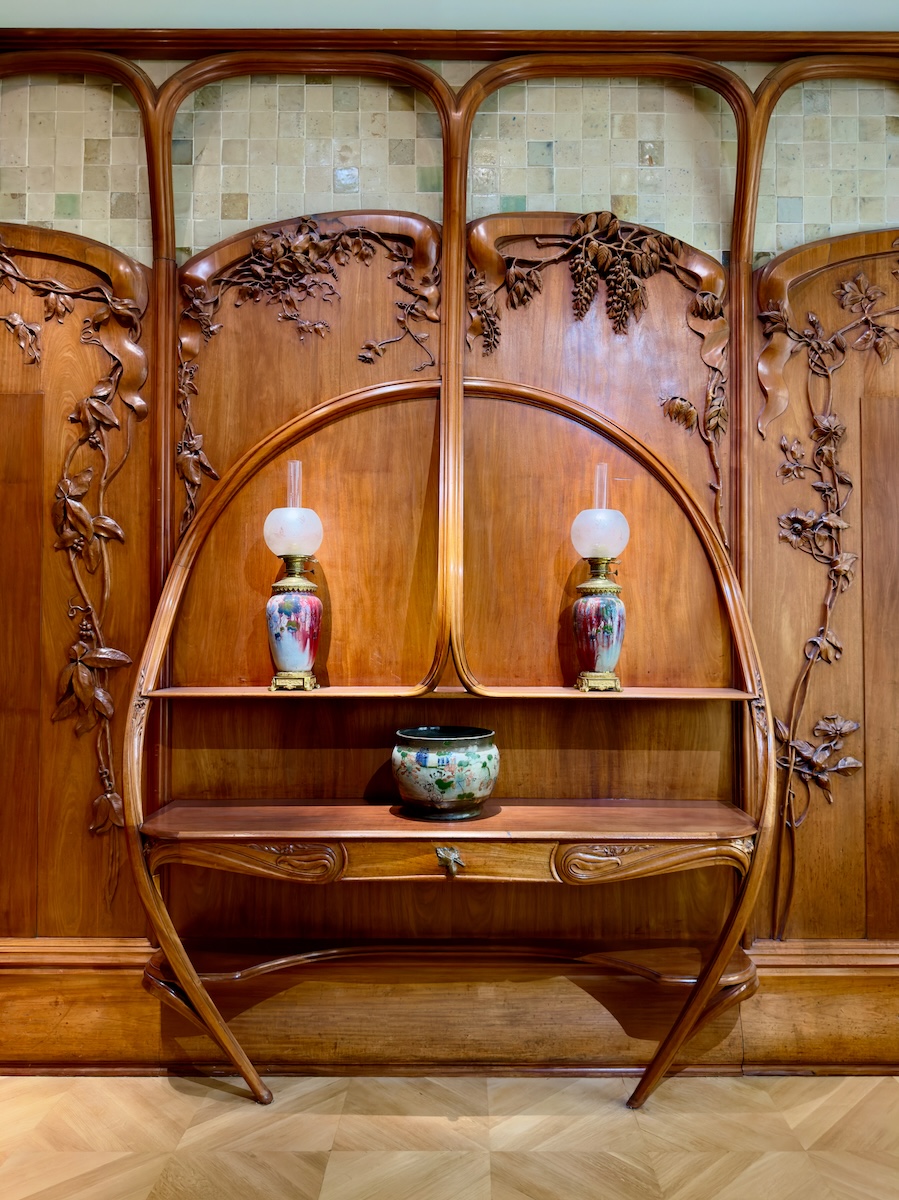
After the Gates, we kept going, and the museum kept opening up. Just when it seemed the building’s logic had revealed itself—grand hall below, canonical names above, decorative arts rooms along the river—another side gallery would appear. Then another. Rooms tucked behind rooms. Vast allegories of empire and intimate portraits no larger than a dinner plate. And Whistler’s Mother, for heaven’s sake—composed and severe, holding her own against an ocean of spectacle. We’d filed her under “American.” I guess Paris had other ideas.
We decided we’d had enough several times. And then we wouldn’t leave. Five hours in a museum is too long. And yet every time we angled toward the exit, something else stopped us. The Orsay isn’t just big—it’s recursive, folding in on itself.
That’s the quiet surprise. People think they know the Orsay because they know the names. The names are only the headline. The building keeps the footnotes.
I’m sure there was plenty we didn’t see—or didn’t see properly. It became clear pretty quickly that the Orsay isn’t a museum you absorb casually. We’d walked in blithely confident in our ignorance, intending to fill an empty Tuesday on an art lark because our real objective was closed. But we got caught. Not by any single masterpiece, but by sheer density.
Back out on Rue de la Légion d’Honneur, the façade looked the same as it had that morning—contained, dignified, almost modest. This time, we understood what it concealed.
Turns out our spare Tuesday wasn’t spare at all.


Write a comment