
Price Sculpture Forest sits just outside Coupeville on Whidbey Island, hidden among 16 acres of second-growth forest that could easily have become somebody’s expensive view property. Instead, it became a free outdoor gallery where sculptures emerge from the trees one at a time as you wander a network of short woodland trails.
That premise sounded promising enough when cousin Michele suggested a visit, though I'll admit I was more interested in the forest than the art. Outdoor sculpture parks can sometimes feel like places where visitors are expected to admire Large Meaningful Objects while pretending to understand them. Price Sculpture Forest takes a different approach. It divides its trails into two loops called Nature Nurtured and Whimsy Way, which is a polite way of saying that one path focuses on the natural world while the other contains a driftwood T. rex and whatever other ideas escaped the juried selection process.
The result feels like a treasure hunt. Around one bend, there's a soaring eagle hidden among the trees. Around the next corner, there's a giant flower, a Pegasus, or a sculpture that appears to be tearing a fallen tree apart. The forest never lets you see very far ahead, so every turn brings the possibility that something unexpected is waiting just out of sight.
Here are a few of the pieces we encountered along the way.
Highlights
Wind Shear – Jeff Kahn
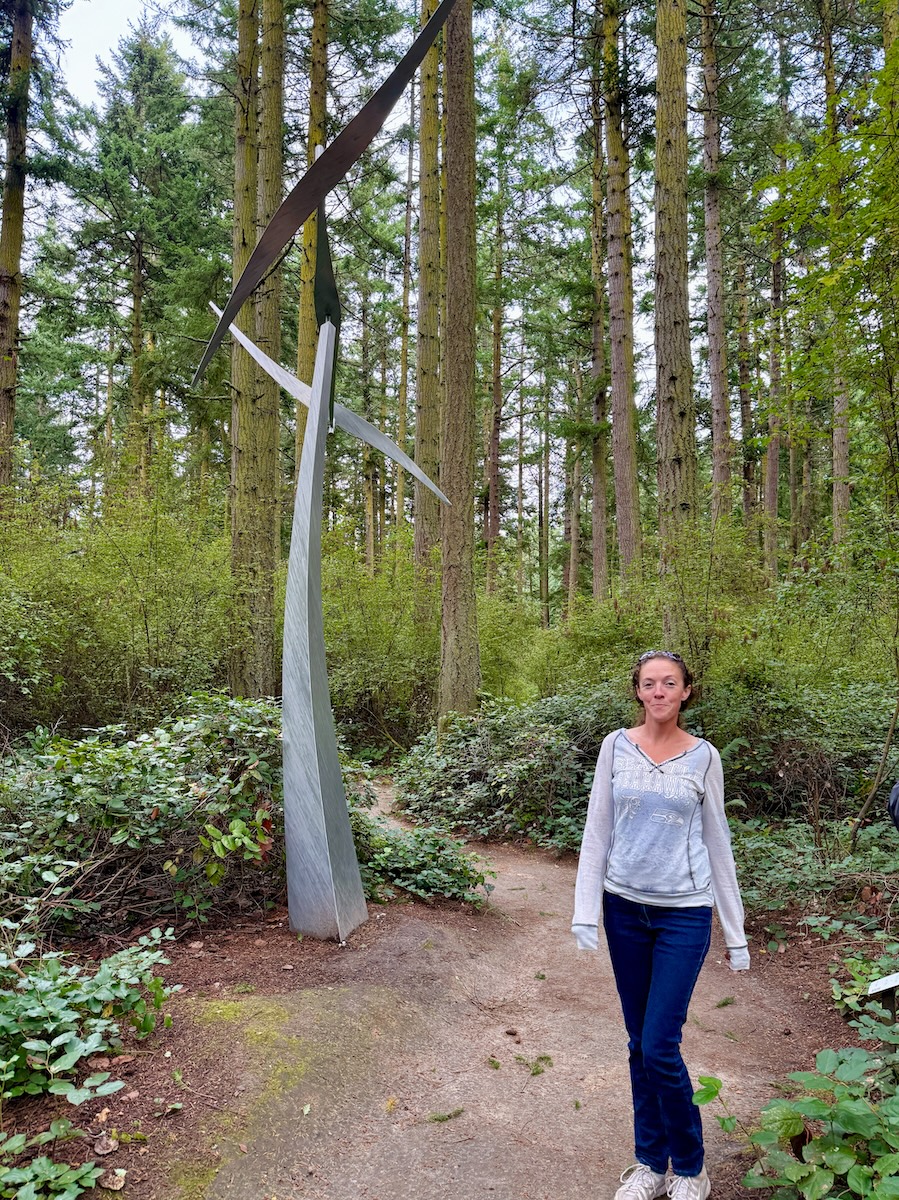
One of the first sculptures we encountered, Wind Shear, rises above the surrounding brush like it landed instead of being installed. The piece is elegant enough on its own, but it fits naturally among the trees. Michelle’s expression suggests she was having a more sophisticated reaction than I was.
Points of Departure, Act II – Boyang Yu
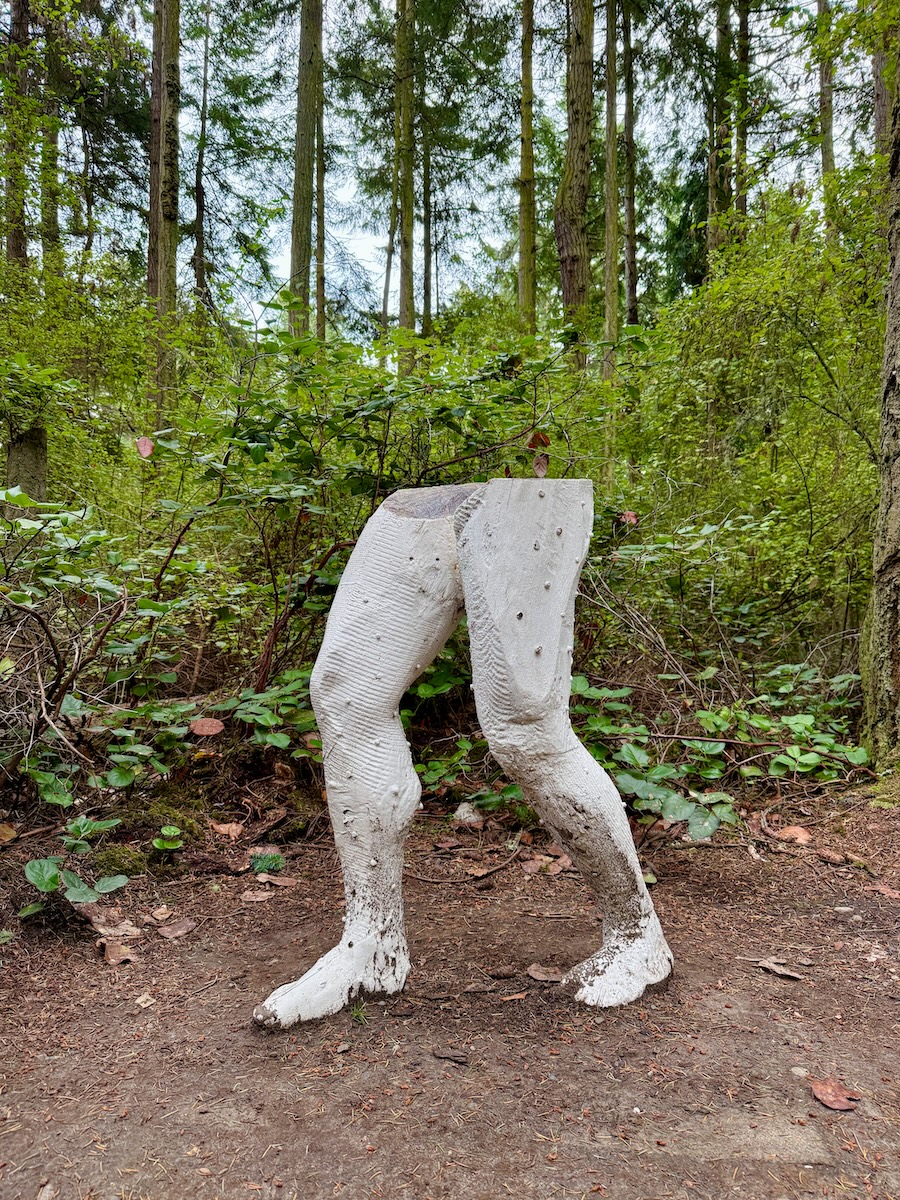
Some sculptures invite contemplation. Others make you stop and ask, “Wait…where’s the rest of it?” Whether someone is arriving, departing, or just having a very bad day is left entirely to the viewer.
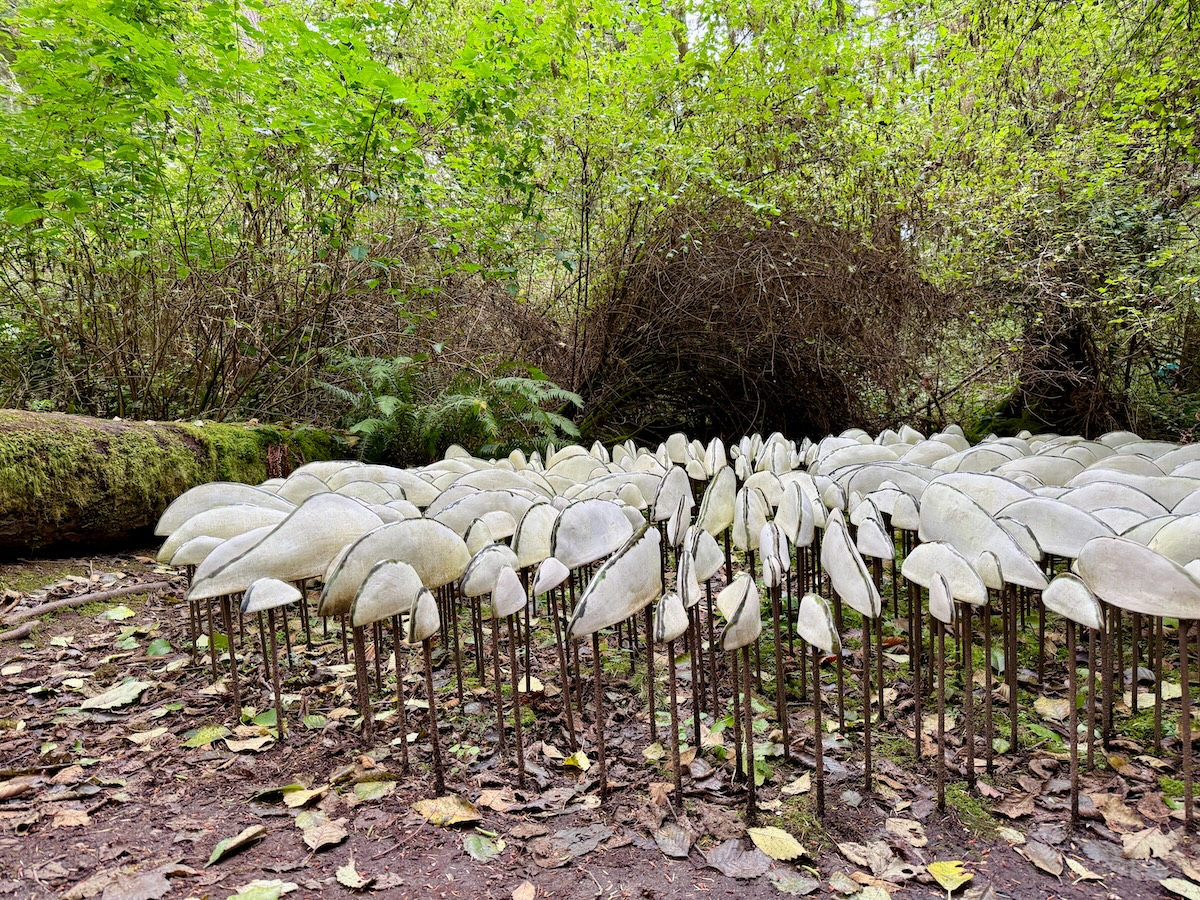
Lichen Series: Spore Patterns – Jenni Ward
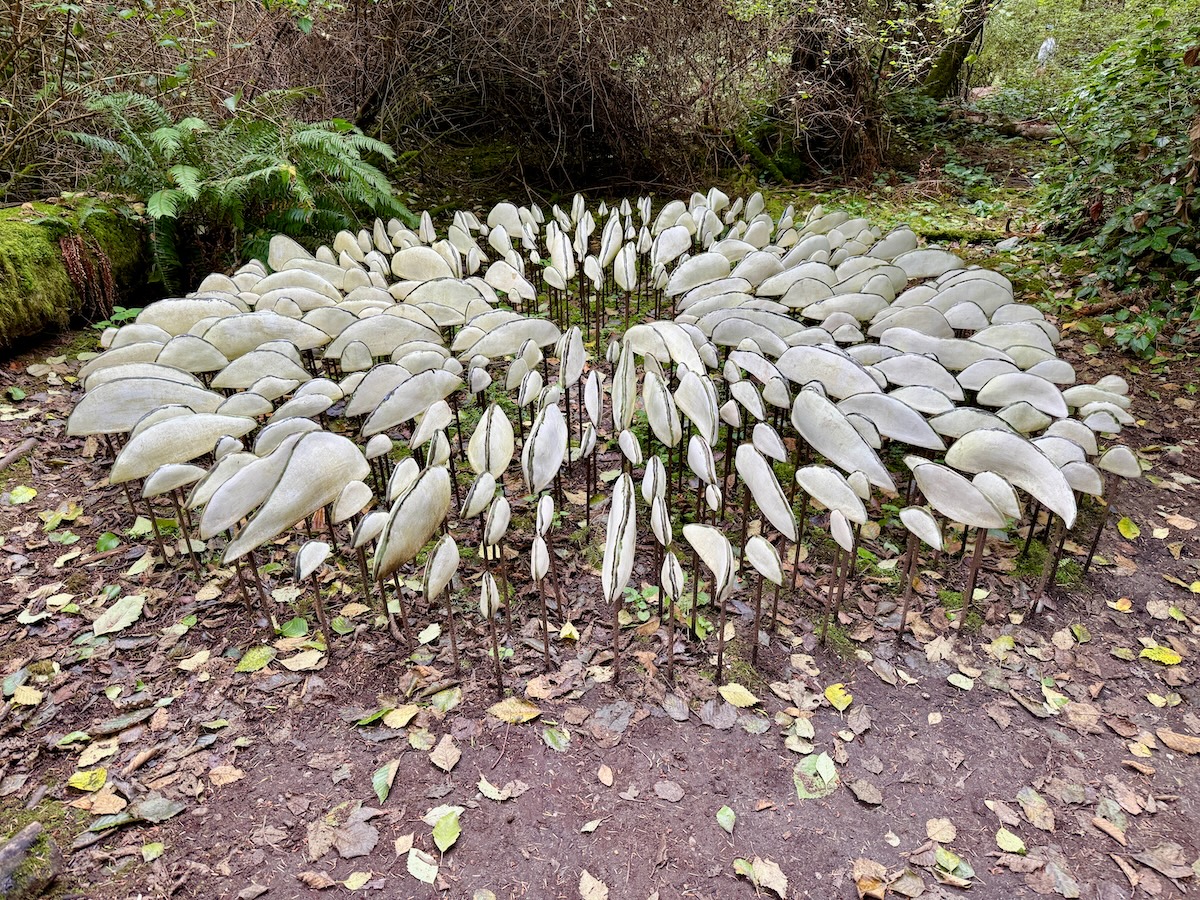
This one looked like a patch of oversized mushrooms spreading across the forest floor. Then I noticed how closely it echoed the shapes, textures, and patterns already surrounding it. Many of the sculptures here stand apart from the landscape—this one looked like it grew out of it.
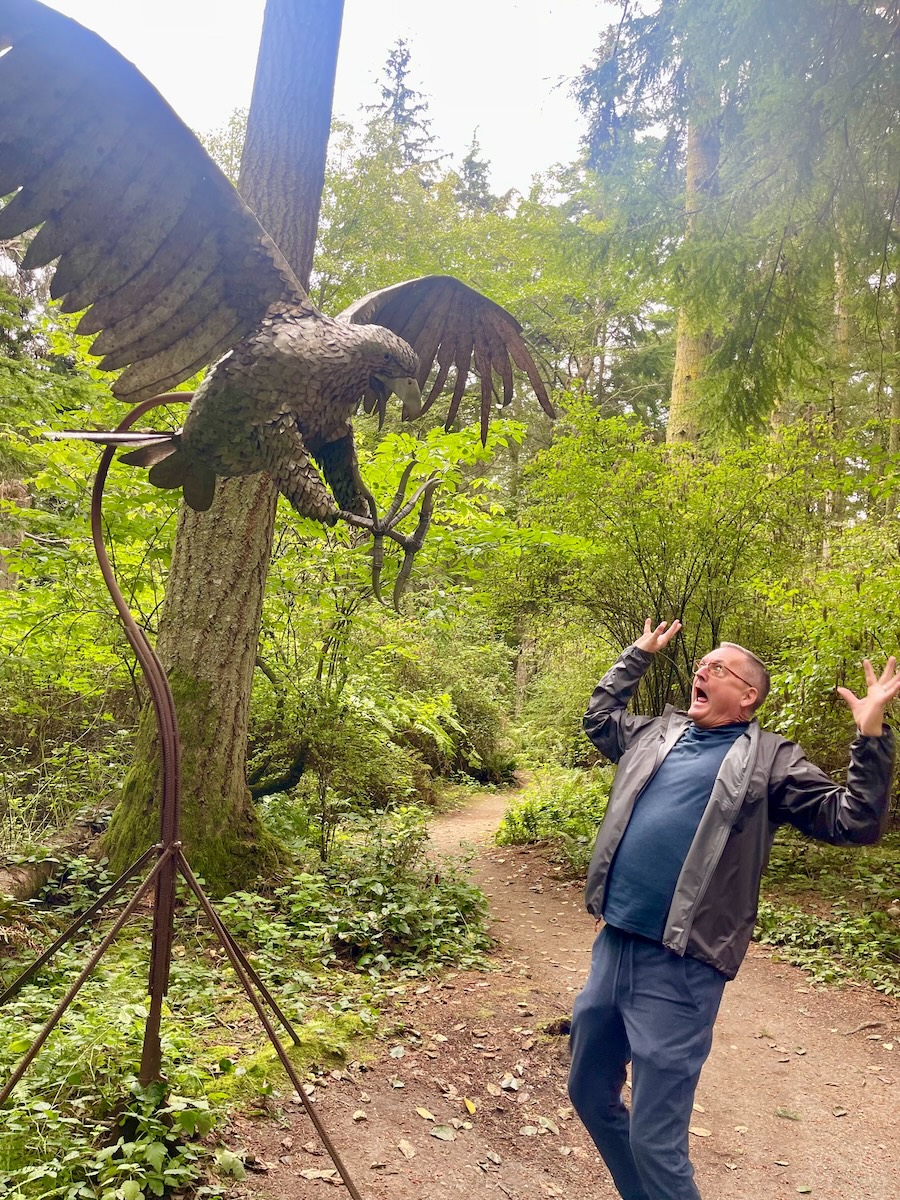
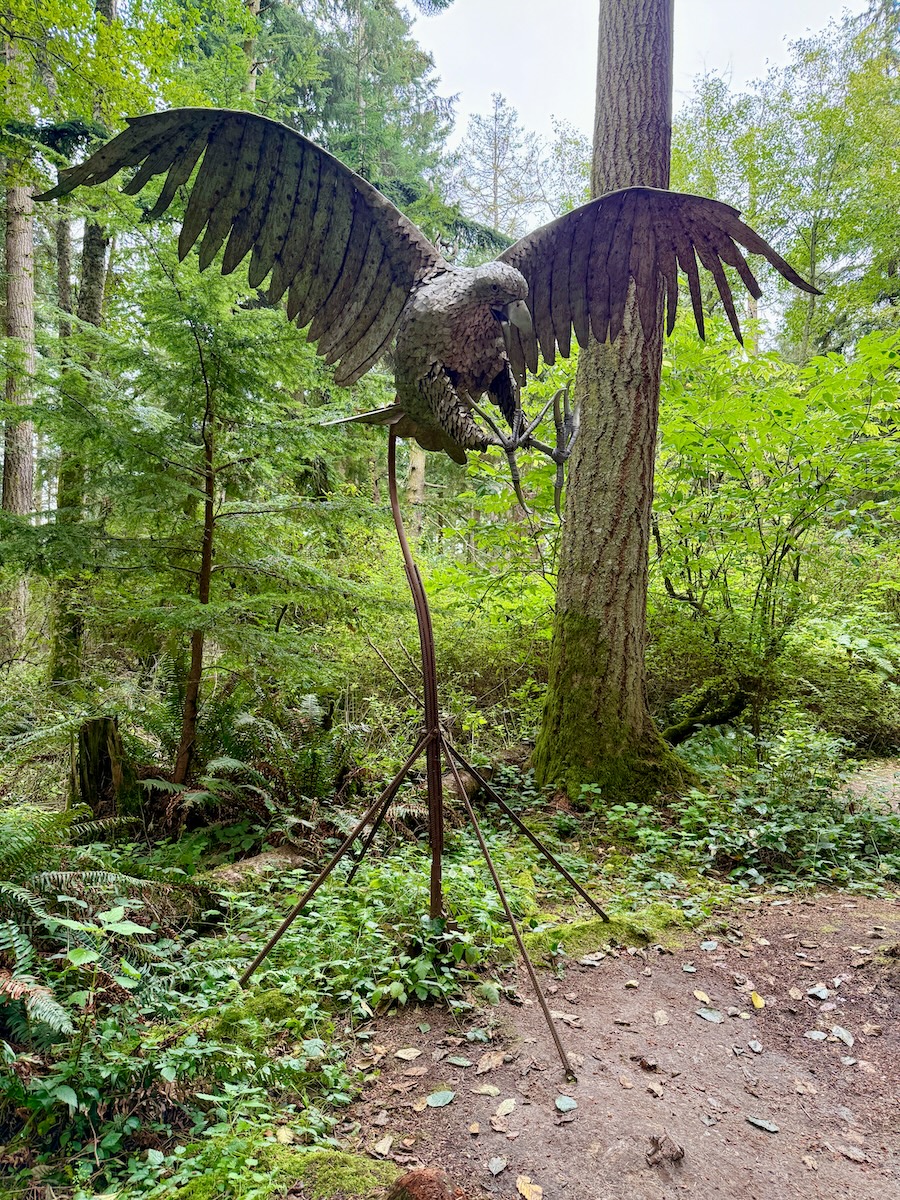
The Feather – Kirk Seese
The forest is full of pieces that reveal themselves gradually, but this one seemed to glow among the trees. Rick chose to interpret it as a deadly airborne attack, which was not my first take. But I can appreciate any artwork that inspires both reflection and amateur community theater.
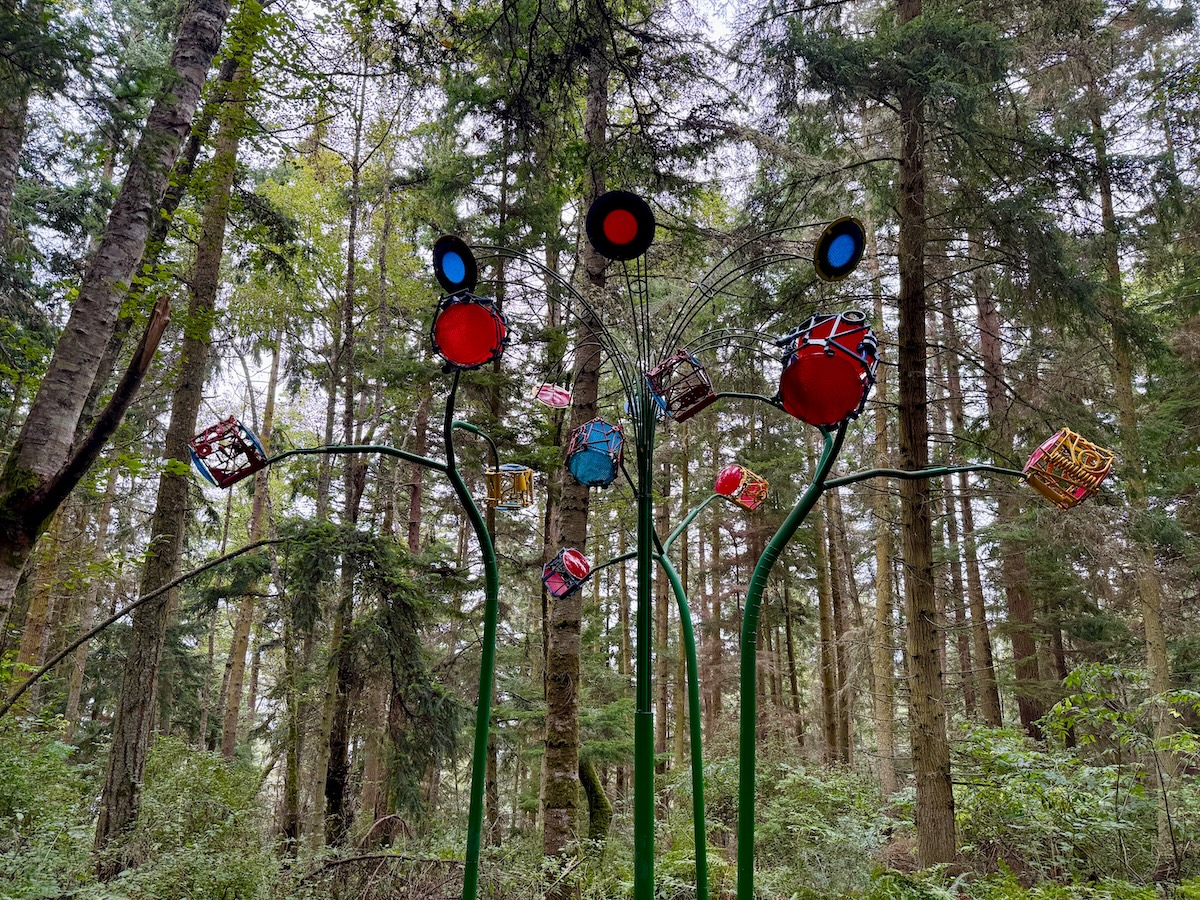
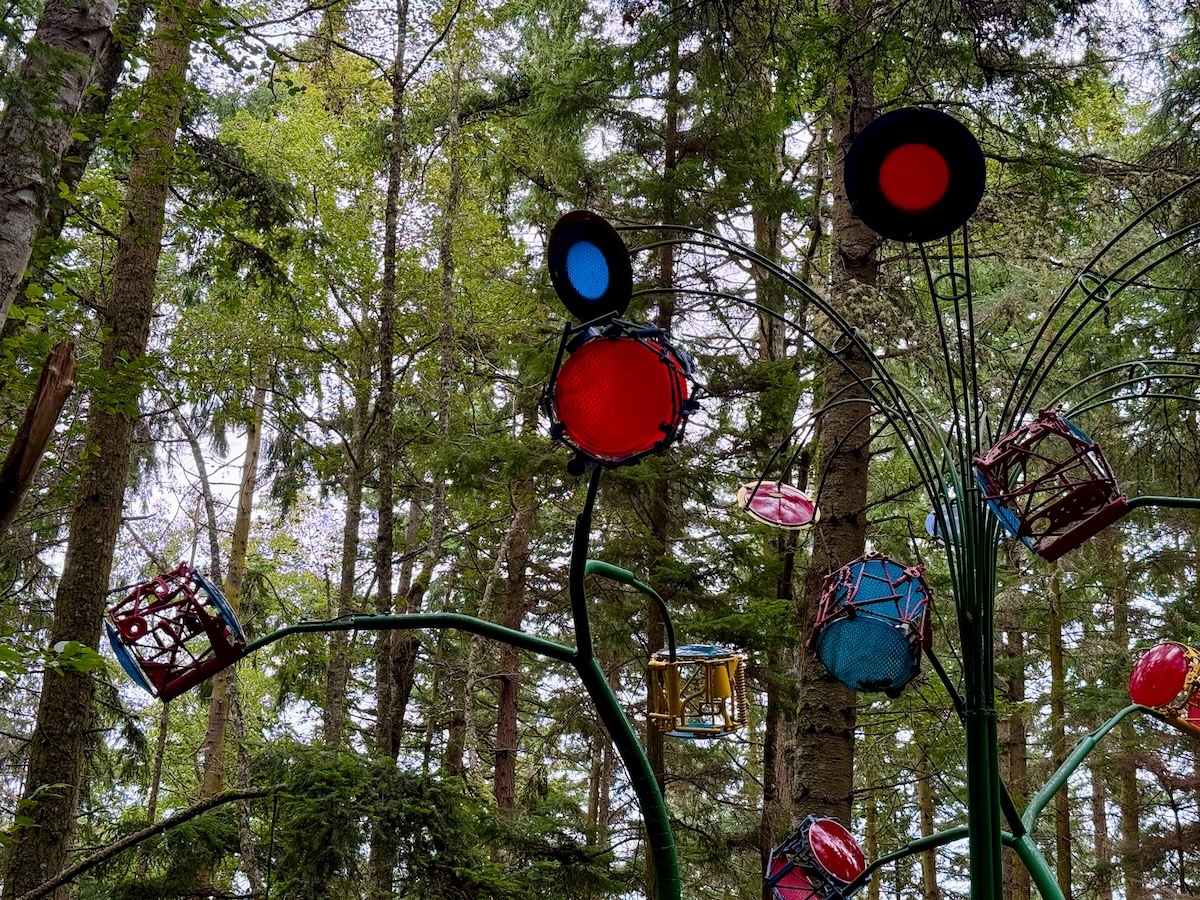
Playa Flowers – Jeff Tangen
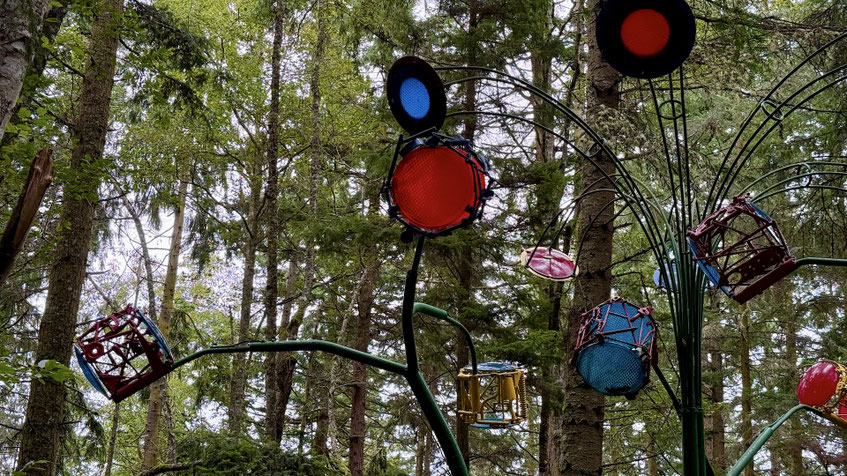
Some sculptures disappear into the forest. Playa Flowers has no interest in doing that. Rising above the trail in a cheerful riot of color, glass, and improbable engineering, it looks as though a patch of wildflowers crossbred with a carnival ride and took root in the forest.
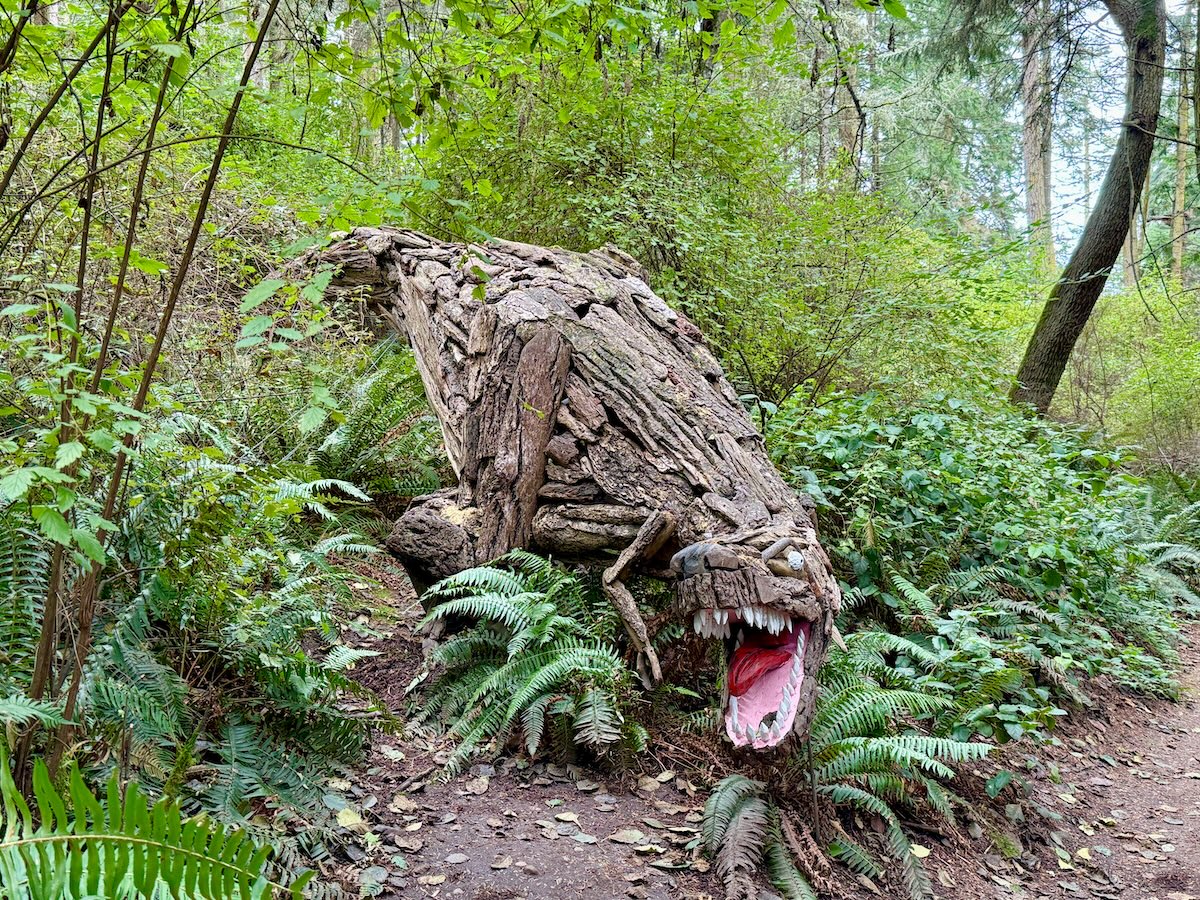
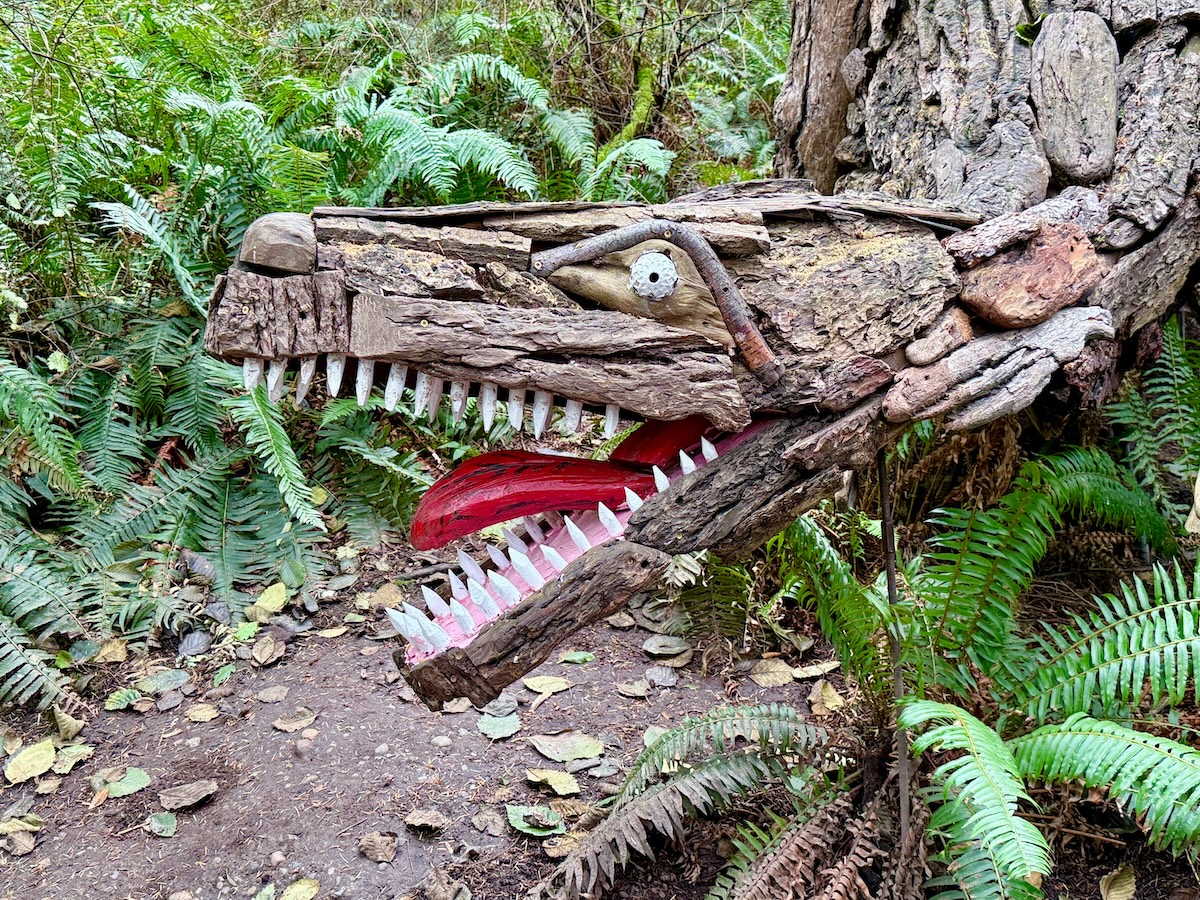
Tyrannosaurus Rex – Joe Treat
One of the joys of Price Sculpture Forest is that you never know what’ll be waiting around the next bend. Sometimes it’s a thoughtful abstract work. Sometimes it’s a giant driftwood dinosaur emerging from the undergrowth with its mouth wide open. The forest is better off having both.
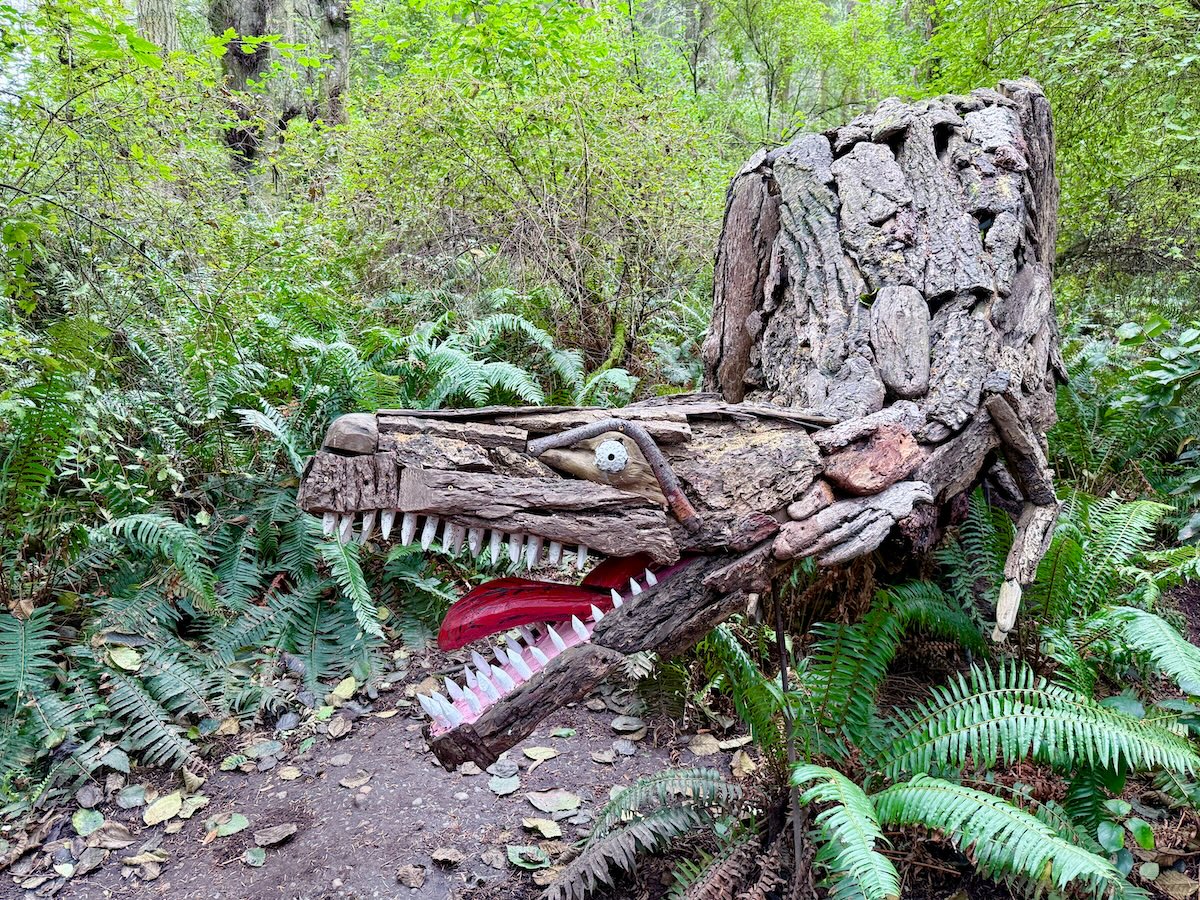
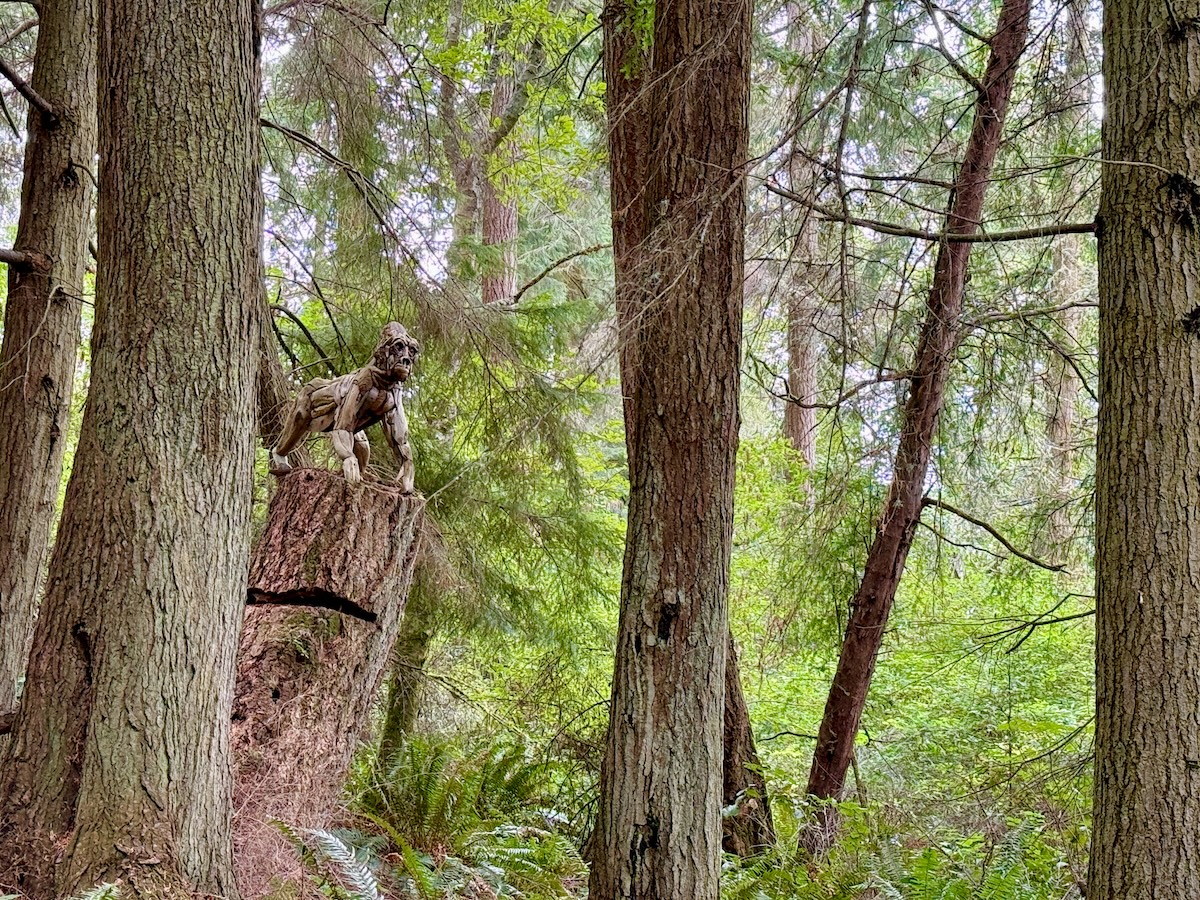
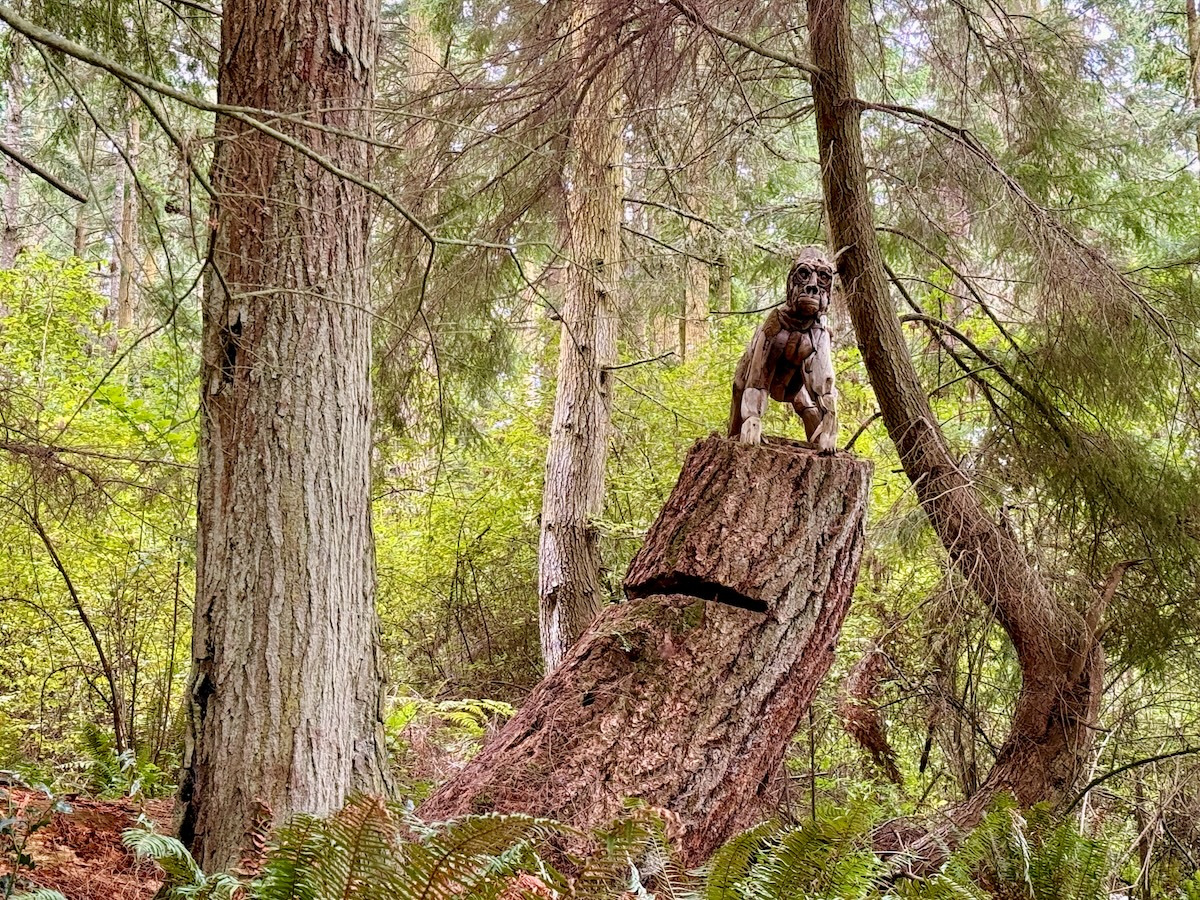
Gorilla – Joe Treat
Treat’s T. rex gets most of the attention, but his gorilla is cooler for being easier to miss. Perched atop a broken tree trunk and partially concealed among the surrounding woods, it rewards visitors who spend as much time looking into the forest as they do at the trail itself.
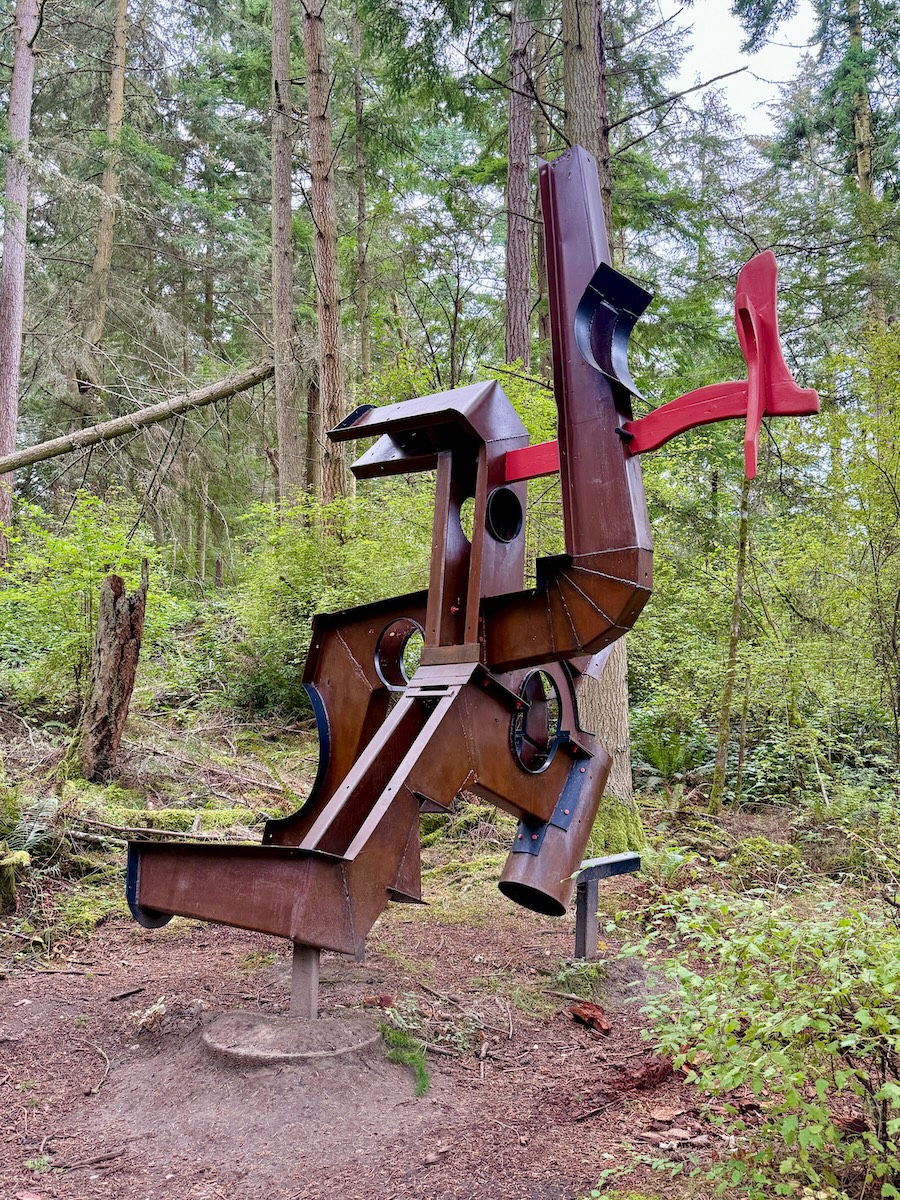
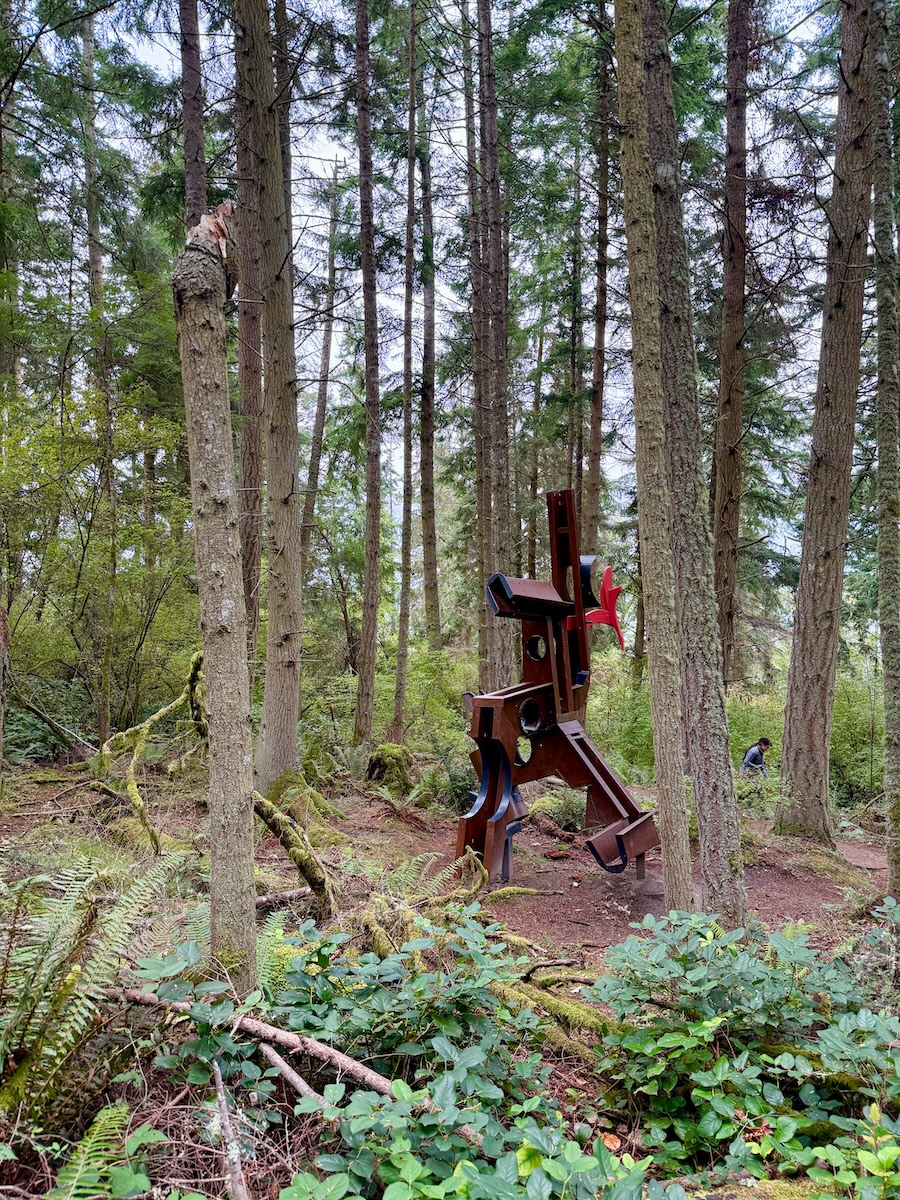
Stevo’s Dream, The Ultimate Flying Machine – MacRae Wylde
I spent several minutes trying to determine whether this represented a flying machine, a musical instrument, industrial equipment, or the result of somebody dumping their entire workshop onto the forest floor. Some sculptures invite interpretation. Others dare you to keep up.
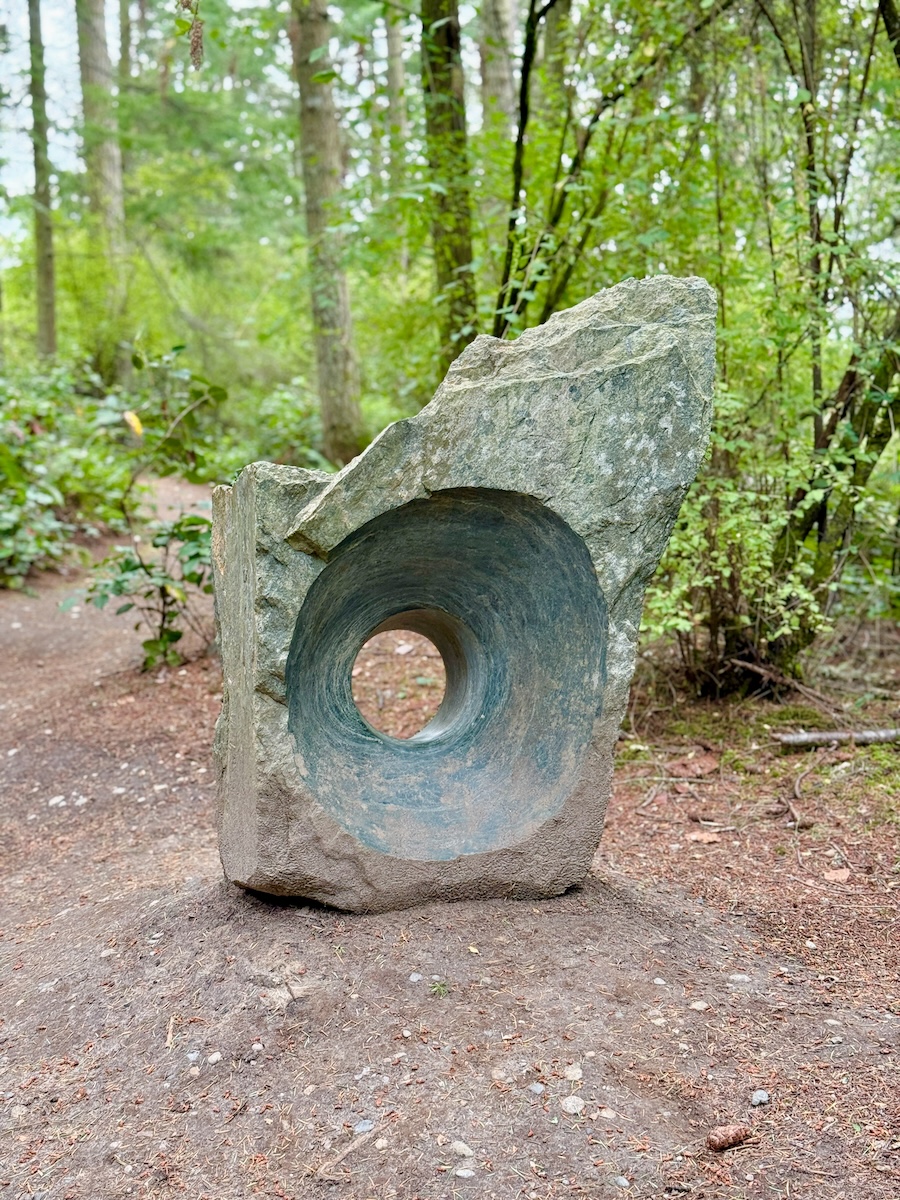
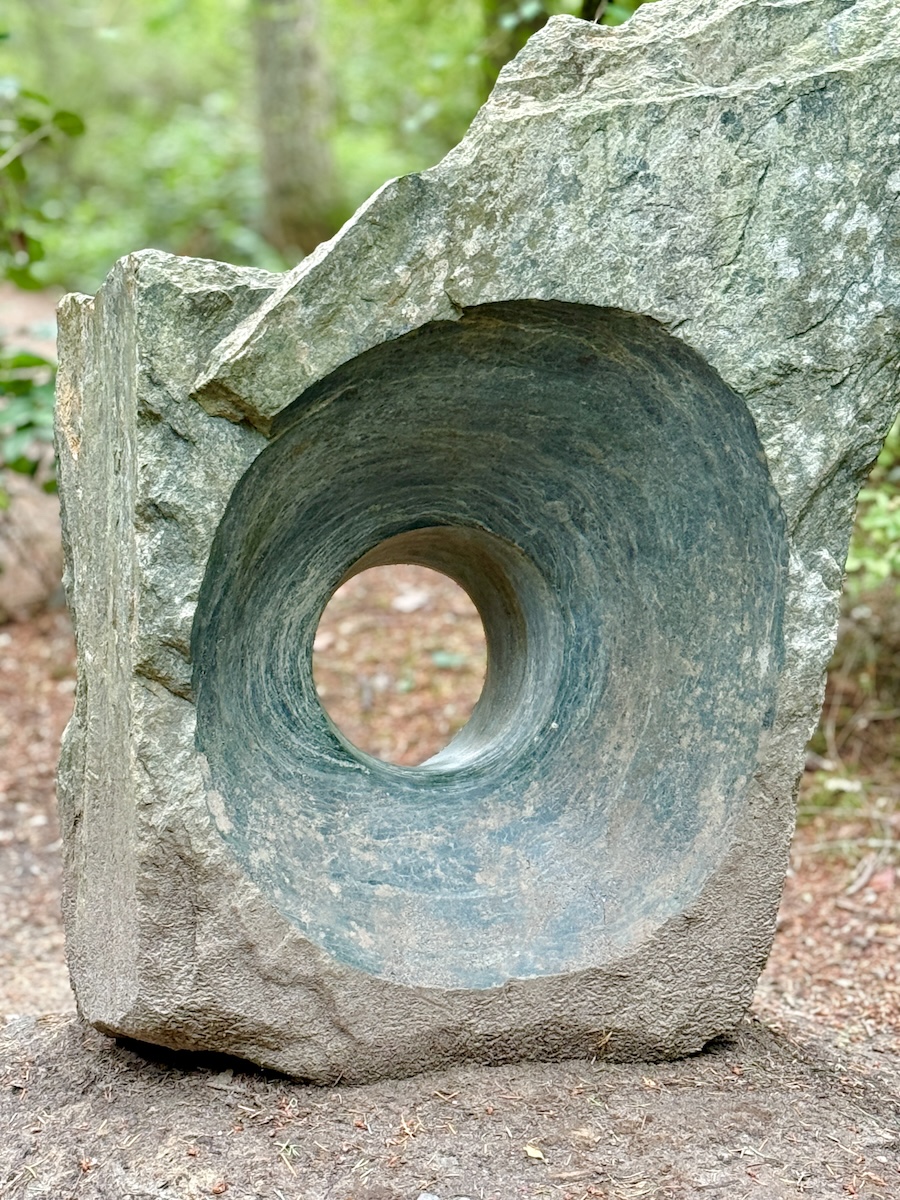
Sunrise/Sunset – Ivan Neaigus
After dinosaurs, gorillas, flying machines, and giant flowers, I didn't expect one of the simplest sculptures in the forest to be among the most memorable. A circular opening carved into the stone naturally frames whatever lies beyond, turning the surrounding woods into part of the artwork. Sometimes, a rock with an interesting hole in it is enough.
Pentillium – Gary Gunderson
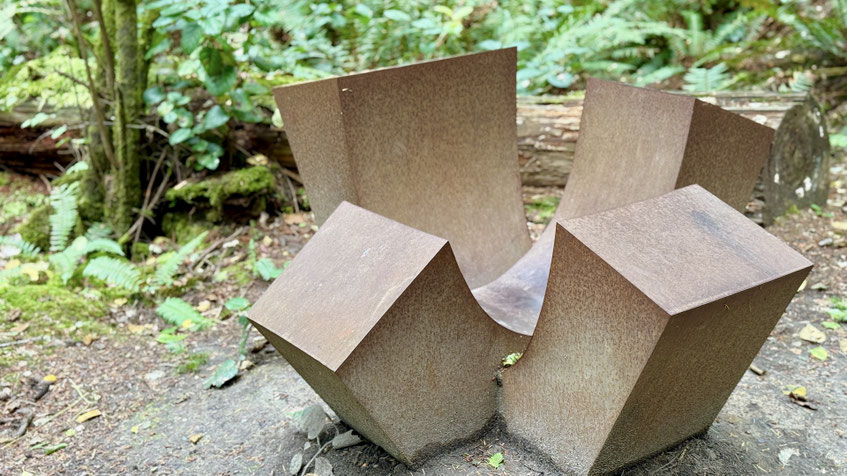
Appearing around a bend in the trail, Pentillium looked less like a sculpture than the entrance to an abandoned science-fiction pavilion. Whether it was intended as a shelter, a flower, or something else entirely didn’t matter. It was strange, memorable, and perfectly at home among the trees.
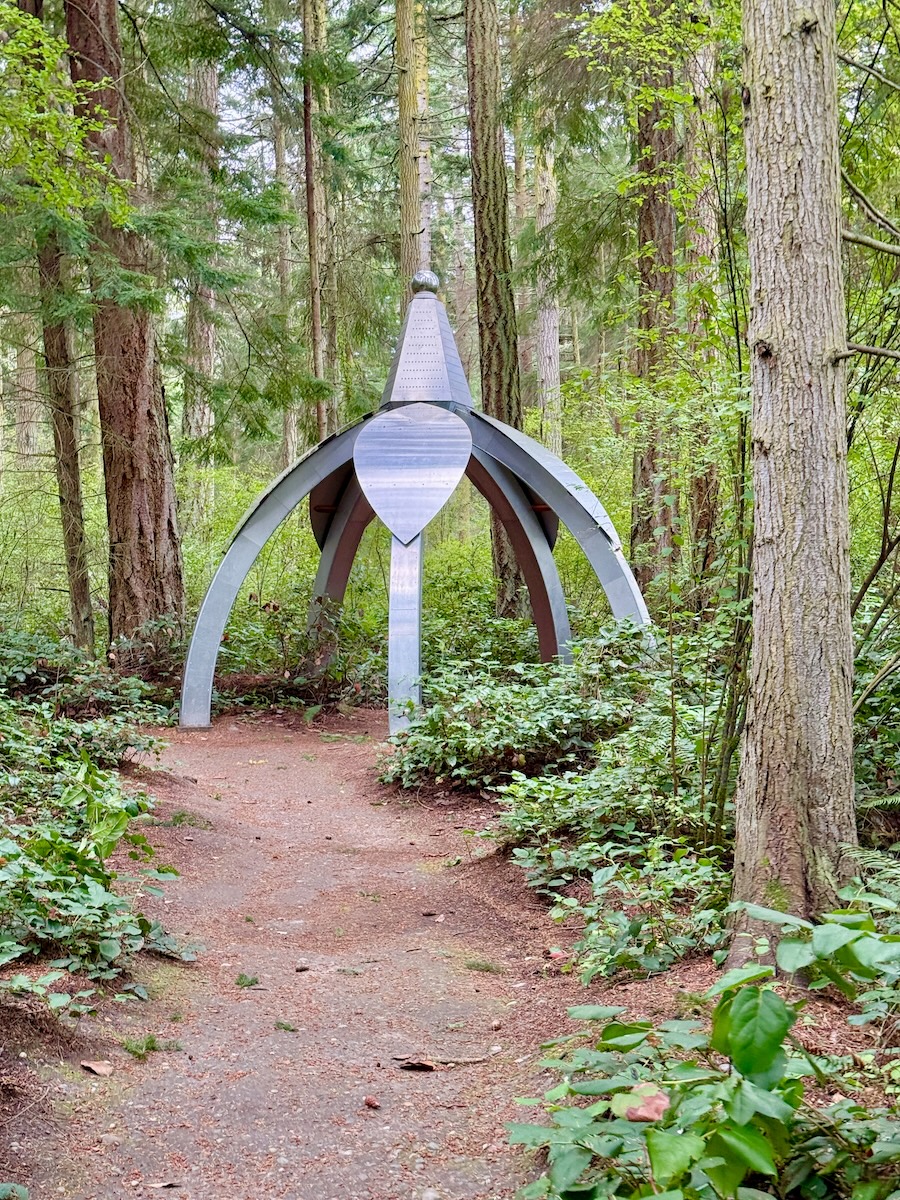
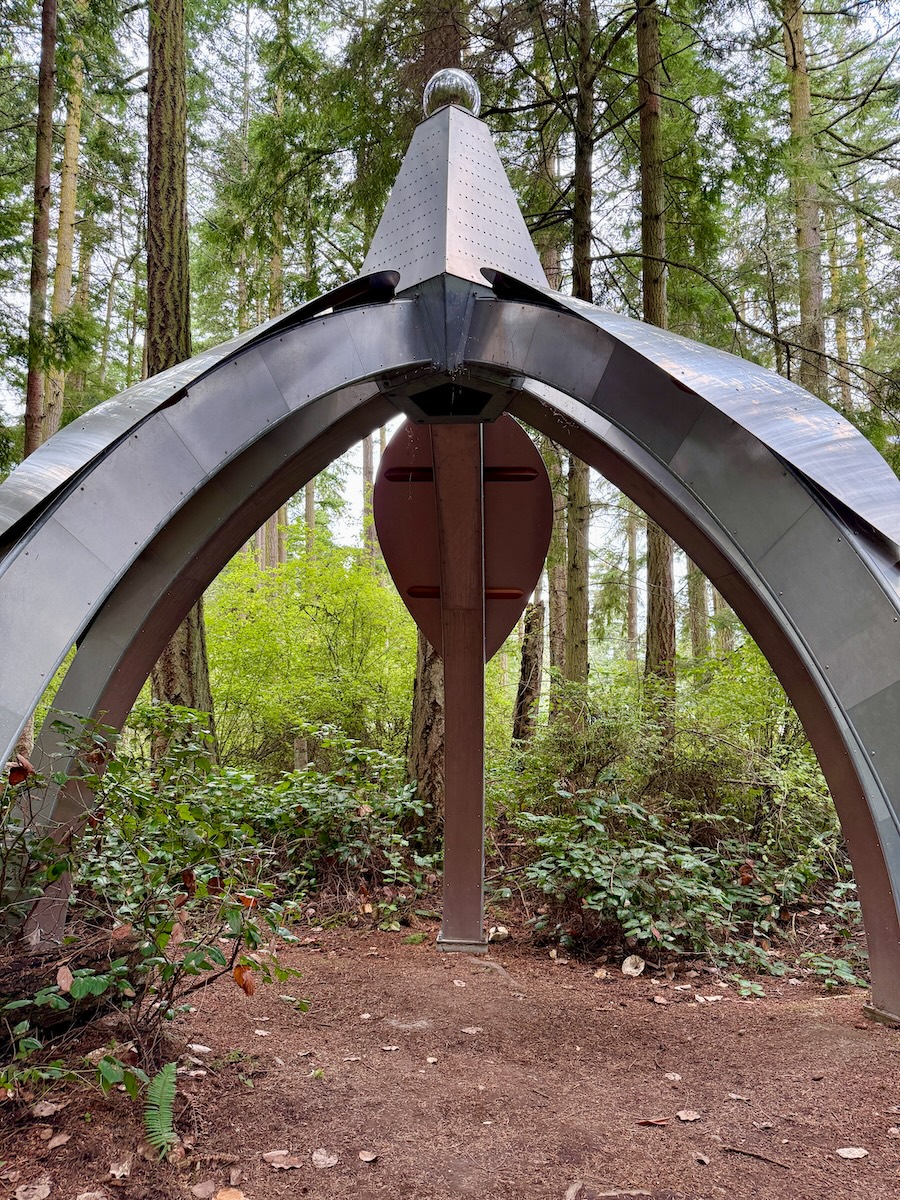
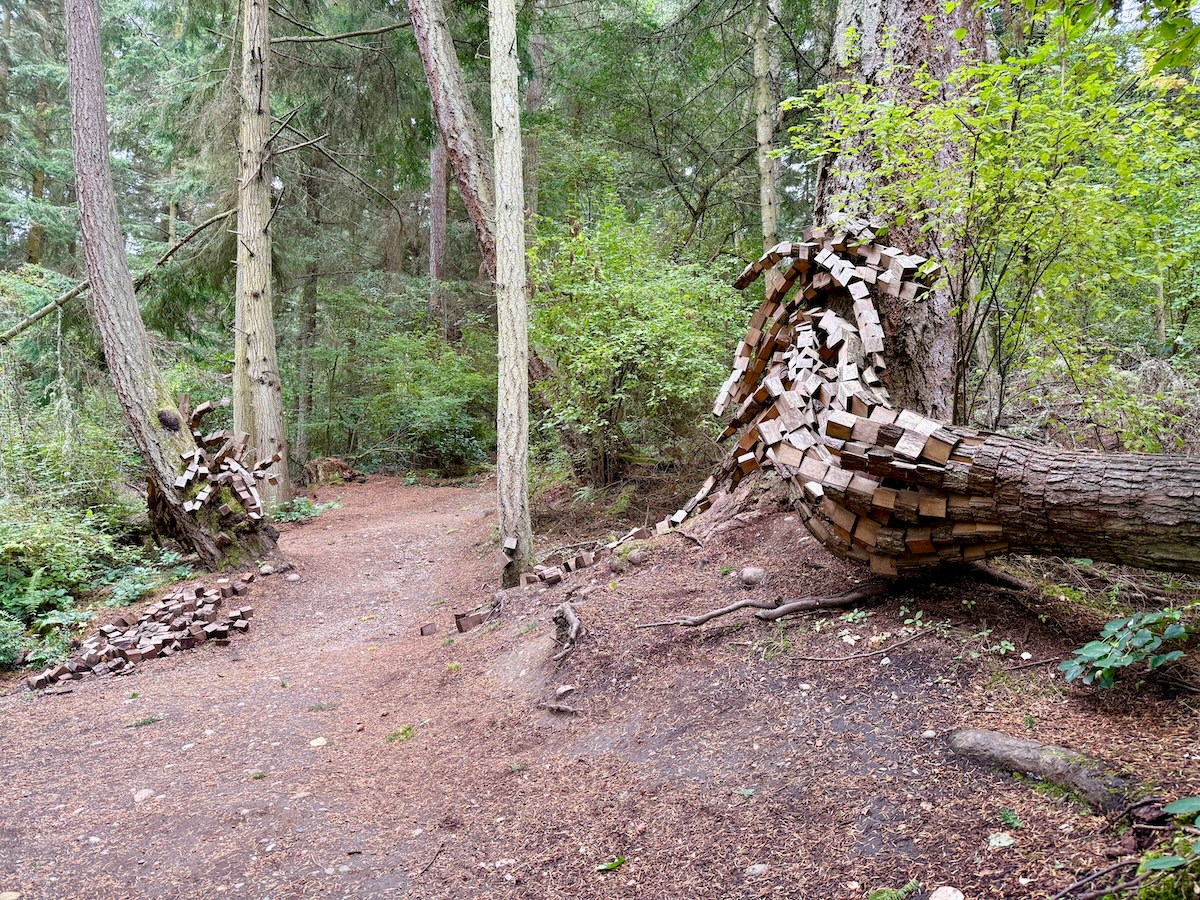
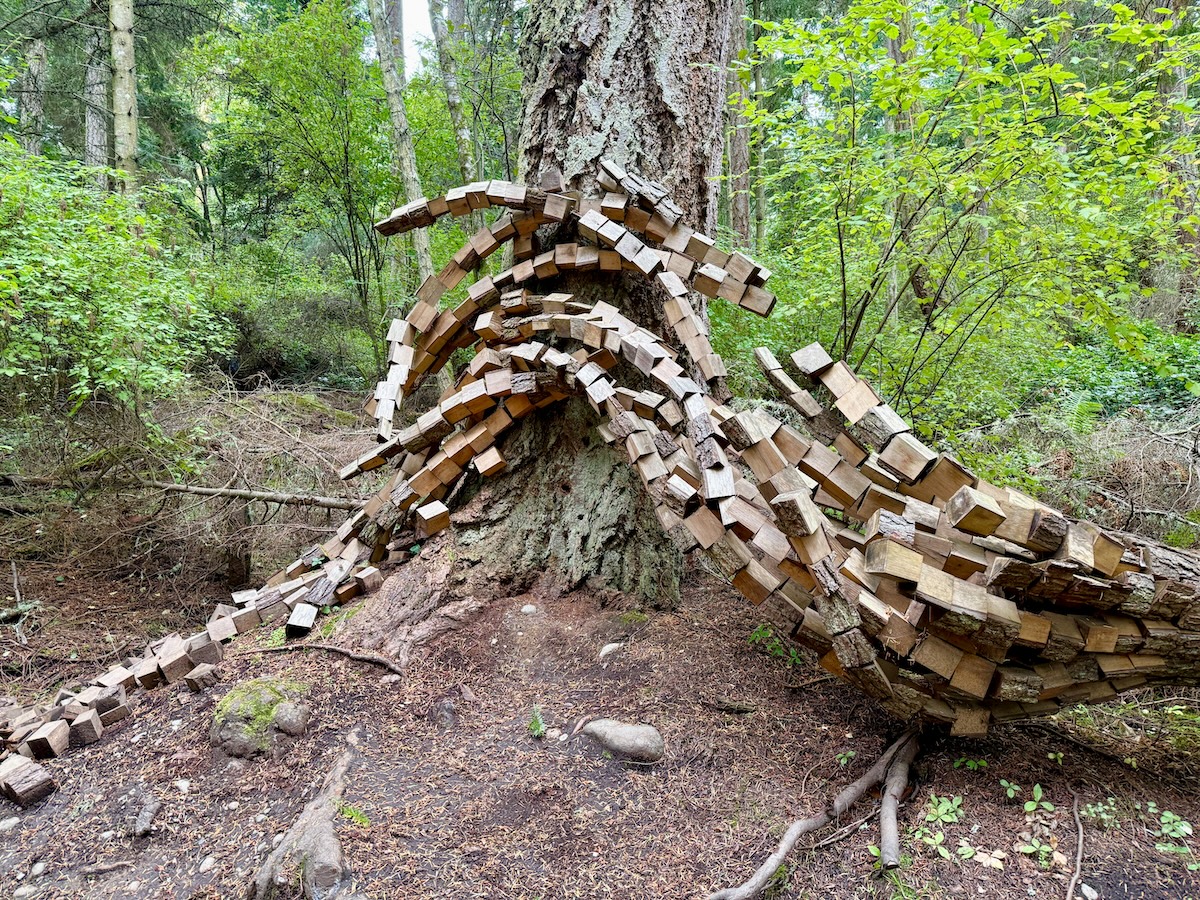
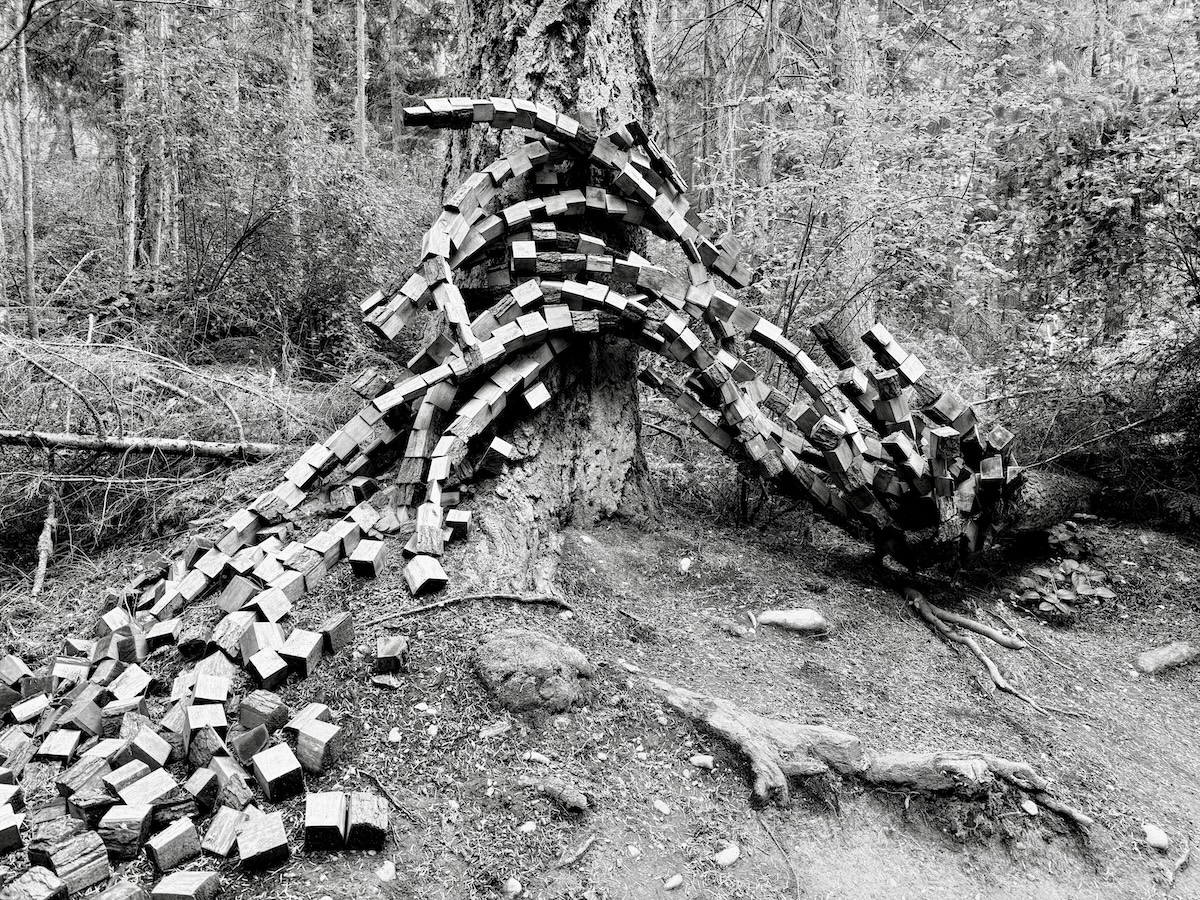
Nature’s Keystone – Anthony Heinz May
This was probably my favorite piece in the forest, although I’m still not entirely sure what it is. Part tree, part wave, part giant wooden hand reaching out from the trunk, it somehow manages to feel simultaneously violent and graceful. More than any other sculpture here, it looked as though the forest itself might be in the process of creating it.
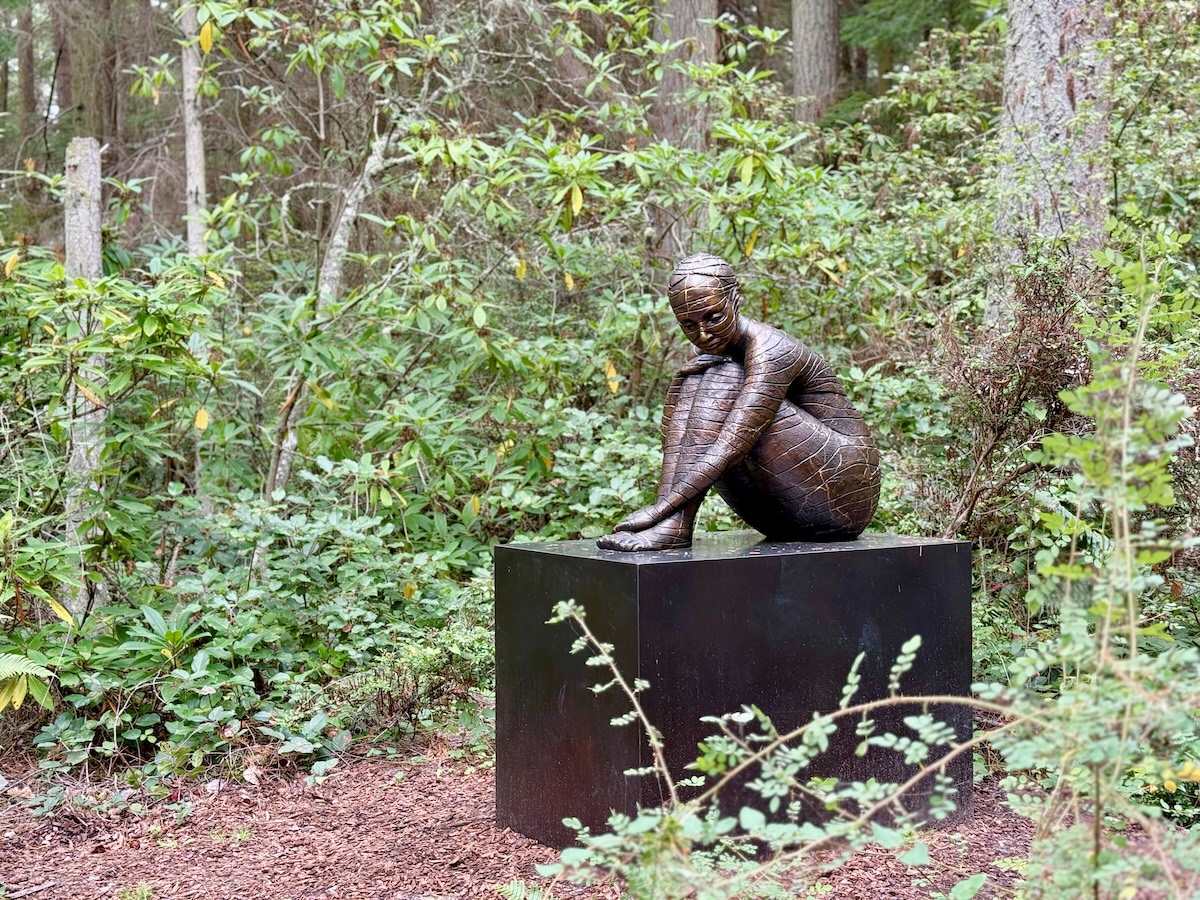
Anillos – Maria Wickwire
After so many sculptures built around whimsy, surprise, or outright oddity, Anillos felt classical by comparison. A seated figure quietly contemplating the forest is hardly a radical concept. But the stillness worked beautifully here. Rather than demanding attention, it seemed content to share the woods with everything around it.
By the time we returned to the trailhead, I was thinking less about individual sculptures than about discovering them. People come for the art, but the forest does a surprising amount of the heavy lifting.
The sculptures benefited from appearing unexpectedly, framed by ferns, filtered sunlight, and towering trees instead of gallery walls. The setting turns a simple walk into a series of small discoveries.
It also helps that none of this exists because it had to. Somebody looked at a beautiful piece of the Whidbey Island forest and decided that preserving it for wandering strangers was a better idea than developing it. In an era when every vacant piece of land seems to come with a proposal attached, that’s almost as remarkable as the sculptures themselves.
Write a comment