
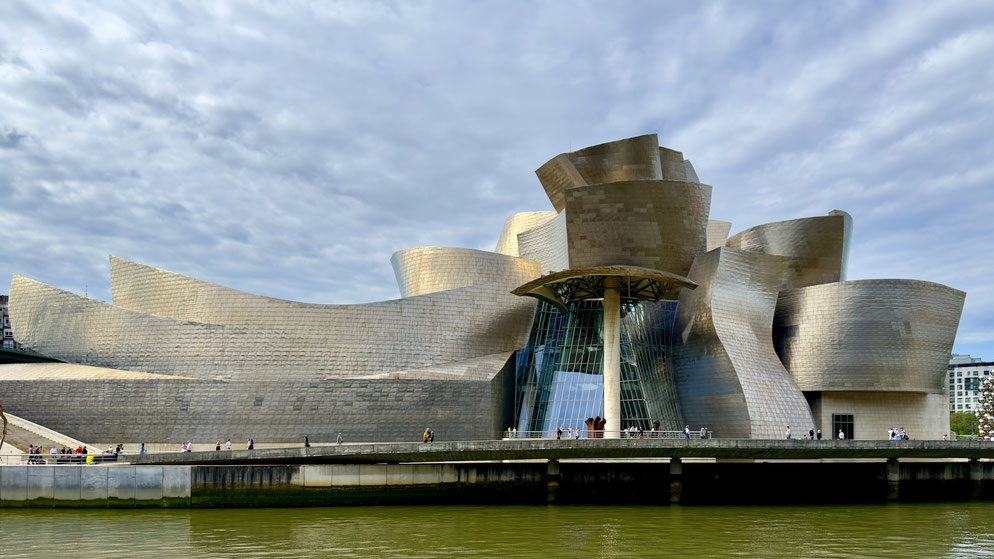
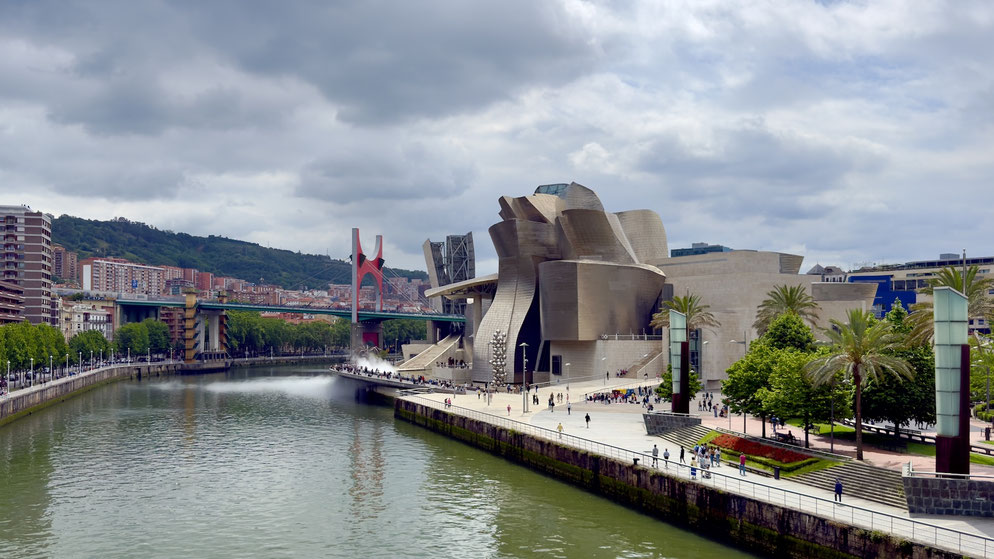
Frank Gehry’s titanium curves may be the star of every Bilbao postcard, but walking into the Guggenheim Museum Bilbao feels less like entering a building and more like stepping inside a sculptor’s brain. No straight lines, no predictable corners—just light, steel, glass, and the occasional visitor trying to triangulate where the galleries actually start. The museum has been called a miracle of urban renewal, a triumph of late-’90s optimism, and a bold Basque gamble that worked. All true. But standing here, it’s the scale that lands first. Everything is oversized, as if built for a future population of giants who never showed up.
Outside, two sentries guard the place. One a colossal arachnid, the other a floral, exuberant puppy. Between them, the Nervión River and the Puente de la Salve frame the museum like a stage set. Inside, the building dissolves into shifting perspectives and impossible volumes. You don’t tour it so much as wander through it, letting the art pull you sideways.
Highlights
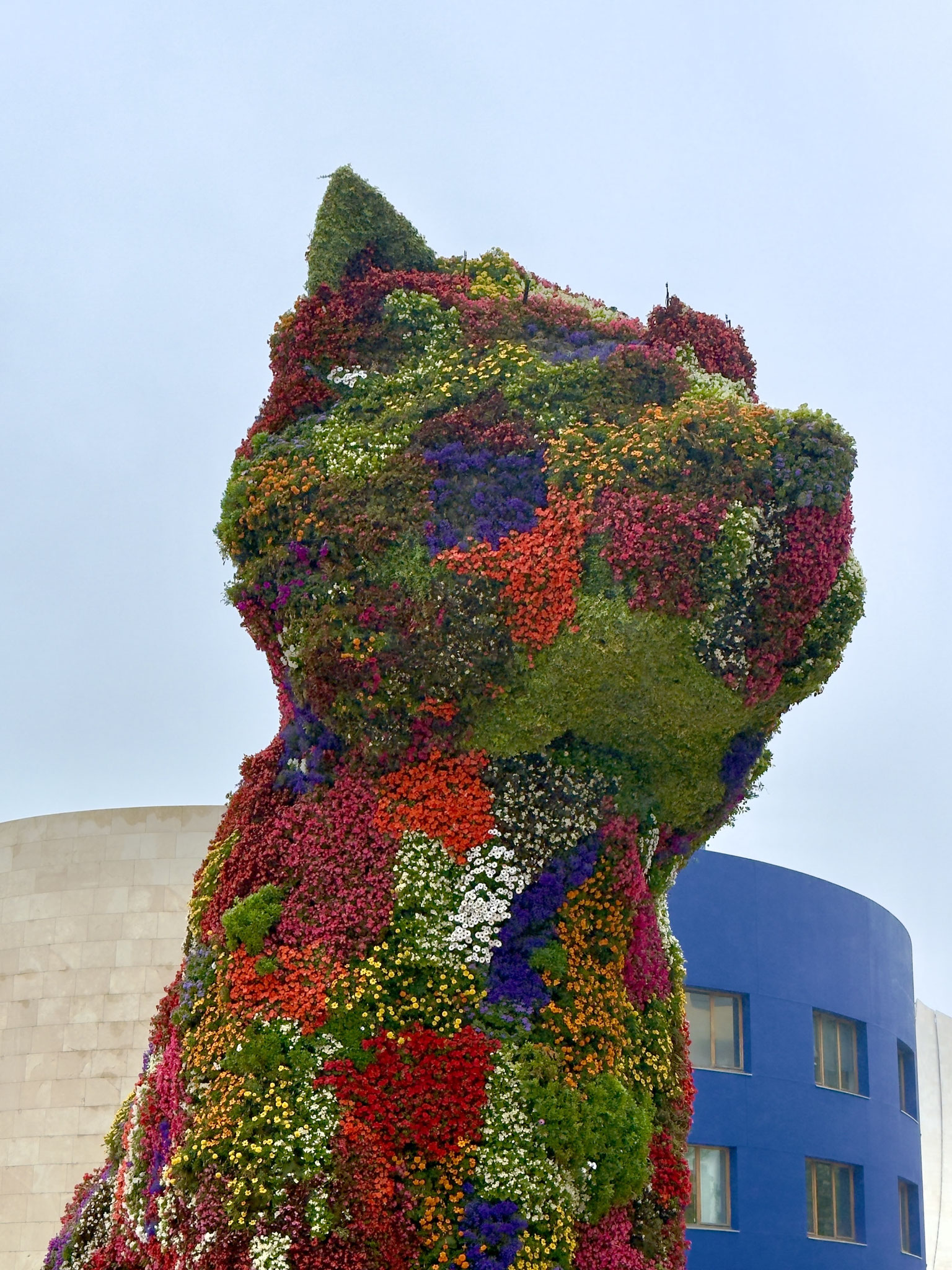
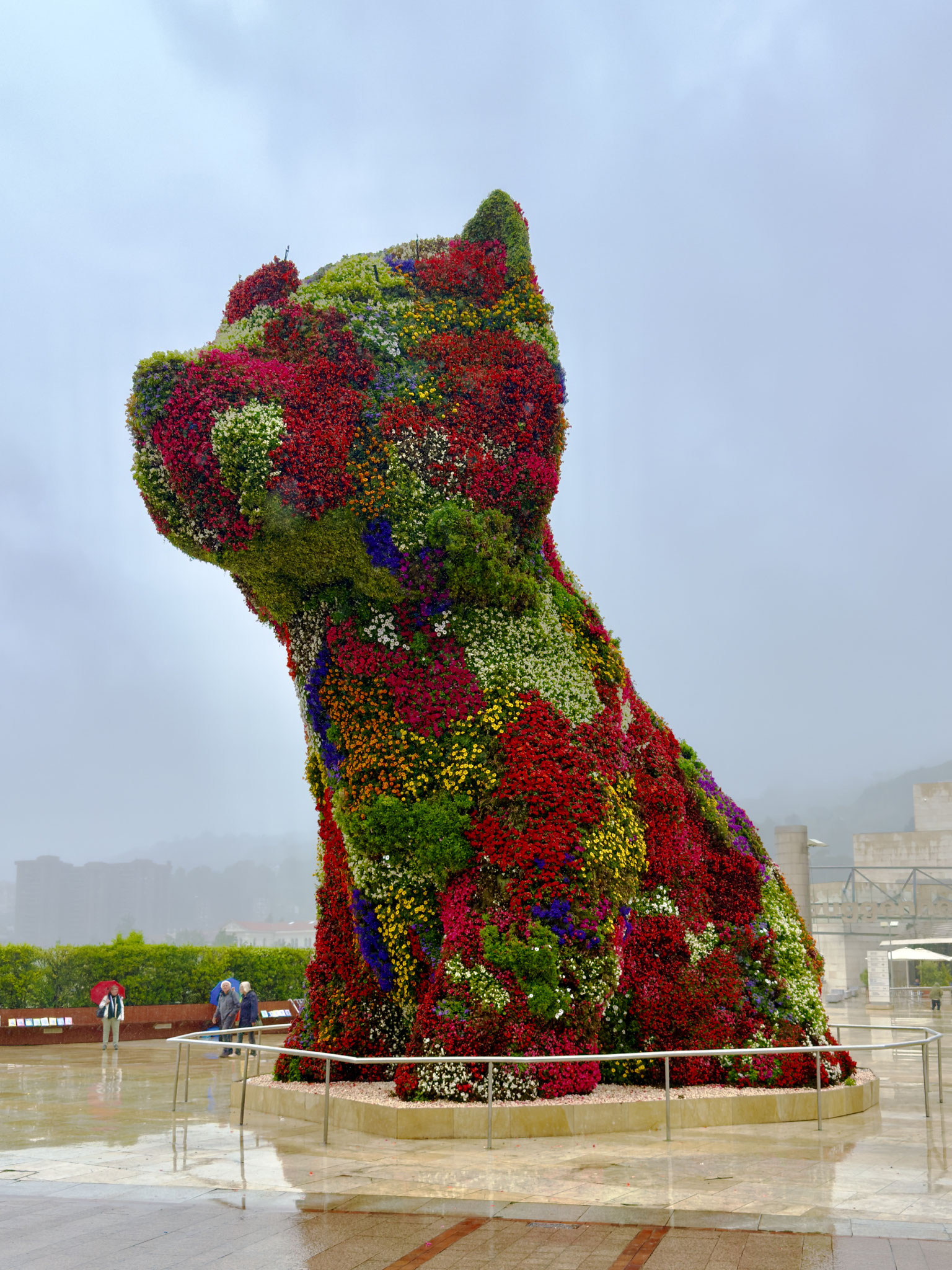
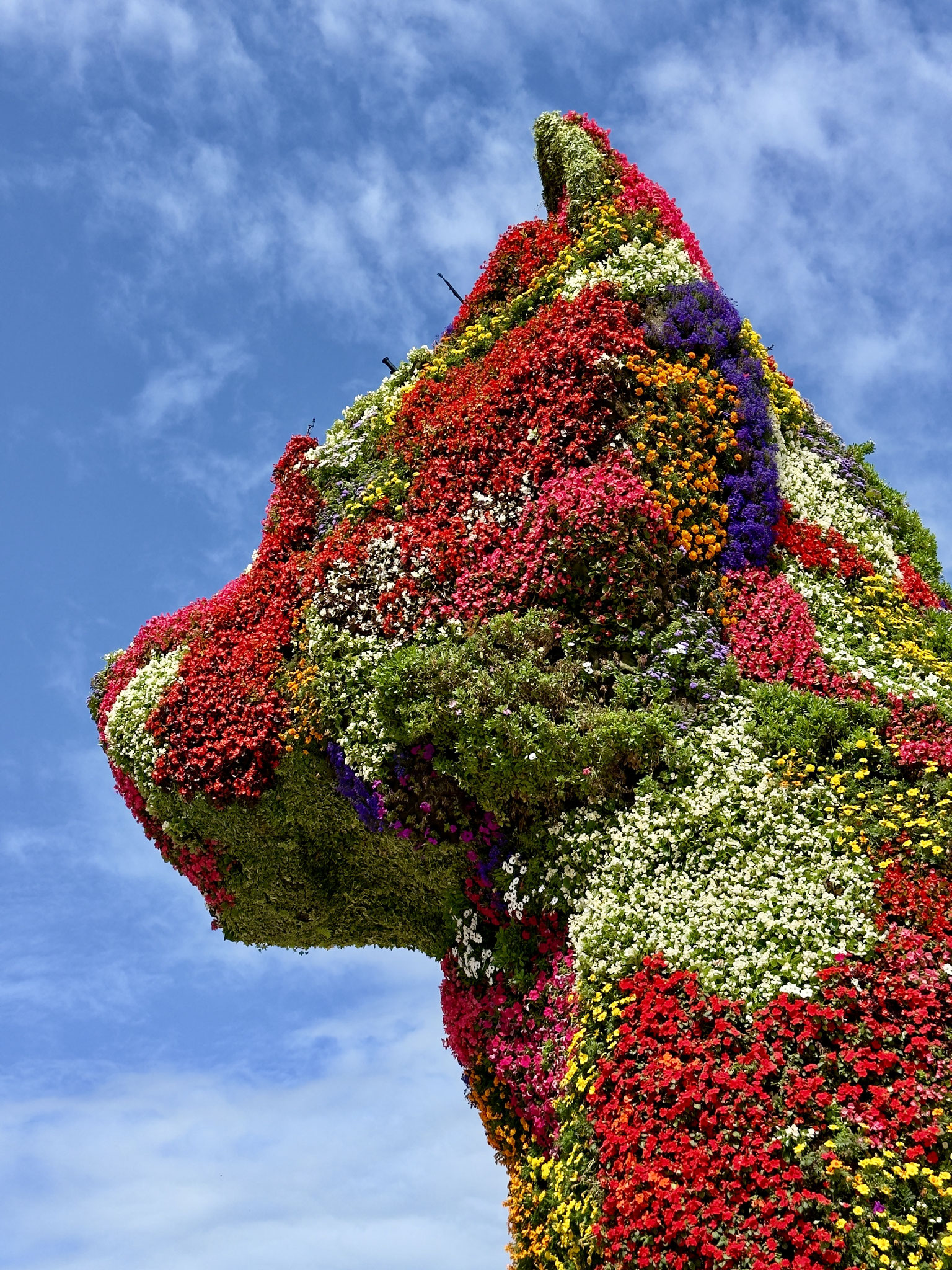
Puppy, 1992 – Jeff Koons
Puppy looms outside the entrance like a 40-foot topiary guard dog with excellent posture. It’s easy to treat him as Bilbao’s mascot, but Koons’ floral monument feels more affectionate than ironic. The constant bloom cycle means he changes personality week to week—a living sculpture in a city built on reinvention. Kids love him. Adults pretend they don’t. But you know they do.
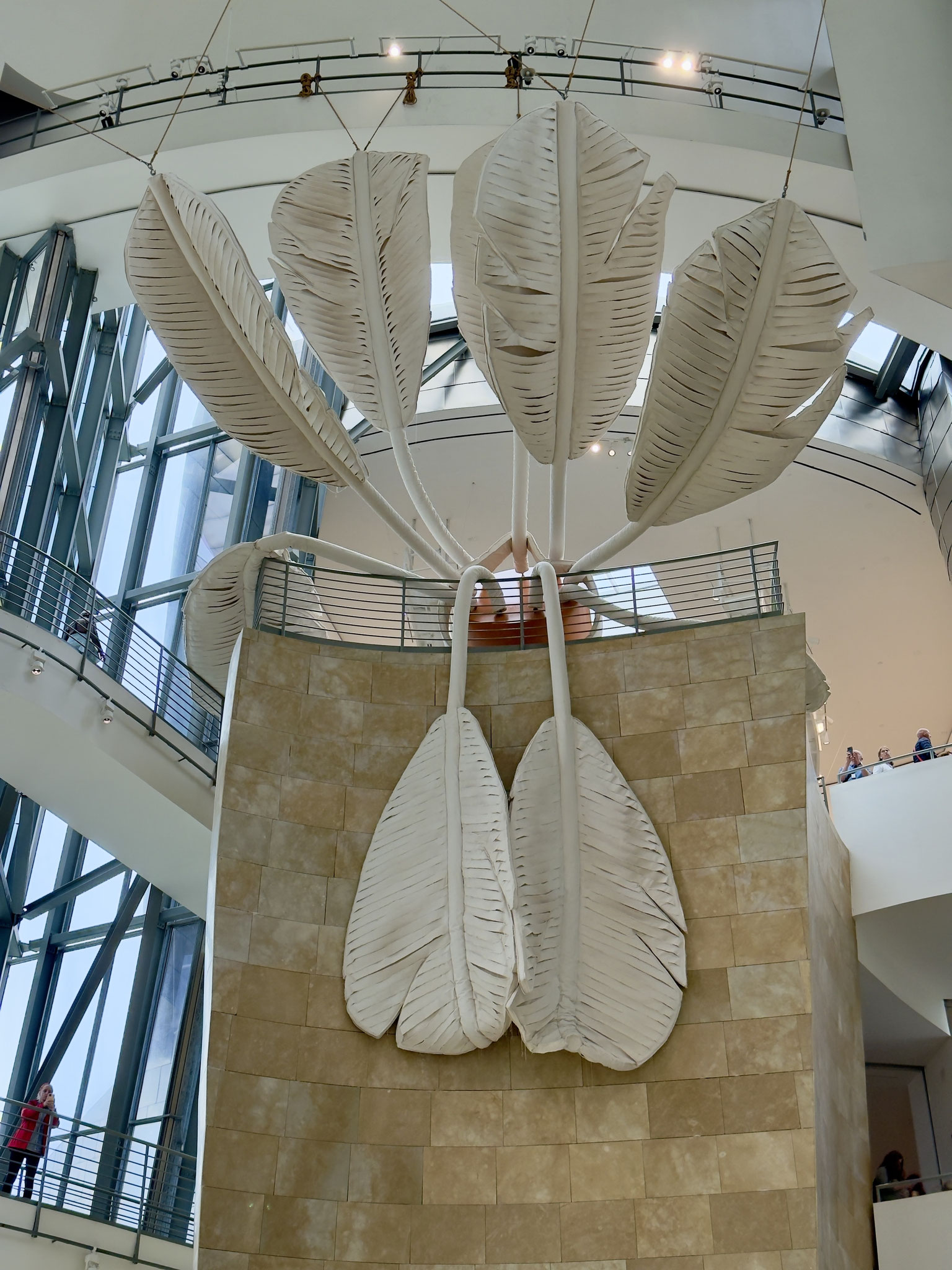
Soft Shuttlecock, 1995 – Claes Oldenburg & Coosje van Bruggen
Installed high above the atrium, these enormous feather forms drift downward like a quiet, deflated exclamation point. Like something that promised to be exciting. The scale alone borders on comic, but Oldenburg and van Bruggen always understood the power of enlarging the ordinary. Here, the softness is an illusion—the feathers are rigid, architectural, and perfectly in sync with the building's stone-and-steel flooring.

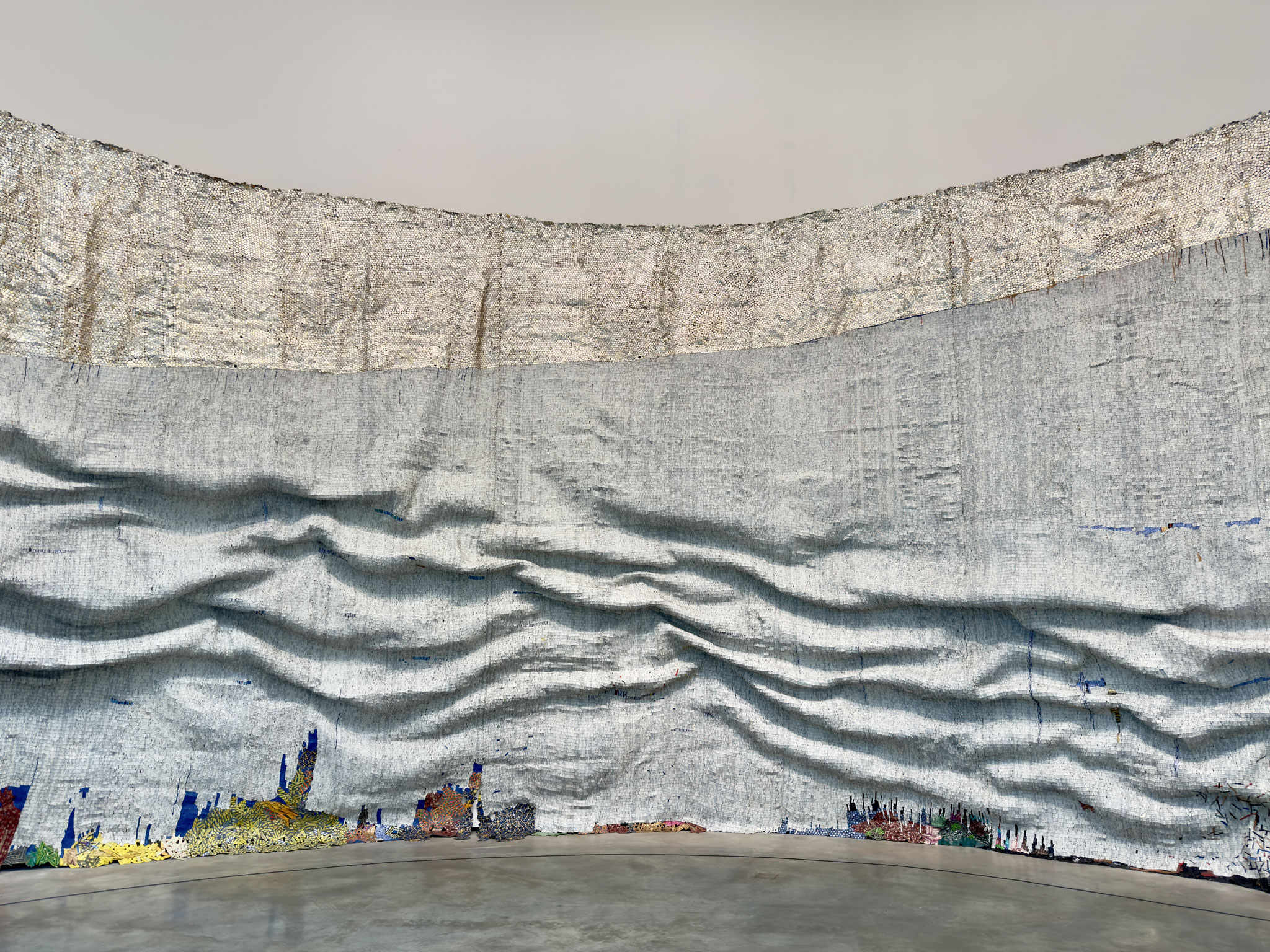
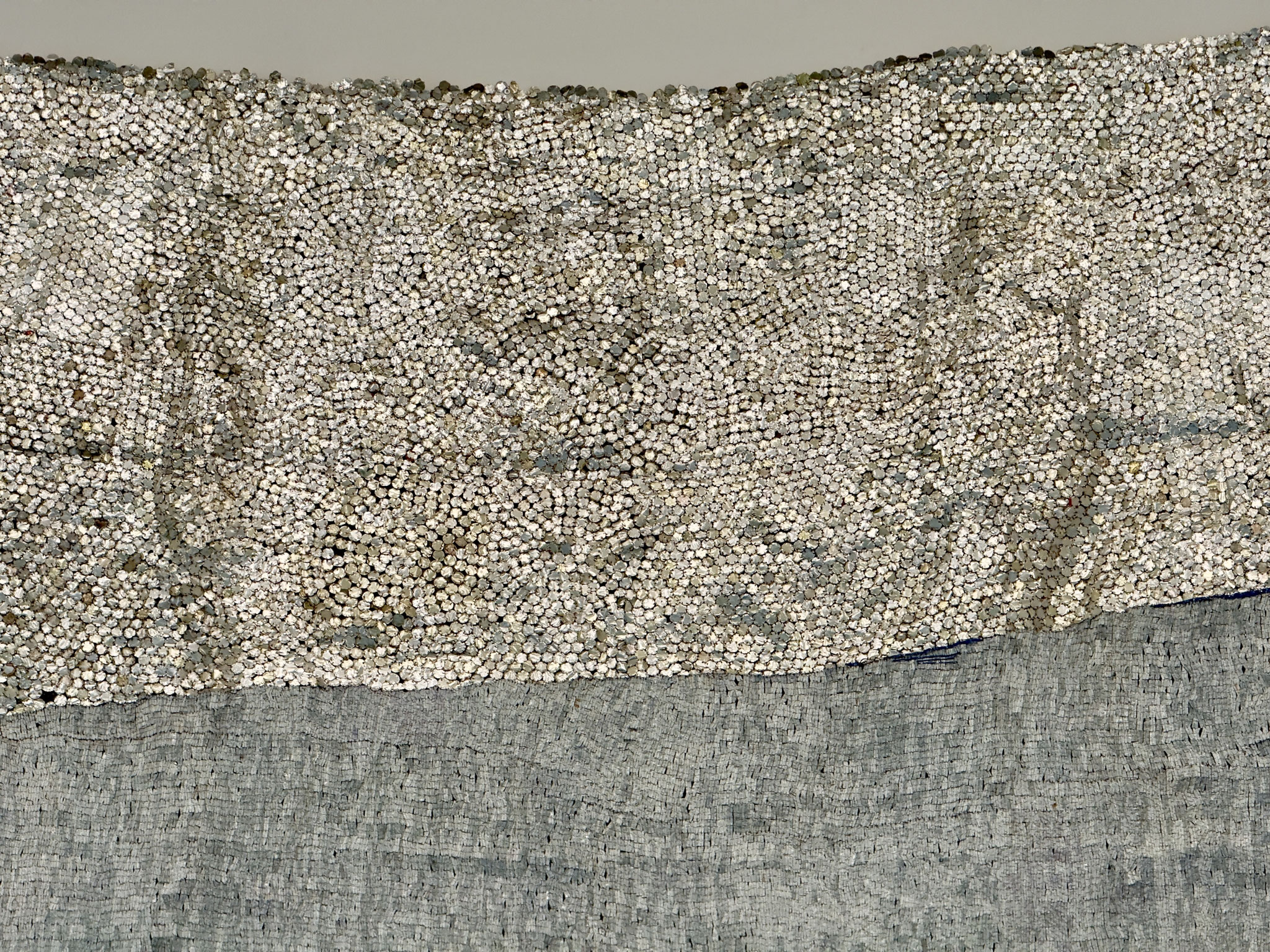

Rising Sea, 2019 – El Anatsui
A vast metallic curtain stretches across the curved gallery, its top edge glinting gold while the lower half sags into slow-motion waves. Up close, it resolves into bottle caps and metal fragments wired together. Step back and it becomes a tidal horizon—recycling, climate anxiety, and quiet glamour stitched into one surface, from a Ghanaian artist who feels unexpectedly at home among the museum’s usual headliners.
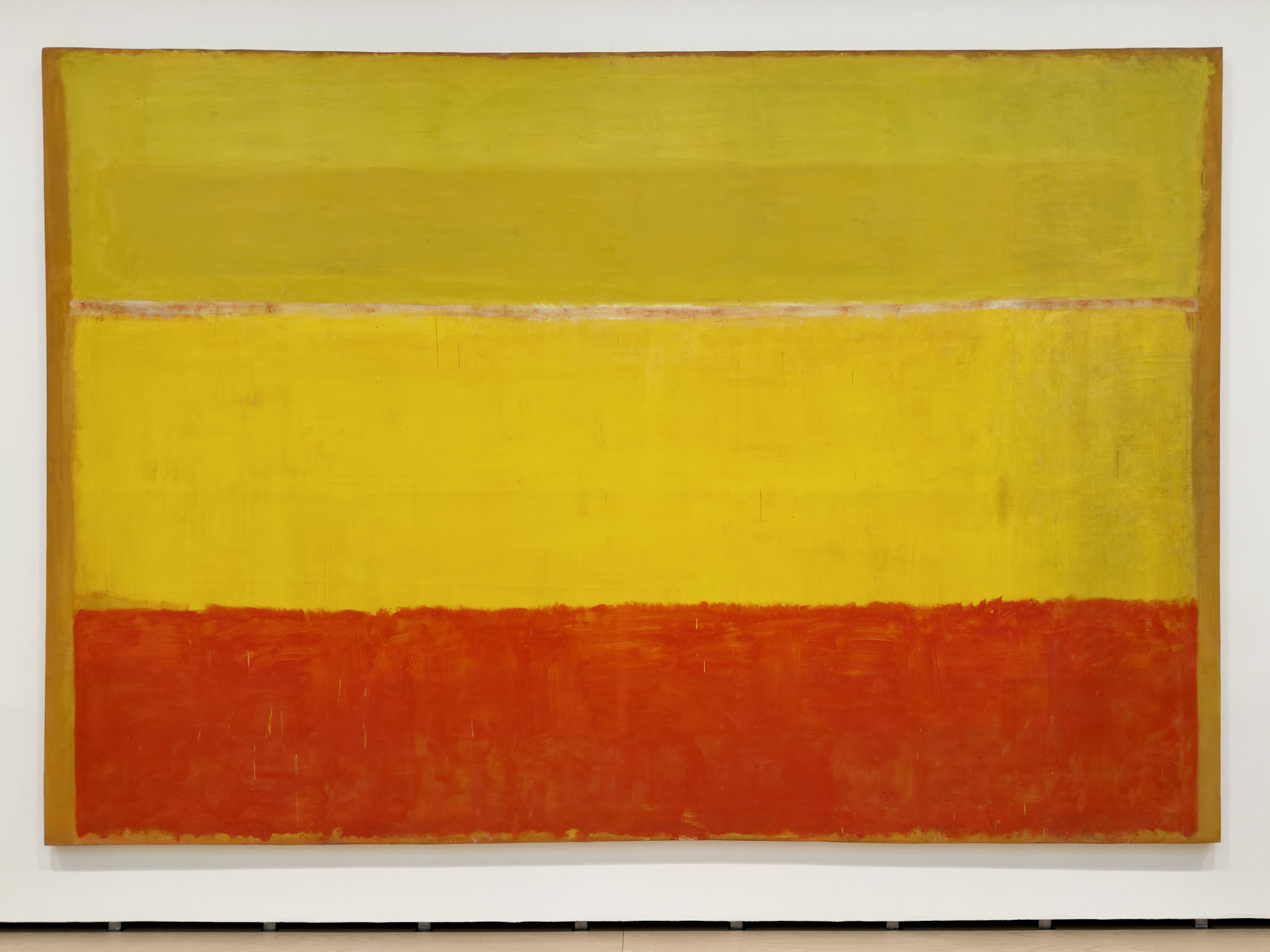
Untitled, 1952–53 – Mark Rothko
Rothko's stacked color fields hover in a dimmed room designed for maximum absorption. The edges blur, the colors breathe into one another, and the whole thing feels less like a painting than a weather system. People instinctively fall silent in front of it, as if someone had posted an invisible "library rules" sign.
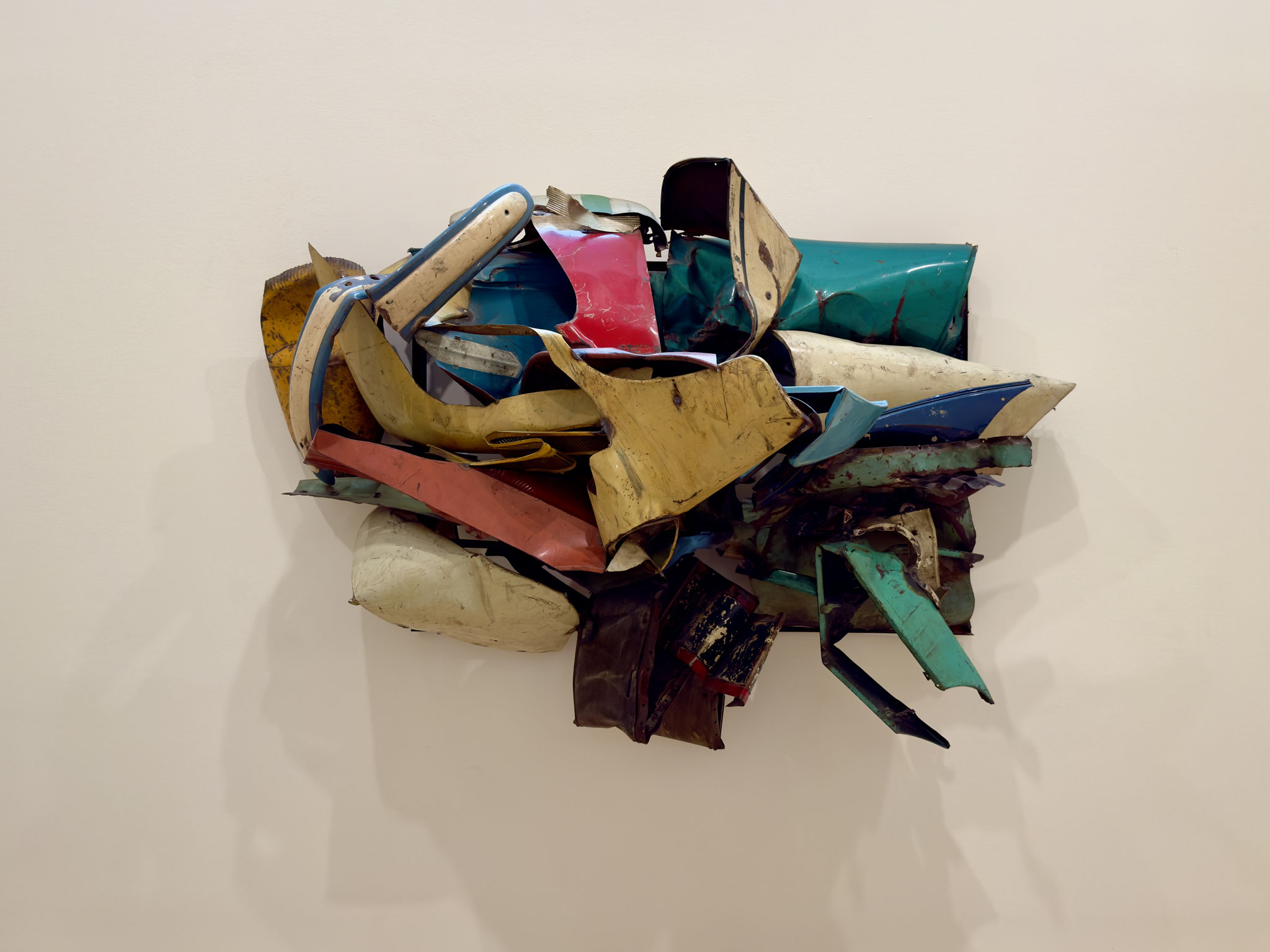
Dolores James, 1962 – John Chamberlain
A riot of crushed metal panels, still carrying the memory of their former lives as cars, bumpers, maybe an appliance or two. Chamberlain didn’t crumple steel—he choreographed it. The blues, creams, and reds pull your eye across the tangle, turning scrap into something improbably graceful. Up close, you notice the seams, the dents, the roughness—evidence that beauty doesn’t require polishing.
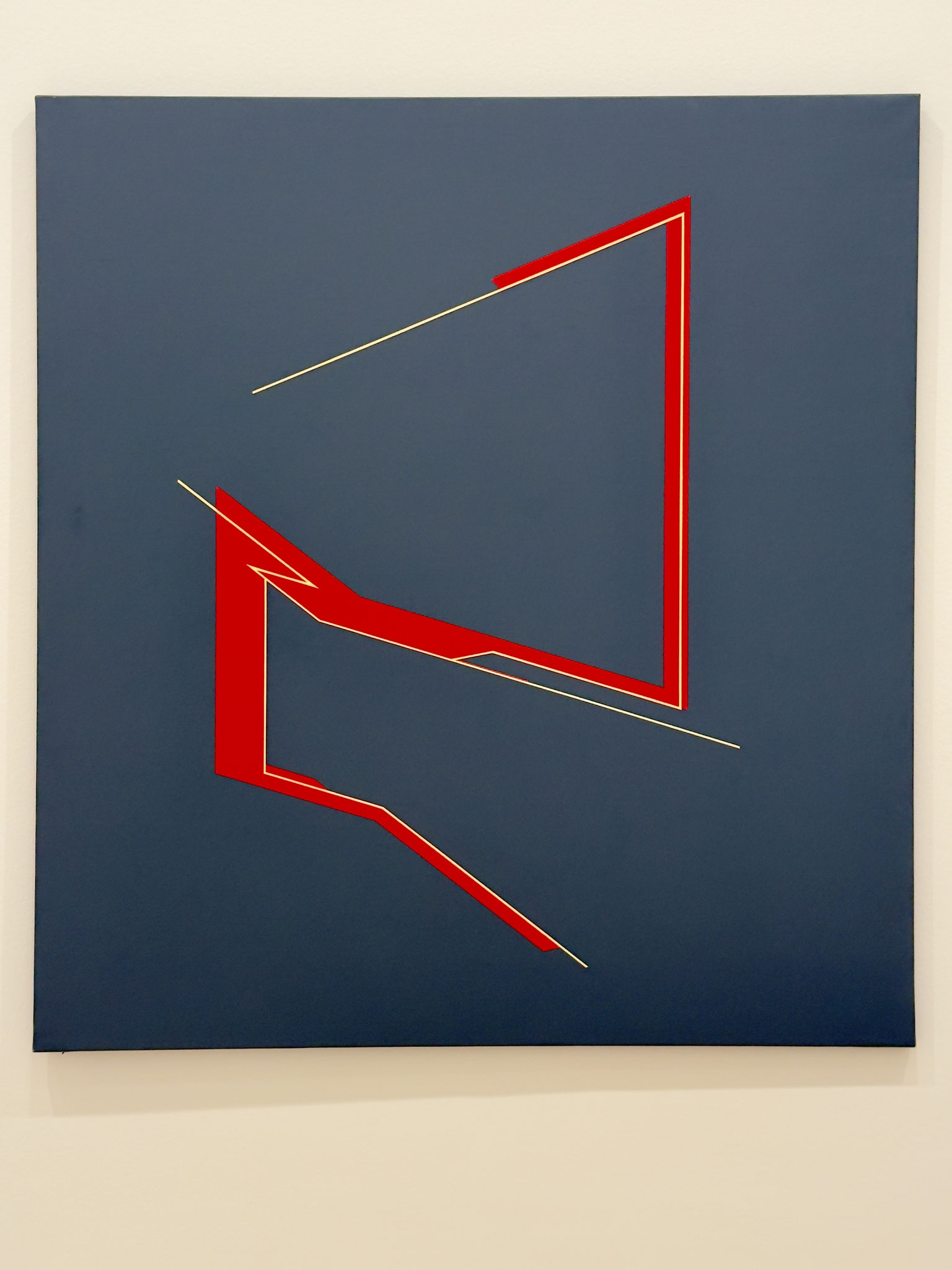
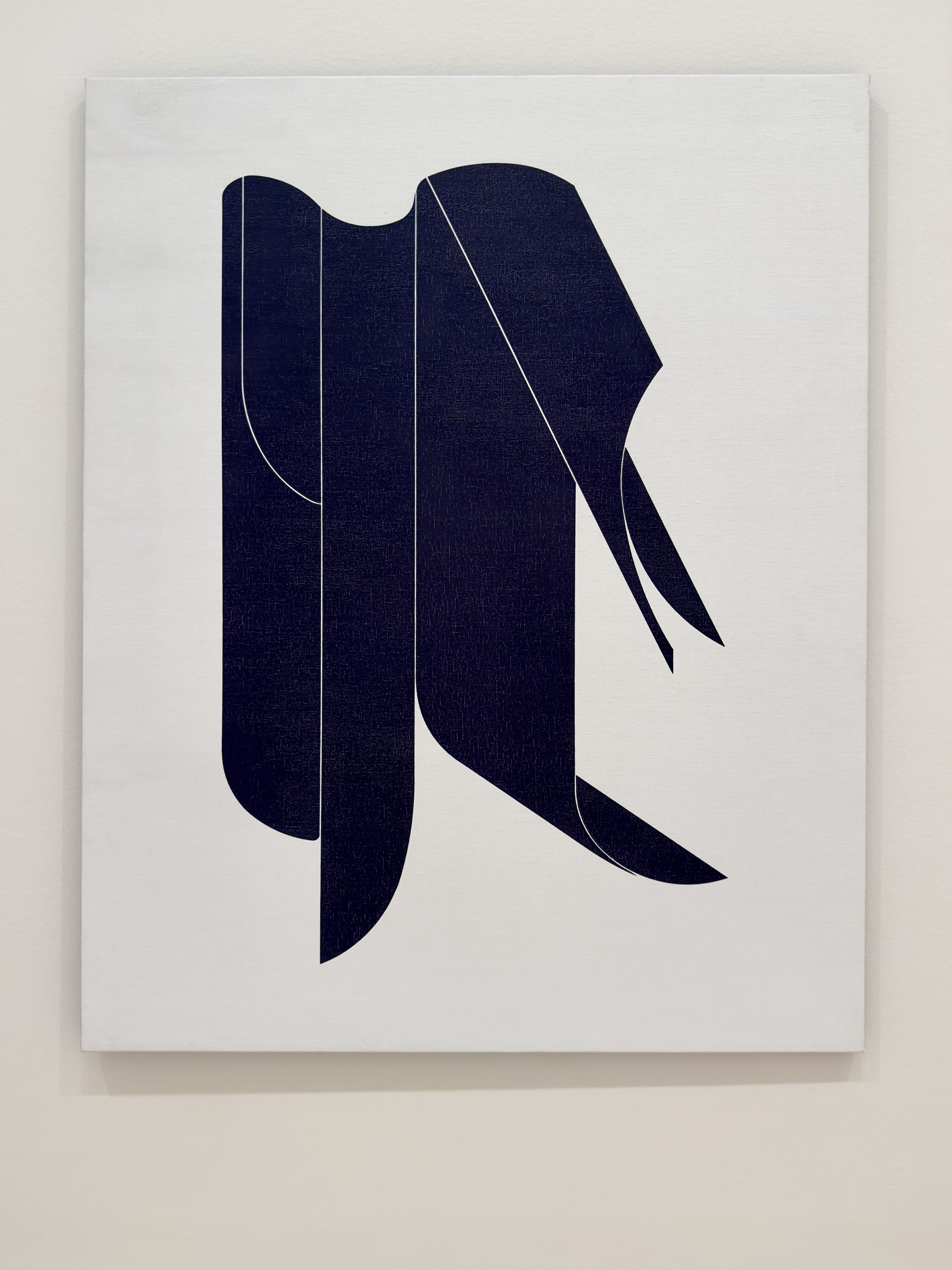
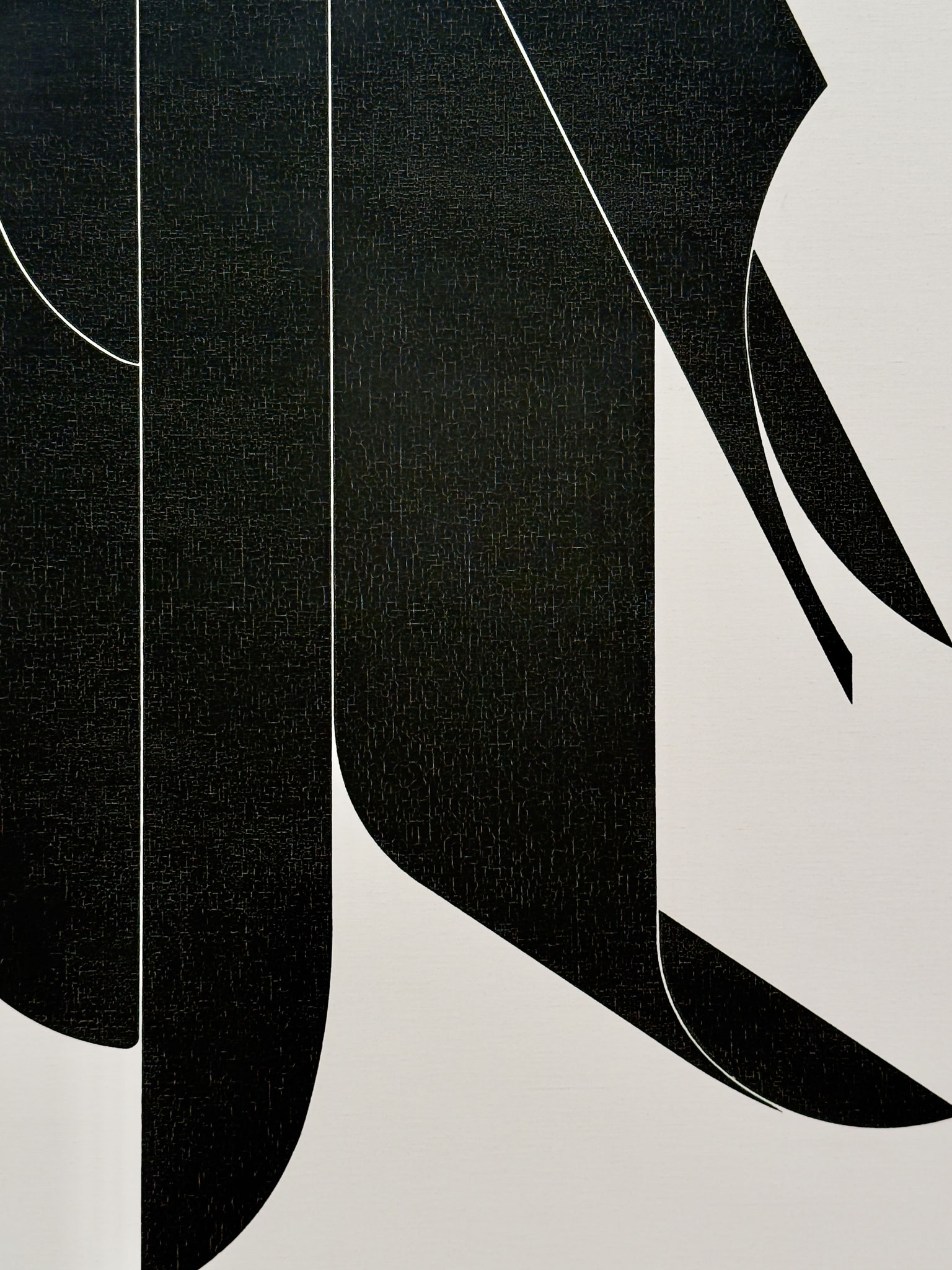
Sign I, 2003
Circino XXXVI, 2003
Circino XXXVII, 2003
all Pablo Palazuelo
A small trio of Palazuelo pieces—Sign I and two works from his Circino series—occupies one of the Guggenheim’s quieter corners. Palazuelo’s dark, interlocking forms feel architectural, as though they were blueprints for buildings no one ever constructed. Seen together, they feel less like individual paintings and more like a set of instructions—geometry as meditation, delivered in three variations. The shapes fold, pivot, and hover like architectural plans for buildings no one ever constructed. Seen together, they feel less like individual paintings and more like a set of instructions: geometry as meditation, delivered in three variations.


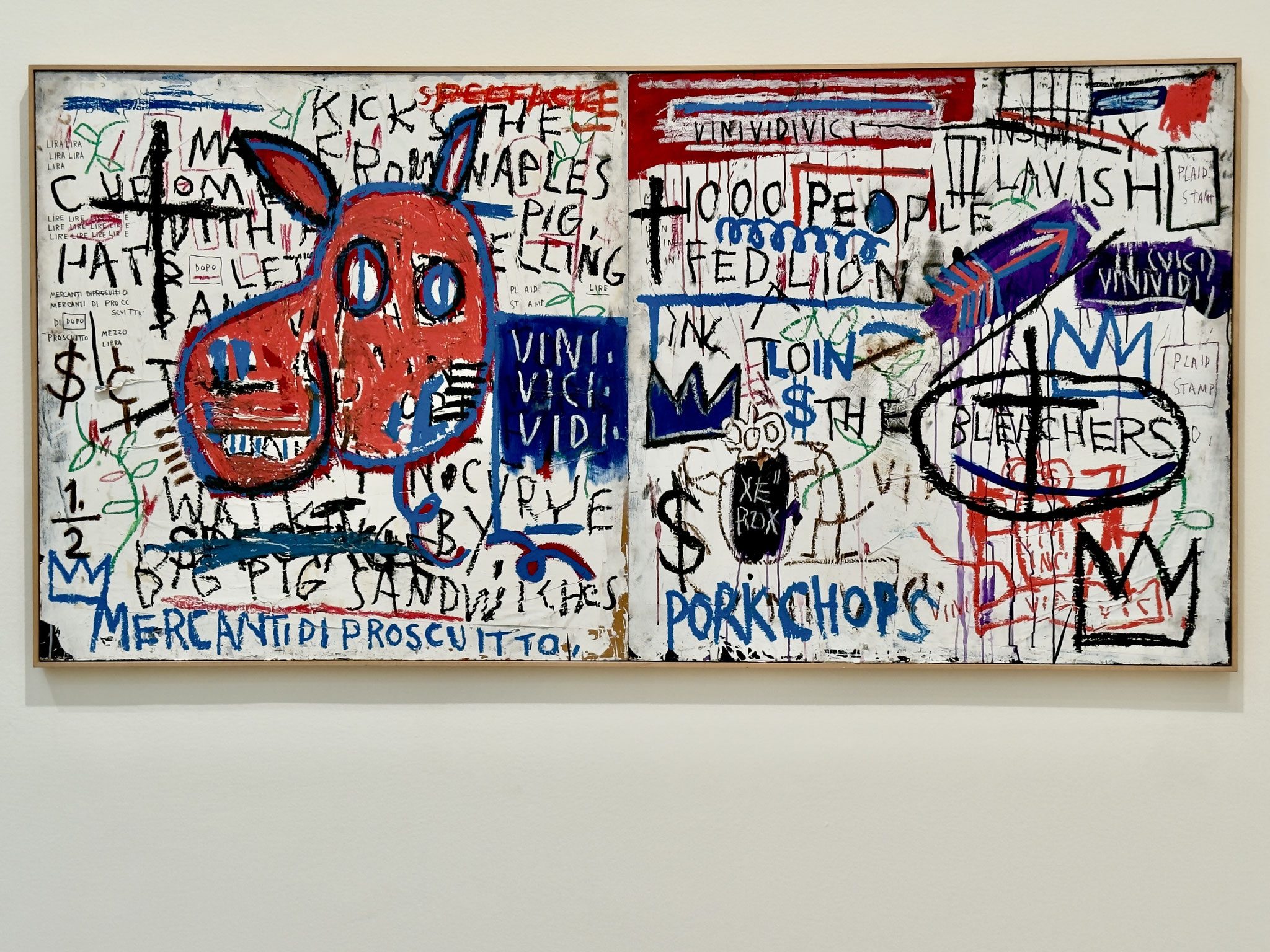
Man from Naples, 1982 – Jean-Michel Basquiat
Basquiat’s figure stands half-formed, surrounded by scribbled words, crowns, and fragments of anatomy. It’s part portrait, part X-ray, part city wall. The paint feels urgent, as if he barely had time to get it all down. You don’t so much read the canvas as eavesdrop on it, mid-rant.
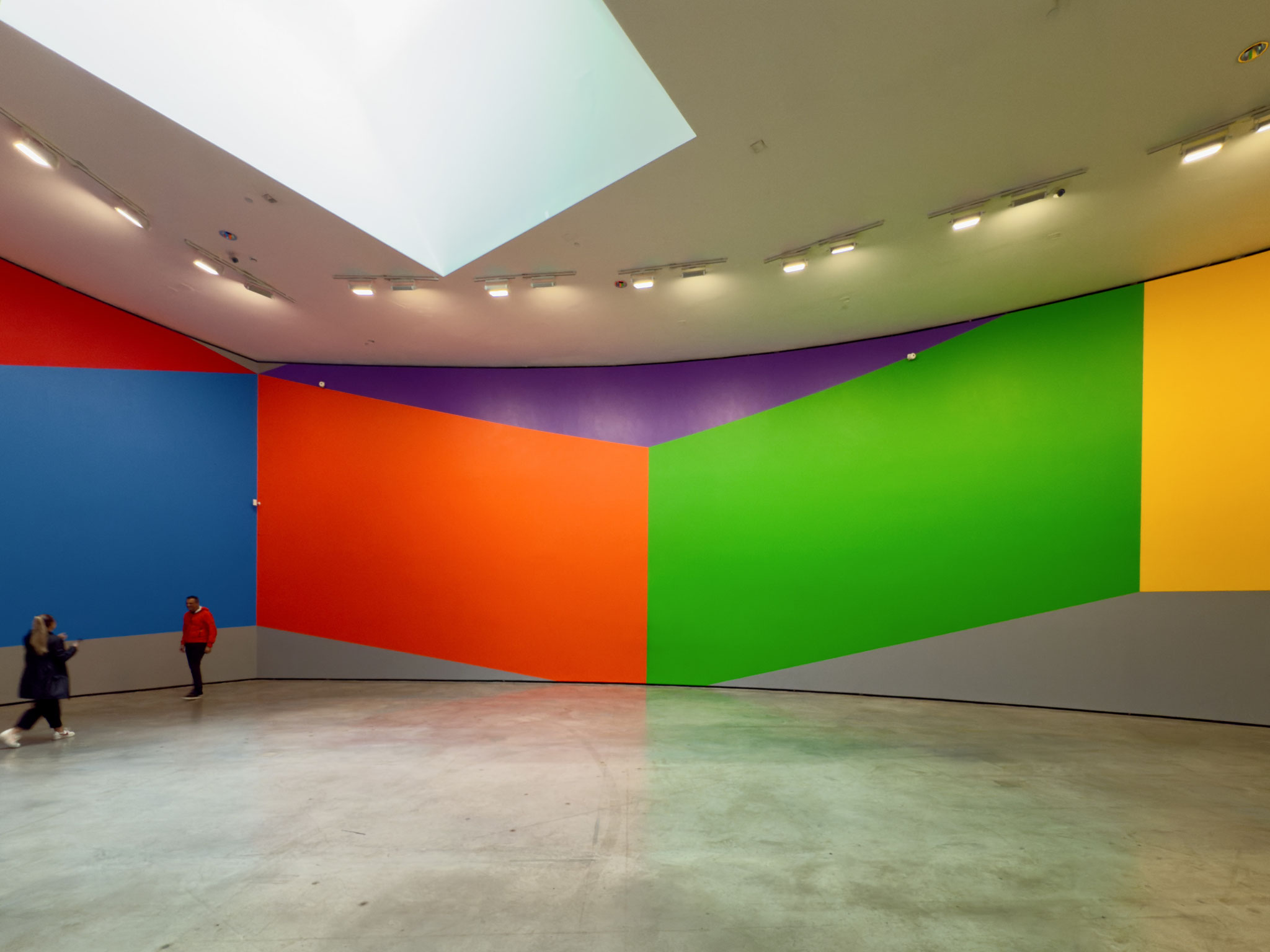
Wall Drawing #831 (Geometric Forms), 1997 – Sol LeWitt
Bands of color and simple shapes march across the wall, executed by museum assistants following LeWitt’s written instructions. The result is both wholly systematic and oddly playful. It’s a reminder that for LeWitt, the idea was the artwork—the wall itself just one possible performance of the score.
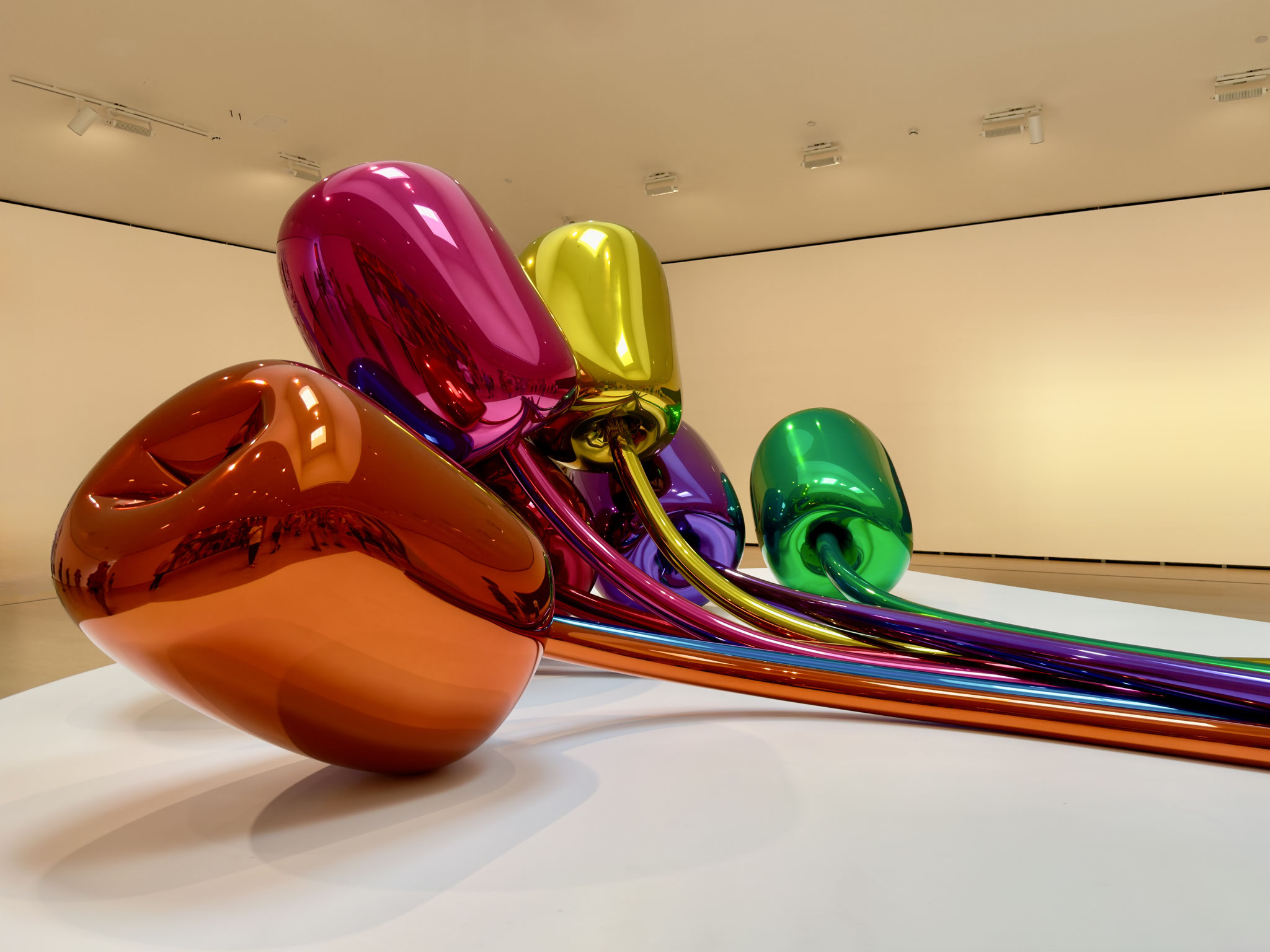
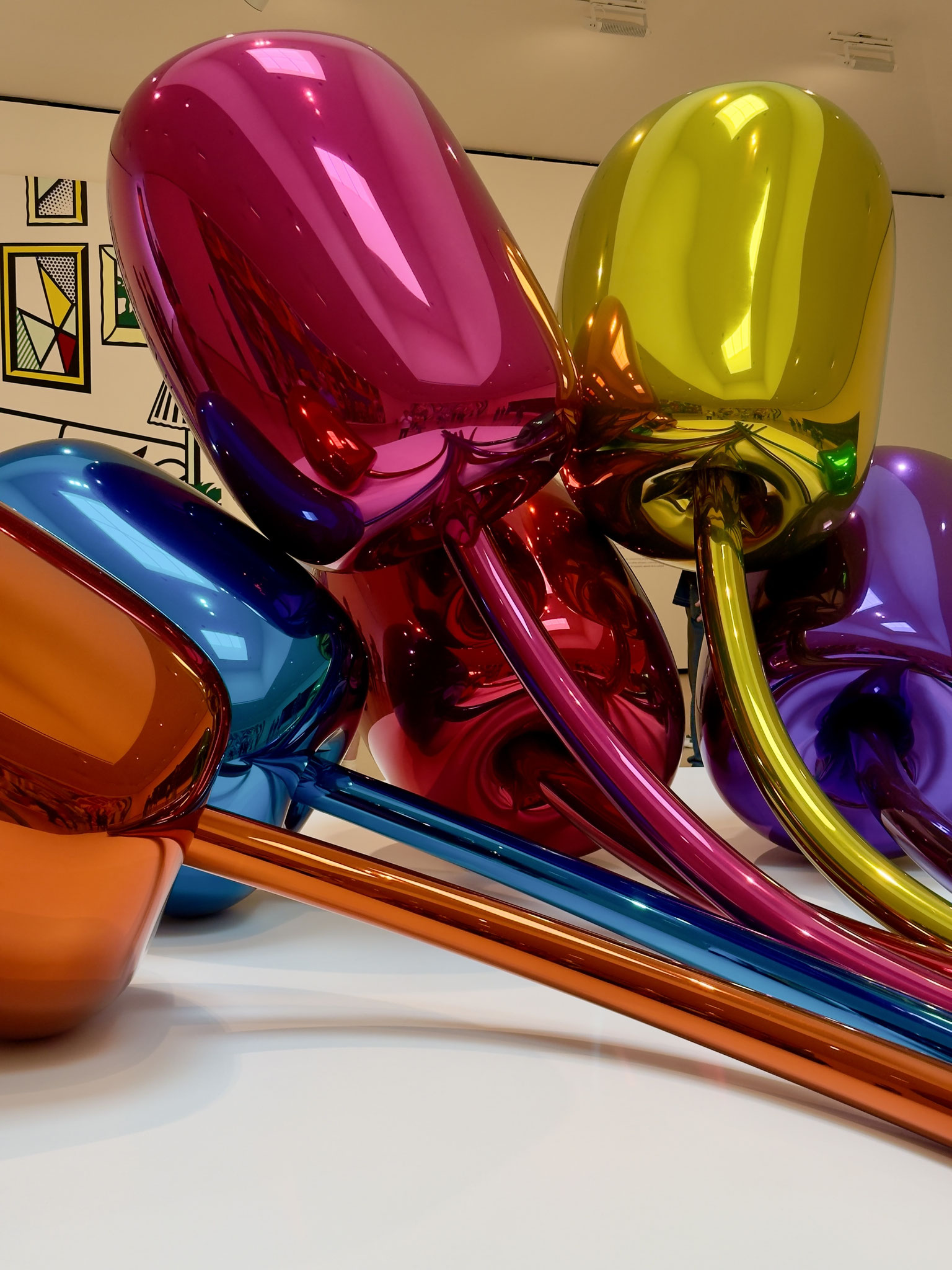
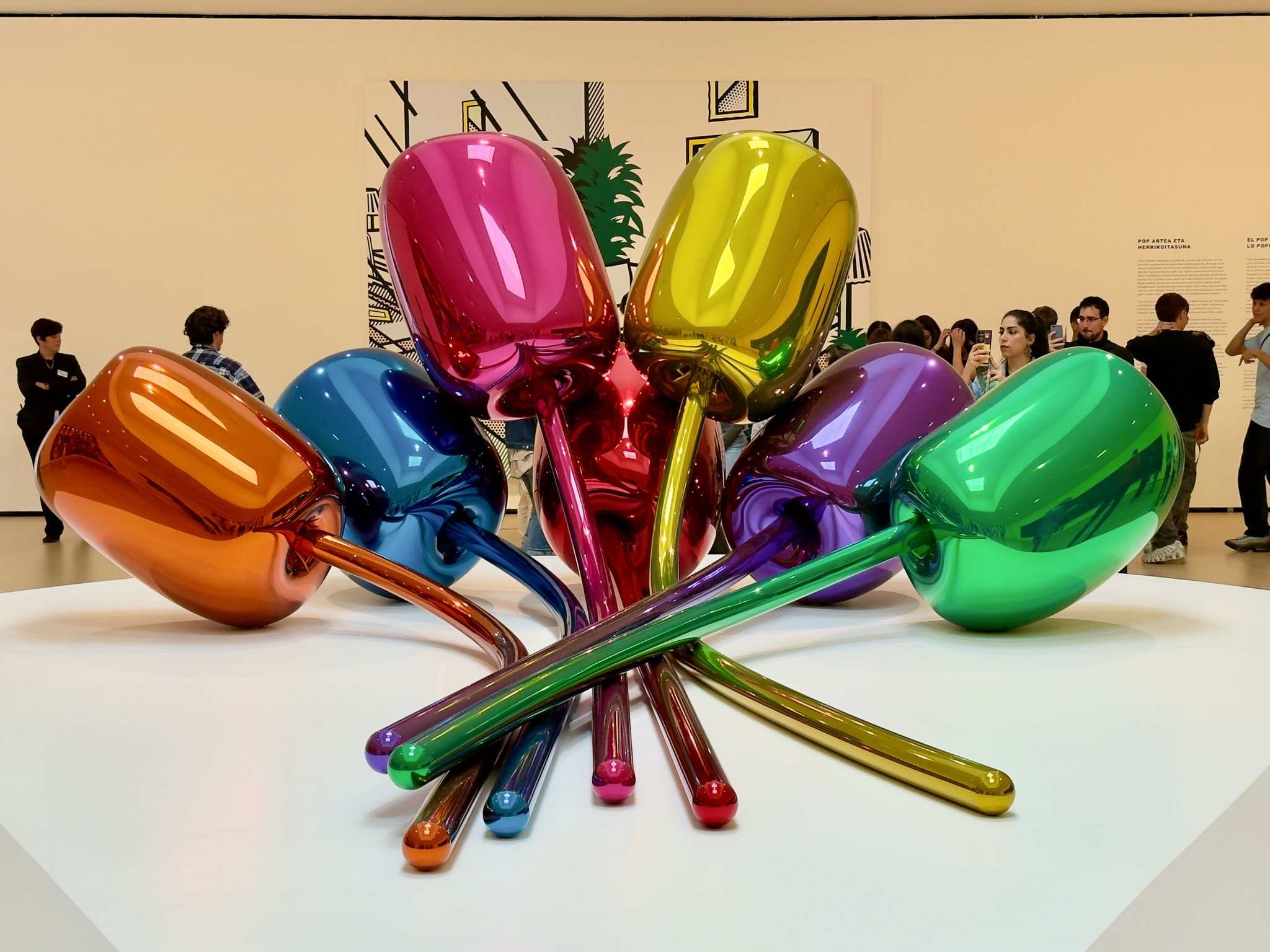
Tulips, 1995–2004 – Jeff Koons
A giant bouquet of tulips, made of mirror-polished stainless steel and treated with a transparent color coating, sits like a souvenir from a very wealthy florist. The candy-bright colors and mirror finish are shamelessly cheerful—you can spot your own distorted reflection in every petal. It’s kitsch weaponized, deliberately too bright, too big, too much.
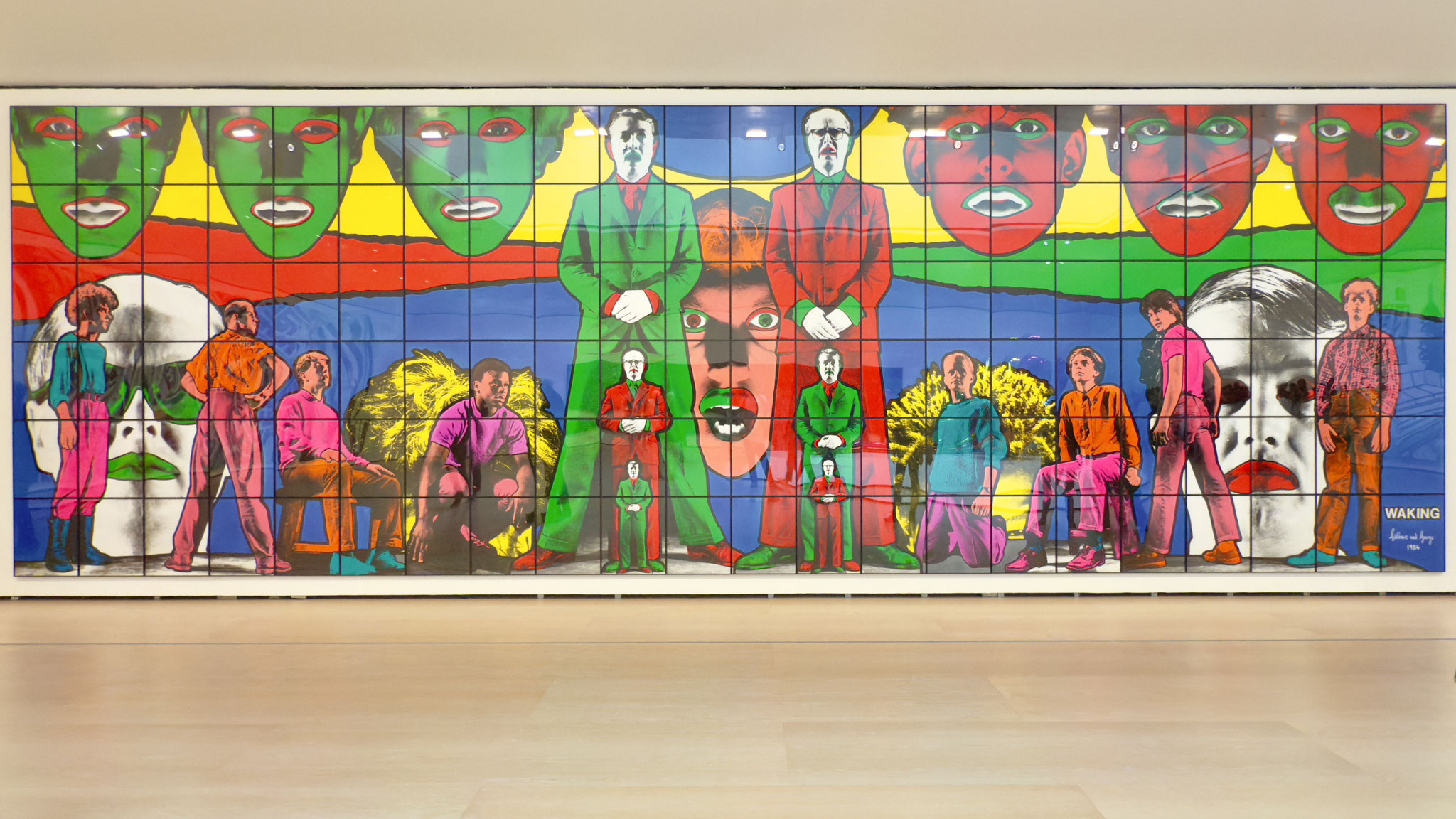
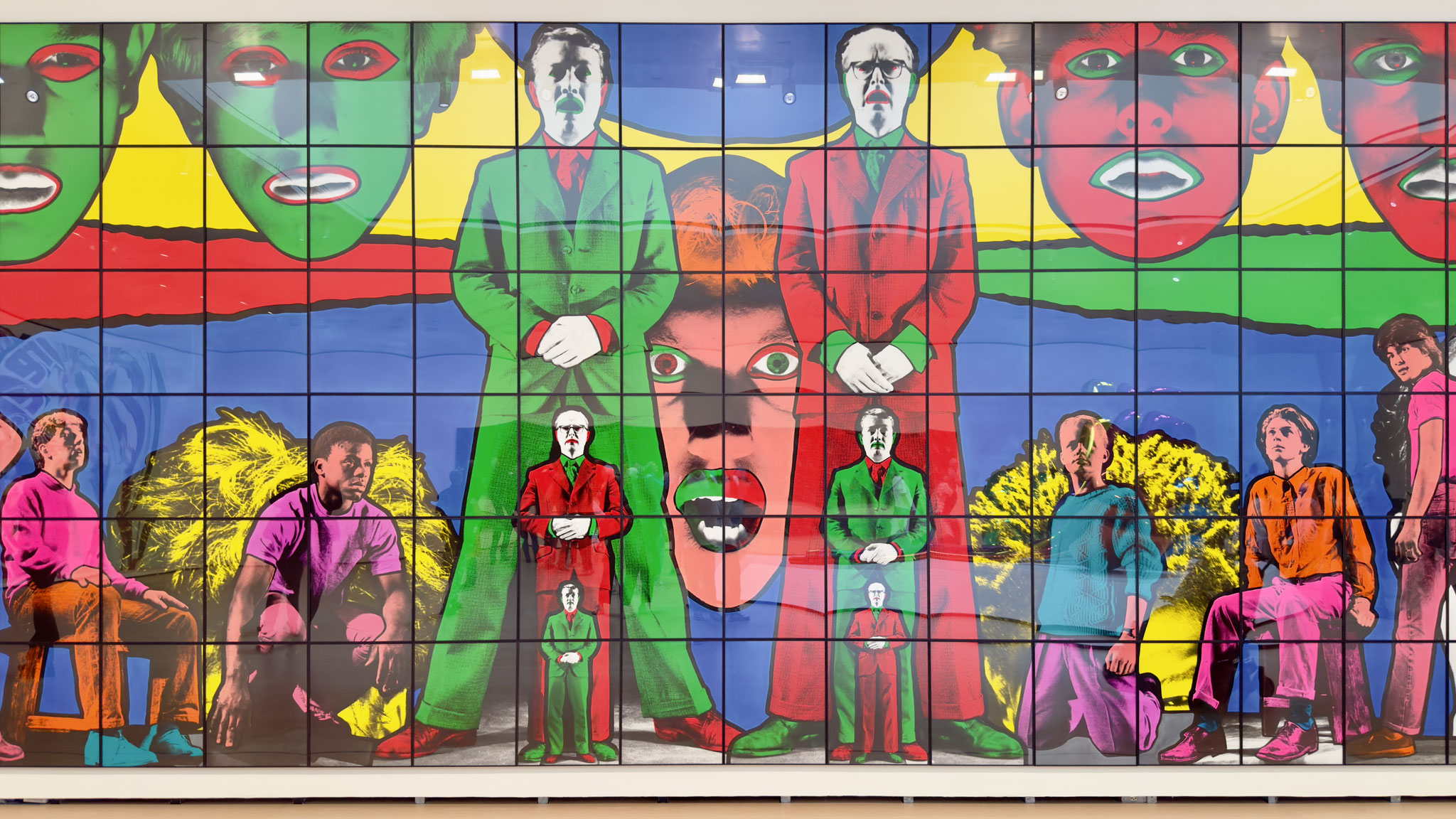
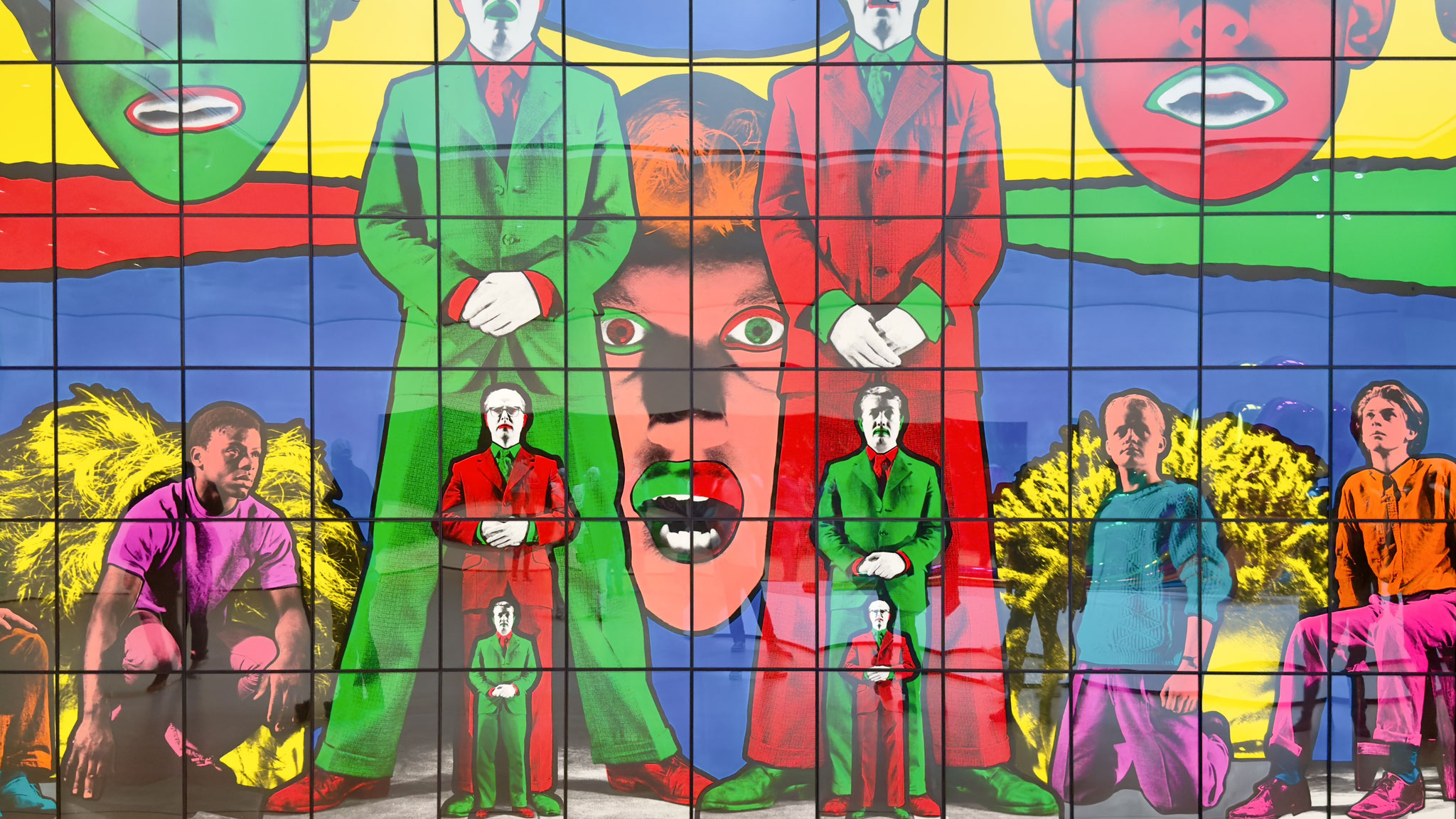
Waking, 1984 – Gilbert & George
This large photo grid captures the artists in their usual suits, multiplied and color-shifted into something between stained glass and a newspaper crime spread. Everyday urban life becomes ritual—repeated faces, repeated gestures, a city that never quite goes to sleep. It's devotional imagery for a secular age.
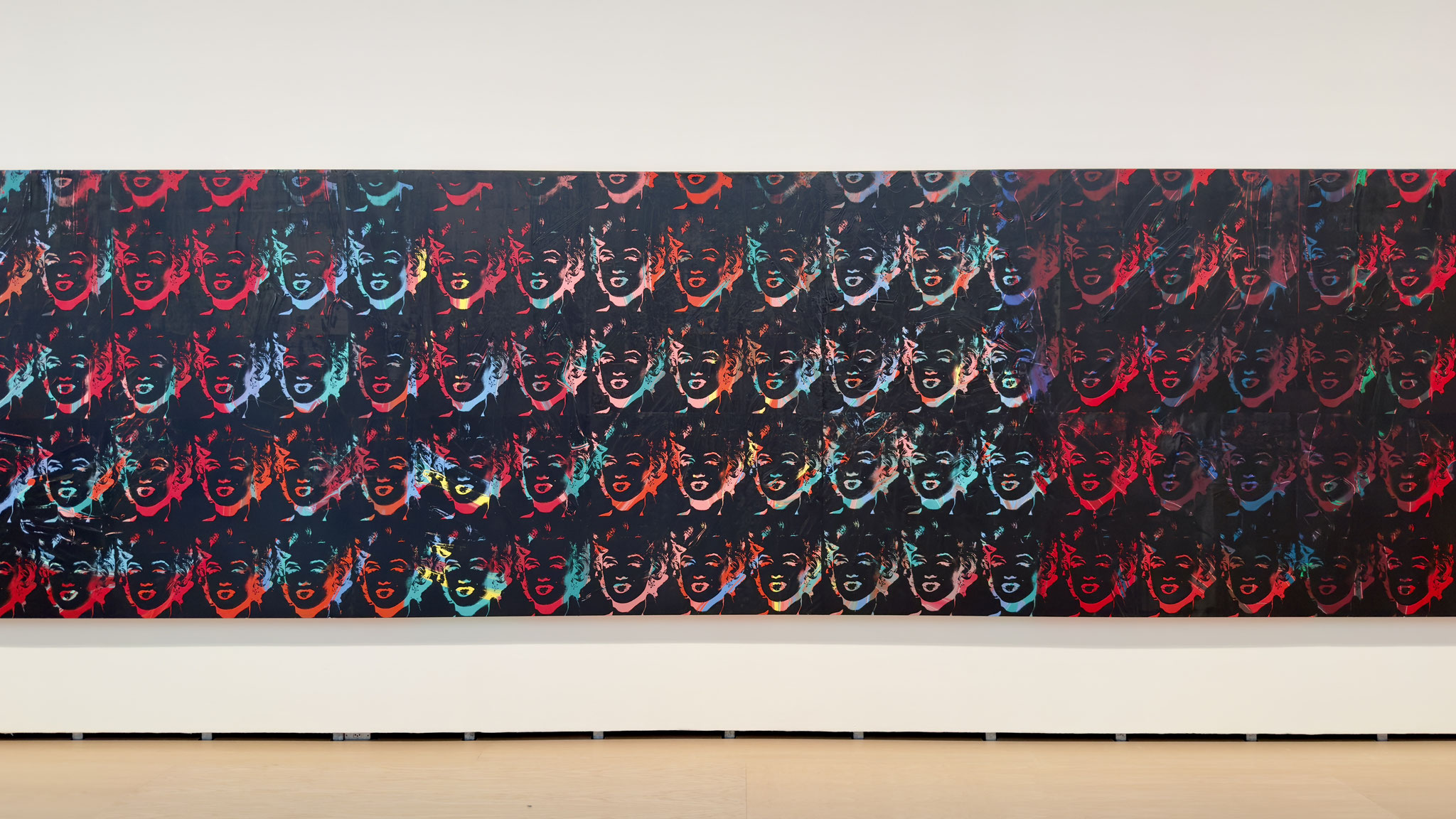
One Hundred and Fifty Multicolored Marilyns, 1979 – Andy Warhol
Marilyn’s face repeats across the canvas in a regimented grid, the colors drifting off-register in Warhol’s trademark way. Seen from a distance, it’s pure glamour. Up close, the misalignments and smudges show the machinery underneath. Stardom, as Warhol keeps reminding us, is just another industrial process.
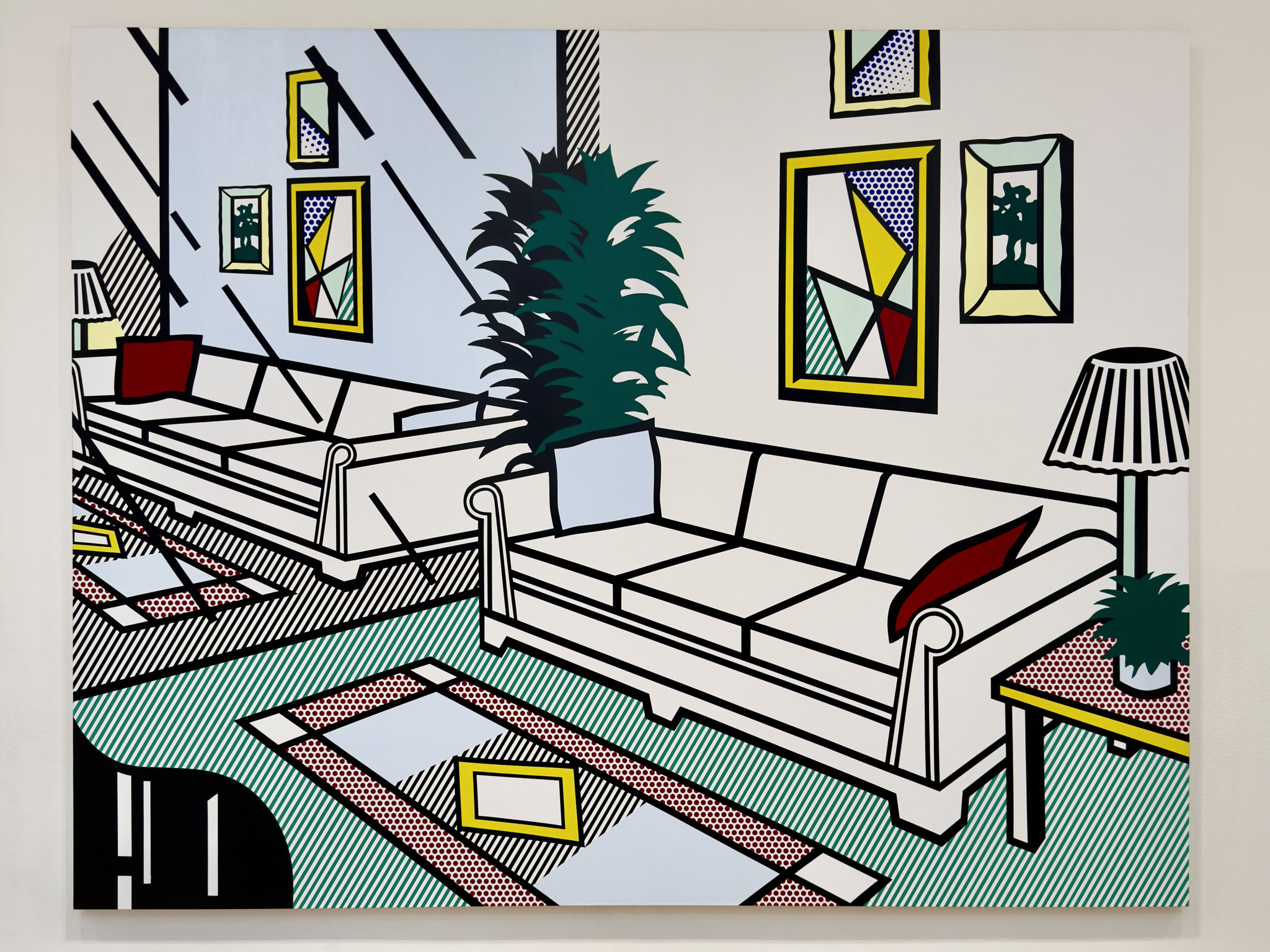
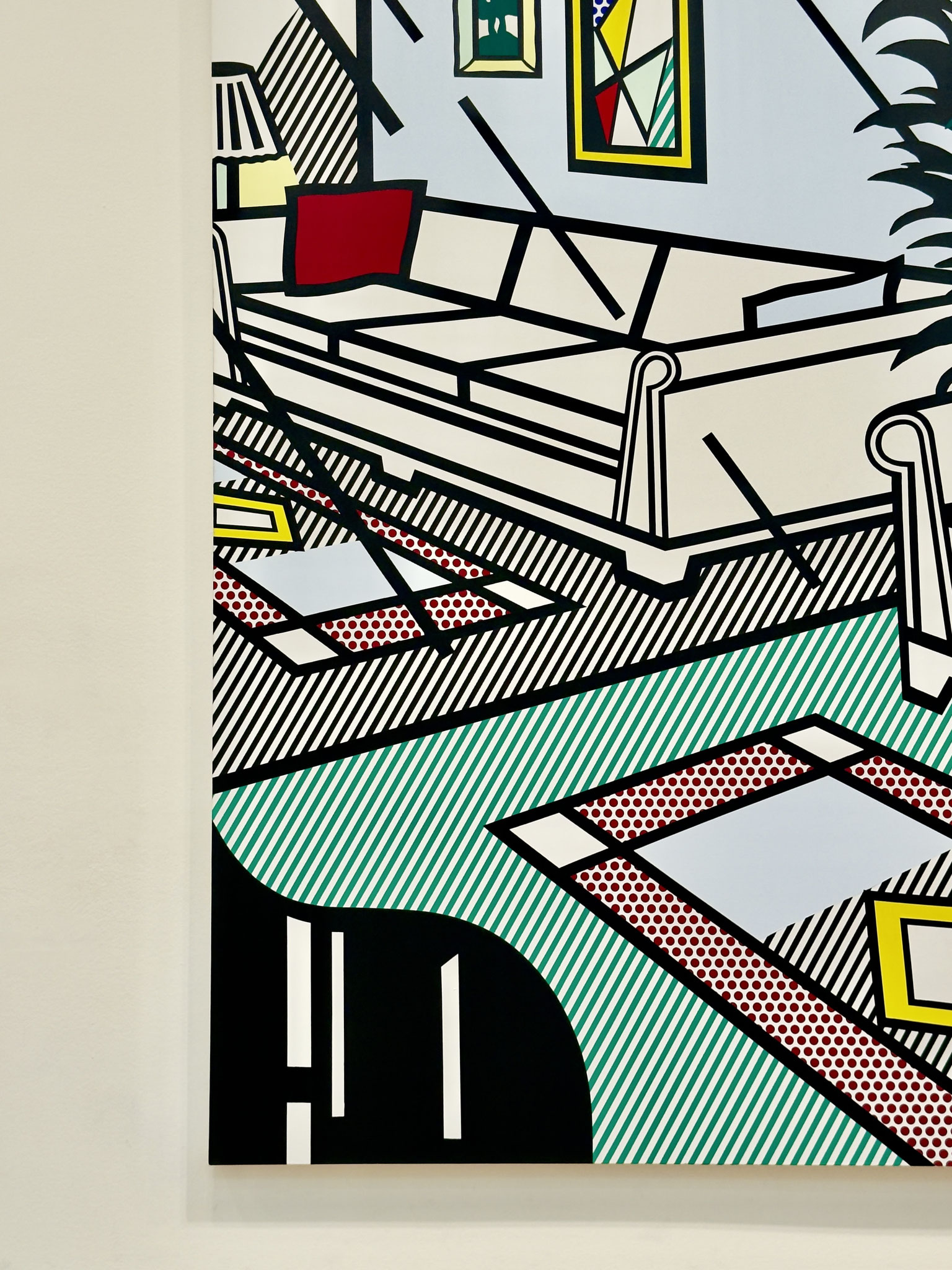
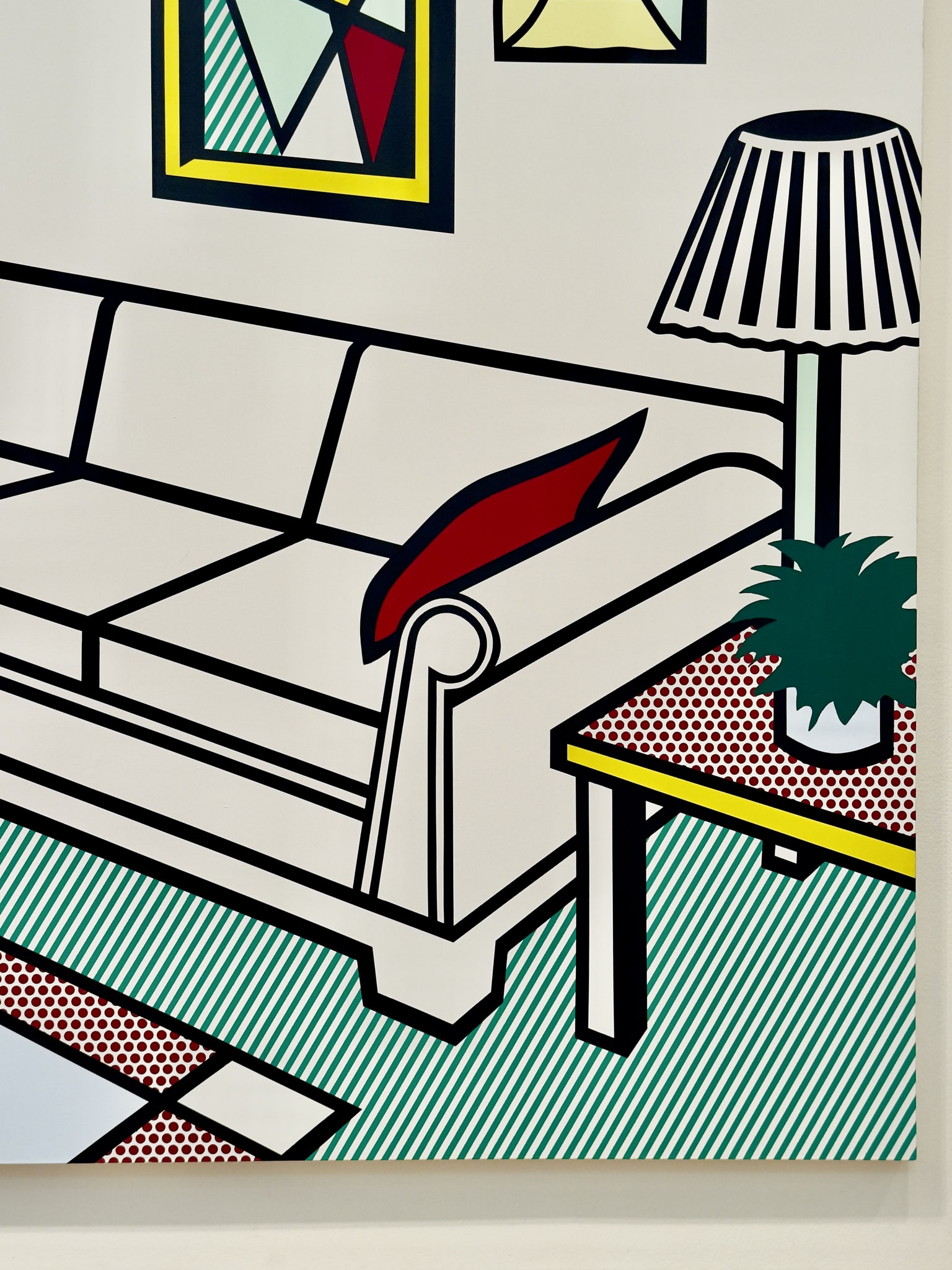
Interior with Mirrored Wall, 1991 – Roy Lichtenstein
A pristine living room unfolds in flat, comic-book lines—sofas, rugs, framed abstractions—then doubles itself in the mirrored wall on the left. The reflection opens the space while making it feel even less real, like a catalog shot in cartoon form. It's domestic comfort with the volume turned up and the humanity dialed down.
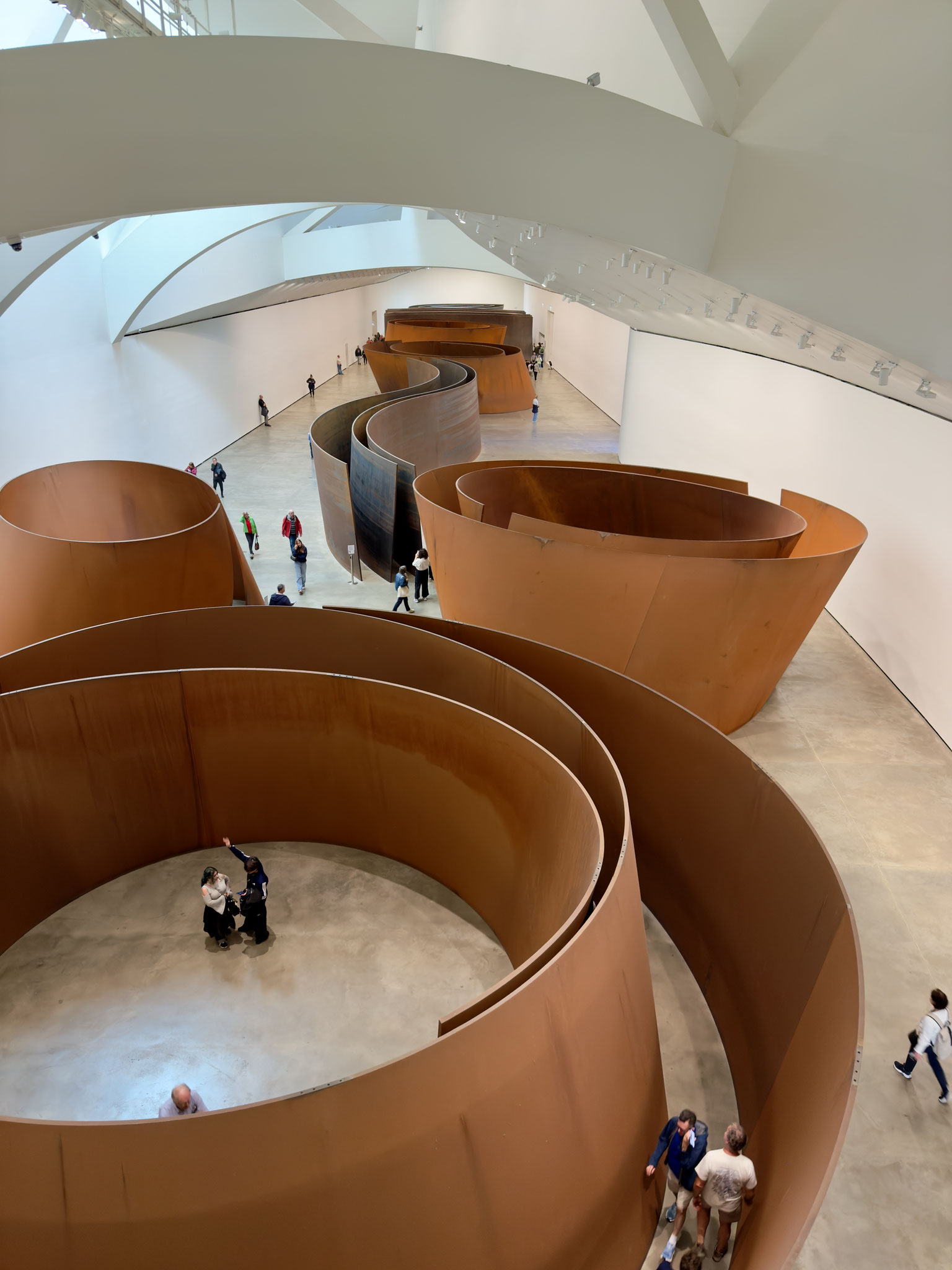

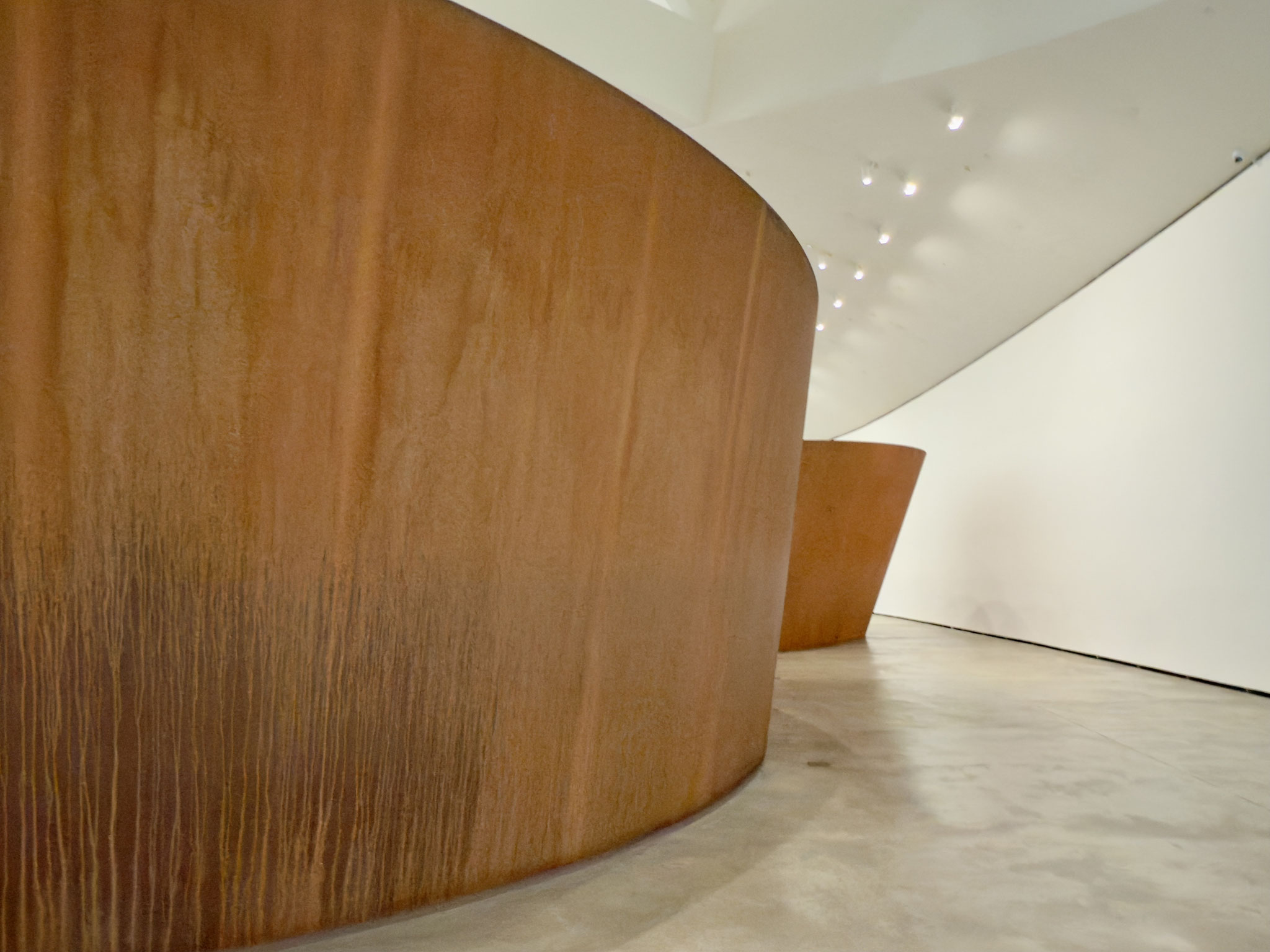
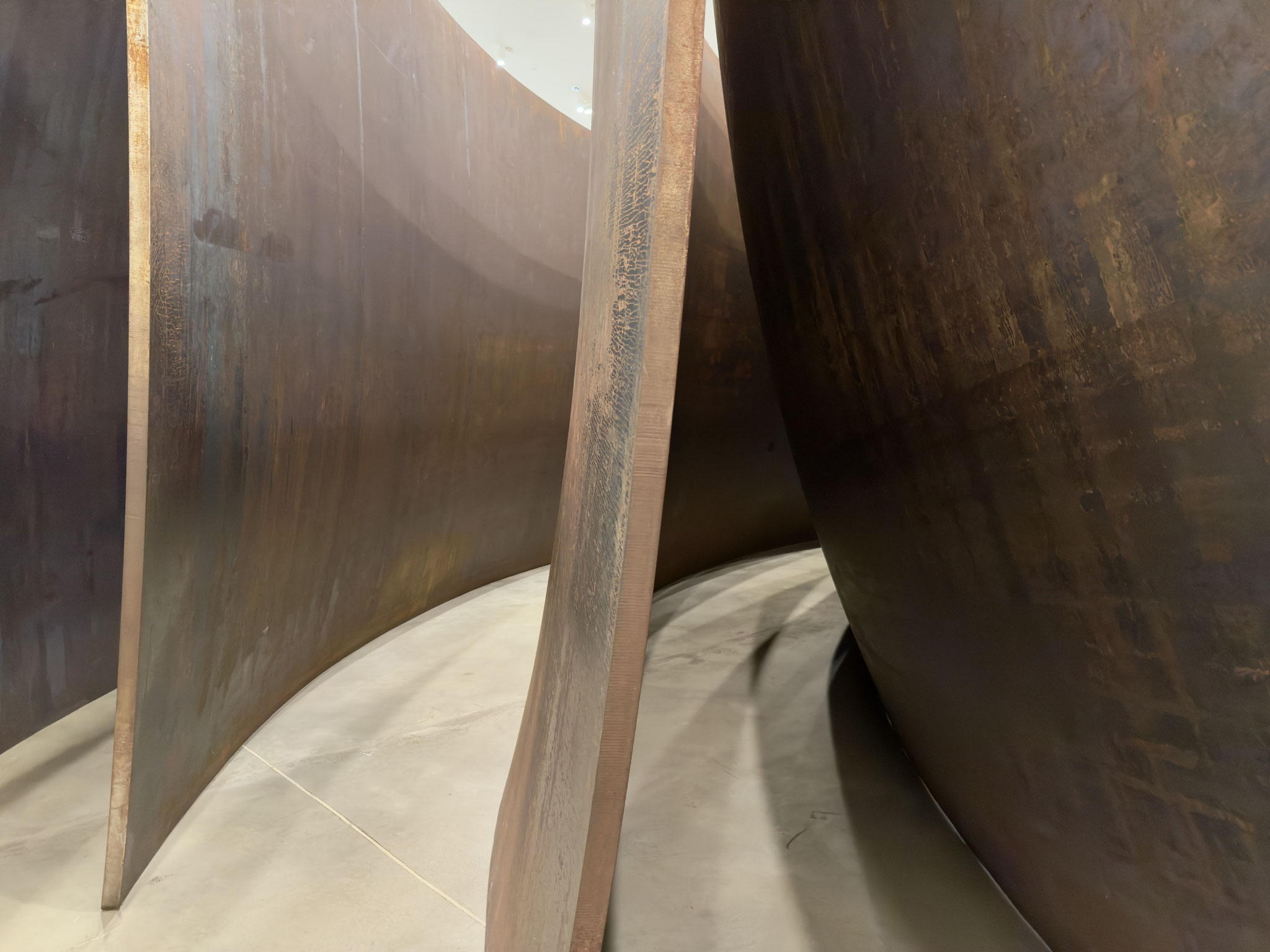
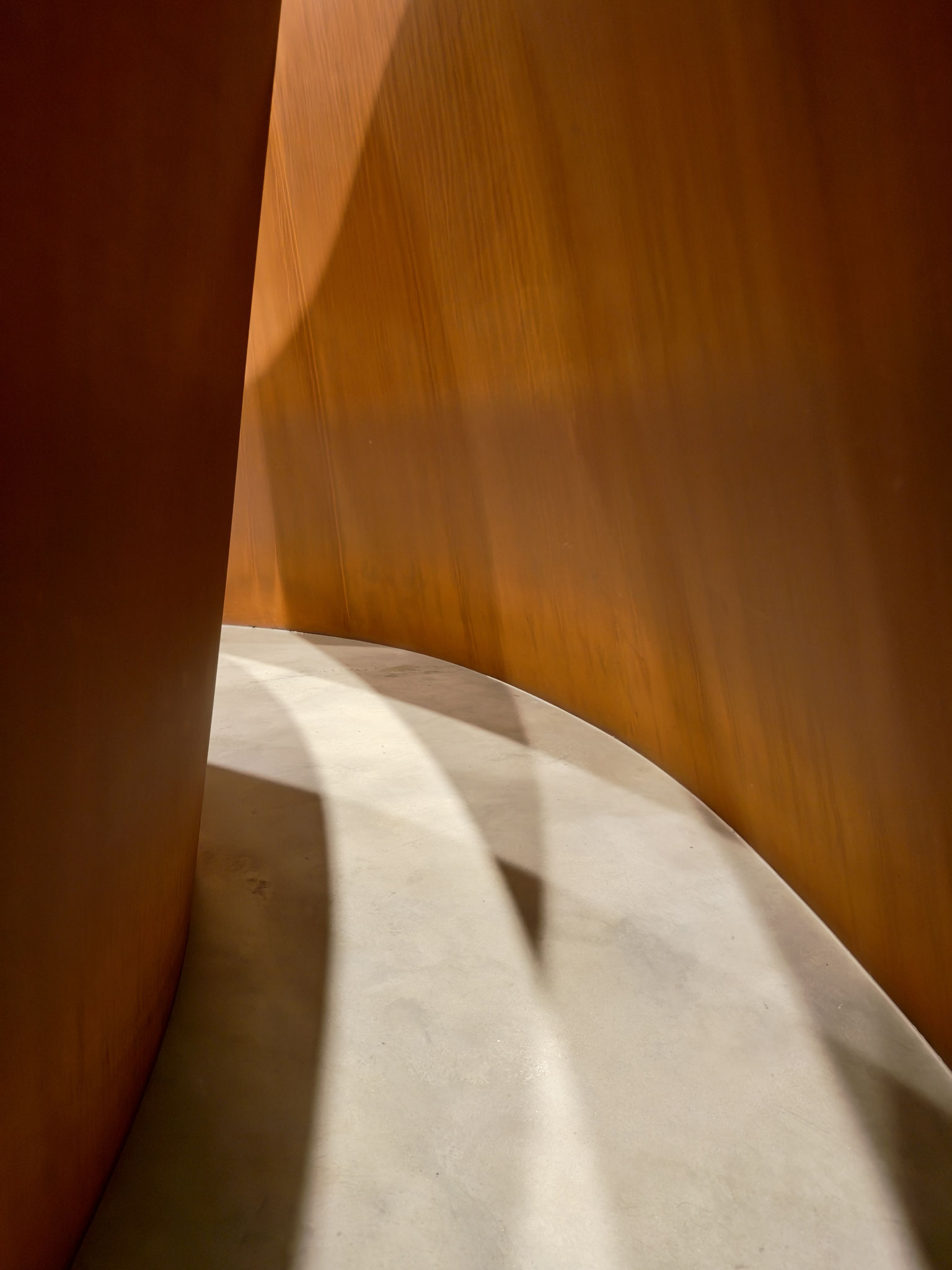
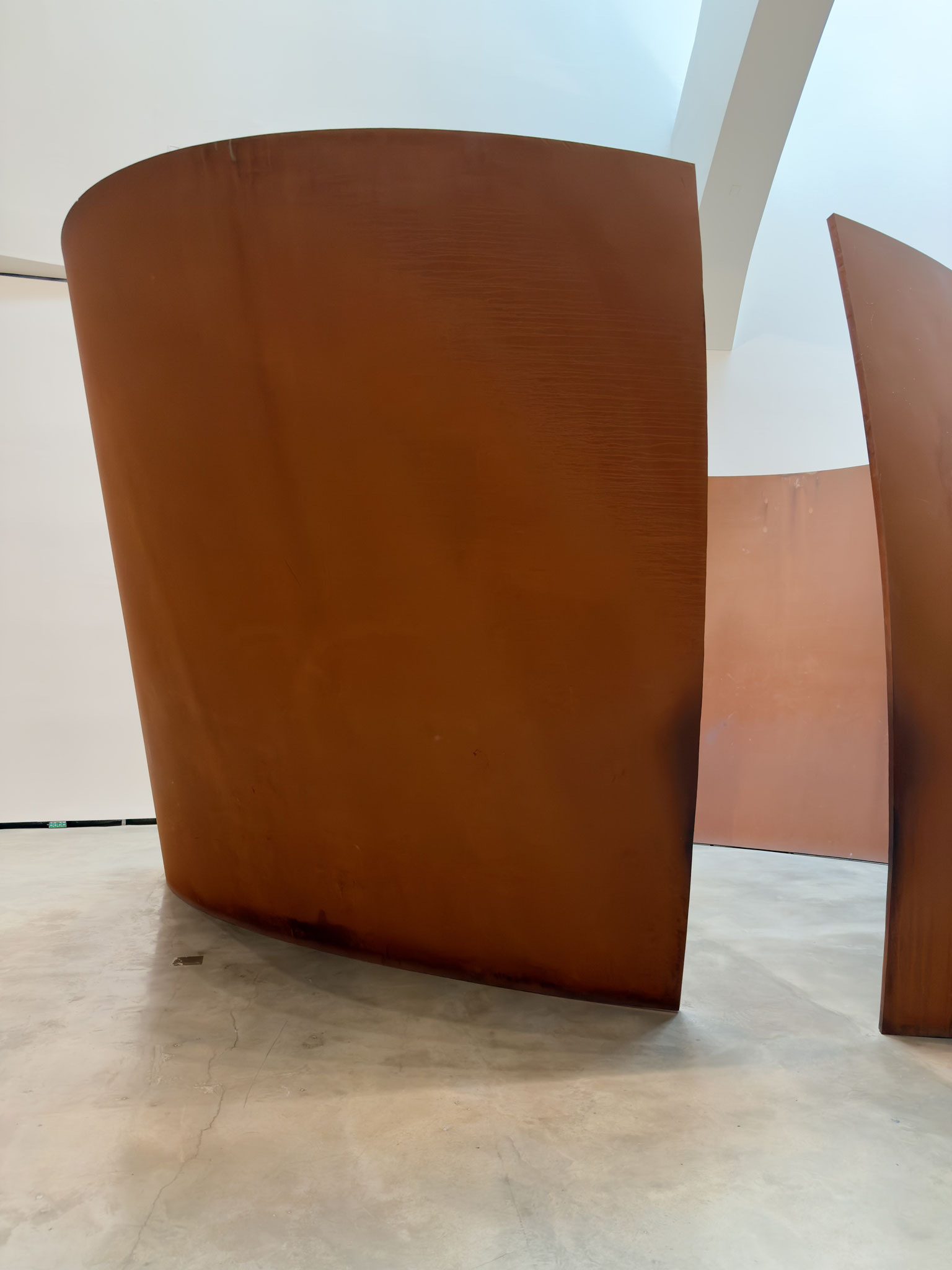
The Matter of Time, 1994–2005 – Richard Serra
Serra’s towering steel spirals fill the museum’s largest gallery like a maze built by someone who can’t trust right angles. Walking inside them, you feel the floor subtly tilt, the walls curve in, the air shift. It's sculpture as choreography—your body becomes part of the piece, whether you agreed to participate or not.
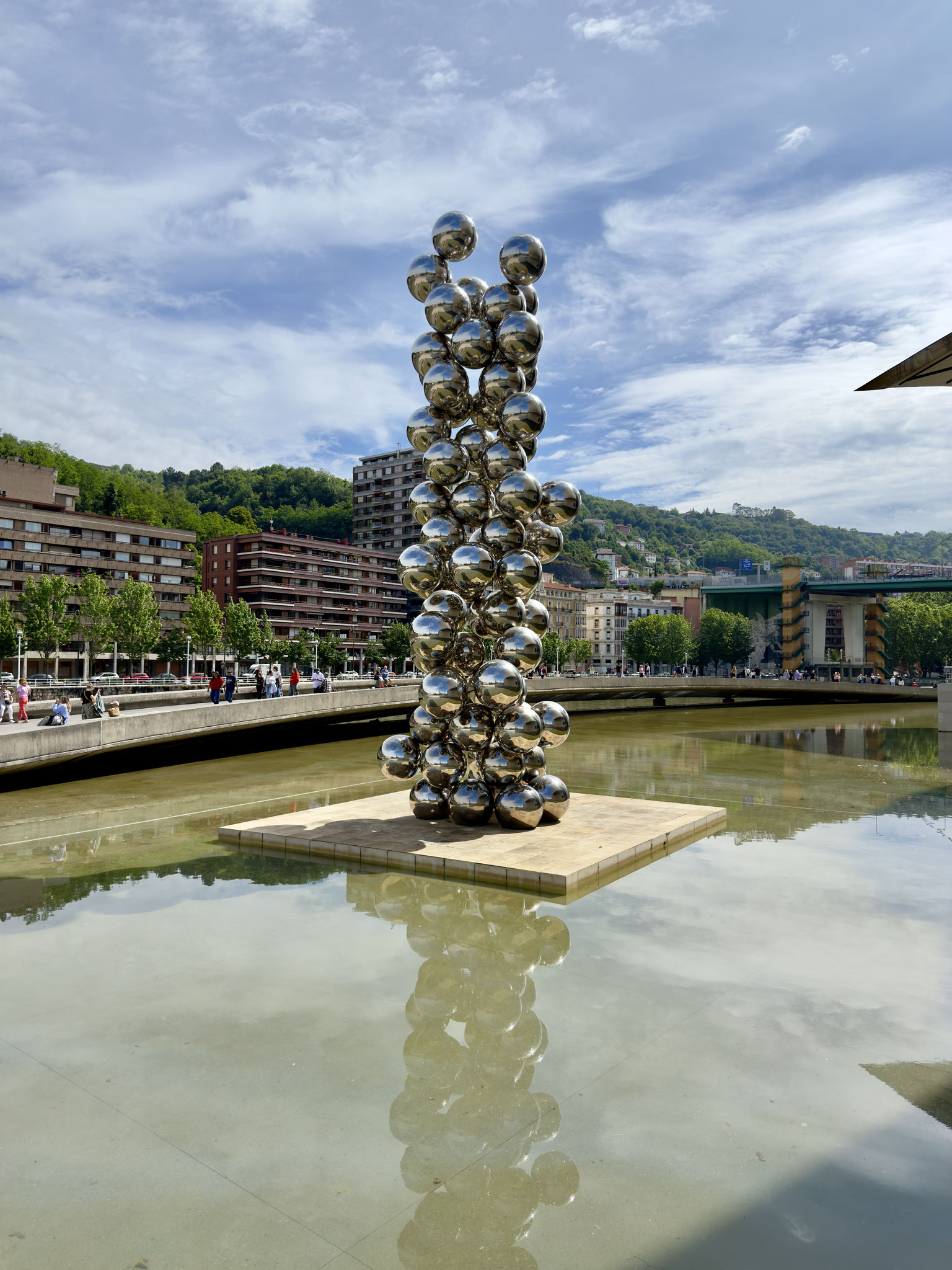
Tall Tree and the Eye, 2009 – Anish Kapoor
Outside, Kapoor’s column of mirrored spheres climbs skyward, pulling the Guggenheim’s titanium skin into a cascade of distorted reflections. The sculpture reads differently from every angle—sometimes a totem, sometimes a DNA helix, sometimes a playful stack of chrome bubbles someone forgot to tether.


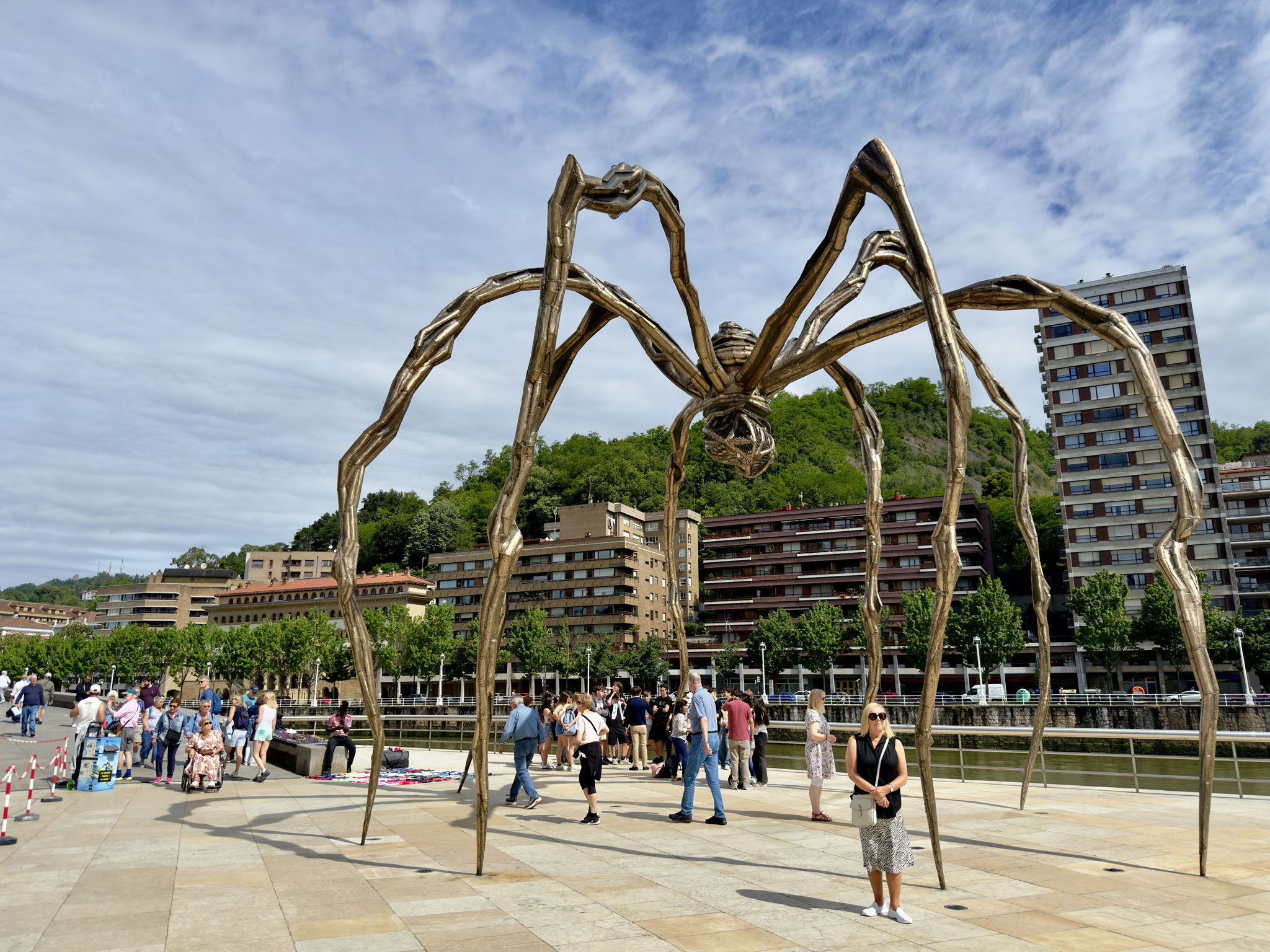
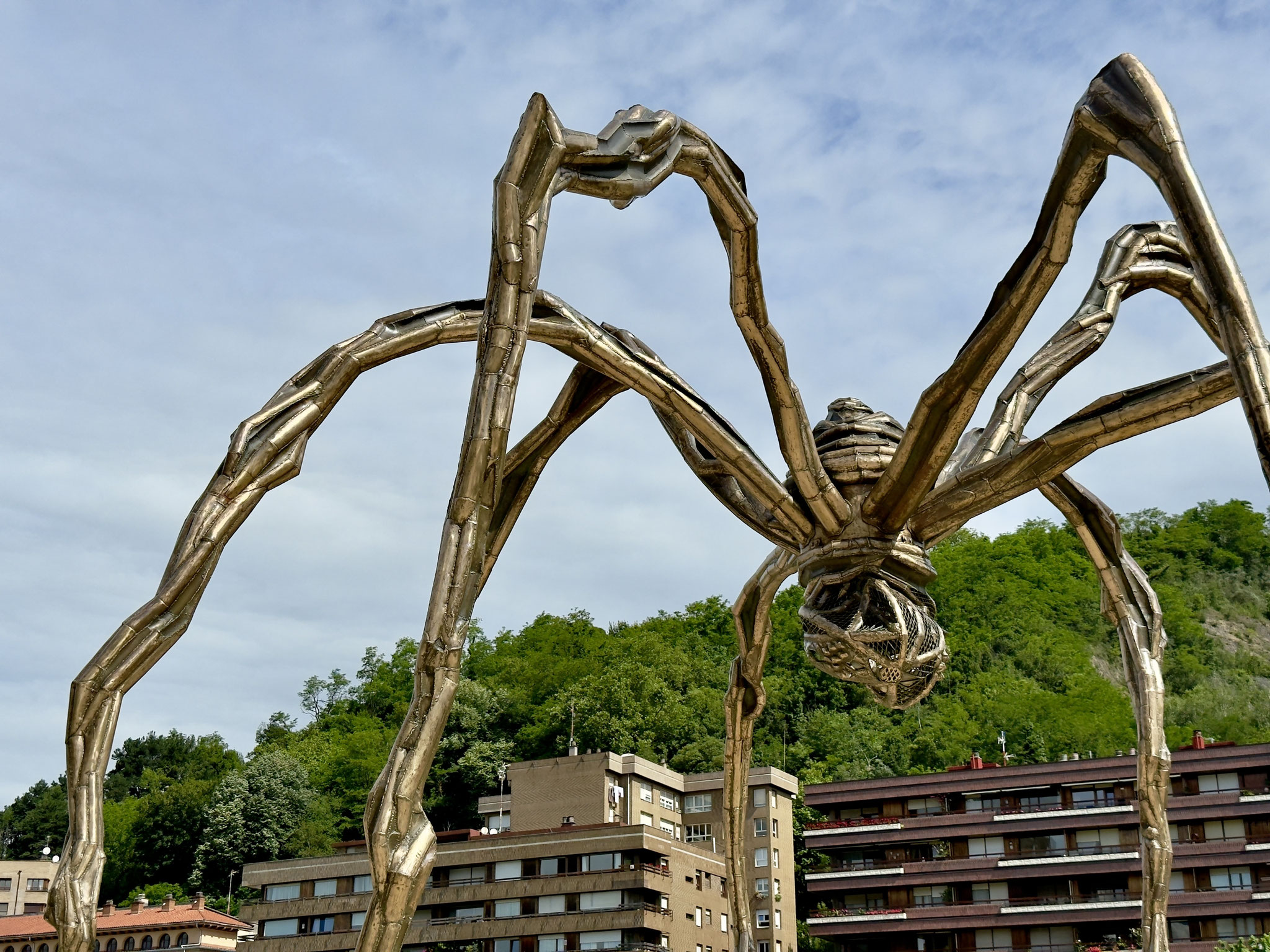
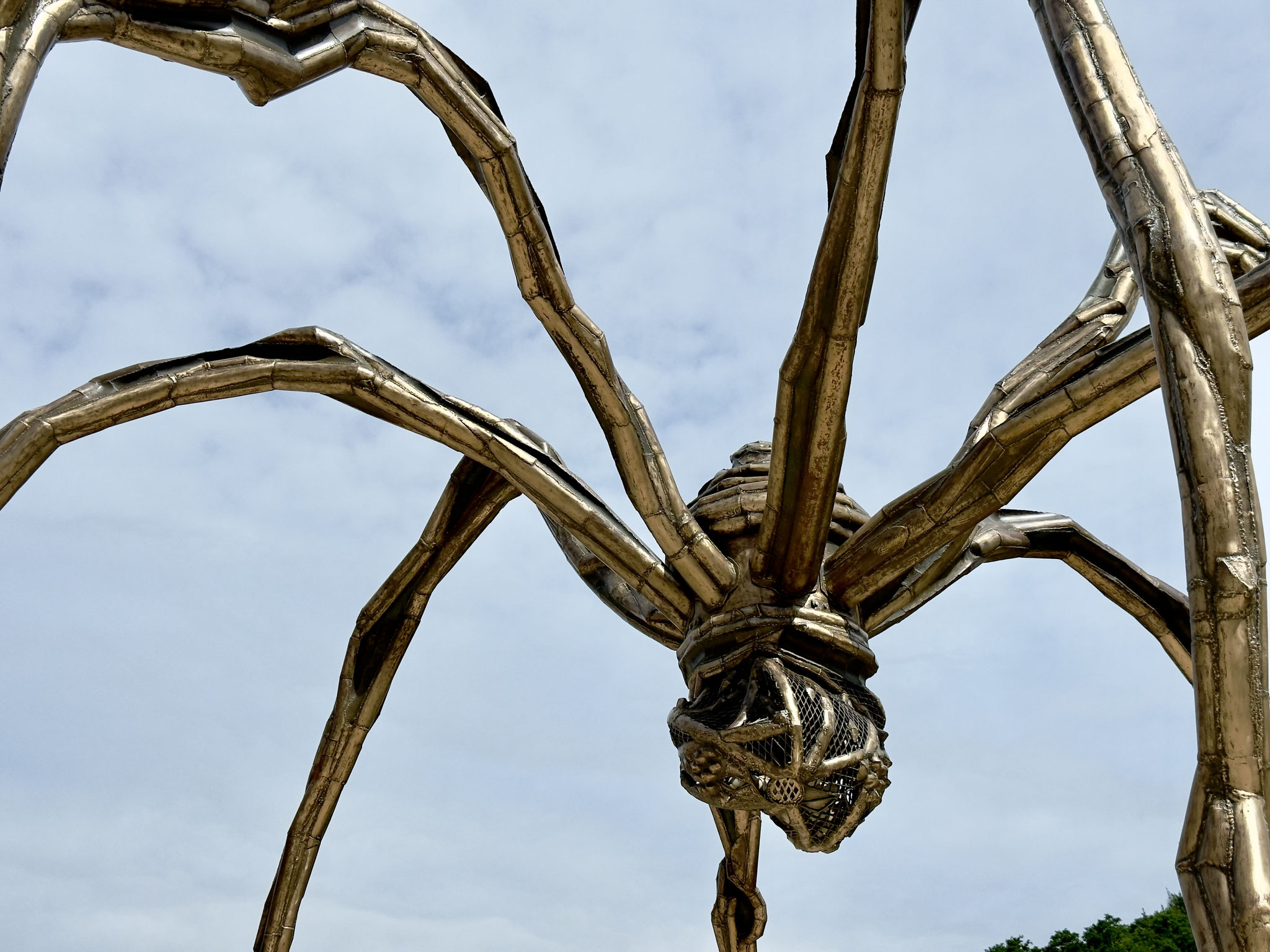
Maman, 1999 – Louise Bourgeois
Bourgeois’ towering spider is all legs and vigilance, striding across the riverside terrace as if checking for cracks in Gehry’s shingles. Up close, she’s far from menacing—her bronze belly full of marble eggs feels protective, almost tender. From beneath her web of legs, the museum looks different—smaller, softer, like she’s appointed herself its official chaperone.
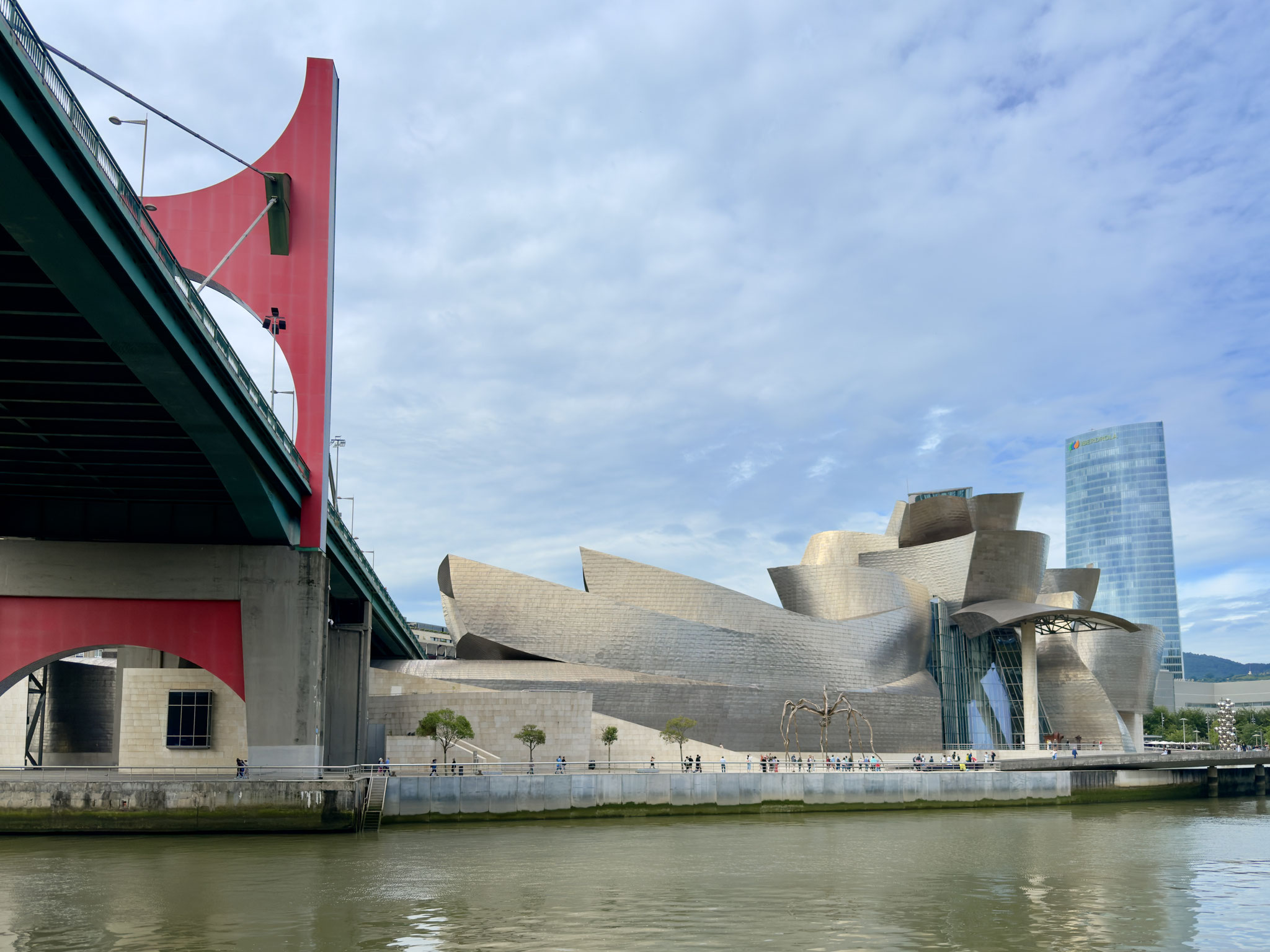
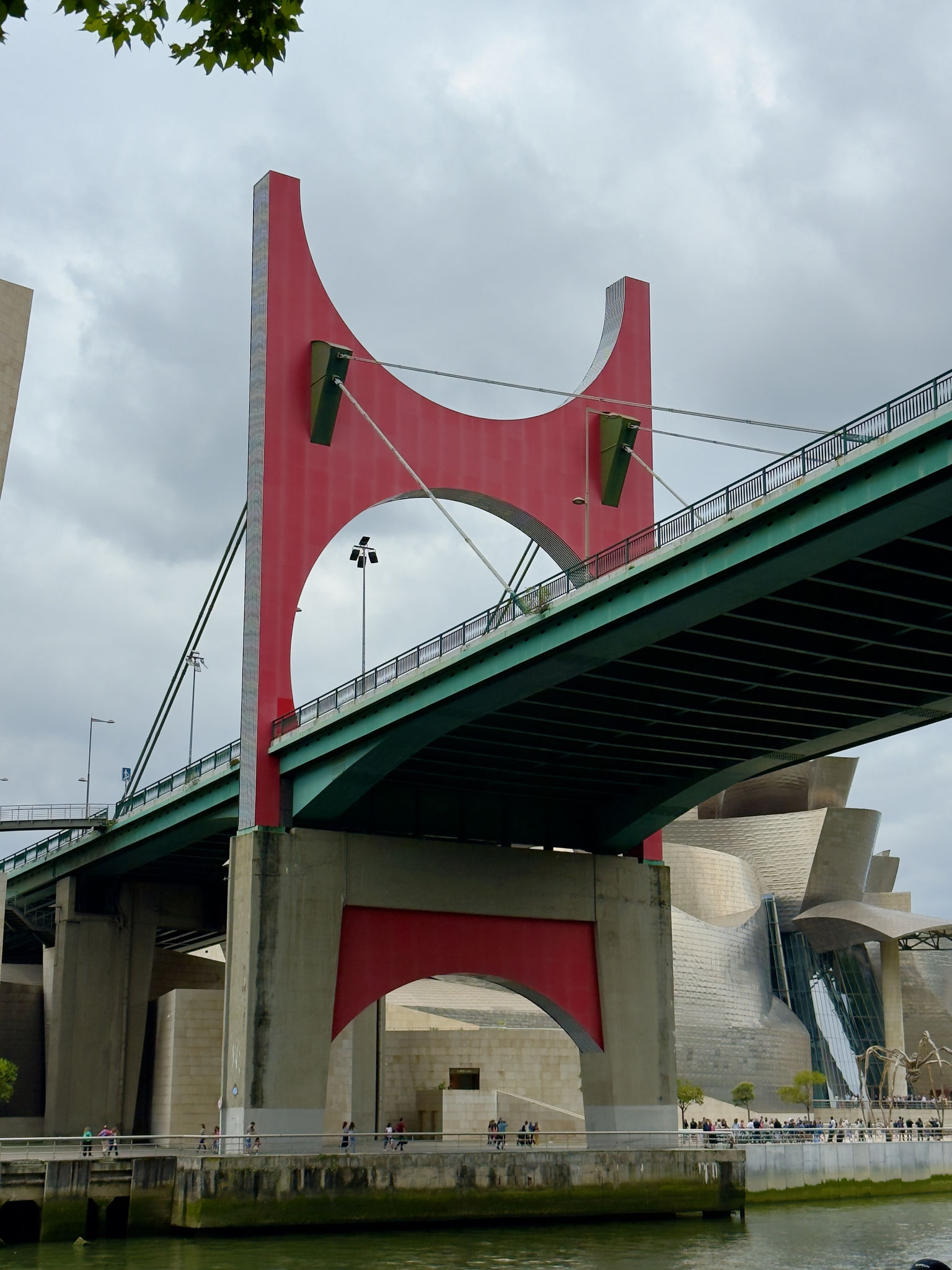
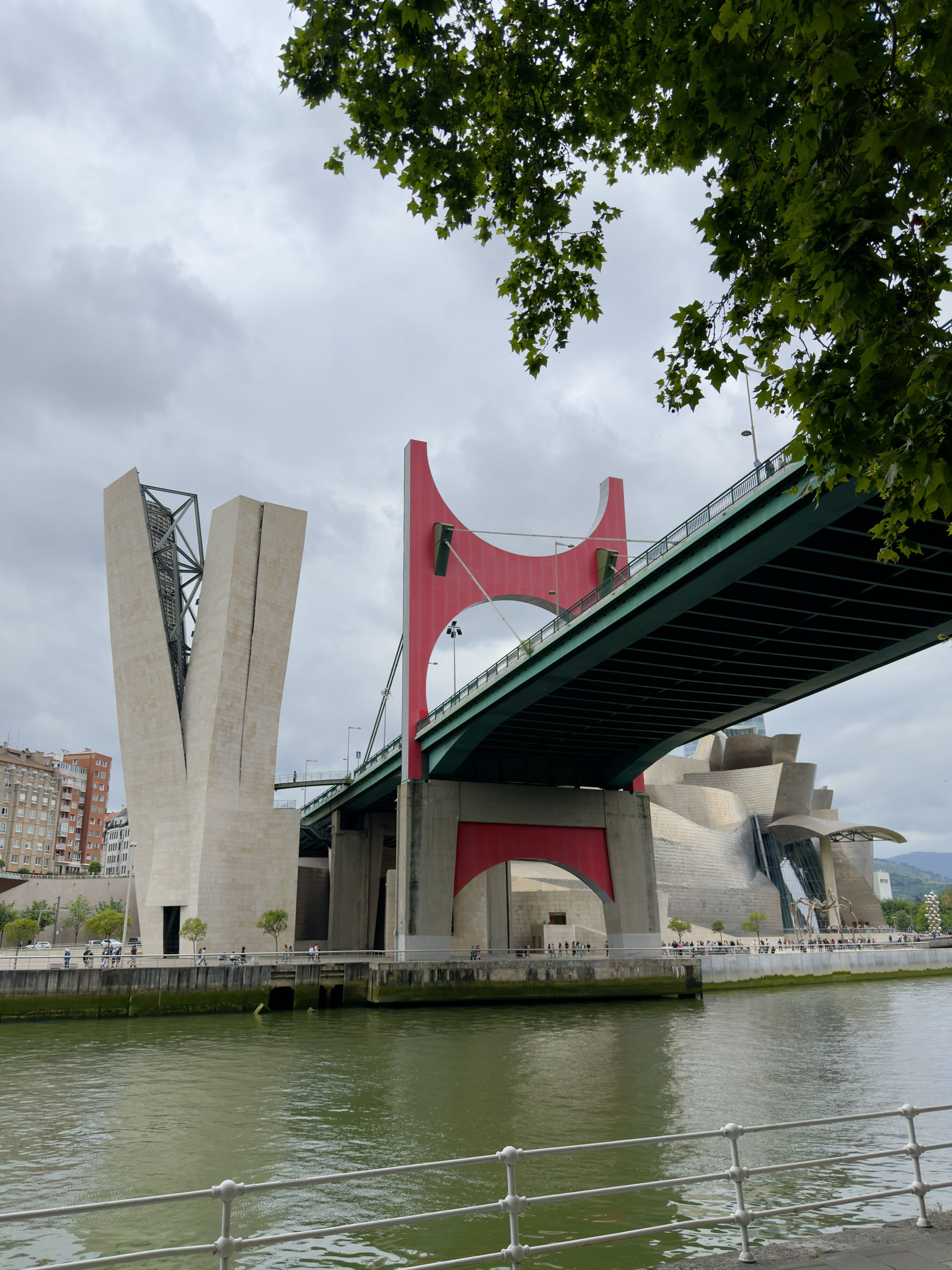
Puente de la Salve, 2007 – Daniel Buren
Not an artwork in the strictest sense, but part of the museum’s visual ecosystem. The red arch slicing through the green bridge feels like an accidental installation—one Gehry later embraced by wrapping his building around it. In fact, the red arch was added by Buren for the museum’s 10th anniversary in 2007. From across the river, the bridge and museum perform a duet in steel and color, each making the other stranger.

Bilbao built this museum to change its future, a civic gamble most cities only dream about. Standing inside it, surrounded by feathers, metal, mirrors, and the occasional giant spider, the ambition feels personal rather than political. The Guggenheim Museum Bilbao isn't just a building filled with art—it's a reminder that, once it starts, transformation tends to spread.
Write a comment