
The last time I visited Portland Japanese Garden, George H. W. Bush was president. That has nothing to do with why I wanted to go back—but it does help you understand why my mental picture of the place was so hopelessly out of date once I got there. I remembered a lovely, drizzly hillside retreat tucked into the upper reaches of Washington Park. Not anymore. Today it’s much larger and more ambitious than I recalled.
My friend Terri and I drove up the road that winds through the homes of Portland’s rich and famous before nearly disappearing beneath towering fir trees one glorious September afternoon—and had a little trouble finding parking. That was new. In the decades since my last visit, the Garden had quietly expanded with new buildings, new garden spaces, and enough additional acreage that I finally had to stop pretending I remembered the original layout.
Terri, who visits the Garden fairly often on her membership card, had fortunately scoped out a secret side street where she can usually find a parking spot. And we did. I’d tell you all about that, but then 1) it wouldn’t be secret anymore, and 2) Terri might not be my friend anymore.
We’d picked that afternoon because Terri’s son, Sydney, volunteers at the Garden and usually angles to man the bonsai area. That sounded like a perfectly fine place to start, and I’ve always liked bonsai well enough. I mean, as much as you can like tiny trees that require monk-like patience to grow. Turns out I knew even less about bonsai than I thought.
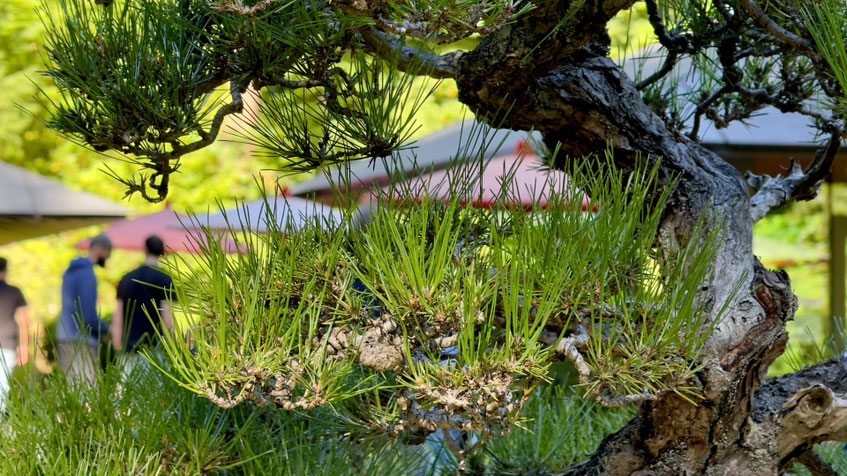
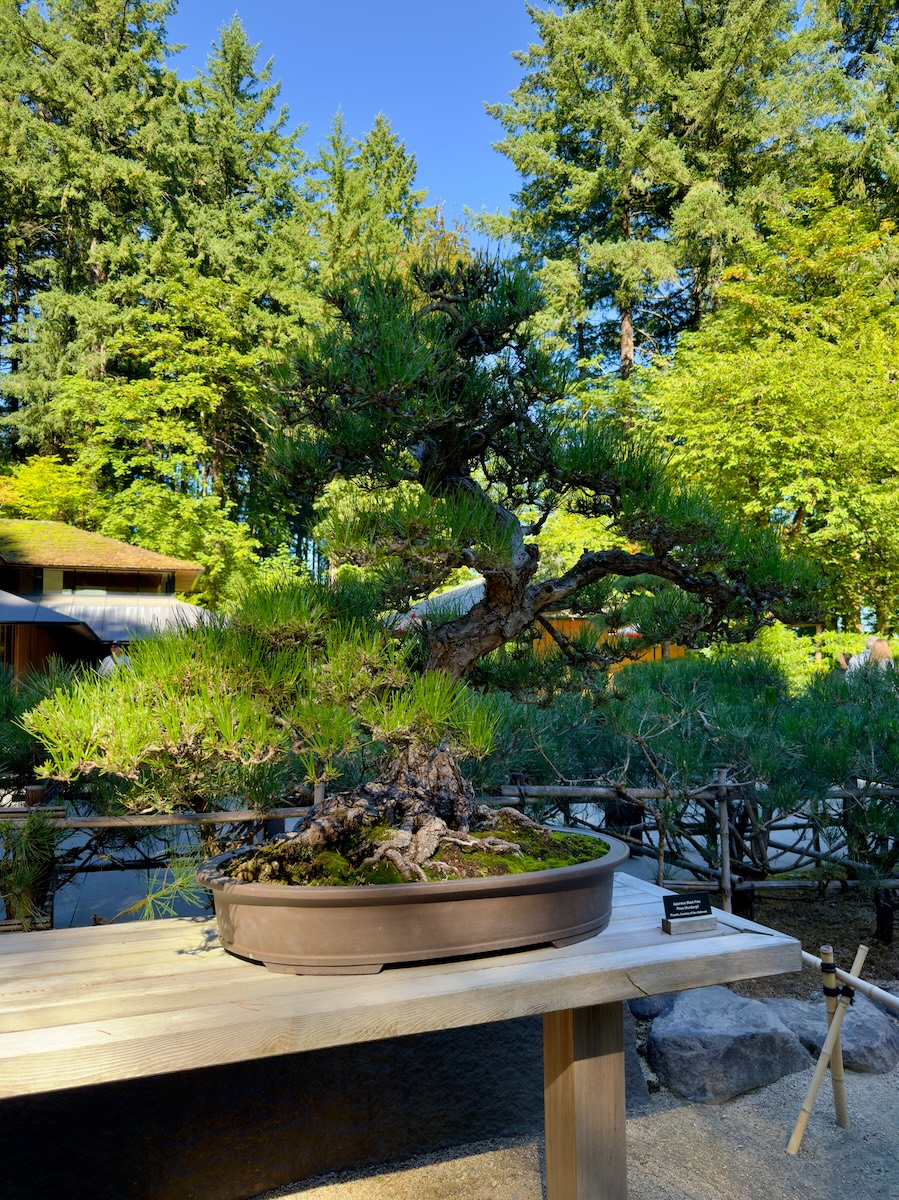
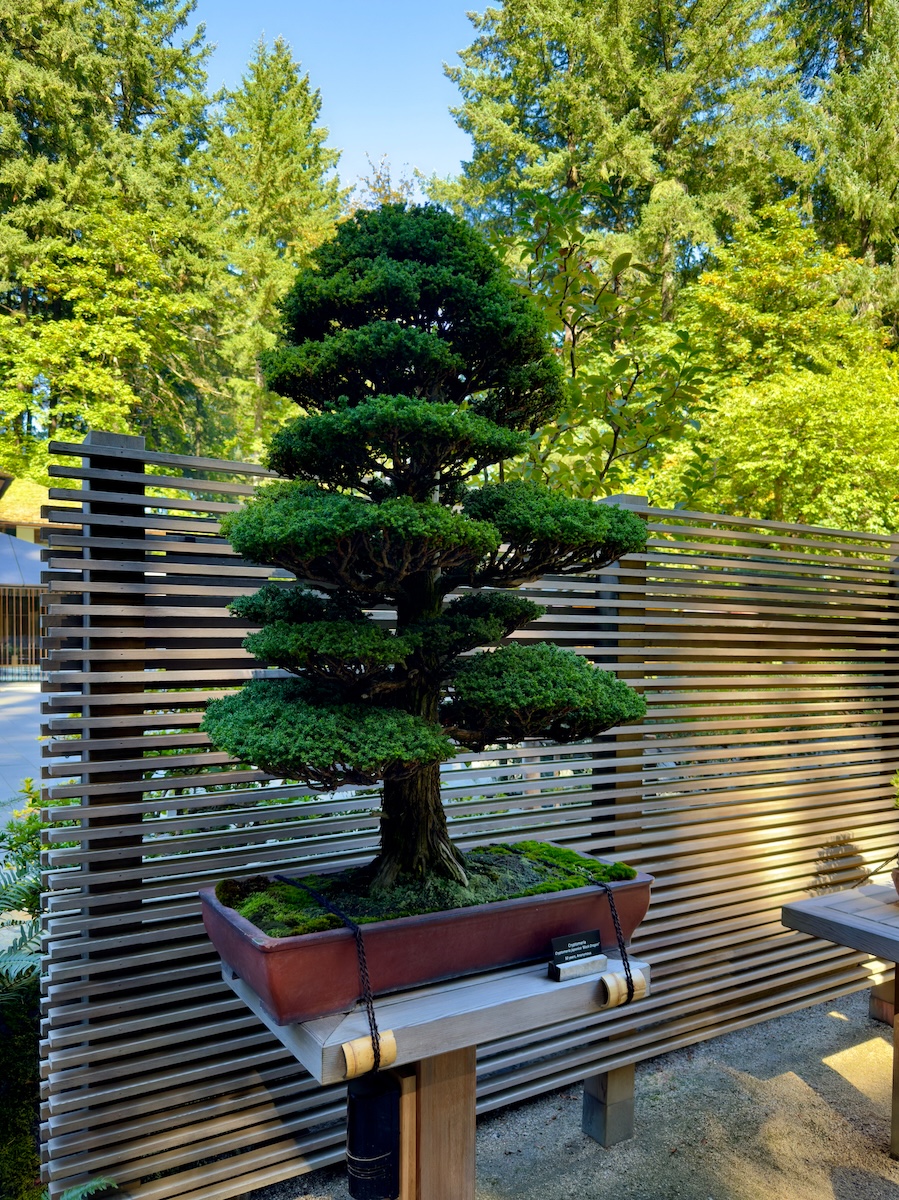
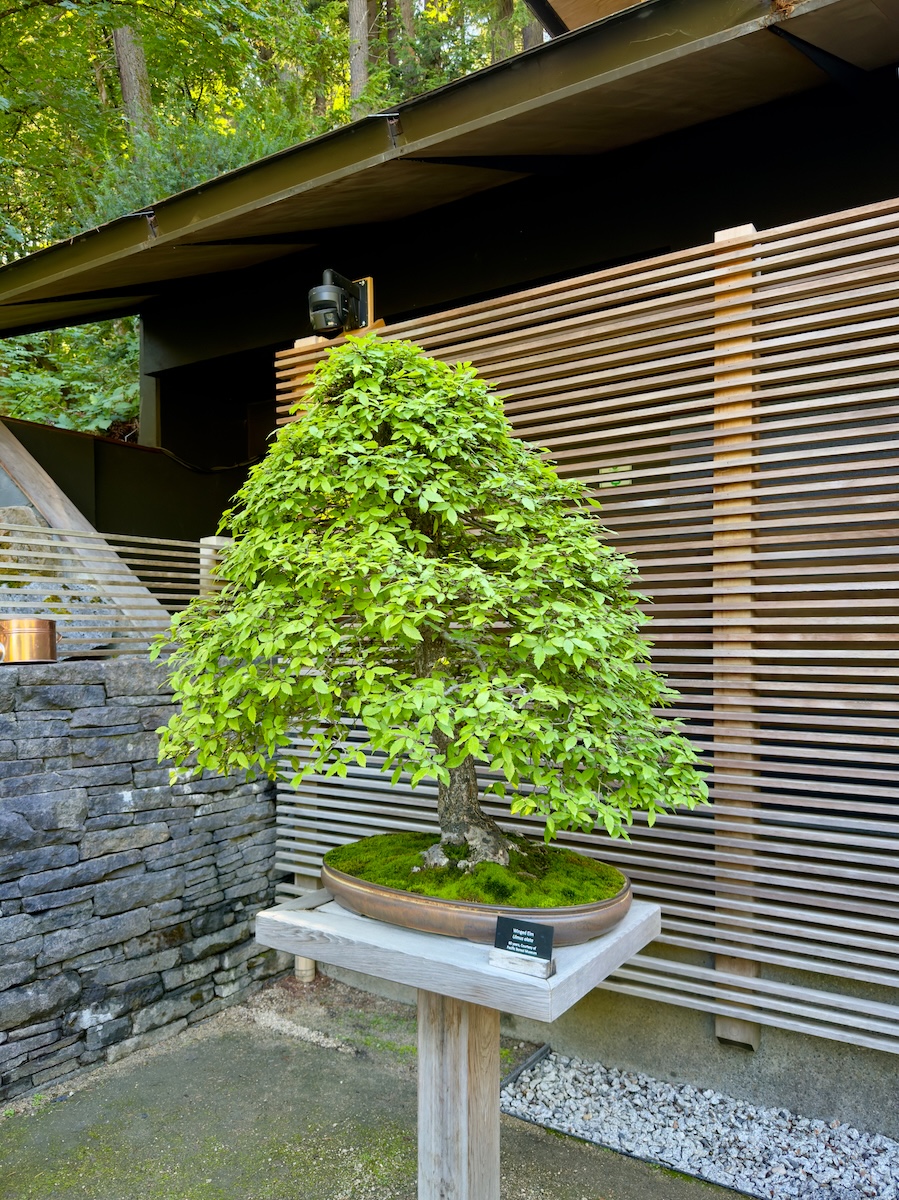
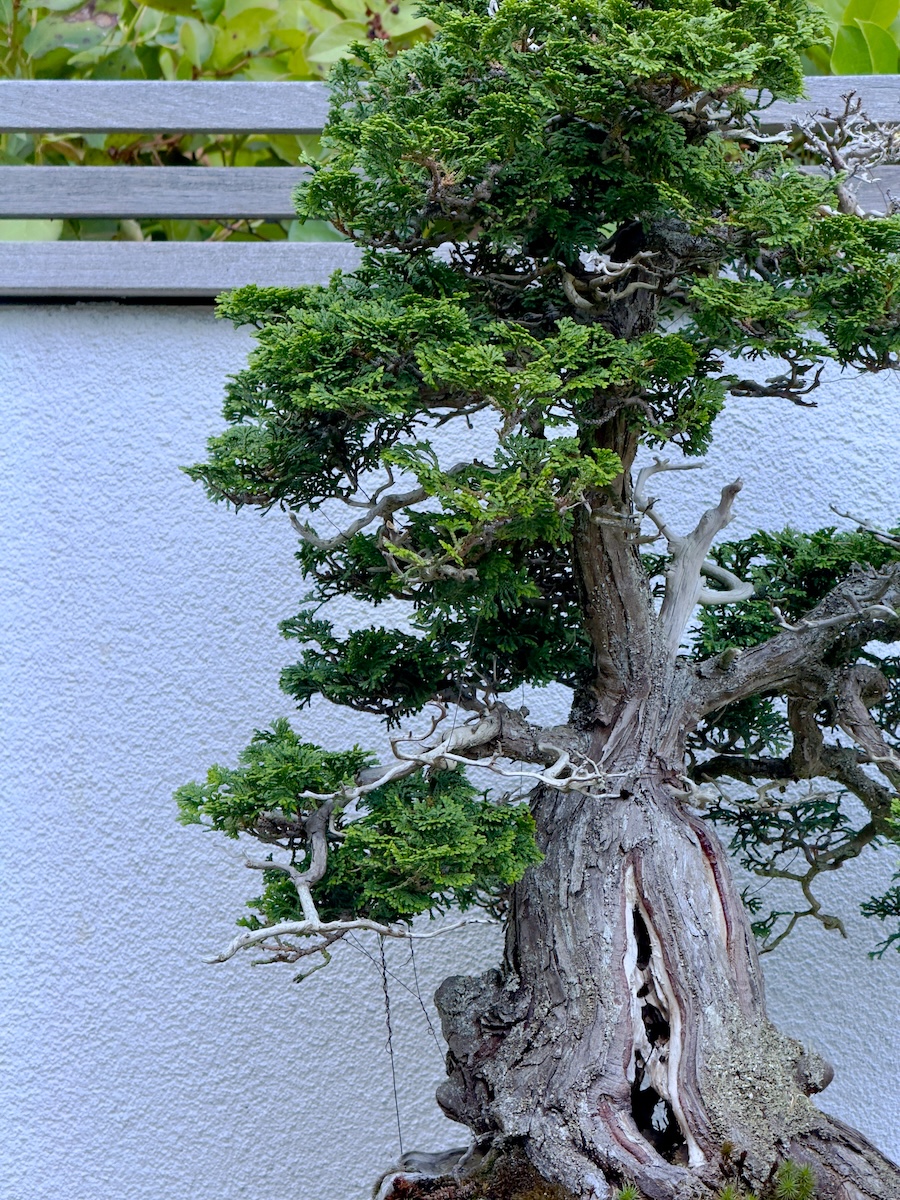
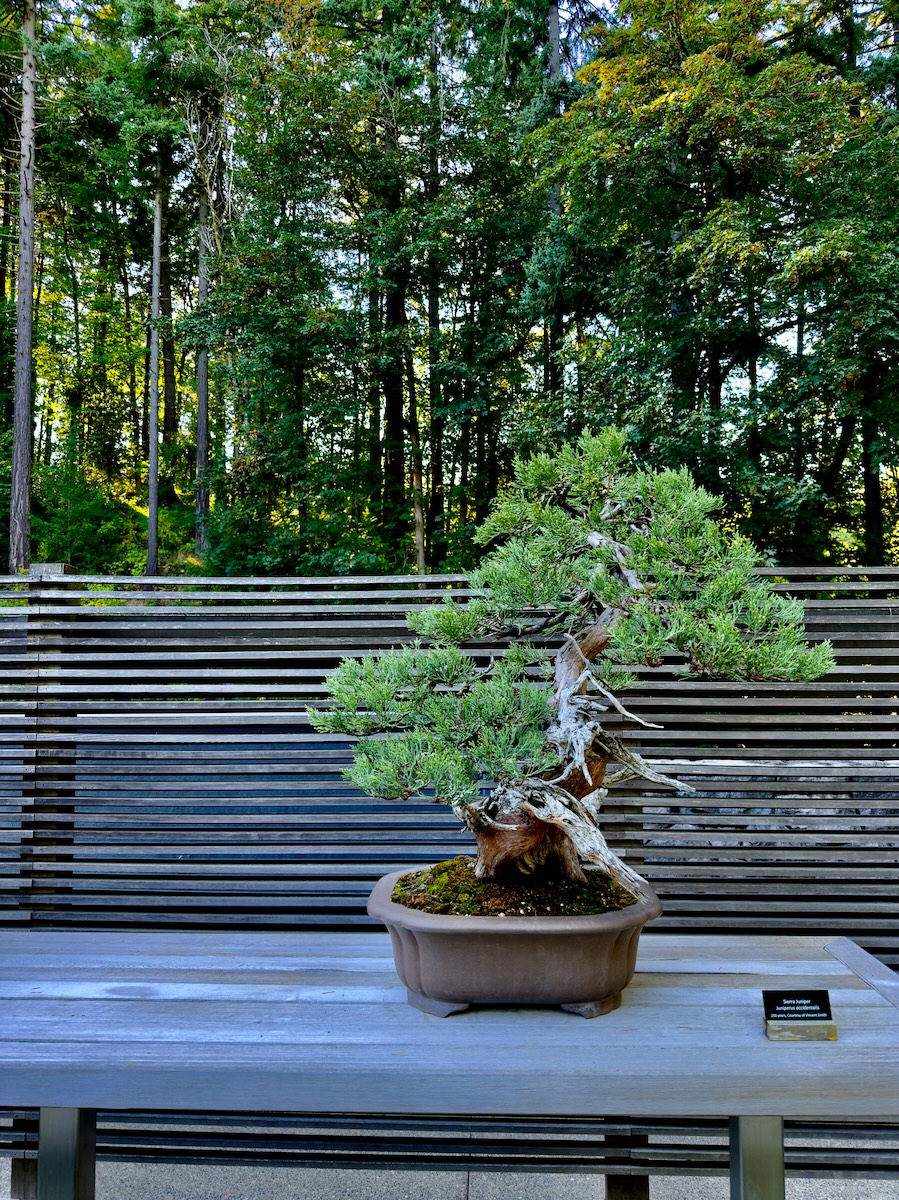
We found Sydney in his Garden smock, looking every bit the official bonsai docent, answering visitors’ questions among meticulously pruned pines and junipers that looked exactly like what I’d expected—tiny trees in handsome pots. Eavesdropping, I heard him patiently explaining the different types of bonsai (wait…there are different types?) while less patiently asking visitors to stop touching them. Within about five minutes, I realized I’d completely misunderstood bonsai—and that I should probably stop petting them.
For starters, bonsai didn’t even begin in Japan. The art grew out of the Chinese tradition of penjing, which dates back roughly 2,000 years. Penjing artists create entire miniature landscapes that can contain multiple trees, rocks, water, and sometimes tiny buildings or miniature people. The Japanese adopted the idea about 1,000 years ago, but gradually stripped almost everything away—entirely on brand for the Japanese design aesthetic.
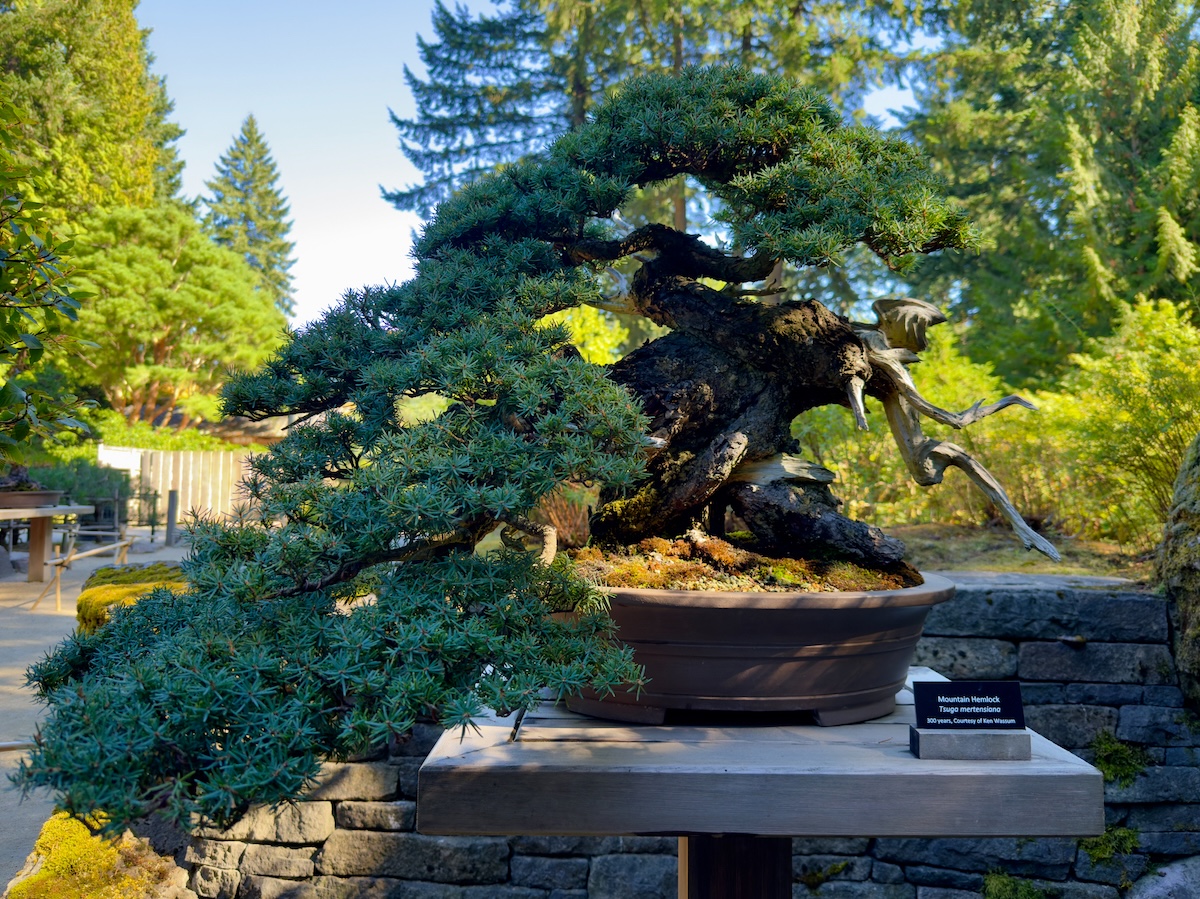
Instead of creating a miniature world, the Japanese eventually transformed the art to focus on a single tree. The goal, Sydney explained, isn’t to grow a miniature tree. It’s to capture the character of a full-sized one that’s spent decades surviving in harsh conditions near the tree line. Wind twists the trunk, snow bends the branches, and thin soil slows its growth. The result isn’t a young tree made small. It’s an old tree made resilient. Chinese penjing builds miniature worlds with trees in them. Japanese bonsai compresses an entire world into a single tree.
I’d honestly never thought about bonsai that way. Once he painted the picture, though, I couldn’t unsee it. Instead of admiring how small they were, I found myself noticing how old they looked. Suddenly, every twisted trunk and weathered branch suggested decades of wind, snow, and stubborn survival.
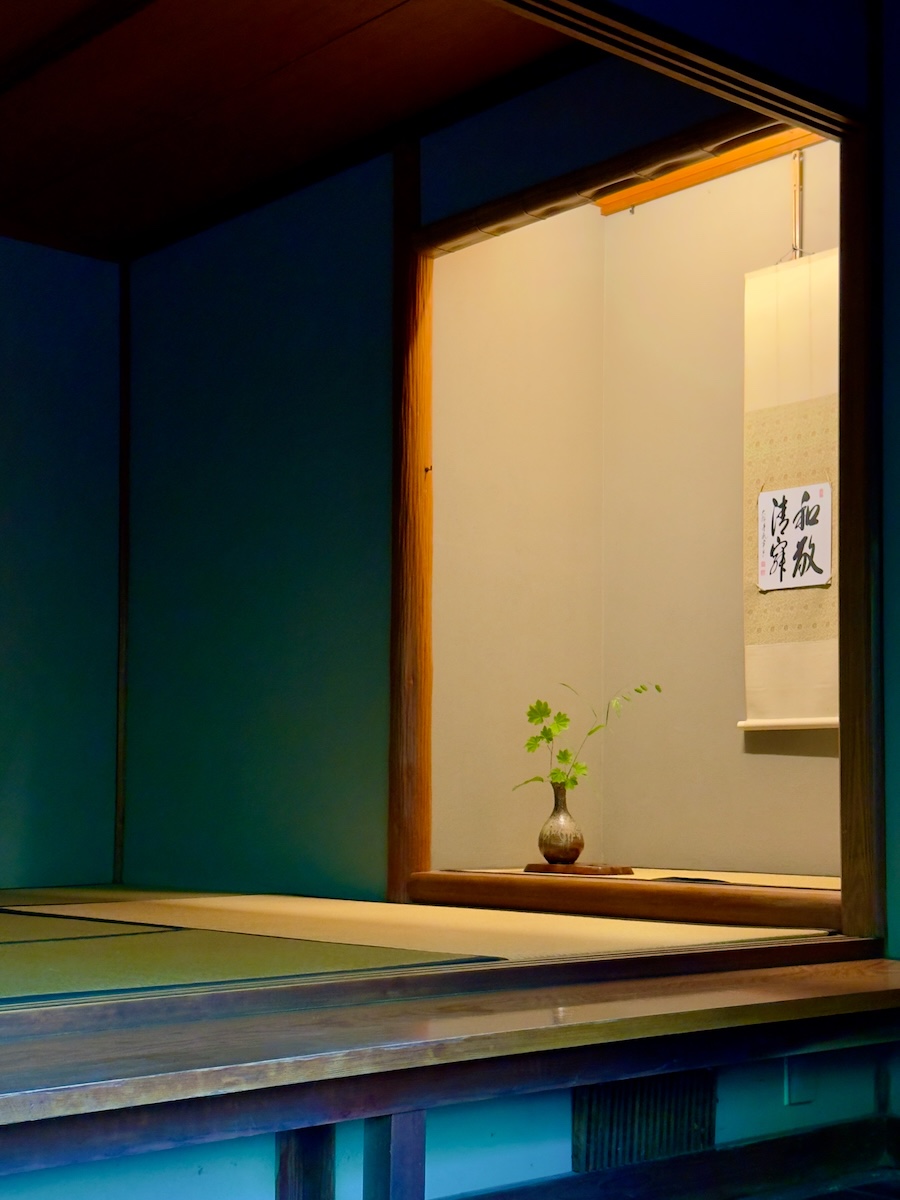
He also pointed out the rest of the displays, beyond the trees themselves. A traditional bonsai display, apparently, isn’t just the tree. It also includes a hanging calligraphy scroll and a carefully cultivated companion planting. I’d barely noticed those elements, assuming they were the sort of tasteful decorative touches museums add to exhibits. They weren’t.
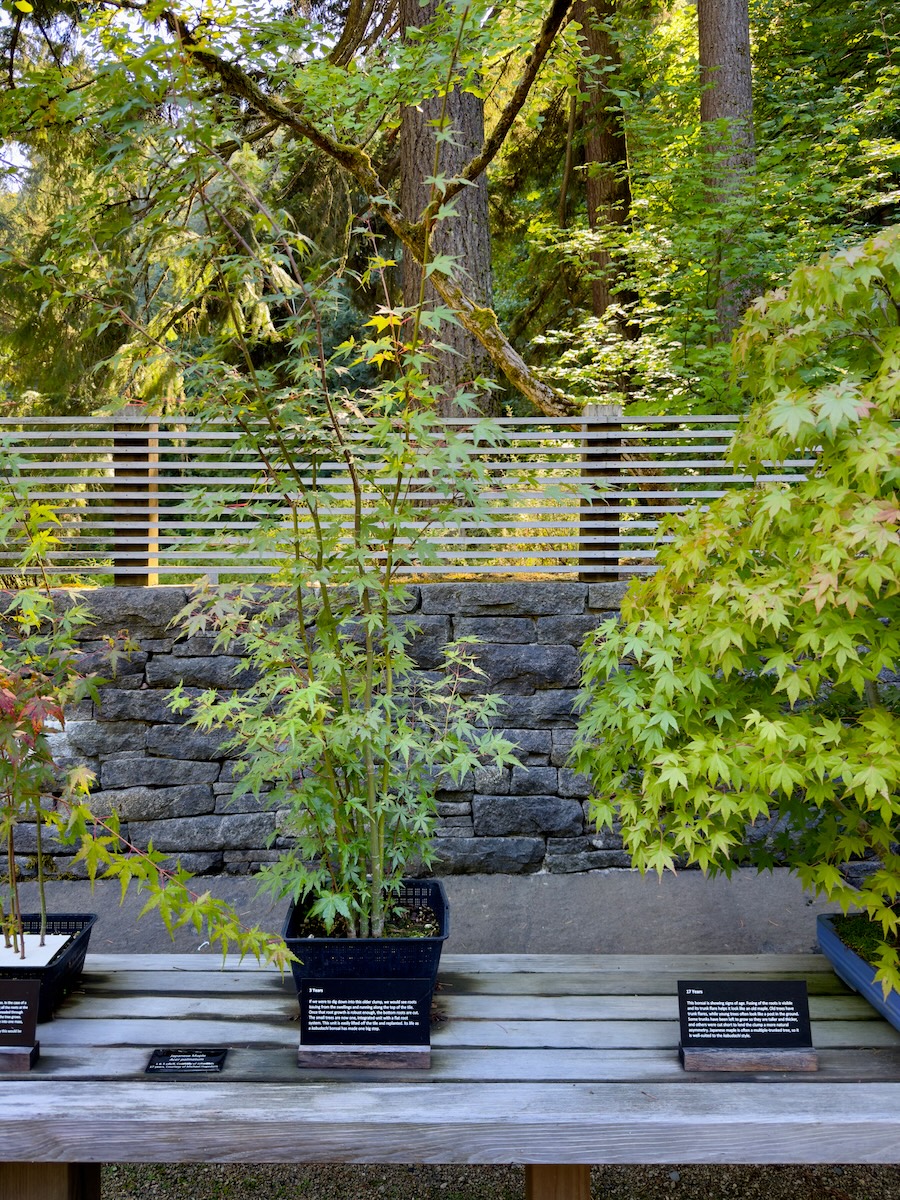
The companion planting isn’t included because it’s cute or because somebody happened to have a tiny fern lying around. It exists to reinforce the same scene as the tree. A windswept pine might be paired with alpine grasses. A Japanese maple in brilliant autumn color might be accompanied by mosses and woodland plants that suggest a quiet forest floor. The hanging scroll might contain calligraphy, a moon, birds, distant mountains, or some other simple image that nudges your imagination toward the same season or landscape.
Together they evoke a season, a place, a mood. The tree may be the star, but the scroll and companion planting quietly complete the illusion. The bonsai is no longer simply sitting in a pot. It’s standing on a lonely mountainside in late autumn, or beside a quiet stream in early spring. You’re no longer looking at a tree. You’re looking at the life the tree has lived.
Dang, I thought. Terri’s oldest son had just schooled me on bonsai. Turns out he’s a terrific teacher.
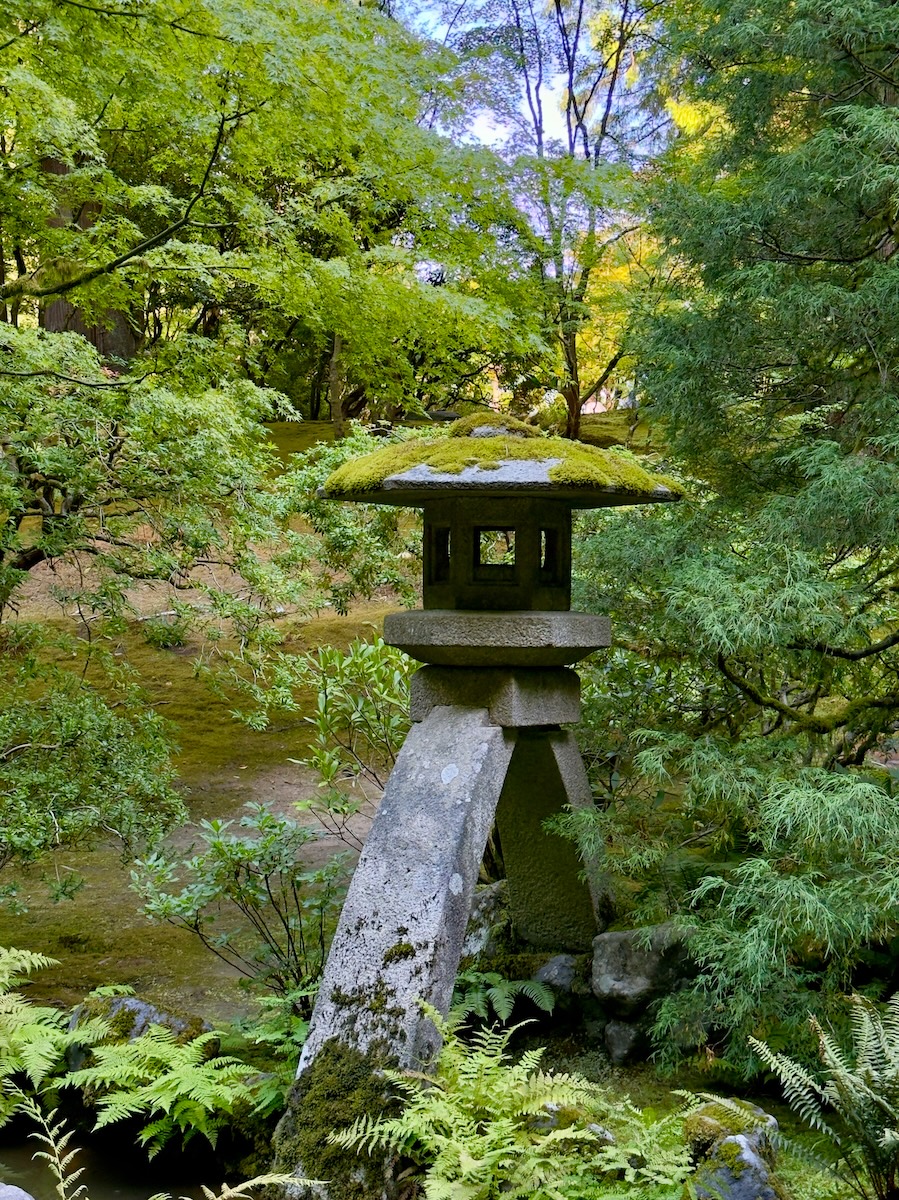
Feeling far more knowledgeable about bonsai than I had any right to, Terri and I wandered deeper into the Garden, and I realized Sydney had quietly ruined the place for me—in the best possible way. Just 20 minutes earlier I’d have walked through gazing at pretty views, carefully raked gravel, and Japanese maples beginning to flirt with autumn. Now I wondered what each garden was trying to say.
The Portland Japanese Garden was conceived in the early 1960s as one small way to rebuild friendship and cultural understanding between Japan and the Pacific Northwest after World War II. To design it, Portland turned to Professor Takuma Tono of Tokyo University of Agriculture, one of Japan’s leading landscape architects.
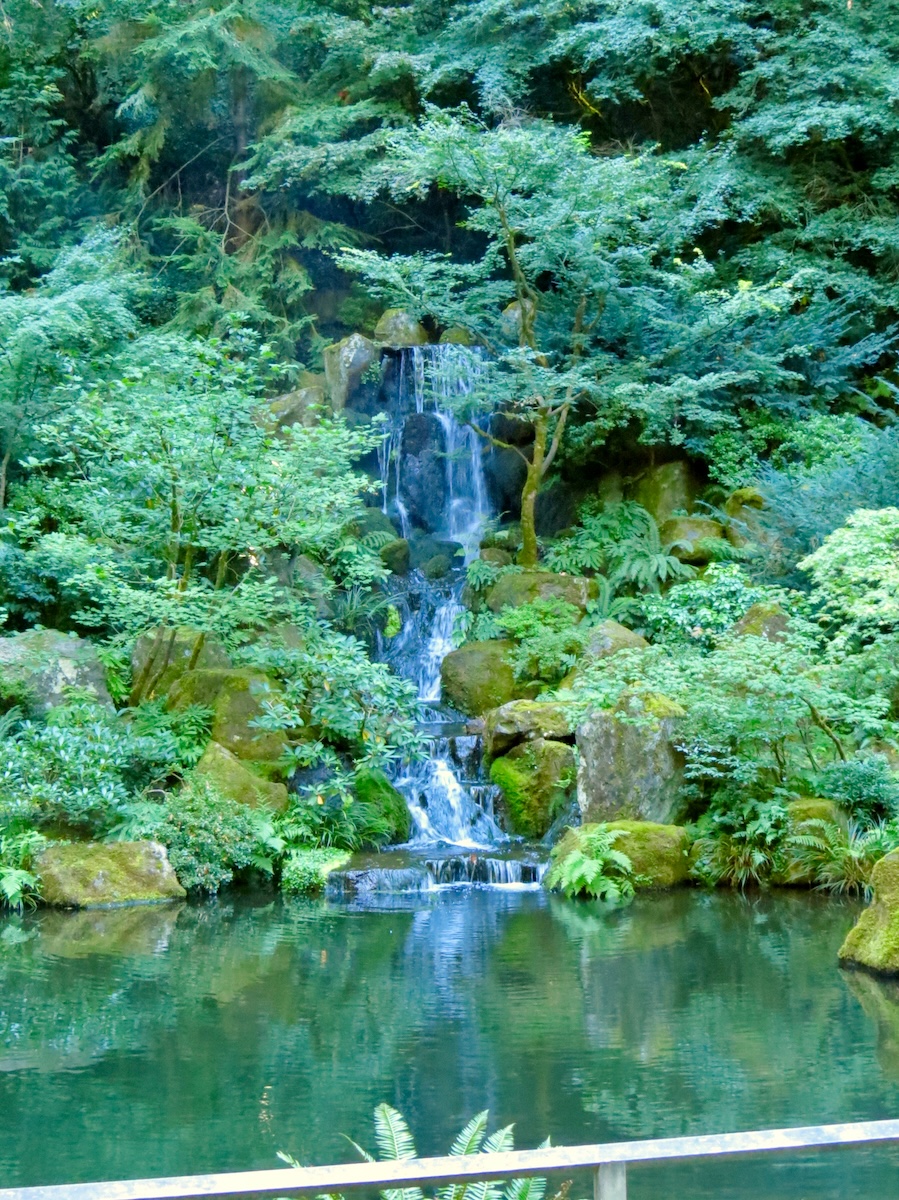
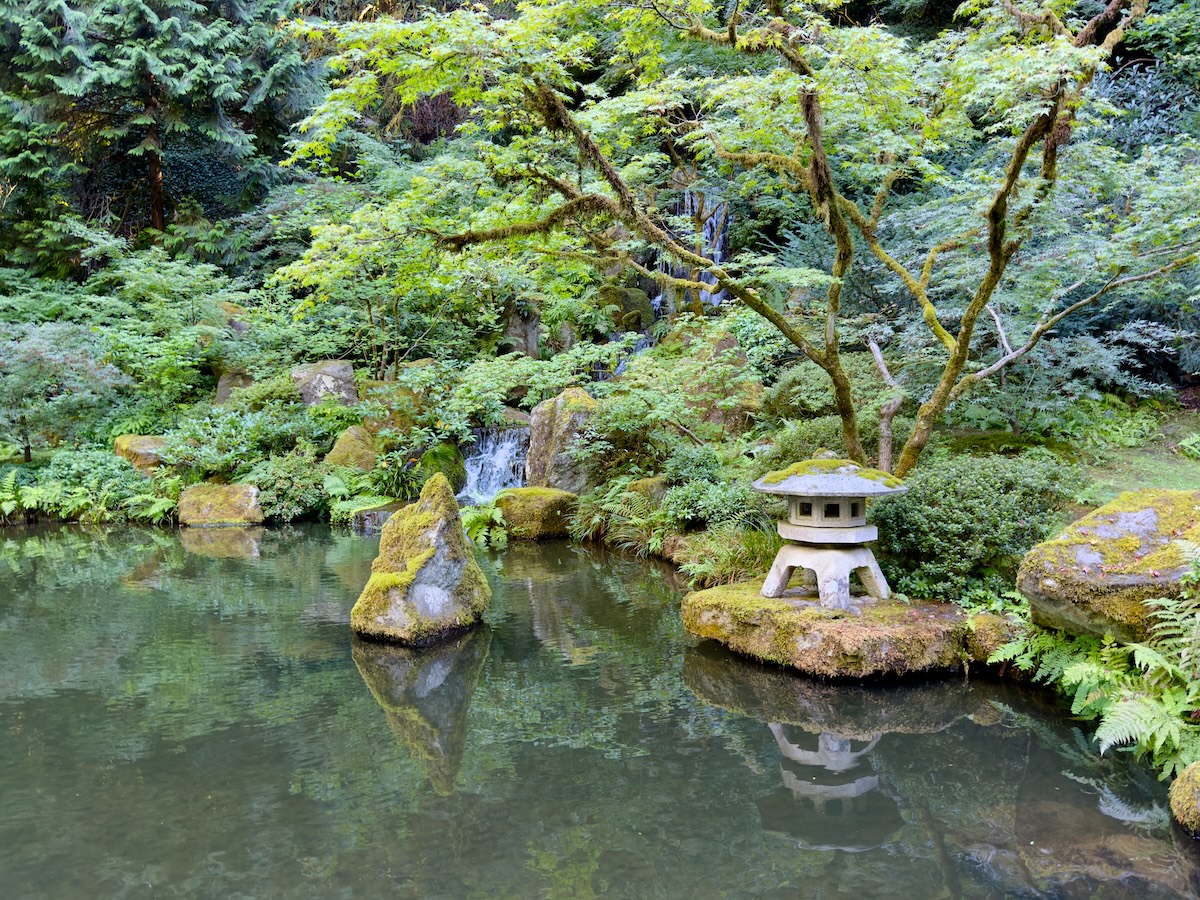
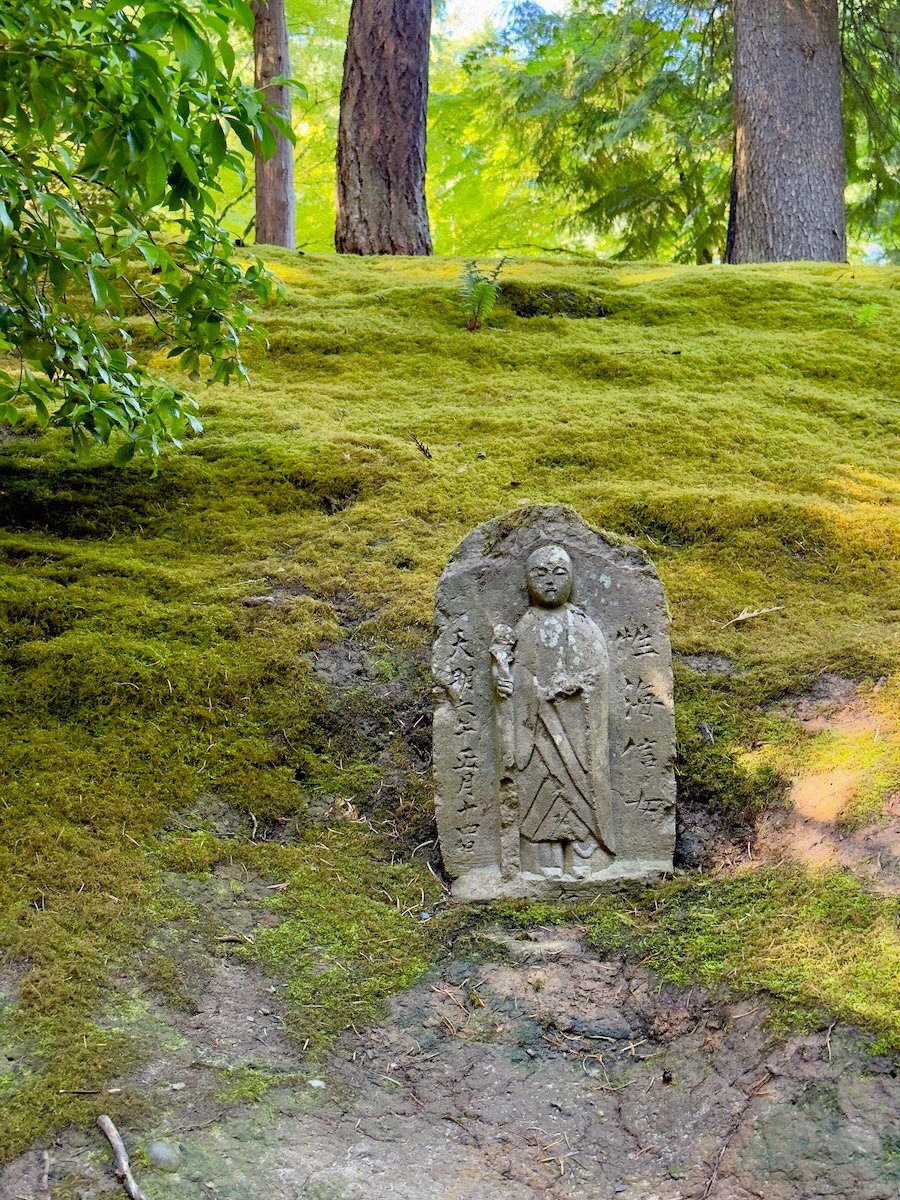
It’s almost impossible to picture now, but this peaceful hillside wasn’t always home to stone lanterns, koi ponds, and carefully raked gravel. Until the late 1950s, it was Portland’s original zoo. No kidding. Families climbed this same hill to watch bears, monkeys, and elephants instead of tourists photographing maple trees. One of the Garden’s waterfalls now tumbles through what had once been the zoo’s Bear Grotto. I love that somewhere beneath one of Portland’s most tranquil corners lurk the ghosts of captive bears. Landscapes have histories, too.
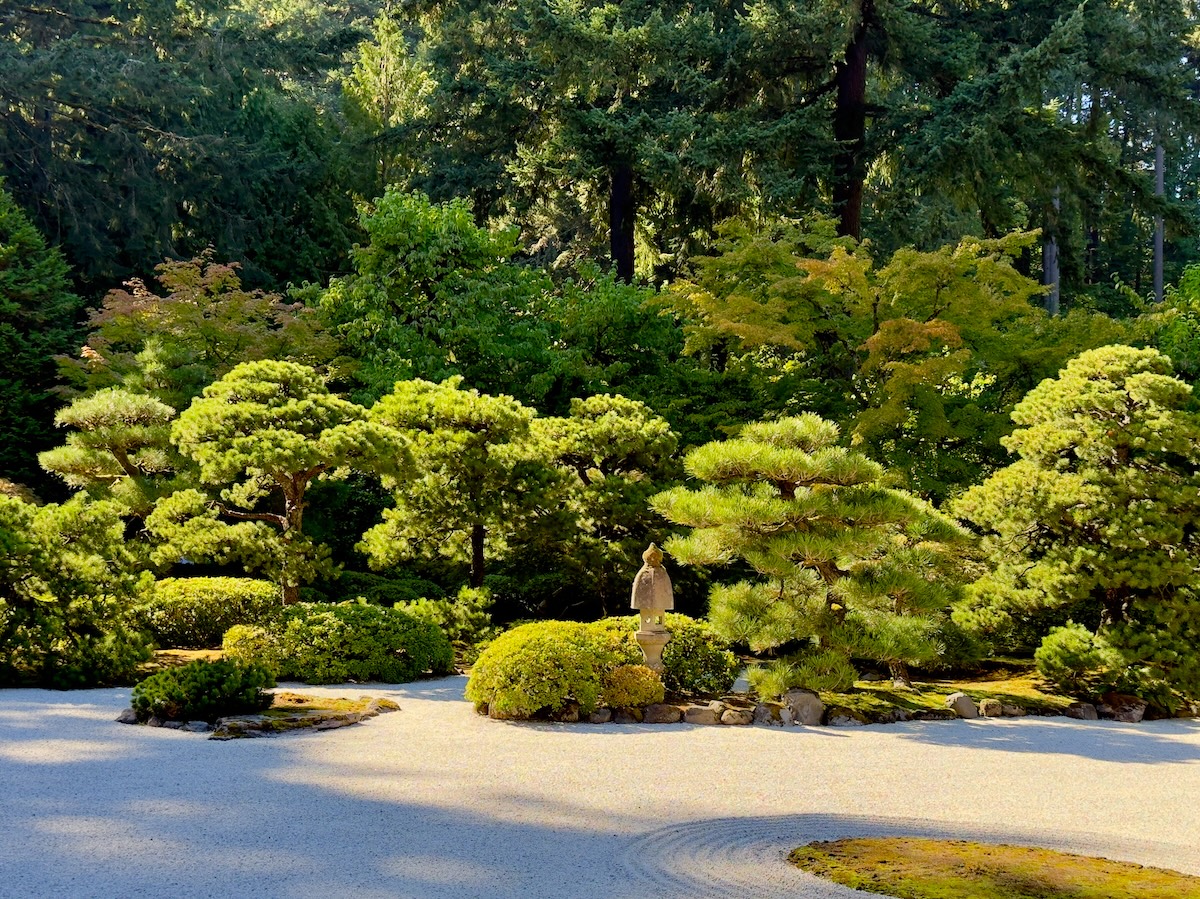
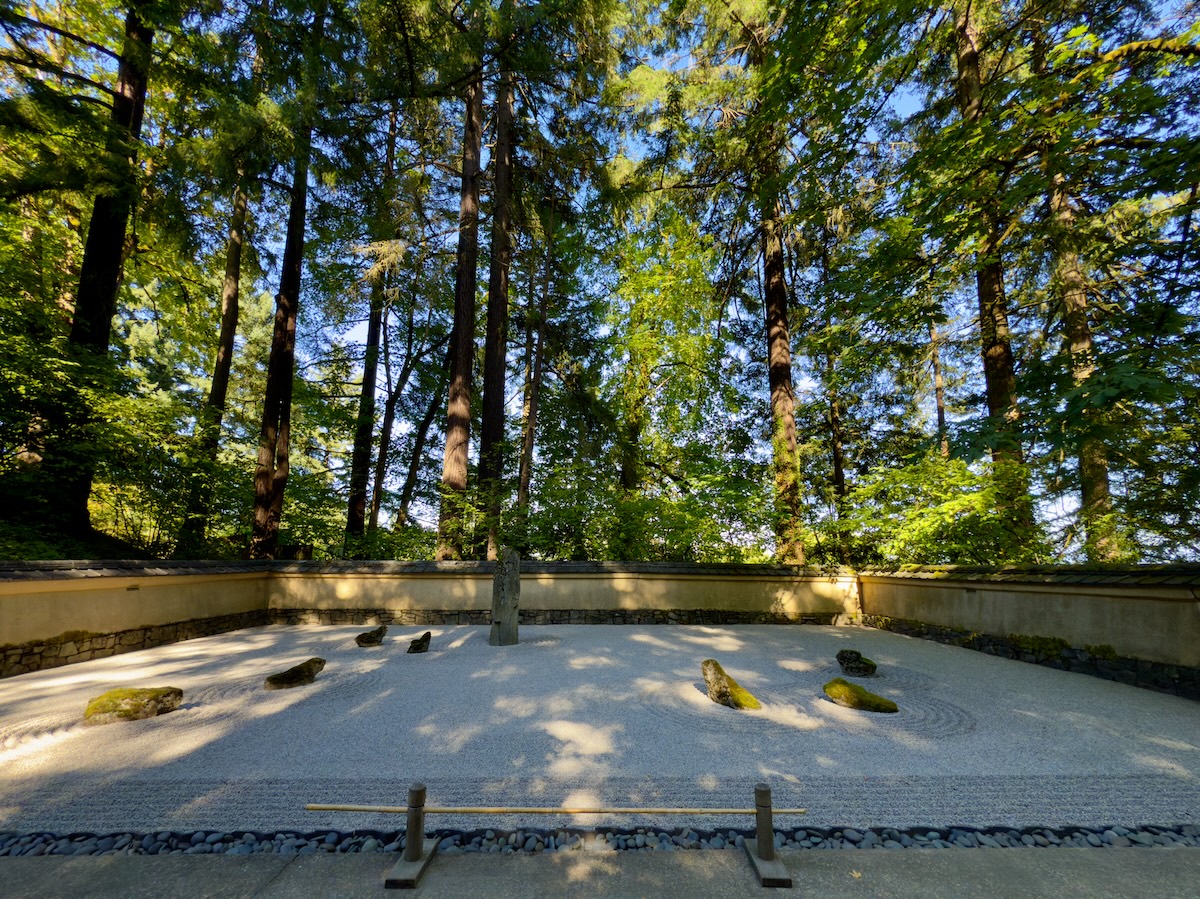
Rather than designing a single idealized Japanese garden, which was the norm at the time, Professor Tono created several, each reflecting a different period and philosophy in Japanese garden design. Terri and I wandered from the disciplined geometry of the Flat Garden to the spare Sand and Stone Garden, through woodland paths and quieter corners that felt almost untouched, before arriving at the Tea Garden. Each approached beauty from a slightly different direction.
It’s hard to imagine a better second act for an old zoo.
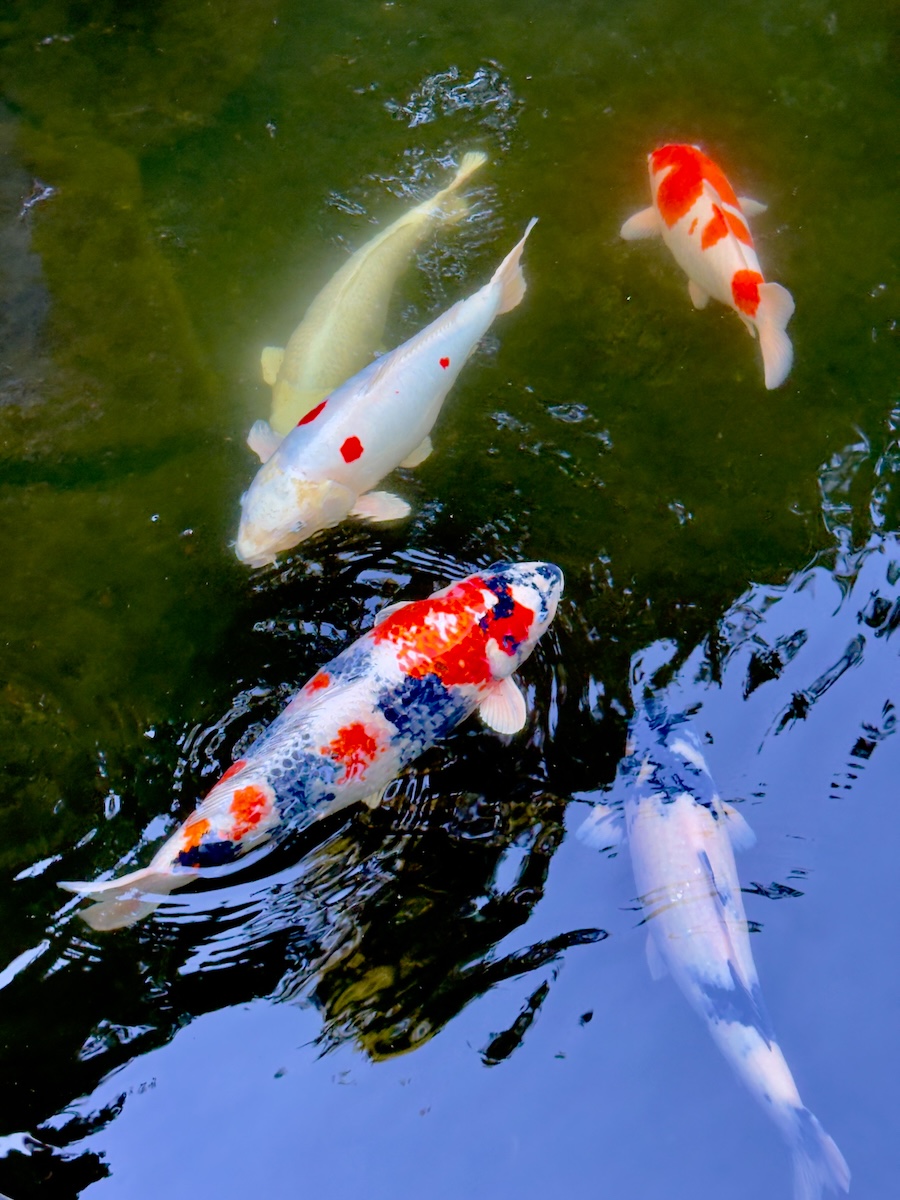
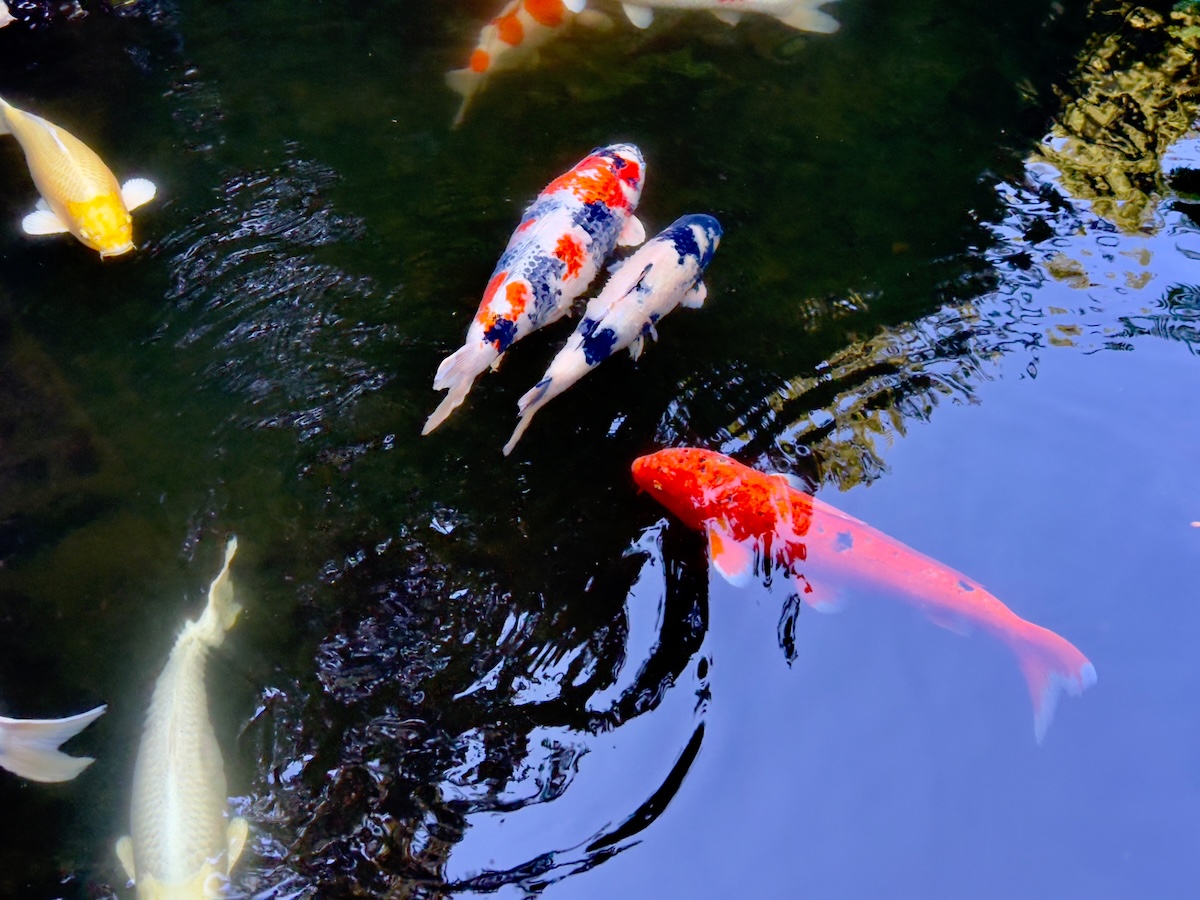
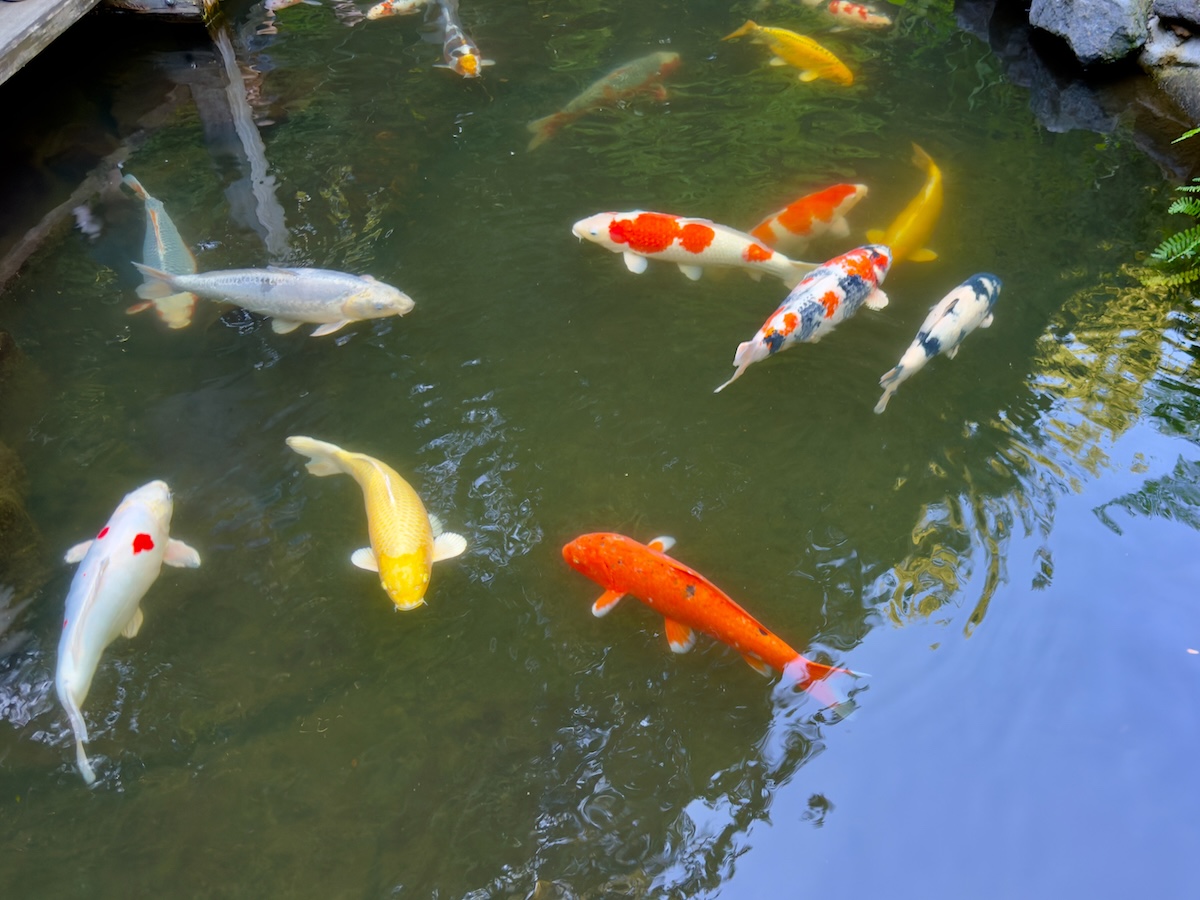
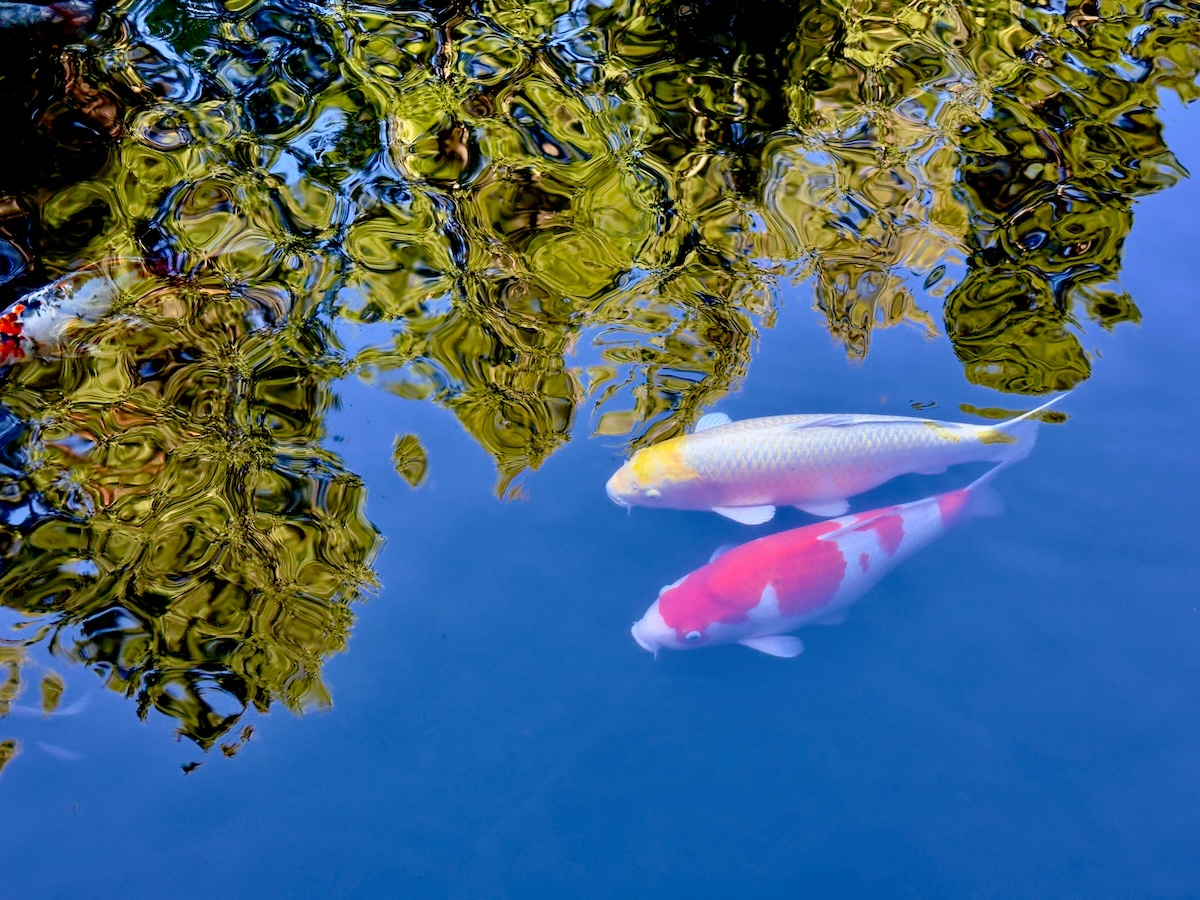
Our last stop was one of the koi ponds, where dozens of brilliantly colored fish drifted lazily beneath the surface before suddenly converging on anyone who looked remotely capable of producing fish food. Terri had promised to say hi to her daughter Piper’s favorite fish.
“Have you seen Jasper swimming around?” she asked a volunteer.
“They have names?” I blurted.
“Of course they do,” she replied, politely refraining from rolling her eyes.
To me, they were beautiful fish. To the people who cared for them every day, they were individuals with names, personalities, and habits.
By then, I should have known better than to assume anything at Portland Japanese Garden was quite as simple as it first appeared. Terri asked the volunteer to point out a few of the regulars, and she happily did.
Sadly, I forgot who was who almost immediately. My memory may actually be shorter than a goldfish’s.
By then, though, I was starting to catch on. I hadn’t gone looking for lessons, but they kept finding me anyway. I’d come expecting a beautiful walk and a pleasant afternoon catching up with Terri. I got both. What I hadn’t expected was to learn that trees, gardens, stones—and apparently even fish—have stories, if you know who to ask.
Write a comment