
“Oh, that’s sweet, thank you. But I’ve got a couple friends from the States visiting, and they’re not here long. Of course! I’ll call you later.”
Kim slipped her phone back into her bag, looking entirely untroubled by the invitation she’d just brushed aside.
“What did you just say no to?” I asked.
“A friend calling to see if I ‘fancied a weekend in the country.’ But I told her you were here.”
I looked at her. “Um, we’ve never been to the country—in this country.”
Another pause.
“You want to go?”
Oh hell yes. We had no idea what that meant, but we were already mentally packing.
We’d stopped in London for a few days to hang out with Kim before heading off to New York. She's American, lives in Marylebone, and is fully fluent in English understatement. She can say "fancy a weekend in the country?" unironically.
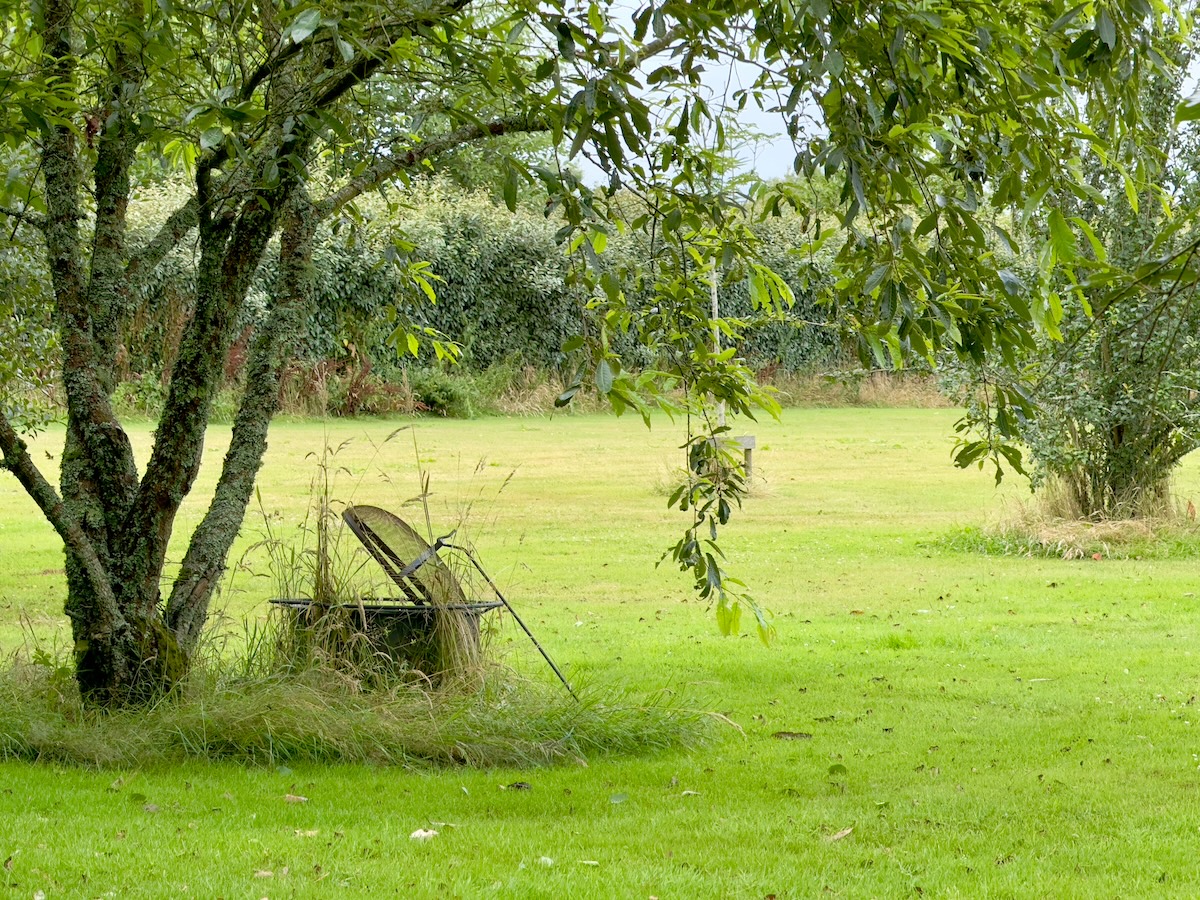
The rest of us picture something modest. A cabin. Probably plaid. Or at least Burberry-adjacent. Definitely a fire pit. Do they do s’mores in the English countryside? It feels like something the Home Office would require paperwork and a safety briefing for.
We arrived at the train station the next day with ones of minutes to spare—exactly the amount of time that makes Rick deeply uncomfortable. He believes trains are tests of character. If one is present, you board immediately. Kim has a different approach. She strode along the platform in her “weekend heels,” wheeling her suitcase behind her and peering into carriage windows like she was apartment shopping. “I’m just seeing where there are good seats.”
“Shouldn’t we just board,” Rick muttered between departure announcements, “and walk through once we’re on?”
Kim waved a hand, unbothered. The train would wait. England would wait. Rick was visibly counting down to our abandonment.
We made it on board before it started rolling away. Barely. Rick relaxed enough for his shoulders to return to their normal position beneath his ears, and we visited and read and snacked.
About halfway through our three-hour journey, it all came to a sudden stop. This being England, it was less a screeching halt than a gentle deceleration. Screeching is too showy. An extremely polite conductor announced that we were being held up “due to fire.” His tone suggested this was routine. Fire where? On the train? On the tracks? In the general direction of the countryside? We were not invited into that level of detail.
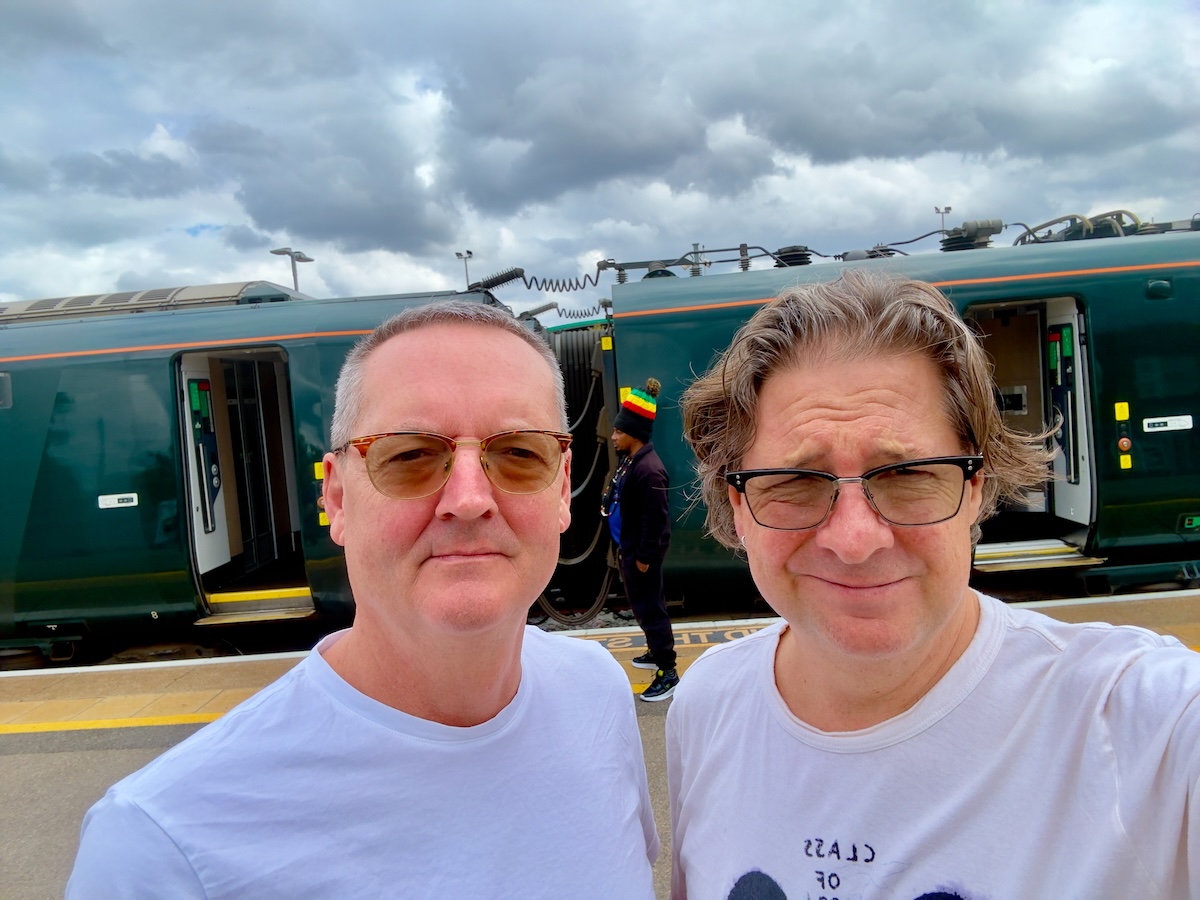
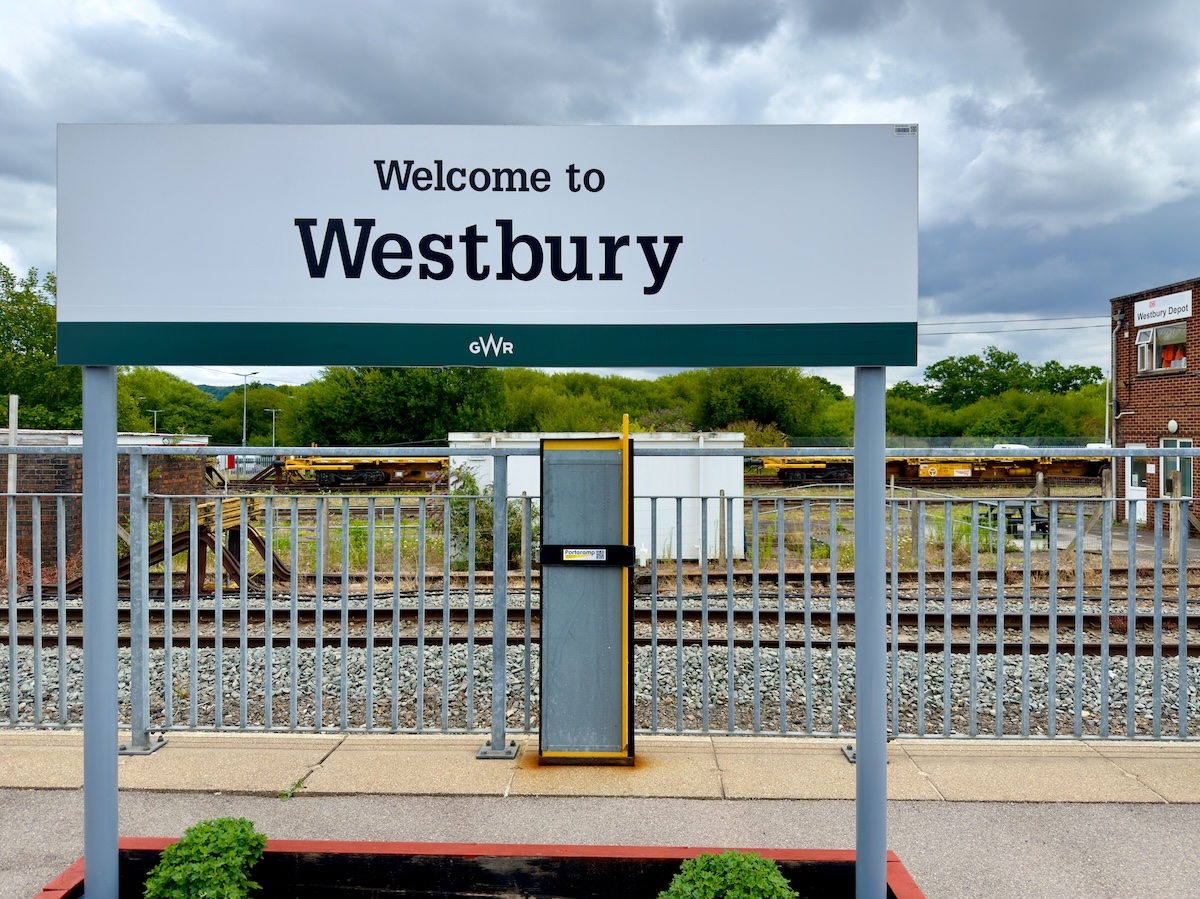
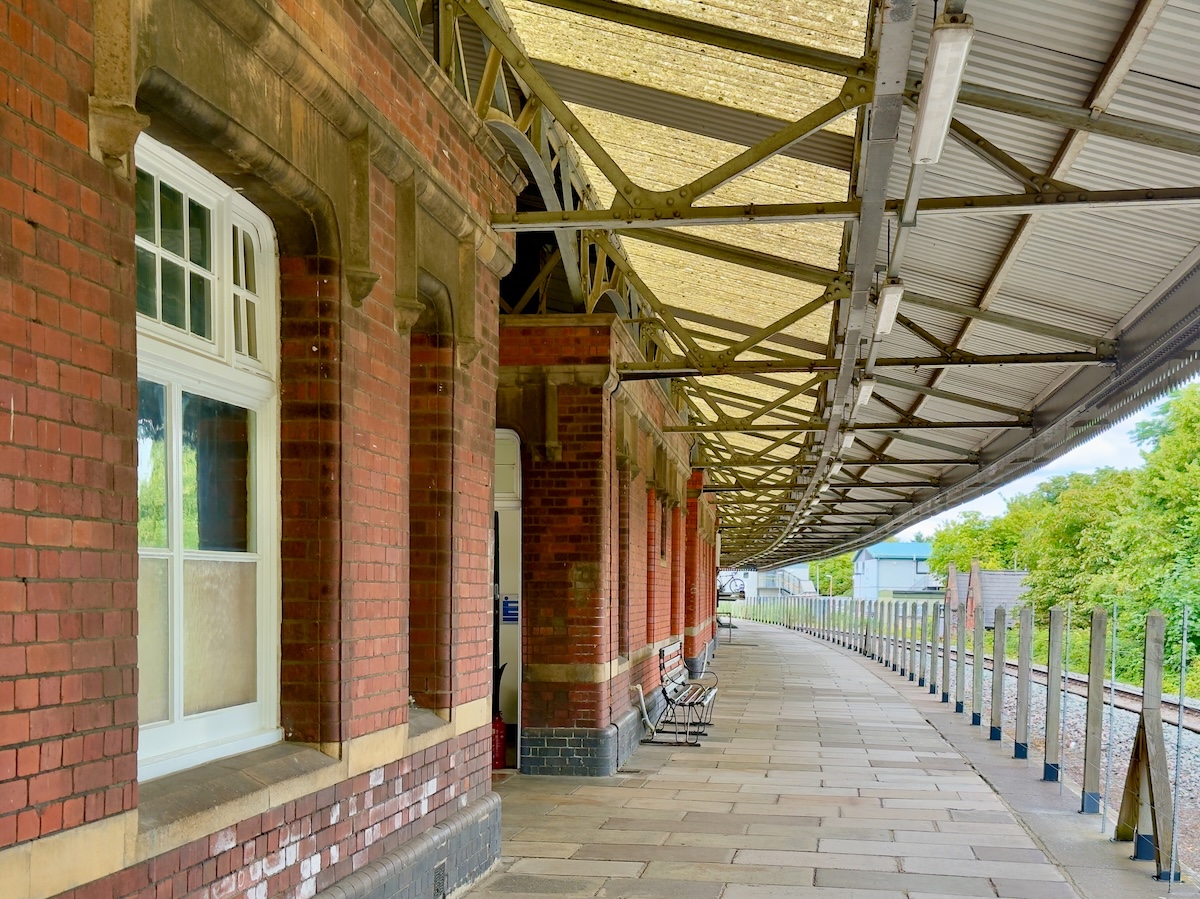
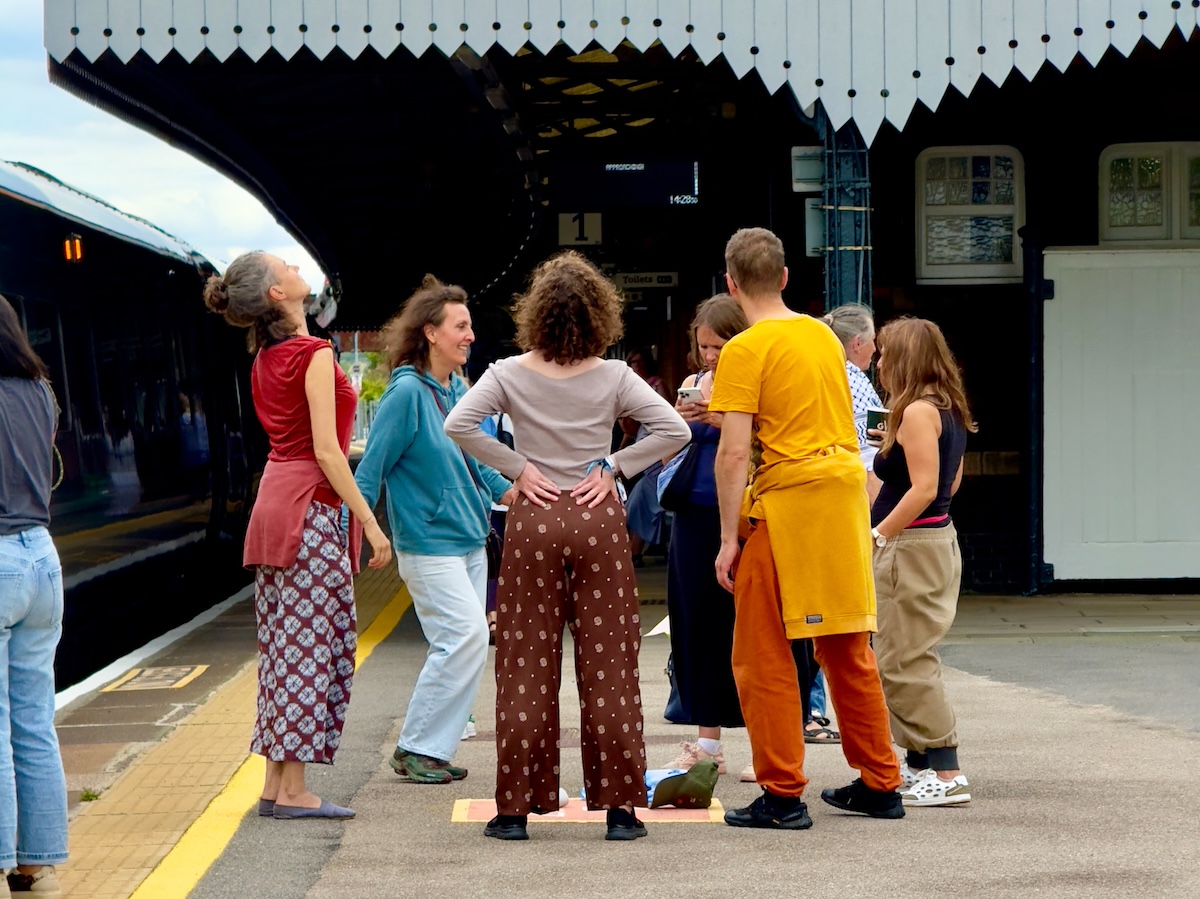
So we rolled to a gentle stop at Westbury and remained there for nearly an hour. Westbury is not unpleasant. It’s just…Westbury. Gravel. A sky committed to gray. A group of hippies who looked freshly returned from Stonehenge formed a drum circle on the platform and began to dance. Interpretively.
I stepped out to stretch my legs and take some pictures of, well, Westbury. Rick stared at the tracks. Kim scrolled. The drumming continued with conviction. It was not entirely clear whether we were ever leaving Westbury. We began to consider what our lives there would look like. Kim could open her seat-selection consultancy. We would live modestly.
But the fire was extinguished, wherever it was and whatever was burning, and we were moving again. The consultancy would not, in fact, be necessary.
The train dropped us in Totnes, which sounds fictional but is apparently a real place. Kim’s friend collected us at the station in the Range Rover because the Bentley was low on gas—a fact delivered in the same tone one might use to explain being out of milk. Rick and I made brief eye contact. We did not discuss the Bentley.
Leaving the station, the city fell away almost instantly. The roads narrowed into shoulder-width, hedgerow-lined corridors that seemed designed to encourage friendly negotiation. The roads are technically two-way. In practice, this appears to rely heavily on quiet mutual understanding and a confident wave. Our host navigated them with serene authority, assuming any oncoming vehicle would reverse into a convenient indentation of shrubbery at the sight of her. I’ve always been led to believe there are formal rules of the road, and there may be. They were not apparent.
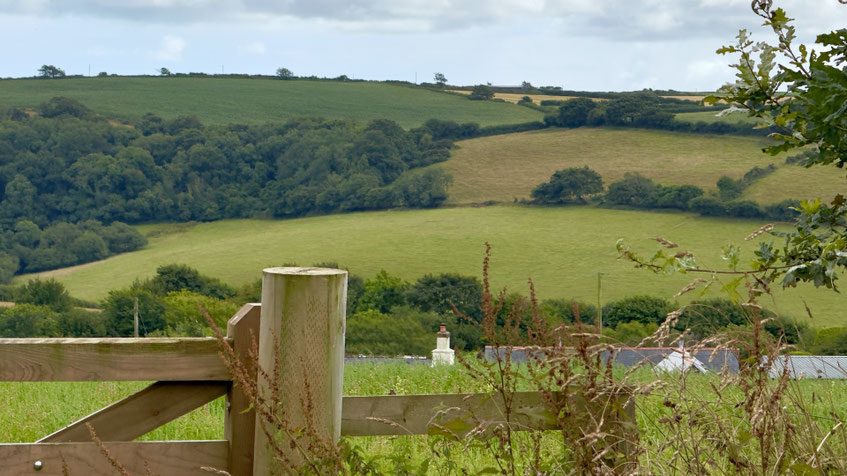
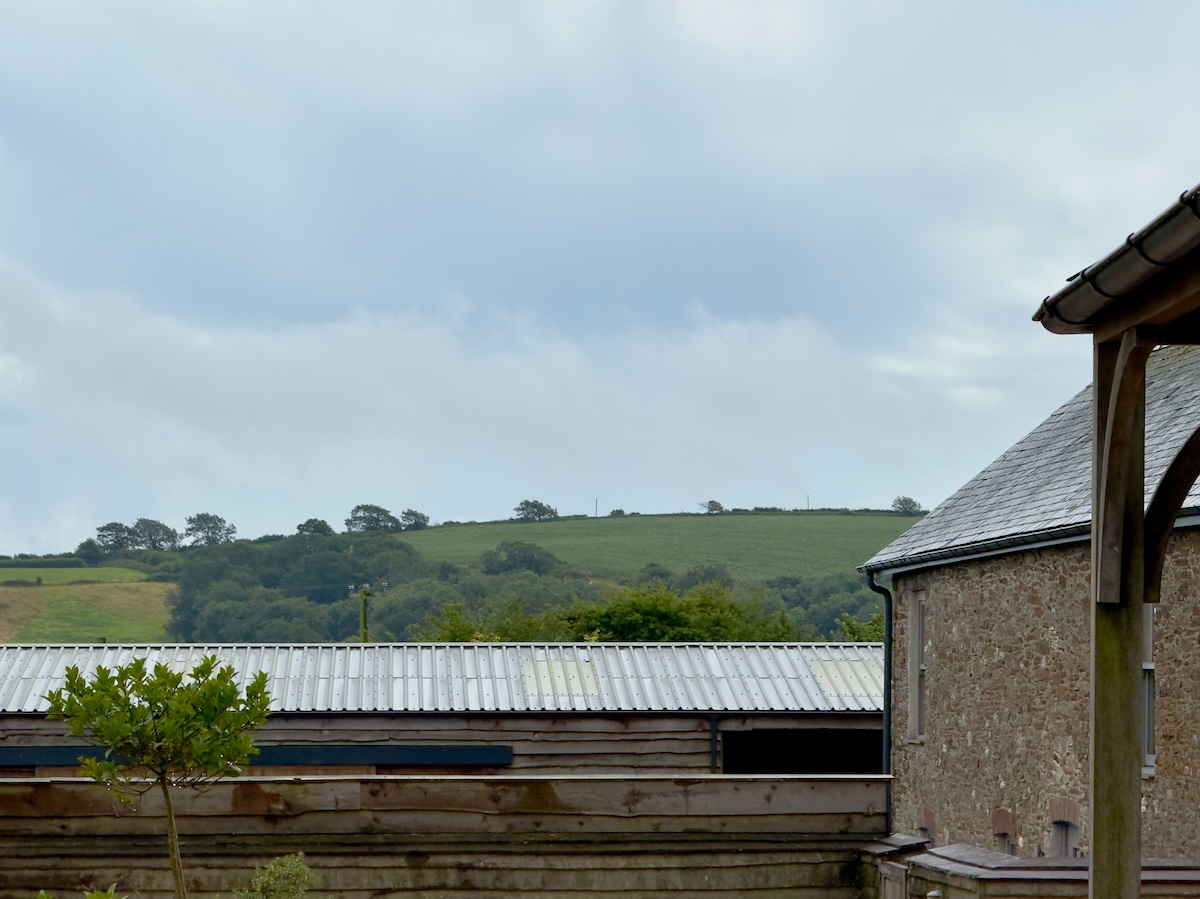
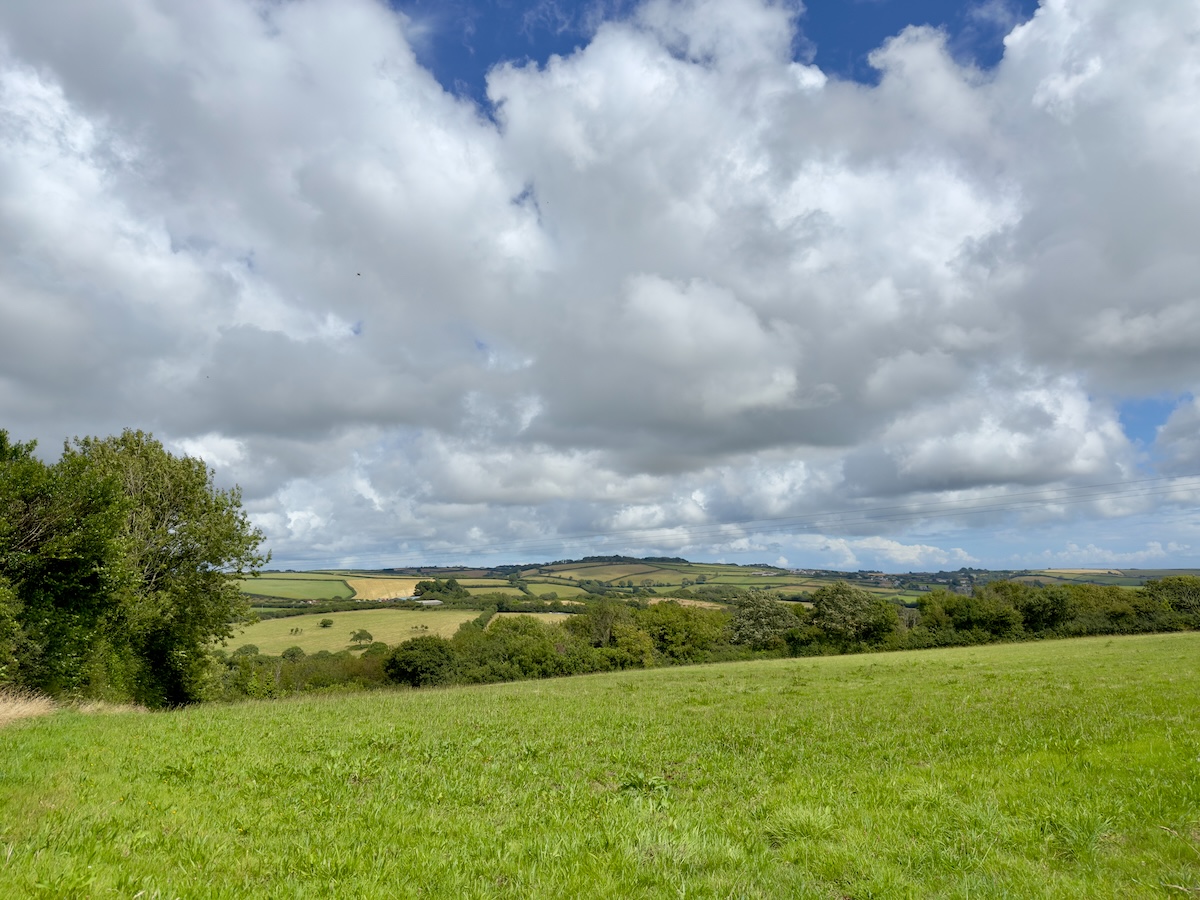
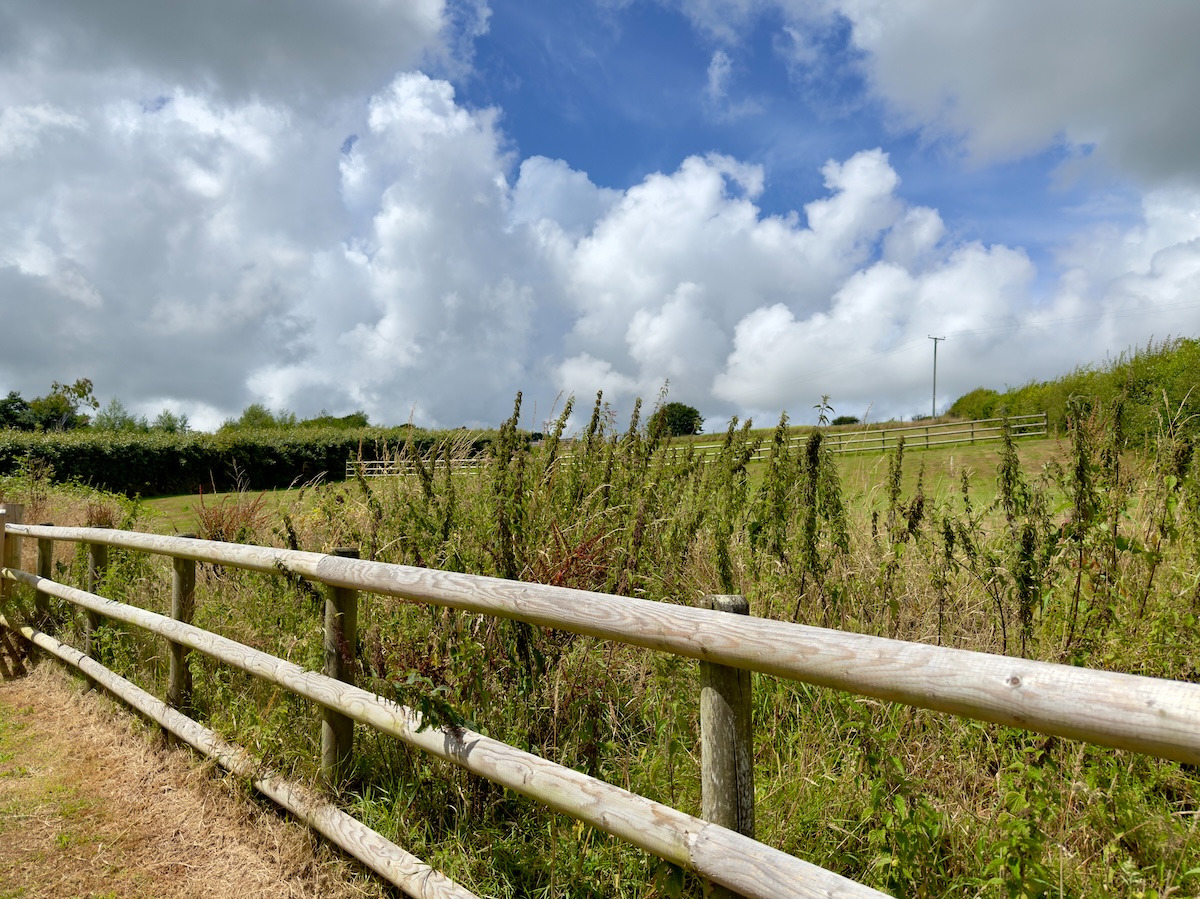
The land tipped and folded into itself. Fields just recently shorn of their sunflowers stitched themselves into a patchwork of greens and golds. Wooden gates, stone walls, and stables with proper stall doors. The landscape had that composed, centuries-old competence that suggests nothing is accidental.
“Here we are,” she said at last, turning up a steep, winding drive.
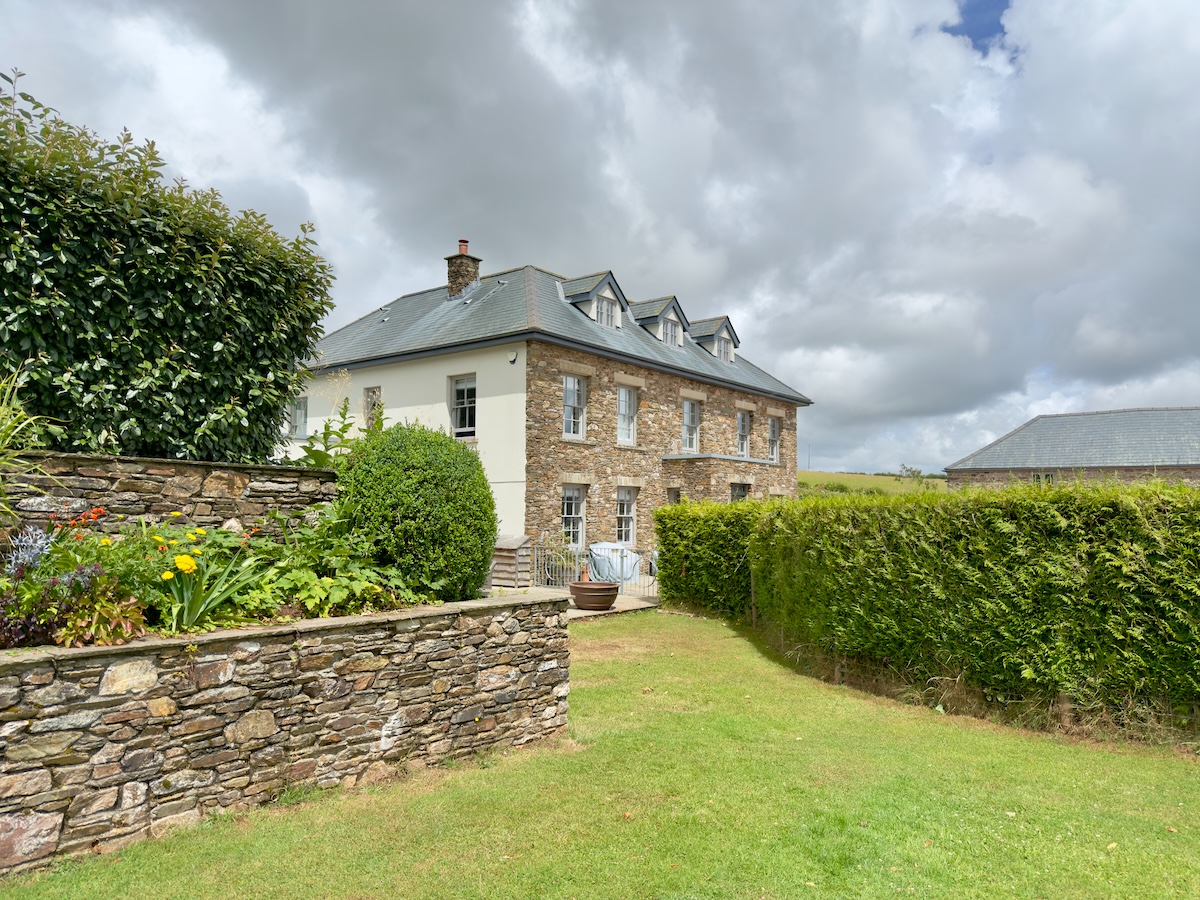
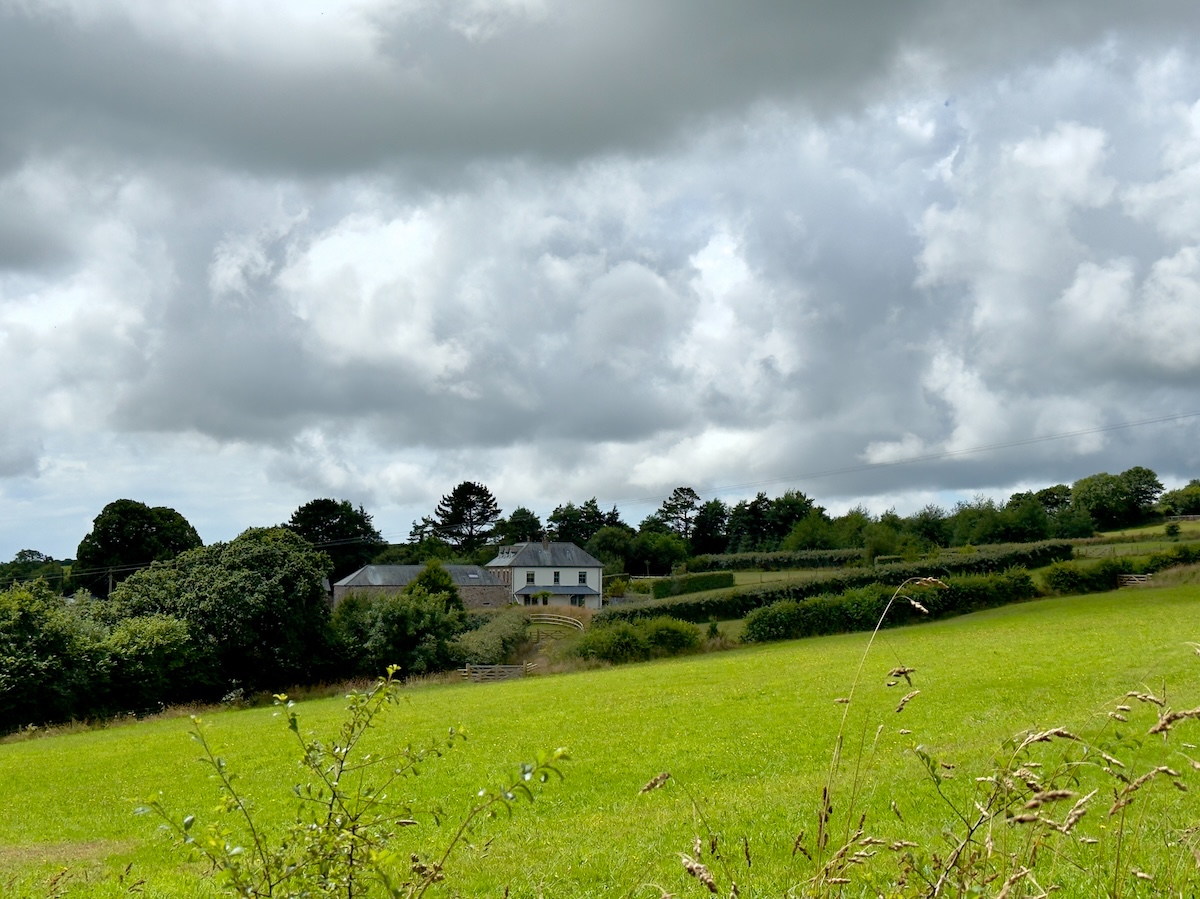
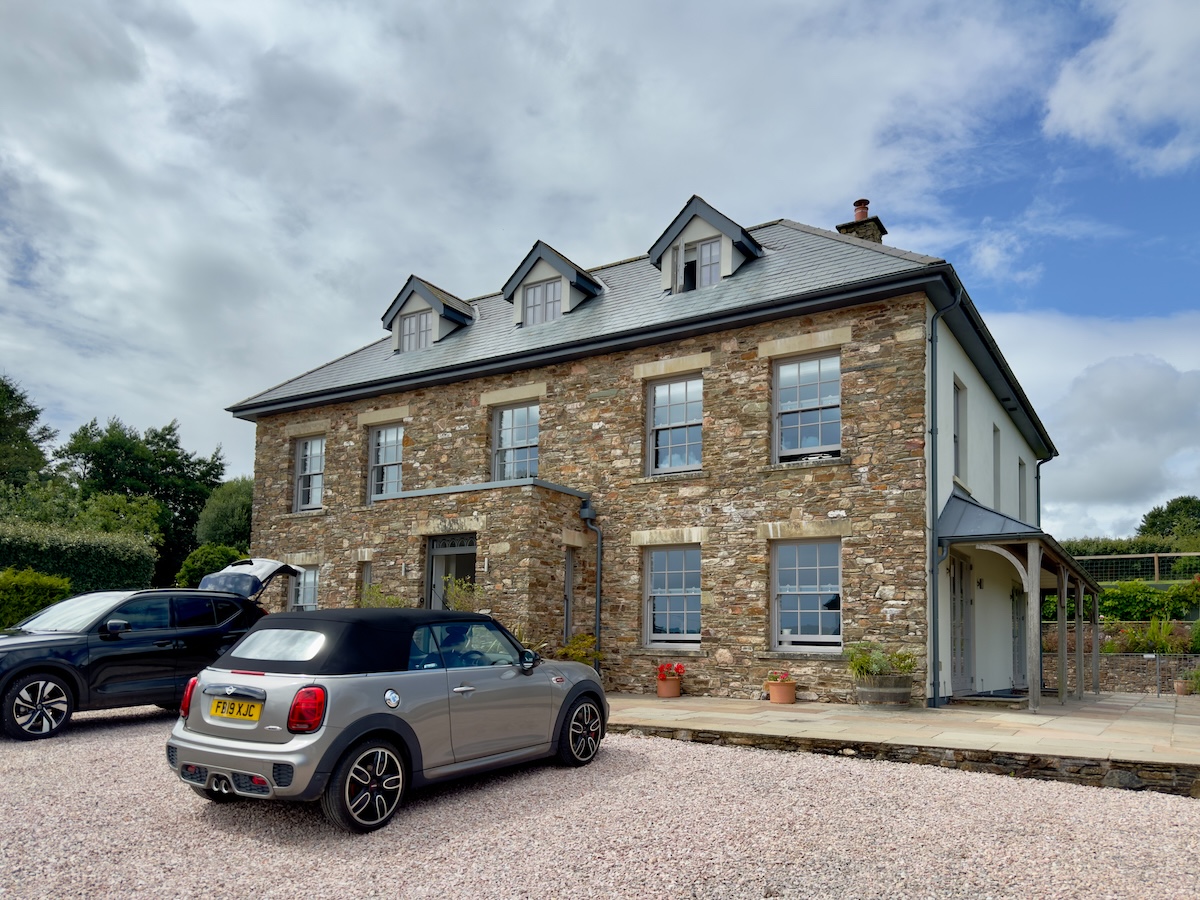
We’d been picturing a cozy cabin, with smoke curling out of a stone chimney. This house was three stories tall, stone-faced, symmetrical in a way that implies noble lineage. A gravel drive fanned out in front. Three or four significant outbuildings surrounded us—apparently two guest houses, a stable, and what appeared to be an event hall. It was the sort of place that would not be surprised to welcome visiting clergy.
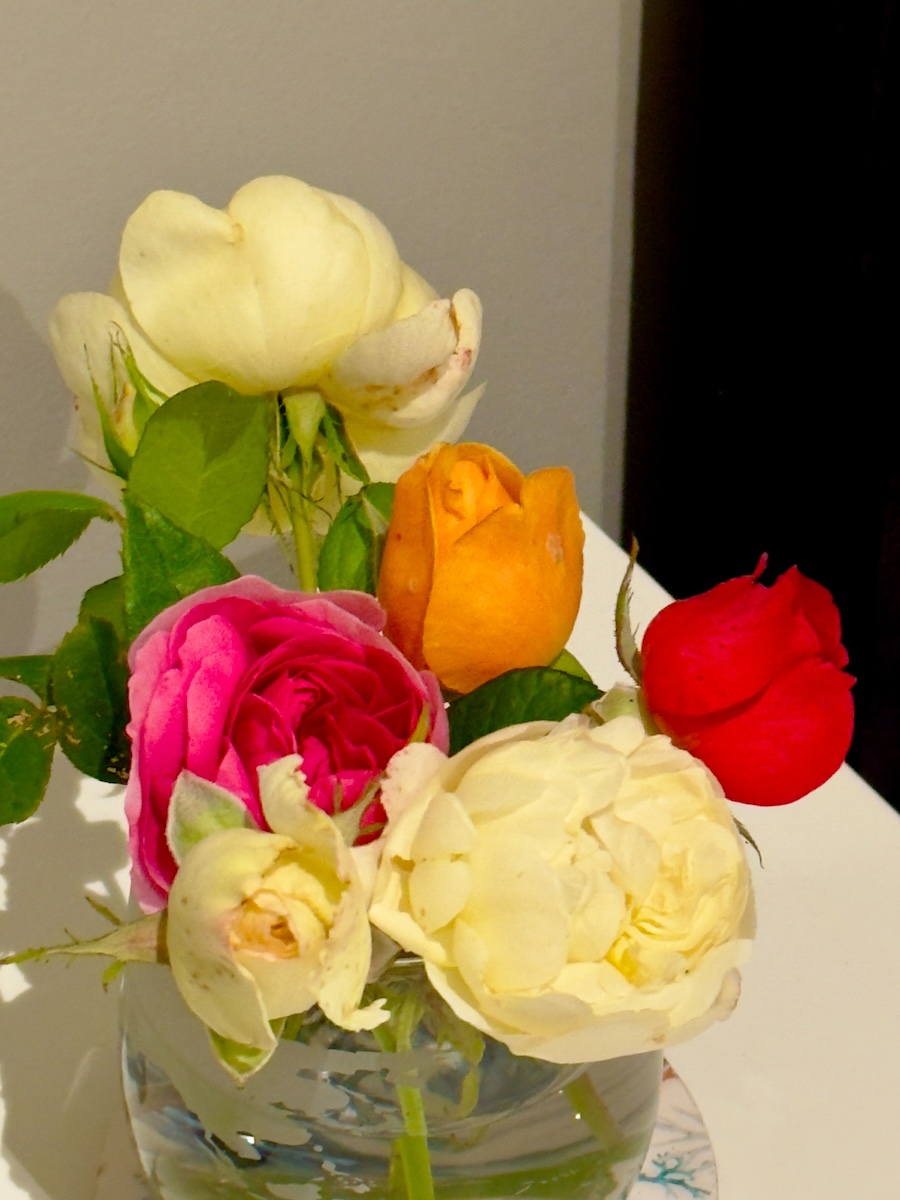
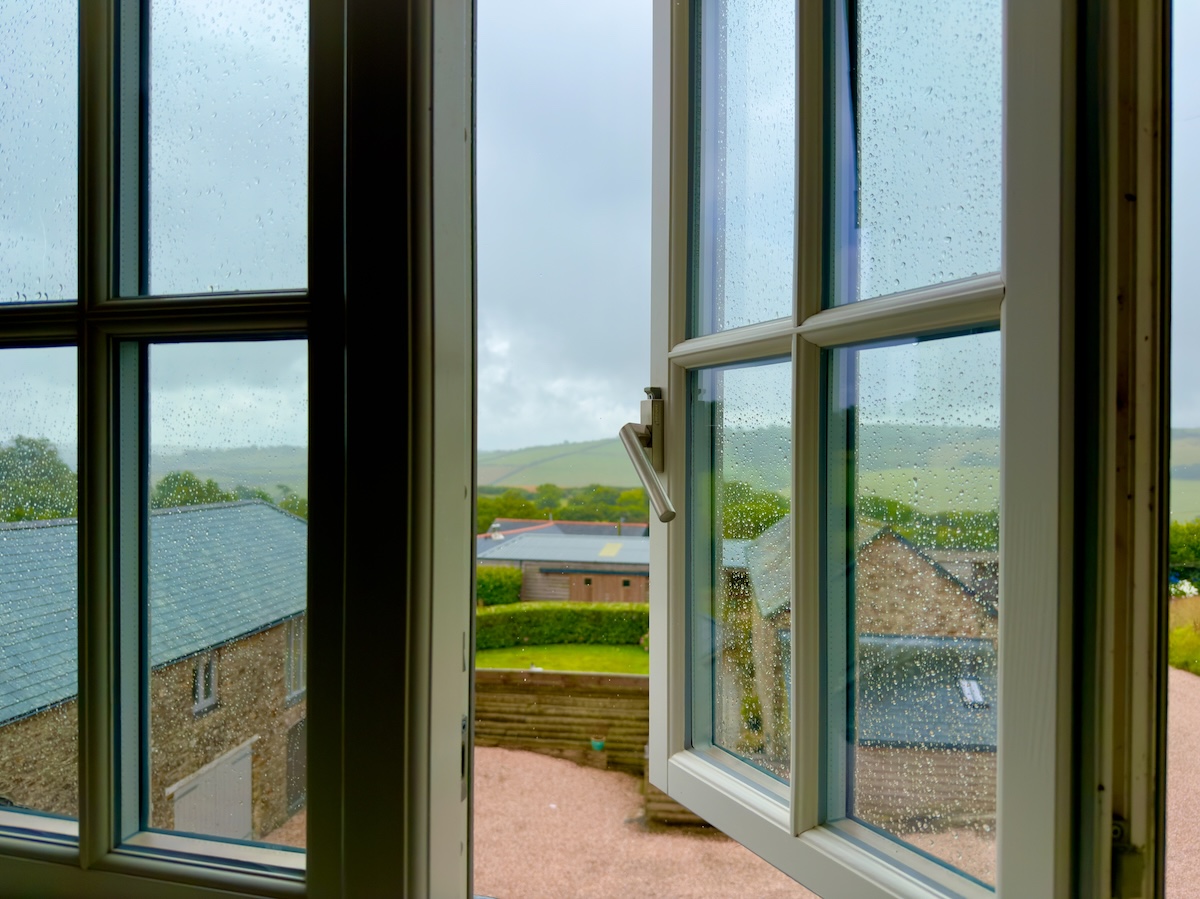
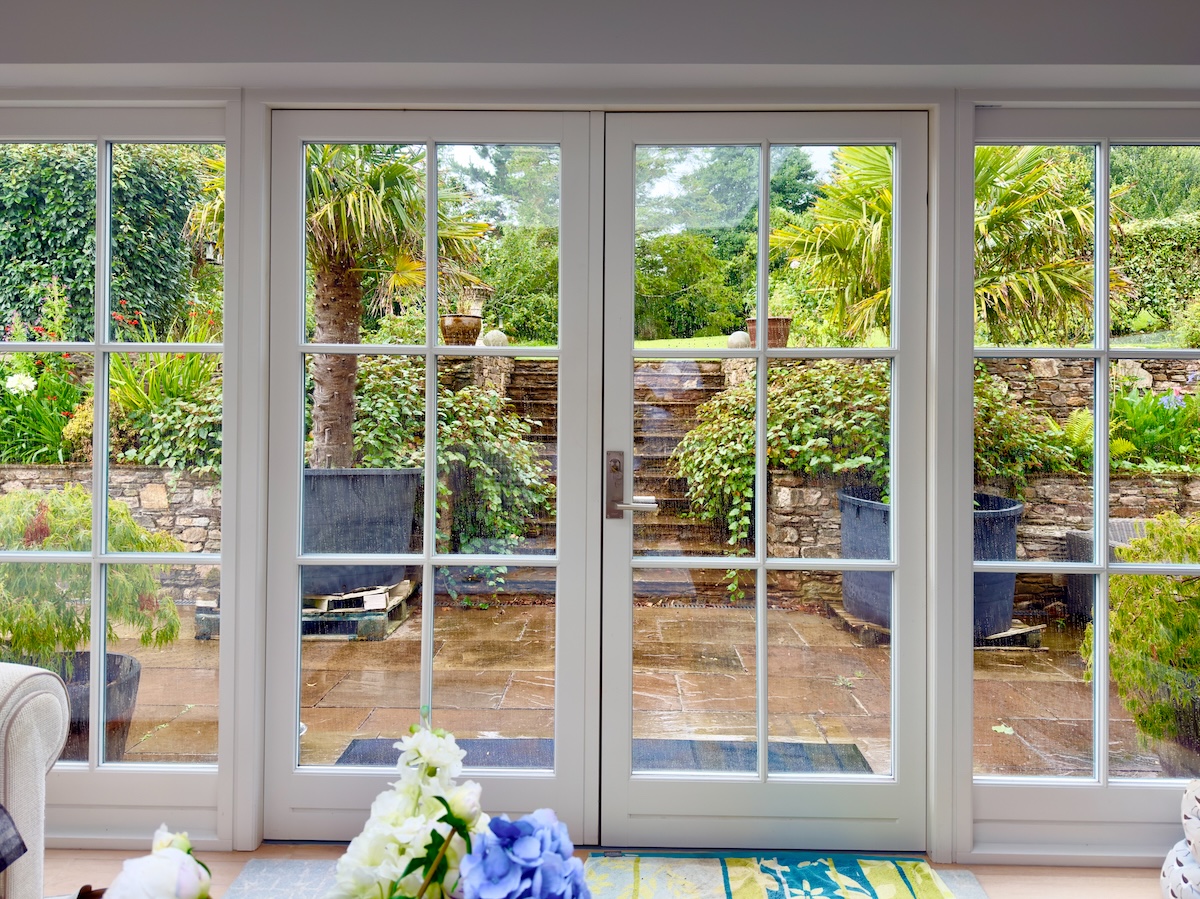
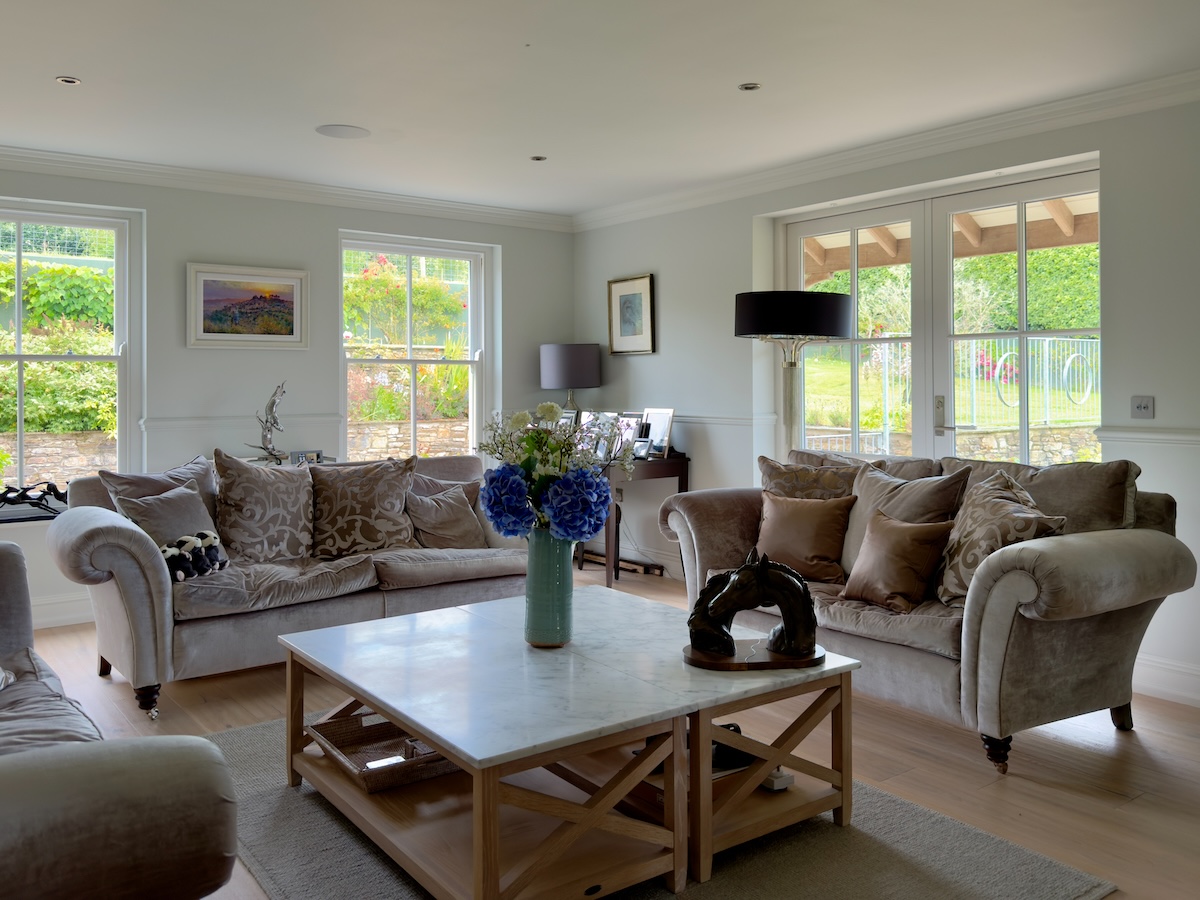
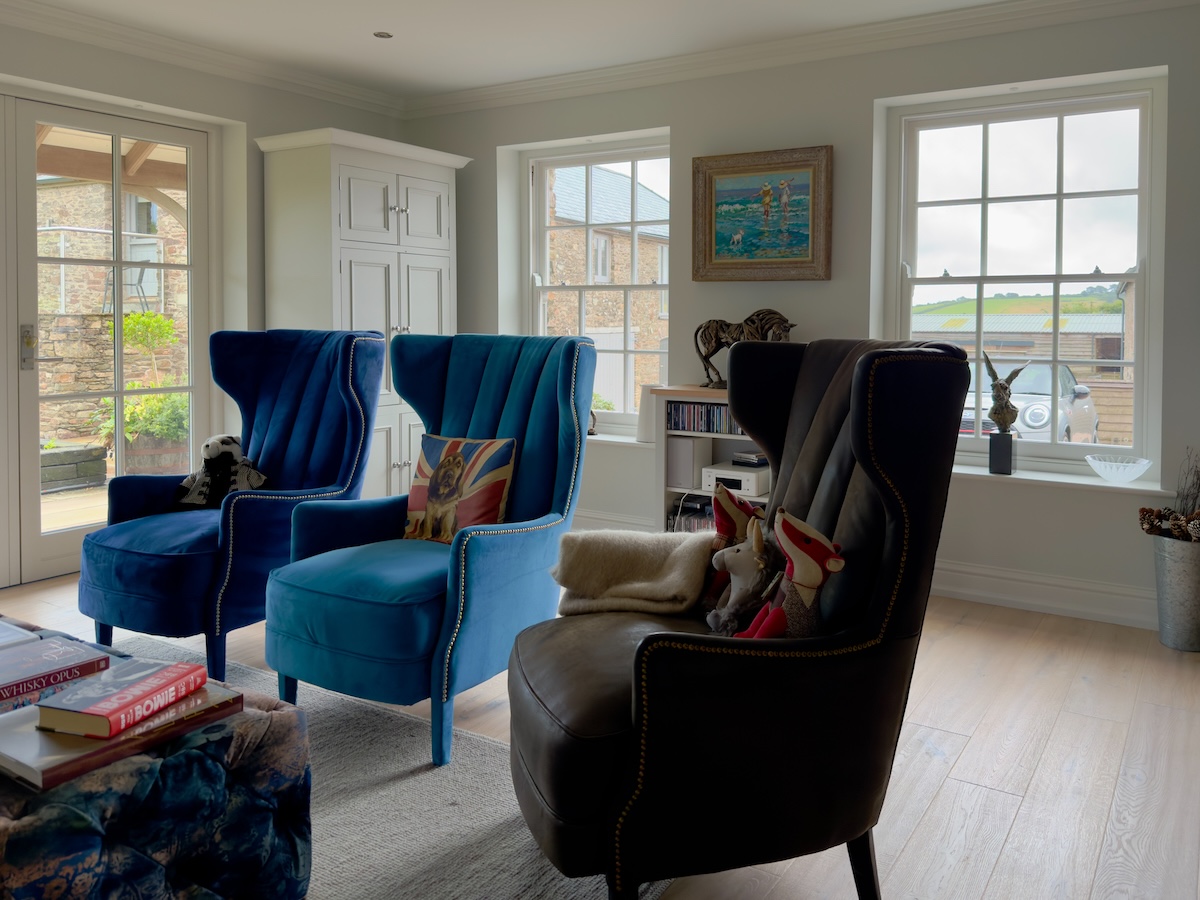
Inside, the light was immediate and generous. Cream walls, deeply colored wingback chairs, thoughtfully arranged books. Some coffee table books on Vivian Westwood and CBGBs, so you wouldn’t think our hosts were too serious. Our room on the top floor had hydrangeas casually arranged in a vase. Through the windows, a vast lawn extended into the mist-covered distance.
“This is lovely,” I said, in what I hoped was the calm tone of someone who had absolutely expected this.
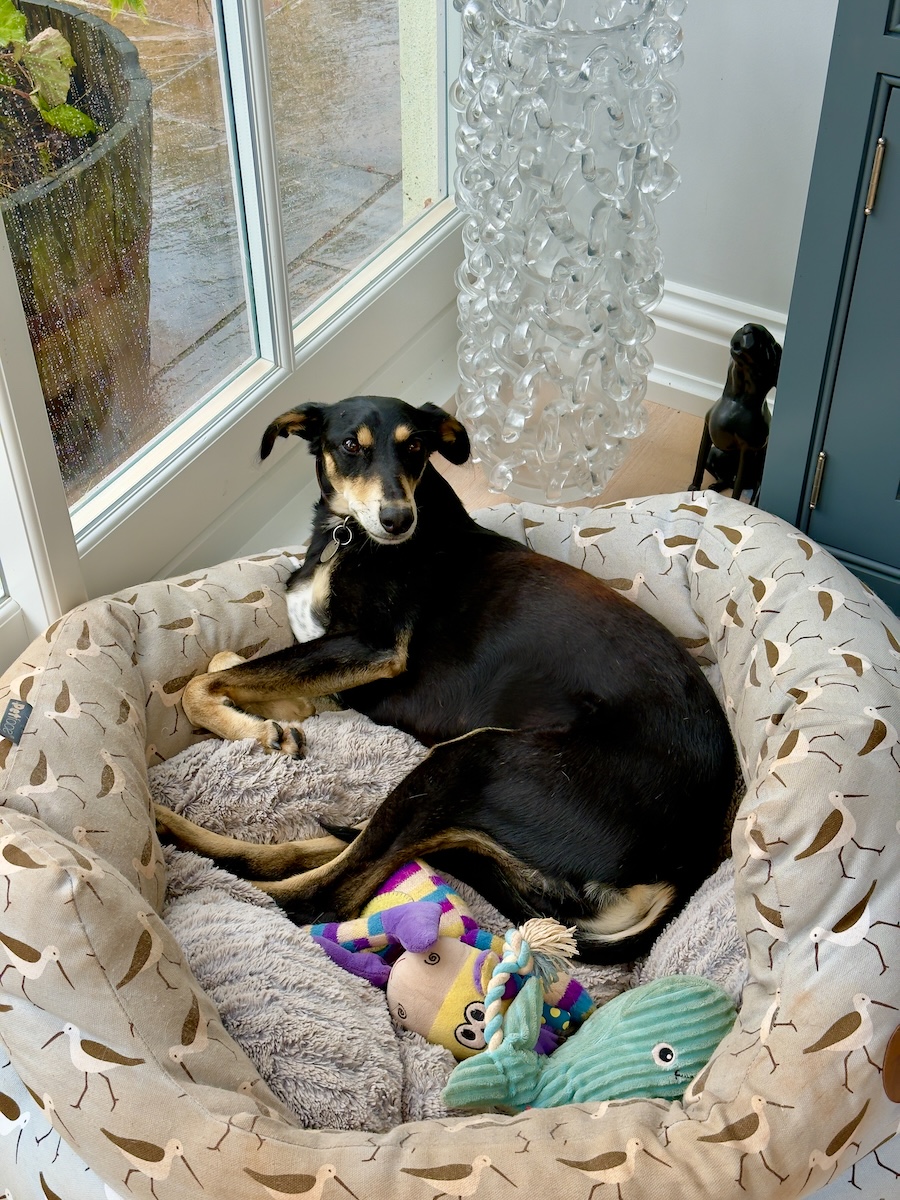
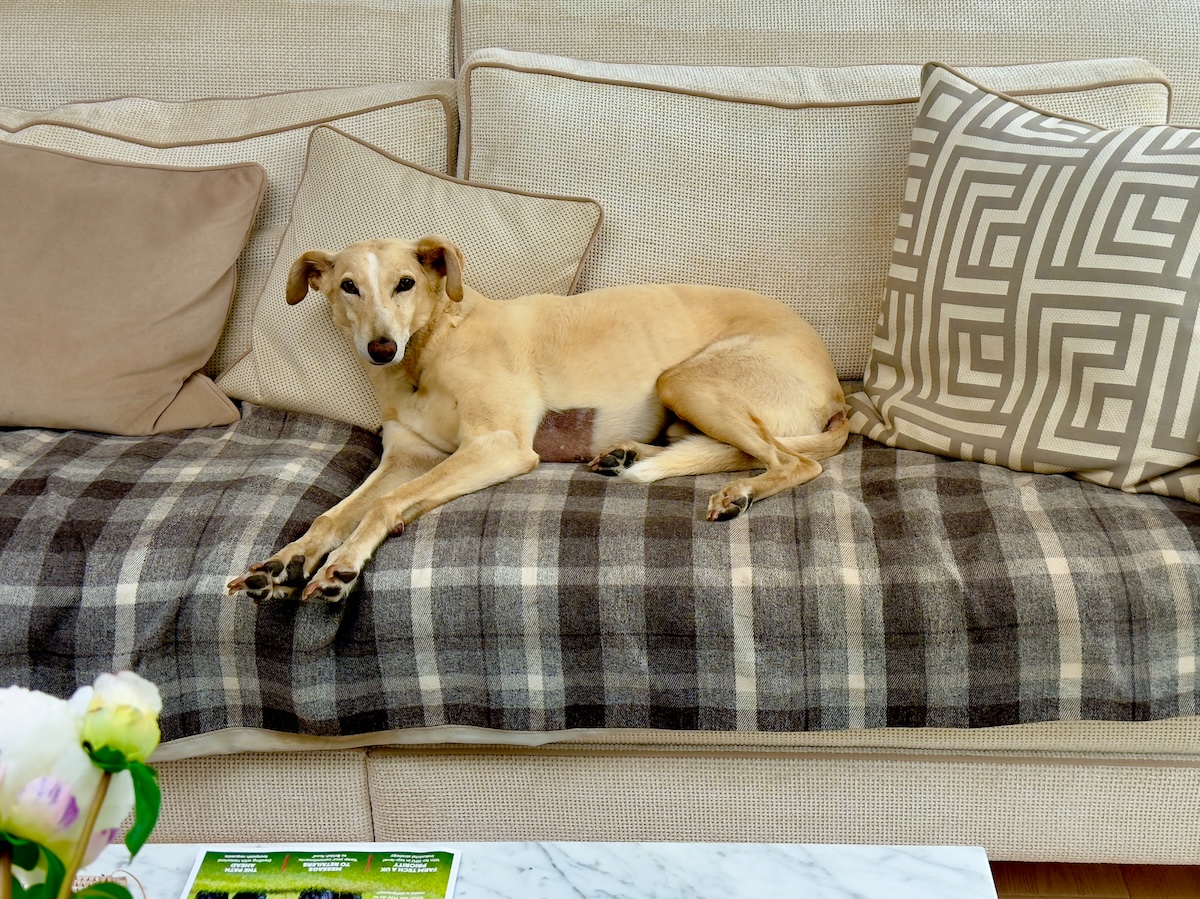
Conversation unfolded instantly and easily. We were halfway through a dramatic retelling of The Great Westbury Railway Fire before we’d even set down our bags. Their two rescue lurchers moved with long-legged grace, their faces thoughtful rather than skittish, occasionally glancing at us to confirm we were acceptable additions to the evening.
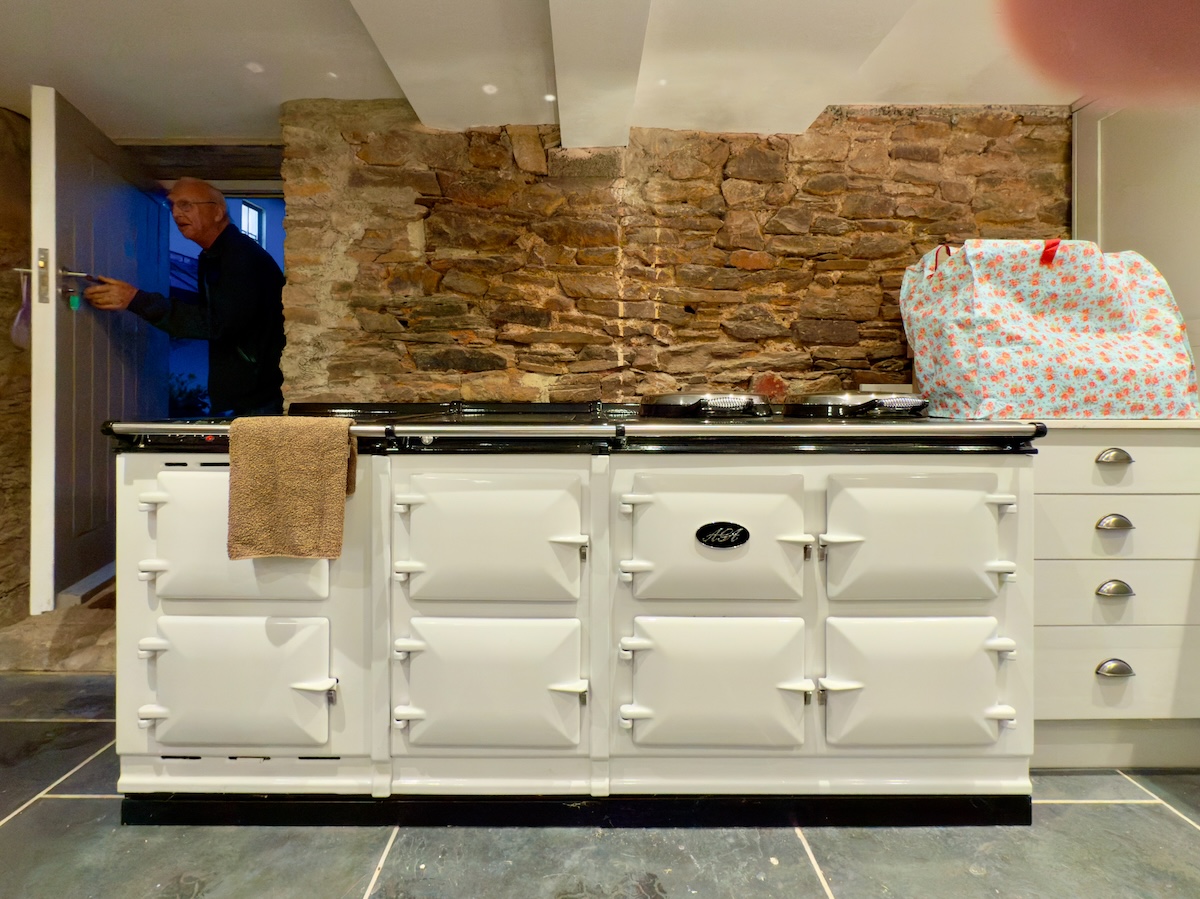
We took a short tour of one of the guest houses, the one with a fully outfitted professional kitchen on the ground floor. The kitchen was built around an enormous, white-enameled AGA range set against a stone wall. It was all installed, we learned, so that our host’s mother—a former caterer—could “keep busy” during her retirement. There was also a gym somewhere on the property because “town is a bit far.”
All of this was offered like a weather report.
At some point, Kim said, “Should we pop over to the pub?” I was a bit put out because I'd become peckish. Another drive along those shrubby roads in the dark to get drinks in town sounded not just spooky but possibly dangerous.
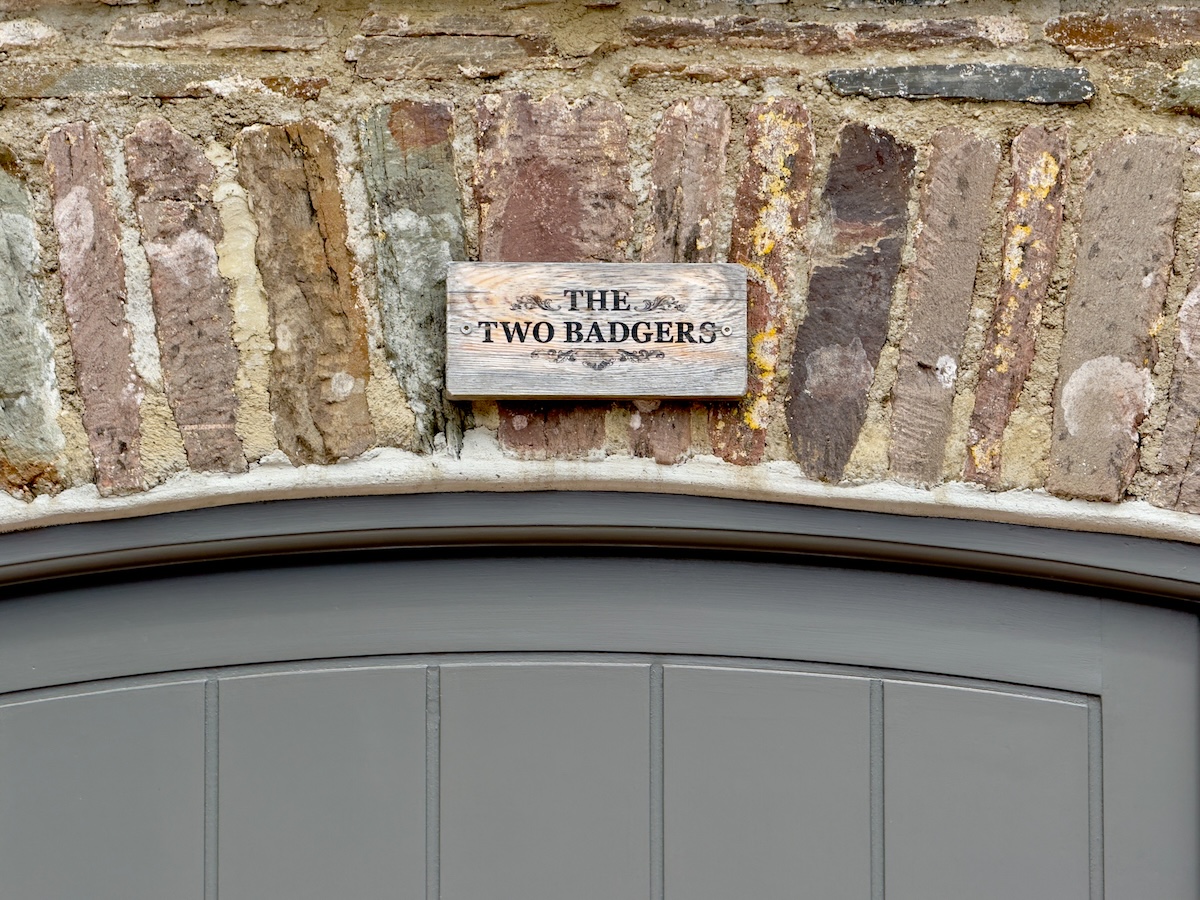
Not to worry. Turns out the pub was across maybe 40 feet of gravel. Above the door, a small wooden plaque read “The Two Badgers.” The sign was modest. The pub was not. It was a fully realized, fully stocked pub. Bar stools. Proper taps. Shelves of spirits arranged with quiet pride. Glassware that suggested a long-term commitment to the concept of evening.
"Do other people come to drink here?" I asked, as though this might be a charming rural side hustle.
“No,” I was told.
Drinks appeared. Patrón XO Café—our hosts’ favorite—was poured with enthusiasm. Then Scotch. A little American bourbon for balance. Then…vodka? Maybe? Stories overlapped before they got finished. No one checked their phone.
By the time someone glanced at a clock, it was nearing midnight, and dinner had become less a plan and more an imperative. The grill was lit, I was given tongs, and thick steaks met flame. English sides assembled themselves. There were potatoes. The rest is anecdotal. We ate well past the hour when most cabins in the woods would have gone dark.
And it all, somehow, felt entirely normal. Generous. Easy.
Morning brought hot coffee and the offer of “a fry-up.” I imagined something sensible. Toast. Eggs. Maybe a link sausage.
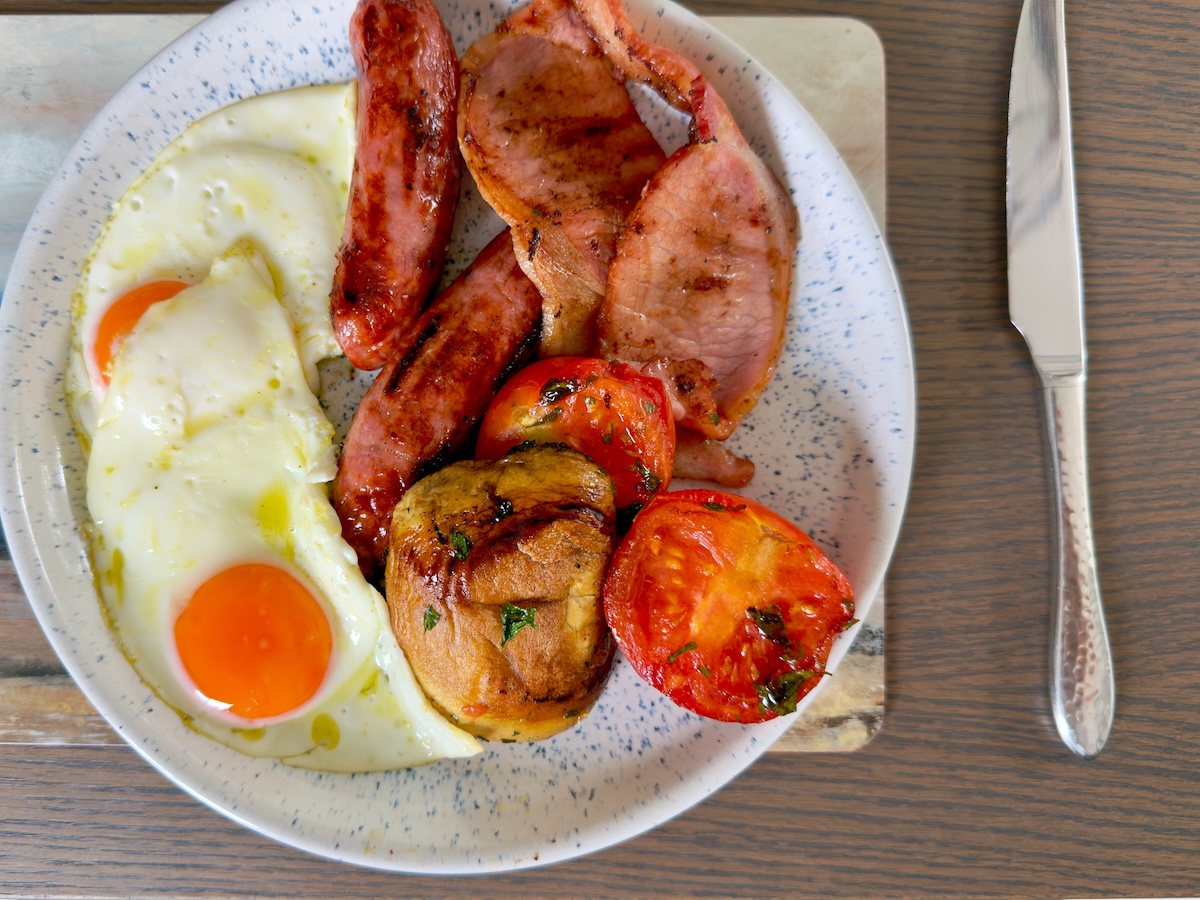
What arrived was an International Protein Summit on a Plate. Eggs, sausages, back bacon, grilled tomatoes, mushrooms glistening with butter, and potatoes. Toast was standing by in support. It wasn’t breakfast so much as an English policy statement about mornings.
After breakfast, we stepped outside for a “morning constitutional.”
That was when the scale fully revealed itself.
Acres and acres and acres.
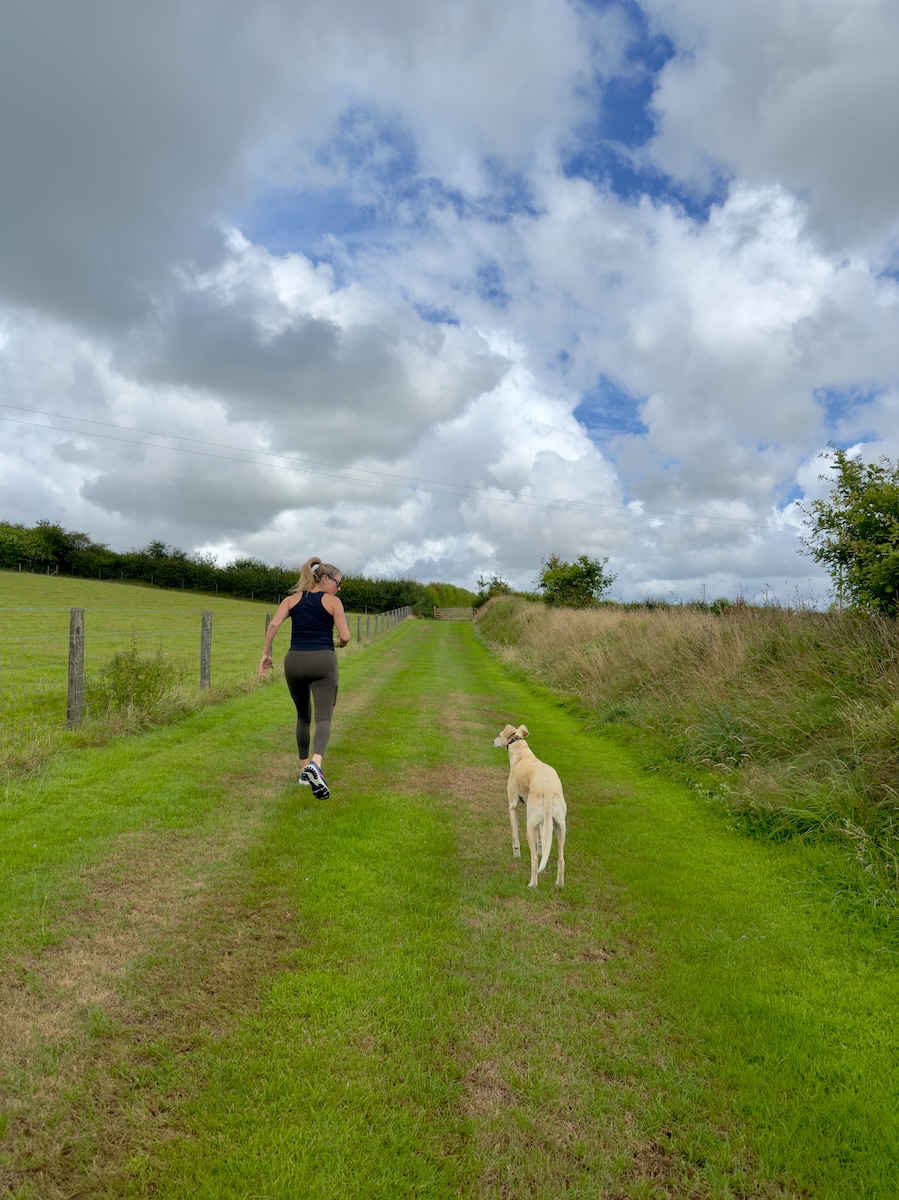
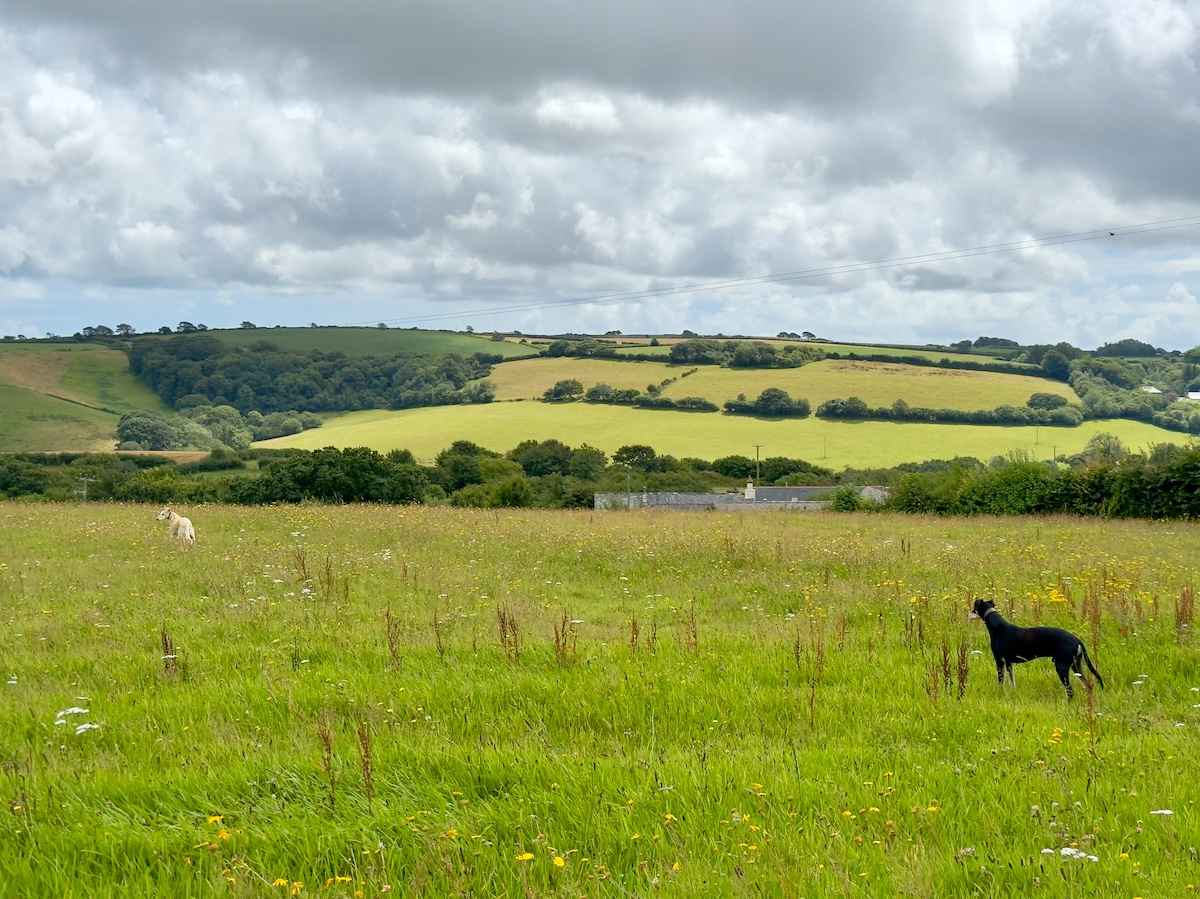
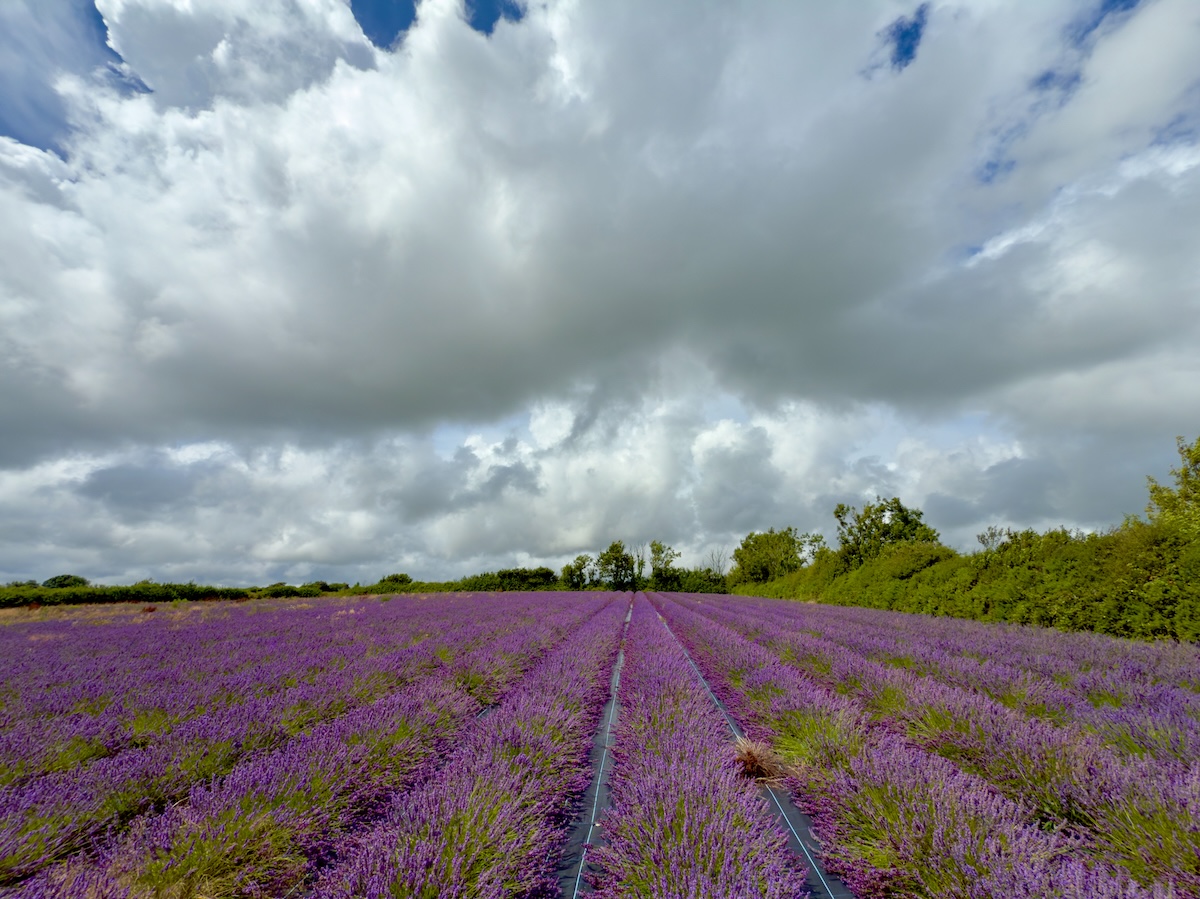
A long grassy lane stretched toward a horizon that would not hurry. Wooden gates opened onto fields layered in green. Stables stood in quiet readiness. A pond edged in stone reflected tree ferns and a sky that alternated between dramatic cloud and sudden blue. Beyond a rise, rows of lavender ran in disciplined purple bands, filling the air with a fragrance so clean it felt designed for company.
The lurchers happily ran ahead of us through the fields, scanning the distance like minor aristocrats surveying their holdings. They belonged. Though they did seem faintly disappointed not to find any groundhogs or deer to chase. They had to content themselves with wrestling each other.
We walked over the hillocks through the dew while the sun and clouds vied with one another overhead. We had been there less than 24 hours, but it didn’t feel that way.
Early that afternoon, our hosts mentioned some family business that required their attention. They did not ask us to leave. I suspect they would have happily kept us longer. But at some point, you remember you are just visiting. So we decided to head back to London.
Our host insisted on showing us “a bit of the area” on the drive to Totnes. We wound through Dartmouth—the original one, I assume—and along the coast. She gestured toward the Britannia Royal Naval College. “That’s where the queen met Philip,” she said, matter-of-factly. Kim nodded like this was normal information. We nodded in the way of people who were doing their best.
The countryside folded around us. The hedgerows pressed close, then opened again. She continued pointing out landmarks as we wound back toward Totnes, naming each one as we passed.
Back at the station, there was no fire, no drum circle, no seat-shopping tour of the carriages. We boarded without incident. Rick breathed a sigh of relief.
We’d been invited for a weekend in the country, and we’d expected a rustic cabin.
Instead we got a private pub.
And fields of lavender.




Write a comment