
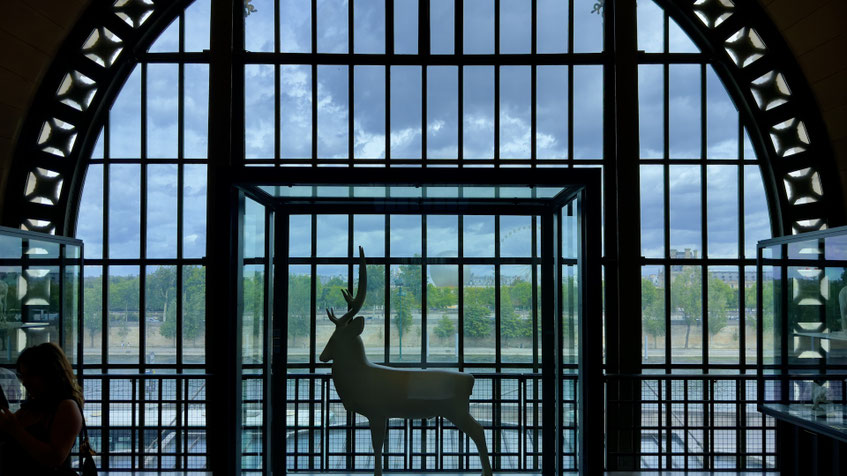
The first thing that hits you when you walk into the Musée d’Orsay is its sheer scale. Not the paintings, not the names—the space. It’s enormous, airy, and just slightly intimidating. Very French.
The central hall looks industrial in that Jules Verne, steampunk kind of way—iron ribs overhead, a ceiling more engineered than decorative, and light pouring through sheets of glass. Under all of it are acres of sculpture, late-19th- and early-20th-century paintings, decorative arts, architectural models, and photography. If it happened roughly 1848 to 1914—that stretch when artists started ignoring what they’d been taught in school—the Orsay’s probably got it.
It is, objectively, a lot—especially if you're not an art critic. We don't "engage in dialogue with the canon." We're just two reasonably alert humans trying not to strain our necks gawking at everything while also pretending we have coherent thoughts about Post-Impressionism. Mostly, we're just trying to make it to lunch without full-blown museum fatigue.
You could try to “do” the Orsay—make a chronological list, march from gallery to gallery with intent, tick off names like you’re earning your European Art merit badge.
We did not.
We stalled in certain rooms and drifted into others by accident. We doubled back because something wouldn’t let us leave—an odd expression, a marble ankle that looked too real, a strange bit of furniture. We let the small details boss us around.
These are the works that stopped us—not because they’re famous, though many are—but because something in them made it impossible to keep walking.
Sculpture Highlights
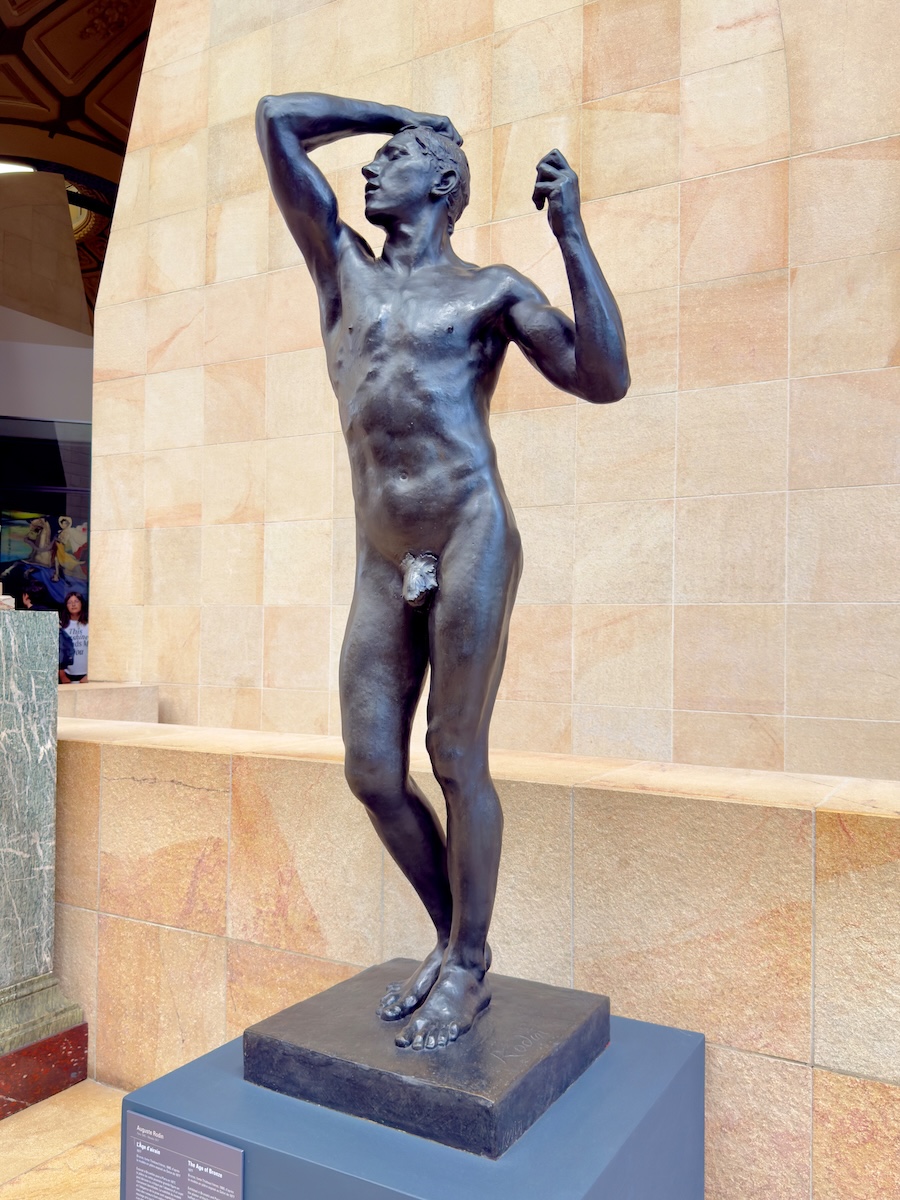
The Age of Bronze, 1871 – Auguste Rodin
When Rodin unveiled this, critics accused him of cheating—of casting it directly from a live model because the body looked too real. He hadn’t. The rumor nearly ruined him, then catapulted him into notoriety. Seen in person, the tension isn’t theatrical. It’s internal—the raised arm, the half-turn, the sense of a body caught mid-thought.
Monument to Gérôme, 1878–1909 – Jean-Léon Gérôme & Aimé Morot
This is what happens when the French state commissions a monument and the sculptor’s son-in-law gets involved. Morot folded Gérôme’s earlier Gladiators group into the base, turning tribute into spectacle. A fallen fighter, a triumphant one, and Gérôme himself stepping in to adjust the scene. Art about art. Dramatic. Slightly self-aware.

The Four Continents, 1872 – Jean-Baptiste Carpeaux
Four female figures strain together beneath a globe, bodies twisting, muscles engaged, allegory doing what 19th-century allegory did best—making geopolitics look athletic. It’s exuberant and a little exhausting. Under the museum’s great clock, the sculpture feels both triumphant and faintly imperial, a reminder of how confidently Europe once carved the world into manageable shapes.
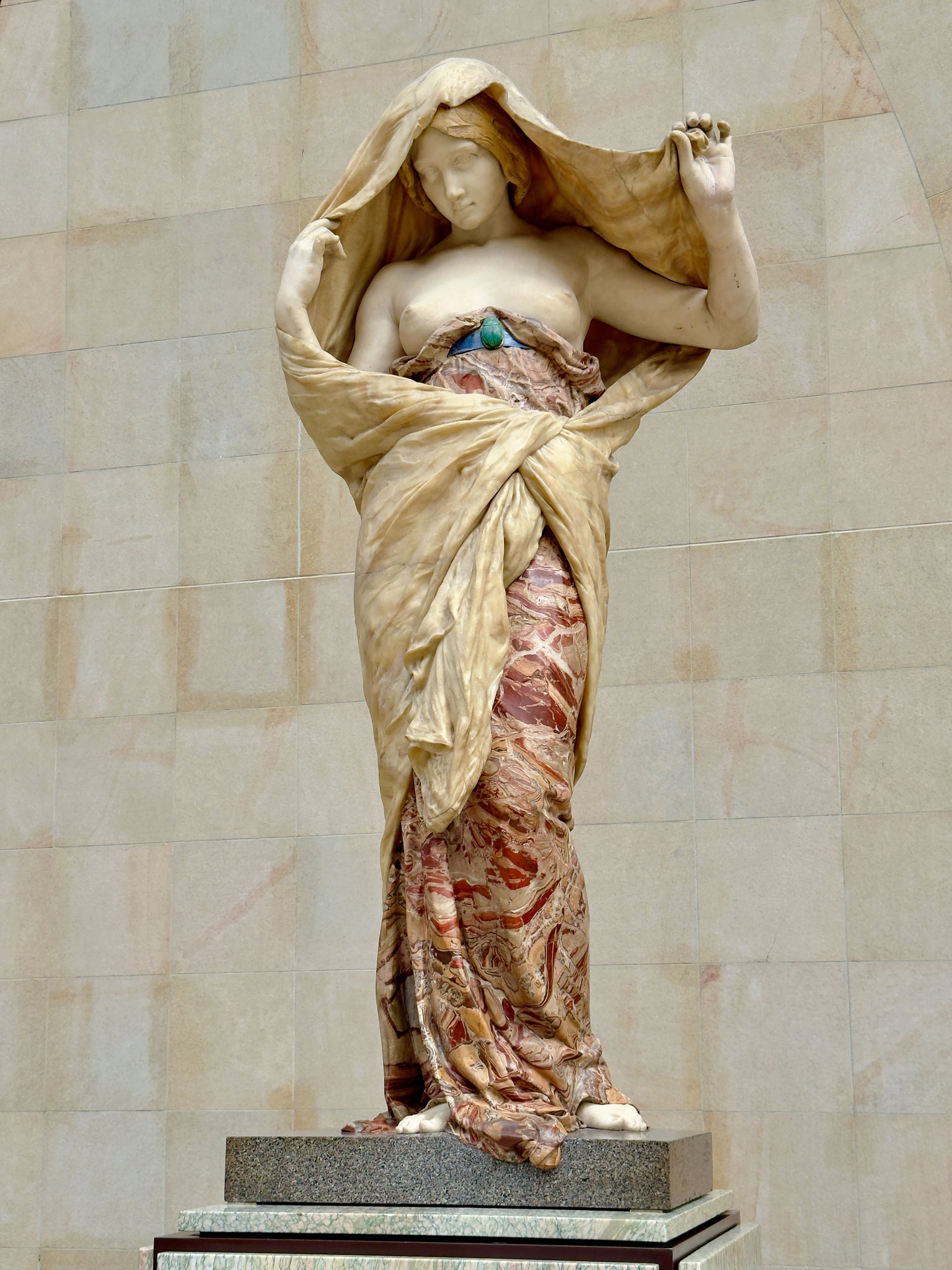
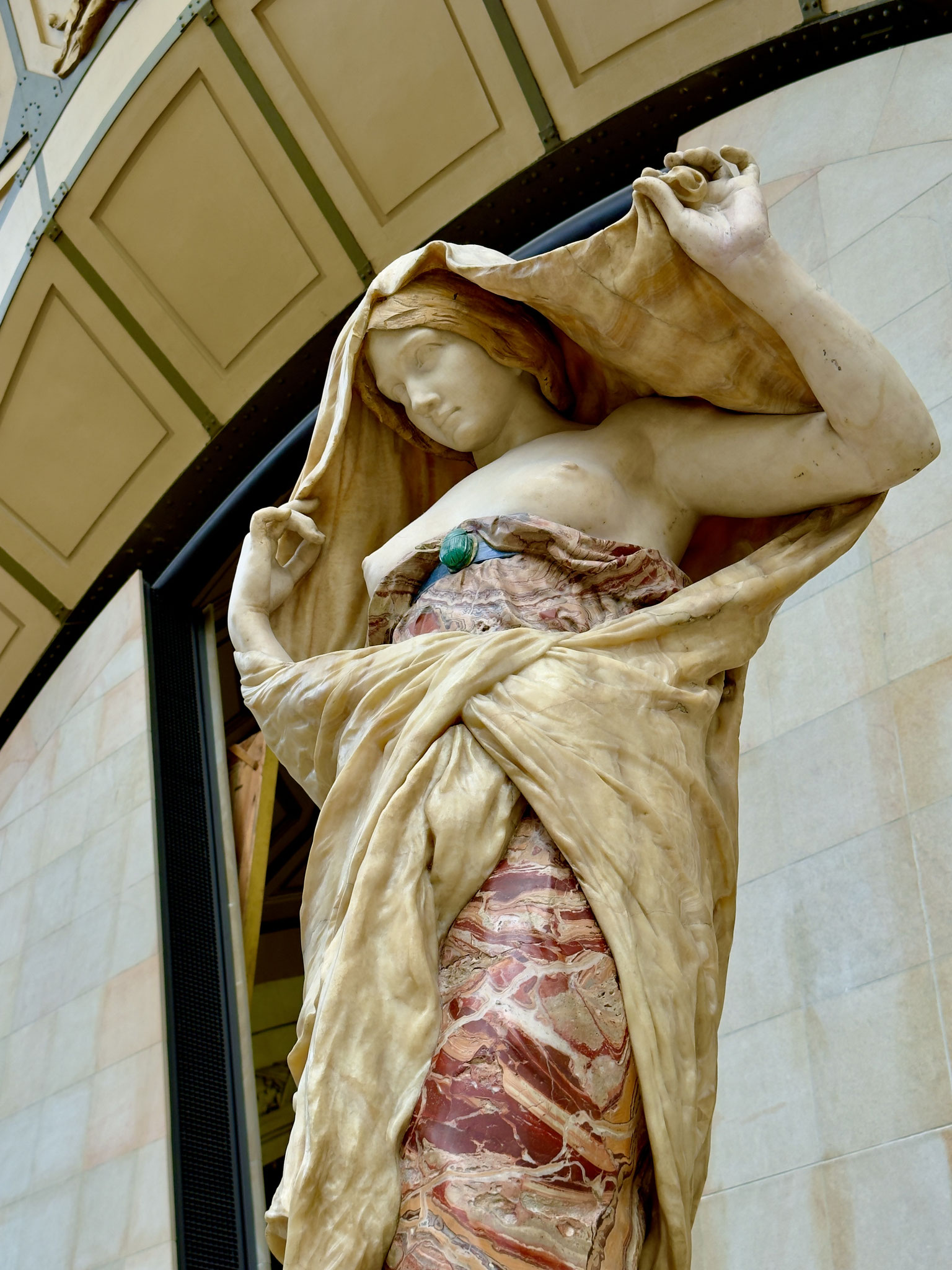
La Nature se dévoilant à la Science, 1899 – Louis-Ernest Barrias
Nature lifts her veil in stone—but not just one kind of stone. Barrias combines different marbles and onyx, the pale body glowing against darker layers beneath. The dress looks like real brocade, heavy and textured. Up close, it’s hard to believe any of it is marble. Science may get the title, but the craftsmanship is the revelation.


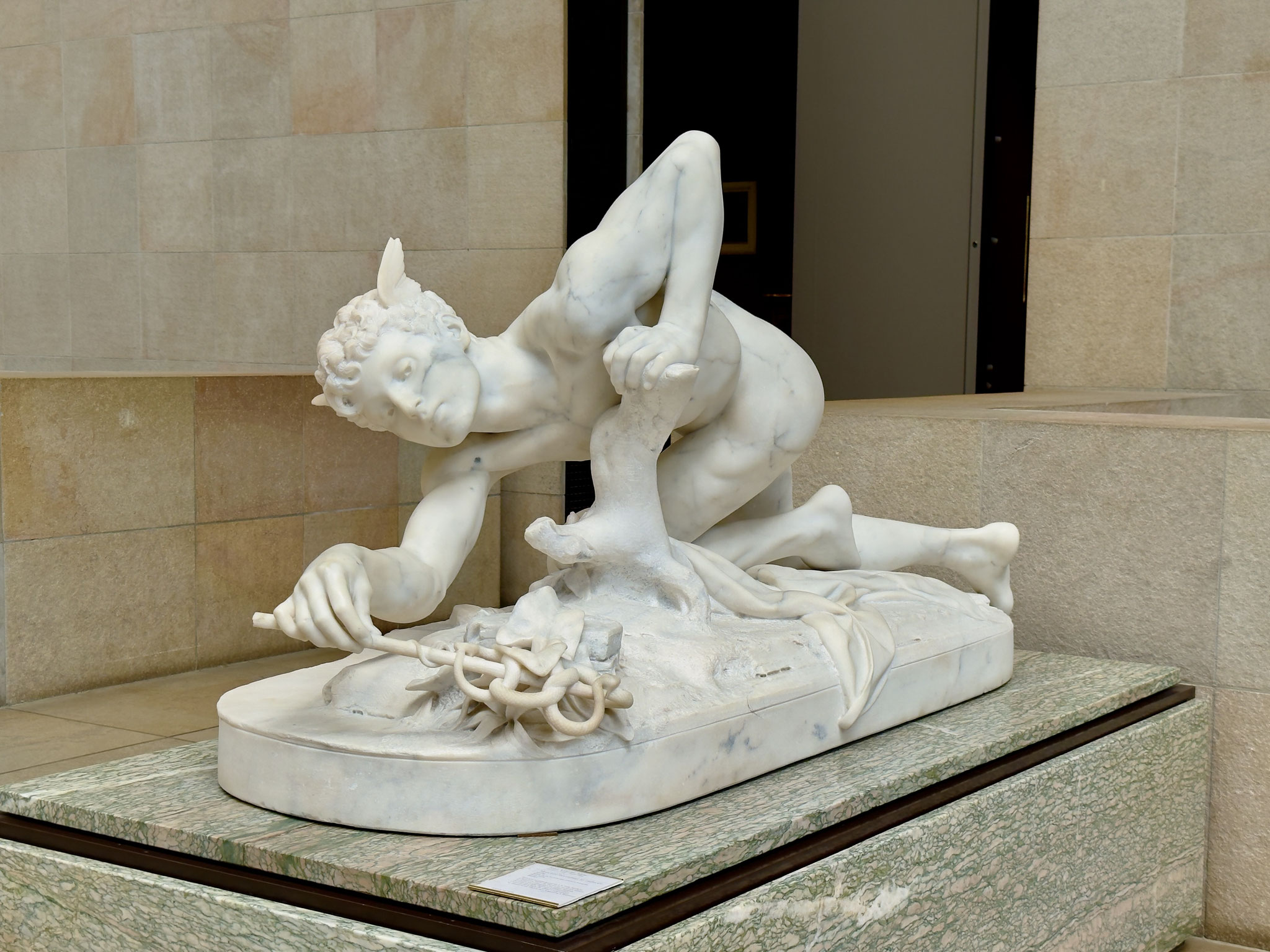
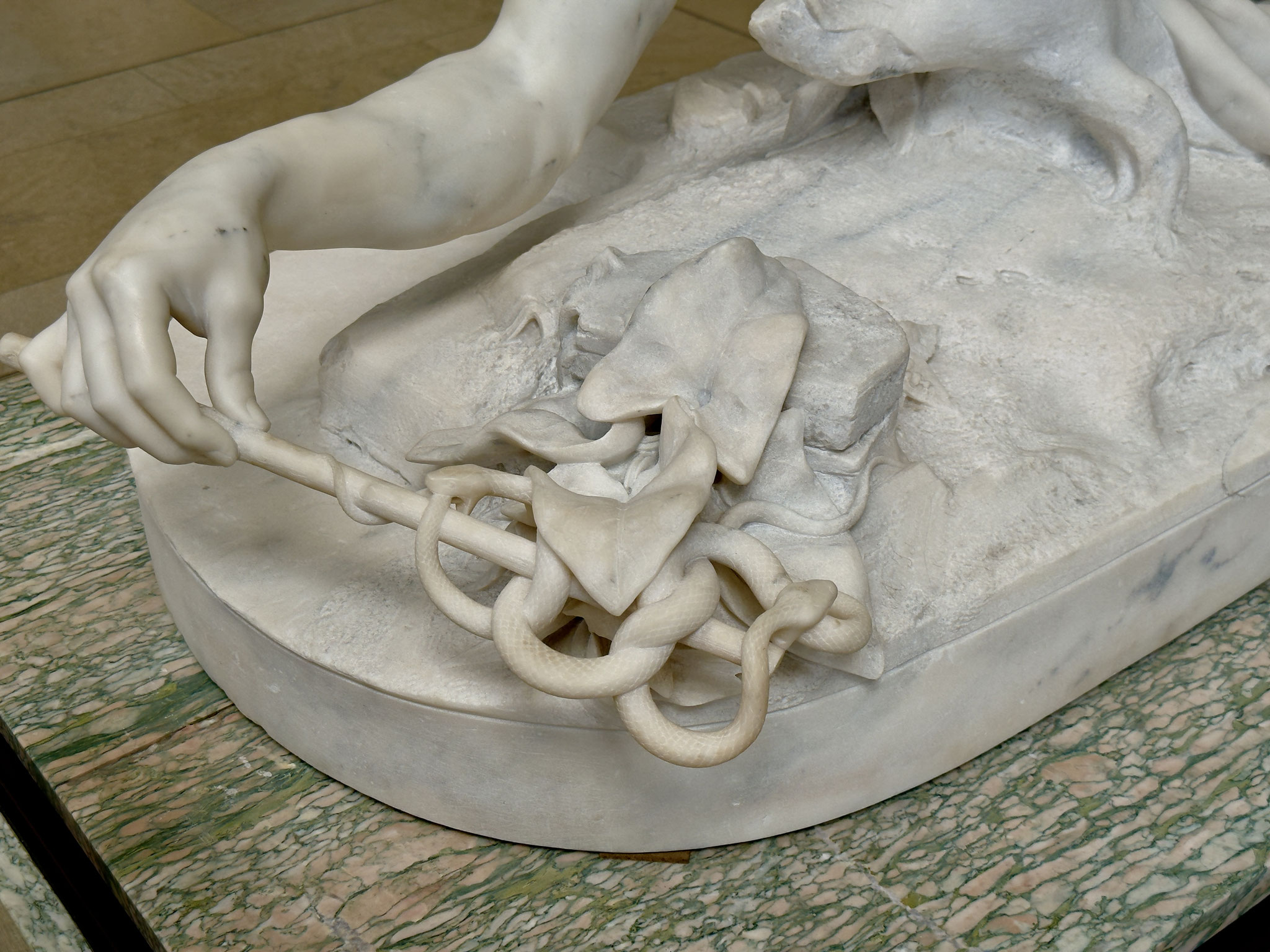
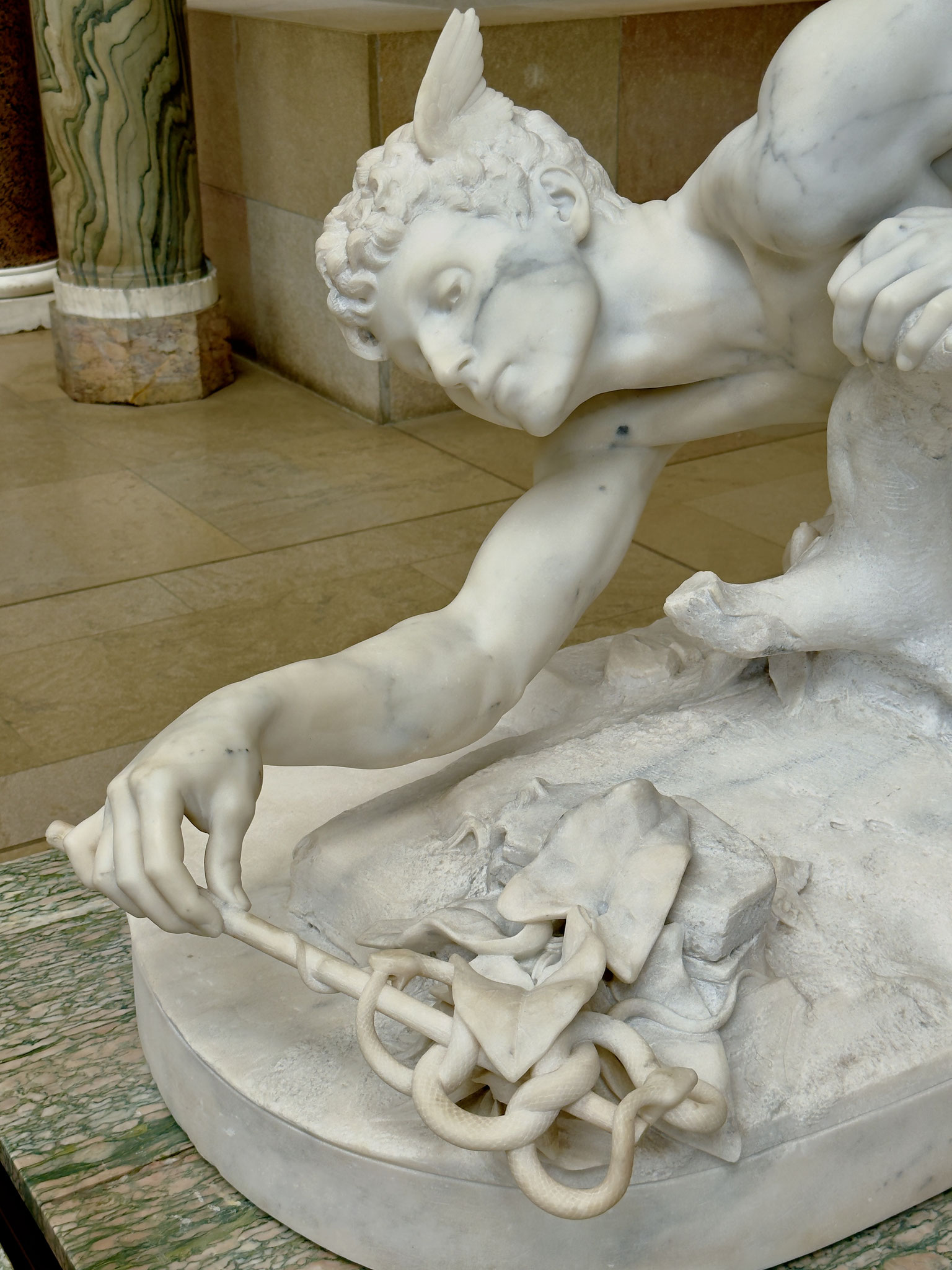


Mercury Inventing the Caduceus, 1878 – Jean Antoine Idrac
Mercury pauses mid-discovery, studying the staff that will become his emblem. The body is young, balanced, almost casual, as if invention were simply another afternoon activity. Myth here feels less epic and more intimate—a god alone with an idea. You can almost see the moment the symbol clicks.
Arion Seated on the Dolphin, 1870 – Ernest-Eugène Hiolle
The legend says Arion was saved by a dolphin after being thrown overboard by sailors who wanted his money. Here he rests, calm and composed, the danger behind him. The sculpture feels surprisingly gentle—less shipwreck, more afterglow. Myth reduced to a quiet, improbable rescue.

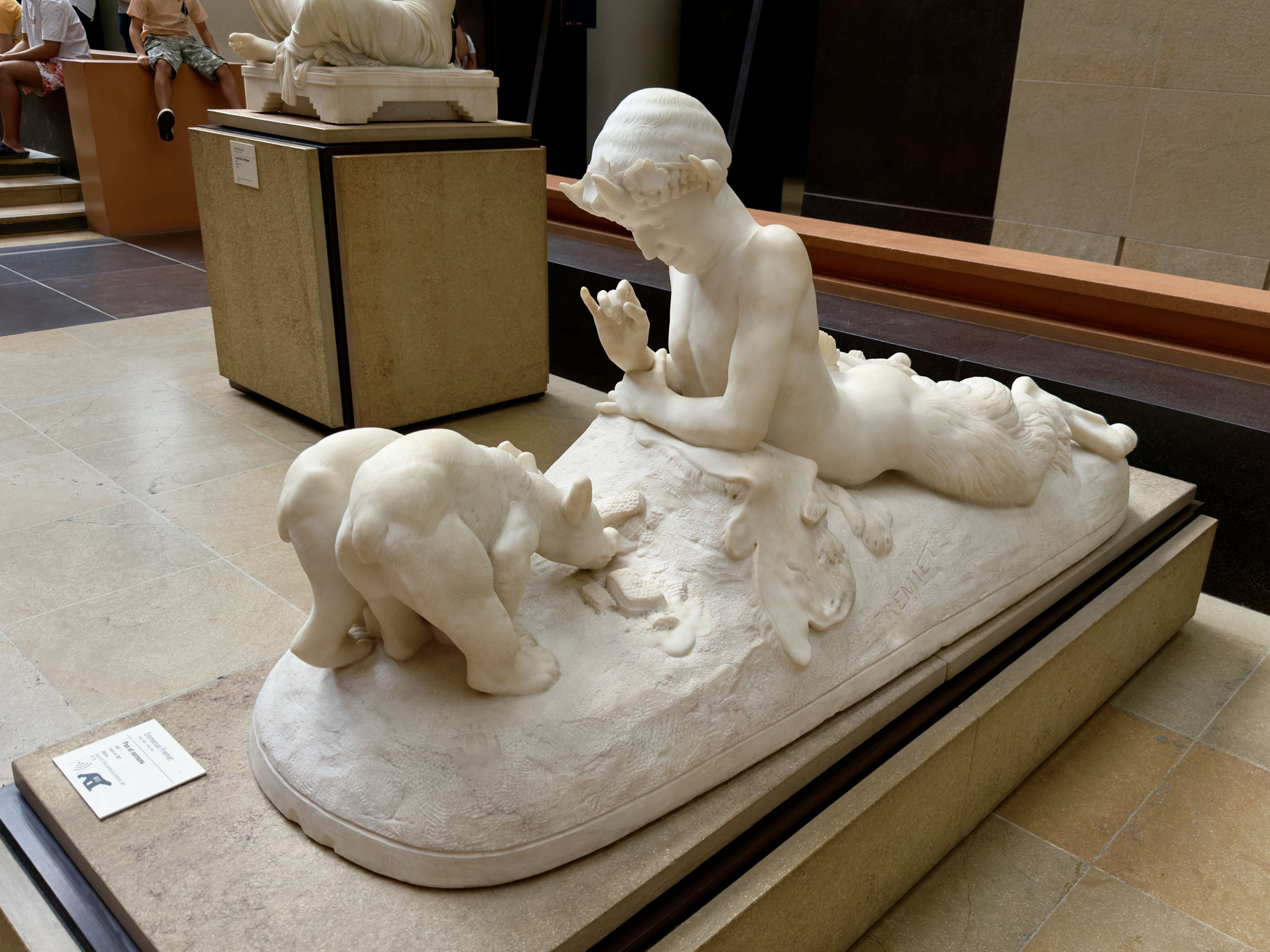
Pan et oursons, 1867 – Emmanuel Frémiet
Pan sits with two bear cubs draped against him, equal parts woodland god and slightly questionable babysitter. It’s tender and faintly odd. The cubs lean in; Pan looks amused. For all the grand allegory downstairs, this one feels personal—myth scaled down to something almost domestic.
Painting Highlights
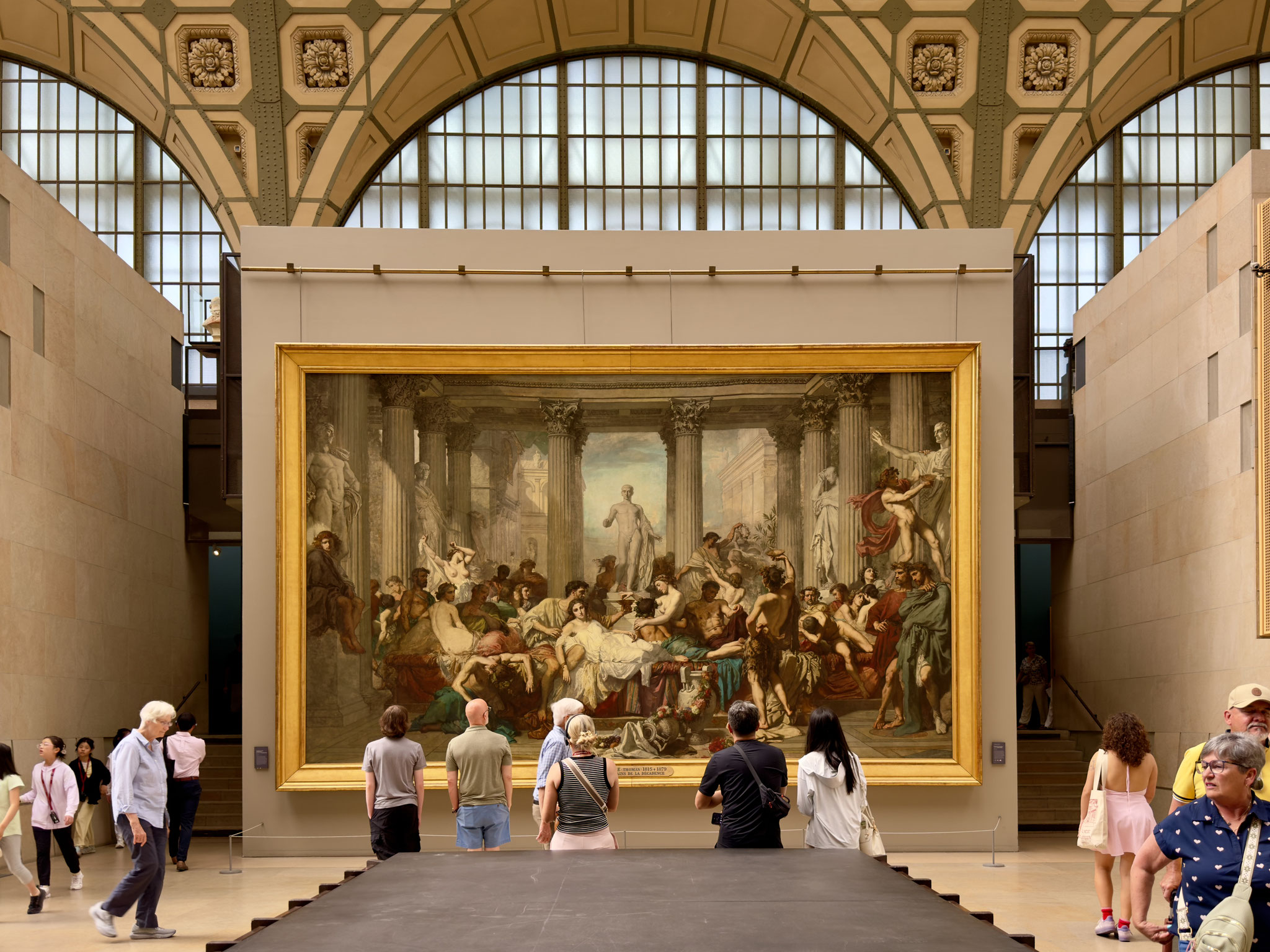

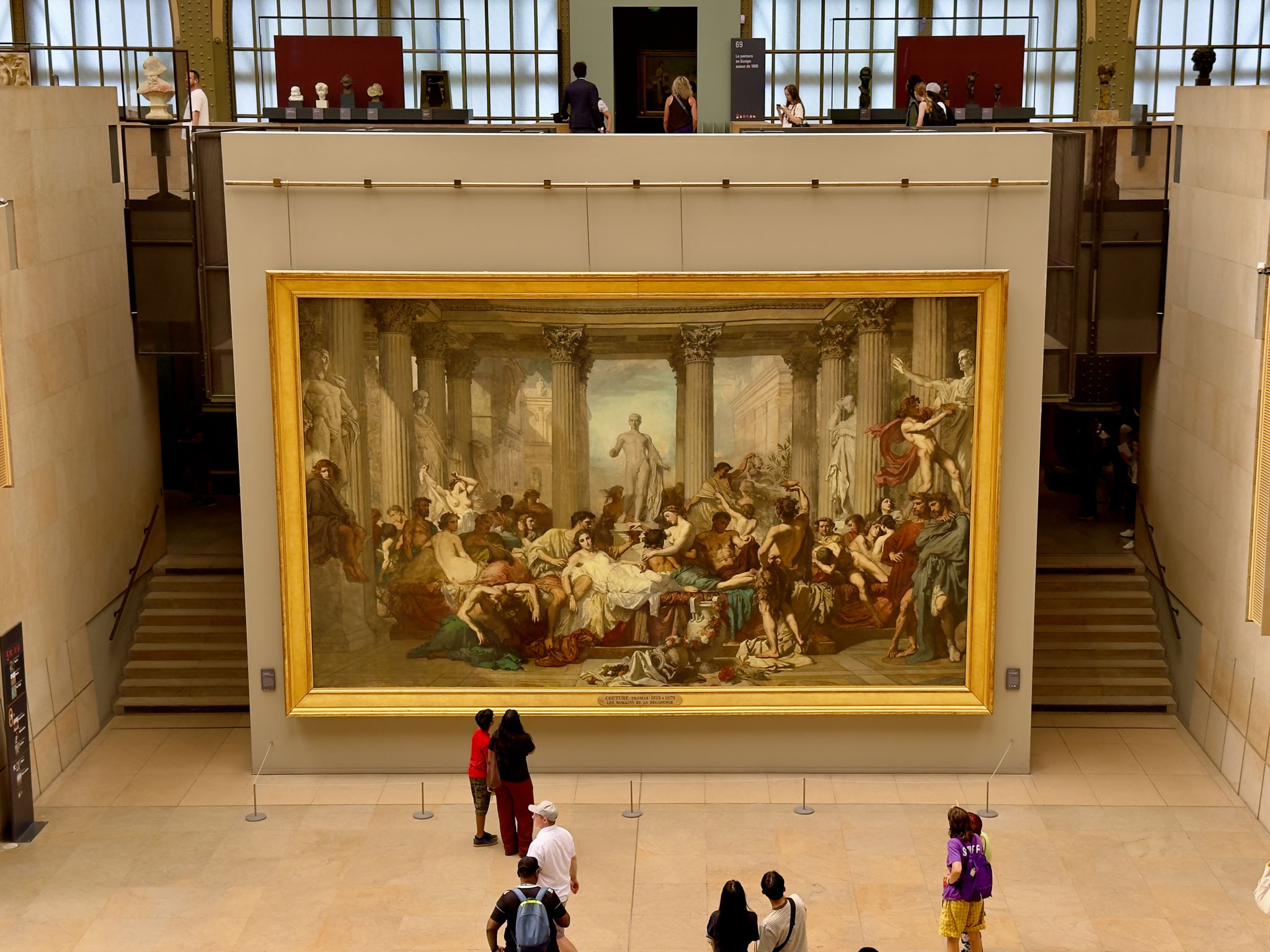


The Romans in their Decadence, 1847 – Thomas Couture
It’s enormous. Couture’s Rome is lush, theatrical, collapsing under its own indulgence. Silk, marble, bare skin, moral decay arranged with impeccable control. The crowd gathers because scale still works. Decadence photographs well.
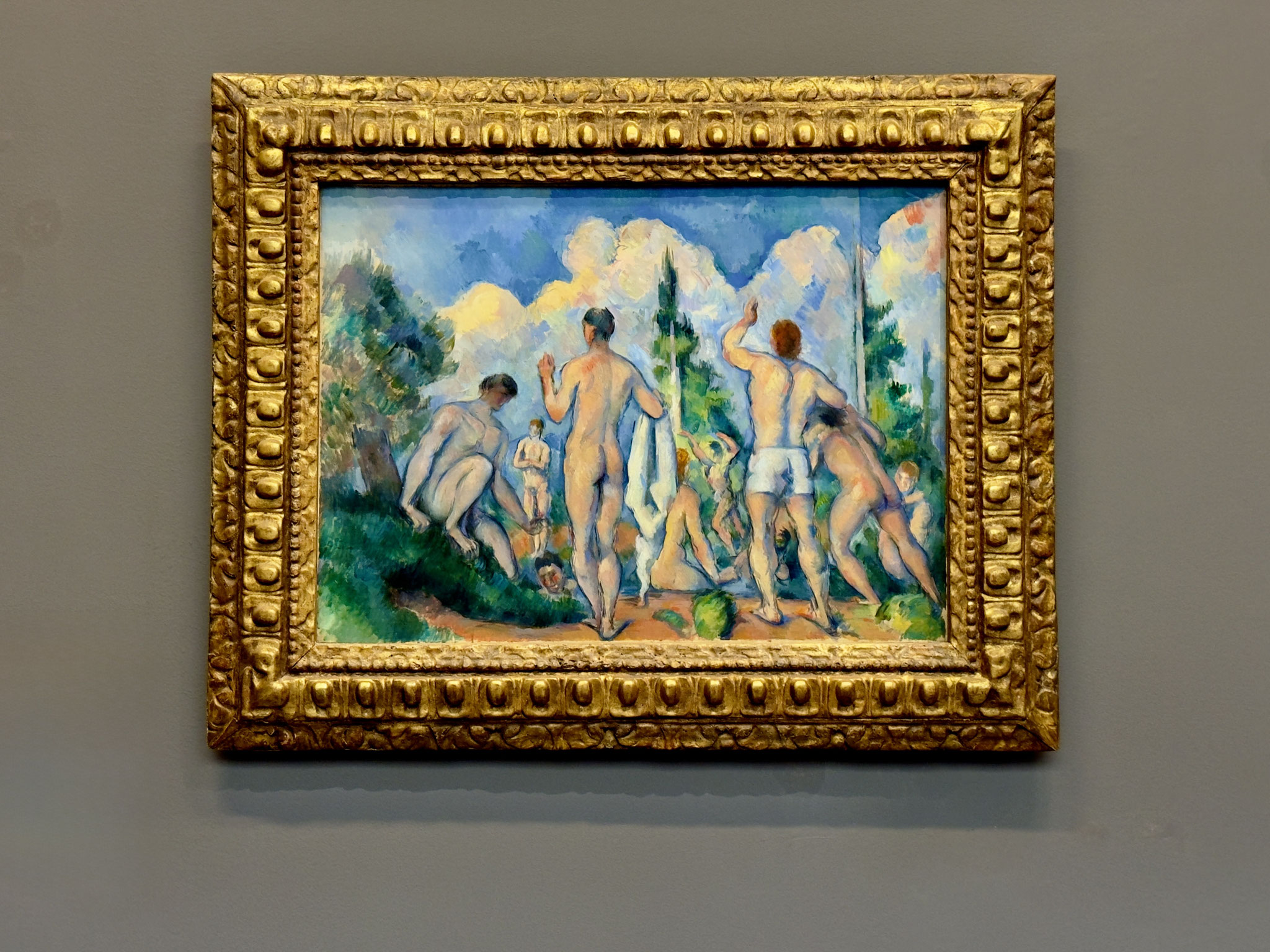
Bathers, c. 1890 – Paul Cézanne
Cézanne’s bathers don’t lounge—they assemble. Bodies and trees share the same brushwork, the same geometry. Flesh becomes landscape; landscape becomes flesh. It’s less about nudity than about weight—how everything holds together. Even when it looks like it might tip over.
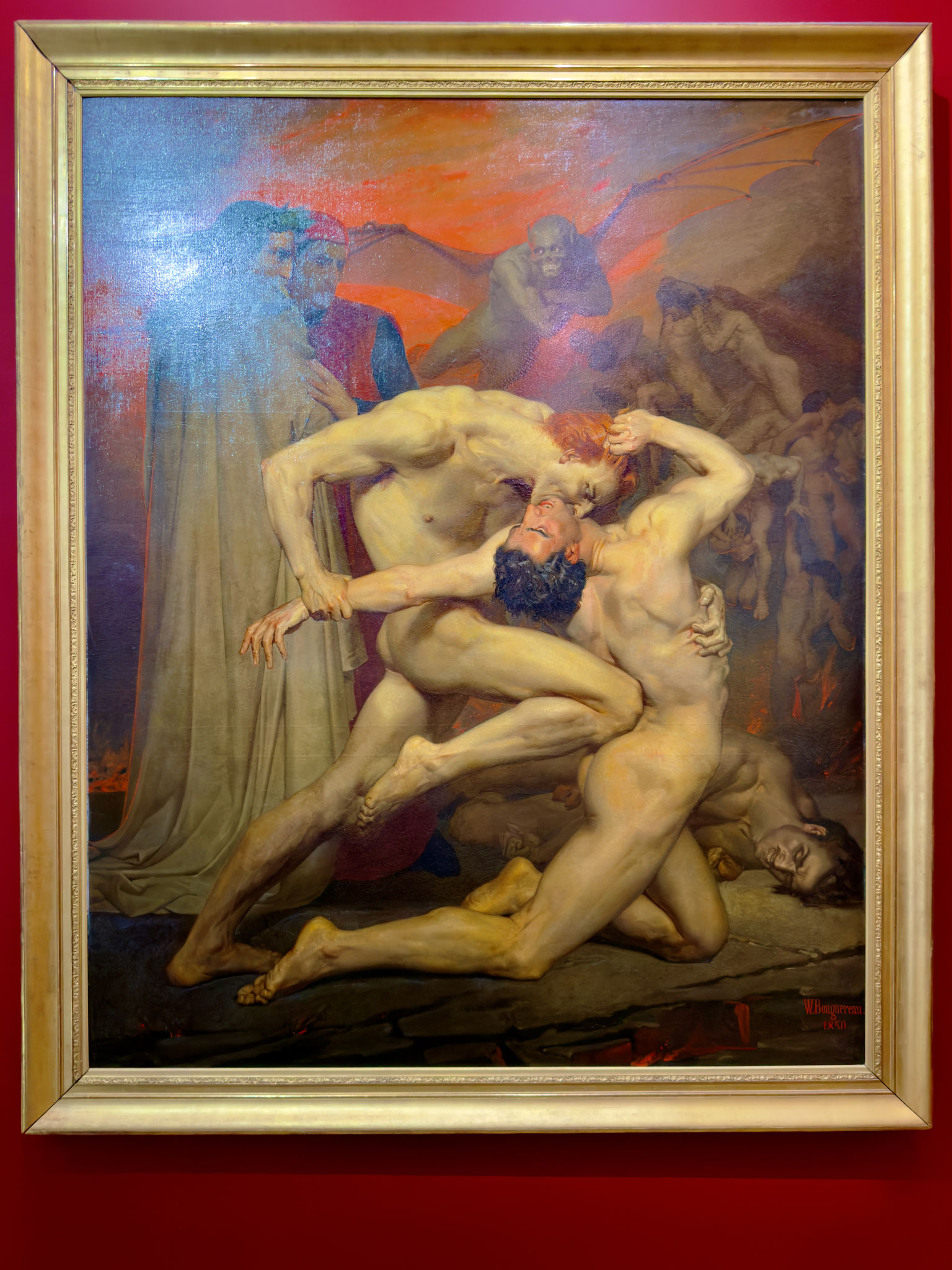

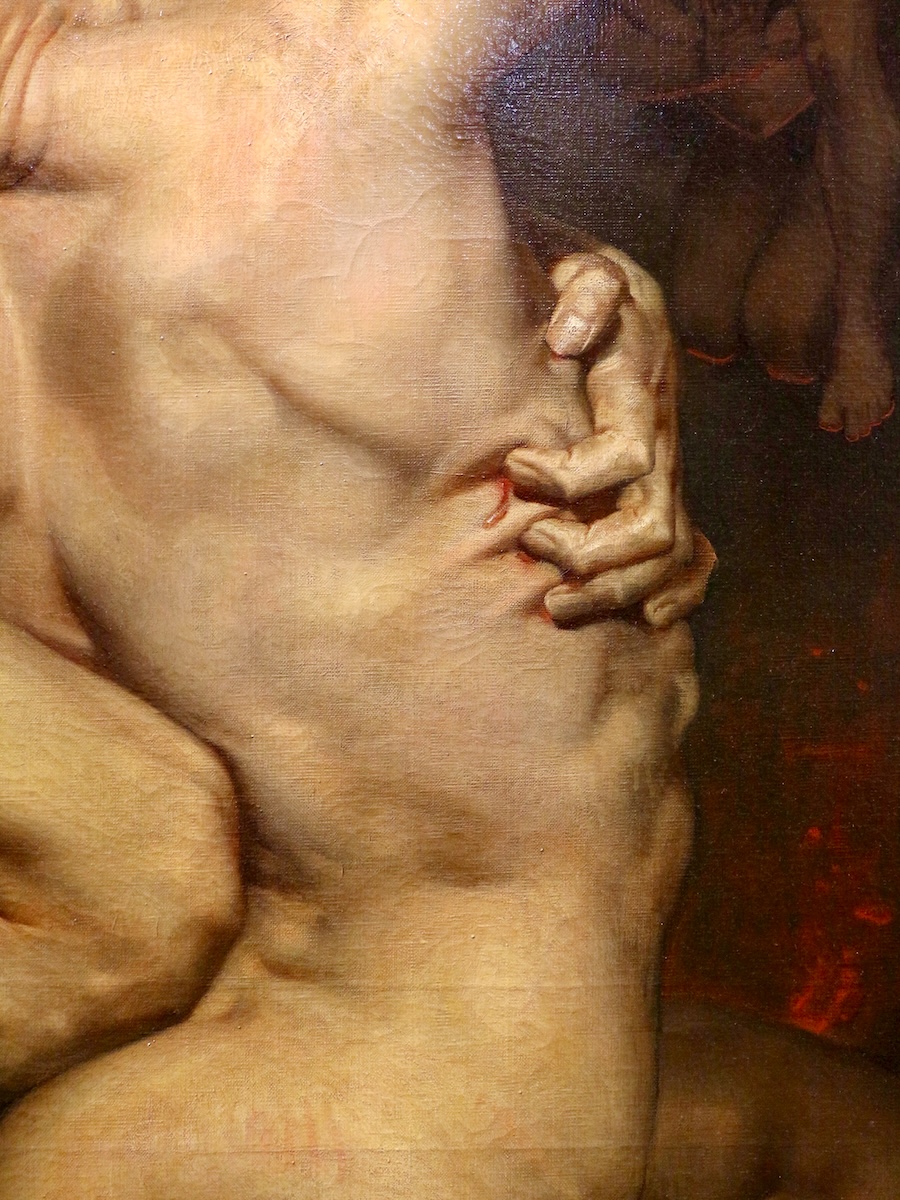

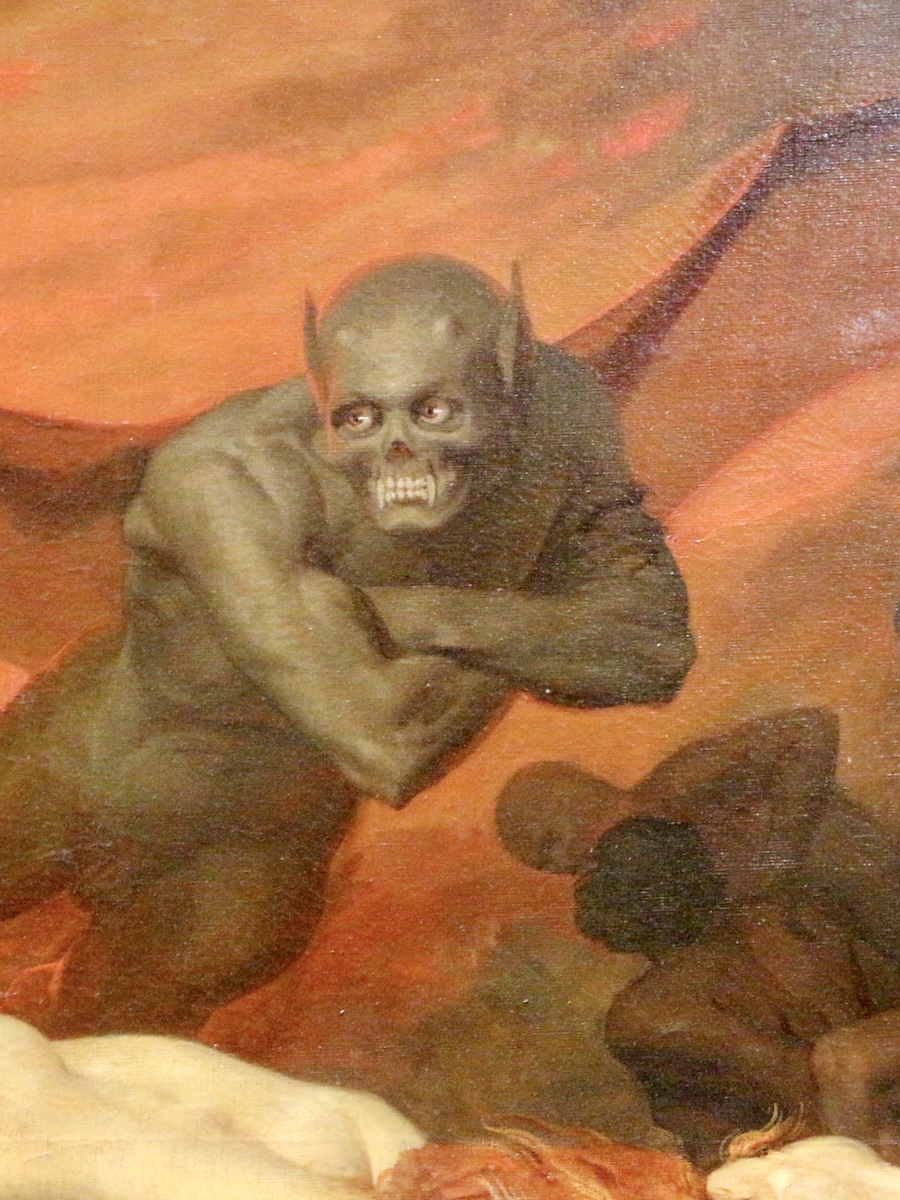


Dante and Virgil, 1850 – William Bouguereau
Two damned souls locked in a violent knot, one biting the other’s throat, muscles straining under hellfire skies. Dante and Virgil stand frozen in the background, witnesses to something raw and physical. Bouguereau was 25 when he painted this. Subtle it is not. But that’s my jam.
The Starry Night (Over the Rhône), 1888 – Vincent van Gogh
Yes, that Starry Night. Just not the one you’re thinking of. This one shimmers over the Rhône, gas lamps flickering, the Great Bear pinned above Arles. I genuinely didn’t know there were multiple versions. Up close, the surface is alive—small strokes, thick paint, light vibrating against blue.


Intérieur, Strandgade 30, 1904 – Vilhelm Hammershøi
A door opens into another door into another door. A table waits. A chair keeps its distance. That’s it. No spectacle, no drama—just gray light and quiet architecture. It feels less like a painting than a held breath. I would absolutely hang this as a poster and call it minimalism with feelings.
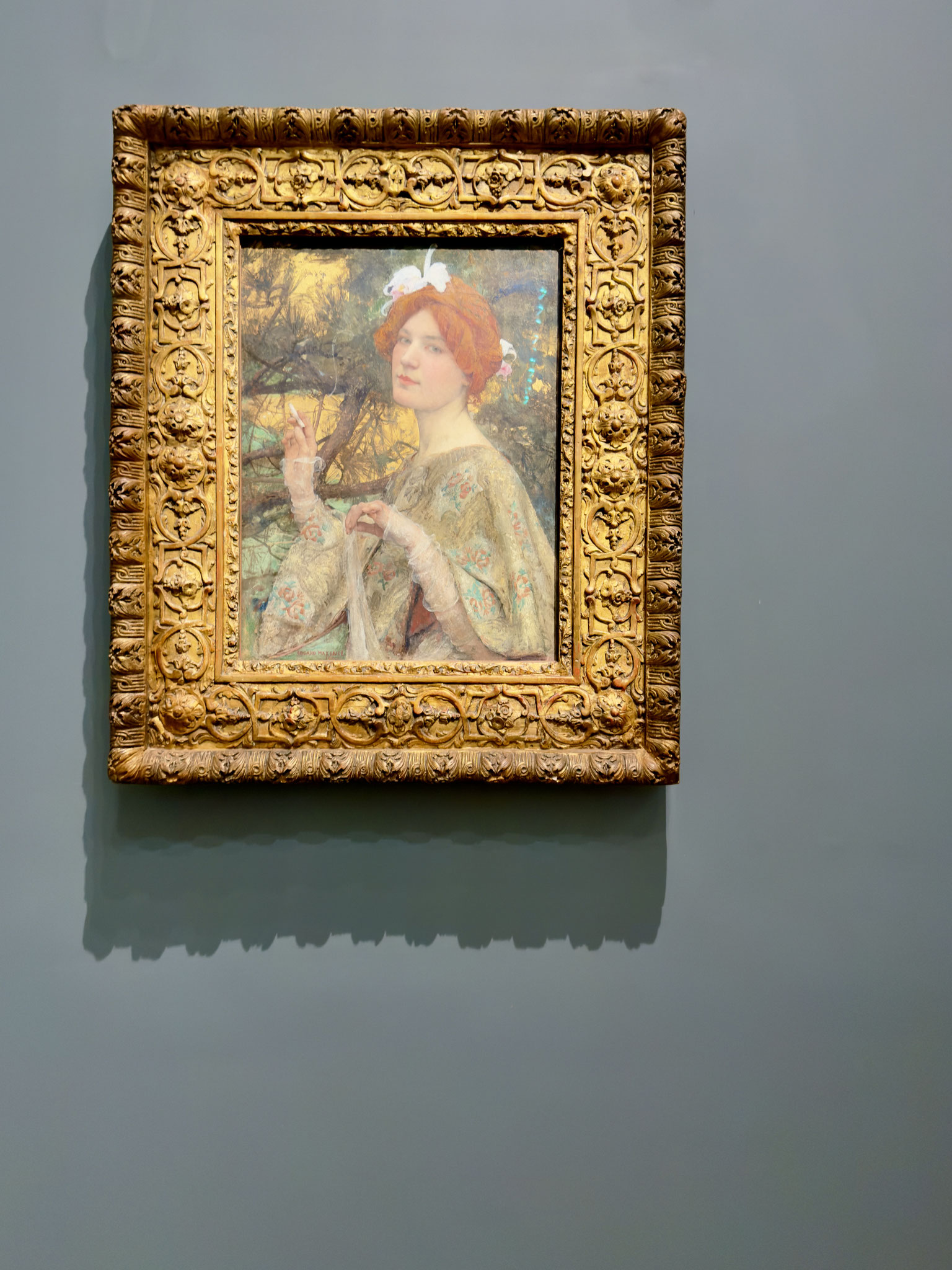
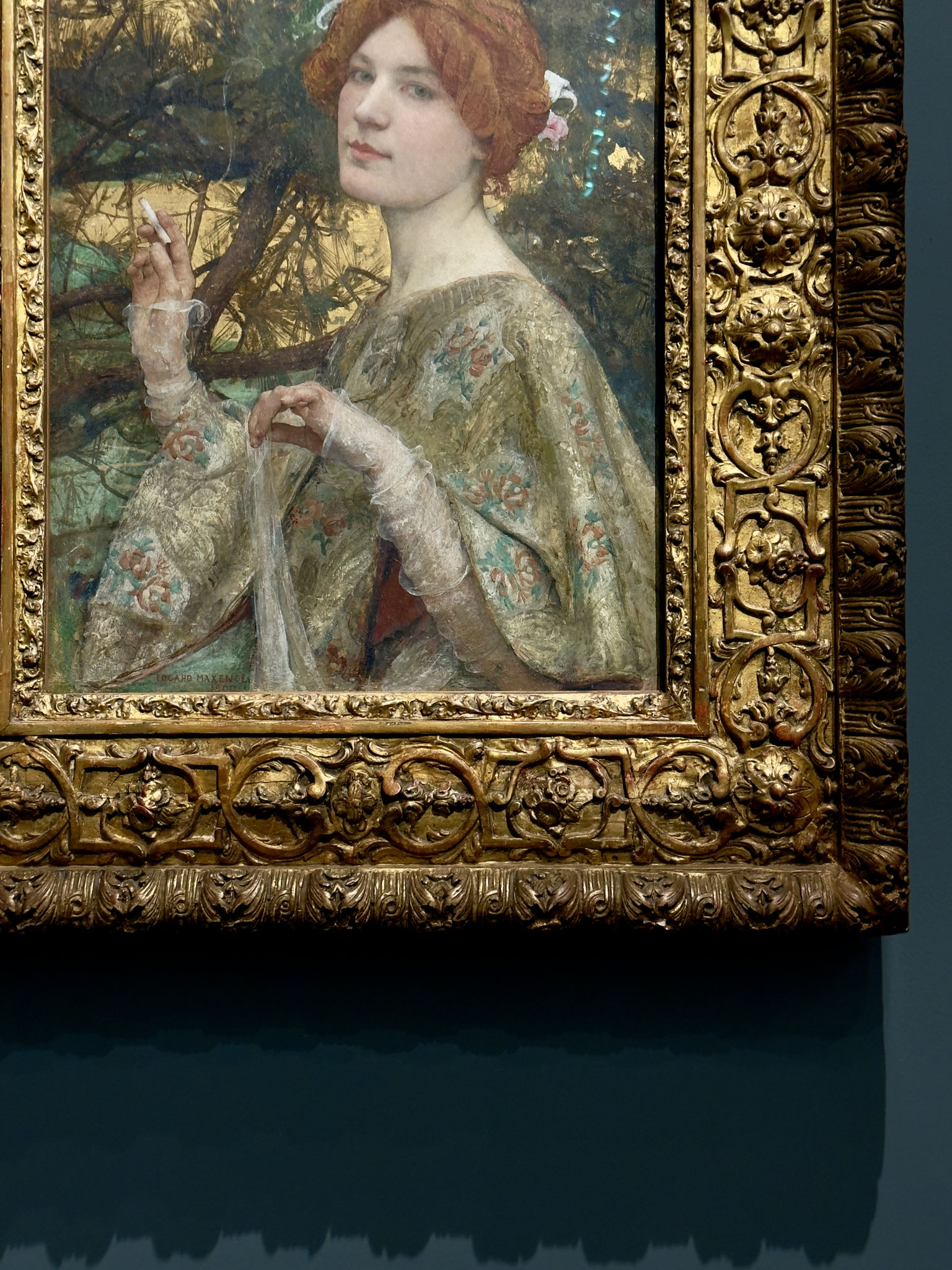
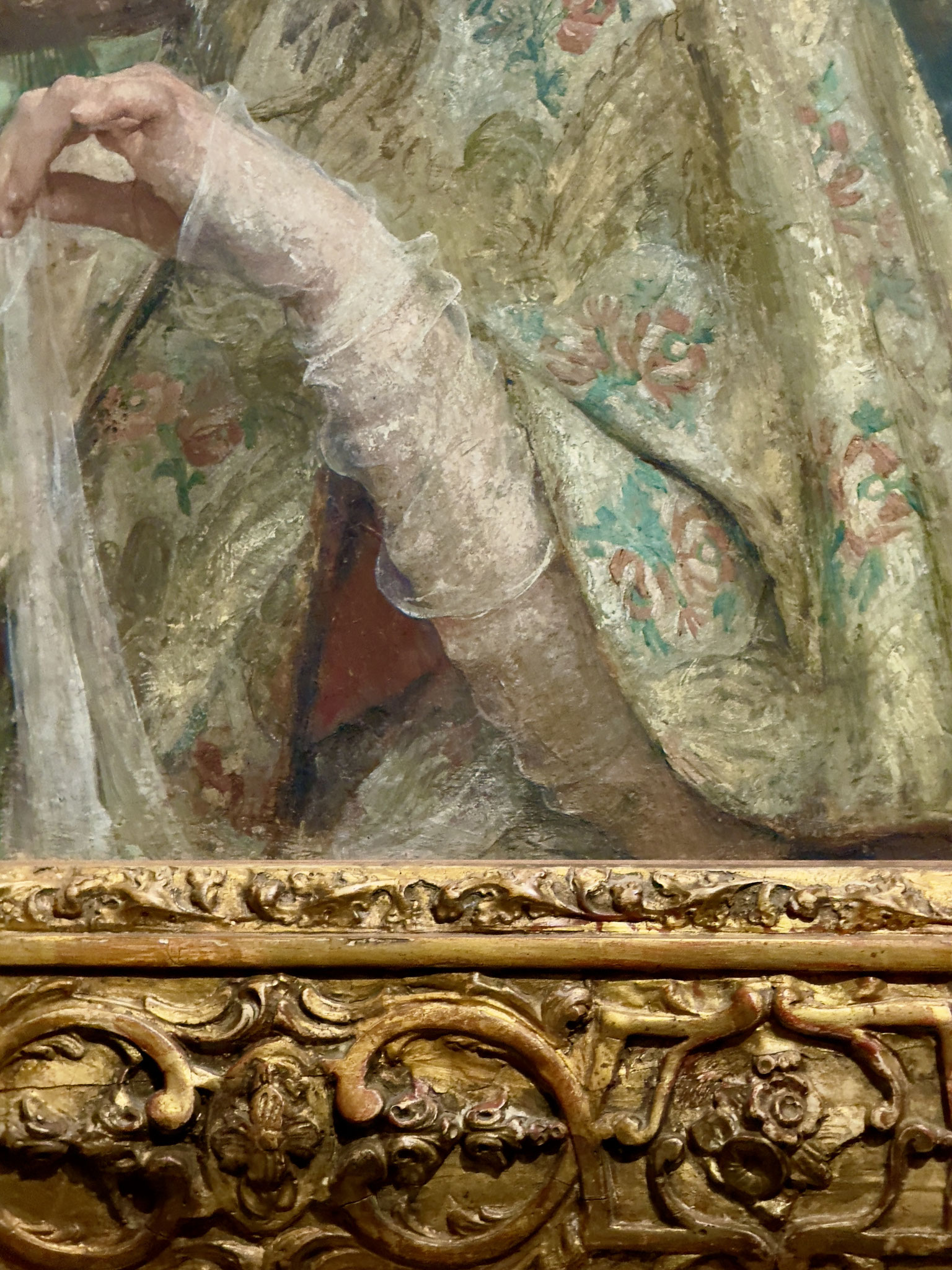
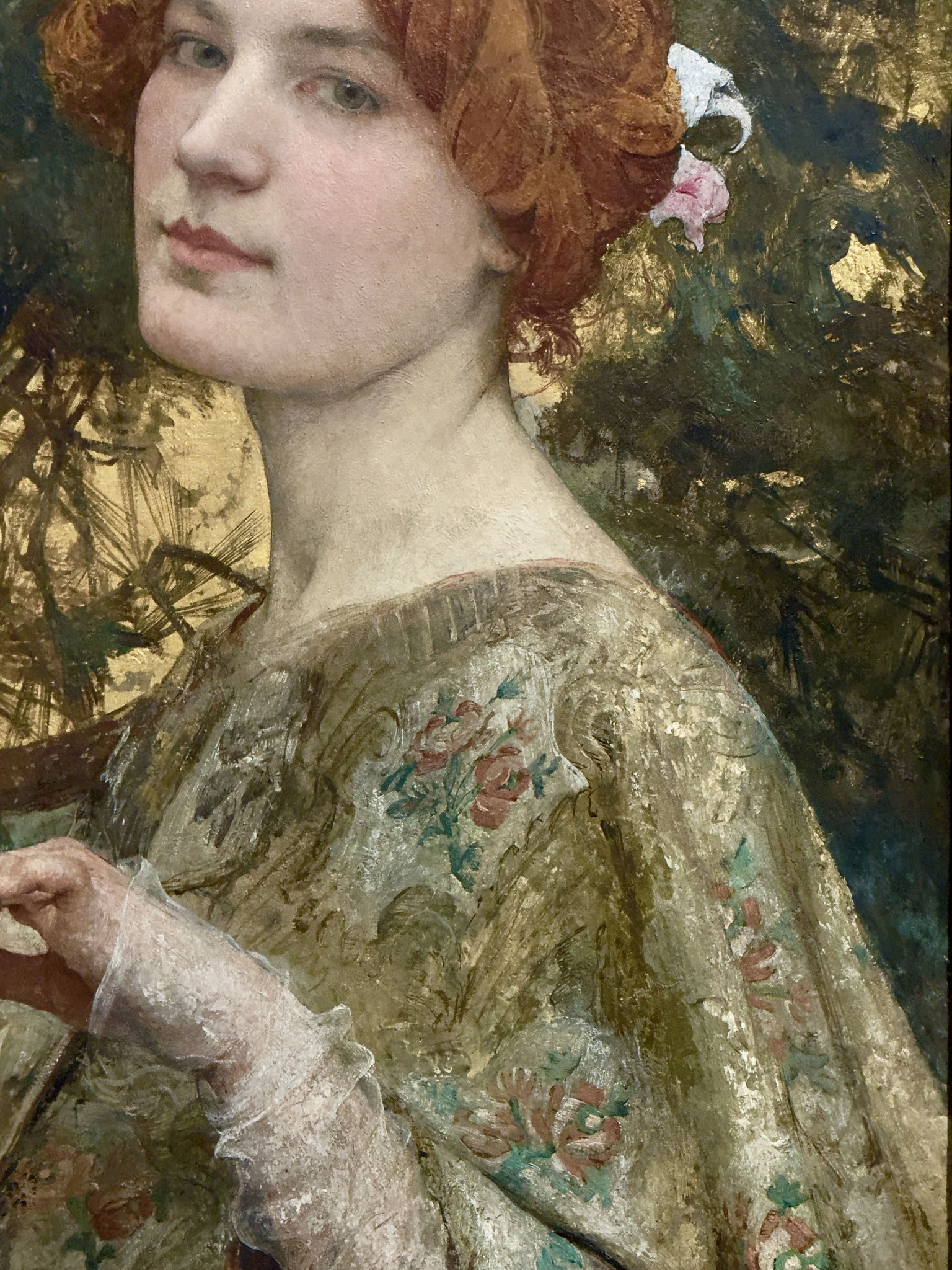
Femme à l’orchidée, 1900 – Edgard Maxence
Red hair, pale skin, lace gloves, an orchid poised like a punctuation mark. The surface is soft, almost powdered, the colors hushed but deliberate. It’s Symbolism doing what Symbolism does—less narrative, more mood. Up close, the textures reward you. Her gaze, though, is steady enough to make you slightly uncomfortable.


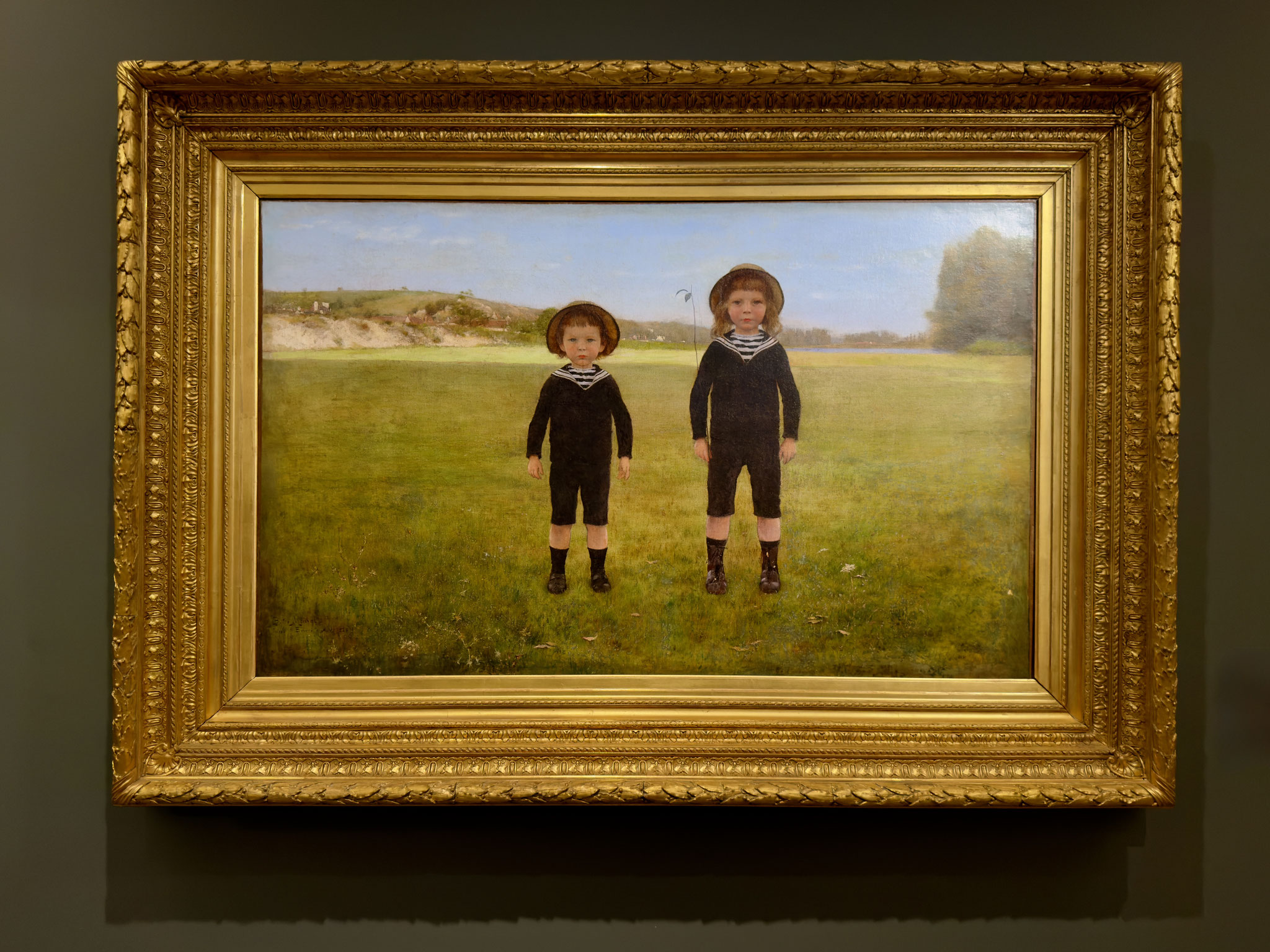
Bernard et Roger à Bourré, 1883 – Maurice Boutet de Monvel
Two boys in identical sailor suits stand in a wide field, staring straight out. The horizon is almost unnervingly nondescript. Their expressions skew unsettling—less solemn, more The Shining twins just out of Sunday school. Childhood here feels posed, proper, and faintly…off.
Decorative Arts Highlights
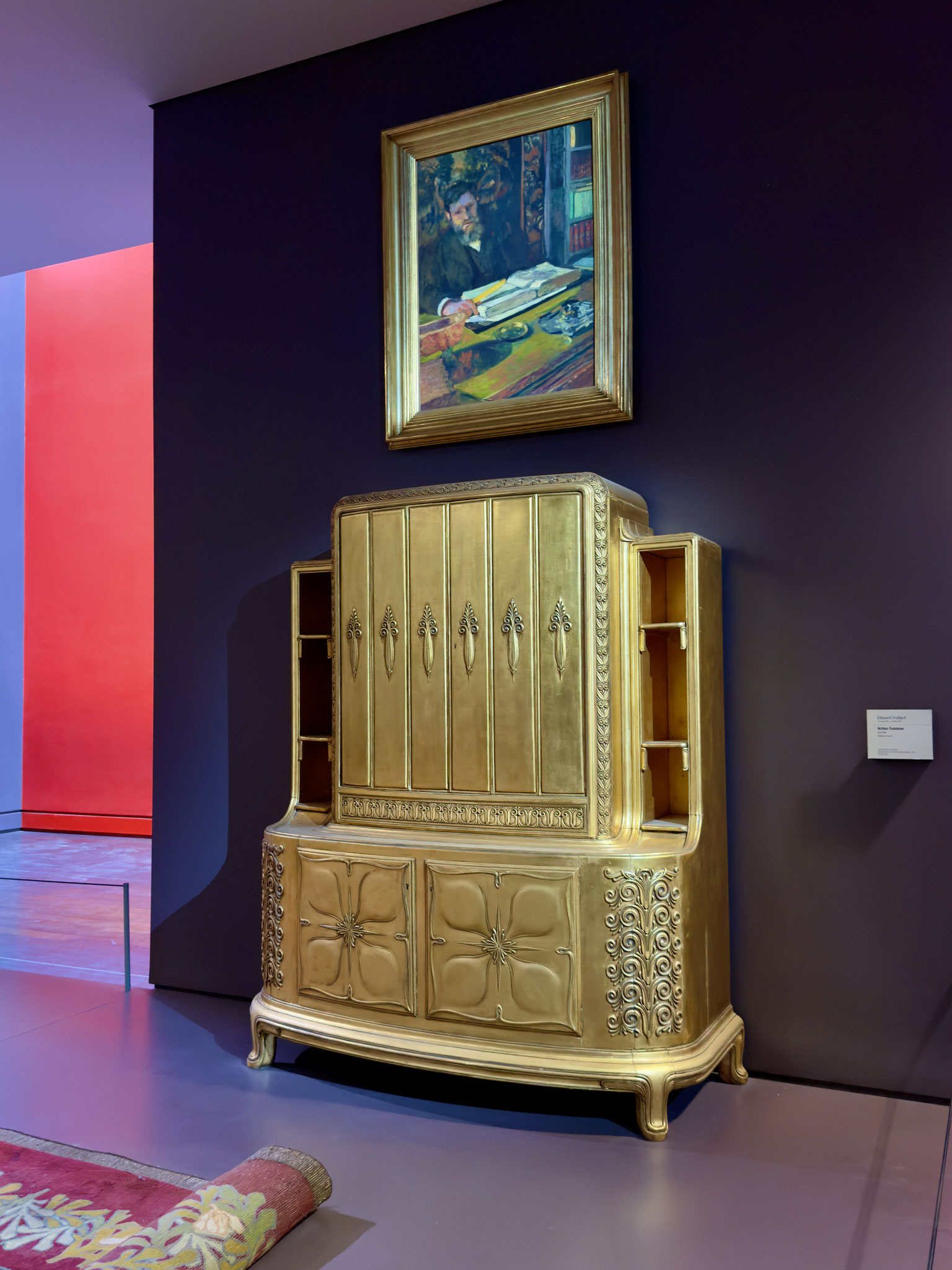
Arthur Fontaine, c. 1901 – Édouard Vuillard
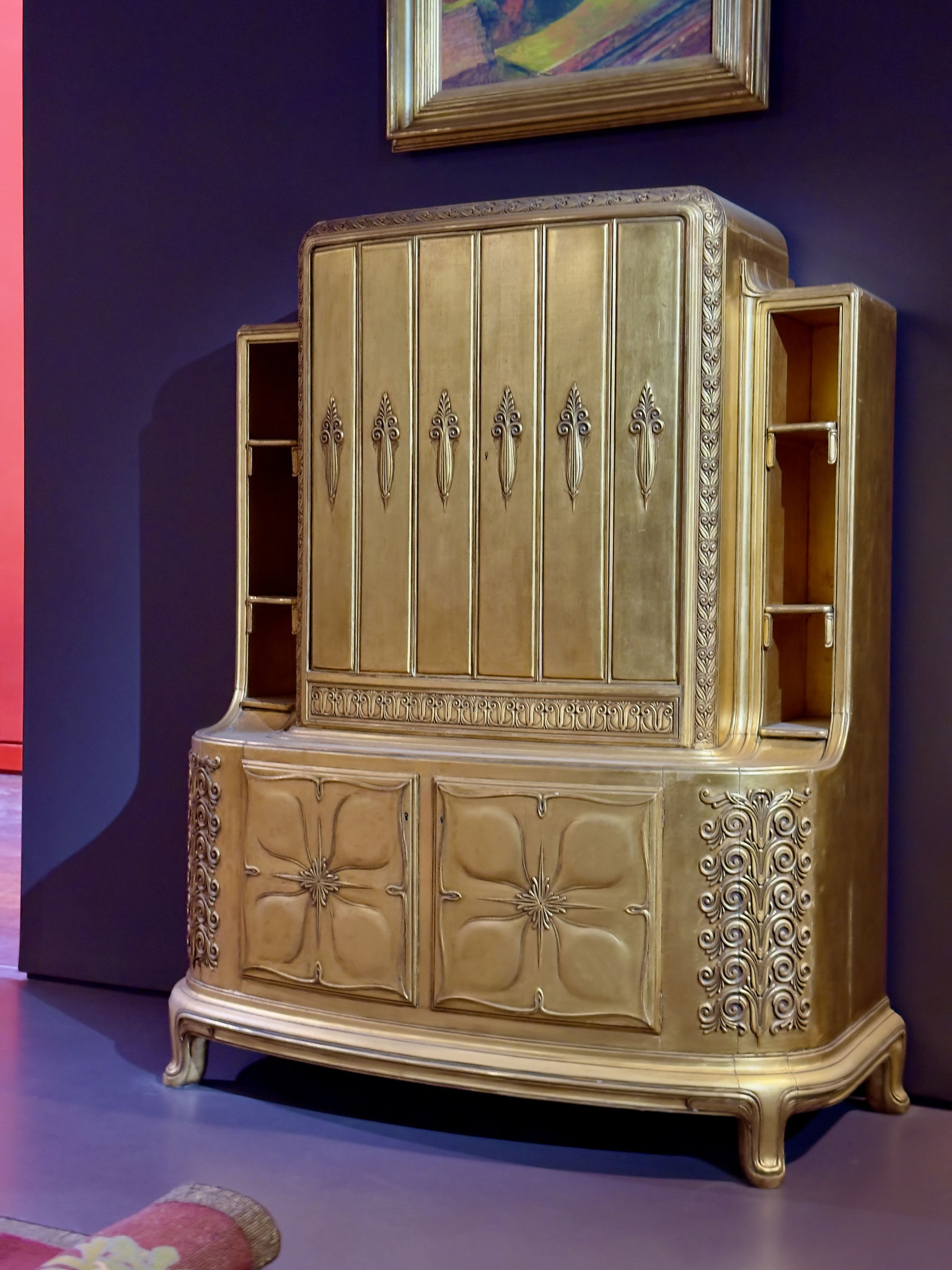
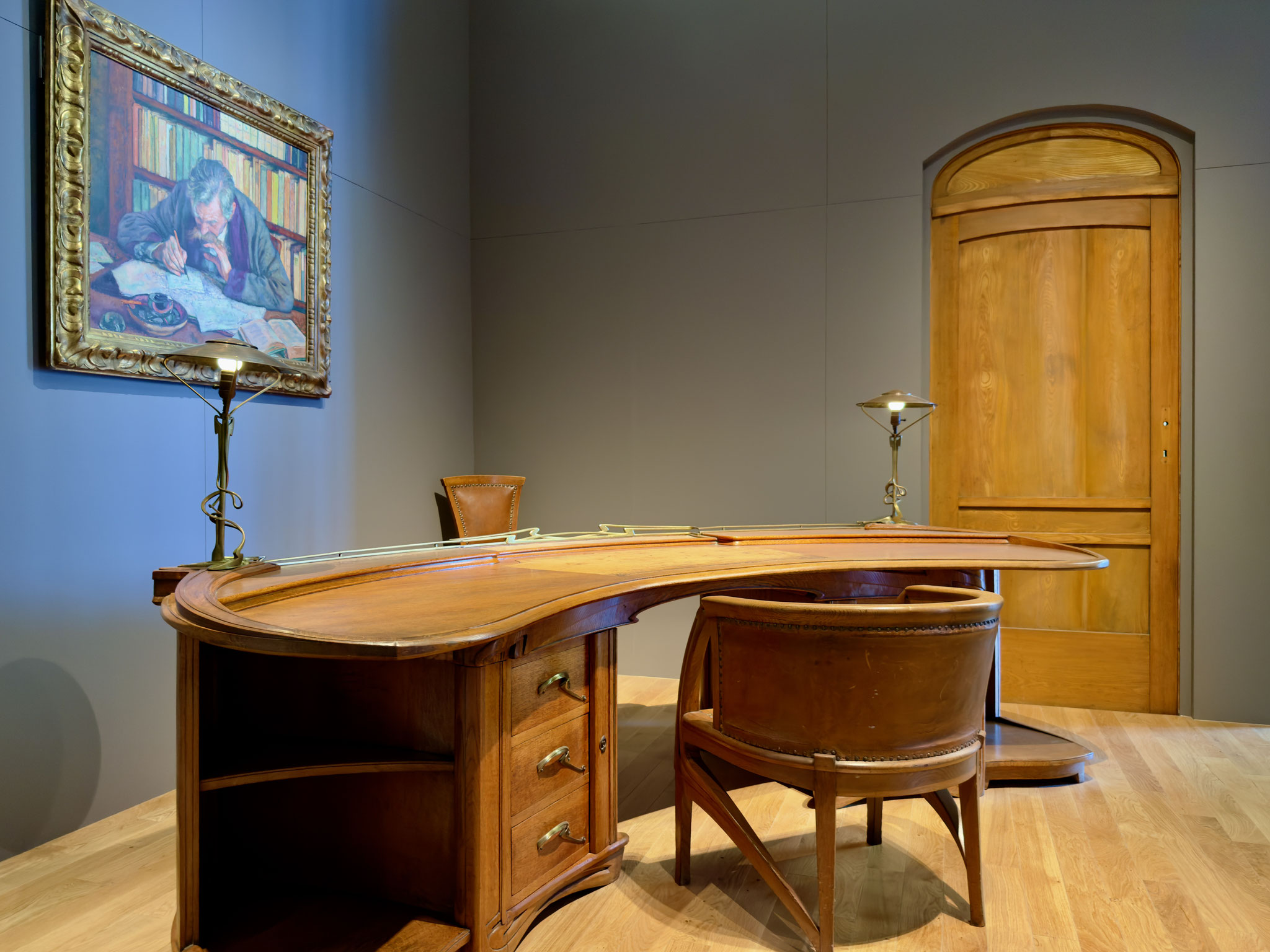
Vuillard’s portrait of the industrialist Arthur Fontaine hangs above a gilded cabinet by Paul Follot that refuses to disappear into the background. Fontaine bends over his work, surrounded by books and paper, while the furniture beneath him gleams with carved symmetry and controlled ornament. It’s less a portrait of a man than of a world—serious, cultivated, curated down to the cabinet.


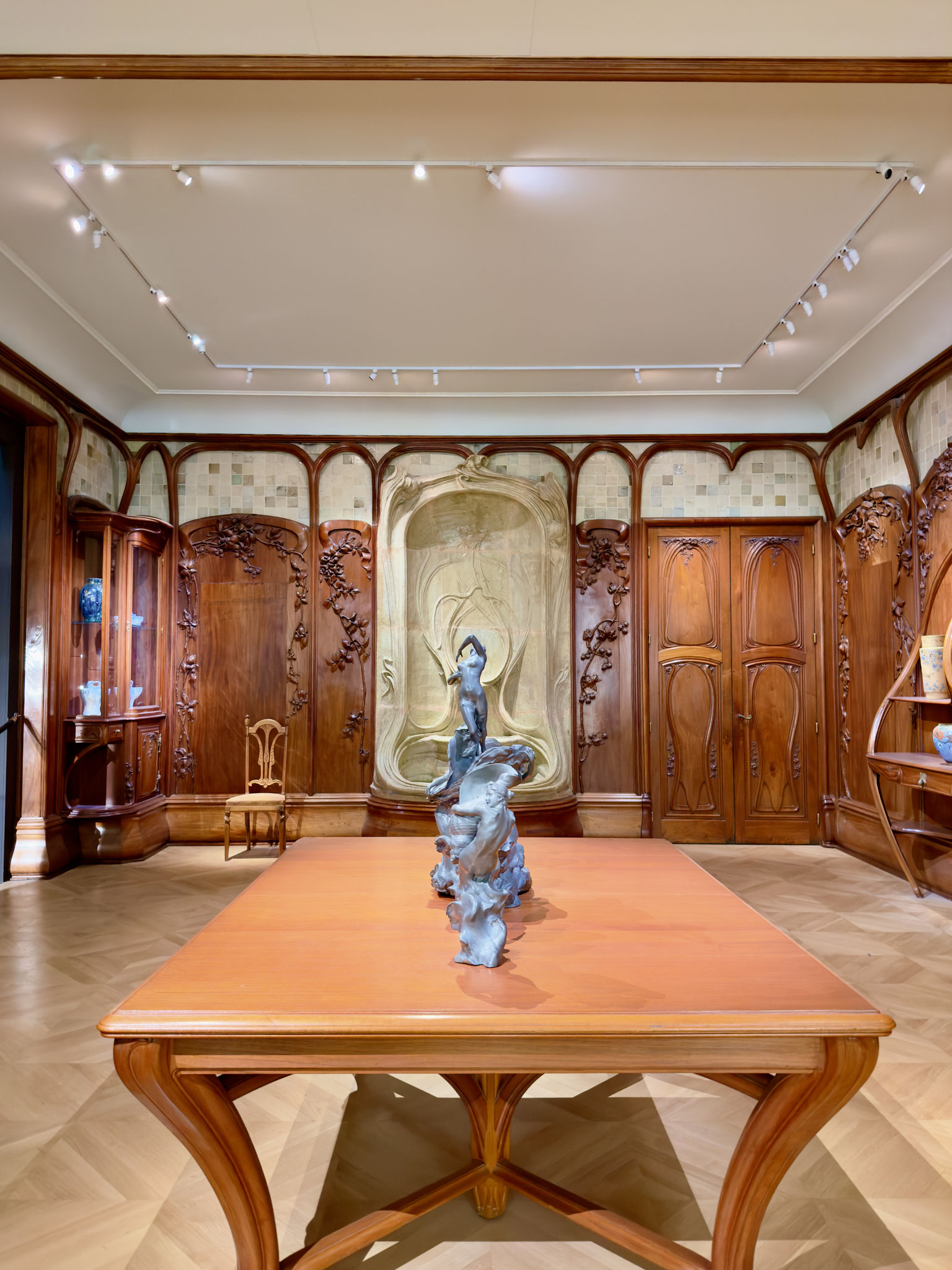
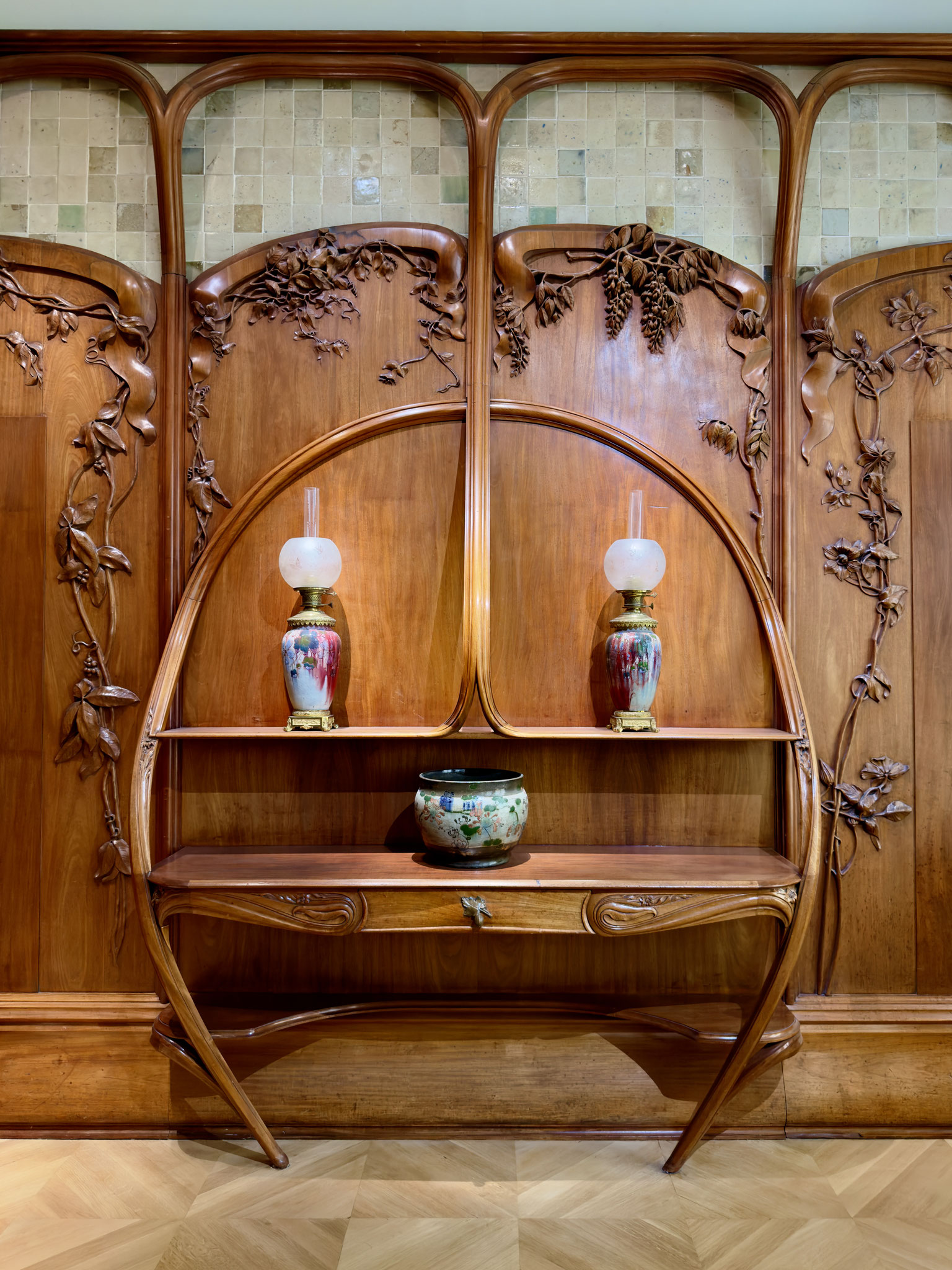
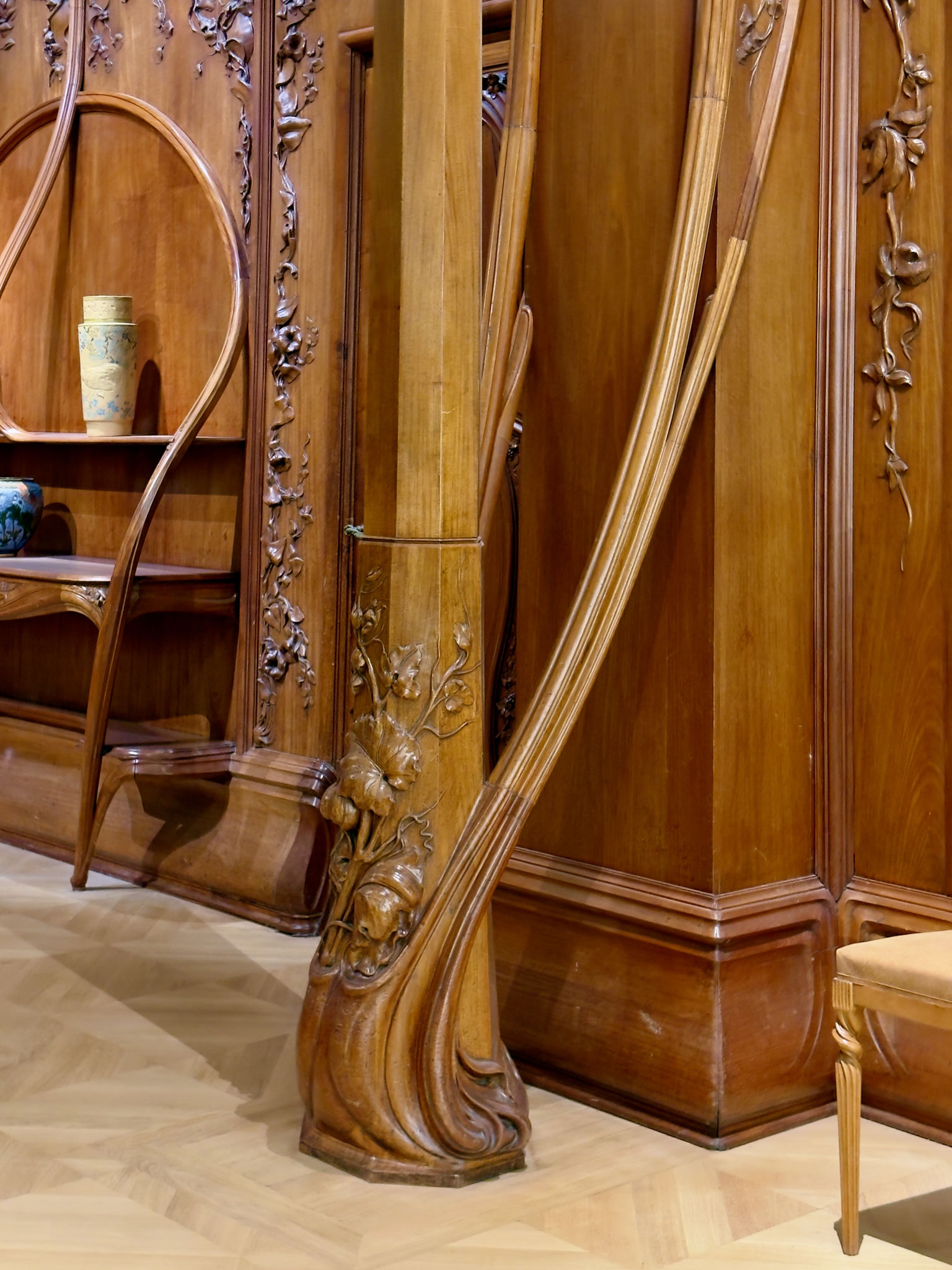


Dining Room of Alexandre Charpentier, 1900–1901 – Alexandre Charpentier and Alexandre Bigot
This room once overlooked a garden, and you can feel it. Wood panels carved with peas, roses, beans, and morning glory wrap the walls in botanical motion. The curves are structural, not merely decorative. Even the ceramic planter blends into the mahogany, as if it had grown there. Somewhere among the foliage, laughing children hide.
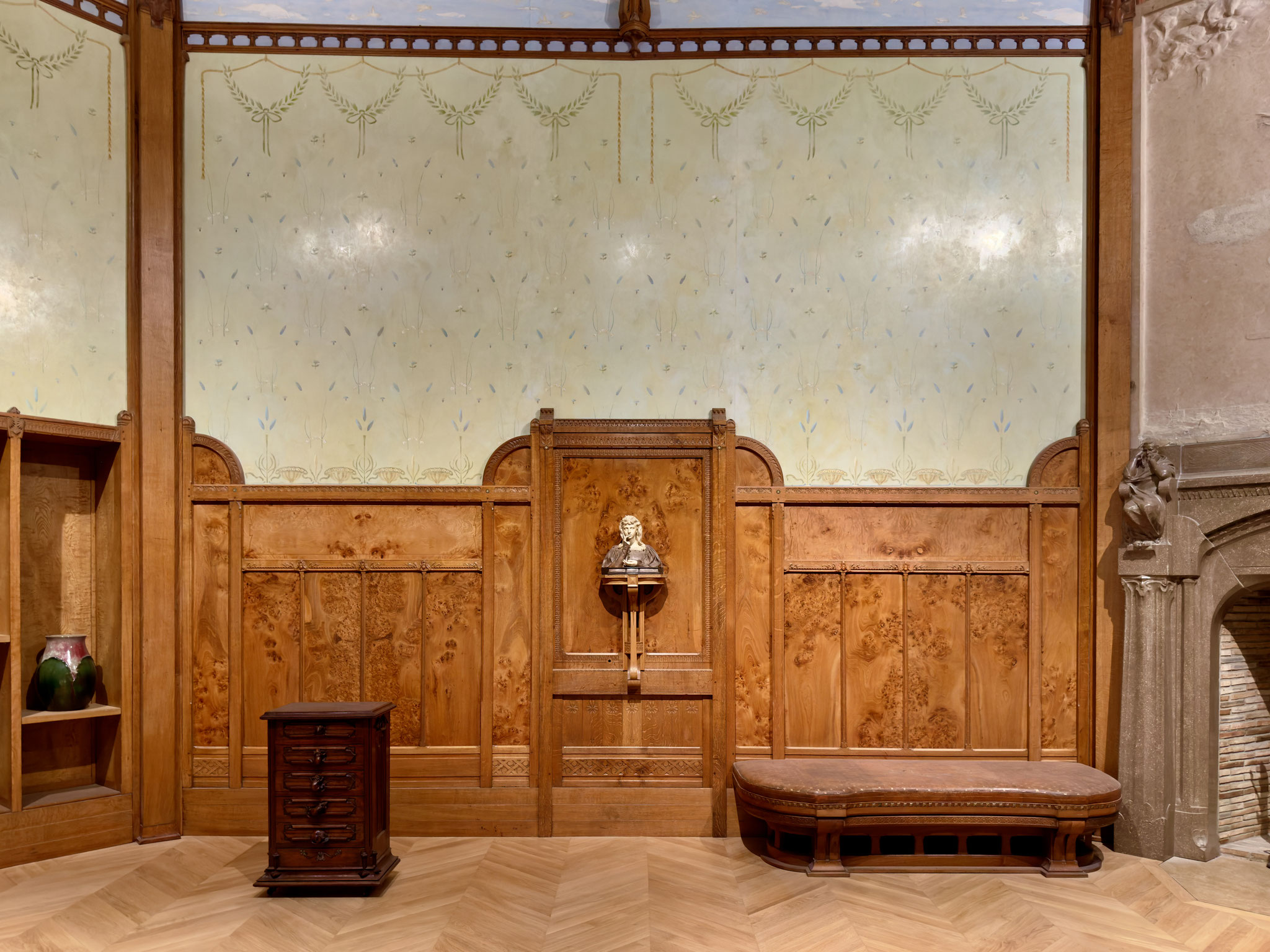
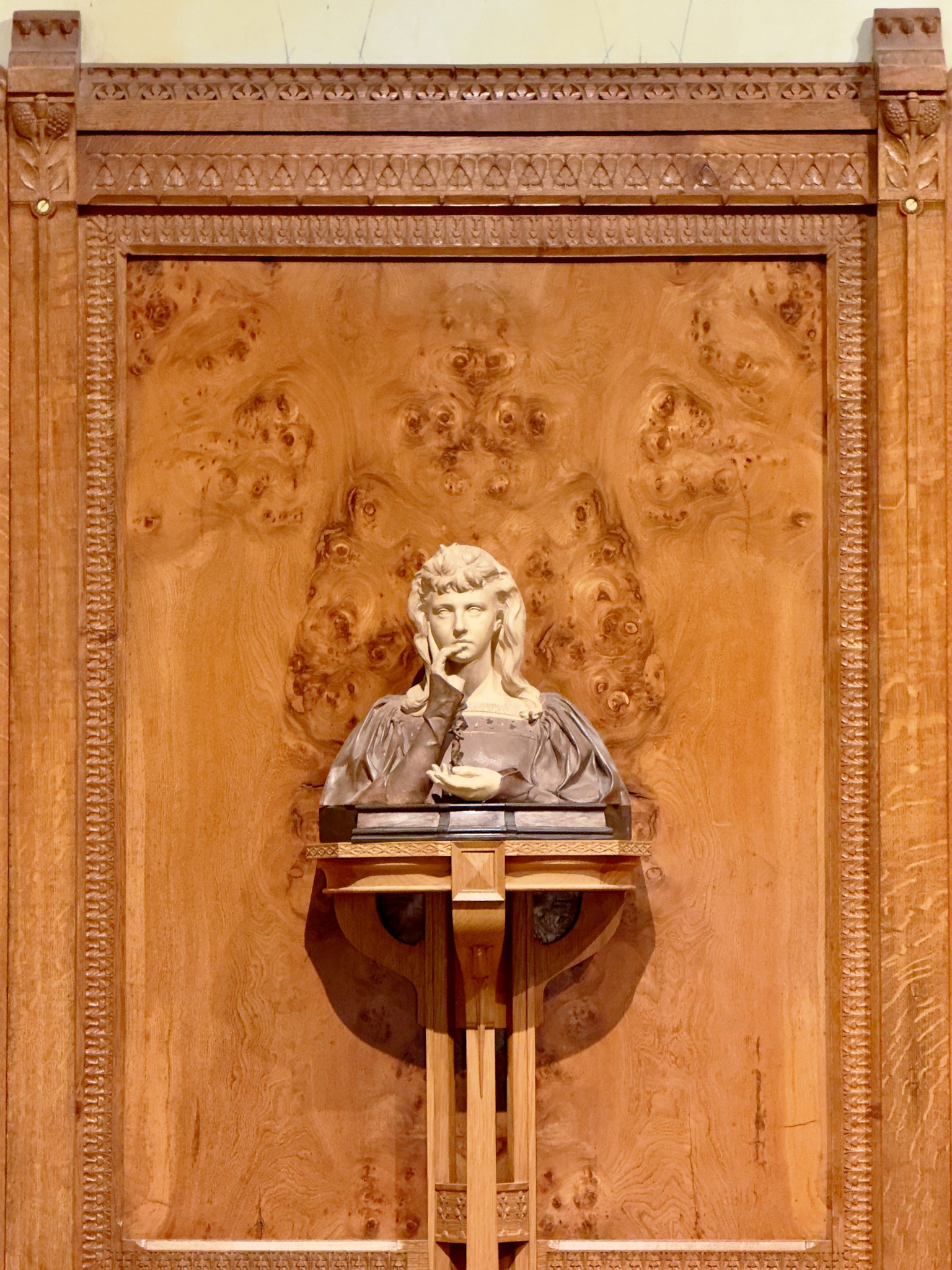
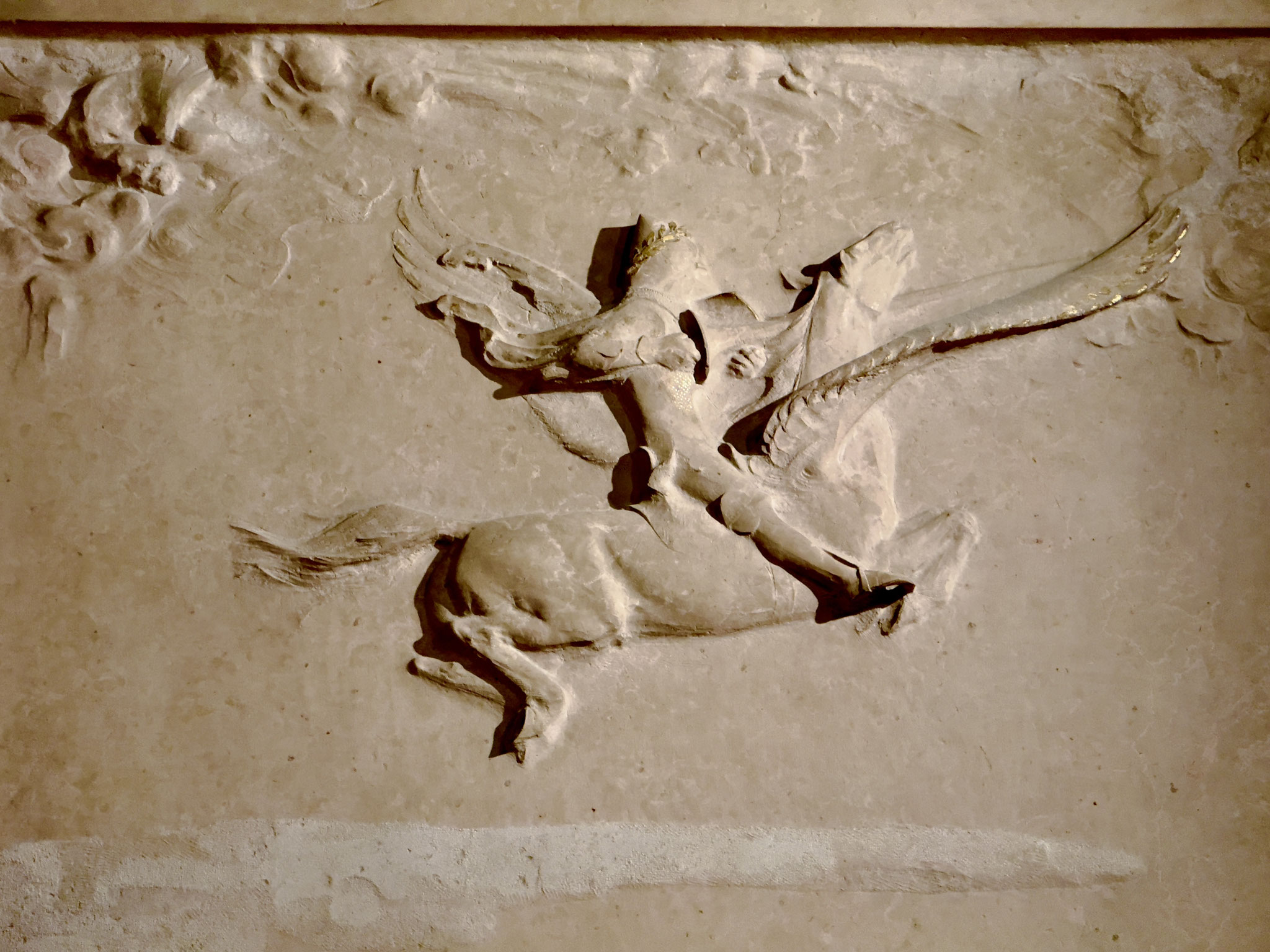
Salle du Chevalier, 1900–1906 – Jean Dampt
Designed for the Countess de Béarn, this reception room leans boldly romantic. Wood arches frame the walls, and carved vines climb toward a knight presiding above the mantel. It feels staged for contemplation and conversation. You half expect someone in velvet to enter and begin reciting something Very Dramatic.


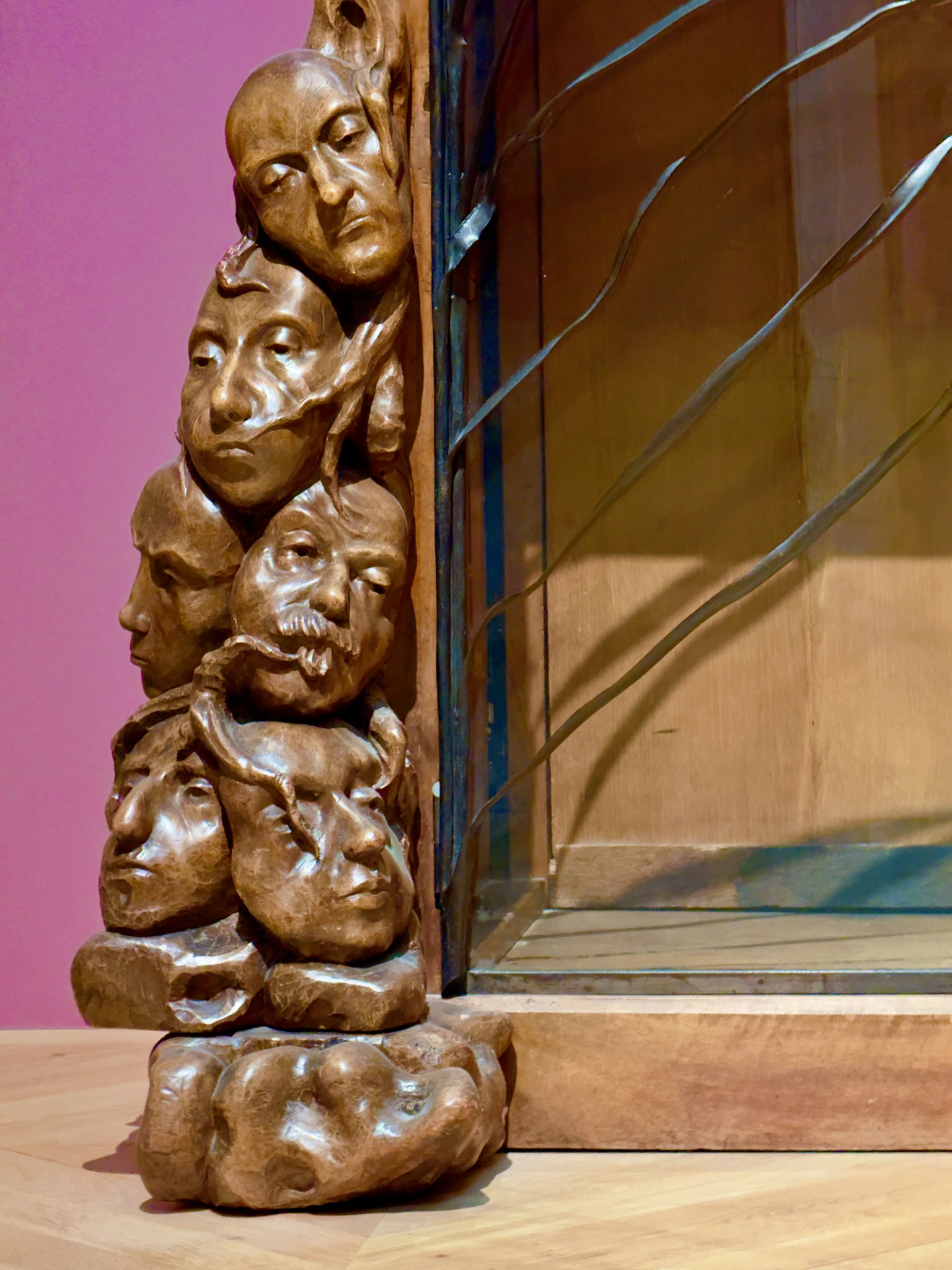
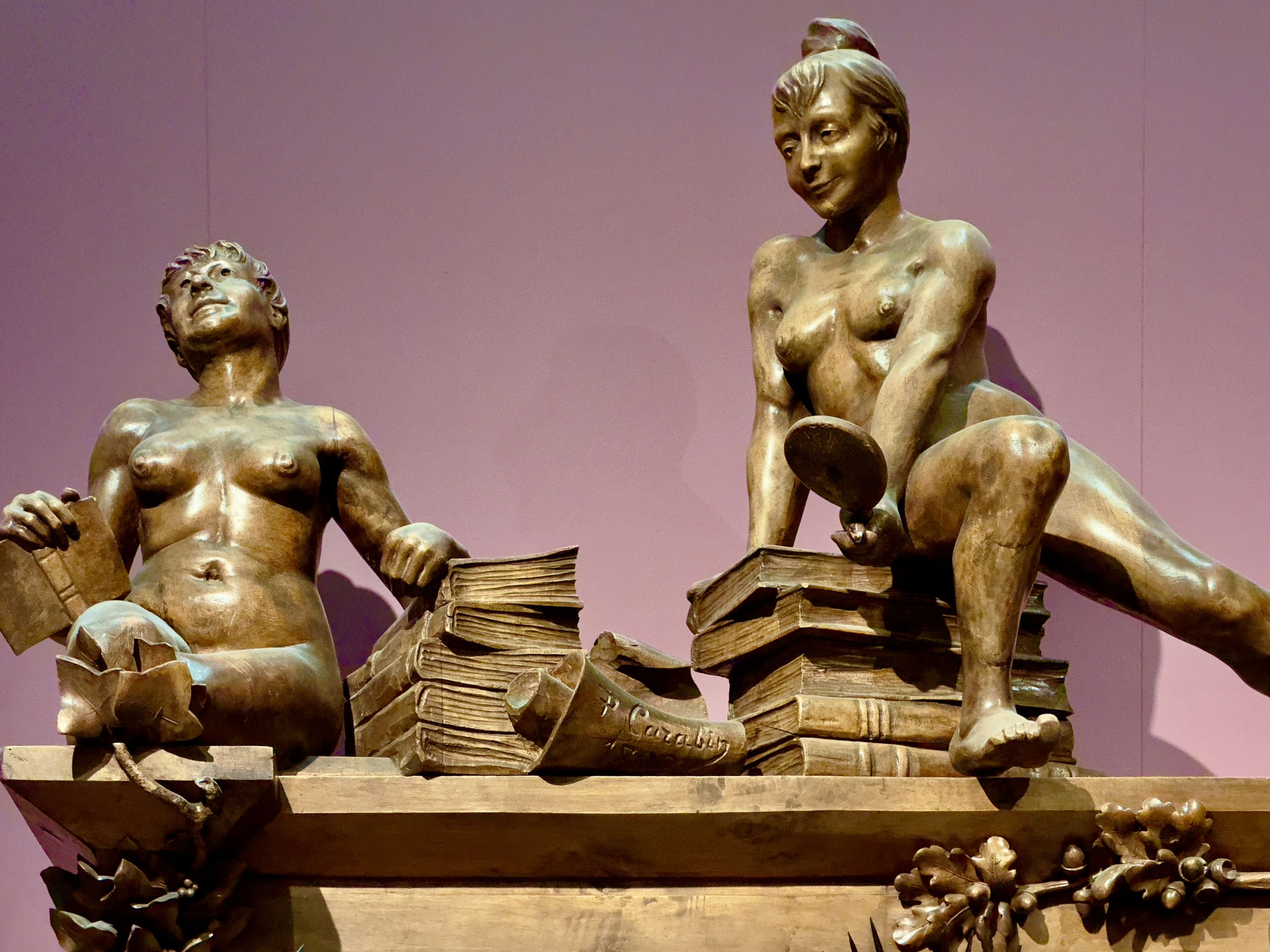
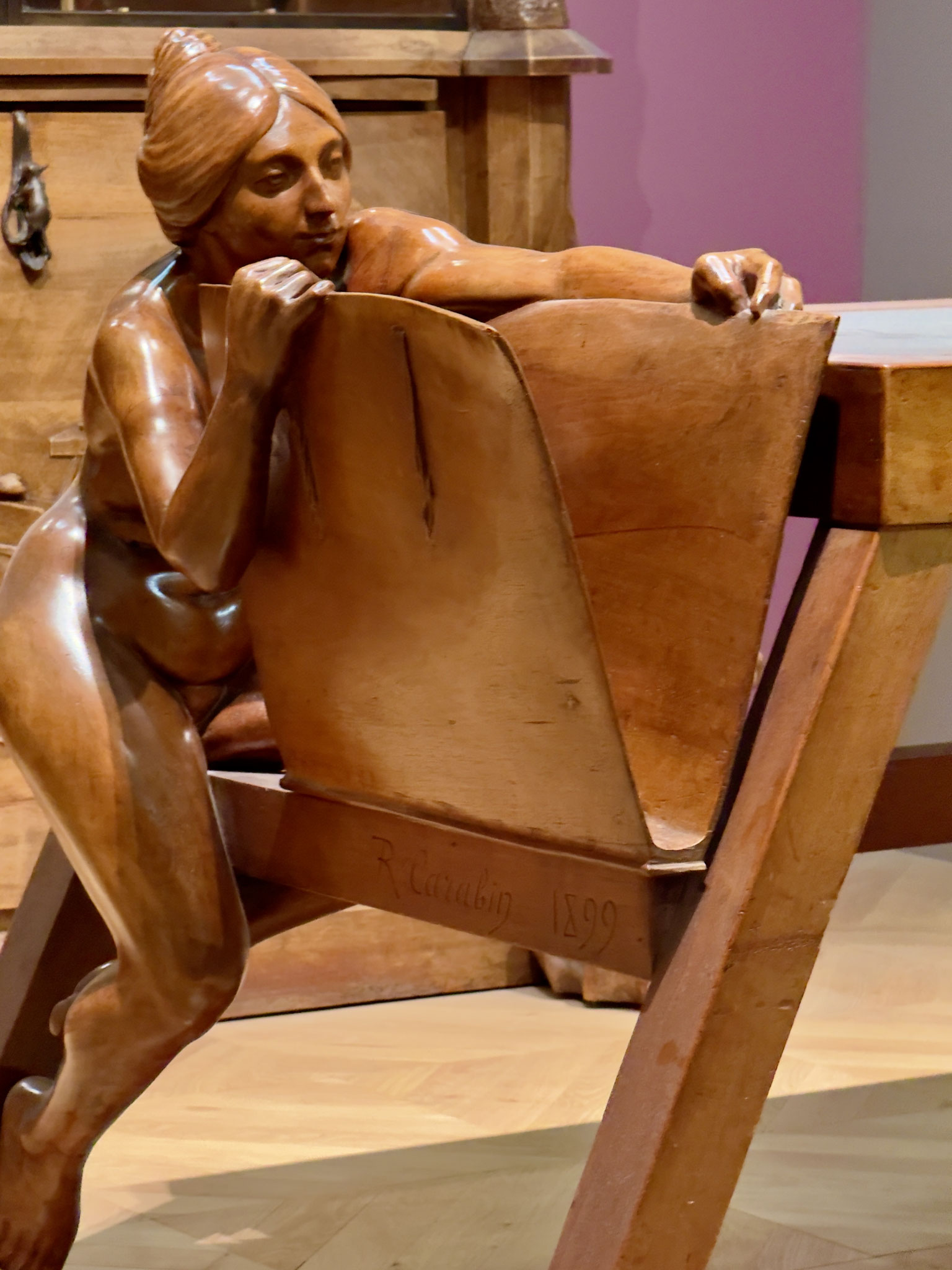
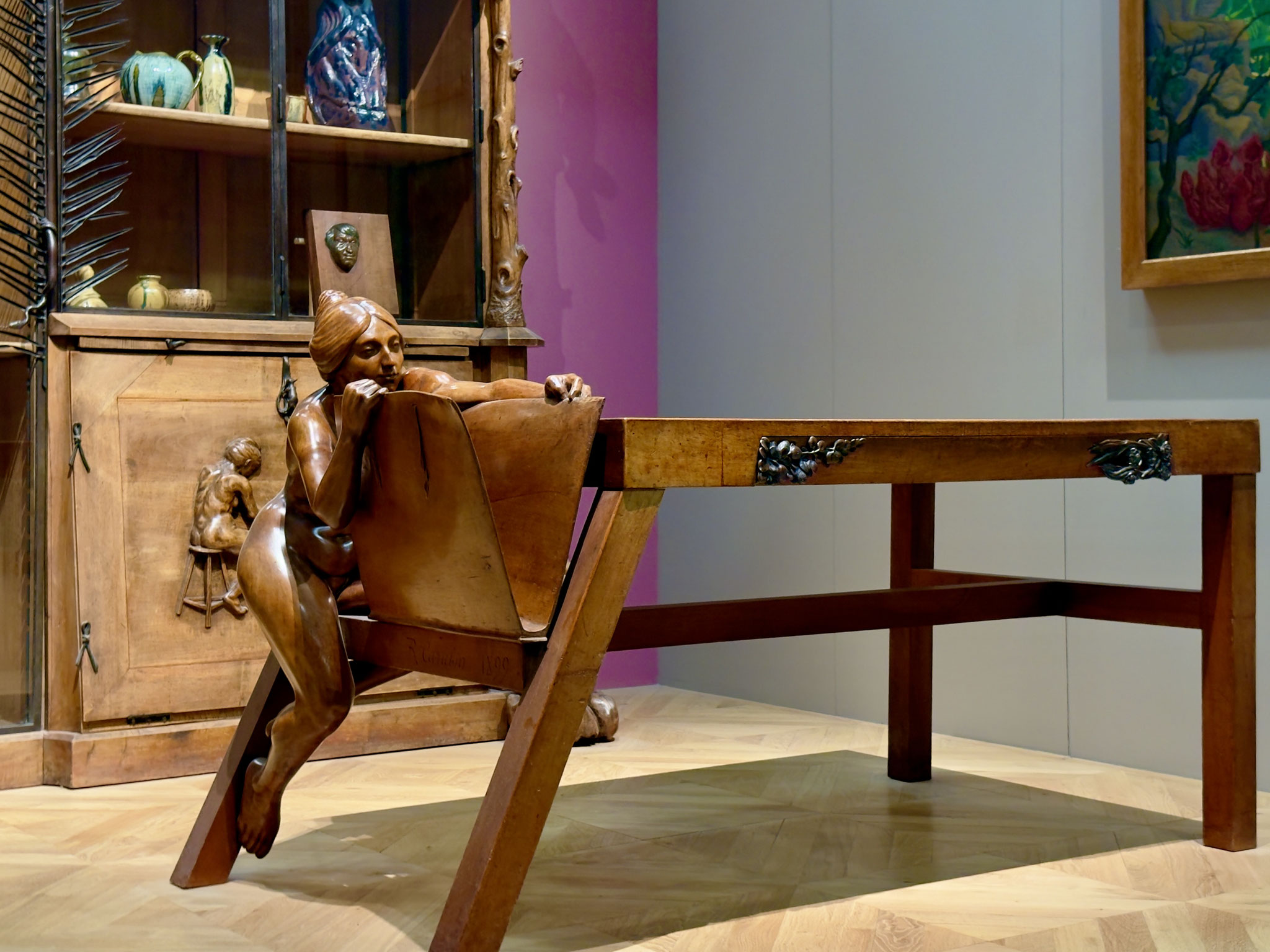


Art Nouveau Display Cabinet, 1890, and Work Table for a Chemist, 1899 – François-Rupert Carabin
Carabin’s furniture does not believe in subtlety. Female figures support shelves. Faces press out from wood. The chemist’s desk feels less like a workspace and more like a storybook in oak. It’s sensual and strange, unmistakably corporeal—functional design pushed right to the edge of discomfort.
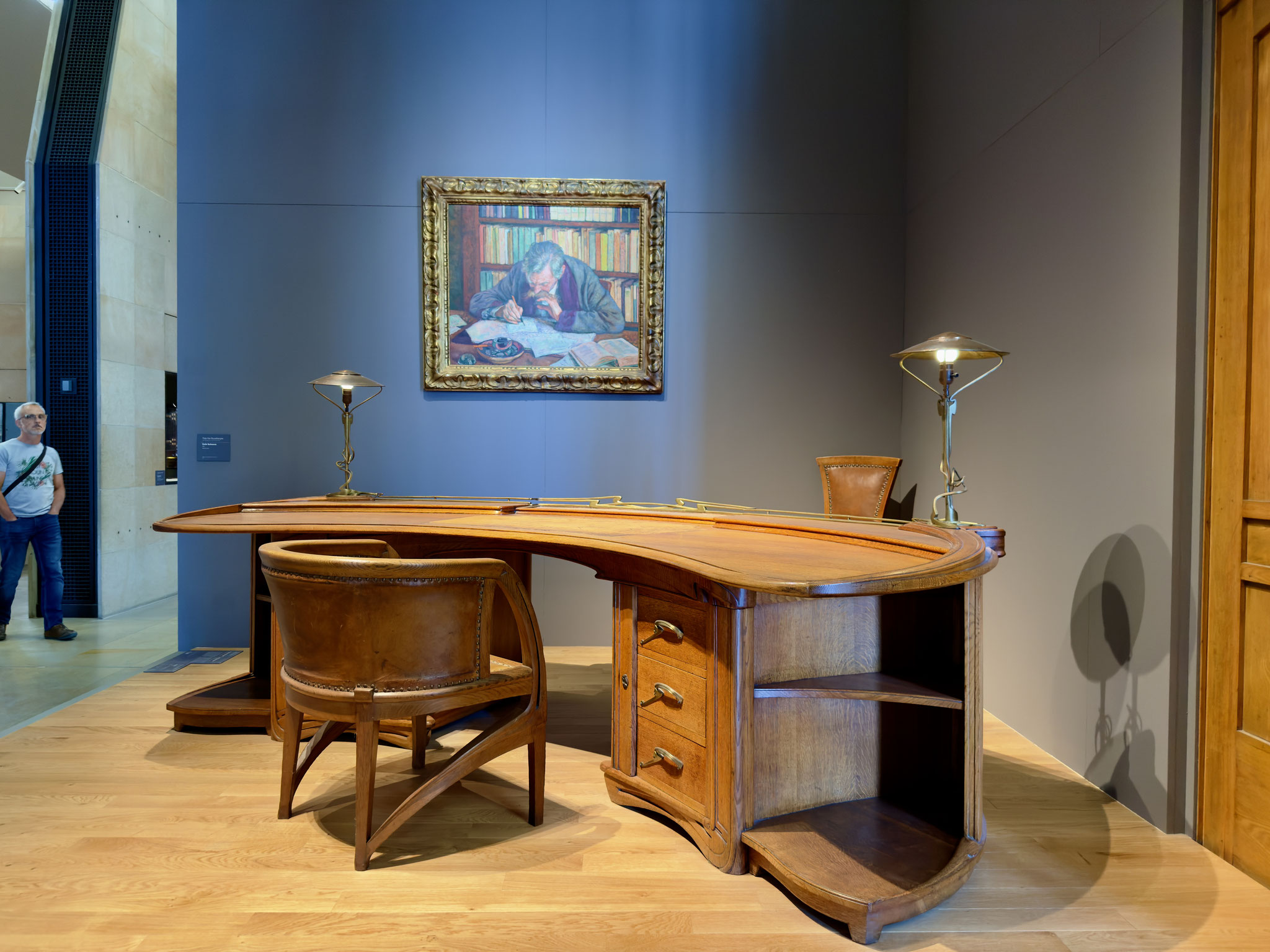
Art Nouveau Desk, 1899 – Henry van de Velde
After Carabin’s carved theatrics, this desk feels almost radical in its restraint. Clean lines, controlled curves, no human bodies sprouting from the legs. You can see modernism approaching. It still bends, still flows—but the ornament has stepped back. Design, suddenly, looks like the future.


The Orsay is enormous. You will not finish it. But if you let it interrupt you—if you let a marble god, a brocade tunic, or a slightly terrifying child stop you mid-stride—it becomes less about coverage and more about attention.
By the time we stepped back out onto the streets of Paris, we weren’t comparing masterpieces. We were arguing about living room furniture.
Write a comment