
We spent five weeks in Zaragoza this past summer—long enough to stop thinking like a visitor and short enough to still notice what makes the city special. We walked most places. We went to museums without checking ticket availability first. We ate well without making reservations weeks in advance. Halfway through, the city’s rhythms started feeling dependable.
Zaragoza is a place where daily life functions without much fuss. That might sound unremarkable until you’ve spent time in cities where daily life is constantly interrupted—by crowds, by ticketing systems, by the sense that you’re meant to be somewhere else doing something more important. Zaragoza doesn’t generate that pressure. People go to work, meet friends, and sit in parks. Visitors are present, yes, but they’re not setting the pace.
That restraint is a bit surprising, given how much history is stacked underneath it all.
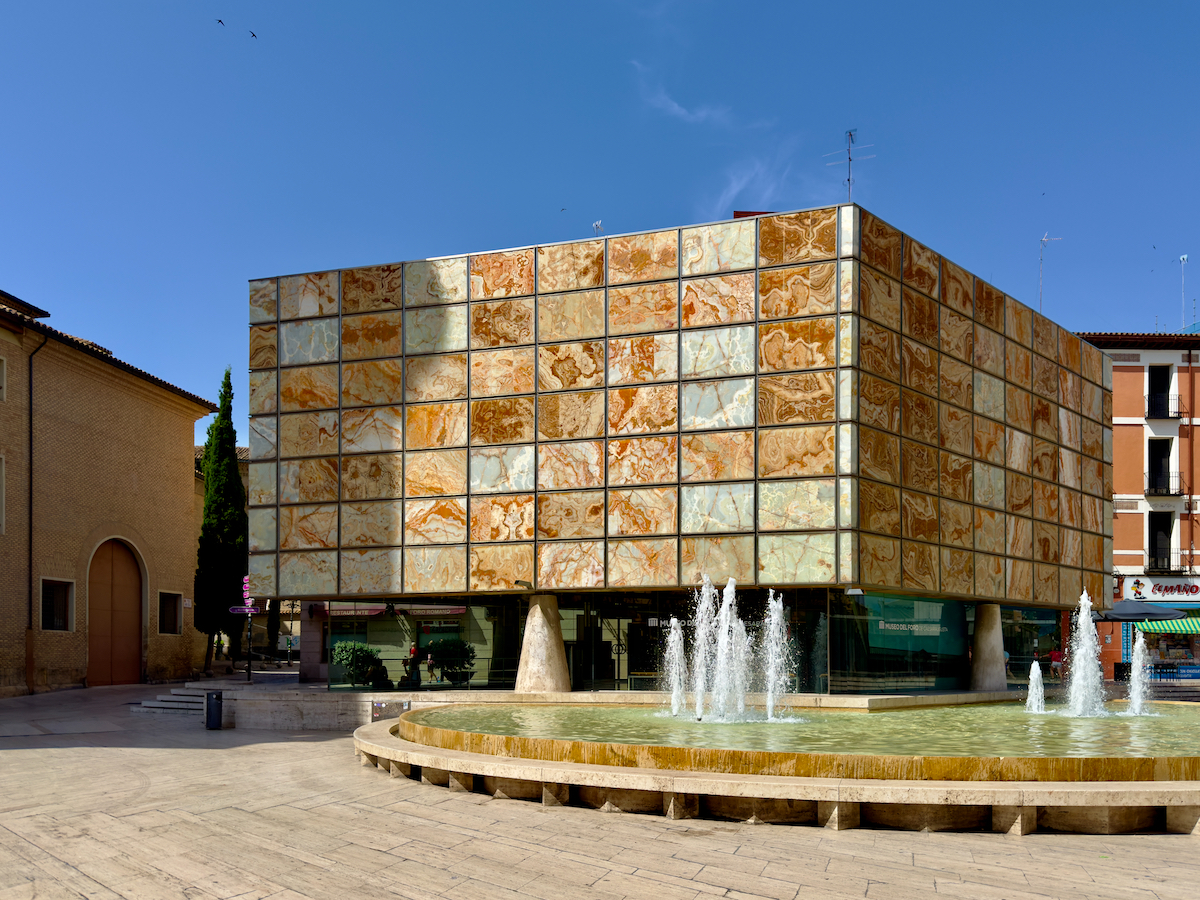
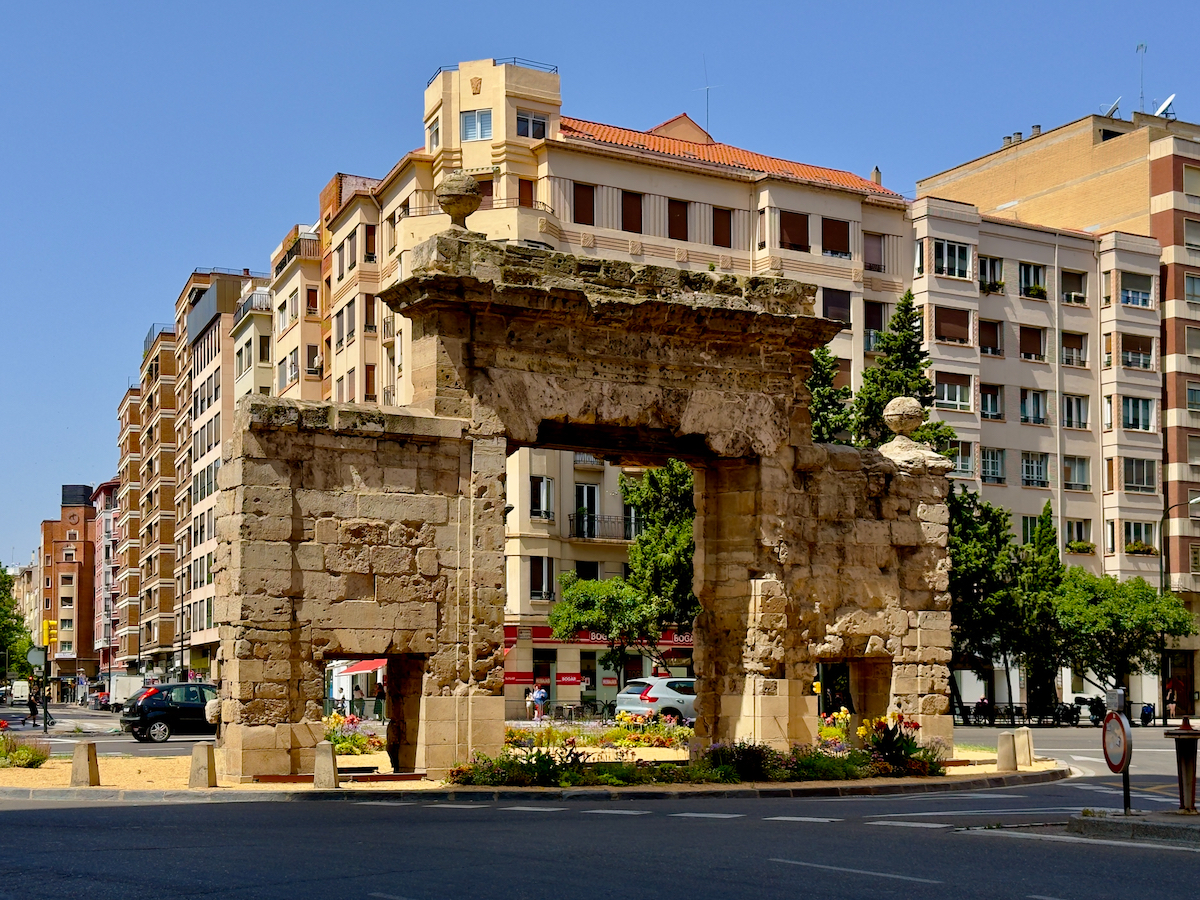
Zaragoza began as Caesaraugusta, a provincial capital in Roman Hispania. It wasn’t a symbolic settlement or a decorative outpost. It was built to last as a working city with solid infrastructure—forums, baths, theaters, a port—and a street grid that still steers movement today. You don’t encounter Roman Zaragoza as a single ruin so much as a system that never entirely disappeared. Pieces of it surface as foundations, alignments, and fragments threaded through the modern city.
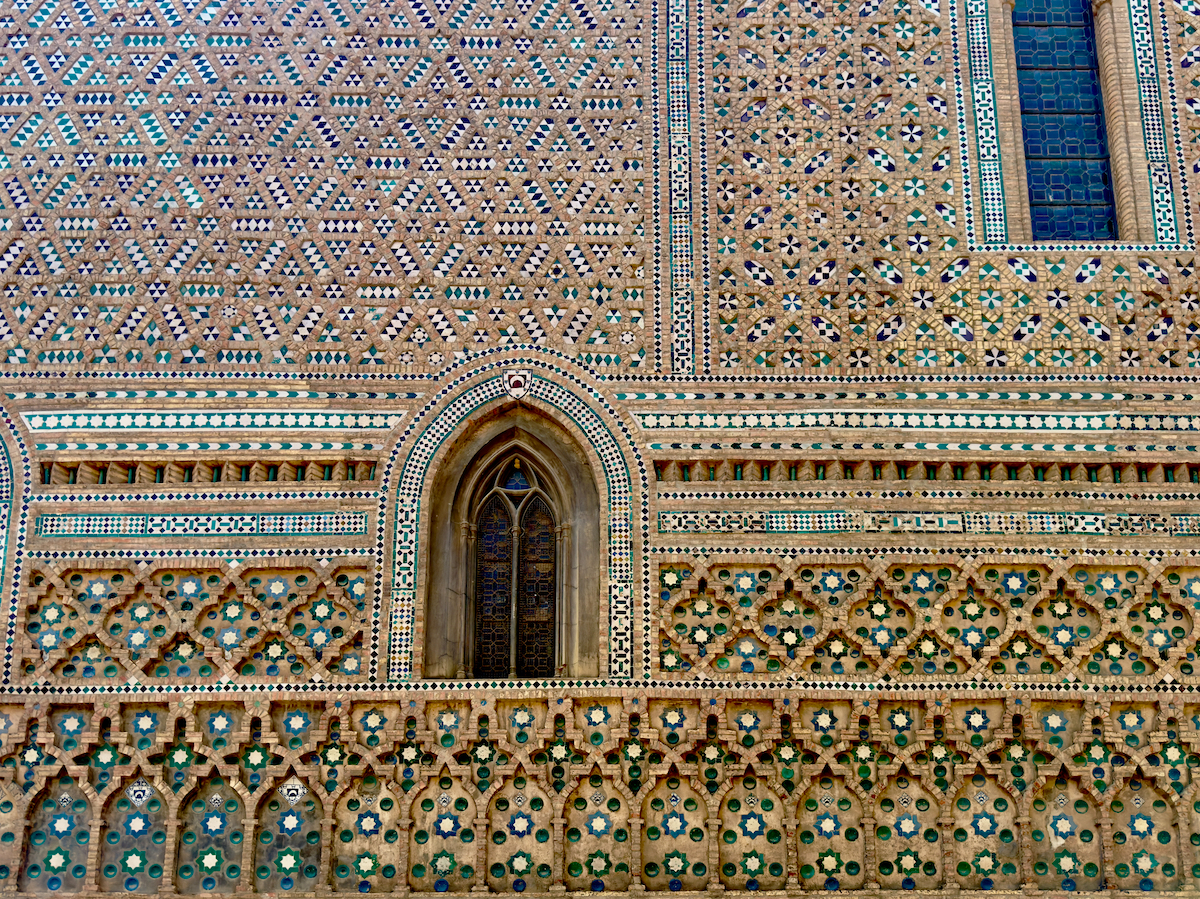
After Rome came Islam, and with it a period of political and cultural importance that left the city with the most important surviving Mudéjar palace in Spain, the Aljafería. The palace has survived conquest, conversion, military use, neglect, and restoration. Now the seat of the Government of Aragón, it remains a vital part of the living city instead of hulking behind a ceremonial moat. It’s close enough to apartment buildings and tram stops that its continued existence feels less like preservation and more like stubborn continuity.
When Ferdinand II of Aragon married Isabella I of Castile, they didn’t gently unite Spain—they set about manipulating it into existence. As the political capital of Aragón and the administrative core of Ferdinand’s realm, Zaragoza was the nexus of the Catholic Monarchs’ long campaign of consolidation. Alliances were tightened, privileges granted or revoked, rival regions brought to heel, and, when necessary, territory was absorbed by force. For a time, Zaragoza enjoyed a position of real prominence in the emerging Spanish state—until Madrid claimed the crown for good.
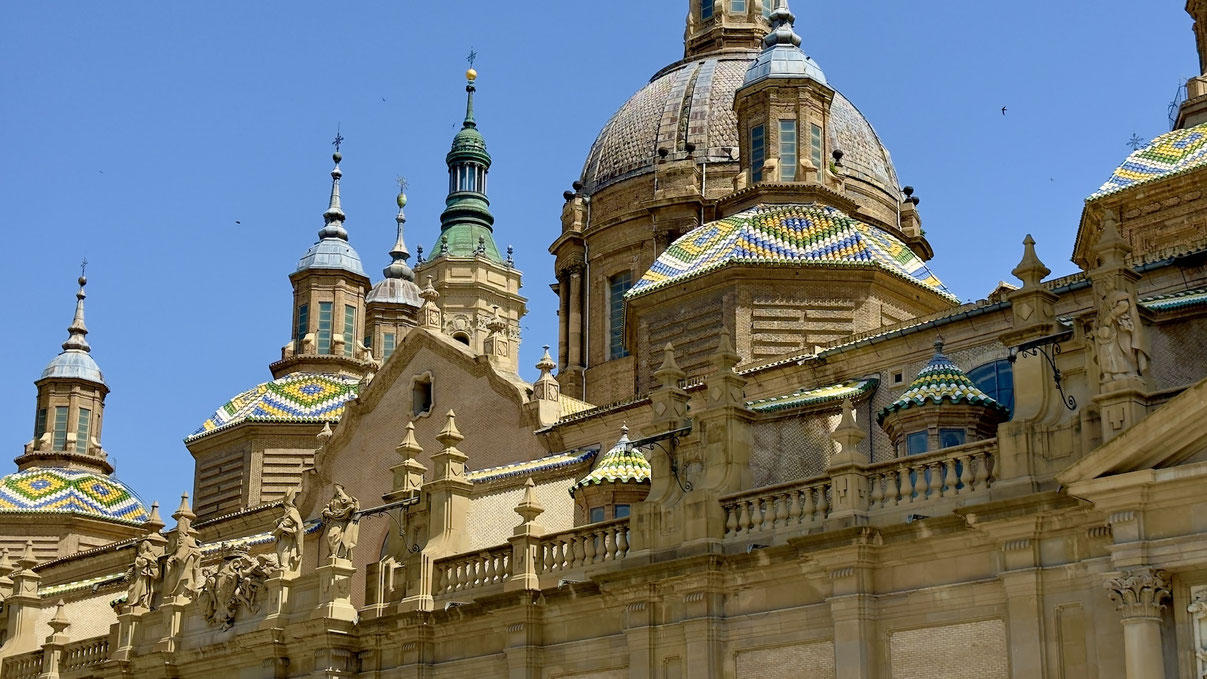
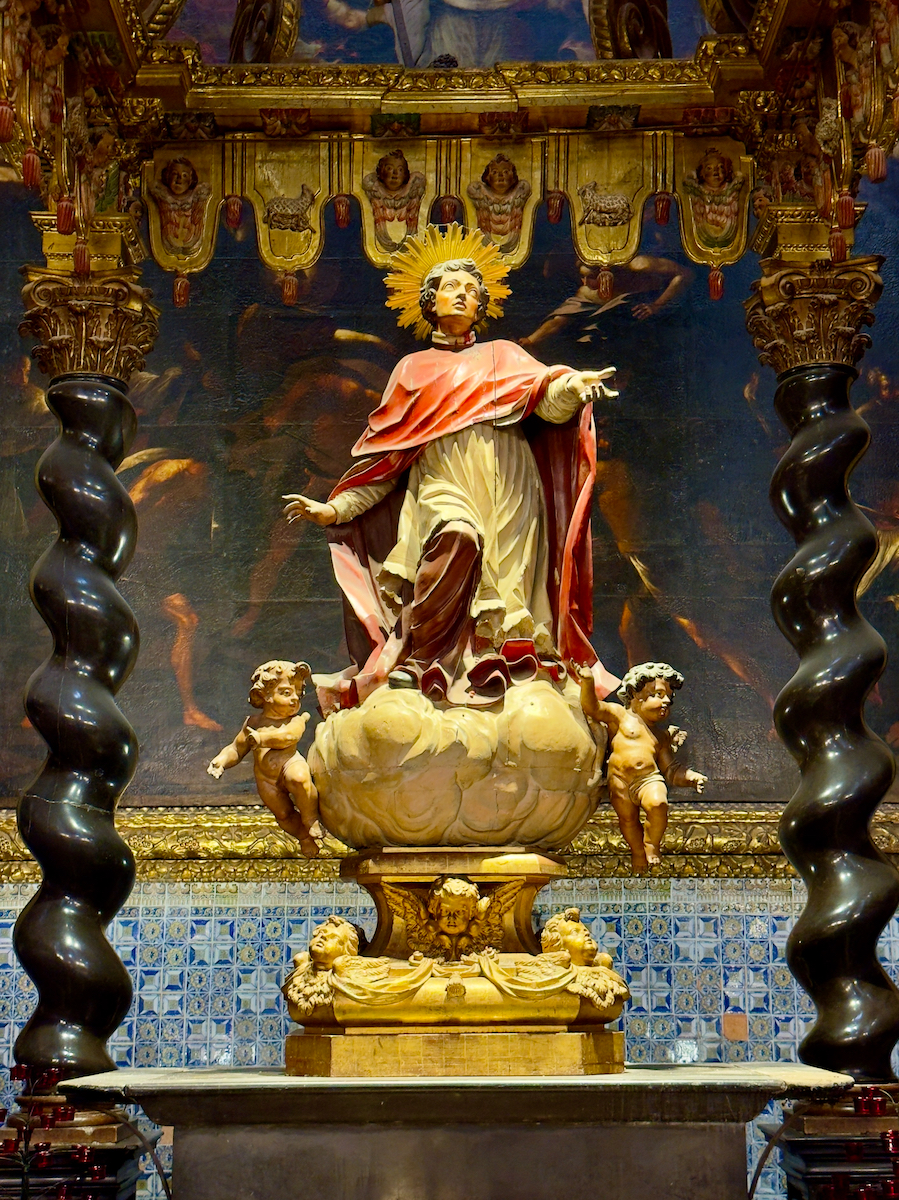
As the city’s secular power gradually ebbed, a much older claim on importance grew stronger. According to Catholic tradition, this is where the Virgin Mary appeared to the Apostle James around the year 40 CE, while she was still alive. She left behind a jasper column as proof of their encounter, and the Basilica de Nuestra Señora del Pilar was eventually built on the spot. If accepted on faith, it places Zaragoza not merely early in Christian history, but at its very beginning in Iberia.
The miracle long predated the city’s political rise, but the Basilica took its monumental form just as that power was slipping away. Over centuries, devotion to Our Lady of the Pillar expanded from local to regional to international, accumulating patronage, architecture, and authority as Spain itself took shape around it. By the time Zaragoza’s role in imperial politics had faded, the Basilica had become one of the country’s most important pilgrimage sites—a different kind of authority, operating on a far longer timeline.
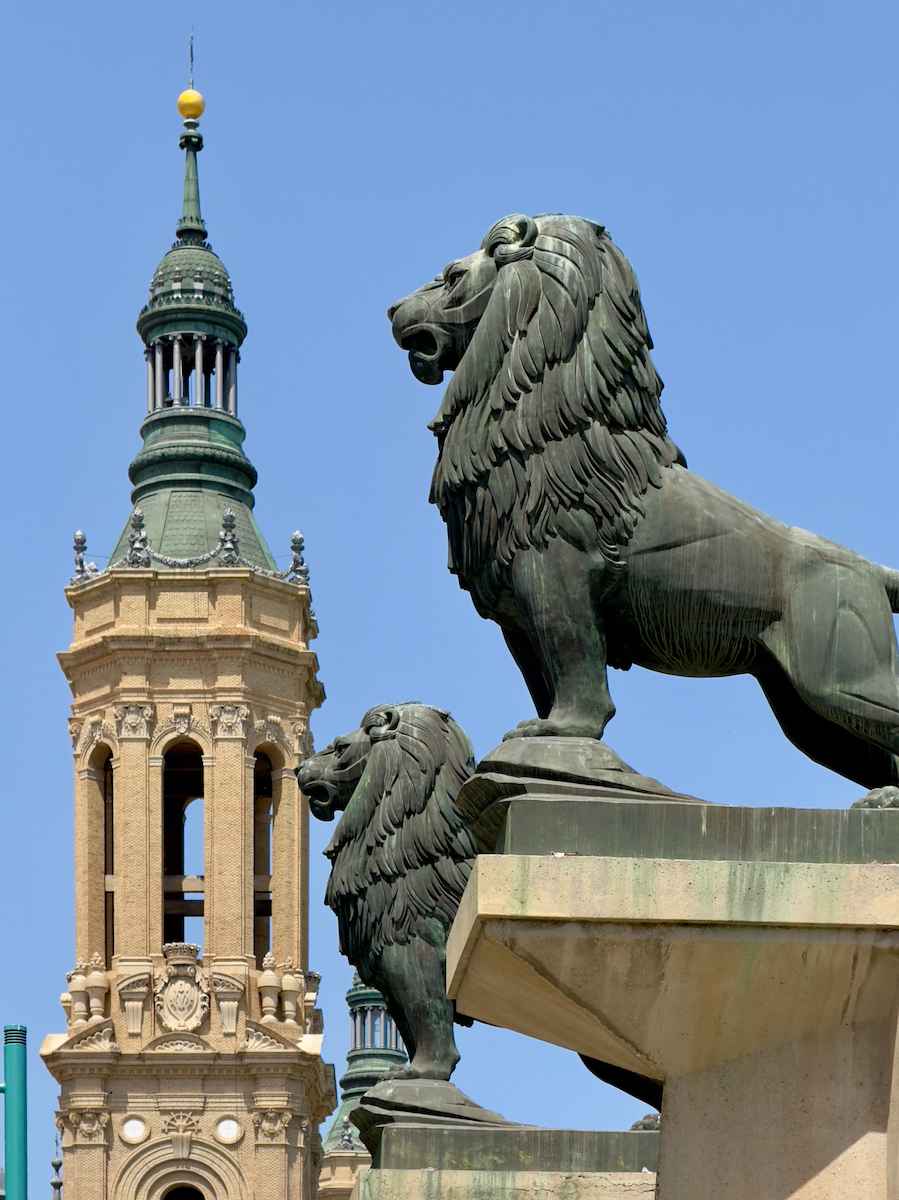
Today, the result is a city that lives alongside one of Spain’s most consequential religious monuments with remarkable composure. The Basilica dominates the skyline, but it does not dominate daily life. People cross the plaza on their way somewhere else, friends meet there because it’s convenient, and concerts and events are held there because it’s huge. A miracle nearly two millennia old sits at the river’s edge, folded into daily routines that have very little to do with history.
Most cities with this kind of storied past make a point of reminding you of it. Nobody here seems especially interested in doing that.
Zaragoza is not Madrid or Barcelona. It does not try to replicate their density, speed, or constant sense of spectacle. But both cities are close enough to borrow from without strain. High-speed trains make day trips easy and unremarkable. We went to Madrid to see the Prado—left in the morning, stood in front of paintings we’d wanted to see for decades, ate a little lunch, and got back to Zaragoza in time for dinner. No suitcase. No hotel. No recovery day.
That kind of access changes how a city functions. Zaragoza doesn’t compete with Spain’s cultural heavyweights—they’re available when needed and irrelevant the rest of the time. The rest of the week belongs to quieter routines. Museum visits in Zaragoza don’t require an attack strategy. You walk in. You look around until you’re done. And you leave when you’ve had enough, not because the room has filled up or your patience has run out. More than once, we realized we were alone in a gallery, which feels like an increasingly endangered experience in European cities.
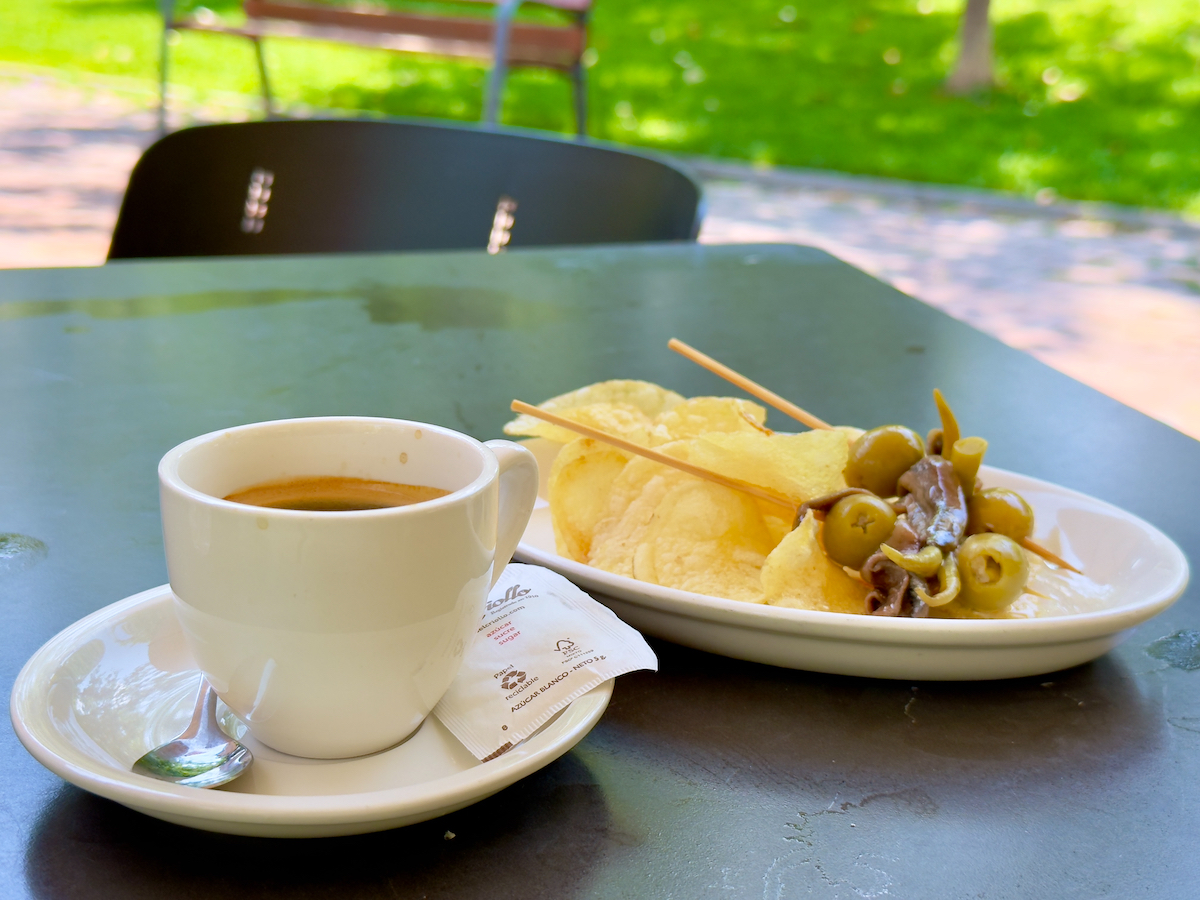
Those museum days tended to end the same—a park, a carajillo, and a few gildas. Not as a ritual, but as the natural conclusion of a great afternoon.
That kind of unforced pacing leaves room for surprises. There’s a world-class origami museum here—serious, technical, and far better than it has any right to be. There are contemporary architectural remnants from Expo 2008 that haven’t aged into embarrassment, traces of a time when the city toyed with spectacle before setting it aside.
All of this fits neatly with how we actually travel. We don’t go home between trips, so there’s no real downtime. And we love high-energy places like New York and Barcelona as much as anyone, where density and volume are part of the appeal. But those cities work better when they’re scheduled along with places that feel livable rather than performative.
Zaragoza doesn’t need an audio guide to be appreciated. It offers a long memory, intact institutions, and people who treat all of it as normal. Nothing is being sold. Life just continues, which, it turns out, is more than enough.




Write a comment