

We did all four Roman sites in Zaragoza in a single morning late in our visit—the Forum, the Port, the Baths, and the Theater (the Ruta Caesaraugusta). Which makes us sound more ambitious than we are. The truth is that they’re all compact, close together, and collectively less “grand ruin” and more “urban archaeology tapas plate.”
Still, there’s something satisfying about seeing the old Roman city of Caesaraugusta not as a single Instagrammable monument, but as a working system that seemed more about logistics than spectacle. And, as it turns out, a surprising amount of attention paid to poop.
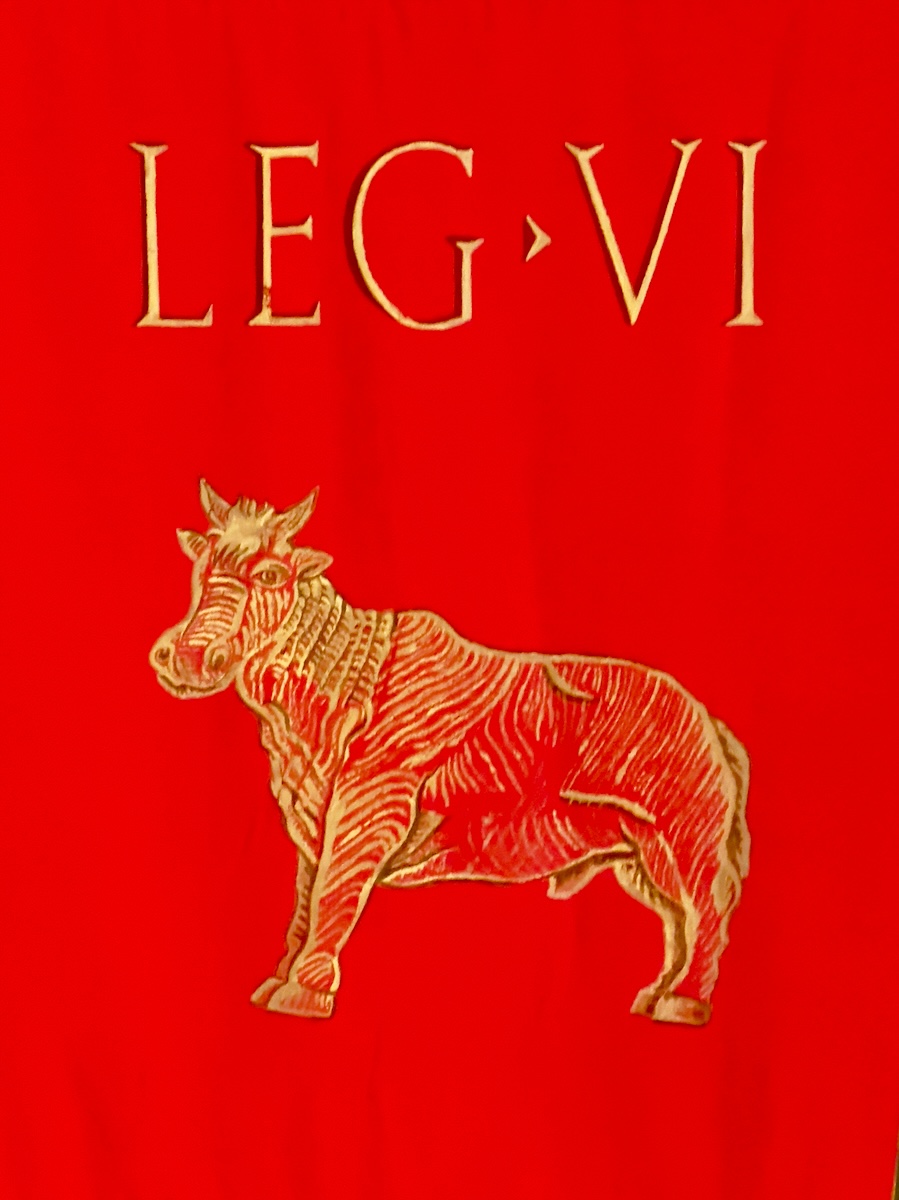
Caesaraugusta was founded in 14 BCE by order of Augustus and settled with retired soldiers from Legio IV Macedonica and Legio VI Victrix. Unfamiliar? Well, they were grizzled veterans fresh off Rome’s final campaigns in northern Spain, rewarded with land, Roman citizenship, and the expectation they’d keep things tidy without needing to swing swords anymore.
And when I say “founded,” I mean subsumed. There was already an Iberian settlement here, called Salduie. Rome didn’t bother reinventing the wheel when something useful was sitting right there. The city was perched beside the Ebro, making it navigable, commercially useful, and well-positioned within the Roman road network of northeastern Hispania.
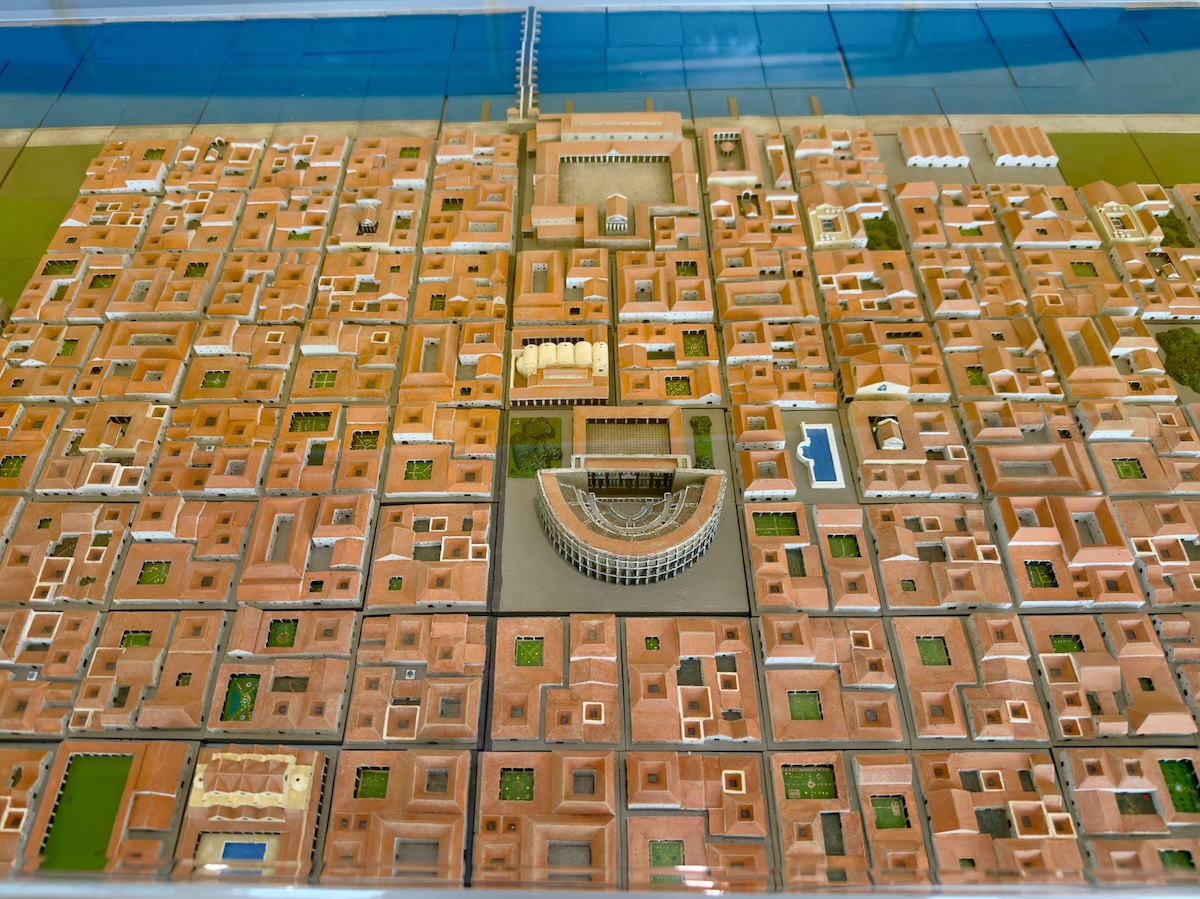
Over the next couple of centuries, Caesaraugusta filled out its expected résumé—forum, port, baths, theater—before being absorbed into subsequent Visigoth, Muslim, and Christian versions of Zaragoza. What remains today isn’t a single ruin, but fragments of a city that was built to function first.
When you sign up for the Roman Ruins Extravaganza, the Forum naturally comes first. Because that’s where you buy your entry tickets, yes, but also because it’s the most committed to setting expectations.
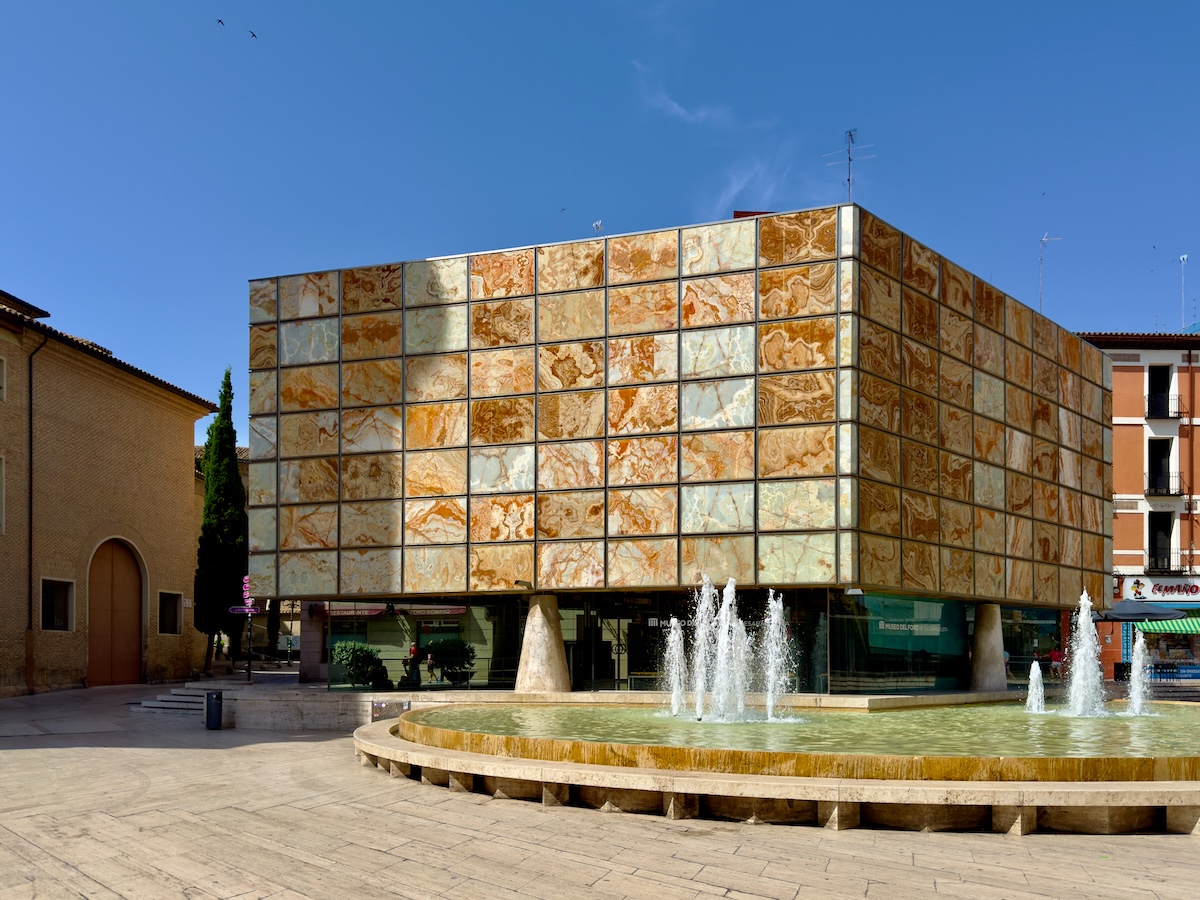
It’s worth pausing at the Forum’s entrance, because the building above ground is doing more than it really needs to. Sitting in the Plaza de la Seo like a polished stone Rubik’s cube, it looks substantial—confident, architectural, almost ceremonial. The exterior panels look like oversized slices of thundereggs—but really onyx or alabaster—cut paper-thin to let light bleed through in cloudy bands of honey, rust, and milky white. Like a giant glass box—if by “glass” you mean “mineral specimen.”
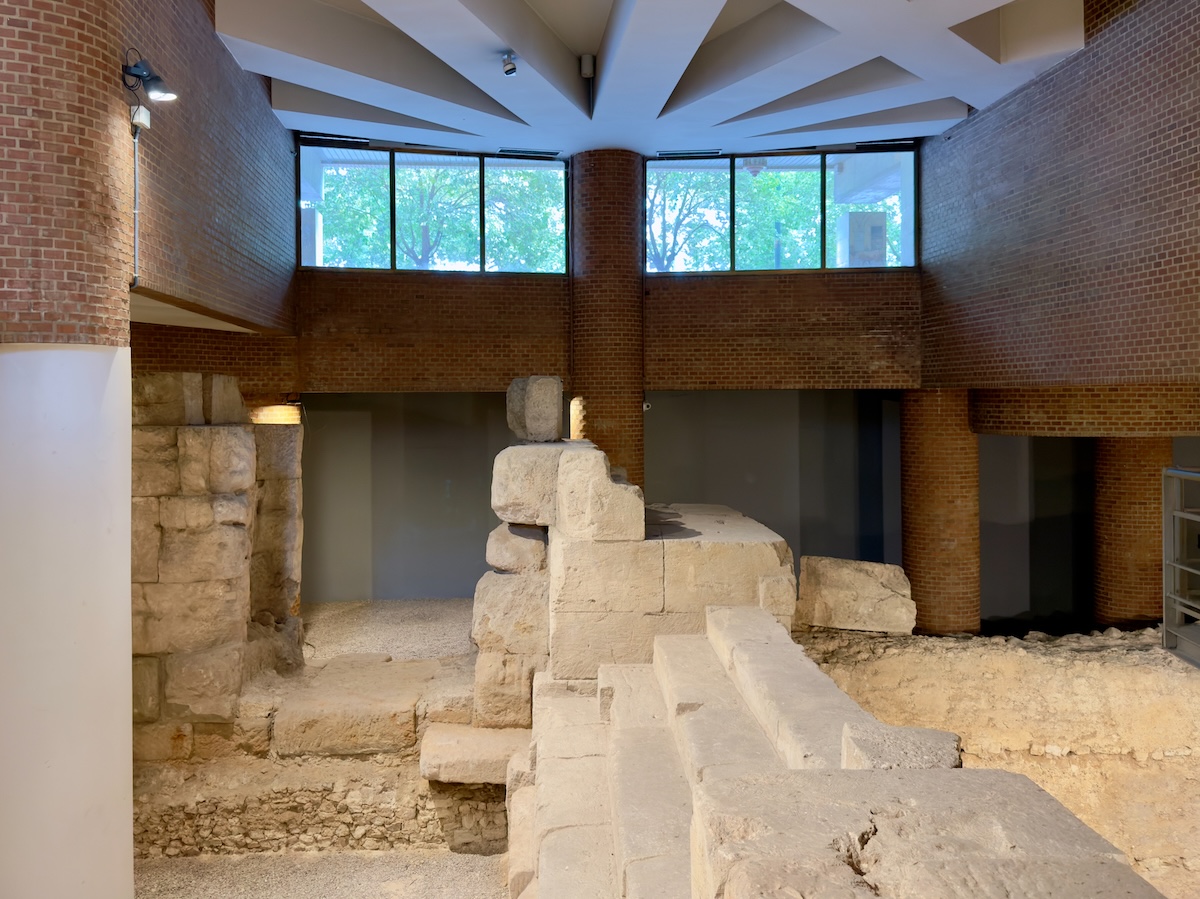
Once inside, it takes a minute, but you realize the whole thing is essentially a handsome lid for what’s actually happening below. The building on the plaza suggests something grand and visible, only to send you downstairs to look at drains, channels, and Roman sewage systems—it’s solid, modern, and maybe a tidge overbuilt, but ultimately just a doorway to less glamorous realities “down there.”
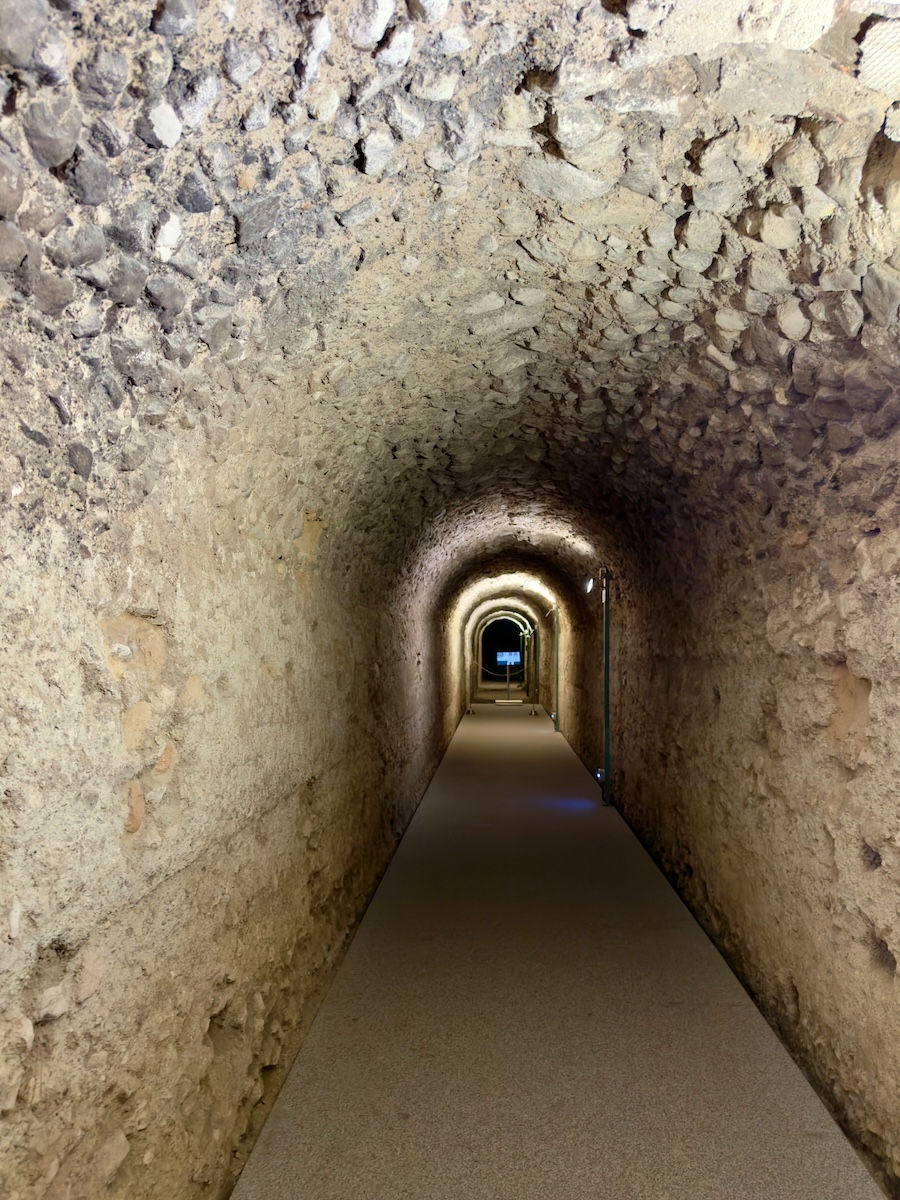
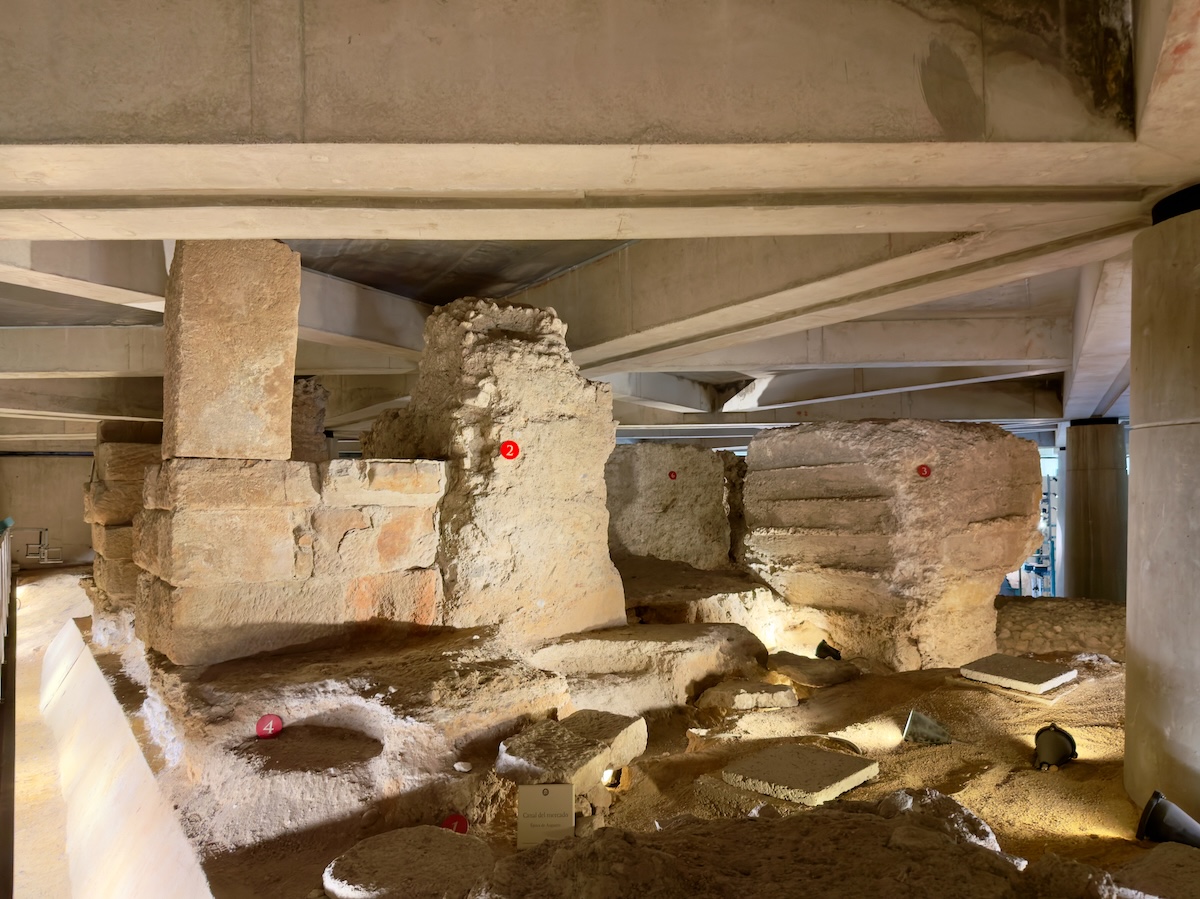
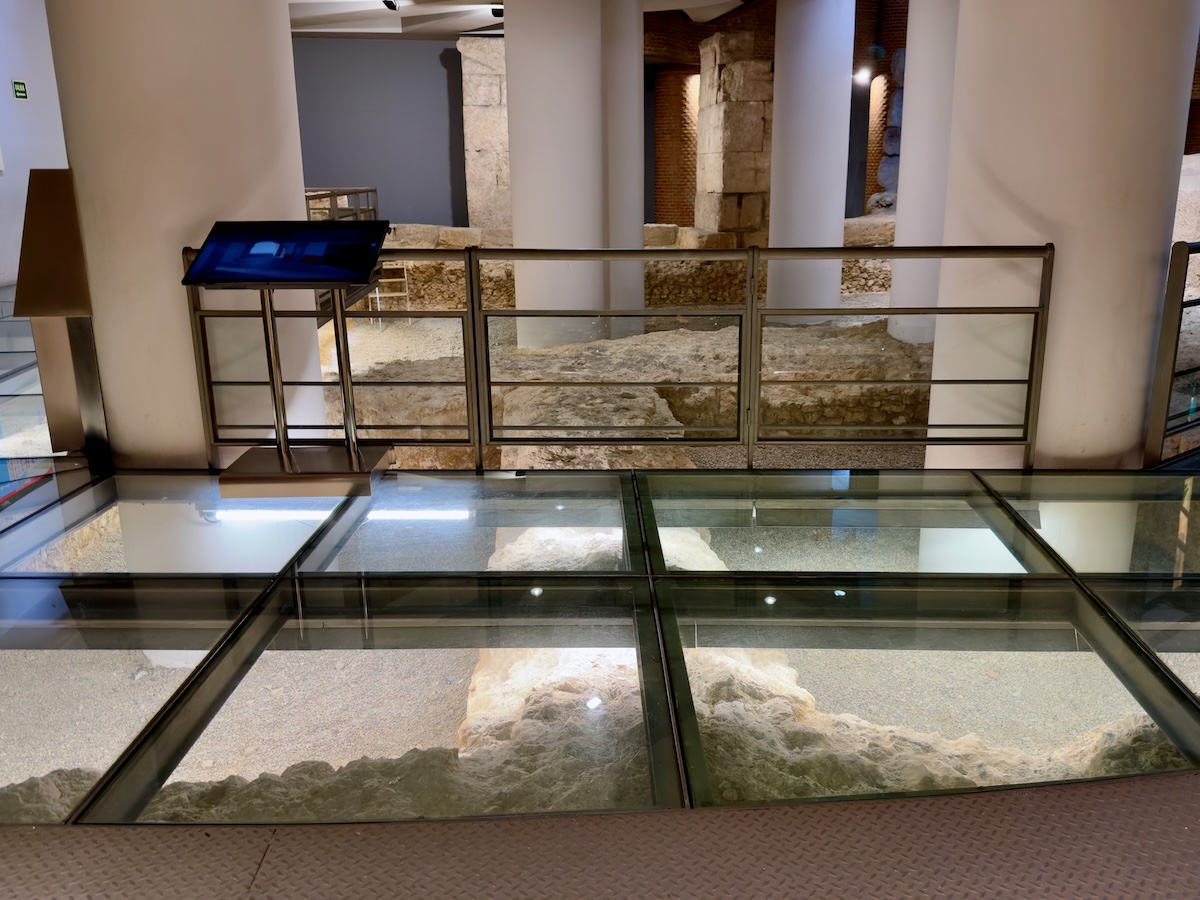
Under the Plaza de la Seo, you come face-to-face with Roman infrastructure—pipes, channels, drains, and a sewage system that looks remarkably competent for something built 2,000 years ago. This isn’t the marble statue version of Rome. This is the “where does all of it go?” version.
Rome didn’t function on speeches and togas alone. It functioned because Roman engineers figured out how to move thousands of people’s bodily output away from markets, temples, and each other. You can see the channels clearly, still sloped as designed. Empires rise and fall, but gravity keeps punching in.
Caesaraugusta wasn’t a trial run. This wasn’t Rome hedging its bets on some provincial outpost. Veterans settled here, signs to the port were posted, and the city was built out with all the amenities from the very beginning—including the parts that don’t usually make the postcards.
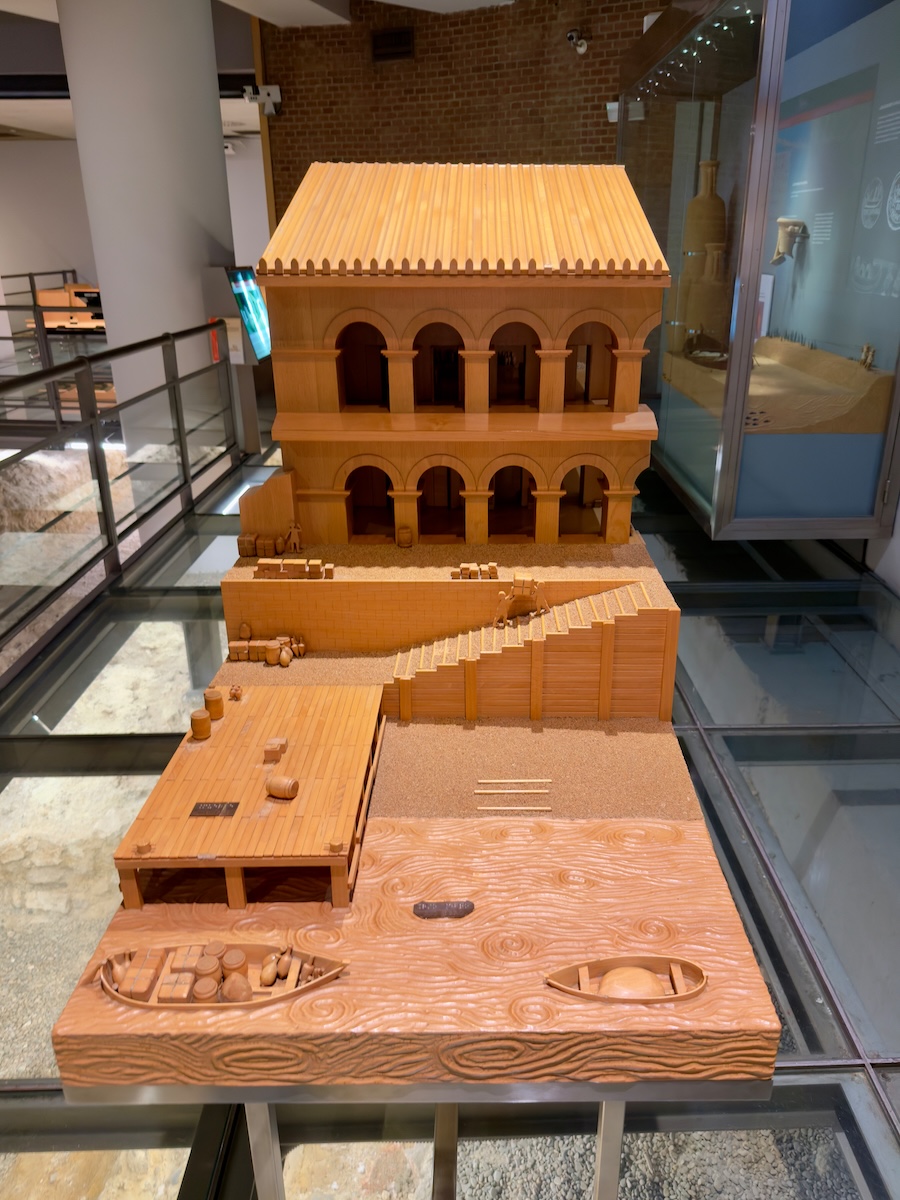
From the Forum, it’s just a short walk to the Port museum, which does the heaviest lifting on the route. The Ebro was navigable pretty far inland in Roman times—I mean, have you looked at a map? Zaragoza is pretty much in the middle of the neck that connects France and Spain.
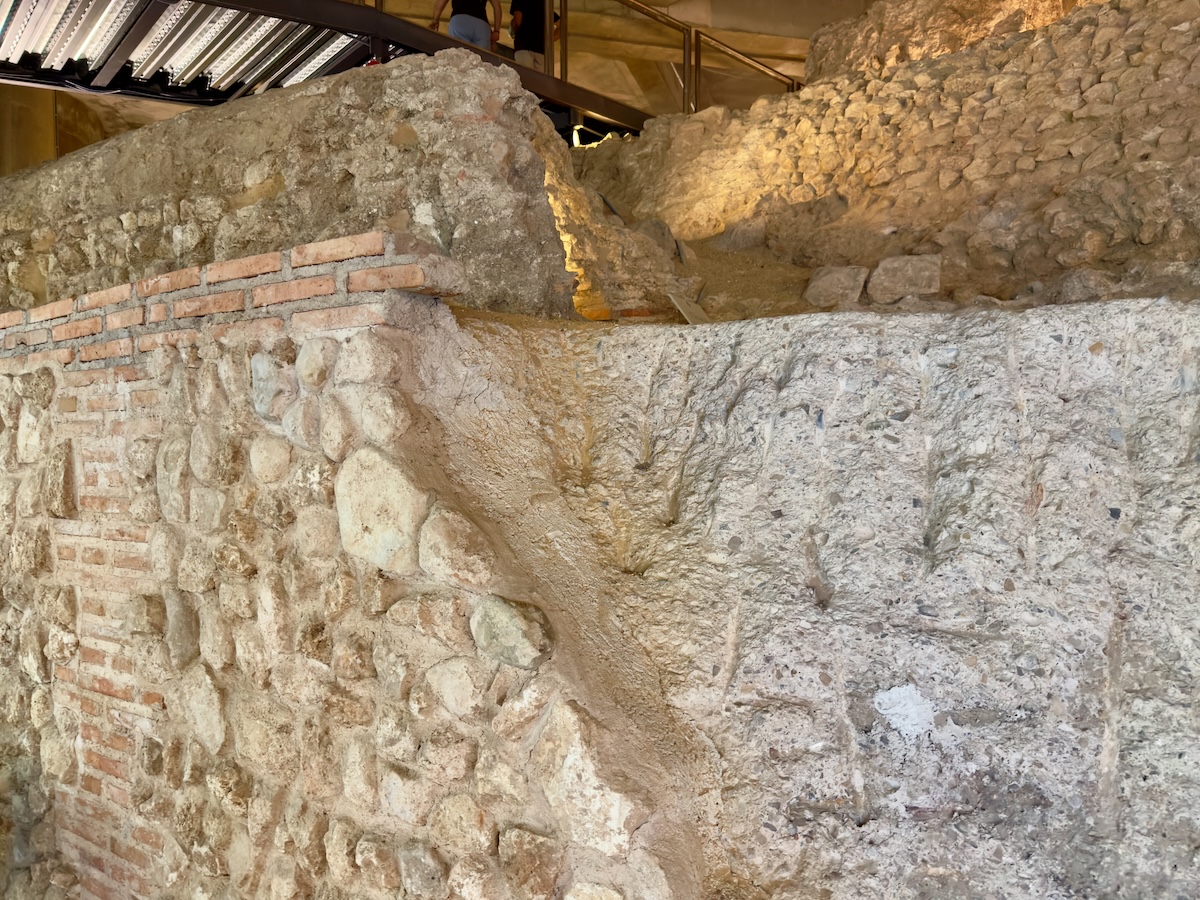
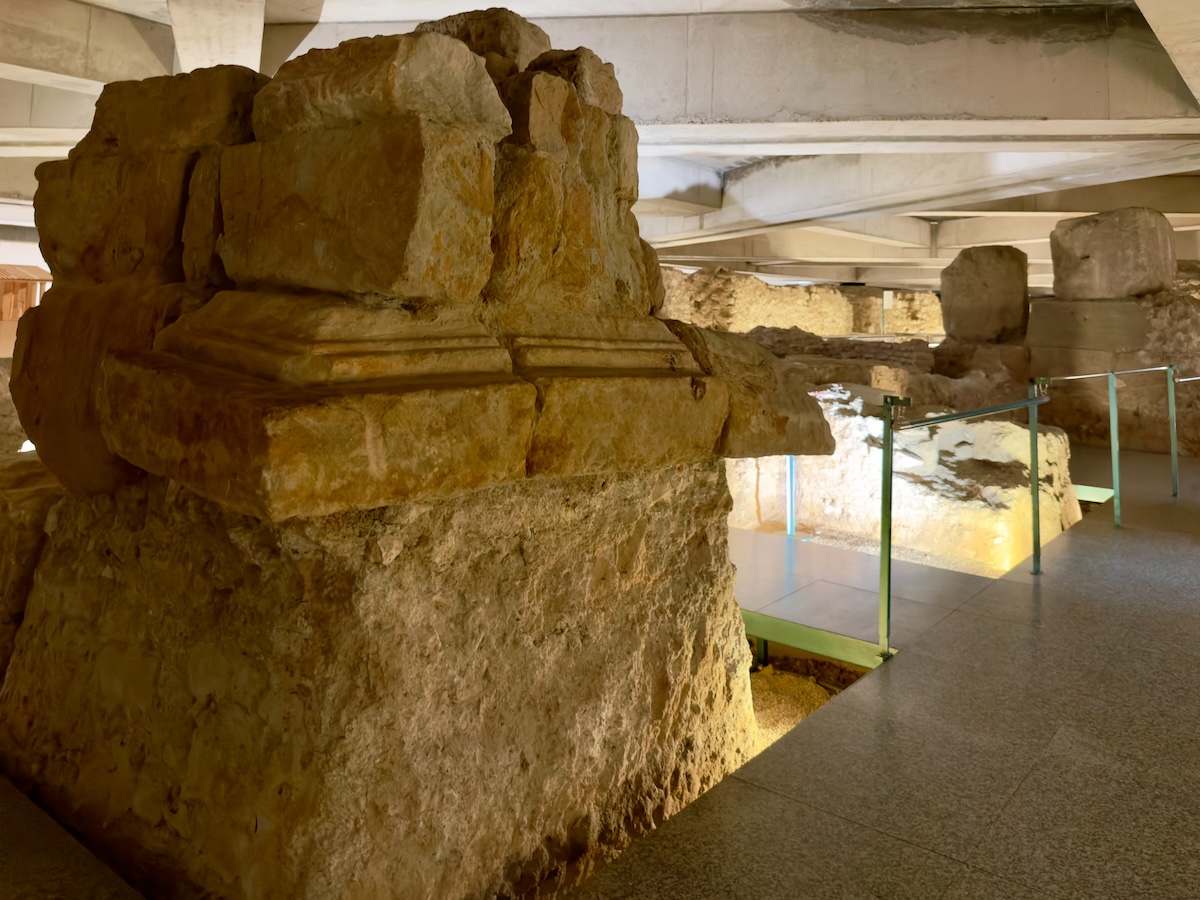
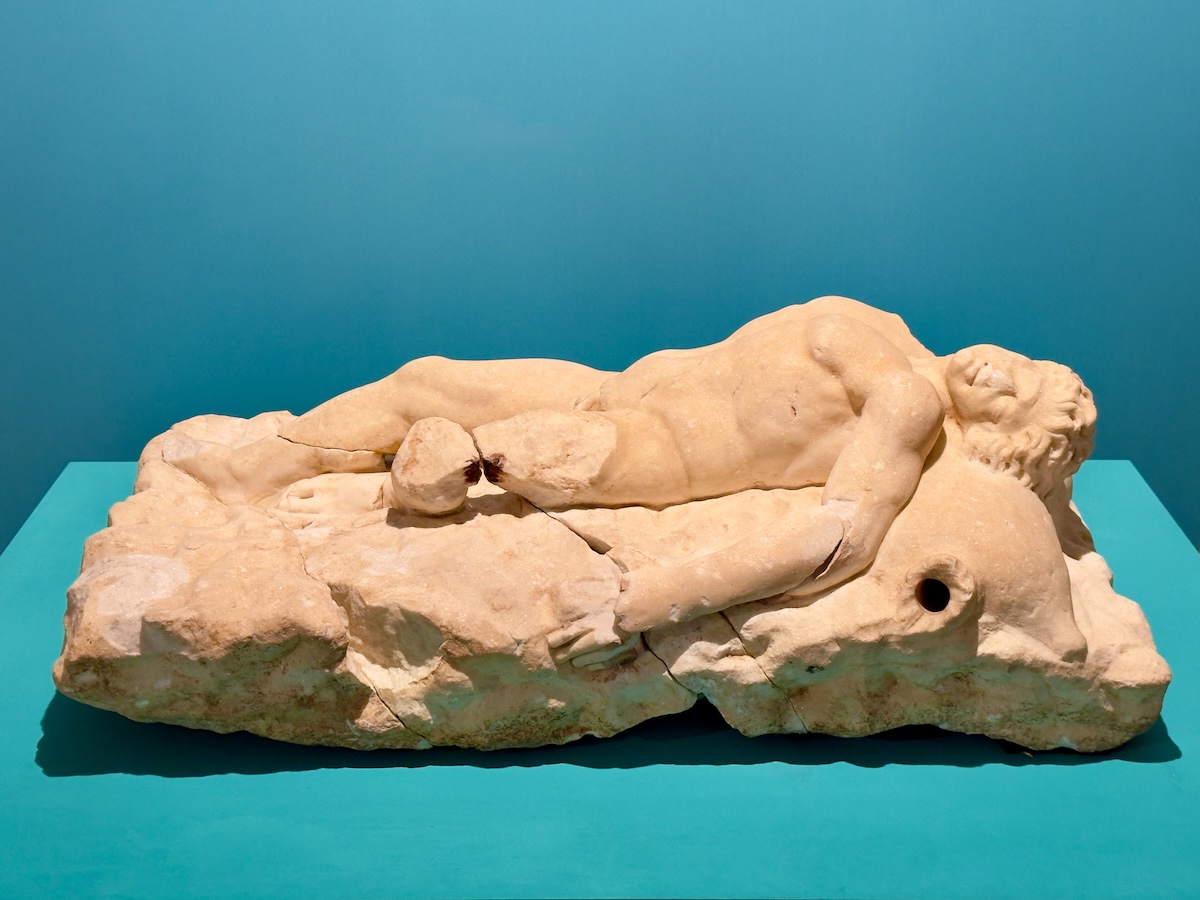
This is where goods moved in and out—amphorae of wine and oil coming in, raw materials like grain, timber, wool, hides, and rough metal stock heading toward the Mediterranean. The remains here are still solid—stone blocks, foundations, traces of arches that once framed a busy threshold between river traffic and city life.
Some of the stones still bear the marks of legionary masons—little carved glyphs like artistic flourishes or approval signatures. Someone cut that block. Someone else checked it. And one of them would be darn sure to hear about it if it failed. Roman bureaucracy in chisel marks.
The Port museum also makes it clear that trade wasn’t an abstract background activity, it was daily and physical. It fed directly into the city’s core. Goods didn’t arrive and disappear offstage—they funneled straight upstairs to the Forum and into the civic and commercial core.
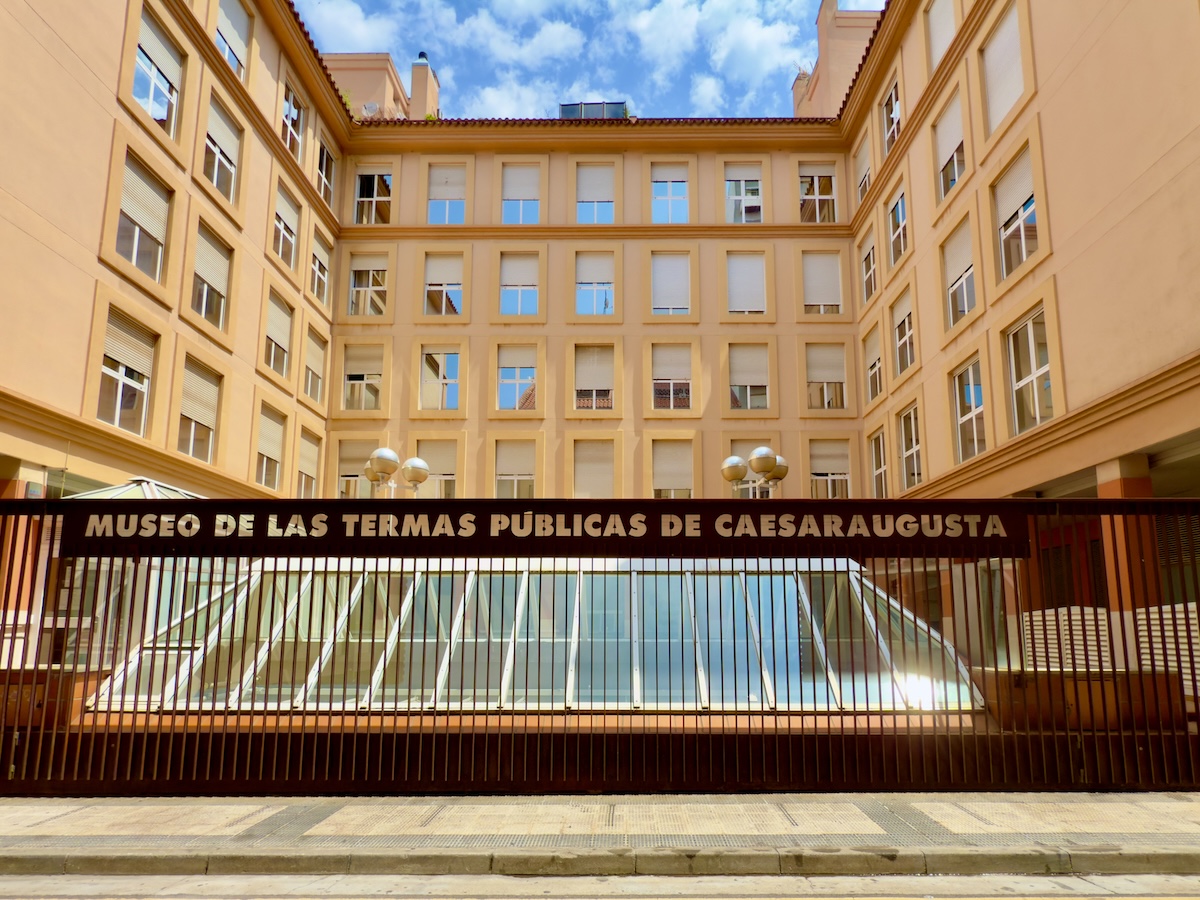
Then come the Baths.
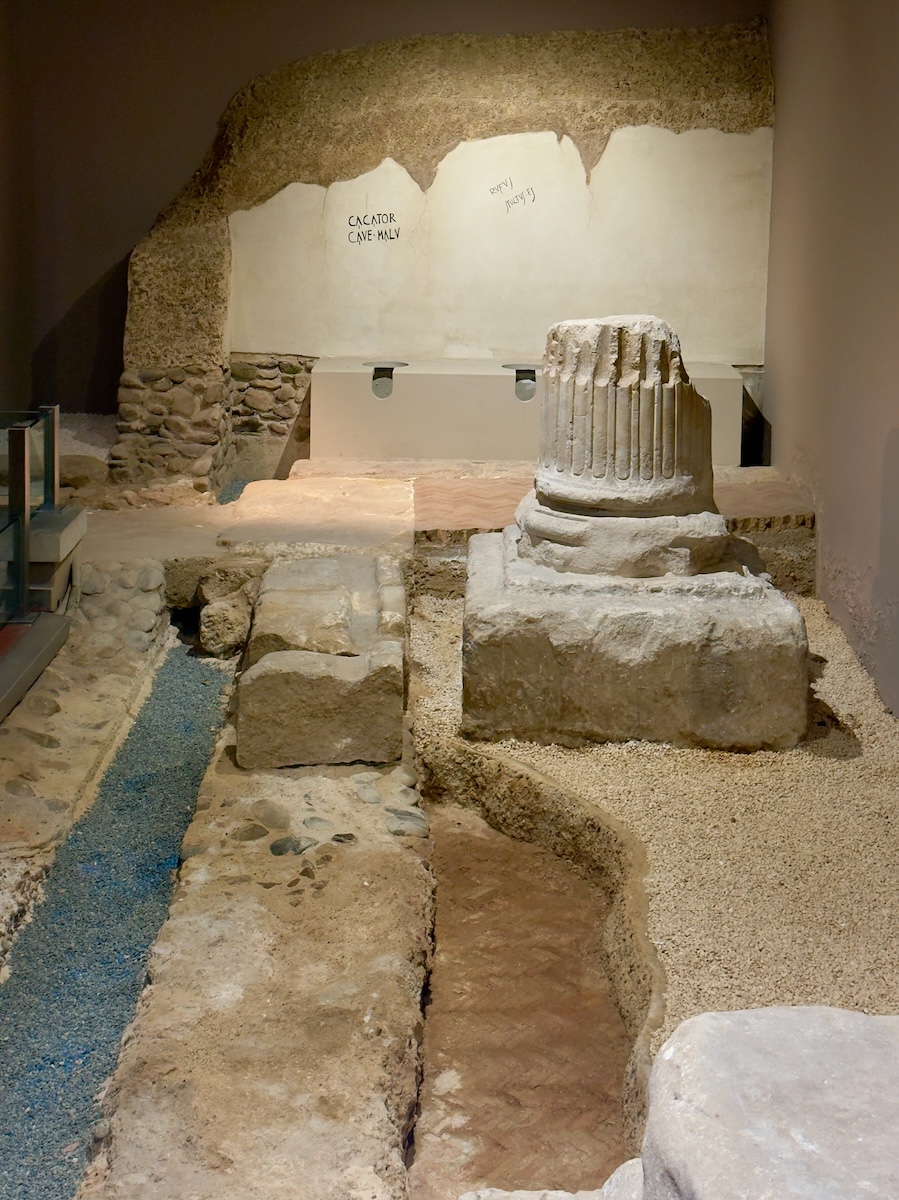
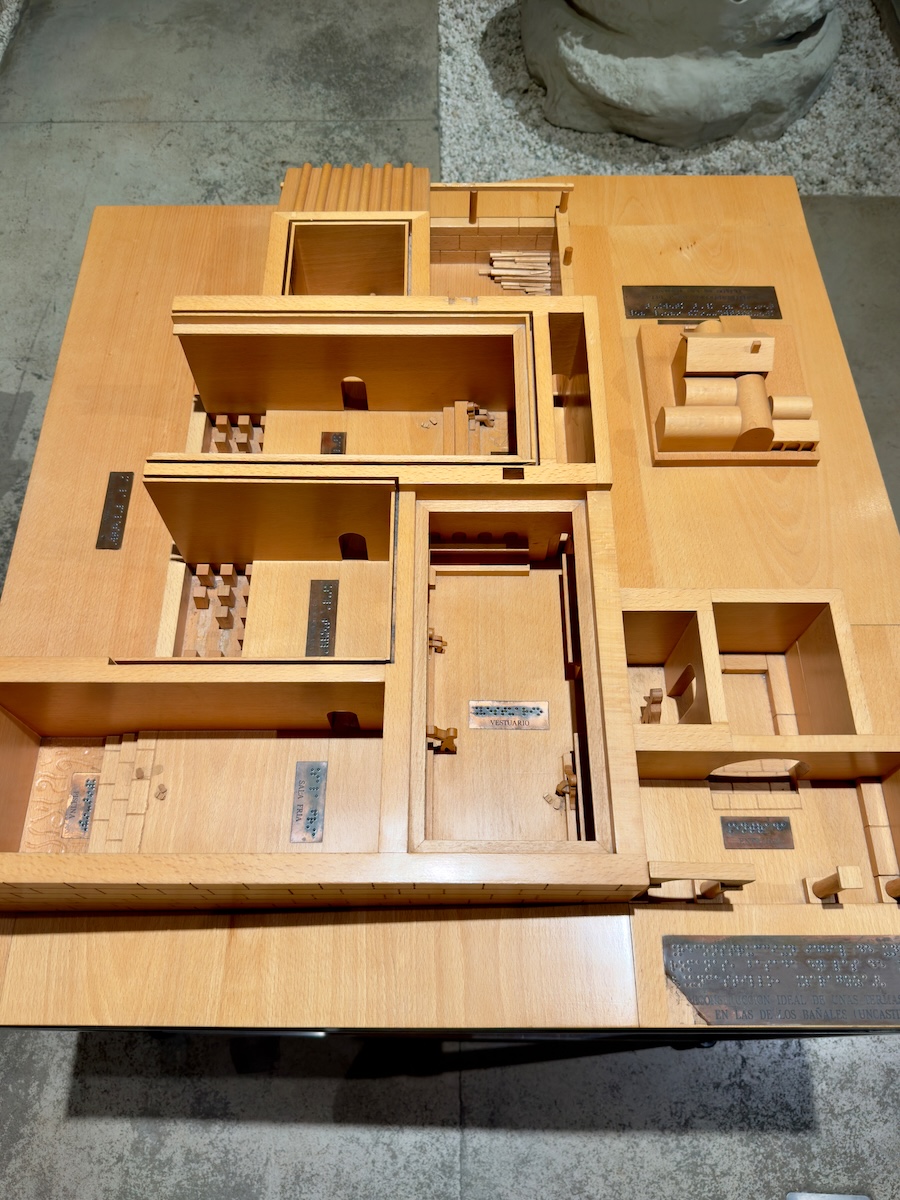
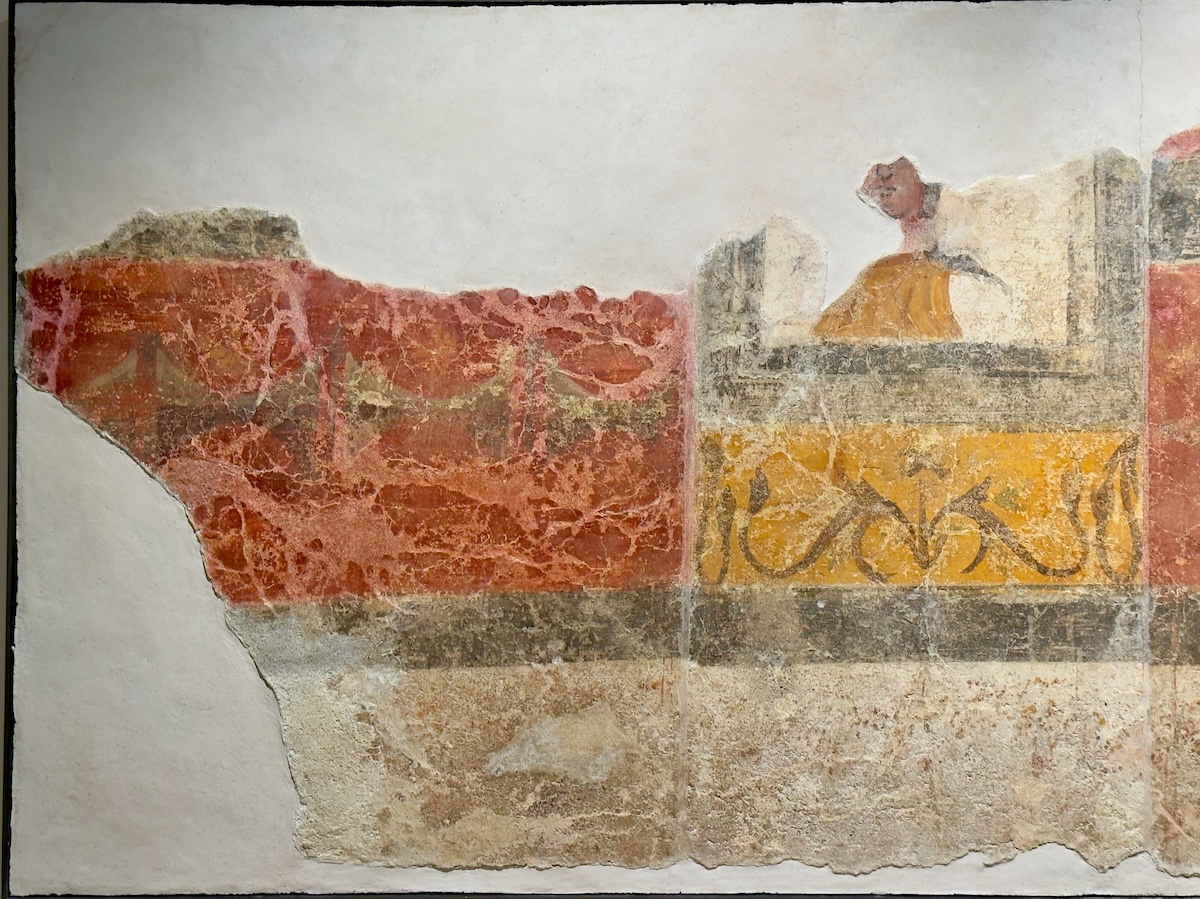
I want to be kind, but I also want to be accurate. The Baths museum is…small. Not “intimate.” Not “concise.” Small as in, roughly the size of a generously proportioned living room. And not a particularly well-furnished one. There’s a (really) grumpy docent sitting by the door, a preserved pool area, and explanatory panels doing a lot of exposition. In Spanish.
The importance of public baths in Roman life is well-documented—socializing, hygiene, business conducted while naked for reasons that seem suspect—but mostly from school. This space doesn’t really build on that. It’s the rare Roman site where the brochure’s enthusiasm slightly outruns the physical evidence. We nodded politely, read the signs, “mmm’ed” thoughtfully—and we were still back on the street in under 10 minutes.
Which probably only helped make the Theater feel even more “dramatic” by contrast (pun most definitely intended).
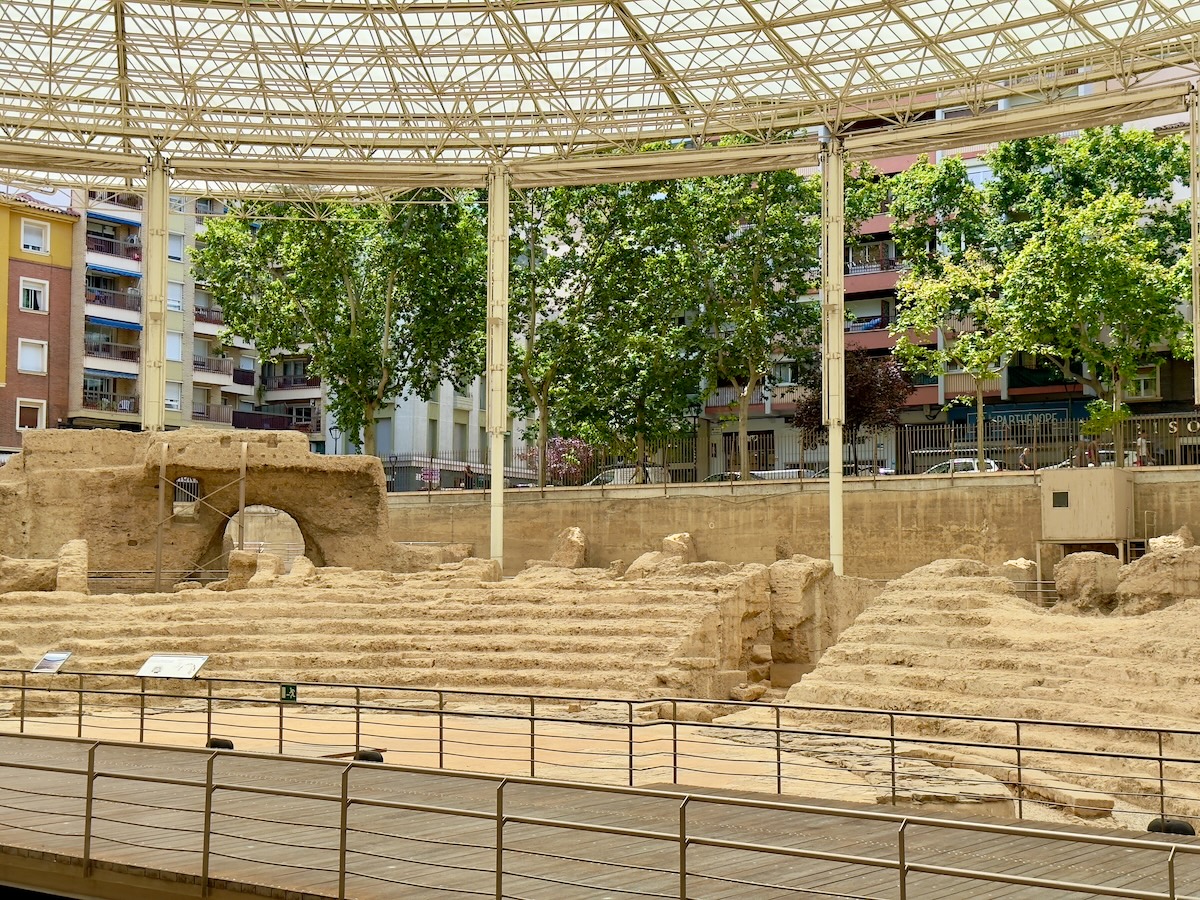
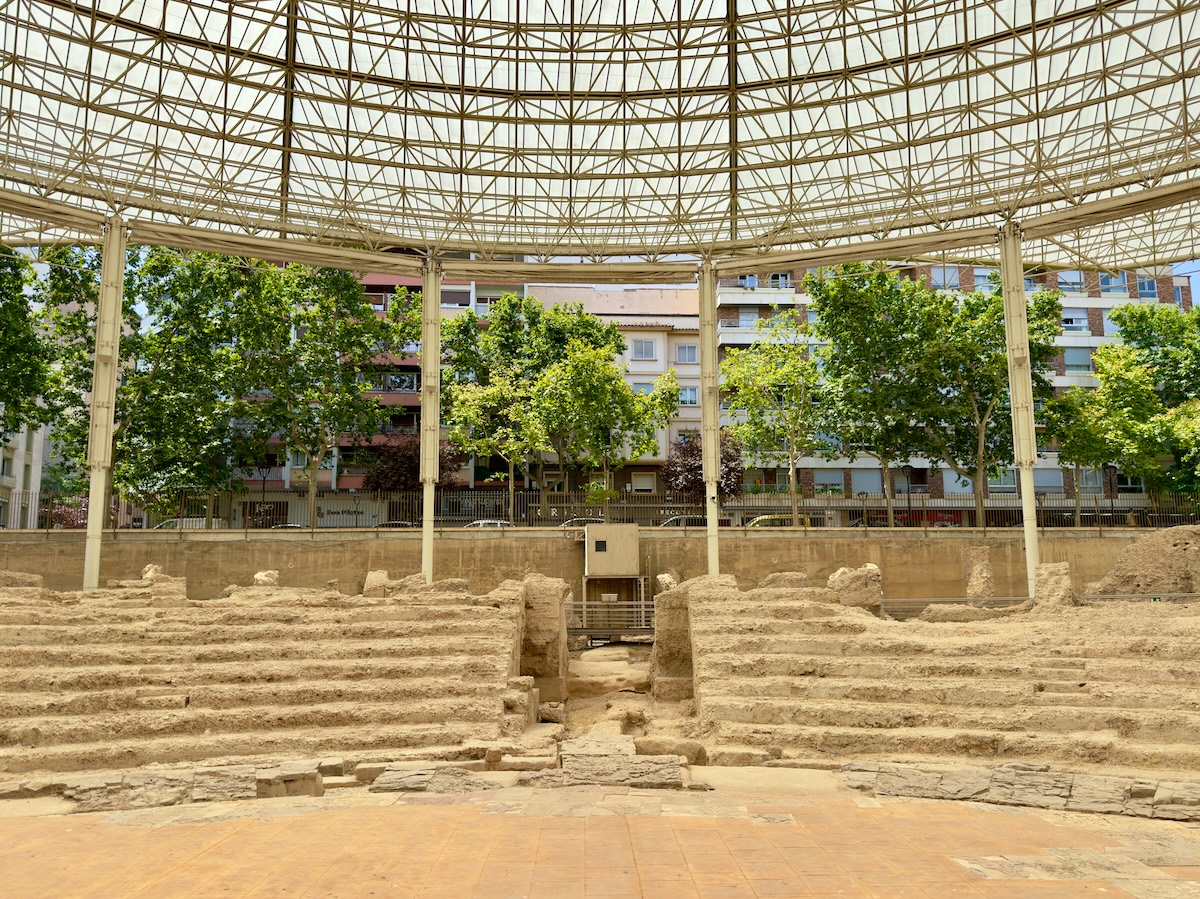
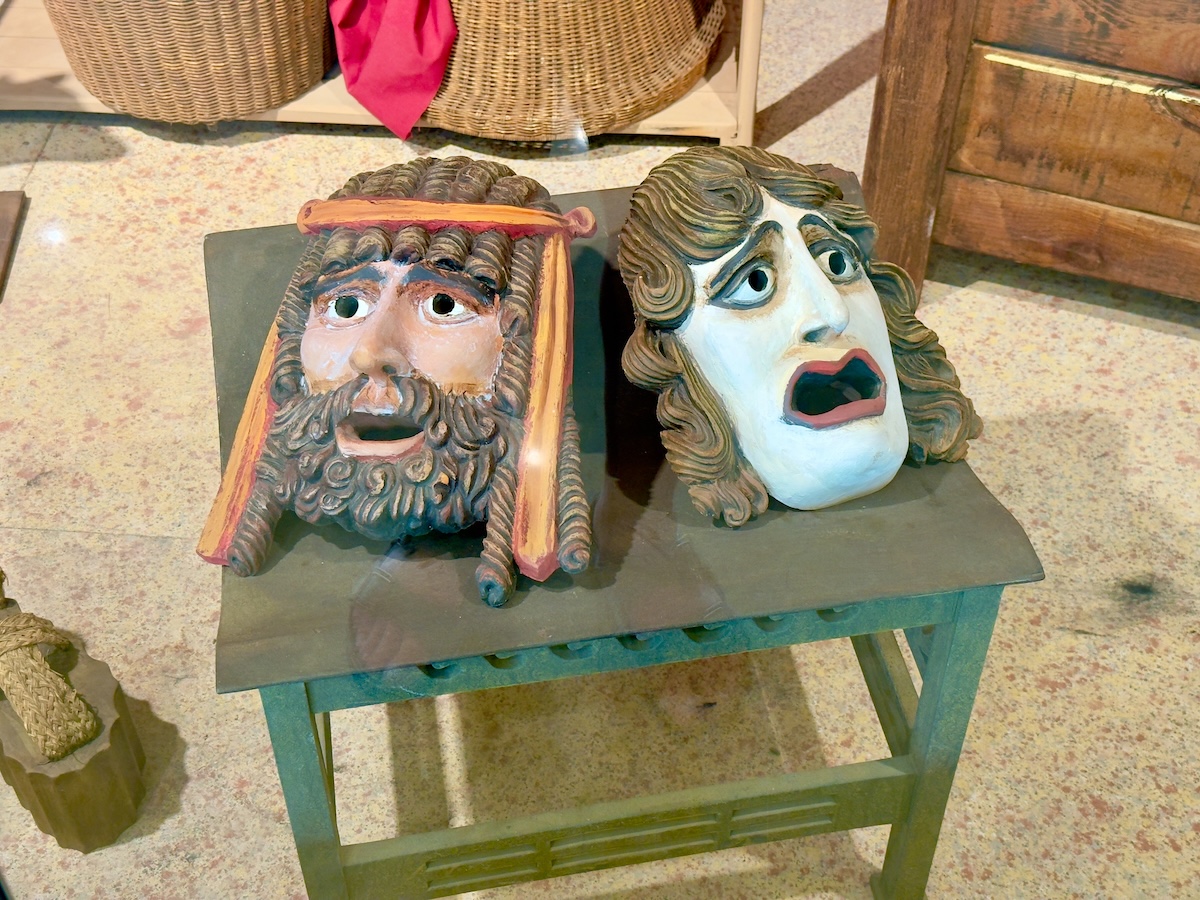
The Roman Theater is the showstopper, literally and figuratively. Discovered in 1972 during routine neighborhood redevelopment—a little demolition here, some new apartment blocks there, and maybe digging a little deeper than expected—it once seated nearly 6,000 people. That puts it among the largest Roman theaters in Hispania, large enough to make the usual size comparisons beside the point. The point is, this wasn’t just fringe entertainment. It was central programming. Must-See Theater, if you will.
After the final performance, sometime as Roman control faded in the 5th century, the theater wasn’t preserved, repurposed, or really acknowledged at all. It was abandoned, gradually buried, and built over until it vanished from memory entirely. It survived not because anyone valued it, but because it disappeared under layers of dirt, stone, and asphalt—fossilized by centuries of ordinary city life.
That’s the theme that ran through our whole morning. These sites aren’t about Rome as a myth—they’re about Rome as a functioning city. Commercial goods arriving, waste leaving, people bathing (hopefully), and crowds gathering for distraction, propaganda, and shared stories.
In the end, practicality was the memory that lingered, not scale or age. We romanticize the Romans, but durability was their priority. And judging by the sewer system alone, they nailed it.







Write a comment