
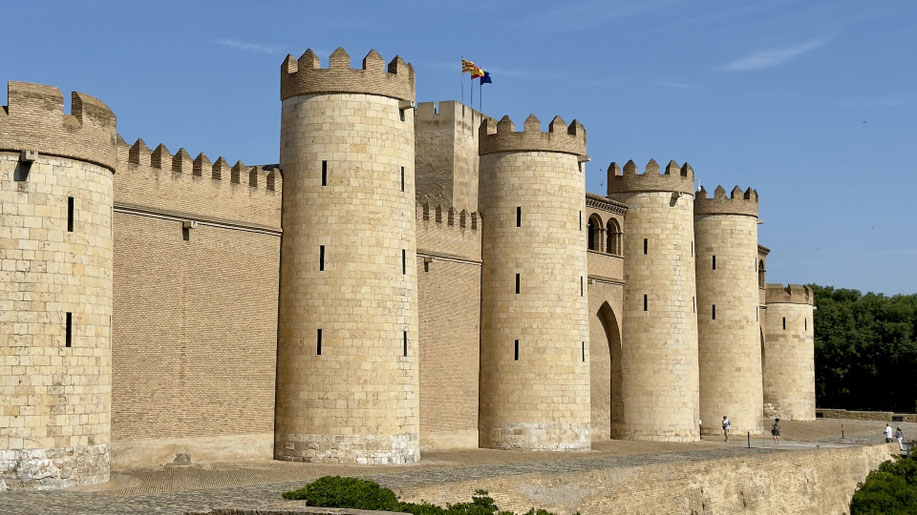
The Aljafería does not ease you in gently.
From the outside, it looks more like a problem to be solved than a place to be admired—thick walls, two squat towers, blunt geometry, and an actual moat that still implies offense that you’ve even shown up here. It’s less like a palace than an instrument of authority. Not defensive exactly—though it has been that. But deliberate, maybe a bit hostile. The kind of building that assumes it will still be standing long after whoever currently owns it has vanished.
Which, as it turns out, has been a pretty safe bet for more than a thousand years.
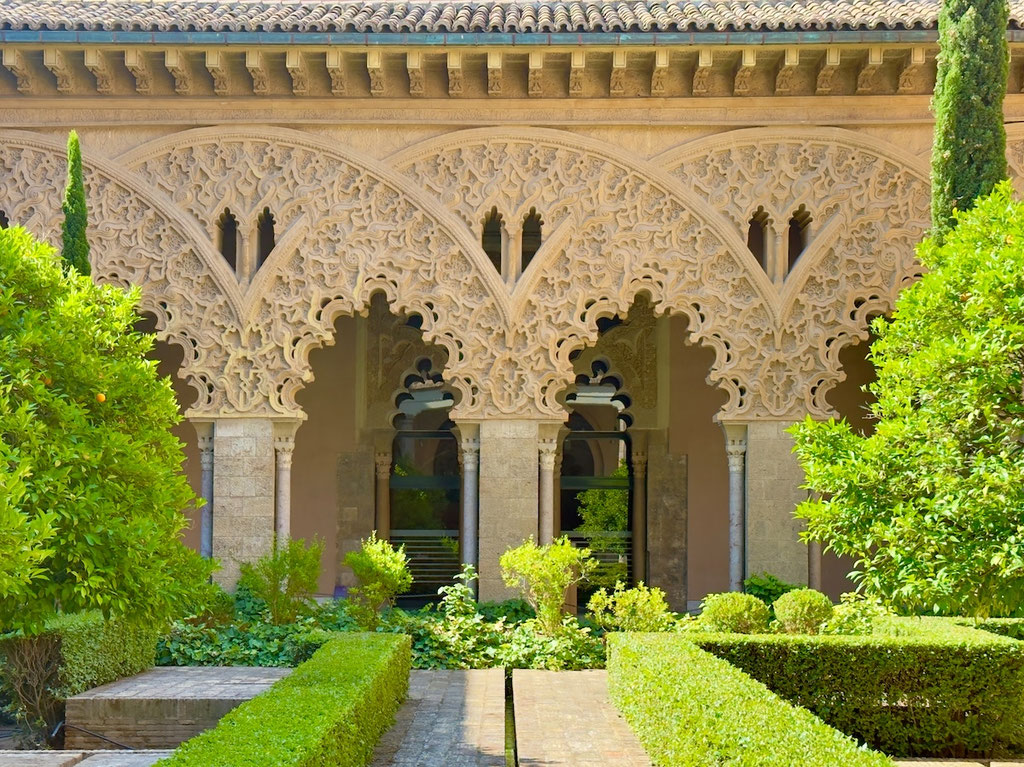
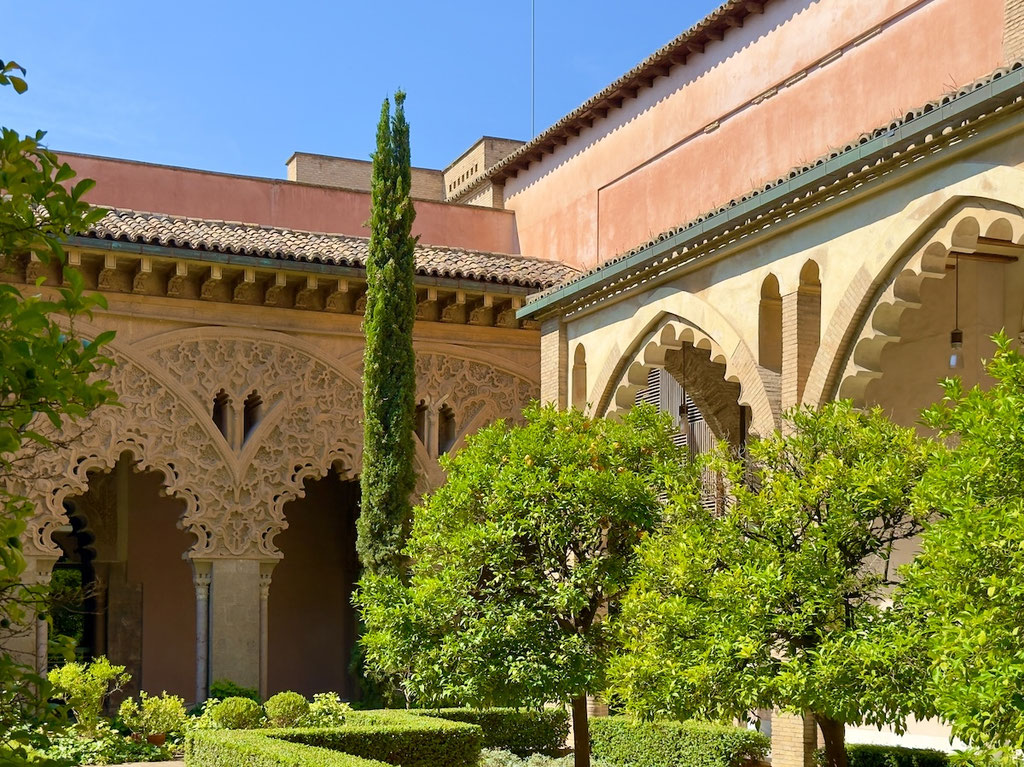
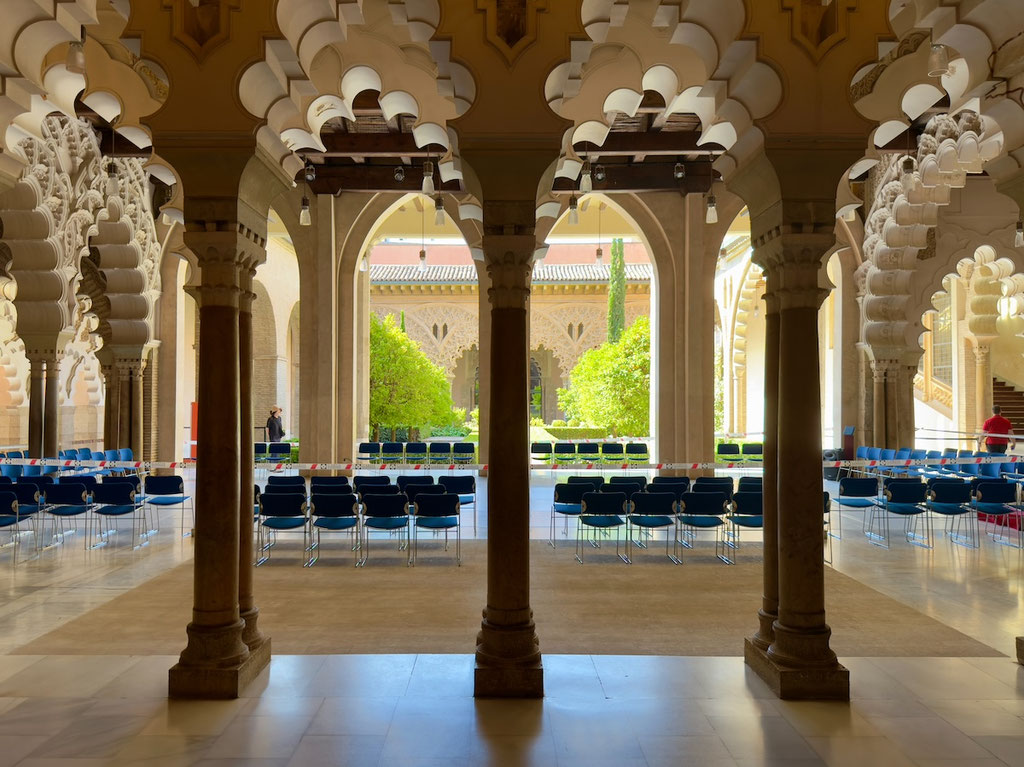
But inside? Inside, it’s refined, mathematically delicate, almost lyrical. The big-shouldered fortress gives way to courtyards with orange trees and filtered light, to arches that are more rhythmic than intimidating. It’s heartbreakingly beautiful in a way that feels more calculated than indulgent. The space is organized to impress, but also to regulate who sees what, when. The Aljafería is not confused about its purpose. It was designed to govern, and—spoiler—it’s never stopped.1
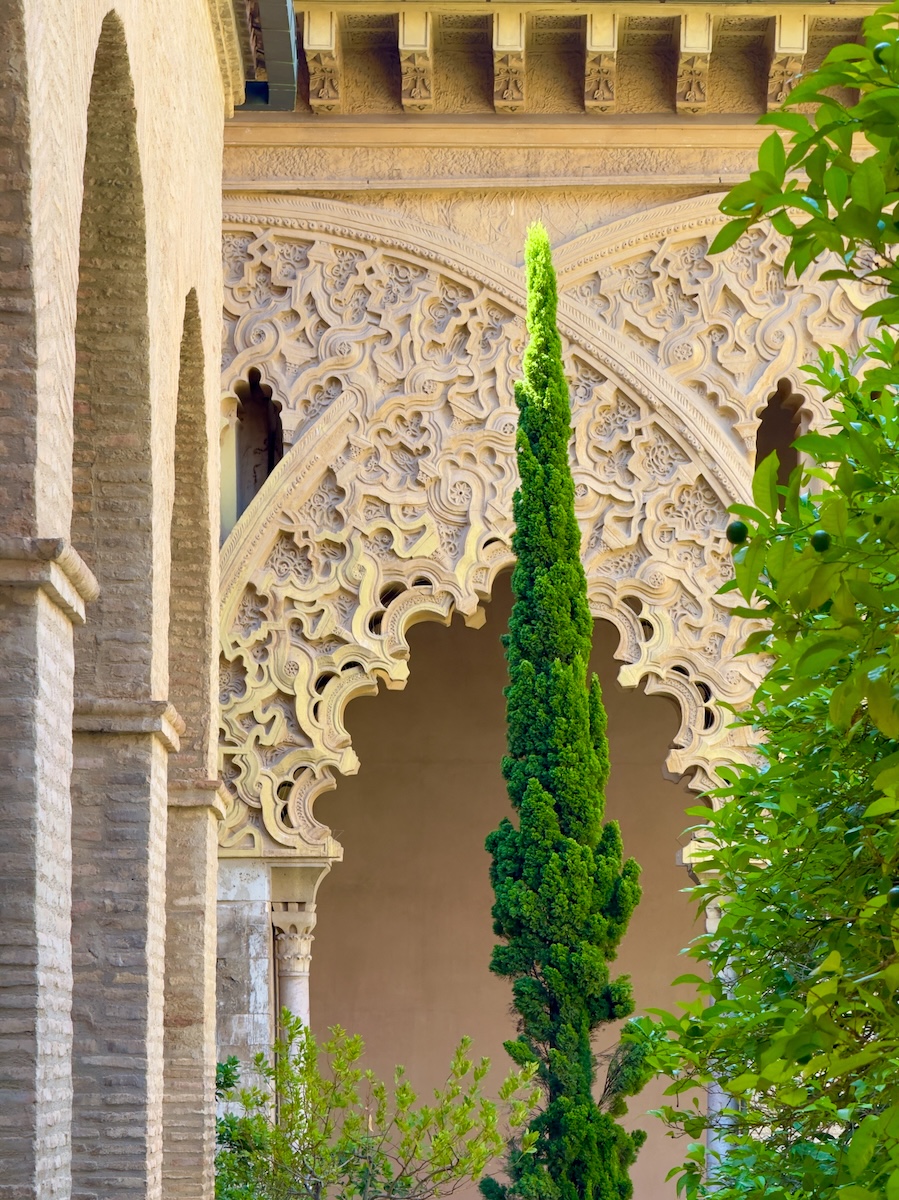
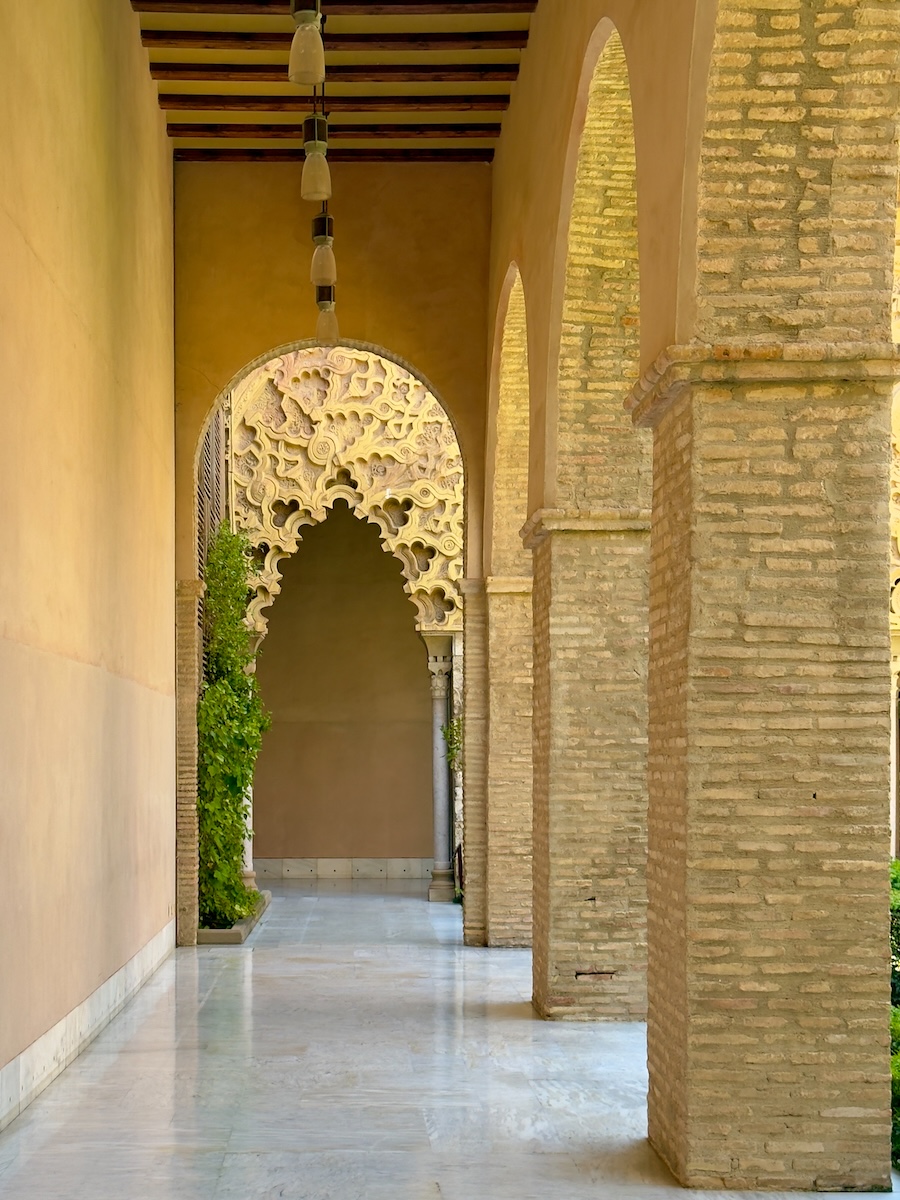
The Aljafería is usually introduced as a marvel of Islamic architecture or as a curious palimpsest2 of Muslim and Christian rule. All of that may be true. But none of it explains why this particular palace survived when so many others didn’t.
The taifa ruler who gave the palace its name, Abu Ja‘far Ahmad ibn Hud al-Muqtadir, understood this instinctively. He built the Aljafería not as an act of architectural bravado, but as a declaration that his rule in Zaragoza was legitimate—even as the political world around him fractured into smaller, rival kingdoms.3 He wasn’t building for admiration. He was building for political survival.
Al-Muqtadir didn’t actually name the palace after himself in a fit of Trumpian confidence—others did the linguistic work for him. The name Aljafería comes from the Arabic original, al-Ja‘fariyya, which is essentially possessive—Abu Ja‘far’s place. Neither metaphorical nor poetic. Purely grammatical.4
The Aljafería was conceived not as a fortress hunkered down against attack, but as a controlled environment of authority—ceremonial, hierarchical, inward-looking. Its courtyards were not for mindless wandering. Its arches were not merely decorative flourishes. They framed access, directed movement, and staged encounters. You didn’t just enter the palace—you were processed by it.
Anyway, the name stuck. Even after the palace changed hands, even after its function evolved, even after Arabic ceased to be the language of power in Zaragoza, the name endured—a linguistic fossil with Arabic phonetics calcified into Castilian, never fully erased. It’s one of the few parts of al-Muqtadir’s authority that outlived him.

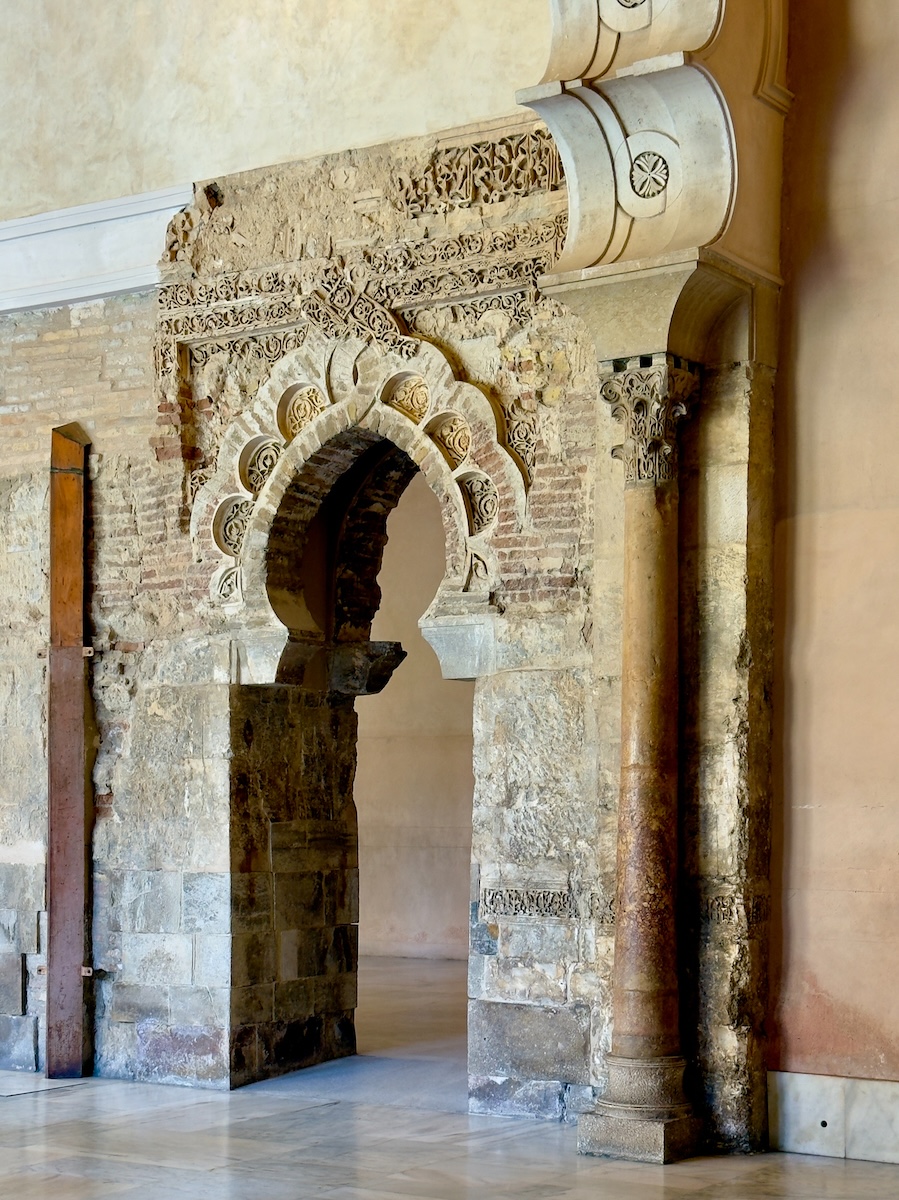
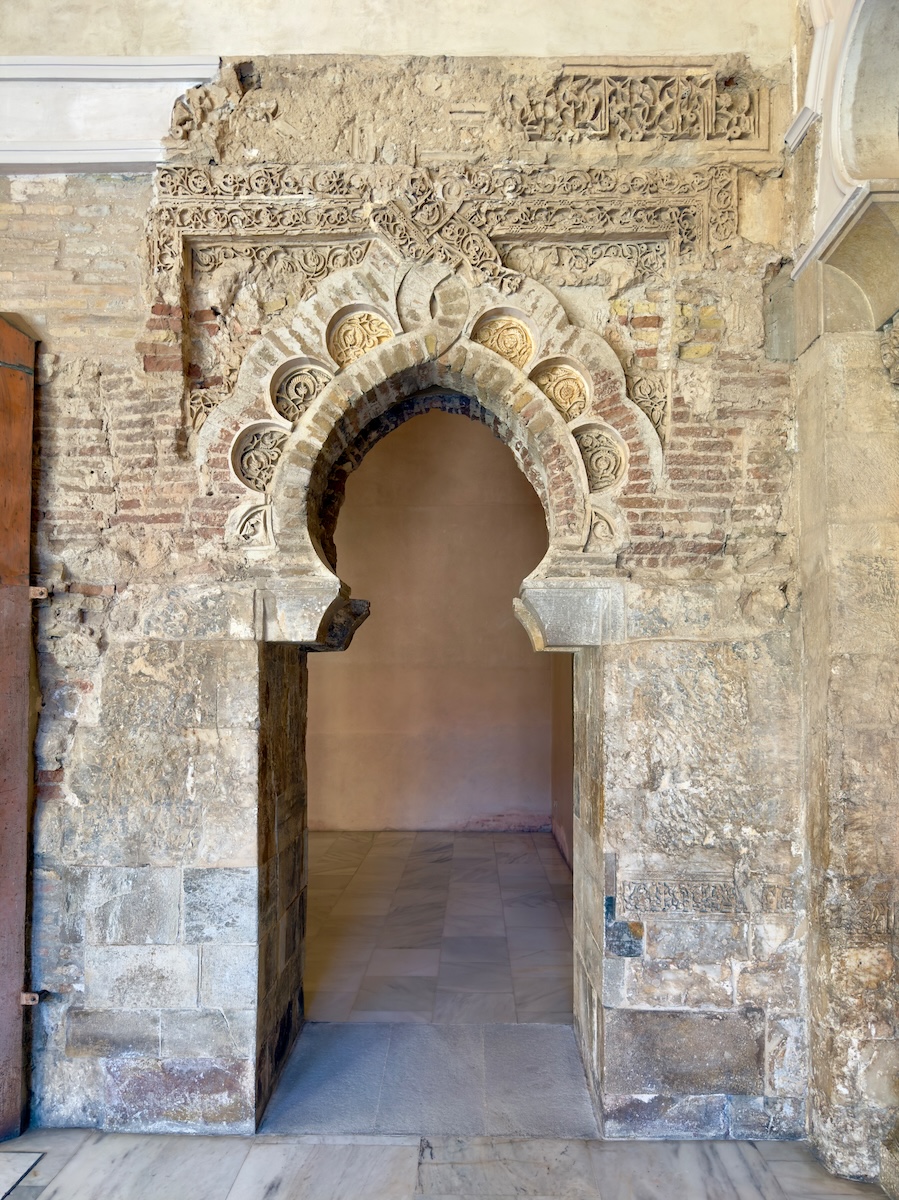
But before the Aljafería was ever a palace, it was something else. The Torre del Trovador, which peeks out over the front wall of the fortress, predates everything around it—a squat, rectangular defensive tower built in the 9th century, long before al-Muqtadir ever thought to put his name on the place. It belonged to an earlier fortified enclosure, useful and unromantic, designed for surveillance and control rather than ceremony or comfort. No poetry—just hard stone, looming height, and the assumption that someone nearby would eventually need watching.
What matters isn’t that the tower existed, but that al-Muqtadir kept it. He didn’t flatten it or disguise it. He built around it, keeping it in service to do what it already did well—defense, oversight, and presence. The palace that grew around it didn’t replace that logic, it extended it. New courtyards, new ceremonial spaces, new visual language, yes, but the underlying assumptions remained. Control and visibility still mattered, so the tower stayed.5
Christian rulers would later repurpose it again, just as efficiently. Eventually, it became a prison for people whose presence was inconvenient.6 With its thick walls, narrow openings, and restricted access, the logic had already been built in. Long before prisoners scratched their names into its walls, the tower had already made its most important contribution to the Aljafería’s story. It proved—early and decisively—that this was a place where authority preferred absorption to erasure.

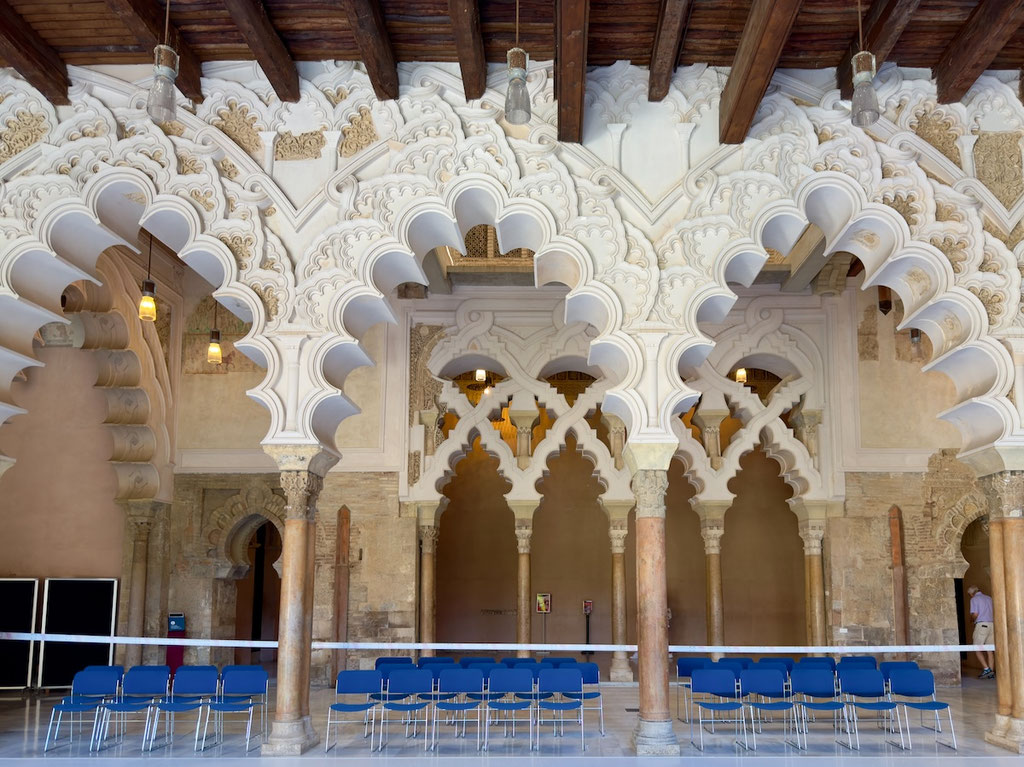
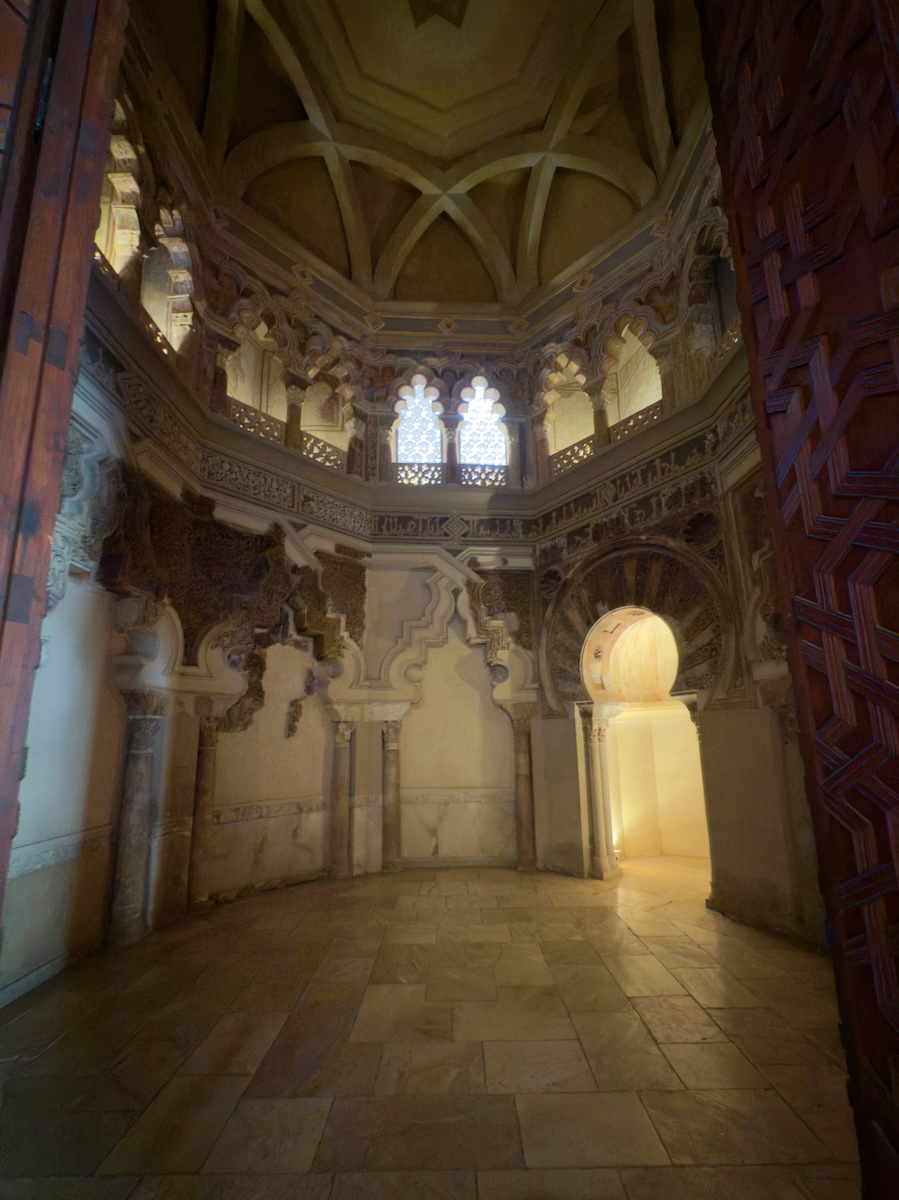
Aside from the tower, al-Muqtadir indulged in a completely different instinct. The taifa palace he built around the Torre del Trovador was not defensive architecture softened by taste. It was luxury—but with a serious purpose. The outer walls were all about mass and discipline, the interior was all about persuasion. Beauty, light, and rhythm—the careful choreography of arrival. This was not a place meant to intimidate, it was meant to seduce.
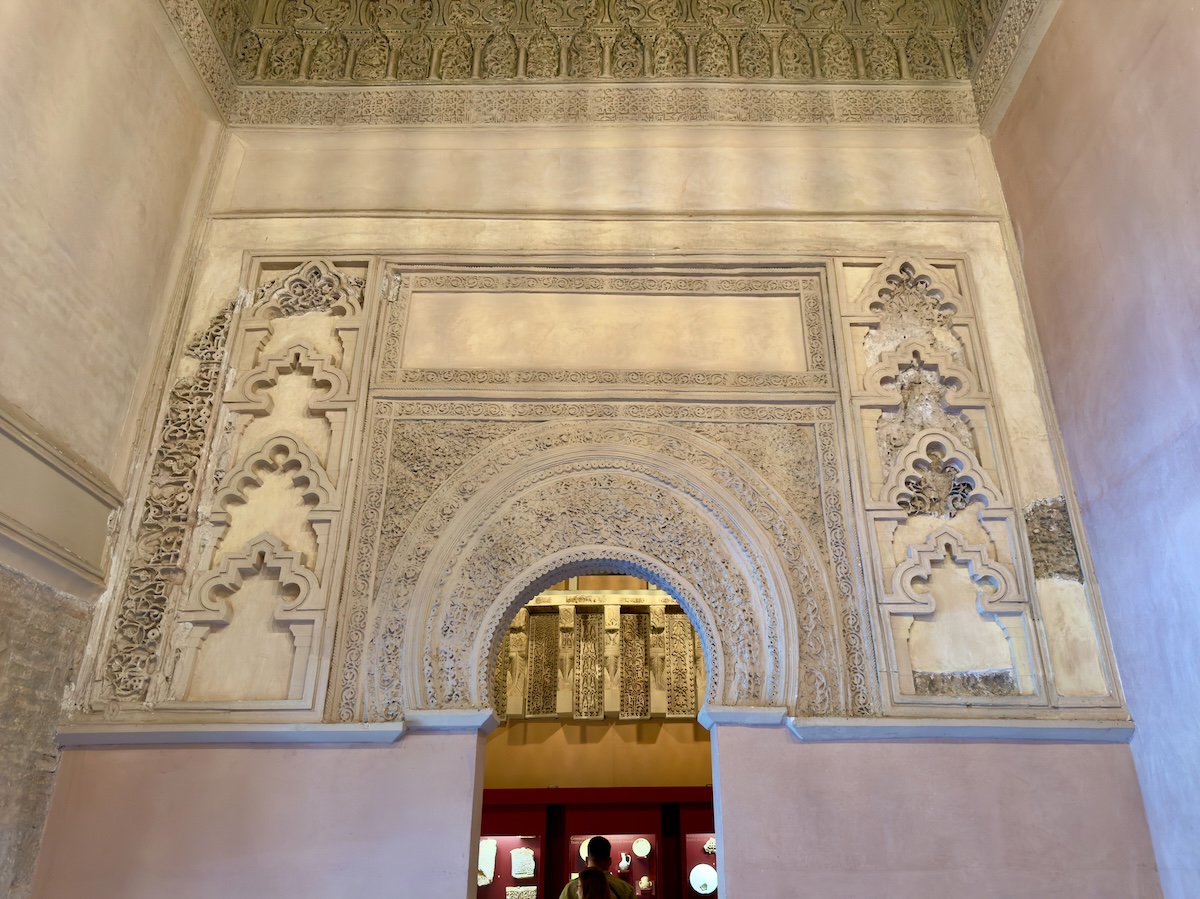
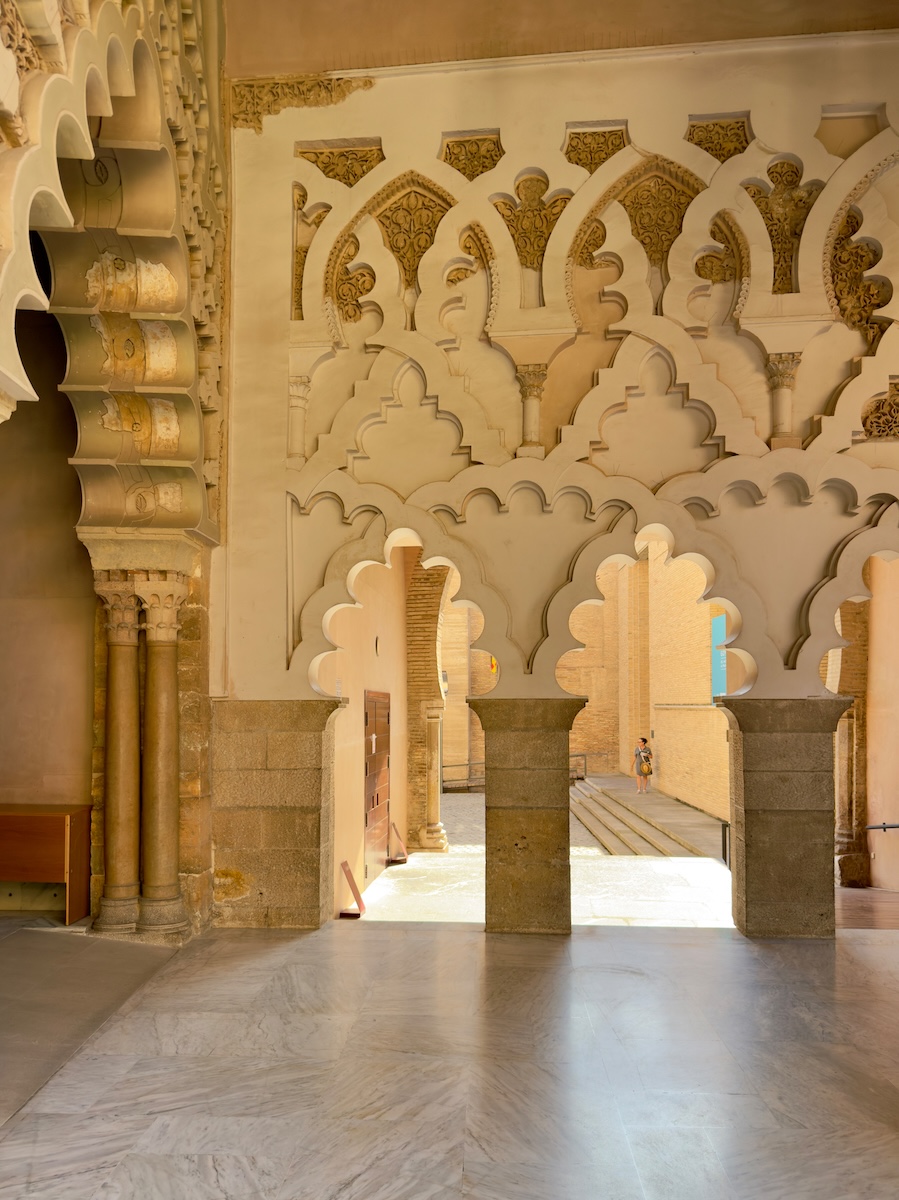
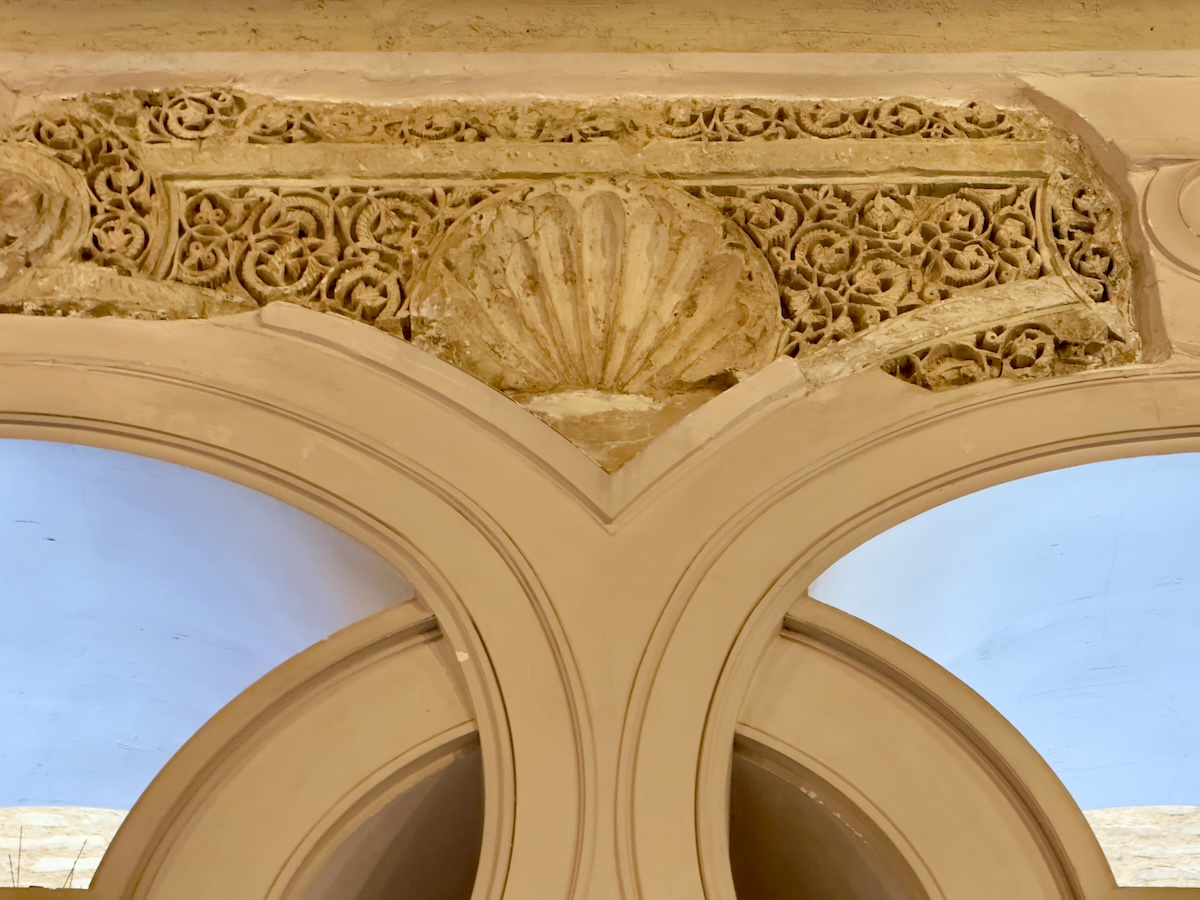
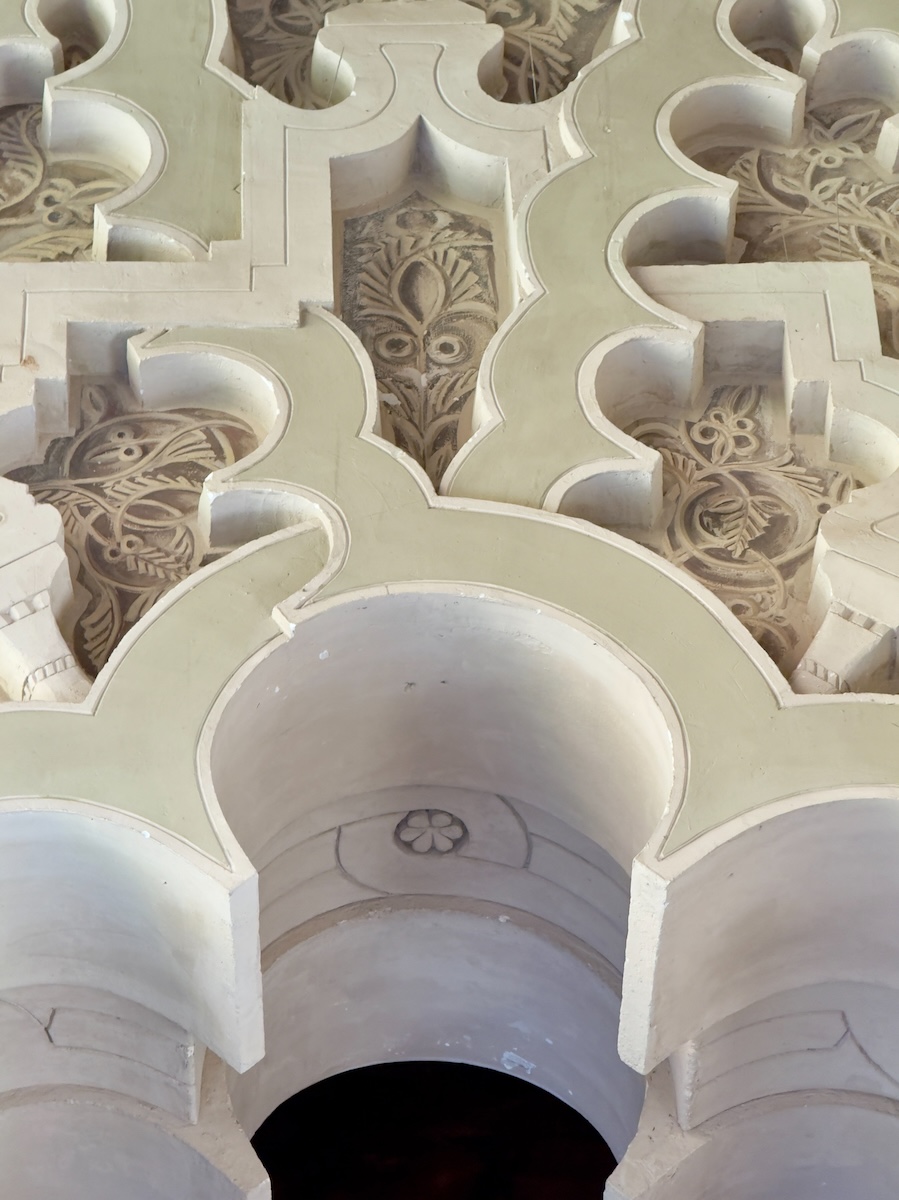
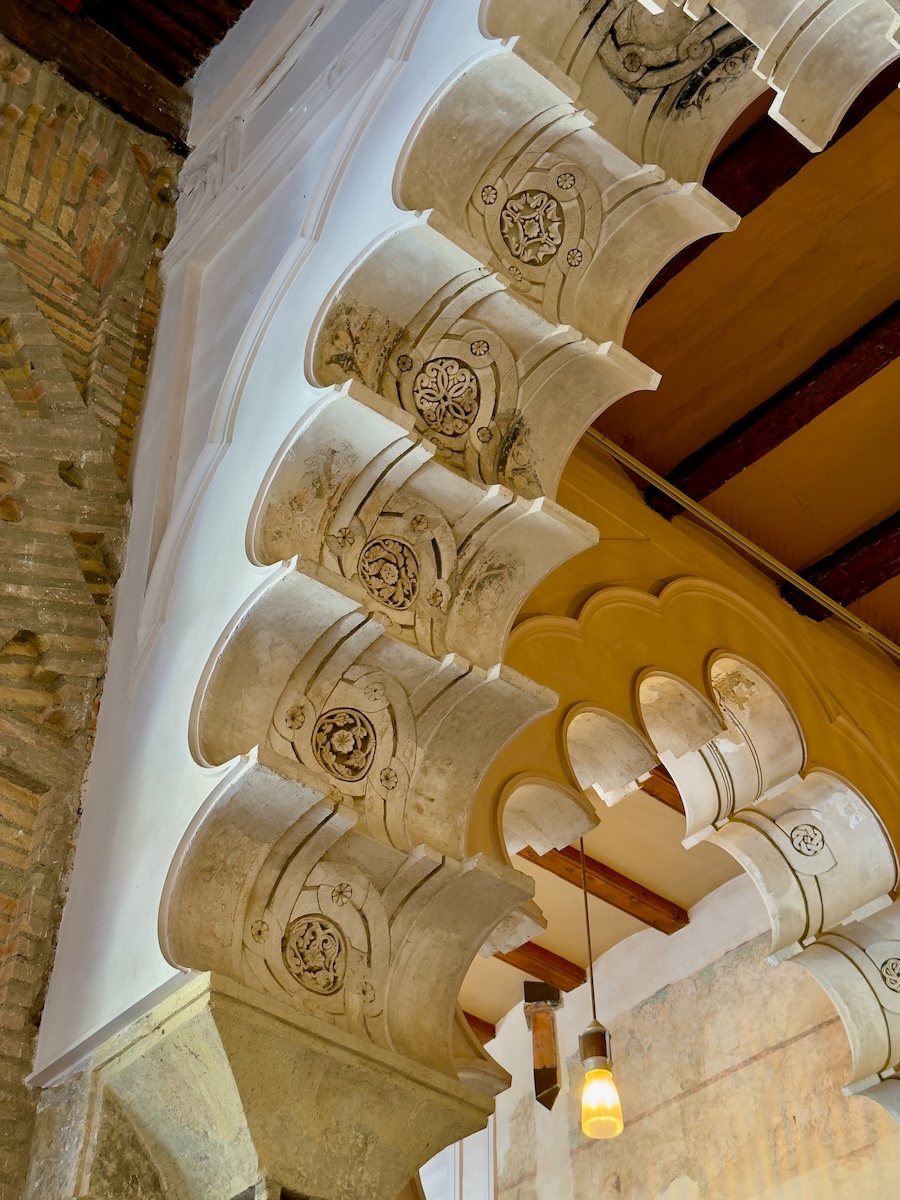
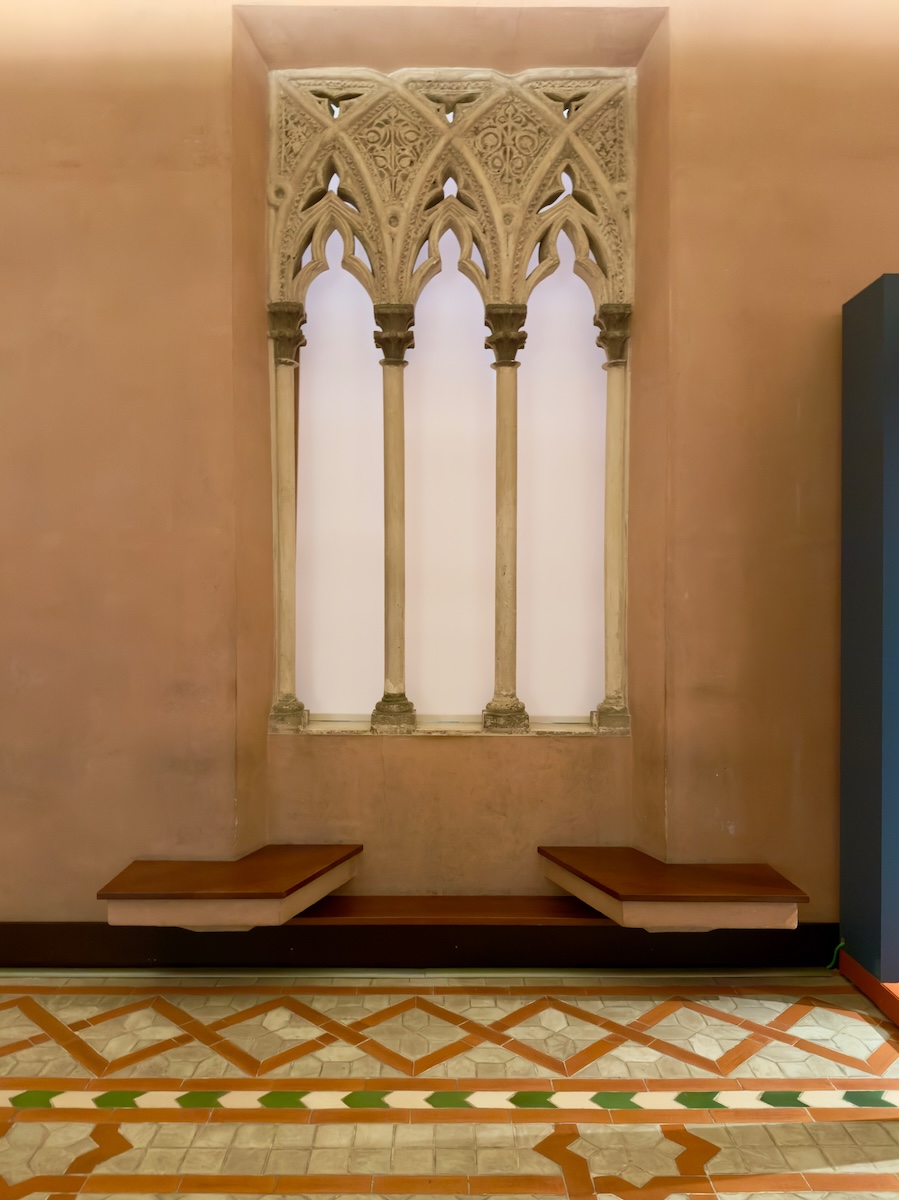
The arches did most of the talking. Polylobed, interlaced, multiplying as they receded,7 they created a visual density that was both intimate and layered, almost crowded. They were screens as much as openings—revealing just enough and obscuring the rest. The effect was tantalizing. You were always close to the next space but never invited in. Authority here didn’t bark. It made you wait.
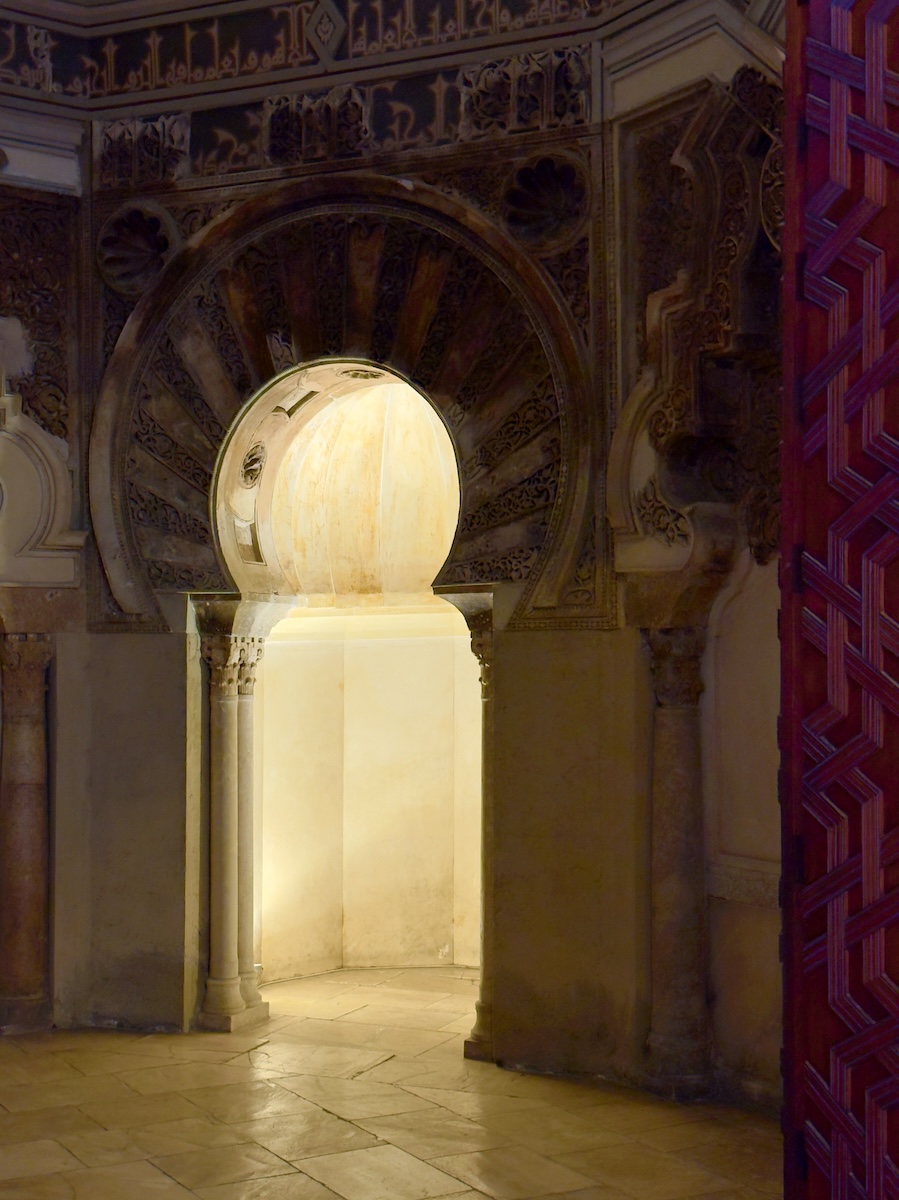
This wasn’t merely ornamentation. Every curve, every repetition, every carefully aligned sightline served a practical end. The palace regulated access without ever feeling closed. It staged encounters without making the stage clear. Even devotion was folded neatly into this system. The small private oratory—tucked discreetly into the northern portico—was not just a public declaration of faith but a controlled alignment of piety and power. Daily prayers didn’t interrupt governance—they validated it.
Contemporary descriptions and surviving fragments suggest the interiors were thick with color and texture—carved plaster catching the light, textiles absorbing sound, devotional poetry literally carved into the walls. Abundance, but disciplined. Nothing spilled or wandered. Luxury was curated, not careless.8
In the fractured politics of the taifa period, this was a survival strategy. Al-Muqtadir was ruling a small state in a highly competitive landscape, where prestige was currency. The palace didn’t just house his court—it declared that his kingdom was solvent, cultivated, and stable enough to invest in pleasure without losing control.


Al-Muqtadir didn’t build this palace to last forever. Few taifa rulers could afford that kind of optimism. He built it to feel inevitable in that historical moment—to make his power tangible, desirable, and difficult to question. The fact that it still does says everything about how well the seduction worked.
By the early 12th century, political control of Zaragoza had shifted again, though the Aljafería once more avoided a full cultural reset. Alfonso I inherited a functioning seat of authority—fortified, hierarchical, ceremonially legible—and kept using it. Islamic inscriptions weren’t scrubbed out overnight, and the courtyards were maintained. Let’s face it—governing fundamentals pretty much remained the same whether the ruler was an Ottoman or a Spaniard. It wasn’t tolerance so much as practicality.
Christian rulers slowly adapted the Aljafería without completely dismantling it, adding Christian symbols and repurposing the oratory as a chapel along the way. By the time Pedro IV decided on major expansions nearly 200 years later, what had begun as cold pragmatism evolved into active preference. Muslim craftsmen were still doing the work, relying on long-established techniques as they extended a Christian seat of power. Pedro’s additions—most notably the new palace level and the church of San Martín within the complex— essentially codified the Islamic vocabulary of the Aljafería. Brickwork, geometric patterning, interlaced arches, and ornamental restraint became the house style of the Aragonese crown. This is the moment when Mudéjar stops being an accident of conquest and becomes an identifiable, unique Iberian style.9 By then, the Aljafería wasn’t an inherited anomaly. It was a working seat of power.
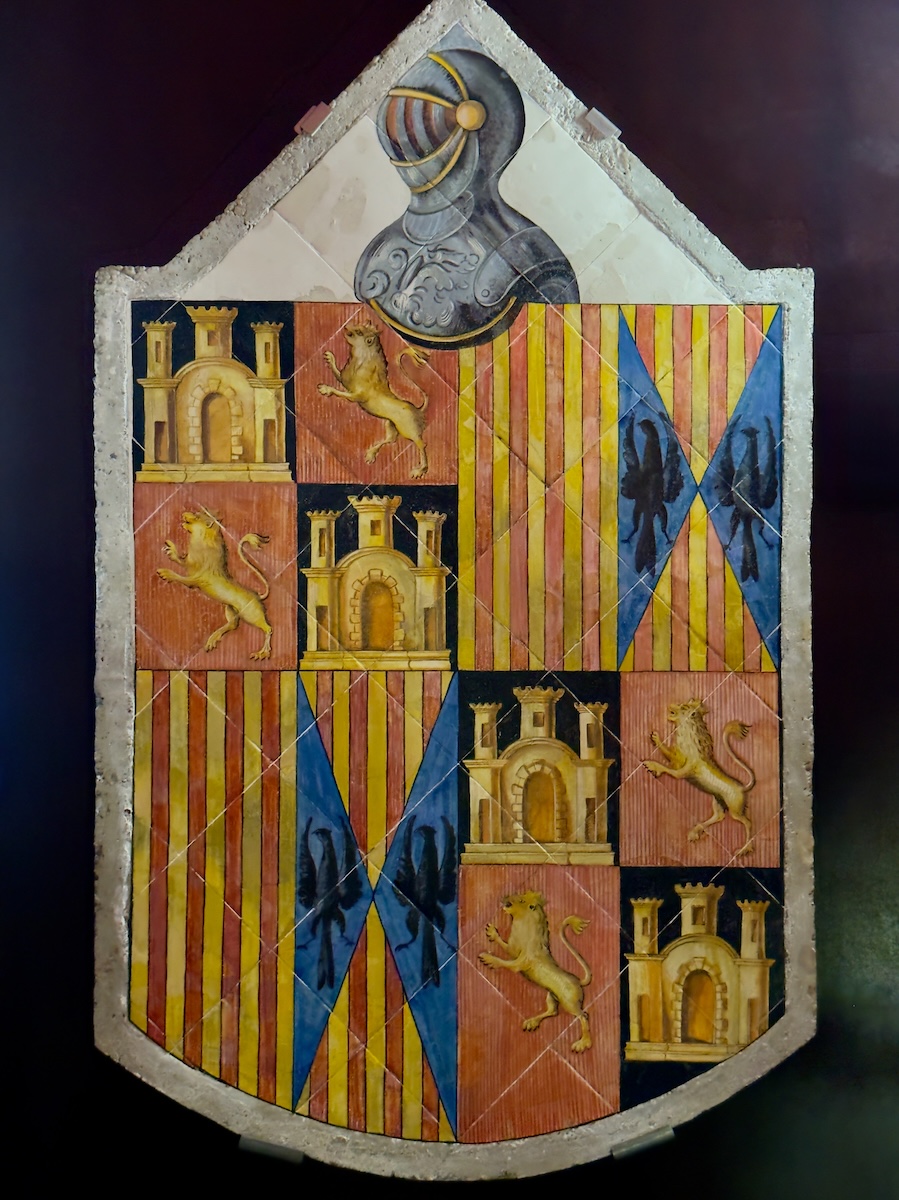
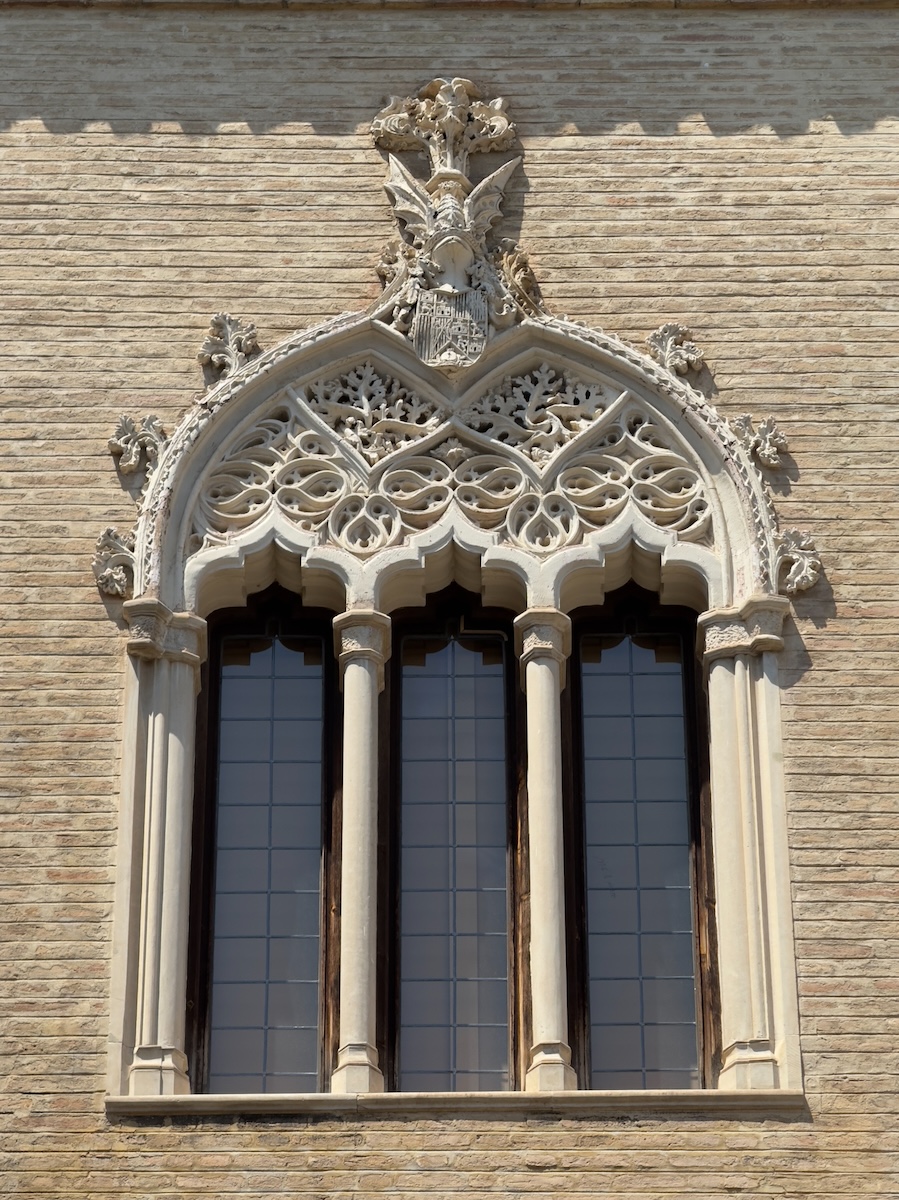
Which is why the Catholic Monarchs, when they arrived, didn’t inherit a ruin or a relic. They inherited a smoothly running machine that worked beautifully. When Ferdinand and Isabel moved in late in the 15th century, they didn’t set out to “fix” anything, but they did some redecorating. They needed the place to scream, “Ferdo and Izzy Forever.”
So they went up. They built a new upper level that visitors reached using a fancy new staircase—broad, ceremonial, and assertive—perfect for grand entrances. Or exits, I suppose, depending on the need. The stairs were an architectural exclamation point announcing dominance without altering the grammar of the building itself.
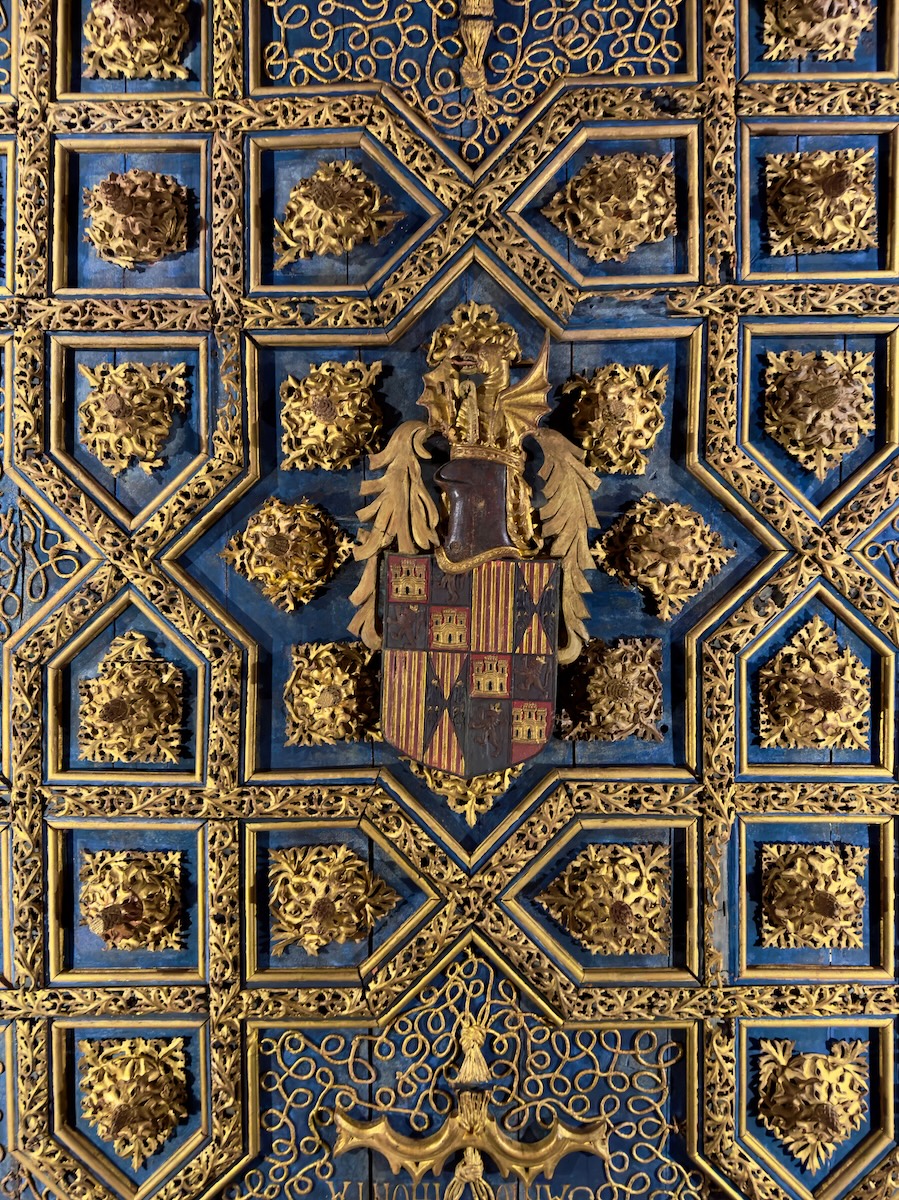
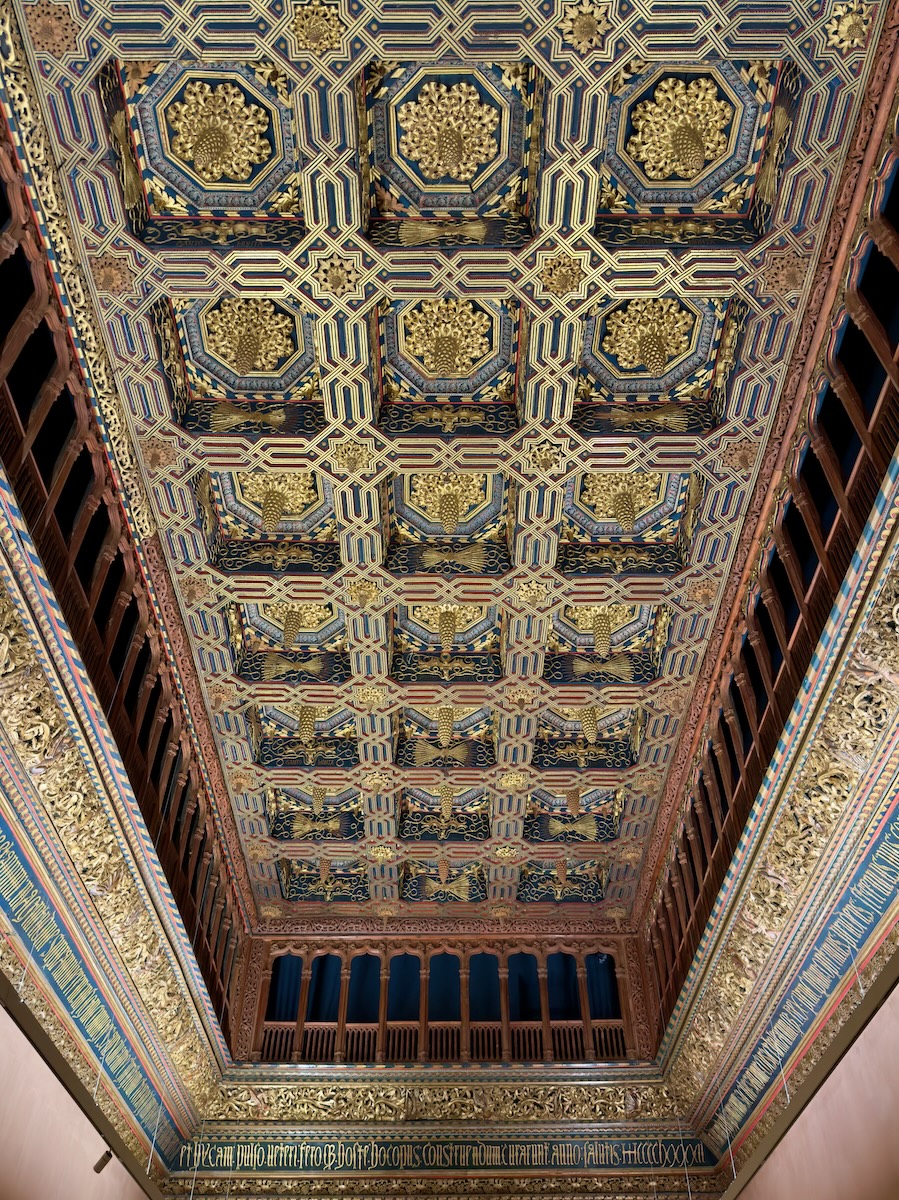
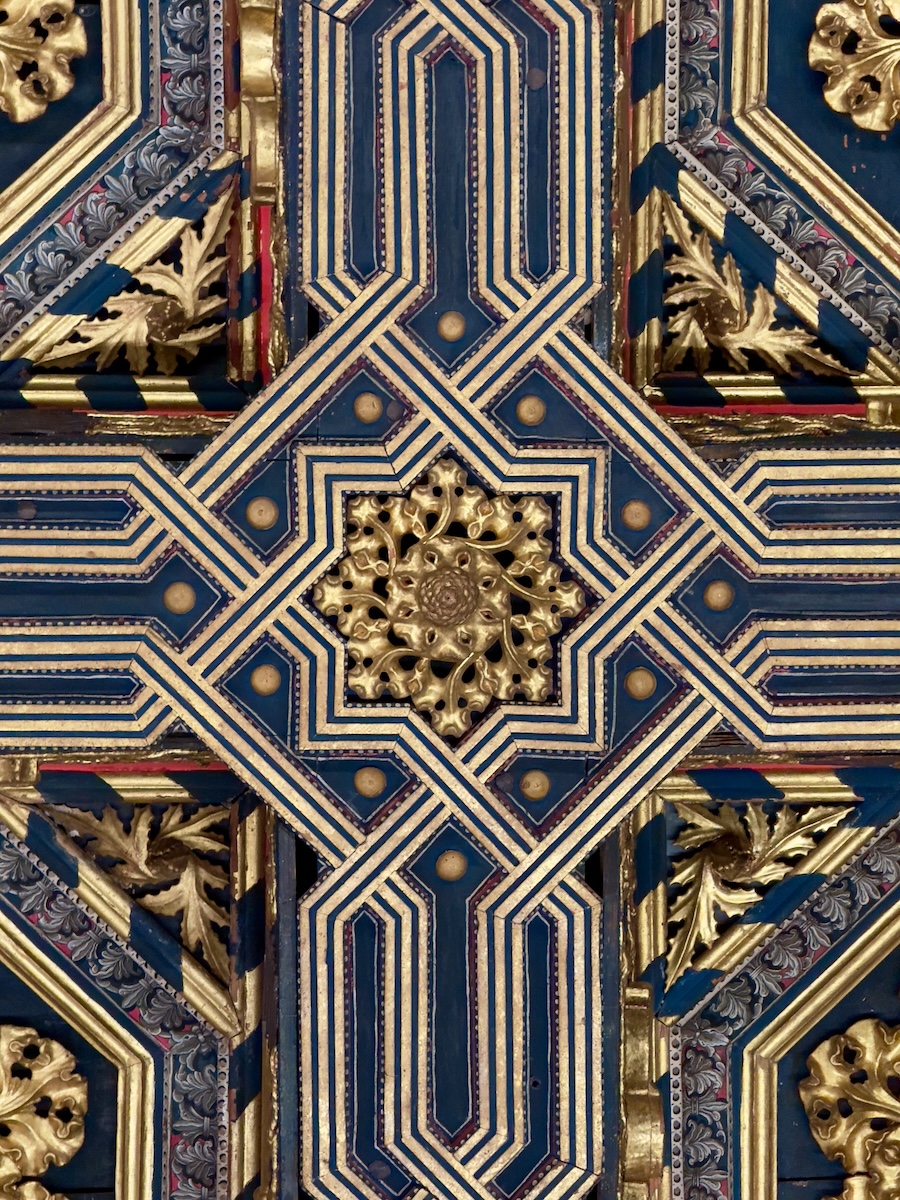
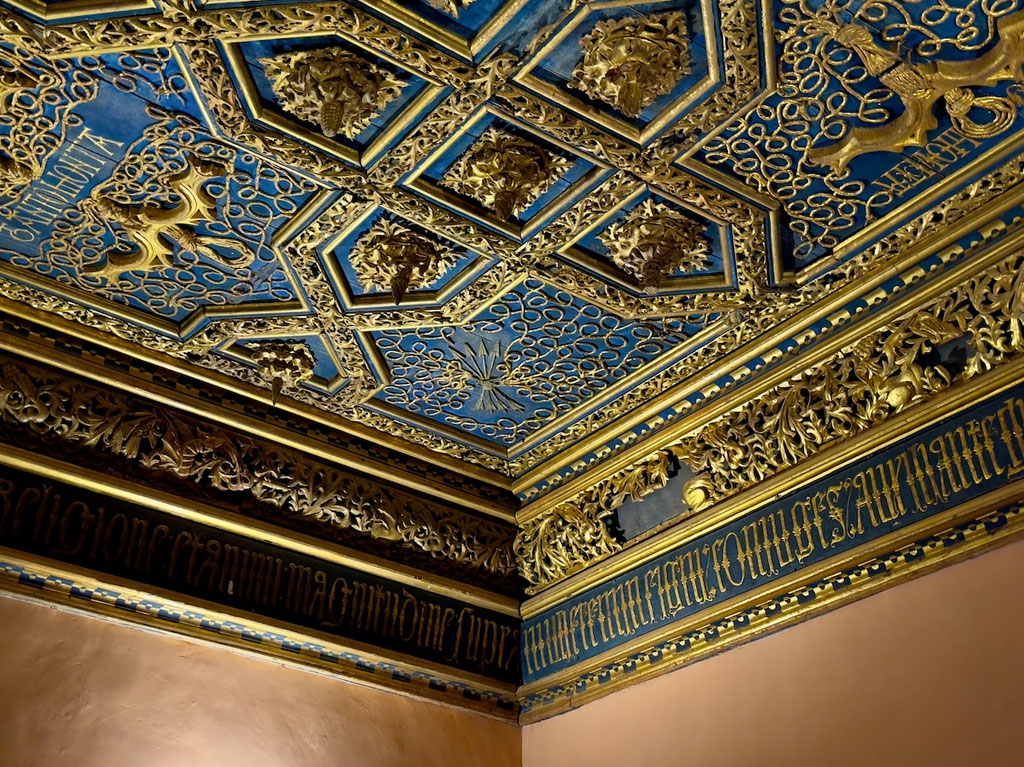
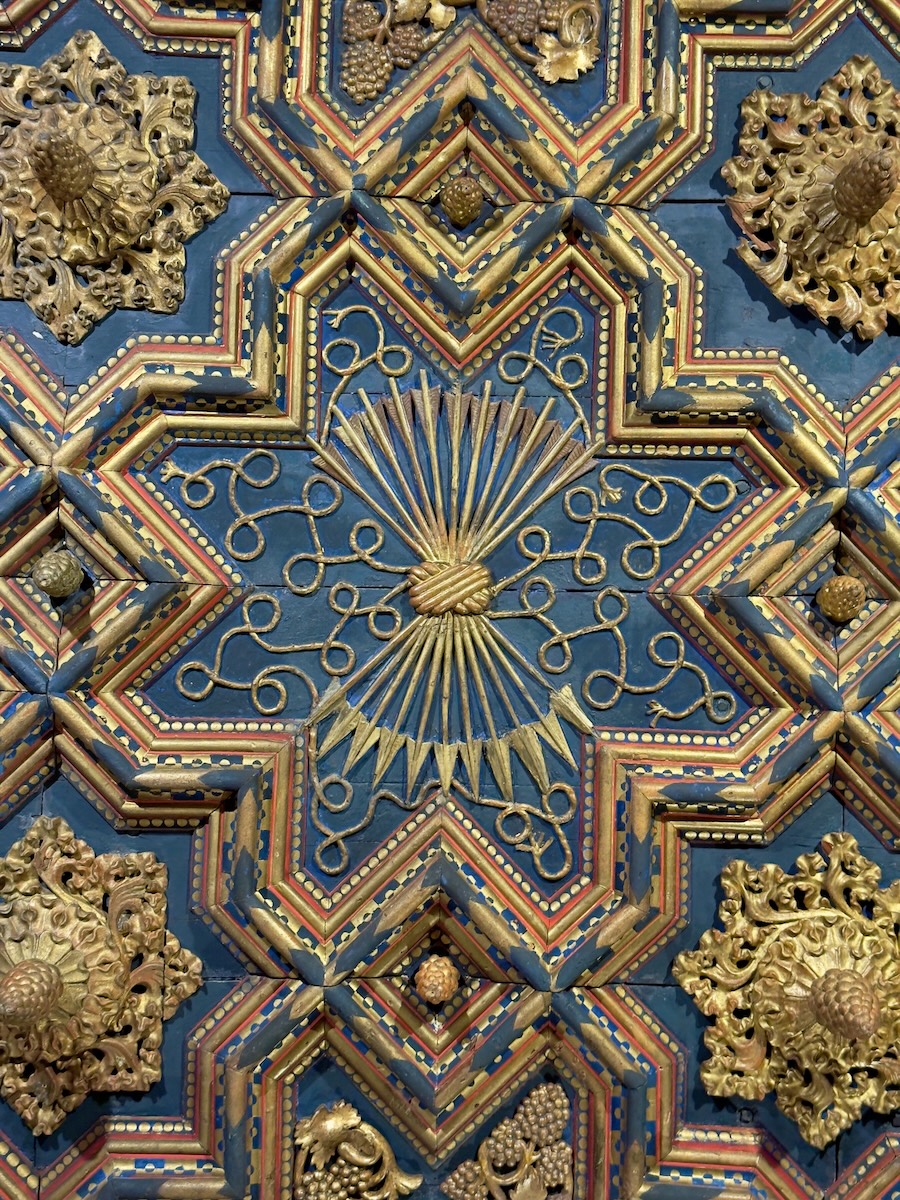
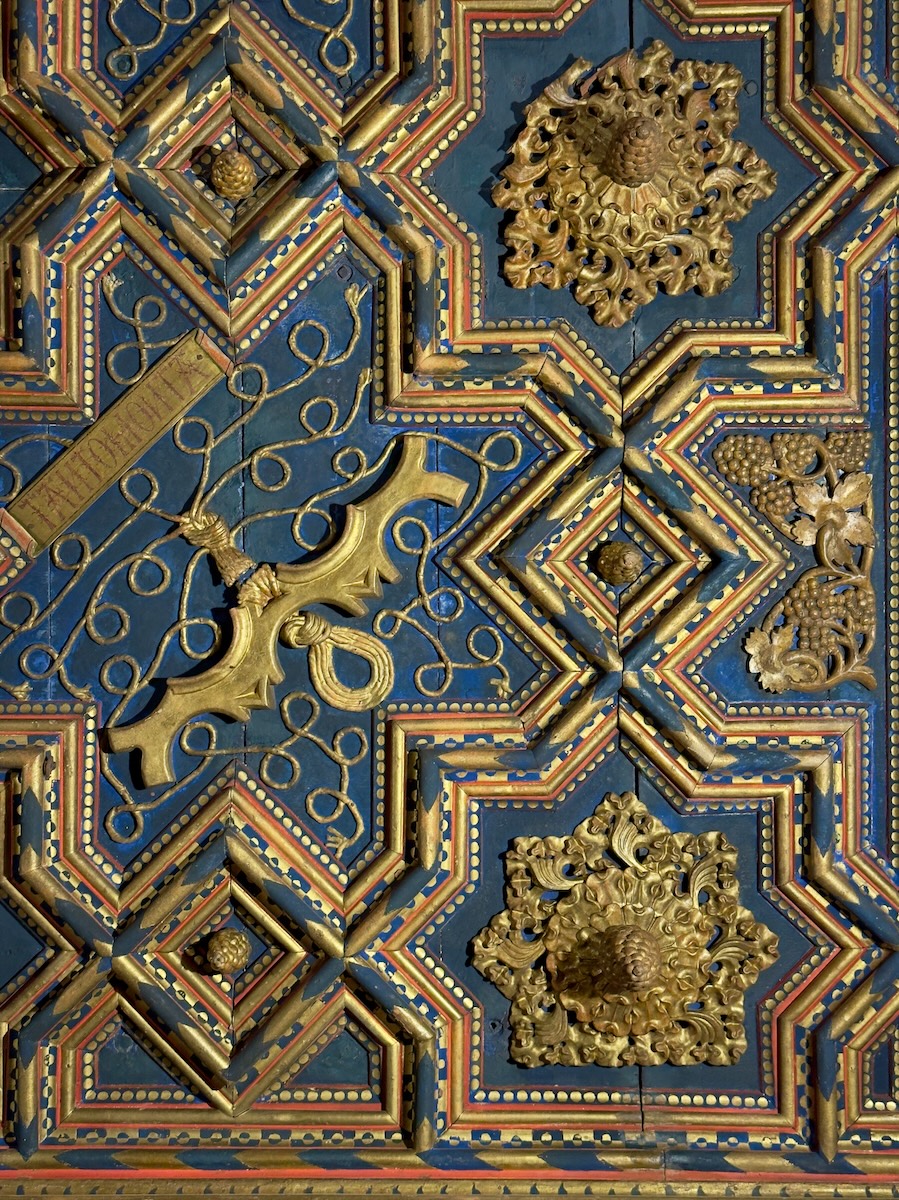
The new second floor was where they really went nuts. Up there, the message stops being architecturally coy and becomes aggressively graphic. Look up, and the ceilings do the talking. Deep blues, reds, and golds lock into complex geometric frameworks inherited from Mudéjar craft—but the symbols filling those frames are unmistakably theirs.
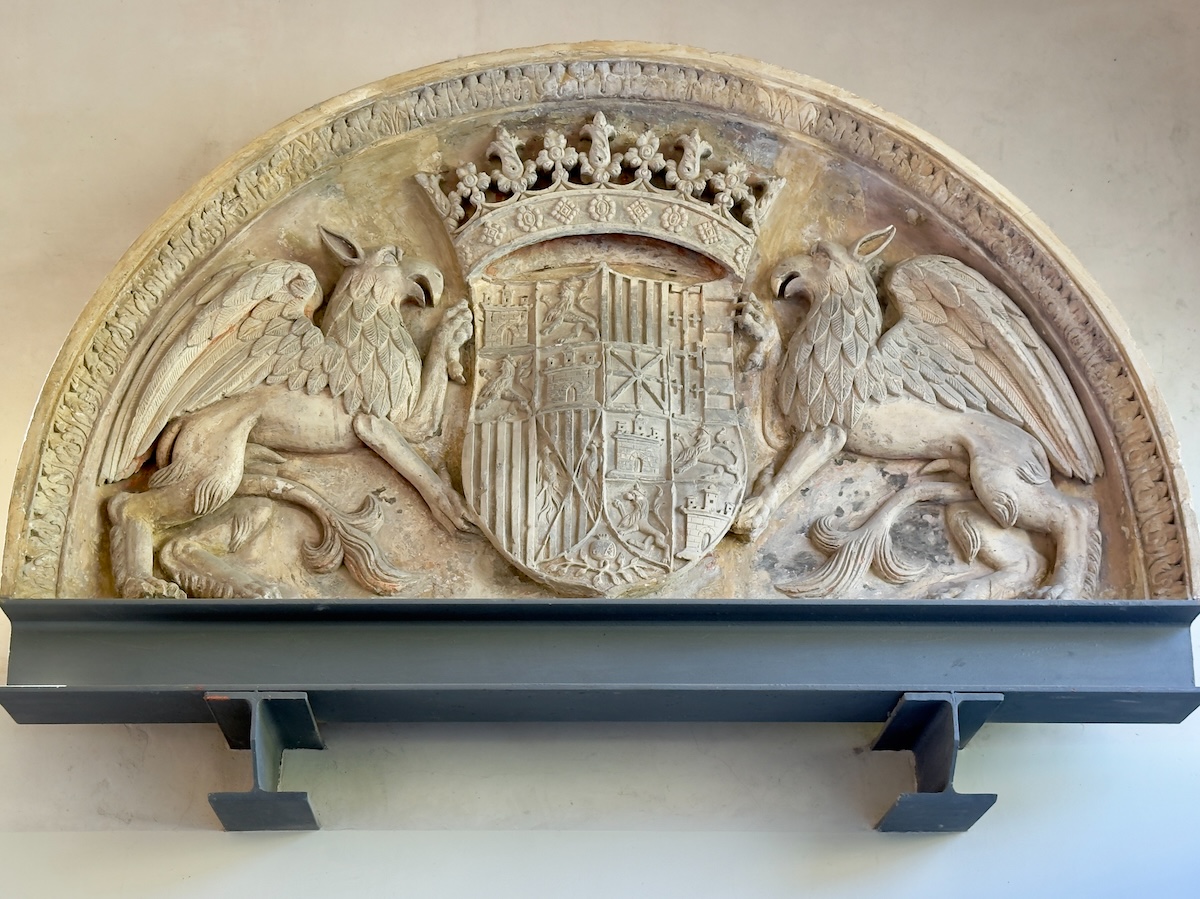
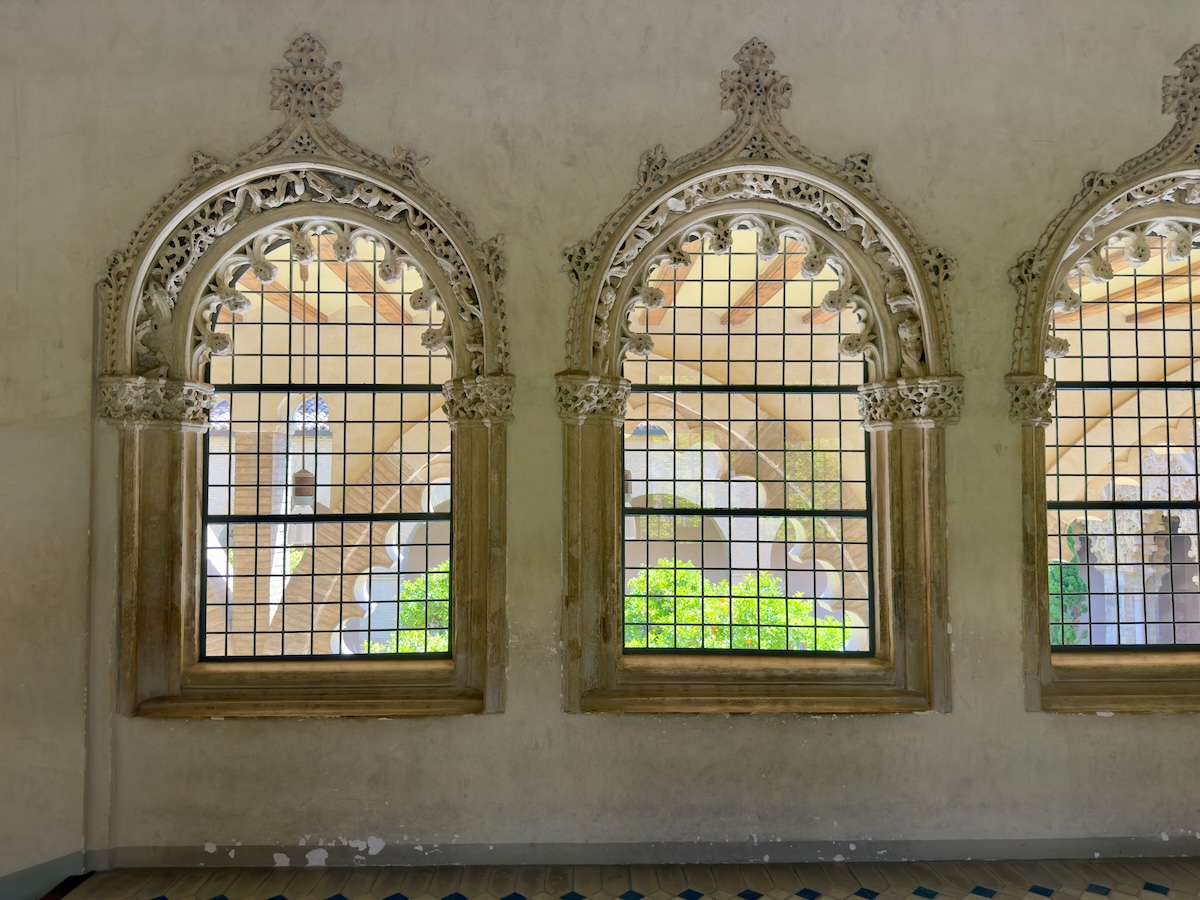
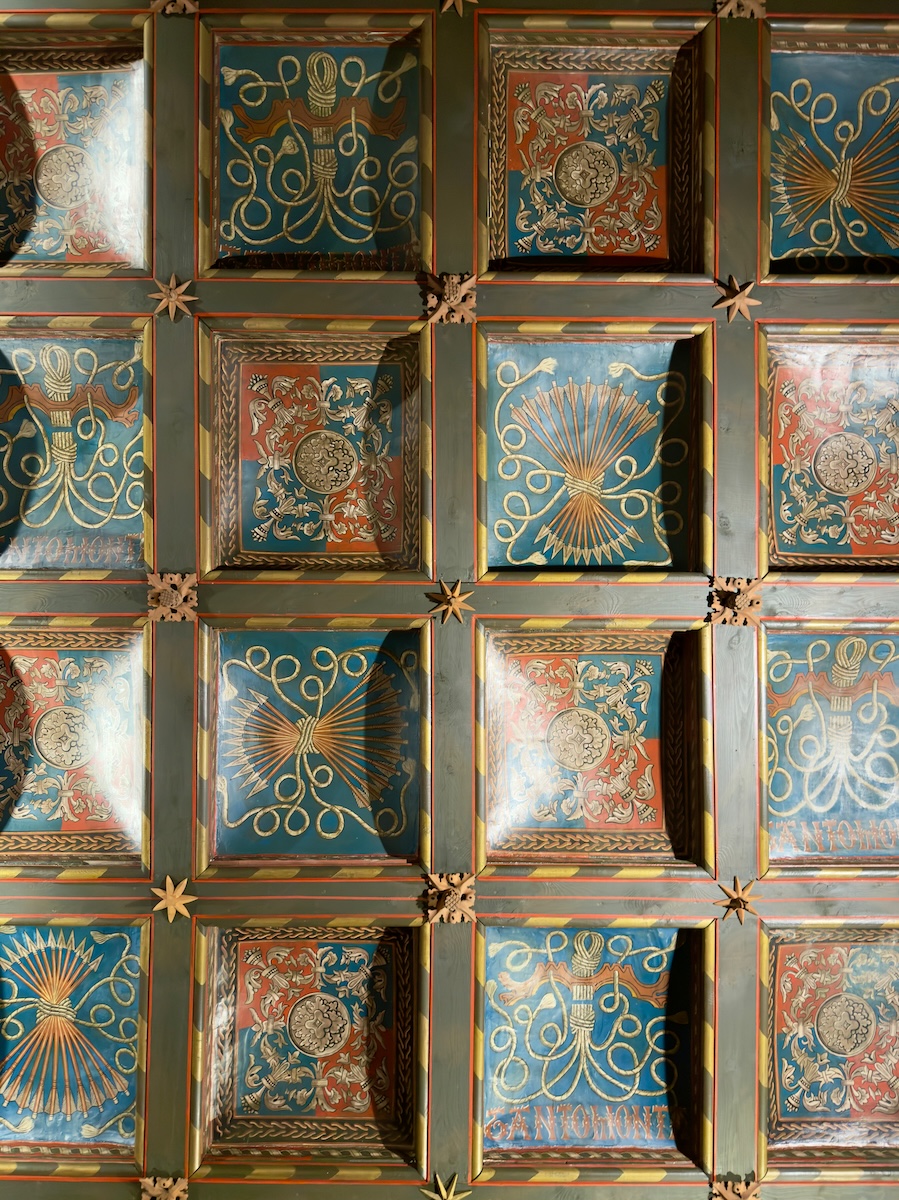
Bundles of arrows appear again and again. That was Isabel’s device—shafts bound together, useless individually, lethal as a unit. The yoke belongs to Ferdinand—an emblem of control, discipline, and classical authority, nodding to the Gordian knot and the idea that difficult problems are best solved decisively. Sometimes the two symbols face each other. Sometimes they intertwine. Sometimes they repeat until the message is impossible to miss.
Threaded through the ceilings and friezes is the phrase “Tanto monta”—short for “Tanto monta, monta tanto, Isabel como Ferdinand.” A blunt political thesis that roughly means, “It’s all the same, Isabel or Ferdinand.” Two rulers, one final authority. The slogan does the work of law before law is spoken. No hierarchy. No daylight. No appeal.
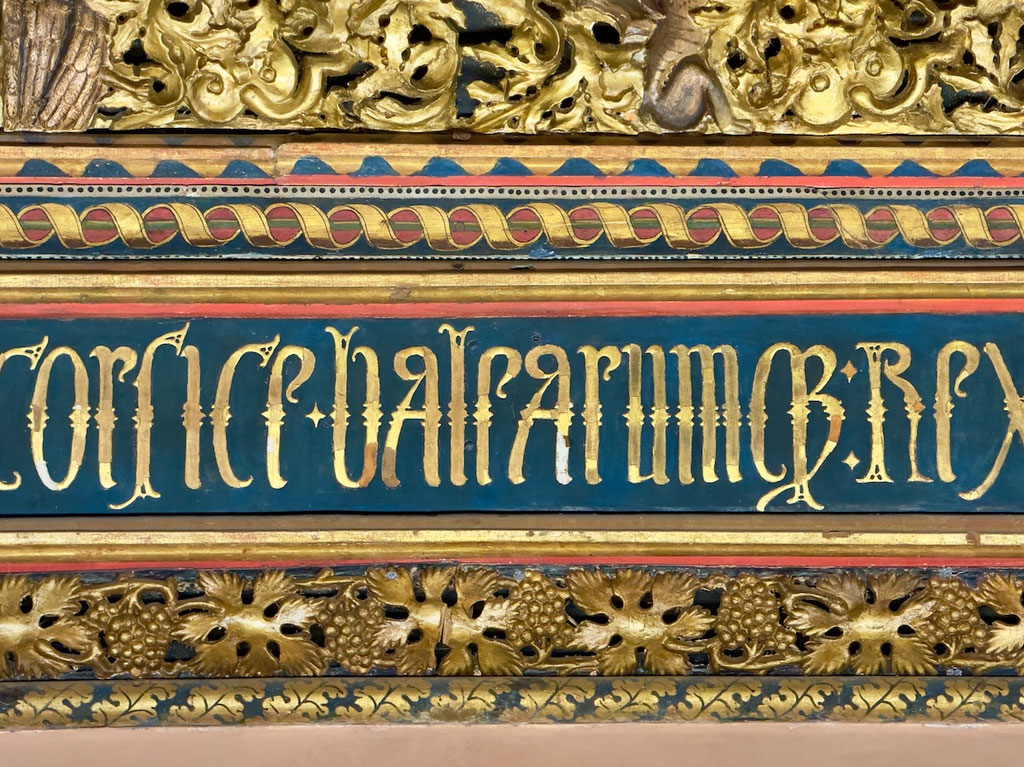
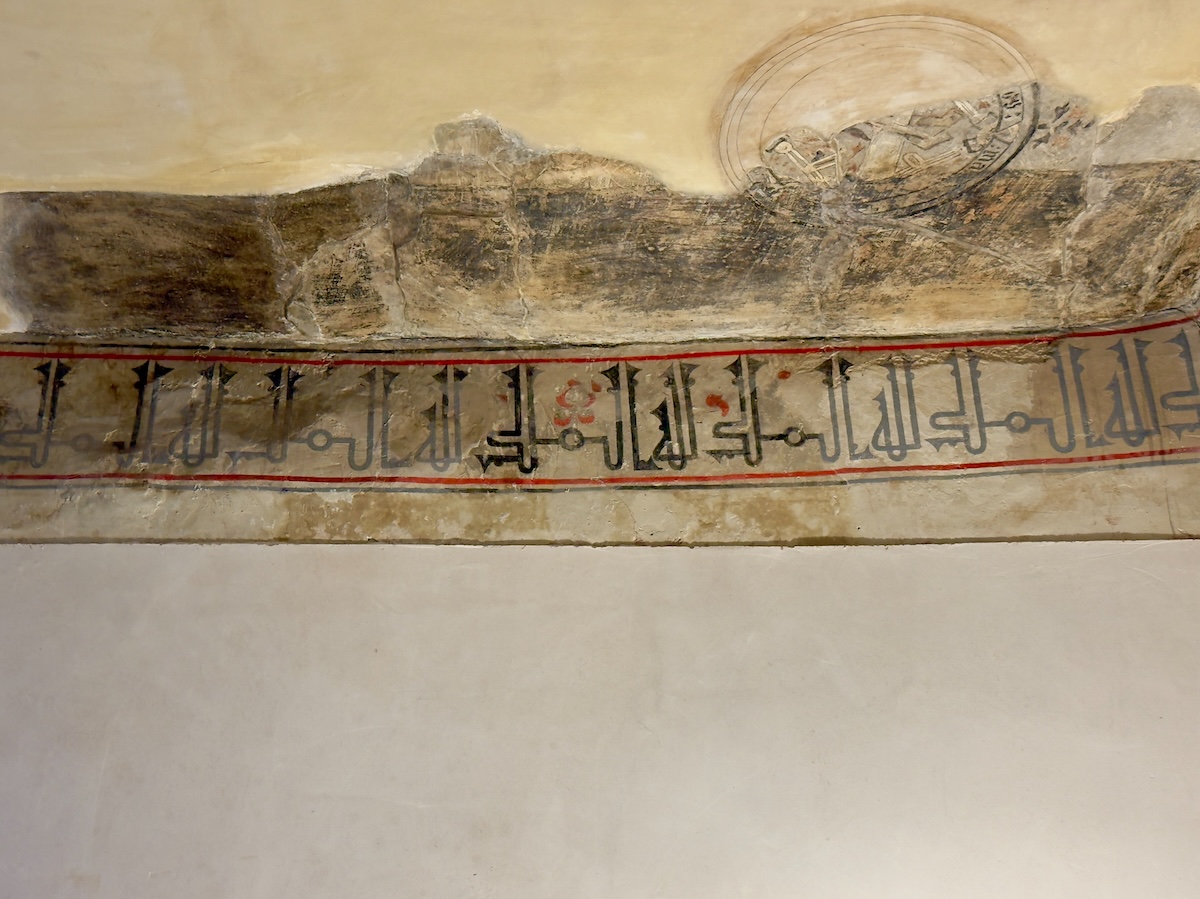
Running just below the ceiling line, painted and carved texts circle the common rooms like a whispered chant—Latin declarations of divine sanction, royal absolutism, and unquestioned sovereignty. They reminded everyone who was in charge. Period.
What makes all of this deliciously sharp is the contrast. The visual language—the geometry, the color fields, the carpentry—comes straight out of Islamic tradition. The symbols layered onto it are uncompromisingly Christian, dynastic, and expansionist. Ferdinand and Isabel didn’t overwrite the palace’s aesthetic intelligence—they hijacked it.10
But all good things must come to an end, and at some point, the Aljafería stopped governing and started policing. The transition wasn’t abrupt. These things never are. As royal power was centralized elsewhere11 and Zaragoza’s role as a seat of courtly life diminished, the palace didn’t collapse into dysfunction or dissolve into ruins. It just…tightened. The same walls that once regulated the flow of courtiers, princes, and ambassadors with ceremony and beauty were repurposed to regulate behavior with force.
By the early modern period, the Aljafería had become a fortress and barracks—a military installation aimed less at external enemies than at Zaragoza itself. Weapons were kept here, and soldiers lived here. Courtyards, orange groves, and salons became muster spaces, enlisted quarters, and command posts. The logic that had once made royal rule inevitable now made surveillance routine.
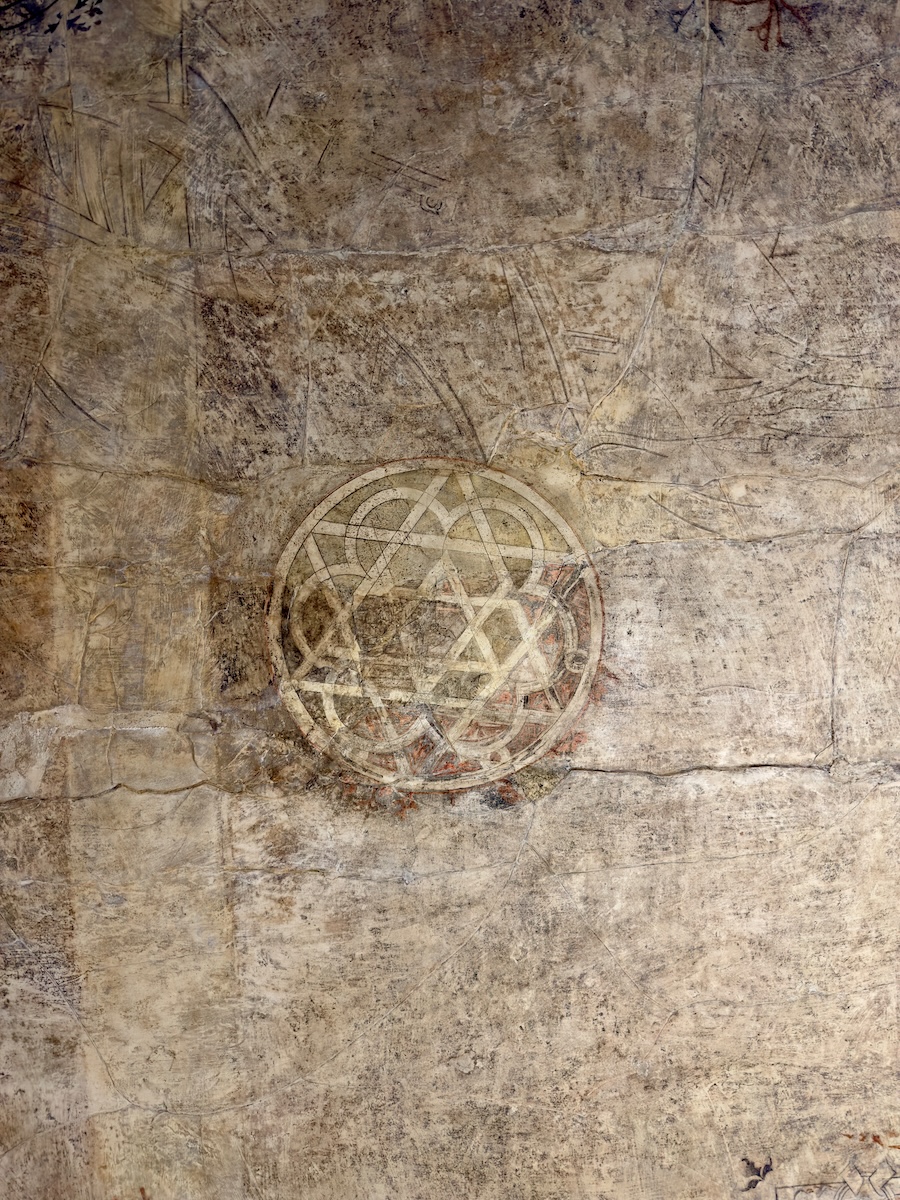
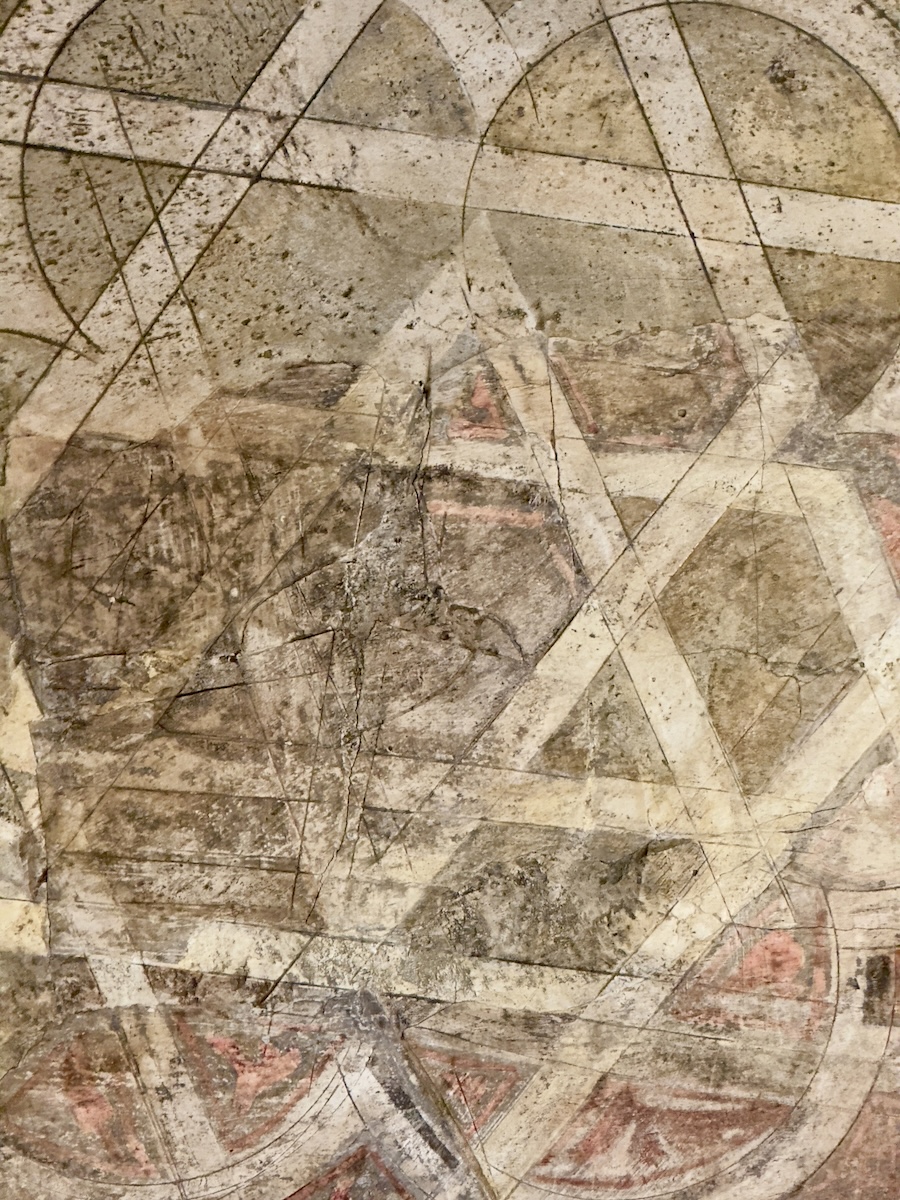
Graffiti scratched into the walls of the Torre del Trovador dates from this later period—simple marks, symbols, fragments whose meanings are uncertain. What they reliably signal is confinement.12 By this point, the palace’s administrators no longer cared what the building communicated—only that order was maintained.
The irony is hard to miss. The building’s greatest strength—its endless adaptability—now worked against the city it once helped govern. As barracks and an armory, it revealed something else entirely. A palace persuades. It stages authority as natural, elegant, and inevitable. It assumes an audience that must be sold. A barracks does the opposite. It assumes unrest and prepares for disobedience. And once a building built for persuasion is repurposed for containment, the loss isn’t just architectural. It’s civic.
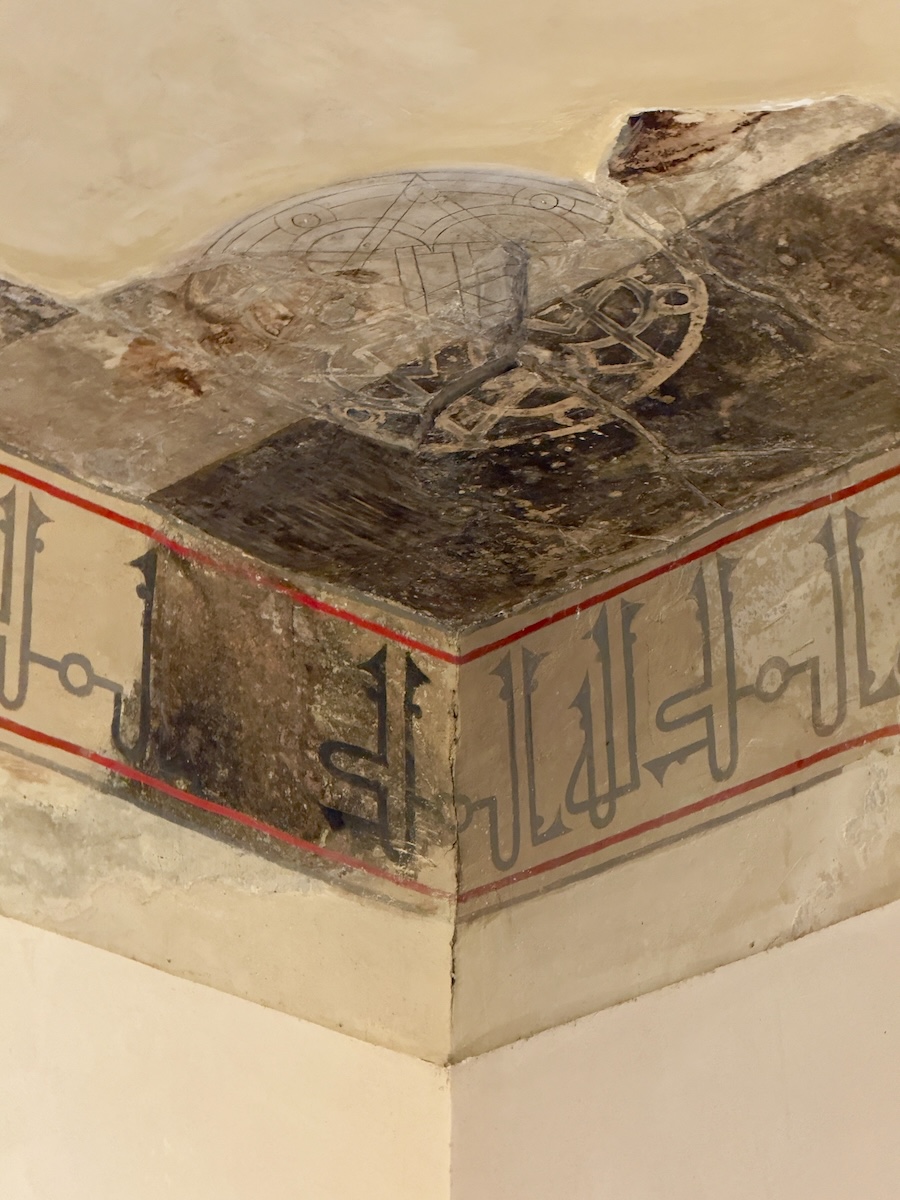
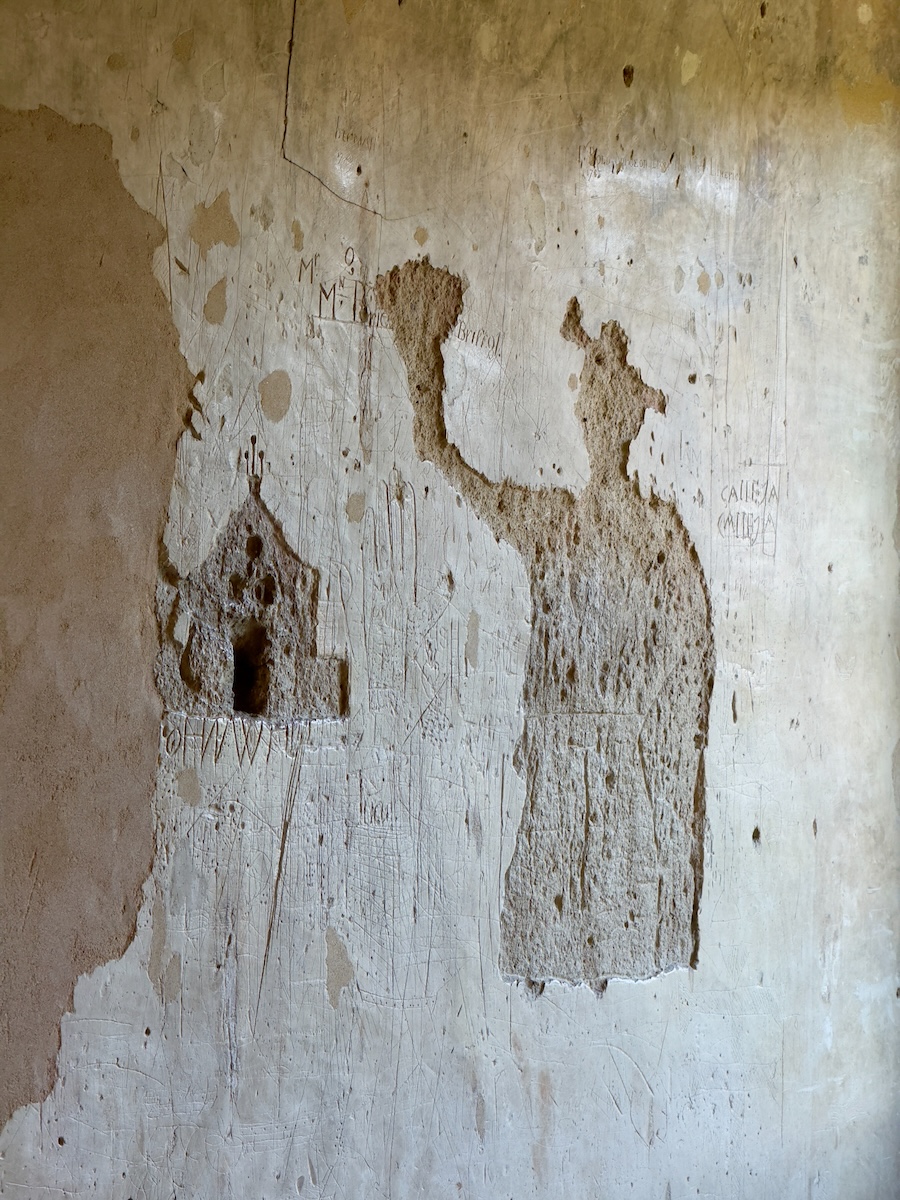
By the early 20th century, the Aljafería had been bent hard by military use. Walls were scarred, interiors stripped and subdivided, decorative elements lost to historical photos. What survived was uneven. The building still stood, but its identity had been blurred by the centuries.
Restoration forced a reckoning. Not with nostalgia—this was not an attempt to rewind history—but with legibility. The task wasn’t to return the palace to a single “golden age,” because there wasn’t one. Instead, restorers had to decide what to clarify, what to stabilize, and—crucially—what not to invent.
The palace could easily have been turned into a fantasy of Islamic splendor or a triumphalist Christian monument. Instead, the restorations aimed to make its layers obvious without flattening them into a single fairy tale. The result isn’t entirely seamless, which is integral to the lessons the Aljafaría offers.
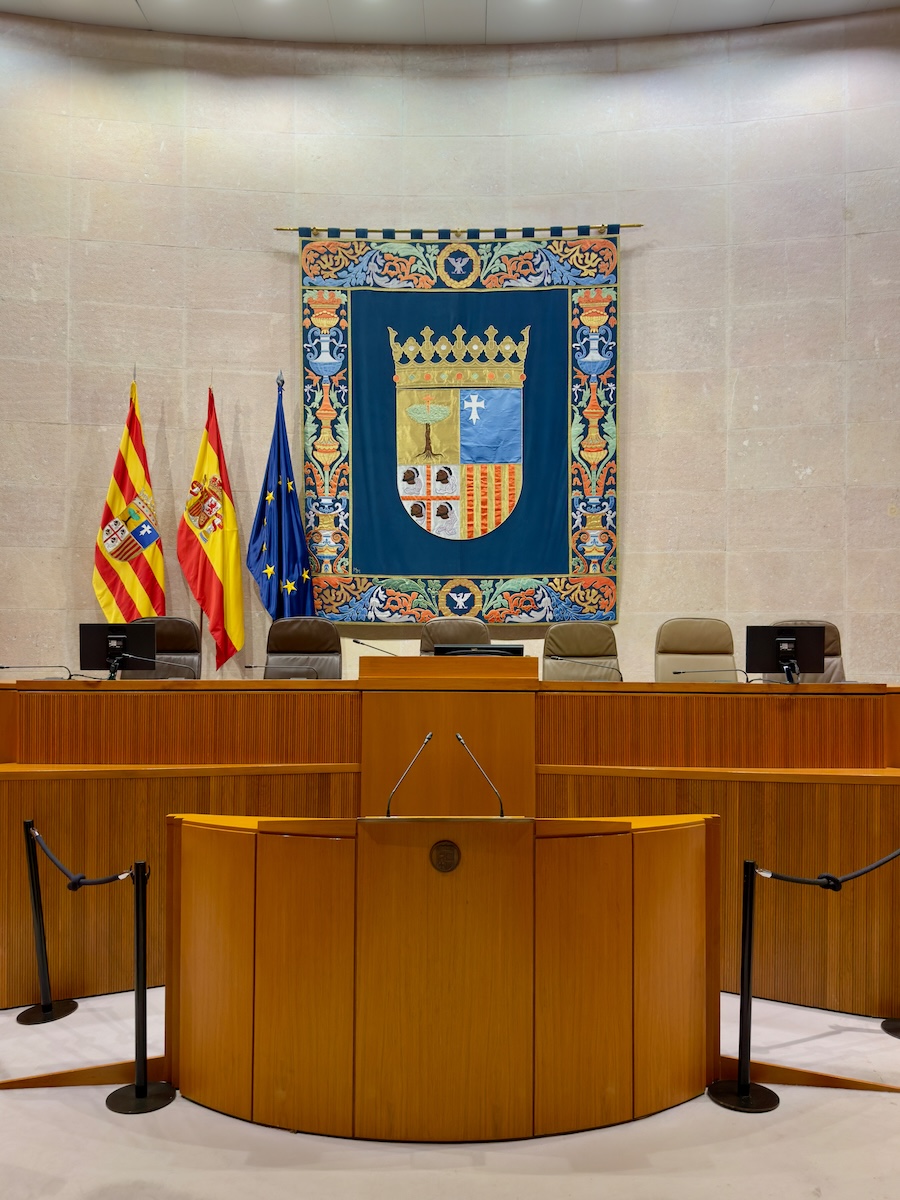
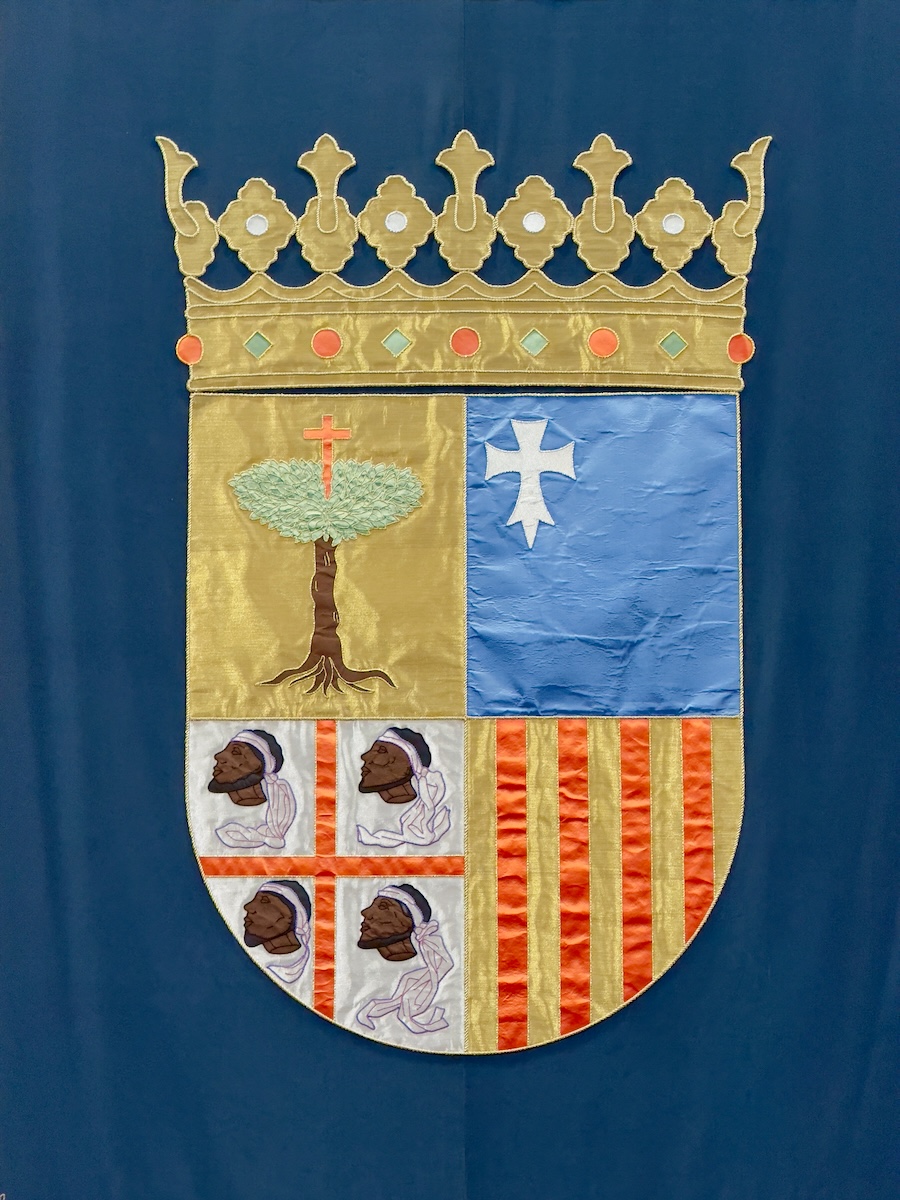
After Franco’s death, the 1978 Constitution returned autonomy to the country’s historic regions. When Aragón, like the country’s other regions, reclaimed its right to self-government, it faced an immediate practical problem. Where would the new regional parliament go? The Aljafería, recently restored and no longer under military control, offered an obvious solution.
When the Cortes of Aragón returned to the Aljafería in the late 20th century, marking a distinct reversal in how authority operated in Zaragoza. In place of imperial persuasion or military enforcement, the palace became a setting for parliamentary negotiation.
Where the building needed new spaces—the parliamentary chamber, committee rooms, member offices—it didn’t trigger historical cosplay with ren-faire ceremonies or neo-medieval décor. The additions land architecturally somewhere between institutional modernism and civic minimalism—clean lines, pale stone and wood, and plainly functional lighting. The goal wasn’t aesthetic harmony. It was honesty—no Mudéjar pastiche, fake arches, or ornamental apologies.
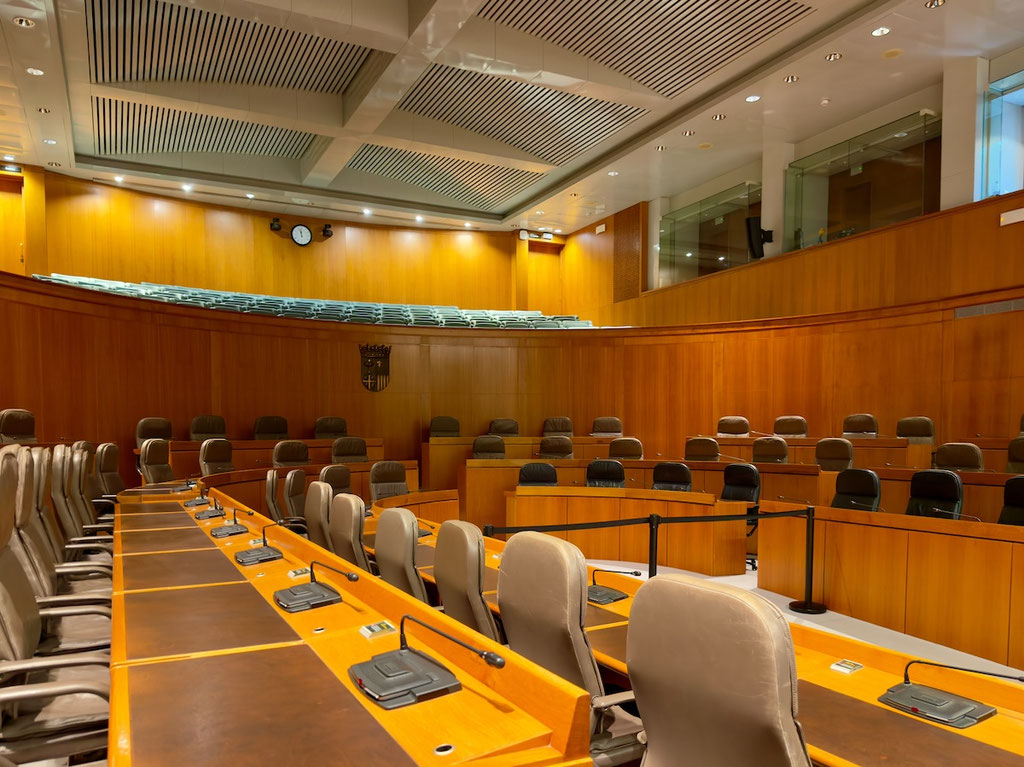
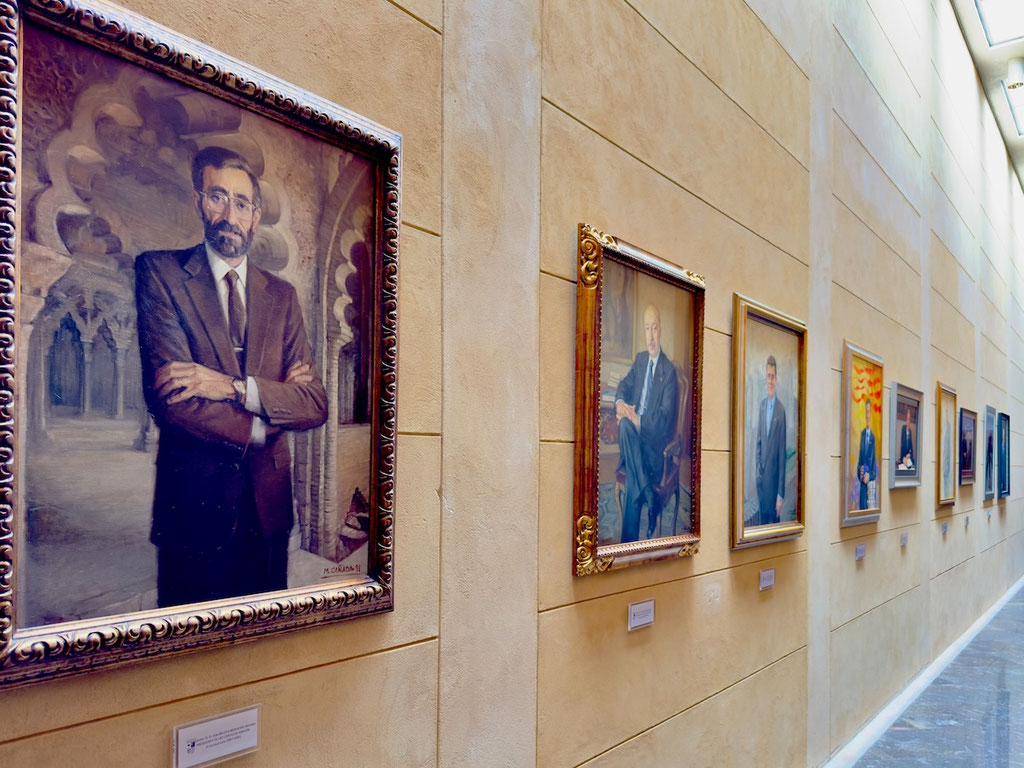
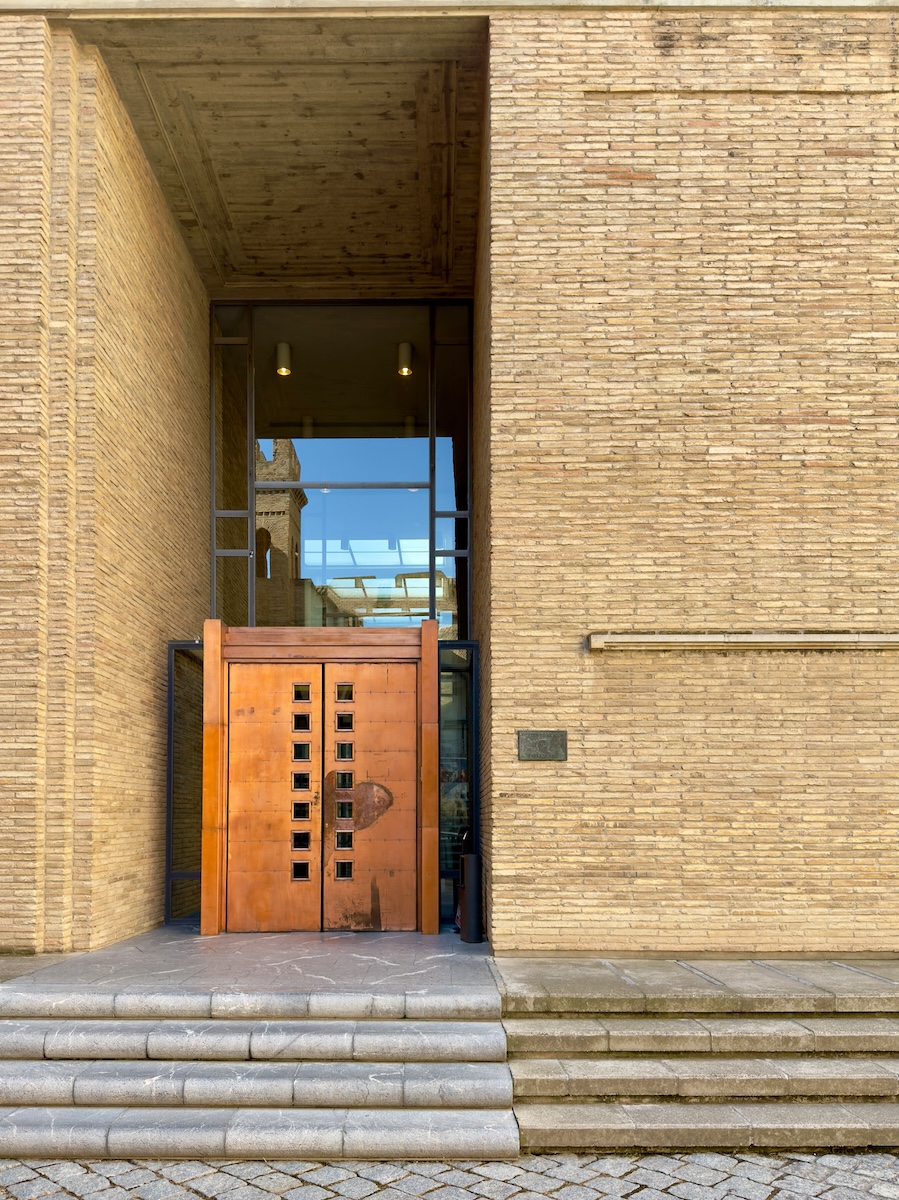
The Aljafería is frequently romanticized as a monument to coexistence, tolerance, and cultural layering. That’s not wrong, exactly, but it is incomplete. The palace survives not because later regimes continually reinvented it, but because the original design was already doing something remarkably effective. So they adapted to the space instead of obliterating it.
That’s the uncomfortable lesson. The Aljafería never rewarded virtue. It rewarded those who recognized a system that worked—and used it. You can read every regime that passed through here by how it treated what it inherited, whether it tried to erase it, exploit it, or build on it.
Most historic buildings want to be admired. The Aljafería wants to be understood.

2. Palimpsest is a polite academic term for peaceful layering harmonious coexistence writing over things without fully erasing what came before. In architecture, it usually means someone smarter than me can still see the seams.
3. Taifa comes from the Arabic word for “faction” or “party,” which is about as reassuring a foundation for statehood as it sounds. After the collapse of the Caliphate of Córdoba in the early 11th century, Islamic Al-Andalus fractured into dozens of small, competitive kingdoms—politically fragile, status-conscious, and often short-lived. Rulers compensated with spectacle—large palaces, lyric poetry, lavish patronage, and ceremony designed to project permanence in a world where permanence was no longer guaranteed.
4. Rulers have been naming places after themselves for millennia—Alexandria, Constantinople, Caesarea—on the optimistic assumption that history would cooperate. Sometimes it does. Usually, it does not. Case in point, Zaragoza began as Caesaraugusta, a name that aged about as well as Roman control of Iberia.
5. That the palace rested on foundations that existed before the regime itself wasn’t due to some warm and fuzzy Iberian spirit of accommodation. It was a hard-nosed governing strategy common to medieval Islamic rule—don’t break shit. Replacing bureaucracies, tax structures, and buildings was expensive. Really expensive. And typically unnecessary. From al-Andalus to Ottoman Hungary, Muslim conquerors were content to accept loyalty and tribute while leaving physical, administrative, and even religious structures largely intact. Continuity was cheap—and it pacified the population by making change feel boring rather than catastrophic. Sadly, it’s an approach history has shown people tolerate with surprising enthusiasm.
6. The tower’s later use as a prison is often treated romantically, as if it were a country song or a final sequel to the “Twilight” series. As if imprisonment were merely atmospheric. It wasn’t. Imprisonment back in the day meant cold stone, bad air, minimal light—and the expectation of execution. The tower was neither tragic nor poetic—it was efficient. Brutally efficient.
7. Polylobed and interlaced arches work like architectural echo chambers. Each curve repeats and reframes the one before it, creating the illusion of depth and abundance without actually opening any space. Everything folds inward, multiplies, and loops back on itself—less a doorway than a controlled hallucination of space.
8. Modern descriptions often label taifa palaces “exotic,” meaning “pretty, but not to be taken seriously.” They weren’t. They were working environments—designed to manage access, hierarchy, and perception with absolute precision. Beauty wasn’t a vibe. It was infrastructure.
9. Mudéjar architecture is often described as a harmonious blending of Muslim and Christian traditions, as if it emerged from a shared kumbaya moment. It didn’t. It grew out of continuity—of labor, technique, and institutional memory—under unequal conditions. Meaning that Muslim artisans kept building because they were there, highly skilled, and couldn’t really go anywhere. Not servitude, exactly, but certainly not freedom, either.
10. While Ferdinand and Isabel were commissioning ceilings in Zaragoza, they were also finishing off the Nasrid Emirate of Granada (the last Muslim-ruled state on the Iberian Peninsula), expelling Jews, and asserting ownership over entire continents they would never see. A deliberately cultivated brew of macro violence outside and micro control inside.
11. Madrid. We’re talking about Madrid.
12. It’s tempting to turn the graffiti into a love story. It’s harder to accept that confinement often produces nothing more meaningful than marks on a wall and time to kill. Romance is easier. History is not obligated to be kind.
Write a comment