
Zaragoza has a cathedral problem. Or maybe just a branding problem.
If you’re searching for background information and type “Zaragoza cathedral” into Google, you’ll be rewarded with page after page of results for the Basilica of Our Lady of the Pillar—a building so large, so symmetrical, and so confident in its own importance that it barely needs a search engine to advocate for it. That thing looms. Heck, it practically preens.
And yet.
The actual cathedral—the one with the bishop’s seat, the one that grew up with the city rather than arriving fully formed—sits just a few hundred feet away, minding its business, as it always has. This is Catedral del Salvador de Zaragoza, better known as La Seo. Older, stranger, and far more interesting, it has somehow become the city’s second most famous church. Which feels about right, once you get to know Zaragoza.
La Seo occupies ground that has been doing official civic work for roughly 2,000 years. Before it was a cathedral, this was the forum of the Roman city of Caesaraugusta, founded in 14 BCE under Emperor Augustus. This was the administrative and trade center of the new city. Decisions happened here. Zaragoza didn’t blunder into existence—it was planned, paved, and governed from this spot.
As Roman authority gave way to Visigothic rule in the early 500s, the city remained an active Christian and administrative hub. That continuity carried into the early 8th century, when Muslim forces conquered the city as part of the Umayyad campaign that brought most of the Iberian Peninsula under Islamic rule. Renamed Saraqusta, the city emerged as a major northern city of Al-Andalus—Muslim-ruled Iberia—strategically placed on the Ebro River and central to the region’s political and religious life.
After the conquest, the transformation of the site was neither instant nor symbolic, as later narratives sometimes suggest. The existing Christian complex—already layered over Roman civic structures—was adapted for Islamic worship, following a pattern common throughout Al-Andalus. Orientation shifted toward Mecca. Interior spaces were reorganized. And over time, the structure was expanded, formally transforming into Saraqusta’s Great Mosque and growing along with the city itself.
By the 9th and 10th centuries, this was not a provisional building but a fully developed congregational mosque, central to religious life in one of the most important northern cities of Muslim Iberia. The site’s authority came not from novelty, but from continuity—it was already where the city gathered, governed, and defined itself. Islamic rule didn’t relocate that center. It reinforced it.
The city changed rulers, languages, and faiths, but it never changed its habit of building on what was already there.
When Alfonso I of Aragon captured Zaragoza in 1118, the Great Mosque wasn’t demolished in a gesture of symbolic victory—it was consecrated and reused. Christian worship took place inside a building still shaped by Islamic spatial logic—its orientation, proportions, and circulation intact. Only gradually, over decades and then centuries, was the structure transformed into a cathedral. Gothic elements arrived. Chapels were added. Earlier layers were incorporated rather than erased.
That slow conversion matters. La Seo is not a monument to a single moment of triumph or identity. It’s the physical record of a city that kept changing its name—Caesaraugusta, Saraqusta, Zaragoza—without ever abandoning its center. The cathedral didn’t replace what came before it. It absorbed it. And it shows in its orientation—even today, the cathedral faces Mecca rather than adopting the traditional east-west axis expected of a Catholic church. History is often hard to straighten out.
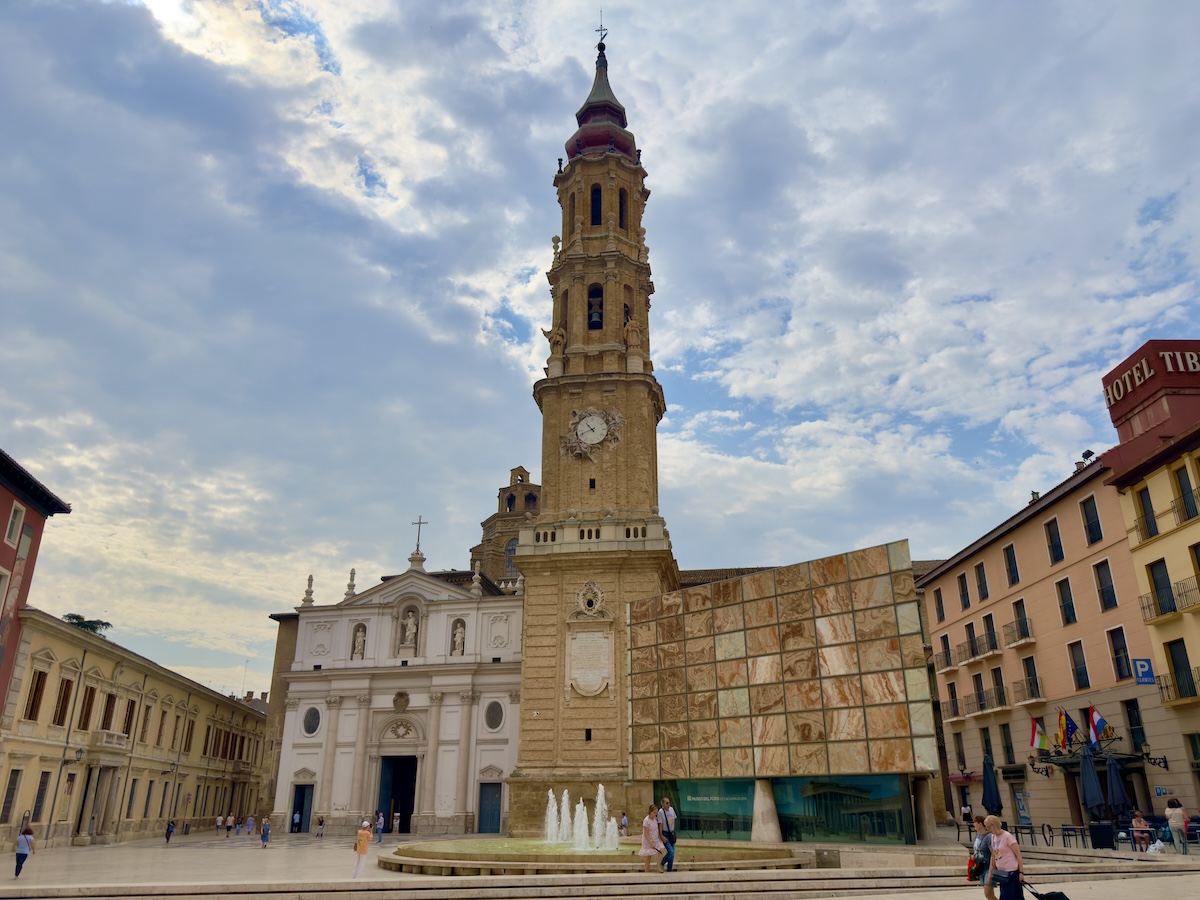
Step back out onto the plaza, and La Seo sits off to one side, refusing a grand reveal with its apse askew and its main face off-kilter. There’s no single, correct way to approach it. You arrive at it from the side, or the back, or by circling it first—if you’d used Apple Maps to get here, you’d assume the problem was you. It’s a cathedral you have to search for, even when you’re standing right in front of it.
The building may be hard to read from the outside. Its role in the city was not. By the 12th century, it was established as the seat of the bishop and the cathedral of Zaragoza—a role it would hold for centuries before its arch-rival for algorithm-based search results, the Basilica of Our Lady of the Pillar, came on the scene. Which is to say that La Seo was doing the cathedral thing long before Zaragoza decided it needed another one.
Devotion to the Virgin of the Pillar exploded in the 17th century. The Basilica grew larger, grander, and more symbolically powerful. At one point, it was afforded co-cathedral status with La Seo. From that point on, Zaragoza had one cathedral for spectacle and pilgrimage and another for governance and continuity. Official acts—coronations, councils, episcopal authority—remained tied to La Seo. Popular devotion flowed toward El Pilar.
That imbalance has only widened over the years. El Pilar gets all the postcards, and La Seo gets politely overlooked. It’s hard not to find that a little funny, especially standing in a building that literally predates Spain as a country.
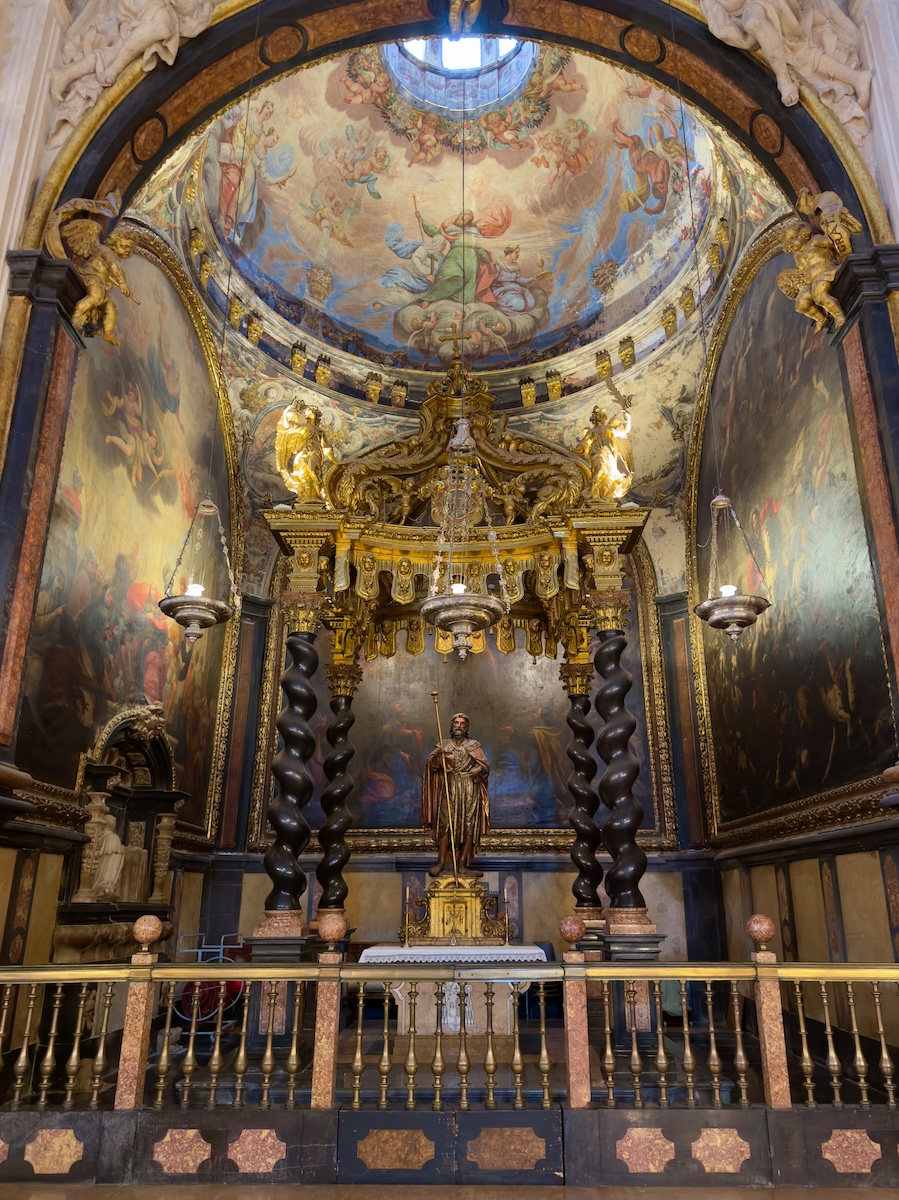
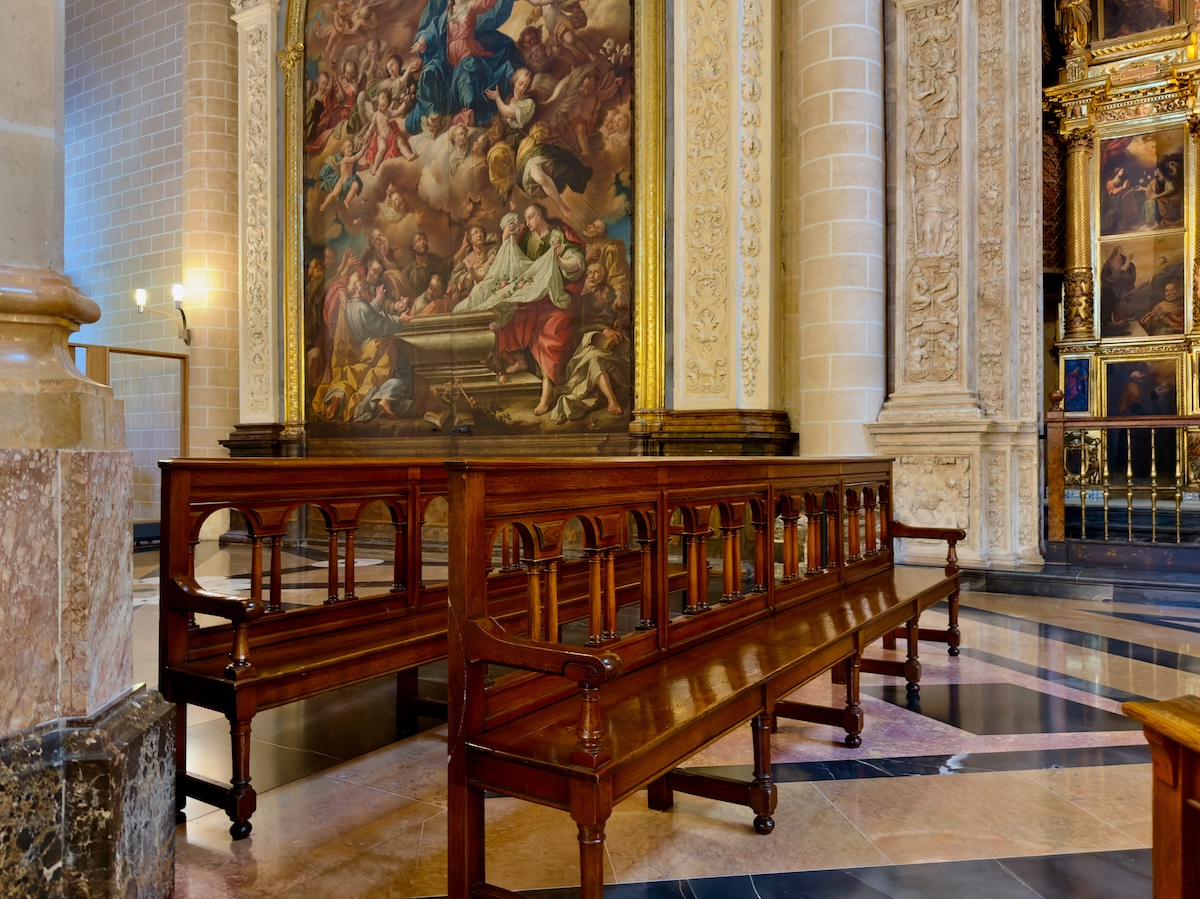
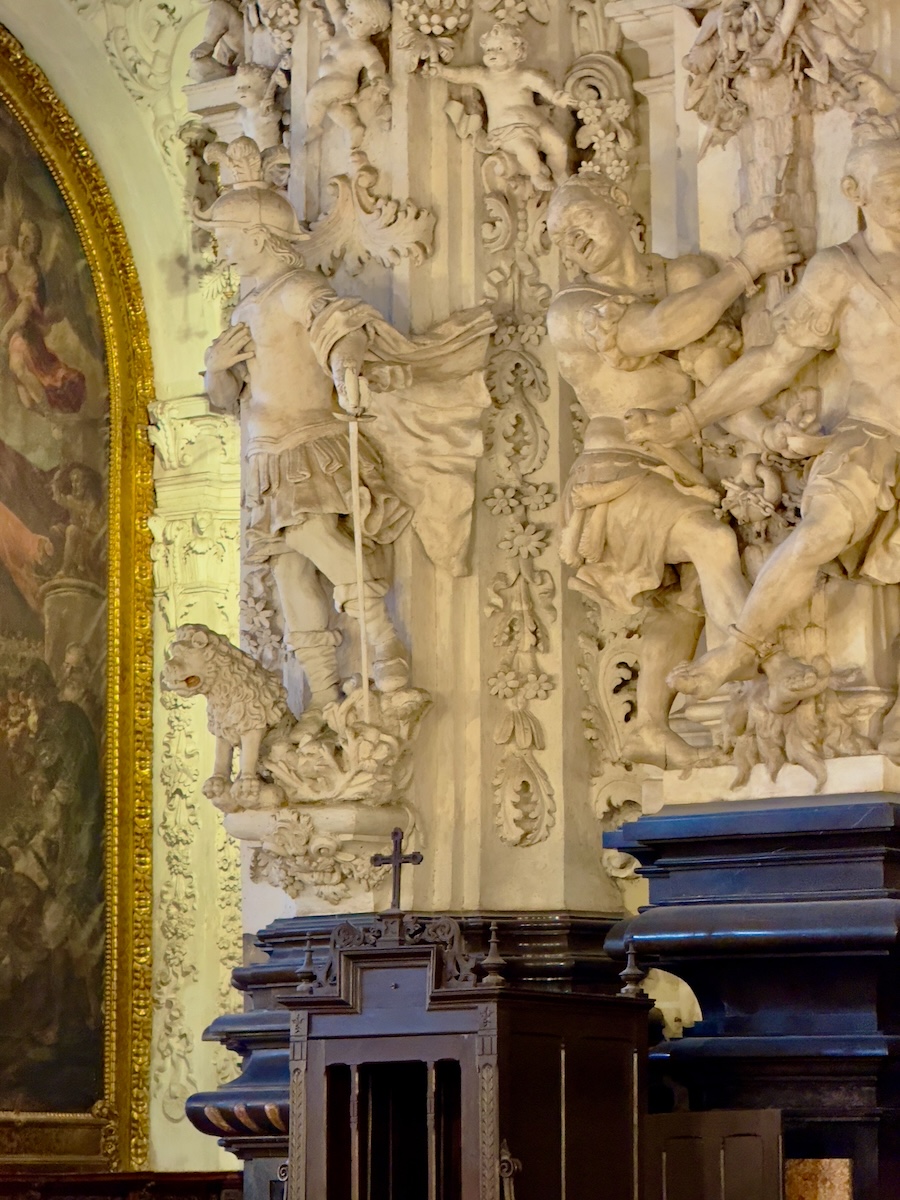
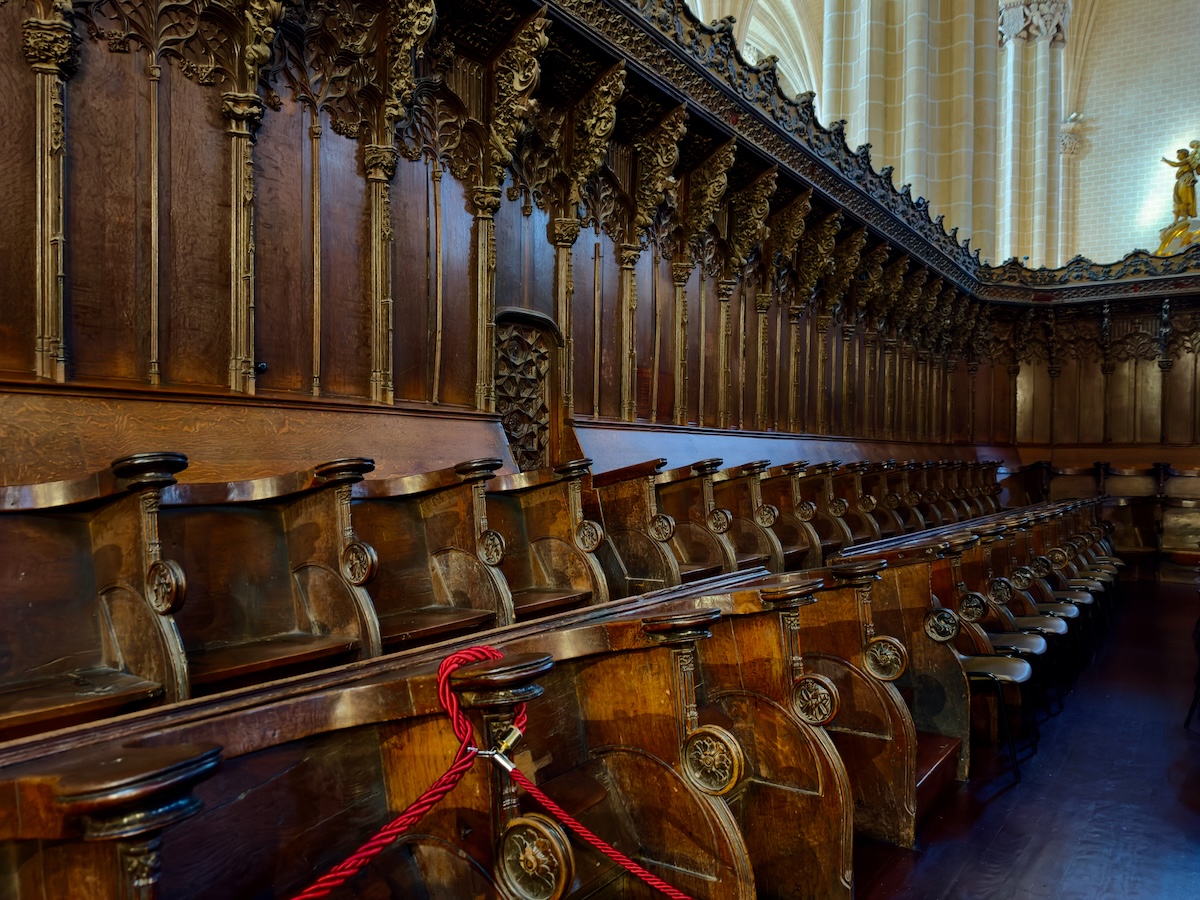
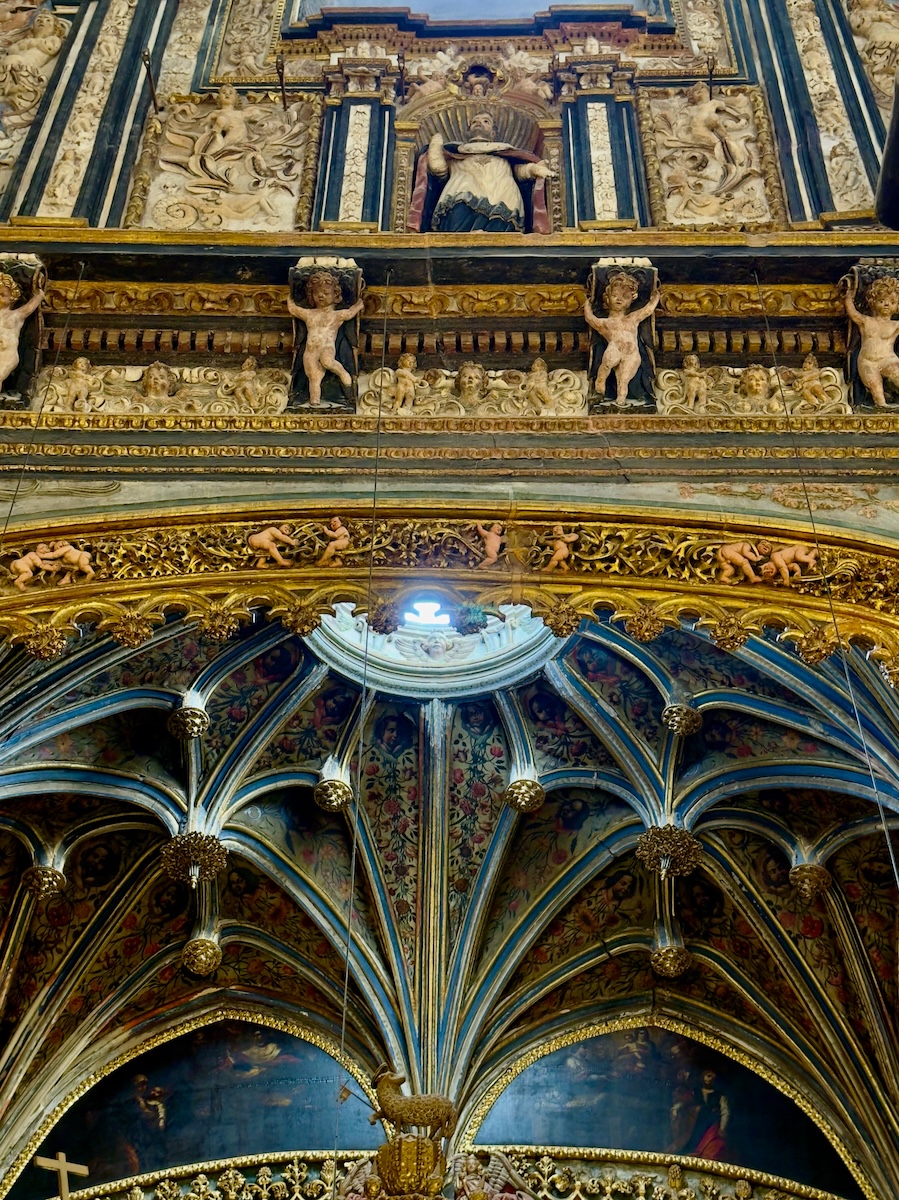
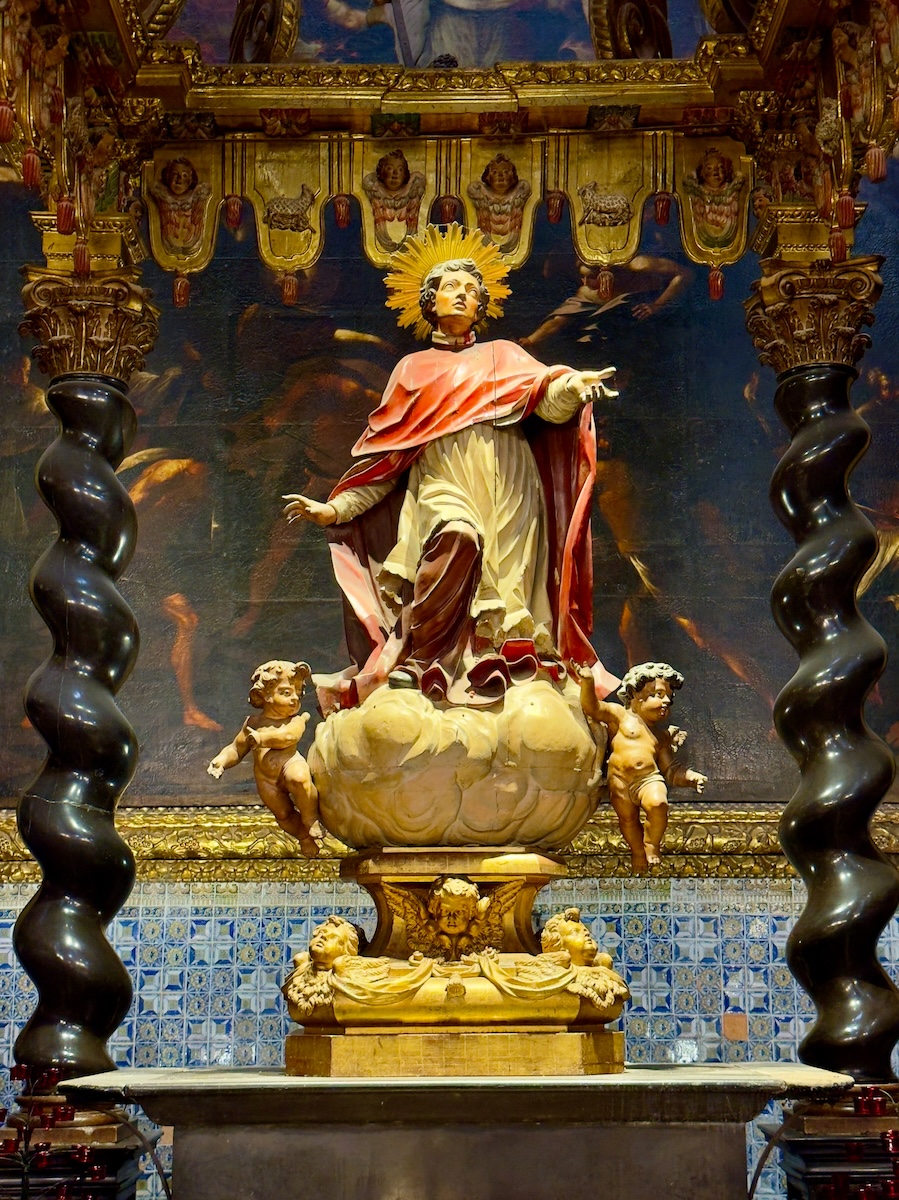
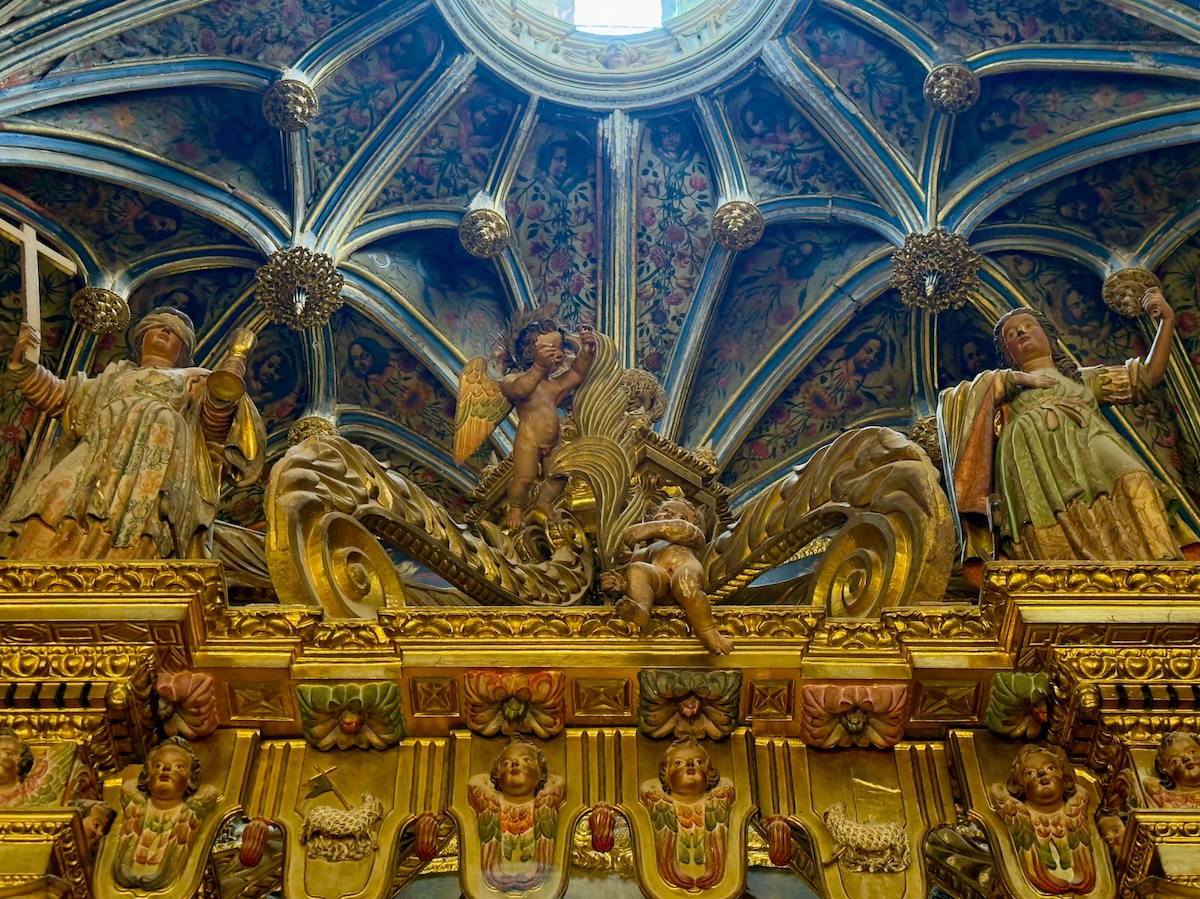
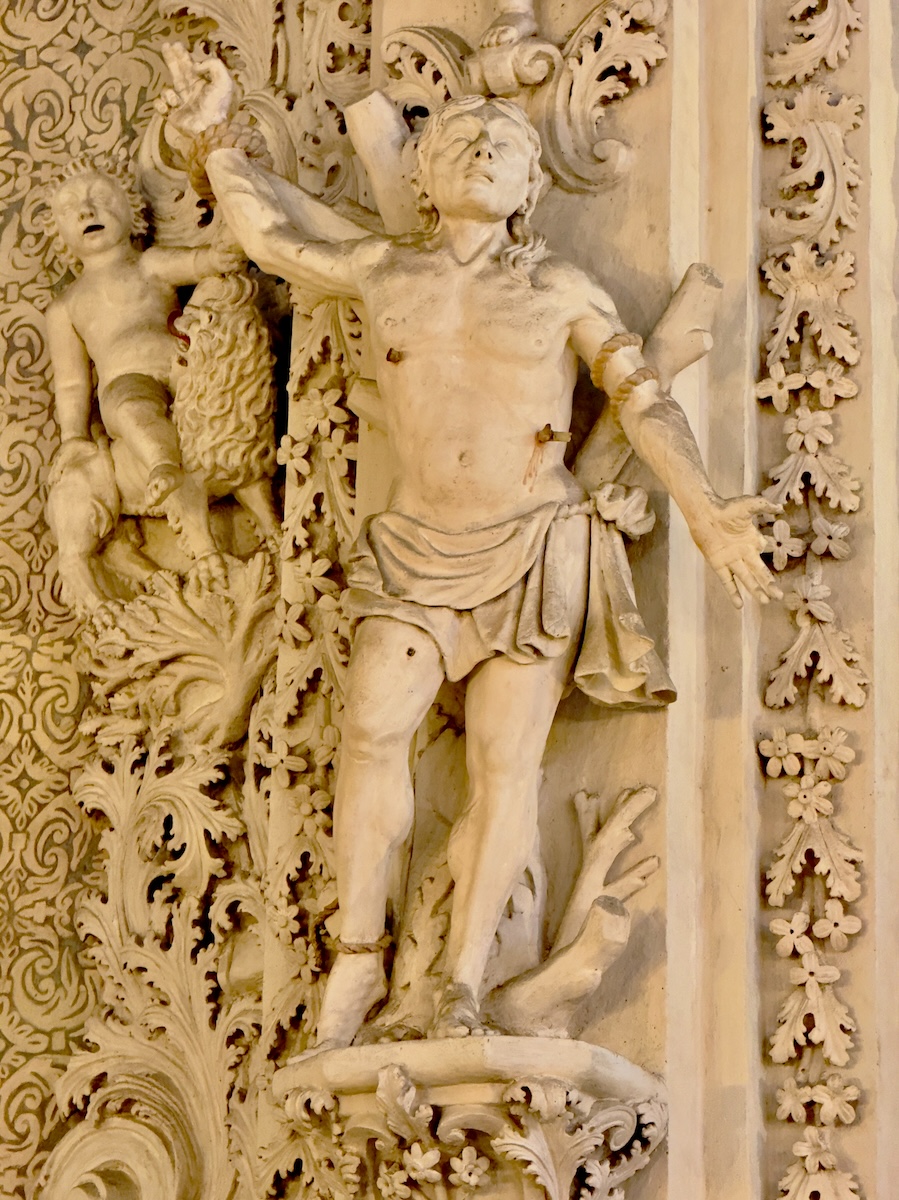
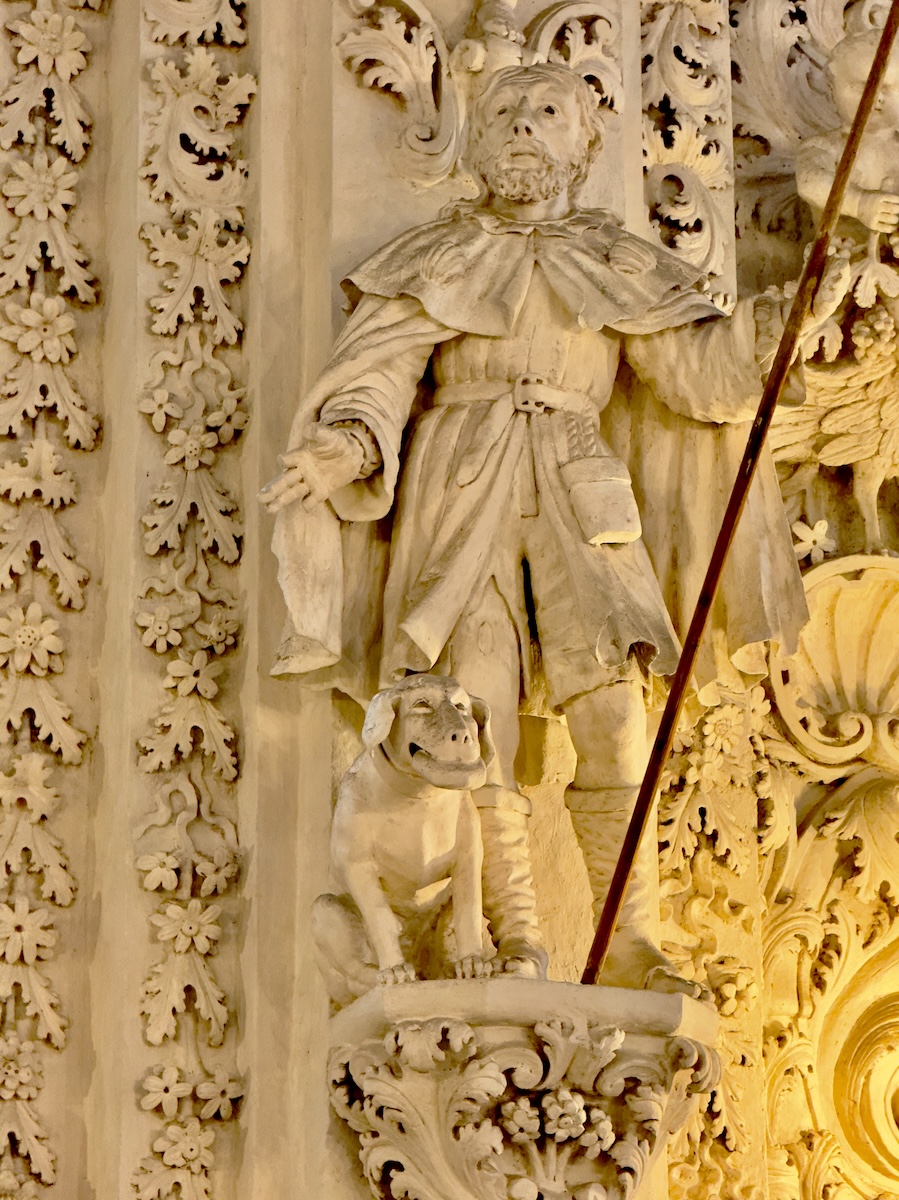
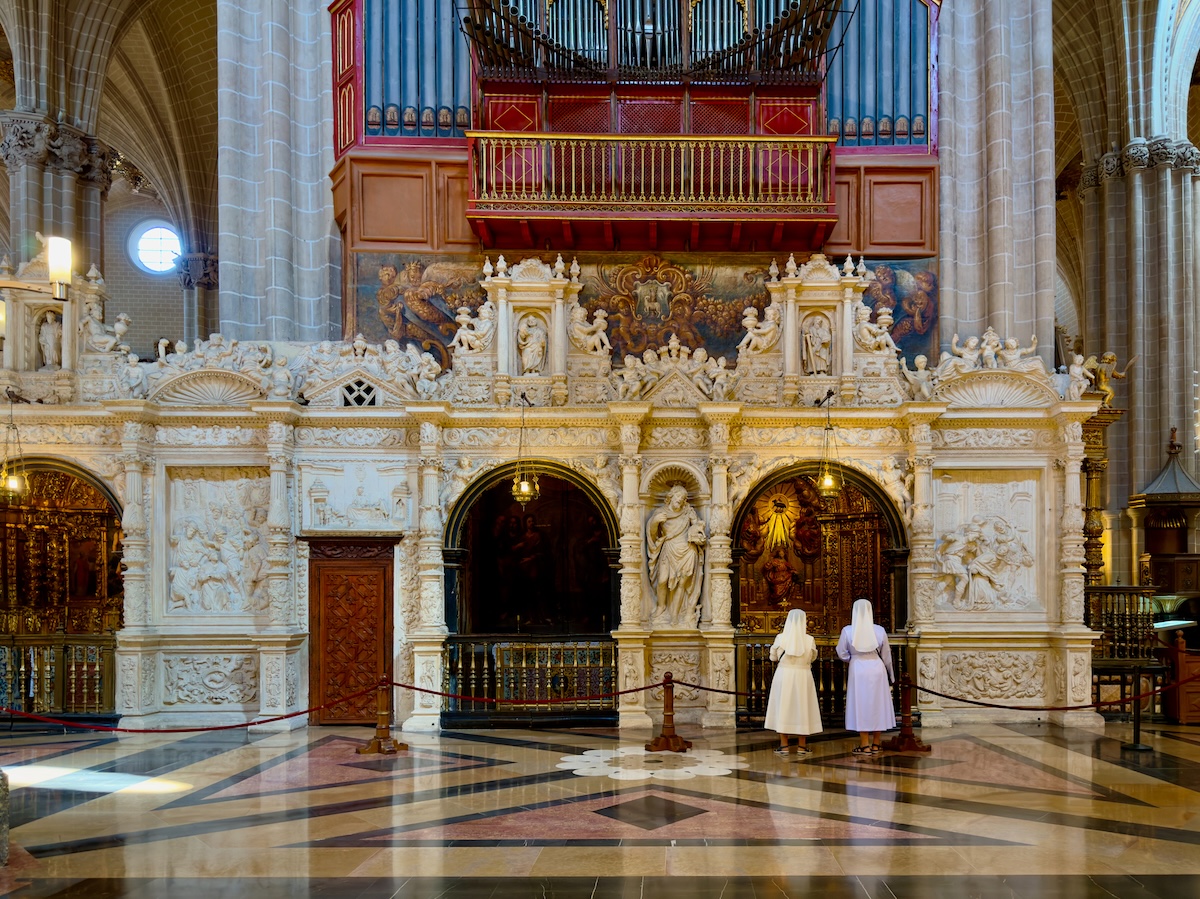
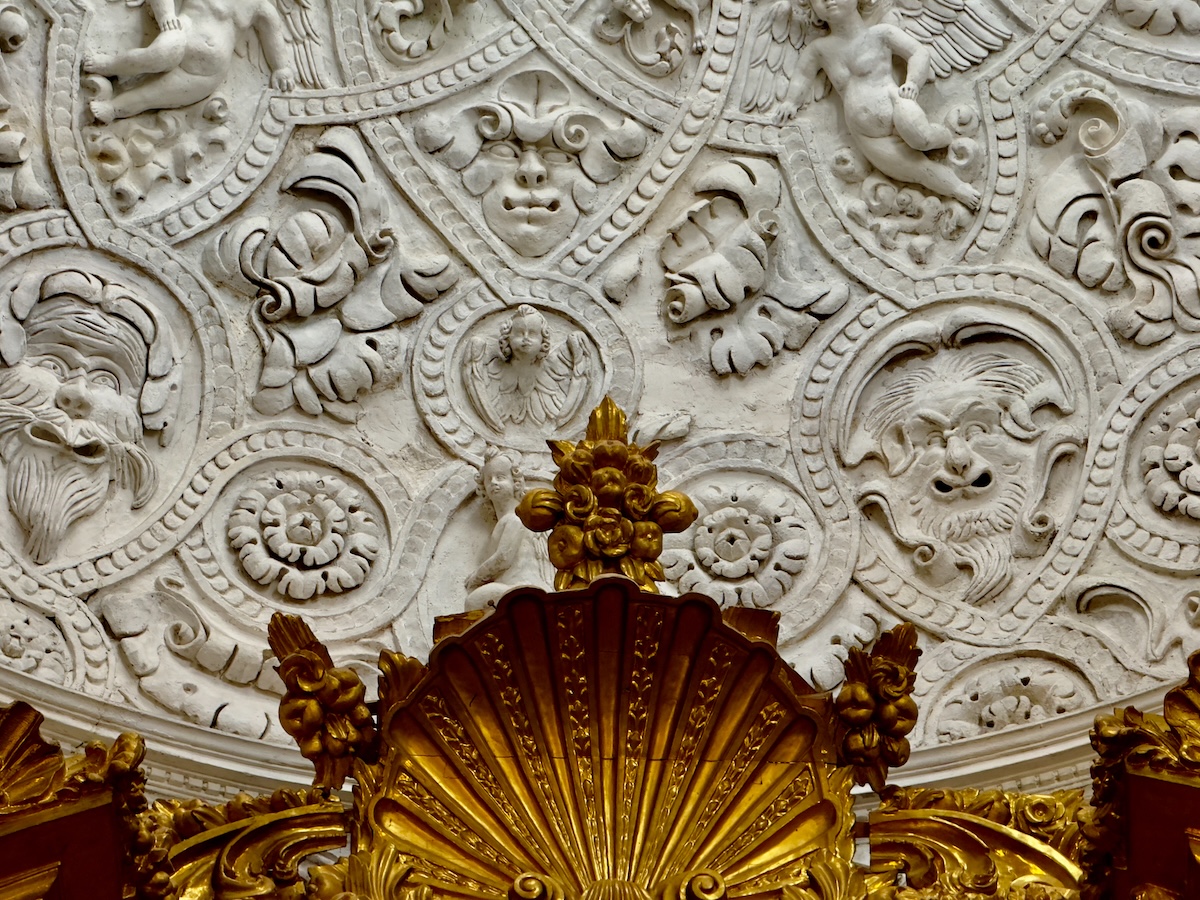
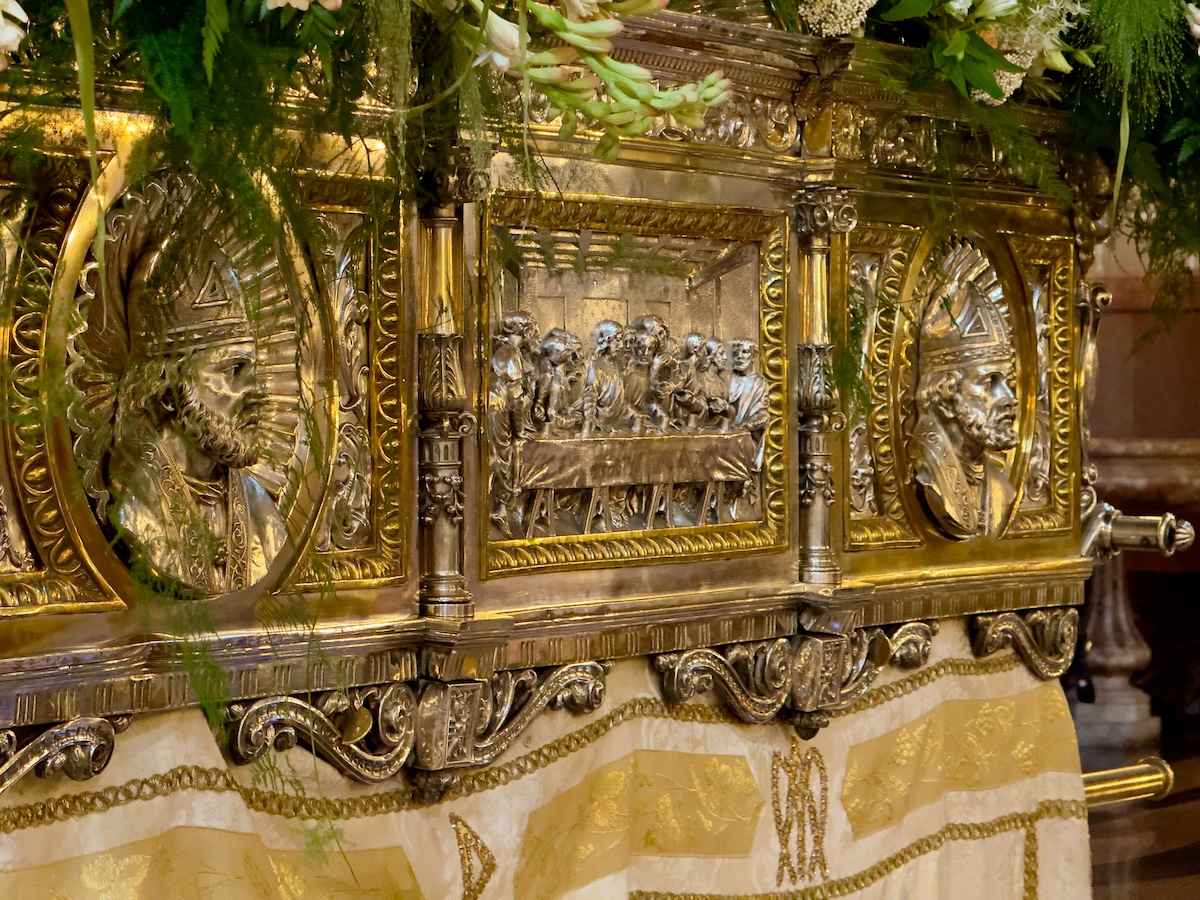
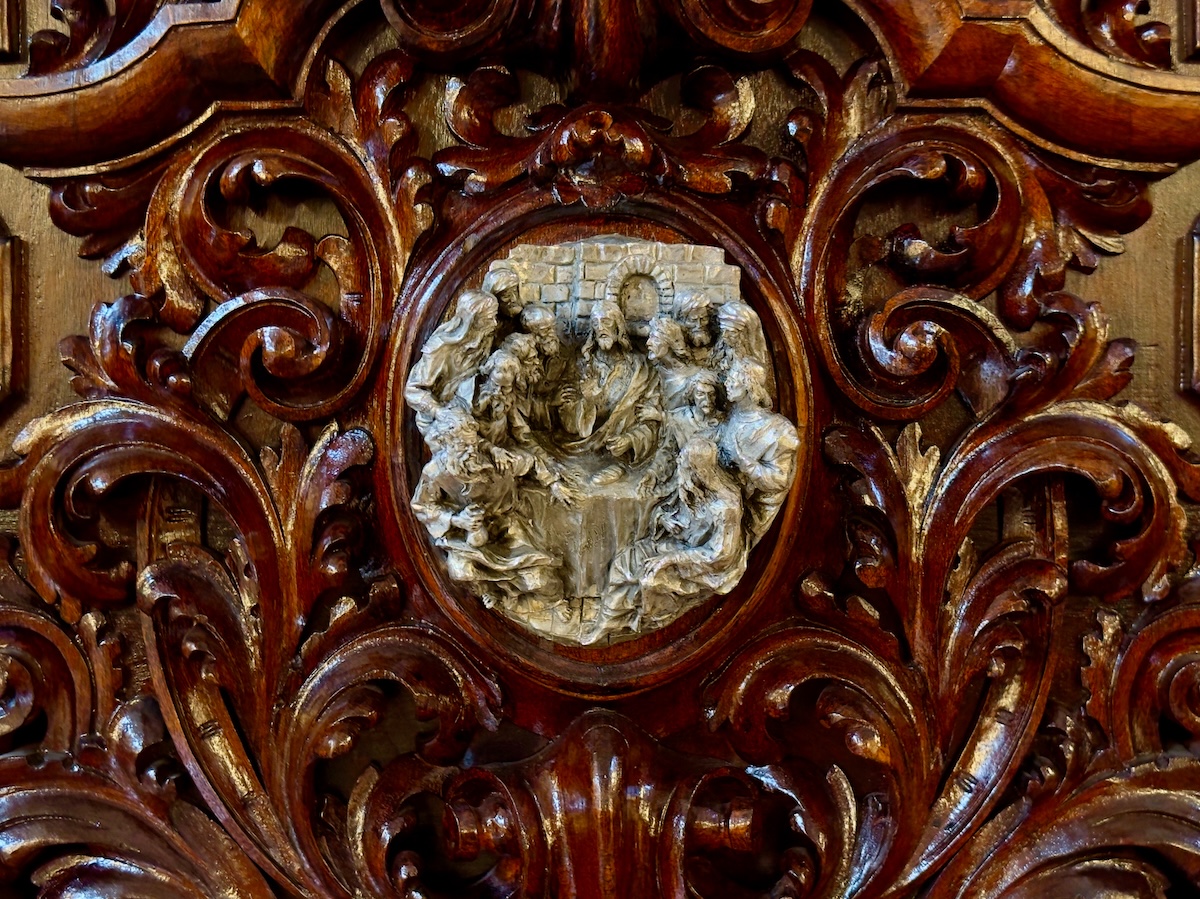
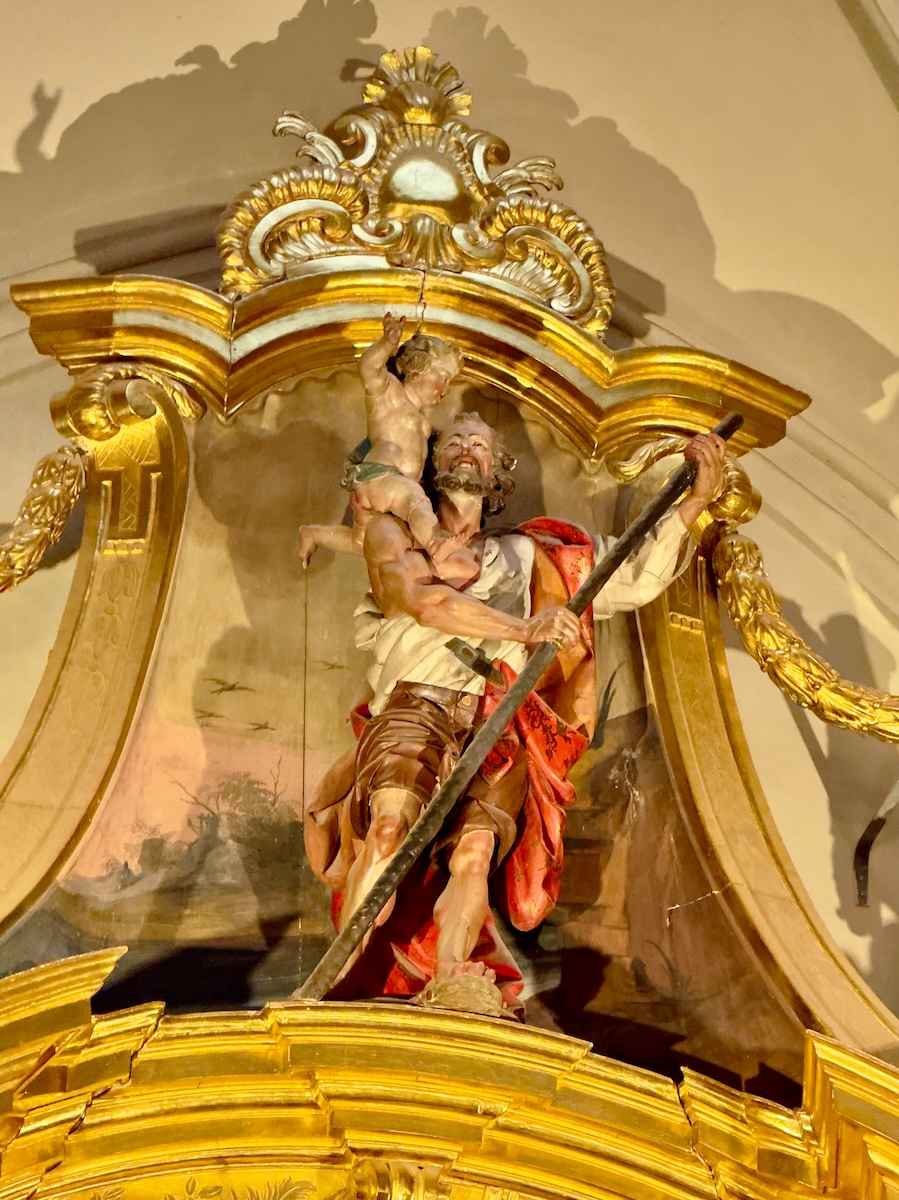
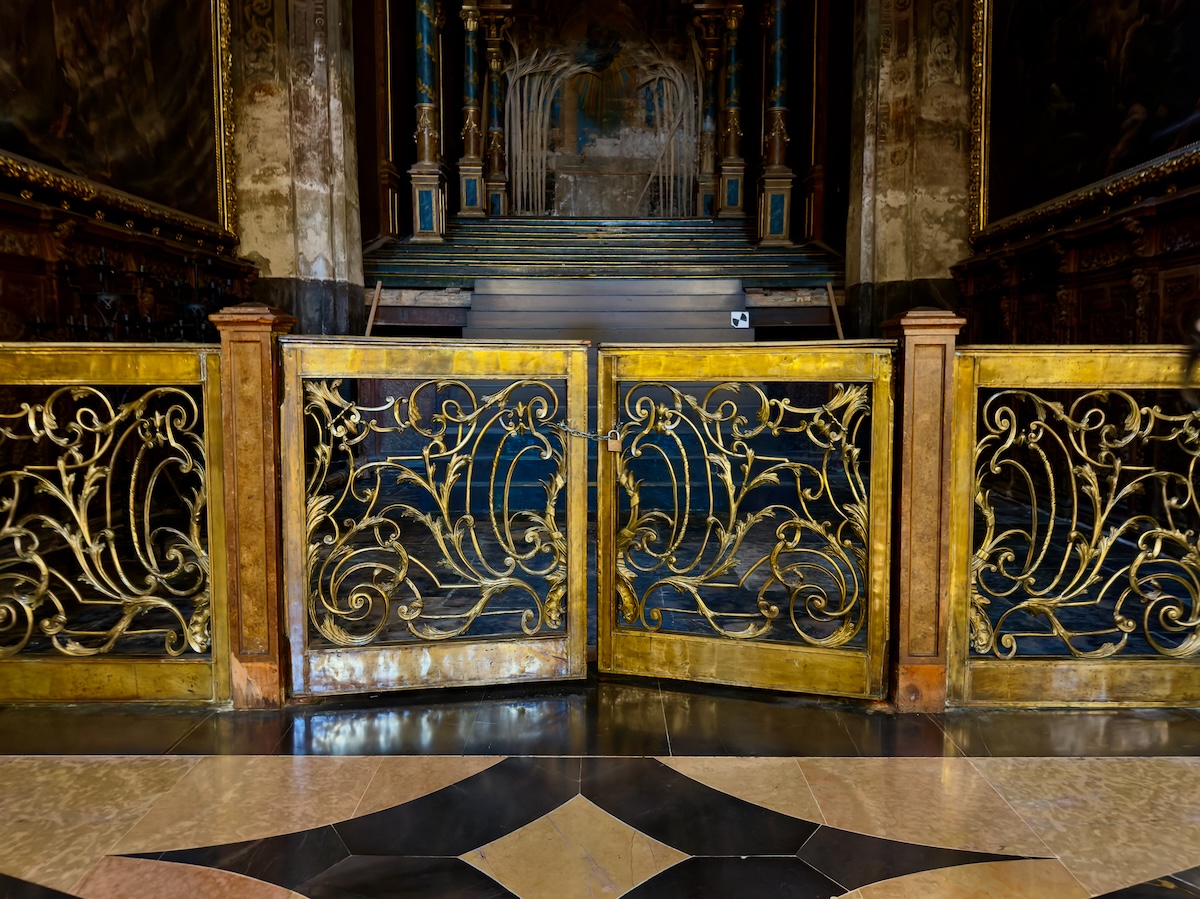
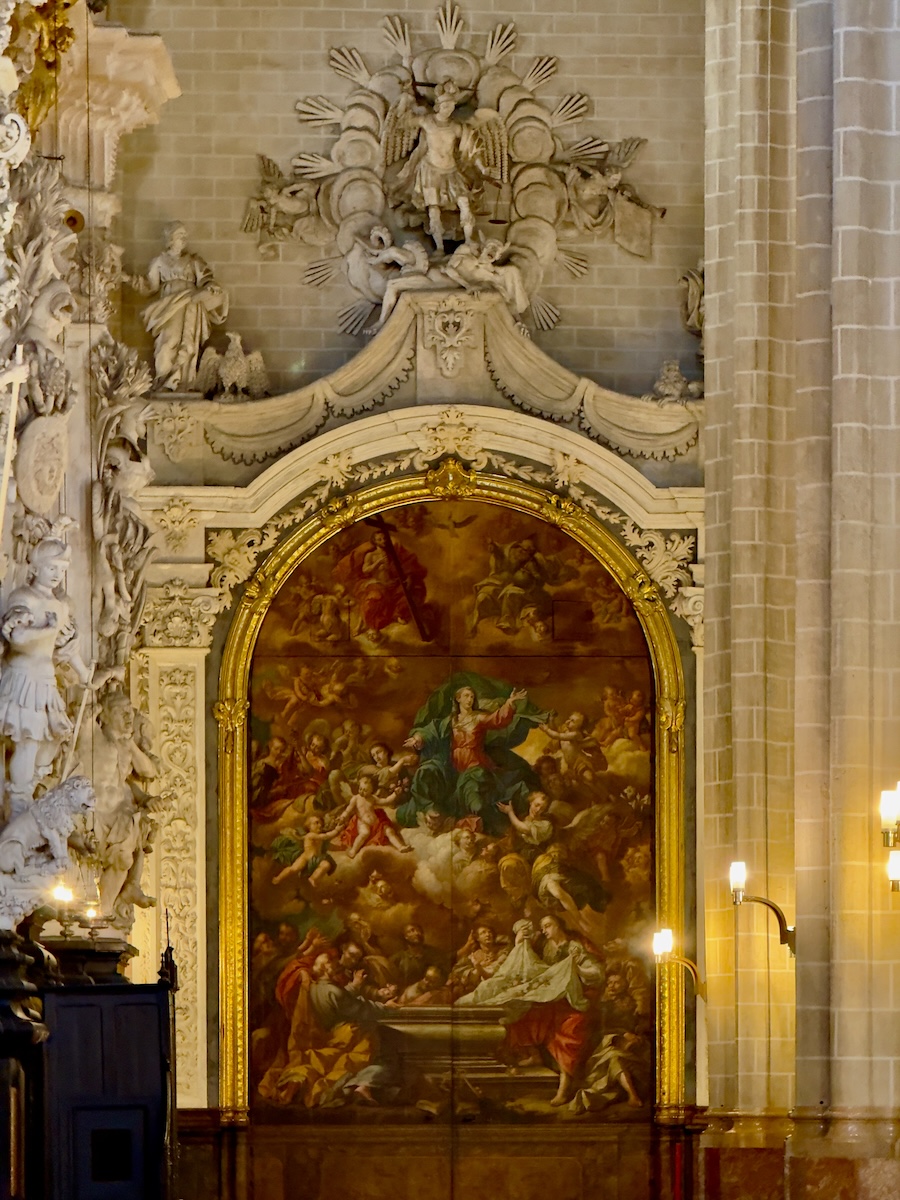
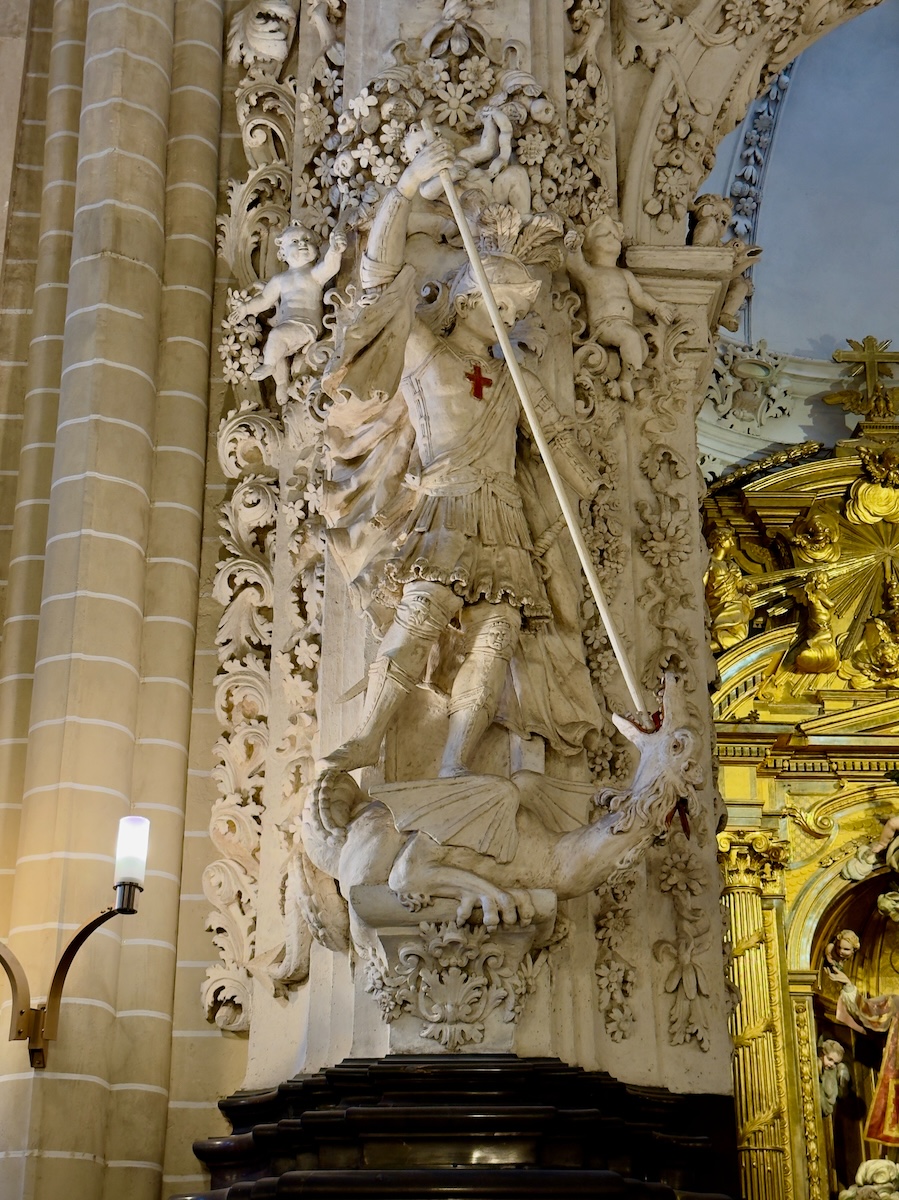
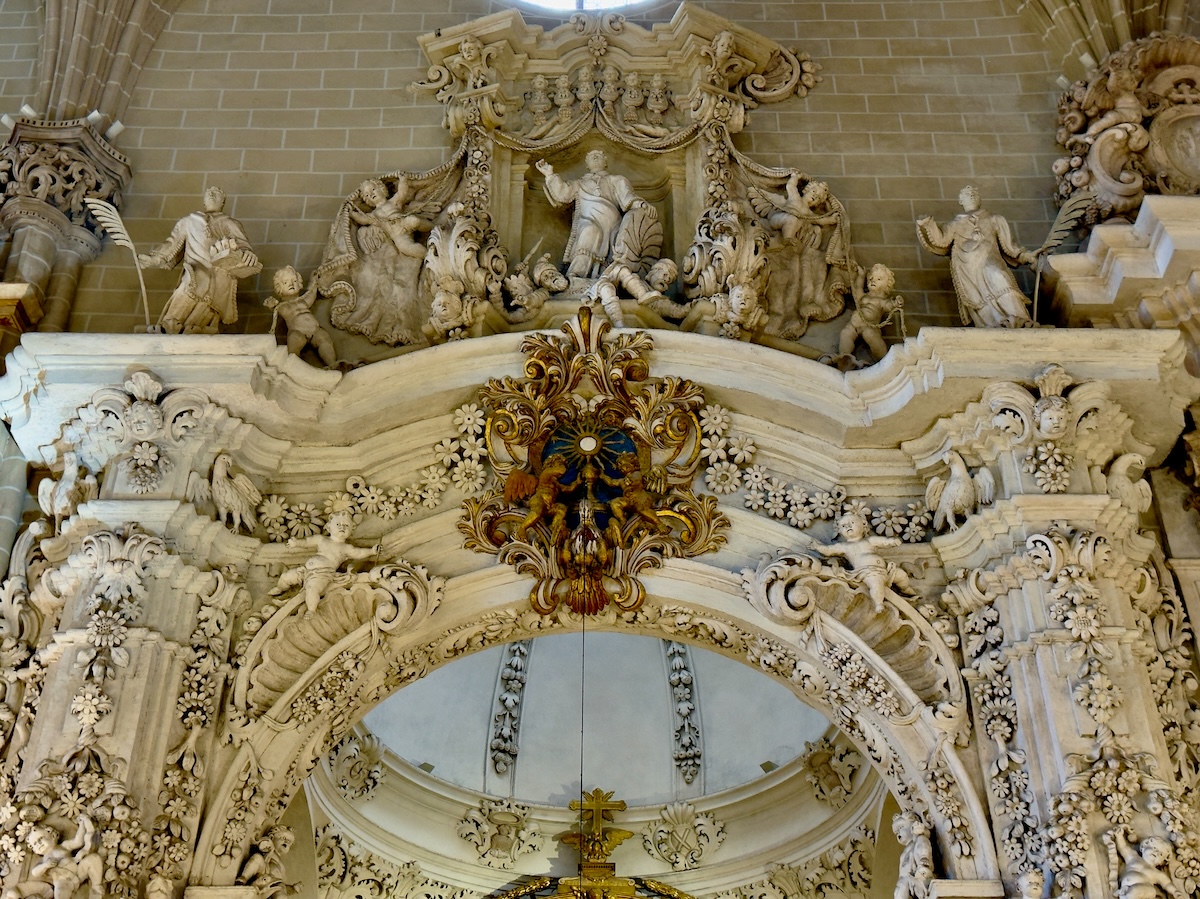
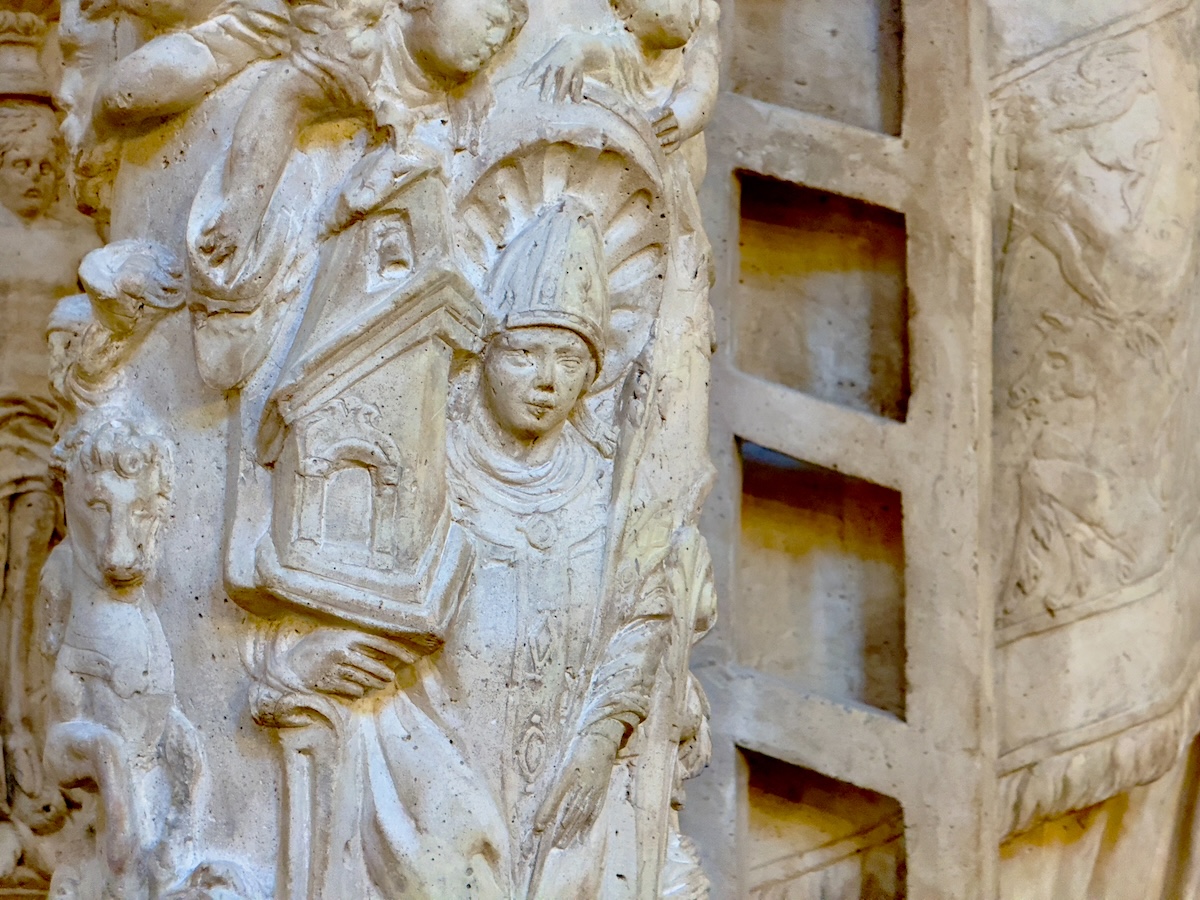
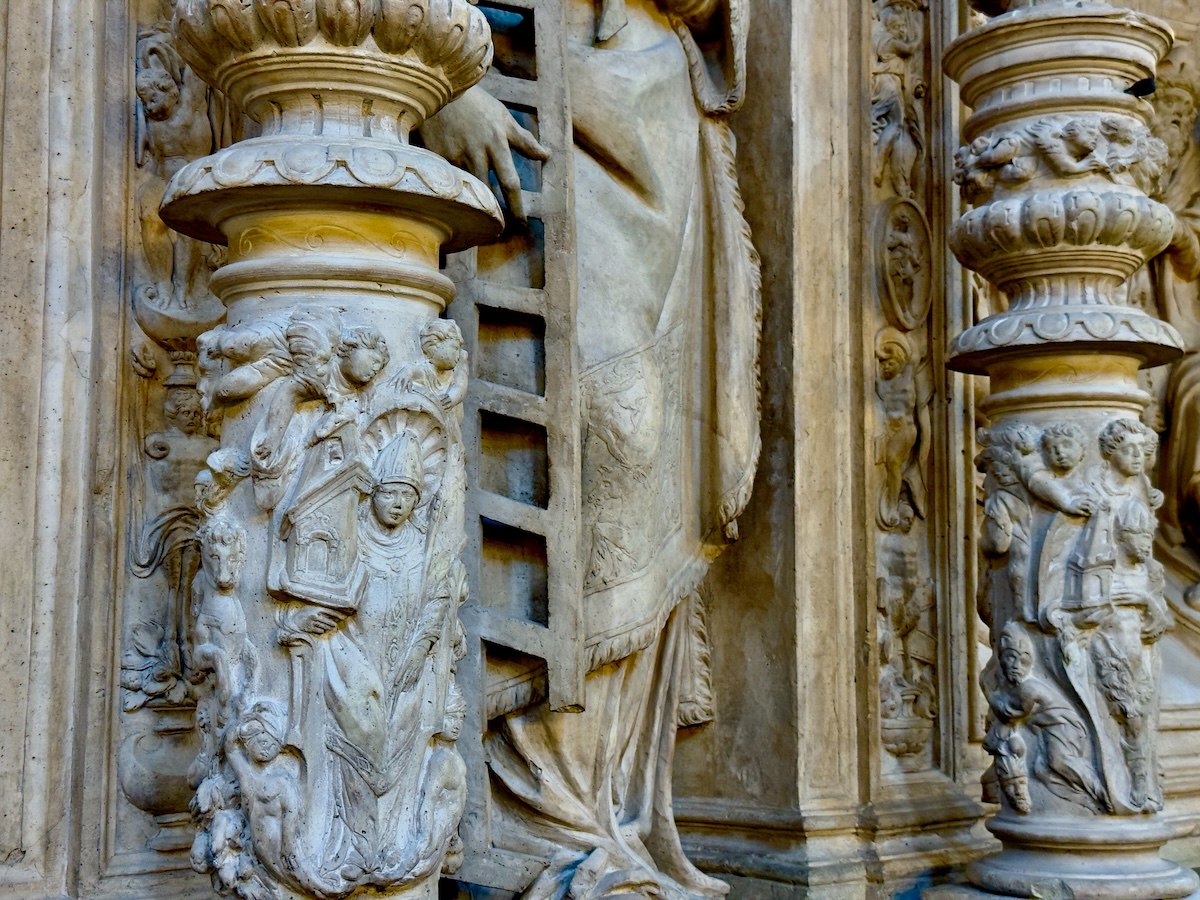
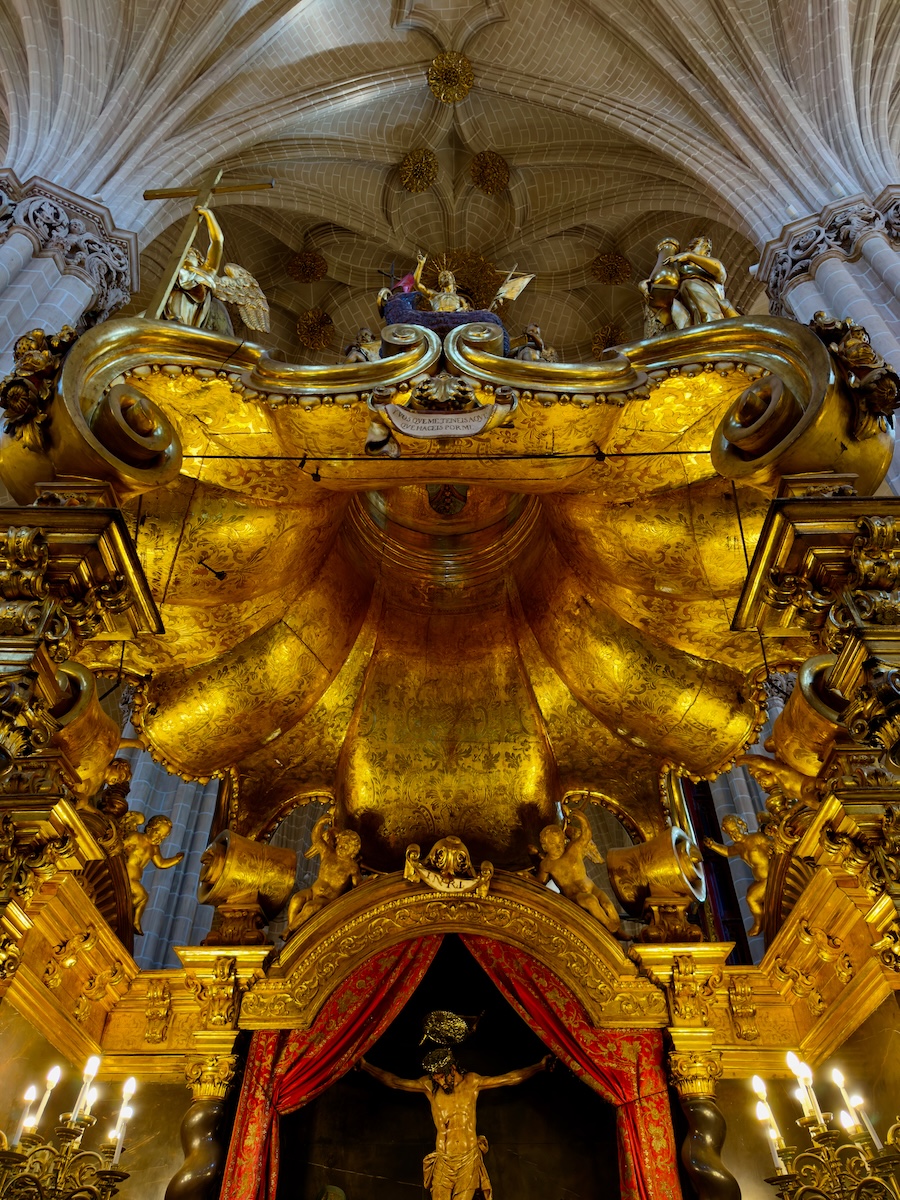
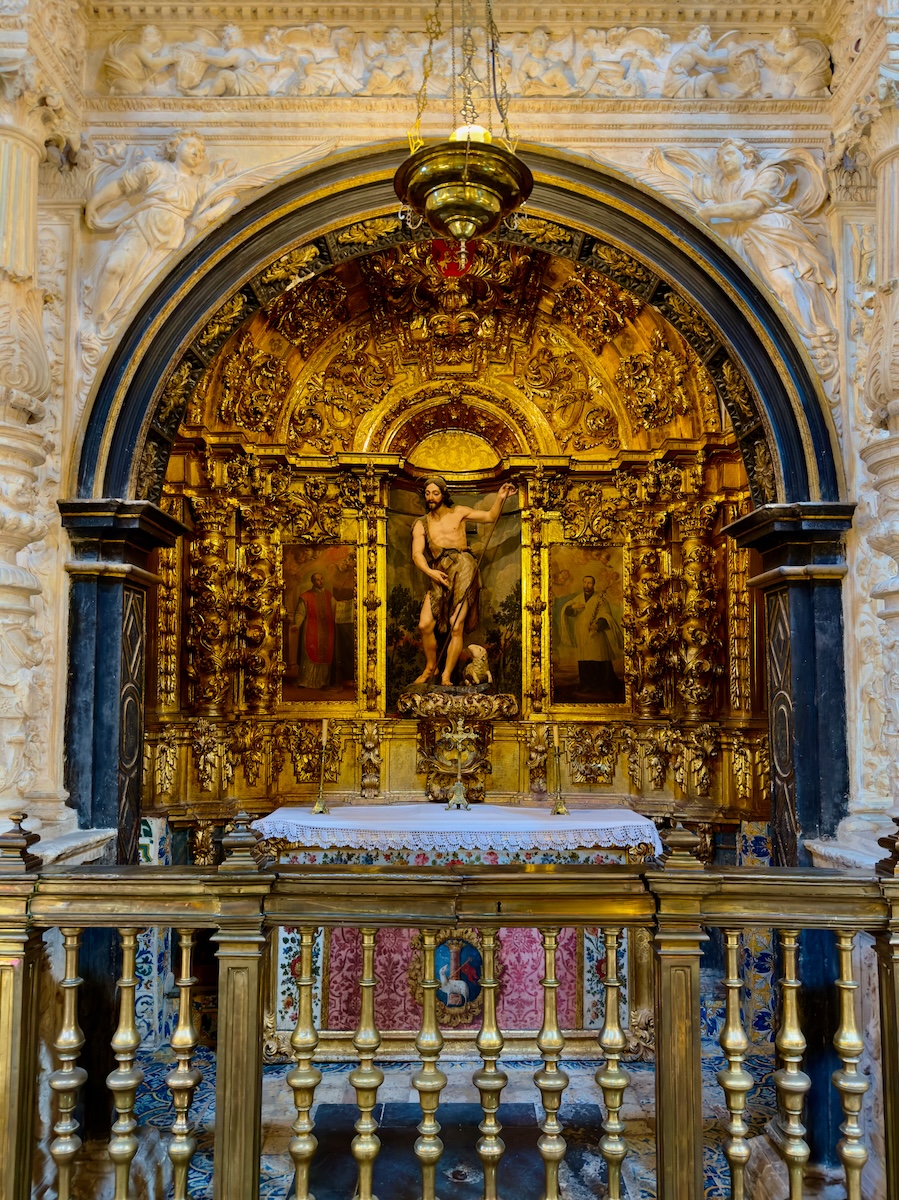
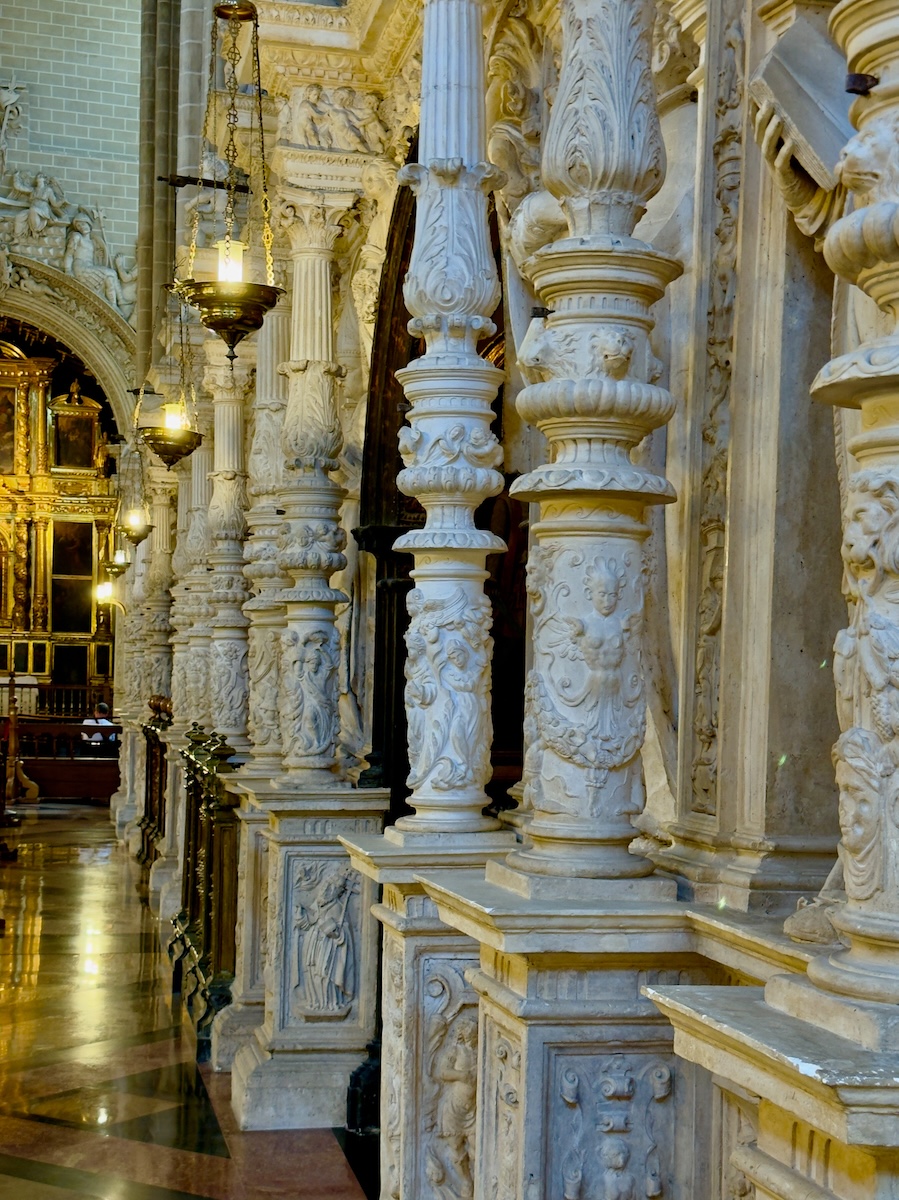
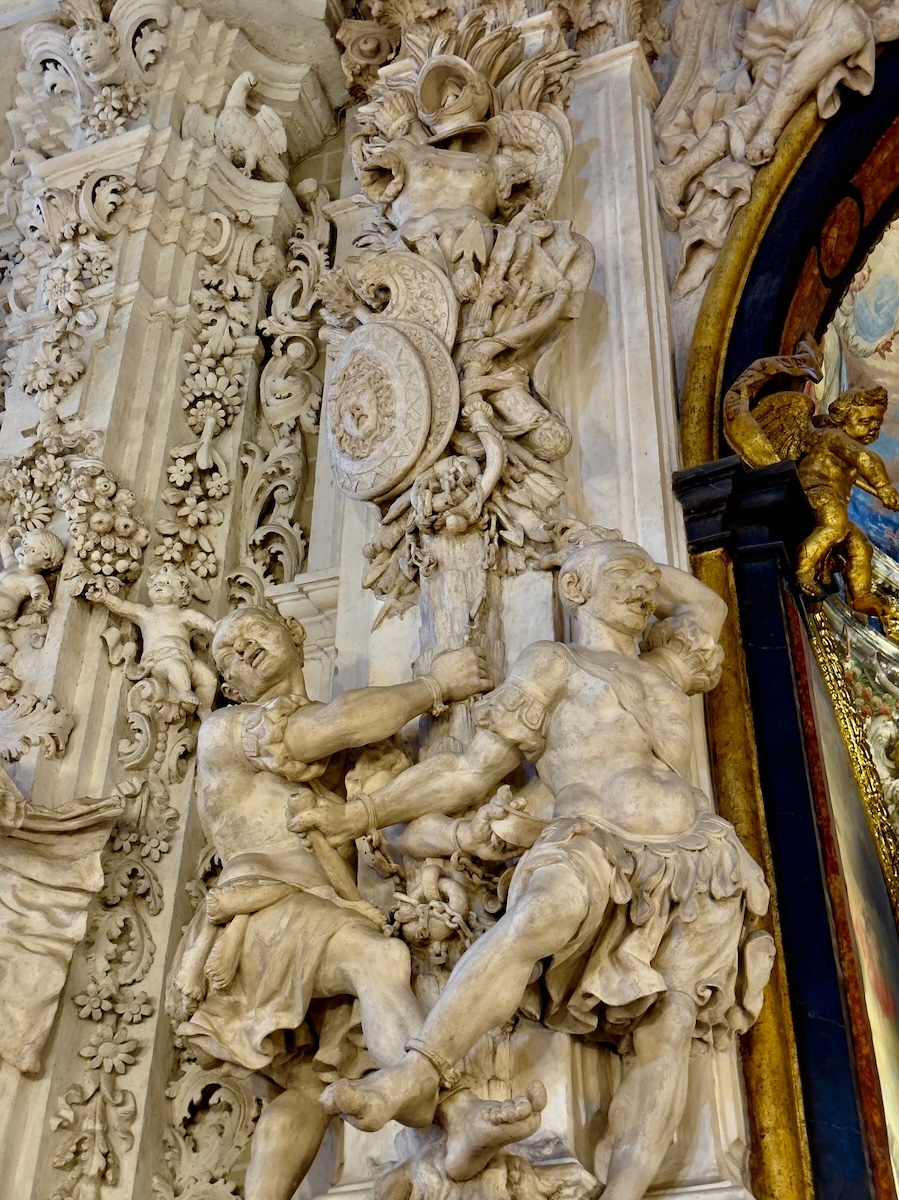
Architecturally, La Seo refuses to settle down. The Gothic core defines the interior experience—tall, restrained, serious about vertical space. That opens into chapels added over centuries, each reflecting the tastes and priorities of its moment. There’s a Renaissance choir carved with almost obsessive detail—rows of figures packed into wooden stalls like a census of medieval personalities. Baroque altarpieces arrive later, decorative and confident.
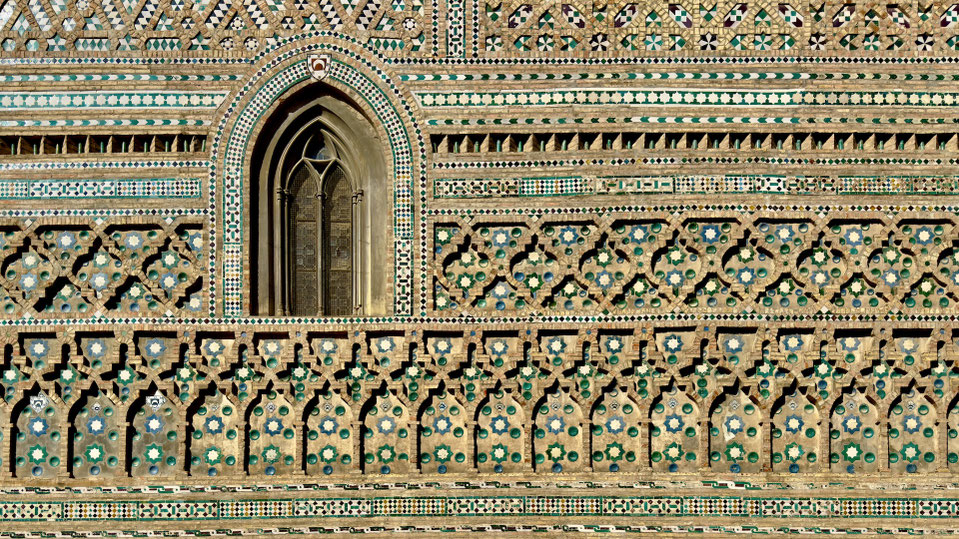
But that’s only the beginning. Outside, at the eastern end, the Mudéjar apse tells a different story—one of the best in Spain. It’s all fancy brickwork, glazed ceramic, and geometric patterns that quietly acknowledge the building’s Islamic past instead of pretending it never happened. Despite its UNESCO World Heritage status, most visitors don’t realize they’ve seen something exceptional at all as they hurry past it to the front door. It may be amazing, but it refuses to beg for attention.
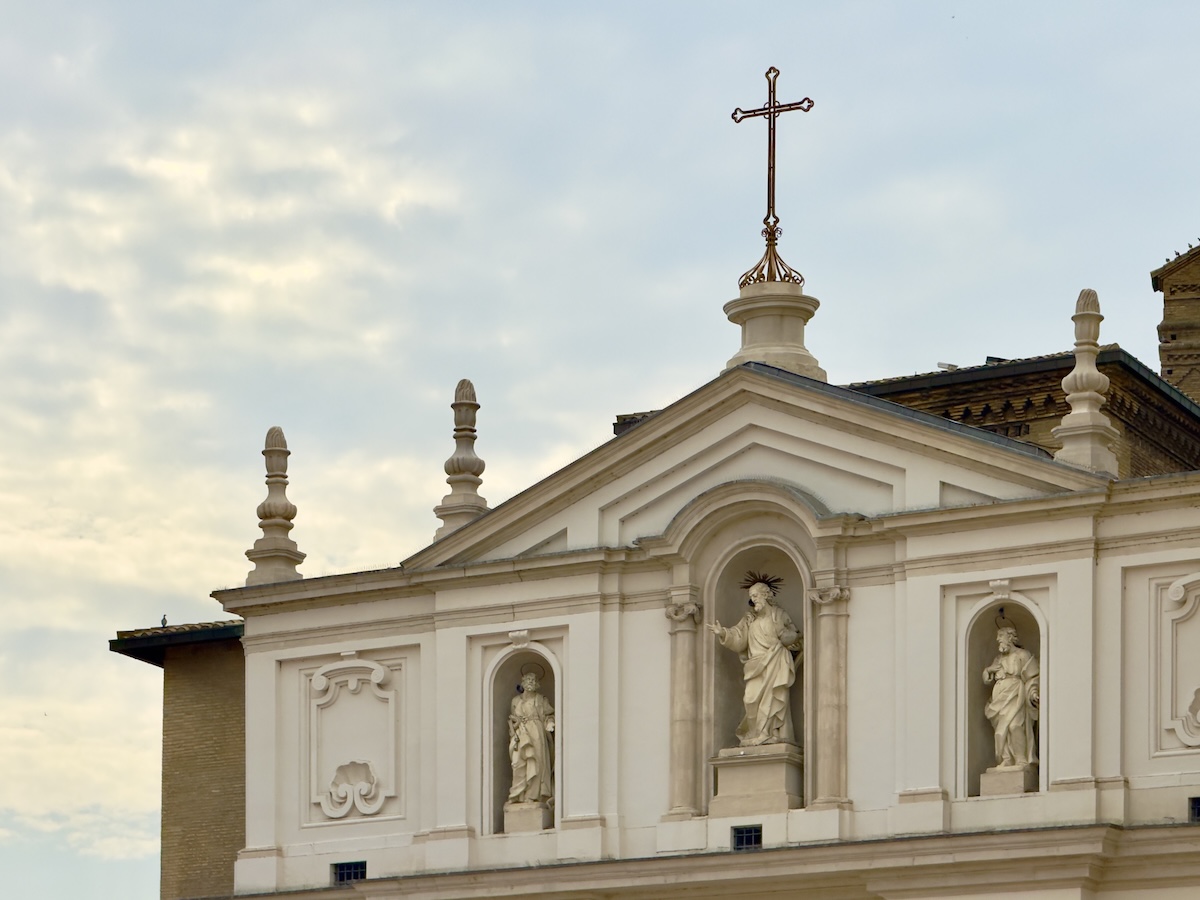
The Neoclassical façade that faces the plaza does its best to impose order on everything. It doesn’t quite succeed. La Seo never resolves into a single, legible style. It layers instead. You can feel the city changing as you move through the space—new money, new politics, new religious moods—each one leaving something behind.
What makes La Seo compelling is not that it competes with El Pilar—it’s that it doesn’t even try. It’s not designed to overwhelm. It’s designed to persist. Roman forum. Mosque. Cathedral. Renovated, expanded, patched, and adjusted as Zaragoza evolved around it. The city didn’t wipe the slate clean, and neither did its cathedral. That’s its strength.
La Seo hasn’t been simplified for visitors—it’s held onto its irregularities. Its outer walls tell different stories than its interior. Its most important features aren’t always where you expect them to be—or where you’d put them if you were starting from scratch.
In a city with two cathedrals, La Seo is the one that never quite lines up with expectations—because it never needed to.




Write a comment