
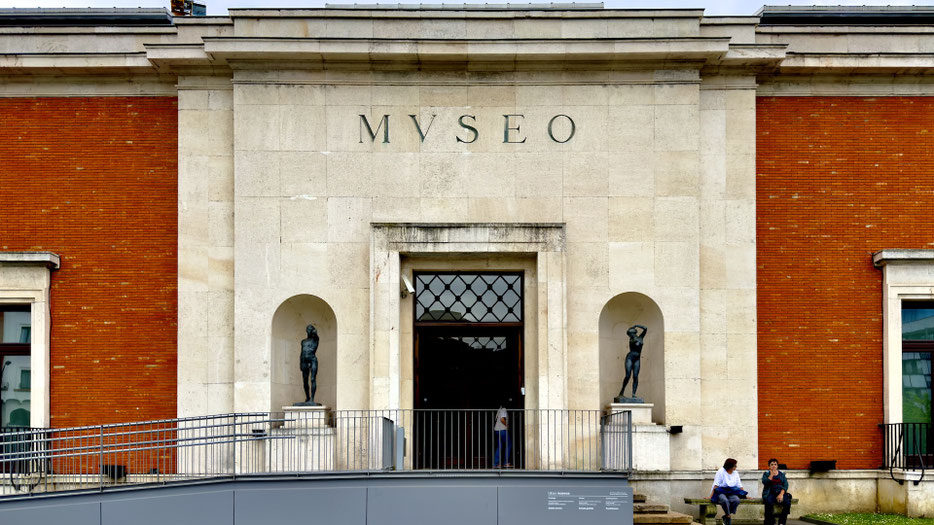
Bilbao is a city of one million when you count the greater metro—a compact region wrapped in hills, industry, and a ridiculous amount of cultural ambition for its size. The Guggenheim may be the one everybody flies in to see, but just up the hill sits its quieter counterpart, the Bilboko Arte Ederren Museoa (Bilbao Fine Arts Museum), a century-old institution now undergoing its most dramatic expansion yet.
The museum is mid-renovation, a Foster + Partners and Luis María Uriarte project—a London giant paired with a Bilbao local who knows every quirk of the site—that will eventually give the collection half again as much display space and reconfigure circulation through the two existing buildings. In the meantime, much of the art is boxed up or scattered around the city on loan. What remains feels distilled—a sampler of the museum’s range, arranged with the kind of provisional neatness only a major construction project can produce.
It makes for an odd visit. Lean and echoey. But with just enough on the walls to get a sense of Bilbao’s art history, its outliers, and the places where local and European traditions collide.
Highlights
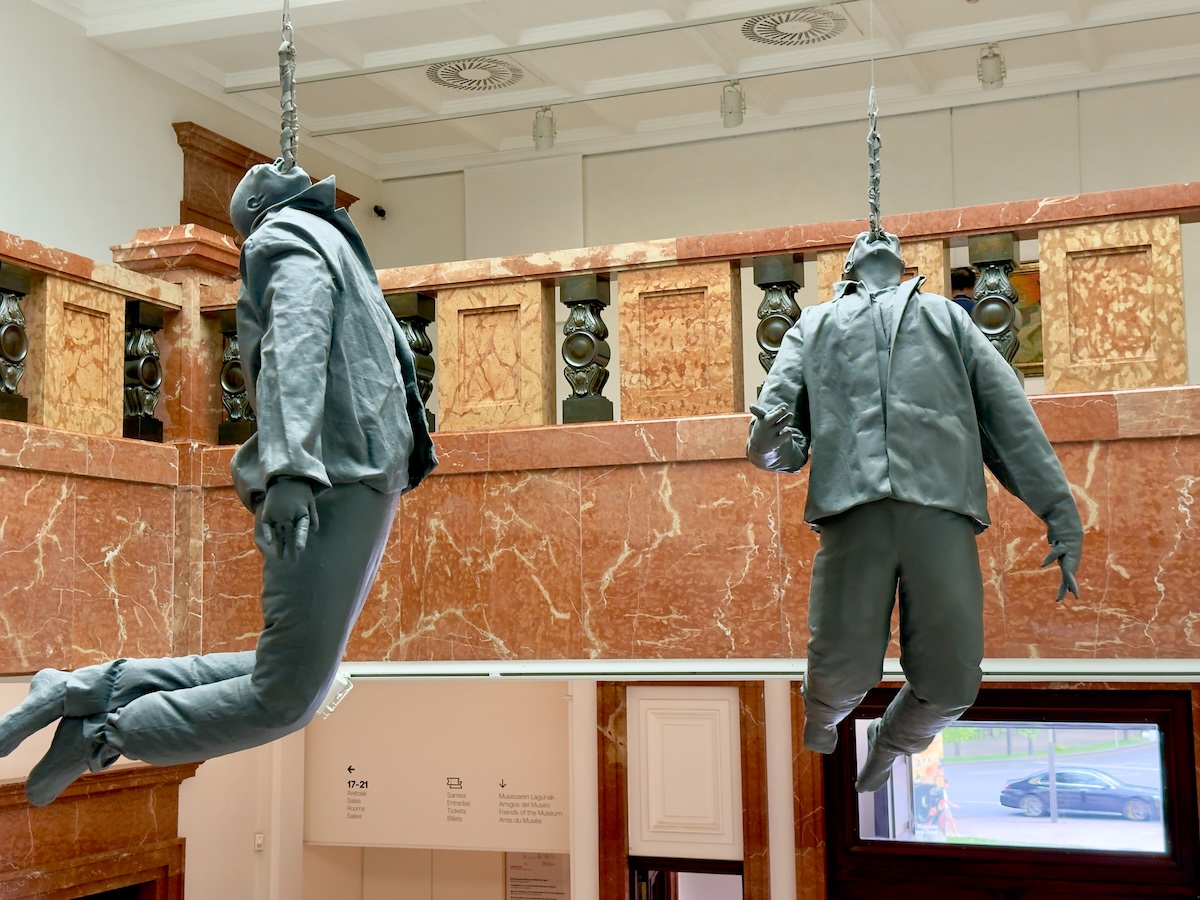
All Day and All Night, 2023 – Sergio Prego
Prego’s suspended forms hang in the stairwell, faceless and air-filled, like industrial stand-ins caught between sculpture and architecture. Their rubberized stillness gives the space a strange calm—bodies that feel present without being alive, drifting above the steps as visitors pass below.
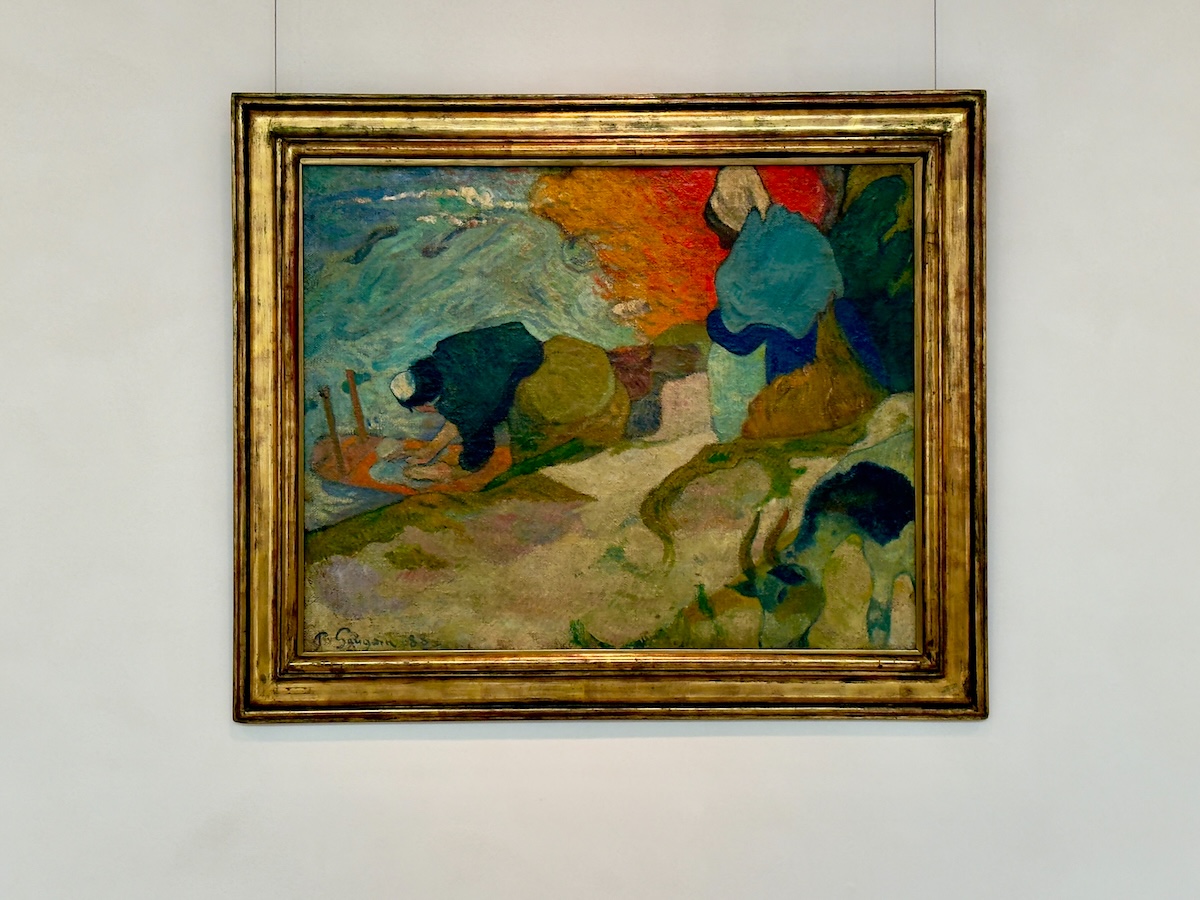
Washerwomen in Arles, 1888 – Paul Gauguin
This compact Gauguin was painted during his Provence years. The women stoop at the water’s edge, drawn in firm, confident strokes that make them feel solid. The palette is quieter than Gauguin’s later work, but the shift toward flat planes and angled space is already there.
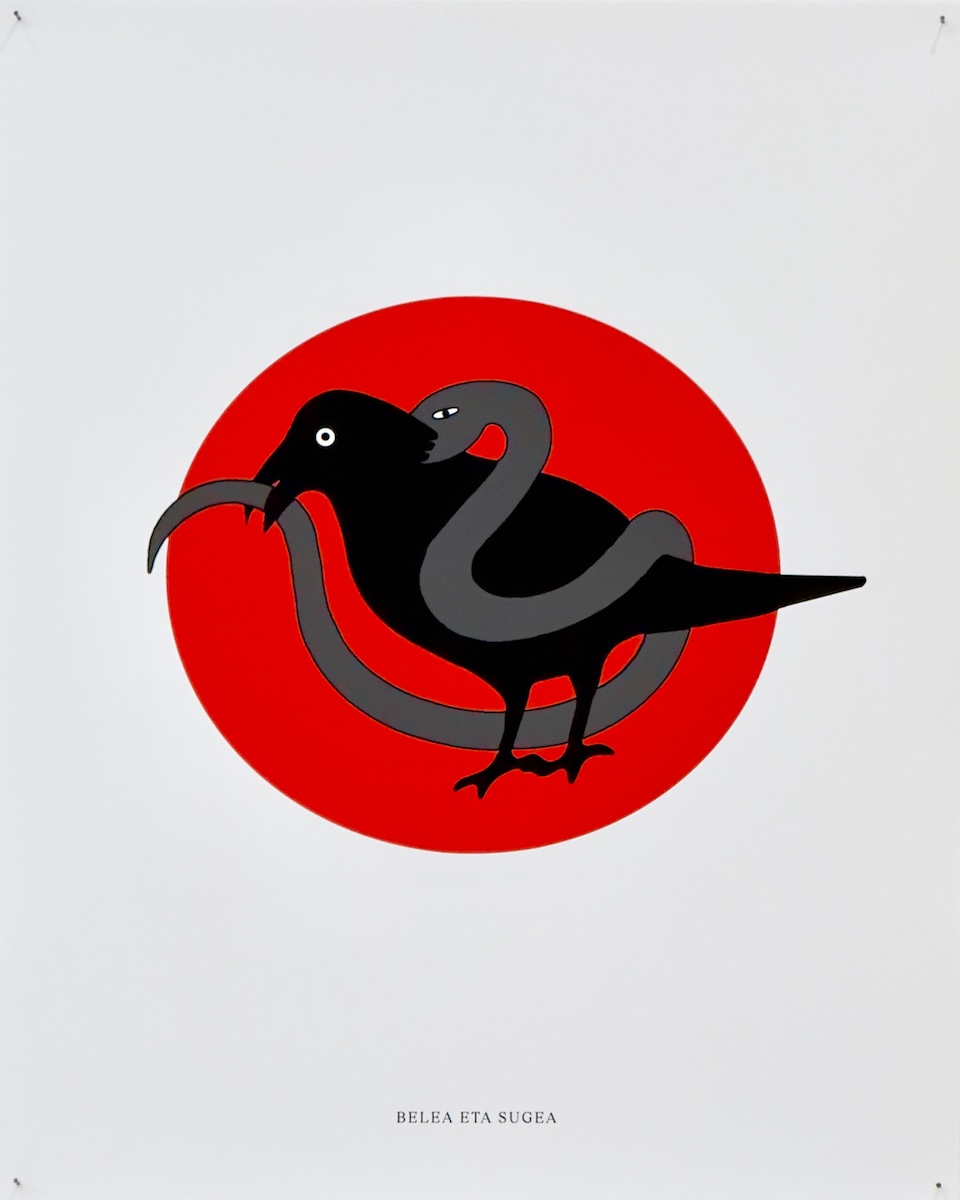
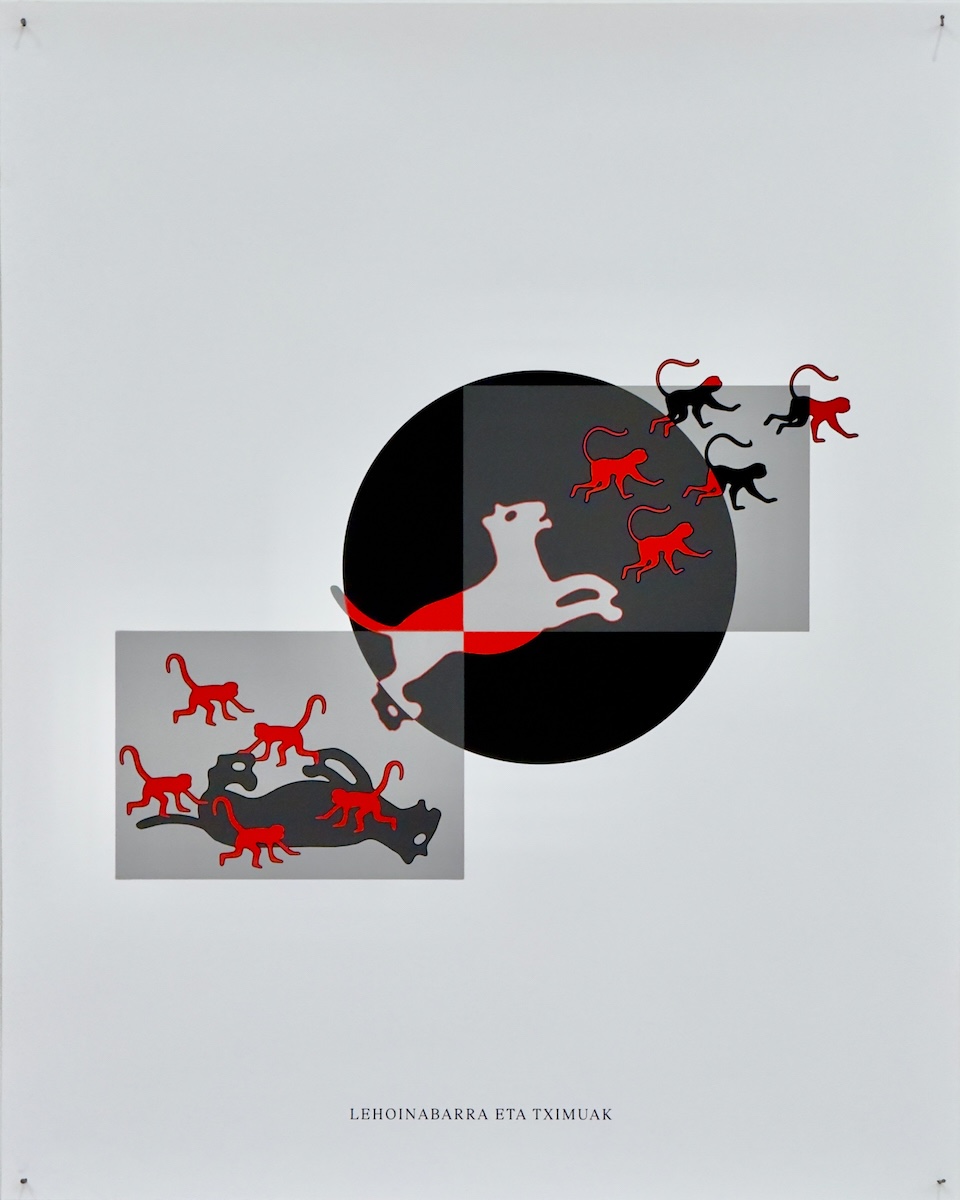
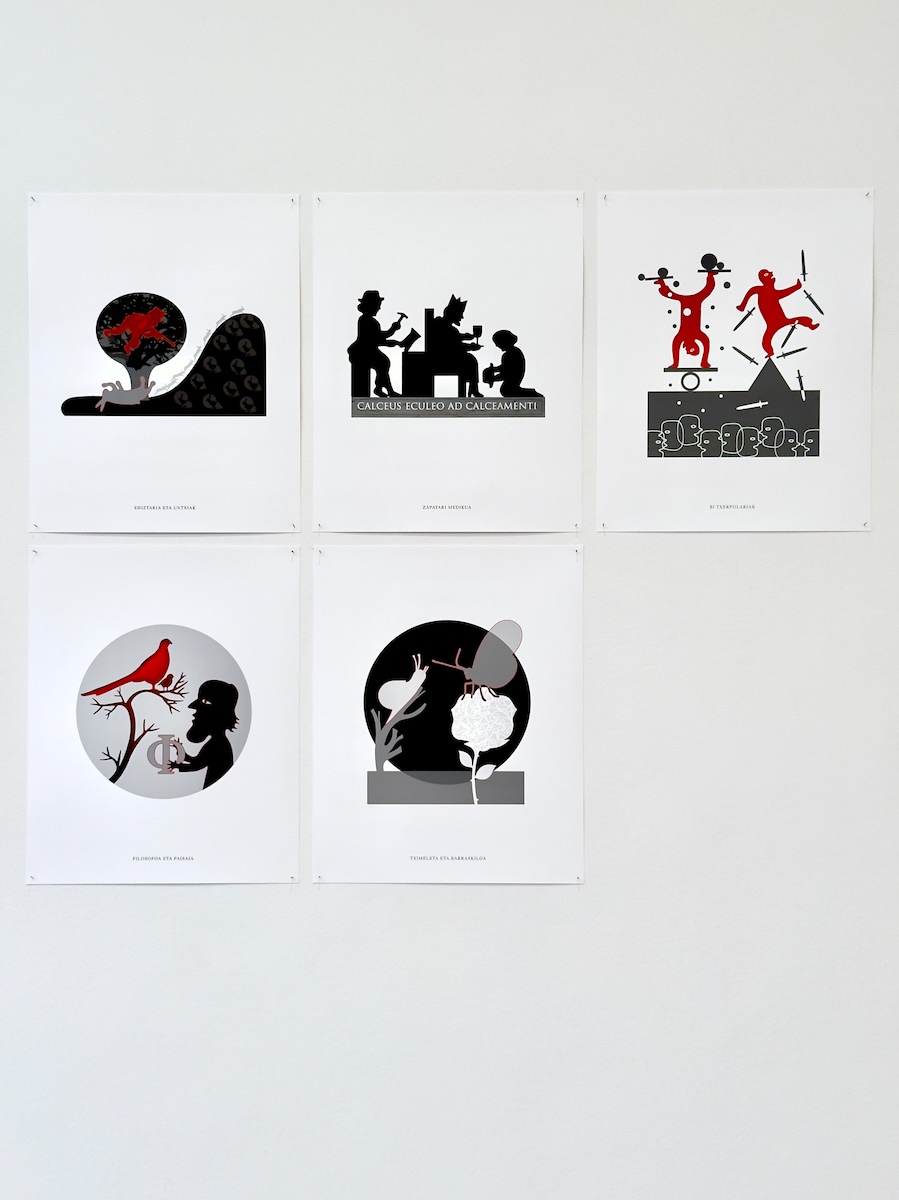
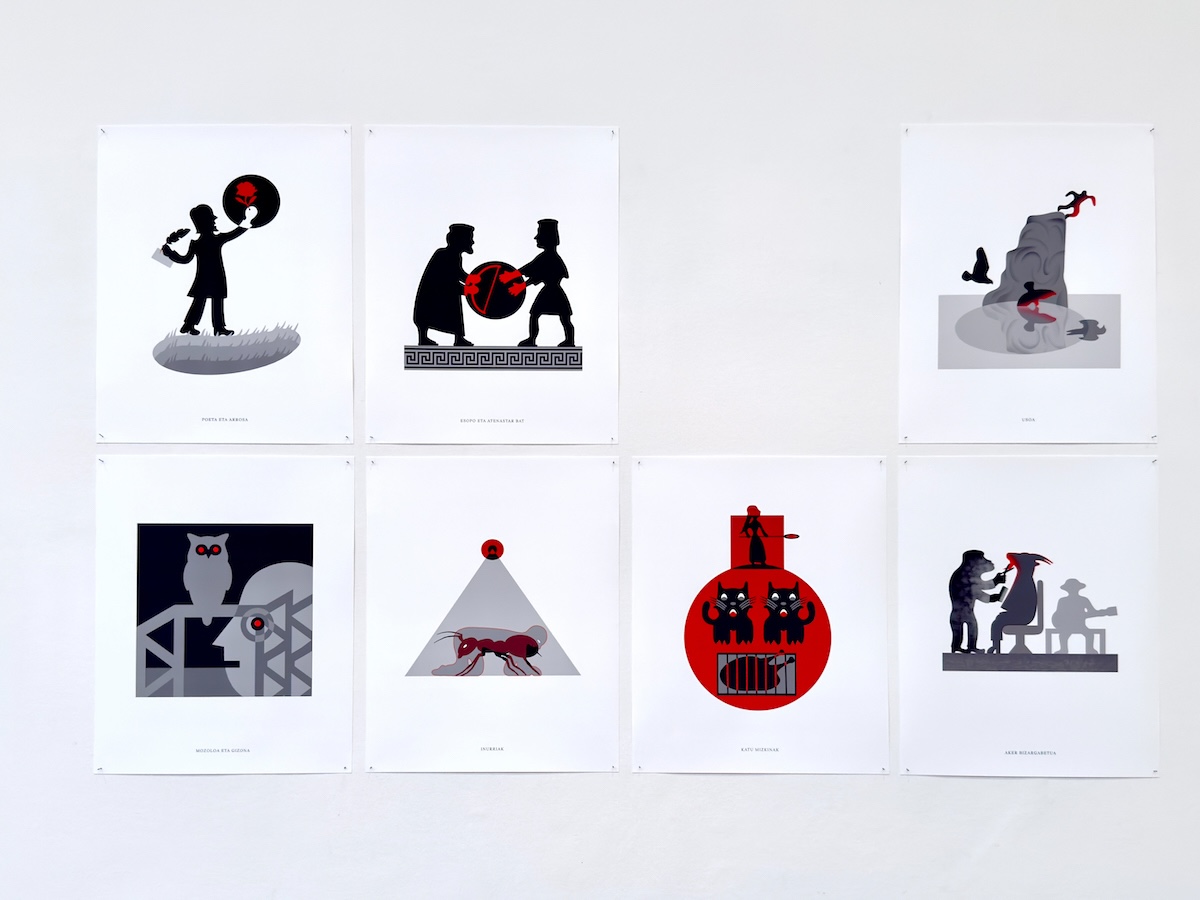
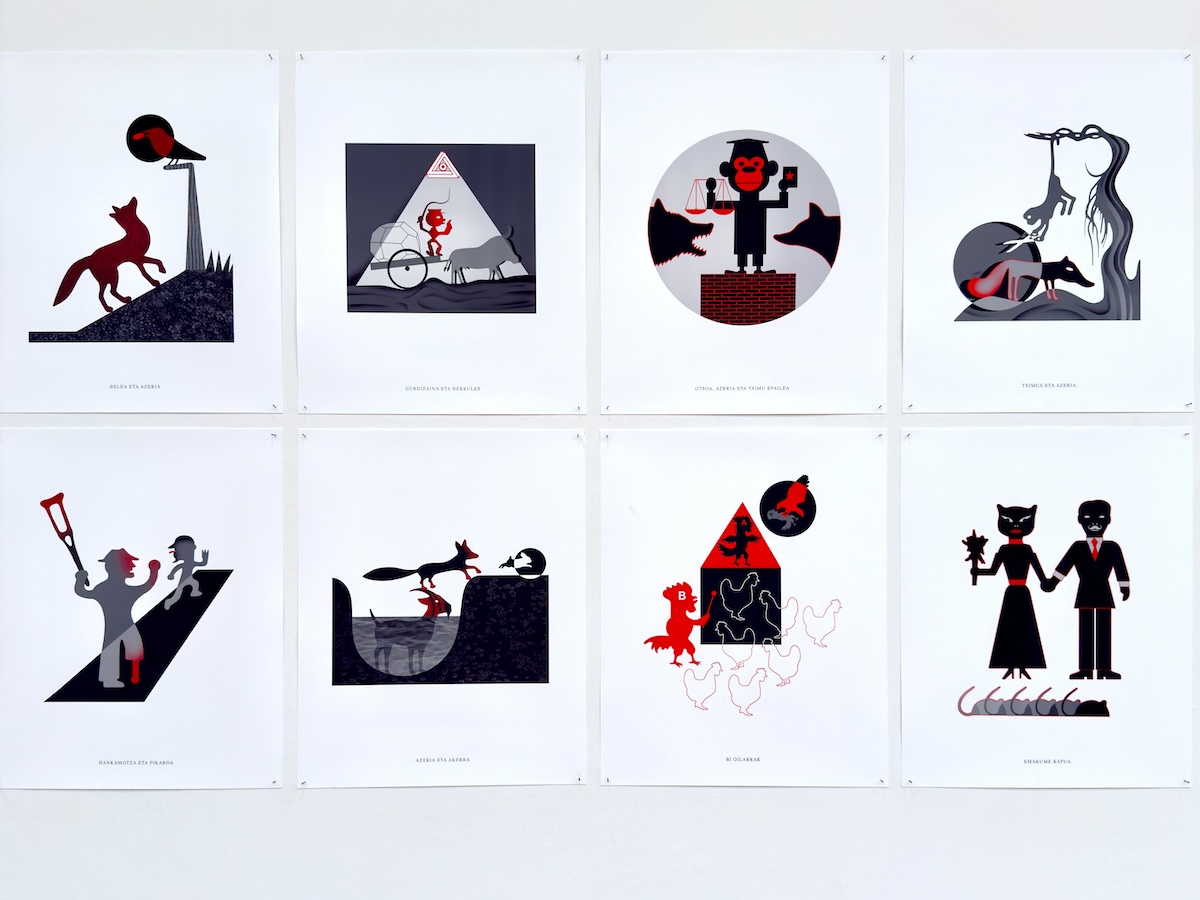
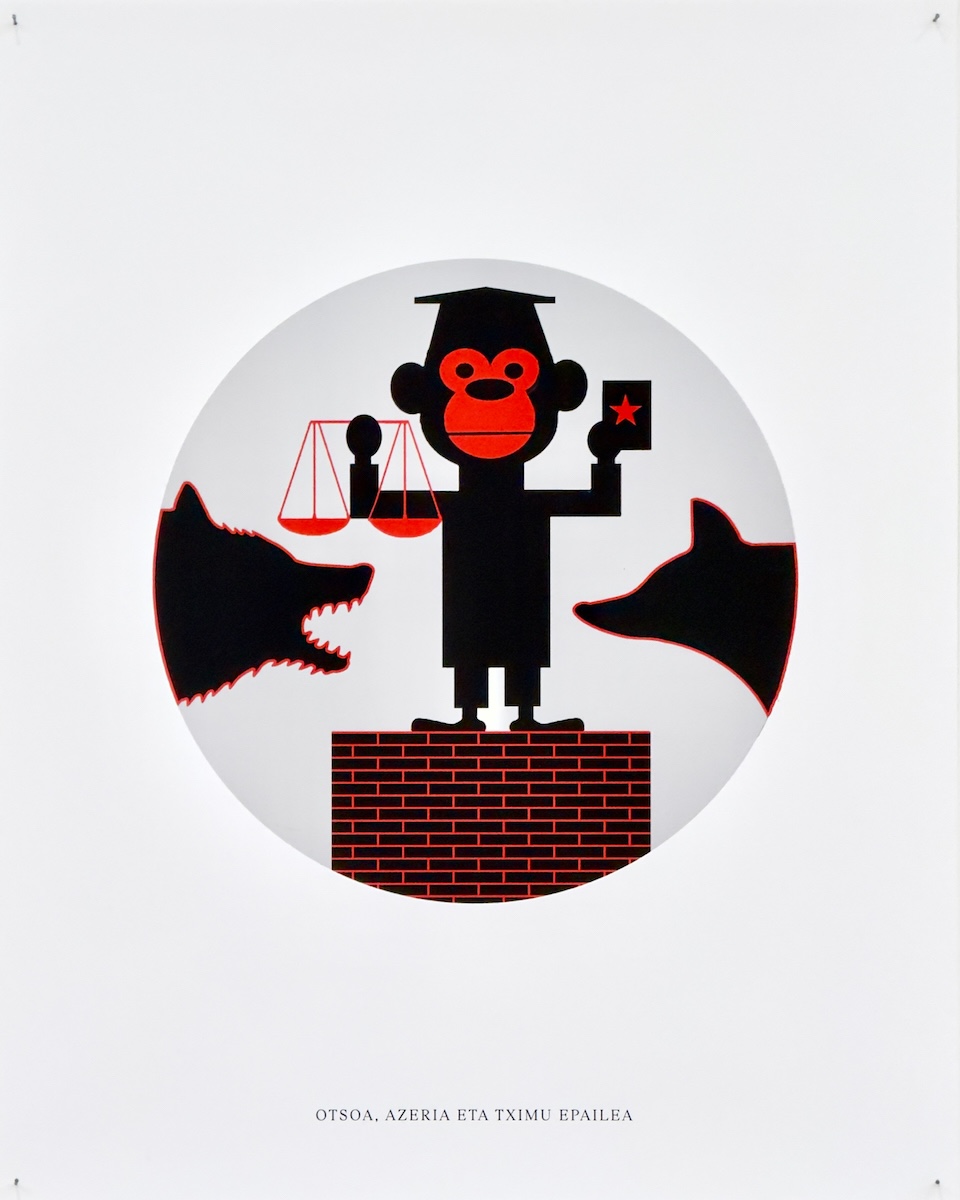
Belea eta Sugea; Lehoinabarra eta tximuak; and Otsoa, azeria eta tximu epailea, all from Las fábulas de Samaniego, 2011 – Daniel Tamayo
Bilbao’s own Daniel Tamayo tackles Félix María de Samaniego’s 18th-century fables—the moral tales Spanish kids grow up with—by boiling each one down to its most minimalistic essentials. Animals, landscapes, and motifs become crisp color shapes, a graphic system so pared back it feels ancient and modern at the same time.
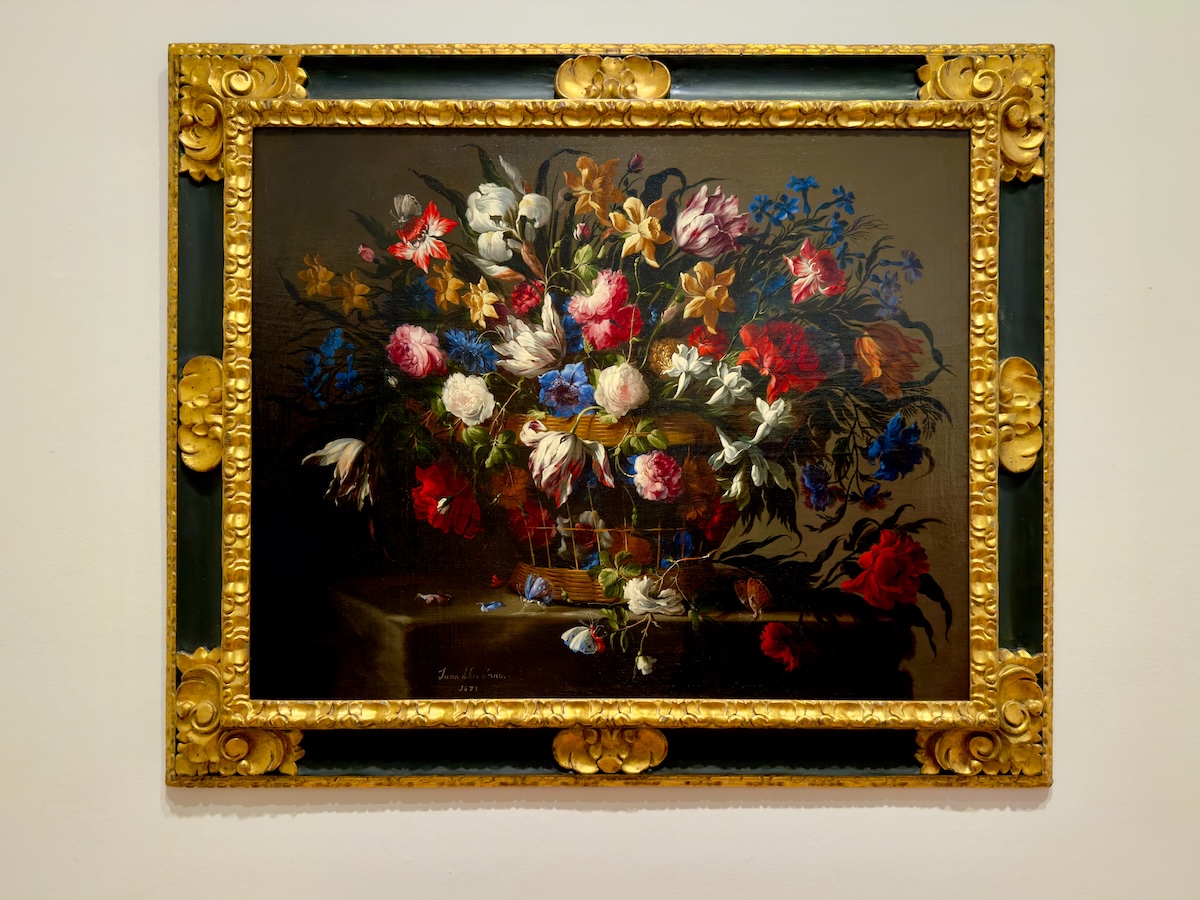
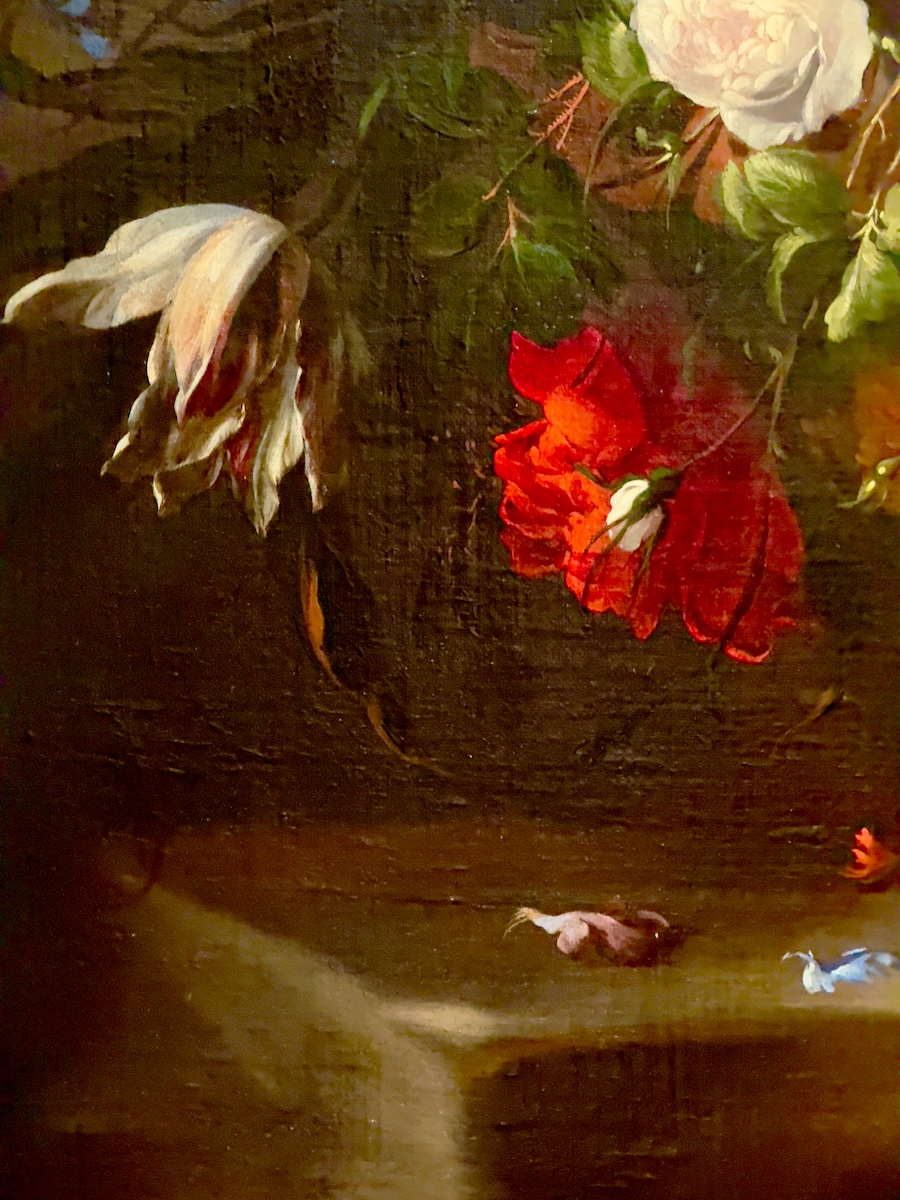
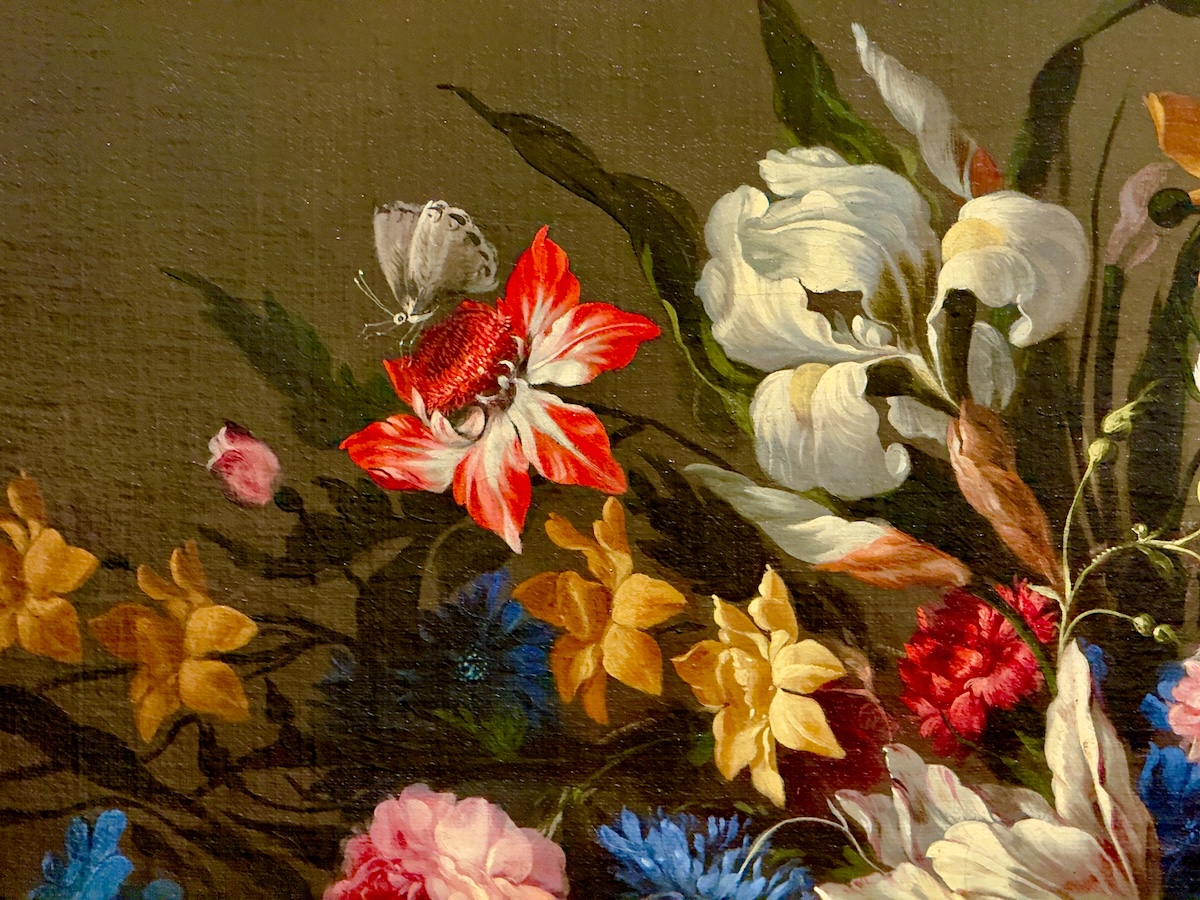
Small Basket of Flowers, 1671 – Juan de Arellano
Arellano’s bouquet is a theatrical freeze-frame—petals in mid-curl, a butterfly hovering. Look closely and the bouquet shifts from perfection to entropy, with wilted blossoms at the margins and leaves collapsing under their own varnished weight. The ledge reads like a stage, the flowers arranged for a final round of applause.


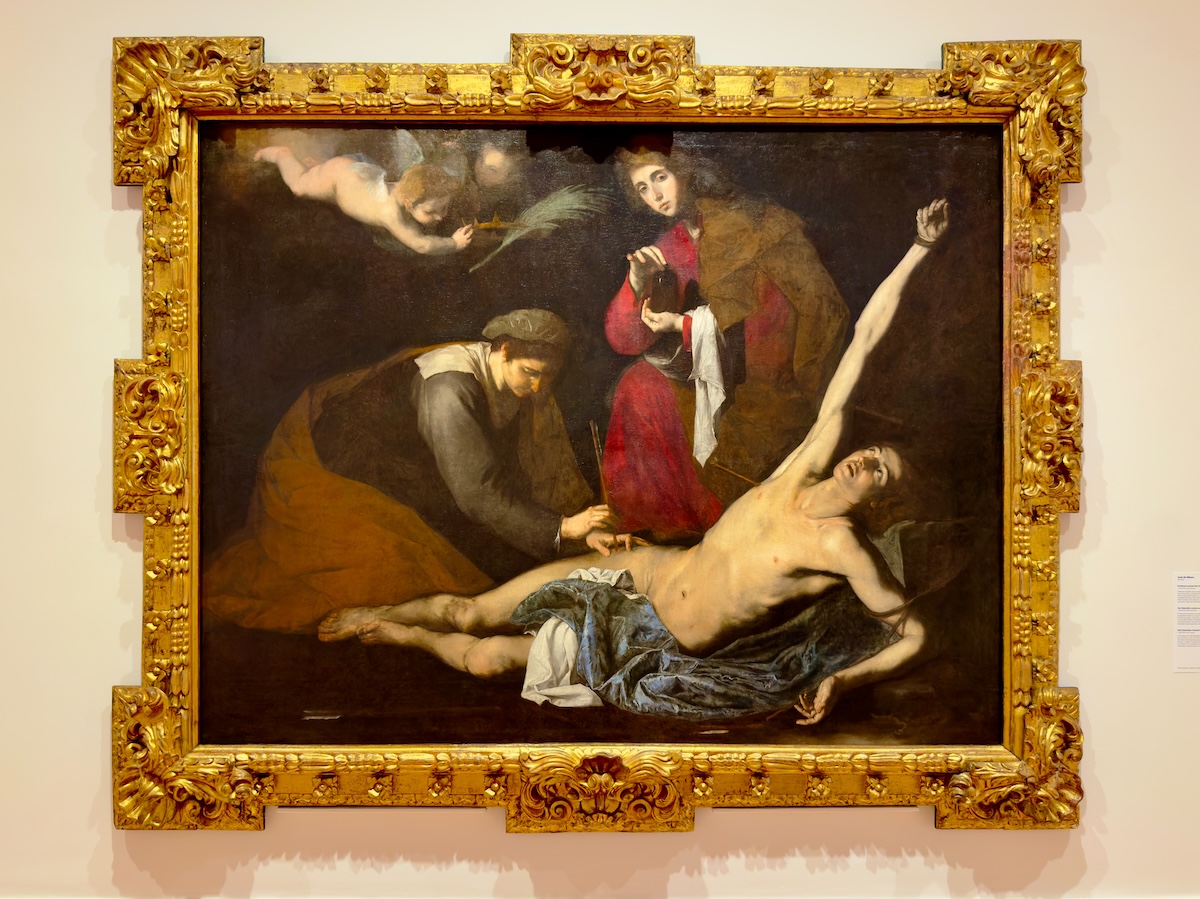
Saint Sebastian Tended by the Holy Women, c1620–1623 – José de Ribera
Ribera stages this scene in deep shadow, the light falling hard across Sebastian’s taut body while Lucy and Irene tend to him with quiet determination. The light pools across his torso with Ribera’s characteristic precision, giving the scene a clinical intimacy.
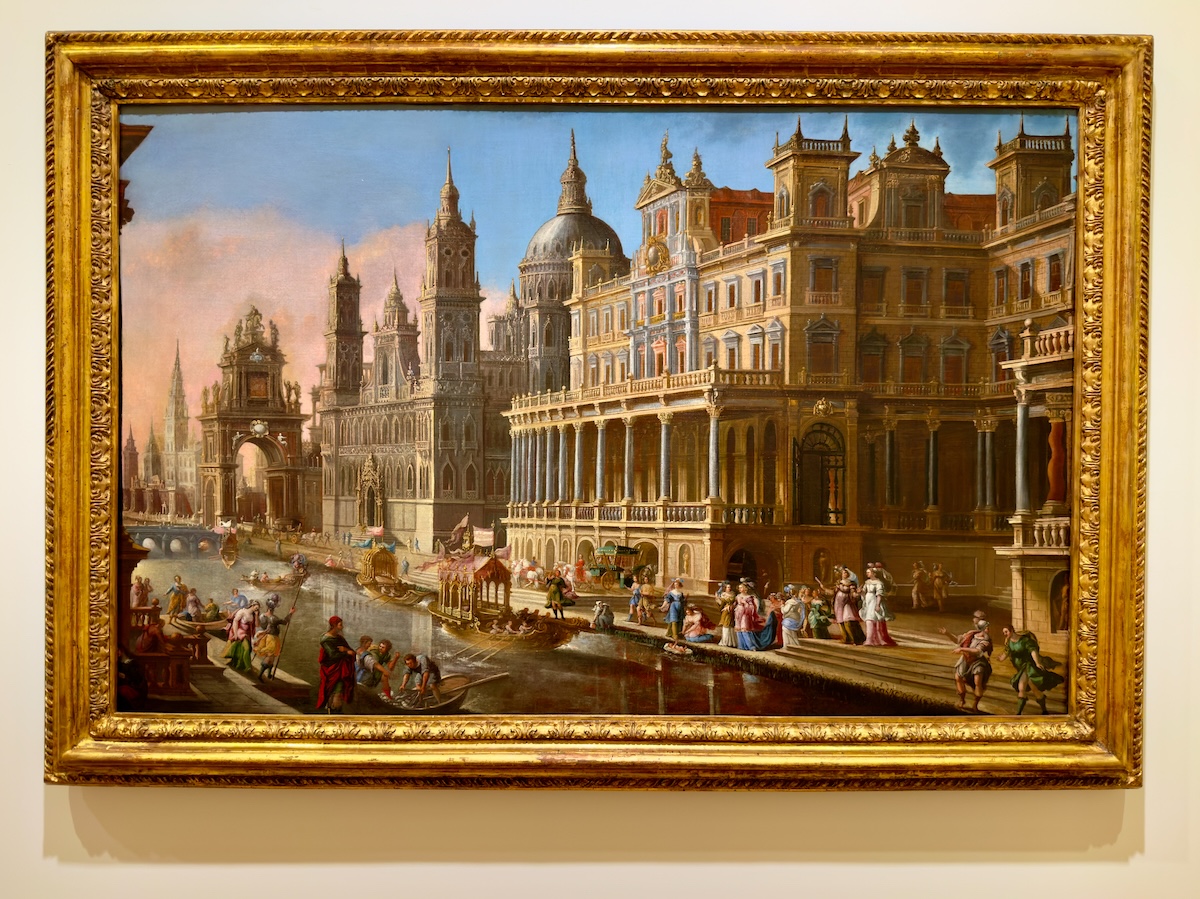
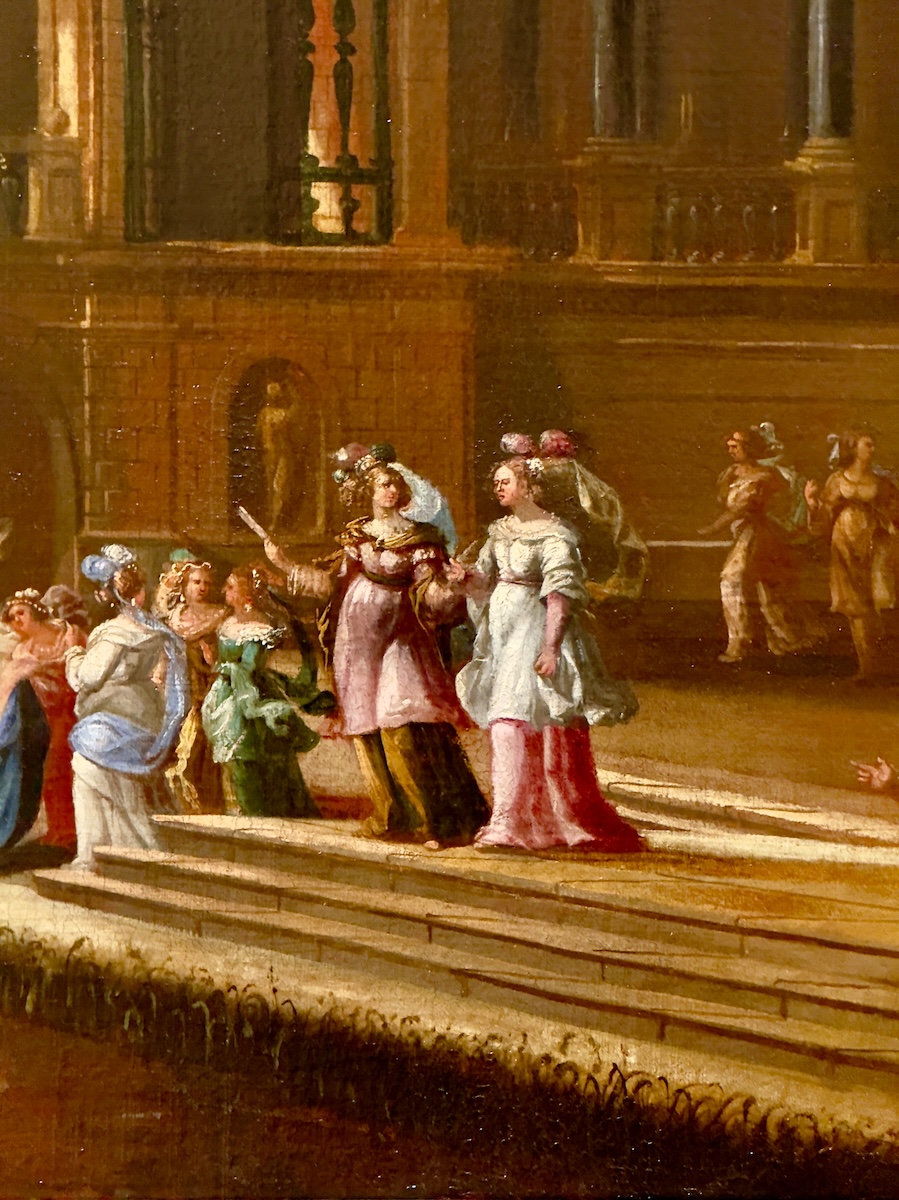
Architectural Capriccio with Moses Saved from the Water, c1653–1655 – Francisco Gutiérrez Cabello
Gutiérrez Cabello builds a fantasy city out of Flemish arches, Gothic towers, and pure 17th-century imagination. Moses, tiny and nearly lost at the riverbank, floats toward a crowd of courtly women who barely notice him. The architecture steals the show—vertiginous, impossible, and more interested in spectacle than scripture.


The Adoration of the Shepherds, c1617 – Vicente Castelló
Castelló’s Nativity scene gathers shepherds, livestock, and a sky full of angels into a single compressed space. The figures’ scale feels off—an echo of Pedro Orrente’s influence—yet the intimacy works. The holy family glows at the center while the surrounding bodies lean in with a mix of awe and worldly fatigue.
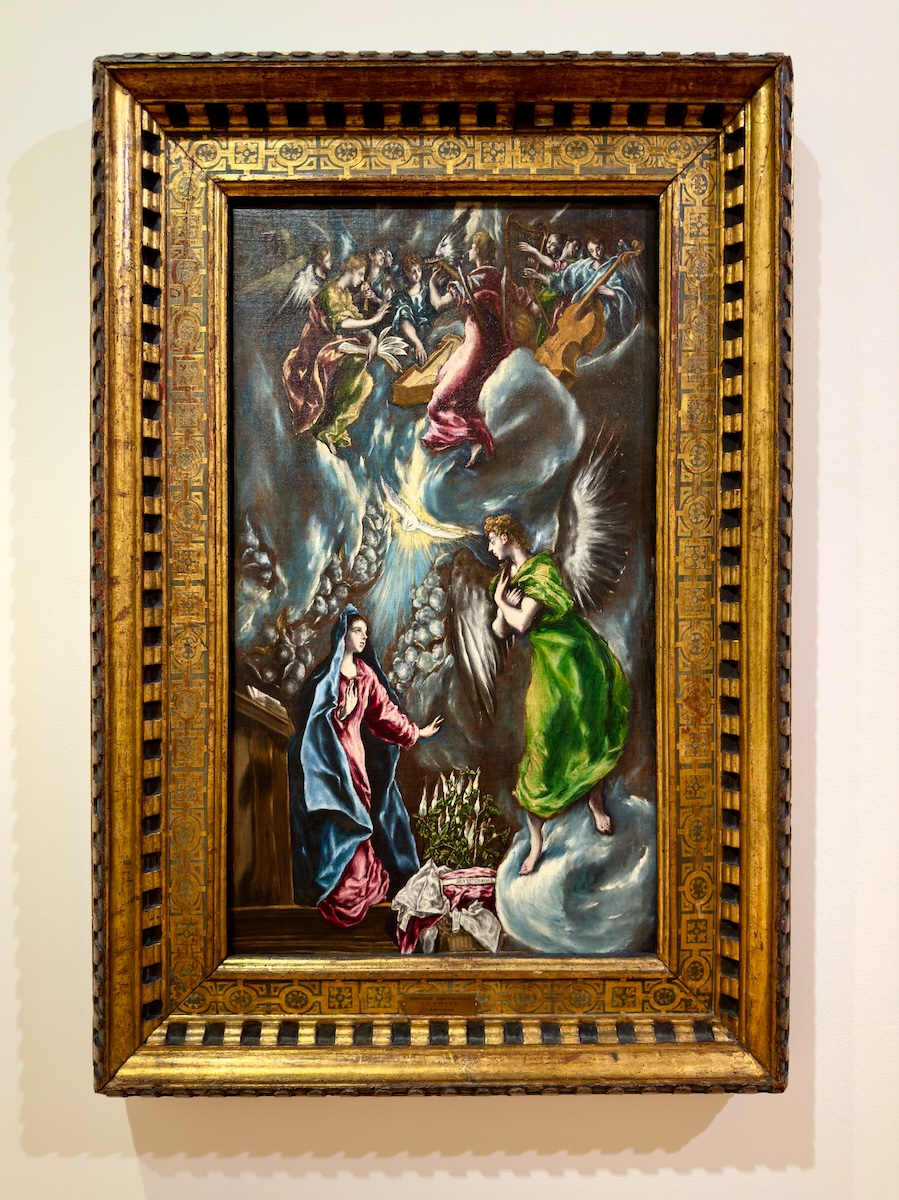
The Annunciation, c1597–1600 – El Greco
One of El Greco’s smaller versions of the Annunciation, this one still vibrates with the same whiplash energy—angels spiraling overhead, drapery flickering like flames, and the dove carving a bright path through the gloom. The elongated figures and luminous color shifts feel like a prelude to full Baroque turbulence.
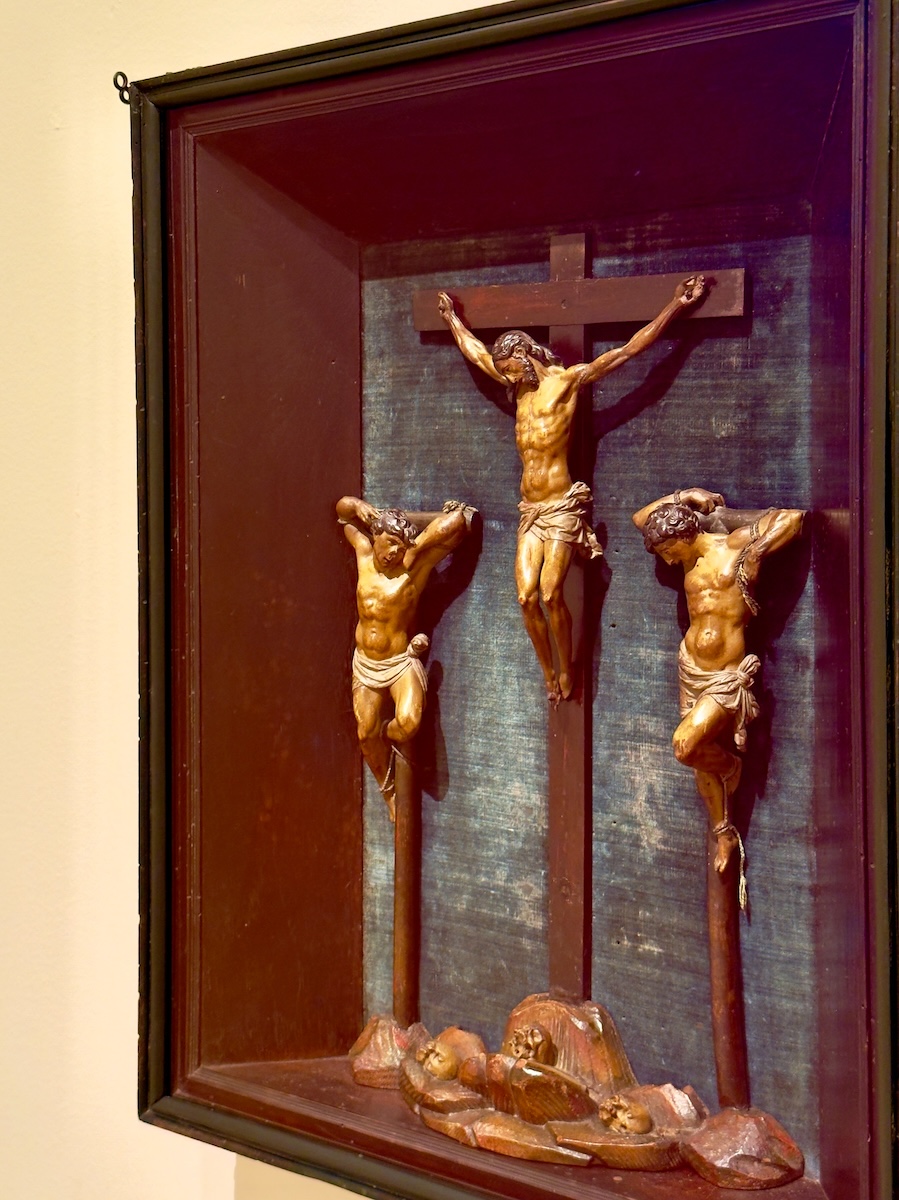
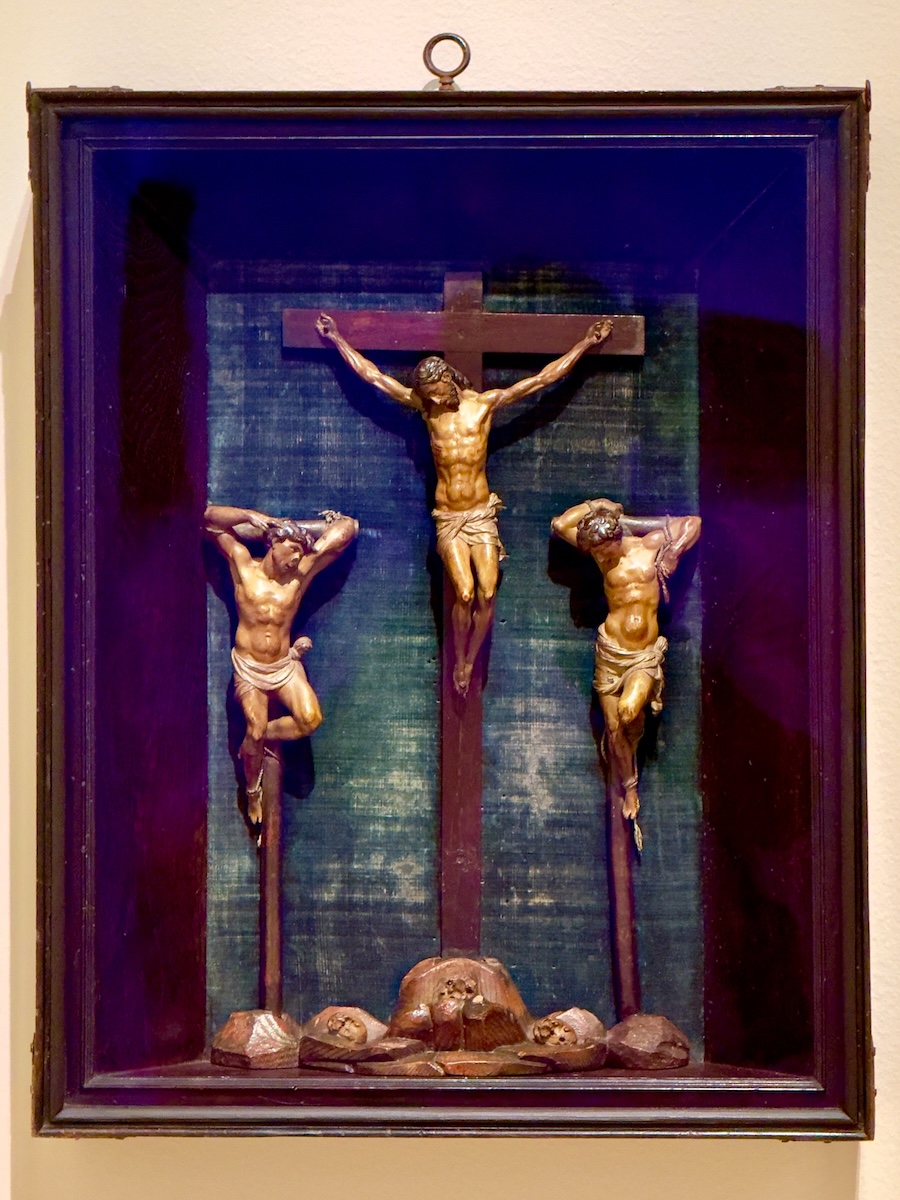

Crucifixion, c1576–1580 – Juan de Anchieta
This compact wooden altarpiece has been carved with detail that belies its scale. Christ and the two thieves lean forward on impossibly slender posts, their bodies twisted into expressive diagonals. Anchieta’s anatomical study is precise, but there’s something intimate here—a devotional object meant to be held close rather than admired at a distance.
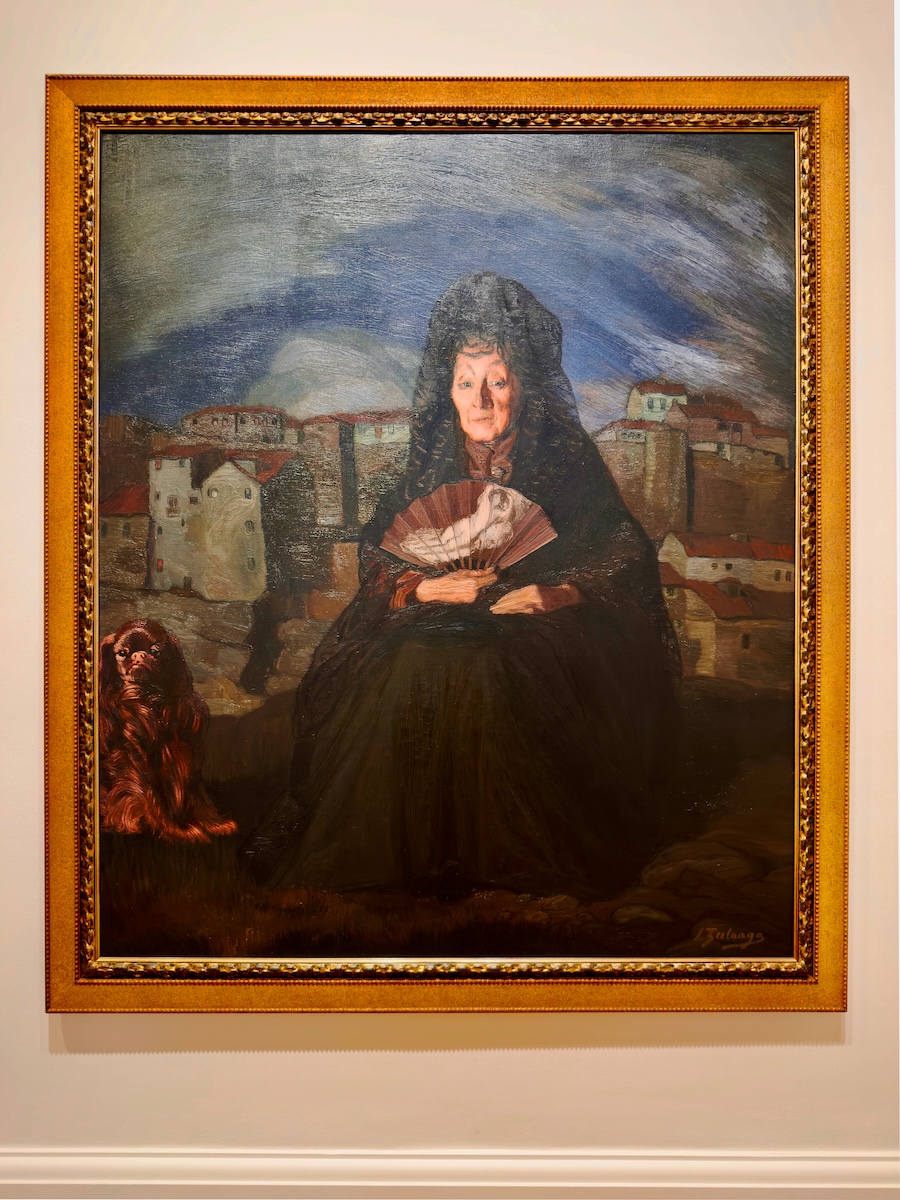
Portrait of doña Rosita Gutiérrez, 1915 – Ignacio Zuloaga
Zuloaga gives Rosita a commanding presence. Behind her rises a village rendered in quick strokes, more memory than place. The sharp-eyed Pekingese adds a note of mischief to the otherwise formal pose.
Special Exhibit–Antonio de Guevara
Bilbao-born de Guezala was a restless stylist—part Art Nouveau and Cubism, part fin-de-siècle dandy and 20th-century satirist. The small exhibition gathered works from the 1910s and 1920s, showing an artist gleefully unconcerned with settling on a single voice.

La puerta giratoria o Retrato de Begoña de la Sota, 1927
A fractured portrait that feels like it’s passing through a prism. De la Sota stands amid overlapping panes of color and movement, as if the modern city is being sliced and rearranged around her. Light, glass, and velocity become the subject more than the sitter.
María de Magdala, c1915
A devotional roundel rendered in turquoise and gold. Mary’s patterned cloak fans across the surface like stained glass translated into drawing. The linework is crisp and stylized, a reminder that Guezala was as comfortable with ornament as with parody.

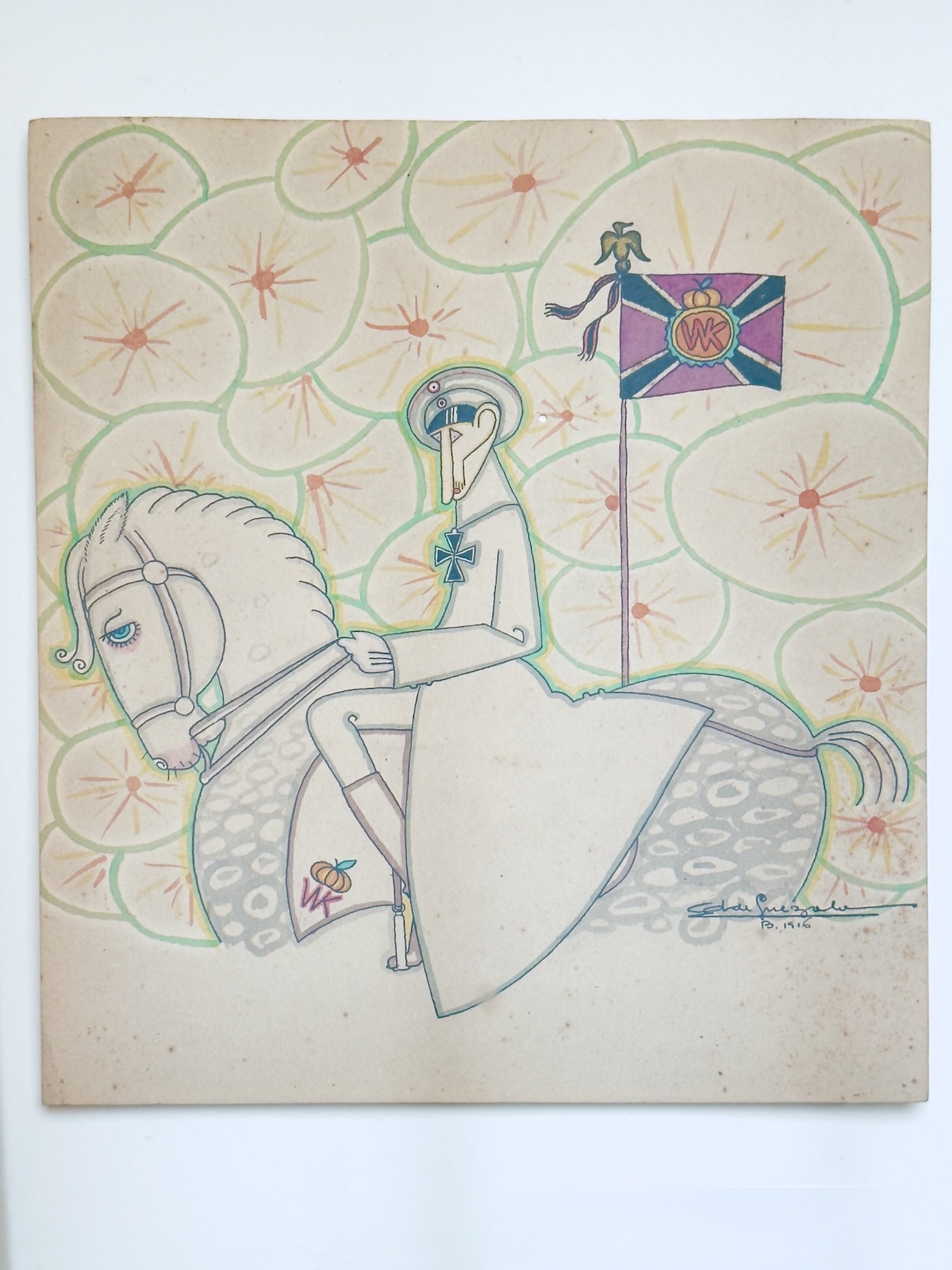
Caricatura del Kaiser Guillermo II, 1916
Guezala reduces the Kaiser to a stiff-backed puppet perched on an overbred horse—all sharp angles and brittle posture. The satire is sly rather than brutal, punctuated by the absurd flag at his back.
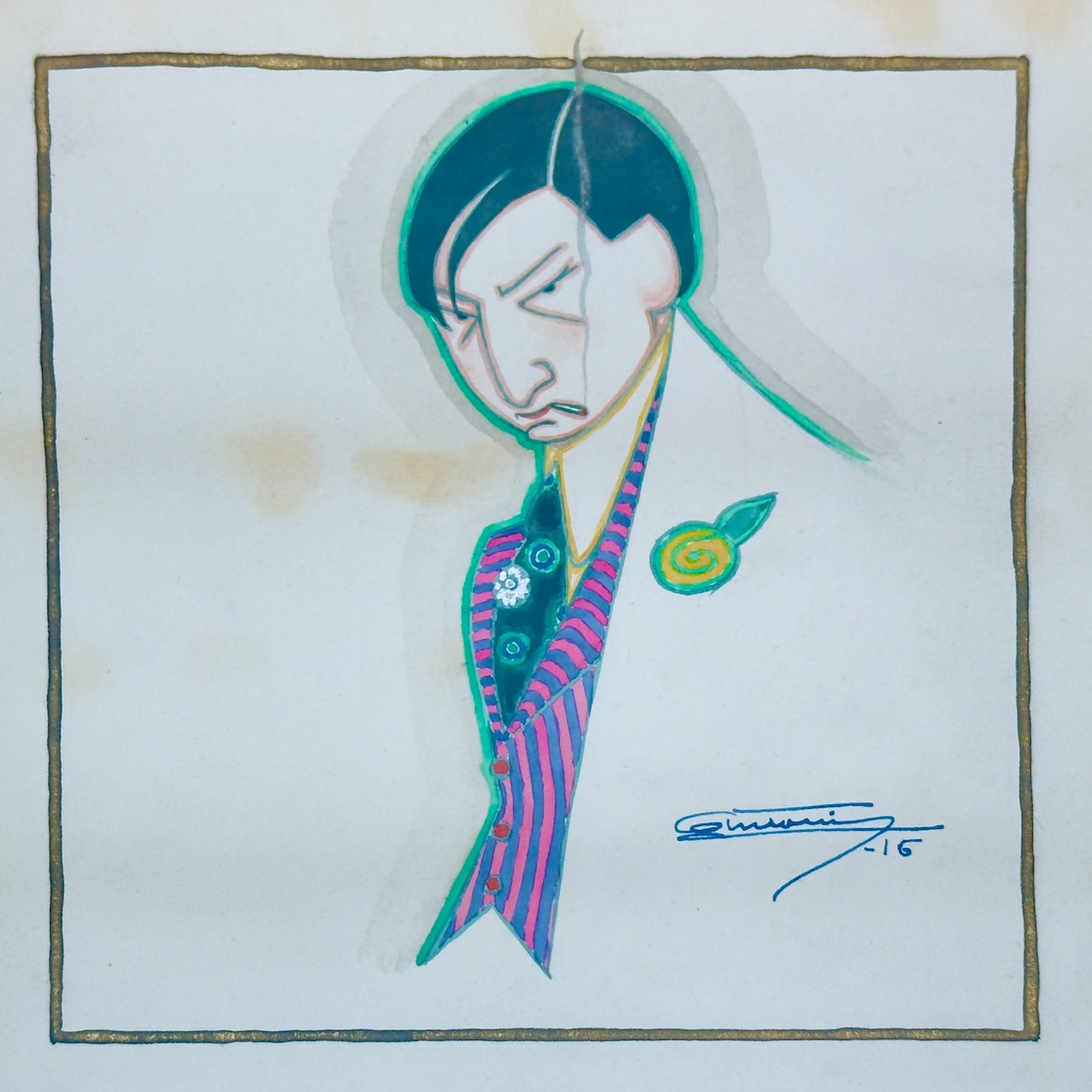
Self-portrait, 1916
A narrow, almost confrontational self-portrait, the face pared down to geometric planes. The striped jacket and curled flower offer a hint of theatricality, but the expression is pure mischief. Guezala seems to be sizing up the viewer, amused that anyone takes portraiture too seriously.
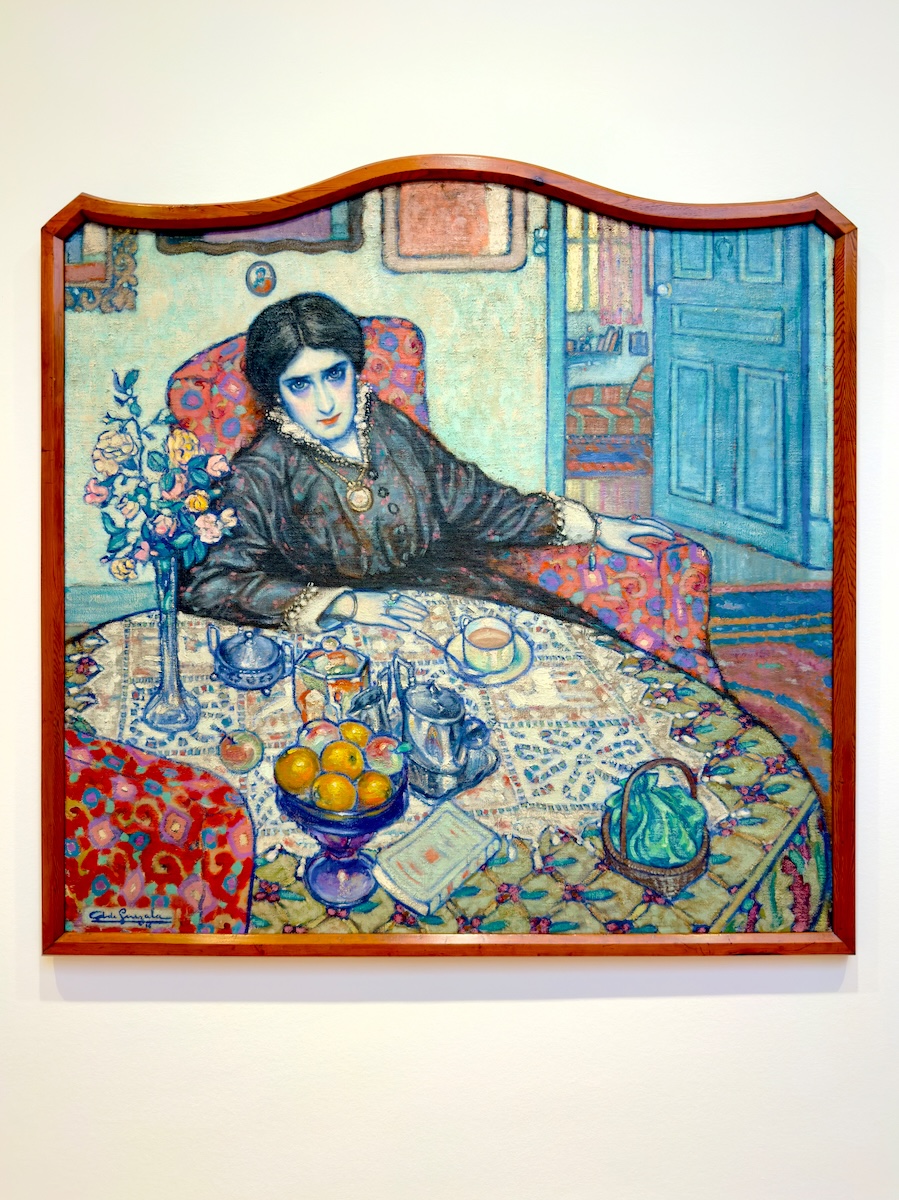
Eloísa Guinea de Guezala, 1916
Guezala’s sister, Eloísa, reclines in a domestic interior rendered in icy blues and pinks. The patterned tablecloth and the bowl of lemons pull the eye outward, but her stare pulls you back in.
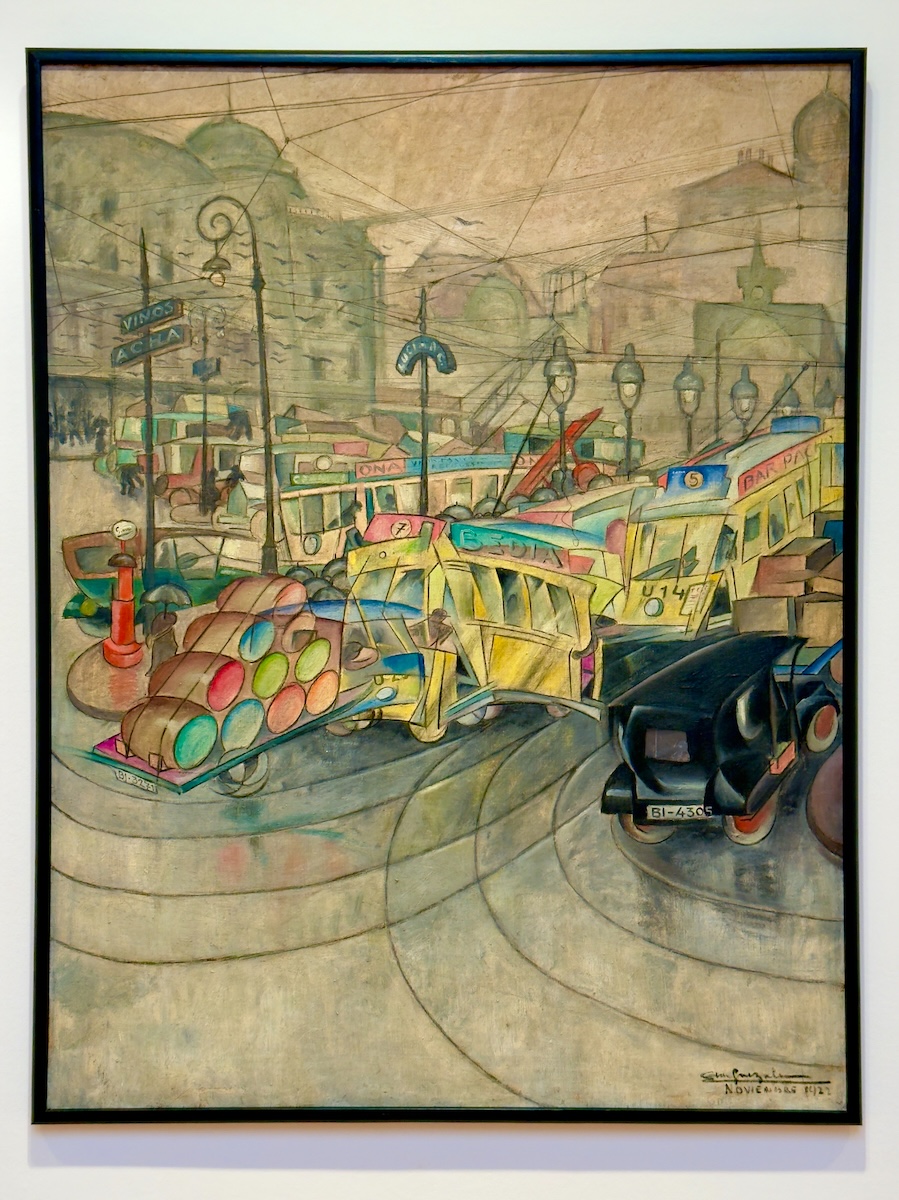
Choque de tranvías en el Arenal, 1922
A traffic jam turned into choreography. Trams, signage, and electric lines whip across the canvas in a Cubist-leaning blur. The accident itself becomes an excuse for Guezala to map the modern city’s chaos—every wire and windowpane vibrating with nervous energy.
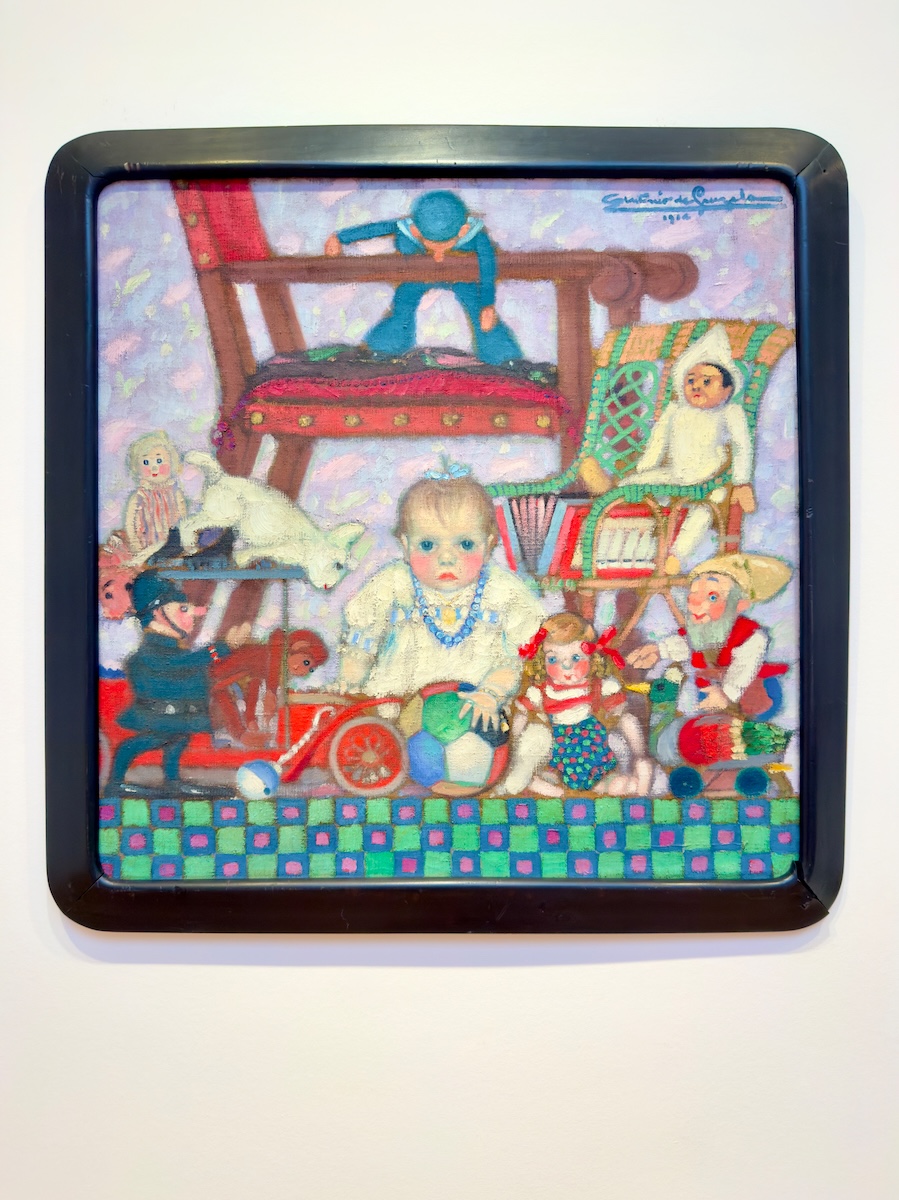
Elito, 1914
Guezala’s young son, Elito, sits in the middle of a domestic still life gone slightly wild. Toys, animals, and patterned surfaces crowd the frame, yet the child holds his spot with unnerving poise. It feels like an early experiment in controlled clutter, everything placed just so around its smallest anchor.
During our visit, the museum felt provisional—walls shifted, rooms trimmed, half the collection waiting in the wings. But the renovation taking shape outside promises something sharper. Foster’s floating, origami-like canopy and Uriarte’s local grounding will draw more daylight into the lobby and courtyard, giving the place a sense of lift it’s never quite had. Will it be cool when it’s done? I’m guessing it will be. Cool enough for a return visit? Maybe. Bilbao likes to surprise.

Write a comment