
You meet San Antón the same way you meet half of Bilbao—by accident. One morning, you’re crossing a very normal stone bridge by Ribera Market, dodging fishmongers and morning commuters, and the next, you're staring at the city's emblem come to life. That coat of arms you’ve seen everywhere—on trash cans, manhole covers, municipal buildings—it’s all right here in front of you, the church, the bridge, the river sliding underneath like nothing has changed in 600 years. The only things missing are the three rabid wolves, but that's probably for the best.
Most cities award themselves a lion, a griffin, or a heroic crusader with a sword. Bilbao chose a parish church and the bridge into town. That tracks. Bilbao has always been more interested in infrastructure than spectacle, and San Antón is the most Bilbao thing imaginable—practical, stubborn, and not nearly as simple as the official escudo makes it look.
Before this was a church, it was a fortress. King Alfonso XI of Castile dropped by to visit in 1332 and ordered a defensive fortress built on this rock to control The Bridge—so named because in early Bilbao there was only one. And whoever controlled it controlled everything.
The Lords of Biscay were, well, let’s say less than pleased. Biscay wasn’t your standard-issue province. It was a self-governing territory with its own laws, its own ruling nobility, and a long tradition of telling outside kings to take a hike. So when Alfonso XI strolled through and casually announced he wanted a defensive tower that looked suspiciously like a middle finger, his meaning was clear—I’m in charge here now. You may direct your complaints to the men with crossbows.
A fortress at the bridge meant royal taxes, royal soldiers, and royal scrutiny of every barrel, cowhide, and nail coming into or leaving town. For the Biscayan nobles, this wasn’t security—it was surveillance.
And because this was medieval Castile, a place where half-brothers frequently tried to replace each other on the throne (Spanish for "kill each other"), things got messy fast. Biscay’s ruling families were already feuding with the Crown. Then Don Tello—an “anti-royalist” who was, ironically, a son of the now-dead Alfonso XI, brother to the would-be usurper Henry, and half-brother to the hated current King Pedro—became the Lord of Biscay.
(Confused? Congratulations! You now understand medieval Spain!)
Tello’s chair at the head of the table was barely warm when he tore down Alfonso’s (now Pedro’s) fortress, thereby eliminating the Crown’s little spy operation from Biscayan land. A savvy first step in any rebellion.
The rock sat bare until Don Tello died, and the Lordship of Biscay reverted—surprising no one—to the Castilian Crown. The new king stepped in and handed the property to Martín Sánchez de Leguizamón, whose family had more money, more influence, and more self-confidence than anyone else in town. They were also fiercely loyal to the Crown, which never hurts when kings are redistributing real estate.
And so, to make sure this rocky outcrop by the bridge never again became a political flashpoint, Martín made the most reputation-polishing move a well-funded nobleman could make in the 1400s—he built a church. A nice one. With a private underground passage for the family, naturally. You wouldn’t expect them to jostle with the hoi polloi on their way to Mass, would you?
Construction on the new church stretched on for years, and the first Mass was finally celebrated in 1433.
San Antón didn’t just fill the empty rock. It replaced the fortress on Bilbao’s coat of arms and became the city’s new calling card—a parish church announcing, in very tidy graphic form, that this young town began right here, at this bridge, on this rock.
The church is truly iconic. Not for any grand spiritual reason, but because of its location. The bridge was always the town’s lifeline, and the church presided over it like a border agent with excellent stonework. And to this day, Bilbao still loves pairing its bridges with eye-catching buildings—Teatro Arriaga next to the Arenal Bridge, City Hall by the Ayuntamiento, Gehry’s mad titanium Guggenheim by La Salve. San Antón is just the first example of the pattern.
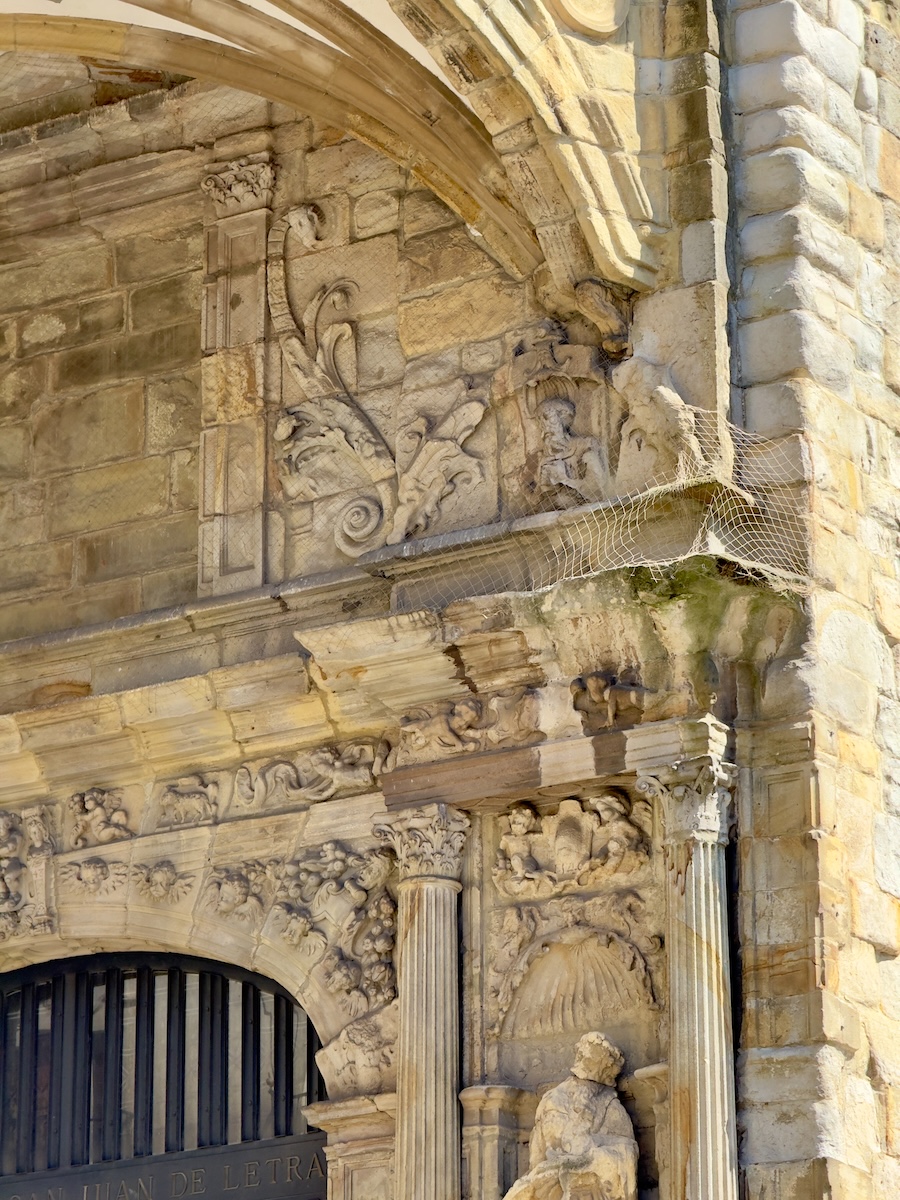
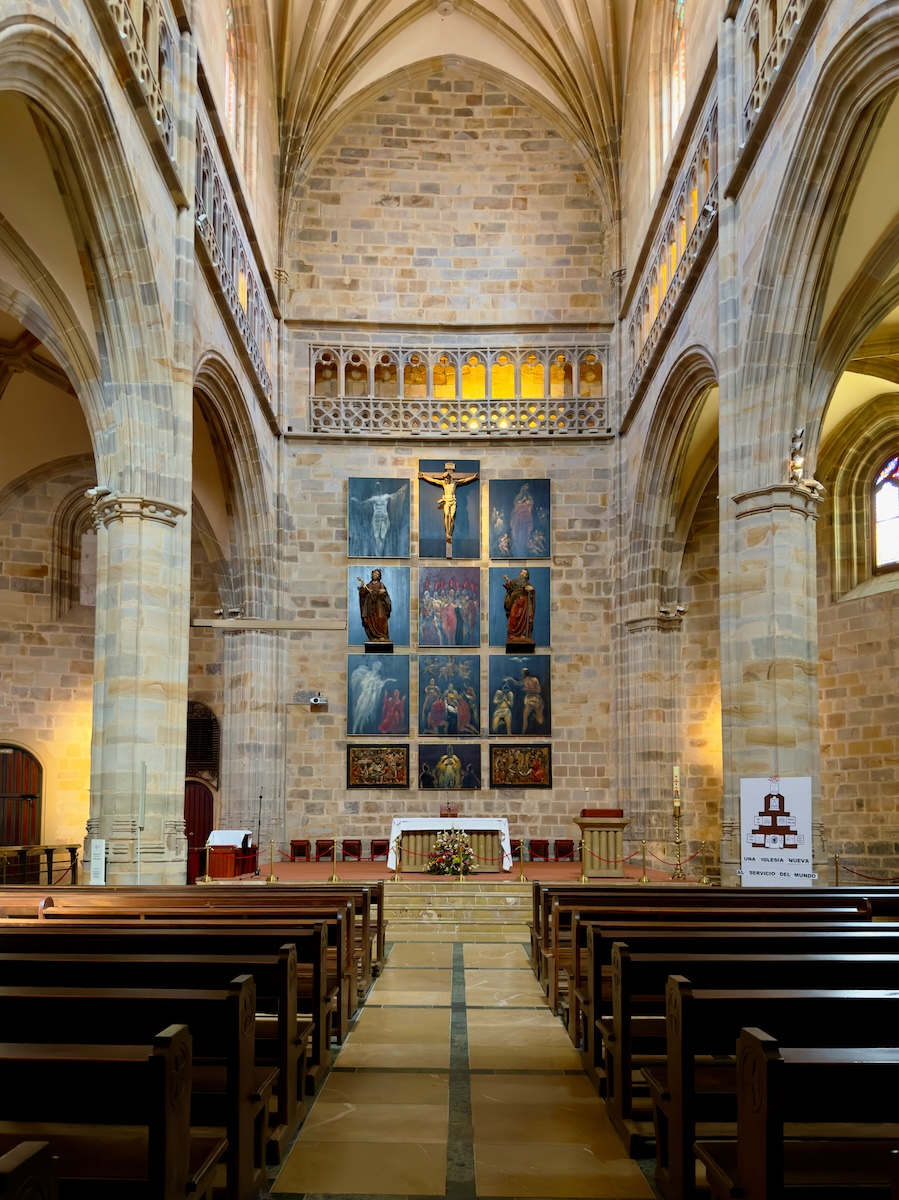
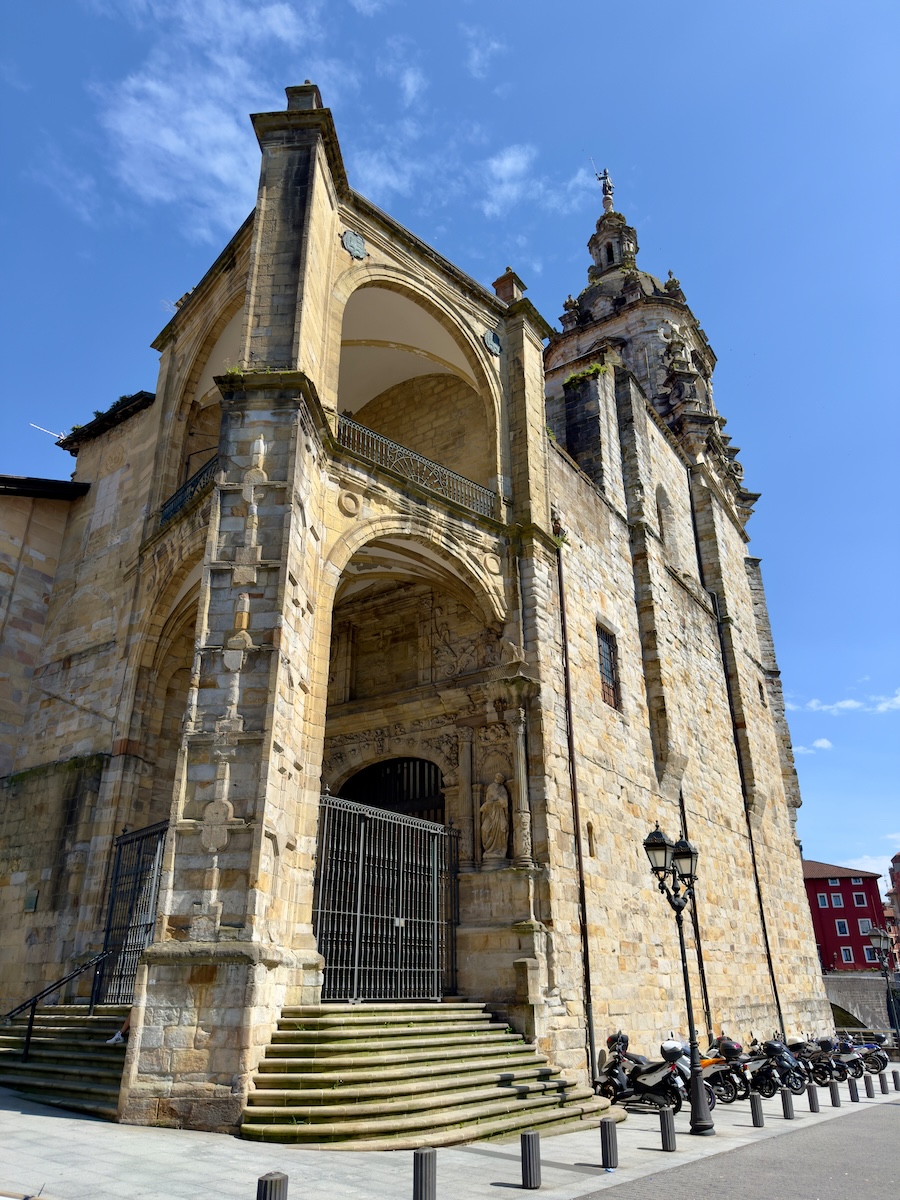
Up close, the church looks like what happens when 500 years of architectural trends get stitched together because there was nowhere else to build. The core is late Gothic—a hall church, three naves, a sweet little triforium gallery above that catches the morning light. They added the portico during the Renaissance. And a Baroque tower a bit later. Early 20th-century Bilbainos added a farmhouse, of all things, and some Neo-Gothic accents. These days, the whole thing feels solid but slightly mismatched, upgraded in installments by people who never compared notes.
From outside, the bell tower looming over the bridge is the star. Gabriel de Capelastegui designed it in the late 1700s with a kind of earnest bravado. Jerónimo de Argos topped it with an eight-foot cast-iron weathervane in 1775 that dominated the Old Town square until the town grew enough to overtake it.
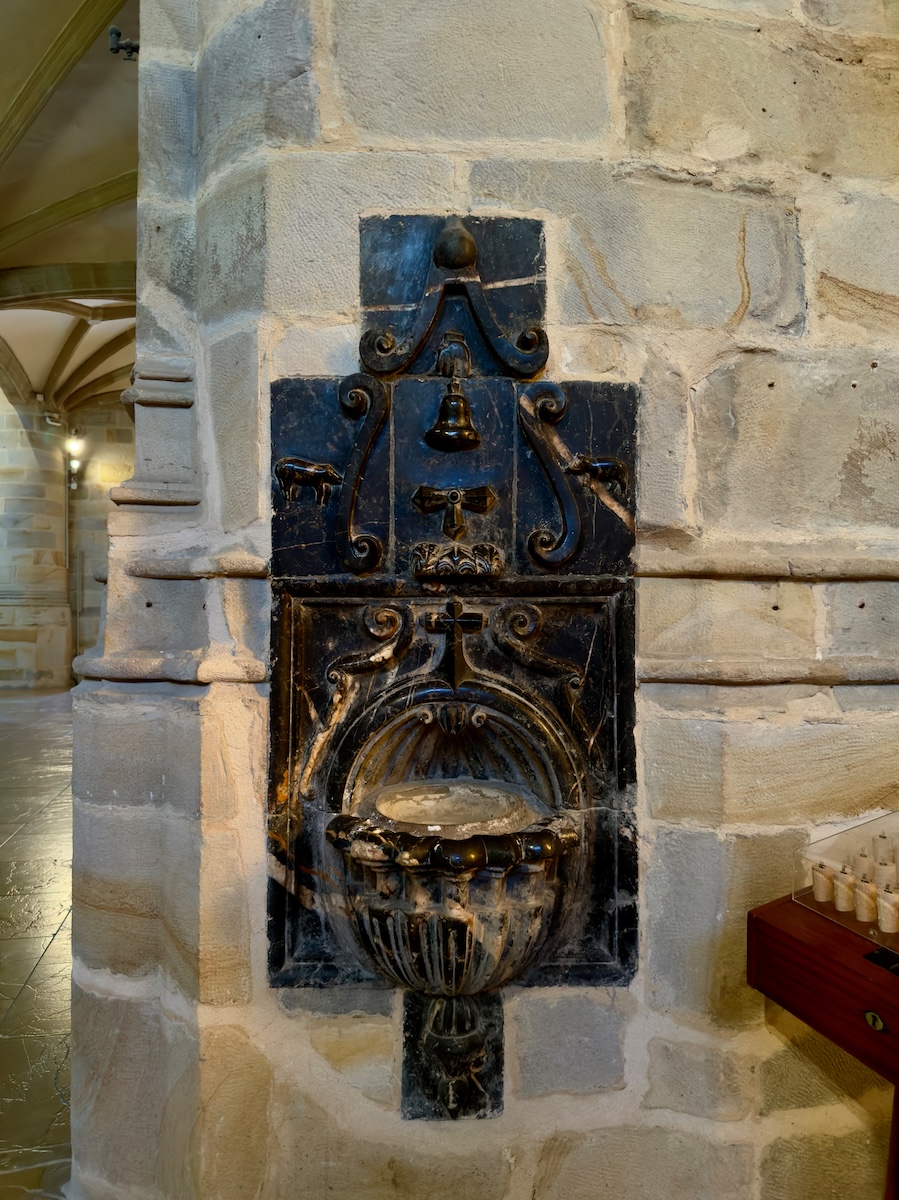
Inside, the church is quieter than you expect. Still technically a functioning parish—there’s a priest, there are Masses, occasionally—but the general vibe is more “historic relic” than “active spiritual hub.” Catedral de Santiago and La Basílica de Begoña get the crowds—San Antón gets the coat of arms. And the random confused tourist.
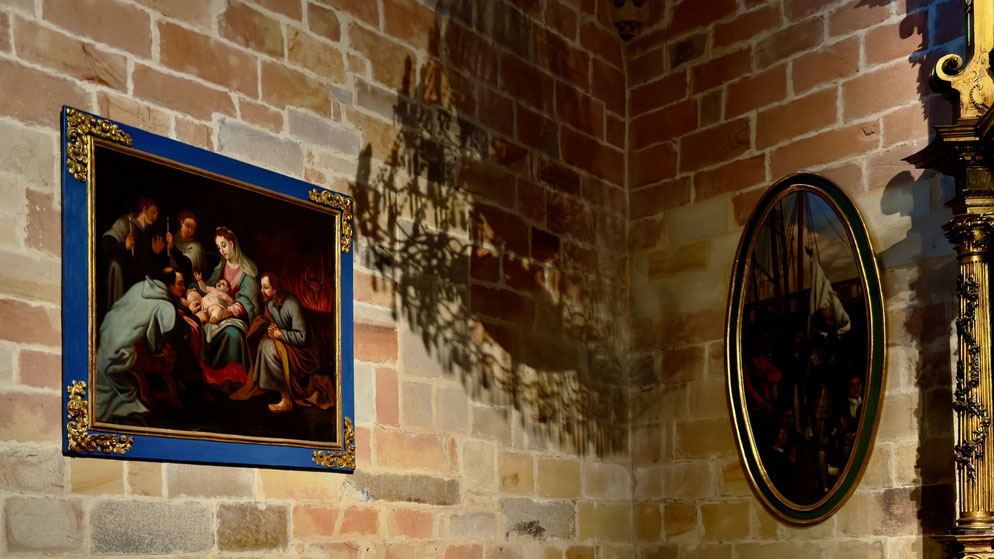
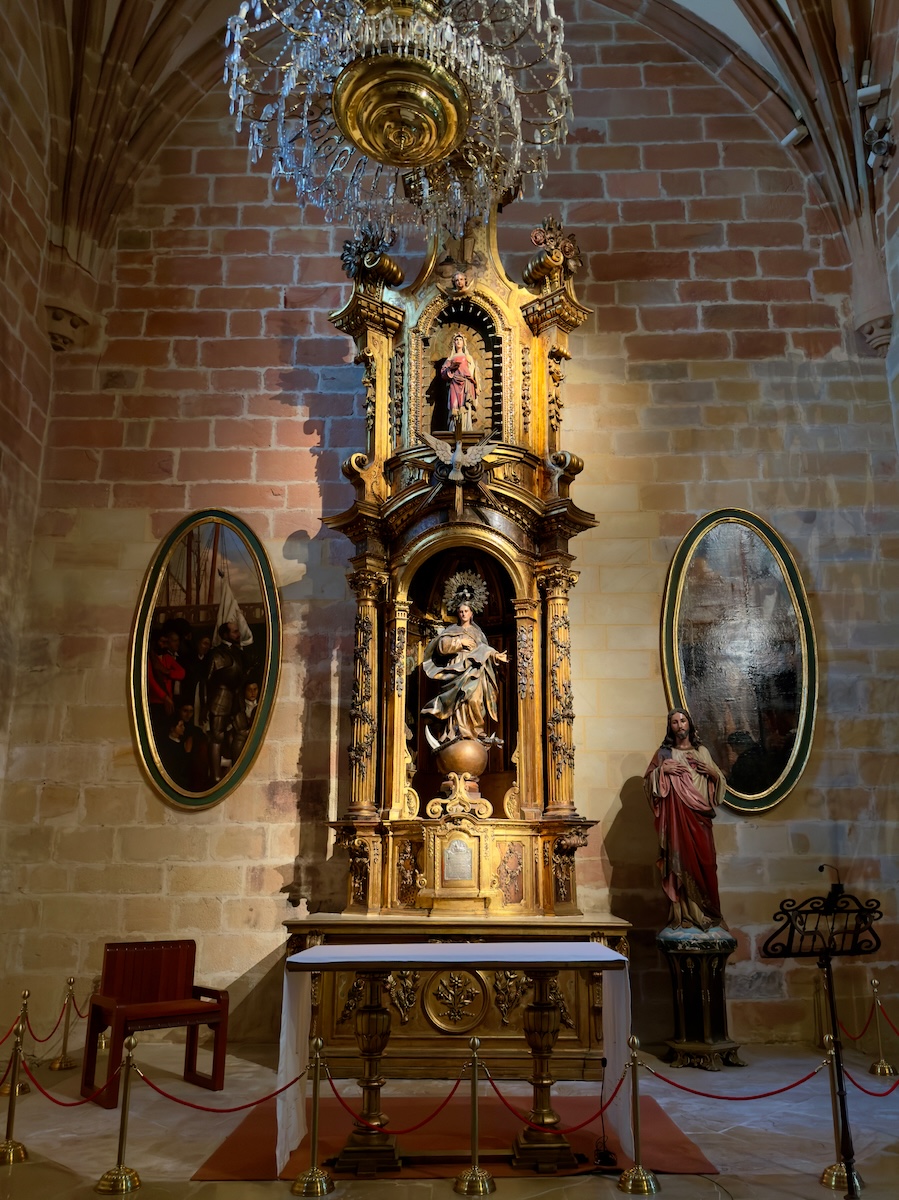
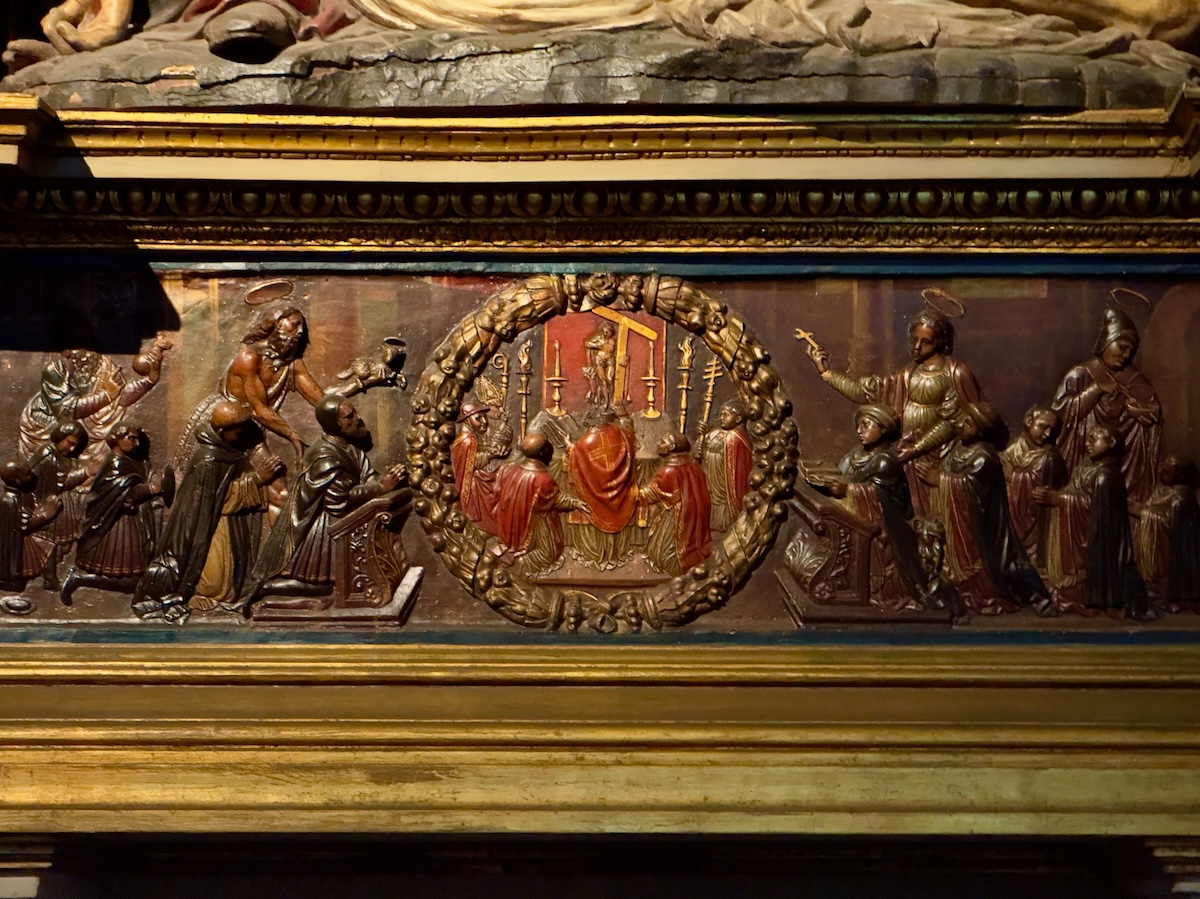
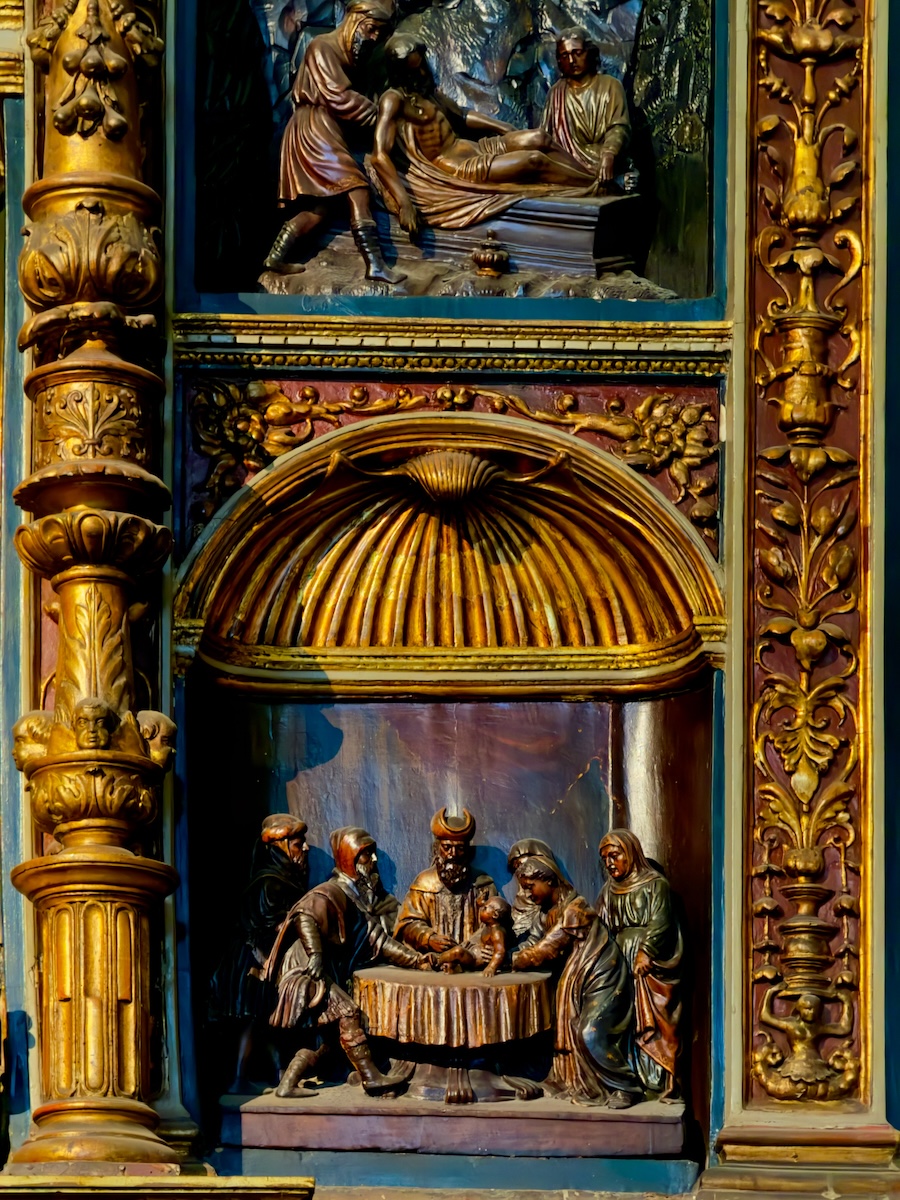
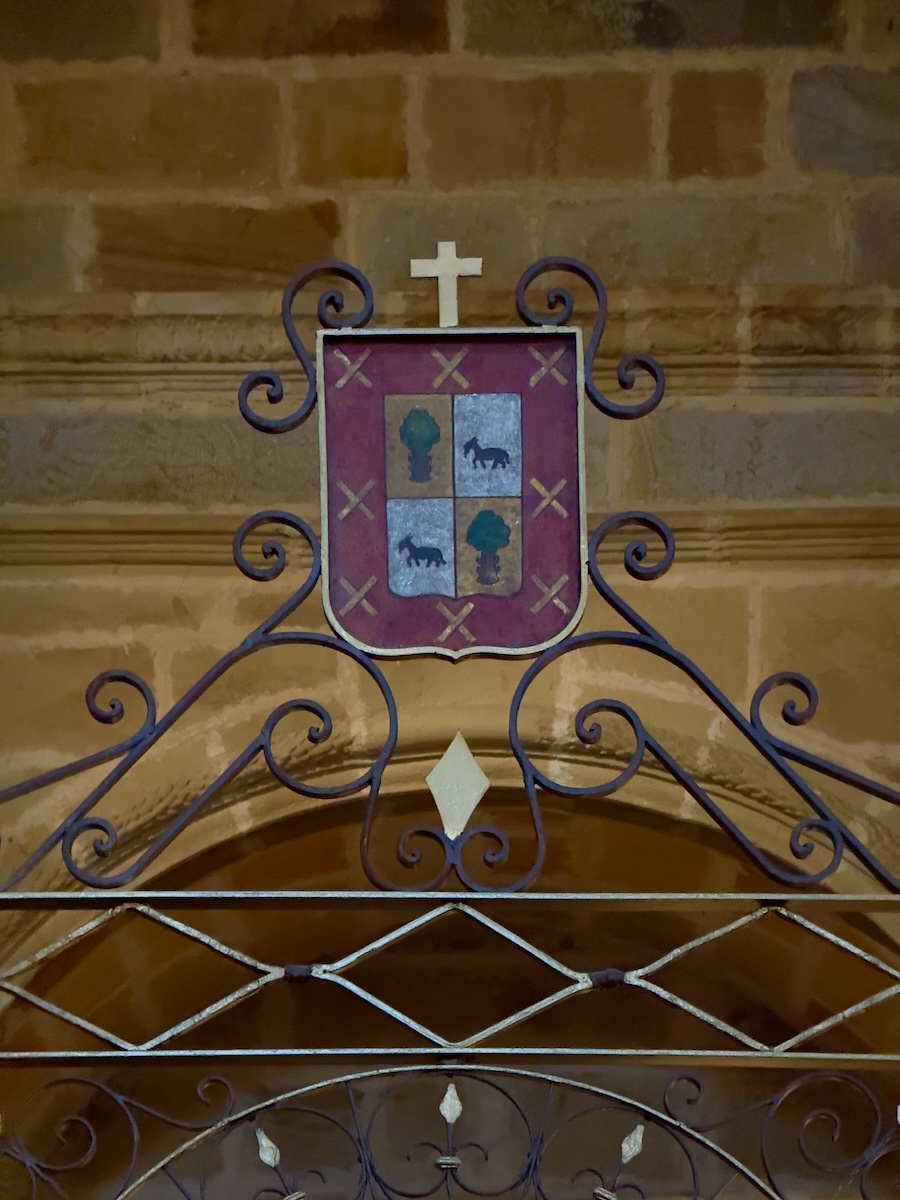
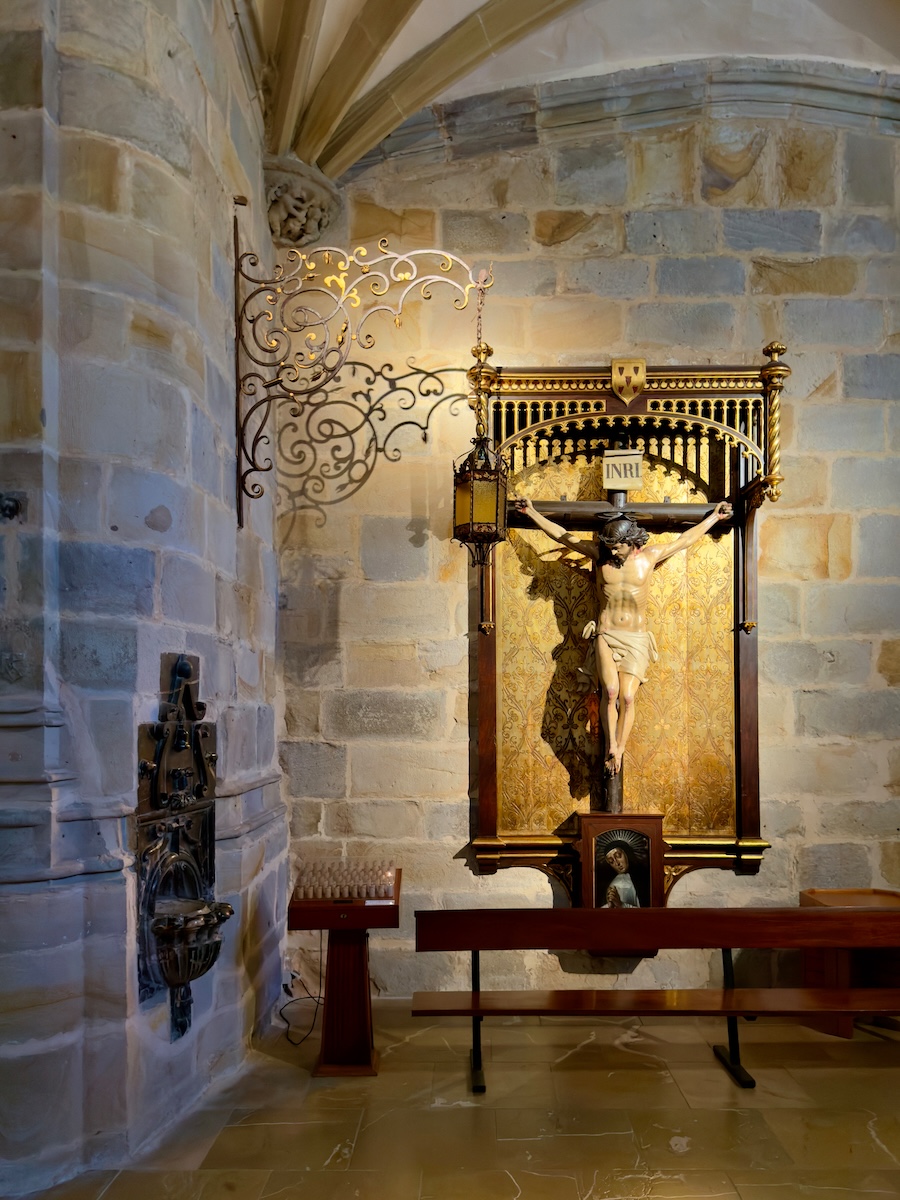
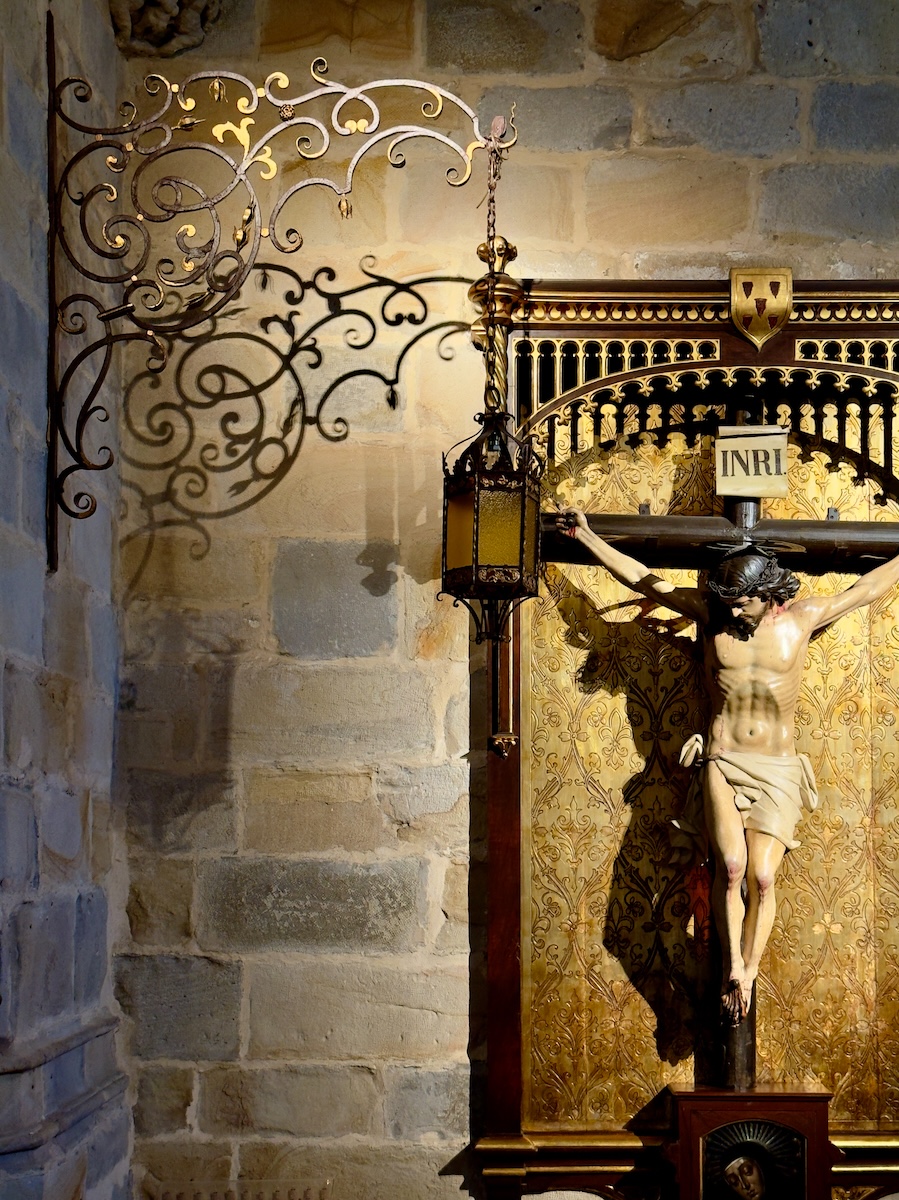
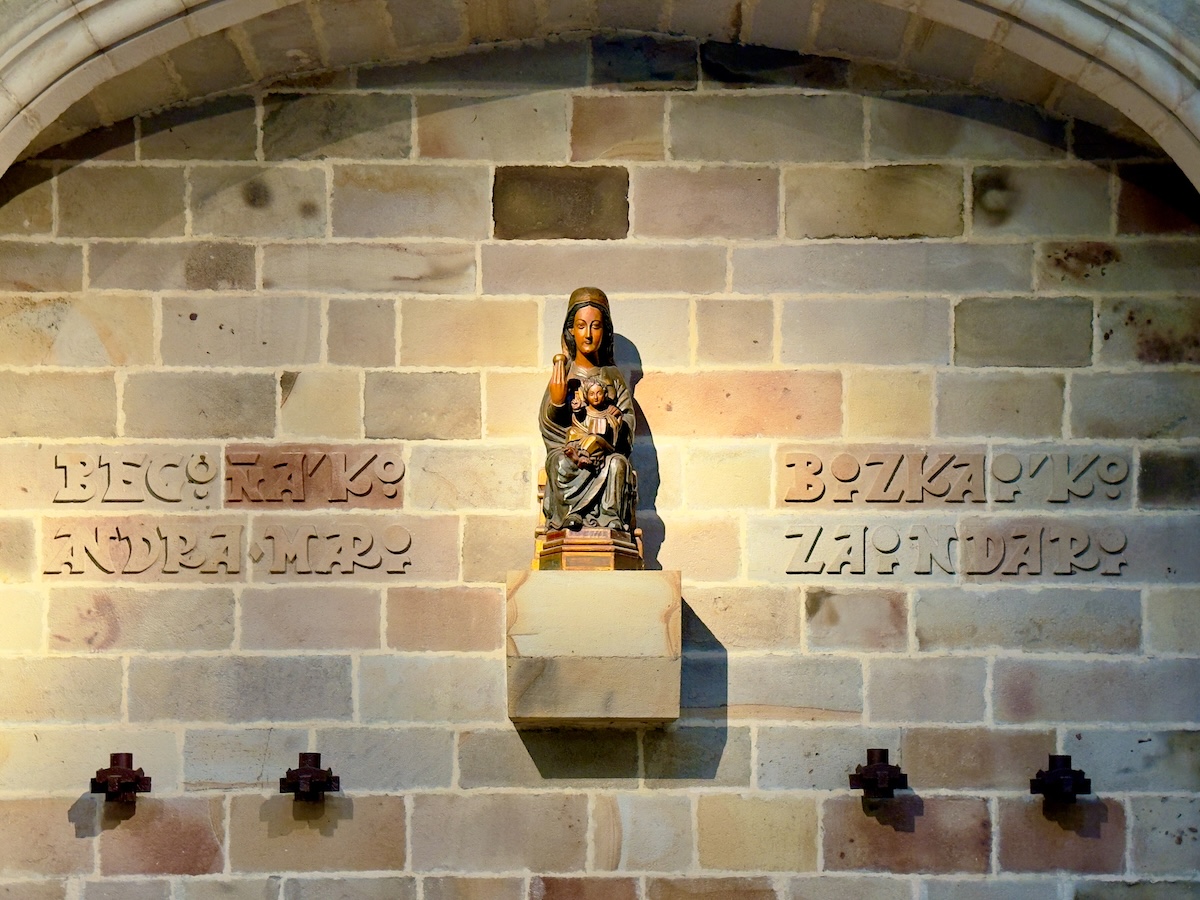
The side chapels are where the real personalities live. The Leguizamón and Recalde chapels still carry their family coats of arms and Renaissance iron gates—spiritual VIP boxes from the days when Bilbao’s elite liked to pray with clear lines of sight and minimal public exposure. The Pietà attributed to Guiot de Beaugrant sits in one of them, beautiful and slightly odd, like many Flemish works that made the trip south and never quite adjusted to the local light.
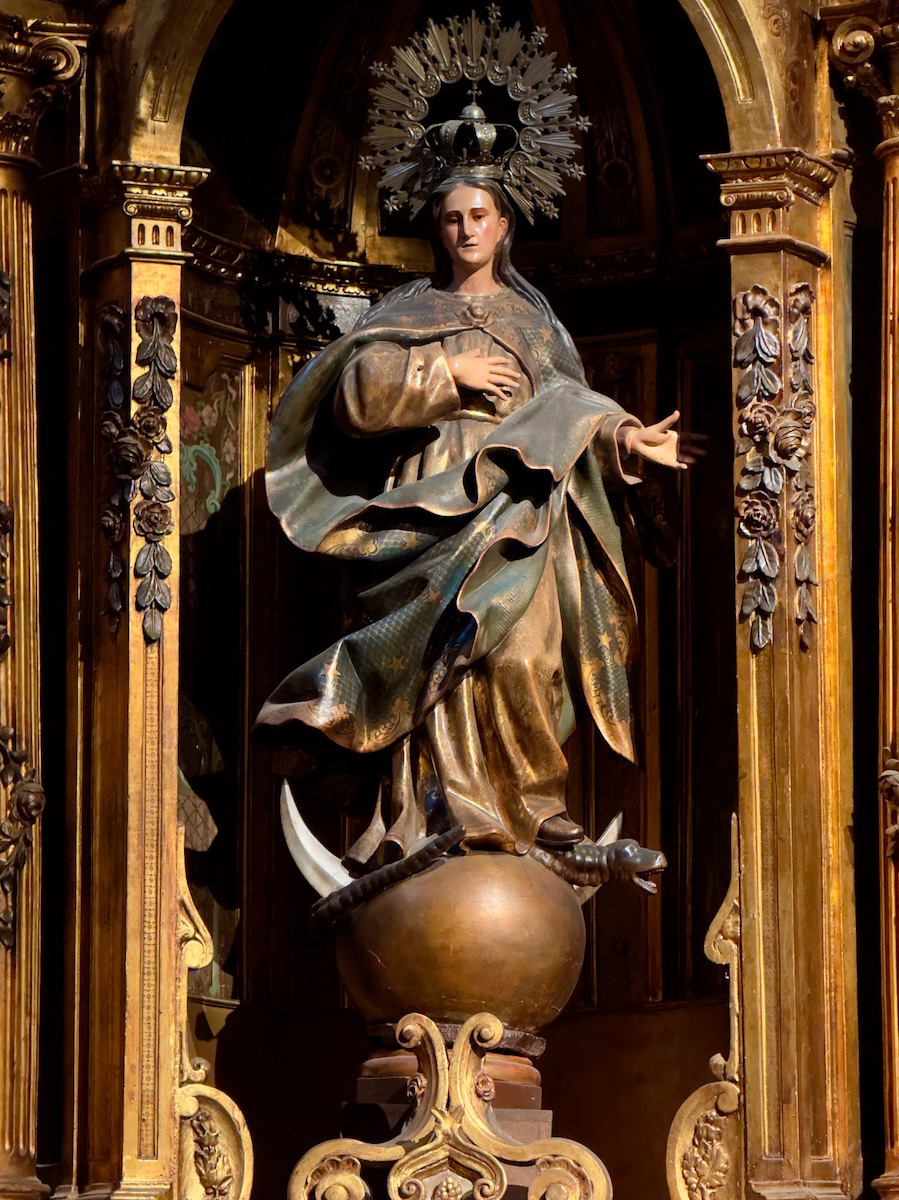
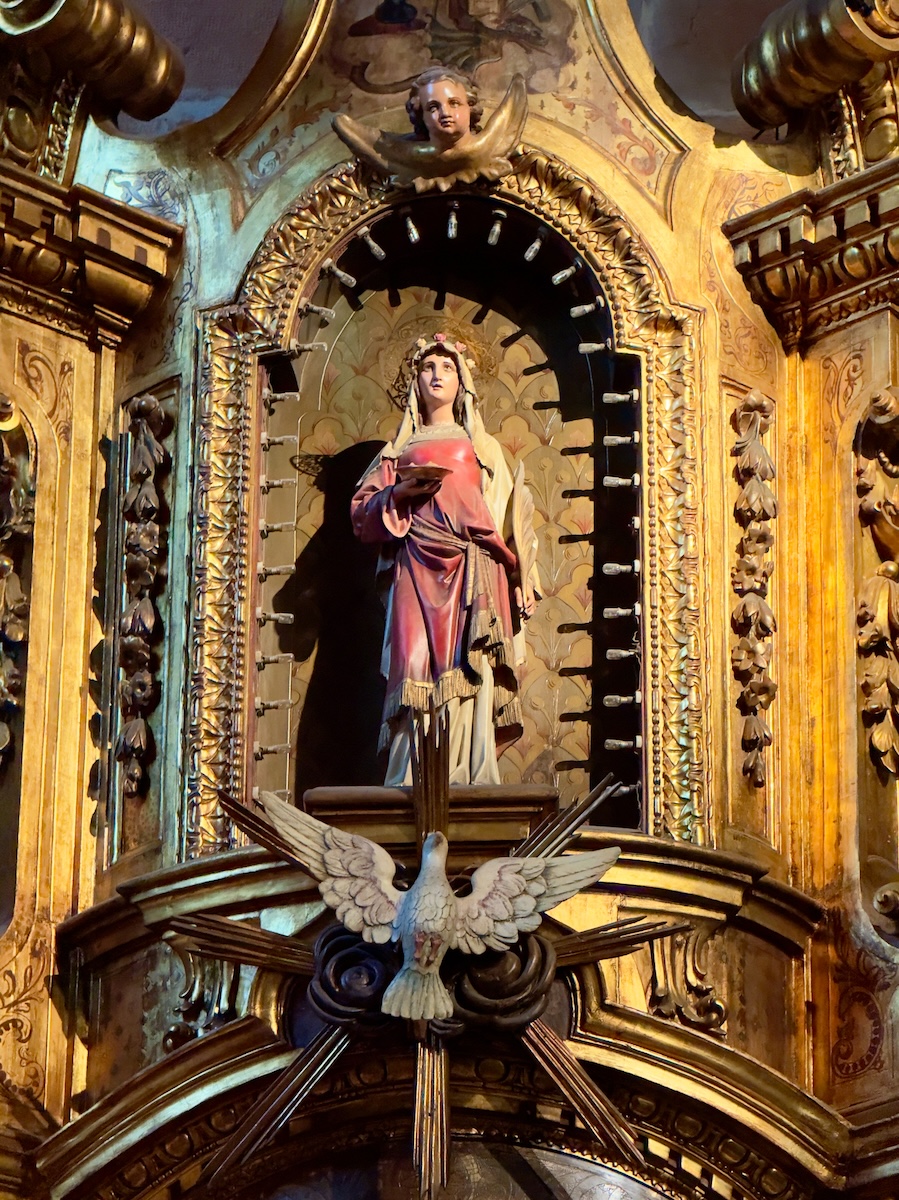
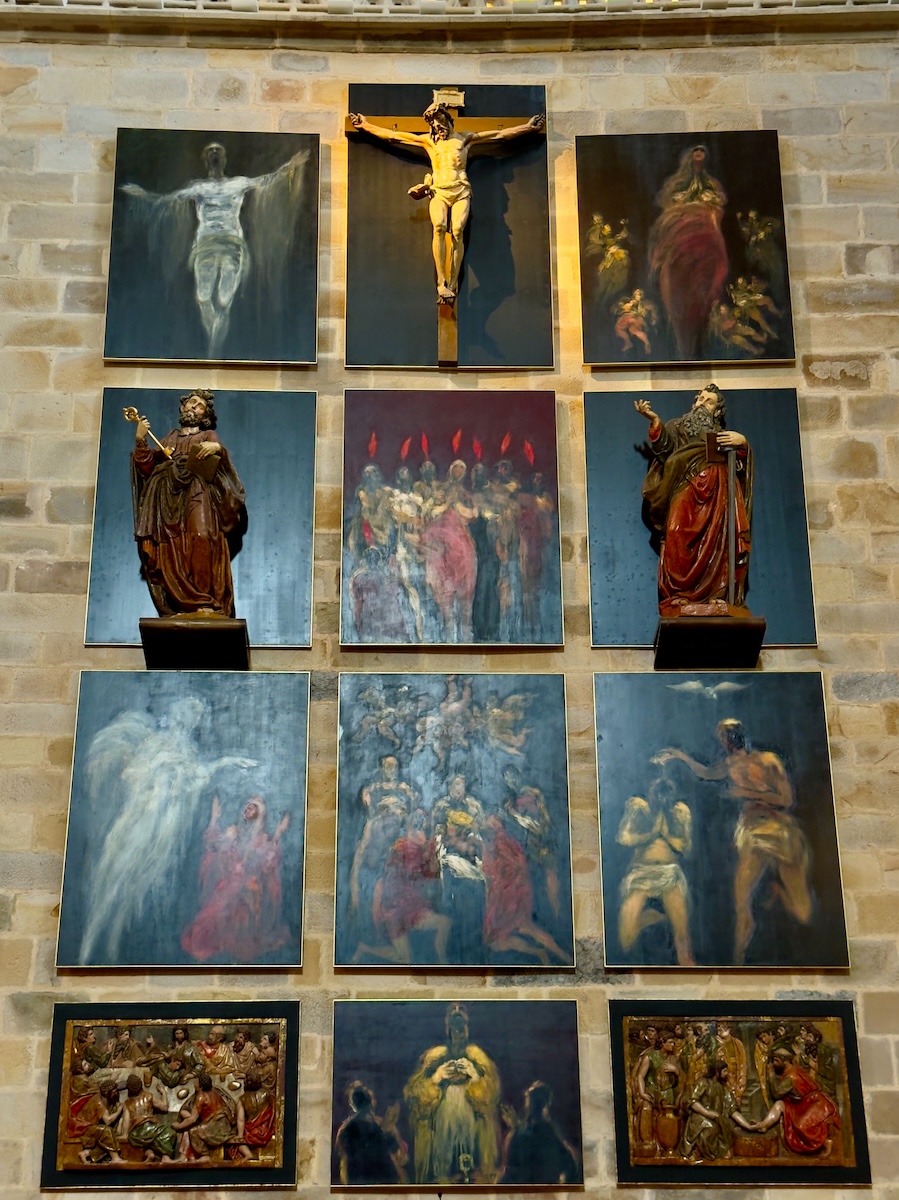
There’s a small crowd of saints tucked into the walls—Lucy, Roch, and every gay’s favorite, Sebastian—carved with more motion and grace than you expect from figures carved to stand in shadow for eternity. Manuel Losada’s paintings hang nearby. A bust of Claudio de Gallastegi, the first priest to celebrate Mass in Basque here, keeps watch over the sacristy door.
There are stories, too. One of the best belongs to a small stone balcony that once hung out over the river. The priests used it to fish between services. One afternoon, the door was left open—whether because they were distracted by the catch or just bad at locks, who can say—and thieves slipped in. They helped themselves to whatever jewels and chalices they could find before they realized they hadn’t thought it through and had no plan for how to sneak past the priests and parishioners downstairs. In a panic, they chucked the loot into the river. Some kids swimming by later discovered a small fortune on the riverbed, which must’ve been an interesting conversation with the authorities. The whole episode was embarrassing enough that the balcony was quietly removed soon afterward, ending the clergy’s riverside fishing breaks.
The place was nearly finished off in the 19th century. The church was closed and used as a food depot during the Siege of Bilbao in 1873. It was hit by eight bombs, which took out the vaults and the organ. Repairs were funded by public subscription, and it took years to rebuild the organ, repair the stonework, and restore the windows. You get the sense Bilbainos didn’t rebuild San Antón because of its religious importance, but because they didn’t want to redesign the city logo again.
Back outside, the church still occupies its tiny island of stone, keeping watch over the sometimes unruly river. Traffic roars past. Ribera Market hums next door. Trams rattle by. And San Antón keeps doing what it’s always done—hold up its end of The Bridge.
Bilbao could have put the Guggenheim on its emblem, but it didn’t. It stuck with the medieval bridge and stubborn little parish church because the city doesn’t confuse spectacle with identity. And that tells you exactly what kind of town this is.






Write a comment