
Bilbao’s cathedral isn’t theatrical. It sits in the Old Town like an old man who’s grown tired of introducing himself—quiet, confident, and already part of the furniture. You’re aware of it long before you ever bother looking at it. Honestly, I walked by it countless times before deciding I probably ought to poke my head inside.
The Siete Calles twist around it in that medieval way cities once grew—not according to a plan but according to whoever got there first. And there, at the end of one of those streets, the Catedral de Santiago (or Bilboko Donejakue Katedrala, if you prefer Basque) holds its ground—compact, local, and older than nearly everything around it.
Calling it “the cathedral” sets up the wrong expectation. You hear the word and picture Barcelona, León, or at the very least an imposing building that casts a dramatic shadow over an open square. Bilbao’s version is different. It’s a cathedral with the volume turned down, lodged so neatly into the fabric of Old Town that you half expect to find someone’s laundry strung across the nave.
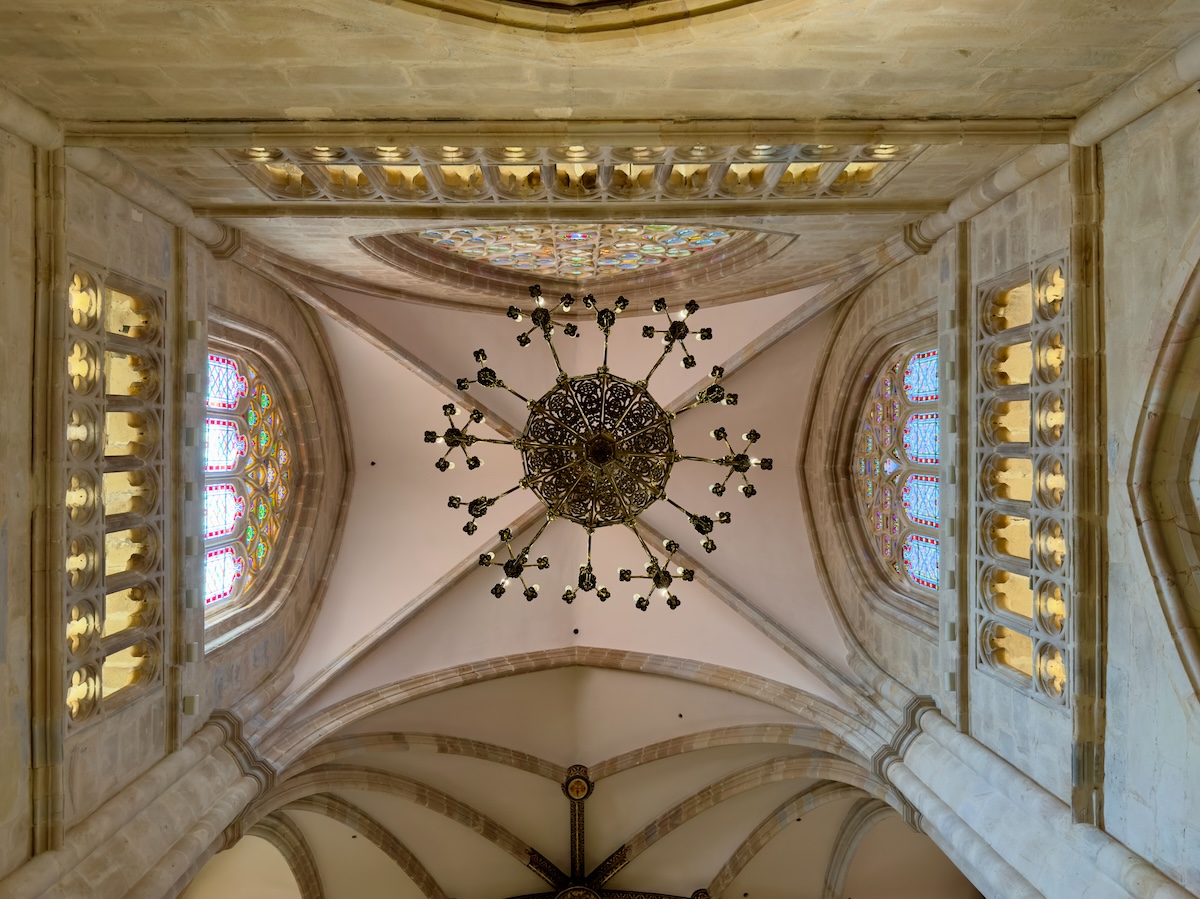
And yet when you walk inside, the whole thing expands upward with the confidence of a place that knows exactly what it’s doing. Roughly 75 feet of ribbed vaulting rises over three narrow naves, and suddenly the modest exterior feels less like a compromise and more like architectural sleight of hand.
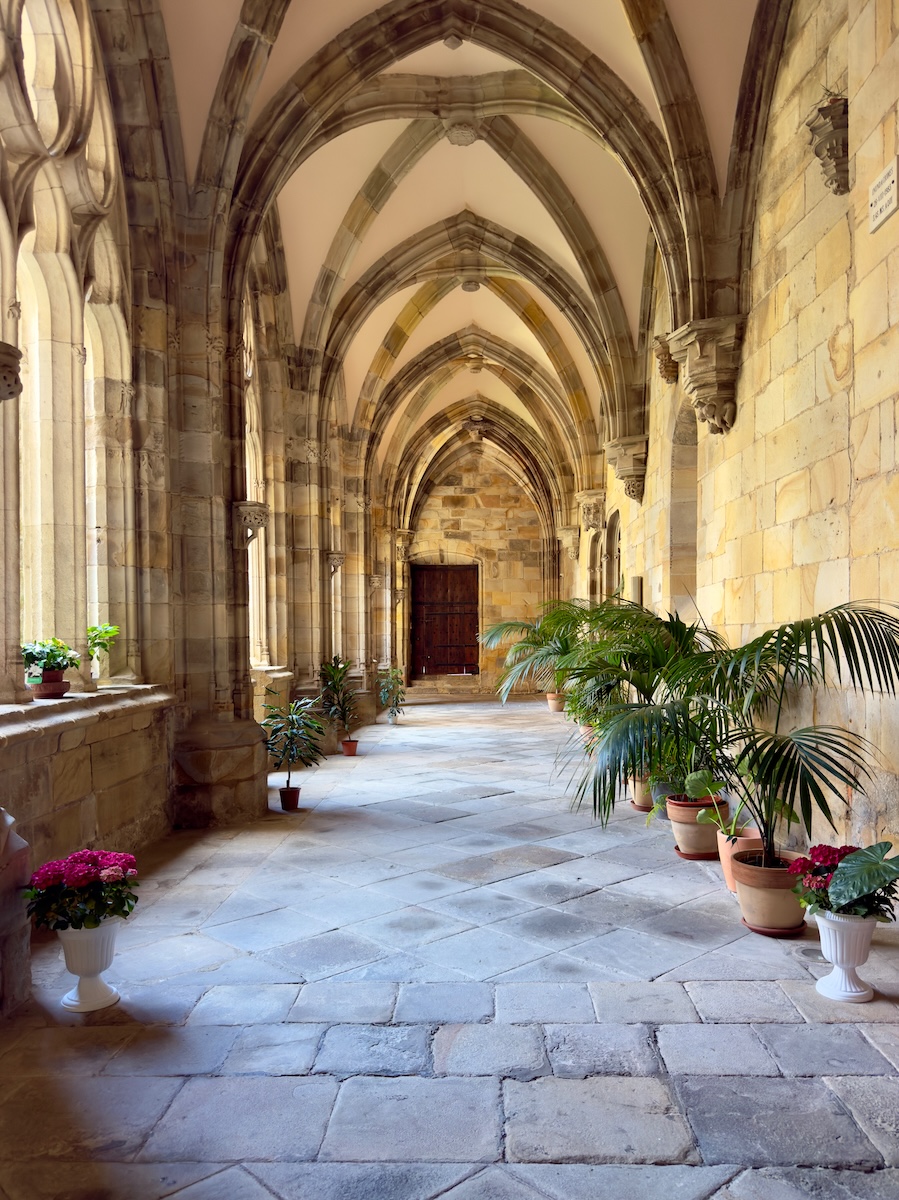
The building that made this possible began after the fire of 1374, when the earlier parish church burned to ashes and Pope Gregory XI (the final pope to rule from Avignon, whose death triggered the Western Schism) offered indulgences to anyone willing to chip in for the rebuild. People did. Over the next few centuries, the place grew an ambulatory (with alternating rectangular and triangular bays, a very French flex), a row of chapels, and a cloister that is the cathedral’s most unexpectedly gorgeous space today. This one is half of the Gothic cloisters that survive in all of Bizkaia. It was once the cemetery. Now it might be the only place in Old Town where you can hear yourself think.
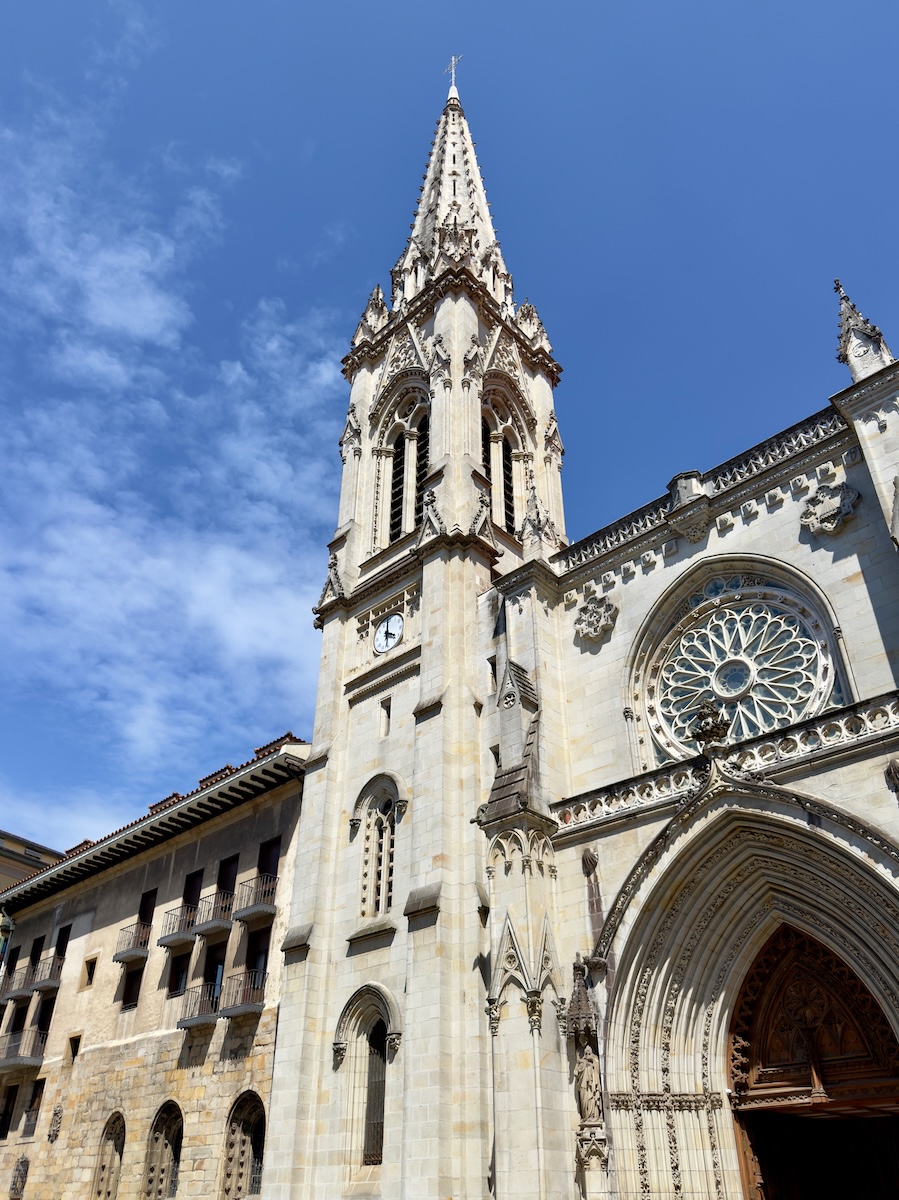
The exterior was once a riot of styles—medieval stonework topped with a Baroque tower, which was replaced first by a heavier tower, then a Neoclassical one. By the late 1800s, Bilbao’s bourgeoisie decided they’d had enough and that the cathedral deserved a single, consistent face rather than a rotating cast. Severino Achúcarro drew up a Neo-Gothic façade and tower, and the city went with it. It’s the version that stuck—and it ties the whole thing together better than you’d expect. Achúcarro’s tower looks like it always belonged here, which is the whole point of Neo-Gothic when it’s done right.
At the opposite end, the apse is once again visible from the street, which wasn't the case until very recently. For much of the modern era, small commercial booths—selling watches, ice cream, lottery tickets, whatever the market would bear—were attached like carbuncles to the backside of the church. These shops survived the 1983 flood, bureaucratic indecision, and a long stretch when Bilbao struggled to reconcile cultural heritage with people’s need to make a living. The shops were quietly removed a few years ago, leaving the apse bare of the clutter that had clung to it for decades. What’s left is the Gothic stonework that had been waiting patiently underneath, finally able to breathe.
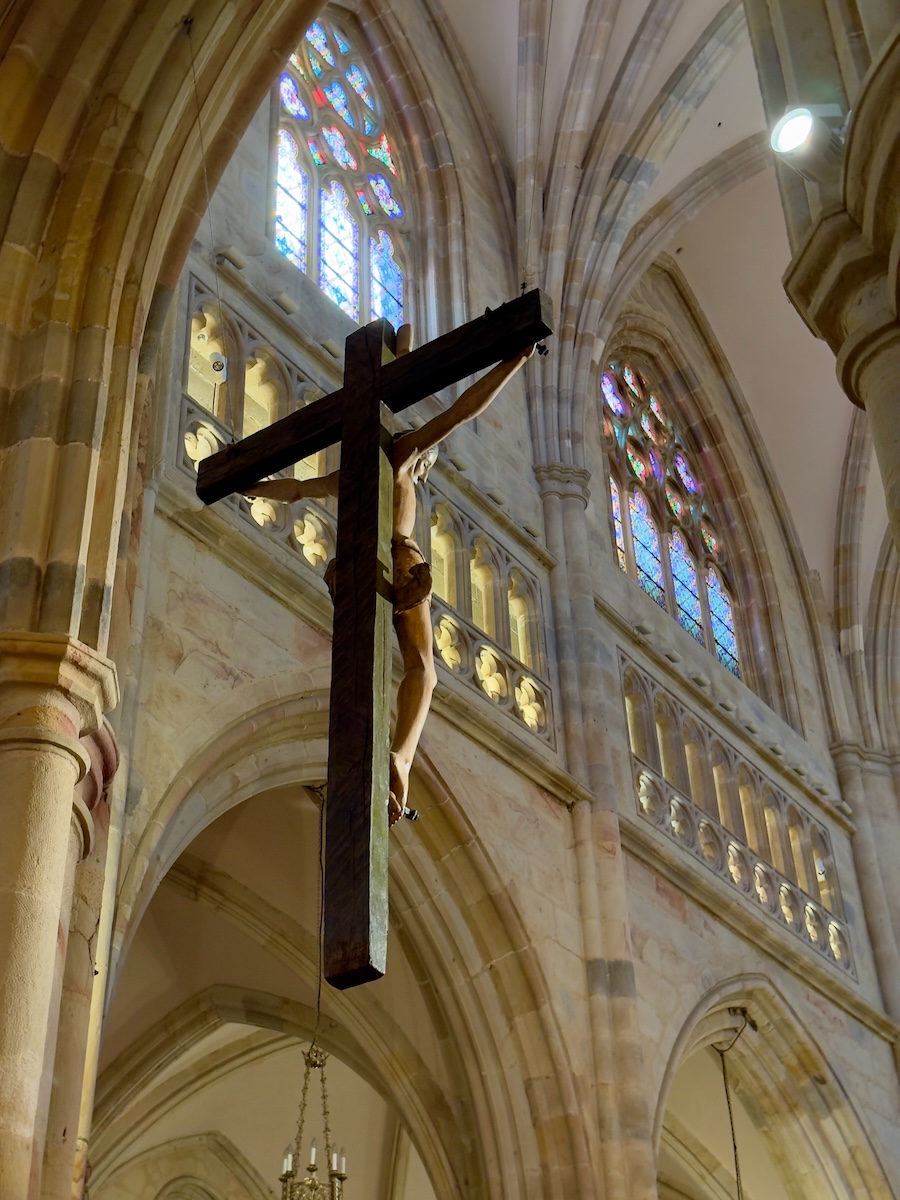
Inside, after an initial vertical jolt, the cathedral unfolds—and keeps unfolding. The nave is narrow but feels taller than it has any right to be, its ribbed vaults lifting the whole space like someone turned the ceiling into a series of sails. The side aisles are tighter still, but they pull you forward toward the ambulatory, where the geometry shifts into alternating rectangular and triangular bays—unusual in Spain. Light filters through stained glass in simple floral and geometric patterns, brightening the space without stealing the show. It’s unexpectedly elegant—especially for a cathedral that spends so much energy pretending not to be one from the outside.
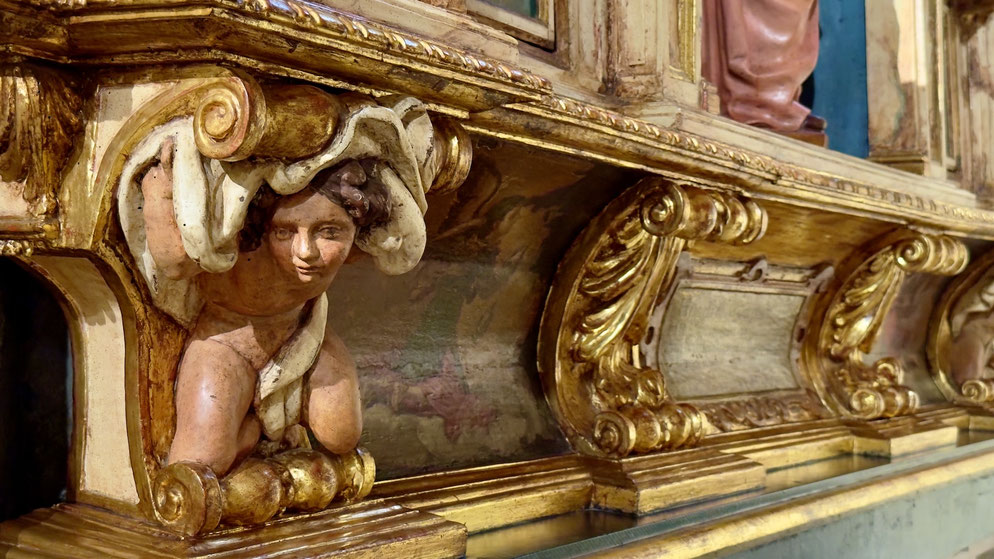
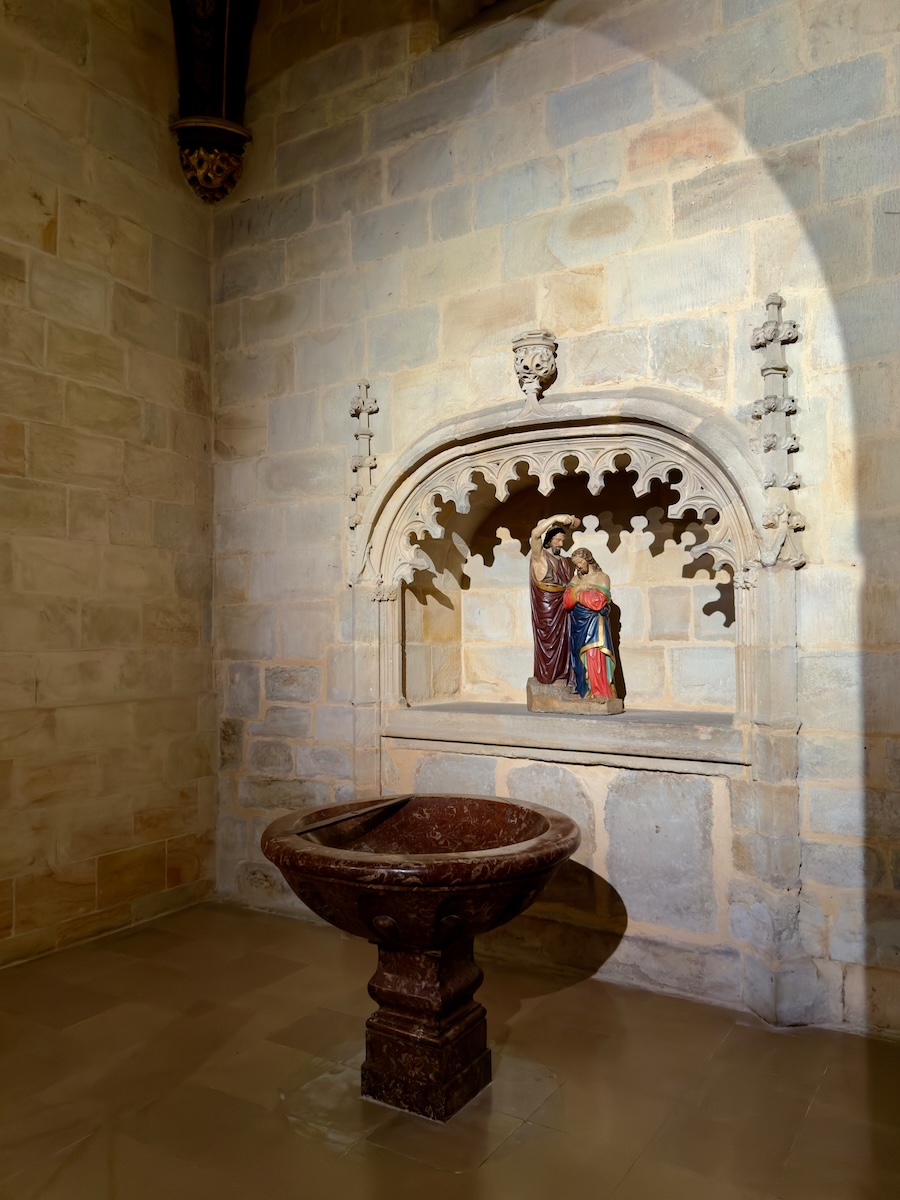
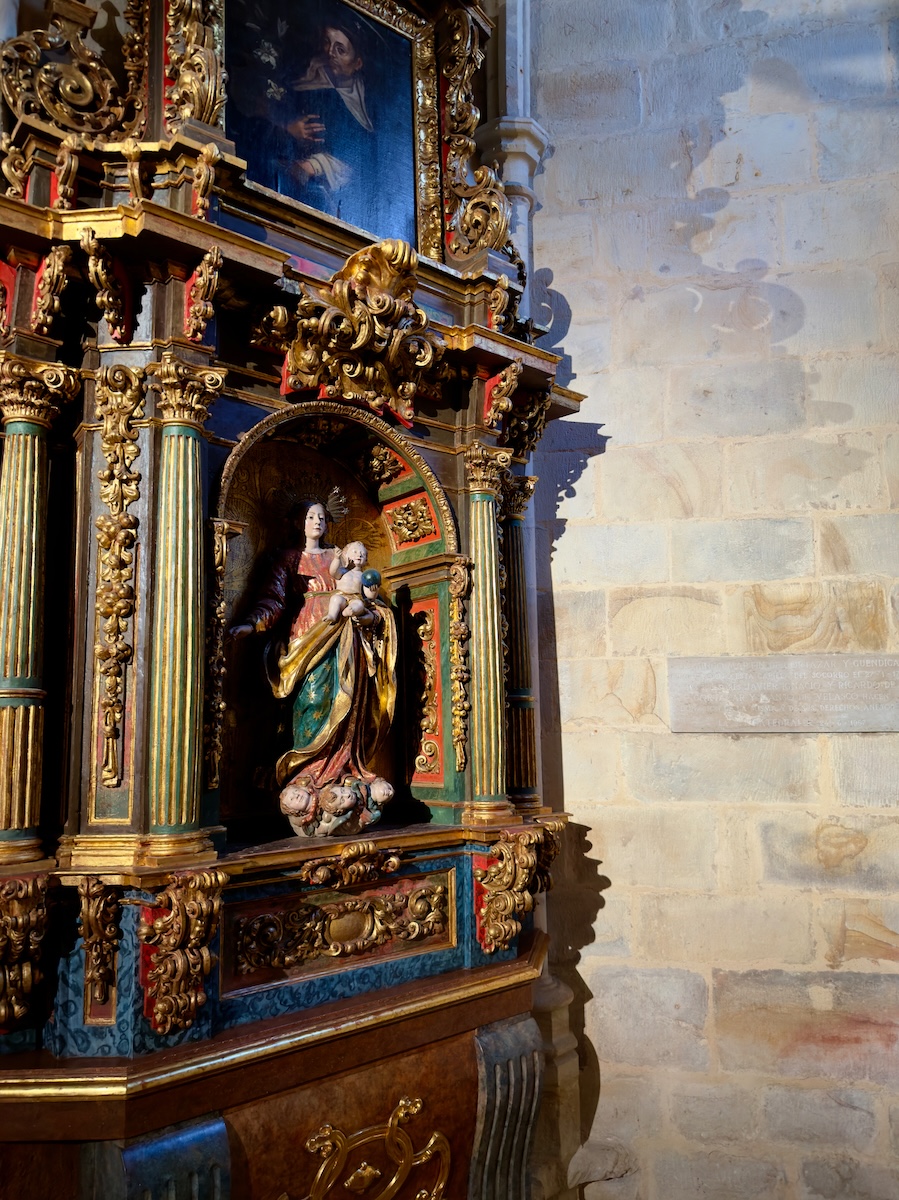
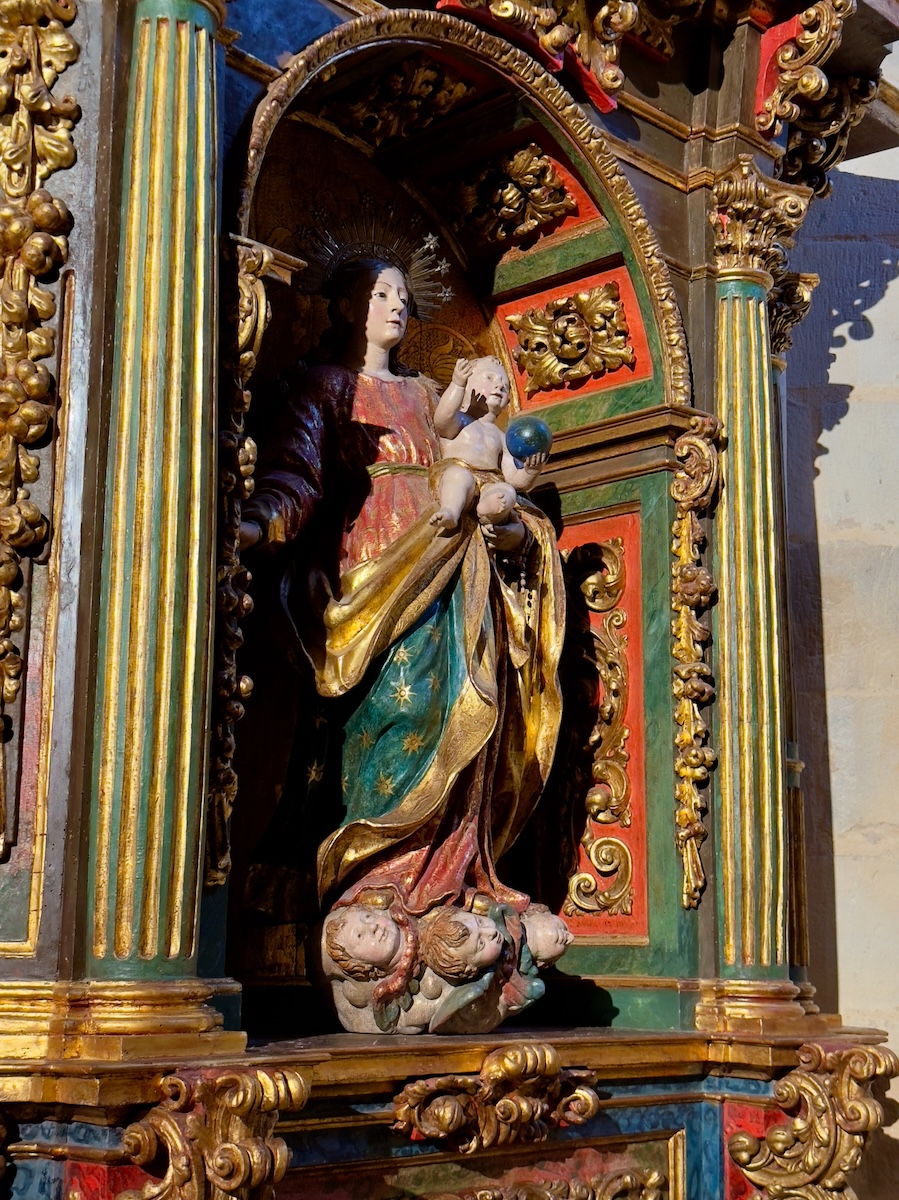
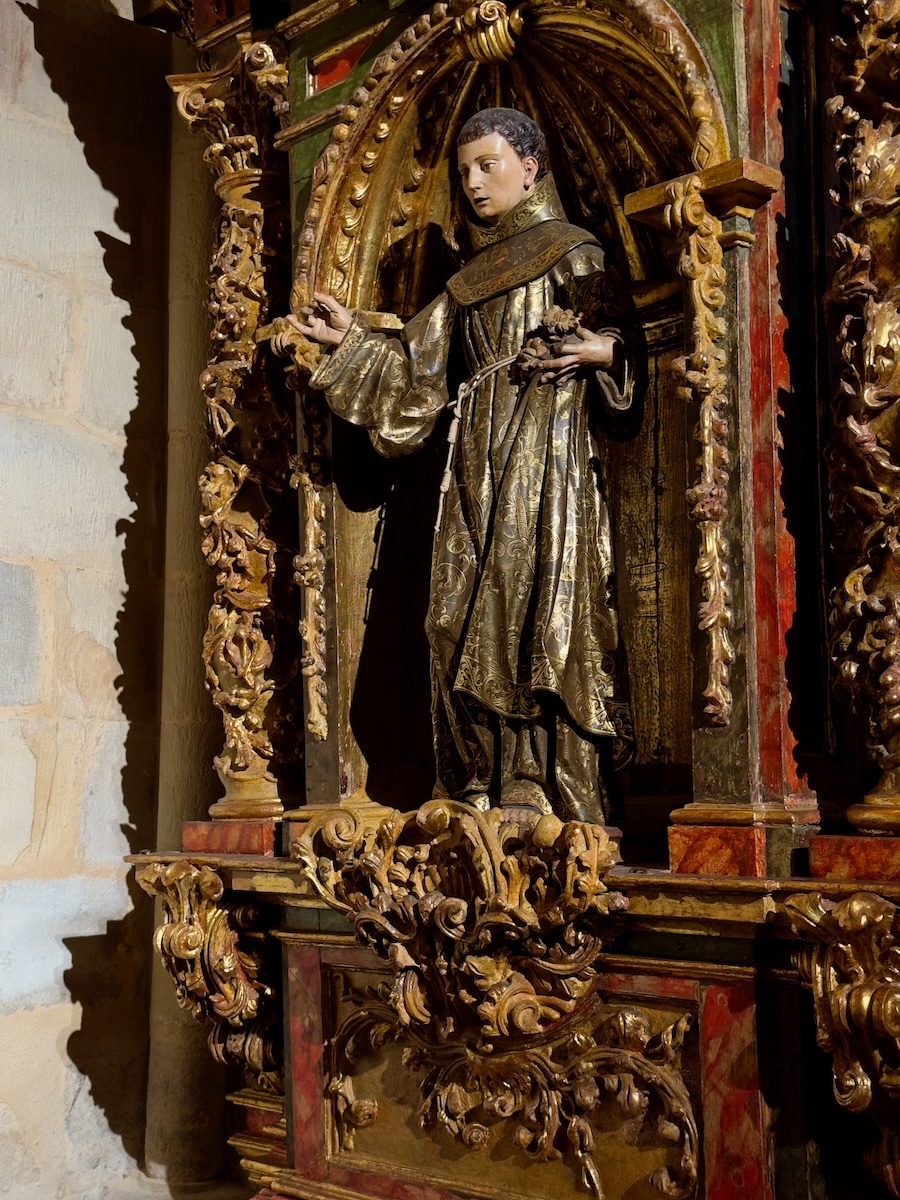
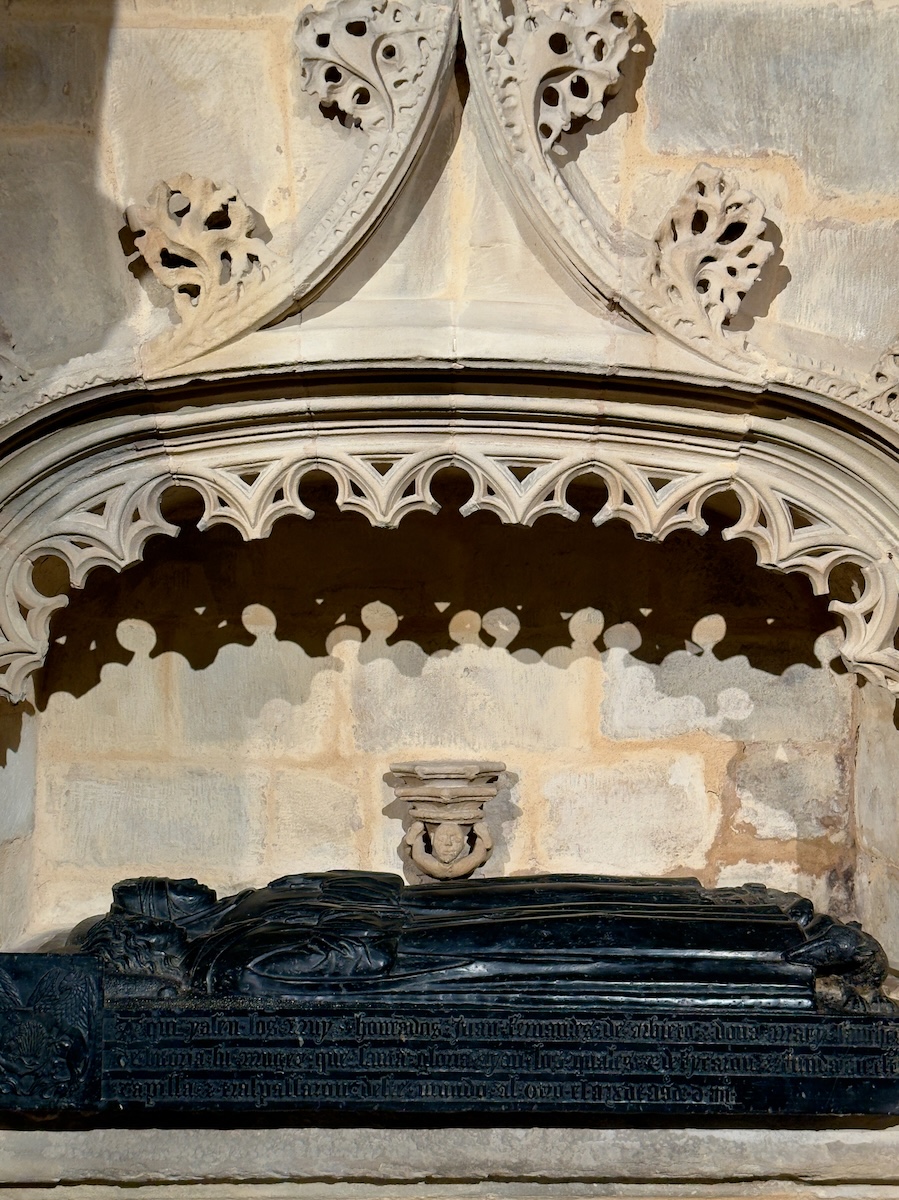
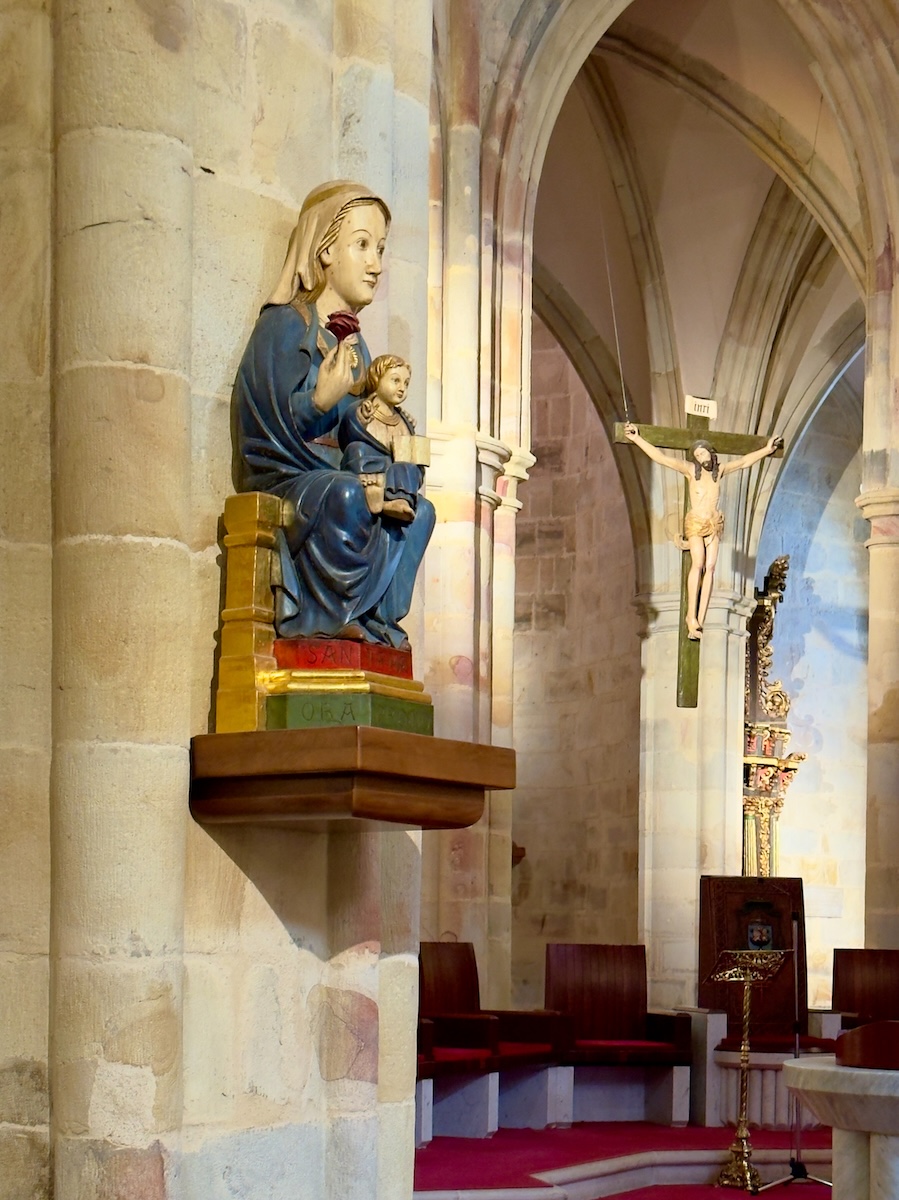
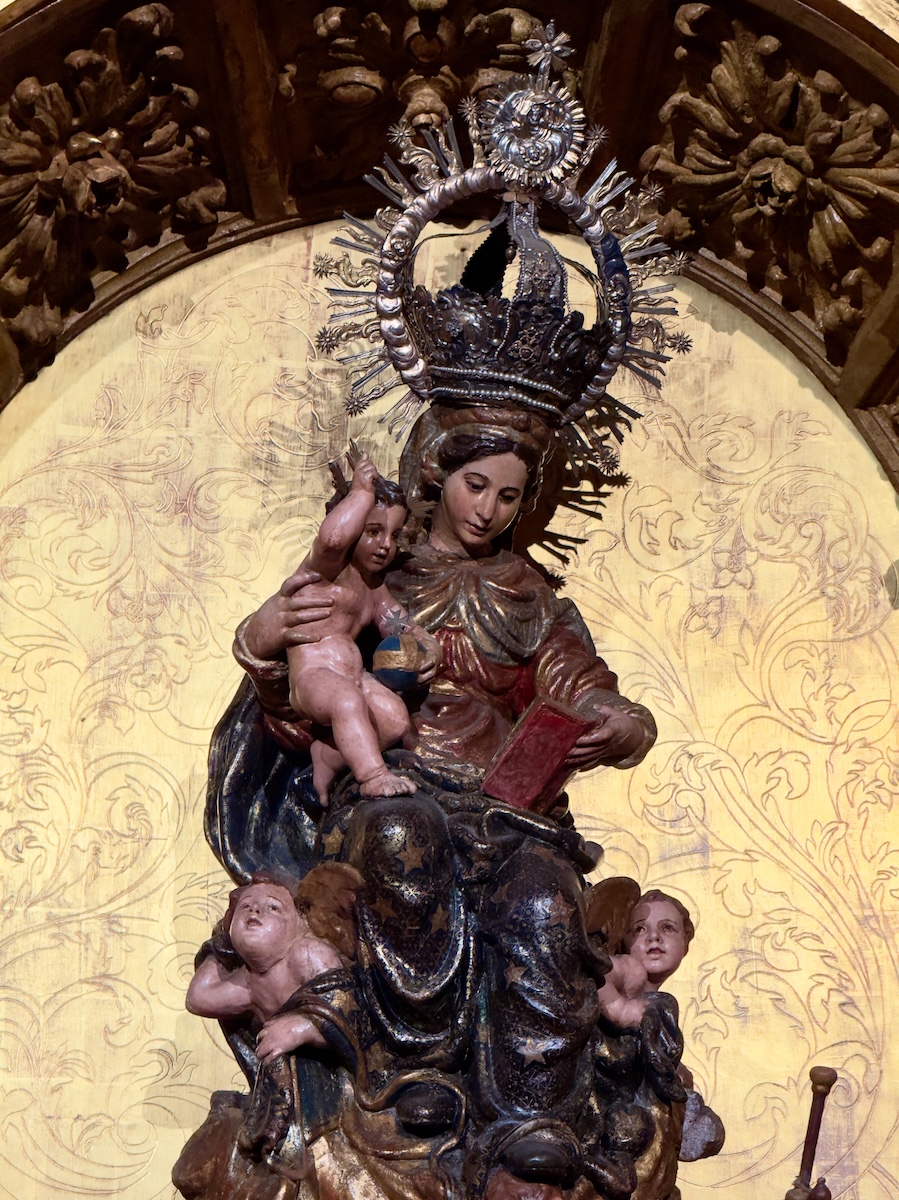
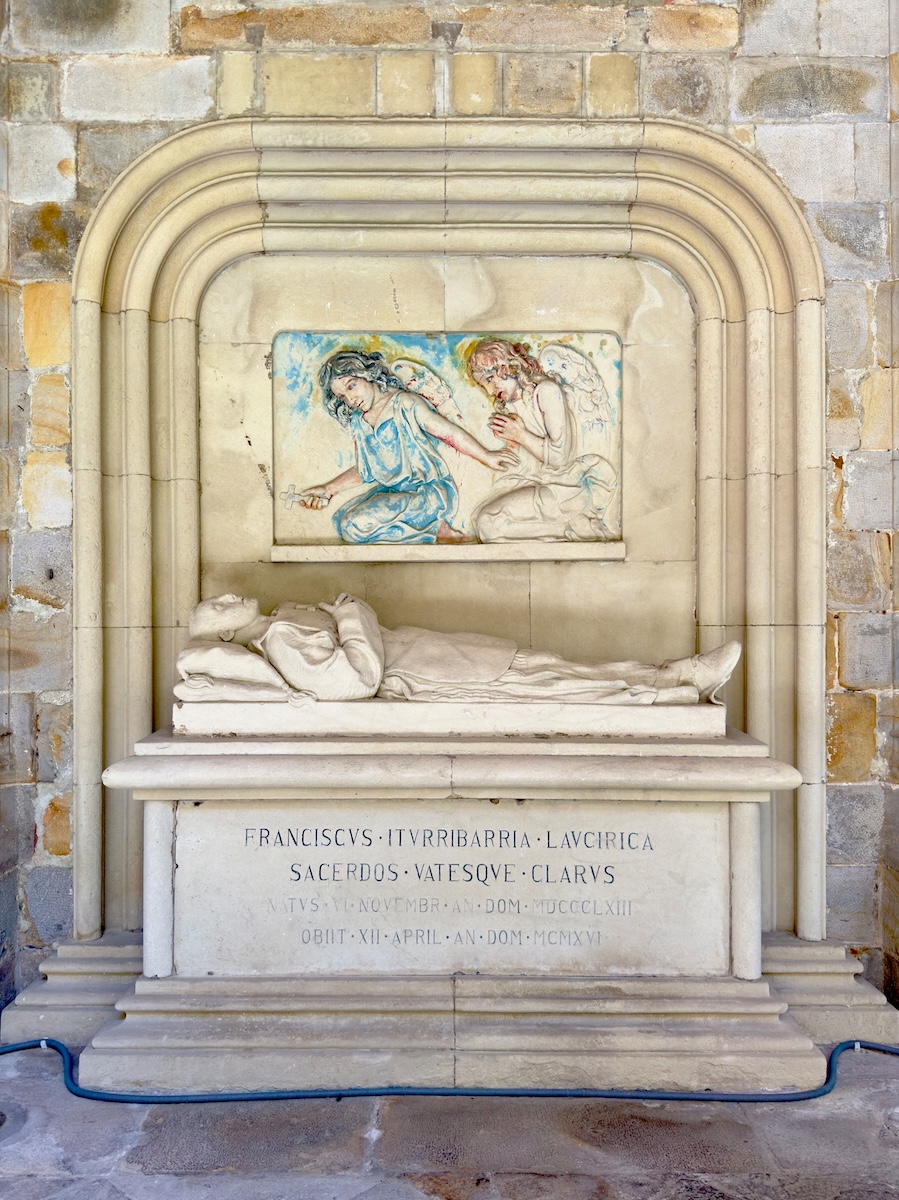
The altar carries a striking late-Gothic Christ from the 1500s. A classical Pietà sits nearby, quietly overshadowed by everything else going on in the nave. Most of the original high altarpiece was dismantled long ago, a victim of changing tastes and the occasional impulse to modernize by subtracting. What remains—stone tombs, chapels added across four centuries, the ambulatory flowing around the choir—isn’t a curated masterpiece. It’s a timeline in stone. You walk through it the way you’d flip through family albums—same faces, different eras, occasional crises.
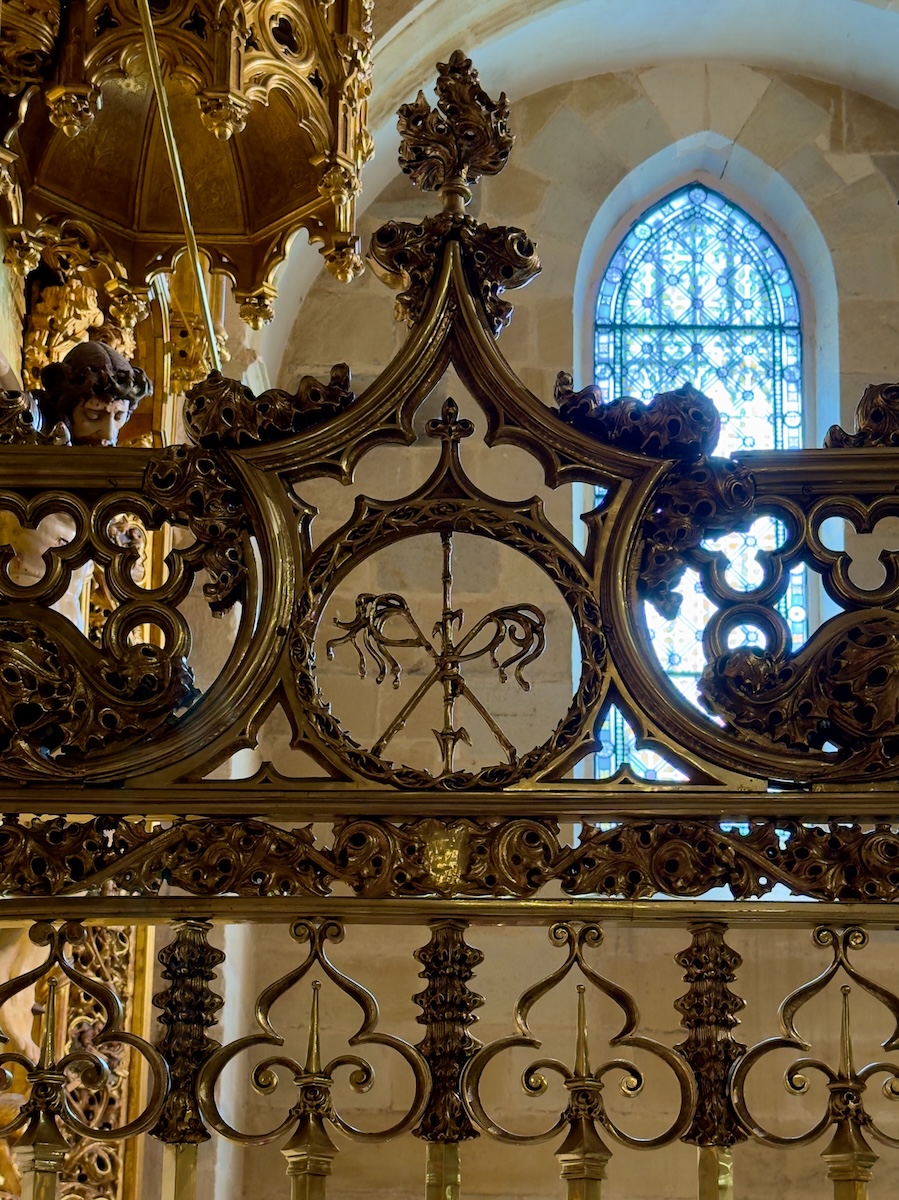
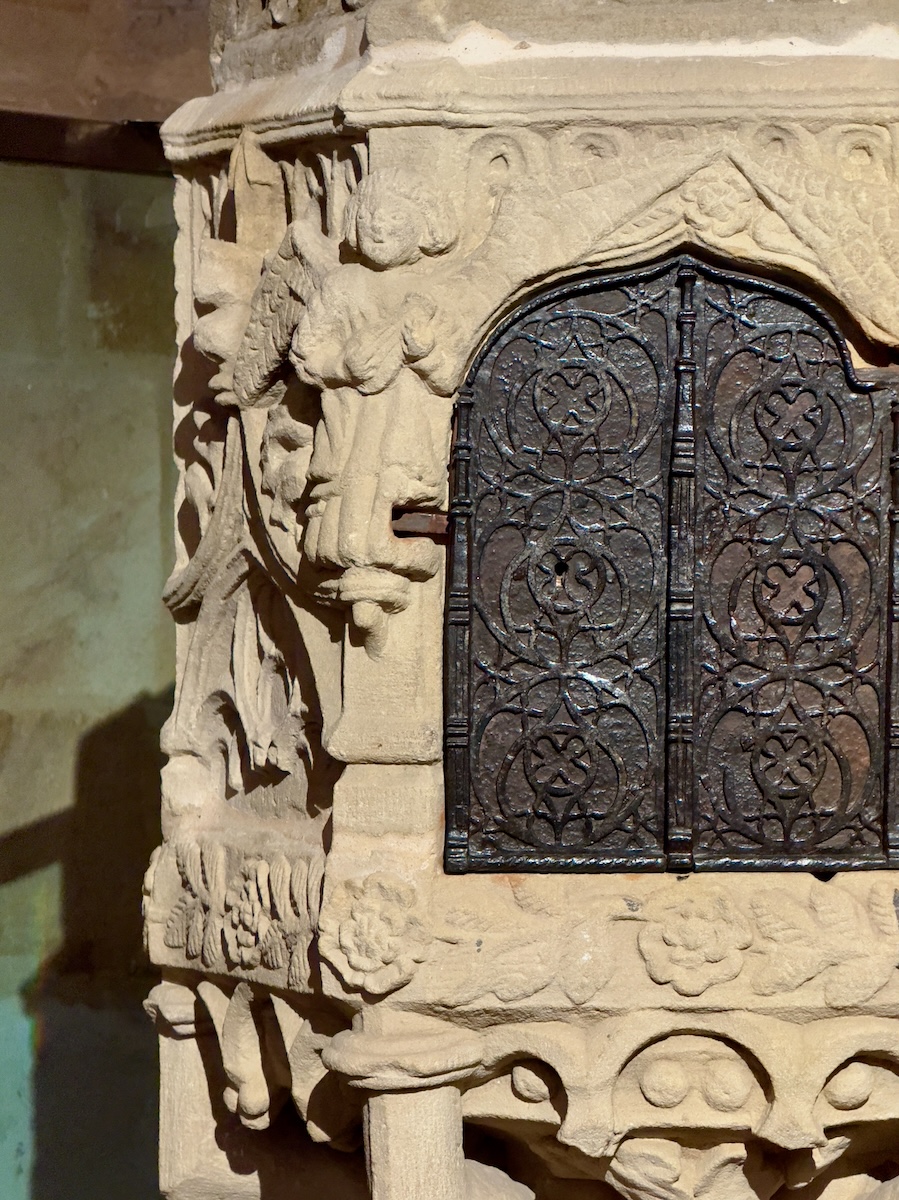
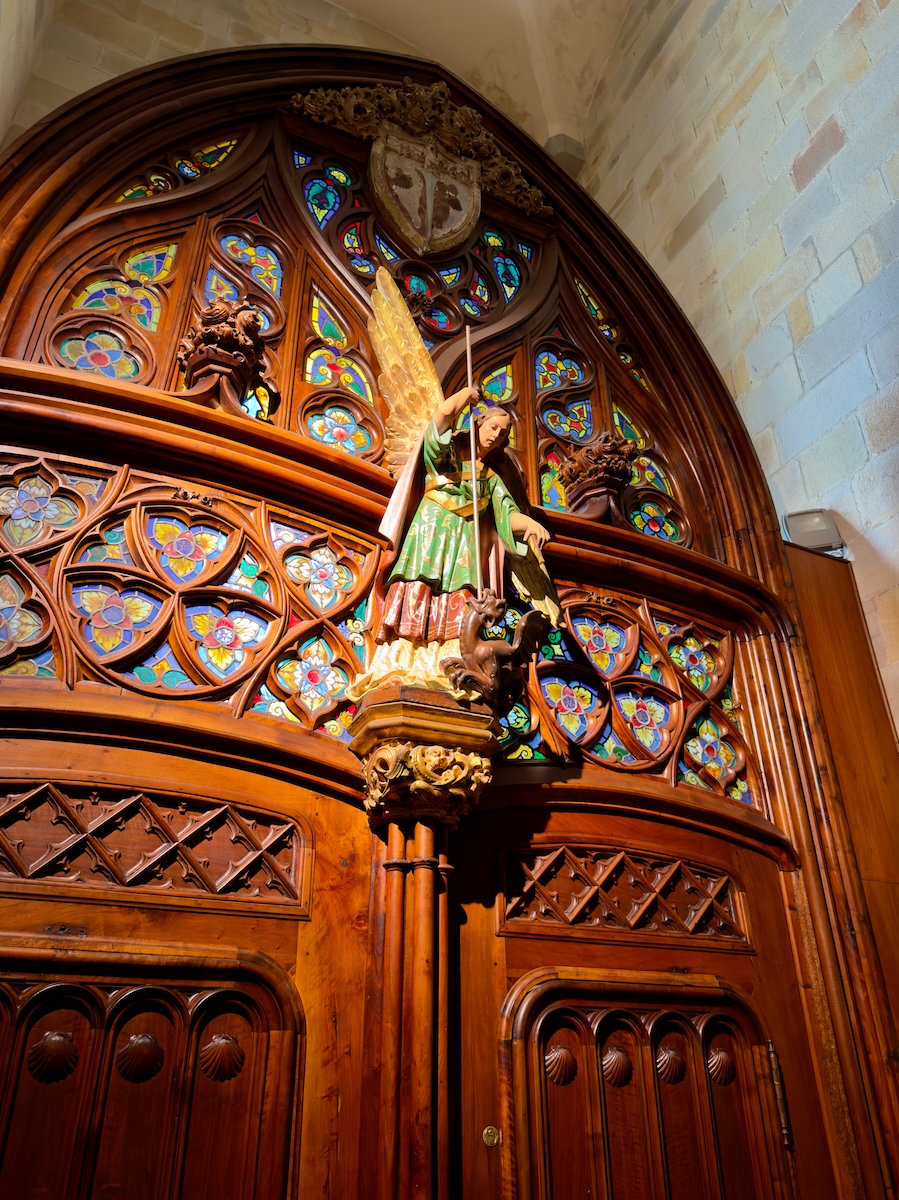
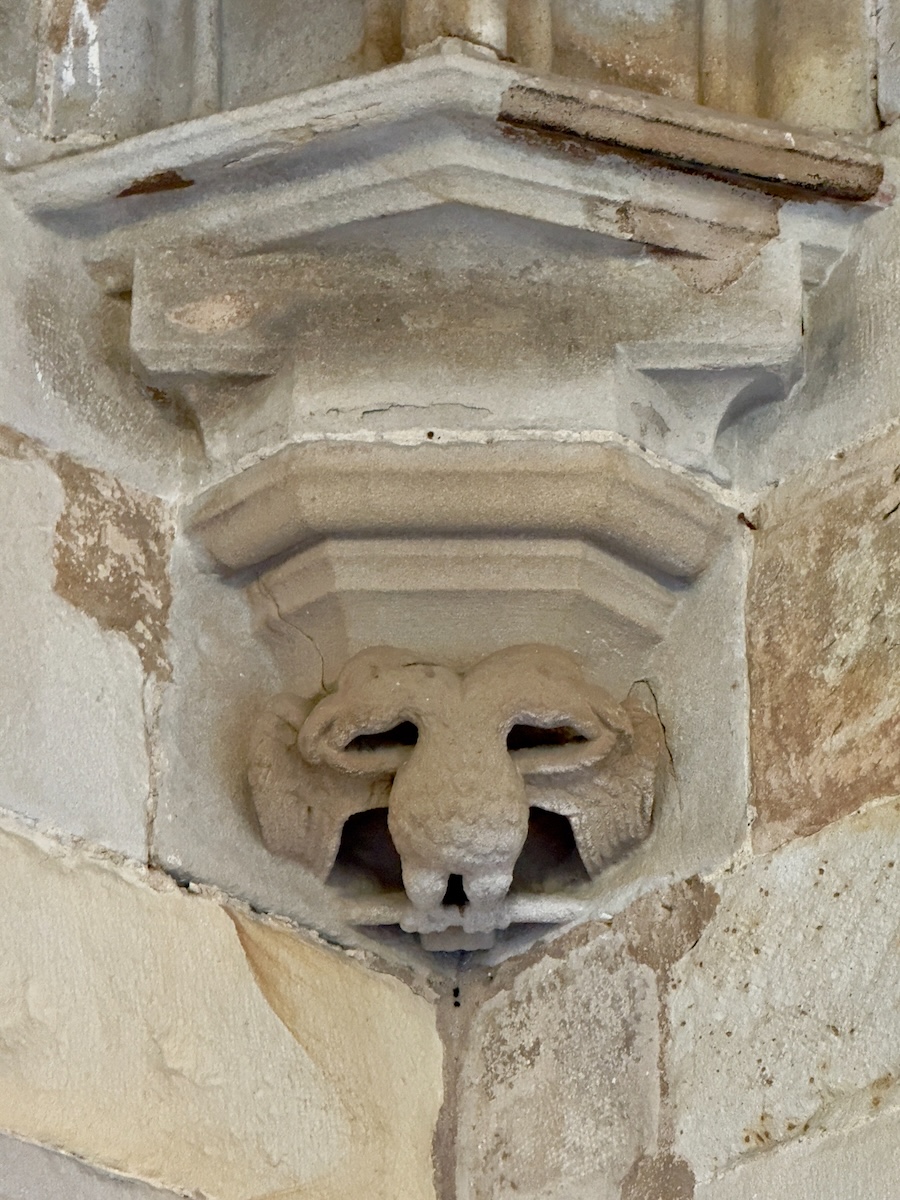
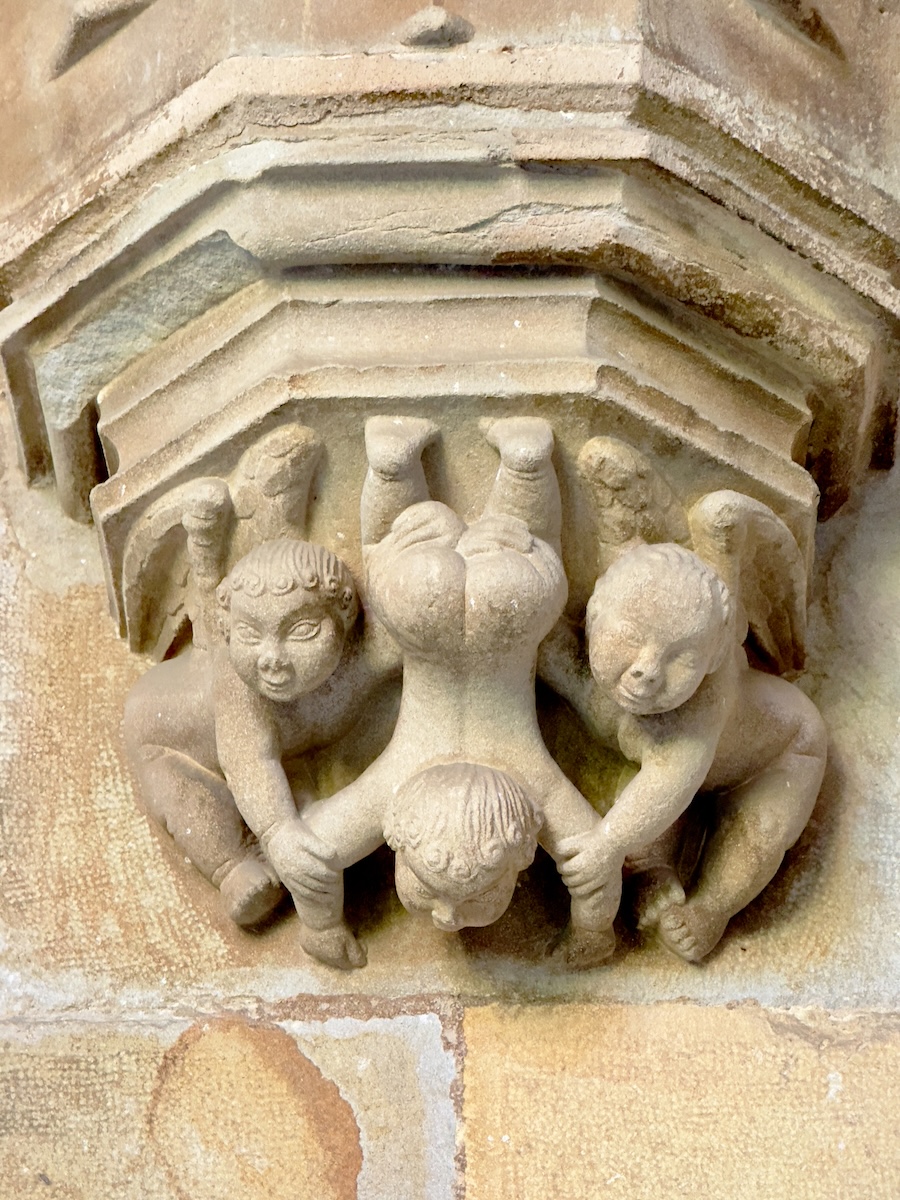
The cloister opens off the ambulatory, and it’s more than a quiet square of Gothic arcades. It was built over the old north cemetery in the early 1500s, then linked directly into the sacristy, which went up around the same time. A careful restoration in 1924 rebuilt its tracery, pinnacles, and roof cresting, giving the whole space a measured, delicate geometry that stands apart from the heavier stonework in the nave. In one corner stands the Angel Gate—the flamboyant Gothic entrance once used by coastal-route pilgrims heading for Santiago de Compostela, final stop of the Camino. It’s an unusual arrangement for what began as a parish church, and it creates a sequence you rarely get in Spain—ambulatory to cloister to pilgrim’s portal, each space narrowing until the city drops away entirely.
The cathedral didn’t even officially become a cathedral until 1950, when Rome finally elevated it from a basilica to the seat of a new diocese. Six hundred years of history before the title finally caught up. Bilbao often moves that way—quiet changes, taken on its own time.
When you step back outside, the Old Town folds around you again. The Seven Streets stretch out like aisles, each carrying a part of the city’s life—bars slinging pintxos, kids kicking soccer balls, someone yelling into a phone about nothing. The cathedral doesn’t tower over any of it. It blends in, which is exactly right. It wasn’t built to dominate the skyline. It was built to anchor the neighborhood.










Write a comment