

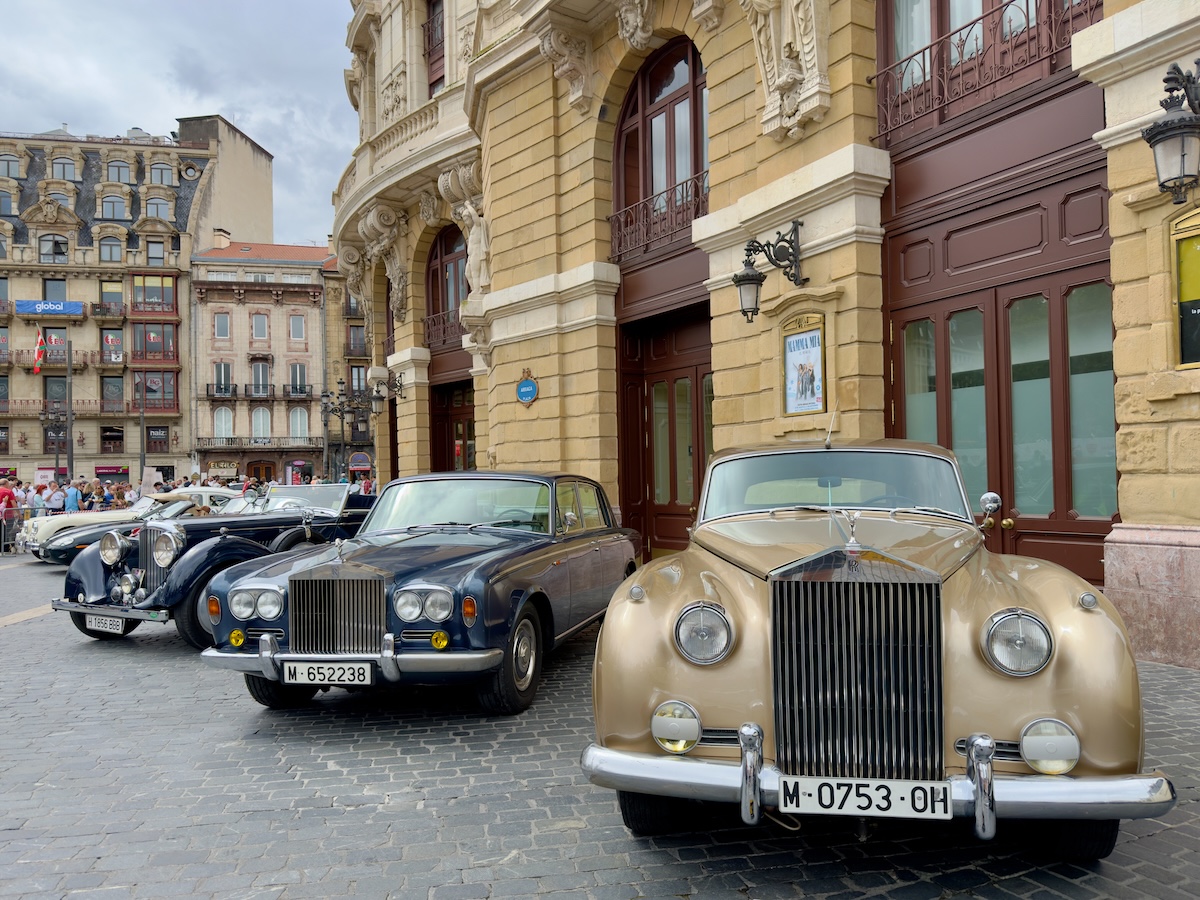
We were on our way to the Fine Arts Museum when Bilbao staged an ambush. One minute we were strolling along the river, talking about an imminent coffee mocha and whether we had the energy for a whole morning of paintings, and the next—cars! So. Many. Cars. Rows and rows of them circling the Teatro Arriaga like it was an open audition for The Italian Job sequel. A full-blown classic-car festival blocking our path in the most considerate way possible.
The banners said Festival Internacional Arte Sobre Ruedas–Villa Bilbao (Art on Wheels). The fine print said 1st edition, which made the whole thing feel even cooler. We’d caught Bilbao in the act of starting a new tradition. As first drafts go, it was wildly confident, with a couple hundred cars (and hundreds more scattered around the city, we learned later), some museum-grade icons, and a cheerful crowd that seemed perfectly at ease among machines worth more than our combined 401(k)s.
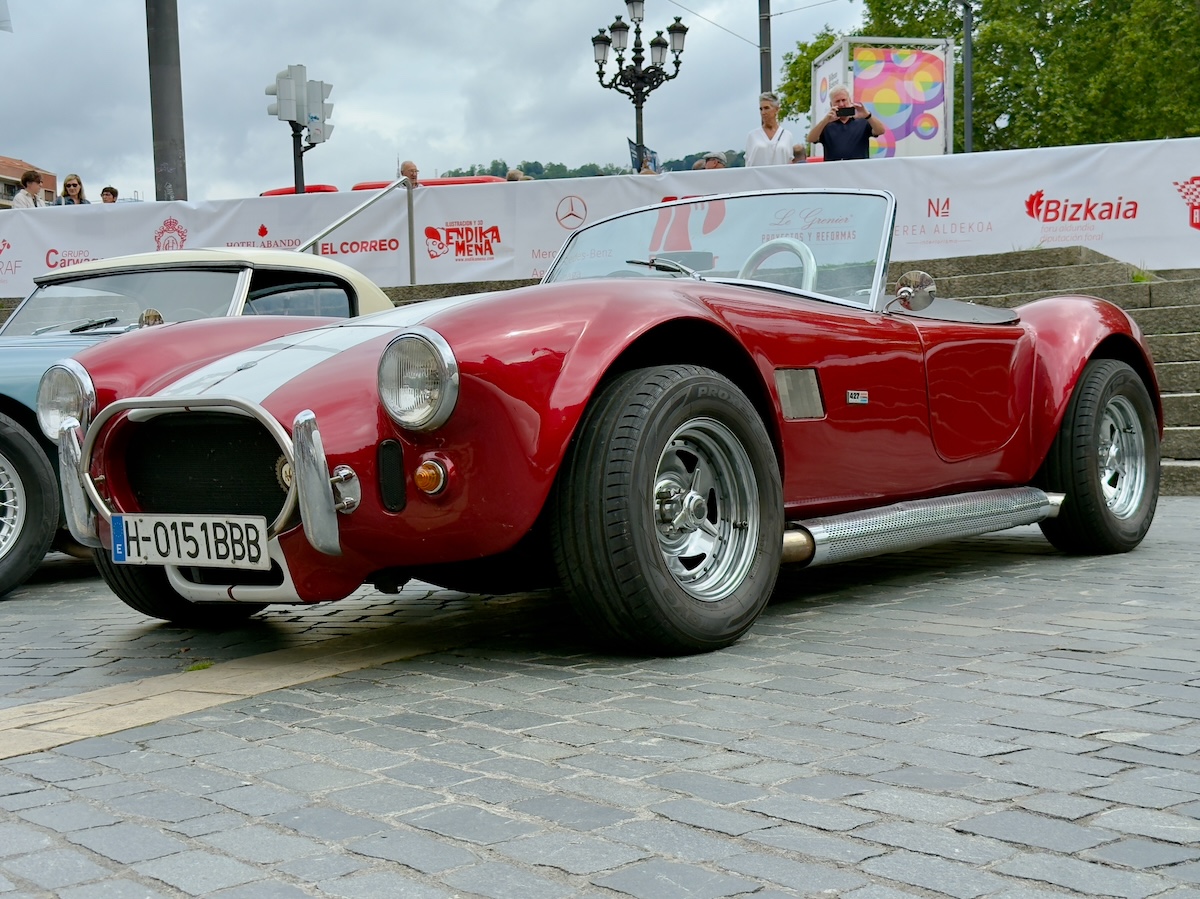
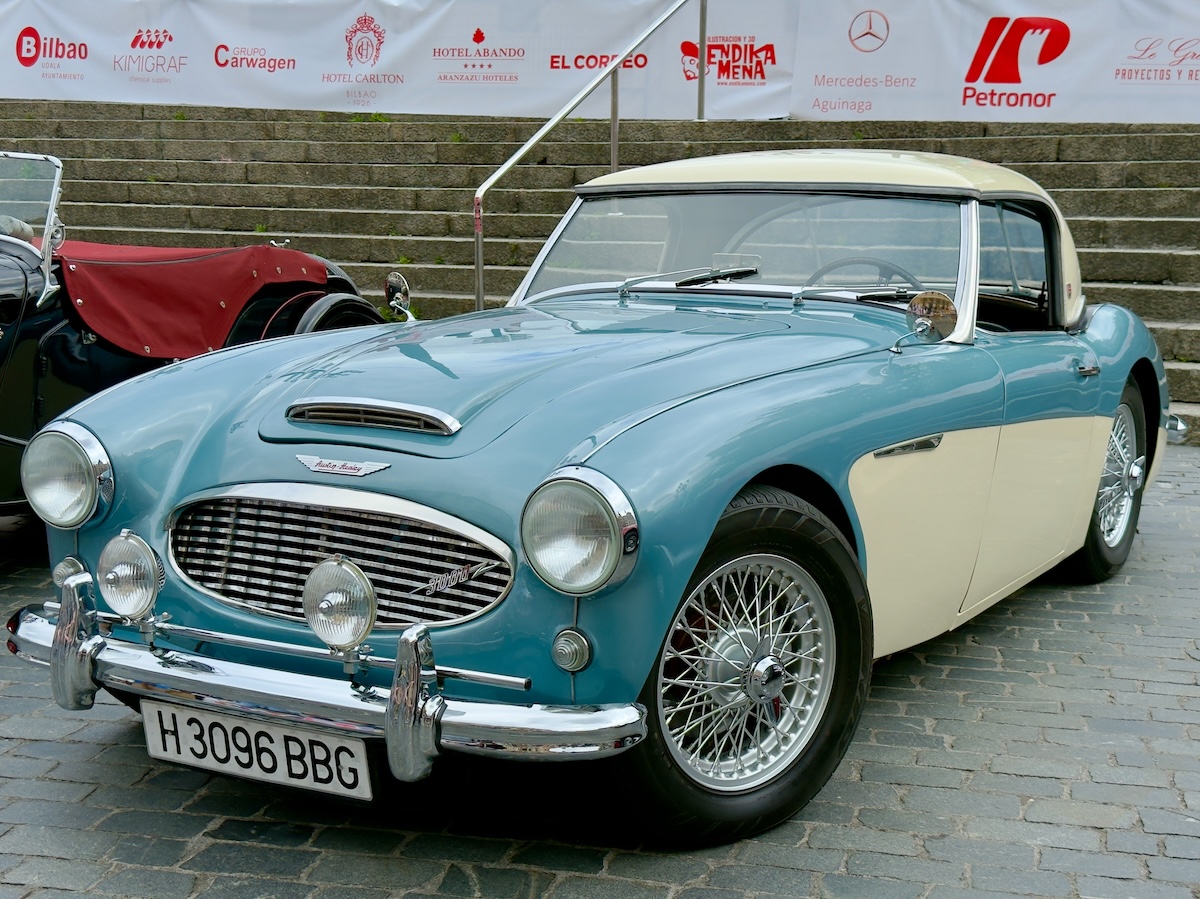
I was inclined to hurry past—after all, I promised Rick an art museum, and he does not share my fanboy love of a well-designed automobile. But we weren’t halfway through the sea of cars before I just couldn’t help myself. The show was irresistible. Not just because of the machines themselves—though that would’ve been enough—but because of the range. One minute we were lingering along a smug rainbow of Ferraris lining the river, all sharp edges and Pininfarina confidence, and the next we were nose to nose with something so old—and rare—that it had to have been delivered by a time machine.
If you’ve ever been to a classic-car event in the States, you know how they go—Mustangs, Corvettes, Camaros, and maybe an old Thunderbird, if you’re lucky. Helpful men in folding chairs talk up their carburetors. There’s a beauty to it, true. But this? This was cultural anthropology on wheels. Spain, France, Britain, Germany, Italy, Sweden, Romania, Russia—every nation apparently emptied its garage for the weekend’s extravaganza.
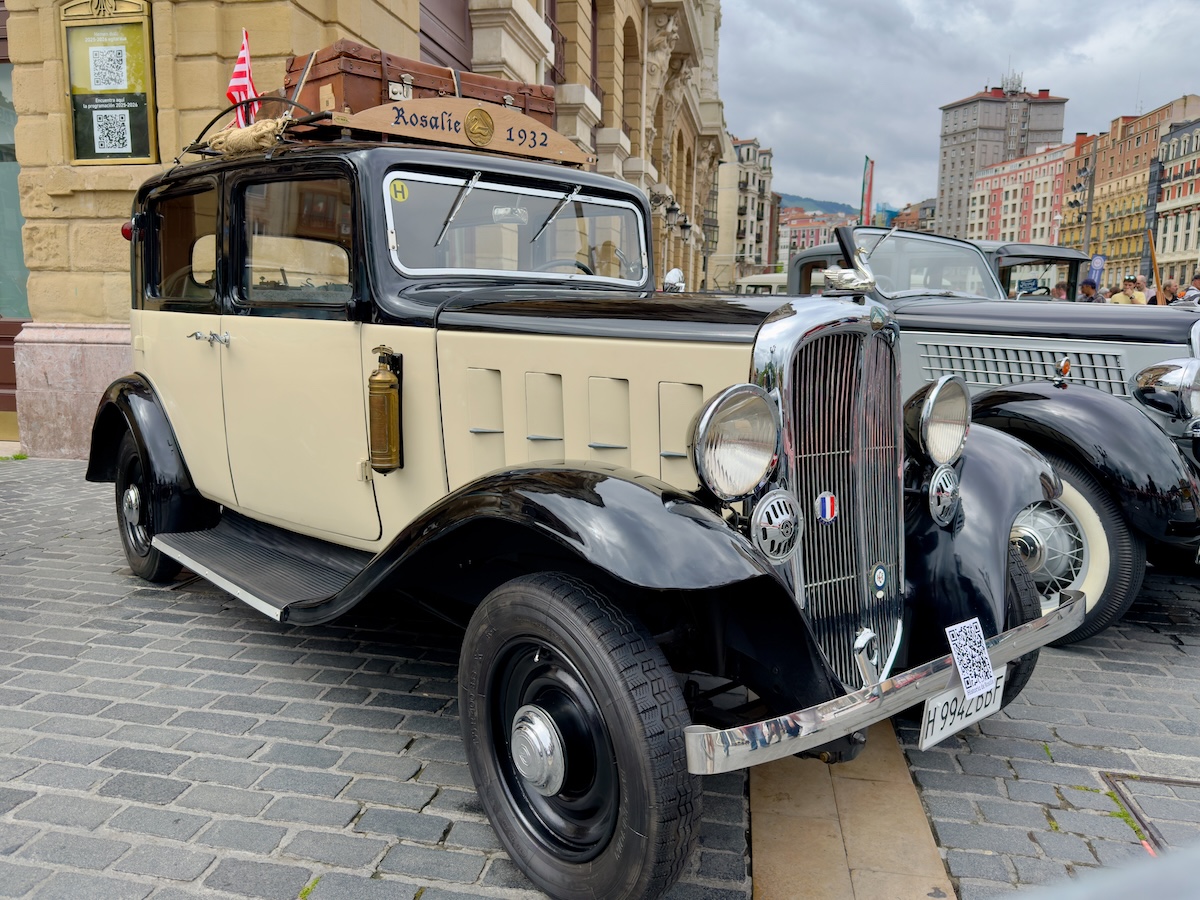
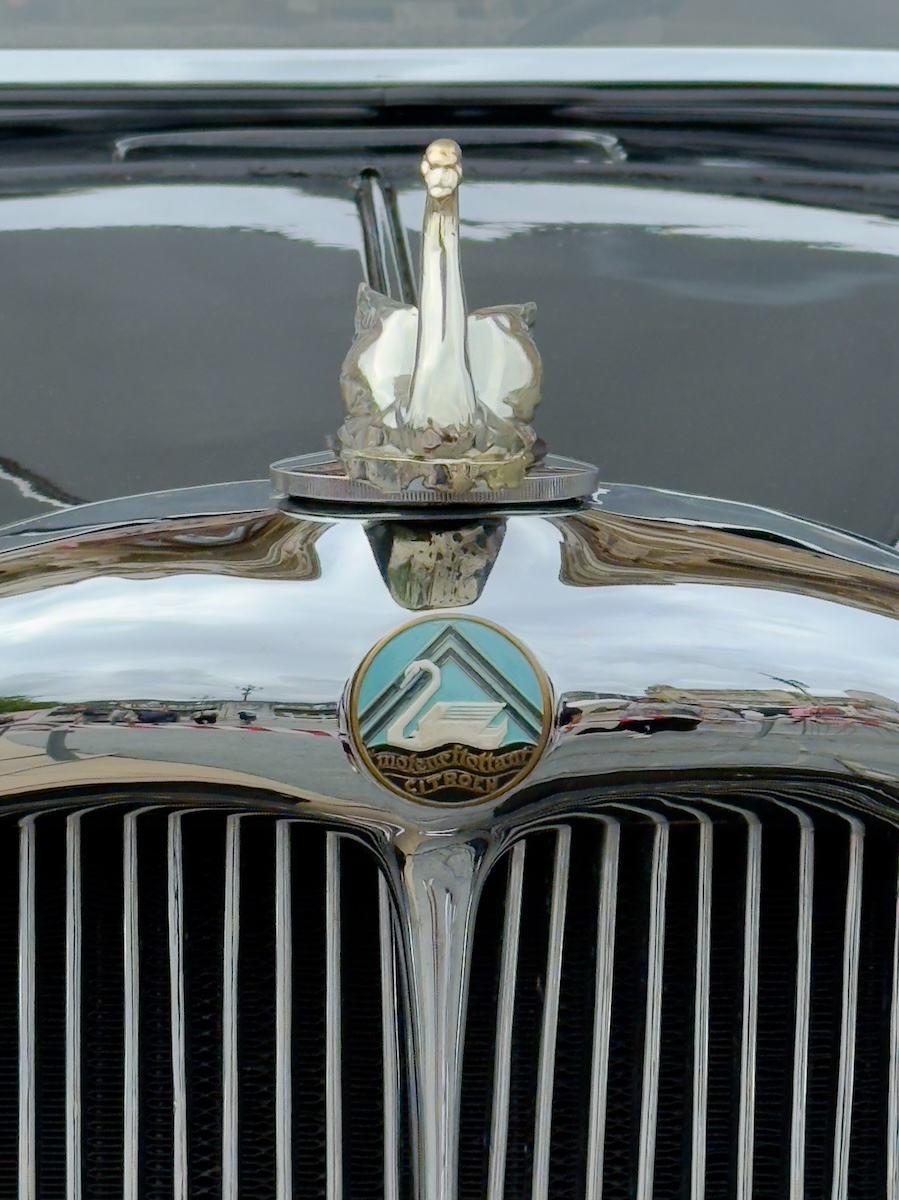
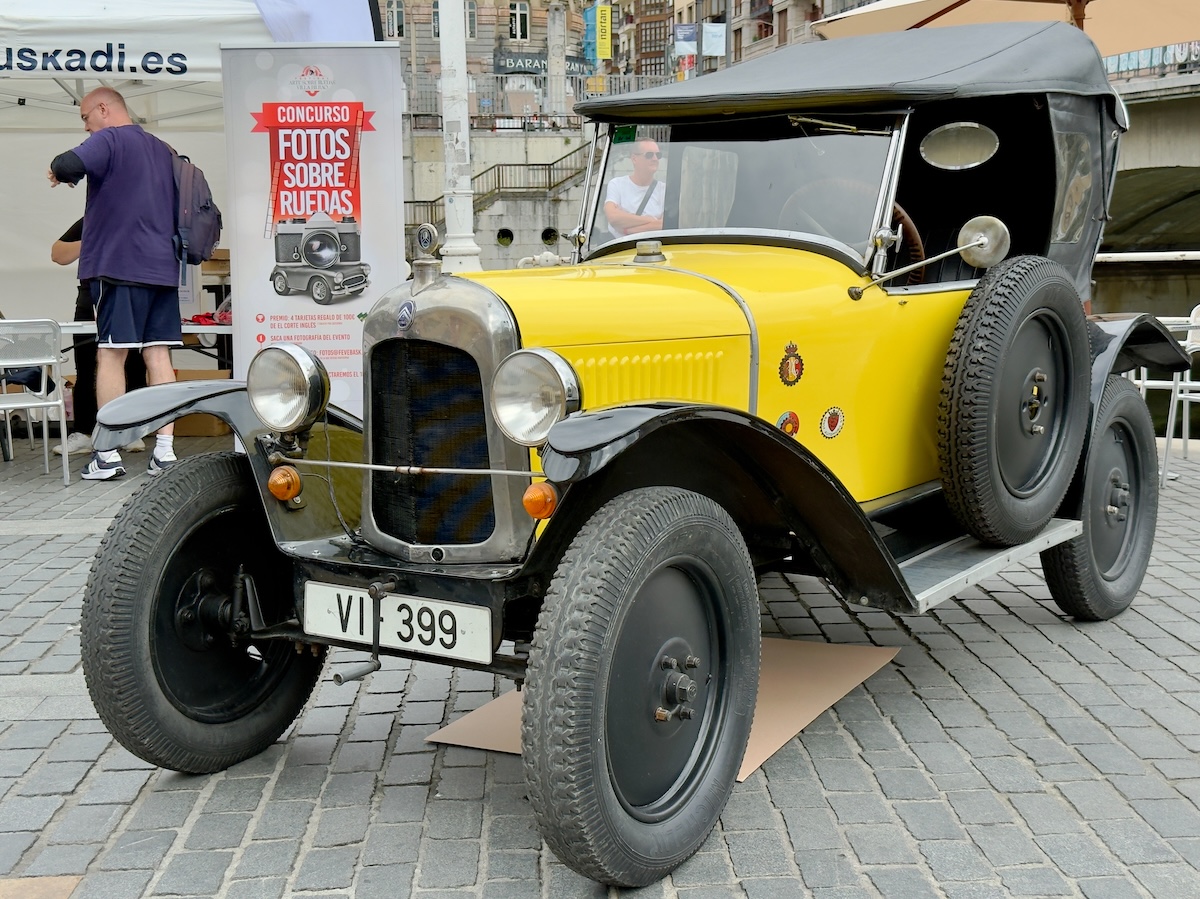
The first heartstopper was the Citroën Rosalie. Early 1930s, tall, upright, cream-colored, with a brass swan hood ornament so wonderfully theatrical it looked like it belonged onstage. Suicide doors. Delicate fenders. A stance that said, “You may address me as Mr. Rosalie, thank you. sniff” I can almost promise that you will never, ever see one of these at an American car show. People back home don’t even know this era of Citroën exists. The Traction Avant gets all the attention, but the Rosalie came first, quietly helping France modernize before aerodynamic design was even a rumor. Here it sat in Bilbao, perfectly restored, as if it had stepped out of an old Maurice Chevalier film.
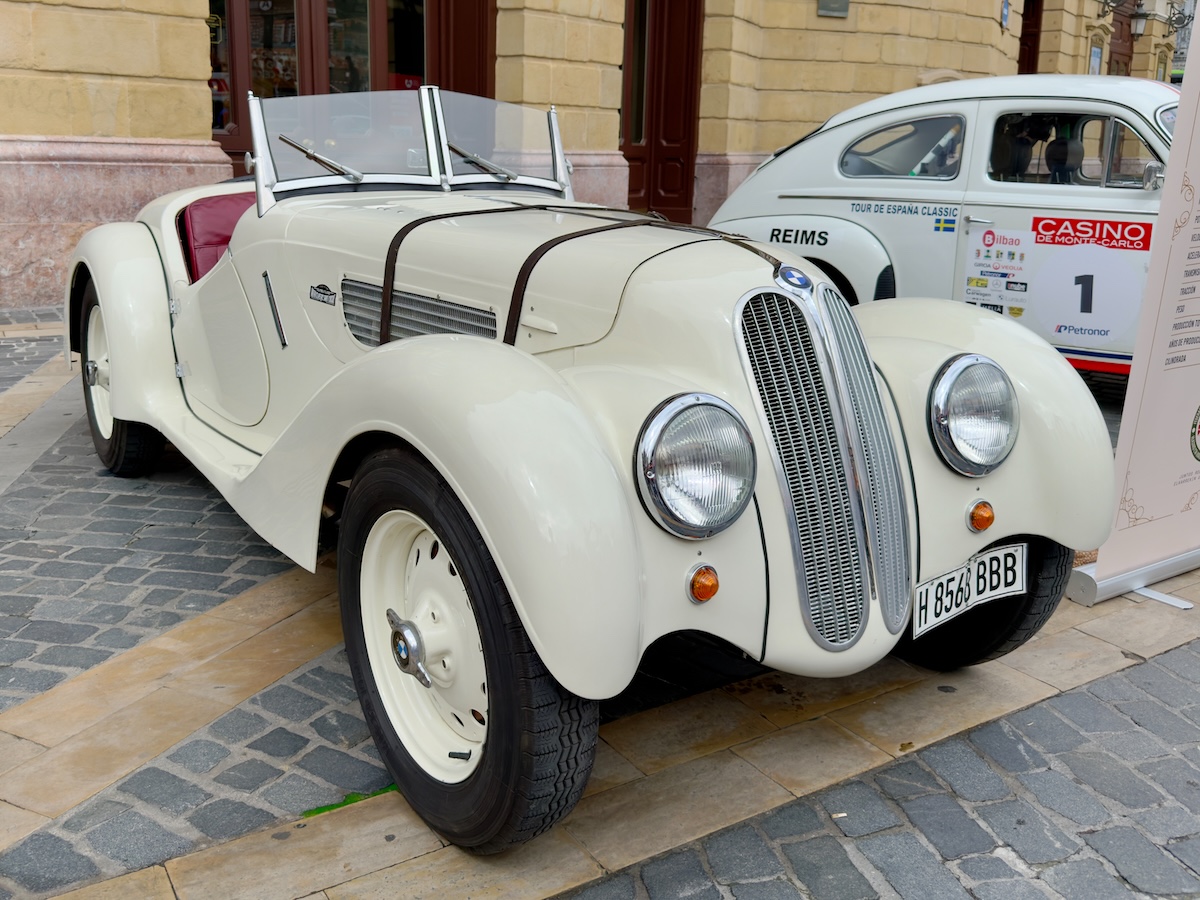
Just a few cars down was another knockout—a prewar BMW 327 Roadster, one of those gently streamlined shapes from the late 1930s. Modern BMWs have all the subtlety of a protein shake, but this thing? Long sweeping fenders, modest chrome, and a hood that looked hand-pressed. You’ll hardly ever see prewar BMWs, even in museums in the U.S., let alone parked casually in a plaza next to a man selling pintxos. It had that quiet self-assurance old cars sometimes get—“Yes, I’ve survived a big war or two. No, I don’t need attention. But thank you for noticing.”
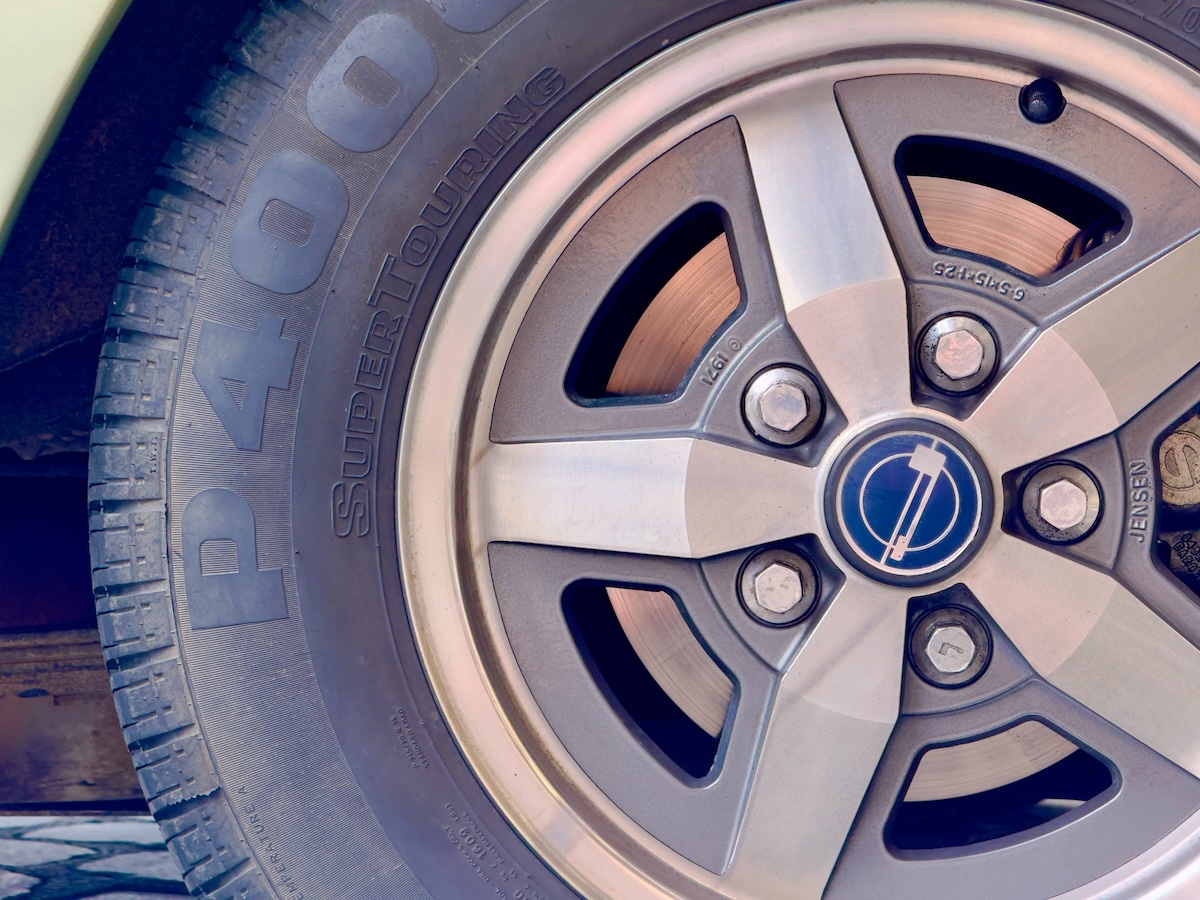
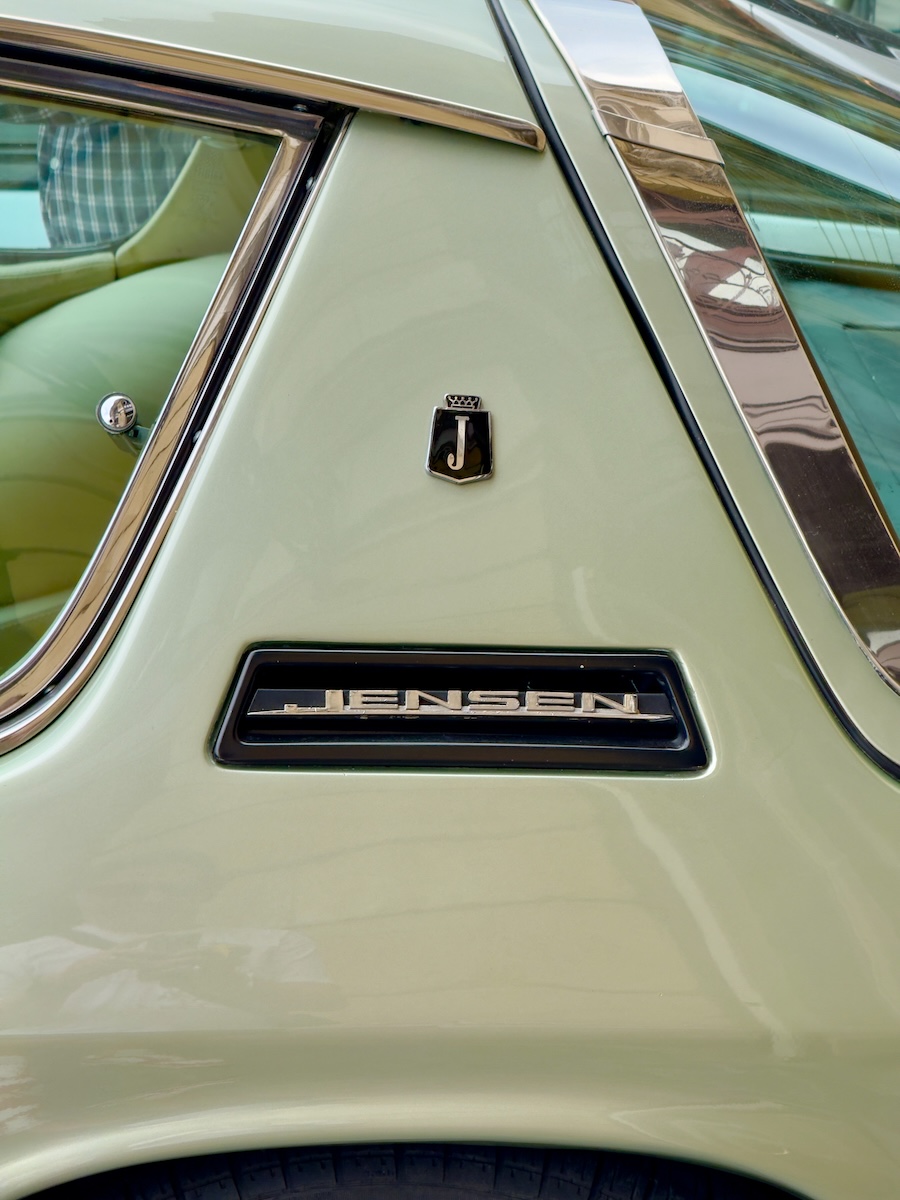
Then a head-spinning pivot into mid-century Britain. A Jensen Interceptor, deep blue, broad-shouldered, and shining like a polished gem. Americans know the name, but almost never the car. Picture a hand-built British grand tourer with a thumping American V8 under the hood, then add a massive wraparound glass hatch that shouldn't be structurally possible. It's glamorous, but in a durable way—James Bond would have driven one if he’d been more emotionally stable. This one looked like it had just coasted in from Monaco.
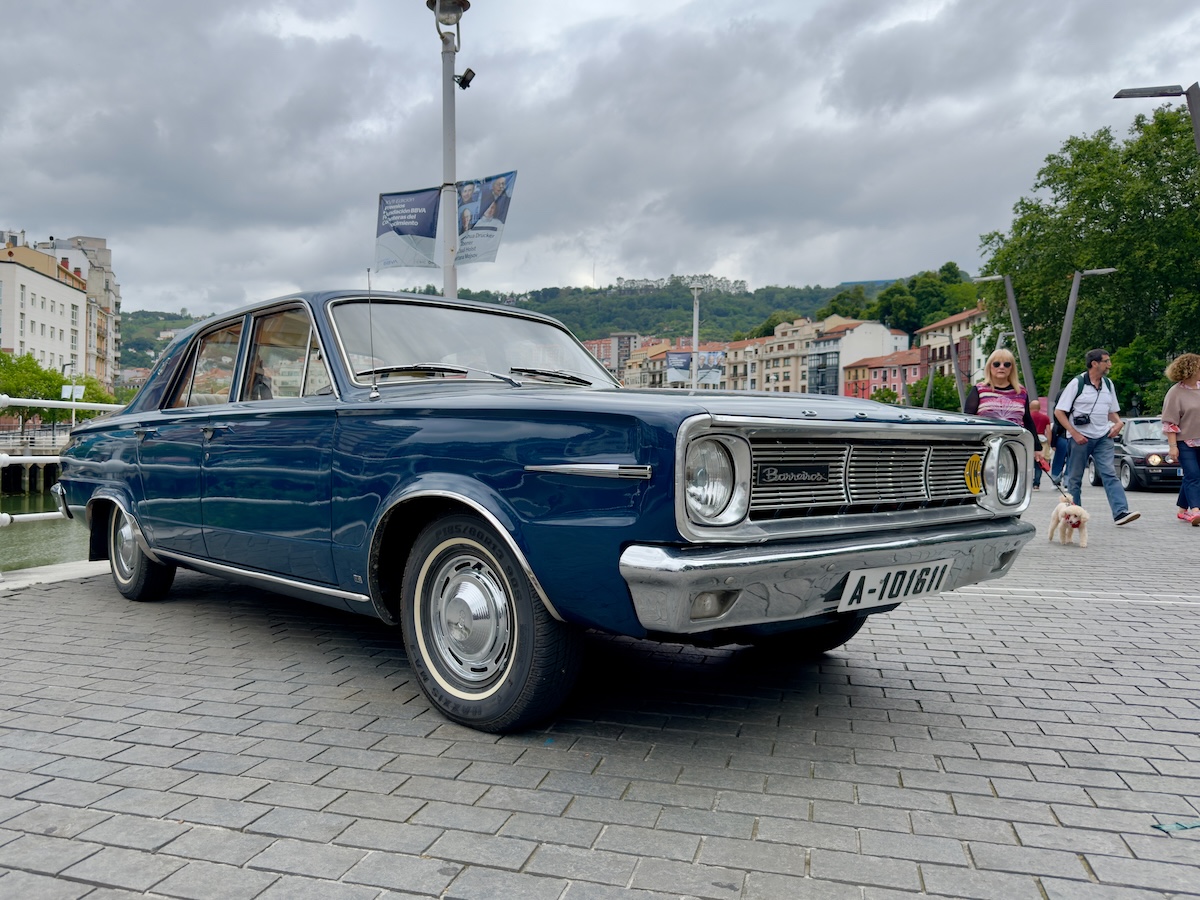
And then came the wild card near the end, the Dodge Barreiros Dart. A full-on American sedan built under license in Spain in the 1960s. I didn’t even realize Dodge *had* a Spanish branch. It looks familiar at first. The shape is pure Detroit. But the details are what break your brain—the Barreiros badge, the European bumpers, the narrow stance. It’s like meeting someone who looks exactly like your cousin but is cuter and speaks perfect Castilian Spanish. A Dodge Dart that studied abroad and came home “continental.” That alone makes it more interesting than half the American classics we’ve ever seen.
Six more worth slowing down for:
Mercedes-Benz 300 SL “Gullwing” (1954–63)
One of the few cars on earth you recognize instantly. Compact, flawless, silver paint over a red cabin—and those upward-reaching doors that look like engineering sorcery even today. In the U.S., this thing only appears behind velvet ropes, stanchions, and one crabby guard. In Bilbao, it sat politely sunning itself on the plaza.
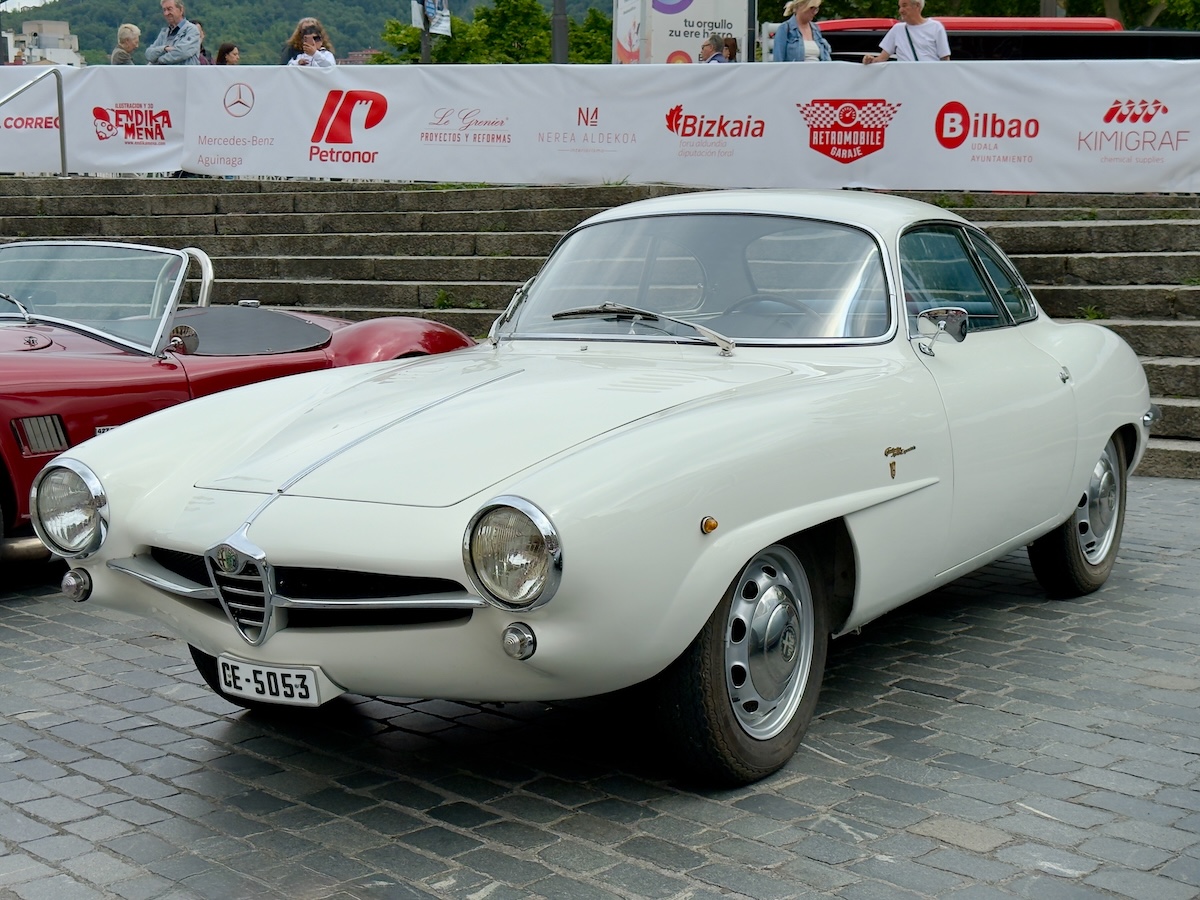
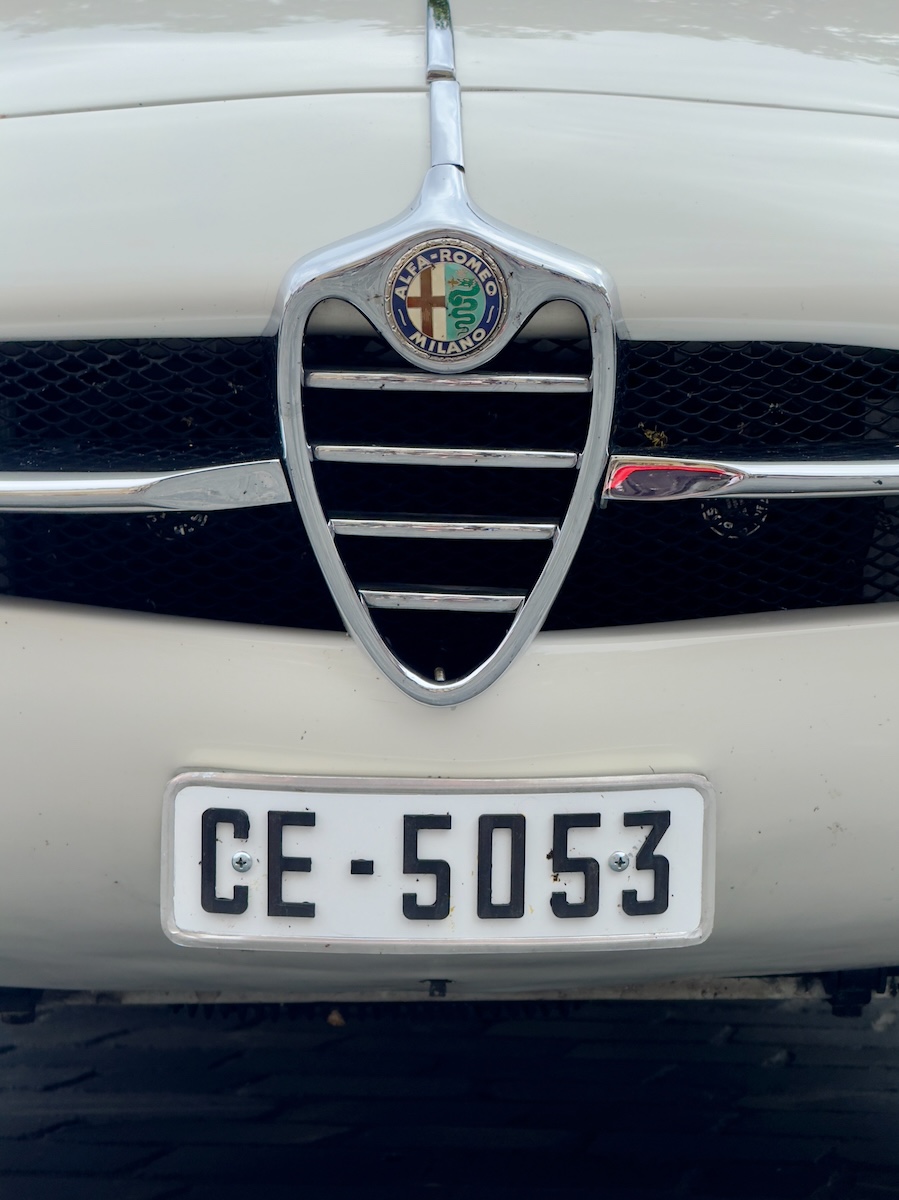
Alfa Romeo Sprint Speciale (1960–66)
All curves, no hesitation. A wind-tunnel fantasy that looks molded, not built. Americans rarely encounter an SS in real life — half the crowd probably thought it was a prototype someone accidentally let onto public streets.
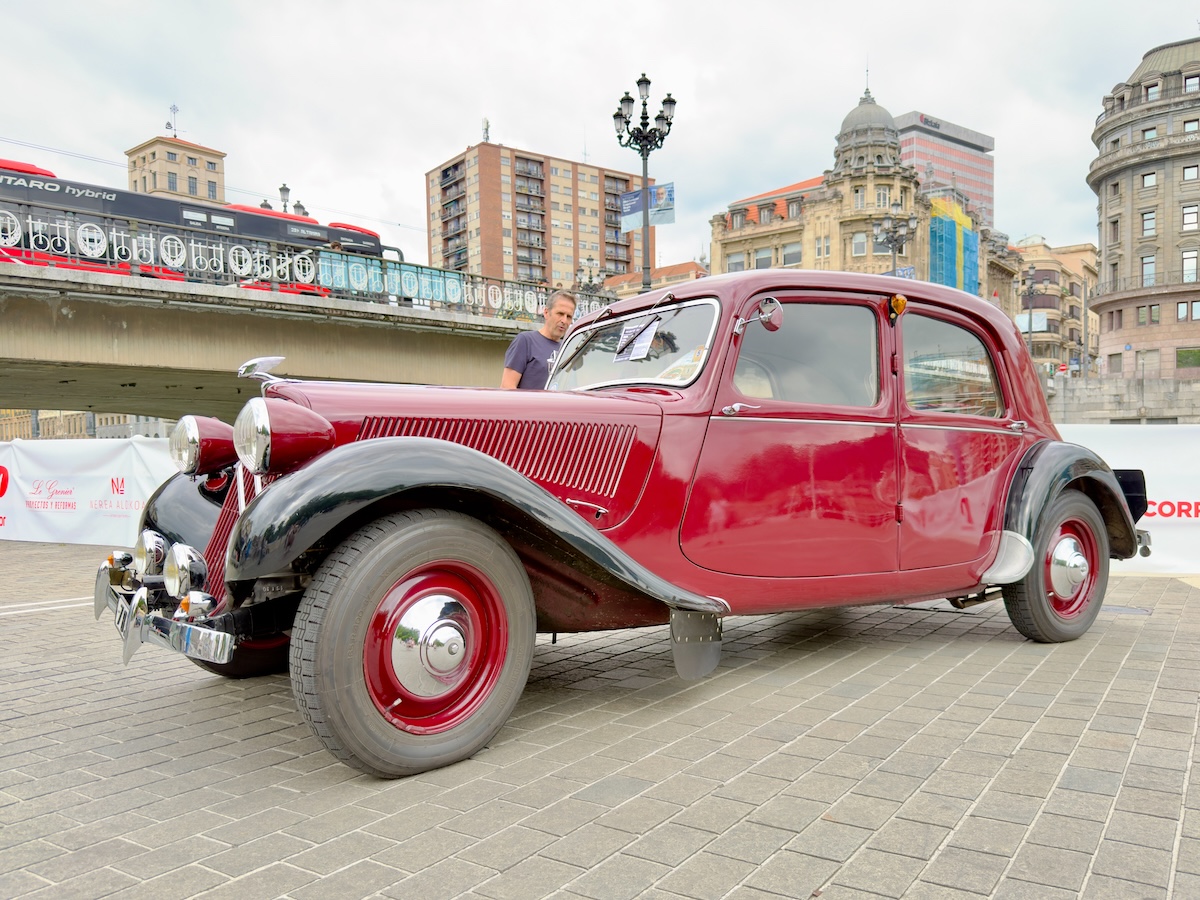
Citroën Traction Avant (1934–57)
The most elegant machine ever shared by French gangsters and Resistance fighters. Front-wheel drive, unibody construction, and a silhouette that looks almost weirdly contemporary. If you squint hard enough. A milestone of European engineering disguised as a family sedan.
BMW M1 (1978–81)
BMW’s one and only supercar—a limited-run wedge with the posture of something that demands a spotlight wherever it goes. Most Americans will go their entire lives without seeing an M1 parked on open pavement.
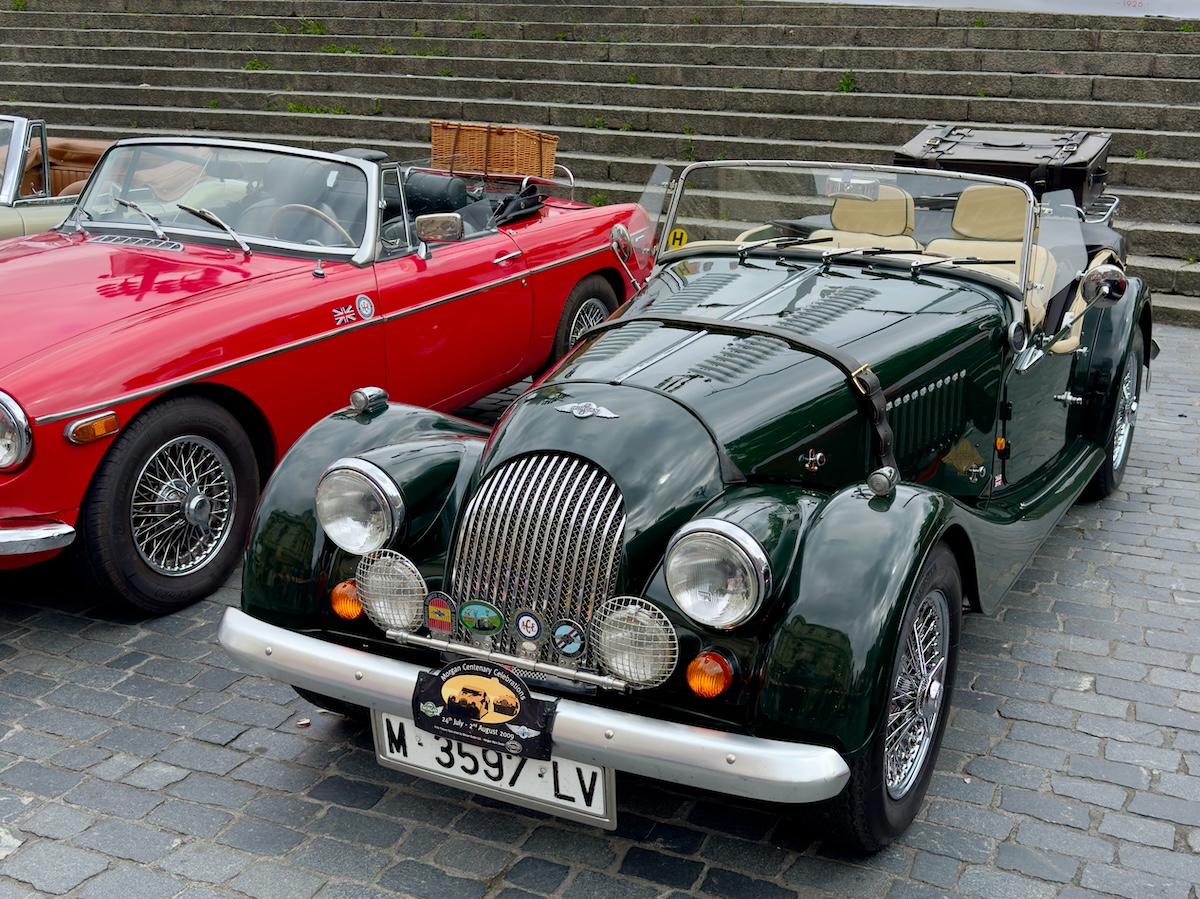
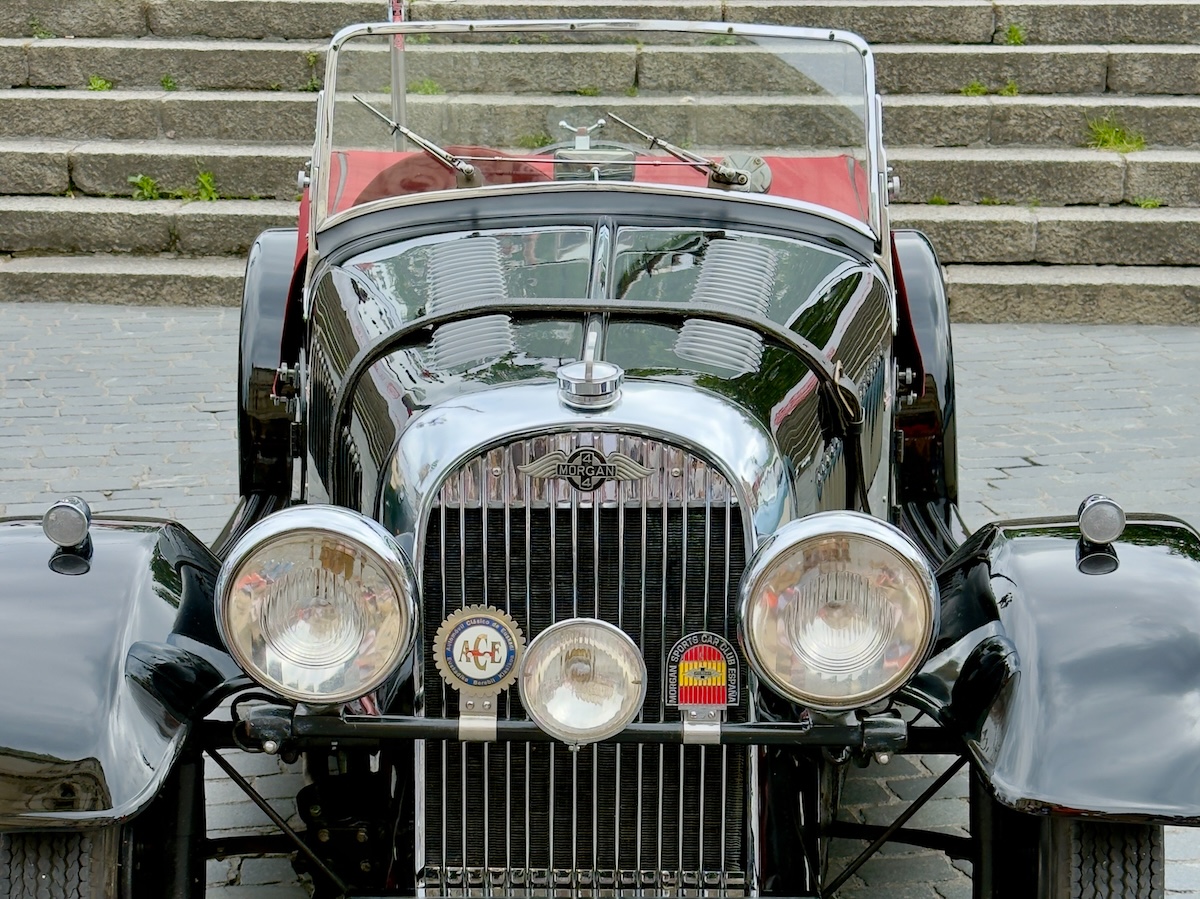
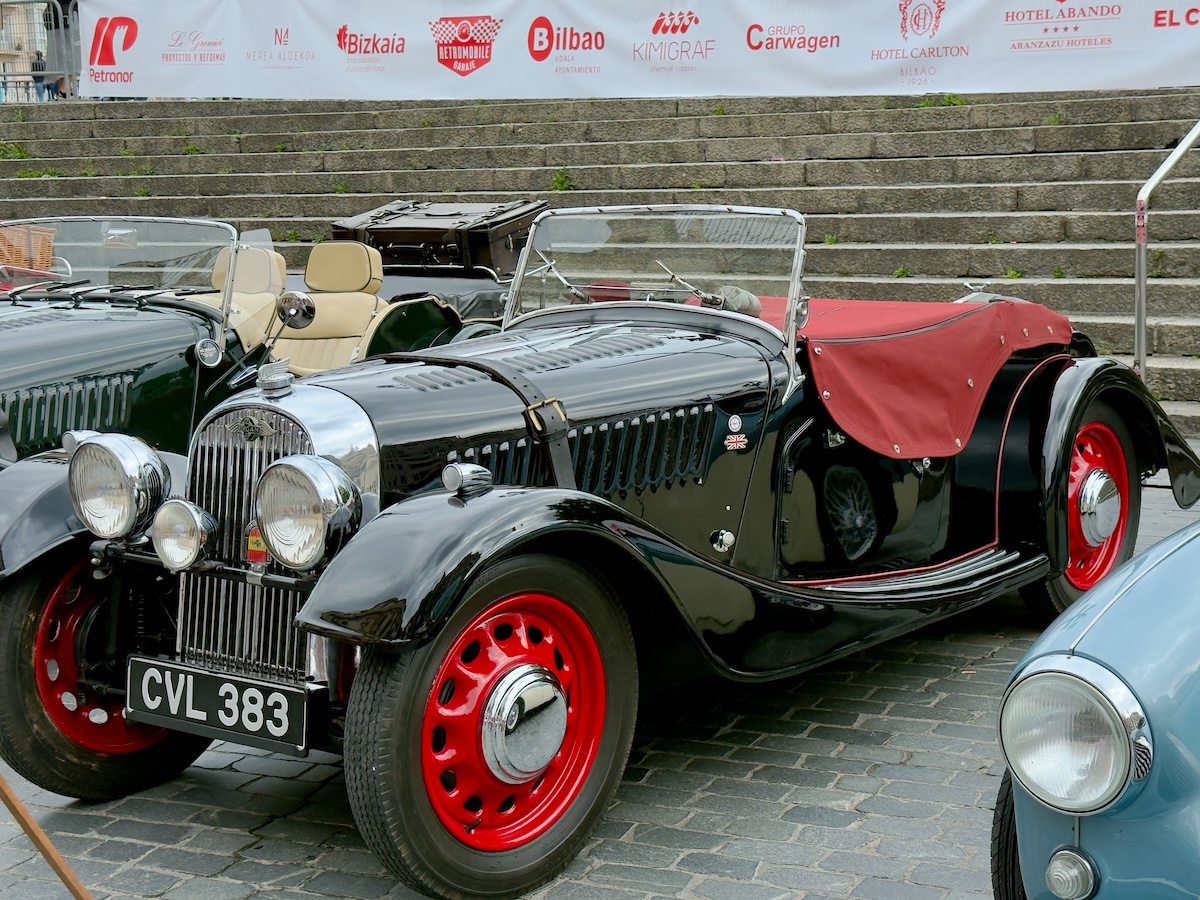
Morgan (pair, 1950s)
Two English charmers, each with its own personality. The green Plus 4 had all the meticulousness of someone who irons their underwear. The black-and-red 4/4 leaned a bit more mischievous. They look delicate, but both could outlast a stone wall.
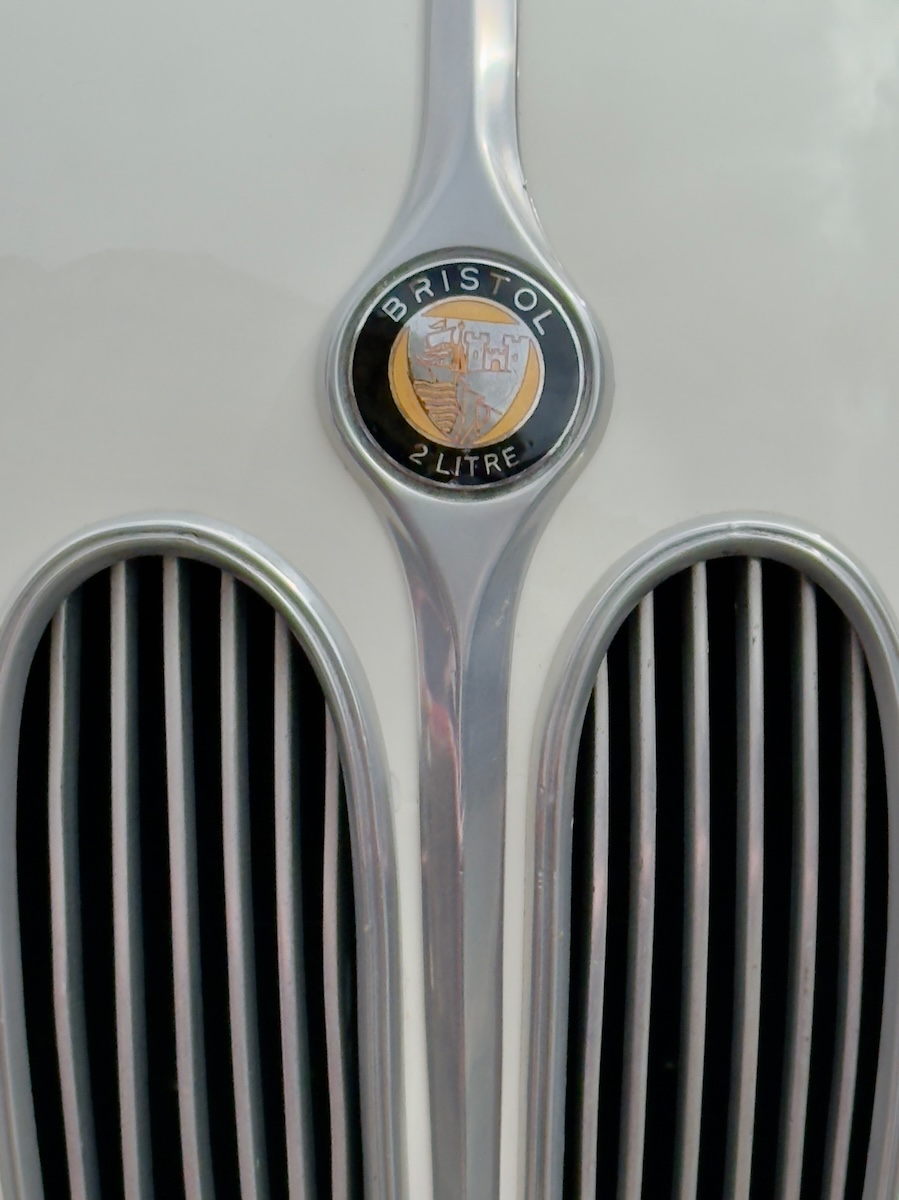
Bristol 402 Drophead (1949–50)
A true unicorn. Bristol only built maybe 40 of these after WWII, and barely any survived. Smooth nose, long fenders, a folding roof that looks hand-stitched. It carries itself with a quiet postwar confidence — a car built for people who still believed in tailored suits, handwritten notes, and weekends in the countryside.
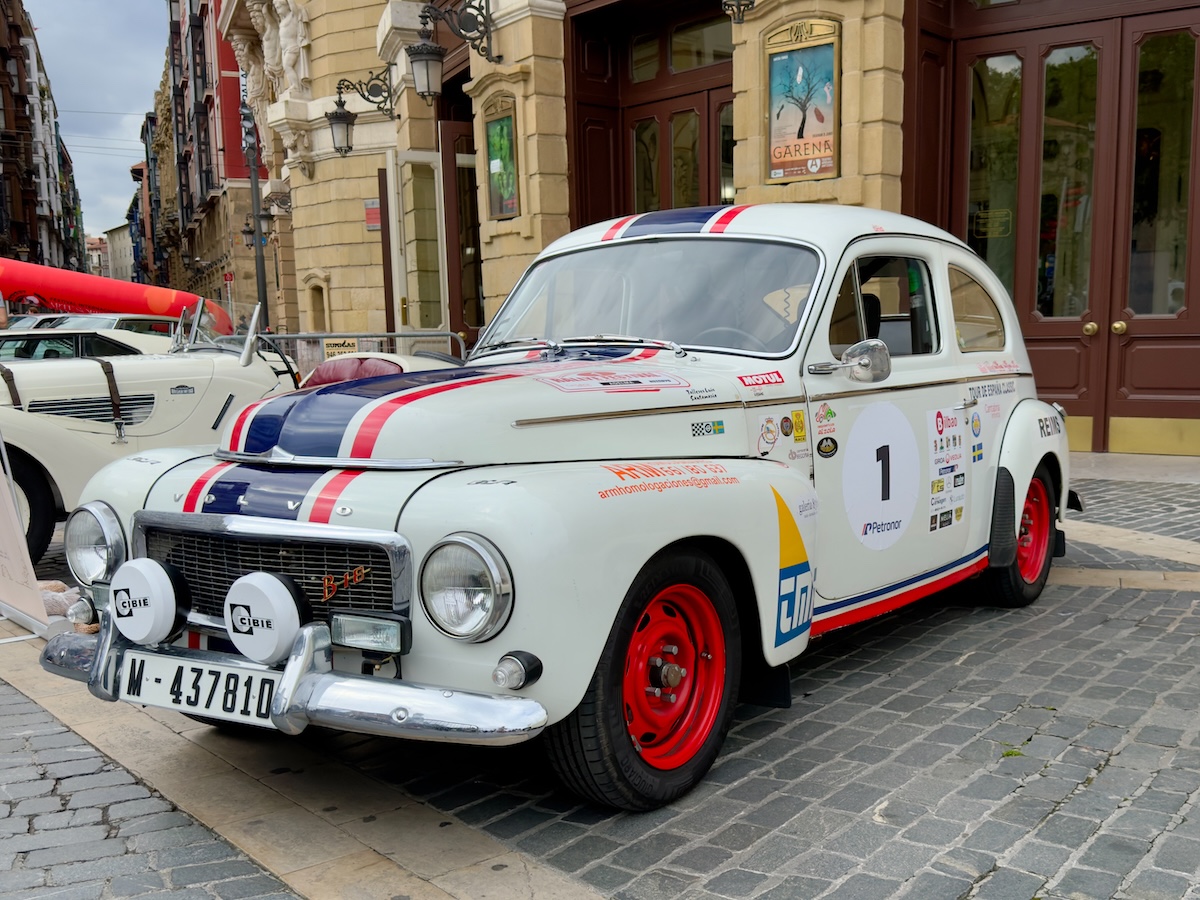
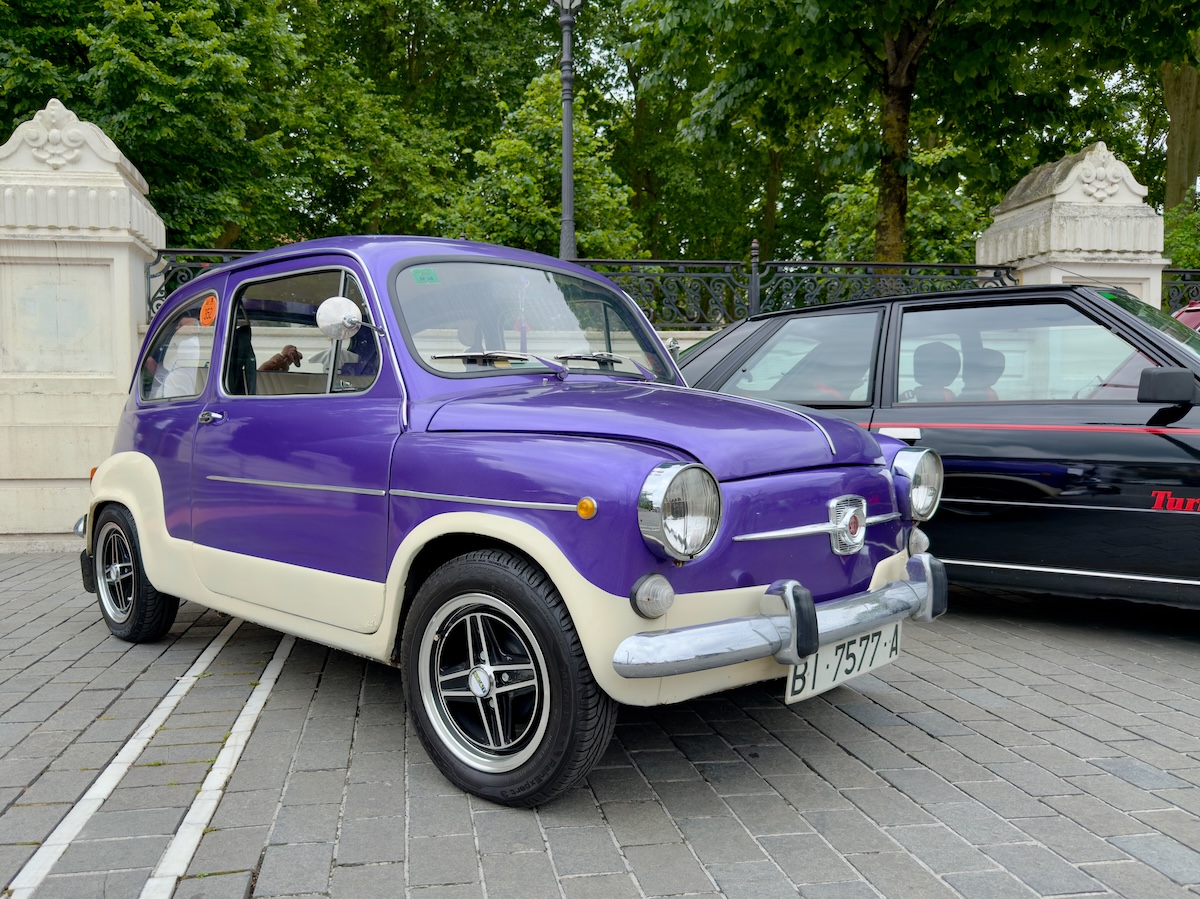
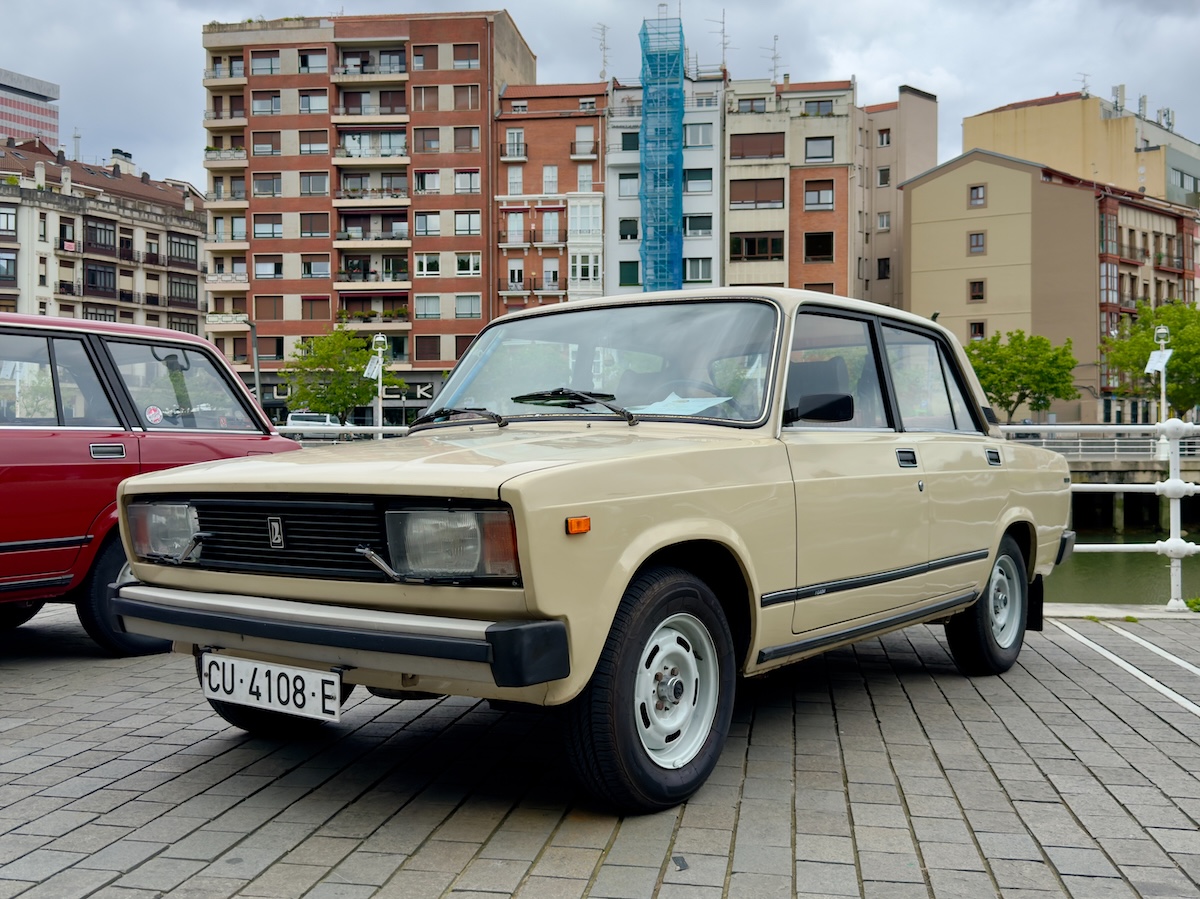
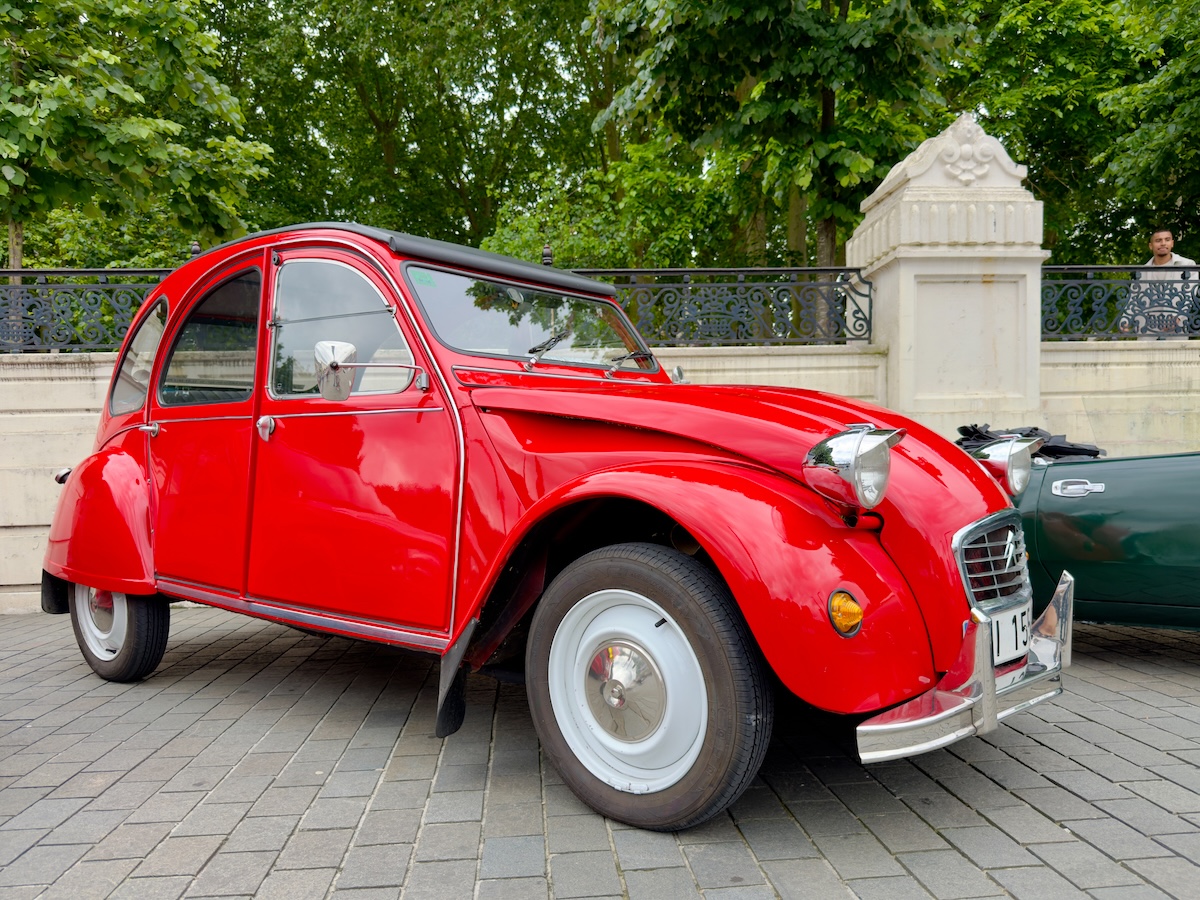
Between these heavy hitters were all sorts of irresistible side characters. A Volvo PV544 done up like a rally hooligan, all stripes and spotlights, looking ready to fling gravel at spectators. A purple-and-cream SEAT 600—the car that motorized Spain—wearing custom paint with the confidence of a teenager who got into a good art school. A Citroën 2CV, cheerfully red, wobbled slightly even while parked. A Soviet-era Lada sedan, square and earnest, the automotive equivalent of a loyalty program no one asked to join. And a Volvo 480 Turbo, which is what happened when Sweden temporarily lost its mind and built a sports hatchback with pop-up headlights.
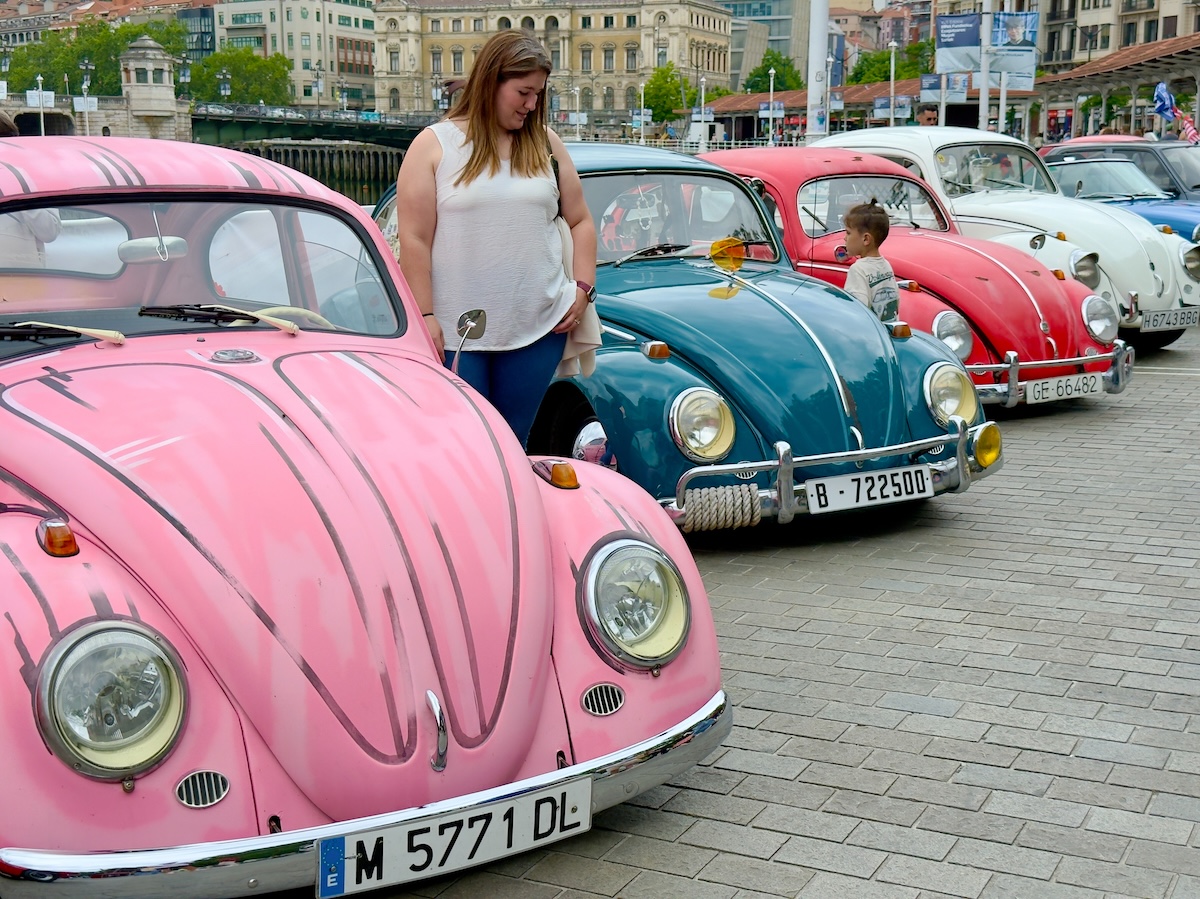
And then, as if Bilbao wanted to remind us it still had a sense of humor, a whole rainbow of Volkswagen Beetles lined up like a bag of Skittles with license plates. Pink, teal, white, red, yellow. The kind of lineup that makes you smile even if you’ve never cared about cars in your life.
By the time we finally turned toward the Fine Arts Museum, we’d forgotten entirely where we were going. Bilbao had staged a pop-up automotive opera, and we’d arrived just in time for the overture.












Write a comment