
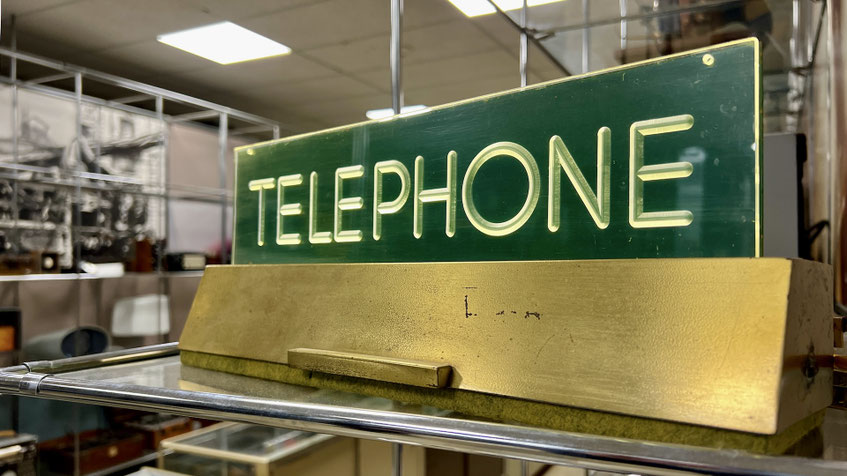
The very day after wandering (gingerly) through Seattle’s Georgetown Steam Plant, I decided to continue my streak of infrastructural archaeology with a visit to the Connections Museum. Yes, I hear you—we’re not off to a great start here.
A museum devoted to the history of telecommunications is, admittedly, roughly as exciting as attending a 9-hour seminar on revising customer service metrics at the DMV. In my experience, it’s the sort of topic capable of murdering a conversation before it’s even begun. For years, when people at parties asked what I did for a living, I learned to stop after saying, somewhat enigmatically, “I’m in marketing.”
People lean in. They’re interested. But add "for the phone company," and you could literally watch their souls leave their bodies.
Which was sad, because I accidentally spent about 75% of my professional life working in the long shadow of Ma Bell—whether it was called USWest, Qwest, CenturyLink, or Lumen. The names, logos, and web addresses changed to match the latest acquisition. The underlying telecommunications infrastructure changed more slowly. Glacially.
That infrastructure is easy to ignore because it generally works. You pick up a phone, make a call, send a text, join a Zoom meeting, or stream cat videos without caring too much about how that happens. Most people only think about telecommunications when something breaks.
The Connections Museum is for people who want to know what happens before it breaks. Or, more accurately, it exists for people who look at a room full of obsolete switching equipment and think, “You know what this needs? Several hundred volunteer hours of my free time!”
As it turns out, a room full of people voluntarily restoring obsolete telecommunications equipment has surprisingly little in common with the DMV. I swear.
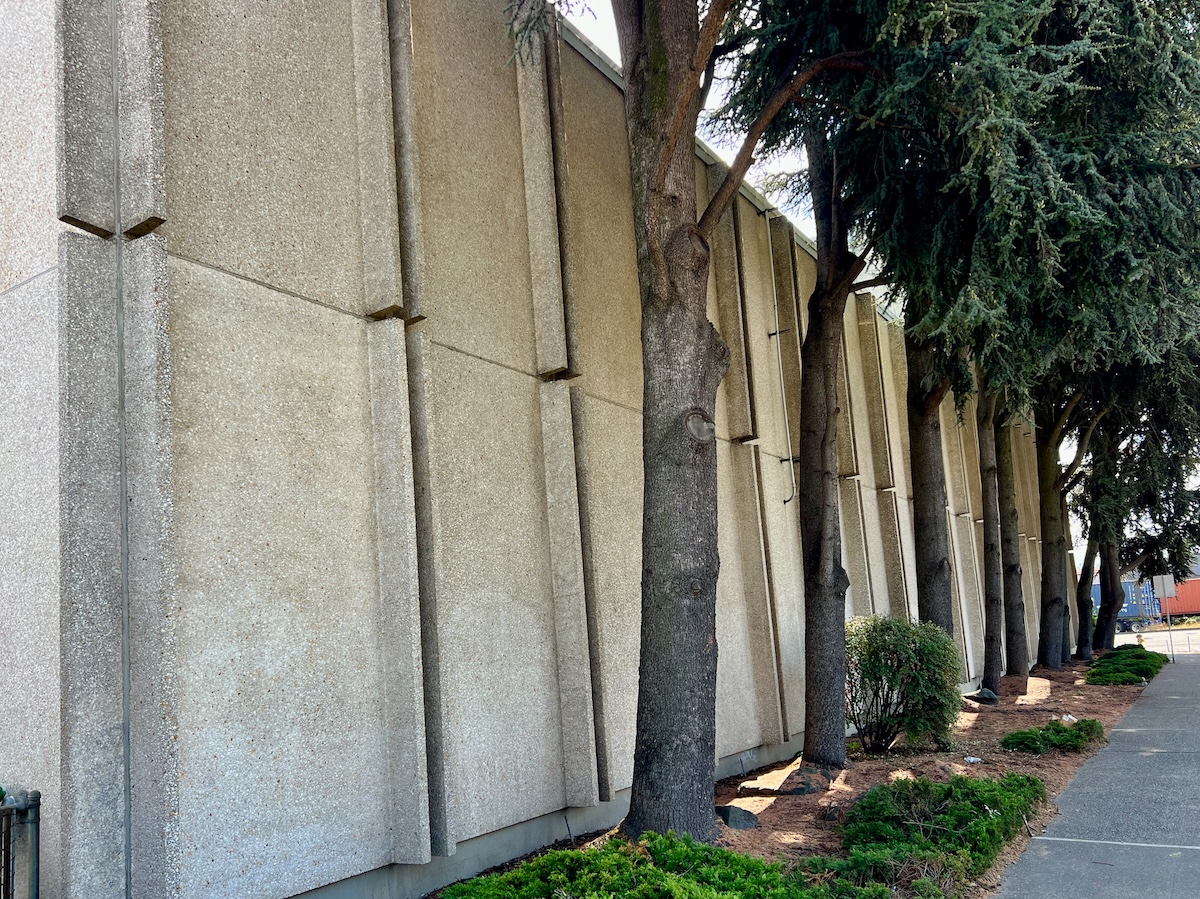
The museum occupies the third floor of a former telephone central office (“CO” in the lingo, if you cared) in Seattle’s Georgetown neighborhood. If you’ve never seen a telephone central office, don’t feel bad. Most people haven’t. Or they have and didn’t know it. They’re the sort of buildings you pass without noticing, which is fitting because their entire purpose was to house infrastructure nobody really wanted to worry about anyway.
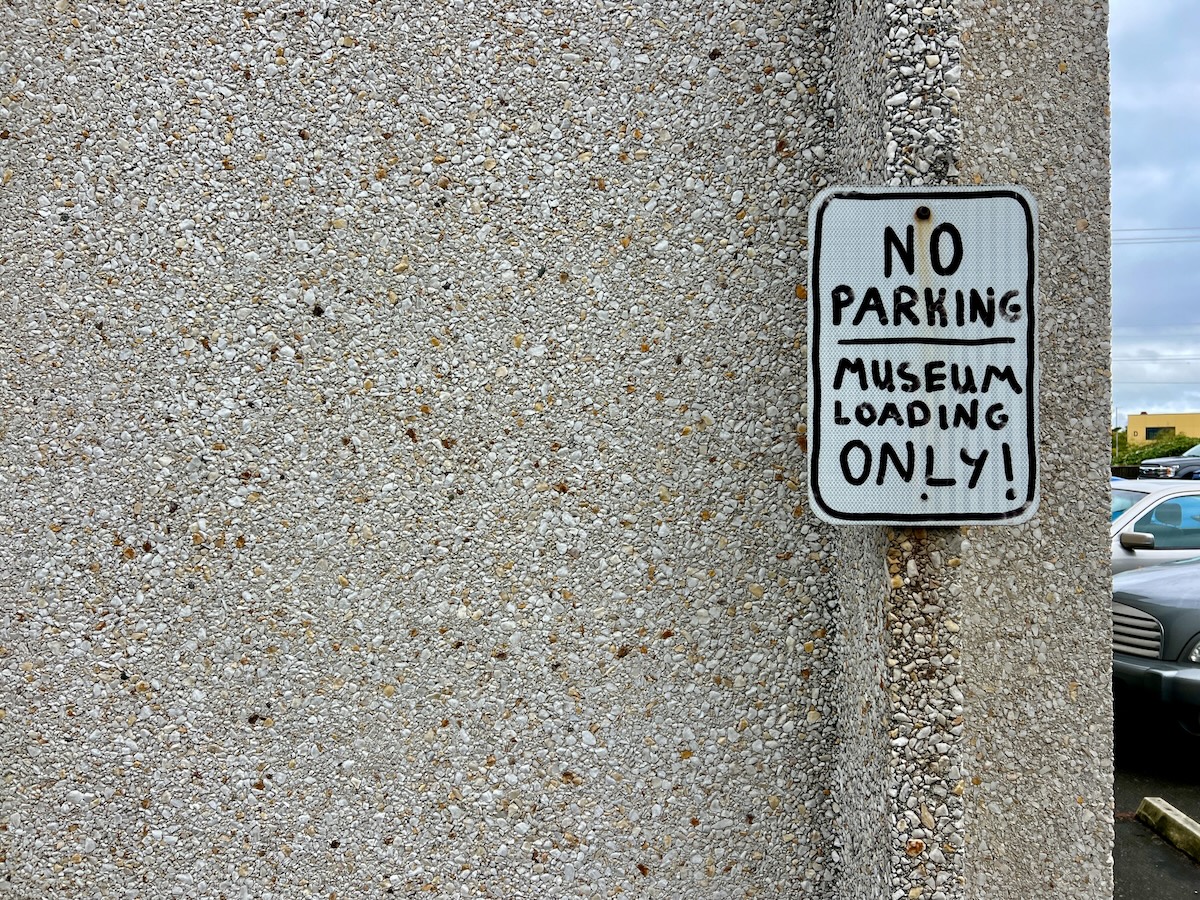
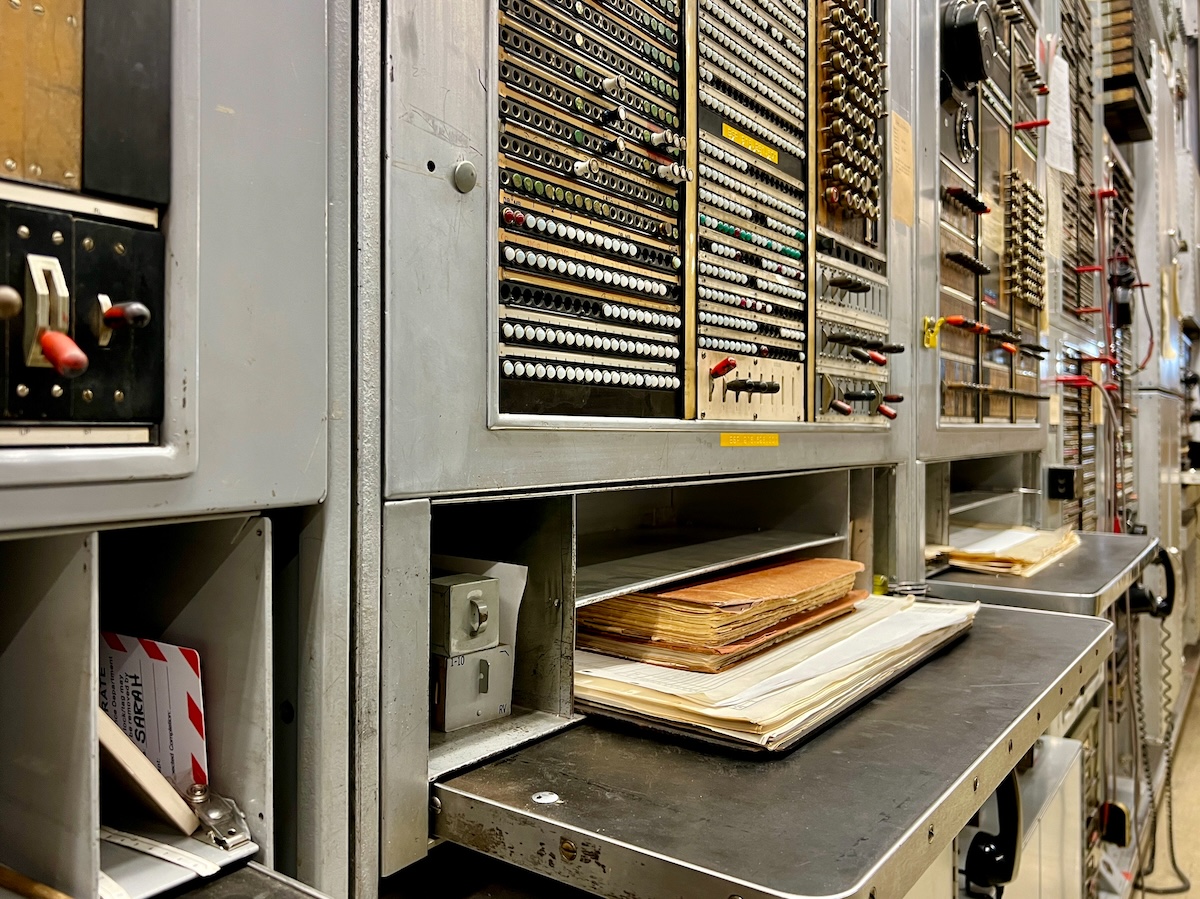
The building looks like a giant concrete box. There are very few windows. This made perfect sense when it was filled with room-sized switching equipment. Yes, humans occasionally had to enter the building to repair something or add some wires—but they were never the priority.
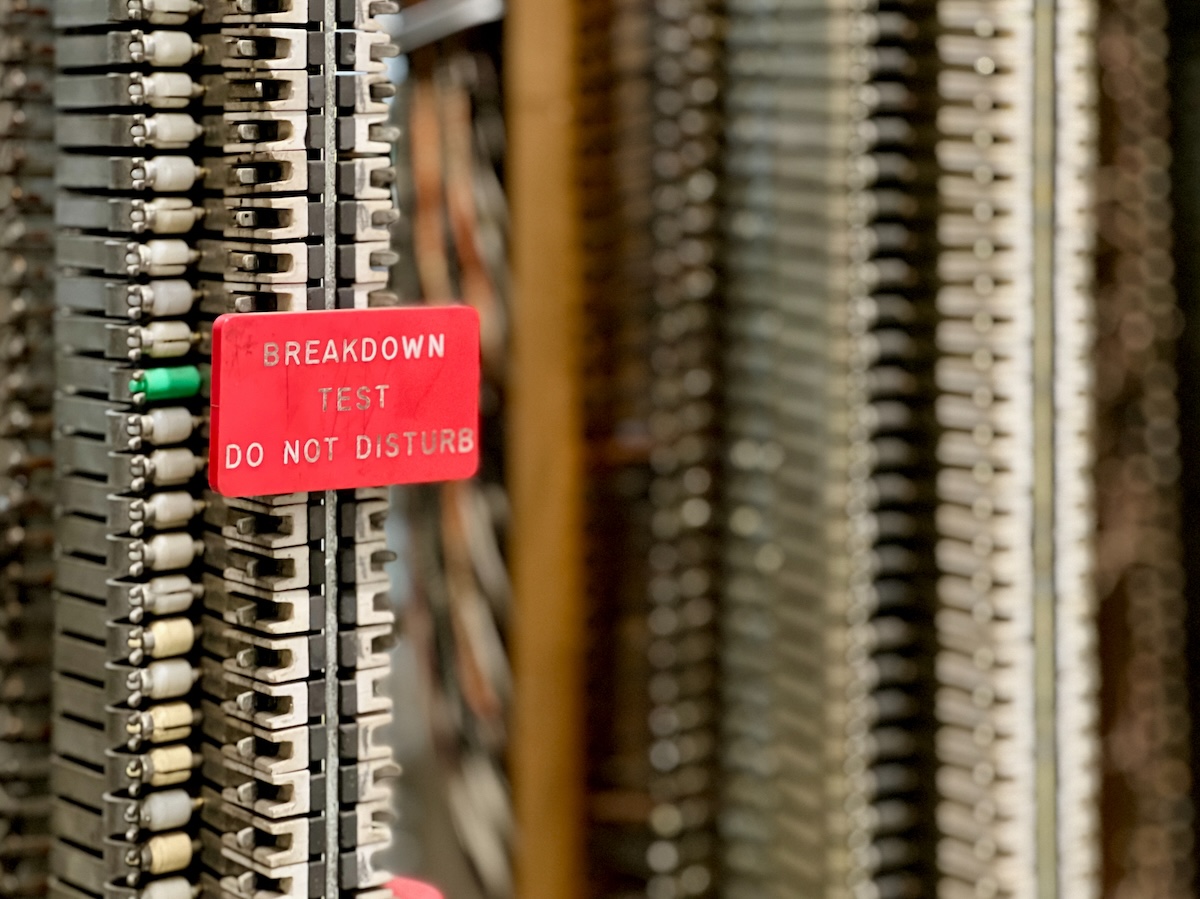
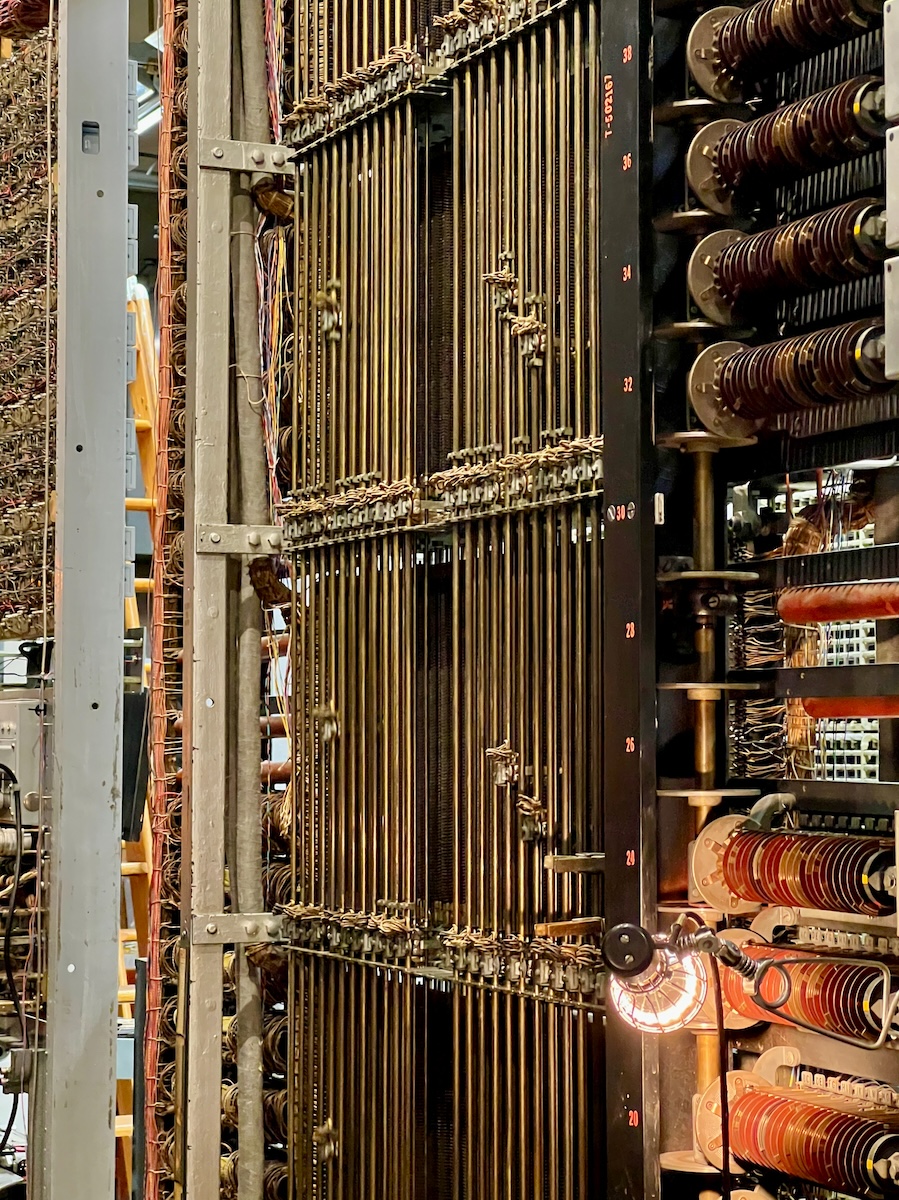
Then technology happened. The machinery that once occupied entire floors kept getting smaller, faster, and more capable. Equipment racks replaced rooms. Circuits replaced racks. Fiber replaced copper. Eventually, the phone company found itself with a whole lot of extra space inside a building designed for a world that no longer existed.
Fortunately for us, a group of telecom meganerds hatched a plan.
The Connections Museum traces its roots to the breakup of the Bell System in the 1980s. As old electromechanical equipment was ripped out and replaced, some Pacific Northwest Bell leaders realized that an entire technological era was quietly disappearing—along with their life’s work. Decades of equipment, documents, tools, and institutional knowledge were headed for dumpsters, scrapyards, and landfills. Nobody was going to preserve it because nobody cared.
Telecom is like the news. When it’s good, nobody notices. When it’s bad—or broke—everyone complains. Bitterly and at length. Still, a handful of people looked at warehouses full of obsolete switching equipment and decided it was worth saving.
Most museums collect paintings. These people collected telephone switching equipment.
Most museums have a front desk. The Connections Museum has an elevator. A really small one.
After riding up to the third floor, during which I barely tamped down my claustrophobia, I stepped out expecting a welcome desk, a ticket counter, anything. Maybe someone asking where I was visiting from? Instead, I appeared to have wandered into the middle of a workday.
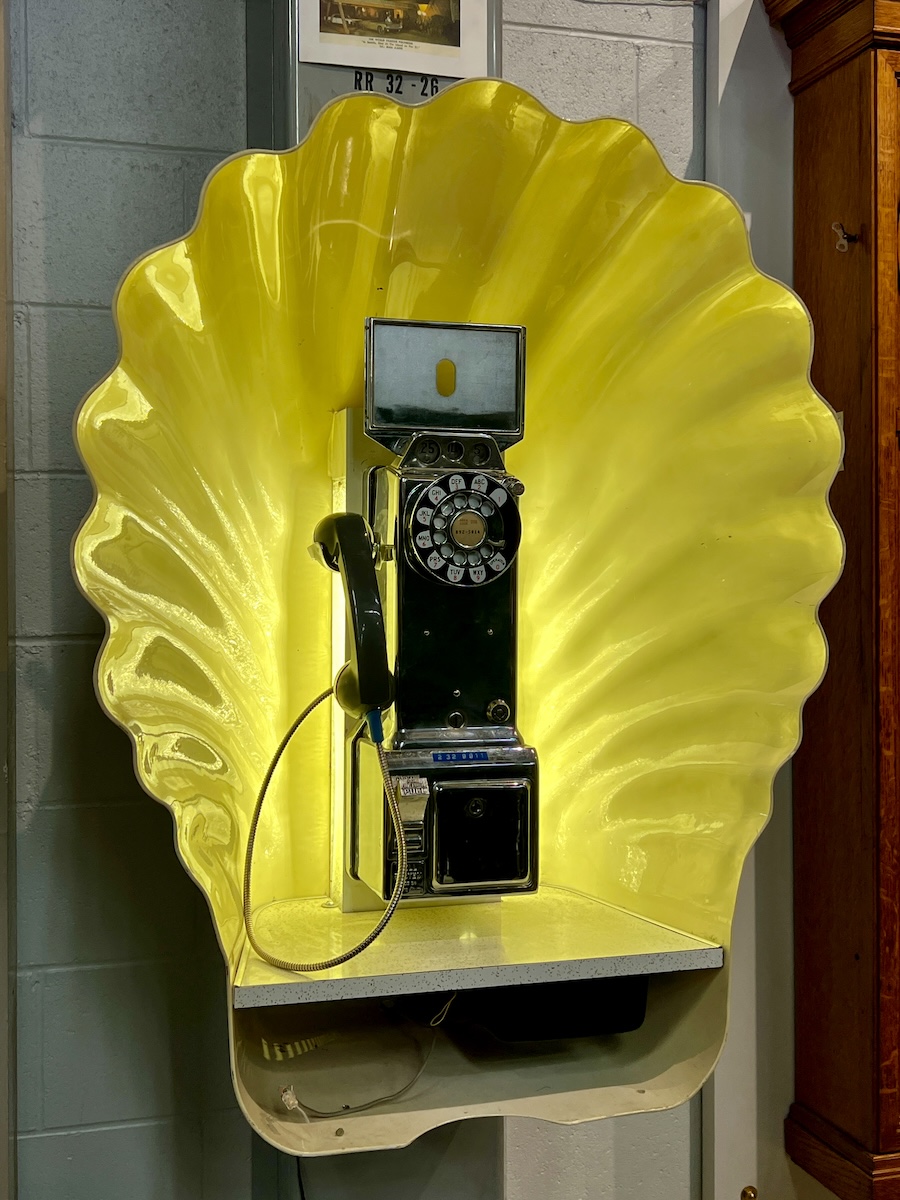
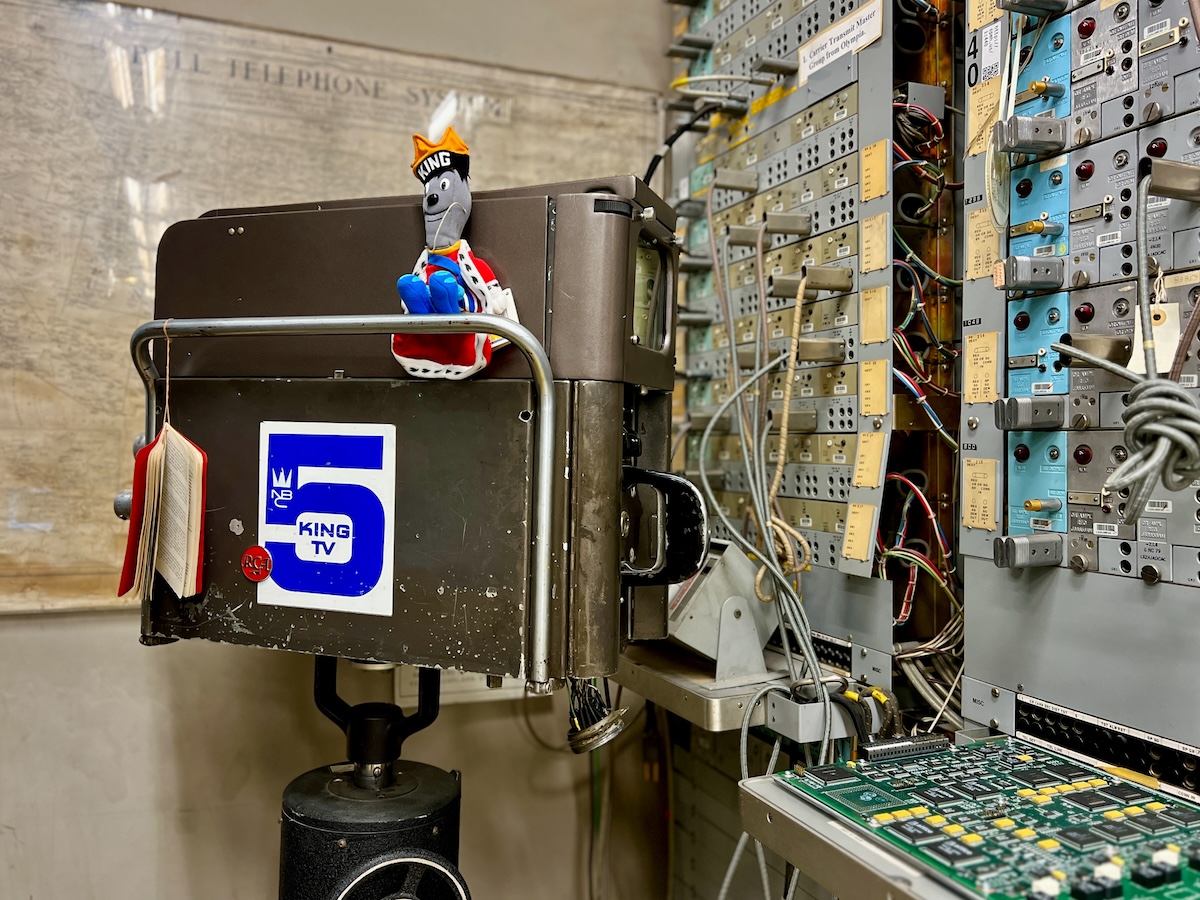
People were everywhere—perched on ladders, bent over equipment racks, tip-tapping furiously on computers. Nobody greeted me. Everyone seemed completely absorbed in whatever they were working on. I hung out next to a payphone from the old Polynesia Restaurant, a beloved local institution that closed decades ago. The tiki-themed restaurant is gone. The building itself was eventually burned by the Seattle Fire Department in a training exercise. But the payphone that used to sit near the front door survived. It may well have been the world’s first shell phone.
Eventually, one unlucky volunteer raised his head and noticed me. I was his problem now. Another volunteer happened to walk by, though he studiously avoided looking at me, presumably to give himself plausible deniability. What followed was a remarkably polite argument between the two about who should give the tour.
“I’m happy to take them.” “No, no, I’ve got it.” “It’s just that I was in the middle of rebuilding…” “It’s fine.” “Are you sure?” “Of course. You just go rebuild that….”
A “winner” was finally declared, and I was officially welcomed to the museum. Or, as many of the volunteers call it, the Church of Telephone.
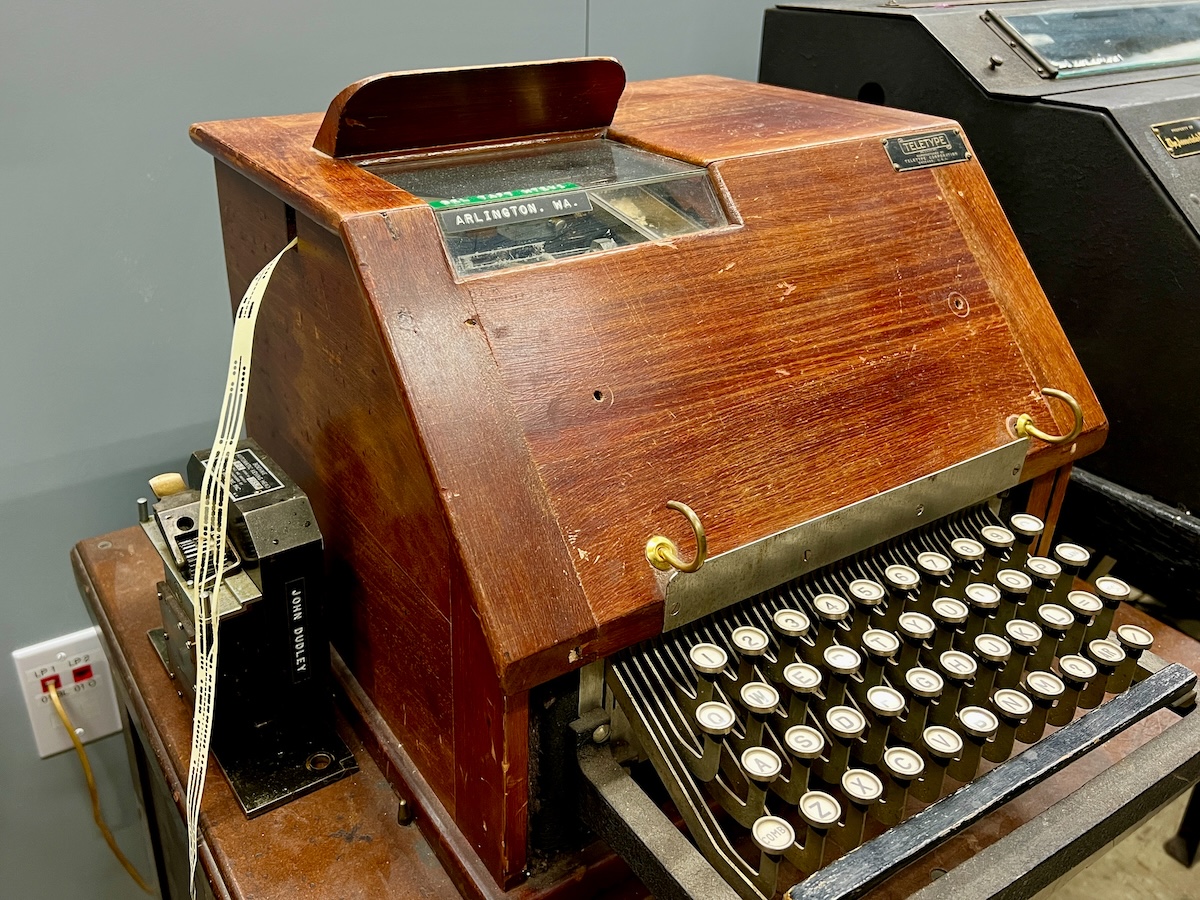
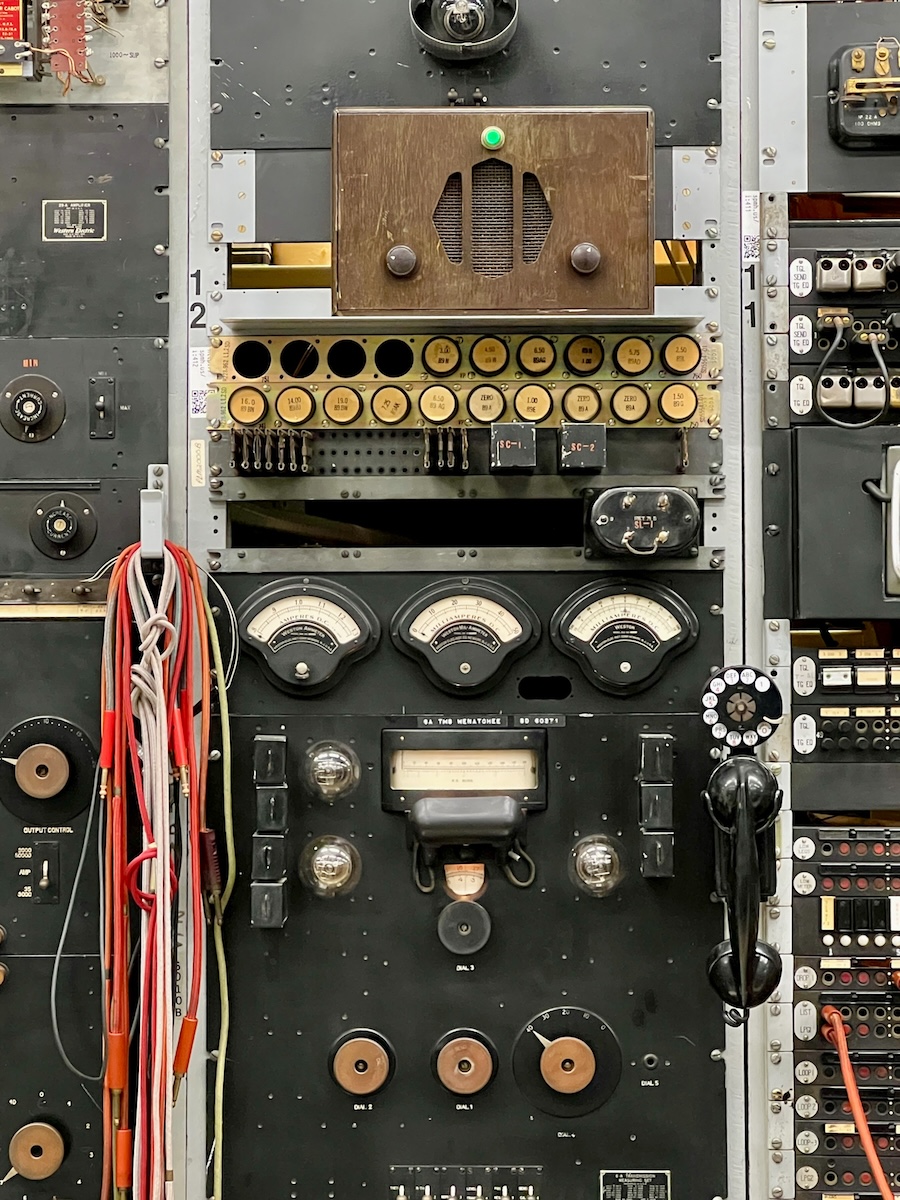
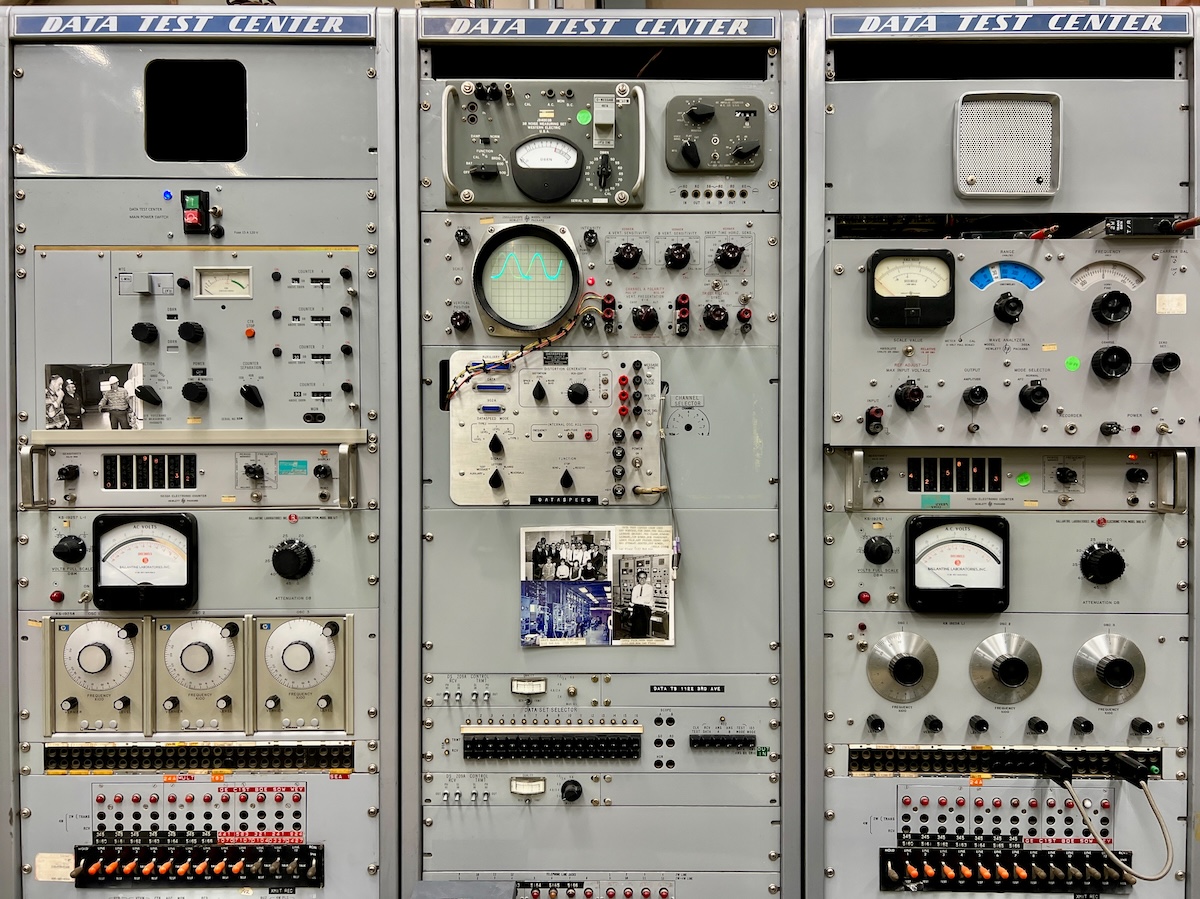
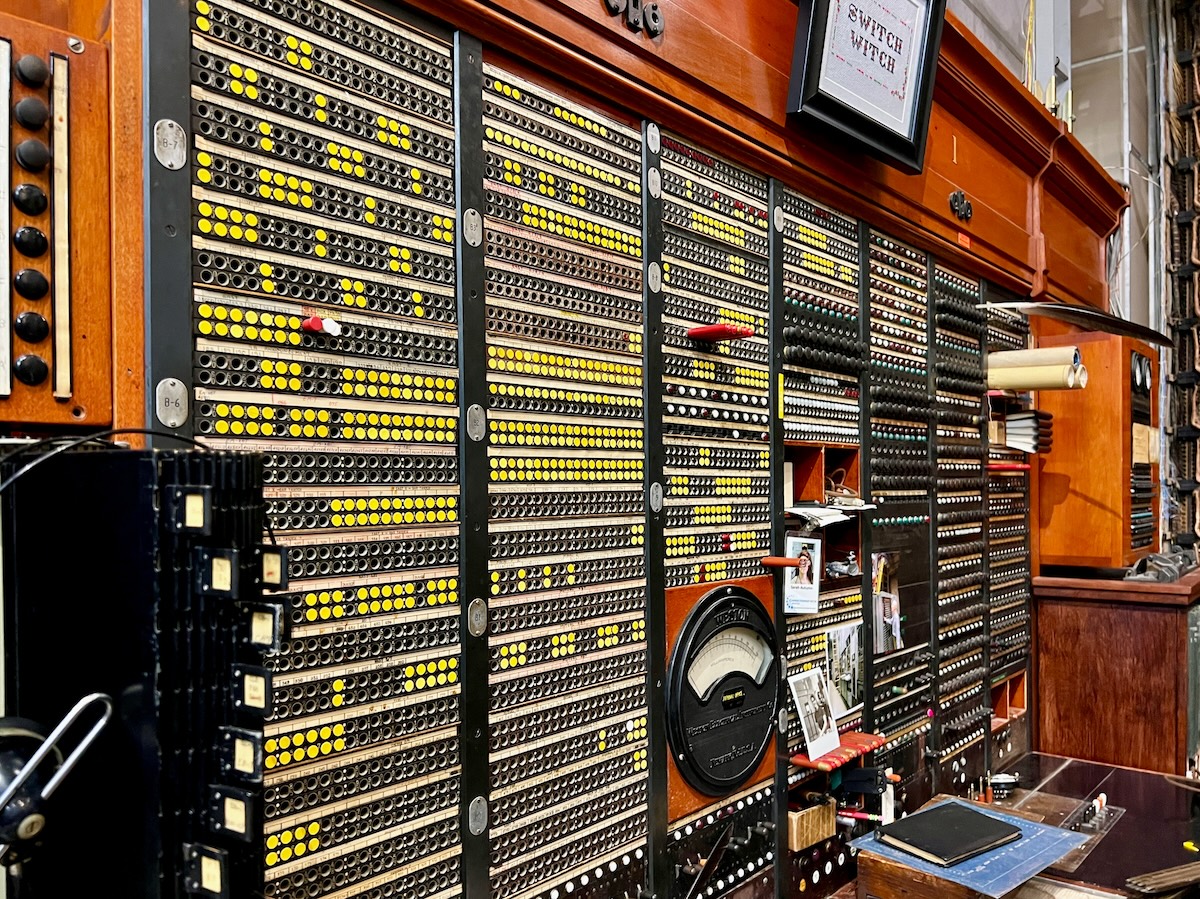
As my guide ushered me into the museum, it became instantly clear that this place wasn’t filled with static exhibits or revered objects. Everywhere I looked, volunteers were rebuilding components, testing equipment, writing software, tracing wiring diagrams, and coaxing decades-old machinery back to life. Their goal wasn’t merely to preserve these machines—their goal was to make them work.
Which raised an obvious question. Um, why?
None of the equipment was connected to a network. It wasn’t generating revenue. It wasn’t serving customers. Nobody was sitting at home anxiously waiting for a restored panel switch to come back online. And yet…volunteers showed up week after week and devoted hundreds of hours to keeping these machines alive. Enthusiastically.
I found that surprisingly hard to stop thinking about.
Certainly, the volunteers talked about preservation. They talked about history. They talked about keeping technical knowledge alive before it disappeared forever. All of which were reasonable explanations. And yet none of those quite accounted for the almost beatific look on someone’s face when a decades-old switch suddenly sprang back to life.
What became obvious very quickly was that telecommunications history is much stranger—and more creative—than most people realize. When most people hear “the phone company,” they think of monthly bills, looped customer service hold muzak, and the occasional regulatory dispute. What they don’t see is a century-long parade of engineers, inventors, tinkerers, and optimists trying to reinvent how human beings communicate.
But the evidence is everywhere here.
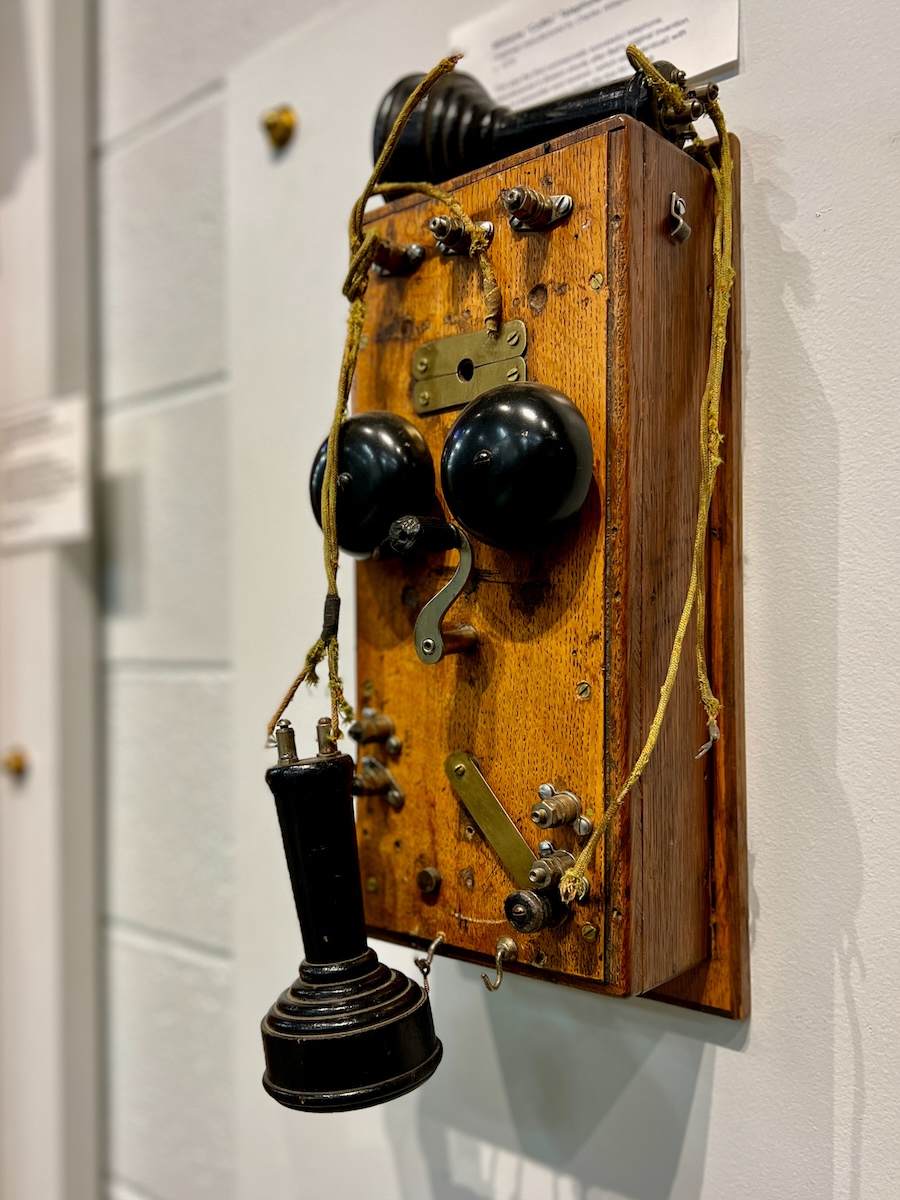
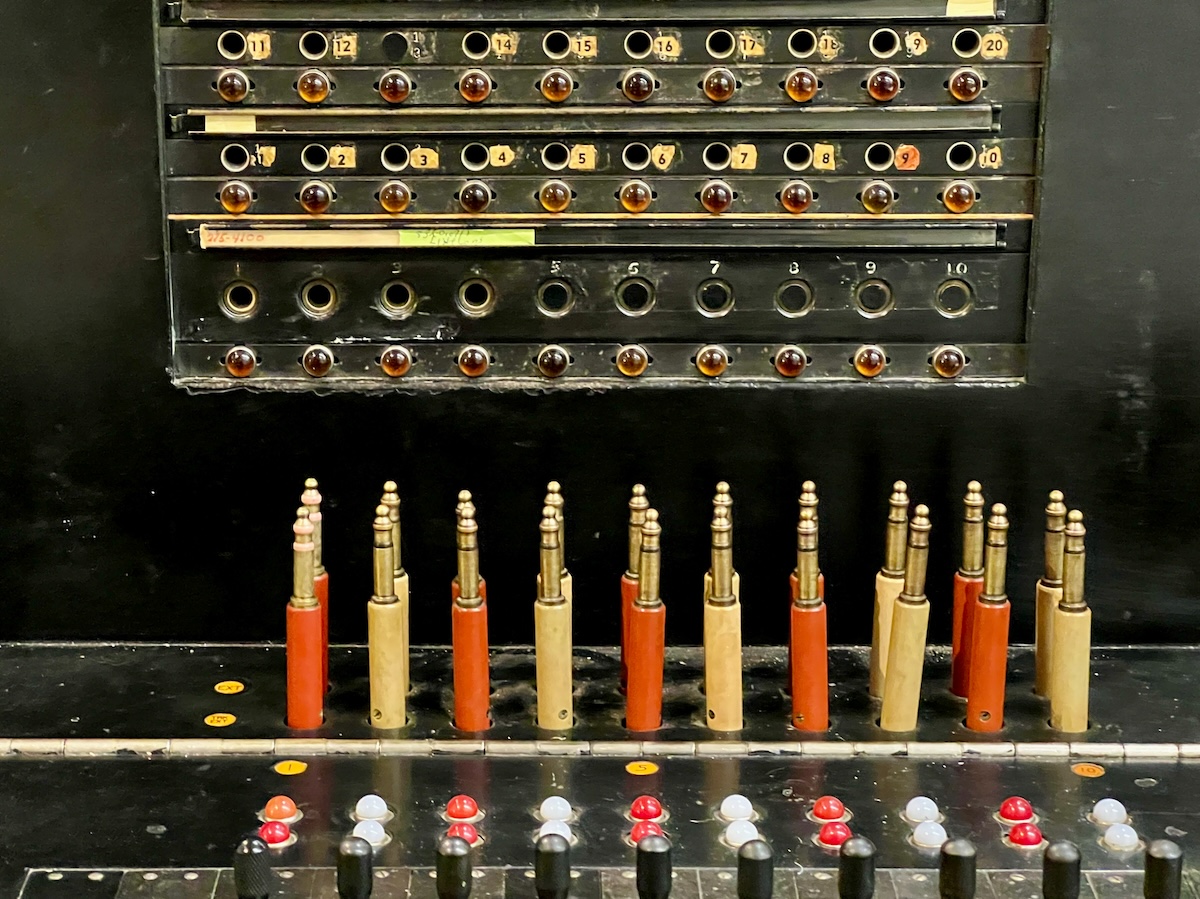
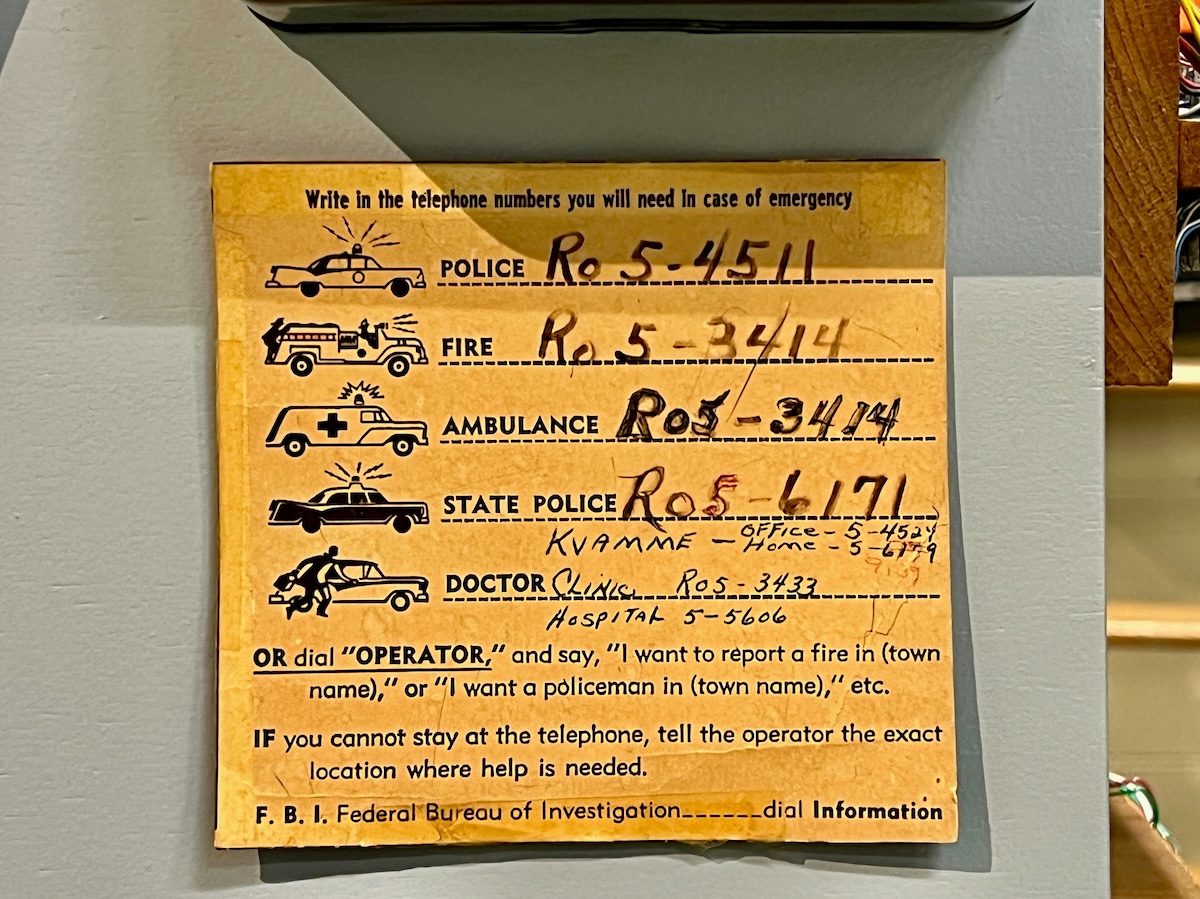
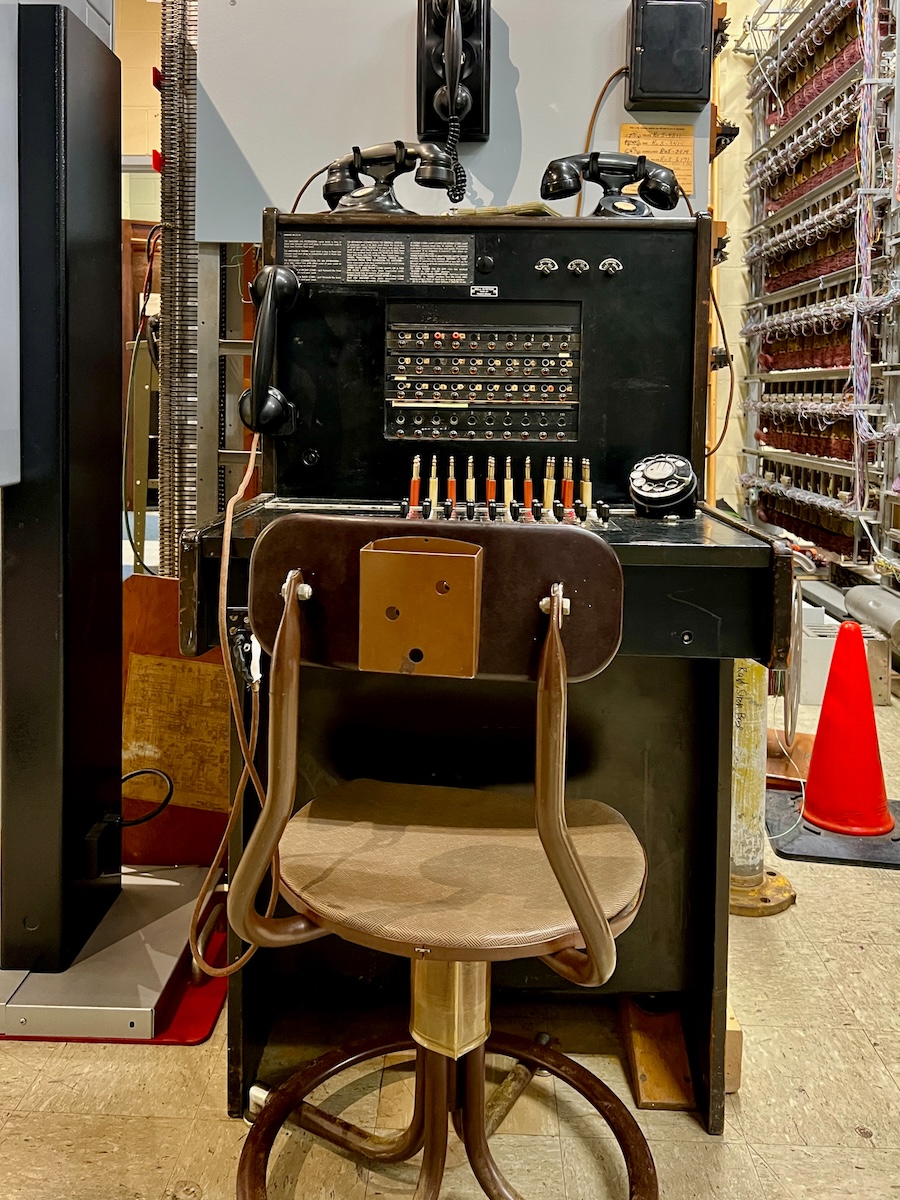
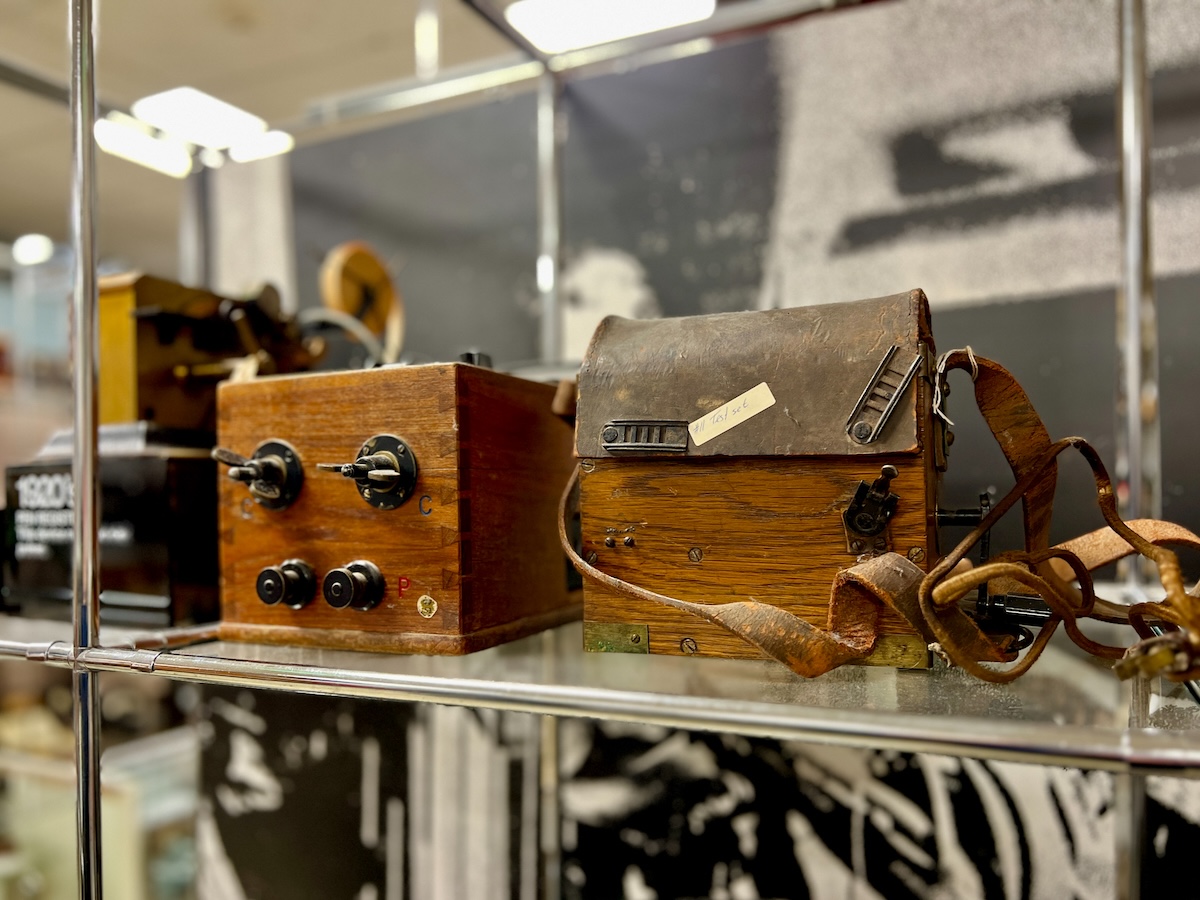
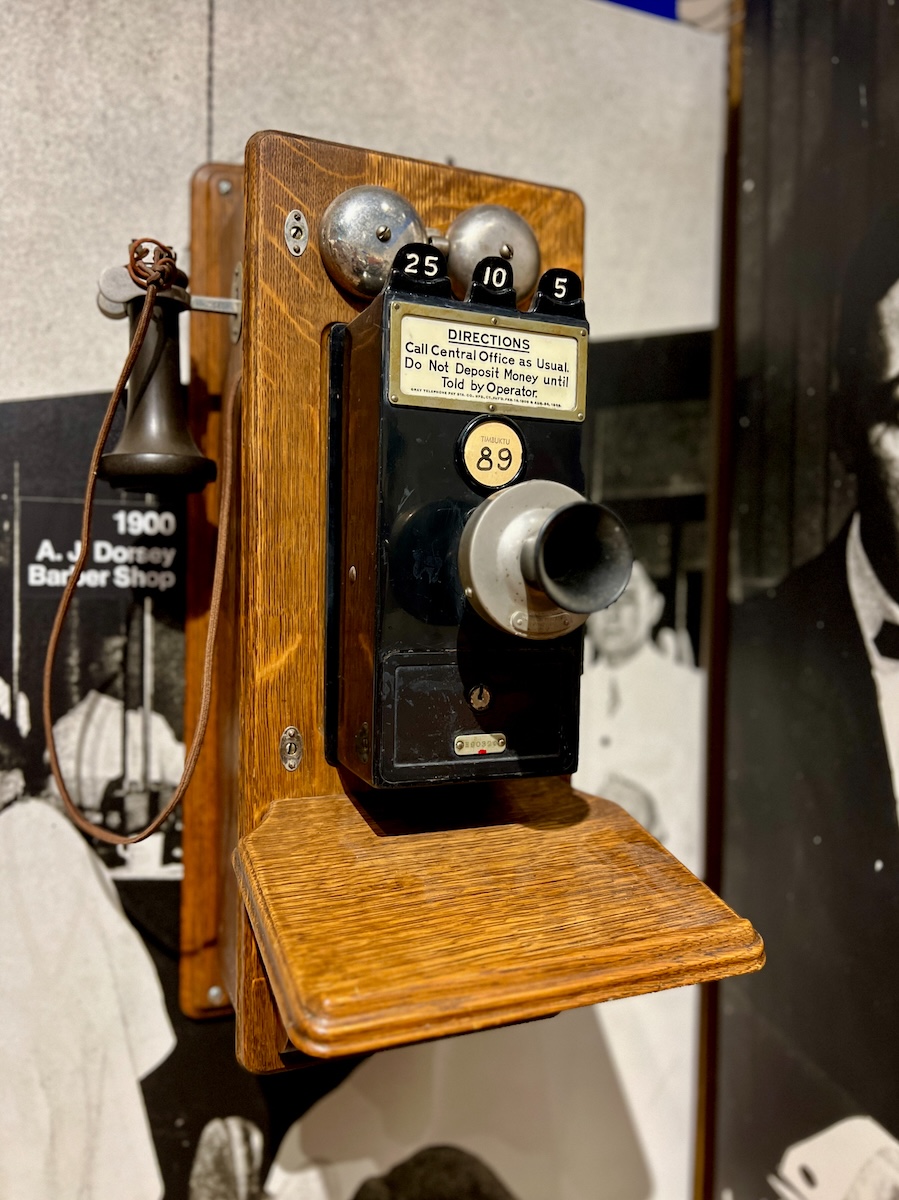
There are switchboards that look like something from a submarine. Wooden wall phones that look more suited to summoning a butler than calling your neighbor. Grandfather clocks used to keep nationwide telephone networks synchronized. Emergency phone lists from an era when “Call the operator” was a perfectly reasonable backup plan.
Before automatic switching, telephone calls depended on human operators to physically connect one line to another. The system worked remarkably well, but it was also vulnerable to human errors—or foibles. One legend holds that an undertaker in Kansas City, Almon Strowger, became incensed with the local switchboard operators. One of the operators was married to a competing undertaker, and Strowger insisted that she was intentionally routing calls meant for him to her husband, instead. Frustrated, he vowed to eliminate human operators entirely. Driven to the heights of innovation by his rage, Strowger created the world’s first automatic electromechanical telephone switch in 1889. And it became the foundation of modern automated telephony.
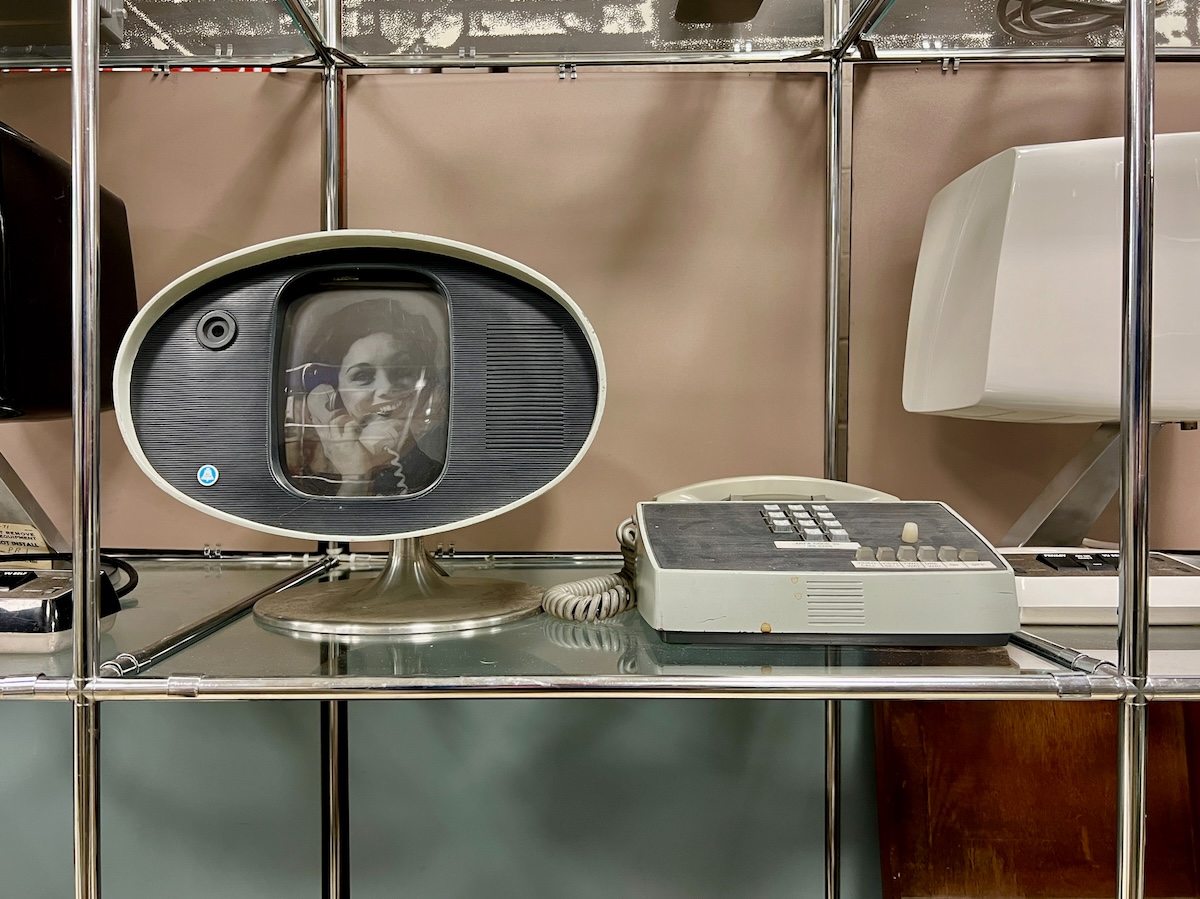
If Ma Bell had a single defining characteristic—other than being a monopoly—it may have been a nearly boundless confidence that the future could always be improved with a different phone. One of my favorite artifacts in the museum was a Bell System advertisement that asked a simple question: "Tomorrow's Telephones?"
The ad featured several experimental designs that Bell was testing in the 1950s. One phone could be hidden inside a kitchen cabinet. What? Another replaced the rotary dial with push buttons. Insane! A third moved the dial into the handset itself. (Cue Tex Avery bulging eyeballs.)
One futuristic phone that actually made it into production—but wasn’t mentioned in the ad—was the world’s first cordless telephone, designed in Seattle for the Space Needle in 1962. Back then, it wasn’t unusual for an important guest to make or receive a call from the table. But because the restaurant at the top of the Needle (the Eye of the Needle) rotated, corded phones wouldn’t work. It looked like just another standard phone, but it used a radio link to communicate with a base unit mounted to the central core of the Needle. Only five were ever made. The rotating restaurant turned out to have broader appeal than the cordless phone.
Looking at the ad 60+ years later, it’s hard not to admire Bell’s confidence. Here was a company attempting to peer into the future and predict how people would communicate decades from now. The funny thing is how much they got right.
Push buttons did replace rotary dials. Hands-free calling became commonplace. Phones became smaller, more convenient, and easier to tuck out of sight when not in use. Kids these days have no idea how good they’ve got it.
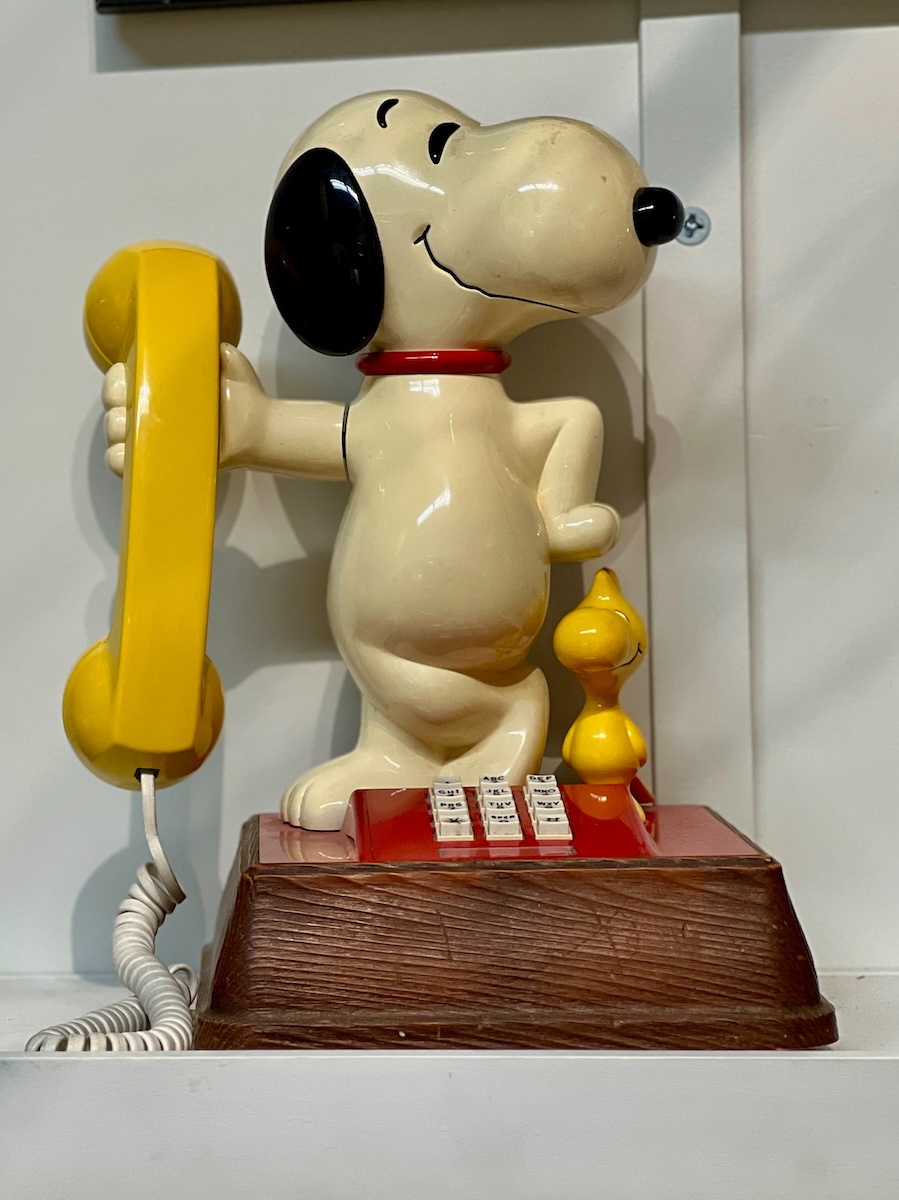
What Bell didn’t predict was that the future would stop being primarily about telephones. Their engineers kept redesigning the phone. The future responded by turning it into a tiny computer. Still, wandering through the museum’s collection, I appreciated why Bell was so fascinated by the problem. The history of the telephone isn’t really the history of a single invention. It’s the history of thousands of people trying to improve an invention that was already miraculous. Some focused on technology. Others focused on design. And a surprising number of people concluded that what the world really needed was Snoopy.
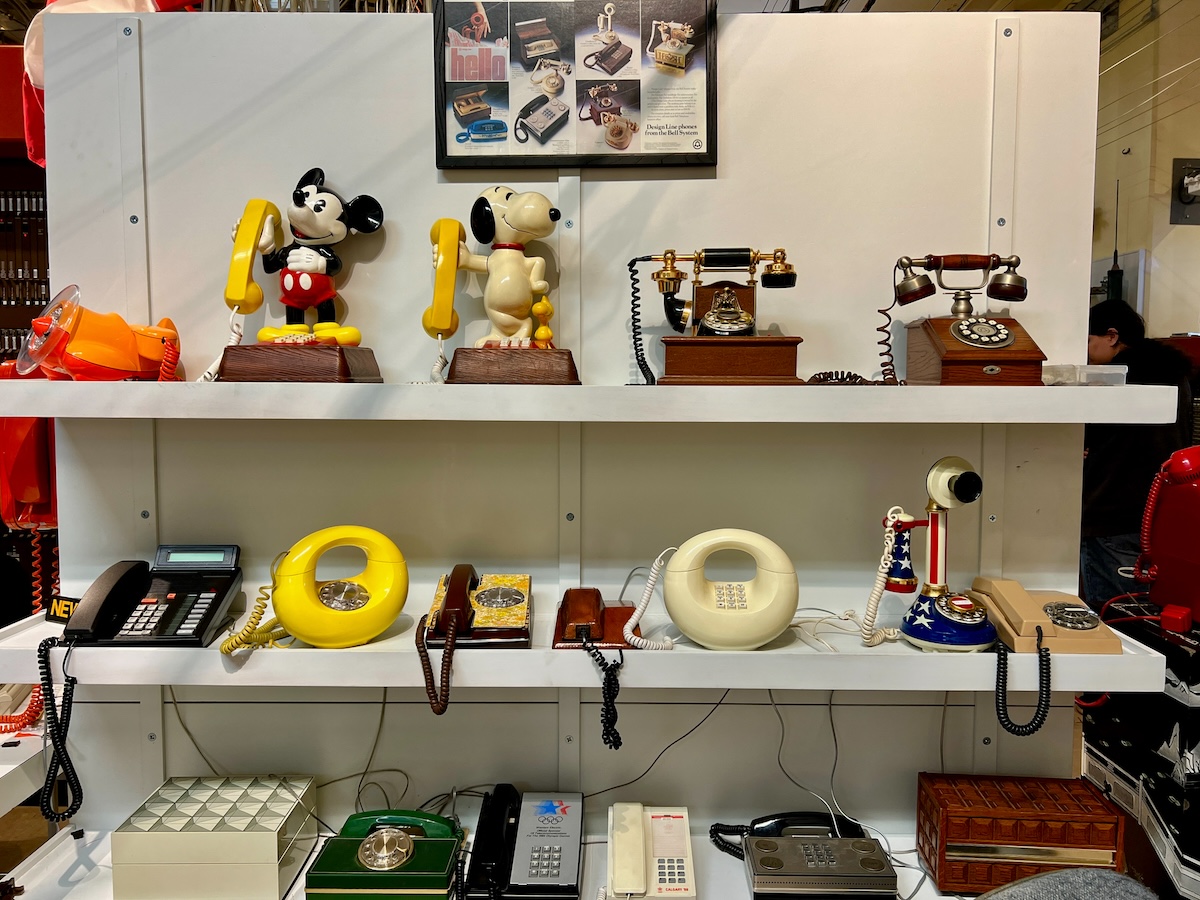
The collection contains elegant candlestick telephones, severe black desk sets, colorful designer models, novelty phones, and enough strange experiments to suggest that no two decades ever agreed on what a telephone should look like. One display manages to contain Mickey Mouse, Snoopy, a Bicentennial candlestick, and a bright orange airplane phone. Together, they tell a surprisingly familiar story.
People weren’t just buying telecommunications technology. They were buying something that sat in their homes, on their desks, and beside their beds. They wanted it to reflect their tastes, their personalities, and occasionally their questionable decorating decisions.
Bell spent a century reinventing the telephone. The rest of us spent a century decorating it.
The deeper I got into the collection, the less interested I became in the machinery itself and the more interested I became in the people connected to it. Consider the Time Lady.
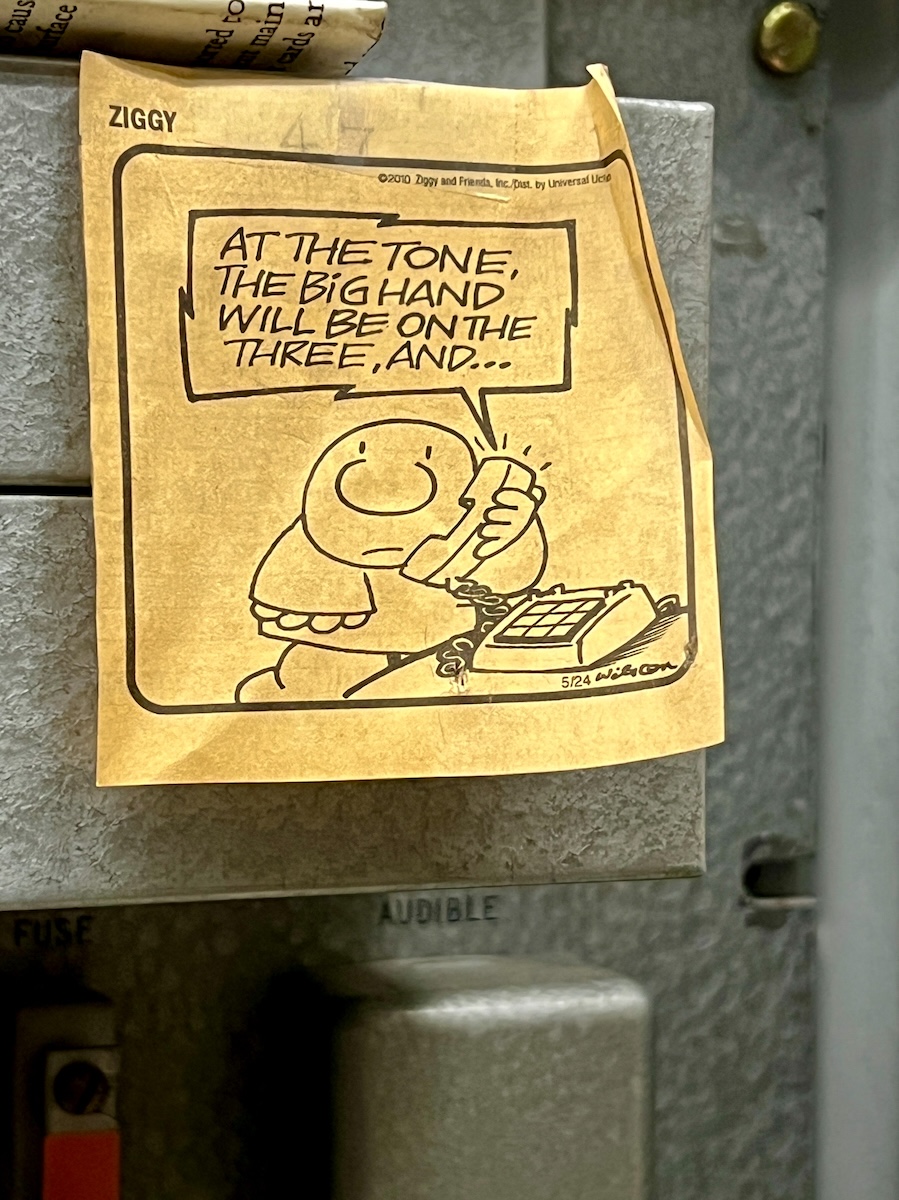
Since the beginning, people could dial a telephone number to get the correct time. Initially, they’d just call their local switchboard operator, who would tell them the time. Later, in 1963, Bell worked with the Audichron Company and hired a voice actress to record messages announcing time, temperature, and weather. That actress, Jane Barbe, also recorded “intercept messages,” like “The number you have dialed is incorrect or no longer in service. Please check the number and dial again.” As telephone systems evolved and expanded, she went on to record voice mail greetings, prompts, and countless other messages.
By the end of the twentieth century, hers may have been the most recognized voice in the world—even though almost nobody knew her name. But that was before every smartphone, computer, microwave oven, and dashboard held a clock. These days, Jane Barbe and the Audichron are just nostalgia.
For most of my career, telecom was just a job. Walking through the Connections Museum reminded me that an enormous amount of human ingenuity went into building systems so reliable that most of us stopped thinking about them entirely. And that ingenuity was driven by the mundane—people who just wanted to know the time, an old undertaker convinced that he was being cheated, teenagers who had to have a Princess phone or one shaped like Snoopy.
Which brought me back to the volunteers. I never could quite grasp why someone would devote their weekends to restoring obsolete switching equipment that served no practical purpose. But at least I no longer found it mysterious. Some people collect paintings, and some restore classic cars. Other people bring decades-old telephone switches back to life just to see if they still work.
Nerds gonna nerd.









Write a comment