
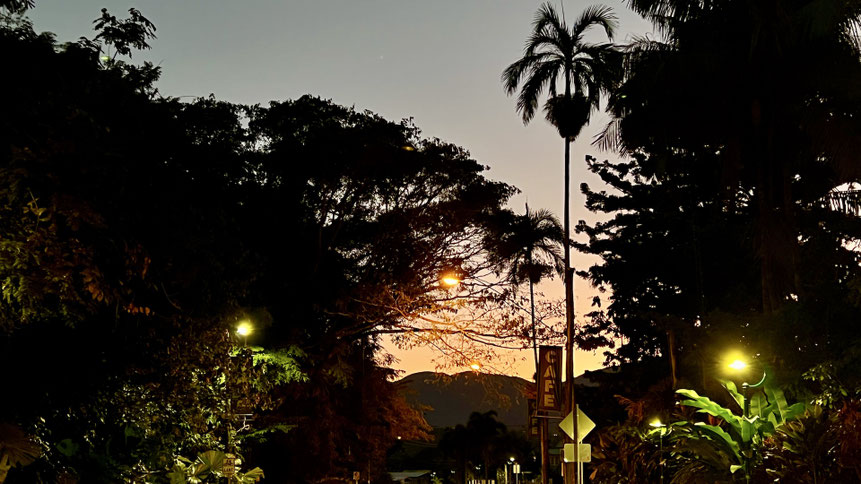
I went on two spider safaris in Cairns. Not because I was dying for a repeat performance, mind you. The guide had rented me a wonderfully complicated camera designed to photograph tiny bugs in Full Technicolor Glory. She gave me a quick lesson in how to use it, and I dutifully practiced while other safari-ers (that’s a word, right?) arrived. I got a couple of pretty nice shots of flower petals and experimented with a couple of the buttons on the back. Then we all headed into the rainforest to hunt spiders.
It was an awesome night, and I saw some amazing things. I arrived home tired but satisfied. And in the morning, after importing all my shots into my laptop, I discovered that at least one of those buttons I’d pushed was not the right one. I was the proud owner of nearly 200 tack-sharp photos of an impressively deep shade of black. Technically speaking, they were excellent.
There was only one solution. Which is how I found myself back on safari 10 days later. Same guide. Same camera. Same rainforest. Better decision-making this time around, though. At least where the camera was concerned.
For someone who’s never been comfortable around spiders—typically I scream, “Rick!” whenever I see one—this may seem like an odd activity to book even once. I don’t even like the little ones that quietly take care of mosquitoes in the corner of a room. You can just imagine how I react to the fast ones. Or the ones that jump. Or the ones that are large enough to have recognizable facial expressions. Australia, as you’re probably aware, specializes in all of these. Still, curiosity has always been one of my stronger personality traits. Often stronger than common sense.
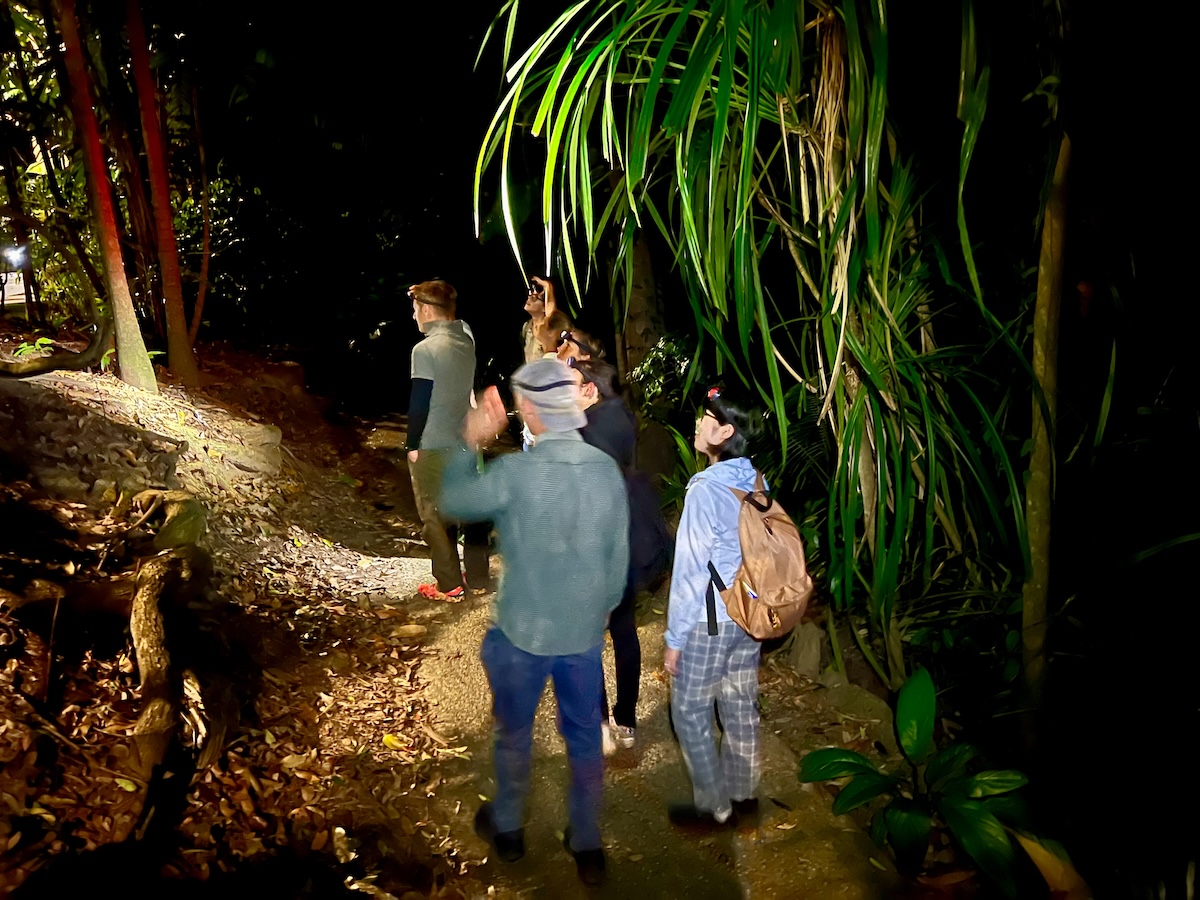
Our group gathered just after sunset to collect cameras and strap headlamps around our foreheads before heading into the gardens. The lights kept both hands free for photography, kept us from stepping off the boardwalk and crashing into the underbrush, and created tiny reflections off the spider eyes watching us from the bush. So many tiny spider eyes. More than I’d really hoped to find.
During the day, the Botanic Gardens are full of joggers, families, birdwatchers, and tourists admiring tropical plants. At night, they belong to an entirely different community. We’d walk 20 or 30 feet before everyone would stop suddenly as the guide pointed into what looked like empty foliage. At first, I rarely saw anything. Then my eyes adjusted, and another pair of tiny reflections appeared. Before long, I realized the trees weren't empty at all. I’d expected the rainforest to get darker after the sun set—I hadn’t expected it to get busier.
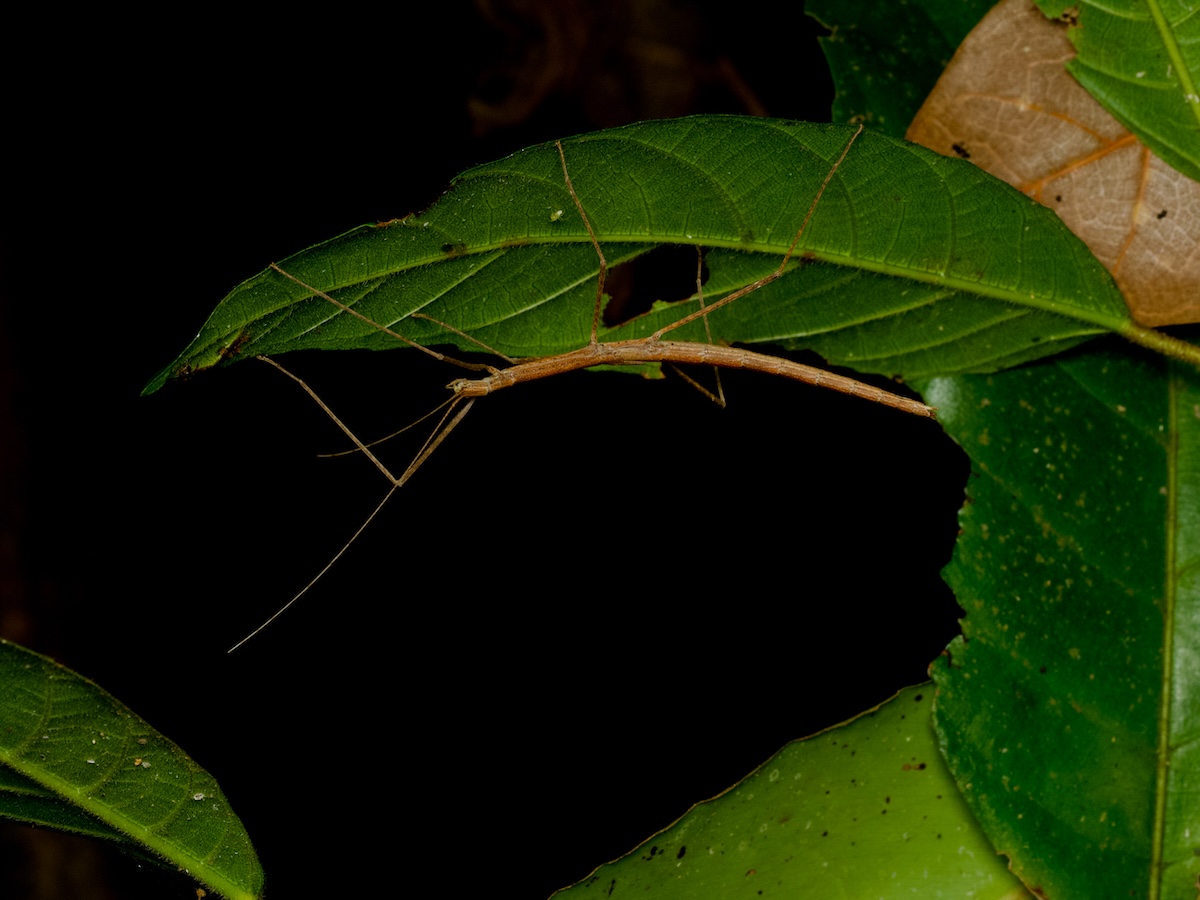
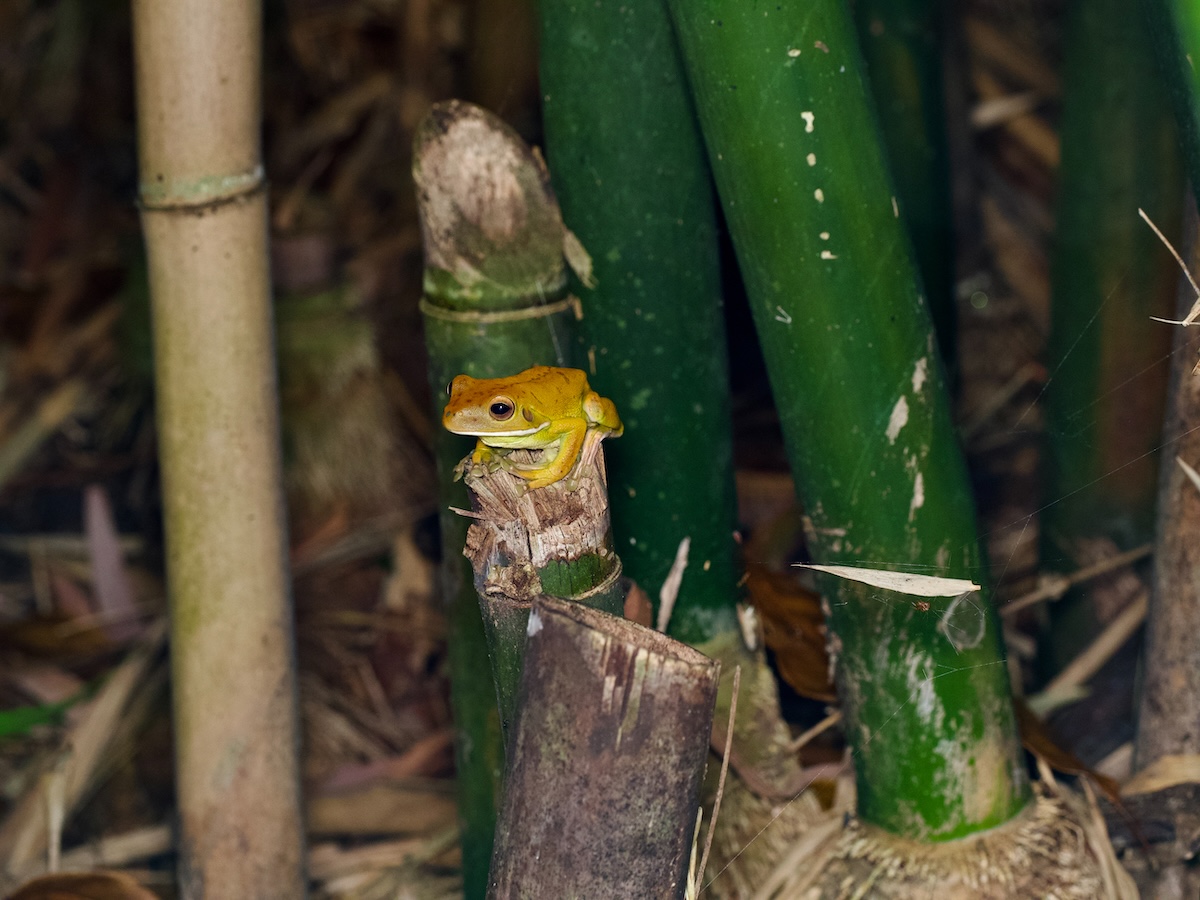
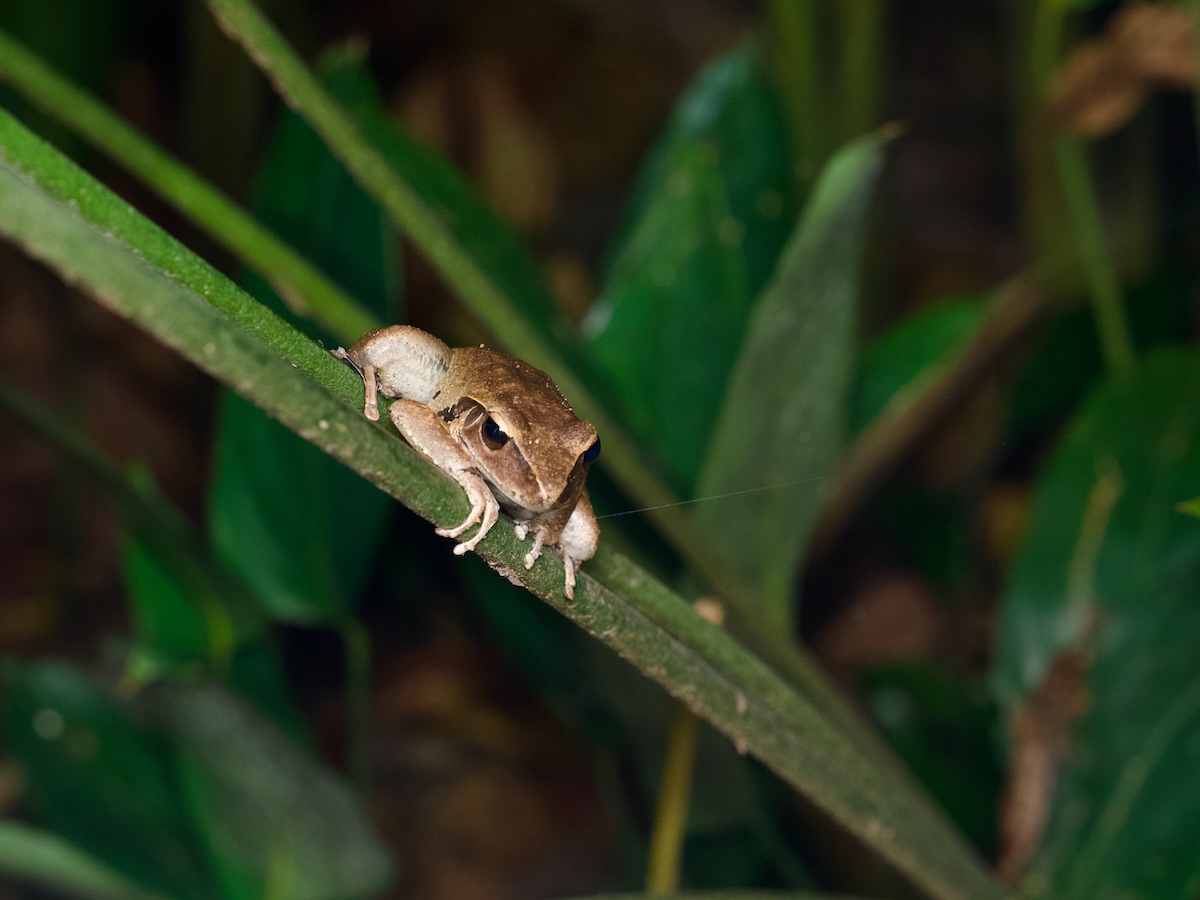
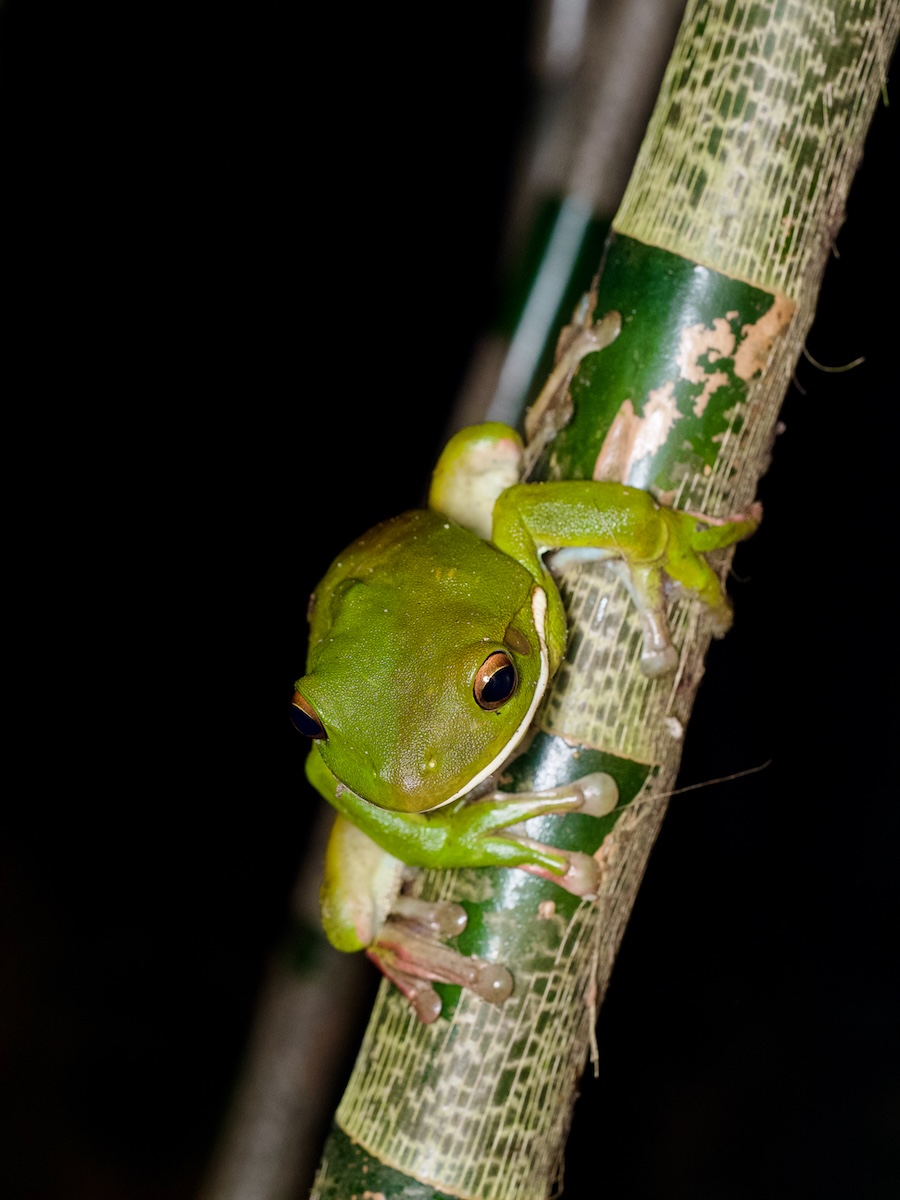
Not everything we found had eight legs. Thank goodness. A guy needs a break from spiders once in a while. About halfway through our adventure, something small bounded across the trail just ahead of us. “That has got to be the tiniest kangaroo ever,” I thought. Which was half right. It was actually a pademelon, one of Australia’s small rainforest marsupials. A Papuan frogmouth—a bird with mad camouflage skills—blended so perfectly into a tree trunk that even after the guide pointed her light directly at it, I needed time to work out how to separate bird from bark.
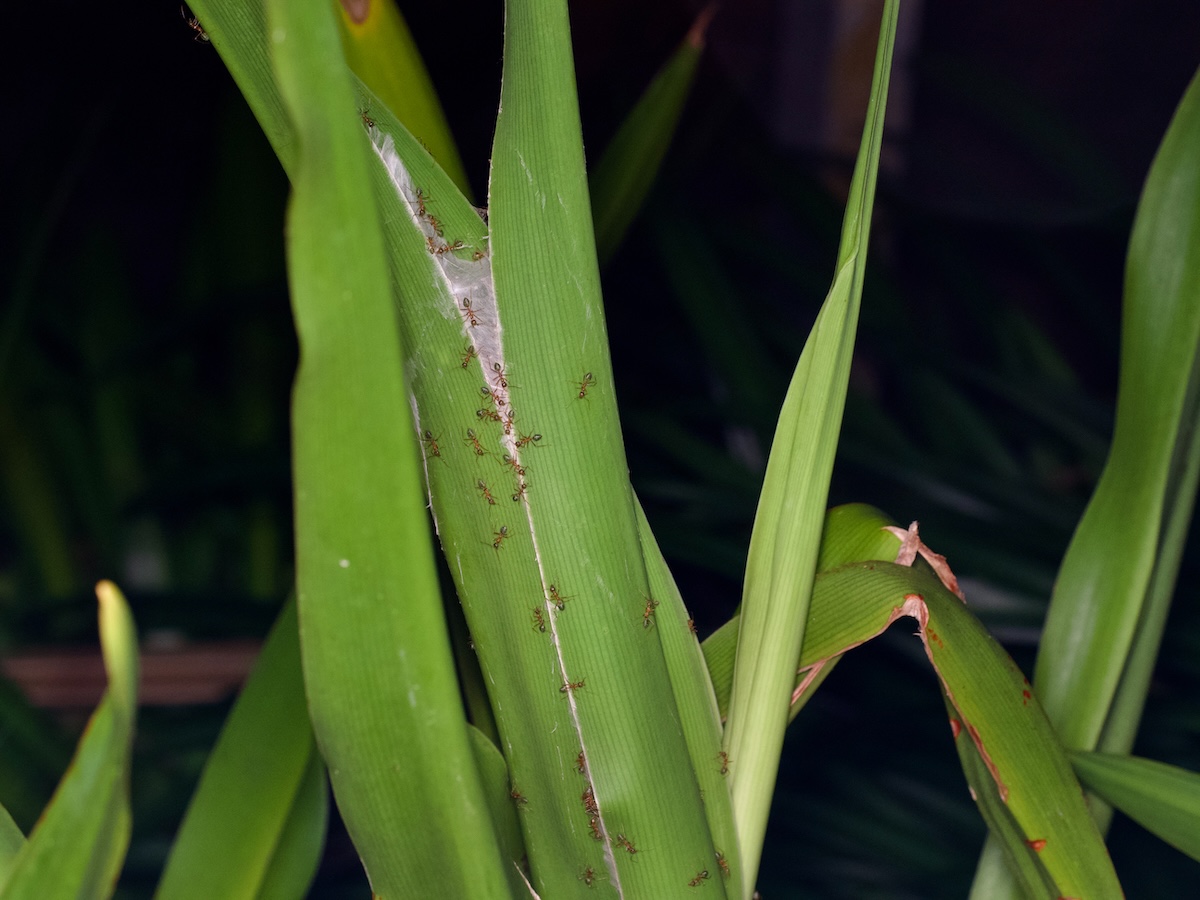
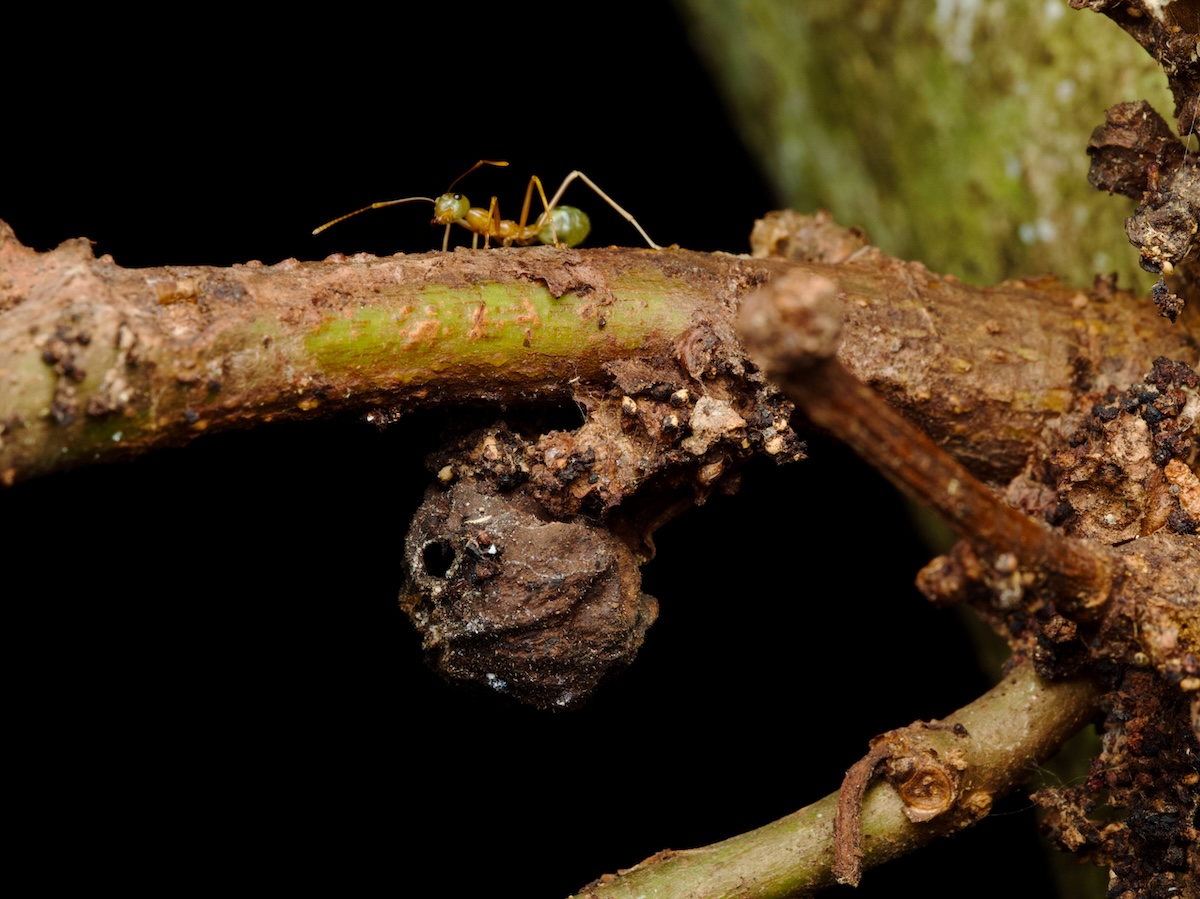
And the green tree ants—amazing. First off, they secrete formic acid as a defense mechanism (they’ll scritch you and then hit the scratch with the acid, which will sting a little). The formic acid tastes like lime sherbet or Sour Patch Kids. I can’t imagine it’s a great defense mechanism if it's delicious. Australians encourage visitors to taste the ants, though I declined. Voluntarily seeking out spiders was enough personal growth for one night.
But that night we watched them build their nest in the leaves of a tall plant that looked a little like a corn stalk. The workers were literally pulling the leaves together while carrying larvae in their jaws. They’d gently squeeze the larvae, which would produce silk to sew the leaves shut. Once the leaves were stitched together, the colony had a roomy new home. Um…ingenious. If you’d pitched that idea in a design meeting, I’d have assumed you were joking. I stood there watching the insect construction crew while everyone else wandered off to find more spiders. I was the only one completely mesmerized by ants renovating real estate.
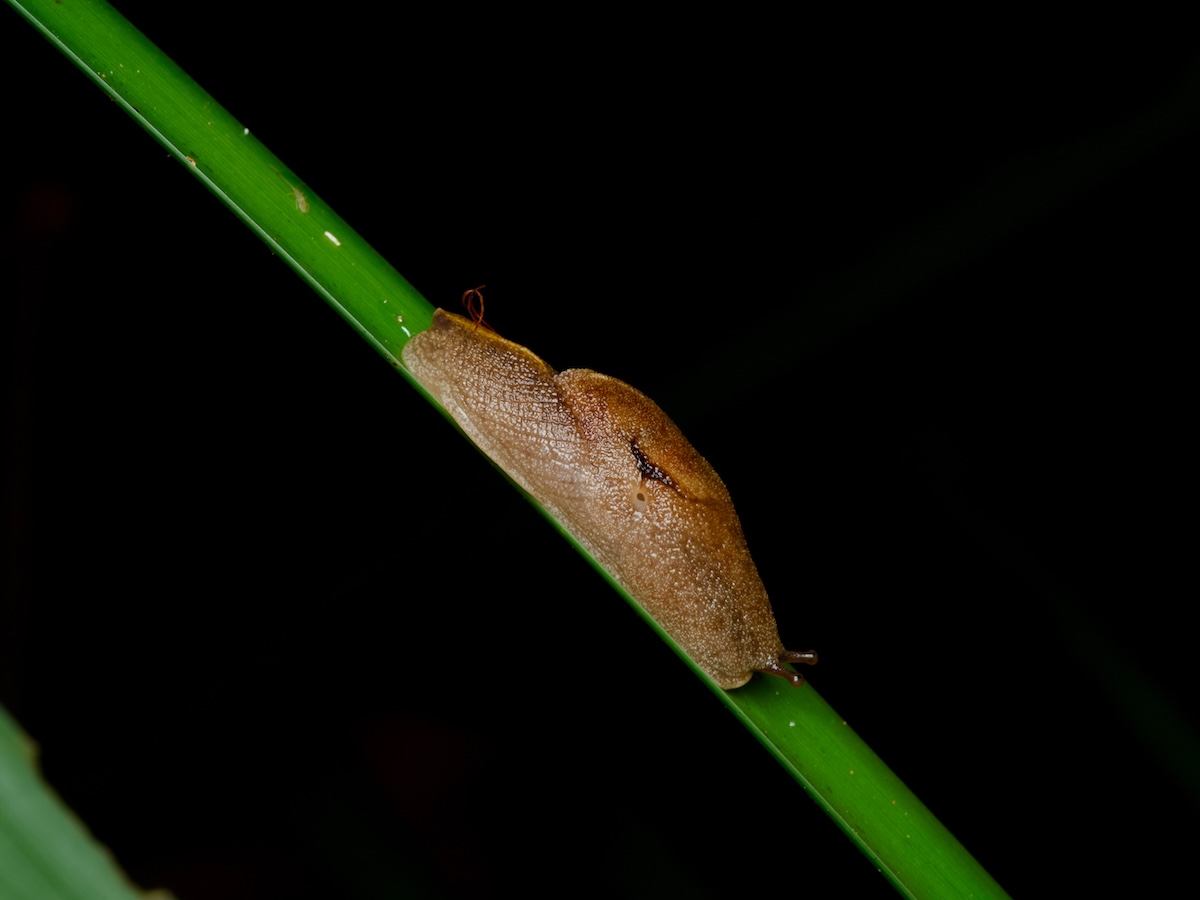
I tore myself away from the world’s most industrious ants when the guide became excited about something. She called it a “semi-slug.” Apparently, that means it’s a snail that has only partially committed to the whole shell-evolution business. I had a look and, as a native Pacific Northwesterner, all I saw was a slug with a hump. Evolutionarily fascinating, sure, but also ew.
“But when are we getting to the spiders?” I hear you asking. Okay, okay.
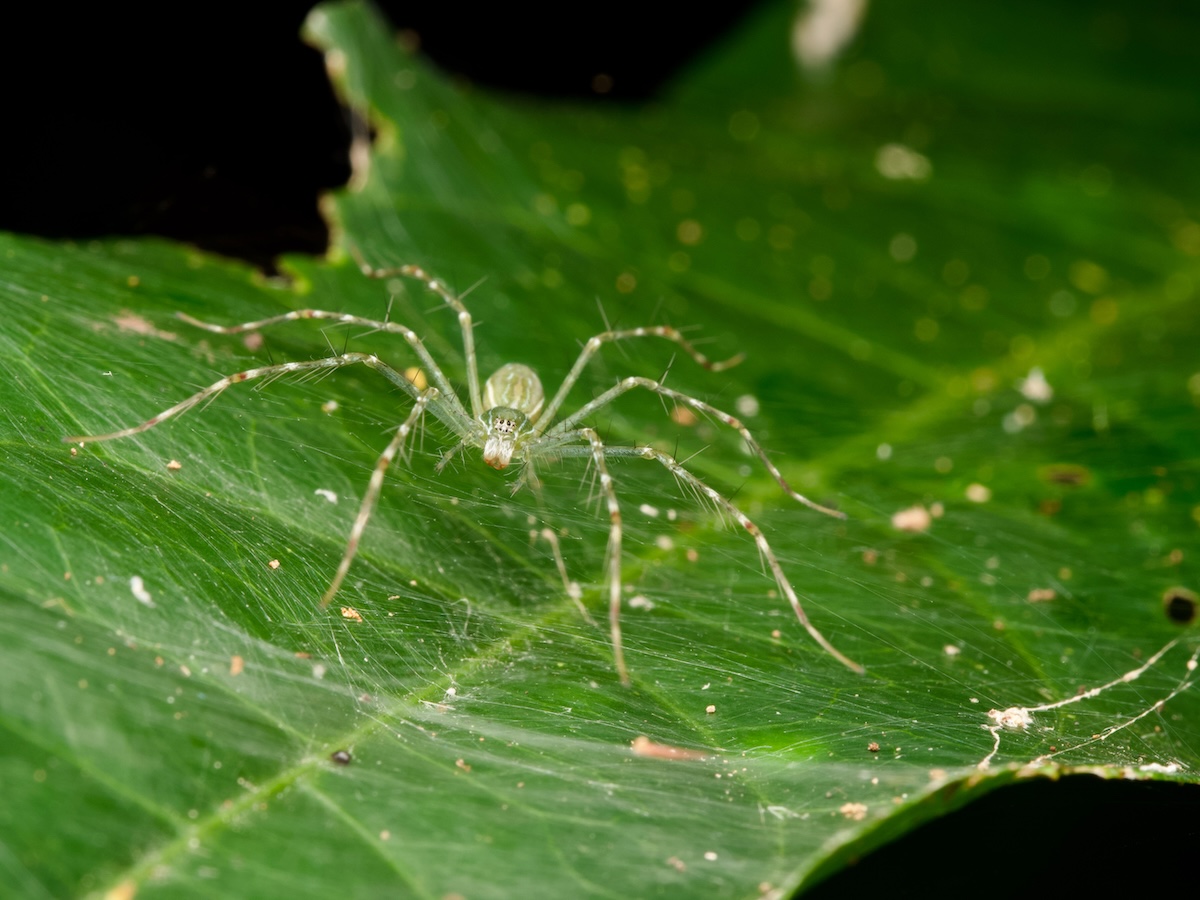
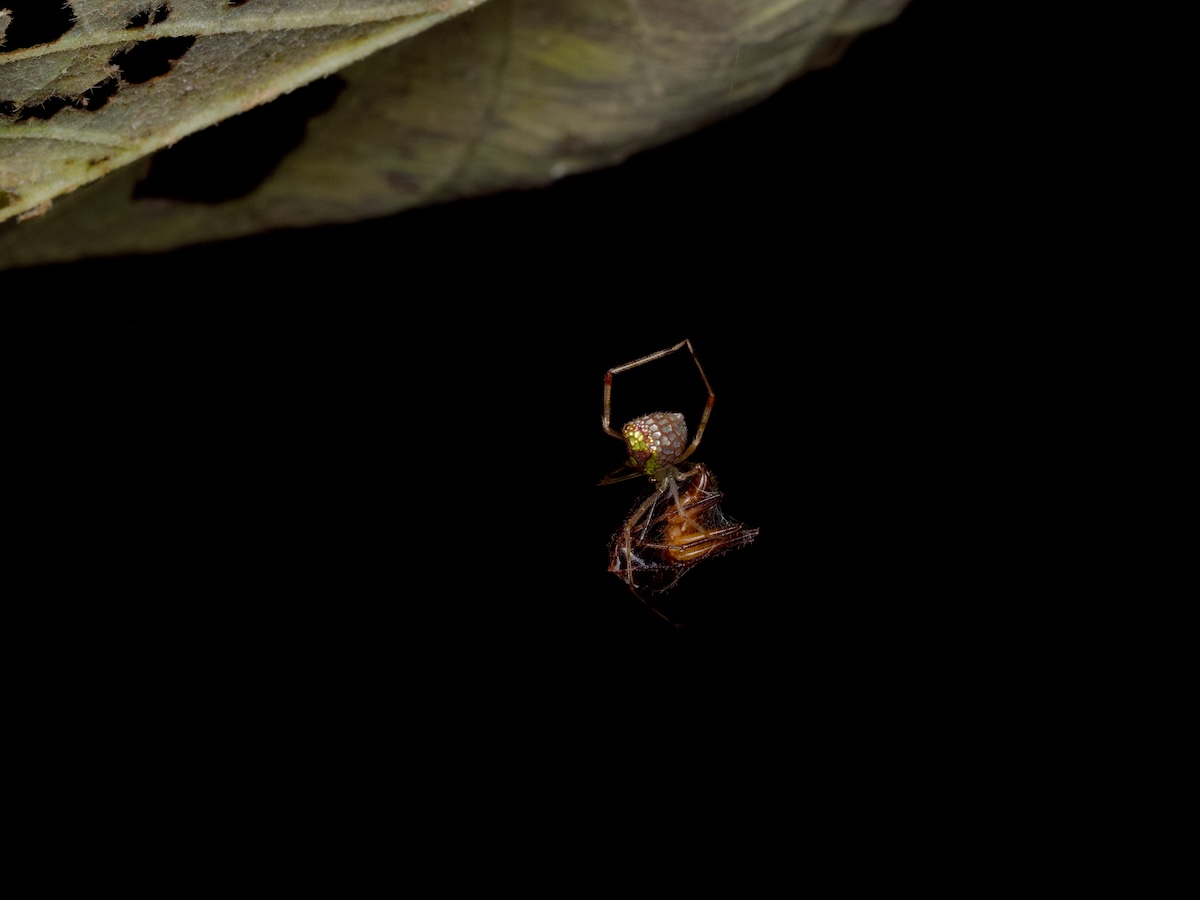
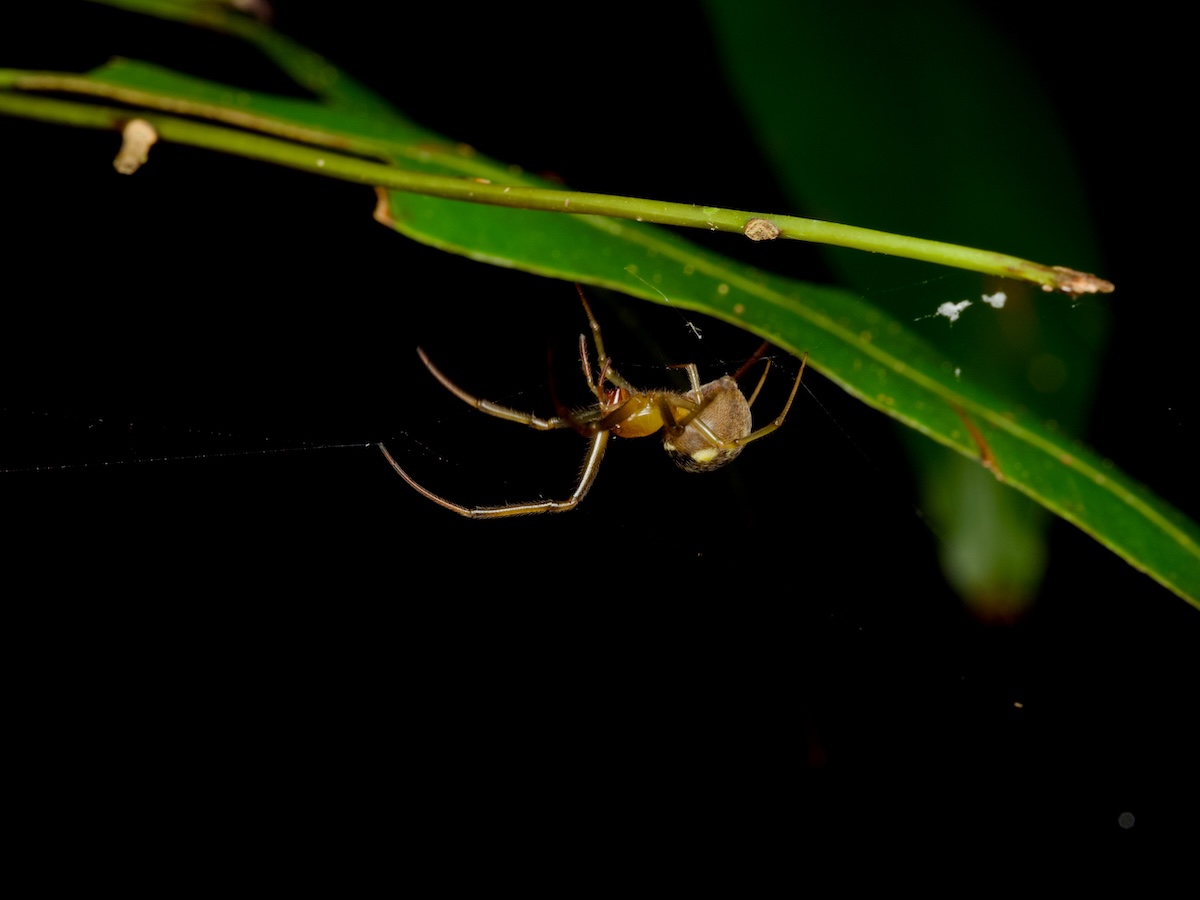
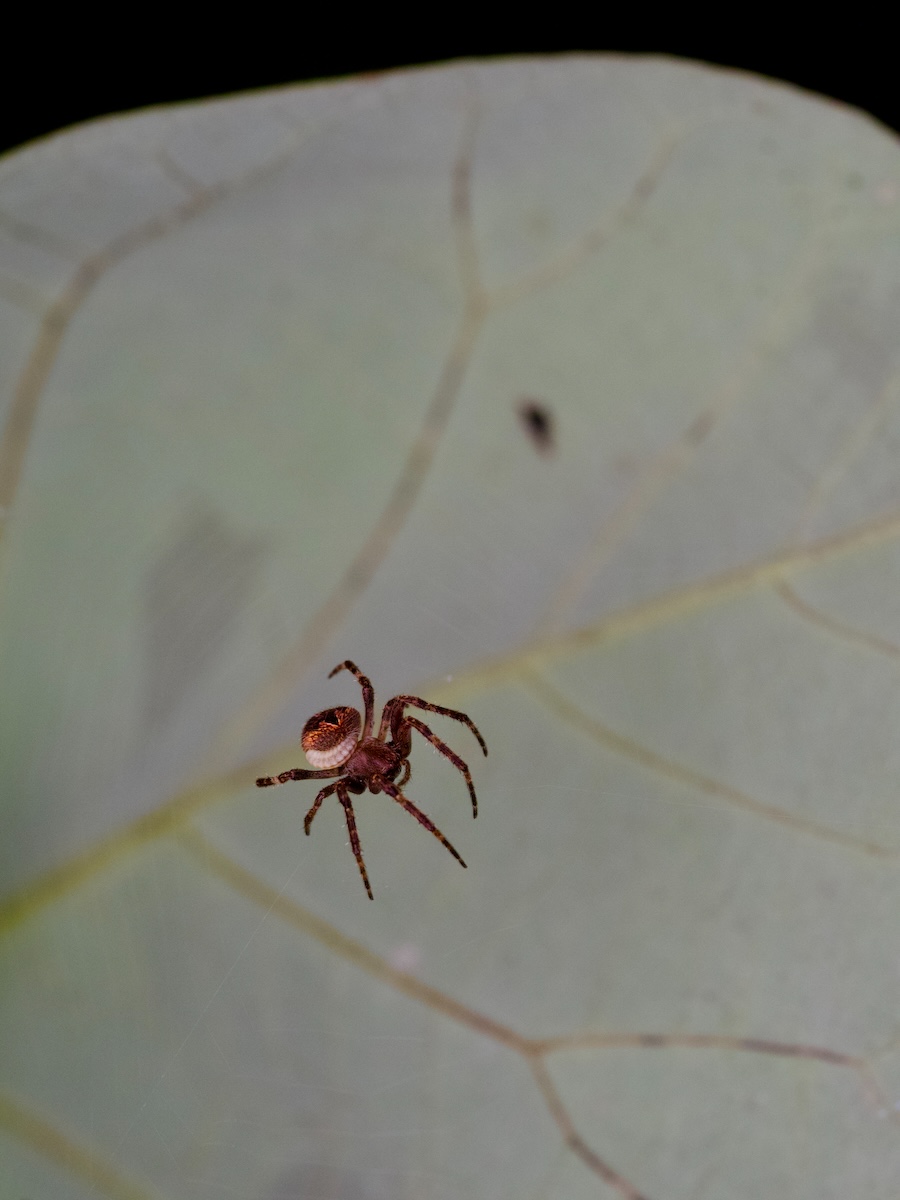
The first one that genuinely amazed me wasn’t one of the enormous huntsmen I’d been dreading. It was a mirrorball spider, which I immediately decided to call Disco Stu. No larger than a raindrop and suspended beneath a leaf, its tiny silver abdomen reflected our headlamps so perfectly that it almost disappeared into the rainforest. The effect comes from a lining inside its abdomen made from guanine, which makes it one of the few creatures on Earth whose camouflage is literally built from what would otherwise be waste. Poo. But it clearly works. Finding him was one thing. Coaxing my camera to focus on something barely larger than a pinhead was another.
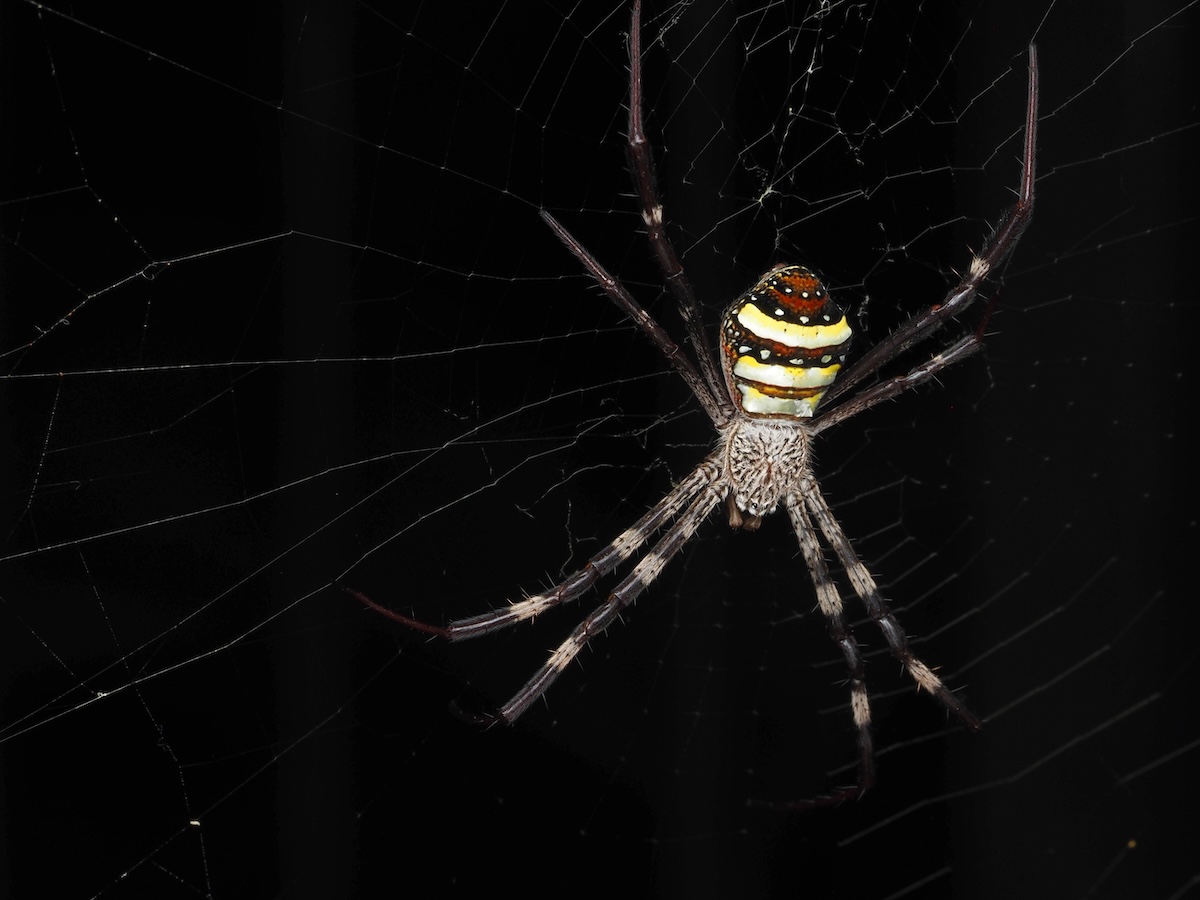
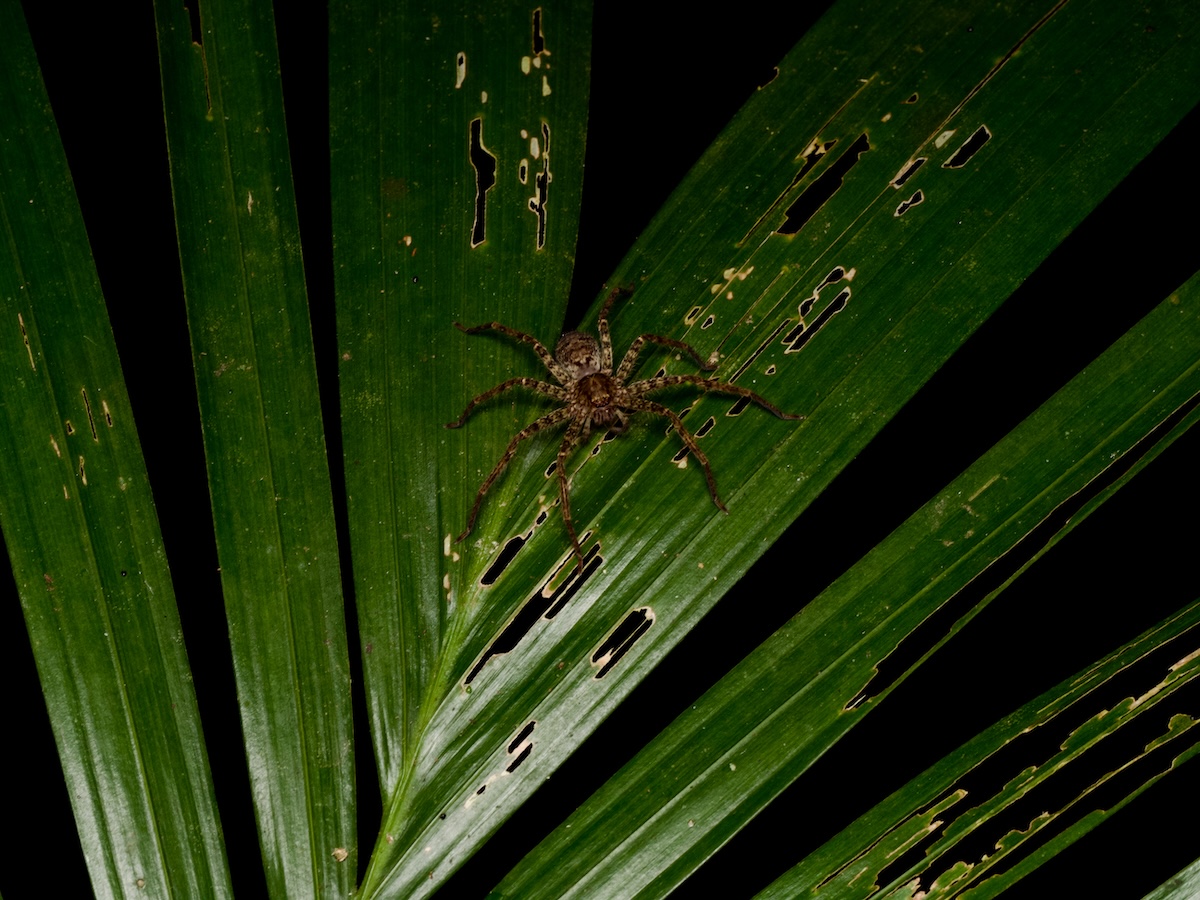
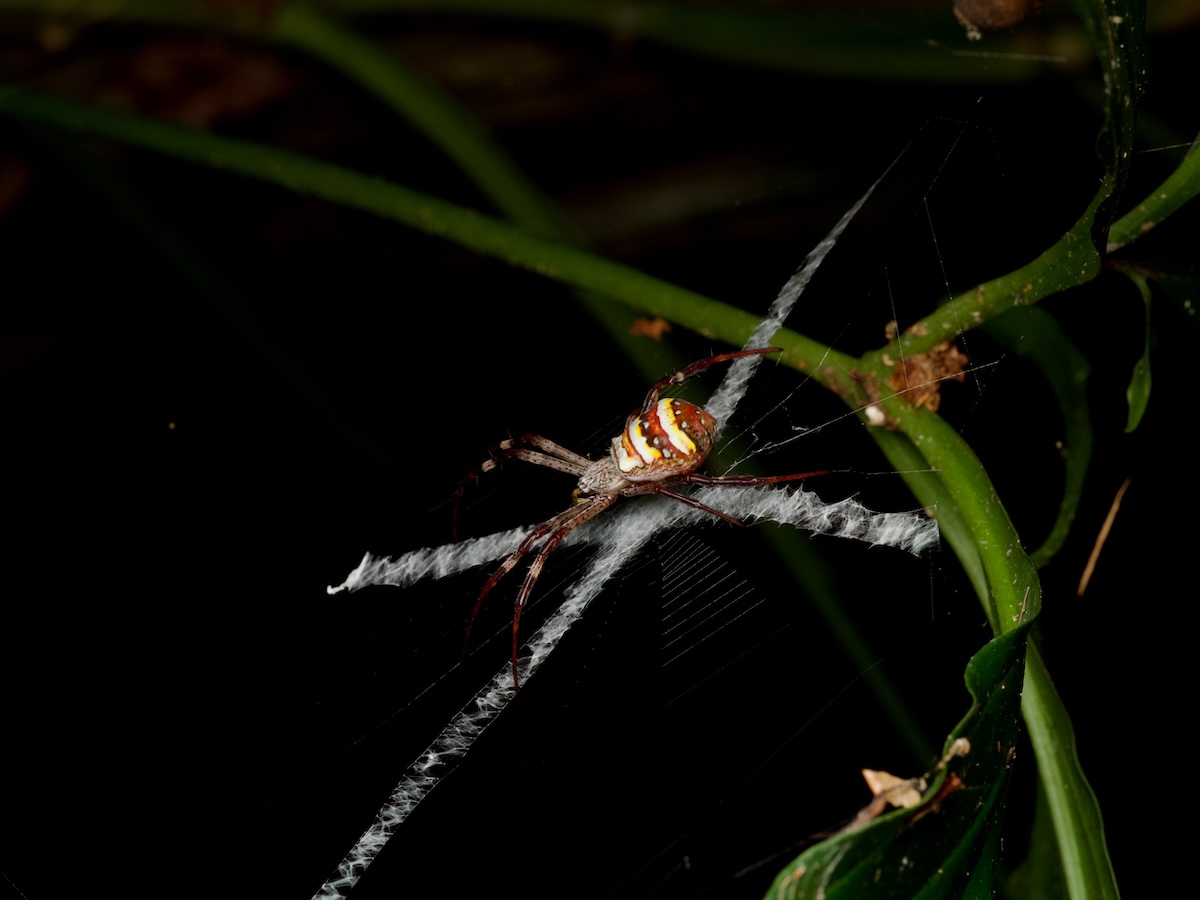
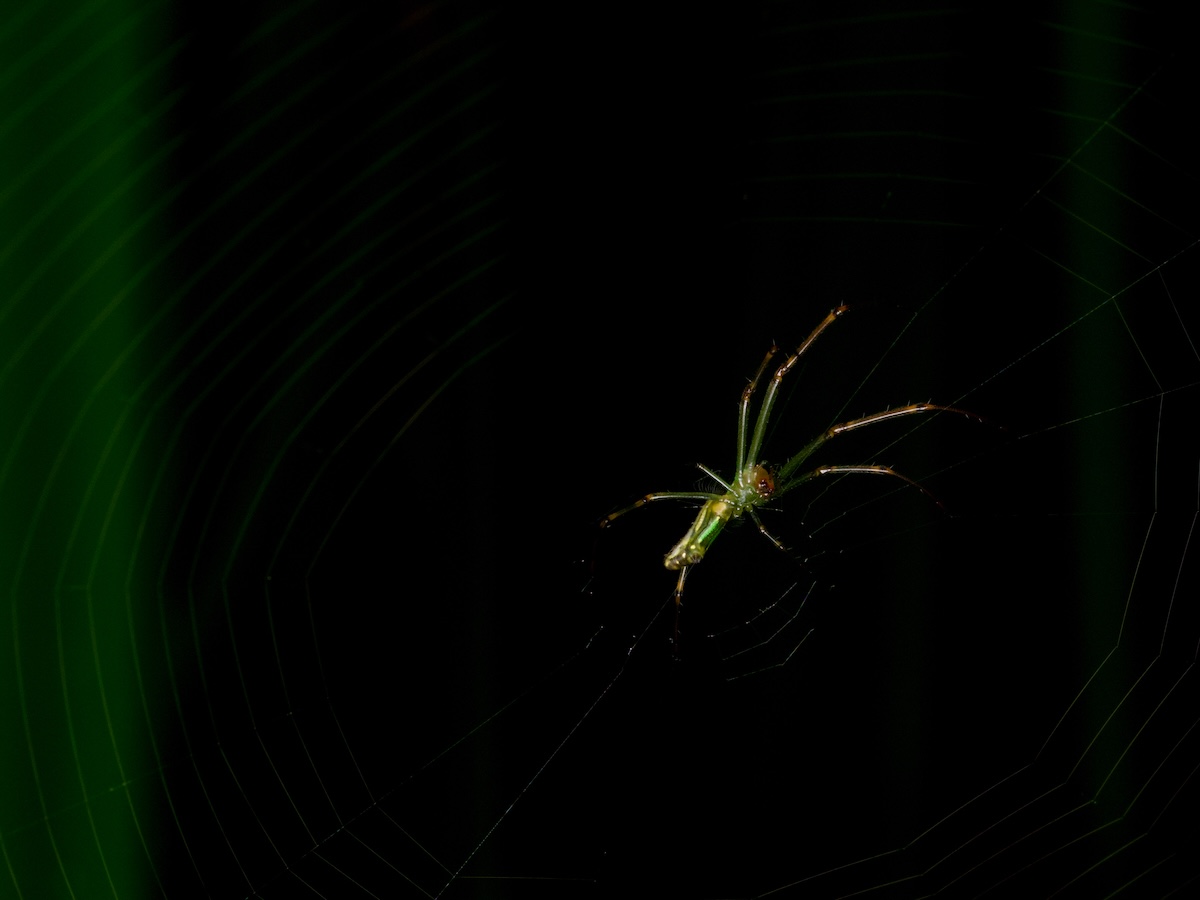
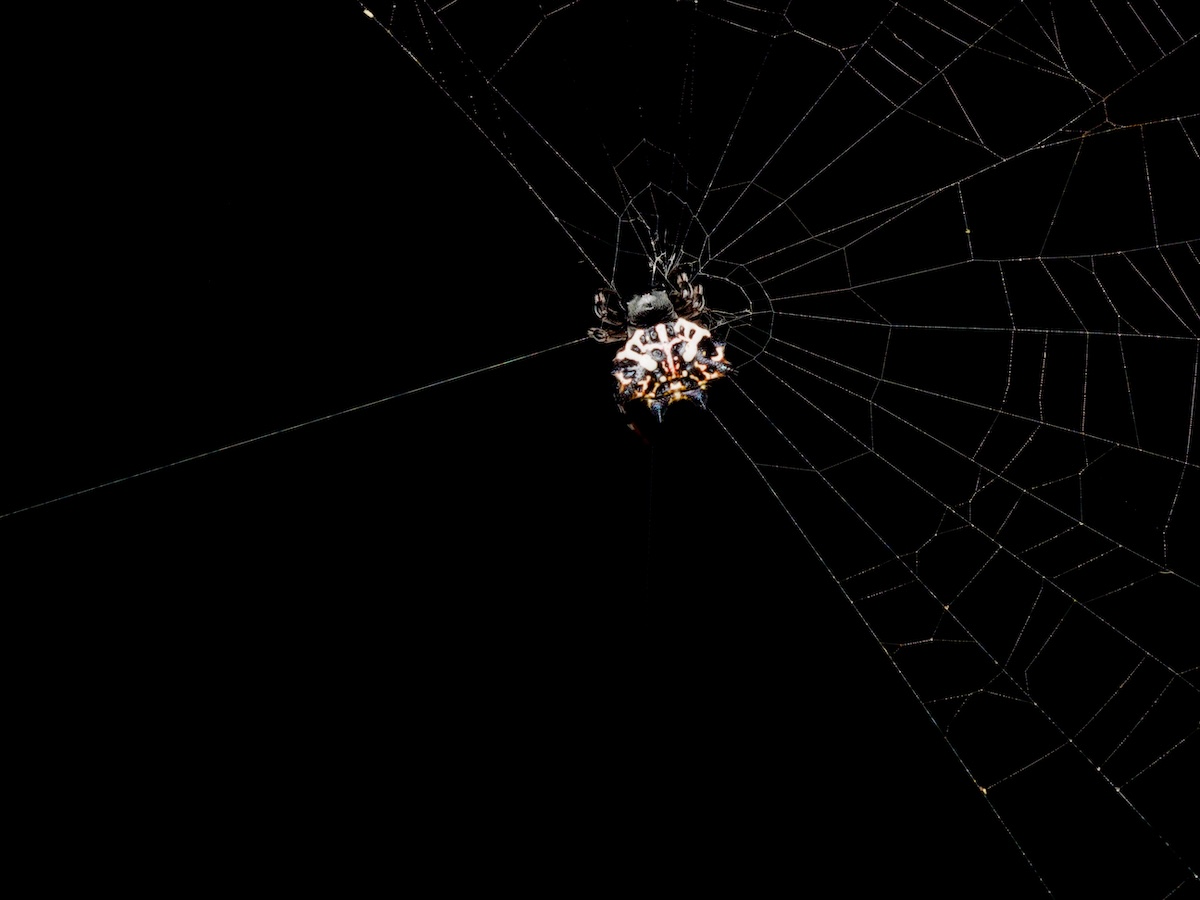
As the evening went on, though, the spiders seemed to grow steadily larger. We found St. Andrew’s Cross spiders sitting confidently in their elaborate webs and golden orb weavers whose silk stretched between branches at a scale that seemed better suited to catching small aircraft than unsuspecting insects. The huntsman spiders eventually appeared too, clinging to tree trunks with legs extending in every conceivable direction.
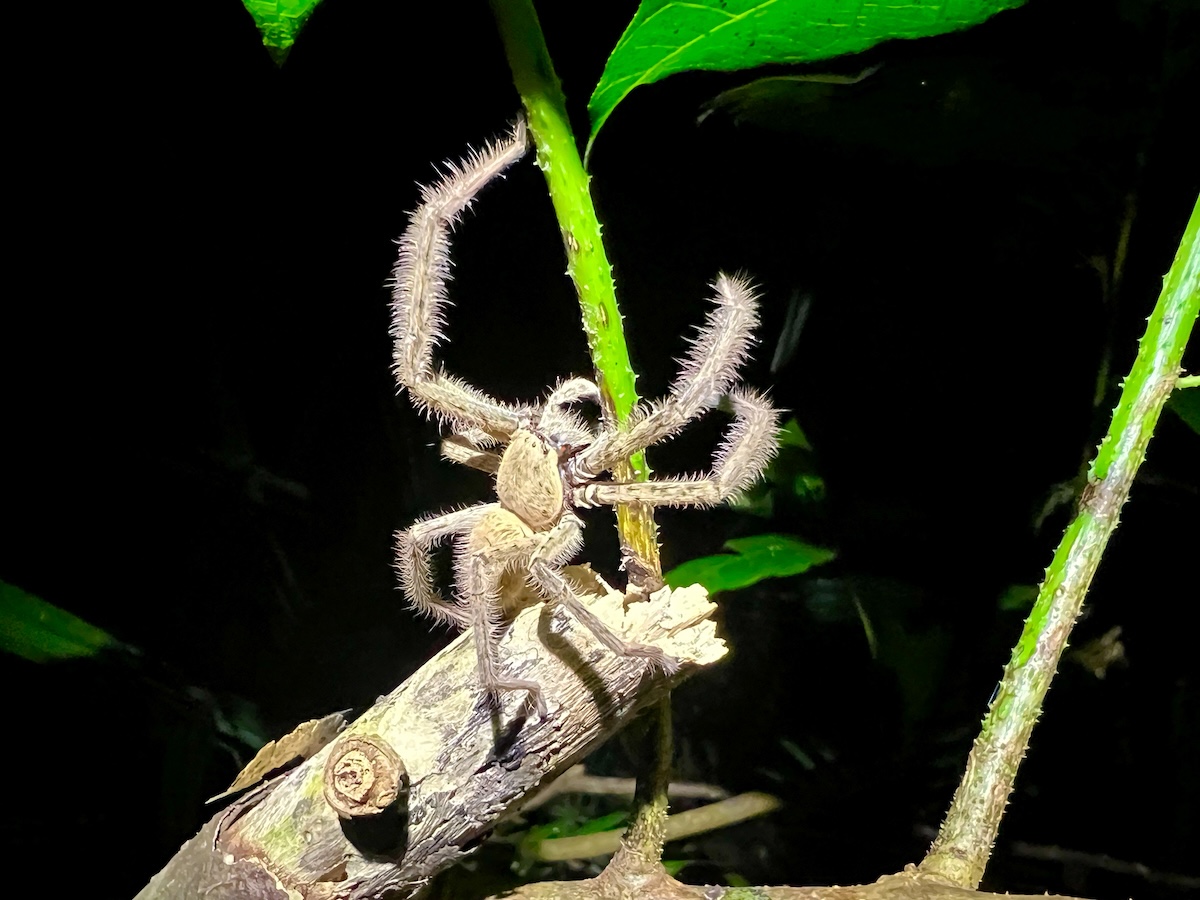
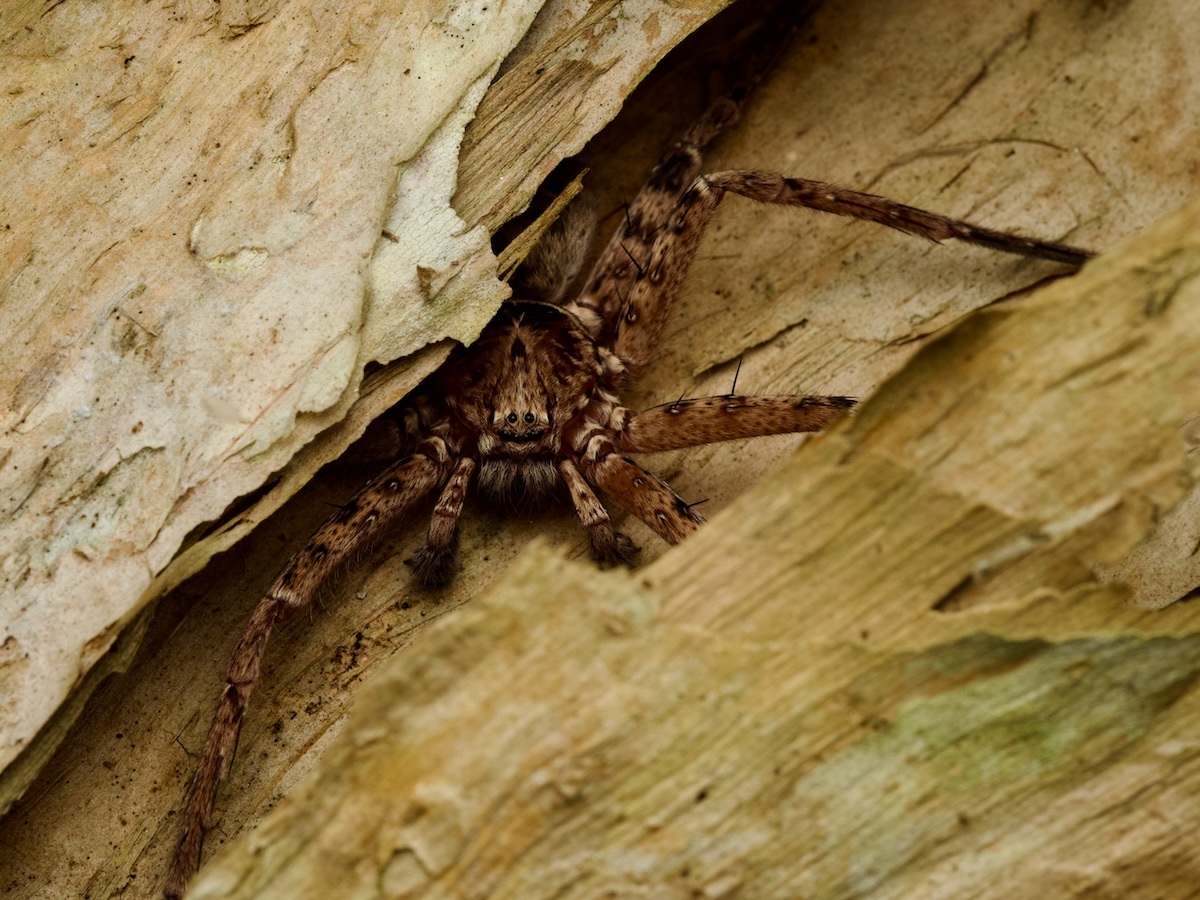
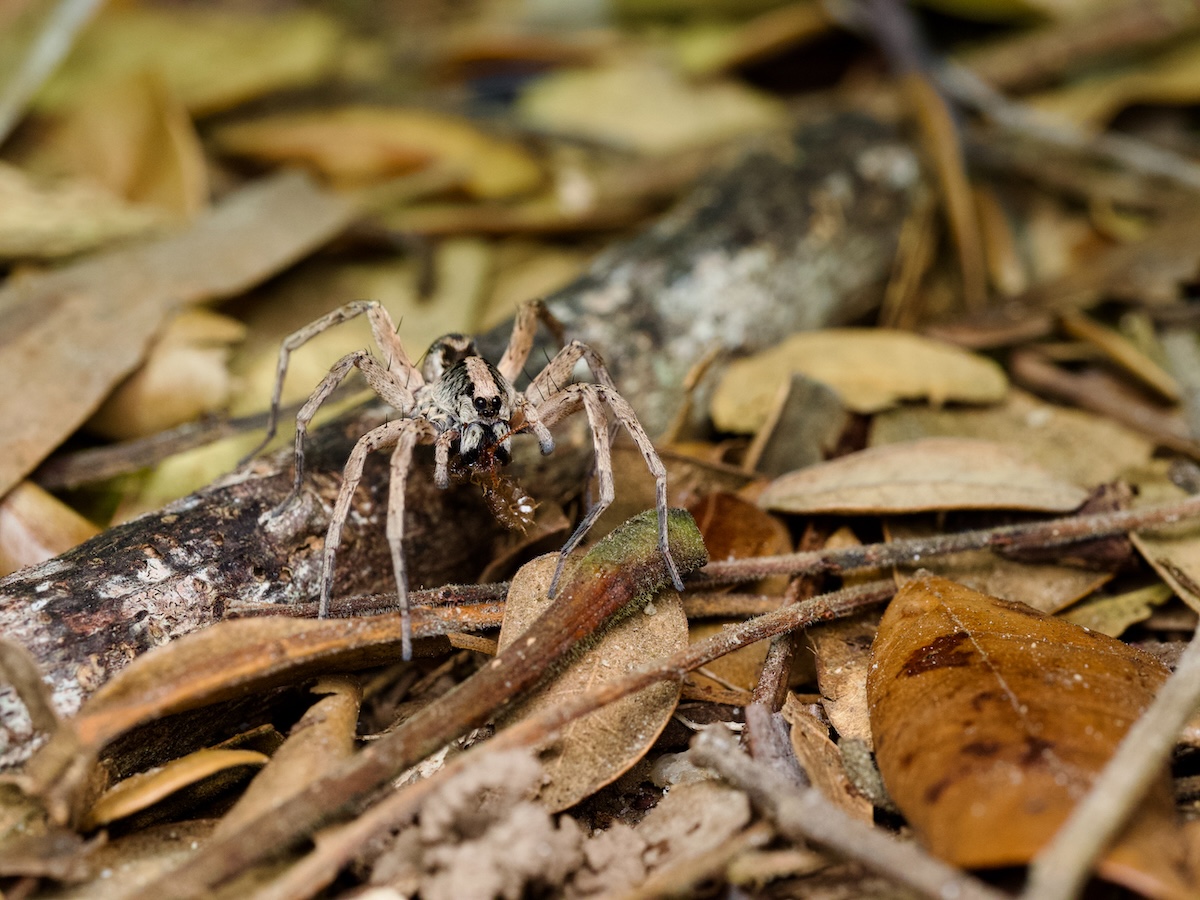
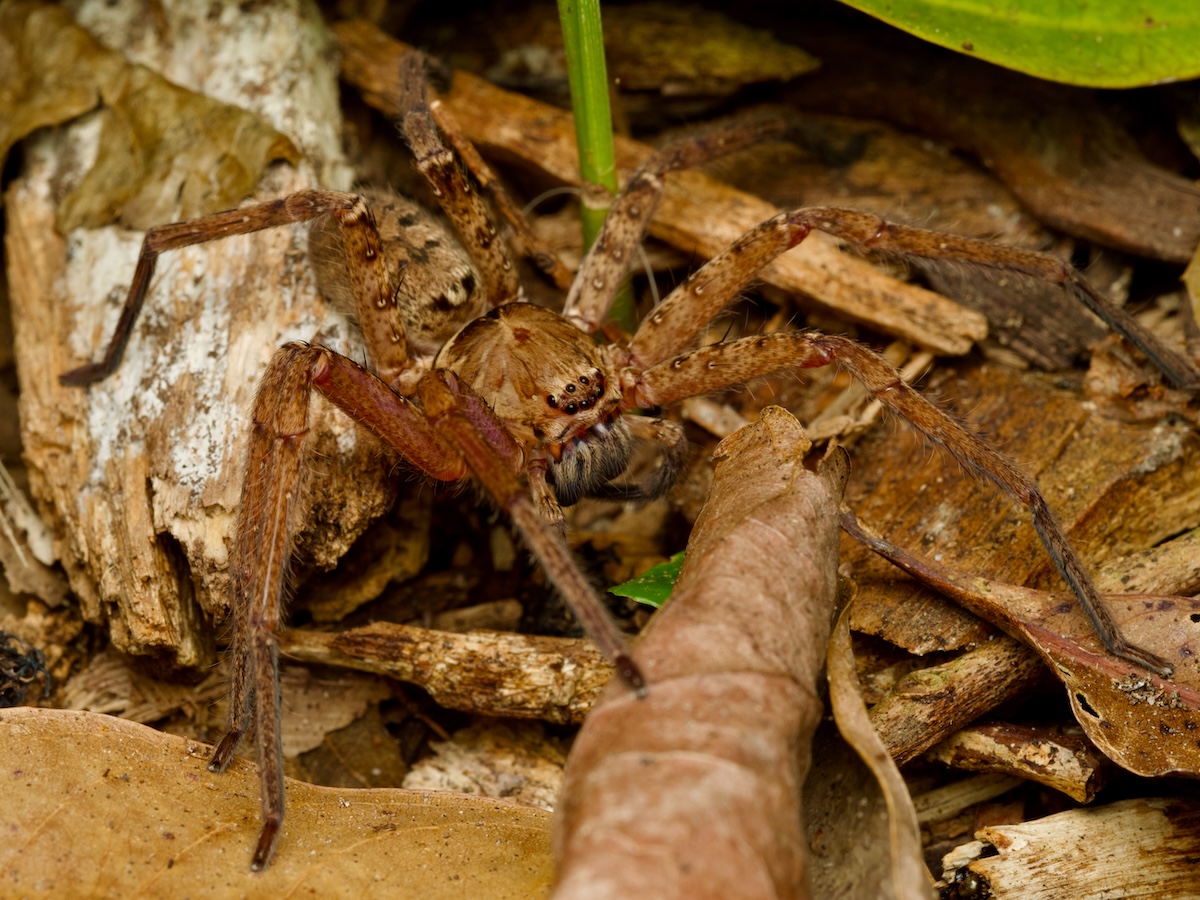
Huntsmen are the ones that scare Australian children. Well, city children, anyway. They can sit completely motionless and then suddenly sprint across ceilings at speeds entirely inappropriate for something with that many legs and eyes. Standing just a few inches away with a camera lens pointed at one, though, I was less focused on the spideriness and more on the details. The soft hairs covering its legs. The intricate patterns across its body. The surprising patience with which it tolerated half a dozen nervous photographers taking turns getting close.
Don’t get me wrong—nobody was ever going to persuade me to pet one. But somewhere along the way, it stopped looking like a monster and started looking like a pretty cool product of evolutionary engineering.
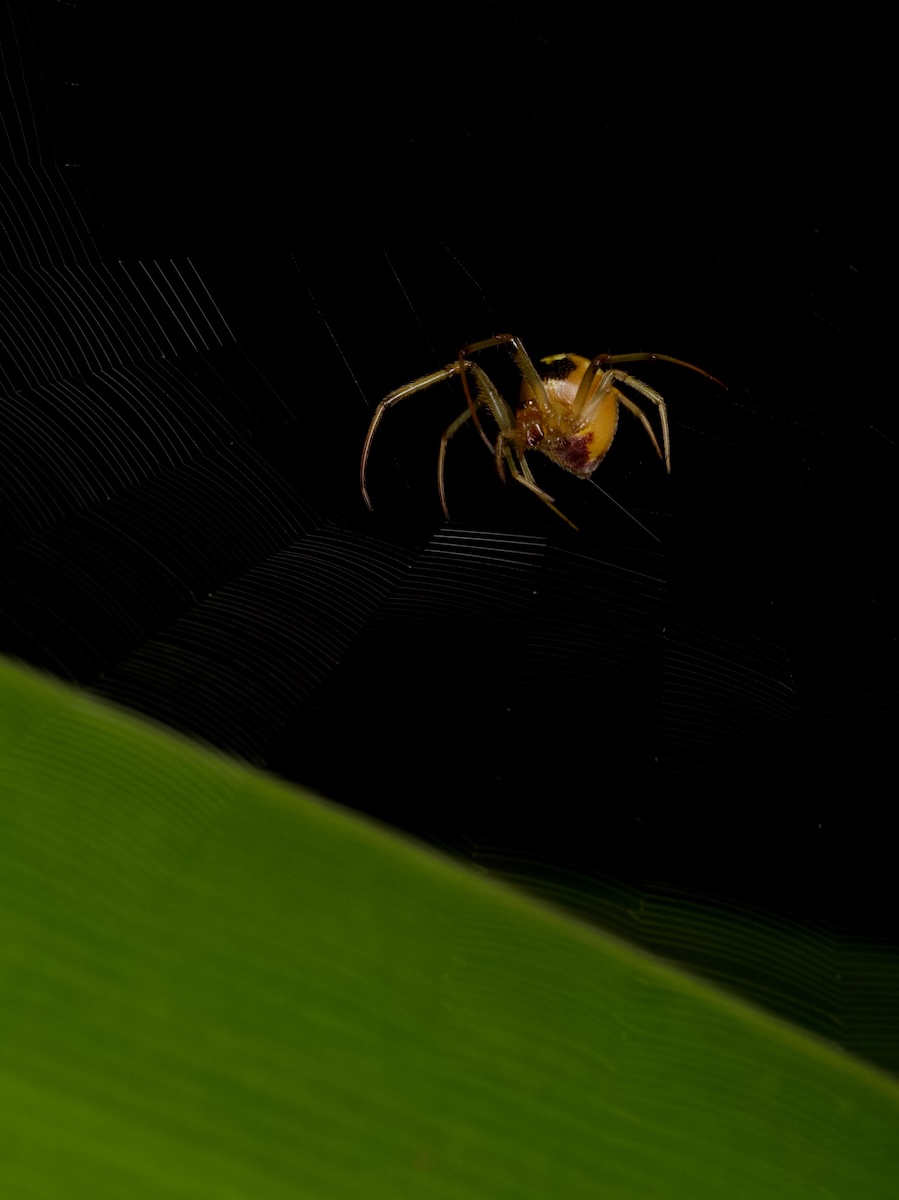
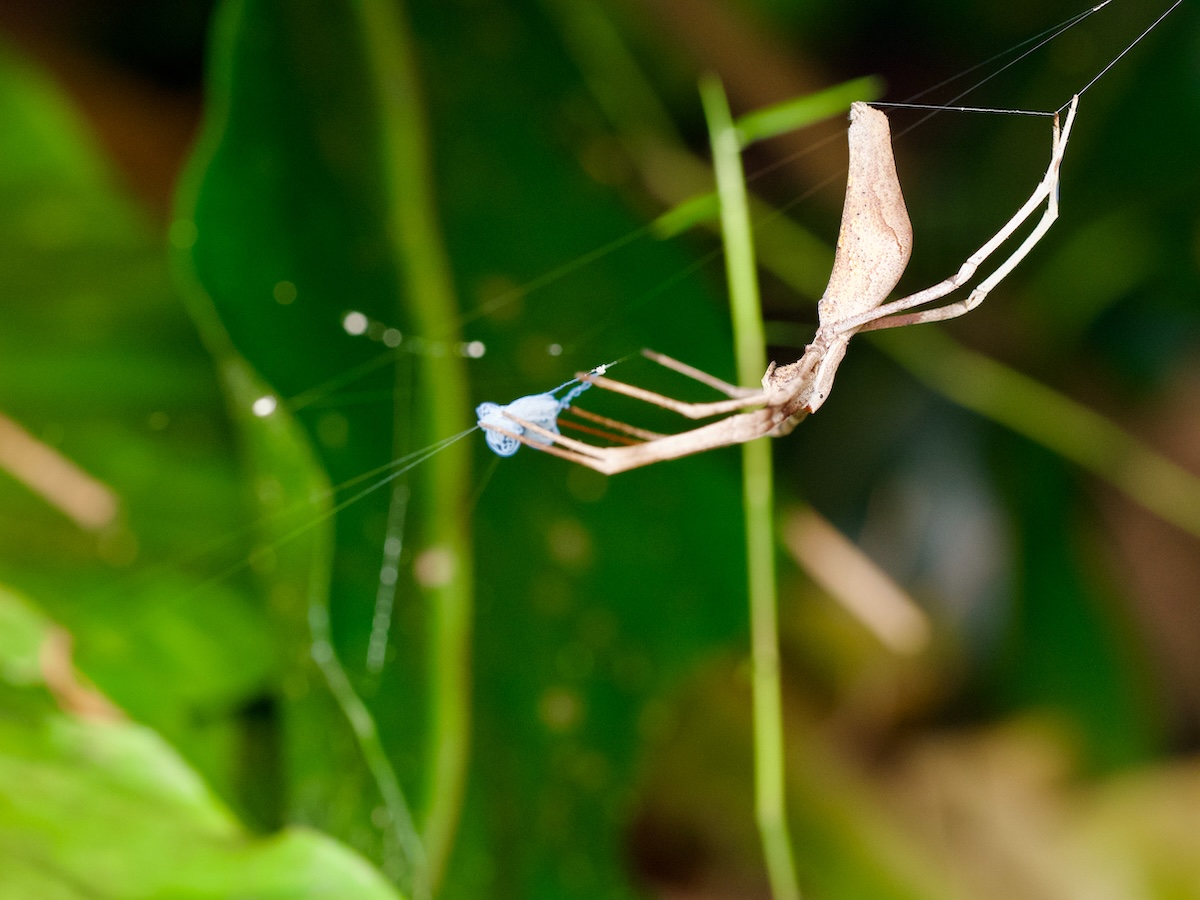
The spider that really fascinated me, though, was the net-caster. Instead of spinning a web and waiting for dinner to make a mistake, the net-caster actively hunts. She hangs in midair holding a tiny silk net stretched between her front legs, waiting for unsuspecting prey to wander within range before throwing the whole thing over her victim. It’s such an improbable hunting strategy that it sounds made up. Yet there she was, dangling over the trail carrying what looked for all the world like a tiny fishing net.
By this point, I'd relaxed enough to start talking to the others and thinking more about camera settings than spiders. Then our guide wandered off the path and began intently studying the ground beneath a stand of trees, which was completely covered with dry leaves.
“You lose something?” I asked.
“Nah,” she said. “I’m looking for more spiders.”
“Down here?”
“Oh yeah, they love it down here. Warm and draft-free.”
I glanced down, and my headlamp beam followed—lighting up hundreds of tiny reflections.
"AAAAAAAAAAAAAA," I said as I turned and ran the other direction.
This is how I learned that tons of spiders spend the day hiding beneath leaf litter before coming out at night to hunt. This was fascinating information to learn. It was also information I could have gone my whole life without knowing. I have never considered camping one of life's great pleasures, but discovering that a perfectly innocent-looking pile of leaves might actually be a spider condo only reinforced my existing opinions. I wasn’t exactly eager to sleep on the ground before. I’m considerably less eager now.
By the end of our safari, I hadn’t conquered my fear of spiders. I still don’t want to find one unexpectedly sitting on my shoulder—or anywhere within a one-house radius.
They hadn’t become any smaller, and I hadn’t become any braver. But I had to admit they were extraordinary. Until that night, I’d never even considered looking for creatures like this. It wasn’t that I’d been walking past mirrorball spiders all my life. It was that I’d been walking past countless small wonders without ever slowing down long enough to notice them. And once I slowed down enough to really look, I found that each species solved the problem of survival in a completely different way.
Would I go on another spider safari someday? Maybe. I’d carefully check the camera settings every five minutes, though, so I didn’t end up with a second collection of black rectangles. And I’m never sitting on the ground again. Respect is one thing. Insanity is another.
Write a comment