
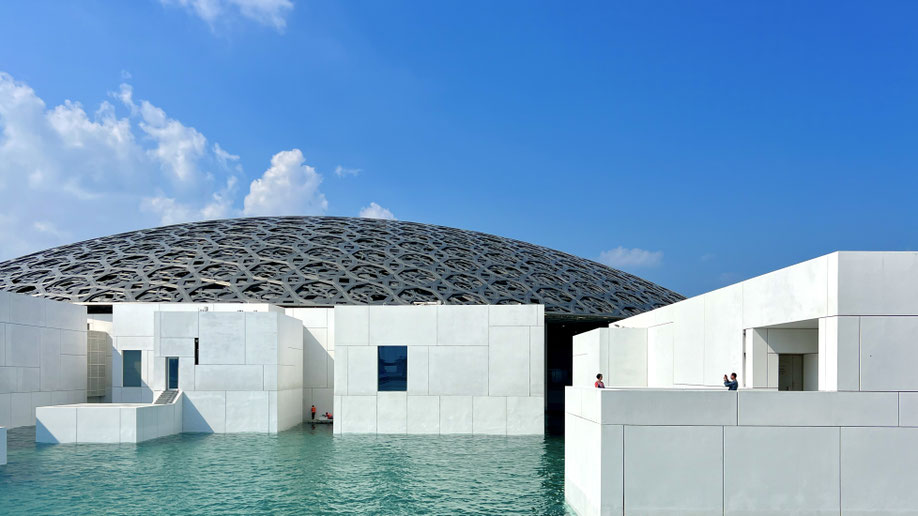
We were already in Abu Dhabi to see the Grand Mosque, so we also decided to go to the Louvre. That's right. There's a Louvre in Abu Dhabi!
Well, it’s not technically a Louvre, despite the name. The museum is allowed to use the Louvre name for 30 years and to borrow works from French state institutions like the Musée d’Orsay, the Centre Pompidou, the Bibliothèque Nationale—well, and the Louvre, obvs—for the first 10 of those years, all for the low, low price of just north of $1 billion. It’s like leasing a Ferrari.
This agreement buys the museum time to build its permanent collection and create its own voice. Some might argue that the arrangement also helps a small country with a sketchy global reputation "buy" prominence, legitimacy, and credibility to enhance its image. But that’s a question for another time. And probably another blog.
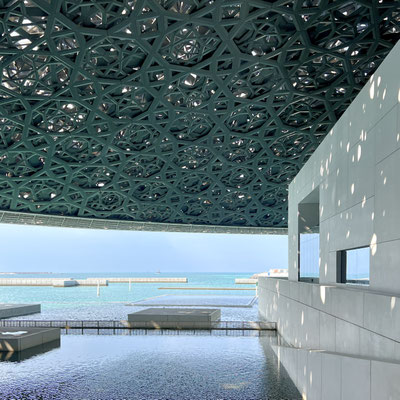
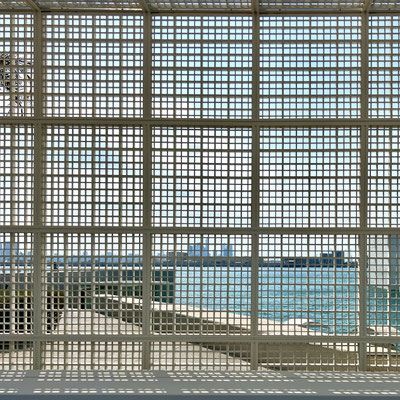
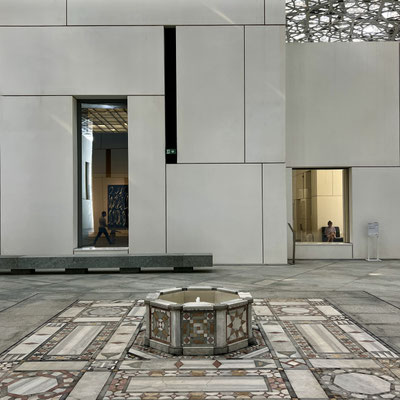
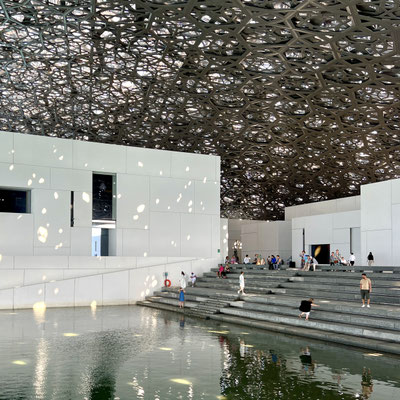
Nestled on Saadiyat Island at the southern edge of the Persian Gulf, this museum is like a mirage in the desert where the ambitions of the United Arab Emirates and the treasures of France converge under an otherworldly dome designed by star architect Jean Nouvel.
Just coming up on the museum fuels your anticipation. It’s really something—casually elegant and loosely fitted together, galleries spread out beneath a colossal dome, an ethereal world of art and architecture. I’m not exaggerating when I say It's like stepping into the pages of a utopian science fiction novel where imagination knows no bounds.
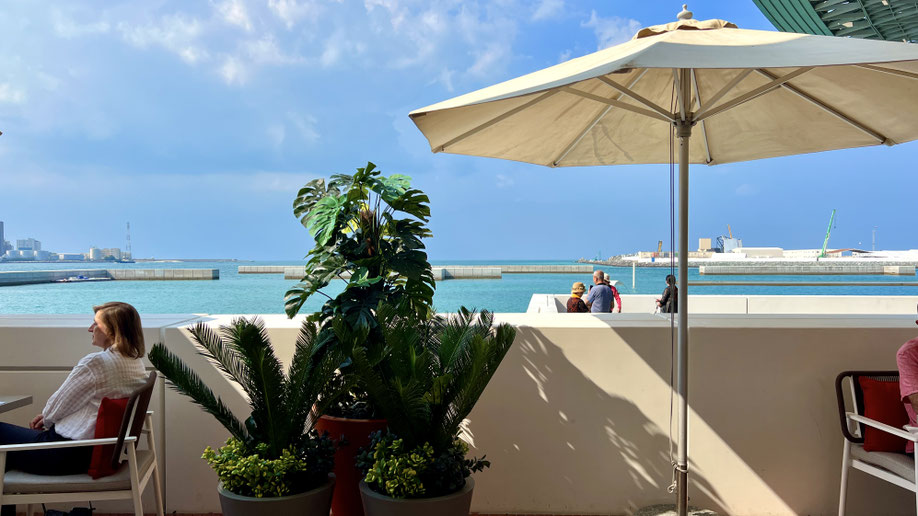
The dome is an eight-layered structure adorned with 7,850 stainless steel and aluminum stars that orchestrate a mesmerizing symphony of light throughout the museum grounds. Reflections and shadows play tricks on your senses with a phenomenon that’s been called a “rain of light.” Nouvel designed the dome as a tribute to Abu Dhabi’s palm trees, and it’s both visually stunning and environmentally conscious, providing shade while welcoming natural light and airflow. Honestly, I could sit for hours under the dome staring out at the water whether there was world-class art or not.

And speaking of world-class art…they've got it. But they have taken a unique approach to curating their vast art collection. Instead of traditional categorization by material or culture, they’ve decided to display the collection chronologically, with 23 galleries following a rote timeline. The true innovation is the intercultural display of Western and non-Western work sitting side by side, which offers a context you don’t often find in other great museums.
I loved the sense of unfolding history but hated that we had to follow a prescribed path. In fact, early on, Rick and I decided to "start in that gallery over there" because it looked promising and we thought we were in A Normal Art Museum. Oh, hell no. The security guards were on us like flies and told us we had to start at the beginning.
*sigh*
A “grand vestibule” sets the stage with thematically related objects from wildly different periods sitting next to one another—such as a 14th-century French Virgin and Child statuette, an ancient Egyptian Isis nursing her son Horus, and a Congolese maternity figure—to drive home the point about universal connections. We get it.


From there, the museum has separated works into “chapters” of cultural achievements that take you from prehistory to the modern world, from “The First Villages” to “Challenging Modernity” with religion, trade, and politics as coordinating themes.
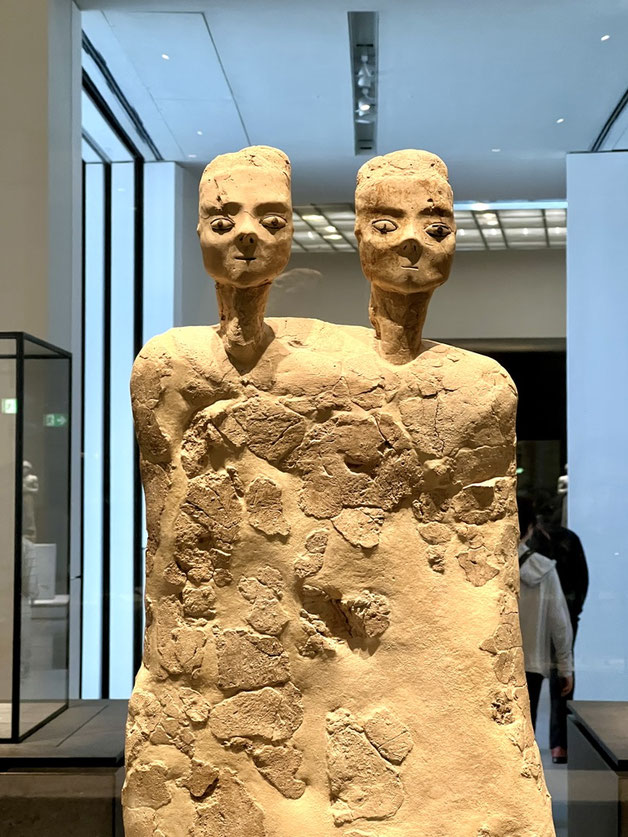
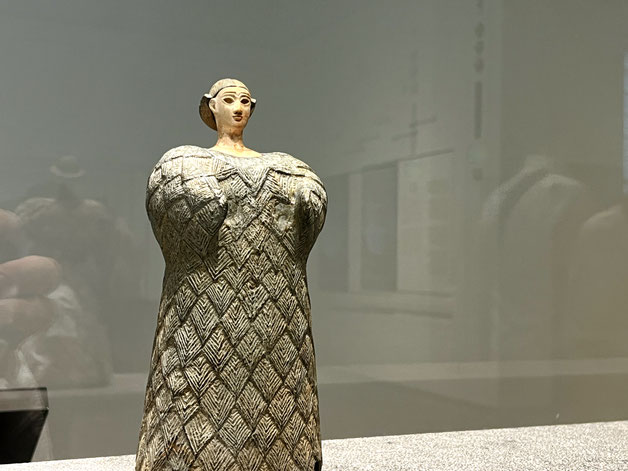
The first gallery contains a monumental, two-headed sculpture in hand-modeled plaster from roughly 6500 B.C. Nearby—much smaller but just as fascinating—is a Bactrian princess statuette created maybe 4,500 years later in what is now Afghanistan. The entire gallery is essentially a collection of female fertility figures from early human history, and it’s intriguing to see the motif interpreted by different cultures at different times.
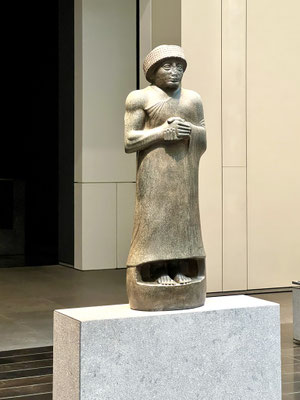
After that, visitors wander through the emergence of Mesopotamian and Egyptian cities and kingdoms in "The First Great Powers" gallery, followed by “Civilizations and Empires,” which moves us to the Assyrian and Persian empires, Greek city-states, the Nok in Africa, and the Olmec in Mesoamerica. In my opinion, this is where things start to get interesting.
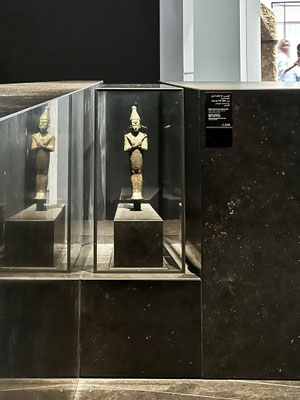


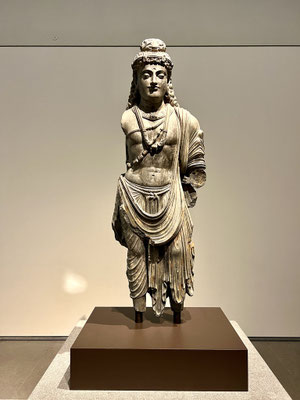
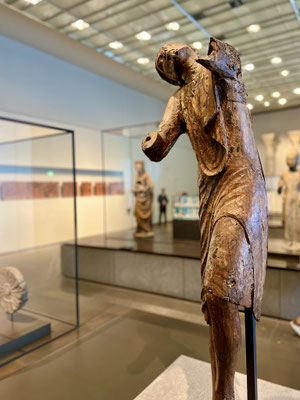
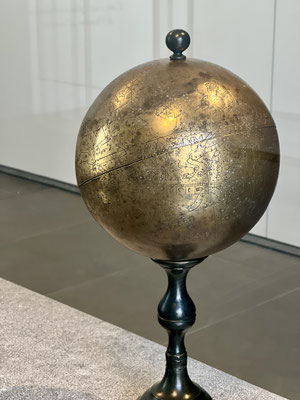
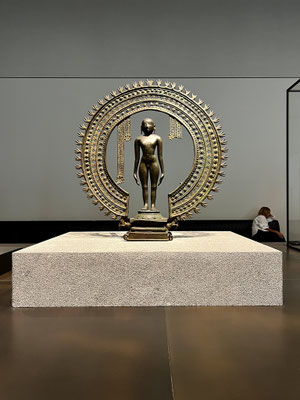
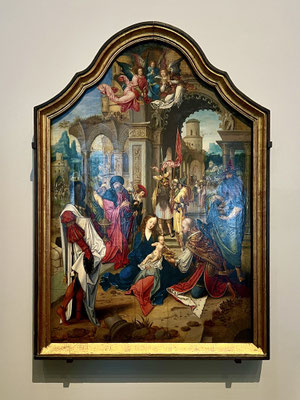

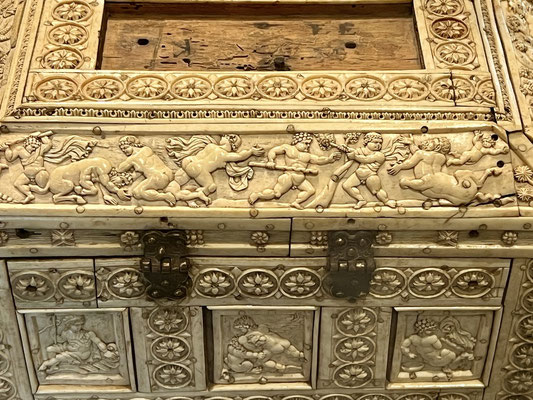

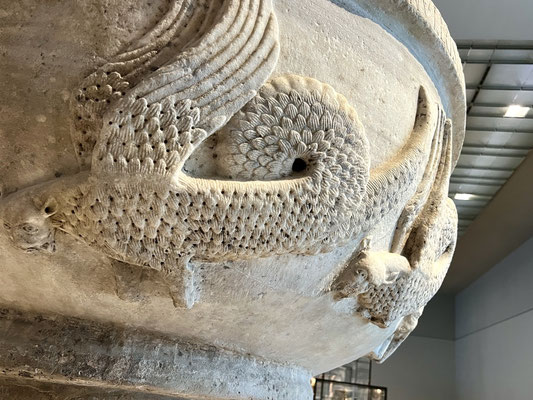

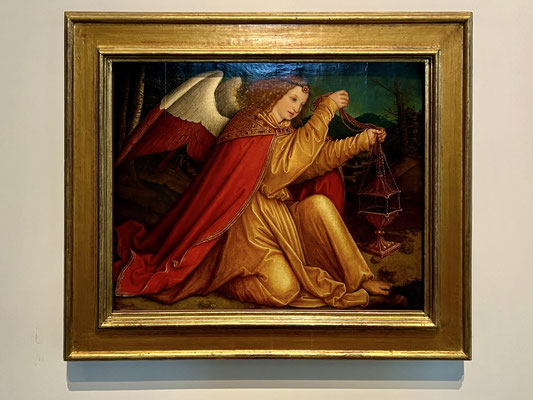
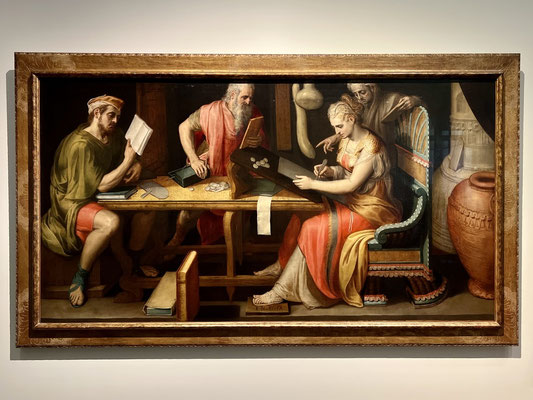
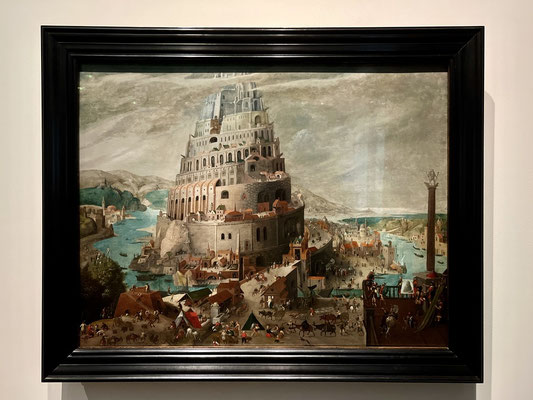
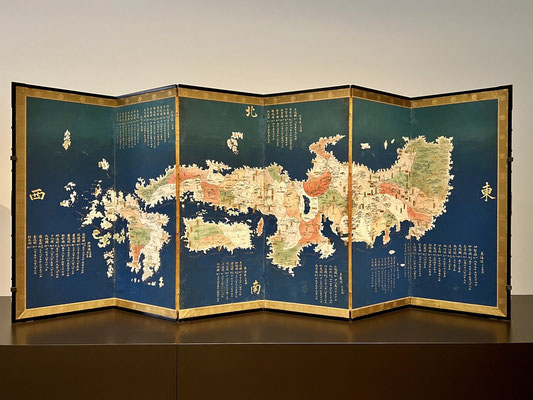
The remaining galleries, "Cosmography," "Thinking the State," "The First Globalization," "A New Art of Living," “A Modern World,” and “Challenging Modernity” journey deeper into the realms of societal expansion, painting a vivid tapestry of humanity's evolution on a global scale. The galleries’ artworks explore growing curiosity about our world and the universe, transformed power dynamics, accelerated global exchange, and monumental displacements that all ultimately lead us to today—a time of radical movements and expanding artistic boundaries on a worldwide scale.
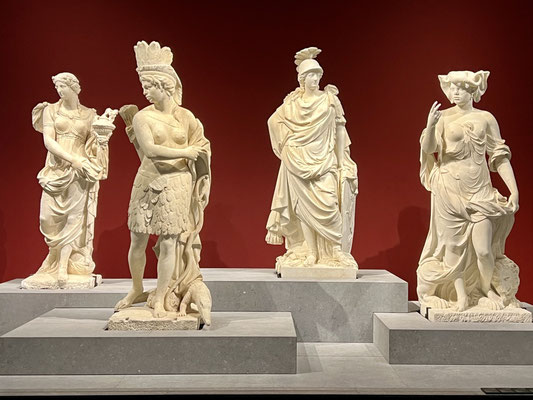
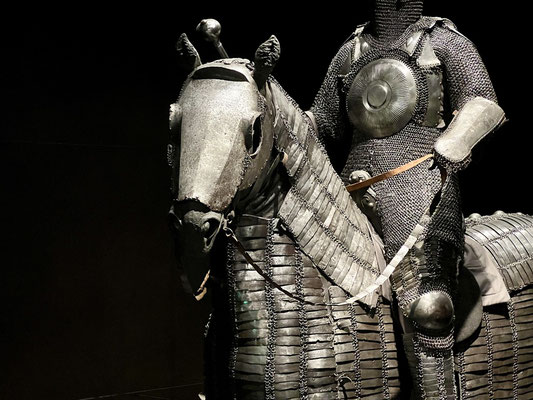
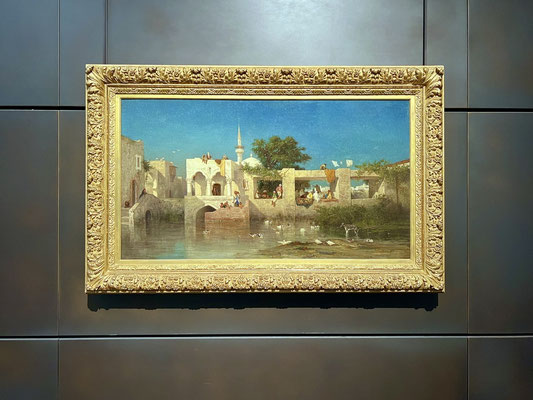

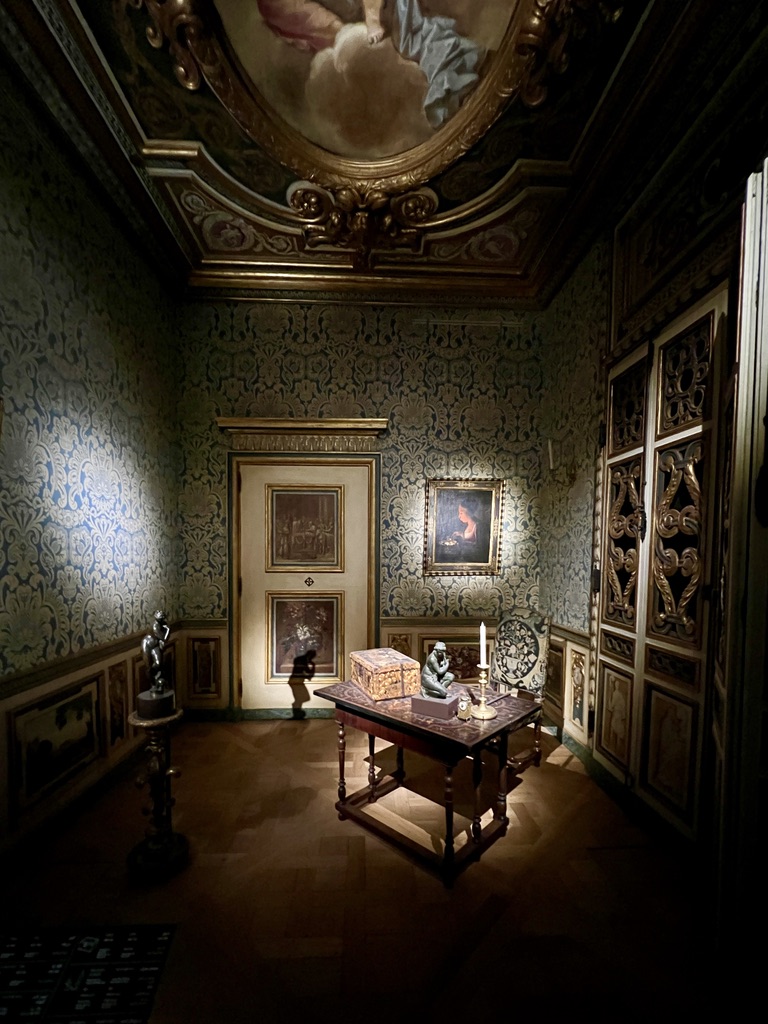
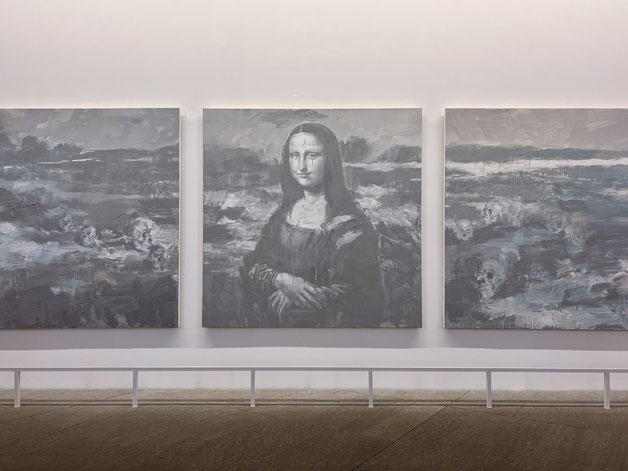
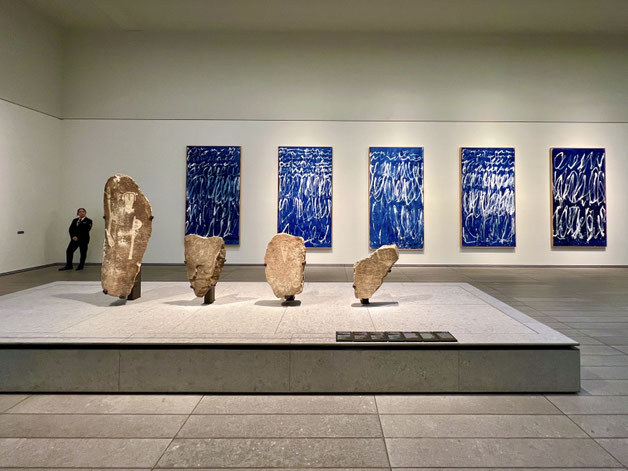
Throughout all of the galleries are various mirror paintings by Italian artist Michelangelo Pistoletto. These were fascinating to me. They’re life-sized photos of real museumgoers examining actual sculptures and artworks in the museum and printed on mirrors that reflect real-life visitors and the contents of the gallery they’re placed in. Meta.

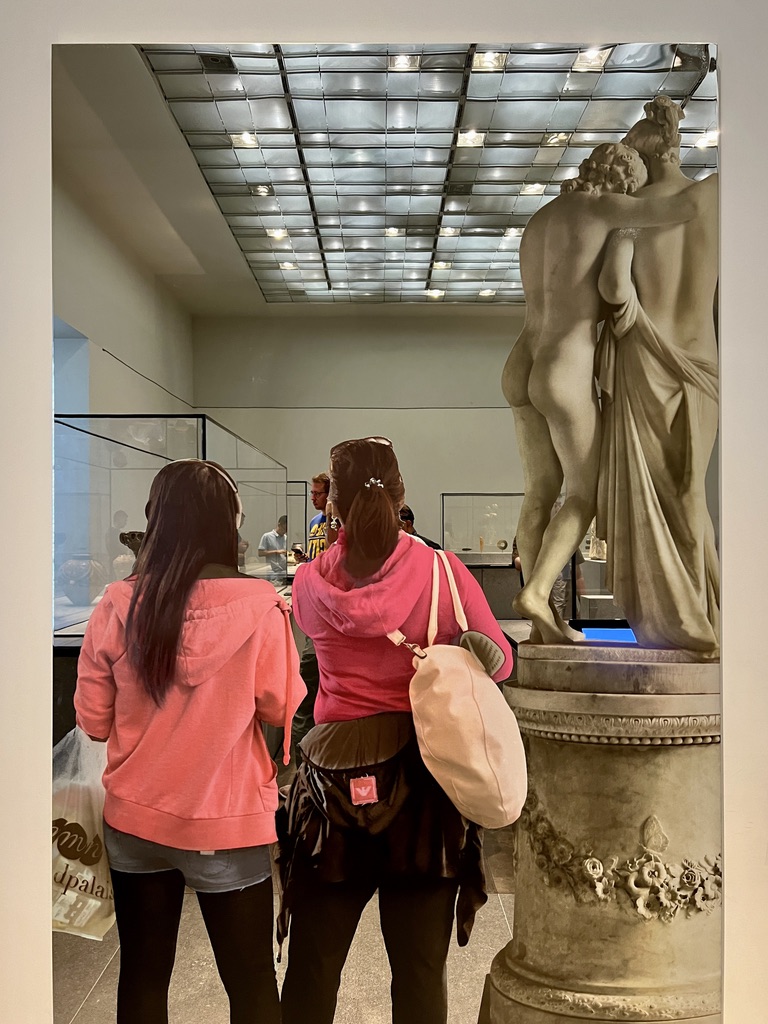
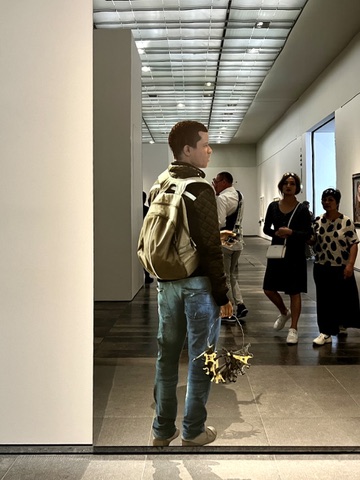
But you know what the Louvre Abu Dhabi doesn't have? A distinctive worldview. The entire museum is essentially an illustrated record of global cultural history that omits fundamental critical issues. They seem to completely ignore slavery, religious disputes, and male aggression, among many other historical challenges. In some cases, opportunities for comment or at least observation are elided in favor of glamorization. So in the end, it seems that the museum's primary objective is to be the feel-good museum of the Middle East.
But is the Louvre Abu Dhabi worth a visit? Undoubtedly. It's an experience you wouldn't want to miss. With nearly 1,000 artworks from around the world, it's a cultural treasure trove that will leave you in awe. Hell, the architectural masterpiece that is the building itself is worth the drive down from Dubai. Hey, they’ve even got a pretty top-notch restaurant, too. So if you’re ever in the area, you better go.
Write a comment